Letter from NYC (41) 2015 (3): Vida! Aurorasound gives Life to Vinyl
Review: Aurorasound Vida Phonoamp
Review: Parasound JC-3, Part II
Review: 47 Labs 4718, Part II
Review: AQVOX 2CImkII, Part II
Review: Thorens TD-309 Turntable, Part II
Review: Denon DL-A100 cartridge
Talk Vinyl: Group Review: (Aurorasound Vida, Parasound JC-3, 47 Labs 4718, AQVOX 2CI MkII, Fosgate Signature)
Talk Vinyl: MC Loading, Phonoamp Gain and Matching
Revised 16/9/2016: Reevaluation of the 47 Lab 4718 (see Part III), to its advantage. Relevant sections below appended.
Originally just a review of the Aurorasound Vida, this article is late in coming and months in preparation. To examine various aspects in depth, more and more equipment got dragged in. It is now too ambitious but I hope you will appreciate the care I have taken with these exceptional equipment. For myself, I am gratified that I am finally giving more deserved space to some of my frequently used equipment, like the AQVOX, Fosgate and Parasound phono amps, as well as the Thorens TD-309 TT. Last, but not the least, I am glad, after a long absence I have another Denon DL-103 sibling in my systems here in NYC (for two decades they have been in continuous use in HK).
For highly relevant info on how I view my various analog rigs and many of these phono amps I'd urge you to read
(my previous articles):
Group Review of 8 Phonoamps (includes AQVOX)
Shootout of 8 phono amps (includes 47 Labs 4718, Part I)
47 Labs 4718, Part III
Review: Parasound JC-3, Part I
All my Turntables (Arms and Cartridges): A (Rambling) Overview
Review: Aurorasound Vida
Detailed Info can be found on
Official Site, with links to several reviews. Readers are urged to read up on its innovative LCR design employing Lundahl coils.
Background When it comes to cartridge manufacturing, aside from the few western brands like Ortofon and Benz-Micro, the lion's share goes to Japan, where the culture is healthy (also serving as OEM for numerous western brands).In Japan, a plethora of small boutique brands (Koetsu, Miyajima, Transfiguration, Phasemation, etc) thrive side by side with giants like Denon and Audio-Technica. Yet, aside from some expensive boutique products, Japanese phono amps (and SUTs) are relatively little known in the West. My experience with them show them to be superior products.
Aurorasound's first product reviewed in the western press,
the Vida, uses an LCR design for RIAA (claimed to be a first) and is capacitor-less in the signal path. It immediately grabbed everybody's attention and garnered praise. I first read about it in 2013 when the first (and best) review from
HiFi Review came out, and immediately knew I wanted one. Aurorasound must be indifferent to soliciting reviews, since in the intervening two years there have been few reviews in the mainstream press aside from those in Asia (in HK, the Chinese magazines
HK Audio Technique and HiFi reviews). There are some less mainstream not covered by the official links (
the-ear;
hifiwigam, users' thread on
theartofsound).
I had to hear it. Although I rarely have time these days to visit audio showrooms, I made an exception for the Vida. Audition at HK dealer was OK, but it did not really further my desire. The setup was good but, with its dry and analytical sound, not quite my cup of tea, though I am experienced enough to know you listen to "potential" at a dealer, not the "final word" (my experience with dealers is that they always stress hifi "virtues", which are "sins" to many).
I also pondered whether I should get a 120V unit to use in the USA, or a 240V one for HK. Recently, with the great help of a friend, I ordered a 120V unit and it was waiting for me when I got back to NYC. I lost no time putting it through its paces.
General Comments
- Options Some reviews don't seem to mention this, but options like balanced connections can be had for a premium. More, for those obsessed with loading, an MC loading selector is also an option. I opted for the cheaper basic version, which DOES have a switch for high (100 ohm) and low MC impedance (10 ohm).
- Voltage Here is a slight quirk. The same transformer is used for both the USA (120V; 125 in my locale) and Japan (100V). The spread is rather large, but I guess the current used is really small (the unit runs slightly warm left permanently on) to be of concern (confirmed by Mr Karaki). Like most other boutique manufacturers, 220V requires another transformer.
- Looks and Built The Vida is fantastic in appearance and relatively small (~2/3 the usual width). In comparison, my Parasound JC3 and AQVOX look positively ugly, the former especially so since it is unnecessarily over-sized. A look inside and one can only conclude that the unit is reasonably priced!
- Ergonomics Possibly aside from lack of a phase switch, the features are all one can desire. I don't know why there are not more phono amps with 2 inputs. The Vida has one MC and one MM input and nicely comes with two grounding posts (those who have more turntables know the pain of fitting two ground cables, particular of different gauge or termination, onto a small single post). The unmissable Mute Switch and Mono Switch are delights.
General Sonic Impressions
I connected the Vida mainly to 2 turntables in one of my Reference Systems:
Turntable 1: Linn LP12-Ittok-Air Tight PC-1
Turntable 2: Technics SL-1200MkII-Denon DL-102
Turntable 3: Thorens TD-309/Denon DL-A100 (used as supplementary source; see below)
Preamp: Manley Neo-Classic 300B
Amp: Wavac MD-811
Loudspeakers: YL Acoustics 4-way horn system

- Attention! Shorting Plug I put this here to catch your attention. The Vida comes with shorting plugs (like the one pictured) into one of the inputs (I forgot which one; I think the MM). I removed them when I installed my 2 turntables. Since initial setup, I have changed turntables a few times and sometimes only one turntable is connected, but I did not use the shorting plug. One time, more than one month into my use, I toggled the MC/MM switch (possibly to an unconnected input) and I heard a "pop" noise and the muting switch light came on (which means it muted itself; the Vida has a protection mechanism for overload). When I tried to un-mute it, no sound came out. I had to disconnect the power supply and reboot to get back normal sound. Sorry my recollection of events is not so precise, but that is what happens when too much time has elapsed between the event and the reporting. My interpretation of this is: if you use only one turntable and do not use the shorting plug, if you toggle the MC/MM switch to the unused input, you may trigger auto-mute and shutdown. My advice is: follow the instructions and use the shorting plugs on the unconnected inputs. The manual only states use of shorting plugs improve S/N ratio, but does not mention the likelihood of auto-muting if they are not used. This is in contrast to my Shindo Monbrisson, which similarly has MC and MM inputs selectable by a toggle switch, but then the Shindo uses transformers for the MC section, so I'd think that is why it is more immune to electrical problems.
- Run-In The unit sounded fresh and vital from the word go. Perhaps initially there was a tiny over-emphasis in the lower treble which went away after a while (regardless of use; I have my unit on all the time - a gross violation of my own die-hard green sensibilities).
- Background Noise What background? There is none. This has the cleanest background of all the phono amps I have. I am no hypochondriac when it comes to equipment, but what is more important to me is that the unit sounds vital even with complete absence of background noise (for my take on this, read a previous article).
- General Sound I cannot describe it better than the review in HiFi News. There is absolutely no trace of the peaky glare or "hardening" (at least in certain frequencies) that could afflict even the better ss phono amps. Rhythmically it is alive and never boring. Treble is perfectly balanced and never tippy; bass is well contoured (not particularly full), tactile and reaches deep. In a word, not a weakness. See below for more detailed comments.
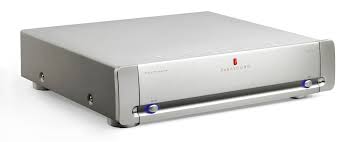 Review: Parasound JC-3, Part II, Second Coming after Minor Restoration
It should be noted that the model is now superseded by the JC3+, with addition of variable loading and various smaller changes. Readers should refer to last year's
Review: Parasound JC-3, Part I for my full assessment and a peculiarity of my unit.
General Sonic Impressions At that time, although I was generally immensely satisfied I found the slightly grainy treble of my unit puzzling. My second-hand unit had a resistor factory replaced by a different brand to lower gain. When I got back this year, I replaced them with the original Dale resistors (sent by Parasound) and re-evaluated. Low and behold, the slight treble grain vanished! So do not under-estimate the sound effect of a single component at a critical point in the signal path! Also, as I have witnessed in many cases, the stock component (with which the sound is tuned) is the most even-handed performer. Also, the gain is noticeably higher in stock form, and I could understand the previous user's concern. It is not a big problem to me, even if I have very efficient speakers. After warming up and running in a bit, the unit is truly first-class. See below for more detailed comments.
 Review: 47 Labs 4718 Shigaraki MC phonoamp, Part II, a bit Later on
I am a late comer to 47 Labs. My standard gain (75 db) unit is said to be the last one of this series. The 4718 review by Dick Olsher in
enjoythemusic is likely the most useful for most people, as it does not use 47 Labs' cartridge, as the review in
6moons does (Jeff Day, like me, also used the Denon DL-103 as comparison; more of my experience with that below). there is also a negative review of the 4718 in
dagogo, but I'd discount that because I totally disagree with the author's statement that the 4718 sounds like the Hageman
Bugle - even though I agree the Bugle is nothing special (my review of
Bugle2), the dagogo author completely missed the excellent rhythmic ability of the 4718, which the Bugle completely lacks .
General Sonic Impressions My initial impressions in
Part I really hasn't changed much after a bit more run-in (though please understand I don't use it nearly as much as the Aurorasound Vida, which did not need much run-in). I'd like to think of my reference system, including cabling, as rather neutral in sound, but my impressions are in contrast to some of reviews which describe a "lush" sound! My impressions are closer to Dick Olsher's.
The distinctive house sound is dominated by fast, incisive rhythm allied to a lean mid-bass. Treble extension is a little curtailed. For this classical fan, another negative is its decidedly limited ability to swing large dynamics at higher volume
. See below for more comments.
Note 9/2016: after more run-in, the 4718 delivered a much better performance (see Part III).
Review: Thorens TD-309, Part II
Usage For my full assessment of the TD-309 with the heavy mono Denon DL-102, please refer to
Part I. Since then I have used the TT quite frequently. After moving the Denon to the Technics I have happily rotated several cartridges. This time around, enlisting its service was almost a second-thought, originating from my desire to test more than one MC (I simply don't want to remove the PC-1 from my LP12).
Difficulties in Denon Cartridge Installation I decided on a brand new Denon 100th anniversary cartridge, because the similar DL-103 is a common staple and many can relate to it. The installation proved difficult: 1) Even with the cartridge platform pushed all the way up front, the cartridge came up short for alignment. I re-read the (useful) manual and was relieved to find loosening the top screw in the bearing block enables the arm tube to be pulled out for 3mm. Even so, It was
1mm short for Baerwald alignment. I am no perfectionist, so I just let it be. I re-read the German review by Ralph Werner (see link above) and found he also had the exact same problem with an Ortofon; I suspect my clearance unit was an early one, before Thorens fixed the problem (not apparent from other European reviews that also use the DL-103); 2) I had to lower the arm considerably, almost all the way, to get correct VTA, and I still have to find a small hex wrench to raise the arm-lift! If you use Denon and are considering a second-hand unit, beware. Sonically, as you shall see, things seem OK. See below for more comments.
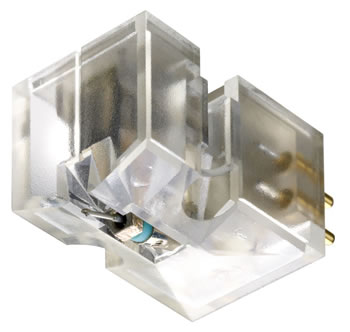
 Review: Denon DL-A100, Old Friend Re-incarnated
I got this when they were clearing it out, and it was not much more expensive than a new DL-103. Aside from the different colored body (but same material),
the A100 and 103 are identical in all spec's. The A100 supposedly is more meticulously manufactured and selected. Please refer to the useful review by Art Dudley in
Stereophile. This is useful for the purpose of this review as the Denon DL-103 is popular and has much higher impedance than the PC-1, so it is a good foil and test for any phono amp's versatility. DL-103 these days have at least 0.35 V output, and my DL-A100 is no exception, spec'ed at 0.38 V.
General Sonic Impressions Amazing as it may seem for this Denon veteran, I have never heard the DL-103 in my systems in NYC!!! As Art Dudley mentioned, the Denon is known to require considerable break-in time, so for the duration of my stay in NYC and this test it is unlikely in best condition. Despite that, its
exceptional timing and musicality shone through the first notes. At this point in time, it does not sound as clean as my Air Tight PC-1 nor my Ortofon Kontrapunkt C, but its inimitable microdynamic ways more than compensate. As mentioned below,
even when matched with (theoretically) unsuitable phonoamps it still shines. Although I didn't install it for comparison,
based on my two-decade experience with the generic DL-103 my feeling is the DL-A100 has a noticeably cleaner bottom and a faster bass (as mentioned too by Art Dudley), though it is possible that the Thorens arm, designed to take much heavier cartridges, also plays a role.
See below for more detailed comments.
 Click pic to enlarge. Note that I have switched the dip switches to ON to bypass the output caps. See text.
Review: AQVOX 2CIMkII, Part II
Click pic to enlarge. Note that I have switched the dip switches to ON to bypass the output caps. See text.
Review: AQVOX 2CIMkII, Part II
This exceptional fully balanced, fully discrete gem, like the Vida, is a wonder in design. Readers are urged to read the detailed
official literature and refer to my Group Review link on top for my previous impressions.
Previous Experience I only use the balanced input. Since my initial review, although I have briefly tried it with most of my turntables (using the adaptor) to excellent effect,
I have mostly used the AQVOX only with my Thorens TD-309. The reasons is: I am
not about to rewire my turntable leads to balanced connections (most of my phono phonoamps are single-ended) and the TD-309 is my only TT that does not have captured tonearm cables. To get rid of the adaptor, I have made DIY
Mogami 2534 RCA to XLR phono cables for connection. For output, I use mostly RCA but have tested the balanced out with DIY Mogami 2534 XLR to RCA cables. Usually I have the gain knobs around 11 o'clock. I re-read the official materials and discovered several things.
Official Tips 1 Not in the manual but in the
online info is a little on
bridging the output capacitors. I opened up my unit and surely there are two 4-position dip switches at the output. Setting all to "On" bridge the caps and
remove them from the signal path. As I use tube preamps, lack of DC blocking is not a concern and I happily did that. Even if I don't always favor no capacitor at the output, it is nice to have that option!
Official Tips 2 Not in the manual but hidden in a "
Setup Info" download are some startling advices, the likes of which I have never read in a phono amp manual! To quote just a little:
"...the PHONO2CI’s XLR-input is a current-amplifier what means a nearly shortcut to the cartridge.This requires to realign/readjust the cartridge/tonearm for a correct bass response. For more or less bass please try:
- Tonearm weight (max. 0.5 g more or less than recommended by the cartridge manufacturer) More weight mostly results in more bass.
- Tonearm heigt (higher or lower) The rule that tonearm and record should be parallel is not true. You really need to try it out. Mark your start position and try a slightly higher and lower position of your tonearm. Maximum 10 mm higher at the base..."
Most users, including this one, are unlikely to go to the suggested limits. I agree tonearm and record do not have to be parallel, but I'd think the cartridge body and record should be roughly so. In any case, 1 cm higher at the tonearm bass? That sounds like a lot. I think I may experiment a little, but not to the draconian limits suggested.
General Sonic Impressions The AQVOX has always delivered a
very detailed and clean sound, perhaps not the last word in bloom but not etched either. But to these ears
its strongest suit is its effortless delivery of rhythm and pace, and top-class microdynamic nuance. Theoretically it should not suit high impedance/inductance cartridges; but see further comments below.
 Phonoamps Comparison
Although I played many LPs, I will use primarily three LP's for illustration. Due to the long time span and equipment re-deployment, nearly all, but not all combos were tried.
Using Air Tight PC-1
The PC-1 was heard with all phono amps except the AQVOX (though I have heard that combo before to excellent effect).
Here I will concentrate on comparing the Vida and JC3.
Vida vs JC3 The first LP is probably the best known:
Khachaturian conducts Spartacus and Gayne Ballets (London CS-6322), long on HP's list and now available as an 180 gm re-issue. On the
Sabre Dance cut, both presented the full galore of the orchestra. The Aurorasound is a little fleeter and more open; the Parasound a little darker and weightier. Interestingly, this difference is audible as the more life-like return-bow of the celli on the Parasound. Also, the hall ambience appears better resolved by the Parasound.
The second is Dupre and Barenboim's incandescent
Brahms Cello Sonatas (Angel S-36544). More than most others, this excellently recorded LP astutely reveals how each phonoamp treats spatial clues. No two phono amp sound the same with this LP, which is not to say one can easily come up with a preference. This LP was one of the first I heard on the Vida, and I remember vividly my wide-eyed wonder at the open sound that also conveyed the urgency of the performance. Here, although some tonal aspects of the piano and cello are better with the Parasound, I definitely preferred the Aurorasound for its cleanness, agility and balance, as these qualities particularly benefit the difficult task of replay of the piano.

Last is a digitally recorded LP (I also have the CD and together they have long served as my tools for comparing the neutrality of my digital and vinyl rigs), Sigiswald Kuijken/La Petite Bande's cogent performances of
Bach's Violin Concerti (ProArte PAD-124; The LP is rarer and ugly, so I show you the classier CD cover). Again, it is a toss-up. I marginally prefer the Aurorasound for the reason stated previously, though the Parasound is more emotive. Now, this recording can easily turn harsh with the wrong equipment, but the sunny Aurorasound never confuses gleam with harshness.
Using Denon DL-A100
As mentioned, even brand new and not as refined as the PC-1, the Denon brought a very different flavor to the table. With all phono amps (not tested with Parasound), in
Sabre Dance, there is just as much excitement and bass oomph; more,
string bowing is noticeably discernible, and one feels acutely the phrasing and intent of the performer(s). These are a priceless qualities that money often fails to buy! The period instruments of the Bach are a little twangy, as it should be and arguably more accurate than the PC-1. The Brahms reveal in full the youthful ardor of the performers, though the piano is a little less real sounding than the
Performance is best with the Vida and AQVOX. With the Vida, one gets a slightly more upfront and less smooth sound than the PC-1, but perspectives are otherwise rather similar. Surprisingly, the High Impedance setting, which I use, is not that different from the Low Impedance setting. The performance with the AQVOX was shockingly good.
Big, bold, full of drama, benefitting in particular the piano playback. With the 47 Labs 4718, even if the cartridges' impedances are very different, the performance was quite similar to that with the PC-1, which to me means the personality of the phono amp dominates.
Further Sonic Comparisons and Comments (by Brands and Parameters):
- Aurorasound Vida Sound The Vida is an incredibly even performer with all genres of music. Just its admirable performance with my best cartridge, the Air Tight PC-1, alone is enough to win itself pride of place in my reference system, and from this tube phono amp man this is saying a lot. Equally exceptional is the sound it gives to my mono rig (with the Denon DL-102; I may write more about this aspect in another article). The dual connectivity further sweetens the deal. Yes, some of my phono amps sound just a bit more emotive (and that is of paramount importance to me), but the Vida never feels lacking and after full consideration the Aurorasound Vida has become my go-to reference phono amp. Even the excellent Parasound JC3 has to step aside, and I have re-arrange my setups as a result. Gain the rated MC gain of 64 db sounds like it should (confirmed by measurement in HiFi News) and I have no problem in use. MC Input Impedance as mentioned, the high and low settings did not sound significantly different with the Denon. To me this means the phono amp is not very sensitive to loading, and compatibility with most cartridges seem certain. I doubt one needs the more expensive option of the loading selector. Output Impedance the measurement in HiFi News shows a high figure. This should mean short interconnects are more desirable. In actual use, I have tried several (up to 3m) and could hear no deleterious effects on the pristine treble.

- Parasound JC3 Sound The JC3 has quite a different sound that is no less valid than the Vida. It is a little darker, more bassy and robust than the Vida. I think it also likely resolves a little more venue ambience clues than the Vida. My preference for the Vida is only partly for sonic reasons, partly for ergonomics. In a new setup, where the JC3 now resides (shall write about that later), with an Ortofon Kontrapunkt C, I just played Willy Deville's Miracle (acquired after hearing it played in Audioarts) and it was so riveting I just had to listen to the entire side, a luxury for me these days. I have an inkling that with a rock and pop diet the JC3 may reign supreme. Also, keep in mind the output stage of the JC3 is a true balanced design and I am mostly a single-ended user. Gain the MC gain sounds a lot more than its rated 68 db! This is the phonoamp to have if you have gain issues or ultra-low output cartridges (I should mount my Ortofon MC3000MkII, or buy an MC2000!).
- 47 Labs 4718 Sound For this classical orchestral music fan, the 4718 is out of its depth in this company. As stated before, with large orchestrals like the Sabre Dance, the 4718 tightens up and turns borderline strident. While the tympani are fast and tight, brass are parched. The Bach and Brahms fared better but the lean mid-bass and lack of heft at the foundations are still very much evident. Maybe my unit is still not run-in? Yet, despite these reservations, the 4718 does have its own sound/charm that sheds lights on some recordings. Loading again, since the 4718 worked as well with the Denon as with the PC-1, it seems this is not a big problem. Gain the gain of 75 db seems way "optimistic" to me, even compared to the 64 db Aurorasound, not to mention the 68 db Parasound! So, never take spec's at face value (PS Audio GCPH is another that comes to mind)! Note 9/2016: the 4718 gained much ground after run-in (see Part III).
- AQVOX 2CI MkII Sound In terms of fast transients and attack, the complex AQVOX beats the 47 Labs 4718 at its own game! But unlike the 4718, the AQVOX in addition plays large scaled and complex music with absolute control. Unlike the Vida, which, as the HiFi News commentator says, sounds neither tube nor transistor, the neutral sound of the AQVOX is discernibly solid-state, though with all virtues and few flaws. This may not be the choice for those whose system is already bright, but should be on the short list of all others, including tube lovers. Cap Bypass brings even greater clarity and speed. This should be considered a must for those who are not concerned with DC blocking (like tube preamp and amp users). Loading as designed, this is not an issue when used with the XLR input, taking the guesswork out of those neurotic about it. It has worked well with every cartridge I have tried, including the Denon. Inductance There are those who worry that the current amplification does not suit cartridges with high inductance (difficult to measure and frequently not known). Some have said the Denon DL-103 has high inductance, yet my similar DL-A100 works remarkably well with the AQVOX, so well that I am leaving this combo as it is!! Note that the two European reviewers (see my Part I, link above) both used the Denon DL-103 (popular in Europe) as part of test, so I am not alone. Indeed, arguably the DL-103 is most popular in Germany, where this unit was designed. So, little to worry about. Gain there is plenty, and with the 0.39 V output of my Denon, my gain knobs are at the 1 o'clock position. Lowering it softens the sound a little; position is purely arbitrary and system dependent.

- Fosgate Signature Sound For more details, readers are referred to my previous article. I only briefly auditioned the Fosgate this time around (hence no rigorous comparison), if only to remind myself (and readers) that I am still a tube man at heart. This has been a staple in my reference systems and it has matched well with all cartridges I have tried, including the Denon and PC-1. This phono amp is an incredible achievement. Its low noise belies its full tube nature (most tube phono amps would use a SUT for MC duties) And it does everything right: neutral, detailed, yet with plenty of bloom, as only the best tube designs offer. Even the Vida, JC3 and AQVOX cannot surpass it in overall performance. There you have it; it is a shame I have never given it a full review. Loading There is a 6-position selector at the back, very convenient. Gain is sufficient for my cartridges, including the DL-103. See link above. I agree with TAS that the gain seems more than the 60 db suggested.
- Denon DL-A100 (DL-103) Sound is very much in the vein of the classic DL-103, i.e., full of drama and presence. As mentioned above, its ability to convey the musical intent is top-notch, likely unsurpassed (except Decca), something money often fails to buy (I include various top-of-the-line Clearaudio and VdH cartridges in this statement, to name just two brands). Low Compliance and Arm Mass The common thinking is the Denon DL-103 only "works" on a heavy arm. Until relatively recently, I actually do not own one. So most of my time with the DL-103 were spent with more ubiquitous lighter medium-mass arms, like the RB250/300, and I still managed to get great sound out of it. In recent experience, the DL-103 worked well on the medium mass Ortofon AS-212S and of course the heavier Thomas Schick (reported here). In a coming article I will chronicle my rehabilitation of a battered SME3012 (I just installed a DL-103 on it to splendid effect). But I have saved the most intriguing for last: I have yet to write about it specifically but I have a Lenco GL-75 with an ultra-light SME 3009S2i and the Denon DL-103R (a somewhat different cartridge from the DL-103) works well on it (tested here). The large number of purists and thoerists out there in vinyl land no doubt would think of that as a joke but proof is in the pudding. Give the low cost of the DL-103, I think everyone owns it to himself to try it out (instead of asking for opinions)! I can think of no other cartridge that would make me say that.
- Thorens TD-309 Sonically the TD-309 is wonderfully confident with every cartridge I have tried. Although it may lack the weight of a heavier TT, the sound is agile, with excellent PRaT and tonal accuracy. A very fine TT.
- A Word on Gain Many people who worry about not enough gain, especially in the MC stage. With some phono stages, the query is justified, yet more often than not, the problem resides elsewhere in the system. In audio, there are many funny people around, usually people who cite theories and doubt their ears. You would be surprised by the number of people who don't like preamps, preferring to use a passive preamp or drive an amp directly from the source. With digital, due to popular demand DAC's now frequently incorporate a preamp stage (of variable implementation quality), but my experience with them (even well-reviewed ones like the Eximus DP-1, reported here) have been uniformly negative - all benefit from addition of a good preamp. With analog, it is even more important to not just have a full-function or line preamplifier, but to have one as high-quality as possible. A phono amp with volume pot will not do. Witness one of the reviewers of the Fosgate, who had gain problems, and he is not the only reviewer like that. Yes, we ask why amplify the signal then attenuate (or the reverse)? I don't have a definitive answer, but I can tell you a good preamp does more than gain (doing things such as buffering, very important) and is the soul of a system. IMHO, it is simply ridiculous to use a passive preamp, and then buy a certain phono amp just because it offers the highest gain (usually in lesser hands not necessarily beneficial to sound) in spec. Beware of spec's, as you can see in this group spec's don't mean much at all (the highest spec'ed one has the least gain). Also, everyone should have a Step-Up Transformer or two, which are preferable to active MC stages in many instances (as with most lesser MC phono amps). Suffice to say I almost never have gain issues.
- A Word on MC Loading Again, here many people use their heads instead of their ears. The various vinyl forums are overflown with opinions on "proper" loading. Many of these writers use mediocre phono amps and then fuss endlessly with MC loading (or MM capacitance). This is sad. My experience is just the opposite. IMHO, Loading may have its value but more important is the quality of the phono amp. With phono amps of the highest quality loading is less important (indeed many famous designers do not believe in it). My Vida and Fosgate have loading selectors, but the difference in sound is not as much as you'd think. The JC3 does not, but sounds great with all my cartridges. On this topic I also had a chat with my vinyl guru, Andy L (who is active in many forums). Like me, he does not think MC loading to be of supreme importance; he says any loading would not sound equally great with every record - food for thought!
Hallelujah! The article is done!
 Letter from NYC (43) 2015 (5): The Long and Winding Road
 Incomplete Counterweight The main part of the counterweight as well as the rider weight are missing. The small counterweight on it is not enough to balance even a light cartridge, and I had to fix some weight over it by blu-tac to achieve balance (see right pic). Andy L told me the rider weight is very important for balance, but until I source the rest of the counterweight (expensive no doubt) that is the way it will have to be.
 Shure SC35C/Pioneer PL-10 Rehabilitated




 Posts
Posts