Showing posts with label Brand-LS3/5A. Show all posts

10 September, 2023

Western Electric 124 Langevin 102 LS3/5A


Click pics to enlarge. WE124B on the floor. Micromega Stage 2 CDP and Yamamoto CA-04 Preamp on the upper shelf. On top, from L, Aurora Vida with Cinemag 3440A on top, Fosgate Signature, Sparkler CDP (unused) and Elekit TU-8300 (unused).

Letter from NYC (23-12): Labor Day Weekend+, Part III (Monday), Chez Andy et Moi

Written in Shenzhen

(continued from Part II (Sunday)) I'm not sure how this came about. Western Electric must have been mentioned at some point in Andy's now much expanded (and very busy) Wechat group. In any case, I was the only one with some WE stuff, and the crowd wanted to hear them.

In Preparation and My Perspective You can imagine I had a busy morning. As it was going to be quite a few people, it had to be in the LR, where I had my LS3/5A system. The WE124 monoblocks had lied dormant for several years. It was not too much trouble getting them into the LR. I hooked them up to the Yamamoto CA-04 Preamp and they gradually came to life. Familiar and intimate sound that is very different from the 300B I had been listening to (and which Sam heard in Part II). In a small way, as the Yamamoto now has a pair of tiny WE 403A inside, it is a "full" WE system, LOL! Well, the 124s have all Sylvania tubes (6J7s and 6L6GAs) though, very importantly, the rectifiers are now WE274B! My WE friends may snicker, but I think it still delivers a reasonable fascimile of the WE sound. You may ask, what's the difference between the 300B amp and the WE124? The WE obviously has a fuller sound and is more powerful. Its air is smoother than 300B but some may like the more overt sound of the 300B. Most importantly, the WE has more of a subtle rhythmic savvy that befits all music. Also, I had actually taken out the WE106 but somehow I could find only one 274A and so had to drop it this time.

My HK taskmaster icefox (@E) again enslaved me, this time via remote! He all of a sudden mentioned the Langevin 102 in the Wechat group. He had heard it to great effect in HK apparently. So it took me quite a while to extricate this heavy beast from my dedicated horn room. It had not been used for a long time too. My unit uses no WE tubes. I swapped out the Yamamoto and the sound was a little congested at first. It opened up a bit gradually but was not as transparent as I had remembered and wrote about. I just let it run.

Chez Andy Just before noon, I walked all the way to Andy's place in Auburndale. This had actually been planned the previous week, before all the recent madness descended upon us. As usual, we casually listened to some records on Andy's mellow Altec A5 (if you search the blog [upper left corner] for "Andy + A5" you shall find lots of piecemeal bits I wrote. To sample, perhaps this and this to start? Andy prepared Beef Noodle Soup, his specialty, and we drank and ate. One funny thing is Andy opined that no wine ever can pair with the noodle soup. I'm rather less picky. I particularly enjoyed a Nono/Berio record; somehow the European Avant-garde (old guard by now), whom I favor, deliver a narrative (unlike much modern music) that sounds particularly good on horns.


About 2 hours later, the crowd descended upon Andy's. Philip, who had dim sum before, came with Johnny. MJ arrived around the same time, separately. They much enjoyed the A5 for a while. Somehow, we found out Johnny had not eaten lunch yet and Andy's Beef Noodle Soup saved the day for him. One recurrent theme during our meets is Bossa Nova. The laid back style is particularly suitable for horns. So a bit of Gilberto was played wherever we went.  Then we all squeezed into into MJ's car and headed for my place.

Chez Moi I had bagged up all Andy's wines, which we continued to enjoy at my place. Kevin joined us later. I used my Micromega Stage 2 almost exclusively. We played a lot of CDs. The system sounded good but something was missing. I swapped out the Langevin and back went the Yamamoto. All the air and soundstage came back. I reckon I need to re-run in the Langevin for quite a while. Next time maybe. I also demo'ed the el-cheapo but excellent 16 bit TDA1543 Magnavox, which is so different from the 1-bit Micromega. As Phil's CDP had gone south, I lent it to him to play CDs. Meanwhile, the horn room was active. A couple of people went in and I played a couple of tracks. I could not man 2 rooms and it was under-utilized. I also took out and played my Sonus faber Electa Amator II, which is more powerful and quite different from the LS3/5A.

The big question is: did they get what is the fuss about WE? I'm not sure at all. The small system was certainly not at the rarified level of my 133 in HK (also a different pair of 124 here), all utilizing big Tannoys (like our friends' GRF's). Even in HK, I had friends who failed to grasp what it's all about. The LS3/5A is a small loudspeaker that should be appreciated within its own envelope. But, I maintain, if you listen hard, it can still reflect what the equipment is largely about, in a subtle manner that big loudspeaker users may not be used to (or unable to mentally switch over in an instant). To me, the real distinction of WE is very subtle, an extra tug here or there, an accent that one never notices before, and a breathing whole. I'd think on the day I ended up likely demonstrating what an LS3/5A system can achieve more than what WE sounds like. It's like the effect of the WE274 rectifier (the real one, like what I used, not replica), which does not shout at you but instead persuades. I'd say the air and refinement of the system was excellent. It was also a demonstration of what near-field placement can achieve. I note that few of our friends employ near-field placement, and that is an important divide. For myself, I try my best not to have the loudspeakers against the front wall, as in-room confers a much wider soundstage and ambience (or venue and hall sound). Music is not just about texture and impact, though these are important. Next time, whenever that is, I shall try to have a larger pair of loudspeakers in my LR (maybe my Martin Logan Source). Or maybe I shall take my WE to their large systems!

Nice Coasters from Taiwan! Chez Andy

26 August, 2023

LS3/5A Chartwell Audiomaster Rogers Yamamoto CA-04 Douk E6


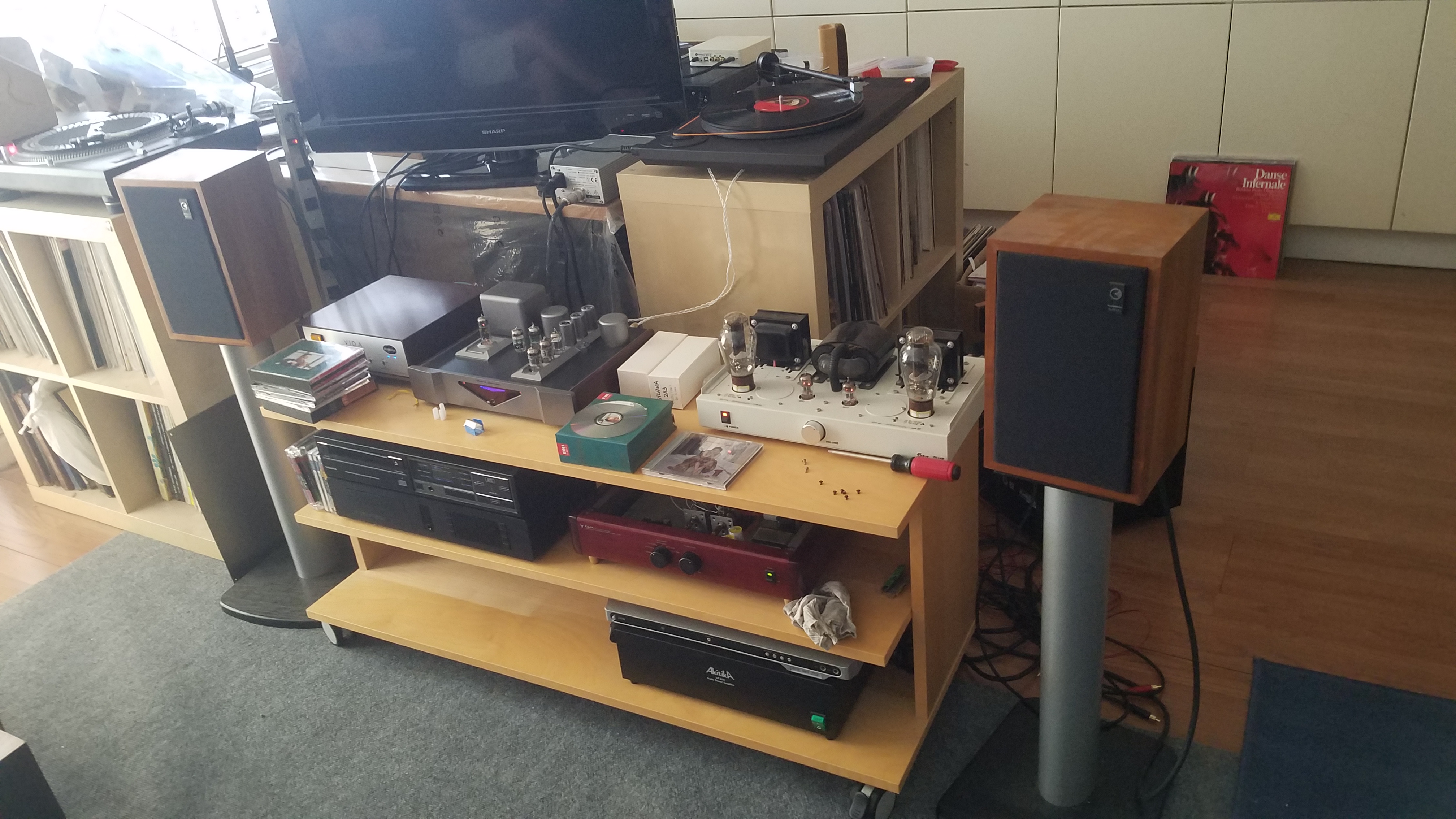
Click pics to enlarge. Chartwell LS3/5A. On top of rack, Fosgate Signature Phonoamp and Elekit TU-8300 amp. Beneath, Micromega Stage 2 and Magnavox CDB-262, Yamamoto CA-04. Incidentally, the LP Danse Infernale in the background is one of my references. The Boston Pops/Fiedler Night on Bald Mountain is my favorite, bar none in performance and sonics, more exciting than the venerated LSO/Solti (Decca), which seems plain vanilla in comparison. It can often be found in dollar bins.

Letter from NYC (23-8): Small but Beautiful

Update 8/30/23: A few edits, including important clarification on the LS3/5A shootout - the Audiomaster won all hearts.

It has been a little over 2 months since I left China for NYC, where I spent all my time except for 2 weeks in July in Chester, UK. In the one and a half month here, I really haven't done very much except lately I have upped my written output for sure (I think around 10,000 words in the last few days). I have mostly sorted out my accounts. Sometimes it's exasperating dealing with financial institutions, including the IRS. Everything takes so long.

Given that I am by myself, I wake up even earlier than usual, around 4:30 am! I go to sleep around 9 pm. Maybe 2 or 3 times a week, I'd meet up with friends for a lunch gathering. I don't spend much time preparing food, and 2-3 times a week I'd just take out from the local Senior Citizen Center. Otherwise, aside from running errands and shopping for essentials, it's all time at home, much of it spent listening to music, sometimes while writing. I like moving about in my large LR more than being cooped up in my dedicated listening room (even if it has my reference gear it is more of a sanctuary when there are others around), so up to now I have only listened to the small LR system. Whether for review purposes or not, I rotate things in and out, and here are some brief notes:

Harbeth P3 ESR SE vs LS3/5A In my recent posts, including reviews, I have used pics of the Harbeth and LS3/5A. I acquired the Harbeth not long before I left NYC in 2020 (review). Fact is, a few weeks ago the original owner Leo would like to buy it back, and I obliged. I slotted in the Rogers LS3/5A (black badge, serial # 5,xxx). Haven't used the Rogers in quite a while, but in an instant I knew it's a worthwhile change. By now I'm in an even better position to talk about the differences between the two. Although both classic English loudspeakers with shared heritage, differences are obvious: 1) the Harbeth is smoother and reaches deeper; 2) despite a somewhat slower transient, the LS3/5A nonetheless is livelier and more dramatic; 3) despite many reviewers' talk (most often wrong, even downright stupid) on neutrality, as a whole the LS3/5A is more truthful. Sometimes it will show a little more the warts and fraying edges of recordings, but that is what a monitor is supposed to do, and a monitor it is. Still, I had much enjoyed my time with the Harbeth, and recommends it.

Preamp Rotation First I used my Shindo Monbrison. But as soon as I started to try out different phonoamps I switched to Yamamoto CA-04. The reason is very simple: the stock vintage RCA connectors of these Shindo's lose connectivity often (AD mentioned this in one of his Shindo reviews). If one has to plug and unplug often, a switch is mandatory. Yamamoto vs Shindo These have very different design and sound. I wrote about the difference in 2020, and things haven't changed. This time in the Yamamoto I have been using exclusively the WE 403A.

Douk E6 This belongs to the above section but due to the epic nature of this comparison I give the Douk E6 its own subheading. I borrowed one of Andy's many units. It has the stock Chinese tubes, with O-Rings for damping. The caps had been changed to red Audiophiler MKP 250V 1.0 uF (marked 105J). These look similar to the ones I used. PS was a small 5V USB Charger. vs Yamamoto As well as I know the E6, I was still astonished by the sound. The most significant change is a larger sound field with fleshier images (befitting a DHT) and even more air. This is consistent with my experience but now the comparison is with a preamp whose second-hand price is 20 times the cost. One interesting observation is that the clicks and pops and LP artifacts are particularly highlighted. I think this is a result of the incredible high frequency extension, the high gain and transient speed. The Yamamoto is perhaps more controlled with large scaled music and its midrange (with the WE tubes) and rhythm a little more layered. But the E6 held its own for sure and I only continue to use the Yamamoto for the better connectivity. Note that this is the first time I have compared an E6 to estimable preamps (though my HK and NYC circles have, all to the same remarkable conclusion of equality, if not superiority). Remarkable!

Analog Rotations I have been logging this. In case you have missed them, more substantial articles are on Sun Valley SV-EQ1616D and Fosgate Signature Phonoamps, and MoFi Studiodeck. Since the arrival of the Studiodeck I have been using it mostly, with the Fosgate Phonoamp. Very contented, but I hope I can stir in something a little more exotic before I leave NYC in early September. In recent days, I have gone through 3 symphony cycles: invigorating Beethoven by Munich/Kempe (Seraphim, sound good despite being quadraphonic); magisterial Dvorak by BPO/Kubelik (DG; stupendous sound); flawed but worthwhile first Sibelius cycle by Boston SO/Davis (Philips, good but not top sound). You shall be amazed how time flies when one listens to the greatest music.

Digital Duties As here. I actually listen to quite a bit of CD, especially Jazz. Like Miles and Coltrane. Particularly fine sounding Rachmaninov Symphonic Works from Concertgebouw/Ashkenazy (Decca). Ever heard Patricia Barber's Companion (Blue Note)? Fabulous sound and one of her best. Have you noticed one thing? I haven't streamed the whole time! I actually miss it, but the very weak data handling of my phone is not up to it.

SE Amps I started with the small and  convenient Almarro A205A (EL84), then two 300B amps, the AES SE-1 and Elekit TU-8300 (first review and review after mods and updates). The Almarro does a fine job driving the LS3/5A but the 300B amps open things further up. AES has fixed bias adjusted through a single 1/4" TRS phone jack in the back (I use a connector with my multimeter). As the bias is for both tubes, and tubes may not be balanced, it's better not to bias high. Mine (Shuguang) was set pretty low, at 90 mA total (for both channels). This time, I operated the Elekit as an amp (Yamamoto  AES vs Elekit Using the same 300B tubes, despite being biased lower (the Elekit is autobias), the AES sounds more powerful. The circuit may have something to do with it (traditional vs constant current source, respectively) but I'd say the AES has the better transformers. Tonally the Elekit is airier, more resolved and on the neutral side, and the SE-1 is a little more centered on the midrange. Both are very good. Andy and Kevin have heard them both and voiced no serious preference. With my guests I also rolled in the Philips JAN 6L6WGC (which I liked) but it seems both of them preferred the 300B. I think the Elekit is sounding the best as it ever has. I actually wonder if it has finally starting to break in. You see, I don't think I have had more than 300 hours on it altogether, a significant fraction from this time around! And now being summer, I may not bring in the 6C33C Almarro 318B. Instead, if I have time I shall try some more powerful Push-Pull Amps on the LS3/5A!

Subwoofer After a while, I brought in my very modest Pioneer SW-8 subwoofer.  Finding the setting took a little more time than when I used it with the Kilpsch Heresy. I estimate the final Crossover Frequency to be around 80 Hz (I remember in HK it was even higher, but it was a different sub) and Volume was just a touch (less than 1-hour on the dial). With even the little bit added, the music is more dynamic. When Kevin and Andy visited I demonstrated to them and Kevin correctly said with the sub on the soundstage expanded. There are very few albums on which the presence of the sub can be suspected. A success, but I know all about it from my experience in HK.

Rogers vs Chartwell vs Audiomaster As both Kevin and Andy liked the pair of Beydas clone I brought to Andy, I invited them to my place for an in-depth session with 3 pairs of the real thing, all 15 ohm versions at that! First, we listened to the Rogers (black badge; serial # 5xxx), which had been resident in the system for a while before they came, and it was very nice. When the Chartwell (serial # 3xxx) was substituted, we all heard more treble and a leaner balance. Andy remarked it had less bass. Part of this could have been because the Rogers was in use before they auditioned, whereas the Chartwell had been in the closet for years. After their visit I just continued using the Chartwell, and really do not feel now that they lack bass in any way, though it is true the treble is a little more prominent (mirrors my experience in HK). As a whole, I enjoy its tighter grip on material as well as better dynamics; its sound is likely closer to modern variants. Finally, it was the turn of the Audiomaster (serial number not obvious). More than Rogers and certainly Chartwell, I have used this pair on and off over the years, always with great satisfaction. It is a little darker but, oh, how relaxed it is! Both Kevin and Andy were thoroughly charmed by the Audiomaster. Too bad we did not have on hand the Beydas to compare! It should be noted that Chartwell and Audiomaster are much rarer than Rogers, especially so in America.

Xinshi 新时 597 Passive Horns In many of my more recent articles, these appear atop the loudspeakers. They enhance the sense of air. After the pair was handed to Kevin, I immediately noted a diminution of air in the system. This incredible thing is now a necessity in any system. Next time I come back to NYC, I shall bring a pair along.

The TV Long time readers with eagle eyes will have noticed that in 2020 the TV was on the rack, whereas now it had been moved to the large work table behind. It cleared much space for gear, but that was not the point. Experienced audiophiles know that a large center object, aka the TV, messes up the soundstage (can be better if a thick cloth is draped over it). By doing that, the soundstage immediately deepened, significantly. I usually never sit in the center, close to the right speaker when I'm on the sofa reading or computing, and further right on the dining table when working or eating. No matter, the soundstage is much improved, and quite impressive. Advantage of being alone.

TV Sound My Sharp, circa 2010, is certainly not shap in picture and a lousy one when it comes to sound. As I watch quite a bit of TV, be it old TV series or B movies, I struggle with the sound as well as clarity. The older movies and series are definitely lower in sound volume and often muffled. Perhaps they are playing bad (low res) copies. I borrowed a couple of DVDs (Unberable Lightness of Being and Two for the Road) from Andy and found the sound of the replay (through my Sharp TV), even from my top-tier Sony BDP-S5000ES, better than TV but still totally underwhelming. I finally could not stand it any longer and fed the optical out of my TV into my Micromega MyDac DAC and then into my regular system. Much better, but still not enough. You simply do not watch a modern movie (Unbearable) with a SET amp! LOL! I know I can probably do better by configuring my Blu-Ray player and, yes, more wattage will be a different story, but so much for now.

 Audiomaster Crossover

Innards of the modified Elekit TU-8300

Douk E6 in action

22 February, 2019

AkitikA GT-102 Power Amplifier, Audiomaster LS3/5A, Linn Kan, LM3886


Review: AkitikA GT-102 Power Amplifier, Part I
LS3/5A vs Linn Kan

A Tale of Two Amps It's funny how things are. After building and enjoying the Elekit TU-8152, somehow I was on a roll, and summoned enough resolve and energy to build the solid state AkitikA kit, which has been languishing on my "workbench" for several months.

Kudos First of all, Kudos to Stereophile, where I first read about AkitikA. Even though I don't have that much time on my hands, I am a sucker at heart for affordable kits (think: my cheaptubeaudio roots). Midway through Herb Reichert's Review, I have already decided to buy it. I hope Stereophile some day will get to review Elekit!

Second, Kudos to AkitikA, for offering such a good sounding product at such a low cost. Even more admirable is the fact that they did not raise the price even after the rave review, a rare thing in my experience (unlike Bob's Devices, for example). It has to be said too, that it makes some successful tube kit providers (like Bottlehead and Transcendent, to cite only two) seem overcharging (imho these probably got too successful for their own good, and I know their products; they are definitely too expensive when compared to, say, Elekit).

AkitikA The Official Website is excellent, organized to a T and instantly confidence inspiring. Founder Dan Joffe is a bona fide electronic designer as well as amateur musician (hence I believe his ears), who started it to update Dynaco products. Its niche was, and is, the restoration of solid state Dynaco equipment. The Updatemydynaco pages are fascinating. In fact, the amplifier modules are very similar to those in the GT-102. They almost make me want to get some of the ss Dynaco's on the cheap and do some restoration! It also seems Joffe is a respected figure in some DIY forums.


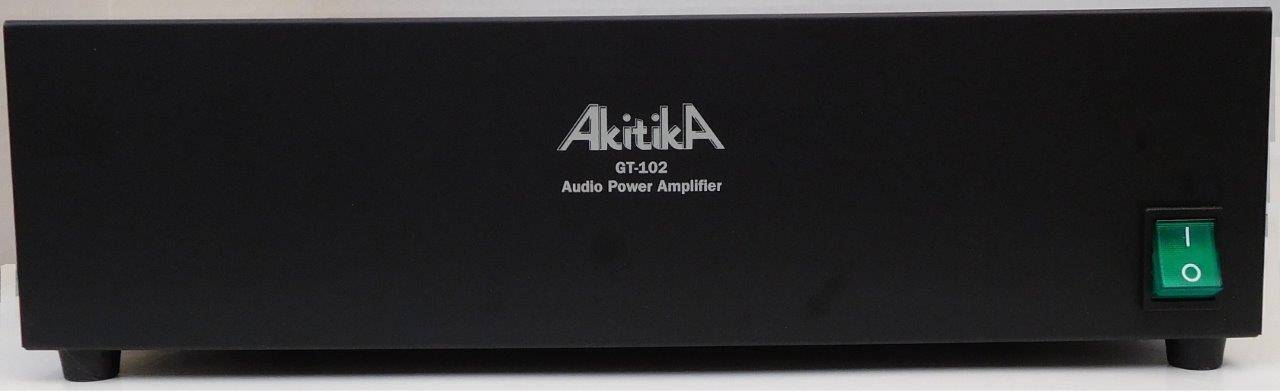
AkitikA GT-102 This is a stereo power amplifier, with a very successful predecessor, the GT-101. The Stereophile review and the official website are excellent and thorough, so I need to provide only brief comments, only those of interest to me.
  • LM3886 Op Amp What really got me interested is that it uses the LM3886 Op Amp, the same Op Amp used in the iconic 47 Labs Gaincard amplifier, which I still own and love, and which has spawned countless Gainclone amps (I completely agree with Reichert's succinct comment on this, which is that most of the clones, including successful commercial ones imho, just don't have that je ne sais quoi quality of the original). In passing, I should mention that I have not formally "reviewed" the 47 Labs Gaincard (4706), but I have commented on it often (should you have the time, use this link and this link for the bits and pieces I wrote; pardon the disorganization).
  • Design and Spec's As a tube man, I am certainly lost. You can get all the info you need from the links. The AkitikA website has the downloadable massive manual, which goes into great details on the design for all to see. It is useful to know, unlike the ultra-minimalist Gaincard, it has a lot of power regulation and protection, and power-on relays. I note from the website that not a few users use them with difficult panel and ESL loudspeakers without problem, despite Stereophile's measurements which show the amp working best into higher impedances, which AkitikA agrees with. Official data shows it to be 50 wpc into 8 ohms, almost doubling into 4 ohms, but Stereophile's data is contradictory.
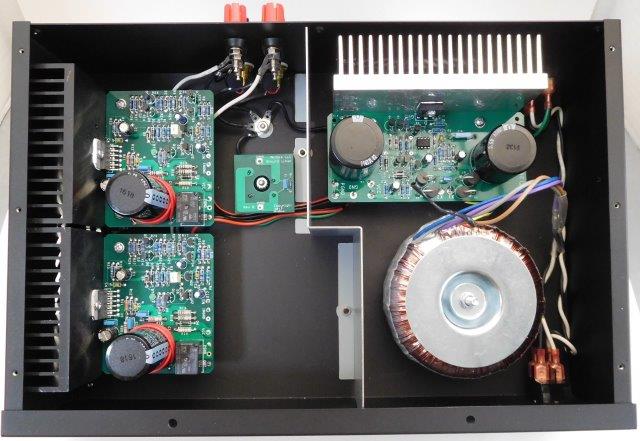
  • Component Quality From the pic, you can see that they are of very good quality.
  • Price $314 for the kit ($488 for assembled) + $26 shipping. For the complexity on offer, I am impressed. This man is not only a designer, he must be a good businessman who can deliver the goods at this price. On the other hand, perhaps he is not a good businessman as one wonders how can he make a profit. More, there is a 30 day money back guarantee, which I doubt anyone will use.
Building the Kit I did it in several sessions. I did not keep time, but I think it was more than eight hours, part of it due to some mistakes that I made.
  • Instructions The manual is massive and, except for a few places, very clear. I do think even a novice will be able to do it. Personally, I like the Japanese manual style (very detailed diagrams and few words) even better, but then this solid state amp has a lot more parts than most tube kits, so I understand.
  • The Printed Circuit Boards They are of good quality, but on the small side. Checking all the parts and stuffing the boards took quite a bit of time. No SET amp, this!
  • Soldering I must emphasize that one must follow the instructions and use a small solder tip. In many places, traces are tightly spaced and there may only be room barely larger than the solder tip to solder on. I'd surmise some novices will find this a little challenging.
  • Wiring Being a Tube Kit Builder actually hampered me a little here. Ground This amp uses a Star Ground that is not so common with tube stuff and that actually demands more wiring. It took getting used to that the ground wire of the speaker post is much shorter than the hot wire. Harness One has to build a harness with different wires and lugs, a little tricky, but all was well explained. But I made a mistake here (see below). Here for connection to the loudspeaker post I substituted my trusted Belden 9497 for the stock cableSignal Cable This is where I made my biggest mistakes. I followed the instruction on Page 27 that tells you how to dress the cable but did not refer to the full instructions on Page 51. Big mistake. Here I substituted the Gotham GAC-2, which I had used successfully for my PAS 3 project, for the stock one. On the amplifier module, after soldering the +/hot wire to IN, the instruction on Page 27 is to solder the drain wire to IN GND, which I did with the bulkier shield of the GAC-2. Then I wondered why there is no mention of the -/ground wire (which I thought should go into the extra and vacant IN GND). Later, when the RCA Connector Ground Lugs were installed, there was no mention of the drain wire/shield. Non-plused, I went over everything and still scratched my head. Finally I read the instructions on Page 51. On my! Basically it tells you to remove the -/ground wire from the stock shielded cable, and use the shield/drain wire as -/ground! This is most unusual, and I have never encountered this before. I was not about to undo the harnesses, so I soldered the GAC-2 shield onto the RCA Connector Ground Lug, which already had the -/ground wire attached. For the amp module end, I unsoldered the GAC-2 drain/shield, cut it, and soldered on the -/ground. This is as I would make an interconnect, shield attached where signal starts and not attached where signal ends. I am not sure what changes this makes to the sound. I wonder why AkitikA prefers to use the drain as -/ground wire - I'd guess the sound of coaxial wire is preferred. In that case, for me Gotham DGS-1, a coaxial cable, would work even better. I'd suggest adding a line on Pg 27 on the special nature of the cable. Lesson: follow every instruction!
  • Operation Mine worked flawlessly from the word go. The relays kick in after a few seconds and one is ready to go. Smooth. And, it is dead quiet.
Bowmboi by Rokia TraoreListening
  • In System III I To test out the amp with as little outside influence as possible, I first employed my System III's front end, comprising the Sparkler S303 CDP and Schiit Saga used as passive preamp. Not to mince words, I was impressed right from the startWarm Up does not seem to be necessary. Sound is very good from the start.
  • Linn Kan I grabbed these for my first session, as they were easiest to get to. These are first generation (I) and employ the same KEF woofers as the fabled LS3/5A. They were placed way in-room, on my Sonus faber stands (kinda near-field listening). The Linn Kan usually prefers close to wall placement as its treble is sharper and bass leaner (than the LS3/5A), and in this position it can sound lean even with tube amps (like my Elekit TU-8300 300B amp). Not the case here. With the AkitikA, the bass is rich, yet tactile, making this the best sound I have had from the Kan I. The Saga is very transparent, and can sound sharp, yet here the combination work superbly well together. The sound is detailed, with notable rhythmic elan. Vocals, male or female, were perfectly rendered, as exemplified by the vitality on offer in Hugh Masekela's Hope (CD, Triloka, OOP); and by the subtle and sinuous delivery of Rokia Traore in Bowmboi (CD, Nonesuch/tama, also OOP).
    You Won't Forget Me
  • Audiomaster LS3/5A (15 ohm) Delighted, I was thus motivated to retrieve my LS3/5A. From the Stereophile review, I knew it'd work a treat and it sure did. The sound was even better than the Linn Kan. Being a fuller sound benefitted the vocals of Traore and Masekela even more. Here I'd say Herb Reichert's findings are right on the money (even if the Falcon LS3/5A he uses are likely sharper sounding than my vintage pair). The sound is so good that I am sure you could do worse by using an inferior tube amp. The AkitikA is warm and inviting, yet its fast transient speed actually complements the LS3/5A, which is usually a little slow sounding with tube amps.
    Bach
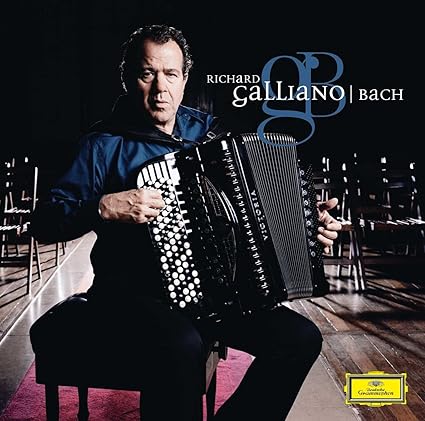
  • In System II Further encouraged, I connected it to my System II front end, comprising Sony XA-5400ES SACD/CDP, Technics SP-1200 Mk II/Shelter 201, Thorens TD-125/SME3009i/Denon DL-304, Aurorasound Vida phonoamp and Shindo Monbrisson preamp. The sound gained from System III, richer and with an even wider and deeper soundstage. With a tube preamp, vocals are naturally even better. Shirley Horn's priceless You won't forget me (CD, Verve) was so utterly compelling that I just had to listen from start to finish (which never occurred before). Not only were the fine modulations of Horn's voice as well rendered as I have ever heard, the piano (herself) and the solos of the guests (a starry cast, including Miles) had startling definition and realism, as did the ambience and audience noise (little). On Richard Galliano's Bach album (CD, DG), I too could not help just sampling, and had to listen to the entire Violin Concerto. For either album, I was not at all sure I'd exchange the amp for even the best tube amps.
Comments
  • Sonic Assessments Overall, there is little question that the AkitikA is an overachieving amp. The most gratifying thing is, no matter what I played, I was gripped and could not stop listening. I am likely to keep it and the LS3/5A for a quick listening system, such is the synergy between them. The LS3/5A works well with UK classics integrated amps like the Naim Nait, but here it is taken to a wholly new level. Rhythm and Pace The AkitikA even trumps the UK amps in PRaT that the flat-earthers so covet. Solid State? Although the AkititkA is just a little warm sounding but, lest you misunderstood from the listening notes above, it is not tube-like. Although vocals and instrumental timbers are alluring, the treble, though not lean, is not quite as harmonically fleshed out as a tube amp. Tube die-hards may demure, but the AkitikA compensates by its enticing performance in other areas. My Mods Here I must say that my substitution of the signal cable and the loudspeaker cable must have an effect on the sound. For people who don't know, the Belden 9497 cable is a very even performer that I have written a lot on; it almost never sounds bad with any loudspeaker, that I am confident about. The Gotham GAC-2 is a very reasonably priced but superior shielded two-conductor cable, which I used for my PAS 3 project (you can read about its effect here). Both cables are likely more transparent than stock offerings. Note that while I'd say the AkitikA is a little warm sounding, I'd not use the word "dark" at all, and my mods may have contributed a little in this area. YMMV. Gainclone? This is not your ordinary "Gainclone", as it is certainly a much more complicated amp. Does it bear any resemblance to the 47 Labs Gaincard? I don't have the latter with me but I know its sound pretty well. I'd say: 1) with both one just keeps on listening to the music; 2) both have rhythmic finesse, but I think the AkitikA is even more accomplished; 3) the 47 Labs Gaincard is a little warmer; 4) obviously, the AkitikA is more powerful.
  • More Coming This is Part I because I intend to further explore this amp with my other loudspeakers, in particular the electrostatic Martin Logan Source. I also may break my own rules and try it out with my 104 db horns (think a Jimmi Hendrix track), which has been the exclusive provenance of my tube amps! I may also take it to my friends and see their reaction. Lots of thoughts, too little time, but this is a fun amp for sure.
You can rest assured there is more to come.

07 January, 2017

Kondo System Loudspeaker Matching LS3/5A Pioneer S-A4SPT-PM VP 47 Lab 4737 TAD TSM-2201 JBL Kondo S-18


Pic of system during evaluation. The Kondo system is connected to the loudspeakers on top, whereas the LS3/5A's below are driven by Flying Mole CA-S10 digital amp to the left of the M7. And No, the Pioneer's are not trapezoids (just lens distortion). Click to enlarge.

Kondo System Bookshelf Loudspeaker Matching: Pioneer S-A4SPT-PM and -VP, 47 Lab 4737, TAD TSM-2201, KEF LS50, LS3/5A and JBL Subwoofer
My Kondo System, Part V
Review: Audio Note M7
Review: Pioneer S-A4SPT-PM, Part II
Review: Pioneer S-A4SPT-VP
Review: TAD TSM-2201, Part II
Kondo Ongaku SP (S-18) and Biyura
Letter from NYC (61) 2016 (17)

Revised Feb 3, 2017: For the last two weeks I inverted the loudspeakers, that is with the tweeter down. The effect is dramatic, and I am very pleased. This is added to the discussion in "Sonic Impressions: Effect of Placing Loudspeakers High Up"

Links to My Kondo System, Part I (background info on Kondo and Ongaku); Part II (all about M7); Part III (the most important one, detailing set up and listening experience); Part IV (largely phono related, and Kondo preamp/amp were not used; skip if you are digital only)

For those interested in 47 Labs 4737 alnico loudspeaker, Part II (with Flying Mole CA-S10 amp) and Part III (with Naim Nait I amp) contain extensive testing.


The Evaluation took place in HK but the article is written in NYC.

pic: R: Kondo S-18 prototype from Positive Feedback CES 2007 Report; L: S-18 leaflet. Click to enlarge.


ENIGMA: What Loudspeakers for Kondo?
As with many SET amps, one of the major difficulties with Kondo is loudspeaker matching. Like most SET amps, ideally you really need efficient loudspeakers to get its best.

What Kondo san himself used and/or designed This must be what we ask first. YL I believe, in his earlier days, even before Ongaku, he was a horn user and involved in YL horn designs (my YL horn system here; I have yet to write more extensively on these marvelous creations and their superb sound). I have done a bit of research on YL, but there is not that much on the internet. I believe, like JBL and Altec, there were few official enclosures). Branded Kondo Since YL, Kondo san had designed many smaller loudspeakers but they are virtually unheard of. Kondo's official site has discontinued loudspeaker model names (but not info) accessible only via its Japanese page (here). Ongaku SP (S-18) The S-18 is composed of the M-18 full range unit (many Japanese designers, like 47 Lab, Sparkler, Air Tight etc, favor fullrange loudspeakers) and the M-1 tweeter (likely a first order crossover - just a cap). I did hear the S-18 many many years ago, when Kondo san himself attended a HK hifi show (organized by the now-useless magazine 發燒音響). In the smallish hotel room, it was among the best sound I have ever heard in a show. The Positive Feedback pic shown above looks however bigger than I remember. Also, this German site's Las Vegas 2008 report must be virtually what I heard. BiYura (Field Coil) Kondo san passed away in 2006. In 2011 the Biyura Field Coil loudspeaker was unveiled in various hifi shows, including that in HK, which I covered (here). As you can read, I did not like the sound then. For this article, I did an exhaustive search and it seems the Biyura made apperances in quite a few hifi shows, but none after 2014. As there is not even a mention in Kondo's Japanese page, I assume the BiYura remains a prototype, if not an abandoned project. I am curious whether Kondo san himself had a hand in its conception, or if it is solely Masaaki san's effort.

It appears: 1) Kondo loudspeaker systems are perpetually in a state of fluxalmost always in prototype stage, then and now. There may be multiple reasons for this: it is in keeping with most artisanal designer's tendency to forever tweak; also, many Kondo dealers also distribute other horn systems/efficient loudspeakers and hence may not be that interested in a Kondo loudspeaker (think Avantgarde in HK and Living Voice in the UK); 2) Kondo san likely was never completely satisfied with his loudspeaker creations (under the Kondo name). None ever remotely achieved sustained production (The S-18 and the Ruthy 4 perhaps were better known and had sold a few). Maybe Masaaki san is like that too with his field coil.

What Users and Dealers Use Aside from a few appearances by Kondo themselves using the S18 and Biyura, all manners of loudspeakers (not just horns) have been used in audio shows (to get an idea, google images using "Kondo hifi show"). My friend JC, Australian dealer (Audio 101) for Kondo, uses Avantgarde Trio and Tannoy Westminster. I have also heard an acquaintance's Kondo gears with Audio Note UK loudspeakers (sacriledge!). What I Use In my old house, I did not get to play that much with the Kondo's, but they did well with my Canterbury. In my current small abode, I could only manage to do it the way in the pic, which is why I actually carried out this not inconsiderable project of bookshelf loudspeaker matching, of which this is only the first report. 

Equipment used in Evaluation:

Digital: 47 Lab Shigaraki Transport/DAC
Analog: Pro-ject RPM1.3/Clearaudio Concept MM
Preamp: Audio Note (Kondo) M7
Amp: Kondo Ongaku
Loudspeakers: as titled
Subwoofer: old JBL active subwoofer

Audio Note M7
The now discontinued M7 went through many iterations and is the most famous preamp of Kondo design (for the difference in versions, see my article here). All generations have similar chassis, internal structure and bespoken silver laden parts. This M7 you see in the pic is actually my second one. A few months ago I chanced upon this early unit and grabbed it because it is a full function preamp with a smaller footprint that actually slots into my IKEA shelf with room to spare/ventilate. As opposed to my other one (line only, 12AU7x2; last version), this one is a much earlier design, branded Audio Note but made in Japan, before Kondo san and Qvostrup split up and the latter founded AN UK (this is also why there are M6 and M8, but not M7, in their made in UK preamp lineup). This one uses 6072 in both the phono and line stages.

TAD TSM-2201
For info on these 86 db, 4 ohm sealed enclosure loudspeaker (8" woofer, the largest in this group), see my previous detailed TSM-2201 review. That review was when I first got them, and they were used upright. Subsequently I took them to my current abode and have actually also used them with Kondo (go to end of this sprawling article; used horizontally, on the same IKEA shelves but with them lying down, long sides parallel to the floor). The sound was excellent then but later I had to reconfigure, so the top of the shelves are higher now and I could only use them disadvantageously upright.


R pic: -PM; Lower L pic -VP


Pioneer S-A4SPT-PM and -VP
My initial impressions of S-A4SPT-PM, especially when compared with the legendary Yamaha NS-10, was not entirely favorable. They were likely not quite run-in at the time. Recently, after I decided to re-make my Kondo setup, I brought them to my current abode, where I first used them very satisfyingly on the desktop with 47 Lab Gaincard for quite a while. Sound was much better than at my old place, so they were probably finally run-in.
As I took to the PM more, I decided to acquire a used pair of its sibling, the S-A4SPT-VP. This is a slightly later and more expensive version with a different woofer (alleged to be TAD, though given the Pioneer/TAD duality, imho it is just a matter of semantics and marketing) and more luxurious finishing of ebony color. Both loudspeakers are likely of somewhat limited production, so in the West they are now only largely available through the internet (for a reasonable sum). The VP sold well in HK, but unlike the PM did not have any coverage in the West (only real online review is in Chinese, from Singapore).

Both are 84 db, 6 ohm loudspeakers with a 4" woofer, real wood enclosure and a small rear port. They differ in that the -VP reaches lower (spec'ed at 50-40k Hz vs the 60-40k Hz of the -PM). The -VP also has a higher crossover point than the -PM (4,500 Hz vs 3,500Hz). Despite similarity, they turn out to be surprisingly different in character (see below).

47 Lab 4737
These are also called the Lens Alnico or Lens II. All else being the same, it differs from Lens (also called Lens I or Lens MkII) (4722) in that the driver magnet is alnico. My initial impressions was favorable. Since then, there has only been one review in dagogo. It is an 85 db, 4-ohm  4" fullrange with MDF enclosure and a small front port. My pair is well used, obtained by trading my KEF LS50 towards them.

LS3/5A
The 82 db 2-way with 4.5" woofer and sealed enclosure is arguably the most famous bookshelf in history and needs no introduction. In HK, after reluctantly selling my Harbeth to my good friend wss, I still have the Rogers (15 ohms, serial number 2xxx) in the pic as well as a rosewood pair of KEF (Raymond Cooke Edition, 11 ohms). I have been using them with my Flying Mole digital amp (the one next to the left LS3/5A) for casual listening, so they are in condition.

KEF LS50 This 85 db, 8 ohm loudspeaker with coaxial drivers is quite a famous loudspeaker now. See my reviews (KEF LS50, Part IPart IIPart III). I had traded them towards my 47 Labs 4737, and hence they are not formally part of this evaluation. Documentation of this period here. Note in the pic the Ongaku was used as an integrated (click to enlarge).

JBL Digital 12 Subwoofer
This is an early JBL active subwoofer I bought on the cheap in HK (in the US, the kind you can find in your local craig list for nothing). Aside from a pic or two (see here), there is virtually no info on the net. I did find its Frequency Response is 29Hz to 150Hz. Adjustable Crossover Frequency is 50-150Hz. Just a bulky veneered black box with no legs, it is rather old fashioned in looks and lacks sex appeal. I have it upright, with its 12" paper (my preferred cone material) woofer the large port underneath firing backwards. I use the hi-level rather than line input (I always do; you don't want to corrupt the output of a good preamp!). Previously I had used these very effectively with larger JBL loudspeakers (here). In most ways I prefer them to the subwoofer that I have, the REL Strata III.

Sonic Impressions
  • Audio Note Japan M7 Line Although the sound is similar to my later Kondo M7 (described here), it is not quite the same. In this older M7, the "silvery" treble is still there, but less pronounced, reinforced by a somewhat warmer midrange (some may prefer this). My later unit is on loan to a friend so I cannot yet do an A/B comparison. Phono This being a used unit, the 6072 tubes are a bit noisy. Using Stefan Ashkenase's excellent performance of Chopin's Piano Concerto No. 2, which I happen to have on both LP and CD, the LP just mercilessly killed the CD. Don't forget the 47 Labs digitals cost many times more than the Pro-ject analog rig! Part of this is the intrinsic superiority of analog, but the gulf is so wide that one has to conclude that this phono section is of the utmost quality.

  • Kondo Ongaku as Integrated and Audio Note M7 + Kondo Ongaku In My Kondo System, Part III I detailed the difference between using the Ongaku as an integrated amp and as an amp with the M7 as preamp. That was in my old house, with Tannoy Canterbury HE. At the time, I found it a toss up. Then, in the smaller abode, configurations changed several times. First: Ongaku + M7 and TAD Long before this evaluation, from 2012 to 2014, I had actually tried both ways with the TAD TSM-2201 (see above). I briefly chronicled it near the end of this sprawling article, although I failed to mention that this time around adding the M7 as preamp was better than using the Ongaku as integrated (too bad too that I had accidentally deleted the pics - will have to restore them later). Then in 2014 I had to reconfigure the system to: Ongaku as Integrated due to lack of space on top of the now erect shelves for the Kondo M7 (article here, showing the KEF LS50 used at the time). During this period, I traded the KEF LS50 towards the 47 Labs 4737 (R pic; click to enlarge). Then in late 2016, after I acquired the Audio Note M7, the system became Ongaku + M7 and Loudspeaker Rotation With the more inefficient small loudspeakers, there is no question that the addition of the Audio Note M7 injects significantly more vitality into the system. The sound improved to the extent that I decided to test out all the small loudspeakers I have.
  • Effect of Loudspeakers Placed High Up The shelves are the IKEA Kallax. When prostrate (30.375") the height is quite suitable for placing bookshelf loudspeakers. However, when used erect (57.875") the shelves are too tall for a sitting person. The resulting sound would have 1) less bass; 2) a leaner balance; 3) soundstage and imaging that are a bit too high up (which is better than too low, like the ESL-57). These drawbacks can be minimized, but not erased, by listening standing up and further away. Tilting the loudspeakers forward can lower the height a little too, but not by much. More effective would be to have the loudspeakers one shelf lower (except for the TAD), but I have yet to try that. The higher position I reckon also has the advantage of a little less boundary effect. As we know, many audiophiles are anal-rententive when it comes to the listening position, imaging and soundstage, and will sneer at this kind of setup. While I am not against those values, in general I want to be able to listen to my system no matter where I am in the room - a well dispersed rather than a narrowly focused sound (ESL being an example of the latter), which all my systems can do. Addendum Feb 2017: As of Feb 2017, I now have the speakers (currently LS3/5A) "upside down", that is with the tweeter beneath the woofer. This brings the tweeters down by at least 6 inches. The result is quite remarkable. Even though the tweeters are still way above "ear-level", they seem to have entered a "comfort zone". The imaging is bigger and more natural, the panorama wider and closer to the real experience. Most noticeably, big orchestral pieces seem more at ease, and I find myself playing a lot more Bruckner and Mahler. With the woofers higher, there is less bass and cabinet resonance (see below) and the subwoofers need to be turned a little higher up in volume and crossover point, easily achieved. Marvelous!
  • Isolation/Cabinet Resonance As the shelves are not the sturdiest and as the loudspeakers sit on the same surface as the electronics, one can expect some resonance. However, since the loudspeakers have small woofers, except for the larger and fuller bass of the KEF LS50 (a large rear-port too) I did not hear much resonance/smearing. Nonetheless, I inserted slabs of industrial absorbers (gift of wss) underneath the loudspeakers. The effect is not as audible as under my Yamaha NS-1000M, leading me to think these work better for low bass, which most bookshelves lack. The 47 Labs transport has its own isolation platform, whereas the Kondo Ongaku is too heavy for devices. Underneath each of the three pointed feet of the Pro-ject turntable I put a small slab of Japanese made gel-like polymer (which they place under items to prevent sliding; sold in home stores in HK). Here I'd like to mention the lower shelf again. The LS3/5A (side panel separated from bookshelf wall; base decoupled a little with small crumbs of egg carton) has a little more audible resonance here than when on the top shelf, BUT the resonance is benign, indeed beneficial, as it actually re-inforces the bass, making the loudspeakers seem a little larger. One is reminded of the BBC and LS3/5A cabinet design principals of not using very thick (real wood, not MDF) panels and letting the enclosure "breathe". I have long been a fan of classic BBC design, and all in all think the IKEA shelves work remarkably well. My friend jules came by and without prompting thought the same thing. There are audiophiles who are fanatical about "isolation" but my experience is that in most cases they tweak away most of the music. Don't try to control everything, you can't; instead only concentrate on the harmful (meaning "audible") resonances. Heresy? So be it.
  • TAD TSM-2201 Despite having the largest woofer in the group, placed high up and used upright, the TSM-2201's sound lacks heft, and is indeed a little lean, more so than previously (see above). Reflective of the spec's, at the same volume setting, the 2201 actually plays a little louder, but that is no indication of true efficiency, as the sound tightens up more than the others at higher volume, a sign that more power is needed. To a certain extent, this can be eased by lowering the volume of the Ongaku (10 o'clock, vs 11-12 o'clock for the others) and cranking up the volume of the M7. On the other hand, given its provenance as a monitor, it is no surprise that the sound is significantly more accurate than the others in the group, especially when it comes to classical music playback. It is also true that sealed box monitor designs usually sacrifice bass extension and weight for a flat bass response, not the case for all the others in this evaluation.
  • KEF LS50 This is based on memory. The LS50 and the TSM-2201 have by far the largest enclosures in the group, yet the LS50's are easier to drive and their smaller 5.25" woofers, aided by rear ports and higher impedance, pumps out a lot more bass than the TSM-2201's (8" woofers). Sound was good but, with the rear ports really too close to the wall and the more prodigious bass, resonance was an audible problem. Too bad I could not have them in-room.
  • 47 Labs 4737 When I substituted these for the LS50 I immediately got a cleaner sound, and they were what I used for this system until well after I got the Audio Note M7. Coherence was a given (this is a fullrange) and there was no audible box coloration. Rhythm and pace were very good too. Bass weight and extension were surprisingly good. As the dagogo reviewer noted, treble is on the smooth side, but that is no problem with the Kondo system. They however don't play as loud as the Pioneer's (see below).
  • Pioneer S-A4SPT-PM and -VP As soon as these replaced the 4737's I knew I was onto something. -PM The sound immediately opened up. The soundstage is large and airy. Macrodynamics was very impressive for such small sizes! Extension at both frequency extremes were very satisfying. Although these are reasonably neutral transducers, the TAD TSM-2201's rendering of instrumental timber and microdynamics are better still. Also, rhythm and pace tend to be a trifle literal. Nonetheless, overall they are very satisfying. -VP In comparison with the -PM, the -VP has even better bass extension and perhaps neutrality. However, after listening to a lot of music, I found myself missing something. It took me  a while to point my finger at it: despite its hifi virtues, I was not enjoying the -VP as much as the more loose-limbed -PM! Then I tried out the -VP on my desktop with Micromega MyAmp. Bingo, with its excellent bass weight and extension, it makes the perfect desktop loudspeaker! It is staying in the study.
  • LS3/5A While the KEF 11 ohm is a little sharper than the Rogers 15 ohm, goes a little deeper in the bass and plays a bit louder, the difference is not that great (less than between the 2 Pioneer's). The real surprise (actually not) is that the Kondo system drove them very well (contrast this to the 86 db TAD). Neutrality is as good as any in the midband, less so in the treble and midbass (the famous hump). They resolve more than the Pioneer's, but less than the TAD TSM-2201. Its rhythm and pace is good but transient response is a trifle slower. Dynamically it is just as good as the Pioneer's. But what really catapults it to the top is a hard to define engaging quality, an ability to involve the listener.
  • JBL Subwoofer Encouraged by the dynamic result of the Pioneer's, I thought of adding a subwoofer to augment the bass. As these bookshelf speakers all do not go very low, for the Crossover Frequency I usually start at roughly at 75 or so (there are only indications for 50, 100 and 150) and work my way up. For this group, frequently the best sound is around 100Hz (I usually prefer higher to lower; some others the other way). Then I'd set the volume. Usually just a small turn (say, turning from starting point 7 to 8 or 9 O'clock) will suffice. Sometimes I needed to go back and forth a couple of times between volume and crossover frequency to achieve the best result. When properly dialed in: 1) I don't "hear" the subwoofer, but 2) I know it is working if the orchestral bass is suitably (but not overly) reinforced (maintaining the right timber); 3) the lower pitched instruments gain body, and this help to lower the soundstage and imaging a little. If I put my fingers on the subwoofer driver, it vibrates very little, but the effect, on music like Messiaen's Turagalila, is astonishingly big. Now, besides chamber music, which the Kondo system has always played beautifully, I play this piece, and my favorite Mahler and Bruckner, with sufficient satisfaction that my other rig with the big Yamaha's are getting less play.
Observations/Conclusions
  • Audio Note M7 + Kondo Ongaku As mentioned, in contrast to my experience in my old house and with my large 15" 8 ohm Tannoy Canterbury HE (here), with the more inefficient small loudspeakers, there is no question that the addition of the Audio Note M7 injects significantly more vitality into the system. This is because 1) compared to the 96 db Tannoy, the small loudspeakers are 10-14 db less efficient; 2) the Tannoy has a much larger woofer that gives heft, and the smaller loudspeakers are placed high up. Although addition of the subwoofer helps a long way, it does not a 15" woofer make; 3) driving power of the Ongaku is limited. Gain/Volume Used as an amp, the volume setting of the Ongaku is critical to the sound, and it varies with the loudspeaker used. With the hardest-to-drive TAD TSM-2201 (despite its 86 db spec being the highest in the group), which tense up when cranked up, the volume setting of the Ongaku is the lowest in the group. All the others more or less have the same higher setting. The process of employing the Gain and Volume is similar to using them in preamps that have both (think some vintage ARC and MFA preamps). Loudspeaker Impedance Based on the next entry, I think it is fair to deduce that the tubed Ongaku prefers higher impedances. Loudspeaker Efficiency It goes without saying that the Ongaku is best used with loudspeakers of as high efficiency as possible. I'd love to match it one day with my 104 db YL horns. I am sure that would completely outstrip Tannoy, not to mention the likes of Avantgarde.
  • 47 Labs 4737 In this system, the overall performance of the 4737 (4 ohm), although very good, lags behind the Pioneer's (6 ohm) and LS3/5A's (11 and 15 ohm). I have to mention that I do think they sound better with its original mate, the solid state 47 Labs Gaincard (maybe a future report; this is in keeping with the dagogo review cited above, which prefers solid state to tubes). The 4 ohm impedance is harder to drive with tubes (same for the 4-ohm TAD TSM-2201; and remember 47 Labs is NOT a tube company). 
  • Pioneer S-A4SPT-PM and -VP The dynamically loose-limbed performance of the -PM is an absolute delight. In this system, dynamically it trumps the LS3/5A but its overall performance suffered just a little because of its somewhat literal rhythm and pace. That is still better than the over-controlled -VP, which I think is better for solid state.
  • LS3/5A More than any of its rivals, the virtues of the LS3/5A are many and more evenly distributed, and its faults are minor. As mentioned, the real surprise is that the Kondo system drove them very well (not the case with even more flea powered SET's). Its 82 db sensitivity is the lowest in the group, but it is audibly just as efficient as the others. Although it needs enough watts, the impedance curve of the LS3/5A is benign and it is not a current-hungry transducer (see JA's measurements in this mega-article in Stereophile).
  • Subwoofer Many audiophiles like to have a sacred cow to hold on to. Count among this group LS3/5A worshippers; ESL and ribbon die-hards; Shun Mook sect, the list goes on...most of these people would never use a subwoofer, because it would "corrupt" the "purity" of what they worship. Bag of nonsense. In my opinion, in audio the only that matters is the end resultThe serious classical music listener needs to have the lower octaves, and with smaller loudspeakers, the subwoofer, properly implemented, is a necessity. But care is needed. I'm not saying adding a subwoofer is an art, because it is not; but it'd be wrong if one wants to "clearly hear" the subwoofer - rather, one wants to "feel" it. Less is more.
  • How Good Is it? I am not the one to say, but I will tell you my classical music friends jules and Seng (you have met them before; or you can search my Blog) both highly approve of the system (with subwoofer on). It won't on all fronts beat the WE/Yamaha setup, but at least it is on a more equal footing, with virtues its own. What I can say is, even with my humble bookshelves, I think I am getting more out of Kondo than I have ever gotten, and more than some other similar Kondo systems that I have heard. YMMV.
  • What's Next? Of course, I'd love to have my shelves prostrate (lower) again, but that would take some time. Meanwhile, I intend to test out my Pioneer SP-BS21-LR (Andrew Jones design), Yamaha NS-10 and Dayton Audio B652 (I will take a pair back to HK). With the subwoofer entrenched in the system, it would prove very interesting!
Postlude: A Reader's Question I was asked: "...if possible I would like to hear how you came to obtain such a prized 'holy grail' audio component as the legendary Ongaku? I know your blog is geared towards the more affordable spectrum and "bargains", so seeing the Ongaku in your set up always made me curious to how and when you acquired it..."

Difficult Question to Answer Actually I don't spend big money easily, though my Western Electric stuff are even more expensive than Kondo. Well, curiosity got the best of me, perhaps. That would be the simplest answer.

In reality, it is not a good piece to own. In many ways, Kondo does not reveal its secrets easily, and I have heard some suboptimal Kondo setups, including dealers and sometimes my own. This led people, including some friends, to want to find any excuse to put Kondo down. Of course, many SET amps face this too, as they are immediately disadvantaged by their low power. It is also true that much cheaper SET amps, like Wavac and Verdier, not to mention even cheaper Sun Audio, deliver much more performance for the buck. Kondo is definitely of low C/P ratio, though not because of its performance, but because of its price. Kondo's unique virtues are unfortunately of subtle nature, not easily revealed to the casual, not to mention the skeptical, listener. I kinda agree with what someone said this about Kondo: "...The Kondo sound is not the most dynamic, it is not the most accurate, nor is it the most realistic sound which I have heard. Yet, there is something very seductive about the Kondo sound that once it gets into your head, you will have a very hard time getting it out..." (from dagogo).

As expensive and coveted as it may be, Kondo is in some practical ways actually both hifi and ANTI-hifi. It silvery nature can be "hifi" sounding - too bright if matched with the wrong ancillaries. Its "anti-hifi" nature is that it doesn't really go well with much of modern "revealing" hifi equipment; also, playing every loud and dynamic hifi discs to impress the crowd is also not its virtue. In my opinion some Kondo systems are ruined by not realizing this dual nature. Rather, Kondo will reward those with an intimate connection to the myriad and subtle aspects of music (same case for Western Electric, and there are many bad setups too).

Another interesting thing is, as "legendary" as Kondo may be, aside from show reports, there is really not much written about them (in English). Maybe I bought Kondo just to contribute to the literature! :-) Question answered?

01 December, 2009

HiFi Letter from New York 2009 (4): Focal Chorus 705V, Linn Kan

HiFi Letter from New York 2009 (4): Focal Chorus 705V; Linn Kan

Toiling with Bookshelves.
Do they all sound the same?

Focal Chorus 705V
The smallest bookshelf in the Focal Chorus range, these speakers have garnered good reviews (HiFi Choice; What HiFi!; TAS "Best Buy"). I first read in TAS Steven Stone's short review of the 705V, which is somehow not on the web. I have always been cautious about what Stone says because of his associated equipment and small listening environment. This is one reviewer who starts a bookshelf review by listening to them on his DESKTOP, with a sub. He said they were beautiful but became less and less attractive in his bigger room (still small). I'd not have pursued further if not for the fact that the more dependable Robert Harley had earlier given the bigger brother 706V a great review (both are TAS recommended components). I actually auditioned both in Sound by Singer's small room (as an aside when we went to audition Vienna Acoustics' marvelous Haydn Grand), where they were hung against the wall. Using Cambridge electronics, both delivered a good performance; actually the smaller 705V's sounded more refined.

About a year ago I chanced on a second-hand pair and the bargain was irresistible. When I tried them out in my living room (which is quite a bit larger than Stone's), inside of the ML's (see earlier pics), I was greatly disappointed. They disappeared and imaged well; but then they simply sounded small and lackluster. I relegated them to the bedroom and did not find them great either.

As mentioned in the last post, by drastic re-positioning the improvement I got this time was eye-opening. Almost flush against the side-walls, with a good degree of toe-in and driven by my second station (see last post), everything snapped into place. The speakers delivered a big-sounding, smoothly textured and nuanced performance that belies their price. Images were focused, but tall and fleshy like larger monitors. The treble quality surprised me greatly. In a brief comparison (below), it's at least the equal of the venerable LS3/5A. No doubt a tube preamp helps a great deal. In many ways the tweeter here has many of the strengths of its more expensive brethren (Beryllium included) and little of their weakness. The midrange is well-integrated and transients quick and life-like. The bass, while limited and truncated at the bottom, was full and agile. In fact, the rhythm and pace was surprisingly excellent, and on Van Morrison's Moondance one immediately noticed the bass to have a wonderful walking quality. For my taste, the 705V's easily trumps the Usher S-520's in most aspects (except bass and dynamics), especially in refinement. On music that demands loud playback the 705V's still did surprisingly well. Haitink's Shostakovich 5th rang out loud and true. Yes, a small degree of politeness noticed by the better British reviewers was indeed evident, but that was more than compensated by the smooth dynamic expression, no mean feat.

Another notable thing is the efficiency of the 8-ohm 705V's. This did not come entirely as a surprise, as Focal has usually been relatively efficient and a rather friendly load. Yes, you guessed it, here's another speaker that responds beautifully to SE amps. The Almarro 205A (probably 5-6 watts) partnered it really well, even at my real-world listening level. soft-clipping only occasionally during the loudest passages. Remember my living room is not small. The larger 706V's probably would do even better, and I'd be curious to hear them.

The paradox is, contrary to what Stone said, these speakers perform better in a large room than near-field, PROVIDED a good degree of wall reinforcement is introduced. Caution here, the usual mid-room placement on stands would NOT work. In a coming article I shall tell you how they did in my new bedroom setup.

I almost forgot to mention that (like the Usher S-520) the woofers are long-throw types. Another reason for my success this time I suspect is because I used an ss amp to pump it for a while before listening. I suspect these require longer break-in's to sound their best.

Linn Kan I vs Focal Chorus 705V vs LS3/5A
This time I also acquired a very handsome mint pair of Linn Kan I of black veneer, a finish I much prefer to its later reincarnations. This is the first generation, which uses the 3/5A KEF woofer but Linn's proprietary tweeter in a box identical to that of the BBC 3/5A. When they arrived, I conducted a small test, comparing these three speakers. Here are my observations:

  • With these small boxes, the placement I used for the Focal 705V worked equally fine for the Linn Kan and the Audiomaster LS3/5A (15 ohm). All had similarly wide soundstage, good imaging, fleshy presentation, with even tonal balance and no significant anomaly. In a way, they sounded more similar than different. In other words, the room effect was minimal. One could imagine further component matching with different gears could result in even closer match.
  • Using the 8 ohm tap of the Almarro, sound of the Linn Kan was superbly fast and dynamic (way ahead of its time), edging out the Focal. The LS3/5A suffered from a little sluggishness in comparison.
  • All had good rhythm and pace, but Linn Kan took the palm for boogie factor.
  • Linn Kan had the airiest treble, very modern in fact. On the other hand, with some material it could be a tad bright. Focal's treble is the smoothest.
  • In terms of details rendered, they came very close.
  • Though darker, the LS3/5A is just a little bit more subtle and dynamic than the Focal, perhaps even the Linn Kan, in the mid-range.
That the Focal 705V could compete in the same company says a lot about the quality of the entry product. There's not a loser amongst the three. Looked from another angle, Focal is a real bargain (though quirky) but the Linn Kan is even more of a good buy given its similarity and parity with the LS3/5A. As a matter of fact, many (likely jazz and pop fans) may prefer the Linn Kan to the LS 3/5A (I could be in that camp). Given that it costs only a fraction of LS3/5A, it's a bargain. Even if you have the LS3/5A, you would want a pair.