:format(jpeg):mode_rgb()/discogs-images/R-2518155-1288399441.jpeg.jpg)
 Talk Vinyl: Phonoamp Shootout (47 Labs, Micromega, Kondo, Lehmann, Leben)
Review: Elekit TU-8500, Part V
Review: 47 Lab 4718, Part I
Review: Micromega MyGroov, Part I
Review: Kondo KSL-SFz + M7 Phono, Part I
Review: My Kondo System Part IV
Re-Visit: Lehmann Black Cube
47 Lab, 4718, Part II was published (using Denon Dl-A100).
My Kondo System, Part I (background info on Kondo and Ongaku); Part II (all about M7); Part III (the most important one, detailing set up and listening experience); Part V (on old Audio Note M7 and use of Kondo with small bookshelves).
Revised April 6, 2015, with addition of Elekit TU-8500.
In my reference system I have been testing various phono setups for a while. Here is my report. First, some background material:
Background: Kondo KSL-SFz + M7 Phonoamp
I have written previously on My Kondo System (Part I Introduction mostly; Part II,which has info on the current phono setup; Part III mostly on M7 preamp + Ongaku), but this article concentrates on the phono amplification. Both the SFz and M7 have been in the Kondo lineup for a long time. The M7 series has been discontinued, which is a shame, as these are the most authentic Kondo san products.
KSL SFz This is the step-up transformer (SUT). Mine is the older version, which has KSL in its name (still on official website). The primary winding impedances are 1Ω, 3Ω and 40Ω, with respective step-up ratios of 36dB(1Ω), 30dB(3Ω) and 20dB(40Ω).
Note that the current SFz (sans the "KSL") is basically the same, with one less impedance choice: Primary impedances of 1.5Ω (for 1Ω~10Ω cartridge) and 30Ω (for 11Ω~40Ω cartridge), with respective step-up ratios of 34dB(1.5Ω) and 20dB(30Ω).
M7 Phonoamp Mine is the stand-alone version, as described in My Kondo System Part II. No longer on official site.
Despite their fame, there are surprisingly few online formal reviews besides these: positive-feedback; Stereotimes.
 Background: 47 Labs 4718
This phonoamp of the Shigaraki series has been around for a long time, but has lower profile than its stablemates. See reviews from enjoythemusic and 6moons. Like the similar looking Shigaraki DAC, it has very few parts and is based on an op-amp, with circuit identical to the more expensive phonocube. My unit is new and not run-in.
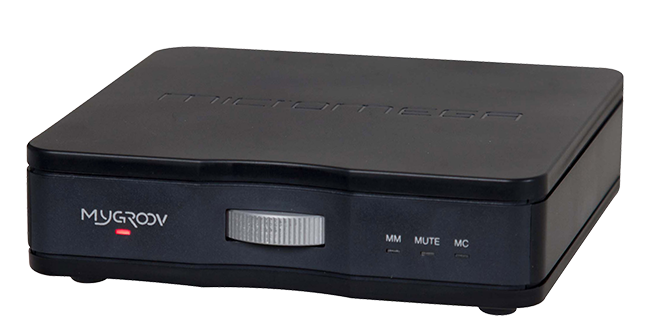 Background: Micromega MyGroov (official link)
Aside from European (French and Spanish) reviews (link) there are virtually no other for this humble component. In Chinese, there is a surprisingly good one from Taiwan's HiFi HiVi. Switch Mode Power Supply and Surface Mount technology are used. My unit has seen some previous use.
IMHO, its lack of recognition is a gross neglect, because this is actually the first MC phonostage Micromega has made, and Micromega has made everything well. Even their top amplifiers have only MM phonostage.
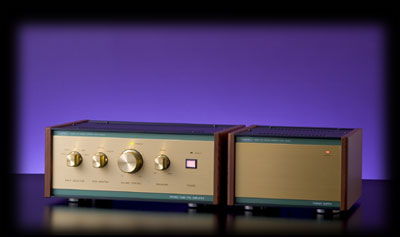 Background: Leben RS28CX
This had long been part of my reference system. For my detailed assessment, click here. Recently, the phono developed s little noise. I on this occasion I changed the phono tubes back to the original 5751. This may have some import on what follows.
Mine is the original, and it has surprised me on multiple occasions. See my previous write-up. Mine is well used.
Background: Elekit TU-8500
Please refer to my previous write ups, Starting from Part I.
Reference System Used:
-Turntable: Garrard 301/Thomas Schick/Denon DL-103 (Midas)
-Preamp: Leben RS28CX
-Amp: Wavac MD-300B
-Loudspeakers: TAD-3401
Software Used:
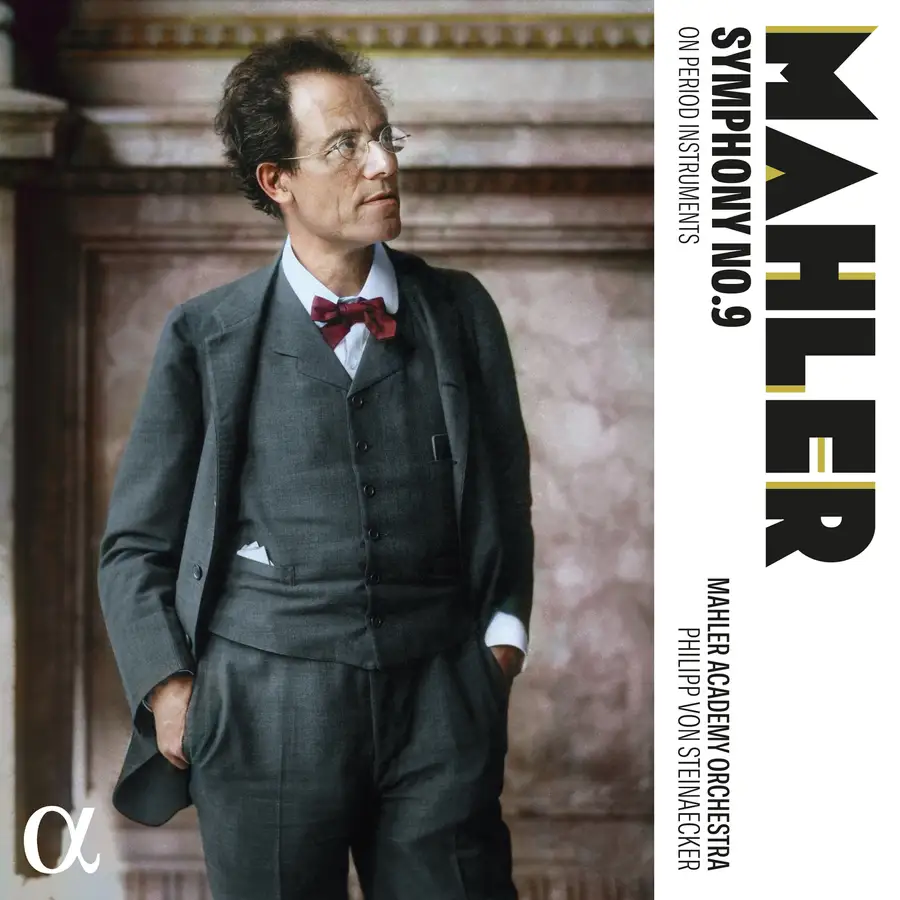
Aside from others, 2 of my regular reference vinyls (see pics on top). The Dylan Oh Mercy album is, as usual, well recorded and is a merciless test of jump factor and rhythm and pace. The Night on Bald Mountain on the Fiedler album is, imho, one of the best interpretively and sonically (in CD form, available as Arthur Fiedler Symphonic Spectacular.)
Sonic Impressions:
- 47 Labs 4718 It has the classic, direct, lucid but upfront 47 Labs sound, and has the fastest leading edge. Although undoubtedly exciting, I did wonder whether it was a trifle insistent on the Dylan LP. With large scaled music, sound coarsens a little at high playback volume. Night on Bald Mountain is not quite fully fleshed out; strings are a touch dry and brass a little thin. But this is almost brand new; With the low-level signals, running-in phonoamps can take a long time.
- Micromega MyGroov It is similar, but from more of a mid-row perspective. On the Dylan LP, although it is not quite as overtly exciting, PRaT are beguiling, without the sometimes insistent quality of 47 Labs. On Night on Bald Mountain, strings have more sheen and brass fuller. High volume playback shows no degradation. Highly satisfying and a very even performer.
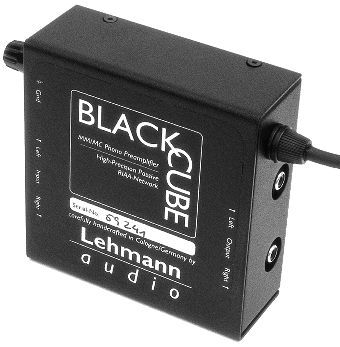
- Lehmann Black Cube Once more, the Lehmann shines! To say the least, on the Dylan Album, I was a little taken aback that it edged out the Micromega, not to mention the 47 Labs, on rhythm and pace! Night on Bald Mountain had the best tonal balance of the three.
- Kondo KSL-SFz + M7 Given the price differential, this may be a ridiculous comparison, but one that puts things into perspective. No, the solid-state units are not as good as the uber-expensive tubes. No giants are slayed; Goliath is not shamed, but neither are the efforts of the David's utterly out of place. Even with the cheap Denon, the Kondo setup installed a massive soundstage, with bags of air surrounding the fleshing images. Brass are more full bodied, and massive strings are more believable. With just 2 LP's I was not entirely sure whether I preferred the 3 ohm or the 40 ohm (the latter seems to be for the Denon 103), but I suspect the greater ease of 3 ohm (higher step-up ratio) is more appealing, impedance "matching" not withstanding. This also goes to show, if one has the choice, drop theories and go empirical; sound is determined by the ears, not the mind.
- Kondo KSL-SFz into Leben Fed into the Leben's MM stage, I immediately noticed a mild depletion of air and reduction in soundstage - not massive, but noticeable. As noted, the tubes are stock, but not top ones, and tube rolling no doubt will up the performance. Still, the performance is superior to the solid-state devices. No surprise there!
- Elekit TU-8500 into Leben Still equipped with the humble GE 5965, and used as a phonoamp (unity gain and volume all the way up), the sound was somewhere between the solid state and all-tube units, approaching the performance with the Kondo SUT in the playback chain. It has all the virtues of the solid state devices, plus the bigger sound of the tube. Very impressive.
- Elekit TU-8500 as full-function preamp Using the higher gain setting and run into the Wavac MD-300B amp, the performance was exciting. The big tube sound and dynamics were retained. Compared with the Leben and Kondo preamps, images are more upfront and soundstage not as deep. Given the price differential, the Elekit turned in a sterling performance.
- Given the huge price differential, the cheaper solid state phonoamps performed most admirably. They are all stars, and I would want to keep all of them.
- For a pittance, Micromega Mygroov is an outlandish best-buy. I am going to take it (as well as the 47 Labs 4718 and Elekit TU-8500) to NYC, where it will be pitted against the iFi iPhono and others. But for a little more, you can have the best of both solid-state and tube, in the form of Elekit TU-8500, which you can use as a phonoamp or full-function preamp! What versatility!
- Tube is still the last word in phono (and others).




 Posts
Posts