Showing posts with label Brand-Dahlquist. Show all posts

21 September, 2017

BBC LS5/1A, Line Magnetic LM-126, EAR 519, Koda K-10, Studer A807, Tape Project, Analogue Productions


Click pics to enlarge. Top: Chez Jules I, with LM amp in front; R: Chez Jules II. Note the Studer A807 above the Koda K-10. On the small stand in front is the Thorens TD-125, beneath which is the Line Magnetic LM-123 buffer. In front, on the floor, is the challenger DIY preamp.

Review: BBC LS5/1A, Sheer Brilliance
Kondo disciple Preamp vs DIY Kondo clone
Review: Robert Koda Takumi K-10 Preamplifier
Review: Studer A807 Reel-to-Reel
Review: Line Magnetic LM-126 Integrated Amplifier
Talk R2R: Re-issue Tapes from Tape Project and Analogue Productions


Revised Sept 30, 2017 (Forsell taken into account)

Note: This article took forever to write! Some time ago I nearly finished but someone accidentally erased much of it. After the deflating process of re-writing, I found out Jules had made some momentous acquisitions and we just had to pay him another visit. As a result, this article has snowballed into gargantuan proportion. While there is a real line up of stars here, make no mistake that the LS5/1A remains the central attraction.


Introduction
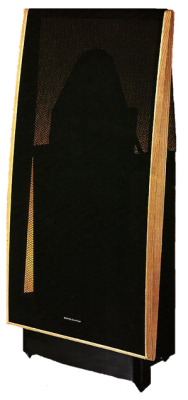
The BBC monitors that we regularly encounter are the ubiquitous LS3/5A and the larger LS5/9. This is because these are relatively small, as large boxes with large footprints are out of fashion anywhere where real estate prices are high. Recently, Graham Audio has also "re-issued/replicated" a much larger LS5/8, bigger brother of the more home friendly LS5/9 (reviewed in this blog here) and descendant of the even larger LS5/1A. Aside from these, earlier BBC monitors are seldom seen or heard, although their influence can still be felt in various Spendor (e.g. SP1/2, SP100) and Harbeth loudspeakers (e.g. HL5, M40).

So I was ecstatic when my friend jules called me to audition with him a pair of LS5/1A. I first heard it when I went with him to the shop, then some time later at his place. What a find! But first some basic info...

From KEF website: "...Soon after the formation of KEF, Raymond Cooke re-established his previous relationship with the BBC and KEF took on the exclusive manufacture of the LS5/1A monitor system, a system to which KEF’s meticulous approach to production engineering was well suited. The monitor utilised a Goodmans C129/15pr 15” woofer and two Celestion HF1300 tweeters and was designed for studio broadcast monitoring. The system stayed in production for more than ten years and was a useful benchmark for KEF’s own designs.

KEF also supplied the LS5/5 (including manufacturing the bextrene coned 12” bass and 8” midrange units) the LS3, LS5/2A, LS3/4 and LS5/6. In 1973, the KEF designed Reference Series Model 5/1AC, an active version of the LS5/1A, went into production and found application in many of the new independent radio stations of the time..."

Below I include even more info, but shaded it so you can bypass the section.

pic from internet.


From Elsewhere, likely original BBC info (typo's unedited; LS5/1AC is the active version of the LS5/1A):

"LS5/1, and LS5/1A
The studio versions of the LS3/1 and A, designed to replace the LSU/10. The cabinets were larger than the LS3/1 and the tweeters were mounted above the woofer, rather than in front of it.
The following units were used: Plessey (LS5/1) or Goodmans C129/15pr (LS5/1A), 15-inch paper cone woofer 2 x Rola-Celestion HF1300 tweeters.

KEF /BBC DESCRIPTION FOR LS 5/1AC: 
BBC MONITOR SPEAKERS 

DESCRIPTION 
The speaker system employs three units, which together cover the audio range available from present day records and broadcast programmes. The enclosure is constructed from high-grade veneered chipboard of a quality, which has been found by experiment to possess the smallest degree of self resonance of all suitable construction materials. The structure is reinforced by internal partitions which restrict the vibration of the back and sides and also by a metal strut between the front and the back panels. Mudocel damping is applied to the top panel. 
The internal volume of the enclosure is 4.7 cubic feet and a small vent resonating with the volume of about 50c/s is used to give a slight boost to the low frequency output. Standing wave effects are damped by internal pads of absorbent material. 

LF UNITS 
The lowest frequency unit is a 15 inch paper cone type with a 3 inch diameter voice coil and PVC roll surround. Its axial frequency response extends smoothly up to about 2 Kc/s and it is relatively free of colouration effects. The sound output for this unit radiates through a vertical slot 7 and a half inches wide to ensure good horizontal dispersion up to the crossover point with the high frequency unit s at 1750 c/s.


HF UNITS 
Two identical HF units are fitted each having a phenolic impregnated diaphragm. The frequency response extends smoothly up until 13kc/s above, which it dies away in a regular manner. Tests have shown that the output to be free from prominent low damped resonances. The two HF units are mounted in a vertical line above the LF unit in such a way that the separation between high and low frequency sound sources is not noticeable to listeners located over four feet away. Both units are operated in parallel at middle frequencies to increase power-handling capacity in the region close to the crossover point.


Above 3Kc/s the input to the upper HF unit is reduced to induce dispersion in the vertical plane and the phase is retarded as to direct the combined radiation pattern upwards 

CROSSOVER NETWORK 
A thirteen element printed circuit crossover network incorporates facilities for equalising minor irregularities in the LF unit as well as providing for adjustment for relative levels of LF and HF units in 1 DB steps. An additional network corrects the diffraction effect at low frequencies due to the finite size of the cabinet, as well as the low frequency loss due to the motional impedance. 

ALTERNATIVE CABINETS 
There are two versions, one a floor standing cabinet for studio and control room work and a suspended model for use in television control rooms.


The floor standing speaker model LS5/ 1A is intended to be operated on a 15 inch plinth above the floor which positions the HF unit at optimum listening height. The plinth is designed to accommodate the equalised power amplifier conveniently beneath the speaker enclosure. 


The suspended model is equipped with metal suspension gear, which enables the entire speaker to be tilted downwards at the required angle The LS5/2A requires additional equalisation at low frequencies to compensate for the loss of floor reflections. A suitable equaliser is available which can be incorporated with the power amplifier if required. 


Both cabinets are available in a choice of oiled teak veneer or hammer grey lacquer. 

SPECIFICATION 

SIZE: LS5/1AC 33 X 19x 17 inches 
Weight: 82 Lbs 
Nominal Impedance 25 Ohms 
Maximum input: 35 watts R.M.S 
Frequency response : 40 –13 K/cs +_ 5db 
Directivity index: Better than 54 db up to 3 Kc/s reaching 7db at 10 Kc/s 
Calibration Accuracy: The axial frequency response checked against a BBC approved standard sample is adjusted so that the curve of the loudspeaker under test does not differ from that of the reference loudspeaker by more than the following amounts: 
50 c/s - 200 c/s +_ 1.5 db 
200 c/s – 400 c/s 0db 
400 c/s – 13000 c/s +_ 1.5 db 
13000 c/s- 15000 c/s +_ 2 db - infinity 
The reproduction of the Loudspeaker under test is also compared with that from the reference speaker using high quality programme sources and white noise. 

LF Unit: 15 inch Heavy paper cone with plasticised P.V.C. Roll surround. 
Fundamental resonance: 25 c/s 
Flux density: 9000 oersted on a 3 inch dia centre pole 
Total Flux : 16000 maxwells 

HF Unit: 1.5 inch diameter direct radiator with Phenotic impregnated - fabric diaphram 
Flux density : 10,000 oersted 
Total Flux : 25,500 maxwells 

Crossover Network 13 Element printed circuit network employing Radiometal - - cored inductors and closed terminal metallised foil capacitors. - Completely enclosed and shielded in a steel case.

Other Useful Links:


Wireless World Article on developing replacement for LS5/1A
BBC Paper on Design of LS5/1's successor's LS5/5 and LS5/6
Japanese Site with Great pics of the Active LS5/1AC

Sonic Impressions
  • At the Shop The shop sells clone-Dartzeel's and has only a solid state preamp. Even with their solid state amp or a cheap Chinese amp, the LS5/1A sounded good enough. But with my pair of Western Electric 124 that jules had been auditioning and which we brought with us, it became a revelation. Needless to say, since this is a BBC design, the midband was immaculate, rendering vocals perfectly. The treble was just a bit grainy with the ss amp, but this was largely ameliorated by the WE amp. Most impressively, there was great presence, creating the illusion of a live event; indeed, the palpability bore an uncanny resemblance to the Graham LS5/8 (here). My one reservation then centered on the quality of the bass, quite slow, one-note and somewhat truncated. I was weary of possible driver deterioration and urged caution, but jules bit the bullet anyway. As we find out later, that was due to the partnering electronics. Read on...
  • Chez Jules I - pre Koda Jules' place is very familiar to me (last reported: the Dahlquist DQ20 here). Equipment Orpheus Zero SE cd transport; Totaldac d1 twelve dac; Van Alstine Pat 5 Preamp (solid state, fully modded dynaco); Line Magnetic LM 126 power amp or EAR 519 power amp. Sound With this setup I heard the LS5/1A twice, once as pictured, the other time with the loudspeakers more or less in the same positions but turned around firing towards the couch (as I heard the Dahlquist DQ20). The sound had improved since last reported (no wonder as the tube amps replaced the ss amps). Now, the LS5/1A really shone! Needless to say, there was just more of everything good. The bit of grain in the treble heard at the shop was gone - one only heard the surprising energy of the dual Celestion tweeters, which worked seamlessly with the 15" Goodmans woofers in the midband. The bass anomaly heard at the shop basically vanished - perhaps it was still a trifle slower than ideal and not the lowest reaching, but it was tuneful and tactile. Old loudspeakers sometimes need to be re-run-in (again, why all the difference from the shop? Read on...) vs Dahlquist DQ20 I wished Jules still had the DQ20's for me to compare. Alas, the small space had necessitated their removal. If my recollection serves me, both had a lively presentation, and excellent midrange presence. To my mind, the Dahlquist DQ20 (at least the treble) suffered a little from being partnered by ss electronics. Let me just say, the Dahlquist DQ20 costs a lot less than the LS5/1A and I miss it.
  • Line Magnetic LM 126 Among the Chinese manufacturers I have always regarded Line Magnetic (official site) to be among the best. I have heard their amplifiers, particularly the SET behemoth LM-219IA, perform well at the HK AV Show. I have also heard at friends their WE Horn Replicas and Field Coil Amps and they look decent (hard to individually assess the sound in a horn system, but I know there is a European fan base). They make a bewilderingly huge range of products and in the West it seems only certain products (higher-priced; manageable size) are offered. The LM 126 at hand seems to have limited distribution. One can understand why - it is a another imposing behemoth, not expensive and hard to ship! Design wise, it is a potpourri - said to be based on WE circuit, with inclusion of a clone WE 618C input transformer (definitely not a necessity), but upping the power by using KT66 instead of 6L6. I understand this is a move to accommodate modern "real-world" loudspeakers but, if you ask me, there is no way one can duplicate 6L6 based WE amps with higher power - just not the same things (even for WE, the more powerful 142 is not as good as the 124), not to mention the sheer impossibility of cloning the WE transformers! The LM 126 performed well enough but, even though Jules had installed the best NOS tubes, I still had my doubts - a powerful sound, yes; but not quite an even response, especially when... vs EAR 519 There is no if's and's or but's: disregarding the substantial price differential, the EAR 519 completely outclassed the LM 126. Even with generic tubes, the EAR is much more even across the frequency spectrum and controlled the bass with an iron grip. That said, the LM 126 is quite good for the money and probably more than satisfactory for those who do not need full-range amplification. However, if you are patient and discerning, I'd wait for a good second-hand pair of the 509/519 and you will be settled for life (see also my most recent appraisal of the equivalent EAR 509 MkII) - until you get to know WE, that is...:-)...vs WE Jules did not hook up the WE this time (I never asked for it), but my take by memory is that some of the magic we heard at the shop with the WE is still missing.

  • Chez Jules II, post Koda Just as this article was about to be finished, a few days ago, I called Jules and was flabbergasted that he had acquired the Robert Koda Takumi K-10 Preamp and a Studer R2R. Of course this article would have to be extended to incorporate these important new acquisition. So, after yumcha, Trazom, KC, Pluto and I all went to visit. We tested a lot in a few hours, so read on...
  • Robert Koda Takumi K-10 (and Forsell Air Reference II Transport) There were two significant changes in the system from Jules I (listed above): the Forsell Air Reference CD Transport substituted for the previous Orpheus; and of course the Robert Koda K-10 Preamp. As a Kondo man, I was of course very interested in this very expensive solid state preamp from a Kondo cohort/disciple (a man who has gone on records saying he has never preferred a solid state preamp), which has won some accolades (see official link, which has review links; avoid the garbage HK magazine). Sound I have to say that what I heard might have been a combined effect of the Forsell and the Koda. The sound actually quite fascinated me. It sounded a tad slower than before, was more upfront, but quite warm, utterly devoid of the nastiness of lesser solid state components. Images were taller and larger than usual, with a fleshiness that I liked. Perhaps because of the warmth, I felt it to be a little less airy than the usual tube preamp in soundstage (not something of utmost importance to me) and depth, The reviews mentioned ultra low noise and distortion, which I agree with, but as usual with designs that place utmost importance in these parameters, a little liveliness may have been sacrificed (I dealt with this important topic in my lengthy review of iFi's iPhono). Although some of this (like reduction in speed, warmth and larger image) might also be properties of the Forsell, much as I appreciated the K-10, I was thinking I'd prefer a tube preamp (like my EAR 912, now relegated to the rear; but more to come, read on...).
  • Surprise! David vs Goliath? As it happened, our yumcha friend davewong had been building a Kondo-clone preamp based on the very simply laid out boards by thomasfw. Since it is said to be a Kondo-clone, I expressed an interest to hear it (a very rare occurrence). Suffice to say, davewong geared up and had the prototype ready that day (click on right pic to enlarge), so we took it along to Jules. The DIY preamp employed 6X4 rectification and MOSFET regulation. For the line section, the two triodes of the 12AX7 were coupled and output was cathode follower. No exotic components were used - Dale resistors and Wima red caps for the line section; Philips caps for the power section. Sound The Kondo clone actually sounded quite decent. It seemed to be modern sounding, with a surprisingly fast leading edge (methinks faster than the Koda). Immediately, there were more air and a deeper soundstage, and the front corners were better illuminated. With the jazz CD, virtues were more split: the percussion had better rhythmic expression and exactitude with the Kondo clone; the saxophone and guitar sounded much fuller with the Koda - a surprise as usually one would expect the reverse. A Little Tube Rolling As there were Europhiles present, Valvo long plate's were swapped in for the RCA (D getter, grey plates). Immediately, the saxophone and guitar sounded much fleshier and much closer to the Koda, but at a cost - the percussion lost almost all of the snap (a price I personally would not pay). The Votes Though still a flawed prototype, some of us preferred the DIY tube preamp, but pluto, a DIY man, admired the Koda. As you see, it was not quite a David vs Goliath scenario. Suffice to say, both the DIY kit and the solid state Koda met with our approval, and (except for pluto and maybe jules) this is a rather hard-core tube crowd! After this, we reconnected the Koda and listened to analogue playback.
  • Detour: Kondo Clone vs Kondo/Audio Note Japan M7 After I got home, I actually briefly compared it to my own Audio Note Japan M7 (the one in the pic). Both are quite neutral sounding so it is hard to say whether they sound alike, but the challenger was obviously a little on the lean side and rhythmically a little too insistent, without the M7's subtle and articulate nature. Still, a respectable showing!
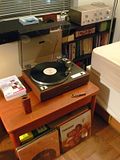
  • Analog Rig I This consists of the Thorens TD-125 with the Linn Ittok arm fitted with an EMT TD-15 cartridge, fed into EAR MC4 and a ss phonoamp (can't remember brand, but it was of some vintage). We listened only to a few cuts. Sound during the visit was a little on the sharp side. I was told after we left a swap to Gotham DGS-1 ameliorated the problem.
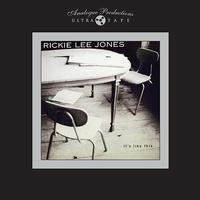
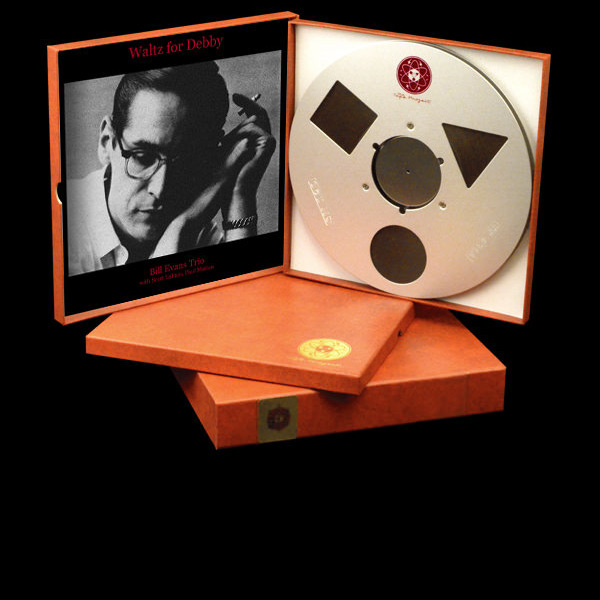
  • Analog Rig II The big surprise! After my dear friend Robin left for Taiwan, I thought I'd never hear another R2R, but here it is in the form of the Studer A807 (info on this classic here)! And we heard two new tapes, one from Tape Project (Bill Evans Waltz for Derby, link) and one from Analogue Productions (Rickie Lee Jones It's Like This, link). These are both USD 450 a pop. Is it expensive, yes; is it worth it, even I have to say yes! Yes, the R2R playback absolutely trumped the vinyl, according to jules. We didn't really compare but the playback of the two tapes via the Studer was simply breathtaking. Of course I had long known this to be true. This time I shall not waste words, but instead re-direct you to my previous impressions of R2R (under the Label: Talk R2R) - everything said about Robin's R2R applies to jules. That is how good it is! The A807 is a professional two-track only machine, and cannot play four-track tapes. I predict there will be a second R2R deck chez jules soon.
Conclusions
  • LS5/1A The LS5/1A is simply magnificent, the best BBC (or BBC-derived) loudspeaker that I have ever heard. How is that for direct utterance? And I know my BBC and BBC derived loudspeakers! Epitome of 2-Way I have always preferred 3-way's to 2-way's, but the LS5/1A is an exception that challenged my views. It is the best large 2-way I have ever heard. Indeed, I don't think the best BBC-derived 3-way's, like the Spendor SP-100 or the earlier BC-3 can match it. That is TALL accolade. Also, once again, a 15" paper cone woofer proves hard to beat; and it is very rare to have a two way that employs a 15" woofer! This is basically one of a kind.
  • Robert Koda Takumi K-10 Since we heard also the Kondo clone vs Koda, I am confident I can separate the effect of the Forsell and come to the right conclusions. This is likely the best solid-state preamp I have heard (It sounds better to me than the Cello Suite [a bit too electronic], Mark Levinson ML-6 [not enough resolution], to name two, and jules had owned these before too I think). I think the K-10 would be a godsend with solid state or even hybrid amplifiers, like Koda's own K-70. But while I admire its rock solid steadiness and imperturbable nature, I am too hardcore a tube man and in general prefer a more lit up, livelier presentation, but then, as we witnessed, others may not think so. In the end, no question, it plays everything well! I'd like to listen to it more next time to get more impressions. So, there may yet be a Part II!
  • Forsell Air Reference II CD Transport This is a classic that I have heard before on multiple occasions. In spite of, or because of its "deficiencies" indeed it makes CD's sound more musical, more analogue if you will. Since I know jules' system quite well, I have to say I like this transport a lot better than the expensive Orpheus (which makes things sound like digits). It is still amazing to me that transports make such a difference (some of my other favorites are the Audiomeca Kreatura, Roksan DP1 and Theta Data)!
  • Reel-to-Reel Although I don't plan to own one, I am very happy the R2R Renaissance shows no sign of waning; rather, it is going from strength to strength. Price of new tapes are expensive, but not really overpriced, if you ask me. You may want to read this interesting interview of Tape Project's Dan (also known as Bottlehead's Doc B, whose cheap products I admire and have had some experience with) to gain some perspective. How does Vinyl Compare? Well, even the most expensive vinyl rigs I have heard have to yield to R2R, in every parameter. The tape advantage is decisive. And Digital? This year is the 35th year of digital, yet sonically it is still inferior to a good vinyl setup, not to mention R2R. Think, 35 years of continual "advances" and it is still a distant third. Don't you think all those data people and critics are laughable?
  • DIY Advice The success of the DIY challenger reminds me once again that simple is best. Using simple, cheap and reliable components (like the Dale resistors) more often than not bring better results than stuffing it with expensive boutique components (like expensive caps).
Image result for manger cdPostlude: What Went Wrong at the Shop?I actually hesitated about writing up this part of the experience. I knew next to nothing about the shop and don't want to make enemies, but I am truly astonished by the sheer ineptitude of what the shop offered.

When I arrived, the resident DIY Transport/DAC combo, of which the owner was proud of (and I think he sold quite a few), was playing some jazz/percussion stuff, and it was OK and offered no premonition of things to come. A while later, I asked to play the Manger Test CD I spotted, my favorite all-in-one, if there is such a thing. The owner immediately jumped to the last track (Track 15), the percussion track everyone knows. But that was not my intention - I asked him to start with Track 1. As soon as the bells tolled, I knew something was seriously wrong. The whole thing was utterly flat, with virtually no microdynamics to speak of. Ditto every subsequent track of this CD that was played. I was flabbergasted - I have never heard this CD sound so bad. Desperate, I spotted a 47 Labs Transport and asked to switch to it. Despite having to use adaptors, the 47 Labs immediately and unequivocally demonstrated what was wrong with the resident DIY Transport - almost all the microdynamics and nuance missing came back.

And then, there was the poor bass quality, which can be attributed to the resident DIY DAC, which can hammer it out, but in a one-note, monochromatic fashion. If it were me, based on the demo I'd not have taken the chance with the loudspeaker. Fortunately, chez Jules the bass problems basically vanished.

I cannot even briefly tolerate this kind of front-end, but obviously some people do! In my years of hifi wandering, I have heard plenty of way-off stuff, but this experience belongs in the top ten. It made me feel I must write this article:

HiFi Basics VI: Know Your Source(s) and Digital Front-End Buying Guide (coming soon)

30 December, 2016

2016 in Review

pic has distortion at the edges - the Pioneer loudspeakers are not trapezoids! Click to enlarge.

2016 in Review
Letter from NYC (58) 2016 (14)

A belated Season's Greetings!

This Blog is now over 8 years old. Due to family matters, my output (in terms of articles written) hit an all-time low in 2012/13. Since then, there has been a small but steady increase. However, since I am buying fewer things and the stuff I do buy in HK tend to be small "gadgets", there is less to report on "serious" current products. However, I now focus more on older products and my own things that I have neglected previously, a valid trade-off. A little more than a year ago, I started the "HiFi Basics" series, but due to my somewhat compulsive nature have managed only 3 articles so far. I hope 2017 shall see more entries under that label.

Most Significant Events
  • Kondo System Re-Make In a coming article I shall detail my efforts at matching loudspeakers to my Kondo Ongaku. Mind you, this is at my present small abode in HK. There were quite a few candidates and the results were, to say the least, quite surprising! After I started this effort I acquired an old Audio Note (Kondo design) M7 with built-in Phono. Its smaller size allowed me to use it in on an IKEA shelf (see pic above). It would be a shame not to use a turntable, so I just managed to squeeze in the smallest that I have, the humble Pro-Ject RPM 1.3. Then I added a subwoofer!!!! I assure you the end-result was quite satisfying, earning the approvals of my music lover friends Seng and wss! Coming soon...
  • Vintage Cartridges Although this started 5 years ago when I re-tested my Empire 2000 cartridges (here), things didn't get serious until recently. Shure SC35C After initial failure, I finally got this "DJ" cartridge right (here)! Although my sample is current production, it is a replica of a vintage creation. I have yet to put this low compliance cartridge on a heavy arm, and it is already darn good. Warning: In some systems the treble could be just a little on the unrefined side. I rather think of it as a "monitor" type product, not the kindest to bad recordings. I just noticed its street price has gone up quite a bit to around $59. Still, quite a bargain! Shure M44-7 The ones currently sold are replicas of this vintage relic, beloved by DJ's. My sample just happened when I spotted a vintage body and NOS Empire replacement on Ebay, and so may not be representative. In any case, I just installed it yesterday as replacement for the SC35C on my cheap AT PL-120 and was absolutely floored - my cartridge of the year! Stanton 380 I heard this at my friend Andy's and took one back home to play. It has a very attractive rich hue and plays anything well. There shall be big article on these cartridges soon. Happy New Year already! Mono Cartridge Finally I got a mono MC, the Taiwanese Raos, and I am very satisfied. Unfortunately, Master Rao has passed away and these are not obtainable. Nagatron Ribbon Cartridge heard at Andy's was very impressive!

Vintage Loudspeakers Although in 2016 I have heard megabuck loudspeakers of the caliber of Magico Q7MkII, top-rated in any magazine, my kudos go to much older designs:
  • Dahlquist DQ20 (reviewed here) was astonishing in how it made the music come alive, unequivocally leaving an expensive and well reviewed modern loudspeaker in the shade.
  • JBL L20T Even this unassuming vintage JBL (reviewed here), which can be had for perhaps $200, is over-achieving. I was thinking of trying out Andrew Jones' new Elac B5/6 just for fun (I have a thing for inexpensive bookshelves), but after I got these JBL's I completely dispelled the idea (after all, I know his designs, as I have his recent Pioneer SP-BS21LR).
Headphone Stax SRS 2170 (my review here) is all I need in a headphone! Although this is a current product, both the design and the sound have been around for a long time. Vintage reproduction again!

Buffer Amp Though a niche product, the iFi iTube is just wonderful. If you need some bloom, give it a serious thought!

Cable The Gotham DGS-1 continues to gain my admiration. Although not the best in hifi parameters, there is definitely something that is very attractive to this simple cable - a fluency that just makes music come alive with great presence and PRaT (the best analogy is non-oversampling in digital conversion). More and more of this cable are finding their way into my systems.

Brief Mentions My 47 Lab 4718 Shigaraki Phonoamp is finally running in and providing solid support for my mono Raos cartridge. My resurrected EAR 509 Mk II dealt a coup de grace to unreasonably priced Conrad-Johnson. I also acquired a Naim Nait I - no surprise as I previously owned and loved a II and still have the III. Sound is in the same mould.

Happy 2017!

26 December, 2016

Home Visit: Dahlquist DQ20 Totaldac Luminous Audio Volent


Left, DQ10; Right, DQ20.

Home Visit: Dahlquist DQ-20
Overview: DahlquistMy First Serious Stereo System
Yumcha Diary: 24-09-2016
Letter from NYC (56) 2016 (12)

Article finished in NYC. This article was long in the making because the appearance of DQ20 totally usurped order at my friend Jules' house, and I had to drastically alter the layout. Call it a labor of love for Dahlquist.

My old friend Jules is that rare breed, a truly experienced audiophile who has impeccable musical taste. As a result, his systems never sound less than good. Although I periodically visit him I seldom write him up (see here). His equipment has changed much recently (?mid-life crisis, :-p) and we paid him three visits, this article being about the first two (same equipment). The third visit shall be written up later (Technics SB-7000!).

Equipment (at the time):
CD transport: Orpheus Zero SE
DAC: Totaldac D1 Twelve
Preamp/Amp:
1. Luminous Audio Axiom 2 passive + Brinkmann Mono
2. Paracas Sierra + Krell KSA200
3. PSE SL + Krell KSA200
Speakers Visit 1: Volent VL3.5 (latest grey ceramic unit)

Speakers Visit 2: Dahlquist DQ-20

Pic of Saul Marantz and Jon Dahlquist. Click to enlarge. Note the Marantz 10B tuner, 7 preamp and 9 monoblocks.

Overview Dahlquist
Since my experience of Dahlquist is confined to the DQ10 and DQ20, it is stretching it a bit to call an overview. However, since 1) these two are Dahlquist flagships and most famous creations; 2) I have had intimate experience with two pairs of DQ10's, one of which I owned for a LONG time; and 3) I now have heard two pairs of DQ20's, I feel justified.

Dahlquist was formed by the great Saul Marantz after he sold his company to the Japanese, with young Jon Dahlquist on board. The DQ10 and the much later DQ20 have similar design philosophy, with only the woofer enclosed and all other drivers open-back. Dahlquist's approach was influential and likely inspired later designs like Alon. The DQ-10 visually is a dead-ringer for Quad ESL57, which I take to be a tribute to the latter's sonic purity. It is commonly held that at the time of DQ10, quality drivers were few and Jon Dahlquist had to make a lot of adjustments to make the drivers work together. The DQ20 had fewer drivers of likely better quality. Visually it is a taller DQ10. Both look and sound great to me.

DQ10 The DQ10 is one of the classic speakers of all time, and has made its way into many audio halls of fame (like this one in TAS). It even has a facebook of its own! The DQ10 has a long production history, with apparently quite a few changes of drivers and parts along the way. The net has many entries on it but given its nature things can be a little confusing.

My Road to DQ10 For the longest time I was not at all an audiophile. I bought my first humble stereo system in 1973  (for details of my audio beginnings, see here).  Around the late 70's I upgraded to the cheapest Pioneer separates, and although they were not too great either I kept the system for a long time. Gradually I came to realize my speakers were the limiting factor. I had a good friend in undergraduate school who started working after graduation and bought a nice system. It was SAE equalizer preamp/amp, a Thorens TT and most importantly, the Dahlquist DQ-10 (he also added the Dahlquist subwoofer later). He was (is) one of those friends who widens one's horizon. Hey, introducing me to Sibelius and Bruckner immeasurably enriched my life! Although I went on for four more years of school, I visited him quite often and listened to music together. The DQ10 impressed me greatly, and I lusted after it for many years. After I finished my specialty training and started making a better salary, I went shopping for a serious system.

One day I visited Stereo Exchange (when they had that cavernous basement of goodies - those were the days!) and was ecstatic when I saw the pair of DQ-10, waiting for me after all these years! I immediately bought them and also the Thorens TD-125MKII with an SME armboard (since I had, and still have, the 3009i arm). Then I went shopping for preamp/amp. I narrowed it down to the then well-reviewed entry level Adcom and B&K systems. I did a serious audition at a hifi store on 70th Street and Broadway (forgot the name) and finally decided on the warmer B and K ST140 with the entry level Pro5 preamp. These B and K's (and the contemporary Adcom too) still command a reasonable second-hand price!

Sound My friend's Pair As I realized later, my friend had a living room of tall ceiling and just the right size for his system.He had them against the wall, flanking the fireplace. The sound was warm, fluid and utterly musical. That I later assembled a system very similar to my friend's is testimony to its spell on me. My own pair Soon after I acquired my system I later moved into an apartment with a very large living room and (!)14 ft ceiling (it was previously a multi-tiered parking space) and I had the system against the wall. The sound was not as good as at my friend's. True, the midrange was splendid and it was very musical, but the top was a little shut in. Image was good but there was not much of a soundstage and everything was just a little diffuse. My suspicion that my 70 wpc amp was not up to the task (in this cavernous space) grew on me, and was confirmed much later on when a friend came over with his McIntosh MC-60 monoblocks, which totally opened up the sound. That taught me two things: 1) DQ-10 is power hungry; 2) 60 wpc of tube power is much more power than 70 wpc solid state. And - I became a tube person right then and never looked back. A few years later when I rented out my apartment and relocated I sold my pair of DQ-10's to a friend's photographer boyfriend (he instantly fell in love with the DQ10's when he attended one of my parties) and he enjoyed them with his rock and pop. The memory of all the precious time spent with these two pairs of DQ-10's is always somewhere on my mind. One more thing, I have heard few speakers with better mid bass and bass articulation.

DQ20 The DQ20 was issued 14 years after the DQ10. With more competing choices, it was never quite as well received as the DQ10, perhaps because the older loudspeaker sold too well and had many die-hard fans. I always feel the DQ20 never got its due. For a contemporary review see hifi-classic (unfortunately we do not know from which magazine).

Sound First Pair The first time I listened to the DQ20 was at a music lover's house (he was selling some records). He was not an audiophile but I instantly liked the sound, which bore no little resemblance to the DQ10, which I still had at the time. I have always felt the DQ20 deserves more attention than it had received. Second Pair Before I had even paid him the visit to hear the Volent loudspeakers Jules called me about a pair he saw in the (HK) second-hand forum review33. The asking price was very reasonable and I told him to grab it. As they say, the rest is history (see below).

Service/Parts/Upgrades Dahlquist went under a long time ago, although it was resurrected briefly by a Canadian company. However, the company regnar specializes in service and parts of Dahlquist products, including the DQ10/20. Since I do NOT find much that is wrong with the 10/20, I'd personally shy away from so-called "upgrades" that second-guess the designer.

Sonic Impressions:
  • Dahlquist DQ20 I heard this on the second visit. Having heard the Volent by then I was astonished by the change the Dahlquist brought about. The music acquired a much greater vibrancy. Midrange was hard to fault and vocals came alive with great presence. Most noticeable were the great rhythm and pace and deep reaching and walking bass. Just loved it, no if's and's or but's. At today's price, it is a steal.
  • Volent 3.5 During the first visit, for over 2 hours, we listened to a large number of recordings, and also alternated between various preamps and amps. The sound was good, but on the polite side. Now, I am not a great believer of mixing technologies, but the Volent, though not cheap at all, did a reasonable (but not perfect, as the bass was a little four-square) job of integrating the ribbon, ceramic and Ensemble/-like bass units. By itself, it is not bad. But compared to the Dahlquist heard not so long after, there was just no comparison - the Volent sounded like processed music, but the Dahlquist made a serious attempt at creating the presence of live music, and mostly succeeded!
  • Totaldac This up-end version is highly rated on the net. During the first visit, I thought the sound was good, but I just did not get the hang of it. I wrote in the initial draft of this article: "...I wondered "how absolutely good is it? I don't know. I'd like to get my Sparkler S303 to match up one day...". During the second visit, with the Dahlquist DQ20 in place, I began to hear the character of non-oversampling, and to get it. Jules perceptively made the remark: "The Dahlquist DQ20 brought out more of the character of Totaldac."
  • Luminous Audio Jules bought this after my friend icefox poisoned him. He loves it. It seems transparent and pretty nice and I'd like try it in my system one day.

Viva Dahlquist!

04 March, 2010

Talk Vinyl: All My Turntables (Arms and Cartridges): A (Rambling) Overview

Talk Vinyl: All My Turntables (Arms and Cartridges): A (Rambling) Overview

In this day and age, the turntable lives a strange existence. Whereas once no one would think twice about buying one, and no one complained of "difficulties" in handling, now many view it with trepidation. While it's understandable if some novice has cold feet at first, it's inexcusable that many self-proclaimed "experts" (some also charge for their dubious service) tell people not to get into it because adjusting the tonearm and cartridge is "very difficult". Truth is, It is very simple, and good sound can be had for very little. If you ask me, it's a lot easier to get into than "serious" CAS (at least what people are doing, now so complicated it's bordering on the absurd). My experience is quite utilitarian, but here I chronicle it and hope it can be of use to some people.

Part I: Salad Days
With the first money I earned as a busboy (传菜员) in NYC, I bought my first stereo system in 1973. A cheap Harman Kardon receiver, horrible speakers, and a cheap Akai cassette deck, no TT. It was rather out of the blue. I never had any classical music experience in my Beijing Opera-suffused childhood, but listening to NYC's wonderful radio stations made me a convert very fast (the perennial WNYC, WQXR; make sure you listen to them, now easily via the internet, wherever you are; I still do!) . Lacking money to buy records I just taped the broadcasts. It was a fruitful period. Imagine, discovering Sibelius' Violin Concerto and Tchaikovsky's 4th Symphony for the first time!

Pioneer PL-10: still an excellent entry level TT
One year later, when I got more money I bought the PL-10 and started buying records. At the time, Dual and other more expensive TTs were out of budget for me. This TT, which is still with me, therefore holds a special place in my heart.

The PL 10 was Pioneer's base model manual turntable in 1973 or 74. It was their $99 turntable when the best-selling PL 12-D's price rose to $119. It has a little more plastic than the 12, but is essentially the same TT (belt-drive, same motor, platter, suspension, tonearm), differing only in the simpler anti-skating mechanism, plastic instead of metal headshell and lack of a cartridge setup device. The PL-12D is a legendary budget table. It's perhaps little known that it was designed by now-Marantz guru Ken Ishiwata. There is A beautiful article on the PL-12D in retrohifi, from which a little excerpt:

The PL-12D, is a belt drive system with an aluminium one piece platter, which comes with a choice of two speeds, 33 and 45 rpm; a manual action 'S' shaped tone arm, a SME style screw-on headshell and a detachable Perspex lid. Though the 'Anti-vibration sprung floating chassis' was one piece on which the platter spindle and the tone arm are fixed, it actually produces excellent results and was usually paired off with the Shure M75 range of cartridges.

I cannot remember what cartridge I first used. Maybe a Hitachi I recently found in my drawer. It was soon supplanted by Empire 2000E/II and III. This cartridge satisfied me at the time (but after I got my first Shure V15, I never looked back).

In NYC now I run 2-3 systems at once. The PL-10 now serves my bedroom system and I often play more scratched but desirable LPs on it. I habitually installed the least of my cartridges on it, but I sometimes felt it's demeaning of the TT. The simple tonearm is actually surprisingly good: it tracks well even at low weight, and tells you immediately of the sound of the cartridge. I have the idea of modifying the TT if I have time. At least the lead-out red/white cables need to be upgraded. Perhaps a speed box (its speed inherently is excellent though)? But the sealed bottom deterred me. I've not done an A/B comparison, but I strongly suspect this TT as a package is better sounding and more resolving than the classic Rega P3 (more on that later).

SME 3009i (fixed headshell): Enter the Shure V15
The second TT I bought in the mid-70's, based on either a High Fidelity or Stereo Review recommendation (yes, I was a reader), was a cheap direct-drive turntable kit. I forgot the name of the maker. Although it was a mistake, at the time I didn't much notice. The good thing about this bad purchase decision was that I had to buy a tonearm, and I bit the bullet and bought the SME 3009i (very expensive for me at $99), which I still use to this day. It was at this time that I bought the Shure V15 Type II, and later Type III and IV. My last IV stylus (VN45) just last year went out of service (belly touching the LP surface); adding up, my Shure's have provided me with 30+ years of service.

LP shopping in those days
A word about LP buying in those days. I started buying mostly at Korvette and luckily made the acquaintance of manager Marty Goldstein (some tidbits here (1963 Billboard), and here (1966 Billboard), who was an uproariously funny fellow. He used to be a producer/sales person of Westminster Records and husband of soprano Teresa Stitch-Randall, working at Korvette only after retirement. He and I got along real well; one time he even introduced a nice girl to me! Here's to your memory, Marty! I also occasionally bought at Sam Goody's. When Record Hunter came on the scene, I became a regular. It too is gone. I did not get a CD player till the late 80's (a Magnavox 1-bit) . I got ready to dump my LPs. Then one day, before giving my Milstein Solo Bach away I just A/B'ed it with the CD. There was no contest. It was a life-defining moment. After that, I started buying used LPs, lots of them. When Tower Records opened their Annex, I was in heaven. Here was a place where one could buy dis-continued LPs. Sometimes you found treasures, such as brand new BIS La Spagna, BBC Flight of The Condor etc. No wonder you frequently found the Chinatown HiFi gang there. Even better, it started carrying used LPs and the store was open till midnight, everyday. Never a dull moment! Well, that's history.

The Stuff of Dreams: The Dahlquist DQ-10
I upgraded my stereo around in the late 70's to Pioneer separates but they were not too good either. There was also another pair of direct-sale bookshelf speakers that was better than my first pair but still better forgotten. I knew my speakers were the limiting factor. I didn't have any hifi friends (a good thing) but I did have a good friend in Engineering School who bought a nice system after he got a real job. It was SAE equalizer preamp/amp, a Thorens TT and most importantly, the Dahlquist DQ-10, which I lusted after for many years. He was (is) one of those friends who widens one's horizon. Hey, introducing me to Sibelius and Bruckner immeasurably enriched my life!


Thorens TD-125: still formidable
After I finished my residency and got my first real job I bought what I consider my first serious set of hifi. At Audio Exchange I finally got a pair of my coveted Dahlquist DQ-10, for $500. I was lucky as at the same time I spotted a Thorens TD-125 with an SME arm board, which I snapped up for $100. I went shopping for preamp/amps, and finally decided on a pair of B&K rather than Adcom (another mistake I think). When I installed my 3009 on the 125, to say the least I was dumbfounded by how superior it was to my direct-drive, which I gave to a friend. The system made me quite happy and it stayed with me till now. I basically used it all along with my Shure V15-IV. The TD-125 is truly a marvelous TT, built to last several lifetimes. Read this great article on the TD-125 in the retrohifi site. For more pics of pristine samples, some with 12" arms, click here.

At its current price (prices has not gone up as much as the 124) it's a great bargain. Before my recent serious re-building of my NYC hifi this TT was my primary TT. When the V15IV went caput, I installed the Benz Micro Silver (which did not sound too good on my Audio Technica direct-drive, on which more later) and what a brilliant TT it is again! Fed into the ARC SP-9 phono stage It gave my main system a run for its money. Personally I feel the BM Silver is a lesser cartridge than the lower-ouput Gold, but I feel it still gives more with classicals than a Shure V15-IV.

Part II. LP in HK? You got to be kidding!
For my first 2-3 years back in HK, I did NOT bother with LPs. In NYC, although it briefly gets humid in the summer, I never had to clean LPs. NO, I'm not one of those who likes to clean LPs. I felt the weather in HK really not suitable. My LP collection stayed in NYC.

Then, fortuitously, the husband of a good friend of my girlfriend was an audiophile who was switching to CDs, and he generously gave me his LP collection of classicals. This was in the days before the LP revival. People gave away their LPs and TTs. A colleague also gave me his un-restored Ariston (fore-runner of Linn in the UK) RD-110 TT, which I later gave to someone else. This was also in the days before the popularity of record cleaning machines. Many of the self-washed LPs sounded quite dull. A cautionary tale.

Rega P3: Good, but not great.
Suddenly armed with a collection, it'd be a sin not to have them played back. I decided to do it with little fuss and got a brand-new Rega P3. I forgot what cartridge I used at first but soon it was the Elys MM. By this time I was fully into HiFi, and the Rega never did sound as good as it should to me. Although the arm is good, the TT is only adequate and I felt the Elys lackluster. I knew I had to move on. It was accelerated pace from this point on.

Thorens 150 and Linn LP-12: Virtually the same (for a great TD-150 article, click here; for more pics, click here).
Then I bought for cheap a Thorens 150 which even with the flimsy SME 3009 S3 arm in original plinth blew the Rega P3 into pieces . Roughly the same time I finally got a Linn LP-12 Valhalla. Using the same S3, I felt the LP-12 way over-rated, the cheap Thorens every bit its equal. Both delivered music with more zest than the P3. Rhythm and pace, that's what these suspension tables do well, much better than even very expensive tables with solid plinth and no suspension. If you ask me, it has always been my opinion that the TD-150 (and the similar TD-160, which you can still find NOS in 秋叶原) is THE suspension TT to have. Its price is ridiculously low and its performance up with the best of its brethens. It should also be a tweaker's delight. Needless to say, the P3 was sold.

At this point I also started to experiment with cartridges. There was a period when I tried the Sumiko Blue Point high-output MC. It was lively and dynamic as hell but the bass was blunt for my taste. That ended when Sumiko's suspension proved unreliable. The excellent Goldring 1012 MM was so fast it must be one of the best cartridge for rock; however its kinda rough and happy nature proved just a little unsettling for classicals (but great for Stravinsky). Even then I still have fond memory of it.

Garrard 401 and 301. Invincible!

The next pivotal moment came when I got my Garrard 401, in a gigantic aftermarket plinth (not the Loricraft plinth in the pics). It came with a cheap RB-250 and a Supex cartridge. One play and I knew it! Once you get used to its phenomenally solid and tuneful bass (not like the deadly kind delivered by today's so-called super-turntables; I won't mention names) there's no turning back. Let's not forget Supex either; they made great cartridges and was OEM for Linn (more here, and here).

Then things happened in rapid succession. There was this this Malaysian who's leaving HK. I bought from him the Lowther TP-1 (with Queen Ann's legs) as well as the Garrard 301 (beige, in a terrible cheap plinth) and EAR 834P phono amp. I removed the arm/cartridge on the 401 and compared it with the 301. The sound was very close. Any difference was as likely due to the plinth as the TT. Since the 401 was much bulkier, I reluctantly sold it. The 301 is now on long-term loan to a good friend, who's built a nice plinth for it. At around the same time, one day I walked into my neighbor's LR and found a room full of vintage hifi! I didn't know he used to sell things in Apliu St. I bought a grey (said to be from RTHK) Garrard 301 from him, but to this day I haven't restored it!.

Back to the sound of the 401/301, I think they have few peers. Even with a cheap Rega arm, its composure and dynamism cannot be easily rivaled, let alone surpassed. Even from very expensive TTs I fail to hear the rock-solid, yet lively and musical sound of the Garrards. Yes, the LP12 and Thorens 150 were sold after I got into Garrard.

Origin Live RB-250, Benz Micro Gold, Denon 103
I decided to get into MC. So, I decided to get a better arm. I opted for the Origin Live-modified RB-250, just basic structural mod. The first low-ouput MC cartridge I got was the Benz Micro Gold. This was the time when the "water" goods of BM were outrageously cheap. This combination satisfied me. Benz did not seem the most dynamic of cartridges, but it was balanced and nuanced and a great match with the RB-250. At the same time I also got the high-ouput Silver, which I was not to use until last year (see above). I can attest that the Silver lacks the refined quality of the Gold. Also, since many people were using the more expensive Ruby at the time, I'd like to say I always thought the little increment in performance not commensurate with the increment in price. I'd be curious to hear the current MC 20E L. For their low prices and smooth sound, the cheap Benz Micro's are bargains, but I'm not so sure of their more expensive offerings.

Then enter the Denon 103, bargain of bargains. I organized a group purchase for my cheaptubeaudio group. From Germany, if I remember correctly, price was $800, still significantly cheaper than the BM Gold. All the good remarks about the 103 are true. It sounds big, bold and colorful, a great cartridge for very little and since I tend to tun several TTs at once I doubt it will ever be out of my life. At the time I bought also the Denon 304, Ortofon MC15 Super II , which I was not to use till later.

Clearaudio Champion and Audio Note TT1
When HiFi Duck first introduced the Clearaudio Champion, they sold it for a VERY reasonable price, and I got one. Rather than using the stock arm I installed my OL-RB250/Denon 103 on it. Compared to suspension TTs I liked the fuss-free operation and the sound was quite good. It did not have the authority of the Garrard but was still quite satisfying.

I flirted briefly with the Linn Basik with Akito arm. It performed quite wonderfully with the Goldring 1012 MM but not so well with Denon 103. It's worth a spin but not one to keep, even as a second TT.

Then one day I got at a very reasonably priced Audio Note TT1 with RB-300 (though lead out is AN silver wire). It is basically a Systemdek IIx. After I installed my Denon 103 on it, the performance of this TT surprised me greatly. Its full, tuneful and dynamic sound rivaled the Garrard and I think outstripped my previous LP12 for my taste. The screws for adjusting the springs are accessible on the top and that's a great blessing.

I then installed the Ortofon MC 15-II on the Clearaudio Champion. This is a strange cartridge. When I first installed it (after a long time spent with the Denon 103) I hated the sound. After run-in and adjustment of loading it began to show its qualities. It's not for those who like the full-bodied Denon 103, but its superb analytical quality is not to be dismissed. I have been thinking of switching the Ortofon to the AN TT1 and the Denon back to the Clearaudio. I reckon that would be a better match for both. Neither has made me forgot the Garrard, and one day I have to get the grey one going. Till then these 2 humble TTs are what I use now in HK. Unlike in NYC, in HK I only play LPs for visitors.

At this moment, I must say most visitors prefer the more rhythmically saavy AN TT1 to the Clearaudio Champion. I think both are bargains at current second-hand prices, but the AN TT1 (hence Systemdek) is something really special and certainly under-rated. AN UK has good taste in TTs (their TT3 is basically a Voyd!). As for Clearaudio, for the second-hand price of a Champion it's a good buy for fuss-free operation, but I have never been really impressed by its more expensive offerings, all too much acrylic and ludicrously expensive (this applies to much of modern TTs, especially German ones). Their "neutrality" is a mask for lack of soul, and that applies even to their "statement" products. Phenomenal bass maybe, but where's the swing?

Aside from a Thorens 124 and an Audiomeca Roma I have yet to put into operation, that pretty much sums up my TTs in HK.

Setups used right now in HK:
Clearaudio Champion/OL-RB250/Ortofon MC15-Super 2 and AN TT-1/Silver RB300/Denon DL-103 (both fed into EAR 912; while researching I came across my own article on EAR which I have forgotten!)(sometimes I toy with the wonderful and cheap ICL Model 4 phonoamp and for the Ortofon cartridge the Ortofon MCA-76 phono pre-preamp)

Part III: Re-building New York
Recently, I'm spending more time in NYC, and hence started to rebuild my hifi system there. One big difference between NYC and HK, for me, is that I play almost exclusively LPs there. Although hot and humid at the peak of summer, the duration is relatively short, and my LPs have lasted for decades without spoiling. No mold, no washing needed. Yes, I know some of you're going to say washing gives better sound, but I'd like to remind you I have heard too many records ruined by washing. An audiophile friend washes every LP he gets with his own fluid and everyone sounds noisy. One time we asked him to play an unwashed one and it was quieter! So be careful. My policy is wash only if the LP absolutely needs it. No, in NYC I don't even have a washing machine.

I was playing so many LPs every day that I started to feel the need for more TTs. When Amazon offered the Audio Technica AT-PL120 direct drive TT for $1xx (I see it has gone up in price significantly), I grabbed one. the built-in phono amp was not bad and it even came with a cartridge. This is a poor man's Technics SL-1200 (probably the only TT to have its own wikipedia entry). It works beautifully and efficiently, making you worry less about hifi since playing a record is so easy. Its sound is decidedly lean, so I soon ditched the stock AT (DJ) cartridge and now use it with a Grado Gold, a good match. No hum. One day I shall do a detailed comparison with the Technics owned by a friend. And I installed a Denon DL-102 mono cartridge on another headshell for my substantial mono collection (many Heifetz LPs!)

Then I got another direct-drive, the Revox B791. This is a work of art, though some samples are prone to failures. For very little you can experience a tangential arm that is a forerunner of the more famous Goldmund. If you don't have the installation kit, installing the cartridge can be a nightmare indeed. Its sound is decidedly direct-drive, very analytical. It is substantially superior to the AT-PL120 in resolution.

Last time I visited NYC by chance I came across a pristine sample of Linn LP-12 Valhalla. It came with original box, including the Ittok arm. All at a price I could not refuse. I first installed the Benz Micro Silver and though the sound was very good it was still not quite special. Just recently I installed the Denon DL-304, and the smooth sound was a distinct improvement. And then I got a second-hand (shoebox) Lingo power supply. It took me quite a while to get around the large electrolytic caps of the Valhalla board to unsnap it and install the Lingo board. Result? Well, I think the improvement was marginal, not as big as a swap in cartridge. I think if one just plays 33's it's not really worth the money, but 45' users (unfortunately I'm not one) would find the convenience over-riding monetary concerns. The real million dollar question is, can the LP12 trounce the Thorens TD-125. I think it may be quieter, but likely not better sounding.

Now my NYC setup is as follows:
Primary system: LP12/Ittok/Denon DL-304 (low output requires my PS Audio GCPH, a bargain as well as the most convenient phonoamp I've ever used) and AT-PL120/Grado Gold for stereo playback; AT-PL120/Deno DL-102 for mono playback (both use my BAT VK-P5 phonoamp, an outstanding bargain)
Secondary system: TD-125/Benz Micro Silver (phono section of ARC SP-9)

I have to stop somewhere. Detailed reports on the various phonoamps shall have to wait till later.