Showing posts with label Talk DIY. Show all posts

18 September, 2023

Denon DL-102 Adjustable Loading Resistor

Click pic to enlarge. The Red/White are the Tonearm Cables from my Technics SL-1200. The Orange Pair are loaded with small Trim Pots dialed to 1K by multimeter.

Letter from NYC (23-16): Denon DL-102, Part V
Talk DIY: Adjustable MM Loading Resistor

Written in Shenzhen

I have been using the Denon DL-102 for a long time - it's my mono reference. I have it on an SME type removable headshell. Whenever I scored a few mono LPs or simply wanted to hear some, I swapped it in. I always add some weight (a couple of blu-tac'ed coins) on the headshell and at the tail of the tonearm. I have written quite a bit on this cartridge (Parts I-IV scattered here), but usually in the context of comparisons with other cartridges.

The DL-102 made a significant impact in my record hunting. When I first set it up, I played my many mono Living Stereos (LM) and quickly concluded that the Heifetz and other soloists sounded  fabulous, perhaps even better than in in their stereo pressings. I also appreciate its way of playing a stereo record well. Say, while on a mono binge I suddenly wanted to play a stereo record, no problem! Unlike many true mono cartridges, it won't harm the stereo record. In fact, in Japanese Radio Stations, the DL-102 was used to play all records, mono or stereo!

The DL-102 is an MC cartridge, but a High Output one. Thus, most people, including me, just use the MM stage (standard 47K ohm). The vast majority of MM stages, even on phonoamps that accommodate MC, do not allow for loading adjustment in MM mode. Hence, 47K ohms is de rigeur. However, the DL-102 is said to be optimally loaded at 1K ohm (or is it >1K ohm?) and there are discussions on the internet. I have always wondered what a lower loading than 47K would sound like...

To alter the (47K ohm loading) of the MM phono stage, one has to insert a parallel resistor with the input. I discussed this with Andy and he lent me his ingenuous contraption (see top pic). Get a 2 (female) to 1 (male) RCA adaptor. Insert the phono cables into one set of female inputs, and in the other set insert a pair of RCA males loaded with desired resistors. This can be accomplished in 2 ways. The perfectionist can just solder (or screw on, with some connectors) the resistor of his choice between the + and - points of the male RCA connector. Or one can install a small Variable Resistor (VR) Trim Pot (like the ones commonly used as amp bias pots). The advantage of the latter is one can dial in a range of R values with the help of a multimeter. This is so convenient for experimentation - just make sure the pot has the range you want (the pot above looks to be 1-10K, just about perfect. Maybe 500-5K would be just as useful. Higher values near 47K are likely not necessary.

How to choose the Resistor Value? The law is of course 1/R = 1/R1 + 1/R2. So say we want 1K loading on the 47K ohm MM stage, it becomes 1/1000 = 1/47,000 + 1/R2 and R2 would be the resistor value you need. But no need to do that, as we all use the Parallel Resistor Calculators on the web! For the MM stage it is easy, you can even not calculate: since the 47K value is very high in comparison, the R2 value is basically just what you seek (within what we usually use - there are extremists out there) - say, 1000 ohm for desired 1000 ohm and 500 ohm for desired 500 ohm, 330 ohm for desired 330 ohm. Use a multimeter and dial in your desired loading. Error margin is smaller than the tolerance of the usual cheap digital meter.

How does it Sound (Loaded at 1K)? In a word, astonishing and transformative! One reservation I have always had with my Denon DL-102 running into 47K is it's a little too smooth. At 1K, there is significantly more top end air and a livelier demeanor. Very nice! Not kidding, sometimes one feels one hardly needs stereo!

Note: This is for MM Loading adjustment only. Does not apply to MC Loading due to completely different parameters.

Wunderbar!

As a parting note, I muse on the genre of High Output MC cartridges. They are interesting animals. because of their high output, they are almost always used with 47K ohm MM stages. Most of the time, results are satisfactory. Consider Denon's own DL-110, which I rate very highly, and it works very very well with MM phonos (despite some voices to the contrary). But there are times when one senses something can perhaps be improved. The case of the Denon DL-102 illustrated here points out that.

25 December, 2019

Cactus Cantilever Stylus DIY Headshell Alignment tool


Click pics to enlarge. Top, DIY Cactus Cantilever/Stylus in action, on DIY 12" arm. Record Weight is DIY from Junk Parts too. Decca Gold on the armboard.

NY Diary, Christmas Edition (19-23): Analog DIY Fever, Decca Cartridge Galore

Our man Kevin called us in on Monday to show us more stuff. It was an eventful afternoon, so all the listening were "uncontrolled".

Cactus Cantilever/Stylus! The Cactus Cantilever is certainly not new, especially in DIY circles, and has gained in traction since its introduction. Some very expensive high end commercial models that use cactus as cantilever have been well reviewed (Miyajima Saboten; Soundsmith Helios and Hyperion). Our man Kevin's DIY effort differs from those in that he made a Cantilever/Stylus. We heard it briefly and it was very good! The pic below affords an even better glimpse on how it was inserted into the Stanton 500.


DIY Acessories The pic above also shows Kevin's prototype of a wooden SME type headshell. The pic below shows his DIY rendition of the very expensive Dr Feichert alignment tool. The plate makes use of a quarter of an LP, ingenious! I am sure we'll re-visit it when it is finished. Incidentally, the Sancerre in the background is not the famous white wine, rather a light colored and very refreshing red wine (thank you Andy)!


Decca Cartridges and Shure M44-7 Over the course of an afternoon we heard the Decca Gold (VdH tip) and Shure M44-7 on the Thorens TD-124/DIY Plumber 12" arm (more on the arm here). Sound was dynamic as hell. Although the Decca Gold is no doubt a little more refined, what really impressed me was the very good performance delivered by the lowly Shure M44-7 (my view of this cartridge here), inspiring enough to make me think of giving my M44-7 a spin on my Schick 12" arm.


Later, we sampled the 3 Decca cartridges Andy brought over (the Mk II and the 4RC are Conical; the SC4E is different from Kevin's in having been modified to have a Line Contact Stylus). All were lovely sounding and each had its own attributes. With the different stylus profiles and output levels it was hard to test thoroughly, even judge fairly, but I have already asked to borrow them for some testing (enjoyment) myself!


Digital Listening I brought over my Magnavox CDB-492 and Proton AC-422 CD players. The idea was to demo the non-oversampling TDA-1543 sound (Magnavox) that I like, and contrast it with the bitstream sound (Proton, with attendant oversampling), which I have not done even myself. Sabotaged! Unfortunately, there was a hiccup. The Magnavox simply would not work when inserted into the big system. But it worked well with the small Altec 604E system (pic above). Later when Andy arrived we discussed this and he told us that some equipment just would not work well with the PS Audio Power Plant, which was where the power came from when we tried it in the big system.

I left the CDPs with Kevin. Later in the night I received a call from him. He said he fixed the problem and compared the two CDPs, opining that he preferred the Magnavox for its larger soundstage and better sound. I have always thought the 16-bit chips have better hall sound, which likely accounts for more air and soundstage. When these get back to me, I am going to do some comparison myself.


A potpourri. The tonearm wand, counter- and rider-weights are all DIY.
It shall be somehow attached to the SME part (from Ebay).
I look forward to seeing and hearing this bastard 3012.


Thanks for the dinner. Mostly take-out food. Clockwise from the 2015 Chianti: The mis-named
Pork, Peking Style; Braised Tofu with Fish Fillet; Shrimp; Sauteed Cabbage;
Sauteed Choi Sum, Whole Chicken with Scallion Sauce.

 Merry Christmas and a Happy New Year!

26 November, 2019

DIY 12" Tonearm VAS Ortofon 2M Red


Click pics to enlarge. Note the Rider Weights. Bearing Housing cannibalized from Lenco L-78, but with new bearings installed. If you need any of the other parts, perhaps visit Home Depot, or ask your local plumber for help. :-)

NY Diary (19-17): The Incredible DIY Plumber 12" Tonearm
VAS modified Ortofon 2M Red

Modified 11/27: Youtube Link added (see bottom of article)

After Kevin cut an armboard for my Thorens 124 for my Thomas Schick 12" arm (here), he set to work on his own turntable. We all knew he was going to DIY a tonearm, but we were shocked how soon he got it done, and so yesterday we gathered at his place.

I got there in late afternoon. As soon as I walked in, I heard a BIG sound. Yes, it was his DIY tonearm working his Thorens TD-124. Instantly, I knew it sounded better than any of his other rigs (Lenco L-78, Thorens TD-125, VPI, see link above). Kevin's Infinity RS-1B had tended to sound somewhat lean, but this analog setup had killer bass, and fills out the soundscape. Andy and James had been there before me, and from their beatific smiles I knew they think so too.

Not unexpected, of course, the Thorens TD-124 is a superior turntable! I have always maintained that. My favorite.

I brought several of the records featured in my recent posts, and they all passed with flying colors.

Kevin cockily asked me if I'd like to exchange my Thomas Schick for his "shxx" arm. Ha, I certainly would like to commission him for another one! But given the source of his parts, no two arms are going to be alike!

The tonearm is modeled a little after the Thomas Schick, and a little from SME (I had lent him my 3009 original and 3009R recently; witness the rider weight). Kevin comes across a lot of discarded building material in his job, which is where a lot of the parts came from. He jokingly referred his arm as a plumber's arm.

I asked him what tonearm wiring he used. Cardas? Of course not, he said, it had to be much cheaper stuff befitting of the tonearm parts' humble origin. They are Chinese OFC tonearm wires bought from the internet. Very good, I say. When it comes to tonearm wires, I have to say the two most common ones, VdH and Cardas, come from companies whose products I usually frown upon. Perhaps I'll ask him to rewire some of my arms!

That is not the whole story. What cartridge was he using? My, a VAS re-tipped/modified Ortofon 2M Red, likely the most popular entry level cartridge that comes with many turntables. But this one is different. I know the sound of the stock 2M Red (my experience here), but was still surprised by the bigness of this VAS update. This was actually the second VAS/Ortofon 2M Red we have heard, and the two differ greatly in sound due to different cantilever lengths (and perhaps other parameters). This latest one is on steroids.

This brings back memories. In HK, I have heard at least two DIY tonearms, both excellent. The first was by Wesley, very simple yet ambitious, with air bearing! The second was Thomas in North Point (a visit 10 years ago, a much better time in HK, sigh). Ah, I do miss my friends!

Great Stuff! And why are tonearms and cartridges so expensive these days? Move over, Swedish Analog Technologies (and maybe Michael Fremer?)!

Cautionary Tale: If you read the comments below, you shall see that our Russian friend has submitted a youtube clip of how absolutely insane DIY efforts can get! Link here for your convenience.

Dinner was Seafood Pasta. Too bad, no white wine.


 I thought it was going to be a Chinese meal, so I brought in
 my over 25 year-old Chinese wine (said to have medicinal properties), 五加皮,
 left by my father. Though not compatible with the meal,
we tasted it anyway. It was very good! Vintage! Great!

16 October, 2019

Full-Range Drivers, Audio Nirvana, Tonewin, Lowther, Cabinets, Mark Audio, Voxativ

Full-Range Drivers, A Guide
"Full-Range" and Hyperbole
Letter: From Russia with Love - Where is the promised Audio Nirvana?
Tonewin VT-2806

This is a sprawling article. You have been warned. But I think, should you be patient, you may be rewarded with an unusually interesting read, with an insight into how I see things that no amount of digital tracking or AI can provide...On the other hand, you can also skip certain sections to what you're interested in:

Section 1 is about my email policy and why I chose to make an exception to one. It is below in italics, which some of you may want to skip:

This article was inspired by an email I received from a Russian audiophile who knows no English but used a translator. Basically he is using a Full-Range driver with an amp from the same company. He did all the "right" things, yet the sound disappoints.

This happens to be a topic close to my heart. I appreciate full-range drivers, have experienced quite a few, still own some, and know them very well and have heard many such systems over the years, including many from my yahoo cheaptubeaudio group days. Given my preference for large scaled music, I have very firm opinions about the pro's and con's.

I did some research on what this reader used and dissected the issues. I was a bit unsettled by certain things. In audio, there are a few things I frown upon. One is hyperbole (pervasive), the other is not fully disclosing the true provenance of products (not unoften). Before getting down to business, a note about emails.

An Exception, and A First
I accept comments in this blog. Within a confined subject, dialogue is easy. But email is a different thing. Although I provide my email in this blog, I discourage directly emailing me and state clearly that I cannot and will not answer every email. Aside from time constraints, because of strong personal preferences there are just too many things out there that I am not sympathetic to. For every email I do answer there are several that I just let go. The subject has to be close to my heart. That said, even with limited engagement I have met some friends from all over, and I do hope audio makes the world a better place (certainly we can do better than politicians!).

Given their highly inequitable societies, I know many Russian audiophiles, like their Mainland Chinese counterparts, have mostly very limited budgets, and my heart goes out to them. I know well that expectation, that yearning for improvement and, most terribly, being unsure how to choose or navigate the sea of information on the internet. I am not sure how much I can help, but to my disdain not a few audio manufacturers actually pander to this sector, to lure by making usually exaggerated claims.

Section 2 starts to answer the email:

The Email So, in order to explore the subjects, I decided to make a one-time exception and actually publish this letter in an article. Here's the email in small fonts. The sender knows no English and used a translator. My editing and response in normal fonts:

Pic shows the reader's 8" full range loudspeakers. Click to enlarge. Below the A5 and 6V6 amp on a platform.

My problem is this - there is no magic)), but I really want to. The system (photo) at the moment is as follows: CD player musical fidelity A5 - connecting cable Belden 8402 (70 centimeters) - push-pull ultra-linear amplifier (lamps 6v6, 6sn7, 12akh7) - acoustic wire mono-conductor - acoustics audio nirvana alniko 8 "... power wires - normal high-quality computer cords.The equipment is on heavy maple blocks (vibration control).

What does not suit the sound? - I would like a deeper scene, greater clarity, musicality (by this I understand ... I’ll try to explain - you can hit the clay cup and the sound will be poor, or you can have a crystal glass - the sound will be colorful).


Some well-recorded discs with vocals sound pretty nice, but still there is no effect of presence. Classical music lacks hardness (there is no dryness and no brightness, namely a natural timbre - the sound is too soft).

Translation is difficult, but I think this is what you are saying: my problem is, the system has no magic. I'd like a deeper soundstage, better definition, presence and dynamics. Especially classical music, which lacks punch. (Notes: lamp = tubes; 12Akh7 is Russian for 12AX7) 

There is always not enough money and therefore the source should be digital, but I'm afraid to sell musical fidelity to A5 - most players sound even worse (up to $ 2000) ... In your blog you wrote that the figure and analogue can be very similar - you can pick up natural tone. I like this https://www.youtube.com/watch?v=5yyj-Keg3dk . Please advise me what to do ??? - replace the source? and on which? (the sparkler seems to me like a child’s toy, it has obviously poor mechanics ... + the Japanese are crazy about high frequencies and all that they are doing now is a sharp ringing sound ... I heard that many people don’t like 47 laboratories - they call their sound primitive / simplified ... it is amazing how the Japanese made Sony ES 7... in the 70-80s - but these devices were already destroyed by time). If you try the DAC, then you need transport (and this is 2 extra wires + it's difficult to synchronize the clock) ...

After evaluating your email and doing some research I think I have some thoughts which I will go into much greater detail later. Here, I agree with you that your source is not likely the main problem. Musical Fidelity made reasonable CD Players and DACs. And your cables are not the problems either. Although the Belden 8402 is not the last word in presence, it is nonetheless a neutral cable and unlikely to be chiefly responsible for your system's woes. That said, Gotham will give you a little more "jump factor".

It is also true that in some quarters Japanese gears are associated with sharpness, but personally I am an admirer of the Japanese hi-end. As for minimalist Sparkler and 47 Labs, they sure use very few parts, and not boutique parts either, but they sure sound good to me, with exactly the kind of qualities you miss in your system (like presence). Of course, the DIY people, whom you have obviously aligned yourself to, think by using better components and more complex supporting circuits things can be much better but that is likely not the case. Different philosophies, which I know quite well and will touch upon again later.

Have you heard this? http://www.chiaki.cc/Transport/sdtrans192.html

No, I have not heard it personally, but I do know using SD cards as "transport" is popular in some quarters, and there are many people, DIY or small outfits making them. A friend in HK always talk about that, but computer as server is not my cup of tea really.

P / S classical music You probably know better than me - but here are a few performers as an example ... in America they can sing like that? )) .... (verses are very deep - this is not consumer goods) . If you like it - you can always find CD or LP

The reader is obviously proud of his Russian heritage. He gratuitously included around 50(!) youtube links, mostly vocal, a few classical and the rest pop. I leave only two links here:

https://youtu.be/t2CVUOEfVKI?t=17 . Dmitry Hvorstovsky (recently died) - this is the most favorite concert of all the people ... who now can make the auditorium cry ???

https://www.youtube.com/watch?v=QHaHObdCu0Y (He was a virtuoso - stronger than Glenn Gould) (editor: Sofonitzsky)

The artists he included links for include: Владимир ВысоцкийАлександр Градский, Александр Малинин, Григорий ЛепсТамара Гвердцители, Николай Носков, Елена ВаенгаПелагея, Александр Розенбаум, Анна Герман, Полина АгурееваАлексей Архиповский, Александр Малинин 

Section 3, the most serious part of this entry, will analyze aspects of the problem/system:

Full Range Driver
  • Full-Range Drivers are ubiquitous We all listen to full-range drivers everyday. They come in all sizes. The smallest are in earphones, cellphones and other devices. They are used in TV's and cars (where some of the larger ones can be found). These drivers can usually be relied upon to faithfully deliver the vital midband so important to human speech and daily communication. We all know the voice of famous personalities, musicians or not. If that voice sounds off in your hifi, blame only yourself. The best example in my HK experience is the voice of the Cantonese opera singer 梁醒波, who is known to everyone in HK by virtue of his ubiquitous presence on TV (in old movies). His voice is favored by HK audiophiles, yet many of the poor systems that I have heard got his voice wrong - usually the more expensive, the more inaccurate. Such is the off-kilter world of the "high end".
  • My Experience I am an admirer of full-range drivers and have quite a bit of experience. For more than 20 years, I owned one of the best full range loudspeakers ever made, the original Lowther TP-1. To me, its performance is unsurpassed. Regrettably, I had to sell it before I left HK a year ago. Not having really listened to it for more than 10 years, a simple hooking up with Sun Audio 2A3 just filled the room with music (details here which you should read as it gives my view on Lowther and wannabes). You should have seen the grin of the buyer! And my grin, because I loved selling it to someone who actually appreciates it. In HK, for the last few years I have used the much smaller 47 Labs 4737 alnico full-range (here) and am also familiar with the astonishing Sparkler S301 (here,) which uses a Mark Audio driver. Many years ago, throughout the period of my Yahoo Cheaptubeaudio group, I was also very pleased with my friend jules' over-performing bookshelf Loth-X Amaze (I know, it has a whizzer cone). That was a very good company, regrettably defunct. Of course, countless DIY Fostex systems too. I have also heard very reasonably priced Goodmans and Altec full range drivers to excellent effect. Others that I have heard include Beauhorn, expensive Japanese field coils and even Voxativ (twice), but they did not make a lasting impression. Here in NYC I still own the iconic WE and Altec 755's, purportedly the best ever, which I still haven't put into use.
  • "Full-Range", Utopian or Dystopian? There are idealists, and then there are fanatics, and many full-range aficionados are a mix of the two. Their "one-driver is best" mantra can actually be agreed to even by those non-aligned. Who would not want a crossover-less driver that can do everything? But real conditions are not so simple. Over the past three decades, I have heard probably close to a hundred full-range setups (including my own), some from manufacturers of finished products (most recently, the unconscionably expensive Voxativ Ampeggio, the cabinet of which is dead-ringer for a Lowther-derivative,) but mostly in DIY cabinets. My Observation: Most DIY full-range setups are in some ways, if not woefully, inadequate, not to mention not at all full-range, and many users are unsatisfied and in a state of limbo, like our Russian friend here. That is not the kind of testimony one is likely to find in a seller's website! I know many people who have a bunch of different full-range drivers, yet is not satisfied with any. They also end up with many different cabinets, none satisfactory in the long term. And you cannot even give away the cabinets you have no need for. Mind you, I like full-ranges for what they are, but there are very good reasons why other people, including me, ultimately prefer other means of delivery, be it horns (my YL) or line source (Infinity), or planars (my Magnepan 1.7), and for smaller footprints, the LS3/5A I am using now. There are many reasons for this, and let us examine them.
  • Musical Preference Know your Advisor If someone waxes lyrics about full-range, it pays to examine what music he listens to. Audio Nirvana, which we will examine in more detail later, actually has a page on music they use; it is maybe 1/3 audiophile material, the rest pop stuff. There is not one single classical music entry. While everyone has a right to listen to whatever he wants, I personally believe without using some classical music as reference the system will never be voiced right. This is ironic because true full-range can only be found in an orchestra. It is also likely the list includes no classical music because they know their replay is more difficult. For the same reason, I dismiss the reviews of Ken Kessler in HiFi News; the man also uses no classical music. Know Yourself It is also important that the end user knows what he wants. If classical is part of the diet, like our Russian friend, full-range drivers by themselves are likely to fail the mission. Next we talk about the difficulties of implementing a full-range driver.
  • The Biggest Obstacle: The Cabinet Material Almost every seller tells you his driver works well with his cabinet plan. This is not so. The plan maybe a start, but there are too many factors. To start, the choice of material influences the sound greatly. For full-range drivers, I have rarely heard an MDF cabinet sound right, and this includes some of the "authorized" Lowther replica cabinet makers I have heard in HK. None of the reproduction Acousta, Fidelio, not to mention "TP-1" (how ambitious!) sound remotely right to me. There are people who don't think much of the original (UK) Lowther cabinets, but they are seriously mistaken - they always sound right, and I have heard them all. So use wood, which is another big topic I will not go into. Size Matters Understandably, because of space constraints and simple construction, most DIY cabinets take the form of slim line towers, but I personally have not heard many truly successful efforts. The fact that ports are almost invariably used indicates that bass always needs help. Even then, it is usually not enough, or simply not right. The lack of bass foundation makes the treble stand out too much, especially exposing the problems of "advanced" driver designs. Baffle Width If we take baffle width into the sonic equation, argument for a full-range driver housed in a slim line tower makes even less sense. The full-range has a built-in advantage of point source and soundstaging, which does not need extra help, whereas the bass does, which means a wider baffle likely helps. Even if we consider conventional dynamic loudspeakers, most of the ones that impress me with the bass are housed in wide and large cabinets (say, Spendor SP-100, B and W 801, not to mention Tannoy's). Usually loudspeakers adjust for the baffle "step" effect in the crossover, but the full-range does not have this option.  Not Everyone is an Artist By this, I mean, cabinet making is an "art". Just a simple box likely fails 99 out of 100 times, which is why people experiment with damping materials from cotton wool to bitumen. The repeated tweaks and listening evaluations can be pretty draining and disheartening. Open Baffle The people who advocate open baffle is evidence that the colorations of the box is a serious challenge. While it is true open baffle indeed works, the fact that for a full-range you'll need a very large baffle and likely corners/walls to get any bass just does not work for the majority of people. Incidentally, not a few multi-way loudspeakers mount their tweeter and midrange in an open-baffle fashion (Alon, Nola), even without baffle (Dahlquist, Vanderstein), and, more recently, super-high-end Zellaton actually even has an open-baffle bass (but with side panels; open in the back.) Back Loaded Horn It is my firm belief  that full-range drivers sound best with a back-loaded horn design (this is in contrast to Audio Nirvana). The problem is it is much more difficult to build (hence after-market services), and one still has to choose the right wood etc (witness the failures of the MDF Lowther replica cabinets I have heard in HK). A good original UK Lowther cabinet, all back loaded horns, never shouts, as US reviewers seem to suggest Lowthers always do (including Art Dudley). They simply haven't heard the real things. Bookshelves After hearing so many failures of DIY big boxes, I actually think, for full-range beginners, it is better to start with a bookshelf, and augment, as we shall see later.
  • Efficiency Let me spill the beans: No Full-Range driver is as efficient as the spec's suggest. Period. I shall start with Lowther, My fat-lady Lowther TP-1 is iconic, and it works with Sun Audio 2A3, but it would not work well with Sun Audio's even lower powered VT-25/10Y amp (estimated 1.5 wpc), with which it clips just too easily. The same VT-25/10Y amp however works much better with my Klipsch La Scala (yes, 3 horn drivers, plus crossover, but higher efficiency at 104 db). All this with a preamp with gain for the punchiest first-watt. In my experience, Fostex and Mark Audio are efficient  (as exemplified by my friend's Sparkler S301 (here,) and Kevin's Fostex (here) - both sound decent with SET tube amp. Not so the 47 Lab 4737 alnico full-range, which works better with solid-state (here). Also, read this dagogo review of the Voxativ Ampeggio, where veteran Jack Roberts states that solid state actually worked better than SET (I believe him). So not all full-range drivers prefer tubeDynamic Conditions Under dynamic conditions, the full-range driver struggles to reproduce the full frequency range and, in the process, reveals itself to be not as nearly efficient as under static (or test-bench) conditions. It is after all still a driver, susceptible to everything that any driver faces, e.g. break-up's, what have you. All you have gotten rid of is the crossover, not all evils (but you also lose room for compensation). And how that is  forgotten! Basically, the user puts all his faith in the omnipotence of the driver/designer. Mind you, I am not at all against the full-range, just questioning some people's quasi-religious attitudes.
  • Augmentation More often than not, indeed in the majority of cases, if one wants to listen to all kinds of music, some augmentation is needed. In almost all cases, bass augmentation is needed. In some cases, treble augmentation is beneficial too. But I hear battle cries: "What? Pollute the purity of the driver with others? Sacrilege!" Tweeter, or "Supertweeter" With time, as the drivers improve in bandwidth, it seems an additional tweeter is not needed. This seems so - I had no need to augment the treble of the 47 Labs or Sparkler (Mark Audio) mentioned above. Indeed, even back many years ago, the single driver Loth-X Amaze bested its predecessor BS-1, which had an additional tweeter (first-order) and which I enjoyed. With older full-range drivers, like Goodmans and Altec, even some Lowther's, adding a tweeter is often beneficial, even mandatory, opening up the soundstage and, believe it or not, tightening the bass. This is true too of many vintage loudspeakers, like vintage Tannoy (e.g. my Tannoy Gold Lancaster 12"). But, why not use a modern driver with better extension, you ask. Well, judging from what I have heard so far, many modern drivers, in an obsession to improve spec's, lose the soul. Personally, I'd pick a driver that has the best midrange rather than the best extensions, and work from there. Which is why I am still a Lowther fan, though I do like some others (like Mark Audio). Subwoofer In my opinion, the subwoofer is essential with most "full-range" systems, which under dynamic conditions become lean in the bass, especially when driven by flea-powered amps and a passive preamp fashionable in DIY circles. No-No. Nyet. Big Mistake.You need the Jump Factor, the precious First-Watt. Or else it is just a stagnant pool. Actually the suffix "sub" is a misnomer - what the subwoofer does, more than adding the missing octave(s), is supplementing the inadequacy of the woofer! And under dynamic conditions, the so-called "full-range" leaves a lot to be desired. My own 47 labs 4737 is a good example, as it benefits greatly from addition of a subwoofer (here). Crossover Point There are people who believe in spec's, so dial in the subwoofer at or below where the woofer supposedly rolls off, but that is too low in most cases, as in real-world and dynamic conditions the woofer rolls off much quicker. Let's say your loudspeaker is supposedly -3db at 50 Hz, start at 100 Hz and go down. I personally find better integration at higher crossover points but lower subwoofer volume rather than vice versa. Lastly, if you ask me, the subwoofer benefits most bookshelves and, if set up properly, is more than competitive with tower speakers of similar footprints. Keep in mind, the larger the cabinet, the more the coloration problem, particularly in the bass. Take Home Message Dial in your tweeter or sub by making sure you just cannot hear it, but can just feel it. If you can hear very clearly the contribution, it's already too much. Purists will reject all of this, because they claim the raison d'etre for using a full-range is not to have any crossover. In the idealist vacuum, I agree; in reality, more often than not, no. To have your music portrayed faithfully is the goal, not to be loyal to your/other's doctrine.
  • 2-Way Loudspeakers with First-Order Crossover Many very good loudspeakers in my experience are basically a more-or-less full-range augmented with a tweeter connected first-order. The aforementioned Loth-X BS-1 is a budget and overachieving example. Even more shining examples are the older Reference 3A's. More recent mass-market examples can be easily found, such as the B & W CM-1 (here) and Vienna Acoustics Haydn (here). At the higher-end, you may be surprised to learn that many of the classic (not now) Sonus faber loudspeakers (call me a fan) utilize first-order. Just one cap. How much sonic degradation is there, you ask? Don't forget, whatever the compromise, we only may hear it in the treble frequency, whereas the midrange driver derives much benefit from being able to concentrate on the bottom, where most 'full-range" falter. Mind you, I don't necessarily think a capacitor is bad, as it may just temper your wrong choice elsewhere. Too many factors, too many theories, too little critical listening.
  • The Best Driver? Lowther Call me conservative, but to me the best is still Lowther (preferably heard in their own UK cabinets), whose classic (PM series) offerings are evergreens. As with woofers, my preference for paper is absolute - they just sound more tactile, with greater PRaT. There are many imitators (like AER), but they almost always sound more sterile. A well done Lowther just has soul. Damn the Surrounds As much as I love Lowther's, I dissuade people from using them. The gap between the voice coil and magnet is less than 1 mm, and that is great trouble. In the less humid parts of the US, like the Northern or even Eastern states, it is better, but if you are in the humid South (say, Florida) or, even worse, in HK, Southern China, Southern Asia, I really would advice against it. The paper doesn't respond well to humidity and deform, and then you get a rubbing problem that necessitates a repair. Truing the cone is not a simple task and few can manage. The foam surrounds are problems too in humidity, necessitating periodic repairs. A little known fact is that early Lowther units have rubber surrounds, which is likely to last longer and which Lowther still repairs! Call that service! Others There are numerous Lowther imitators (like expensive AER) but, as mentioned, I usually find them sterile sounding, not worth the money. I have heard the ridiculously expensive Voxativ Ampeggio twice, but it was just good enough, not spectacular (I detest Jonathin Valin's rave review in TAS of its subwoofer'ed brethren; what does JV know about full-range, I ask) and certainly would not hold a candle for my departed Lowther TP-1 original. But I do support the budget driver sector: both Fostex and Mark Audio, to name just two, make superb value-for-money drivers. In terms of sound I'd think Fostex is very neutral and listenable, but I prefer Mark Audio for its consideration of rhythmic savvy, shown to stunning effect in the Sparkler S301 (link above). Audio Nirvana I have never heard their offerings, so I cannot comment. But the hyperboles on their website makes me feel highly uncomfortable. They say "...Are you tired of all the hype from advertising driven websites, magazines, and dealers just out for your money? Tired of '4D' speakers? Dead, dull, dark, and distant. Ready to be amazed?..." That sounds like hype to me, and our Russian reader is definitely not amazed. Mind you, Lowther, which has lasted more than half a century, and is likely to go on forever as a proverbial foil, is almost incognito, and has never said similar things. Mind you, hype can be everywhere, but it is imho actually more prevalent online than in trade magazines. Worst are the head-fi forums touting every new DAC and headphone. Avoid.
Now, problems can also be due to other system issues, which we will analyze below. But first, this...
"Manufacturer-Direct" and "Factory Built"
We all love manufacturer-direct, cutting out the middleman, but let's look at this in depth. Audio Nirvana's amplifiers all said "Factory-built", but let us look at what factory that is. Our Russian friend is using their older 6V6 amplifier.

This Polish site curiously juxtaposes Audio Nirvana with Tonewin, and one of the links included is actually the manufacturer's commercial information.


Another Polish site sells the Tonewin VT-2806H amplifier for 2000 Zloty, which is about USD 500, and that includes the very high 23% VAT, which makes it around USD 400 before tax. I am sure you could have bought this from China for less. There is no question the Audio Nirvana 6V6 amp is basically the same as the Chinese Tonewin amplifier. But, there are differences in the 2 pics. A limited number of components have been added or removed, and the wiring is slightly different. It is possible Audio Nirvana did modifications on the Tonewin unit and gave it a different faceplate and knobs. It is also possible that Tonewin itself had different versions (not uncommon) and Audio Nirvana only changed the external look (front plate and knobs). Whatever, it is safe to say the so-called US Audio Nirvana "factory built" 6V6 amp was designed and built in China, at most slightly modified.

Tonewin itself appears to be defunct, so Audio Nirvana is no longer selling their 6V6 model. If you ask me, all their current amplifier offerings are dead-ringers for made-in-China offerings. There is nothing wrong with selling made-in-China stuff, but it would be better if the seller would say so.

Having heard tons of lower-end Chinese amps, I'd say the quality of the transformers is definitely not a given, and that is a real consideration for good sound.


Tube "Integrated" Amp
Most people equate an amp with a volume knob (and maybe source selector) as an integrated amp. This depends on how you define an integrated amp. If anything that allows you to adjust volume and connect more than one source is an integrated, then it is. But, for me, an integrated amp has a preamp section that has gain, wedded to an amp section. This is actually very rare, particularly in the budget sector.

Most tube "integrated" amps are just amps with a passive volume knob. There is no preamp gain stage. Sun Audio, Elekit, and innumerable other Japanese and Chinese amps. Likewise, many solid state "integrated" amps, like Densen, are also just amps with a passive volume.

I do not have the circuit of the Audio Nirvana Chinese amp in question, so I do not know whether it actually has an active preamp stage. Even if it does, it is a rudimentary one.

DIY, Preamp, Passive Volume Control, First Watt and Low Powered Amp
  • Is an Active Preamp necessary? Audiophiles are divided into the pragmatics and the theorists. The former will try anything if it makes the system better. The latter believes in numbers and have strong beliefs on many issues. There can be no more contentious issue than whether an active preamp is necessary. Take the standard CD player output of 2V, if you run that directly into your amp, it will be ruinously loud. So the preamp actually attenuates the signal going into the amp. The classic active preamp has gain, sometimes a lot, but in the end the signal is also attenuated before going into the amp. Many people take this to mean a passive preamp is all one needs. Why amplify and then attenuate? In theory this is correct, but in practice things are very different - the setups I have heard with passive preamps (including my own and those with source going directly into an amp with a passive volume) easily number more than a hundred, and in no more than a handful of instances did I not long for an active preamp. Let's look at this in detail.
    passion 1 audio synthesis    home audio, audio, hifi, hi-fi, stereo, highend, home sound systems, stereo sound, audio equipment, audio systems, home theater, audio system, hi-end, sound, repair, pcb design, pcb, electricity, printed circuit board, circuit board, av equipment, stereo imaging, electrical audio, good speakers, audiophile speakers, home entertainment systems, home audio speakers, home audio systems, entertainment system, stereo systems for home, hifi anlage, home theater speaker system, home cinema, lp, vinyl,
  • Passive Volume Control (PVC) Basically this is a volume pot. You can easily build one with a cheap volume pot, or you can spend thousands using boutique parts and ultra expensive resistors. My Audio Synthesis Passion V (a pic from the net to the right) costs a lot, and the cost of the parts add up to more than the second-hand price! Here are some factors influencing performance: Amplifier Sensitivity Amplifiers with high input sensitivity, such as Leak, works well with PVC, whereas those with low sensitivity, like Quad, would not. Source Output Most CDPs output a standard 2V, but there are exceptions. The vintage Muse Model 2 was supposed to be a very refined sounding DAC, but it has an unusually low 1V output. I heard it once many years ago in Opera Audio in HK. The late Stanley Chu had it in a system with 300B amp and Klipsch La Scala, but I just found the sound dull. On the other hand, Audio Note UK is known for the very high output of its DAC's. My vintage DAC-2 (here) has a monstrous 10V max. It was designed to be able to drive AN amps (those with volume knobs) directly. High Source Outputs work better with PVC. This is why imho people who play vinyl should NOT use PVC. Signal Loss and Buffer One reason why  preamp with gain drives the amp better is that a PVC by nature can only use a short interconnect. Preamp with gain can drive much longer interconnects. Even more important, many active preamps actually buffer the output, which has a great advantage in impedance matching. Transformer Volume Control (TVC) This is now all the rage. Since a transformer naturally "buffers" the output, it has advantage in impedance matching with the amp. Some can even have gain, which is a plus, especially for those who use analog sources. But TVC's are not without problems: 1) expense - all are very expensive, more so than a very good active preamp; 2) non-linearity - I don't care what they claim; ALL of them cannot be linear across the range due to the compromises in winding; in fact, non-linearity can be severe. All the claims for better cores, wires etc are exaggerated. It is ironic that the DIY enthusiast can put so much faith into TVC, as they cannot easily measure the TVC's performance under dynamic condition. That said, so do sound reasonably good.
  • First Watt I am a firm believer of First Watt, which has to be: 1) of good tonal quality; and 2) of good dynamic capability. The former is not hard to achieve, but the latter is often ignored. In forums I see many DIY people using flea powered amps with PVC for "pure" sound, but most of those setups are severely lacking in dynamics. There are many people who like the "economy" of an integrated amp, but in almost all cases their "integrated" amp is just an amp with a PVC, incapable of a glorious first watt. There is a reason why a company like Audio Note, which specializes in low-powered amps, use high-gain everywhere else, be it a CDP, preamp or phonoamp (I am actually not a fan of their sound, but I know why they do what they do).
  • DIY Woes This is too big a topic for this article, so I shall be brief: I have literally come across hundreds of DIY people in my audio life and, sorry to say, much of the experience is a waste. Too much trust in science and material, too little cognitive insight, too much reliance on internet opinions, too little equipment to compare with. I don't care what you DIY, have a good source (say, an old 16-bit CDP or turntable), integrated amp (say, the cheap NAD 3020) and loudspeaker (say, the Yamaha NS-10M) on hand to compare, and be honest with your failures.
Vibration Control If you ask me, most "vibration controls" do more harm than good. This is also a vast topic, so I shall just go over only our Russian friend's setup. Amplifier I am totally against placing the amplifier on anything but the floor. Here is an example of a costly, but detrimental effect of isolation. Source and Preamp I do think some isolation here could be beneficial but, again, most products are detrimental. What I like is cheap Vibrapods (here). Wood The effect is variable. If the sound is too lively or too lean, wood helps; but if it does not have enough life, don't use wood! Overall, wood is not a good solution, certainly not as good as sorbothane (Vibrapod).

For Our Russian Friend
  • Lack of Power You do not have enough driving power and control. Your "full-range" is not as efficient as you think; and your amp is not as powerful as you think.
  • Active Preamp Consider adding an active preamp, it will open up the sound.
  • Buy or borrow an integrated amp to compare Any old integrated amp with enough power to compare. NAD 3020, Cyrus 1/2/3, or an old Japanese, whatever. You may be amazed.
  • T-amp Or Buy a very low-cost T-amp; it likely will perform better. Chinese SMSL is very good (see my experience here, where it performed much better than many tube amps).
  • Add a Subwoofer This, I think is very important. Just get a very cheap second-hand one, and it will make a difference.
  • Put your amp on the floor. Don't use the woodblock.
  • Put your CDP higher up on something else. Don't use the wood block.

29 June, 2019

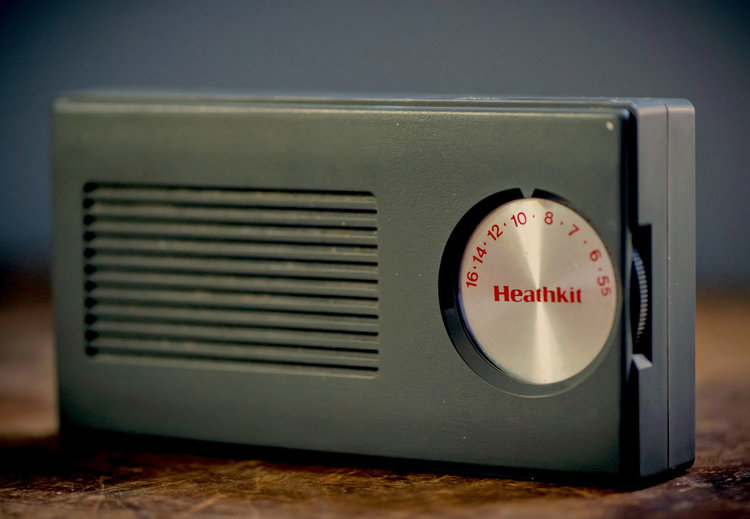
What We KeepNY Diary (19-6): What We Keep, Heathkit
Talk DIY: Kit Building

Today, at the library, I chanced onto a book, What We Keep (do visit the official site; it tells you everything about the book, which I am sure will have a sequel, as they are still soliciting stories). I could not stop flipping through it, and read the vignettes on why people treasure certain objects. I took it home.

The most amazing thing is how resonating and moving many of the stories are. We come from different walks of life, different countries, yet our hearts operate in the same way. The only difference is, the ones curated and quoted here are much more eloquently expressed.

As you can well imagine, when it comes to really personal things, audio is not worth a mention. So, I was delighted when I read one of the entires mentioned Heathkit (link). Here, the daughter built the kit with her father. I, as a kit builder, can fancy building one with my son.

A word on Heathkit. The book actually mentions Steve Jobs of Apple credited kit building with his growth. Also, I have several Heathkits. In my opinion, Heathkits may not have been the most reliable due to cost constraints, but they were almost all great sounding. I still own the W-5M monoblocks, which sound great with KT66. They all need some rebuilding but their sonics are not to be questioned.

Photo: Heidi ReedPhoto: Heidi Reed
Photo: Heidi Reed

07 June, 2012

Talk Vinyl: Two Top Values

Talk Vinyl: Two Top Values
Talk DIY: MC Step-Up Transformer
Brief Review: CineMag 3440A SUT 
Brief Review: Denon DL-301MkII

Revised July 10, 2016 (Budgie SUT mentioned as 3440AH alternative)

As promised, brief looks at two items that really surprised, and delighted me! Both are phenomenal values that unambiguously within the first notes earned my greatest admirations. They are sure to go into my Best Buy 2012 list, if I remember by then that is!

Gears Used for this Evaluation:
Turntable: Thorens TD-124 Mk I with SME 3009S2i (and Denon DL-304)
Preamplifier: Shindo Monbrison
Amp: Wavac MB-811A
Loudspeakers: YL Acoustics 4-way horns

pic of unit that is like mine

CineMag 3440A Step-Up Transformer (SUT)
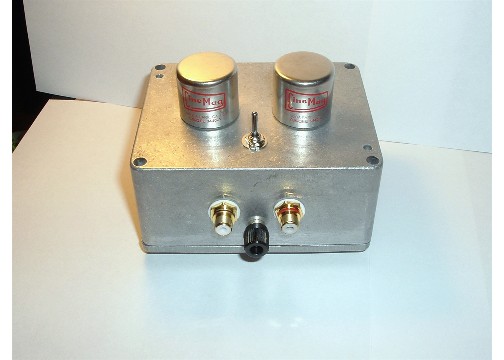
I first learned of the CineMag CMQEE-3440A SUT (used and likely popularized by Bob's Devices) from Art Dudley's review in Stereophile. I first wanted to just buy the  transformers and build one myself. They are available on Ebay (currently $180 per pair), and if you are into DIY, that is the way to go.

I got caught up by other things and promptly forgot about them. But some time later, by chance, I came across a used unit on Audiogon and bought it for a reasonable sum. The seller claimed it was an older version of Bob's Devices, but I have some doubts after checking pics available on the internet. While the enclosure is in hammer tone, there is no marking, the inputs and outputs are on the opposite long sides and there is only one toggle switch on top for gain (no ground defeat). Although I am not entirely sure of its provenance (I think I shall write to Bob after publishing this post for him to read), I think it is closer to what was sold on Audio Asylum. I can assure you though that the unit uses the genuine CineMag CMQEE-3440A (red logo) transformers and that it works great.

I can also assure you my listening results are valid as they almost completely match Art Dudley's descriptions, doubly so as Art Dudley and I both use Shindo preamplifiers. His  Shindo Masseto is, as far as I could judge from the pics and descriptions of components, very much like a beefed-up version of my Monbrison. I am certain the same Lundahl moving coil step-up transformers are used in both units.

As I have said, I got the same results. Fed into the MM stage of the Shindo, the sound is superbly detailed and punchy, bringing life to my Denon DL-304 like nothing before. And yes, it trumped Shindo's built-in Lundahl's. I also briefly compared it to my rare and expensive WE285L and Langevin SUTs; to say the least, the 3440A is their equal, and actually bettered the WE in this application. That says a lot.

Incidentally, Dudley has recently reviewed the more expensive BD CineMag 1131, and the review is worth reading for the story on CineMag's recent developments. I hope one day I could get my hands on one of those.

A concern: BD has gone up quite a bit in price. BD's 3440A version now is almost double the price quoted in Dudley's review, but for its performance can still be counted as good value for those not willing to DIY. The spread between the transformer costs ($180 on Ebay) and BD finished product ($650) is kind of big imho, but I am sure BD makes excellent products and they certainly deserve the credit for putting the CineMag SUT on the map, though I do hope BD shall hold the line on its price. (2016: Note that Bob's has gone upscale and no longer offers the 3440A, instead the 1131 and SKY versions. Also, Parks Audio Budgie uses the CineMag 3340AH, sells for a reasonable sum and has a good reputation. I haven't heard it but would love to.

Denon DL-301 Mk II Moving Coil Cartridge
I have used Denon cartridges for over a decade and am a die-hard fan. Surely there are no greater bargains in the entire analog domain. The Denon DL-103 has always been my go-to cartridge, and the DL-102 is now my mono reference. Numerous friends use the 103R and I also use the DL-304 in NYC. I have always been curious about the 301, now in its Mk II incarnation, as it has a body that resembles the DL-304.

I installed this on the SME3009S2i in lieu of the DL-304, just one day before I left NYC last time, so it is not even close to broken in. But its performance instantly captivated and surprised me.

In the same system, the DL-304 had produced a very detailed and neutral sound that could be a little lean if care is not taken. But the DL-301MkII is very different: it immediately grabbed my attention by its sheer presence, thereby making the DL-304 sound a little clinical by comparison. It is balanced, tuneful, and, like the DL-103, not the last word in details, but it is early on. There are no formal reviews on the internet, but read this review in Audiogon; the author likened it to the long discontinued DL-103D, which I have never heard. Personally, I think its sound is like an amalgamation of the highly detailed DL-304 and the highly musical DL-103, not a bad place to be! Part of this may be attributed to its "healthier" output of 0.4V, as compared to the DL-103's 0.3V, not to mention DL-304's paltry 0.18V.

The DL-301MkII deserves to be better known. It is a much easier cartridge to like than the DL-304 and an even higher output than the ubiquitous DL-103(R). I suspect in actual use it will sound better in many cheap and moderately priced systems than its more famous siblings.

Last but not the least. The retailers usually have this at $329, but if you are willing to wait, consider ordering it from Comet Supply. You shall save substantially. This curious retailer offers steep discount but does not always display Denon products on its website. Call if in doubt. See, they basically collect enough orders for a group buy before action. My DL-301MkII took several months to ship. I have ordered another lot of Denon, which I am sure won't ship any time soon. But the price is worth the wait. While you are at that, seriously consider ordering more than one Denon cartridge; they are that good.

03 June, 2012

Talk DIY: Pro's and Con's

Talk DIY: Pro's and Con's

Brief Reviews: Marantz 7c preamplifier
Brief Review: Sun Audio 2A3/300B amps

I started to write a short review on some DIY cables, but the article expanded on its own. Here, I give my views on the role of DIY in audio. They are my honest two cents, but some of these run contrary to popular opinion, so ymmv.

Is DIY in audio the way to go?
In general I have mixed feelings on DIY. Theoretically, I agree DIY is a wonderful thing, a great way to add dimension to the hobby. In practice the majority of the audio DIY people I have met (believe me, there have been many) achieve more in words than in practice. I judge it to be mostly counter-productive for the following reasons, and provide three examples to illustrate my points:
  • Most of the DIY products I have heard are deficient one way or another, sometimes seriously, rarely striking a fine balance. The more one focuses on boutique components, the more expensive components one employs, the more the likelihood of wayward results. The most important requirements for DIY, as in general, is not skills, but fine ears, good judgement and capability for self-criticism. Electronic and theoretical know-how is very important, but it is not the most important in this hobby that has a tinge of alchemy about it.

    Most of the DIY people spend too much time listening to components than music. Changing, running-in and comparing components is extremely time-consuming. Don't tell me that doesn't eat into your listening time. Listening to a few tracks over and over for comparison is not listening, not living - it is hell.
  • DIY tests the ego. Yes, we have all met many DIY people who claim they have made something that kicks butt, that beats the shit out of an established product, but have you ever met a DIY person who admits he is mostly failure? Judging from my experience, there should be a lot more of the latter than the former, but alas...The ironic thing is, if music comes first, DIY should not at all be an ego thing, and the least suitable person for DIY is one with a huge ego.
  • DIY can cost more. Almost all of the DIY fanatics have bad words to say about manufacturers. While it is true for the same money you can build something with much "higher grade" components, there is no guarantee that it will sound good, or even balanced. And there is little resale value. Expensive components add up quickly in cost. It is just as easy to end up with many machines, a huge number of components and no music than to arrive at nirvana.
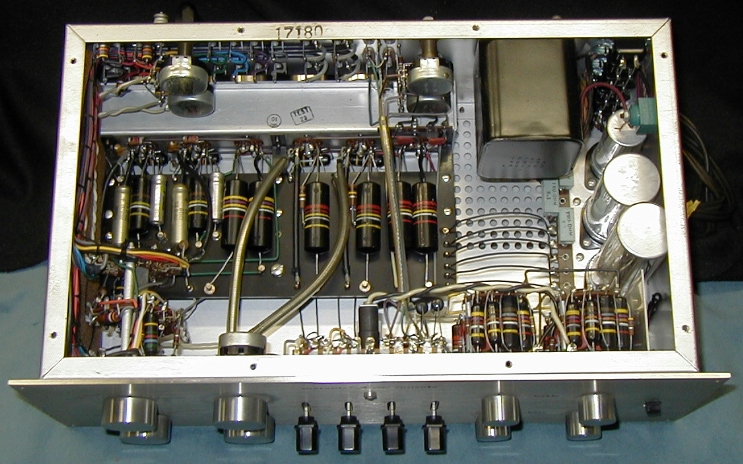
  • Example - Marantz 7c (pic from Audio Classics) I think it is apt to cite just some examples to support my observations. The Marantz 7c must be the most popular choice for DIY preamplifier. Over the years I have listened to dozens of DIY efforts, some costing more than the real vintage thing or the re-issued version, and that is expensive! Many "improved" on the original circuit, often beefed up the power supply or even switched to tube rectification and regulation. In fact, for a year or two, when I fist came back to HK, I lived with a DIY version commissioned by me and built by my electronically savvy student using a cheap case, point-to-point wiring and good but inexpensive components. Sometimes I'd change a cap here and a wire there, though nothing excessive. Then I came across those much more "serious" efforts. To sum the whole thing up, my cheap one did not at all fare badly - at least it sounds balanced. Most of the over-built and over tweaked ones sound oddly disengaging, even incoherent. And certainly none came close to the original, which I happen to own! The original may not be the last word in every department (especially in dynamics) but it has a musicality that somehow eludes all of the imitations. Even the re-issue version made by VAC, which adheres much to the original (except understandably for parts) is much better than most of the DIY versions I have heard. In passing, I'd like to note that earlier ARC preamps that use 12AX7 have been said to be based on the Marantz 7c.
  • Example - Sun Audio 2A3/300B amplifier Back a decade ago, through my yahoo forum, I must have played a role in the popularization of Sun Audio kits, particularly in HK. I must say I have never met a Sun user who doesn't like his amp. But in the forum, where there are a lot of DIY people, including some well known figures, the very simple design did meet with various criticisms. Some of the people built kits by another kit maker (say kit B) and made every conceivable upgrades recommended by a respected electronic guru. A friend had a fully decked out kit B that used all manners of chokes and it went up against my Sun Audio. I personally feel, despite the simplicity, the Sun more than held its own. If not for my awkward position I'd call the Sun the outright winner. I wanted to support kit maker B and so did not really fully air my opinion. And what do I know about circuits to argue with the guru, who I also happen to like? As much as I respect electronic know-how, the experience taught me to keep an open ear, to say the least! My convictions were further strengthened when, over many years, I heard many decked out and not inexpensive DIY amps went up against the Sun amps. I am sorry to tell you all of them did not sound as musical. Now, I know fully well the Sun amps are not the ultimate in anything, and they are not cost-no-object designs to begin with, but they have continued to hold up amazingly well over the years. The designer had used his ears well and balanced things deftly to make simple yet engaging statements, thereby trumping much DIY grandiosity in the process. That is something called "art", which the majority of DIY people fail to understand.
  • Example - DIY loudspeakers At the risk of incurring much wrath, I have to say the most difficult thing to DIY is the loudspeaker, particularly conventional designs. As an example, II have met people who use the most expensive Dynaudio drivers and crossover components and put them into DIY cabinets to produce the most atrocious and unlistenable sounds I have heard. So, DIY multi-driver boxed speakers are a no no. Big horn assemblies fare better, as the midrange and treble drivers and horns don't really need housing and one only needs woofer enclosures (some even do without). Wideband drivers are also more likely to succeed, though it is by no means guaranteed. In the end, very few DIY loudspeakers (if any) are satisfactory in my experience
When to DIY?
All that said, let it not be misunderstood that I am all against DIY. Truth is, I admire many facets of DIY but also find much, too much, that is disturbing (same with manufacturers).In the end, cheap and Here are aspects of DIY that prove rewarding in my experience:

Build something that is not available I can never agree with people who build a "replica" of something that is available. Aside from Marantz 7c, few of the replicas I have heard (and they number in the hundreds) have personality. It can be based on the circuit of Matisse Atom, Jadis JP80 or whatever, but they all sound the same, sterile and devoid of character. Almost all miss the characters of the originals. Why target something to attempt to knock it down? Why does one have to prove he is better than the original designer? Build something new! It can be a brand new design. It can be a variation so that rare tubes like the WE275a, 205D, or 50, can be used. Come to think of it, time for me to do that for my WE275a tubes with one of my surplus Sun amps.

Make use of valuable but cheap old parts Forget about 12AX7, 6SN7 and 6DJ8 and use cheap and unrecognized tubes. Is that not the original intent of DIY, to make something cheap and cheerful? Why fight with the huge number of people who use these tubes? Why build another TDA1541 DAC? Why be so common if you have to DIY?

Judicious replacement of parts Since I have great respect for vintage equipment, my view on modification is guarded. I can never agree with modifying now expensive classics. They are expensive for a reason. Yes, replace what is necessary but no more. But there are a whole lot of inexpensive vintage equipment that would benefit from full restoration and modernization, to bring them back to life. Among modern equipment, DACs probably benefit from part replacement the most. I have heard a few DACs with upgraded OS-CONs and they do seem to work (I am more guarded when it comes to clocks). In general, the word here is "judicious", not "wholesale".