Showing posts with label Brand-Decca. Show all posts

14 July, 2020

BBC LS5/1A Western Electric 124 Conrad Johnson Premier 7 Soundsales AM 8/1 Jorgen Schou No. 251


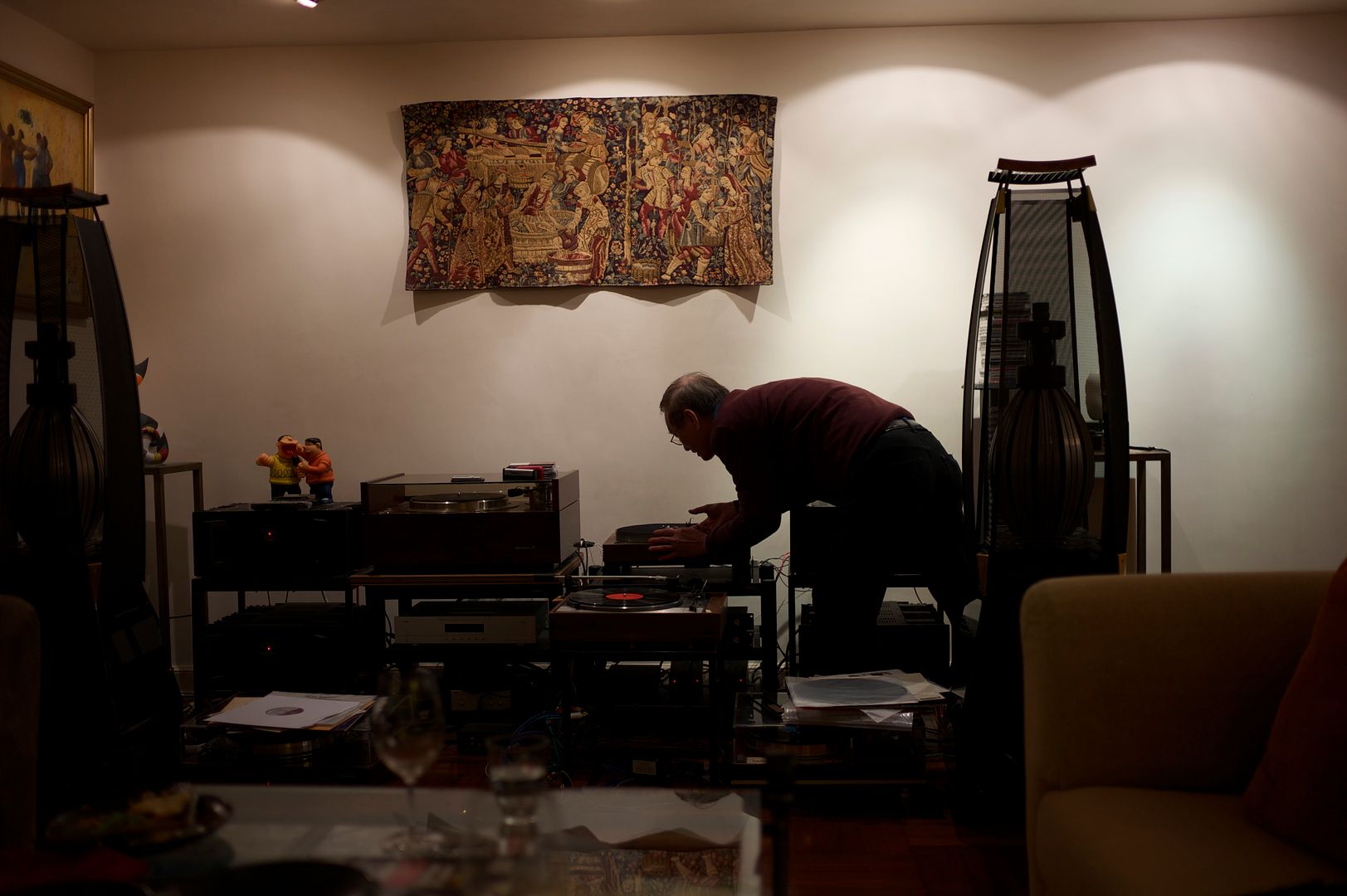
Click all pics to enlarge. Many more pics with captions at bottom. jules' living room is small, but the sound with the LS5/1A is big!

Virtual Home Visits (8): BBC LS5/1A, Western Electric 124, Conrad Johnson Premier 7, Soundsales AM 8/1, Jorgen Schou No. 251, and other goodies

Editor: I have known Jules for over 25 years. Jules is an engineer involved in a lot of Hong Kong development projects, quite a busy man! With two kids, I have no idea how he finds the energy to acquire so many audio classics. Jules is also a classical music fanatic and still buys CDs regularly in addition to streaming via bluetooth.

Regular readers will recognize him as a frequent host of our HK home visits. Truth to tell, by the end of my stay in HK, I was not that keen on home visits, except when there are rare gears to be heard, and jules surely gave us several surprises. In particular, I urge you to read my last visit, a mammoth but informative article about more than the RARE LS5/1A and jules' Reel-to-Reel setup; in that article you will also earn how a CD Transport and DAC can drastically degrade the sound (The visit before that is also a good read as it reported on how a "respectable" modern loudspeaker got trampled by a vintage one).

At the end, I shall write some Footnotes.

Not surprisingly with Jules, equipment has changed quite a bit!

Analog: Garrard 301 with 2 arms - SME 3012s1/Ortofon SPU AE/Jorgen Schou step up and Decca arm/Decca mk2 [Editor: see Footnote 1]
CD transport: Forsell Air Bearing Reference Mk2
Bluetooth: Cheapie from Taobao
DAC: Totaldac D12 dac
R2R: Studer A807 and Telefunken M21
Phonoamps:-Built-in Phono of CJ P7 (below) or Diatonic Precision DP10 (solid state, HK brand) [Editor: see Footnote 2]
Preamp: Conrad Johnson Premier 7 [Editor: see Footnote 2]
Power amp: Western Electric 124 or Soundsales AM 8/1 [Editor: see Footnote 3]
Speakers: KEF LS5/1a

It's too bad I cannot be there!

Editor's Footnotes: 

  • 1) For better pics of this and other Decca cartridges, see my home visit to Kevin, another Decca arm/cartridge user, here. The Step-Up Transformer uses the rare vintage Jorgen Schou No. 251 that is supposedly a perfect match for some SPU's.
  • 2) Having heard so many CJ preamps (and used the PV10), the only one that attracts me is the P7, which I have not heard. This is a classic (read J Gordon Holt's stereophile article for details), and I am particularly interested in its use of 6GK5 which is also used in my Melos 222. Jules and I listen in much the same way and we both agree that the CJ P2 and P3, so prevalent in my NYC circle, are just too sluggish sounding. Jules said the P7 is more neutral sounding, and he prefers its tubed phonostage's dynamic bloom to the HK brand's solid state.
  • 3) WE 124 needs no introduction and has appeared in this blog many times. Unless you are from the UK, you'd not have heard of Soundsales. This vintage amp maker was associated with the BBC. If you google "Soundsales AM 8/1" you find almost nothing in writing, but if you switch to image search, there are a lot of pics, many originating from HK. Apparently, there is a cult following. I asked Raymond what's the difference between the Soundsales and the WE, which is much more expensive as they are tubed with WE tubes, he said:" ...124 聲音更多內在變化起伏,絕不拖泥帶水,節奏明快,而高中音帶有西電 DNA 的 吸引力。雖然 8/1 輸出比 124 大一倍,但聽感上 124 的驅動力更強更豐富...." the WE 124 is superior in microdynamics and rhythm and pace, and its treble and midrange of course has the mesmerizing quality unique to the WE DNA. Although the power of the Soundsales is supposedly twice that of the WE, subjectively the WE 124 is grander and more effortless in its drive..." There! As I expected.

Garrard 301; Decca Arm/Cartridge in the back; SME 3012/SPU in front
Jorgen Schou Step Up Transformers
Forsell on top, multibox Totaldac below
Studer R2R
From top to bottom: SS Phonoamp, PSU and Dual Chassis of CJ
WE 124 and vintage Step Down Transformer
Telefunken R2R
Soundsales AM 8/1 (pic from the net)
Rare Pair Of BBC Vintage Sound Sales Tube Power Amp AM8/1 | eBay

25 June, 2020

B and W Matrix 801 Mk II Garrard 301 Thorens 124 Lenco 75 DIY Tonearm Decca Cartridges


Click all pics to enlarge. The Ever Changing Landscape. Compared to before, the Infinity Ribbon Columns are further back, and the Resurrected B and W Matrix 801 are in more advantageous positions. 

Virtual Home Visits (2): Man of the Year at Work

Regular Readers know all about Kevin, our super-diligent friend who is constantly on the move. In my 2019 Year in Review (here) I named him "Man of the Year": "...This category is a First! Of course, it has to be Kevin, who has acquired and done so much this year that this blog has worked hard to track him. I thank him for all the good time, the great food, and of course for making my Thorens TD-124 arm board! His DIY and restoration efforts are also deserving of praise. I am still amazed by his DIY Tonearms (bottom pic; feel my admiration? description here) and Cactus Cantilever/Stylus (left pic, click to enlarge, here). This man re-invents himself virtually every minute; watch this space!.."

Well, that happened to be the last time he was mentioned in this blog! I actually saw him a couple more times before the lockdown but did not write about it. Fear not, his tinkering has not stopped. I just got a lot of pics from him to update you. He mostly worked on DIY turntable plinths and tonearms.

According to him, the sound just kept improving. Most gratifyingly, he resurrected his B and W 801 Mk II and now the sound fills the room (as it should, and didn't last time).

Sometime ago he helped repair the Wadia Transport of Andy's brother-in-law. He could not forget the sound (better than the computer for sure). He consulted with Andy and I about transports. I asked him to try out hid DVD players first. He did and told me the result with a Marantz was not bad (though not quite a Wadia). This morning I asked him to try Bluetooth; I hope to get something from him later! Sorry, no food pics...

A newly acquired Garrard 301 Grease Bearing, with DIY Plinth and Tonearm. Cartridge is
VdH tipped Decca Super Gold


Thorens TD-124 in a New Plinth, with Decca Professional Arm
and H4E Cartridge. Note a Pair of Bell 2122C Behind.


Lenco L-75. Note the Modifed Double Platter. The Plinth has a New Top. The DIY
Tonearm Employs SME Bearings. Cartridge is Ortofon MC-5000


 At the very back is the VPI with Decca SC4E Cartridge.
Next to the Thorens 124 is the Citation I


He is Working on his Digital (Computer Music) too. The box with the screen is the
Digital Interface, which connects to the small TEAC DAC next to it.An old
Marantz professional DVD Player serves as Disc Player.The cheap
Chinese "Blue Velvet" Tube Preamp Buffers the signal before the Preamp

25 December, 2019

Cactus Cantilever Stylus DIY Headshell Alignment tool


Click pics to enlarge. Top, DIY Cactus Cantilever/Stylus in action, on DIY 12" arm. Record Weight is DIY from Junk Parts too. Decca Gold on the armboard.

NY Diary, Christmas Edition (19-23): Analog DIY Fever, Decca Cartridge Galore

Our man Kevin called us in on Monday to show us more stuff. It was an eventful afternoon, so all the listening were "uncontrolled".

Cactus Cantilever/Stylus! The Cactus Cantilever is certainly not new, especially in DIY circles, and has gained in traction since its introduction. Some very expensive high end commercial models that use cactus as cantilever have been well reviewed (Miyajima Saboten; Soundsmith Helios and Hyperion). Our man Kevin's DIY effort differs from those in that he made a Cantilever/Stylus. We heard it briefly and it was very good! The pic below affords an even better glimpse on how it was inserted into the Stanton 500.


DIY Acessories The pic above also shows Kevin's prototype of a wooden SME type headshell. The pic below shows his DIY rendition of the very expensive Dr Feichert alignment tool. The plate makes use of a quarter of an LP, ingenious! I am sure we'll re-visit it when it is finished. Incidentally, the Sancerre in the background is not the famous white wine, rather a light colored and very refreshing red wine (thank you Andy)!


Decca Cartridges and Shure M44-7 Over the course of an afternoon we heard the Decca Gold (VdH tip) and Shure M44-7 on the Thorens TD-124/DIY Plumber 12" arm (more on the arm here). Sound was dynamic as hell. Although the Decca Gold is no doubt a little more refined, what really impressed me was the very good performance delivered by the lowly Shure M44-7 (my view of this cartridge here), inspiring enough to make me think of giving my M44-7 a spin on my Schick 12" arm.


Later, we sampled the 3 Decca cartridges Andy brought over (the Mk II and the 4RC are Conical; the SC4E is different from Kevin's in having been modified to have a Line Contact Stylus). All were lovely sounding and each had its own attributes. With the different stylus profiles and output levels it was hard to test thoroughly, even judge fairly, but I have already asked to borrow them for some testing (enjoyment) myself!


Digital Listening I brought over my Magnavox CDB-492 and Proton AC-422 CD players. The idea was to demo the non-oversampling TDA-1543 sound (Magnavox) that I like, and contrast it with the bitstream sound (Proton, with attendant oversampling), which I have not done even myself. Sabotaged! Unfortunately, there was a hiccup. The Magnavox simply would not work when inserted into the big system. But it worked well with the small Altec 604E system (pic above). Later when Andy arrived we discussed this and he told us that some equipment just would not work well with the PS Audio Power Plant, which was where the power came from when we tried it in the big system.

I left the CDPs with Kevin. Later in the night I received a call from him. He said he fixed the problem and compared the two CDPs, opining that he preferred the Magnavox for its larger soundstage and better sound. I have always thought the 16-bit chips have better hall sound, which likely accounts for more air and soundstage. When these get back to me, I am going to do some comparison myself.


A potpourri. The tonearm wand, counter- and rider-weights are all DIY.
It shall be somehow attached to the SME part (from Ebay).
I look forward to seeing and hearing this bastard 3012.


Thanks for the dinner. Mostly take-out food. Clockwise from the 2015 Chianti: The mis-named
Pork, Peking Style; Braised Tofu with Fish Fillet; Shrimp; Sauteed Cabbage;
Sauteed Choi Sum, Whole Chicken with Scallion Sauce.

 Merry Christmas and a Happy New Year!

09 September, 2019

Infinity RS-1B Altec 604-H VAS Re-Tip Cartridge Repair Monster Alpha Genesis 1000 Decca VdH SC4E Gold


Click pics to enlarge. A Tale of Two Positions. Top, Initial Position, rather missionary; Above, Final Position, freer. The Bass Columns are all the way in the Back Corners, barely visible below the unused horns. The Front Panels are driven by CJ Premier 3 on the rack and Premier 8 monoblocks in the center. The Bass Column is driven by a Professional Crown Amplifier on the rack below the CJ P3. The Lenco in the center is not used on this occasion. The Thorens TD-125 with Decca Gold (VdH tip) is to its right. Below the Thorens are the Yamaha DVD player, TEAC DAC and Chinese Server. A bit of the VPI turntable is visible behind the left Altec A7 horn system. McIntosh C20 + MC-30 drive the Horns. Poor B&W 801's are covered up in purple.

Background and earlier session with the Infinity RS-1B here.

Infinity RS-1B, Almighty!
To paraphrase Anna Karenina a bit: All great sounding systems are more alike than different, and easy to write up; whereas bad systems are bad in all sorts of different ways and test a writer's patience (not to mention friendships). Now, this article is super easy to write!

This man Kevin is one of the most incredible audiophiles I have encountered. Over the course of a very short 2 years, he has gone from someone who was using a small Fostex full range to Altec A7 horn system, then B&W 801 and then now Infinity RS-1B (amply chronicled in this blog, search link). If audio is a degree, then in 2 years he went from high school to post-doc! Of course, he was helped along by Andy, and benefitted from Andy's many connections. I tell you, if you have the chance to connect with older audiophiles, do so; it is likely more beneficial than hanging out day and night on the internet. One thing great about Kevin is, whatever "advice" we give him (some just guesswork from experience), he would try it out. Even if the conclusion is different, the experience is worthwhile. Yes, audiophilia is serious work.

This pair of Infinity RS-1B came on the heels of Sad News - the departure of Andy's long-time friend, Mr Ma, a notable tech wizard familiar to many in upstate New York. When he was young, in Taiwan, Mr Ma serviced the very complicated Studer components and most things are just piece of cake to him. I should have touched upon him in my last article below but somehow didn't. Suffice to say, Kevin went with Andy and bought the Infinities which were languishing in the garage and also took home a pair of Altec 604-H.

Last weekend Kevin called us and told us of the great progress he has made since my last visit (here). I of course was a bit skeptical, as this kind of call has happened often with audiophiles. Gratifyingly, it proved otherwise on this occasion.

Image result for karajan sibelius 4 dg discogsIn-Room Kevin had drastically rearranged his room. He removed his sofas (to me unnecessary) and moved the Infinities forward (just as I'd like, as chronicled with his Altec's here and at one time his B&W's here). It is my firm opinion that in-room usually sounds the best. And this time, as in the past, it is proven again. The sound was wide open and dynamic, just superb, as one would expect of Infinity (at its best). Surprisingly, the bass alignment was excellent, and I could not detect any incoherence - an achievement! Closer Together We first listened to them this way (top pic), and the sound was highly focused, super-detailed, but somewhat tight and relentless. Further Apart Then we pulled them apart (second pic from top). Aloha! The strings in Sibelius Symphony No. 4 (Karajan/BPO; DG) sweetened considerably and everything relaxed; both Andy and I nodded in approval. Dialed in, as far as I am concerned, a total success! As a matter of fact, it sounds even better than Mark's Beta, as last heard here.

Image result for britten pagodas cdLoudspeaker Placement Again, as I have expounded many times in the past (search link), this illustrates the absolute importance of loudspeaker placement. For people who have a choice (I know many don't), it is imperative to try to find the best position. It is also true that in-room and near-field positions are freest from boundary effects.

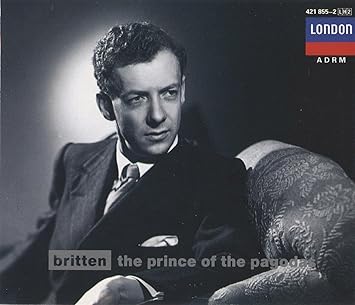
Digital vs Analog To balance the system, this time Andy brought over material in both CD and LP format . We are in total agreement that digital and analog should sound similar in tonality at least. Here. tonally the modest digital setup was definitely warmer and fuller in the bass. The Sibelius was definitely better in CD form when the speakers were in initial position. Ditto Britten's own recording of his Prince of the Pagodas (Decca). But when the speakers took up the final position, wider apart, the sound smoothed out in the treble, to make the analog sound more open and detailed, without stridency. I judge it superior but, knowing Andy, I'd think he still prefers more warmth. Nonetheless, the way analog breathes and brings out the full harmonic spectrum, and how it makes one aware of phrasing, simply can only be approximated by digital. We discussed how the ribbons have their own sound, likely not easy to fully warm up.

Two Decca Cartridges Both have the Van den Hul re-tip, and both exhibited the Decca's virtue of fast transient time and evenhandedness. Detail is probably more than the original ones due to the VdH mods. Overall the Decca SC4E on the VPI Prime was preferable; indeed this marked the best sound I had heard on the VPI (that says a lot for me, as it is not my favorite brand). Andy is very particular about the TT used with Decca's; while his current choice is Nottingham, he gave approval to the VPI. The Decca Gold on the Thorens TD-125 (with tangential arm) was not far behind. As a Decca fan, I was quite happy with both; surely with time and some cabling experiments the sound would further improve.

Altec A7 I don't know what he did, but on this occasion the A7's sounded quite good driven by McIntosh C20 + MC-30. It was the best sounding since he moved them further back. This is just a footnote, as we didn't pay too much attention being more distracted by the younger brother...

Altec 604-H
A dining table and a few chairs separate the two ends of the room. I did miss the old couch, which I think he could have kept! But now at the other end is another horn system! The Altec 604-H is the last alnico iteration of this classics, which I have heard many times in HK (read this home visit in HK). The Bell 2122-C's were not optimally tubed and lacked impact compared to the Sun Audio SV-2A3, Sound showed potential and was in keeping with many others I have heard, though bass certainly could have been fuller. I told Kevin that one time I heard a McIntosh amp worked well with the 604. Kevin followed up and called me that sound had further improved. That would have to wait till the next report.


Altec 604-H driven by Bell 2122-C's and Sun Audio SV-2A3 (behind). Preamp is Conrad Johnson PV-5 and turntable is a Lenco L-78 with original arm and ADC cartridge.

Monster Alpha Genesis 1000 (VAS Repaired)
A few days later we had a lunch gathering at Andy's. He wanted us to hear his resurrected Monster Alpha Genesis 1000 Cartridge. This was a famous cartridge in its days, and Stereophile online has an article on its sibling 500 compared to the 1000.

Andy's 1000 is certainly not the first one Steve had repaired. Here is an interesting report on his job with this cartridge.

Our impressions were certainly in keeping with the Stereophile report. The Monster was made by ZYX, which still makes them more or less the same way. I am not a fan of ZYX, which I have heard many times in HK - its usual literal manner holds no fascination for me. On this occasion though, they sounded pretty good with Andy's A5's driven by a pair of vintage Bell 2122's. Andy's 1000 broke off after not much time, and he had waited all these years for a re-tip. Andy said VAS Steven's re-tip is likely better than the original. We enjoyed the music together with the sumptuous lobster noodle and seafood tofu soup.

08 July, 2019

Decca Super Gold Infinity RS1-B Nottingham Space 294


Click pics to enlarge. Top, Decca Super Gold. Note the unused blue wire (-ve) as the Decca only has three pins (common ground).

NY Diary (19-8) Days of Wine and Roses
Decca Super Gold Cartridge
Infinity RS-1B

The gang was rolling yesterday! It's been a while since we were invited to R's for lunch and we were eager.

Women's Soccer I was picked up just before 11 am, which unfortunately made me miss most of the first half of the USA vs Netherlands Women's World Cup Final. Compared to, say, 10 to 20 years ago, the overall standard and environment of women's soccer have improved significantly and this series has been a huge crowd pleaser. In my opinion, many teams (not just the USA) play with passion, hunger for success and grace, which are frequently missing in bigger-money men's soccer. Salut!

It was only during intermission that I rejoined the gang in audio listening. I watched a bit of the second-half, up to the controversial penalty kick before adjourning for lunch. I forgot to take a good pic of the seafood stew, only what's left! For dessert we brought a pecan pie and Chinese Egg custard tarts, enjoyed with aged pu-er tea and, later, coffee.


The new Turntable, Nottingham Space 294 Turntable with Ace-Space 294 Tonearm. Below, R's dynamite wine cellar.

Miles Davis - Sketches of Spain.pngDecca London Super Gold Cartridge
R's living room system has not changed much (see here, for pics too), but the recent addition proves to be a game-changer!

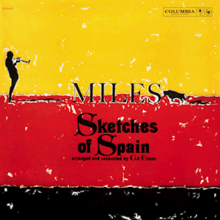
At first Stan Getz (Verve) was playing. I am not a great fan of Getz but it sounded pretty good, better than last time. Then R played a thrice familiar LP, Miles Davis' Sketches of Spain, and, even though it is a mono copy, I was floored. Although Miles' tone in my opinion was a little on the white side, the castanets just jumped out at me; more notably, the brass chorales were uncommonly lucid, as I have never heard before. The way you can separate every player but still hear them harmonize perfectly was just mesmerizing. It left me dizzied and surely I gained new respect for Gil Evans' arrangements.

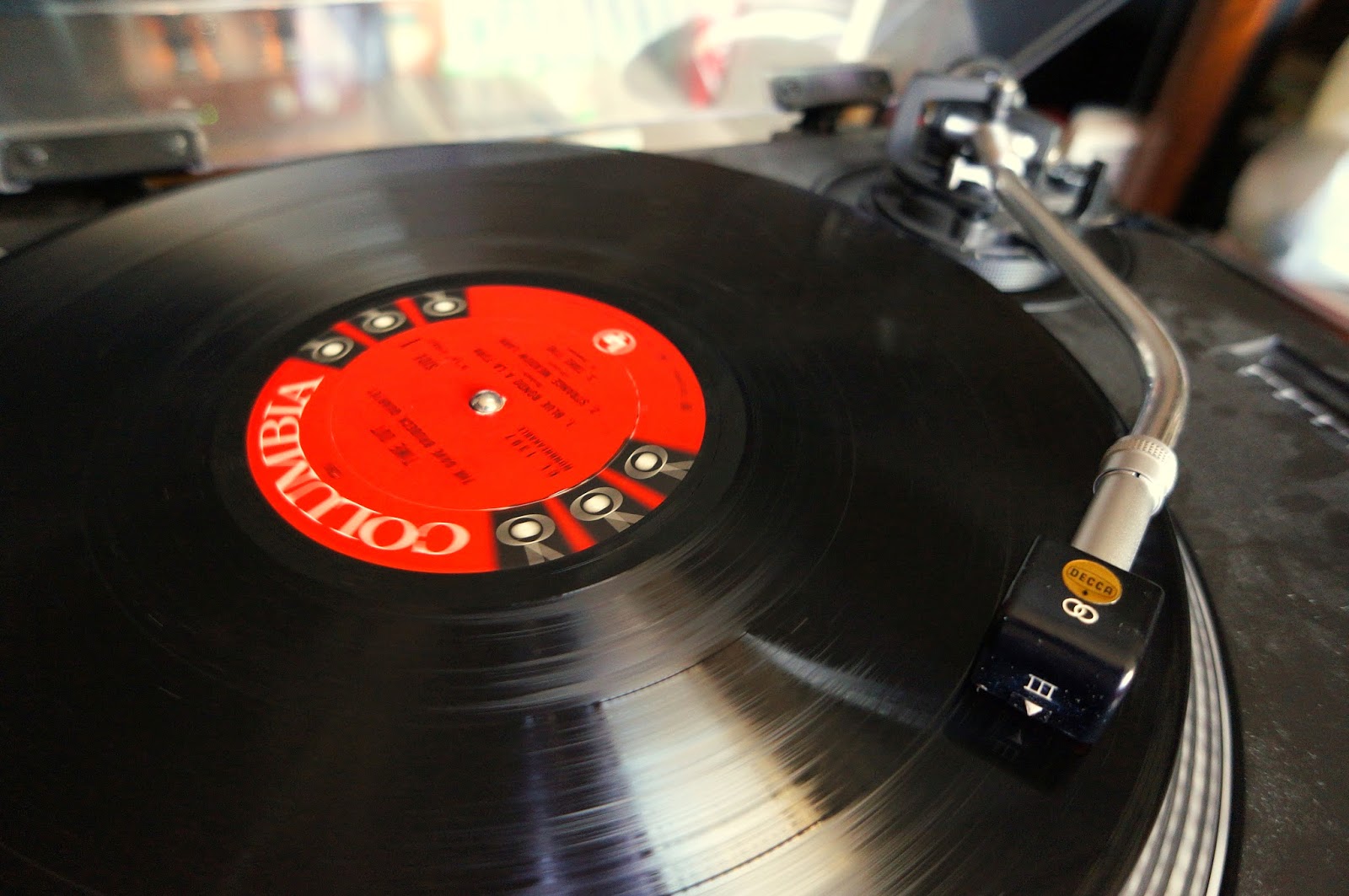
No need to hear more, as I have long been a Decca/London fan ever since my experience with the ffss MkIII (here). So I attributed most of the sonic characters to the venerable Decca/London Super Gold cartridge, still in current production (see review here), though the one we heard is an old one Andy sold to R. This is a moving-iron cartridge with a healthy 5 mV output, so only an MM phonostage is needed. Of course, the Nottingham Space 294 Turntable/Ace-Space 294 arm (TAS review) surely has contributed a stable platform for the Decca/London to shine. Although in HK I had heard many Spacedeck's some years ago, I'll admit I am not a fan of Nottingham (don't like their looks), but Andy, who knows everything about Decca/London cartridges, had always been on the search for the perfect turntable/arm for his many Decca cartridges. Some time ago he found out that the late Tom Fletcher was a Decca/London fan, and reasoned that his designs must be friendly to the cartridge. Based upon his reasoning, he urged it upon Mark, who bought a 294 and sold his Spacedeck to Andy. Judging from this outing, it is an excellent match indeed, and R has already stopped listening to his Rockport Sirius/Jan Allaerts (we didn't find it special either; this cartridge did not sound anything special on at least 3 turntables).

We left a little early to avoid the heavy traffic returning to the city at the end of the July 4th weekend. When we left, Miki, R's wife, gave several of us some flowers from their magnificent garden. We then went to Kevin's place.


Look carefully and you shall see the top of the bass columns behind the Altec A7.

Infinity RS-1B
Wow, this man is gun-ho! Not long after Kevin got the B&W 801 (here) he heard Mark's IRS Beta (here). After the sudden recent demise of Andy's friend Mr Ma, several of the gang went to sort out things for his son, and Kevin bought his Altec 604G, which came with this pair of Infinity RS-1B stored in the garage. It was in challenged cosmetic condition but Kevin just restored it beautifully.

The RS-1B is a lot smaller than the IRS Beta and much more suitable for most people (read this 1985 Stereophile Review).

Driven by the Conrad Johnson Premier 8 borrowed from R, the sound was promising though the you-can-touch soundstage of Mark's IRS Beta was missing in this smaller room. But you shall be hearing more about this I am sure.

26 December, 2014

2014 in Review Sparkler Audio, 47 Labs, Micromega, Flying Mole

2014 in Review: Extravaganza!
Capsular Reviews: Sparkler Audio Products
Capsular Reviews: Micromega MyRange Products
Capsular Review: Flying Mole CA-S10

Revised March 11, 2015 (short note on MyGroov)
Revised Feb 3, 2015 (correction of info on Sparkler S301A)

Like 2013, 2014 went by in a snap, busy with personal agendas which mostly had nothing to do with HiFi. This year I made about the same number of entries in this Blog as last, far fewer than in previous years. However, unlike 2013 and like 2012, I managed again to restore one choice vintage item, and, near the end of the year one thing happened after another, as I finally caught up with some long-coveted Japanese esoterica/legends. Add to this some other bargains, this entry is substantial and more than a retrospective, since it shall also contain some latest brief reviews! Read on...

Most Notable Events of the Year
  • Brook 7 Preamp The restoration of this pair of vintage monoblock preamps must be counted as my best effort of the year! For details, please read the cited article. A short quote: "...This kind of sound is impossible to describe, so different it is to almost all other vintage and all modern preamplifiers. Although not without its faults, it is on the same footing as Western Electric, and for me that is the highest accolade..." The significance of this event for me is like the pivotal event of 2012, the re-firing up of my Western Electric arsenal (link here).
  • Decca Cartridge This came about because my good friend shidi got the vintage Decca ffss MkIII cartridge...which he sent to my NYC home...well, I listned to it for 3 months and was badly smitten, and am sure there is a Decca in my future. The distinctive lightning-fast leading edge is something once heard, never forgotten. I think it is just as good with mono records, and I would prefer to listen to mono on this Decca stereo than many true mono cartridges.
  • Departure of An Old Friend An era has ended when I saw my beloved alnico Klipsch La Scala sold to a friend to make room. He is happy and I have mixed feelings. I hope he buys my other pair and realize my dream of stacked La Scala's!
Click pic to enlarge. Cramped quarters! Next to the right 47 Labs 4737 loudspeaker is the Shigaraki transport, behind which are its power supply and the Shigaraki DAC. Sparkler Audio's S306 DAC rests on top of the 47 Labs DAC's power supply. One shelf lower you can barely see the Flying Mole CA-S10 beneath the Sony DVD player.

Year-End Bonanza!
I feel guilty for having bought myself so many presents at the end of the year, enough for a few Christmas...well, one thing led to another... Here is the saga presented chronologically:
  • 47 Labs Shigaraki  4716/4715 CD Transport/DAC (Official Japanese website has more info but the US importer website is in English and has a very complete set of review articles; note too that as usual the price in the US is quite a bit higher than in Japan). 47 Labs' claim to fame is the Gaincard amplifier, which uses a humble opamp, very few parts and ultra-short signal path to achieve excellent sound, but sold for a high price. Fame led to many DIY clones, called Gainclones (which includes HK's Clonesaudio). Shigaraki ware (信楽焼) is pottery and stoneware made in the Shigaraki area of Japan. Shigaraki ware were employed to make casings and platforms for 47 Labs' still-not-cheap entry level series. However, the recent death of 47 Labs' supplier has put an end to the series. I don't actively peruse the second-hand markets these days, but by chance I spotted a set and got them. I have previously heard them to good effects several times, but in my own systems (System B/C, described here, in need of update) I could not only appreciate the music they make, but also nail down their specific qualities. The transparency and sinuous tactile quality belie the simplicity. I have heard non-oversampling before (including my old trusted UK AN DAC2), but this is even more direct. There is no free lunch (as with vintage preamps, like the Brook 7 above), with complex material things get unraveled, so you have to weigh your priorities. Full review shall follow in 2015.
  • 47 Labs 4737 loudspeakers ("Lens")  This is the sleeper in the 47 Labs canon. My friend JC, Australian dealer of 47 Labs, has expressed often to me his admiration for its previous incarnation, the non-alnico 4722. Again, by chance, I got hold of a second-hand pair. In my current limited space, it is wonderfully smooth and matches my System B/Ongaku (described here, in need of update) better than any others I have tried. North American readers should note their dealer makes no mention of the newer model. Full review to follow in 2015.
  • Sparkler Audio NOW, this is the REAL news. Founder and designer Kazutoshi Tsukahara was with 47 Labs' Kimura san for a while, and co-developed the 47 Treasure line. Just recently, they parted ways, and Sparkler Audio was formed (official site in English). The products are fully in the vein of 47 Labs, but the prices are much more friendly. With help from old friend vkung, shidi and I procured 4 of their offerings (more detailed reviews to follow): 
  1. S303 CD Player Doesn't it remind you of 47 Labs' Flatfish? Since I already have the 47 Labs Shigaraki set in HK, I ordered a 120V version for me to bring back to NYC. Being impatient, just the other day I took it to my old house, where I put it into my dedicated 120V line and reference system (see my detailed system description in the side-bar to the right). Boy, even raw, did it sound good! In my estimation, it does everything the Shigaraki does (and likely better), in a more convenient (and cheaper) package. Note, I haven't done an A/B comparison. Full review to follow in 2015.
  2. S301A Loudspeakers I have a suspicion this is the sleeper in the Sparkler offerings. The humble fullrange has no right to sound this good (and I am a fan and reasonably knowledgeable of fullrange's)! Its previous incarnation, the S301 used a Fostex FF105WK (see Taiwan 牙尖嘴利 cynicalaudio Blog in Chinese, or in translation), but the 301A uses the Mark Audio CHR70 (info in Madisound), though the cabinet is likely the same. I am driving it now on my desktop with Micromega Myamp. Surprisingly, or perhaps not, it conveys music in the exact same sinuous way as the Sparkler/47 digitals. Full review to follow in 2015. 
  3. S306 DAC (Pascal) According to Sparkler, this DAC is basically the same one in the CDP. I am using it in my System C (described here, in need of update), driven by Sony. In combination with Cyrus I or Flying Mole CA-S10 (see below), it sounds fantastic, with qualities much like the Sparkler CDP or Shigaraki. This is the perfect way to get the 47/Sparkler sound on the cheap! Full review to follow in 2015.
  4. S304 Tuner I love its looks. RTHK4's signal is weak in my area. With a rabbit ear I could pull it in (with some noise). Mainland stations are loud and clear. Sound is lucid. Full review to follow in 2015.
  • How to buy Sparkler Sparkler's website does not list its distributors. Here is what I know: North American readers should contact Victor of vkmusic, a wonderfully helpful person who  heroically promotes and builds up brands like Elekit, and now Sparkler. Hong Kong readers should contact Dominique of iAngel Music, dealer of 47 Labs and Sparkler (2/F, Eton Tower, 8 Hysan Avenue, Causeway Bay; telephone 29107904). Australasia readers should contact Jack of Audio 101 (who hasn't updated his website to include Sparkler). I know all of them, and Sparkler is surely to do well in their hands.
Click pic to enlarge. Note the Sparkler S304 tuner next to the Micromega MyAmp. For the moment, Sparkler S301A loudspeakers sit on top of my TAD-2201's.

Best Buys
  • Sparkler Audio Products If you ask me, they are bargains of the decade! See above.
  • Micromega My Range Products If you are a follower of this Blog, you would know the high regard I have for Micromega. The first My Range (official link here) product, the MyDAC, garnered universal praise (summarized in MY review). Now, the Range is fully fleshed out, and I bought almost all of them (HK readers note, some of these, like the MyZic and MyDac, are available at bargain prices locally, so shop around):
  1. MyAmp This one is now driving my desktop, connected to the computer bu USB and the Sparkler tuner by Kimber PBJ . Sound is good, but so far my views are not exactly in agreement with the commercial press. Note too in my computer environment there is RF noise and sometimes the relays get triggered for no reason. Keep cell phones away too. Full review in 2015.
  2. MyZic I tested this headphone amp briefly with Sennheiser 600 and AKG 501. Both sounded excellent. A bit lean, but lithe and rhythmically excellent. Full review in 2015.
  3. MyGroov I first lent it to my friend trazom, who just recently got back into vinyl. He liked it and bought a unit! I recently got it back and took it to my old house. It was unfazed by my considerably more expensive electronics there. Sound is open, balanced and, as one expects from this company articulate, with excellent rhythm and pace. Full review and group test later.
  • Belden 1694A Aside from Gotham, and more easily obtainable, best digital cable you can get cheap (if you DIY). Recently, during a visit to my friend WSS (here) I got the feeling something is not optimal with his digital setup. Later, I made a Belden 1694A cable for him and also lent him my trusted Kimber D-60. He invited a bunch of friends to the shootout (I was not present) and all declared the Belden the winner over even the mighty Kimber, not to mention the resident AN UK digital cable.
  • Parasound JC3 Now that there is a JC3+, for those who do not regard loading as so important, the older JC3 can be had for a song. Follow the link.
Curiosity
  • Flying Mole CA-S10 This is a surprise in a way, but not so much so. I usually don't like Class D amps - they usually have poor bass definition and are short on harmonics. This amp is not quite an exception, but its sins are to a much lesser degree and overall sounds quite good, not to say much better than most T-amps that I have heard. I am also puzzled by the press, which claims it is dry. In my system, it sounds naturally warm. Full review to follow in 2015.
Best Music I bought in 2014

What is the best hifi gear without great music? Nothing. And so I recommend this true collector's item, one of my best purchases in recent years.  I am surprised Warner released this set - this collection gathers together all the recordings Kraus made for three separate labels – Parlophone, Ducretet-Thomson and Discophiles Français. Eighty per cent of them have never before been made available on CD in Europe, nor ever widely available in NA. Others have long been oop, previously available in various French EMI Reference issues. Sound is mostly decent mono, and remastering standard is high. Now, is mono hifi? Serious music lovers know it is. A digital system that cannot replay good mono material is not worth its salt, but 47 Labs and Sparkler pass with flying colors.

06 June, 2014

Talk Vinyl: Decca ffss MkIII


Click pics to enlarge.Note the adaptor.Time Out mono six-eye on the platter.

Letter from NYC(31)2014(3):
Talk Vinyl: Decca ffss MkIII Cartridge, Part I
Talk Vinyl: Mono Replay III
Talk Vinyl: Take Five (Time Out), do you know it?

Editor's Note: this article came about because my good friend shidi recently got the vintage Decca ffss MkIII cartridge AND the Dave Brubeck Time Out mono 6-eye LP, which he made the mistake of sending to my NYC home - well, he may not be getting them back! :-)

Background on Decca Cartridges Due to its unusual design, the history of Decca cartridges is inextricable linked to Decca tonearms and adaptors, so it is not straightforward but not unduly difficult to trace. Info can be rather piecemeal on the internet. A search reveals a lot buried in various forums, notably Lencoheaven, but if you don't have the time, start with the current manufacturer's concise history of Decca Cartridges and this somewhat rhapsodic but informative article by Philip Holmes. Also informative are two reviews of current models by enjoythemusic (Super Gold, Jubilee) and hifipig (Jubilee) that include some history and technical info.

My previous experience has been limited. Certainly, although I have always wanted one, I had never got around to it. In HK, as elsewhere, there are Decca fans and while I heard some reasonable performances, they pale next to my best experience, indeed one of the very best ever, at AL's place in NYC (Decca SC4E), chronicled here.

R. Against the correctly aligned Denon DL-102 (top) the Decca is short by at least 1 cm; L. close-up of adaptor. 

Decca ffss MkIII, make-shift setup. Never heard of Baerwald!
Warning: Perfectionists and TT setup freaks should stop here. You have been warned!

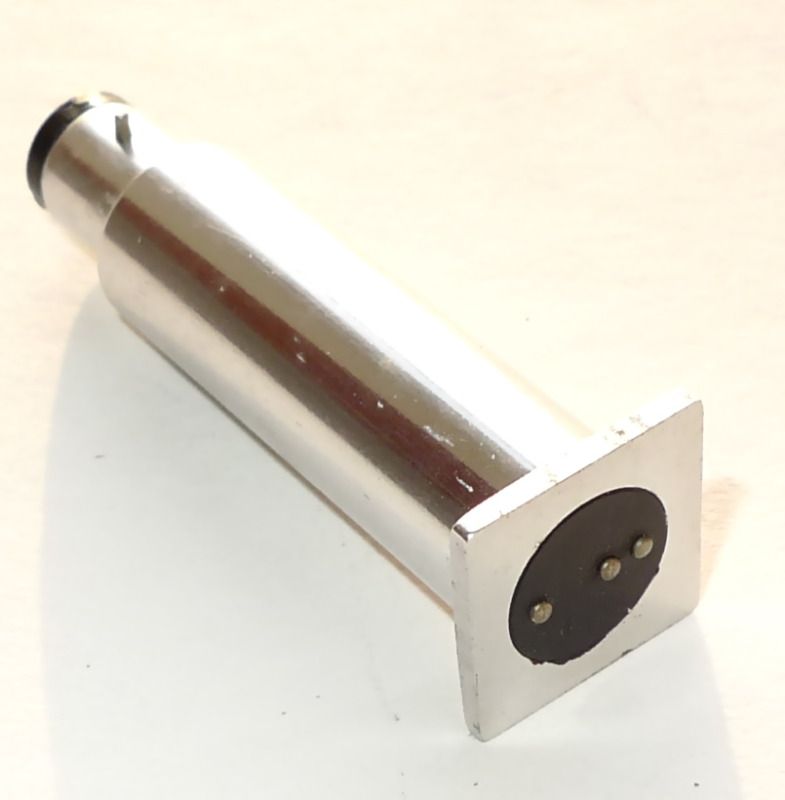
Considering its age, the Decca ffss III cartridge arrived in amazingly fine shape, together with an SME-type adaptor (3-pin connection to the cartridge, which has a common ground pin only; 4-pin out to the tonearm), so I was able to fit it on the lowest of my turntables, while it happens all my reference TTs all have fixed headshells (Garrard/SME 3009R; LP12/Ittok LVII; Clearaudio Concept, Thorens TD-309).Perfectionist will frown upon the so-so built quality of the adpator, but it comes handy.

I'd like to slip in here a word of caution: the adaptor fits very snugly onto the cartridge; you must have a firm hand when you try to detach it - otherwise one slip and you'll damage the stylus.

Note absence of cantilever.

Turntable 1 Technics SL-1200 MkII
Since I happened to have the Technics running with the Denon DL-102 mono in the reference system (shall be covered in the next article), I simply swapped it out for the Decca ffss III.

Now, as you see in the middle pic, the Decca with adaptor is short by at least 1 cm, and there is no way to move it forward. I reckon if installed on an SME arm with removable headshell one can move the entire tonearm forward and if the hole was centered well achieve alignment. Too bad my SME 3009 has fixed headshell!So, forget about Baerwald and all that for the moment!

Phonoamp: Parasound JC3 or ZPhono USB (reports to come)/iFi iPhono
Preamp: Manley Neo-classic 300B
Amp: Wavac MD-811
Speakers: YL 4-way horns

AA Little Time Out The first LP I played was the mono Time Out.It only took a few notes for me to recognize the Decca's well known qualities: Clean leading edge and fast transients. Morello was most obviously showcased - the drums were tight and tuneful; the cymbals positively shimmered, with great harmonic faithfulness. Even Brubeck's piano, which I have never found well-recorded or tonally alluring, came through clearer than usual. But the Decca is not just about speed; it effortlessly unearthed a myriad of details and rhythmic felicities.

Like many others, I have long used the Take Five track as a test (search this blog for Take Five and you will see many mentions). Morello's long drum solo serves as a most accurate means of assessing a system's transient response, microdynamics and rhythmic exactitude. But this is also one of the tracks that I morbidly fear on home visits.

Me, the long suffering audiophile Given the popularity of this track, you can imagine the uncountable number of times I had to suffer through it on home visits in HK. More often than not, particularly in the case of tube users (especially vintage types), when the saxophone cuts out and the spotlight is on the drums, the proceedings become so lethargic that each return of the bass drum just drags me further into that audiophile quicksand known as boredom. And in HK, audiophiles are in general not sensitive to rhythm and pace. They simply don't get the intricacies of the drum solo, instead patiently waiting for the saxophone's return; by then it is too late for me, all energy drained out of my body, too weak to go on and time for, yes, time out! Yes, home visits can be hell when Take Five is played.

For me, a successful replay of this track must reveal how Morello varies his beat, his touch: the varying force of each strike and the speed of withdrawal that the drummer uses to color his playing. Now, this is not the most coloristic of compositions, but whatever color there is must be revealed for the whole to have rhythmic finesse, to draw one into the music. What I previously wrote on the YBA DAC's plaback of this track also sums it up: "...All of a sudden, you can hear all the stressed beats effortlessly. This kind of replay enlivens a track like Take Five from Brubeck's Time Out. Focusing on Morello's drums, the bad CD player can make the strong beats only that little louder than the weak ones; the average CD player gives you an approximation of the playing; but the truly outstanding player, like the YBA (or an old Naim, say the CD2), makes you aware of the infinite dynamic shading and brings out the full flow. Whatever the CD, the YBA delivers the music in spades..."

Material like this is better on vinyl and well nigh tailor made for the Decca. I suspect the Decca's mono lineage also makes it uniquely suitable. You will need a very very good cartridge to match the Decca's performance: to cite an example, my Air Tight PC-1 is even better all-around, but that is a very expensive cartridge!

Turntable 2 Audio-Technica AT-PL120
You will recognize this as the TT in my Casual System, which gets as much actual use these days as the reference system - reason why I installed the Decca on it.

Preamp: Audio Research SP-9
Amp: McIntsoh MC-2200
Speakers: Linn Kan I

This turntable, clone of the above Technics, great value as it is, is the least of my TTs, yet in the latest iteration of the Casual System the performance of the Decca was astonishing.

Although limited in the bass and not full-range, the quality and refinement of replay in many ways equals that of the system 1. I played more LPs on this system, and no matter it is violin or piano or orchestral material I was very satisfied. I would guess the tubed phonostage (albeit a hybrid) proved synergistic with the somewhat lean Decca (see below)

More details on Decca ffss III Sound Quality
  • as mentioned, fast transients, clean leading edge; great rhythm and pace.
  • Excellent detail retrieval, including hall sound and air around instruments.
  • On both TTs, there is a somewhat LEAN quality. At first I thought perhaps the direct drives are partly responsible, but then just before installing the Decca on the Technics I was using the Denon DL-102, and there was no such problem. I consulted my friend AL (mentioned earlier), who owned just about every Decca's, and he told me this is indeed so. Usually we frown when we hear "lean", but this is not the case here - the sound is unfailingly musical, and cushioned by bags of air. This isn't the peaky treble that we find in many MC's, just a slight pallor in texture, so to speak. But I can imagine, with lesser electronics, the leanness and fast transient of the Decca can cause problems.
  • Now, if you have read this far you may be wondering why I haven't said more on the misalignment when used in the ordinary tonearm. That is because all else pales in the face of excellence. Yes, there is definitely mistracking, especially at the beginning. But the occasional distortion was tolerable and, even with big orchestral climaxes the needle did not jump out of the groove, as many have reported. If you ask me, I'd say the mono lineage of the cartridge makes alignment not so critical. In any case, both AL and I believe alignment requirement for cartridges in general is not as stringent as portrayed by many.
  • On the one hand, I am sure a proper arm would get even more out of the Decca; on the other, I rather think, as usual, many of the "woes" of the Decca's to be exaggerations. It is easy to get good sound if your system is balanced. The modern Decca's can be fitted with adapters ("pods") that allow mounting on any arm.
  • The sound of the Decca has nothing in common with the only other moving-iron design that I know about, the Grado. Hence, I think the absence of cantilever is the most important factor for the Decca sound. This leads me to think the modern Decca models would sound very much like the old ones, only with less headache.
  • Not surprisingly, given its lineage, the Decca is equally adept at playing mono than stereo. With the Decca, unless you are a perfectionist, you may not really need a dedicated mono cartridge. 
More later...

02 November, 2011

Letter from NYC 2011 (19): Lehmann Black Cube


Above Photo Courtesy of JCR33

Letter from NYC 2011 (19): Days of Wine and Cheese

Vinyl Talk: Lenco Heaven, Phono Hell
Vinyl Talk: Denon DL-102 Mono and Decca cartridge
Vinyl Talk: Lehmann Black Cube vs Ray Samuels Nighthawk

Editor's Note: Readers not acquainted with the personalities involved here are advised to skip the Part I, which is of a more private nature. This article is a prelude to my own exploration of the mono Denon DL-102 and my old Empire 2000E/III, to be chronicled in detail starting from the next article.Here, I tell why I became recently motivated. I am sure you are wondering what's happening here. Mono replay? Ancient Empire cartridges? Can they be any good? Well, to make a long story long...

Part I. Where Jazz Reigns Supreme - Days of Wine and Cheese 吃客三千
It all came about like this. This past summer, through the introduction of my friend icefox I made the acquaintance of Shidi 師弟. It turned out we attended the same high school, which quickly furthered our friendship. Successful man that he is, the super-energetic Shidi flies on business trips all the time, yet miraculously finds time to organize jazz performances as well as talk to his friends. Shidi is a connoisseur of wine and jazz, and indeed I suspect of decadence and debauchery! He looks serious but sometimes I imagine him as a figure from the Decameron. Indeed, in whatever he does, this man manages to consume more than he can take, in doses that would overwhelm us mere mortals. A generous host, chez Shidi we always enjoyed great wine, champagne and French cheese to jazz.

Although AL turns out to have a lot more hifi equipment than we had earlier assumed, he is in many ways not a typical audiophile, that is he still possesses his sanity, unlike most of us...He does have a hi-end system built around his huge jazz LP collection and analogue preferences (I cannot access the photo I took in HK, which I shall upload when I get back there):

Source: Linn, Pioneer, Lenco TTs with various arms and cartridges.
Preamp: Mark Levinson ML-6B with MC card
Amps: Mark levinson monoblocks (forgot model; runs hot)
Speakers: MBL 101E

The listening area is not ideal, and the speakers do not have too much room to breathe, but the jazz replay is quite good, with plenty of presence.

真大鑊 It all started when AL fell under the influence of Lenco-maniac daiwok (one of the colorful figures in Lencoheaven and, if you remember, author of the Midas mods for Denon 103) and acquired a Lenco turntable. A Decca cartridge went on it, followed by the mono
Denon DL-102. As they say, the rest is history.

Quest for the Holy MM Grail 日日蘚,日日鮮 Thus began the phonstage smorgasbord. Since the ML-6B only has an MC card, AL has to have an external MM phonostage for either the Decca or the DL-102. Many of us loaned him our spare units and countless hours were spent auditioning them by AL's entourage, not so much by me, though I did attend a few sessions. Complicating the matter is AL's insatiable curiosity; everyday he wonders about something new.

Part II. Brief Listening Notes
As I shall treat some of the issues that arise in much greater detail in the next article, I shall just briefly state some of my findings here, at least those that relate to me. In the early phase many
phonostages passed through the system, EAR 834P, ICL Model 4, ARC SP-9 (used as phono), with variable results not important enough to chronicle.

Decca Cartridge I forgot which model it is; only know it is an old one, not current production. On the Lenco, undamped, the sound was a visceral assault, undeniably exciting, with great presence, all very good for jazz. It sounded completely different from the beautifully cultured sound of the damped Decca SC4E I heard in Master AL's place in NYC, my runaway choice for best sound of 2010. Which is the real Decca, I ask?

Denon DL-102 The performance of the DL-102 here outstripped my recent experience in NYC, thus providing impetus for my current effort (chronicle to come). The big and bold sound, at least with jazz, was enough to make one completely forget stereo. Qualifier: there is not much of a stereo spread in this setup anyway. Fascinating: many STEREO LPs sound better with the mono playback!

Spot-Welding (wikipedia entry) Here I first encountered a piece of spot-welded equipment, a DIY tube MM phonostage by derek2A3. It employs a beefy ss regulation, choke-smoothing and 12AX7. The brand new unit was completed the night before. It certainly sounded musical and smooth and showed great potential, but in overall balanced it had to concede to the next contender.

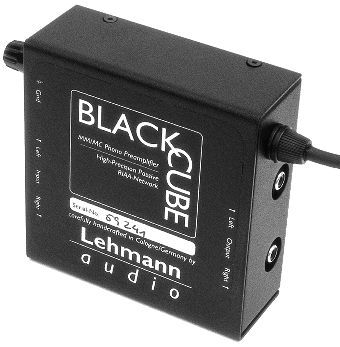
Lehmann Black Cube
vs Ray Samuels F-117 Nighthawk The Nighthawk is a current rage. The loan unit has been resident at Shidi's place for a long time and has garnered general approval from the picky crowd. So we were quite surprised when my old first-generation Lehmann Black Cube was inserted into the audio chain. Even not warmed up, the Black Cube seemed to better the Nighthawk in most musical aspects, a more correct tonal balance, more palpable images and, most importantly, more articulate. My friend icefox told me that subsequently they tested an MC cartridge by using an old Fidelity Research step-up transformer into the MM units; again, the Lehmann came out ahead. Note, all these results relate to the MM stage, the foundation of any phonostage, if you will.

For years, the Lehmann had been a reference for me. Although I am a tube phono man, sometimes I appreciate having it on hand to provide a benchmark for not just neutrality, but also as an example of musical flow. There is a very good review of my original version in TNT. The same reviewer, the trustworthy Lucio Cadeddu, had reservations about the MkII revision. I would be very curious to match this original unit against the much more expensive current SE version.

pics: the Lehmann Black Cube (original version)
Link