Showing posts with label Brand-TAD. Show all posts

18 September, 2022

TAD TSM-2201 TSM-300 RadioShack Maximus 7

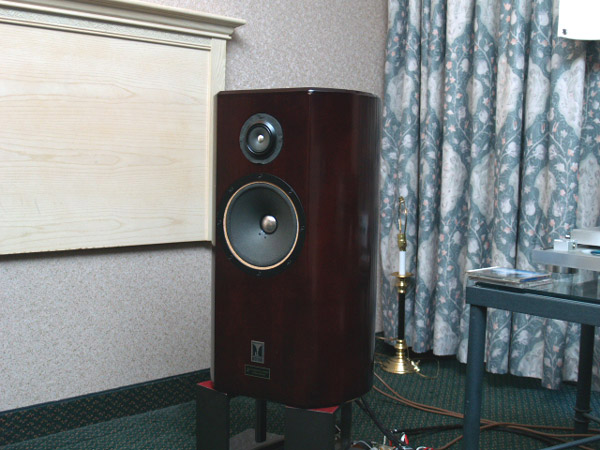
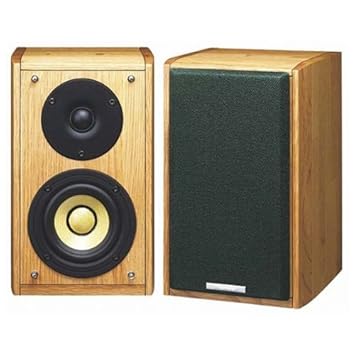
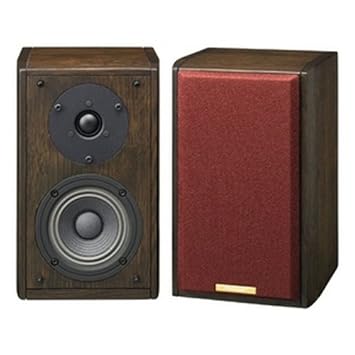
Click pics to enlarge. Left, stacked TAD-TSM-2201, but only the bottom was heard (Ed: from own experience, cannot speak for stacked pair; but for just a pair horizontal placement sounds better, preferably with stock supplied cushions; see links below; just as his previous TAD TSM-300).  Radioshack Maximus 7 in front. Right, from top, Audion SE Amp, not heard; "Raven" amplifier; side of US expensive TVC; and foreground Rayaudio CDP.

Letter from Hong Kong (22-8): ELO Unearths some Unusual Items! Some of Questionable Provenance?

Errata Sept 19,2022 Earlier confusion of the Radio Shack model name corrected.

Editor: ELO casually and innocently tossed some morsels my way on social media, without much detail, but they turned out to be highly interesting to me at least, and we decided to publish them. And so, please excuse me, my comments are long. These visits also serve to illustrate that HK is likely the capital of audiophiledom. It’s really insane, everywhere you look, there are unexpected things, from all eras and all corners of the world.

My old schoolmate Dr Lo recently moved and his listening room size has increased. With a lot of recent upgrades from Rayaudio, it was time for a re-visit (Editor: in fact, even ELO may have forgotten; he wrote about Dr Lo's previous abode here, and one can see some of the gear that have remained).

The source comprised Rayaudio CDP (widely acclaimed in Japan), plus CAS using Macbook powered by dedicated LPS built by Rayaudio (with signal isolation transformers). Still no Streaming though. These were fed to an expensive US made passive preamp (Editor: Footnote 1) and amp made by “Raven”, a label with a cult following in HK (Ed: Footnote 2). TAD (Ed: Footnote 3) and the tiny RadioShack loudspeakers (Ed: Footnote 4) were played. While I was amazed by the soundstage and imaging cast by the tiny speakers, I much preferred the TAD going solo (not able to hear the stacked pair). TAD simply fleshed out the sound while the tiny RadioShack’s sounded congested and compressed when music got complicated.

The same night, we compared my newly acquired “Studer” cable (as recommended by Kwong)(Ed: Footnote 5) to his silver custom-made interconnect. Overall, by using different PS, isolation transformers and CDP his system had vastly improved since last time. The sound was very musical, with superb imaging and timber, and one could listen for a long period of time without fatigue. The difference between two cables was obvious yet there was no better or worse. The silver cable had more air, details and microdynamics, while the “Studer” had more body in the mid’s and low’s, plus more sustain of music notes - more musical IMHO.

I also lent my icOn4 to him for trial and played the devil in offering to bring my Dynaudio Crafft to his place!

Editor’s Footnotes: 1) This doesn’t look like those that I know of. If readers can tell from the pics what it is, kindly please post a comment; 2) This is NOT the Korean designed, Texas made, Stereophile reviewed Raven Audio, not to say Raven Guitar amps. This was something sold by Elite Audio of HK. But the eccentric and secretive owner of Elite (a maverick that many swear by) never revealed much about it. I don’t like things of uncertain provenance. In a way, it gained fame after someone (R33 moniker 7308) used it to peer acclaim in driving the same TAD loudspeaker. Some HK readers may know more about this than I do; if so, I’d appreciate a comment if you do. Elite was also UK Audion dealer at the time, so note that the faceplate of the “Raven” looks, except for color, highly similar to that of the Audion amp above. Even the knobs and screws to the faceplates are the same! Intriguing? Also, this particular unit has the "preamp" section bypassed to be used with the owner's TVC "preamp". 3) This is the TAD 2201-LR (atypical for the company and quite a teaser) that I used to own; it’s likely rare in the West - for more info, refer to here and here; Also, imho these, like the previous TSM-300, sound better placed horizontal, monitor like. 4) The RadioShack’s look like the vintage Maximus 7, which is famous and infamous at the same time (many iterations) and on the fringe of audiophilia. You can google better than I can behind the great firewall. Also, in case you are interested in RadioShack, I urge you to read also the Stereophile review of Optimus Pro LX5 (that’s one reason why I like this magazine). These are fun for us old-timers; 5) I could be wrong, but I am highly skeptical of this so-called “Studer” branding. The sellers in China claimed it’s NOS and delivered from Germany. I’m instigating a little bit of detective work. I have loaded a pic and Readers who know please comment on the provenance. Mind you, I have a “Belden 1309” cable here that I think is suspect (but it sounds great) and ELO and I are going to do a ?provenance cable article together down the road.
Below 2 pics. US expensive TVC. If u know what it is, please leave a comment.

Below, back of "Raven"
ELO on his trip to Montreal had what is reputedly to be the best Pastrami Sandwich. I'm drooling.

10 July, 2020

TAD 3401 Kondo M7 Ongaku 47 Labs Gaincard


Click pics to enlarge. TAD 3401 flanking Kondo M7 + Ongaku. Seng is a classical music man, and his wife is a bookworm. Even without children, their rooms are filled to the brim. 

Virtual Home Visits (6): TAD 3401, Kondo, 47 Labs revisited by Seng

Editor's Note: Regular readers shall remember my Hong Kong friend Seng, whom I featured in Home Visits many times. Before I left HK I consigned  to him my most treasured stuff, including a pair of the TAD 3401. The initial setup was reported here, and I urge you to read it as you will see the rest of the room as well as even more equipment. The following are his words.

When the speaker first came to the house, it was placed in the adjacent side of the living room (refer to link above) which was really too confined a space for such large speakers. I then moved them to the wider side of the room and the sound stage was much improved.

Before the Ongaku, I was using the 47 Labs Gaincard with the Kondo M7. Daniel [Ed: see Footnote 1] has come and listened to the system. He commented that the system sounded very direct and particularly good in playing jazz, the only weakness being the lack of micro-dynamics.

After switching to the Ongaku (I know it may not be a fair comparison), I understood what he meant. The sound of Teresa Teng became sweet and attractive. Before that, I did not find anything special about her vinyl. Now, I know why people like her so much [Ed: see Footnote 2].

Editor's Footnotes: 1) Daniel, aka Danz, is Seng's brother-in-law. More than 10 years ago he contacted me about Tannoy (I wrote a lot about Tannoy in the HK forum r33) and I have featured him regularly in my Home visits. Those are among the most interesting of my posts, and it chronicled his whole journey; should you be interested you can read everything by entering the word "danz" in the blog search (top left). A few highlights: here for my first visit with Tannoy Canterbury; here for his Wavac; and here for his Tannoy Kingdom. I met Seng through him. 2) I was in my early teens when I first watched a very young Teresa Teng on Hong Kong TV (our TV set was black and white). Due to her popularity in China when the country was opening up, generations of Chinese knew her songs by heart. In the mid-eighties, when there was an intelligentsia of Chinese artists and writers in NYC (most returned to China), I held parties for them sometimes at my home. I only have to play Teresa Tang (on my Dahlquist DQ-10's) and everybody would get up and do ballroom dancing (very popular in China then). For me, Teng is the best Chinese singer ever (I am a native mandarin speaker, whereas most HK people speak Cantonese and tend to gravitate to Cantopop). Her voice is sweet and there is an artlessness in her approach. Many of her songs are covered by female wannabe's, but no one can surpass her. Below I attach the youtube of one of my favorites, "sea tune", which is among the least covered because no one can approach it her way. 

20 June, 2018

Sparkler S306 DAC, RELStrata III for Quad ESL-2812, TAD TD-3401

TAD TD-3401, Part III: with Full Wavac System
The Amazing Sparkler S306 DAC, Part III: 
Sparkler S306 vs 47 Labs Shigaraki
Subwoofer for Quad 2812
Talk CAS: Cheapo Bluetooth Device vs. Meridian Explorer
Talk CAS: Tidal, Youtube, Radio Garden

The better half of this article comprise further reports on TAD TD-3401 and Sparkler S306 DAC. However, I also tie up some loose ends here.

TAD TD-3401, Part III: with Full Wavac System
On Sunday I re-visited Sang to spend more time with the TAD-TD-3401. This is basically a brief report that is the continuation of the last report (Part II) below (or here). On this day we tested out the full Wavac system by using the Wavac PR-X2 preamp in lieu of the Verdier Control B. The sound, as expected, was crisper than using the Control B. The piano sound was just awesome.

On this day (after much begging and cajoling) my taskmaster icefox finally agreed to come to listen again to my current systems. I was just about to leave Sang's place when icefox arrived in Yuen Long earlier than expected, and I asked him to join us at Sang's place. icefox was impressed by the performance, and harbored the same opinion that the 3401 is superior to the 2401/2402.

Regarding the Wavac, icefox still wished that it could be a tad cooler and thought the piano a little too clanging. For me, it was the opposite. More than most audiophiles, I am very particular about the leading edge, and have always thought the Wavac to be better on this front. However, since the TAD TD-3401 is a faster and more precise transducer than the Tannoy Canterbury, the resultant sound could sometimes be a little sharp. It is a small price I am willing to pay (especially since we get more details with the Wavac) but I can totally understand the other camp. So we were all consistent in our preferences.

Very soon, To Sir and then Mila joined us too. To Sir has a self-assembled big TAD System (which I have never heard) and is obviously a TAD expert. Both he and Mila were delighted with the 3401.

Now we go back a day or two...

Top Shelf: Note Sparkler S306 under 47 Labs Shigaraki DAC, behind Shigaraki Transport.

This is my third write-up of the Sparkler S306 DAC. For basic info please read Part I, where the Weiss Minerva proved utterly inept in its face. In Part II, the S306 went head to head with NOS AMC without shaming itself.

Sparkler S306 DAC
As mentioned in the links, ever since I bought it, I have used my S306 (serial Number 2) exclusively in my Yamaha NS-1000 system. Just could not bear removing it. Yesterday, however, with a little extra time on my hand, I decided to implement it in my Kondo system (pic above):

Transport: 47 Labs Shigaraki (Belden 1694)
DACs: 47 Labs Shigaraki vs Sparkler S306 (Gotham DGS-1 and 2111)
Preamp: Audio Note (original; Japan) M7
Amp: Kondo Ongaku
Loudspeakers: TAD TSM-2201
Subwoofer: JBL 12" paper cone 

Just one recording for illustration shall suffice. In the EMI (Warner) Oistrakh box is a performance of Schubert's Piano Trio No. 1 (with his long-term partners Oborin and Knushsevitsky). This 1958 recording is good but not exceptional in sound. In fact, with the 47 Labs Shigaraki DAC, in this Kondo system there was some harshness in the upper midrange, particularly with the Gotham 2111.

I was dumbfounded when I swapped in the Sparkler. It is very hard to describe the tonal differences, but the bit of hardness is gone with the S306, despite its being obviously more airy in the treble and elsewhere a little leaner than the Shigaraki. What is easier to describe is the utterly sinuous quality of the Sparkler. While the 47 Labs delivered a musical performance, with the Sparkler it is at another level: there is more resolution; the leading edge is sharper; the three instruments are more separated and easier heard; Oistrakh's playing is more sinuous and the cellist more mellifluous. The whole performance sparkled (pun intended) with an utterly disarming rhythm and pace.

This is not the first time Sparkler astounded me in its grab of musical intent. I have not reported this before, but in my Yamaha system, I once played the Andris Nelsons recording of Shostakovich 10th (DG) and felt something amiss: there was a brooding and threatening atmosphere that went missing (compared to my first hearing the CD in the same system). I checked and, lo and behold, the DAC was not connected and it was the Sony Blu-ray player's analogue section I was hearing. Now, as I reported in Part I, the Sony is no slouch, but it just did not deliver the charged atmosphere the way Sparkler could.

And so, despite the use of its matching transport, the 47 Labs Shigaraki DAC was displaced by the Sparkler S306 in the Kondo system.

The 47 Labs Shigaraki continues to serve in the system below as the DAC for the Sony DVP-PR50P, and it improved upon the Arcam rDAC and Sony's own analogue output.

Time Out: World Cup
After playing the imitable Celibidache's Brahms Symphonies, it was time for some food. Once again I opted for 肥姐 蠔餅 (Fat Lady's Oyster Omelette) which I wrote about last time. This time a plain red went well too with the dish.

On this day it was Germany vs Mexico; the latter's quick and precise counter-strikes were really impressive. In a way, Germany played like a bad DAC - no finesse; whereas Mexico was like the Sparkler, microdynamically alert,with tensile strength, exceptional leading edge, PRaT.

Time Out: Subwoofer (REL Strata III) for the Quad ESL-2812
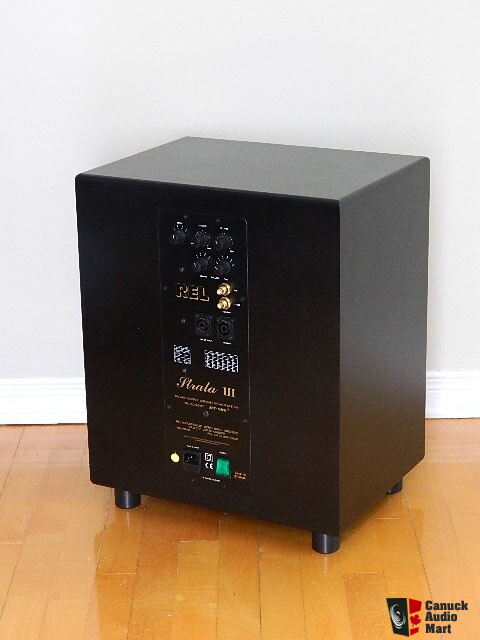
As you know, the Quad ESL crowd is a special breed. They swear by their ESL and are in general very reluctant to add a subwoofer. So, I am proud to say that after listening to my 47 Labs 4737 augmented by subwoofer (here) both Quad ESL-2812 owners WSS (whose system was last reported here) and JL were persuaded to give it a try. They lugged my down-firing REL Strata III from icefox's cavernous place (he used it to augment his Tannoy) to WSS's small den.

REL STRATA III Subwoofer, Black, Mint Condition!The REL Strata III was an old product, but one of the more expensive offerings. It was generally very well received at the time and you can find quite a bit of info on the internet (pic borrowed from canuckaudiomart).

The afternoon I was there, with the low-level input we tried crossing over from 69 Hz to 95Hz. All worked quite well. The volume is indented. We started with 3 small clicks, but eventually went down to just one click. If you touch the woofer unit, it was barely vibrating. This very small bass augmentation however had the eminently audible effect of improving upon the liveliness of the presentation. The ESL always been too polite for me. It is good for a few instruments, but when the orchestra comes in, it is always underwhelming. The subwoofer improves upon this most important aspect. The effect of the subwoofer here is a bit different from what I get with my own systems - with the ESL one picks up the gain in presence more than bass extension. I am not sure whether that is due to the ESL or this REL. The important thing is, used judiciously, it is definitely a plus for the Quad ESL-2812, though I think other subwoofers may be worth trying too.

Back to the icefox crowd.


Click pic to enlarge. The black Bluetooth Device next to the Meridian Explorer.


The Bluetooth Crowd and the Generic Cable
Back to the icefox crowd. They spent a few hours in Yuen Long, but the program didn't exactly unfold the way I had wanted it to. After two hours with 15" woofers, I am sure anything else is an anti-climax. It would have been better the other way around. :-) Nonetheless, I don't think the sound at my place disappointed them unduly.

This is also the Bluetooth Crowd. Many of them use Tidal Streaming through their Cellphones. Arranged in advance, icefox brought his el cheapo Bluetooth device (from Taobao, less than USD 50; the black thing). Despite its small size, I think it has the latest technology. We connected it to the Kondo M7 with icefox's generic RCA cable, and the sound was quite acceptable, better with some cuts than others. icefox also played some youtube, which to my ear sounds even better. We then did some brief comparisons.

Tidal (Cellphone) vs Macbook Pro My Macbook Pro is very basic, unadulterated iTunes (no "mandatory" Amarra) playing lossless AIFF files. Through Bluetooth, the Macbook has a warmer and more detailed sound.

Meridian Explorer (USB) vs Bluetooth We then played my Macbook AIFF files through Bluetooth and also through USB (my favorite Unitek) connected to the Meridian Explorer. The USB connection is again warmer and more detailed. It better be, as I actually hold the Meridian Explorer in high regard (here). Actually, from memory I also think the sound through the wireless dongle of my Arcam rDAC is better than the Bluetooth.

Image result for Radio gardenInternet Radio Through my Macbook icefox also played his favorite Italian Radio Emiglio Romagna, but not through the official site, instead using Radio Garden. I can attest it was very good and the programming of much baroque music was to my liking. I also like the fun way one navigates in Radio Garden. Give it a try!

Belden 8451 vs Generic Cable We then compared the two 1/4" to RCA cables. My go-to 1/4" to RCA cable, which I use with my Meridian Explorer and Fiio X-1, is a DIY one is made from Belden 8451 (info) with Amphenol connectors. The sound was at once more controlled and detailed, but the crowd pointed out correctly that it was also a little tighter than the generic one.

For a while, there has been a little bit of a phenomenon going on with those around icefox (that means a lot of people). People give generic cables (some from Apliu Street) serious tries and devote much time to comparison, just like, e.g., one would compare Audioquest with Kimber. In general, these are pragmatic people who rightly eschew expensive cables. Many also use cables of vintage origins (WE or not). Many of these people own expensive systems (such as the two WE systems recently featured).

I don't have any problems with this. However, from the vantage point of a professional cable user, I do think one can achieve just as much, and more, playing around with professional cables and other things. Take an example, at our WE/Altec 604 friend Vincent's home, I didn't report it, but we did compare my DGS-1 with his favorite generic cable. To me, the DGS-1 was just more nuanced and had more finesse (I gave him a pair). Similarly, while the generic cable that came with my Thorens TD-309 was surprisingly good, it was surpassed by Gotham cable. Note too these about generic cables: 1) they vary greatly in quality; the ones that come with your USB devices, TVs, TV boxes etc are usually not too good; 2) they are usually smoother, less dynamic and extended at the frequency extremes, which I'd venture is why some audiophiles use them, but imho this is more of like patch-up works on flawed systems.

Nonetheless, the exercise with the Bluetooth device was highly entertaining and downright fun! How often can you say that about audio? As CAS is just peripheral to me, I can entirely see the point of doing things on the cheap, and the quality was pretty good! BTW, like me, icefox thinks usually the expensive, complicated, technical and "serious" CAS systems sound terrible. YMMV.

12 June, 2018

TAD TD-3401 and That Certain Atmosphere Verdier Wavac Tannoy


One Glorious Day!

Review: Pioneer/Exclusive/TAD TD-3401, Part II
My TAD TD-3401 Finds a New Home

TAD TD-3401, Part I

Audio Personalities There are many types, and in my experience the personality governs the outlook on audio.

There are those who never waver in their beliefs (no matter how unfounded), like "never tube" or "never solid state" (Religious Fanatics); those who anally/constantly tweak their systems and proclaim incremental improvements every time (Sales); those who believe in A/B'ing the smallest things yet fail to look at the big picture, like the obsessive cable swapper, or those vintage gear tube rollers prevalent in HK (Anal Retentive, + Religious Fanatics); and so on. In the end, these are people who know too little about music and overly confident in their own hearing ability.

And then there are the masochists, who for some reason struggle with what they suspect are no good. My friend/taskmaster icefox has long assigned me to this category. But he is wrong - I have consistently transformed what others (even I) have lost faith in. There are no better examples than my journey with Tannoy, perhaps even TAD. I know I am seemingly drifting off but the following bits have bearings on the evaluation of the TAD at hand.

Tannoy For the longest time I was really lukewarm towards Tannoy. Having already heard some really good horn systems in NYC before I came back to HK I was not at all impressed by the HK Tannoy scene, populated by "the older the better" and "only vintage need apply" types who believe in the pecking order Silver > Red > Gold (Black is too rare; and HPD and modern stuff need not apply). Oh, I heard all of these, many times - many times too many. I heard largely execrable sound from these people's Silver's and Red's - honestly, I don't have a clue what they listen to. On the other hand, some of the Gold's were semi-decent, or at least showed potential. To test it out myself, I bought a pair of Lancaster (12" Gold") and quickly got pretty good sound out of it (with the help of Aurum Cantus super-tweeters; this is >15 years ago). Of course, it is still a little slow in transients, but much better than older Red's and Silver's. A few years later (> 10 years ago, before I started this Blog) my friend Andy L sold me his pair of Canterbury HE when he switched to the TAD TD-3401 (see below), and I sold the Lancaster's to my friend whlee, who still uses them.

Interestingly, I never have really directly written much about my own Canterbury's, rather spilling perhaps too much ink on others'. During the time Andy had it, he only got fair sound out of them (in a smaller room with DIY 300B). I took them up likely because it was a challenge, not because I really clamored after them. I was after all very happy with my Klipsch La Scala's then and, having to make room for the Tannoy's I was really sorry to see one pair of my La Scala's go. When I first got the Canterbury's, the sound was rather terrible and grey and it took quite a long time to open up (my take is that the hard edge needs a lot of running-in). Masochist triumphed in the end! In the coming year, I should write more about Tannoy's - my own experiences!

TAD As for TAD, the scenario was hardly as dramatic. However, it was true that for the longest time I was not impressed by the very expensive large TAD's I have heard in HK (mostly 2401/2402) and never thought about them, until I heard the TD-3401, as documented here. Now, that is what horns are supposed to sound like! When Andy moved on to DIY TAD systems and other stuff, I grabbed the chance to acquire the TD-3401, and it was bingo from the word go in my place (see Part I). There is also a bit more of TD-3401 listening notes here.

My TD-3401 Finds a New Home
Due to family circumstances I am letting go of quite a bit of my stuff, so on this past Sunday I officially passed the TD-3401 over to my friend Sang, whom you have encountered many times before in this Blog. Sang is a bold soul, as he has never heard them before!

Tight Corners It took a while for the two of us to maneuver each >70 kg beast down the narrow flight of stairs, and Sang's wife Carmen helped a lot too. Basically, what I did was protect the loudspeaker with carton paperboard (from large TV box) which were affixed by a Ratchet Tie Down (飛機帶). We let the loudspeaker slid down slowly the stairs as we prop it up from below. Meanwhile Carmen was pulling on the Tie Down from above, lessening the pressure on us a little. 

We also took my Wavac gears (PR-X2 preamp and MD-300B amp) along for some fun.

Equipment (click pics to enlarge):

CD Transport: Softone/ICL Model 2
DAC: Audio Note UK DAC-2 (old version; PCM-63)
Turntable: Technics SP-10/Audio Technica Arm/Denon DL-103
Preamp: JC Verdier Control B
Amp 1: JC Verdier 300B
Amp 2: Wavac MD-300B 

Click to enlarge. The right lower corner (sofa not seen) is actually the best listening position here.

Sonic Notes

  • Placement These were placed where the Verity Audio Rienzi were previously (left pic, before; top pic, now), and they blended right in with Carmen's bookcases (though partially blocking them). Mind you, this placement is not ideal for such large loudspeakers, but they will have to do for the moment.
  • Tweeter Positions At my larger old place I had the tweeters on the outside, and so we tried it out first this way. Somehow closer together in this smaller place the sound didn't quite gel and so we switched the loudspeakers. With the tweeters on the inside things became well focused.
  • Grills Though the grills were actually quite transparent, perhaps they did soften the treble a little (which can be good). However, we all agreed that these loudspeakers look stunningly beautiful without the grills, so they were left off.
    Atmisterkellys.jpg
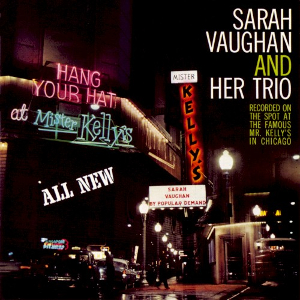
  • vs Verity Audio Rienzi When placed in similar fashion, previously the sound of the Rienzi was actually very good and earned my complete approval. The Rienzi is taller and, being augmented bookshelf type, threw an airy soundstage, but the images, as is usually the wont, are on the small side. Everything is Fleshier and has More Atmosphere It took seconds to tell that Everything is more Flesh and Blood with the TAD's. With jazz, there was no contest, no matter it was Miles' Kind of Blue (Sony) or Sarah Vaughn's Live at Mister Kelly's (EmArcy). For the latter, Carmen remarked that it was like being in the (smoky) club. Mind you, this CD is also the one that got my shidi hooked on the TAD's (see previous links; I urge you to get this CD). Classicals too benefited from the added weight. The opening of Tchaikovsky's Manfred (LPO/Rostropovich, Warner) had Sang shaking his head in disbelief - mine too, the brooding atmosphere was just absolutely compelling! Tonally Similar (Neutral) Sang remarked that the small Rienzi and the large TD-3401 actually have very similar tonal quality and balance. I agree and, as the TAD is of monitor origin, this attests to the neutrality of the Verity Audio.
    Image result for michael rabin magic bow
  • Air, Soundstage and Height The TAD is shorter and has a much wider baffle and this can lead many people who are used to bookshelf types to not "visualize" well. Also, the horn midrange and large woofer produce so much energy that some may think there is not so much air on top. Yet that cannot be further from the truth. What we perceive as "atmosphere" is in fact these energies converging to make sense of the recording. I personally felt nothing much lacking but, as mentioned in Part I before, if possible I'd raise the loudspeakers to ear level. Lacking stands we tilted the front a little (employing past issues of National Geographic) and that lifted the images a little. Make no mistake, it was still excellent, not like the pitiably low images produced by the Quad ESL 57 in smaller spaces. Sang subsequently reported that he got even better results from sitting on the floor. Ha! Raise them!
  • CD vs LP Commendably, in this setup, digital and analogue have very similar balance and hence near-parity, which is what I always advocate. However, with digital replay, some passages could be just a tad (no punt intended) sharp, a character of the TAD (these monitors were used in the analogue era); whereas with analogue this was not a problem. Michael Rabin's The Magic Bow (re-issue LP) was very finely rendered; so was a favorite Musica Antiqua Koln Bach LP (Archive), which compared with before was just juicier (if such a term can be used for this ensemble). Delightful!
  • DAC-2 Comes Full Circle Sang recently bought the AN DAC-2. As this old BB PCM-63P version is very rare and I haven't seen any other unit beside the unit I used to own I took a very close look. Holy! It is my old unit (treated in detail here), re-sold to Sang! Now, that must be Audio Karma!
  • Wavac vs Verdier We briefly switched to the Wavac MD-300B (still using the Verdier Control B preamp). This combination is one I have never tried before, and it was quite winning. The result was largely similar to what had been carefully compared before (here, with no less a roster than icefox and Carmen's brother Danz!). We did not try the PR-X2 preamp this time. One thing of note: the Verdier now sports Shuguang 300B whereas the Wavac uses Russian tubes; if you ask me, swapping them might yield interesting results (as the Chinese is more ying; and the Russian more yang.) More to follow.
Conclusions
  • TD-3401 No question about it, A Masterpiece! Here in a relatively small enclosure and with a small horn one gets a full blown horn sound, something that very few horn loudspeakers can achieve (one exception may be the JBL L-300). The excellence in air, dispersion and presence is once again confirmed. In fact, aside from the constraint of the smaller space, in some way its performance in Sang's home is even better than at my old place, as I had never really had much time to it.
  • vs Tannoy Canterbury HE Head to head with the Tannoy it is a toss up. In use, the Canterbury is richer, more forgiving, even more efficient and, due to its larger volume, more powerful and extended in the bass. Although the Canterbury is a modernized Tannoy, the older TAD sports a house sound of even faster transient and its portrayal of the leading edge is even cleaner and superior.
  • That Precious Atmosphere One problem with most modern loudspeakers is the lack of atmosphere. No matter how good the soundstage and imaging are, no matter how balanced they sound (if that), they do not render atmosphere well. I have often pondered why. My take is you need the combination of horn drivers and large woofers to reproduce atmosphere. We have recently marveled at the atmosphere conveyed by our friend Eric's epic horn system. But in this relatively confined space I was surprised that the TAD was able to convey some of that atmosphere (with jazz, that is a given; but with classicals that is impressive) - along with high quality bass, this is the most precious thing in audio. Basically, when you have that, the system is already made. One can only further refine it. Salut!

07 January, 2017

Kondo System Loudspeaker Matching LS3/5A Pioneer S-A4SPT-PM VP 47 Lab 4737 TAD TSM-2201 JBL Kondo S-18


Pic of system during evaluation. The Kondo system is connected to the loudspeakers on top, whereas the LS3/5A's below are driven by Flying Mole CA-S10 digital amp to the left of the M7. And No, the Pioneer's are not trapezoids (just lens distortion). Click to enlarge.

Kondo System Bookshelf Loudspeaker Matching: Pioneer S-A4SPT-PM and -VP, 47 Lab 4737, TAD TSM-2201, KEF LS50, LS3/5A and JBL Subwoofer
My Kondo System, Part V
Review: Audio Note M7
Review: Pioneer S-A4SPT-PM, Part II
Review: Pioneer S-A4SPT-VP
Review: TAD TSM-2201, Part II
Kondo Ongaku SP (S-18) and Biyura
Letter from NYC (61) 2016 (17)

Revised Feb 3, 2017: For the last two weeks I inverted the loudspeakers, that is with the tweeter down. The effect is dramatic, and I am very pleased. This is added to the discussion in "Sonic Impressions: Effect of Placing Loudspeakers High Up"

Links to My Kondo System, Part I (background info on Kondo and Ongaku); Part II (all about M7); Part III (the most important one, detailing set up and listening experience); Part IV (largely phono related, and Kondo preamp/amp were not used; skip if you are digital only)

For those interested in 47 Labs 4737 alnico loudspeaker, Part II (with Flying Mole CA-S10 amp) and Part III (with Naim Nait I amp) contain extensive testing.


The Evaluation took place in HK but the article is written in NYC.

pic: R: Kondo S-18 prototype from Positive Feedback CES 2007 Report; L: S-18 leaflet. Click to enlarge.


ENIGMA: What Loudspeakers for Kondo?
As with many SET amps, one of the major difficulties with Kondo is loudspeaker matching. Like most SET amps, ideally you really need efficient loudspeakers to get its best.

What Kondo san himself used and/or designed This must be what we ask first. YL I believe, in his earlier days, even before Ongaku, he was a horn user and involved in YL horn designs (my YL horn system here; I have yet to write more extensively on these marvelous creations and their superb sound). I have done a bit of research on YL, but there is not that much on the internet. I believe, like JBL and Altec, there were few official enclosures). Branded Kondo Since YL, Kondo san had designed many smaller loudspeakers but they are virtually unheard of. Kondo's official site has discontinued loudspeaker model names (but not info) accessible only via its Japanese page (here). Ongaku SP (S-18) The S-18 is composed of the M-18 full range unit (many Japanese designers, like 47 Lab, Sparkler, Air Tight etc, favor fullrange loudspeakers) and the M-1 tweeter (likely a first order crossover - just a cap). I did hear the S-18 many many years ago, when Kondo san himself attended a HK hifi show (organized by the now-useless magazine 發燒音響). In the smallish hotel room, it was among the best sound I have ever heard in a show. The Positive Feedback pic shown above looks however bigger than I remember. Also, this German site's Las Vegas 2008 report must be virtually what I heard. BiYura (Field Coil) Kondo san passed away in 2006. In 2011 the Biyura Field Coil loudspeaker was unveiled in various hifi shows, including that in HK, which I covered (here). As you can read, I did not like the sound then. For this article, I did an exhaustive search and it seems the Biyura made apperances in quite a few hifi shows, but none after 2014. As there is not even a mention in Kondo's Japanese page, I assume the BiYura remains a prototype, if not an abandoned project. I am curious whether Kondo san himself had a hand in its conception, or if it is solely Masaaki san's effort.

It appears: 1) Kondo loudspeaker systems are perpetually in a state of fluxalmost always in prototype stage, then and now. There may be multiple reasons for this: it is in keeping with most artisanal designer's tendency to forever tweak; also, many Kondo dealers also distribute other horn systems/efficient loudspeakers and hence may not be that interested in a Kondo loudspeaker (think Avantgarde in HK and Living Voice in the UK); 2) Kondo san likely was never completely satisfied with his loudspeaker creations (under the Kondo name). None ever remotely achieved sustained production (The S-18 and the Ruthy 4 perhaps were better known and had sold a few). Maybe Masaaki san is like that too with his field coil.

What Users and Dealers Use Aside from a few appearances by Kondo themselves using the S18 and Biyura, all manners of loudspeakers (not just horns) have been used in audio shows (to get an idea, google images using "Kondo hifi show"). My friend JC, Australian dealer (Audio 101) for Kondo, uses Avantgarde Trio and Tannoy Westminster. I have also heard an acquaintance's Kondo gears with Audio Note UK loudspeakers (sacriledge!). What I Use In my old house, I did not get to play that much with the Kondo's, but they did well with my Canterbury. In my current small abode, I could only manage to do it the way in the pic, which is why I actually carried out this not inconsiderable project of bookshelf loudspeaker matching, of which this is only the first report. 

Equipment used in Evaluation:

Digital: 47 Lab Shigaraki Transport/DAC
Analog: Pro-ject RPM1.3/Clearaudio Concept MM
Preamp: Audio Note (Kondo) M7
Amp: Kondo Ongaku
Loudspeakers: as titled
Subwoofer: old JBL active subwoofer

Audio Note M7
The now discontinued M7 went through many iterations and is the most famous preamp of Kondo design (for the difference in versions, see my article here). All generations have similar chassis, internal structure and bespoken silver laden parts. This M7 you see in the pic is actually my second one. A few months ago I chanced upon this early unit and grabbed it because it is a full function preamp with a smaller footprint that actually slots into my IKEA shelf with room to spare/ventilate. As opposed to my other one (line only, 12AU7x2; last version), this one is a much earlier design, branded Audio Note but made in Japan, before Kondo san and Qvostrup split up and the latter founded AN UK (this is also why there are M6 and M8, but not M7, in their made in UK preamp lineup). This one uses 6072 in both the phono and line stages.

TAD TSM-2201
For info on these 86 db, 4 ohm sealed enclosure loudspeaker (8" woofer, the largest in this group), see my previous detailed TSM-2201 review. That review was when I first got them, and they were used upright. Subsequently I took them to my current abode and have actually also used them with Kondo (go to end of this sprawling article; used horizontally, on the same IKEA shelves but with them lying down, long sides parallel to the floor). The sound was excellent then but later I had to reconfigure, so the top of the shelves are higher now and I could only use them disadvantageously upright.


R pic: -PM; Lower L pic -VP


Pioneer S-A4SPT-PM and -VP
My initial impressions of S-A4SPT-PM, especially when compared with the legendary Yamaha NS-10, was not entirely favorable. They were likely not quite run-in at the time. Recently, after I decided to re-make my Kondo setup, I brought them to my current abode, where I first used them very satisfyingly on the desktop with 47 Lab Gaincard for quite a while. Sound was much better than at my old place, so they were probably finally run-in.
As I took to the PM more, I decided to acquire a used pair of its sibling, the S-A4SPT-VP. This is a slightly later and more expensive version with a different woofer (alleged to be TAD, though given the Pioneer/TAD duality, imho it is just a matter of semantics and marketing) and more luxurious finishing of ebony color. Both loudspeakers are likely of somewhat limited production, so in the West they are now only largely available through the internet (for a reasonable sum). The VP sold well in HK, but unlike the PM did not have any coverage in the West (only real online review is in Chinese, from Singapore).

Both are 84 db, 6 ohm loudspeakers with a 4" woofer, real wood enclosure and a small rear port. They differ in that the -VP reaches lower (spec'ed at 50-40k Hz vs the 60-40k Hz of the -PM). The -VP also has a higher crossover point than the -PM (4,500 Hz vs 3,500Hz). Despite similarity, they turn out to be surprisingly different in character (see below).

47 Lab 4737
These are also called the Lens Alnico or Lens II. All else being the same, it differs from Lens (also called Lens I or Lens MkII) (4722) in that the driver magnet is alnico. My initial impressions was favorable. Since then, there has only been one review in dagogo. It is an 85 db, 4-ohm  4" fullrange with MDF enclosure and a small front port. My pair is well used, obtained by trading my KEF LS50 towards them.

LS3/5A
The 82 db 2-way with 4.5" woofer and sealed enclosure is arguably the most famous bookshelf in history and needs no introduction. In HK, after reluctantly selling my Harbeth to my good friend wss, I still have the Rogers (15 ohms, serial number 2xxx) in the pic as well as a rosewood pair of KEF (Raymond Cooke Edition, 11 ohms). I have been using them with my Flying Mole digital amp (the one next to the left LS3/5A) for casual listening, so they are in condition.

KEF LS50 This 85 db, 8 ohm loudspeaker with coaxial drivers is quite a famous loudspeaker now. See my reviews (KEF LS50, Part IPart IIPart III). I had traded them towards my 47 Labs 4737, and hence they are not formally part of this evaluation. Documentation of this period here. Note in the pic the Ongaku was used as an integrated (click to enlarge).

JBL Digital 12 Subwoofer
This is an early JBL active subwoofer I bought on the cheap in HK (in the US, the kind you can find in your local craig list for nothing). Aside from a pic or two (see here), there is virtually no info on the net. I did find its Frequency Response is 29Hz to 150Hz. Adjustable Crossover Frequency is 50-150Hz. Just a bulky veneered black box with no legs, it is rather old fashioned in looks and lacks sex appeal. I have it upright, with its 12" paper (my preferred cone material) woofer the large port underneath firing backwards. I use the hi-level rather than line input (I always do; you don't want to corrupt the output of a good preamp!). Previously I had used these very effectively with larger JBL loudspeakers (here). In most ways I prefer them to the subwoofer that I have, the REL Strata III.

Sonic Impressions
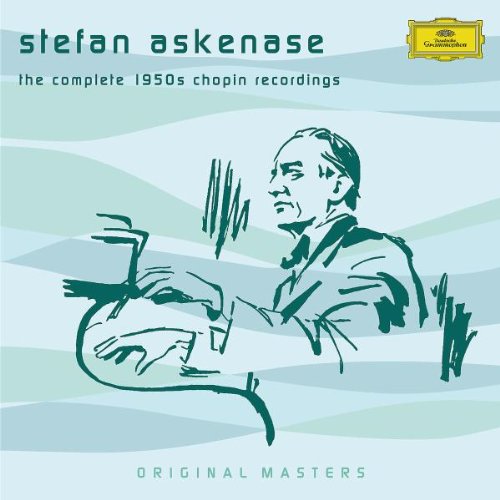
  • Audio Note Japan M7 Line Although the sound is similar to my later Kondo M7 (described here), it is not quite the same. In this older M7, the "silvery" treble is still there, but less pronounced, reinforced by a somewhat warmer midrange (some may prefer this). My later unit is on loan to a friend so I cannot yet do an A/B comparison. Phono This being a used unit, the 6072 tubes are a bit noisy. Using Stefan Ashkenase's excellent performance of Chopin's Piano Concerto No. 2, which I happen to have on both LP and CD, the LP just mercilessly killed the CD. Don't forget the 47 Labs digitals cost many times more than the Pro-ject analog rig! Part of this is the intrinsic superiority of analog, but the gulf is so wide that one has to conclude that this phono section is of the utmost quality.

  • Kondo Ongaku as Integrated and Audio Note M7 + Kondo Ongaku In My Kondo System, Part III I detailed the difference between using the Ongaku as an integrated amp and as an amp with the M7 as preamp. That was in my old house, with Tannoy Canterbury HE. At the time, I found it a toss up. Then, in the smaller abode, configurations changed several times. First: Ongaku + M7 and TAD Long before this evaluation, from 2012 to 2014, I had actually tried both ways with the TAD TSM-2201 (see above). I briefly chronicled it near the end of this sprawling article, although I failed to mention that this time around adding the M7 as preamp was better than using the Ongaku as integrated (too bad too that I had accidentally deleted the pics - will have to restore them later). Then in 2014 I had to reconfigure the system to: Ongaku as Integrated due to lack of space on top of the now erect shelves for the Kondo M7 (article here, showing the KEF LS50 used at the time). During this period, I traded the KEF LS50 towards the 47 Labs 4737 (R pic; click to enlarge). Then in late 2016, after I acquired the Audio Note M7, the system became Ongaku + M7 and Loudspeaker Rotation With the more inefficient small loudspeakers, there is no question that the addition of the Audio Note M7 injects significantly more vitality into the system. The sound improved to the extent that I decided to test out all the small loudspeakers I have.
  • Effect of Loudspeakers Placed High Up The shelves are the IKEA Kallax. When prostrate (30.375") the height is quite suitable for placing bookshelf loudspeakers. However, when used erect (57.875") the shelves are too tall for a sitting person. The resulting sound would have 1) less bass; 2) a leaner balance; 3) soundstage and imaging that are a bit too high up (which is better than too low, like the ESL-57). These drawbacks can be minimized, but not erased, by listening standing up and further away. Tilting the loudspeakers forward can lower the height a little too, but not by much. More effective would be to have the loudspeakers one shelf lower (except for the TAD), but I have yet to try that. The higher position I reckon also has the advantage of a little less boundary effect. As we know, many audiophiles are anal-rententive when it comes to the listening position, imaging and soundstage, and will sneer at this kind of setup. While I am not against those values, in general I want to be able to listen to my system no matter where I am in the room - a well dispersed rather than a narrowly focused sound (ESL being an example of the latter), which all my systems can do. Addendum Feb 2017: As of Feb 2017, I now have the speakers (currently LS3/5A) "upside down", that is with the tweeter beneath the woofer. This brings the tweeters down by at least 6 inches. The result is quite remarkable. Even though the tweeters are still way above "ear-level", they seem to have entered a "comfort zone". The imaging is bigger and more natural, the panorama wider and closer to the real experience. Most noticeably, big orchestral pieces seem more at ease, and I find myself playing a lot more Bruckner and Mahler. With the woofers higher, there is less bass and cabinet resonance (see below) and the subwoofers need to be turned a little higher up in volume and crossover point, easily achieved. Marvelous!
  • Isolation/Cabinet Resonance As the shelves are not the sturdiest and as the loudspeakers sit on the same surface as the electronics, one can expect some resonance. However, since the loudspeakers have small woofers, except for the larger and fuller bass of the KEF LS50 (a large rear-port too) I did not hear much resonance/smearing. Nonetheless, I inserted slabs of industrial absorbers (gift of wss) underneath the loudspeakers. The effect is not as audible as under my Yamaha NS-1000M, leading me to think these work better for low bass, which most bookshelves lack. The 47 Labs transport has its own isolation platform, whereas the Kondo Ongaku is too heavy for devices. Underneath each of the three pointed feet of the Pro-ject turntable I put a small slab of Japanese made gel-like polymer (which they place under items to prevent sliding; sold in home stores in HK). Here I'd like to mention the lower shelf again. The LS3/5A (side panel separated from bookshelf wall; base decoupled a little with small crumbs of egg carton) has a little more audible resonance here than when on the top shelf, BUT the resonance is benign, indeed beneficial, as it actually re-inforces the bass, making the loudspeakers seem a little larger. One is reminded of the BBC and LS3/5A cabinet design principals of not using very thick (real wood, not MDF) panels and letting the enclosure "breathe". I have long been a fan of classic BBC design, and all in all think the IKEA shelves work remarkably well. My friend jules came by and without prompting thought the same thing. There are audiophiles who are fanatical about "isolation" but my experience is that in most cases they tweak away most of the music. Don't try to control everything, you can't; instead only concentrate on the harmful (meaning "audible") resonances. Heresy? So be it.
  • TAD TSM-2201 Despite having the largest woofer in the group, placed high up and used upright, the TSM-2201's sound lacks heft, and is indeed a little lean, more so than previously (see above). Reflective of the spec's, at the same volume setting, the 2201 actually plays a little louder, but that is no indication of true efficiency, as the sound tightens up more than the others at higher volume, a sign that more power is needed. To a certain extent, this can be eased by lowering the volume of the Ongaku (10 o'clock, vs 11-12 o'clock for the others) and cranking up the volume of the M7. On the other hand, given its provenance as a monitor, it is no surprise that the sound is significantly more accurate than the others in the group, especially when it comes to classical music playback. It is also true that sealed box monitor designs usually sacrifice bass extension and weight for a flat bass response, not the case for all the others in this evaluation.
  • KEF LS50 This is based on memory. The LS50 and the TSM-2201 have by far the largest enclosures in the group, yet the LS50's are easier to drive and their smaller 5.25" woofers, aided by rear ports and higher impedance, pumps out a lot more bass than the TSM-2201's (8" woofers). Sound was good but, with the rear ports really too close to the wall and the more prodigious bass, resonance was an audible problem. Too bad I could not have them in-room.
  • 47 Labs 4737 When I substituted these for the LS50 I immediately got a cleaner sound, and they were what I used for this system until well after I got the Audio Note M7. Coherence was a given (this is a fullrange) and there was no audible box coloration. Rhythm and pace were very good too. Bass weight and extension were surprisingly good. As the dagogo reviewer noted, treble is on the smooth side, but that is no problem with the Kondo system. They however don't play as loud as the Pioneer's (see below).
  • Pioneer S-A4SPT-PM and -VP As soon as these replaced the 4737's I knew I was onto something. -PM The sound immediately opened up. The soundstage is large and airy. Macrodynamics was very impressive for such small sizes! Extension at both frequency extremes were very satisfying. Although these are reasonably neutral transducers, the TAD TSM-2201's rendering of instrumental timber and microdynamics are better still. Also, rhythm and pace tend to be a trifle literal. Nonetheless, overall they are very satisfying. -VP In comparison with the -PM, the -VP has even better bass extension and perhaps neutrality. However, after listening to a lot of music, I found myself missing something. It took me  a while to point my finger at it: despite its hifi virtues, I was not enjoying the -VP as much as the more loose-limbed -PM! Then I tried out the -VP on my desktop with Micromega MyAmp. Bingo, with its excellent bass weight and extension, it makes the perfect desktop loudspeaker! It is staying in the study.
  • LS3/5A While the KEF 11 ohm is a little sharper than the Rogers 15 ohm, goes a little deeper in the bass and plays a bit louder, the difference is not that great (less than between the 2 Pioneer's). The real surprise (actually not) is that the Kondo system drove them very well (contrast this to the 86 db TAD). Neutrality is as good as any in the midband, less so in the treble and midbass (the famous hump). They resolve more than the Pioneer's, but less than the TAD TSM-2201. Its rhythm and pace is good but transient response is a trifle slower. Dynamically it is just as good as the Pioneer's. But what really catapults it to the top is a hard to define engaging quality, an ability to involve the listener.
  • JBL Subwoofer Encouraged by the dynamic result of the Pioneer's, I thought of adding a subwoofer to augment the bass. As these bookshelf speakers all do not go very low, for the Crossover Frequency I usually start at roughly at 75 or so (there are only indications for 50, 100 and 150) and work my way up. For this group, frequently the best sound is around 100Hz (I usually prefer higher to lower; some others the other way). Then I'd set the volume. Usually just a small turn (say, turning from starting point 7 to 8 or 9 O'clock) will suffice. Sometimes I needed to go back and forth a couple of times between volume and crossover frequency to achieve the best result. When properly dialed in: 1) I don't "hear" the subwoofer, but 2) I know it is working if the orchestral bass is suitably (but not overly) reinforced (maintaining the right timber); 3) the lower pitched instruments gain body, and this help to lower the soundstage and imaging a little. If I put my fingers on the subwoofer driver, it vibrates very little, but the effect, on music like Messiaen's Turagalila, is astonishingly big. Now, besides chamber music, which the Kondo system has always played beautifully, I play this piece, and my favorite Mahler and Bruckner, with sufficient satisfaction that my other rig with the big Yamaha's are getting less play.
Observations/Conclusions
  • Audio Note M7 + Kondo Ongaku As mentioned, in contrast to my experience in my old house and with my large 15" 8 ohm Tannoy Canterbury HE (here), with the more inefficient small loudspeakers, there is no question that the addition of the Audio Note M7 injects significantly more vitality into the system. This is because 1) compared to the 96 db Tannoy, the small loudspeakers are 10-14 db less efficient; 2) the Tannoy has a much larger woofer that gives heft, and the smaller loudspeakers are placed high up. Although addition of the subwoofer helps a long way, it does not a 15" woofer make; 3) driving power of the Ongaku is limited. Gain/Volume Used as an amp, the volume setting of the Ongaku is critical to the sound, and it varies with the loudspeaker used. With the hardest-to-drive TAD TSM-2201 (despite its 86 db spec being the highest in the group), which tense up when cranked up, the volume setting of the Ongaku is the lowest in the group. All the others more or less have the same higher setting. The process of employing the Gain and Volume is similar to using them in preamps that have both (think some vintage ARC and MFA preamps). Loudspeaker Impedance Based on the next entry, I think it is fair to deduce that the tubed Ongaku prefers higher impedances. Loudspeaker Efficiency It goes without saying that the Ongaku is best used with loudspeakers of as high efficiency as possible. I'd love to match it one day with my 104 db YL horns. I am sure that would completely outstrip Tannoy, not to mention the likes of Avantgarde.
  • 47 Labs 4737 In this system, the overall performance of the 4737 (4 ohm), although very good, lags behind the Pioneer's (6 ohm) and LS3/5A's (11 and 15 ohm). I have to mention that I do think they sound better with its original mate, the solid state 47 Labs Gaincard (maybe a future report; this is in keeping with the dagogo review cited above, which prefers solid state to tubes). The 4 ohm impedance is harder to drive with tubes (same for the 4-ohm TAD TSM-2201; and remember 47 Labs is NOT a tube company). 
  • Pioneer S-A4SPT-PM and -VP The dynamically loose-limbed performance of the -PM is an absolute delight. In this system, dynamically it trumps the LS3/5A but its overall performance suffered just a little because of its somewhat literal rhythm and pace. That is still better than the over-controlled -VP, which I think is better for solid state.
  • LS3/5A More than any of its rivals, the virtues of the LS3/5A are many and more evenly distributed, and its faults are minor. As mentioned, the real surprise is that the Kondo system drove them very well (not the case with even more flea powered SET's). Its 82 db sensitivity is the lowest in the group, but it is audibly just as efficient as the others. Although it needs enough watts, the impedance curve of the LS3/5A is benign and it is not a current-hungry transducer (see JA's measurements in this mega-article in Stereophile).
  • Subwoofer Many audiophiles like to have a sacred cow to hold on to. Count among this group LS3/5A worshippers; ESL and ribbon die-hards; Shun Mook sect, the list goes on...most of these people would never use a subwoofer, because it would "corrupt" the "purity" of what they worship. Bag of nonsense. In my opinion, in audio the only that matters is the end resultThe serious classical music listener needs to have the lower octaves, and with smaller loudspeakers, the subwoofer, properly implemented, is a necessity. But care is needed. I'm not saying adding a subwoofer is an art, because it is not; but it'd be wrong if one wants to "clearly hear" the subwoofer - rather, one wants to "feel" it. Less is more.
  • How Good Is it? I am not the one to say, but I will tell you my classical music friends jules and Seng (you have met them before; or you can search my Blog) both highly approve of the system (with subwoofer on). It won't on all fronts beat the WE/Yamaha setup, but at least it is on a more equal footing, with virtues its own. What I can say is, even with my humble bookshelves, I think I am getting more out of Kondo than I have ever gotten, and more than some other similar Kondo systems that I have heard. YMMV.
  • What's Next? Of course, I'd love to have my shelves prostrate (lower) again, but that would take some time. Meanwhile, I intend to test out my Pioneer SP-BS21-LR (Andrew Jones design), Yamaha NS-10 and Dayton Audio B652 (I will take a pair back to HK). With the subwoofer entrenched in the system, it would prove very interesting!
Postlude: A Reader's Question I was asked: "...if possible I would like to hear how you came to obtain such a prized 'holy grail' audio component as the legendary Ongaku? I know your blog is geared towards the more affordable spectrum and "bargains", so seeing the Ongaku in your set up always made me curious to how and when you acquired it..."

Difficult Question to Answer Actually I don't spend big money easily, though my Western Electric stuff are even more expensive than Kondo. Well, curiosity got the best of me, perhaps. That would be the simplest answer.

In reality, it is not a good piece to own. In many ways, Kondo does not reveal its secrets easily, and I have heard some suboptimal Kondo setups, including dealers and sometimes my own. This led people, including some friends, to want to find any excuse to put Kondo down. Of course, many SET amps face this too, as they are immediately disadvantaged by their low power. It is also true that much cheaper SET amps, like Wavac and Verdier, not to mention even cheaper Sun Audio, deliver much more performance for the buck. Kondo is definitely of low C/P ratio, though not because of its performance, but because of its price. Kondo's unique virtues are unfortunately of subtle nature, not easily revealed to the casual, not to mention the skeptical, listener. I kinda agree with what someone said this about Kondo: "...The Kondo sound is not the most dynamic, it is not the most accurate, nor is it the most realistic sound which I have heard. Yet, there is something very seductive about the Kondo sound that once it gets into your head, you will have a very hard time getting it out..." (from dagogo).

As expensive and coveted as it may be, Kondo is in some practical ways actually both hifi and ANTI-hifi. It silvery nature can be "hifi" sounding - too bright if matched with the wrong ancillaries. Its "anti-hifi" nature is that it doesn't really go well with much of modern "revealing" hifi equipment; also, playing every loud and dynamic hifi discs to impress the crowd is also not its virtue. In my opinion some Kondo systems are ruined by not realizing this dual nature. Rather, Kondo will reward those with an intimate connection to the myriad and subtle aspects of music (same case for Western Electric, and there are many bad setups too).

Another interesting thing is, as "legendary" as Kondo may be, aside from show reports, there is really not much written about them (in English). Maybe I bought Kondo just to contribute to the literature! :-) Question answered?