Showing posts with label Brand-Theta. Show all posts

04 November, 2020

Genesis Digital Lens Theta Data Basic II Meridian 200 Gotham 10601

Brief Review: Genesis Digital Lens
Two DAC's: Ensemble Dichrono Hi-Dac vs Sparkler S-306
Two Swing Arm Transports: Theta Data Basic II vs Meridian 200


Calling this a "review" is an overstatement. Rather, just brief notes. I am trying to finish off my stash of articles. Today is the last day of quarantine. Tomorrow I shall return to my old house, which is in the "countryside", where the signal is poor. Wifi is likely poor. So my communications will be fewer and farther in between.

Genesis Digital Lens In HK, I have long used de-jitter devices. Early on, I briefly used the Sonic Frontier Ultra Jitterbug, but I preferred the Monarchy Audio DIP. But when I got my hands on the Genesis, all others fell by the wayside and it became central to my digital setups. With 5 inputs and 3 outputs it acts as a great switchboard that allows one to run multiple combinations. For detailed description of what was then quite revolutionary, see Stereophile. The Genesis was probably the first device to use 500Kb of RAM as buffer. Is it obsolete 20+ years later? I think not, and this 2018 article agreed with me.

Two months ago I chanced upon one at US Audiomart, at a very good price, and the seller delivered it to me! I first tried it in the LR streaming system. It did its usual good job with my Micromega Stage 2 and MyDac. However, it would not work well with bluetooth. There was no jitter figure, music got through, but there were not infrequent stutters, sign of the poor quality of the digital signal. I then took it to the audio room, where I connected it in System II with 2 transports and 2 DAC's.

Theta Data Basic II This is a hell of a transport. Stereophile has a detailed review on the I, but the II is even better, with addition of balanced output, addition of one more transformer and an updated anti-jitter circuit (info from an excellent Taiwanese page). Basically a modified PS Audio Lambda, it nonetheless is better sounding, and it has that trademark killer bass that its forerunner Data had. I still have the legendary original Data (Stereophile; the one converted from a Pioneer LD player), which I have always regarded as the best transport. However, previously I did compare the 2 and the sound was shockingly similar. My Data Basic II reads discs very fast and I think there is a lot of life left in the Philips CD9 Pro; unfortunately the same cannot be said about the Data. I used the balanced output.

Gotham10601 This is the Gotham AES cable, very slim and flexible. I regard it as the best digital cable. In HK I still have the old Kimber (Illuminati) DX-50, and the Gotham has a lot more detail and is also more pacey.

Meridian 200 This is a classic Meridian transport employing the CDM-4. Stereophile reviewed it together with the 263 DAC, whereas Gramophone had the earlier bitstream 200/203 combo (the DACs can be ignored). I used the coaxial output with the Belden 1694A.

Sparkler S306 needs no introduction in this blog. NOS TDA-1543 conversion. This was after I reversed the input wires. Hooked up with the Belden 1694A.

Ensemble Dichrono HiDac This is a very expensive DAC, but I got it with the Dirondo transport for a very good price. Critical reception was mixed (see 6moons and positive feedback). Hooked up with either Ensemble Gigaflux BNC or coaxial Belden 1694A.

Brief Comparisons 
  • Theta vs Meridian There is little question that the Theta excels in more areas: resolution, drive, dynamics and bass. This could also partly be due to the AES connection. Error displayed is very low on the Genesis. But the Meridian is no slouch. It is a little more diffuse and less resolved but it is still eminently musical. Error displayed is just slightly higher than the Theta. Both are highly recommendable if one can find an honest seller or test thoroughly. The CDM4 though shall likely last longer.
  • Ensemble vs Sparkler Similarly, there is little question the Ensemble excelled in all the things the Theta did. However, in my highly resolved system (using Yamamoto CA-04 preamp) the Ensemble proved to be on the yang side. The Sparkler had less resolution but was subtly articulate and more listenable over time. I still have work to do on the Ensemble in the future.

06 September, 2017

Schiit Mani Mobile Fidelity StudioPhono Shelter 201

Review: MoFi StudioPhono, Part I
Review: Schiit Mani
Review: Shelter 201 MM Cartridge, Part I
Talk Vinyl: More Budget Phonoamps and another MM Cartridge
Letter from NYC (65): 2017 (4)

Note 1: Part II of MoFi StudioPhono and Shelter 201 contains further extensive testing and system matching (to great effect) that elevated the StudioPhono to new heights.

Note 2: Part II of Mani Review tests in-depth the Denon DL-103.

Article Finished in HK.

Once in a while, would you spend up to $100 per person or so on a gourmet meal prepared by a chef that you admire? Of course, you'd not be dining alone and there could be other mitigating factors that increase cost...one thing is for sure, after tax and tips, you'd end up paying quite a bit.

I have no need for phonoamps; so, why did I buy these two in question? Simple, I bought them because for very little money I could sample the latest offerings from the reputable designers behind these products, no tax and no tip to pay either.

Equipment Used:
Analog 1: Audio-Technica AT-PL120/Shelter 201
Analog 2: Thorens TD-125/SME 3009i/Denon DL-304
Preamp: Schiit Saga
Amp: Wavac MD-811
Loudspeakers: YL 4-way Horns

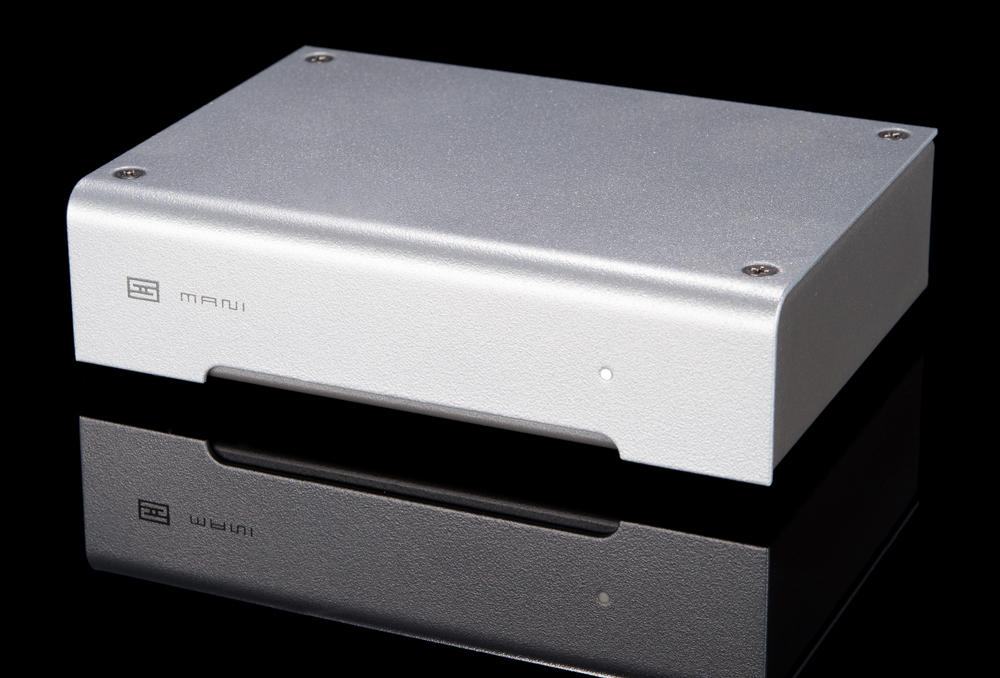
Schiit Mani (official link)
The tiny Schiit Mani costs $129. I bought it with the Saga and basically saved shipping. At the price of a modest dinner for two, you get to taste the design of Mike Moffat of Theta Digital fame, and I still swear by their old Data transports (I know they are lambasted for being modified from other cheaper products, but they are cheap second-hand and for some reasons they just sound better, especially in the bass, believe it or not).

After I read the mercurial review (a masterpiece) by Herb Reichert (a writer I love) in Stereophile I expected the Mani to deliver a decent sound but was not sure on how much - after all, even after several readings there are quite a few passages where I wasn't sure exactly what he meant.

The Mani turned out to be a real winner, and more than what I expected. MM It sounded good right out of the box, and for almost 2 months it partnered my Shelter 201 MM cartridge. I found the two gain settings for MM (42 and 47 db) to be really useful for fine tuning the sound. The higher one provided just a shade more jump factor for the passive Saga. The two together made fine music not only at my place but also at Andy's (see my review of Saga here). MC I also briefly tested its MC section with my very low output DL-304 combo, and it passed with flying colors. Loading freaks beware, the Mani has only two choices: 47K, de rigeur for MM; but the only MC option is 47 ohm, lower than the usual 100 ohm norm. However, I had no problem with either setting with my Denon - they both sounded superb, and for once unusually I preferred 47K (not unheard of for Denon).

The Mani was quiet and played everything well; it had good resolution but was forgiving at the same time. This is likely due to its attractive and distinctive warmth that is unusual for a budget phonoamp or the usual solid state phonoamp. And then I understood the sound to be exactly as Herb Reichert described in his article. In a way, it is like my Parasound JC3 on a smaller scale - a lot of what I wrote about the JC3 are applicable to the Mani (see here and here), and that is accolade indeed.

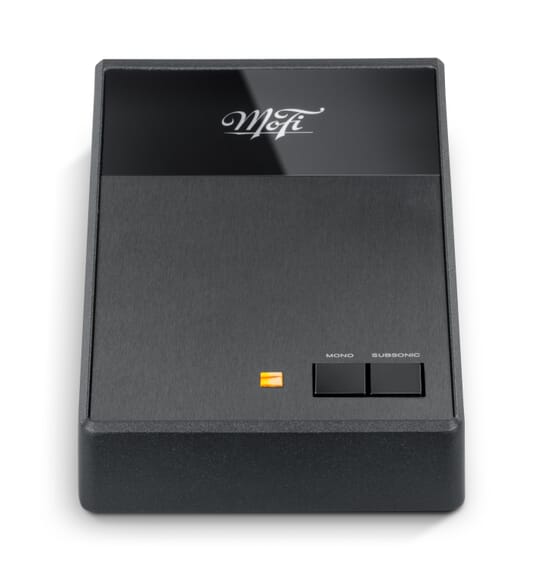
Mobile Fidelity StudioPhono, Part I (official link)
Being a fan of EAR and Tim de Paravicini, I just had to get this one when I read that TdP was behind the design. I still own the flagship tubed EAR 912 and entry level tubed 834P, and have good knowledge of the solid-state 324 (see here). Now, I would not buy the 324 but was very happy to fork out $249 for the StudioPhono. Is it a facsimile? Maybe not quite, as it turned out.

For a budget phonoamp, the StudioPhono has ample gain and loading options, and even a mono button! But it came without any instructions, and I had to go online for the manual to operate the dip switches.

The StudioPhono arrived late during my NYC stay, and I only had 2 weeks to it. Although it performed very well from the start, I was a bit perplexed by a trace of hardness in the treble, not something I expect from the designs of TdP. Perhaps this unit takes longer than usual to run in.

At this point, I began to examine the source. I was using the same Shelter 201 as I had with the Mani. The Shelter is shorter in height than the previous cartridges I was using, but I hadn't bothered to adjust the VTA because it sounded quite good with the more forgiving Mani. With the StudioPhono it was a different story. The MoFi showed up the VTA inexactitude of the installation. I put in a shim between the cartridge and the headshell and, voila, the sound took a turn for the better.

But all was not entirely well until I changed the interconnect from the phonoamp to the preamp from Gotham to the more forgiving solid-core (DIY) 47 Lab. Like the Schiit Saga, the StudioPhono forced me to change cables, a rare occurrence in my systems which employ professional cables.

I briefly tried too the MC Denon DL-304 and the StudioPhono engaged it beautifully. Overall, at this point I'd say the StudioPhono is a very neutral device that demands more setup care. I am optimistic that it shall sound even better with time, but then time will tell if it is an EAR 324 on a smaller scale (I suspect it is).

Note that Part II has been published and contains much more testing and system matching (to great effect). See link above. 

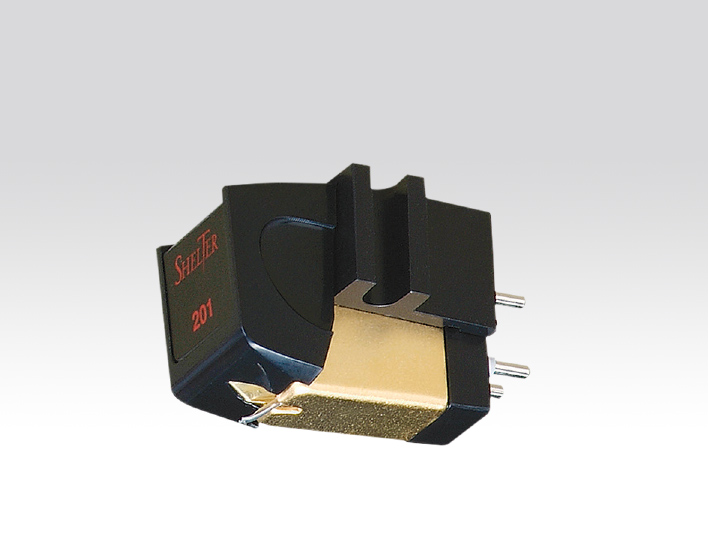
Shelter 201, Part I (Official Link)
This cartridge has generated quite a bit of controversy. Down to its white plastic box, it is a dead ringer for the Sumiko Pearl, which sells for half the price. Yet, the listed spec's differ slightly, and there are various opinions on the internet which I shall have you dig up yourself. I bought it from Japan, and the premium on the Sumiko Pearl is about $100. I seriously doubt Shelter is going to risk its reputation by offering the same thing. I'd venture either it is slightly modified or selected from a bunch, like the way Grado scaled its base models (it is said they are the same cartridges, with the top ones earning the Gold grading). There are no press reviews, but this one from Poland's HiFi Choice is excellent (translated.)

In my experience, Shelter cartridges always sounded quite neutral, and the 201 is no exception. As mentioned above, with neutral partnering gears, it is quite sensitive to VTA. Aside from this, I found nothing to criticize at all - indeed, for a small sum of money, one gets MC class resolution and microdynamics, good enough for me. I didn't have time to compare it to other MM's or MC's - that shall have to wait till Part II. But, if my recollection is correct, I absolutely prefer this one to the early version of the Sumiko Blue Point Special (more expensive than the Pearl) that I once owned. I am sure it is money well spent.

27 May, 2010

HiFi Letter from NYC 2010 (6): Magnepan MG 1.7 Listening Tests (2)

HiFi Letter from NYC 2010 (6): Magnepan MG 1.7 Listening Tests (2) (finished in HK)

Marantz 9
Next I fired up an old pair of M9. I decided just for fun to drive them from my Marantz 7. These are all old versions. The M7+9 gave a superbly clean sound, but where's that legendary bass oomph? Feeling something missing, I replaced the M7 with my usual BAT VK-3i. I was shocked by the difference. Even using the non-balanced ouput the BAT delievered a lot more: there is iron-grip control, and dynamics completely trounced the vintage machine. Importantly, the bass now was phenomenal, as it should be.

I have always preferred the better modern preamps to the usual vintage (Marantz, McIntosh, Fisher etc). If you just play simple music, you may find a certain vintage preamp flavorful, but for all-around performance, there's no comparison. This little exercise was just a reminder, as if I need reminding. The other side of the coin is that vintage tube amps in good condition can be formidable.

(click on pics to enlarge): (L) Fisher 80AZ; (R) The wondrous Art-Deco Altec 323, fronted by WE285L, Langevin 402A and 402B step-up transformers.

The Wonderful Flavor of 6L6 amps
A good friend brought over a large variety of 6L6 amps for me to check. At about 20 wpc, these lacked real muscle to drive the Maggie, but for smaller-scaled music, most vocals and acoustic jazz, they performed miraculously. There's a sweetness to the 6L6 that tonally most becomes the more analytical Maggie, more so than the more powerful EL34. The Fisher 80AZ, using 6L6GC in place of the original EL37, delivered clean sound and remarkably quiet background, but it terms of finesse it yields to the wonderful, and under-rated Heath W3M, using Tungsol 5881. In terms of power and control, as well as tonal allure, they all had to yield to the WE 274-equipped WE124 (pictured in last post); its ability to drive belies its nominal 12 wpc rating. Indeed, if you only listen to smaller things this is a great speaker for the WE. Another amp from the WE era, the rare-as-hen's-teeth Altec 323 (pictured pair from the 40's) delivered the same transparency, trailing behind the WE124 just a little in terms of rhythmic savvy.

(click on pics to enlarge) (L) Biasing ARC VT130; (R) Theta+SFD2

Fully Balanced Power!

By chance I ran into some balanced gears and made a new friend. My visit to the seller, who uses Martin Logan SL3, would be the subject of another post. Suffice to say the gears I bought from him enabled me to create a fully balanced system (except for phono inputs) for the first time. A revision of reference system is in order:

Digital: Theta Data Basic II into Sonic Frontier SFD2
Analogue 1: Linn LP12/Ittok/Koetsu Black into BAT P-5 (high gain)
Analogue 2: Thorens 125/SME 3009 S2 Imp/Denon 304 (into WE285L) into PS Audio GCPH (low gain)
Preamp: BAT VK-3i
Amp: Audio Reserach VT130
XLR cables used: Gotham GAC-3

Now, the system, both analogue and digital, are balanced. Of note is that the noise floor of the BAT VK-3i preamp, which is much lower via its balanced outputs than RCA outs. This proved quite beneficial as the 8x matched Amperex Holland Globe 6DJ8 I use are inherently noisier than the the stock Sovtek 6922, but tonally much more alluring. Compared to using RCA connectors, the balanced preamp/amp configuration IMHO offered superior dynamic swings and control. I should re-iterate here that the inexpensive BAT VK-3i is really quite a bargain, a fully balanced TUBE linestage that doesn't cost an arm and a leg.

The ARC VT130 (together with its sibling VT150) is an odd product in the ARC series. Despite the designation, its 4x 6550 per channel yields only 110 wpc, 10 more than the contemporaneous VT-100. Its design is for sure related to some of the D series amps (like the D115) , without extra 6550 as regulation; and to the balanced V-series amps, but not in triode mode. IMHO, it is unnecessarily big, laid out more extravagantly than the D- and V-series amps, with a bulky cover that covers everything. I suspect the bulk is why it has never been popular here in HK. Sonically, it's another matter. Though it still contains solid state components in the signal path, its sound is definitely more tubey than the D-115 MkII, which I have in HK. The D115 betrays its hybrid nature when it is switched on, a little white in tonality, and that does not completely go away even after a full warm-up. Not so the VT130: it sounds quite warm even at power on, and reaches full bloom in about an hour. As for power, I'd say they are about equal, but the balanced connection gives it an more effortless quality.

In all, this is now my reference for the Maggie 1.7. At 110 wpc of balanced tube power, the system is powerful enough to handle everything, from fusion to big symphonic work. It doesn't have the brute power of some ss amps, but it trounces them in almost everything else. Neither does it quite have the tonal allure of a WE system, but its even attributes rewards everyday listening.

In the next and final part of this Magnepan 1.7 Listening Log, there are some loose ends to tie up, and I shall do some summation on what I have learned. Stay tuned.