Showing posts with label Brand-Kondo. Show all posts

29 July, 2020

DIY Kondo M7

Click pics to enlarge. PS Audio Lambda and Ultralink II. Clone Kondo M7.

Virtual Home Visit (12): DIY Galore

Modified August 7, 2020: The host actually designed ALL his PCBs; none from outside suppliers.

Our yumcha friend Thomasfw is a DIYer of some repute. Like many DIYers, I think he derives more pleasure from making things than listening to them.

If you look at the pics, you shall see work of a high standard. And they are not cheap because they use boutique parts like M-cap and Leader volume control from hificollective. ALL of the boards are designed by our host himself (he is in the industry!)

Clone Kondo M7s
Actually you may have read about its prototype before. It is buried deep in this article (roll down to the David vs Goliath section). I quote:

Surprise! David vs Goliath? As it happened, our yumcha friend davewong had been building a Kondo-clone preamp based on the very simply laid out boards by thomasfw. Since it is said to be a Kondo-clone, I expressed an interest to hear it (a very rare occurrence). Suffice to say, davewong geared up and had the prototype ready that day (click on right pic to enlarge), so we took it along to Jules. The DIY preamp employed 6X4 rectification and MOSFET regulation. For the line section, the two triodes of the 12AX7 were coupled and output was cathode follower. No exotic components were used - Dale resistors and Wima red caps for the line section; Philips caps for the power section. Sound The Kondo clone actually sounded quite decent. It seemed to be modern sounding, with a surprisingly fast leading edge (methinks faster than the Koda). Immediately, there were more air and a deeper soundstage, and the front corners were better illuminated. With the jazz CD, virtues were more split: the percussion had better rhythmic expression and exactitude with the Kondo clone; the saxophone and guitar sounded much fuller with the Koda - a surprise as usually one would expect the reverse. A Little Tube Rolling As there were Europhiles present, Valvo long plate's were swapped in for the RCA (D getter, grey plates). Immediately, the saxophone and guitar sounded much fleshier and much closer to the Koda, but at a cost - the percussion lost almost all of the snap (a price I personally would not pay). The Votes Though still a flawed prototype, some of us preferred the DIY tube preamp, but pluto, a DIY man, admired the Koda. As you see, it was not quite a David vs Goliath scenario. Suffice to say, both the DIY kit and the solid state Koda met with our approval, and (except for pluto and maybe jules) this is a rather hard-core tube crowd! After this, we reconnected the Koda and listened to analogue playback.

Detour: Kondo Clone vs Kondo/Audio Note Japan M7 After I got home, I actually briefly compared it to my own Audio Note Japan M7 (the one in the pic). Both are quite neutral sounding so it is hard to say whether they sound alike, but the challenger was obviously a little on the lean side and rhythmically a little too insistent, without the M7's subtle and articulate nature. Still, a respectable showing!

Kondo M7, Phono section derived from ANUK. ChineseInput and Output Transformers, 
4 for about USD 400. Phono Board Self-drawn.
Dual Mono Power Supply derived from Kondo M1000 
Small Listening Environment
Another Clone M7 next to SE EL84 with Tango Output Transformers
Inside the M7 Line
Inside the SE EL84

10 July, 2020

TAD 3401 Kondo M7 Ongaku 47 Labs Gaincard


Click pics to enlarge. TAD 3401 flanking Kondo M7 + Ongaku. Seng is a classical music man, and his wife is a bookworm. Even without children, their rooms are filled to the brim. 

Virtual Home Visits (6): TAD 3401, Kondo, 47 Labs revisited by Seng

Editor's Note: Regular readers shall remember my Hong Kong friend Seng, whom I featured in Home Visits many times. Before I left HK I consigned  to him my most treasured stuff, including a pair of the TAD 3401. The initial setup was reported here, and I urge you to read it as you will see the rest of the room as well as even more equipment. The following are his words.

When the speaker first came to the house, it was placed in the adjacent side of the living room (refer to link above) which was really too confined a space for such large speakers. I then moved them to the wider side of the room and the sound stage was much improved.

Before the Ongaku, I was using the 47 Labs Gaincard with the Kondo M7. Daniel [Ed: see Footnote 1] has come and listened to the system. He commented that the system sounded very direct and particularly good in playing jazz, the only weakness being the lack of micro-dynamics.

After switching to the Ongaku (I know it may not be a fair comparison), I understood what he meant. The sound of Teresa Teng became sweet and attractive. Before that, I did not find anything special about her vinyl. Now, I know why people like her so much [Ed: see Footnote 2].

Editor's Footnotes: 1) Daniel, aka Danz, is Seng's brother-in-law. More than 10 years ago he contacted me about Tannoy (I wrote a lot about Tannoy in the HK forum r33) and I have featured him regularly in my Home visits. Those are among the most interesting of my posts, and it chronicled his whole journey; should you be interested you can read everything by entering the word "danz" in the blog search (top left). A few highlights: here for my first visit with Tannoy Canterbury; here for his Wavac; and here for his Tannoy Kingdom. I met Seng through him. 2) I was in my early teens when I first watched a very young Teresa Teng on Hong Kong TV (our TV set was black and white). Due to her popularity in China when the country was opening up, generations of Chinese knew her songs by heart. In the mid-eighties, when there was an intelligentsia of Chinese artists and writers in NYC (most returned to China), I held parties for them sometimes at my home. I only have to play Teresa Tang (on my Dahlquist DQ-10's) and everybody would get up and do ballroom dancing (very popular in China then). For me, Teng is the best Chinese singer ever (I am a native mandarin speaker, whereas most HK people speak Cantonese and tend to gravitate to Cantopop). Her voice is sweet and there is an artlessness in her approach. Many of her songs are covered by female wannabe's, but no one can surpass her. Below I attach the youtube of one of my favorites, "sea tune", which is among the least covered because no one can approach it her way. 

18 May, 2018

47 Lab 4737, Yamaha NS-10M, Flying Mole CA-S10, Micromega MyAmp

Click pics to enlarge. Top, TAD TSM-2201, inverted. Under, 47 Labs 4737. Flying Mole amp close to the right speaker.

Small Systems, Simple Foods, Simple Pleasures
47 Lab 4737 Loudspeaker, Part II
Yamaha NS-10M, Part II
Flying Mole CA-S10 Revisited
Micromega MyAmp revisited
Home Visit: Quad 2812 + WE 124
Kondo Loudspeaker Matching, Part III
CD Recommendations: Three Versions of Misa Criolla, and more

Modified May 19, 2018

When I grew up, we didn't have much money, but spiritually we were rich. Father was a complete artist 琴棋書畫,無一不通, renowned especially for his Peking Opera performances and Chinese brush paintings. Naturally, I grew up with paintings and going to the opera. These activities were frequently interminably long for a kid and often dreaded, but every day today I am grateful that the idea of art appreciation was thus ingrained in me.

Father was also a diligent student of the ancient scripts 文言文 - he read voraciously his whole life. For a living, he was editor of a movie magazine for several years, and after each mandatory visit to the press would bring back children's magazines (especially 兒童樂園). I thus grew up with books and developed a healthy reading habit, though these days I read more CD booklets than books!

More important than even the events were the conversations overheard. Artists and those around them appraise, value and weigh things quite differently from the rest. Merit is tied to inborn talent, creativity, artistic achievement, even moral and humanistic concerns - and money definitely cannot buy everything, not the intangibles. What better way to teach children, I ask? Although I possess none of father's talents, I am an art lover for live, and art has immeasurably enriched me.

That brings us to: why are we audiophiles? I am sure you, like I, think many audiophiles are just in it for the primeval sonic thrills, not the music. That is fine, but just too bad - a spiritual quest in music adds a dimension to the quest for ever-better audio replay, and vice versa - they complement and enhance each other, like wine and food.

Bubbles: Audio Breakthroughs, Nouvelle Cuisine, New World, One World, Robert Parker and his likes 

Father had many friends better-to-do than him, and he frequently took me along to their dinners, and I had a lot of fabulous food (imagine real 青衣 and 花旦魚 for a late-night meal). Those were also days when food tasted a lot better. It is hard to believe that in my life I actually had witnessed the near/extinction of several fishes - basically gone is the incomparable (particularly to one with a Shanghainese heritage) 黃魚, and now even the venerable 紅衫 is reported to be on the brink!

Two kinds of Richness: Aside from the richness of my LP and CD collection (and audio gears as renderers), I am not a rich man (early retirement doesn't help). But I am blessed with friends better-to-do than I, or simply over-generous, that I often get to sample and taste a lot of what I cannot afford, even esoterica. This got me thinking.

The sheer variety of everything available today is truly astonishing. You can (literally) make a career tasting wine or beer or whatever of your choice. But is most of it worthwhile? I think not.

It is a kind of decadence (gluttony is after all one of the seven deadly sins) that everybody is in a race for discovering the latest new taste, but is that really new? And what is it that is new? Take wine as an example, when New World and Robert Parker exploded on the scene, even I was swept along. But for me what was hailed as revelatory, or revolution, soon turned into perfumery, even perfunctory. Today, although the quality of French wine is possibly/certainly in decline, I remain indifferent to the vast majority of New World wines (though there are always exceptions, especially in the bargain sectors). Most of the highly rated Robert Parker wines don't do anything for my admittedly Catholic taste. Perhaps my palette is shot, or is it?

One World and Fusion is even more over-rated. Take 1986's Graceland as an example. I don't understand what all the fuss was all about. In this album, Paul Simon did a good thing by bringing extremely talented African musicians to the fore (revived his own career too), and they deserved all the accolades. But what of his own contributions? To me his lyrics and singing were just patched onto the African stuff (there is no way he can really play African rhythm), and the two run parallel and never meet. YMMV.

Fusion food can be good, but there is still little point, and you will never get me to pay for so-called gourmet foam food. In the film Babarella, set in a future age when humans have sex by taking pills, Jane Fonda wanted to repay the hero with sex, but he wanted it the old-fashioned way, which she discovered she actually enjoyed. Wouldn't you want the same with Jane Fonda?

Time Out for Food (Shenzhen)

Much of the current (affordable) HK food is sloppy or gimmicky - the basic ingredients are not good enough. As I live close to the border with Shenzhen, it is actually just as easy for me to go to SZ for food. So, on this Sunday, I did go to a favorite local no-frills dive 快餐店 in Futian 福田 for my favorite spicy beef with pickled chili 野山椒牛肉. Marvelous. 不但止牛肉是牛肉,而且手工細,切得細,炒得剛好。魚香茄子超正宗,酸甜辣剛好,絕無取巧。The other two non-spicy dishes are for take-out. Four dishes, including beer, all for RMB 65.

Back to audio. Simple can be very good. I hope you don't get lost in all that computer stuff. But be wary of "breakthroughs" and "progress" - more often than not, they may bring more convenience but not better sound, not at all.

In HK and NYC, more and more I hear people say: "I only want the best!" But, is there such a thing? I say, it is all good to stick with one's best, hold on to one's beliefs while remaining open-minded, but it is no good to relentlessly search for the best, to have no sense of arrival, no room for happenstance, no thankfulness - which, actually, I say, is a manifestation of no self.
The Complete Columbia Live Albums Co LlectionLiving Room Small System gets (sonically) Bigger

This system is simple in the extreme. My trusted Sony DVD player DVP-SR50P as source, fed into the Flying Mole CA-S10 amp, which drives the 47 Labs 4737 loudspeakers, though now, there is addition of subwoofer...
  • 47 Labs 4737 Loudspeaker, Part II  For background and previous exploration of the 4737 ("Part I"), see here. With the small Flying Mole amp, the 4737 sounds exceptionally good, and surprisingly big, again reinforcing my previous conclusion that it works better with solid state amps. One thing to note is that it is sensitive to interconnects. For its size, the sound is detailed, full and fleshy, and bass is amazingly good (better than the Air Tight Bonsai). Thelonious Monk's Live at The It Club sounds resplendent, and redolent of atmosphere. It don't mean a thing if it ain't got that swing - absolutely, and the 4737 swings ( a key feature of its excellence)! But you know, I am a classical orchestral man, and so I decided to make use of the Flying Mole's preamp-out, which I hooked up to the same JBL subwoofer (the Kondo setup uses the high-level input; the Flying Mole the RCA-in). Wow, the bass augmentation makes the sound even bigger and it gets close to the Kondo system above. The live atmosphere of the excellent 1977 Giulini/BPO recording on Testament was miraculously rendered - the Webern Six Pieces unusually lush and Pictures majestic (better than his studio efforts). The way Giulini carefully managed dynamics is mightily impressive, and those BPO brass at their finest! The German Radio recording is excellent. Another morning I audaciously played one of the Fantasias disc in the DG Helmut Walcha box. The system sure-footedly tracked the very great organist's every move (they are lithe), and one does not want for the ultra-deep notes. Just Grand!
  • Flying Mole CA-S10  This is a model from over 10 years ago, when Class-D digital amps and switch-mode power supply were not as ubiquitous as today. And so it had garnered quite a bit of press (see Stereophiletechradarsoundstage). All noted its very clean sound but some concern were voiced about the well-lit treble. As with all things digital, second-hand price a decade later is a mere fraction of the original cost, and that makes this superbly built and classily finished item a bargain. Ever since I had acquired one, I have used it in a bookshelf system in the living room (see top pic), and over time I have tried it with almost all of my small loudspeakers (Dayton B52; Pioneer S-A4SPT-PM and -VP; Pioneer SP-BS21-LR; and KEF 11 ohm and Rogers 15 ohm LS3/5A), and it had always delivered pristine sound in this setting, and I had never suffered any treble issues. The sound has always been highly detailed, lucid and with excellent rhythm and timing. With 47 Labs 4737 As noted above, the sound with the 4737 is superb, but that was after I had tackled an unexpected issue. Initially, there was a high frequency ringing that I had never noticed before with any of the other speakers. Changing interconnects did not help and I was getting frustrated. Then I thought just perhaps it was amplifying RF noise (my power bar behind was quite overstuffed), and so I swapped in a thicker power cord (presumably more insulated) and that did the trick. I am not sure why the 4737 brought out this aspect of the amp whereas the other loudspeakers didn't - the 4737 does not seem to have a more hyped-up treble to me. In any case, as noted above, with the addition of the subwoofer, the sound is taken to another level. Of all my setups, I actually listen to this one the most - the Kondo just generates too much heat in summer.
Time Out for Food (Yuen Long)

HK has a thriving Food Writing industry, but like audio reviews, most of the hyperboles are undeserved, and much is gibberish. In my opinion, there is not much good food in Yuen Long. Thankfully, there are exceptions (aside from the one mentioned here, 添記 is another one - the roasted pork belly 燒肉 is simply divine).

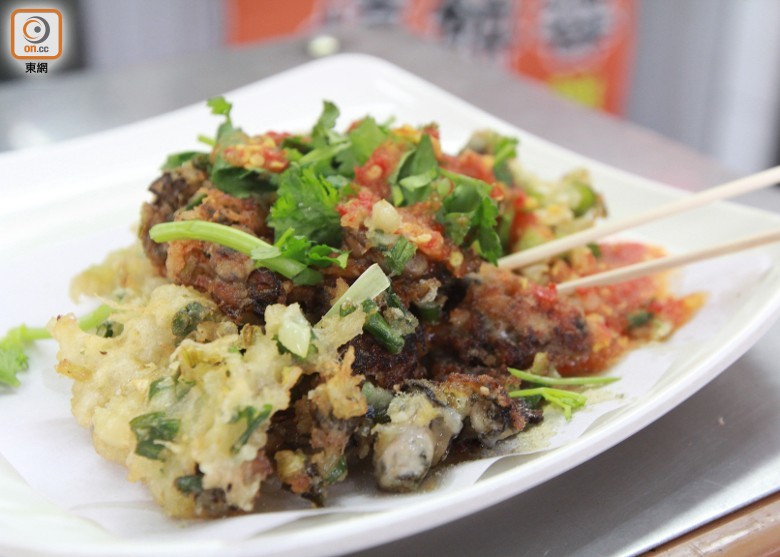
一份蠔餅,背後藏有一個母親的感人故事。One of my favorites is the roadside 肥姐 蠔餅 (Fat Lady's Oyster Omelette), which she serves with coriander and a chili sauce that is likely Thai or Vietnamese derived. The Lady is super hard working and super nice and I always have a chat with her when I visit. She is famous not only for her oyster dish, but also for the wrong reason - her daughter was plagued by the very rare Guillain-Barre disease and is still today suffering from its aftermath, which made her life very difficult (for reports and more pics in Chinese, see here and here). The lady sometimes had to close shop for a day to take care of her daughter - a substantial financial loss given the exorbitant rent.


Bach Trios
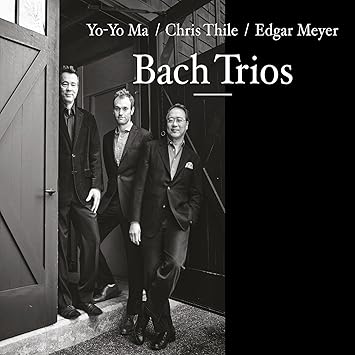
A few days ago, I had one of these for dinner (calorie watchers need not consider), but here let me tell you a secret. Wash it down with a simple white wine - the wine need not be great, but the effect is dynamite. If you consume this roadside, which is best, go to 711 and get a small bottle of wine. They don't have great stuff, but the HKD 10 bottle of Chilean Chardonnay (which tasted as much Sauvignon Blanc as Chardonnay - I had a double-take) on sale was more than capable for the job. The combination was explosive on the taste buds (yes, mine are still alive)! I had this at home, accompanied by Yo Yo Ma's divine Bach Trios, immaculately rendered on the small system. Yes, as much as the wine enhanced the food, the music did the same - the mandolin danced on the taste buds, and the bass drew out the after-tasteMarvelous!

A few days later, some good friends gathered for dinner. There were a lot of great food, Spanish ham, premium sea-cucumber, rack of lamb etc. A bottle of Lalande de Pommerol and another Haut-Medoc were both splendid. While I enjoyed it greatly, should I compare it with my humble solitary moment above with a Robert Parker-like scale? Absolutely not - each moment is a capsule, influenced as much by circumstance and the intangible as the quantifiable.

I am a fish lover. I like all kinds of fish, no matter cheap or expensive. I always say God is magnanimous, as He has imbued each species with its own taste, and you can find even in the cheapest offering things that you cannot find in the most extravagant. To translate - a very expensive fish is not necessarily better tasting than a cheap one, it all depends. The important thing is, there is no best.

Happy Hour at WSS and Misa Criolla
You have met my dear friend WSS, the Quad 2812 user, before. Although his equipment has remained largely the same as last visit, there is an important new addition: a pair of Western Electric 124.
Los Calchakis La Missa Criolla des CalchakisAfter his recent rearrangement of equipment I have visited him several times. I have little spare time these days, but when I suddenly have a few hours to kill my first choice would be to visit WSS because I really enjoyed chatting with him, and listening to his many CDs. Most importantly, here is a real music lover and a well read man. Sound here is always good enough for me to sit through several hours, but each time my audiophile vistor ego would act up. The sound seems just a little muted (not an unfamiliar feeling here, just like last time). Personally I find the WE 124, though still not quite as sinuous sounding as they can/should be, to outshine the much more powerful Quad Elite QMP monoblocks - the microdynamics is just more nuanced and better, and that is needed here.
Ramirez: Missa Criolla / Navidad Nuestra
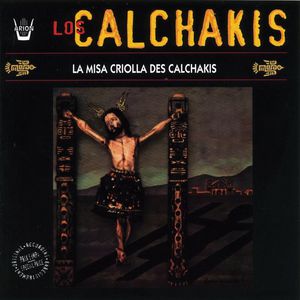
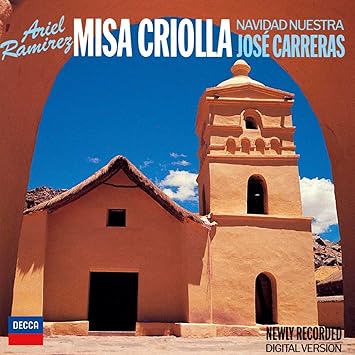
One discovery at WSS. A scaled down version of Ariel Ramirez' folk mass Misa Criolla, made famous in audiophile circles by the long out of print Philips recording featuring Jose Carreras (good news: it had been recently reissued on CD, but labelled Decca, I urge you to grab it quickly; be warned that Carreras made other versions but this is the one). This chamber version is by Los Calchakis (Arion). You may have to source it from overseas, but though a stingy 17 minutes, it is worth it, as the recording and performance are exemplary. WSS also played me another oop Philips LP of the composer conducting the mass, a rare collector's item apparently.

Sometimes I wanted to tweak his system, but WSS wasn't always enthusiastic. Things could always get better, he says, but it is just a system used to listen to music. I agree, but I wager few audiophiles would really understand the sentiment.

Click to enlarge. Note the small white Micromega MyAmp in the center.

My Desktop Gets Bigger Too

Like the Living Room Small System, I have tried all my other bookshelves ((Dayton B52; Pioneer S-A4SPT-PM and -VP; Pioneer SP-BS21-LR; 47 Labs 4737, TAD TSM-2201 and LS3/5A) on my desktop, but the Yamaha NS-10M easily takes the palm.

    Image result for pacini beethoven liszt
  • Yamaha NS-10M For some background on and my previous words on the venerable NS-10M, see here and here. On the desktop I have them inverted so the tweeters are at ear level. Driven by the solid state Micromega MyAmp, the sound is truly astonishing. Although everything played well, the most astounding aspect is how well it renders piano playback. Sophie Pacini's breathtaking Waldstein and Liszt (Warner) literally pinned me to my uncomfortable seat, as do Daniil Trifonov's Transcendental Etudes (DG). No bass overhang, no fizzy treble, perfect leading edges, every strand clear as daylight, yet emotionally true. No subwoofer needed. Here, I'd like to add that this experience makes me think the NS-10M, like the 47 Labs 4737, is more suited to good solid state amplification.
    Image result for trifonov liszt
  • Micromega MyAmp Considering how much of a Micromega fan I am, it is surprising I have not really "reviewed" this. Truth is, I have too much stuff to test, and desktop is not priority. Since I have written capsules on it, the MyAmp has received many favorable reviews (TAS, HiFi Choice, Chinese U-Audio). Recently, I have been using the MyAmp on my desktop. Its small footprint and superb connectivity go without saying, but what matters most is the sound - simply superb! It plumbs the depth of the NS-10M, while simultaneously offering the most subtle of tonal and rhythmic virtues. Through USB, I connect it directly with the iTunes of my Macbook Pro, and its replay of the various CDs mentioned is beyond reproach. I also connect it with my Micromega CD-10 (here), and the sound is just as good, though I do not detect any glaring superiority when compared to ripped files through USB - attesting to the excellence of the USB implementation. A winner!
Brief Update on My Kondo System - Loudspeaker Matching System Part III

In Part I of Kondo Loudspeaker matching, I detailed my previous experience with Kondo driving the TAD TSM-2201. I liked the sound, but it was on the lean side, likely indicative of lack of power.

Recently, I re-instated the TAD TSM-2201 in my Kondo system, in inverted positions (see top pic). For some reason, the sound appeared to be better than before, and so I decided to work on it. After some careful dialing in of the subwoofer and a few changes of interconnects the system performed so well that it is what I use now. No, it is not as relaxing as the LS3/5A, but for the mean time I like the more accurate nature. It could still be fuller, but playing loud is easier than before. My friends seemed to like the system on their visits too. I am quite satisfied.

07 July, 2017

Kondo Loudspeaker Matching II


Updated pic of system during evaluation. The Kondo system is connected to the KEF LS3/5A's on top, whereas the Pioneer's below are driven by Flying Mole CA-S10 digital amp stacked vertically to the left of the M7. The Pioneer's have since been displaced by the Dayton's.

Kondo System Bookshelf Loudspeaker Matching, Part II: Yamaha NS-10, Pioneer SP-BS21-LR, Dayton Audio B652, KEF LS3/5A
My Kondo System, Part VI
Review: Yamaha NS-10M, Part II
Review: Pioneer SP-BS21-LR, Part IV
Review: Dayton Audio B652, Part IV

Article finished in the UK.

This is Part II of Kondo Loudspeaker Matching. For links to My Kondo System, Part I (background info on Kondo and Ongaku); Part II (all about M7); Part III (the most important one, detailing set up and listening experience); Part IV (largely phono related, and Kondo preamp/amp were not used; skip if you are digital only). Most importantly, readers should read Part V, which is Part I of loudspeaker matching and where several loudspeakers were tested.

Please note that, aside from the KEF LS3/5A, the loudspeakers used in this report are much less mainstream than even those tested in Part I. The Pioneer and Dayton are also ridiculously cheap. No one should ever complain about the mantra of cheaptubeaudio again.

As per the evaluation done in Part V, the subwoofer is always used, and the loudspeakers are inverted, with woofers upward.

Equipment used in Evaluation:

Digital: 47 Lab Shigaraki Transport/DAC
Analog: Pro-ject RPM1.3/Clearaudio Concept MM
Preamp: Audio Note (Kondo) M7
Amp: Kondo Ongaku
Loudspeakers: as titled
Subwoofer: old JBL active subwoofer

Yamaha NS-10M
As mentioned previously, these legendary speakers need no long-winded review on my part. They have long been cherished by all the who's who's in the recording industry, and even has an informative wikipedia entryAnother must-read article is this one at soundonsound. Come to think of it, I'd not be surprised if some of the albums I mentioned below were originally mastered on the Yamaha! :-) See my previous experience (Part I) in my old house.

Pioneer SP-BS21-LR
For basic info on this ridiculously cheap Andrew Jones creation, see Part I of my previous report. It is discontinued, but similar products are still around.

Dayton Audio B652
This even more ridiculously cheap offering from Parts Express is a personal favorite of mine, and has been treated extensively in this Blog (see here).

Sonic Impressions
  • Yamaha NS-10M True to its monitor origin, the sound is very neutral and revealing. In terms of truth of timber and midrange transparency, they are very similar to the TAD TSM-2201 (here), and preferable to any of the other non-monitors, including the LS3/5A. Although the NS-10M's are easier to drive in comparison to the TAD, when the volume is cranked up, the sound inevitably shows some constriction, hampering replay of symphonic music. Perhaps ultimately these also need more power.

  • Pioneer SP-BS21-LR This is a very even performer, quite neutral and dynamic. The midrange is slightly recessed. These can play louder than the NS-10M, but the sound lacks just a little in involvement.
  • Dayton Audio B652 Belying the price, at low and medium playback volume these delivered a truly sparkling sound. No surprise. The midrange is more projected than the Pioneer and the sound is definitely more involving. However, not for lack of power, these cheap jewels are simply not meant to be played loud.
  • LS3/5A What I said before needs only minor modification: "...The real surprise (actually not) is that the Kondo system drove them very well (contrast this to the 86 db TAD). Neutrality is as good as any in the midband, less so in the treble and midbass (the famous hump). They resolve a little more than the Pioneer's and Dayton's, but less than the NS-10M's. Rhythm and pace is good but transient response is a trifle slower. Dynamically it is surprisingly adept. But what really catapults it to the top is a hard to define engaging quality, an ability to involve the listener..."
Outside the Kondo System
  • Quick Listening, with the Flying Mole CA-S10 Amp The Yamaha NS-10M is too large to go into the shelf below, so cannot be used in this configuration. Both the Pioneer's and Dayton's do an excellent job here. With the Digital amp, the Pioneer's can pay symphonic music quite well, and hence earned a permanent spot in this setup. As with the main system, I invert the speakers. Thus enclosed, the rear port surprisingly does not cause trouble and indeed augments the bass significantly. One is almost tricked into thinking a subwoofer is at play.
  • At the Desktop I installed the Yamaha's in my desktop system, now using Meridian Explorer and 47 Lab Gaincard. The sound is irreproachable and the best I have ever had in this station.
Observations/Conclusions
  • Yamaha NS-10M If not for the fact that I could not get it to play at high volume, this would be my choice for the Kondo System. If only I only play chamber music or simple vocals! Although at high volume it doesn't turn strident like the TSM-2201, the still-evident constriction may still very well be a power/impedance issue. 
  • Pioneer SP-BS21-LR and Dayton B652 These two neutral sounding loudspeakers offered similar performances. The Pioneer can play louder but the Dayton wins out by being livelier. In the vital midrange, both do not quite reach the richness and transparency of the Yamaha NS-10M.
  • LS3/5A Again, minor editing of what I siad previously would do: "...More than any of its rivals, the virtues of the LS3/5A are many and more evenly distributed, and its faults are minor. As mentioned, the real surprise is that the Kondo system drove them very well (not the case with even more flea powered SET's). Its 82 db sensitivity is the lowest in the group, but it is audibly just as efficient as the others. Although it needs enough watts, the impedance curve of the LS3/5A is benign and it is not a current-hungry transducer (see JA's measurements in this mega-article in Stereophile)..." While the NS-10M is superior in some aspects, ultimately it could not displace the 3/5A.

07 January, 2017

Kondo System Loudspeaker Matching LS3/5A Pioneer S-A4SPT-PM VP 47 Lab 4737 TAD TSM-2201 JBL Kondo S-18


Pic of system during evaluation. The Kondo system is connected to the loudspeakers on top, whereas the LS3/5A's below are driven by Flying Mole CA-S10 digital amp to the left of the M7. And No, the Pioneer's are not trapezoids (just lens distortion). Click to enlarge.

Kondo System Bookshelf Loudspeaker Matching: Pioneer S-A4SPT-PM and -VP, 47 Lab 4737, TAD TSM-2201, KEF LS50, LS3/5A and JBL Subwoofer
My Kondo System, Part V
Review: Audio Note M7
Review: Pioneer S-A4SPT-PM, Part II
Review: Pioneer S-A4SPT-VP
Review: TAD TSM-2201, Part II
Kondo Ongaku SP (S-18) and Biyura
Letter from NYC (61) 2016 (17)

Revised Feb 3, 2017: For the last two weeks I inverted the loudspeakers, that is with the tweeter down. The effect is dramatic, and I am very pleased. This is added to the discussion in "Sonic Impressions: Effect of Placing Loudspeakers High Up"

Links to My Kondo System, Part I (background info on Kondo and Ongaku); Part II (all about M7); Part III (the most important one, detailing set up and listening experience); Part IV (largely phono related, and Kondo preamp/amp were not used; skip if you are digital only)

For those interested in 47 Labs 4737 alnico loudspeaker, Part II (with Flying Mole CA-S10 amp) and Part III (with Naim Nait I amp) contain extensive testing.


The Evaluation took place in HK but the article is written in NYC.

pic: R: Kondo S-18 prototype from Positive Feedback CES 2007 Report; L: S-18 leaflet. Click to enlarge.


ENIGMA: What Loudspeakers for Kondo?
As with many SET amps, one of the major difficulties with Kondo is loudspeaker matching. Like most SET amps, ideally you really need efficient loudspeakers to get its best.

What Kondo san himself used and/or designed This must be what we ask first. YL I believe, in his earlier days, even before Ongaku, he was a horn user and involved in YL horn designs (my YL horn system here; I have yet to write more extensively on these marvelous creations and their superb sound). I have done a bit of research on YL, but there is not that much on the internet. I believe, like JBL and Altec, there were few official enclosures). Branded Kondo Since YL, Kondo san had designed many smaller loudspeakers but they are virtually unheard of. Kondo's official site has discontinued loudspeaker model names (but not info) accessible only via its Japanese page (here). Ongaku SP (S-18) The S-18 is composed of the M-18 full range unit (many Japanese designers, like 47 Lab, Sparkler, Air Tight etc, favor fullrange loudspeakers) and the M-1 tweeter (likely a first order crossover - just a cap). I did hear the S-18 many many years ago, when Kondo san himself attended a HK hifi show (organized by the now-useless magazine 發燒音響). In the smallish hotel room, it was among the best sound I have ever heard in a show. The Positive Feedback pic shown above looks however bigger than I remember. Also, this German site's Las Vegas 2008 report must be virtually what I heard. BiYura (Field Coil) Kondo san passed away in 2006. In 2011 the Biyura Field Coil loudspeaker was unveiled in various hifi shows, including that in HK, which I covered (here). As you can read, I did not like the sound then. For this article, I did an exhaustive search and it seems the Biyura made apperances in quite a few hifi shows, but none after 2014. As there is not even a mention in Kondo's Japanese page, I assume the BiYura remains a prototype, if not an abandoned project. I am curious whether Kondo san himself had a hand in its conception, or if it is solely Masaaki san's effort.

It appears: 1) Kondo loudspeaker systems are perpetually in a state of fluxalmost always in prototype stage, then and now. There may be multiple reasons for this: it is in keeping with most artisanal designer's tendency to forever tweak; also, many Kondo dealers also distribute other horn systems/efficient loudspeakers and hence may not be that interested in a Kondo loudspeaker (think Avantgarde in HK and Living Voice in the UK); 2) Kondo san likely was never completely satisfied with his loudspeaker creations (under the Kondo name). None ever remotely achieved sustained production (The S-18 and the Ruthy 4 perhaps were better known and had sold a few). Maybe Masaaki san is like that too with his field coil.

What Users and Dealers Use Aside from a few appearances by Kondo themselves using the S18 and Biyura, all manners of loudspeakers (not just horns) have been used in audio shows (to get an idea, google images using "Kondo hifi show"). My friend JC, Australian dealer (Audio 101) for Kondo, uses Avantgarde Trio and Tannoy Westminster. I have also heard an acquaintance's Kondo gears with Audio Note UK loudspeakers (sacriledge!). What I Use In my old house, I did not get to play that much with the Kondo's, but they did well with my Canterbury. In my current small abode, I could only manage to do it the way in the pic, which is why I actually carried out this not inconsiderable project of bookshelf loudspeaker matching, of which this is only the first report. 

Equipment used in Evaluation:

Digital: 47 Lab Shigaraki Transport/DAC
Analog: Pro-ject RPM1.3/Clearaudio Concept MM
Preamp: Audio Note (Kondo) M7
Amp: Kondo Ongaku
Loudspeakers: as titled
Subwoofer: old JBL active subwoofer

Audio Note M7
The now discontinued M7 went through many iterations and is the most famous preamp of Kondo design (for the difference in versions, see my article here). All generations have similar chassis, internal structure and bespoken silver laden parts. This M7 you see in the pic is actually my second one. A few months ago I chanced upon this early unit and grabbed it because it is a full function preamp with a smaller footprint that actually slots into my IKEA shelf with room to spare/ventilate. As opposed to my other one (line only, 12AU7x2; last version), this one is a much earlier design, branded Audio Note but made in Japan, before Kondo san and Qvostrup split up and the latter founded AN UK (this is also why there are M6 and M8, but not M7, in their made in UK preamp lineup). This one uses 6072 in both the phono and line stages.

TAD TSM-2201
For info on these 86 db, 4 ohm sealed enclosure loudspeaker (8" woofer, the largest in this group), see my previous detailed TSM-2201 review. That review was when I first got them, and they were used upright. Subsequently I took them to my current abode and have actually also used them with Kondo (go to end of this sprawling article; used horizontally, on the same IKEA shelves but with them lying down, long sides parallel to the floor). The sound was excellent then but later I had to reconfigure, so the top of the shelves are higher now and I could only use them disadvantageously upright.


R pic: -PM; Lower L pic -VP


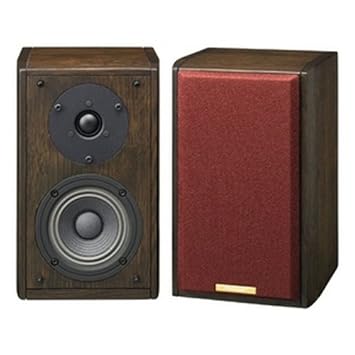
Pioneer S-A4SPT-PM and -VP
My initial impressions of S-A4SPT-PM, especially when compared with the legendary Yamaha NS-10, was not entirely favorable. They were likely not quite run-in at the time. Recently, after I decided to re-make my Kondo setup, I brought them to my current abode, where I first used them very satisfyingly on the desktop with 47 Lab Gaincard for quite a while. Sound was much better than at my old place, so they were probably finally run-in.
As I took to the PM more, I decided to acquire a used pair of its sibling, the S-A4SPT-VP. This is a slightly later and more expensive version with a different woofer (alleged to be TAD, though given the Pioneer/TAD duality, imho it is just a matter of semantics and marketing) and more luxurious finishing of ebony color. Both loudspeakers are likely of somewhat limited production, so in the West they are now only largely available through the internet (for a reasonable sum). The VP sold well in HK, but unlike the PM did not have any coverage in the West (only real online review is in Chinese, from Singapore).

Both are 84 db, 6 ohm loudspeakers with a 4" woofer, real wood enclosure and a small rear port. They differ in that the -VP reaches lower (spec'ed at 50-40k Hz vs the 60-40k Hz of the -PM). The -VP also has a higher crossover point than the -PM (4,500 Hz vs 3,500Hz). Despite similarity, they turn out to be surprisingly different in character (see below).

47 Lab 4737
These are also called the Lens Alnico or Lens II. All else being the same, it differs from Lens (also called Lens I or Lens MkII) (4722) in that the driver magnet is alnico. My initial impressions was favorable. Since then, there has only been one review in dagogo. It is an 85 db, 4-ohm  4" fullrange with MDF enclosure and a small front port. My pair is well used, obtained by trading my KEF LS50 towards them.

LS3/5A
The 82 db 2-way with 4.5" woofer and sealed enclosure is arguably the most famous bookshelf in history and needs no introduction. In HK, after reluctantly selling my Harbeth to my good friend wss, I still have the Rogers (15 ohms, serial number 2xxx) in the pic as well as a rosewood pair of KEF (Raymond Cooke Edition, 11 ohms). I have been using them with my Flying Mole digital amp (the one next to the left LS3/5A) for casual listening, so they are in condition.

KEF LS50 This 85 db, 8 ohm loudspeaker with coaxial drivers is quite a famous loudspeaker now. See my reviews (KEF LS50, Part IPart IIPart III). I had traded them towards my 47 Labs 4737, and hence they are not formally part of this evaluation. Documentation of this period here. Note in the pic the Ongaku was used as an integrated (click to enlarge).

JBL Digital 12 Subwoofer
This is an early JBL active subwoofer I bought on the cheap in HK (in the US, the kind you can find in your local craig list for nothing). Aside from a pic or two (see here), there is virtually no info on the net. I did find its Frequency Response is 29Hz to 150Hz. Adjustable Crossover Frequency is 50-150Hz. Just a bulky veneered black box with no legs, it is rather old fashioned in looks and lacks sex appeal. I have it upright, with its 12" paper (my preferred cone material) woofer the large port underneath firing backwards. I use the hi-level rather than line input (I always do; you don't want to corrupt the output of a good preamp!). Previously I had used these very effectively with larger JBL loudspeakers (here). In most ways I prefer them to the subwoofer that I have, the REL Strata III.

Sonic Impressions
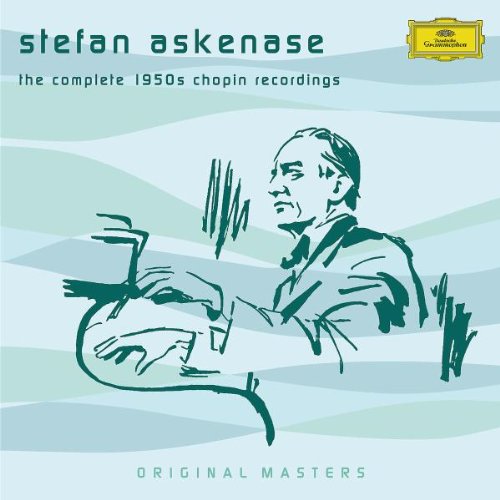
  • Audio Note Japan M7 Line Although the sound is similar to my later Kondo M7 (described here), it is not quite the same. In this older M7, the "silvery" treble is still there, but less pronounced, reinforced by a somewhat warmer midrange (some may prefer this). My later unit is on loan to a friend so I cannot yet do an A/B comparison. Phono This being a used unit, the 6072 tubes are a bit noisy. Using Stefan Ashkenase's excellent performance of Chopin's Piano Concerto No. 2, which I happen to have on both LP and CD, the LP just mercilessly killed the CD. Don't forget the 47 Labs digitals cost many times more than the Pro-ject analog rig! Part of this is the intrinsic superiority of analog, but the gulf is so wide that one has to conclude that this phono section is of the utmost quality.

  • Kondo Ongaku as Integrated and Audio Note M7 + Kondo Ongaku In My Kondo System, Part III I detailed the difference between using the Ongaku as an integrated amp and as an amp with the M7 as preamp. That was in my old house, with Tannoy Canterbury HE. At the time, I found it a toss up. Then, in the smaller abode, configurations changed several times. First: Ongaku + M7 and TAD Long before this evaluation, from 2012 to 2014, I had actually tried both ways with the TAD TSM-2201 (see above). I briefly chronicled it near the end of this sprawling article, although I failed to mention that this time around adding the M7 as preamp was better than using the Ongaku as integrated (too bad too that I had accidentally deleted the pics - will have to restore them later). Then in 2014 I had to reconfigure the system to: Ongaku as Integrated due to lack of space on top of the now erect shelves for the Kondo M7 (article here, showing the KEF LS50 used at the time). During this period, I traded the KEF LS50 towards the 47 Labs 4737 (R pic; click to enlarge). Then in late 2016, after I acquired the Audio Note M7, the system became Ongaku + M7 and Loudspeaker Rotation With the more inefficient small loudspeakers, there is no question that the addition of the Audio Note M7 injects significantly more vitality into the system. The sound improved to the extent that I decided to test out all the small loudspeakers I have.
  • Effect of Loudspeakers Placed High Up The shelves are the IKEA Kallax. When prostrate (30.375") the height is quite suitable for placing bookshelf loudspeakers. However, when used erect (57.875") the shelves are too tall for a sitting person. The resulting sound would have 1) less bass; 2) a leaner balance; 3) soundstage and imaging that are a bit too high up (which is better than too low, like the ESL-57). These drawbacks can be minimized, but not erased, by listening standing up and further away. Tilting the loudspeakers forward can lower the height a little too, but not by much. More effective would be to have the loudspeakers one shelf lower (except for the TAD), but I have yet to try that. The higher position I reckon also has the advantage of a little less boundary effect. As we know, many audiophiles are anal-rententive when it comes to the listening position, imaging and soundstage, and will sneer at this kind of setup. While I am not against those values, in general I want to be able to listen to my system no matter where I am in the room - a well dispersed rather than a narrowly focused sound (ESL being an example of the latter), which all my systems can do. Addendum Feb 2017: As of Feb 2017, I now have the speakers (currently LS3/5A) "upside down", that is with the tweeter beneath the woofer. This brings the tweeters down by at least 6 inches. The result is quite remarkable. Even though the tweeters are still way above "ear-level", they seem to have entered a "comfort zone". The imaging is bigger and more natural, the panorama wider and closer to the real experience. Most noticeably, big orchestral pieces seem more at ease, and I find myself playing a lot more Bruckner and Mahler. With the woofers higher, there is less bass and cabinet resonance (see below) and the subwoofers need to be turned a little higher up in volume and crossover point, easily achieved. Marvelous!
  • Isolation/Cabinet Resonance As the shelves are not the sturdiest and as the loudspeakers sit on the same surface as the electronics, one can expect some resonance. However, since the loudspeakers have small woofers, except for the larger and fuller bass of the KEF LS50 (a large rear-port too) I did not hear much resonance/smearing. Nonetheless, I inserted slabs of industrial absorbers (gift of wss) underneath the loudspeakers. The effect is not as audible as under my Yamaha NS-1000M, leading me to think these work better for low bass, which most bookshelves lack. The 47 Labs transport has its own isolation platform, whereas the Kondo Ongaku is too heavy for devices. Underneath each of the three pointed feet of the Pro-ject turntable I put a small slab of Japanese made gel-like polymer (which they place under items to prevent sliding; sold in home stores in HK). Here I'd like to mention the lower shelf again. The LS3/5A (side panel separated from bookshelf wall; base decoupled a little with small crumbs of egg carton) has a little more audible resonance here than when on the top shelf, BUT the resonance is benign, indeed beneficial, as it actually re-inforces the bass, making the loudspeakers seem a little larger. One is reminded of the BBC and LS3/5A cabinet design principals of not using very thick (real wood, not MDF) panels and letting the enclosure "breathe". I have long been a fan of classic BBC design, and all in all think the IKEA shelves work remarkably well. My friend jules came by and without prompting thought the same thing. There are audiophiles who are fanatical about "isolation" but my experience is that in most cases they tweak away most of the music. Don't try to control everything, you can't; instead only concentrate on the harmful (meaning "audible") resonances. Heresy? So be it.
  • TAD TSM-2201 Despite having the largest woofer in the group, placed high up and used upright, the TSM-2201's sound lacks heft, and is indeed a little lean, more so than previously (see above). Reflective of the spec's, at the same volume setting, the 2201 actually plays a little louder, but that is no indication of true efficiency, as the sound tightens up more than the others at higher volume, a sign that more power is needed. To a certain extent, this can be eased by lowering the volume of the Ongaku (10 o'clock, vs 11-12 o'clock for the others) and cranking up the volume of the M7. On the other hand, given its provenance as a monitor, it is no surprise that the sound is significantly more accurate than the others in the group, especially when it comes to classical music playback. It is also true that sealed box monitor designs usually sacrifice bass extension and weight for a flat bass response, not the case for all the others in this evaluation.
  • KEF LS50 This is based on memory. The LS50 and the TSM-2201 have by far the largest enclosures in the group, yet the LS50's are easier to drive and their smaller 5.25" woofers, aided by rear ports and higher impedance, pumps out a lot more bass than the TSM-2201's (8" woofers). Sound was good but, with the rear ports really too close to the wall and the more prodigious bass, resonance was an audible problem. Too bad I could not have them in-room.
  • 47 Labs 4737 When I substituted these for the LS50 I immediately got a cleaner sound, and they were what I used for this system until well after I got the Audio Note M7. Coherence was a given (this is a fullrange) and there was no audible box coloration. Rhythm and pace were very good too. Bass weight and extension were surprisingly good. As the dagogo reviewer noted, treble is on the smooth side, but that is no problem with the Kondo system. They however don't play as loud as the Pioneer's (see below).
  • Pioneer S-A4SPT-PM and -VP As soon as these replaced the 4737's I knew I was onto something. -PM The sound immediately opened up. The soundstage is large and airy. Macrodynamics was very impressive for such small sizes! Extension at both frequency extremes were very satisfying. Although these are reasonably neutral transducers, the TAD TSM-2201's rendering of instrumental timber and microdynamics are better still. Also, rhythm and pace tend to be a trifle literal. Nonetheless, overall they are very satisfying. -VP In comparison with the -PM, the -VP has even better bass extension and perhaps neutrality. However, after listening to a lot of music, I found myself missing something. It took me  a while to point my finger at it: despite its hifi virtues, I was not enjoying the -VP as much as the more loose-limbed -PM! Then I tried out the -VP on my desktop with Micromega MyAmp. Bingo, with its excellent bass weight and extension, it makes the perfect desktop loudspeaker! It is staying in the study.
  • LS3/5A While the KEF 11 ohm is a little sharper than the Rogers 15 ohm, goes a little deeper in the bass and plays a bit louder, the difference is not that great (less than between the 2 Pioneer's). The real surprise (actually not) is that the Kondo system drove them very well (contrast this to the 86 db TAD). Neutrality is as good as any in the midband, less so in the treble and midbass (the famous hump). They resolve more than the Pioneer's, but less than the TAD TSM-2201. Its rhythm and pace is good but transient response is a trifle slower. Dynamically it is just as good as the Pioneer's. But what really catapults it to the top is a hard to define engaging quality, an ability to involve the listener.
  • JBL Subwoofer Encouraged by the dynamic result of the Pioneer's, I thought of adding a subwoofer to augment the bass. As these bookshelf speakers all do not go very low, for the Crossover Frequency I usually start at roughly at 75 or so (there are only indications for 50, 100 and 150) and work my way up. For this group, frequently the best sound is around 100Hz (I usually prefer higher to lower; some others the other way). Then I'd set the volume. Usually just a small turn (say, turning from starting point 7 to 8 or 9 O'clock) will suffice. Sometimes I needed to go back and forth a couple of times between volume and crossover frequency to achieve the best result. When properly dialed in: 1) I don't "hear" the subwoofer, but 2) I know it is working if the orchestral bass is suitably (but not overly) reinforced (maintaining the right timber); 3) the lower pitched instruments gain body, and this help to lower the soundstage and imaging a little. If I put my fingers on the subwoofer driver, it vibrates very little, but the effect, on music like Messiaen's Turagalila, is astonishingly big. Now, besides chamber music, which the Kondo system has always played beautifully, I play this piece, and my favorite Mahler and Bruckner, with sufficient satisfaction that my other rig with the big Yamaha's are getting less play.
Observations/Conclusions
  • Audio Note M7 + Kondo Ongaku As mentioned, in contrast to my experience in my old house and with my large 15" 8 ohm Tannoy Canterbury HE (here), with the more inefficient small loudspeakers, there is no question that the addition of the Audio Note M7 injects significantly more vitality into the system. This is because 1) compared to the 96 db Tannoy, the small loudspeakers are 10-14 db less efficient; 2) the Tannoy has a much larger woofer that gives heft, and the smaller loudspeakers are placed high up. Although addition of the subwoofer helps a long way, it does not a 15" woofer make; 3) driving power of the Ongaku is limited. Gain/Volume Used as an amp, the volume setting of the Ongaku is critical to the sound, and it varies with the loudspeaker used. With the hardest-to-drive TAD TSM-2201 (despite its 86 db spec being the highest in the group), which tense up when cranked up, the volume setting of the Ongaku is the lowest in the group. All the others more or less have the same higher setting. The process of employing the Gain and Volume is similar to using them in preamps that have both (think some vintage ARC and MFA preamps). Loudspeaker Impedance Based on the next entry, I think it is fair to deduce that the tubed Ongaku prefers higher impedances. Loudspeaker Efficiency It goes without saying that the Ongaku is best used with loudspeakers of as high efficiency as possible. I'd love to match it one day with my 104 db YL horns. I am sure that would completely outstrip Tannoy, not to mention the likes of Avantgarde.
  • 47 Labs 4737 In this system, the overall performance of the 4737 (4 ohm), although very good, lags behind the Pioneer's (6 ohm) and LS3/5A's (11 and 15 ohm). I have to mention that I do think they sound better with its original mate, the solid state 47 Labs Gaincard (maybe a future report; this is in keeping with the dagogo review cited above, which prefers solid state to tubes). The 4 ohm impedance is harder to drive with tubes (same for the 4-ohm TAD TSM-2201; and remember 47 Labs is NOT a tube company). 
  • Pioneer S-A4SPT-PM and -VP The dynamically loose-limbed performance of the -PM is an absolute delight. In this system, dynamically it trumps the LS3/5A but its overall performance suffered just a little because of its somewhat literal rhythm and pace. That is still better than the over-controlled -VP, which I think is better for solid state.
  • LS3/5A More than any of its rivals, the virtues of the LS3/5A are many and more evenly distributed, and its faults are minor. As mentioned, the real surprise is that the Kondo system drove them very well (not the case with even more flea powered SET's). Its 82 db sensitivity is the lowest in the group, but it is audibly just as efficient as the others. Although it needs enough watts, the impedance curve of the LS3/5A is benign and it is not a current-hungry transducer (see JA's measurements in this mega-article in Stereophile).
  • Subwoofer Many audiophiles like to have a sacred cow to hold on to. Count among this group LS3/5A worshippers; ESL and ribbon die-hards; Shun Mook sect, the list goes on...most of these people would never use a subwoofer, because it would "corrupt" the "purity" of what they worship. Bag of nonsense. In my opinion, in audio the only that matters is the end resultThe serious classical music listener needs to have the lower octaves, and with smaller loudspeakers, the subwoofer, properly implemented, is a necessity. But care is needed. I'm not saying adding a subwoofer is an art, because it is not; but it'd be wrong if one wants to "clearly hear" the subwoofer - rather, one wants to "feel" it. Less is more.
  • How Good Is it? I am not the one to say, but I will tell you my classical music friends jules and Seng (you have met them before; or you can search my Blog) both highly approve of the system (with subwoofer on). It won't on all fronts beat the WE/Yamaha setup, but at least it is on a more equal footing, with virtues its own. What I can say is, even with my humble bookshelves, I think I am getting more out of Kondo than I have ever gotten, and more than some other similar Kondo systems that I have heard. YMMV.
  • What's Next? Of course, I'd love to have my shelves prostrate (lower) again, but that would take some time. Meanwhile, I intend to test out my Pioneer SP-BS21-LR (Andrew Jones design), Yamaha NS-10 and Dayton Audio B652 (I will take a pair back to HK). With the subwoofer entrenched in the system, it would prove very interesting!
Postlude: A Reader's Question I was asked: "...if possible I would like to hear how you came to obtain such a prized 'holy grail' audio component as the legendary Ongaku? I know your blog is geared towards the more affordable spectrum and "bargains", so seeing the Ongaku in your set up always made me curious to how and when you acquired it..."

Difficult Question to Answer Actually I don't spend big money easily, though my Western Electric stuff are even more expensive than Kondo. Well, curiosity got the best of me, perhaps. That would be the simplest answer.

In reality, it is not a good piece to own. In many ways, Kondo does not reveal its secrets easily, and I have heard some suboptimal Kondo setups, including dealers and sometimes my own. This led people, including some friends, to want to find any excuse to put Kondo down. Of course, many SET amps face this too, as they are immediately disadvantaged by their low power. It is also true that much cheaper SET amps, like Wavac and Verdier, not to mention even cheaper Sun Audio, deliver much more performance for the buck. Kondo is definitely of low C/P ratio, though not because of its performance, but because of its price. Kondo's unique virtues are unfortunately of subtle nature, not easily revealed to the casual, not to mention the skeptical, listener. I kinda agree with what someone said this about Kondo: "...The Kondo sound is not the most dynamic, it is not the most accurate, nor is it the most realistic sound which I have heard. Yet, there is something very seductive about the Kondo sound that once it gets into your head, you will have a very hard time getting it out..." (from dagogo).

As expensive and coveted as it may be, Kondo is in some practical ways actually both hifi and ANTI-hifi. It silvery nature can be "hifi" sounding - too bright if matched with the wrong ancillaries. Its "anti-hifi" nature is that it doesn't really go well with much of modern "revealing" hifi equipment; also, playing every loud and dynamic hifi discs to impress the crowd is also not its virtue. In my opinion some Kondo systems are ruined by not realizing this dual nature. Rather, Kondo will reward those with an intimate connection to the myriad and subtle aspects of music (same case for Western Electric, and there are many bad setups too).

Another interesting thing is, as "legendary" as Kondo may be, aside from show reports, there is really not much written about them (in English). Maybe I bought Kondo just to contribute to the literature! :-) Question answered?