Showing posts with label CAS. Show all posts

04 August, 2014

My Systems: Significant Updates

The Yumcha Diaries 飲茶後記 : 02-08-2014: A day with  feikeung
My Systems: Significant Updates

Saturday was a wonderful day. I started by visiting Wo Sir Sir (WSS) to hear his Quad 2812 (see previous article). Then WSS and I went to yumcha, where we were joined by Ah So, trazom and jules (owner of the 2905). But the real surprise was the unannounced appearance of old friend feikeung, aka on9keung, who lives mostly in nearby SZ.

After yumcha, WSS, feikeung and I went to Elephant Holdings. In their wonderful and comfortable large showroom (pic here, but it's even classier with the blinds up) we auditioned Audio Note's flagship AN-E Sogon driven by Einstein electronics. Sound lacked presence and was a little too polite for my taste. I thank Eddie for his hospitality.

Afterwards, feikeung came to my humble home. Over a bottle of wine, we talked about the world while auditioning my humble systems. I shall take this opportunity to update information about the systems in my "new" home, which has changed in the past year.

System A
This has undergone a lot of change since I last wrote about it (here). Most significantly, I no longer have the luxury of placing the loudspeakers on stands. They are on the wood table now. Normally the system consists of:

CD Transport: Sony BDP-S190
DAC: Arcam rDAC (CAS through dongle)
Preamp: Kondo M7
Amp: Western Electric 124B (original)
Speakers: Yamaha NS-1000


But on this occasion the preamp is the very rare self-powered Brook Model 7 monoblock preamps, recently restored by a dear friend. The fleshy sound has great presence and excellent timing. How wonderful to discover new things in every CD we played!  I am writing a a bigger article on this preamp; watch this space.

On the Yamaha NS-1000: thus placed, they still sound very good. These speakers image so well that the soundstage clearly extends to behind the LCD TV. But when played loud, they have a little too much bass resonance (exciting the wood underneath). I improved things by changing the DAC to the Arcam rDAC (review to come too), which seems a perfect fit. On this occasion, the bass control knob of the Brook 7 works really well. feikeung is a picky man, but he liked the system.

System B and System C
Compared to its original configuration (here) System B has undergone changes no less drastic than System A. The bookcases are now vertical rather than horizontal. System as it is now:

CDP: Revox A730
CD transport: Sony DVP-PR50P
DAC: Micromega MyDAC
(Integrated) Amp: Kondo Ongaku
Speakers: KEF LS50


On that night, performance was so-so, but for some reason, the next day sound was excellent! You will hear more about this later in a cable test.

You will note below System B I added a System C for quick listening. It uses the same Sony player's analog out (not bad). The small Cyrus amp is convenient and I actually listen to this system more than to the others:

CDP: Sony DVP-PR50P
Integrated Amp: Mission Cyrus I
Speakers: Harbeth LS3/5A (15 ohm, single wire)


Sound? It is not the best I could do with the LS3/5A, but it is pretty good ! feikeung liked it.

Desktop
Basically I swapped out the LS-50 for the TAD TSM-2201:

CAS: Dell/Windows 7/iTunes/AIFF/USB
Amp: Dared MP5
Speakers: TAD TSM-2201

Sound in this setting is quite similar to before (described here).

21 November, 2010

Home Visit: ARC + Magnepan

Home Visit: ARC + Magnepan

(Written mostly at the Incheon airport when I was returning to the US, but finished in NYC)

You shall remember sowk, whose nice setup I visited sometime ago. Just recently, he became interested in a pair of Adams speakers and we talked. I said if he likes ribbon tweeters why not consider Magnepan, cheaper and most likely better? Imagine my surprise why hardly a week passed and he already had a pair of MG12 in his house. I was very glad sowk was instantly smitten by the sound of the Maggies and said he came to this brand "too late". Well, it's never too late...

The equipment was largely the same as my previous visit. The ARC LS26 is now gone. He bought another LS5 Mk III (the black one), and his nephew added power supply caps in the black box below. sowk also took out his unused AQVOX DAC, for which he bought a Stello transport. Since the AQVOX supports USB, at my prompting he installed iTunes (easiest) the night before and we also experimented with a little CAS. Gears used as of the visit (I understand the CAS stuff is changing fast):

Digital:
--Stello transport to AQVOX DAC
--Meridian 508.24
--CAS-Windows 7-iTunes-USB out to AQVOX
Preamp: ARC LS5MkIII with power supply cap mod
Amp: ARC V70
Speakers: Magnepan MG-12
Connection all balanced.

The MG12 proved ideal for the room. After moving the Maggies out by more than a foot, we were instantly impressed by the clear and refined sound emerging from the setup. Once again ARC proves a wonderful match and the V70 had more than enough juice for even the biggest moments. In terms of overall balance, despite the newness of the Maggies this particular setup moves to the front rank of the Maggies I have heard. Need I say more...

For CD playback, we were quite impressed by the neutrality and evenhandedness of the brand new AQVOX. For the balanced and USB facility and upsampling ability, I think it's a good buy. Most of us prefer the upsampling OFF. However, for overall impression, com-buddy and I think the Meridian one-box still convincingly edges out the separates in musicality and fleshy tonal allure.

As for the simple CAS USB setup, the sound of the 44.1 lossless AIFF and WAV files were quite reasonable, but not quite as good as playing a CD. Again, I have heard quite a bit of CAS, even outrageously expensive setups, and NONE can outperform conventional digital playback of quality. I won't even mention vinyl.

02 October, 2010

Home Visits: Saba + Lenco +CAS

Home Visits: Saba + Lenco +CAS

Highly recommended: Vash's own Blog; Lenco Heaven

One fine day recently I called Vash and spontaneously arranged to visit him, primarily to listen to the Saba speaker and Lenco TT and Decca cartridge. Vash is a naughty fellow who experiments with all sorts of gears and DIY at a high level. This time the gears have changed a lot from my previous visit, and luckily I remembered to take my camera. The analogue setup and amplification are relatively simple:

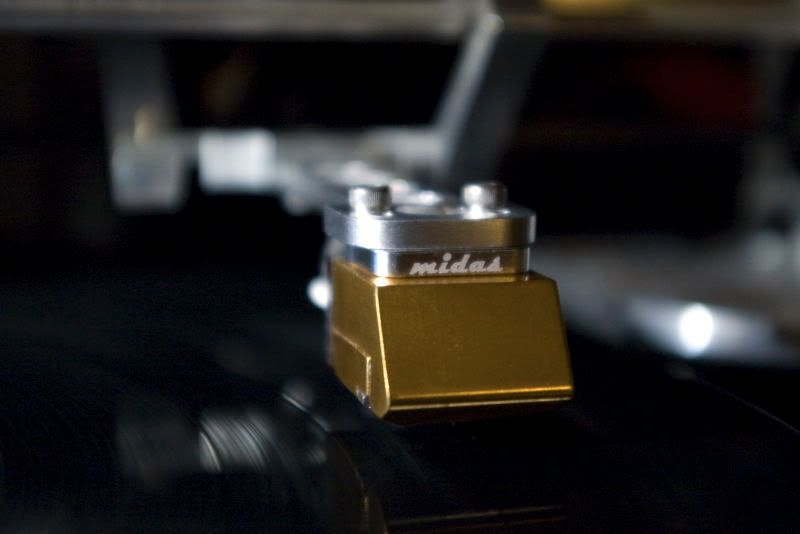
TT - Lenco-Daiwok L75TT + Trans-Fi Terminator Tonearm (air-pump) + London/Decca Jubilee (with Daiwok's branded accessories 'Midas Touch' sandwiched between head-shell and cartridge).
Phono - DACT CT100 (Battery powered)
Preamp - Restek Consens
Power amp - VTL ST-150 (2008 version)
Speakers - Saba Reso with Siemens tweeter (first order crossover)(The article on assemblage of the Saba Reso in Vash's Blog is highly entertaining)

The elaborate and eclectic Digital setups merit a little description:

The main DAC used is - Lavry Blue 4496 with 3 cards to accept 3 inputs. Obviously this accepts up to 96 only.
For regular CD replay: Meridian 500 + 518 as source
For CAS: Firewire interface into Weiss converter
For some CDs - Tandberg 14-bit player direct analogue out
For HDCD - Audio Alchemy DDE 1.2 DAC is used
For SACD - dCS p8i

I stayed about one hour and listened to almost every combination. I must say the Saba Reso speakers, which I first heard so impressively at the home of Daiwok (tugged into corners), revealed even more of its potential this time when placed freely in the middle of the room. Needless to say, simple chamber music and cello solo were magnificently rendered, sounding dynamically close to uncompressed. The leading edge of Starker's cello was fast and lively, with no overhang; crescendos were for once completely natural and unforced, and all these I attribute partly to the speakers and partly the Decca cartridge/TT combo. Here the effect for my taste surpassed the Magnepan 1.6 I heard last time (and that was very good already). Even large symphonic works were delivered eminently satisfactorily. Whatever the simple speakers were missing in terms of ultimate composure and magnitude they were compensated by a superb fluidity and naturalness. The VTL 150 is a lot of power for these speakers but they seem to take it well enough.

One reason I enjoy visiting Vash is because of the balance he strikes between various media. Analogue and digital playbacks both sound balanced. And we could enjoy the various digital technology. I appreciate that he recognizes the achievement of some early players. Here's a man who chases after the newest hi-res files but can also hear the goodness of some old players. This is in stark contrast with many modern CAS people, who have very little experience with analogue or older technology, and that makes their preaching highly dubious (indeed there is a lot of commercial interest behind these things).

07 September, 2010

Home Visits: TAD and Rey Audio

Home Visits: TAD and Rey Audio

It's time to tie up some loose ends, and write up a few recent visits. Foremost is a wonderful Rey Audio setup.

Part I. Rey is King (in Spanish it is)
Sometime ago thanks to icefox I had the fortune of visiting andyhkw (aka 富貴, I believe) at his Tsuen Wan loft. He had recently finished re-arranging his gears. That's no mean feat, as he had rotated all equipment 90 degrees to another wall, and his main speakers weigh several hundred pounds, each! Andy's setup is relatively simple (but hugely costly):

Digital: EMT 986 (hard disc player). Delicious!
Analogue: EMT 948
Preamp: ARC Reference 3
Amp: MC2 MC-1250
Speakers: PMC MB2i and huge Rey Audio (RM7)

First we auditioned the PMC in front. Previously, with lesser PMCs I have always been bothered by bass that seemed a little lagging behind, which I attributed to the transmission line designs. Not so this time. This was true monitor sound, tonally accurate, well integrated and dynamic. Rock and pop recordings were fast and highly exciting. Overall, in this large room, bass was still just a shade lean. Moving the seat up a foot or so produced better defined bass and even extension. I suspect a little room mode at work here. Still, a highly commendable setup.

With great expectation we moved on to the double-15" woofer Rey Audio. It was a revelation when the first bass notes of a classical piece came in and we just FELT it. A clarification is in order, it was classical music at low volume, so this was not what's commonly referred to as 褲管震 of the rock-JBL kind; rather it was a sensation of feeling a distant rumble, of feeling THREAT, of feeling atmosphere. There's no better attribute to the quality of a system if one has this feeling during listening (this is not something you'll ever feel with Maggies, e.g., no matter what their other attributes are). The Rey's were almost completely blocked by the PMCs, darker and likely less neutral, yet the sound had tremendous authority and the presence of live music.

A note here on the equipment. Once again it upheld my belief that a good tube preamp matched with a solid state amp frequently is a simple and effective solution for speakers that demand power (both in this case). I'd also like to note that, although I have long been an ARC fan, previously I had not been impressed by the ARC Ref3, even suspecting it of lack of dynamics. It's all in the implementation after all. It should also be mentioned that both digital and analogue replay were very balanced and tonally similar, as it should be in a good system.

Now, we have here not just a highly commendable setup but an awesome system. In many ways, I think it even gives Alansoo's wonderful (and complex) so-called "TAD2401" system (now more and more of a Goto system) a run for its money? Competition is healthy! :-)

Part II. A Tale of Two TADs
Of the huge number of hifi systems in 錦繡花園 there are two that I know quite well, those of the 2 gentleman in the picture. Both use TADs with tubes but their approaches differ greatly.

On this day we all met up and by chance talked about approaches. Although they looked to be of similar vein, Andy on the right always claimed his hearing has been compromised and builds his system upon high frequency air and treble performance; Simon on the other hand, craves warmth and smoothness, preferring to build upon a solid bass.

A tad sharp?
In a previous visit to Andy he was using the stock TAD 3401. Since then a lot has happened. He acquired 2 adjacent houses and crafted new spaces out of them. In the new house, the listening room is a lot larger than previously, though still kind of squarish. I have visited this place several times.

Now he is using a pseudo-2402, in that the treble-midrange driver with its original horn is placed out of the box, on top of an aftermarket cabinet that houses the woofer. For reasons of symmetry and bass performance, Andy placed the speakers almost right against the wall. Gears:

Analogue: Clearaudio YKW (the unmentionable you-know-what); Goldfinger
Digital: MacIntosh-Amarra-Firewire; Weiss Firewire-XLR converter+professional DAC
Amplification: Kondo step-up, M7 phono, M7 preamp, Ongaku

We listened mostly to vinyl. The sound of the TAD is now very crisp and sharp, and there is a lot more bass to be had than in the old room. This marks a big step-up from his old house. In case you wonder, yes, the Kondo system drives the TADs quite well. It showcases hifi recordings quite well but falls down a little on mellower classical material. Nonetheless, it is frequently exciting and never ear-grating, though at times one is aware of an "anal" control, a refusal to let loose. Presence is quite good with the right material. The TT has recently been upgraded. Sound is very dynamic, with black background, but I am still bothered by its lack of rhythmic elan. I remain unmoved by this Clearaudio.

I should mention that the crossover in the picture is newly developed by our friend tubediyer. I have listened to the original crossover and can attest that this DIY one maintains the tonal balance while improving on details and perhaps transients. I understand our friend wadia is also trying one out (for his Rey Audio) to great satisfaction.

Andy in the last 2 years has completely gravitated to CAS. Previously he was using iPod/iTransport, but now that has been replaced by the full system detailed above. This is probably the most expensive CAS system I have encountered. On a previous visit I listened to it in detail. I was quite disturbed by a glassy sound. Replacement of the Nordost XLR by a Kimber immediately ameliorated the situation. This shows other hifi parameters are still important in the digital domain, and one can EASILY trip up.

Am I impressed by the very expensive Weiss? the answer is NO. It does not equate a good CDP, not to say trailing far far behind vinyl. My view on CAS remains: have fun on the cheap, and forget about all the bullshit of delivering the best. That's only sales talk cleverly crafted by certain "experts", who have been wrong again and again on the path of digitals.

A tad smooth?
For some reason, previously I have only briefly treated Simon's system in these pages. His has always been a musical system. 300B driving TAD of course is a challenge, and Simon has steadily improved his system's driving ability. System now:

Analogue: Verdier La Platine-Boyer arm-EMT cartridge
Preamp: Shindo Giscours (using WE349a)
Amp: Shindo 300B monoblocks using old stock WE300B
Speakers: TAD 2402

Compared to the previous visit, the system certainly gained in dynamics while remaining highly musical. I asked him what he did. He said the only changes were the tonearm and cartridge, plus a little tube rolling.

I have always treasured some of the very fine sound coming out of the WE tubes in this system. That's not for mere mortals to savor, perhaps even know...:-) More power to him.

31 July, 2010

Brief Review: Audioengine 2 Desktop Speakers

Review: Audioengine 2 Desktop Speakers
How complicated should your computer setup be?

(more pics)

It is amazing how complicated CAS (computer as server) has become. It is also amazing how younger people are flocking to it, attracted by the promise of perfect (well, high) resolution. I'd not say they are ignorant, nor completely misguided. But they are certainly historically ill-informed. Why? Read on.

I have been using this pair of Audioengine 2's, the smallest of the range, for quite some time. Previously I have written that I prefer not to listen to CDs near-field in the study (link), but to link the computer to the system in my study is work over distance, and I finally decided on a pair of small active speakers for listening to my iTunes library and internet radio in the study, and I chose Audioengine. Under a promo, I got them for US$180, shipping included.

I was not going to write about this humble setup, but yesterday I visited TST Fortress and listened to an expensive "desktop" setup using Weiss and active Dynaudio. I didn't dedicate time to the active speakers, my mission being earphone listening. But the active Dynaudio's are big and first impression was it was just not for me (granted I have never taken to Dynaudio's sound).

This review is going to be brief. I basically agree with everything in the review in Stereophile. It's a very good and detailed review that does full justice to these remarkable speakers. But if you're in a hurry, I'll just quote the conclusion, which I fully agree with:

"...I have never been more impressed with or more stunned by a component I've reviewed for Stereophile than I was with the Audioengine 2. The level of sound quality produced by this uncolored, detailed, articulate, and dynamic speaker, in all situations, was beyond reproach, and its ratio of value to cost borders on the criminal. It extended my enjoyment of music into a new realm of portability that I hadn't before thought possible. I can't think of a single reason why every reader of this magazine should not go out right now and buy a pair of Audioengine 2s. I couldn't decide which finish I liked better, the white or the black. I bought a pair of each..."

On my desktop, there is a reasonable soundstage, neutral, fleshy, focused sound with good rhythm and pace. The bass is tuneful and just right. Like the reviewer, I never felt I need a subwoofer. Note the tweeter has neodynium magnet and the woofer is kevlar. And all this with the "chicken" speaker and interconnect cable supplied, connected to my computer's regular analogue out (no, I don't have a special soundcard). I don't even feel the urge to upgrade my connection. But I shall experiment with the computer out when I have time. Maybe use a USB out via the HRT Music Streamer.

In case you wonder, in NYC I did just as the Stereophile reviewer did and tried the A2's out in the main listening room on 28" stands. The sound was simply amazing.

Highly recommended. I didn't buy my pair in HK, but I see there's a distributor in HK (click "home theater", then "speaker").

p.s. For why "historically ill-informed", please wait for the next articles.

17 July, 2010

The Yumcha Diaries 飲茶後記: 17-07-10 (Bauer, Avantgarde, AMR, Kondo, Kiso)

The Yumcha Diaries 飲茶後記: 17-07-10

The Oz Connection
JC was back in town on this day. It was also nice to see classicalkan and his cute boy. They are due in Australia in August and we look forward to his report on JC's current system. As it was a rainy day we decided to postpone our planned visit to hear tubdiyer's 4343.

David and Goliath
After yumcha the seven of us went to Avantgarde Hong Kong. When we arrived there was a large crowd of mixed sex in the main listening room auditioning 第一鼓. Sales manager Jeff Yip ushered us into the smaller room, where we spent time with an expensive small system:

Digital: Weiss (I think Jason/Medea)
Preamp and Amp: Kondo M7 + Souga (2A3 PSE)
Speakers: Kiso Acoustics HB-1

Tell you one funny thing. As I was writing I googled "Kondo Souga" hoping to find more info or a link for you. Guess what popped up first? MY brief audition of Souga at another dealer!

Well, the sound of Souga was much better this time, for sure. At $130K the small Kiso speakers had better be good! And they were, as driven by these expensive electronics. The violin was a little artificial paradoxically, but that may be Eugene Fodor. A Japanese jazz CD was well rendered, with snappy timing, crisp piano and serviceable bass (let's not exaggerate that it's a big speaker).

The Kiso are certainly not the first to use resonating cabinets of thin wood that simulate musical instruments. Not even Ocellia was there first. According to daiwok, the concept has long been in existence. If you can accommodate larger speakers and are handy, you might want to follow daiwok's footstep and assemble the Saba Reso (see also here). I have auditioned the Saba Reso at daiwok's place, and they were phenomenal; I had never heard Starker's Bach to better advantage. All at a tiny fraction of the price of the Kiso, and you get more bass, a lot more. But that's for another article.

When the rival gang left, we moved into the main room and auditioned the large system. Here, the "director" Edward Choung took over:

Digital: AMR CD-777
Preamp + Amp: Kondo M77 + Gakuoh (300B PP)
Speakers: Avantgarde Duo Grosso

We listened mostly to CDs. The sound was reasonably good, especially behind the desk. My impression is that the Duo Grosso is better than the regular Duo that I had listened to in the past, and it had better be given the extra cost. Mr Choung was an enthusiastic personality(at times almost overly so), tirelessly explaining to us facets of the gears in use, especially since we were unfamiliar with the AMR brand.

Another chip on the shoulder
The AMR's look aroused suspicion in us about its origins. It's a British company but the look of the machine somehow had something Chinese about it. The pompous English on the official website was not reassuring either. My ears perked up when Mr Choung alleged it used the 16-bit chip. At the time, in the unfamiliar surroundings I could not really assess the performance level. Back at home, I read its website and the reviews. I was surprised to read in the 6moons review that Thorsten Loesch, who used to be active in my cheaptubeaudio Yahoo group, and whom I respect as a technocrat, may have something to do with it (at least with its progenitor CD77)! So it IS a bona fide UK company after all...

The multi-bit chipset used is actually the Philips UDA1305AT, a chip new to me and believe me, I have heard my share of CD players with all kinds of chips. Now, THAT's interesting and I am glad! I urge you to give it a listen. Old technology, new implementatio, and I admire a company that does that. Official gibberish here:

"...At the heart of the CD-777 Processor is AMR’s ‘continuous calibration’ Multibit Digital-to-Analogue Converter circuit using the Philips UDA1305AT Multibit Chipset. This is the first time this New Old Stock chipset has been used in a CD source and is worthy of the title “son” to the “King of Multibit” Philips TDA1541A chipset used in the multi-award winning CD-77. With AMR’s understanding of digital design down to the silicon die-level, the sonic performance of this “Prince of Multibit” chipset has been taken beyond the textbook limit. Producing visceral music that other mega-buck CD players cannot match, it must be heard to be believed. Along with AMR’s OptiSample, the CD-77 boasts full remote control of all sampling modes: Direct Mastering (AMR’s custom Non-Oversampling), Oversampling (2X, 4X) and Upsampling (96 kHz, 192 kHz)..."

"...The UDA1305AT is also superior to the TDA1543 and TDA1545. An added bonus is that this chipset has been off the radar and until now never been used before in a high-end CD player. Amongst its features are a continuous calibration concept, fast settling time to enable 2, 4 and 8 times oversampling (serial input), adjustable bias current for maximum dynamic range, internal timing and control circuits, I-squared-S bus input format (time multiplex, two’s complement, TTL up to 384KHz), no zero crossing distortion, low power consumption and low total harmonic distortion. Full-scale output is 2mA, THD at 0dB is -90dB, A-weighted S/N ratio is -101dB and current settling time to ±1 LSB 200ns..."

CAS vs CDP
Without even prompting Mr Choung showed us the CAS ability of the AMR. Using a netbook he played back downloaded high-res files and compared them with ripped files from CDs as well as the CD itself. Needless to say, the CD playback was superior.

Analogue is King
Since there were a plethora of turntables around, we asked to play an LP. Mr Chuong obliged and took quite a bit of time setting up the analogue setup:

-Feickert (Das Laufwerk Triple) turntable (tonearm not sure) with an Ortofon SPU Gold cartridge
-fed into an Ortofon SPU-T100 step-up transformer
-then into AMR PH-77 phonoamp.

He played a first-edition Take Five (red-label; 6-eyes). the sound instantly trumped the CD replay, but that was not all.

It's all about Curves!
Again, the spotlight was on the AMR PH-77. This unusual phonoamp is prodigiously equipped:

"...The PH-77 is the only phonograph source able to lay claim to exclusively feature a comprehensive catalogue of 23 equalisation (EQ) curves: every LP record can now be replayed using the one and only correct equalisation curve. This includes AMR's exclusive RIAA Direct Metal Mastering 'Curve' which transforms DMM records from being 'bright/edgy' to the life-like analogue recording that it always was.

This along with 8 levels of gain, 64 steps of load, 3 inputs for unprecedented flexibility in cartridge choice and matching and the onboard 24bit/96kHz Analogue-to-Digital converter, the PH-77 is undeniably one of the most significant reference phonograph sources ever produced..."

For sure, Take Five sounded better with the Columbia curve engaged. I don't recall another phonoamp as versatile as this one. Somewhat surprisingly, it lacks a phase switch. Mr Chuong's reply: "...I was told when the engineer records something in reversed phase, he has the effect in mind and it is supposed to be listened as it is..." Well, I'll take that with a grain of salt...

The last thing we asked for was to remove the step-up transformer and only use the MC phono section of the PH-77. Sound immediately flattened significantly, as predicted by Mr Chuong. Nonetheless, this is yet another interesting offering from this company, one that I shall watch intently from now on.

The showroom has a lot of TTs to look at. The Feikert line at least looks good. Nottingham I have no interest in at all. Of all the TTs, what interested me the most was the Bauer Audio DPS on silent display (read the HiFi+ review). The elegance of this particular sample from Jonathan Midgley was unfortunately visually disturbed, if not destroyed, by a hopeless marriage with a clutzy Triplanar.

While we were engaged in the main room, Mr Yip in the small room took the pains to show some video to classicalkan's little boy (so as to contain him?). We spent a lot of time there and I am really impressed by the service of the two gentlemen. Commendable indeed!

No, we don't carry this...
After that, we went to nearby Prestige HiFi because I wanted to take a look at the Thorens TD-309, which has been winning praise. Despite its reasonable cost and spunky look ( sassy to me, maybe ugly to you), it actually has many interesting design features (read the pdf file). I saw every Thorens deck (mostly ugly) except this one.

Sales: "...Sorry, we don't carry this..."
DJ: "Why?"
Sales: "...Nobody would be interested in HK..."
DJ: "...But I am! Can you get my a quote anyway?..."
Sales (after a call or two): "...sorry, we don't do this ah..."

So, even if you want one, the dealer refuses to get one for you. What kind of dealer is that? Thumbs down for Prestige Audio. This is the kind of dealer I dislike a lot.

Just an hour ago, Avantgarde HK told me they carry everything in the Ortofon catalogue, and Ortofon makes some very cheap cartridges and acessories. HiFiDuck sells the Concept, the lowest in the line of Clearaudio, for a good price. That's service.

We did not stay, not because of the turntable, but because the sound emanating from a Thorens TT was shockingly anemic, as if bled of all music.

27 December, 2009

The Yumcha Diaries: 26/12/09

Pics courtesy of oozz. Who's that genie in the bottle? Click to enlarge.

The Yumcha Diaries: 26/12/09

The older the better, and not just HiFi either

When people in HK speak of "holiday atmosphere", they usually mean large crowds and much commercial buzz. I rather think that just represents a glorified long weekend, and don't much take to it. The major holidays should rather be time spent with family (and good friends), preferably indoors (if space allows). In the West, on Christmas eve and day, or on Thanksgiving, the streets would be deserted. More than a decade ago, Chinese New Year finds HK in much the same way. Shops closed, few people on the streets. It's the desolation that brings the sense of holiday home. Now, it's money all the way, and one day is no different from another. That dilutes the holiday atmosphere for me.

Saturday felt a little like a real holiday. I guess many people were out of town, and Central was rather deserted. Add to this the cool weather and fog/smog and it even smelled of the end of the year. As usual for the end of major holidays, yumcha turnout was larger than usual. The eight of us struggled with the waitresses over the coupons that they peddle, but there was fun along the way. It was nice to gather with old friends.

Oozzing class, as always (previous visit here)

After yumcha, oozz had to yield to pressure from Captain and Hoi, who had never visited his new place. I am not kidding, the sound is further improved compared to just days ago. But that's the least we'd expect from him. As you know, many of us are admirers of his setup skills and golden ears. Some novelties this time:

--We spotted an Arcus Anniversary turntable oozz was setting up for our gourmet friend cat7. Given the price, it looks like a bargain. I'd try to give it a hearing later.

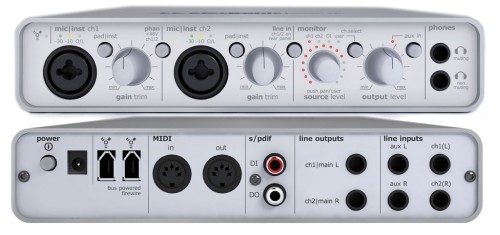
--oozz demonstrated for us his simple CAS. Using WAV file played on a small Firewire-enabled PC laptop via Foobar, fed into a lowly TC Electronics Konnekt 8 AD/DAC/Firewire interface (pictured). I personally think it's likely the best CAS I've heard yet. Given the very low cost of the DAC, I'd say give it a try if you have Firewire, or even if you don't (there's S/PDIF and optical too; no XLR). oozz said he had also briefly tried its AD section and the results on the few LPs he archived was encouraging. That's chock full of features for such a low cost thing!

--We marveled at the full metal jacket Gaggia Achille Espresso Machine. Unfortunately, it's not operational yet. Next time we visit, we demand espresso! I miss JC here.

After that, we all stopped by sokps' place. He generously let us break the seal on a 20+ year old bottle of Johnny Walker Red, which as you know is emphatically not the same thing as what passes for it now. Popular brands of scotch and brandy are now just ghosts of their former selves. Connoiseur of scotch oozz murmured to himself "tastes like single malt..." That just about said it all (though popular single malt is also not quite their former selves, but the downturn is not as severe). So, the older the better!

After that, we went for a very good dinner at the venerable 龍華 in 錦田. 燒鵝皮脆肉嫩,淡而有味; 小炒王沒多半點油,香口惹味; 炸生蚝酥脆, 肥而甜. Now, THAT is a rare good restaurant! Too bad no photos. After dessert, four fellows squeezed into my LR for an audition of my WAVAC system, for which I shall write a full report one of these days.

Happy Holidays to All!

Home Visits: Spendor SP-100 and DIY Fullrange

Home Visits: Spendor SP-100 and DIY Fullrange

Different ways, all money well spent

It's amazing to realize it has been exactly one and a half years since I started my Blog. The inaugural article was on Usher. The third article was a Spendor Overview and it's a delight to return to Spendor again here.

Click on pics to enlarge

Class A Bargain
A week ago I hooked up with icefox in 葵涌. After lunch at likely the busiest 茶餐厅 I have ever visited (where the waiters were literally running around) we spent some time listening to his SP-100. Previously, he was listening to the Maggie 3.5s. While he was awaiting servicing for the Maggies, icefox brought the Spendor SP-100s out and placed them in positions where they can be more advantageously heard. This just happened recently and so things have not settled down. At first sound was a little lugubrious and the bass was not too good. So we spent some time getting them into shape. Things have changed a bit from the previous visit. For this temporary setup:

-CAS: Mac mini + HD. iTunes/AIFF/mini Toslink into a set of recently acquired old DPA flagship (still not nearly as good as CDP playback).
-CDP, Preamp, Amp, speaker cables: Symphonic Line
-Speakers:Spendor SP100

-The first thing I noticed was that icefox in haste used a few strands of solid core copper (stripped from Pirelli power cables) threaded through the holes of the binding posts (SP-100 is Tri-wire) as jumpers. The cores are of rather high AWG (diameter) and he used many of them. Since my own experience is too many strands of solid core wires cannot be used in a cable without the risk of smearing the sound, we removed them and decreased the number of strands, using only 2 twisted together. Sound was immediately cleaner and bass became more agile.

-I noticed the single pair of speaker cables were inserted into the bass posts. I moved the (+) to the midrange post and left the (-) on the bass post. There was immediately more air. I don't always favor this kind of connection but it's system dependent.

-I know for a fact the SP-100, like most large speakers, respond to bi-wiring (few people would go to the extent of tri-wiring). In fact, IMHO this is a MUST for better control. I brought with me a set of twisted solid core jumpers (from salvaged old AQ cables) and hooked up the treble and midrange posts. icefox dug up some very long Gotham cables, 2 pairs of different construction and length (I think 50040 and 50150) and we installed them, the shorter pair on the bass units. the sound improved further, for me to an extent larger than the previous 2 maneuvers. Most importantly, sound was much more at ease, especially with classical showpieces. Bass smoothed out and, more importantly, now had a walking quality. Perhaps the cables had not been used for too long; sound was just a little slow for my taste, something that's not characteristic of Gotham.

-icefox finally remembered had had another pair of Symphonic Line speaker cables, loaned to him by oozz. Perfect! The two pairs were of identical length and the switch tightened up the sound a small notch.

-A very small degree of toe-in snapped images into better focus.

The speakers are really marvelous. They filled up the space in a way that the Maggie 3.5 could not begin to do. Sound is fast and smooth, dynamic as hell and responsive to all types of music. Properly set-up they put most super-expensive speakers of nowadays (unfortunately too many of them) to shame. Remember the SP-100 is an evergreen on Stereophile's Class A list. You should audition it.

In truth, I should mention that although SP-100 should be (tri) bi-wired for better control, this should not be taken as an indication that it's power-hungry. Just as importantly, the SP-100, like many good speakers (Maggie e.g.), does not need expensive amplification to sound its best. A good tube preamp and a cheap but resonably strong amp is already enough to bring you to nirvana.

Add a little here, a little there, all on the cheap
Then we visited neighborhood denizen welborne, another very old friend of mine. I was delighted to run into limage and Ken1967. It's a Monday, does any body work these days?

When I first knew Welborne in my Cheaptubeaudio days he was into tubes and all kinds of reasonably priced things, including fullrange speakers (Diatone), BBC monitors, SET amps etc. In recent years he has concentrated on T-amps and the like, but it seems his love for the fullrange has remained. His setup is, to say the least, most unusual. It's slightly different from when I last visited:

-Digital: Philips 963 into Promitheus (non-oversampling) DAC
-Amps: NuForce integrated for fullrange and tweeter; pre-out to electronic crossover to Virtue Audio T-amp for bass.
-Speakers: The calling card of the system. based on a (radio) SABA fullrange. I forgot the (super)tweeter. The bass is augmented by a huge professional Celestion unit. the "enclosure" is basically open-baffle.

welborne's has always managed good sound. The speakers are highly sensitive and likely present a benign loading curve (important for digital amps). The sound was layered and easy on the ears. I don't think even flea-powered T-amps would be taxed by the fullrange and tweeter. Compared to last time, sound was smoother but slightly lacking in fleshiness. Perhaps the crossover needs a little fine-tuning (I'm sure he's doing that all the time). Overall, however, the sound was quite musical. It's now from Cheaptubeaudio to CheapTaudio for welborne. Try to pay a visit and be amazed by what can be achieved for so little.

My view of T-amps in general
Texture always seems to be somewhat deficient; I think that's too much to ask from T-amps. Call me biased, T-amps and such likes always seem to me to have a one-dimensional and "papery" quality (for lack of a better word) in the sound. There can be a lot of it, or a little, but never completely absent. I'd not say "digital sound" because the better digitals (at least as source) sound satisfyingly fleshed out. And for a SE Triode man, harmonics and decay of T-amps are also not of the first rank. However, for the price and convenience (diminutive size) they are wonderful things.

20 December, 2009

HiFi Basics: What's the most important thing in HiFi?

HiFi Basics: What's the most important thing in HiFi? And, is there progress?

Technically, aside from the speakers, I'd regard what's at the front (source and preamp) more important than what follows. But really, the most important thing to Hifi comes from the heart. It's the love of music.

It perhaps matter not so much what genre of music one likes, as long as one is willing to explore and go in depth. There are people well versed in Rock & Roll, and Jazz, and as primarily a classical fan I admire and read what they write. Contrary to popular belief, it takes not much money to do this, but it takes effort. A case can be made that various free venues of exploring music, be it via the library or radio (easy these days because of the internet), or even the internet and youtube (sound limitation hardly detracts from greatness in music) is more fruitful than buying CDs on your own.

Unfortunately, most audiophiles spend way too much time listening to audiophile recordings and too little exploring music. Buying multiple versions (SACD, XRCD, LPCD, xxCD) of the same album just for the slight difference in sound effect can also be an overkill. While pursuing "higher fidelity" is inevitably part of the audiophile, when it comes to "progress" the subject is more complex than it seems. Every new technology has its own Archilles Heel, and it takes time to even just admit it.

Many years ago, long before the advent of R33 and imitators, mirroring elsewhere, in the HK forum Audioboard, there were lots of writing and debates on the "death" of CD, not to mention LP. The argument used the advent of DVD-A, SACD, as well as then-new "upsampling", 24/96 and even 24/192 on the horizon. Looking at it now, aided by the internet, while high-bit, high-sampling rate has finally raised their heads, DVD-A and SACD (let's not argue about their merits or de-merits) have largely fallen by the wayside, and many of the doomsayers have been proven wrong. The same people are again saying now the CD is dead, and downloading is the future. Are they right this time while proven wrong many times before? I think not.

These "experts" (and some of them are active still on the net) who predicted the death of LP and even CD could not have been more wrong. LP in the past decade experienced a strong resurgence. It's not just discerning hifi people who feel so, even "ordinary" music lovers think LP sound superior. If you think the contrary, read no further. As for the CD, it's interesting to note that out-of-print CDs now command increasingly stratospheric prices. Does that not remind you of LP?

Don't mistake me for someone who believes "the older the better". I follow CAS with great interest, and listen to CAS whenever I can. I use CAS as an alternate source, but since I've a hugh collection of software, it shall never be my main staple. For the classical fan, the "convenience" of CAS is over-rated. It's a pain to maintain and difficult to sort. Let's say you use iTunes and have registered for the store, cover Art for pop is easy and almost inevitable, but it almost never works for classical. Sometimes you even get the wrong album cover! OK, classical fans is a minority, but one undeniably of the greatest importance in HiFi.

Another truth is, there is nothing that is the "best". Such terms are only employed by magazines and the inexperienced. Can CAS completely trounce the best of the most primitive 14-bit (such as Philips 100, 2000 or revox 225) machines? Many think not, but you have to have the experience first. There are too many people out there making big statements, and many of them don't have substantial experience with older decoders, not to say LPs. For me, anyone who doesn't know LP well and make pronouncements on digital superiority is suspect. There were too many of that type in the earlier digital era. Then people began to find out about "jitter". Now, there is "pre-ringing". As the ordinary CD is getting better and better, problems with CAS is only starting to emerge. Download a high-resolution file and perfect sound forever? I wager not.

So far in my experience, CAS has not convincingly trounced even simple CD playback, not to say LP playback, but I'd be happy to be proven wrong. Most alarming are the hyperboles I've read. One example is the lavish praise of CAS through the Benchmark DAC. Yes, it's a reasonable DAC, but it's not what it's claimed. Even with the "best" cables and tweaks, it's seriously deficient in rhythm and pace, which means music has a canned quality.

CAS is certainly fun, and there are people older than I totally immersed in it. I think it's great for the industry and our hobby, and more than enough for the music lover. Which brings me back to the question of "progress". I do think there is progress in audio. Very good sound can be had for much less than before. That is certainly progress.

However, in terms of the unfortunately named "absolute sound", the answer is a resounding NO. In this day and age, why would someone listen to an astronomically priced Western Electric tube that outputs less than 0.5 watt? Why do people listen to hugh vintage horns? You can choose to deride these people, but I know and agree with their basic premise: notwithstanding measurements and "advances", these primitive devices are capable of getting one closer to "absolute sound" than the newest devices. If you don't think so, it may be your lost. Of course, not everyone gets good sound from these things from the "Jurassic Age", but some do. It's no different from CAS: it can be wonderful, or awful. It's all in the implementation, and that takes time and experience.

What happened to liner notes? Every time you take out a CD or LP, the liner notes are calling out for you. Maybe you don't read them, but you should. It's important to learn more about the music you're listening to. I read all the liner notes, even those that come with the library CDs. With only CAS, you need to turn on the computer to find out, and that's not too good for your musical growth. The bottom line is, explore music more than you explore technology. Only in that way can you become a better audiophile.

19 November, 2009

HiFi Letter from New York (2): High Resolution Technology Music Streamer

pic from Stereophile: the red MS on top of the grey MS+

HiFi Letter from New York (2):

High Resolution Technology (HRT) Music Streamer

It took me 2 weeks to plow through my Stereophile and TAS. Both contain recent reviews of this little toy. As soon as I found out there is NO external power supply (so I can bring it back to HK) and saw the price tag of $99 for the basic model, I ordered one.

Always a sucker for a bargain, I opted for the cheaper MS. Actually, it is also because CAS (computer as server) only plays a minor role (albeit a fun one) in my listening. And because for convenience in my big system in HK I prefer the wireless route, so as not to have a computer in the LR.

In case you don't know, designer Kevin Halverson is as hi-end as you get. Some of you may remember the MUSE DAC (I think model 2) many years ago. Does my memory serve me? This DAC reminds me of the late Stanley Chu of Opera Audio HK, who swore by it (Ah, Stanley, one of the most decent fellows in audio I have ever met). More recently, Halverson is designer of the coveted Polyhymnia multi-player, which I'd love to hear (little chance in HK it seems).

I received the MS in no time. It was basically plug-and-play except for 2 issues (in my case):

(1) It does not come with any cables. The DAC end uses the smaller USB (1.1) and my computer end only has the larger one; so I went to my local ten-cent store and got a $1.99 one, and it's "gold-plated"! Solved.

(2) After plugging in, one has to select one-off the device as default player in "Audio Devices" in the Control Panel. Easily done but no sound through iTunes. I opened the Windows Media Player and got sound. I emailed to "support" at HRT and got replied by Halvorsen himself. How's that for service! Later, I found out that on my iTunes setup I had to uncheck "use iTunes as default player" to get sound. So iTunes "default" is not just for the interface, but for playback too. If you run Media Player on PC or iTunes on Mac you should not have this kind of problem, just plug-and-play.

At this point, it needs running in. . However, preliminary sound is respectable, importantly of good dynamics and it has good PRAT (unlike Benchmark, no matter how good it is in other respects). I shall post an update later, and report in details after I try it out in HK. You see, I almost play viny exclusively here in NYC and my iTunes library here is much smaller than its counterpart in HK (compromised too, as the old portable is almost out of disc space)

The unit has been reviewed simultaneously by many hi-end magazines:

6moon (good pics of innards, though current versions are somewhat different. At least in digital components I have great faith in surface-mount components.)
HiFi+ (good pics of innards too)
Stereophile (good one by Art Dudley; unfortunately in the magzine there was a half page on the cheaper MS, which seems to have been omitted on the net version)
TAS

More later.

05 September, 2009

The Yumcha Diaries: 05/09/09

The Yumcha Diaries: 05/09/09
又一個 HiFi 精!


Friends who know me know that my cell phone is not often on. Yet on Saturday, between the hours of 11:00 am and 1:00 pm, it rang more than it had the whole week. A total of 13 buddies turned up for yumcha. I rather think this is mostly due to Captain's charm! It's wonderful to see so many old friends, and quite a few of us date back to usenet newsgroup years. Before R33, there was TKL's Audioboard; before that, hk.rec.audio-visual. Myself, Captain, seamonster, jules, icefox, Edwin (aka oozz) all date from those early years! Hanging out with some of these personalities make me remember the good old days.

pic (click to enlarge): icefox's setup.

After lunch, five of us went to HiFi 精 E (icefox)'s loft, my second visit this week! In case you wonder, I originally coined the term HiFi to describe the 柴灣 gang, who all have a large collection of hifi gears in industrial builings: first comprising A (alansoo) and B (wher, aka wadia); later expanded to C (Charles); D (drwkng). That group is even larger now with the addition of Ringo. But actually there is also a large 葵涌 HiFi 精 cohort, like icefox and welborne. What a wonderful place that puts one immediately at ease. Perfect place for seduction! Setup roughly:

-CAS: As pictured; Mac mini + HD. iTunes/AIFF/USB out into Behringer; long XLR to Prometheus TVC for conversion to RCA. Also sifu fai's XLR/RCA conversion box.
-CDP, Preamp, Amp: Symphonic Line
-Additional amp: Parasound
-Speakers: Magnepan 3.5; Spendor SP100

How icefox acquired his Maggie is another happy story. After he bought it from oozz, they became 襟兄弟 and soon found out that both are old friends of mine! :-)

icefox is a practical man and I can understand why he chooses for the moment to place his Maggies along the long wall. He is still experimenting with positioning and we have all put in our 2 cents. For the duration of the last visit we fooled around but used the Parasound amp all the way. Sound was already good. But before this visit icefox has built 2 false "walls" with his various speaker cabinets (vintage Tannoy York; Japanese Audio King etc). The bass did flesh out further though still lean without side-wall reinforcement. This time we also auditioned the Symphonic Line amp, which showcased the weakness of the Parasound. Even fully warmed up, the Parasound was too lean in the treble and had a brute, even slightly "plasticky" quality, rather unsuitable for classical music. Even cold, we all preferred the SL for its more musical manner, better microdynamics and superior rhythm and pace. This came at the price of a slower speed, less bass oomph and a little less excitement in jazz playback. Otherwise sound was quite decent and even Mahler 5th was rendered well. It should be noted that we actually listened to the computer more than the CDP!

Last time I also listened briefly to the Spendor SP100 (which I also own), room filling even at a distant position and close together. Geat stuff.

Q: How many people do you know have played with both Tannoy and Magnepan?
A: jules (1.6), icefox and, do not forget, me (MMG; SMG, and feikeung's 12).

pic: Click to enlarge and note the delightful room treatment

After that we went to oozz's little den. Setup roughly:

-Digital: Ensemble Dichrono set
-Preamp: Music First TVC passive
-Amp: Ben and David
-Speakers: German Physiks speakers

A digression is necessary. I hope this is oozz' temporary abode. Quite a few of us have listened to oozz' previous setup of Maggie 3.5 at his Fanling home, which won unanimous acclaim. Captain and I both regard that as the most refined and musical Maggie we have heard. Due to work reason oozz has moved quite a bit and now this is the smallest of his abodes, also the reason why he has become a 环境斗士 and had to sell his Maggies. The German Physiks is an unusually designed full-range, and omnidirectional, and one can understand why oozz chooses it to replace the bi-polar Maggie. oozz is one of the most fastidious of audiophiles that I know. Needless to say, sound was very good and refined, and the speakers are not even yet fully burnt in. I hope he gets a real preamp soon so we can hear his vinyl playback, also amongst the finest I have heard. And thanks for the wonderful cookbook; the pics are great!

p.s. A note to 梁家泰, if you read this: It's good to see an old friend! I hope you can come again and chat more with us, about Lowther or anything else; there're many photo fans amongst those present!

17 August, 2009

The Yumcha Diaries: 15/08/09

The Yumcha Diaries: 15/08/09
Triple Play

It was really nice in the last few yumchas to see quite a few old friends turning up. Sometimes we even have more unregistered people than people who have signed up. Some are regulars who prefer not to be mentioned, some just walk-in's.

It should be stated here: (1) the yumcha has been maintained jointly by a few of us, because the open spirit of JC yumcha, rooted in Review33, deserves to live on even if the founder has left HK; (2) everyone is welcome, even if we have not met you. I know very few people would just turn up, but some have in the past after an email or PM; (3) if it's politically incorrect for you to come yumcha with us, that's too bad; we'd still like to see you and would not mention you at all should you come (one of the reasons for some unregistered attendees).

BenYC's setup: Two Saturdays ago four of us re-visited the setup (click for previous report). A real tweaker himself, BenYC has straightened out the inadvertent tweak of his son, and the sound took a dramtic turn for the better. I'd like the massed strings to be a bit fuller, but everything else was very nice. The C/P ratio is among the higest I have ever heard. BenYC has just changed the crossover and I look forward to his further efforts.

This past Saturday: It was a nice surprise, with 9 people altogether. Topics ranged from DACs to the relationship between cooking and lung cancer. I even got to look at some X-rays! No fees, but that should be the case as it's not my expertise! As we enter the age when more and more relatives and family members become ill, it's as important to build up mental fortitude as it's to find ways to soothe our minds, and nothing does that better than music. Not hifi, music!

Sang's setup: After yumcha, most of us went in 2 cars for a rare visit to Yuen Long. First stop was Sang's place. This is my 3rd visit (click for report of 1st visit and 2nd visit) and not much has changed. As I have just loaded quite a bit of music onto whlee's iPod, I am lending him my Wadia iTransport. Being 惡客, we plugged this into the SFD-2. Comparison with the resident transport (Acuustic Arts CDP) was interesting to say the least, even sobering. While perhaps not as steady as the Acuustic Arts, the iPod seemed to deliever not only a better perpective, but has more details and better rhythm and pace. Just before we ;eft, we changed the power cord of his DAC and things took a dramatic turn for the better. We did not have time for a re-match.

Andy's setup: Then we went to Fairview Garden. Thanks Andy for entertaining us on short notice. Since my last visit Andy has acquired a Benchmark Pre DAC and also set up his portable PC to play music WAV files (EAC-burned) via USB connection (with Opticis optical cable in between). Using the same files and the same DAC, the comparison between iPod/iTranposrt and PC/USB was fascinating, to say the least. Both sounded very good, though the PC was cleaner. However, all of us preferred the iPod/iTransport for dynamics, rhythm and pace as well as, surprisingly, details! This is in agreement with my view last time in a similar shootout held at Danz's place. There is something seriously lacking in PC playback, expression.

All of this Music Server stuff shall be further treated in detail in another article. Let me say here I have also acquired a Squeezebox Classic and shall also report on it.

Surprise TAD/Shindo visit: Lastly we managed to squeeze another visit before dinner by visiting yet another TAD setup! I shall report in detail in a later article. Let me just say that it's hard to believe a Shindo tube setup of 8 watts per channel can adequately drive TAD 2402, but this fellow against all odds finally did it. Secret? Shindo must be connected in balanced mode. Sound was excellent and 敲擊卡門 was beautifully done! Bravo!

A very full day. Origianlly we were to audition my SB3 but that shall have to wait till next time.

20 June, 2009

Home Visit: TAD 3401 /Kondo


pics. Exclusive 3401, from Russian site Kogerer (top). Setup we auditioned (left).

Home Visits: Not one, but TWO Exclusives; TAD 3401/Kondo

For many years I have always wondered why many tube people want to use TAD. From the dealer in HK to individuals, it's rare to hear even a semi-decent performance using tubes. In contrast, there are a few good performances from ss setups, even with the huge 2401.

Unlike JBL, which may respond to tube as well as ss setups, IMHO the studio TAD (US) models respond largely to ss only (I am sure people will argue with me on this). Japanese Pioneer Exclusive however is somewhat different. The more efficient lower-line 300 was widely popular in HK, and I previously had a pair. It worked with tubes pretty well, with one BIG exception: the bass responds better to ss amp.

After having heard some large TAD/ss setups, I was quite stunned when many months ago I went to tubediyer's dive to hear his newly acquired Exclusive 3401. Now, here is something that is like JBL L300, a complete thing that can deliver with all kinds of music and with little fuss. Think of it as a less efficient L300 with wooden horn that can deliver higher volumes without stress. The 3401 sports a 斩崩刀 tweeter/supertweeter that has better extension than the 077; a midrange with a wooden rather than plastic horn, and a big woofer. Like the much later 2401/2, the 3401 is FULLY ALNICO. Here is good info on various Pioneer/TAD loudspeakers

Although the wooden horn of 3401's midrange driver is very small, with the help of the tweeter the 3401 achieves an excellent dispersion, feeling of air and presence that to my ears OUTCLASSES its succesor 2401. Here lies one of my strong beliefs: A very good 3-way is better than an excellent 2-way. The 3401 is 3-way, the 2401 2 only. Enough said for me; YMMV.

At tubediyer's place I heard a very humble $2k ADCOM ss amp do great justice to the 3401. With speakers of this caliber, one doesn't need to invent excuses for poor sound.

The next time I heard the 3401 was at Andy's place. The day was actually designed to test out the iPod/ Wadia iTransport. I took my AUDIO NOTE DAC 2 (old version, PCM63-20 bit; 6DJ8 buffer stage). This DAC is one of my favorites, superb sound with a high output that suits SET amps. This day was no exception.

The setup matched very well with the KONDO M7 (line only preamp) and Ongaku (integrated used as amp). Sound had good presence and the power was enough for Andy's smallish LR. Andy's setup was known to be bass-lean, but on that day I did not notice it. The sound was good enough to make one long for a full Kondo set...

It's really gratifying to see an old friend getting better-than-ever sound. I have known Andy for a long time, and every disc sounds better now. The speakers surely deserve the biggest credits!