Showing posts with label Brand-Vibrapod. Show all posts

05 September, 2016

HiFi Basics III: Loudspeakers Placement, Short vs Long Wall, Vibrapods

pic: Case 1, Sang's room. L, Now; R, Before. Click to Enlarge.

HiFi Basics III: Examine Your (Loudspeakers') Orientation, Short vs Long Wall
Talk Tweak: Vibrapods do no Evil

This article is NOT a tutorial on loudspeaker placement. There are many such articles on the net. This article serves to illustrate how a change of placement can DRASTICALLY improve the sound.

Loudspeaker Placement = Obstacle Course? The Reality
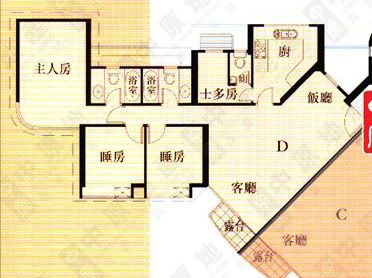
There is no question Loudspeaker Placement is often the most compromised in the audio chain. Many audiophiles do not have a dedicated audio room, and sharing a room with the rest of the family means major compromises. Add WAF to the equation and the result is often as good as only a toss-up.

In HK, this is a major problem, as small living rooms are used for audio (there are basically no family rooms, nor basement-as-man-cave). Compounding the problem, many LR's are irregular in shape, the worst being the so-called "diamond shaped" ones (Apartment D in the diagram, which basically has only one long wall!). In my own place, I too have to contend with my loudspeakers pretty much against the wall, even my large Yamaha NS-1000.

Even for those who do have the room to maneuver, habits and reluctance to move things around too much can sometimes make them choose one configuration over the other. In this article I shall cite you just THREE cases where a change of placement reaped massive benefits.

Short Wall vs Long Wall (sort of, 90" rotation)
Instructions try to be generally applicable, which is why none would go straight out and say it is better to place loudspeakers against the short wall, firing down the length of the room: but I tell you, this is so, in the majority of cases. In HK, we have more unusually shaped living rooms, sometimes with "short" almost the same as "long". In years of home visits, I have encountered many households with sub-optimal placement. I often suggest re-positioning, but not everyone is receptive (or have the strength!).

Case 1 - Verity Audio Sang and Carmen are good friends. Once in a while, I steal some time to have Sunday breakfast with them, and of course try to do a few things in due course. His Verity Audio Rienzi's for a long time were placed rather in-room, with the TV wall in the back (top, right pic; as covered here, though equipment is much different now). Imagine my surprise when I sat down during a recent visit and discovered the loudspeakers moved to the other side, which I have nudged him to do for many years (top, left pic). Even I was shocked by how much the sound had improved! Larger soundstage, fleshier images and more effortless presentation. In the current setup, the distance from the listener to the loudspeakers is increased significantly, and the loudspeakers now have more symmetrical, extrapolated, certainly not ideal, "side-wall" "reinforcement/reflections" (or lack of).

Case 2 - Klipsch In the case of our friend Bernard, re-positioning of his Klipsch La Scala was one of the seminal events in my recent journey in audio, and was written up in detail here. In this case, after re-positioning, the speakers are firing down a much longer distance, and the side-walls are much more symmetrical.

Case 3 Yamaha FX-3 Although I haven't heard it, my friend Robin's latest coup resulted in exactly the dramatic change for the better, covered here.

There have been quite a few more examples, but these 3 will do. The Room and Loudspeaker Placement are the most important elements in the audio chain, yet most audiophiles do too little in placement, either because of inertia or other constraints. But, if you can try everything!

Vibrapods have Done it Again!
During this visit to Sang's place, I discovered he had several unused packages of Vibrapods. We put them under his sources, the Technics SP-10 and the Sparkler S303 CDP, and in both instances things were significantly improved, more natural and breathing. Wonderful!

29 August, 2016

Robin, Taipei, Un-Tweaking, Townsend Seismic Podium

Click pics to enlarge. Note the Townsend Seismic Podium beneath the Yamaha's. L: Now, after my visit!; R: Before, during my visit.

Home Visit: My Dear Old Friend Robin the Scot
Coupling/Decoupling, Townsend, Stillpoints, 120V/240V, Slate/Acrylic
A Trip to Taiwan

As reported, Robin's house is perched on the Danshui side of Yanmingshan in Taipei, Taiwan, and commands a magnificent open view. His listening room/study is on the top floor. Finally, after more than 4 years, I got to visit him. Equipment has not changed much: R2R: Otari; Turntable: Garrard 301/Thomas Schick/Michell-Incognito-Rega RB300/Ortofon Kontrapunkt B; SUT: EAR MC-4; Preamp: ARC SP-11; Amp: McIntosh MC-275; Loudspeakers: Yamaha FX-3 (now on Townsend Seismic Podium). We spent two afternoons altogether and combed through the system:
  • Accessories As usual, removal of most tweaking accessories (a lot of Stillpoints were used to support the turntable especially) resulted in an easier, freer-flowing sound. Readers should note I do NOT agree with the extravagant claims of most accessory manufacturers - while their products may change the sound for the better in some aspects, they also rob the music of vitality and presence. Almost no exceptions (think Stillpoints, Symposium, Finite Elements, TAOC etc, the list is looong). Ah, cheap and cheerful Vibrapod is a happy exception !
  • 120V/240V Robin has both 240V (HK) and 120V (Taiwan) equipment. Removal of various (step-down/up and isolation) transformers improved the sound. He also found out later that the 240V outlet in the house (like the US, intended for air-con's etc) did not sound good for 240V audio equipment. So, while it is wise to use as few transformers as possible, using the 240V for audio is not desirable.
  • Acrylic/Slate As the Thomas Schick arm had an alignment problem, we decided to swap in the Rega arm, which necessitated a change of plinth, from the acrylic back to the old slate one Robin used before. I must say I prefer the slate (and I am not even sure about that! I like wood even more, good wood at least). Never had too much enthusiasm for supposedly acoustically dead acrylic.
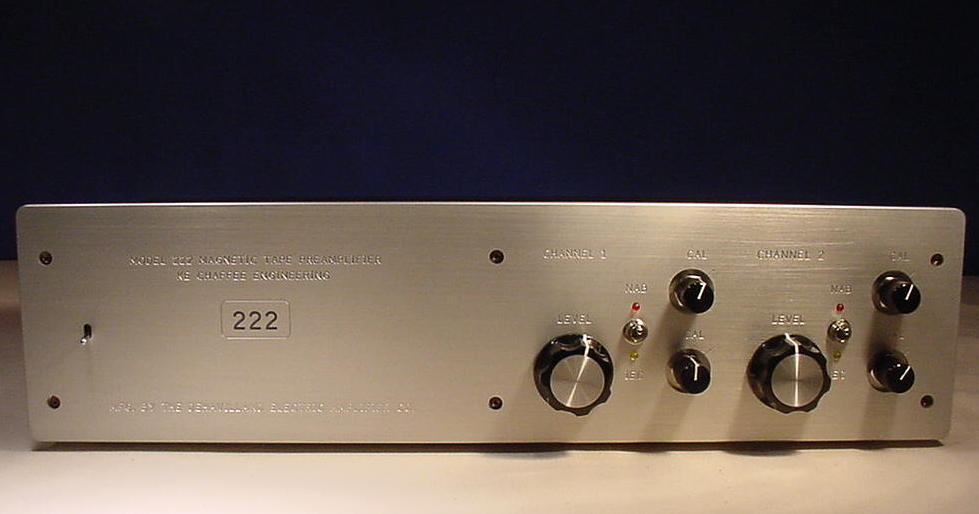
  • deHavilland 222 Tape Playback Preamp (official link) Robin uses this as a headamp for his R2R. The 222 has a preamp section. We tried it out as a full function preamp but its line section did not quite match up to the ARC SP-11 (tall order of challenge!). We shall give it benefit of the doubt as it may not be quite run-in.
  • Townsend Seismic Podium Now, the most interesting part. Robin had these under the loudspeakers. They slide around, making positioning an easy task. As I am usually against spikes, dishes and cones, I was receptive. Suffice to say, I heard nothing bad. I actually think for bulky speakers these are definitely viable, likely superior (though expensive) alternative to spikes. Would love to hear more! Those who want to read more can go to HiFi+, or watch Townsend's own demo video.
  • Short Wall/Long Wall Placement Now, this occurred after I left! I had always advocated firing down the long wall, and the FX-3 is a powerful loudspeaker. Robin had tried this before a long time ago, but didn't quite like it. This time, after I left, he tried it again, and he excitedly told me that everything snapped into focus! In the huge room, the speakers are about 10 ft out into the room. I must hear it! For those who needs convincing, read my incredible experience on Klipsch La Scala!
  • Long Live Yamaha! What incredible loudspeakers, the NS-1000 and the FX-3. Now, when am I going to hear the FX-1???
Taiwan, the Forgotten Land
Taiwan is an interesting island (wiki entry). Because politics, it is rather isolated. And yet, despite this, perhaps even because of it, Taiwanese people, ethnically mostly Chinese, are amazingly friendly and disciplined citizens (compared to their mainland and HK counterparts). The city has a lot more breathing room than crowded HK, and it is quite a livable place. Except for the occasional cigarette butt, the streets are litter-free. I spent two weeks, living in the humblest area of industrial Sanchong, where there are large populations of Thai and Vietnam people (imported laborers). Every morning I get my coffee (better than Starbucks) at the local 711. I had trouble when I came back to congested HK. Some pics:

Wonton with Side Dishes of Bamboo Shoots and Dried Bean Curd 溫州大餛飩,油燜筍,拌豆腐皮
 Halal Noodle with Beef 清真牛肉麵
 Morning Coffee at Spacious 711 的早上,咖啡不錯
Bullet Train 台南高鐵站
 All Along the Railroad, Neat, Modern Farms 一路翠綠,農業井井有條
 Inside Kaoshiung Terminal 高雄高鐵站
Chenqing Lake,Gaoshiung 高雄澄清湖
 View from Gaoshiung City Park 高雄市公園一灠
 Small Night Market in Taipei 臺北小夜市
 An Amazingly Beautiful Park under the Chongxin Bridge 重新橋下打造了個諾大而漂亮的公園

06 January, 2012

Editor's Note: 2011 in Retrospective

Editor's Note: 2011 in Retrospective
Brief Reviews Manley Magico Shindo Fosgate M-Audio

Second Revision 22/06/2014 (on the Shindo Entry)
First Revision 13/01/2012 (on the Shindo entry)

This year's retrospective is different in that some of the stuff I cite have not been written up by myself yet, so I offer some brief reviews here. I have been a little busy lately and I hope in the next week I shall catch up with more of the backlog. Stay tuned!

Year of the Tannoy Canterbury Indeed, 2011 was year of the Canterbury, as far as this writer is concerned. Three friends have acquired the Canterbury SE, and I hope we have a happy future together.

Most Notable Event of the Year Rehabilitation of my Garrard 301 by my dear friend Robin the Scott.

pic of Magico courtesy of JCR33; click to enlarge.

Best Sound of 2011
Well, as I have mentioned before, the best overall sound, for the second year in a row, remains my NYC friend AL's magnificent Infinity setup (write-up here, not be confused with AL-HK, the jazz-wine connoisseur), and that's unlikely to change any time soon.

But this year I have heard several formidable setups, from which I have picked a handful. The first two by older masters were simply impeccable, disarming on hearing the first note. The ones that followed were yet imperfect, yet impressive and harboring huge potentials:
  • First must be counted AL's new horn system now being set up just outside his kitchen. As of two months ago it was using mostly professional, and reasonably priced, JBL drivers. yet the sound as driven by 300B amp already bettered almost all of the JBL systems I have heard in HK (except the one below). In a short time, I suspect it may usurp Infinity's place in the upstairs salon. I am positive you shall hear a lot more about this in the future, when master AL is ready for the system to show to the world.
  • Magico Ultimate horn system, as heard at HK dealer Sound Chamber (the same setup Romy the Cat heard). A brief write-up is due. I thank JCR33 for getting us to hear these behemoths, as the demo pair left for China soon after.
  • Our friend welborne's Bastanis Atlas Mandala setup (write-up here). I understand they are being updated, so I look forward to the next audition.
Most Important Acquisitions
There were several. Most important were three very different preamps.
  • Manley Neo-Classic 300B preamp (left pic can be enlarged by clicking on it) While the 300B SE/PP amp (which is excellent, I have used it before) of Manley's wonderful and statement-level Neo-Classics series has received many reviews and much accolade, its companion 300B Preamp has had quite a low profile. There are no reviews from the major English audio press. You can find reviews from hometheaterhifi, Audio Video Revolution and Image HiFi (in German). I suspect this is because of its ungainly nature, built like a tank and resembling more a serious amplifier. I ran into an irresistible bargain and acquired it brand new. It is absolutely outstanding and there shall be a detailed review in the future.
  • Shindo Monbrison I actually acquired this older version more than a year ago. The fellow who sold it to me claimed it was the unit reviewed in 6moons. I have no problem with the reviewer's sonic assessment, but he made some mistakes in describing the tube complement. This is not the place for rectification; that shall be done in my coming full review. It took me long to get it going because, contrary to the seller's statement on the unit's health, all the tubes that came with the unit were almost completely spent. Fortunately the ECL84/6DX8 used in the linestage of my unit are inexpensive and available on Ebay, while I already have good EF86's (used in the phono stage) in stock. After re-tubing, the sound is quite dramatic, with great presence, a good match for horns. You shall hear more about this in the future. Revision Note: A FULL Shindo Monbrison report finally been written. Please click here.
  • Leben RS28CX preamp Again, a full function preamp that stands up to the other illustrious preamps that I have. Suffice to say it serves me daily in HK! Review here.
  • Fosgate Signature Phonoamp (click pics to enlarge) The next item is yet another preamp, but for the phono. Ever since it came out it has garnered much attention, including a review in TAS. There is also a nice review in Audio Beat. This is one of those rare phono preamps with a fully active MC pre-pre section. As noted in the Audio Beat review, the 60 db gain for MC may be a little low for some people but it is perfectly fine in my case, even with the very-low-output Denon DL-304 (0.2 mV), since I mostly use preamps with high gain and efficient speakers. I am happy to report tube rolling is a breeze as the phonoamp does not seen to run the tubes unduly hard and many NOS tubes sound quiet in it. One thing that puzzles me about the industrial design: the two round cans flanking the tubes lead one to think they are input transformers; no, they aren't, this is a strictly active device and those are for decorations only. Incidentally, I think there is a new 10% price hike, but you can still find many selling at the original price of USD 2500. Review later.
Best Buys of the Year
Not surprisingly, digital products comprise half of my nominations. It is quite amazing how good cheap digital products are now. Why buy over-priced and over-rated stuff like Weiss?
  • Elekit TU-875 preamp and TU-8230 amp If you can solder, Elekit is it. Bargain of the Century. Reviewed here.
  • Musical Fidelity M1 DAC Better than it has a right to be. Reviewed here. I am curious about MF's V-Link now.
  • M-Audio Firewire Solo (click on pics to enlarge) You may be surprised by this inclusion. As you know, I dabble in CAS but it is just a marginal medium for me. I have long bought this very cheap device and did intend to write it up, but it was never a priority. M-Audio is a highly respected pro-sound company that makes cheap and great stuff. For less than $200 you can have a firewire DAC-ADC capable device that can serve both as a preamp via its analog out and headphone amp! Here are some reviews from Sweetwater and the excellent French Audiofanzine. I bought it because my dinosaur Dell laptop, which weighs a ton and should not be deemed portable, has a firewire output! I tested it two years ago with the super-bargain Sony DVP-PR50P and Audioengine A2 active speakers. I burned several CDs using lossless WAV format. The sound could not be faulted, even in comparison with the Sony's superb analogue out. I also tested its earphone output with my Audio Technica ATH-AD700 headphone and an old Sennheiser, and the sound was equally superb. The control software installed without a hitch and is easy and intuitive to use. The manual is clear and detailed. What more can you ask for such a paltry sum? I then shelved it for more than a year, so that alone was not enough for me to write it up. What prompted me to write this up now is because I lent it to my friend Tony 唐咭柯德 and his feedback is highly positive. Mind you, this is a man who has engaged in CAS extensively, and has numerous (mostly USB) devices in his systems, including Linn Majik DS. Basically, he thinks the M-Audio came out ahead. Why should you buy expensive things like Weiss, which I have heard several times and regard as good but way over-priced? Note that this device is 24/96 only, but M-Audio makes a 24/192 Pro 610. If any reader has used that, I'd be happy to hear from you. Note also it has only phone jack connectors, so adapters are necessary if you intend to use RCA or XLR. If you have firewire output, seriously consider M-Audio! But if you are a Mac user, research Mac issues, including at M-Audio's own forum.
  • AQVOX 2CI MkII A fantastic phonoamp, but perhaps not for everyone. Reviewed here.
  • Vibrapods Good isolation devices on the cheap (briefly reviewed here).
  • Belden 8471 Great speaker cables at giveaway prices, reviewed here.
  • Audioengine A2 active loudspeakers Review here. I hereby redress my previous failure to include it in my Best Buy 2010.
Vintage Best-Buys
  • Technics SP-10 What a marvelous turntable! It makes you think twice (just a little) about suspension and idler wheel designs. My experience here.
  • Denon AU-1000 step-up transformer. If you ask me, it stands up to the very best. Not cheap, but still a bargain. Reviewed here.
Rediscoveries
This is a new feature this year, and it is long due. Often in pursuit of the new we forget what we already had experienced. Re-visit your old favorites and it can be a surprise as your system improves!
  • Empire cartridges If you have one, listen to it! You may be surprised! My experience here.
  • Lehmann Black Cube If you are a vinyl newbie, or simply need another phonoamp, think about this one. It decisively trounced the Ray Samuels Black hawk during our recent tests. The old version is likely as good as the newer ones and a good buy at bargain price.

05 January, 2012

Talk Tweak: Isolation Devices Bearings Vibrapod

Talk Tweak: Isolation Devices on the Cheap Part I

Normally, I avoid isolation devices like the plague. Most alter the sound in one way or another, but at the expense of the natural flow of music. In general, many cones sharpen the sound but introduce an unnatural leanness, while wood deaden and smear the sound and roller blocks restrict dynamics. Even the best composite material have sounds of their own, and it's strictly a personal choice immune to objective analysis. If you are a fan of expensive Finite Elemente and TAOC, I can agree with you that they look good; but for sound, I think nothing of them. More, I think they are highly colored.

But I do use some of my own concoctions when I have to. Why not make some of your own? Here are some ideas that may work for you:

pics: L, design by Leonardo da Vinci; Click on right pic to enlarge.

Thrust Ball Bearings
Bearings are ubiquitous in our lives, and used since olden times. A Disclaimer: I am no expert of bearings! The ones I use are Single-Direction Thrust Ball Bearings, made in Japan by NSK (51206-106). I got them in HK Reclamation Street 新填地街 for a few USD each. In the US you can find any number of similar products on the net, but buy with care and only if you are sure what they look like.

They work remarkably well under my Garrard turntable, as well as other gears. I have demonstrated these to my friend Robin and he was instantly convinced by the results. Mind you, this is a man who spares no expense when it comes to tweaking devices! Placed horizontally, you'd think they only dissipate lateral movement and not vertical movement. But the results speak for themselves!

Vibrapods
For something easier to get, get this. I am sure you know about the isolation device called Vibrapods. These have been recommended by virtually everyone (see links to reviews in the official site), including TAS. That should be cause for alarm, but in this case, it is true.

In NYC, I did not want to damage the wood floor under the thick carpeting and so rest the spikes of my racks on slabs of marble/granite. As a result, leveling and isolation can be a problem, particularly with turntables.

I am happy to report Vibrapods work extremely well for me. They isolate well and introduce less coloration than cones and wood blocks. not to mention roller blocks. It works amazingly well in lieu of the stock spikes under my Clearaudio Concept. It works equally fine under CD players as well as preamps. Unlike most isolation devices, the Vibrapod preserves, and even enhances, the flow of music. Buy several packs!

Note that I have only tried the original Vibrapods, not their cones.