Showing posts with label Talk Vinyl. Show all posts

27 July, 2024

Tokyo Disk Union Jazz Guide Sun Audio


Letter from Tokyo (24-1)
Talk Vinyl: Disk Union

Written in Shenzhen

Just spent a week with family in Tokyo, a last minute decision. Although the yen had plummeted tremendously, hotel costs are still considerable (for poor me) during the high season. So we stayed in a residential area off-center, close to the Nishi-Kasai Station on the Tozai Line. The newish Rembrandt Hotel (there are 2 near each other) turned out to be very nice, with good beds, clean rooms and a friendly staff (also Cafeteria, Washing Machines, Ice Dispenser and Microwave). We stayed for a week and it felt like home base. Due to its proximity to some educational institutions and international schools the hotel has a lot of visiting exchange students. I encountered a large Chinese group from Beijing (they seemed much more sophisticated than our SZ Students - I talked to their teacher in the cafeteria a little and they are Japanese Language students). Another even larger Korean group - every guy is toweringly big!!! The area is quiet but just diverse enough to have all kinds of restaurants, including Vietnamese and very good Indian (not just one, but 3, and they were authentic and patronized by Indians)! I asked the friendly Nepalese waiter why so many Indians around, and he said it's because of the IT profession. The metro station complex housed many small but good restaurants. I loved the BBQ restaurant (where we had delicious Kobe beef), which was probably Korean run, and the beef soup and seafood pancake were simply marvelous, better than our NYC Flushing Korean restaurants. The Soba noodle shop (eating standing up, as per tradition) was also particularly wonderful.  Recommended!

The iconic Tokyo Tower. No, no monsters nor heroes around.

I had been in Tokyo twice before, Kyoto/Osaka/Kobe/Nagoya once, and Hokkaido once, but that was all more than 20 years ago! So it was gratifying to see that Narita Airport is much better than before. It took a while to get re-acquainted with the Tokyo Metro. For a seasoned traveler, especially Chinese who can read the Hanji, it's actually not particularly difficult. The real difficulty is to figure out the particular ticket plan suitable for you! There are so many options! Making things more complicated is that there are 2 major metro companies, the Tohei and the Tokyo Metro. We stuck mostly with the one-day ticket of the latter (which has more lines and serves Nishi-Kasai), even if it meant a few extra stops sometimes for changing to the right line. At first I was going to purchase Suica Cards (which conveniently can ride all lines, with no discount, kinda like our HK Octopus Card) but was told they are no longer sold, being phased out due to shortage of chips!!!!! Can that be true???? Casualty of Political War? This was conveyed to me by the metro staff (of very limited English ability and variable patience), sometimes via cellphone translator App.

After having lived in mammoth Shenzhen for so long now, central Tokyo actually felt quite compact this time. Even though we lived near the eastern edge, travelling to the western hotspots like Ikebukuro and Shibuya were quite manageable, even with all the walking and stairs due to various transfers in this ancient maze. There is definite over-tourism. Chinese tourists were everywhere; from their dialects I estimated a third each from China, Taiwan and HK. Western readers may know about Japan's criminal imperialism and atrocities in China, but they likely do not know Taiwan was a former Japanese colony too (indeed the capital Taipei feels quite Japanese in layout, based on the Tang Dynasty blue maps), and that even HK was occupied by Japan too. Despite the huge historical obstacle, there is good reason why the too-forgiving Chinese flock to Japan. Proximity in distance as well as relatable culture and food all play a part. Despite nationalism and political schism, the people, Chinese tourists and Japanese locals, overall are nice to each other. There is everything to admire and emulate in Japanese service attitudes. There is good reason why it's a premier travel destination. Asshole HK administrators should travel more to see why their own city comes up way short. Instead of loudly proclaiming that HK is a world city, these puppet fellows know nothing.

It actually felt great each day to return to the hotel area. Eating even in the local Isakaya felt quite civilized (the experience can be crazily animated in the city center). Sometimes we were really tired and just brought back food from the local supermarket (great choice of ready-to-eat foods) to enjoy in the room. I have always enjoyed eating in Japan. It'd be rare indeed to find a totally negative experience (unlike HK).

Click pics to enlarge. For better resolution maybe, go to the link provided.

As I didn't prepare for it at all, it was a miracle that I chanced upon some of the Disk Union Record Stores:
  • Official pdf, on the main stores, from which these maps were culled. I wish I had read this before I went, but that's for you.
  • The first one came by accident. We were randomly walking on a narrow street (which I always favor over main streets) in Shinjuku; imagine my joy when I spotted the store! The store I visited was the smaller 2 on the left map (only 4 stories), not knowing that the bigger 8-stories one 1 was so close-by (described in this article)!  I only had half an hour in the Jazz section and got two records.
  • For the second one I did a little homework before going to Shibuya, but failed to find any store. Frustrated after half an hour I wandered down to the Parco Department Store basement (pic below) and was shocked to find a tiny store there 2 . Got a couple too. Yeah, despite the limited stock, which is still more than what you'll find in some Western stores! The store clerk also pointed me to Store 1 finally, and I bought a couple more. 
  • Finally, on the last full day I wanted to visit the Audio Union in Ochanomizu. I did the homework and finding it A was a breeze. Nothing too interesting there however. What really thrilled me was that the Disk Union store is just across the street 3 , and it is a LARGE store, with a HUGE jazz section! I bought quite a few! This is a much quieter area than the others, and highly recommended.
  • I only bought Jazz. Why? Because Japanese pressings of Jazz are really bargains. As per current taste, Disk Union caters much more to Jazz and Pop. In the few maps, you shall see that classical is a tiny part of it. Classicals are also not really worth much. Some of the titles I bought just for practical reasons, and I already have some of them in original American form. I can easily sell or give away Side to Side and Back to Back, as an example. I plan to play all of them on my tiny low-end Sound Burger! For old times sake, let's say.
  • 20 years ago I'd have bought a LOT more. But this time I just got a few for fun. I resolutely restricted my budget. The cheapest one I got was 480Y, and I stayed mostly below the 1,500Y mark. I think only 3 records cost more than 1,000Y. This is just me. If you are a jazz lover, and are into vinyl, I highly suggest you go on a pilgrimage to Tokyo, enjoy the food and shopping instead of buying costly re-issues (which are plentiful in these stores too). Even if you fly on a cheap airline, make sure you book a 20kg (at least) luggage for the return trip. Yes, IMHO, for those in HK, China and Taiwan (and Asia), it's worth just going to Tokyo for vinyl hunt.
  • Japanese vinyls are the best preserved in the world. Very little trouble, and u can visually inspect before paying. There are basically no duds.
  • I'd focus on the cheaper Jap pressings. They are of good quality and plentiful (usually quieter but less dynamic than Western originals, but very good nonetheless). There are many titles that u will be hard put to find in the western world. Don't get fixated that u have to have the US Blue Note first pressing, wrong place for that!. The Jap pressings are the bargains; remember there was one long period when US consumers of all genres sought out Japanese vinyls for better surface quality!
  • If you hit all these stores, you shall realize that they have tons of each title (popular ones I mean of course), priced variously. Of ourse, Sax giants are favored. There's no hurry, just shop around. They know their prices too. Jap jazz fans are like Chinese ones, more conservative, and albums like Coleman Hawkins are plentiful and cheap, whereas any by Ornette Coleman (my fav) are not cheap and not so plentiful. It's a supply and demand issue, as always. Know what you want! I'd say for the average Asian jazz lover into traditional jazz, it's a paradise.
  • If u peruse the Japanese Disk Union website, they actually have many more (smaller) stores scattered around! But, really, even if you visit a couple, it's more than enough (I'm speaking of Jazz, much duplication between stores). I'd say the must-see stores are the Shinjuku Main Store (which I've not visited, LOL)  and the Ochanomizou Store. If u are a serious jazz collector, plan on spending a day there.
  • If u are a hip-hop or other genre fan, this guide still points you to many many stores. Just read the fine prints in each map.
Mitsuru san of Sun Audio looks very well! Father is old and stays at home now.
 
Akihabara and Sun Audio Perhaps my memories are faulty, Akihabara certainly looks very different from what I remembered (my woefully outdated guide, which perhaps I should take down). We got out of the Kanda station, and as mentioned, just before crossing the Mansei Bridge, to the right is the street where Sun Audio is located. Without Hino Audio downstairs, I missed the building. I was lucky that there were a couple of young couriers around, and they pointed me to Sun Audio. I just popped in briefly to say hello. After crossing the bridge, somehow I could not find the Radio Kaikan building (I doubt there is much hifi there now). If any reader has been there, let me know. I'd have liked to go to HiFiDo but was not up to it on that day. So nothing much to report on Akihabara.


How about that! A good Vinyl Store in a packed Food Court!
Like many of us, the Royalty liked a drink or two

24 August, 2023

Bad Habits

Click pics to enlarge. No, can't pull the Wilson Grand Slamm's further in. Yes, better sound if the piano lid is down.

HiFi Basics (XVII): Mentors, Gluttony, Overreach, Connectivity and Cost-Effectiveness
Letter from NYC (23-7): A Day in the Country

Yesterday, some of us got together again at our friend R's mansion on Long Island. For me, this was the first time in 3 years! Understandably, there had been limited activity due to the pandemic. Since I have gotten back, I have met with our group leader Andy quite often. Kevin too since he had come back from Atlanta. Despite their arriving very late, I was happy to see Simon again, especially since he brought a new friend Sam, a vintage aficionado too (Tannoy GRF, Philips Full Range etc; I'm sure you shall hear more of him). I am glad I met up with subwoofer fanatic Richard and his wife. It's so funny, the first welcome-back SMS I received when I landed back in NYC was from Richard, who knew from the blog that I was back! Most amazingly I met Alex again (last time I saw him was probably in the late 80's, at Princeton Record Exchange no less). Years ago, Alex was president of the NY Audio Club and knew everyone. I have always admired him greatly for his tireless effort to try to get the many Chinatown audiophiles (through whom I met him) to listen to good classical music, a tough task indeed. We talked a lot about concert halls, the NYC and HK concert experience (like where is the best seat), anything but audio, as he is totally toned down now in terms of equipment - contented with being a music lover but not an audiophile. This is such a colorful assembly of characters from various trade that, if I were a composer of Elgar's caliber, I'd compose my version of the Enigma Variations, for, despite my knowing them, they remain enigmas to me. It was also a rare occasion because R's wife M could join us. As usual, R made a sumptuous lunch for us which was held on the patio (a first). The special wood smoked BBQ chicken was excellent (we would demand no less of R) and the two salads (cucumber and apple) were just perfect for summer. For my taste, the wines on this occasion were a particular fit for me. I loved most the 2012 South African Cabernet Franc. The fruitier Austrian wine was also interesting. The Costiere de Nimes was a little too subtle for me. And then there is Richard's Long Island wine from his friend's brewery, which I didn't taste. I was told it is young but promising (sounds like our youth, which didn't always pan out). I Thank R for hosting us.

Before and after lunch of course we listened to the audio in both the spacious LR and the smaller horn room. I only did the LR, where I spent most of my time talking to Richard and wife, and M. After 3 years, it seems there are quite a bit more gear here! But sound was regrettably no better from what I remembered, so it got me thinking hard. I think all the new stuff brought too many new variables that the system as a whole got sidetracked, even neglected. As this is a common audiophile issue, I'll take this opportunity to dissect some of the audiophile's habits. I use R as an example but aspects can also be applied to almost everyone present, including myself.

Gluttony

First question: Should we take on everything we have our eyes on? Not if you can't do it justice. This goes for people as much as audio - you need time and sensitivity to truly appreciate strengths and weaknesses, to learn that perceived deficiencies and strengths are sometimes just two sides of the same coin, and to build up stable relationships. This is NOT a question just of desire and drive, nor money - rather, of time and patience. Just like people we neglect or don't do well by, our systems tell us in no uncertain terms that things are not right (if we are truly good listeners). Today we start with examining the Gluttony of which we are all guilty. Incidentally, one reason why this blog covers some visits is because of the excess, photos of which are eye candy for many readers. What they may not realize is the detrimental effect excess has on achieving the best sound, which should be everyone's goal. The cruel reality is, in the quest for better sound (or for different experience) by acquiring more equipment, we frequently make things worse - a regression. This is not the same as loving different kinds of food. One can enjoy Chinese on Monday, Thai on Tuesday, Arabic on Wednesday etc, but one cannot quite do that with one's audio systems - one will almost inevitably end up with fusion, and the worst kind. There is only so much "breakthrough" one can achieve in audio, and there is plenty more ground to lose. Oh yes, there are audio buddies who tell you their system is XX% better every time you talk to them (and who tirelessly urge you to go listen), and there are magazines that tell you constantly about "progress". Don't you believe them! One of the biggest lies in audio is the Wilson Watt/Puppy, an unfortunate, incoherent amalgamation that persisted through 8 generations, each proclaimed to be a breakthrough by the press. A big grain of salt is in order when the reality is, with the exception of certain areas, there has not been much progress in audio, especially in terms of "absolute" sound; and the sonic up's and down's of the systems of most audiophiles is no smoother than the stock market at its most volatile.

Believe me, I know of Gluttony, as I used to be guilty of it, not just in terms of audio equipment (including tubes) but also in terms of LPs and CDs. Not so much now, though I still suffer from the aftermath. I actually regret my past. Too much stuff, too many hassles. many in our circle are gluttons.

The evolving systems of R actually comprise the longest running thread of this blog. As I reflected on its evolution, I was aided by all the articles I had written - one benefit of the blog is to set down things for later (if sometimes just for myself), as memory is so often unreliable (even if I remember equipment better than most people). It took quite an effort to tally up all the scattered articles - including this one there are 10! Amazing!

Chronology of Previous Home Visits to R

2016 here; early on in my acquaintanceship. Wilson Grand Slamm in smaller entertainment room. Equipment evaluated included Jadis JPS2, Lamm LP2. Rockport Sirius II, Versa Dynamics 2.0/Jan Allaerts MC2, Walker Proscenium/Kondo IO-J

2017 here Wilson moved into large LR; here, Tom Tutay, CJ P3

2018 here, Arrival of Altec A5, evaluation of Jadis JPS2/JA80, Marantz 8B McIntosh Verdin P153, Harmon Kardon Citation I; here, SMSL challenge, CJ P2 vs P3, Cary CAD-211, arrival of ARC Ref 2; here, re-positioning of horns, Bell 2122;

2019 here Bell 2122; here, Nottingham Space 294, Decca Super Gold; also here.

Mentors

I. As you can see, I have known R for quite some time, but Andy predated me by quite a long while. I hope my history of R is correct here. The previous mentor of R is A, a veteran of the industry who had retired to Florida a few years ago. Much of the oldest gear that R owns and still uses, and those of modern brands: the Wilson, the hopelessly gargantuan Tube Research stuff, Tom Tutay, and newer Jadis, Lamm, Jan Allaerts, Kondo, etc, likely all stem from that network.

II. The next period of R saw the growing influence of Andy as Mentor. Andy probably doesn't think of it this way, but to us he is. Vintage equipment proliferated. When I first met R he already owned several iconic, but notoriously finicky gear that without encouragement could not have come from his own imagination. The massive Rockport Sirius TT and Versa Dynamics were surely Andy's influence (Andy has them still). That influence only grew stronger during the time span I outlined above.

Consulting often with a mentor or friend with trusted ears is a good and natural thing, but to populate one's shopping list in wholesale fashion with only their recommendation is a big mistake. Since this happens very often and everywhere, in Hong Kong and even within our NYC circle I have consistently observed that most of the people who do this more often than not fail to achieve the next step up. It's not hard to duplicate and make the same equipment choice; what's much harder to duplicate, even truly understand, is what's behind the choice, which concerns listening sensitivity and perhaps a bit of the Midas' touch or even "wisdom", if anything in audio deserves that lofty term.

One interesting aspect of the relationship between R and Andy is that most of the exchanges happen over the phone. R professes himself to be just a music lover (a gross denial) and perhaps regard many audiophile activities as unnecessary, but broadening one's horizon is a must when growing up. I learned a lot by visiting other people's systems in my early years in HK. R would often call up Andy, asks what's he been up to, and Andy would tell him about his newest adventures, and R would follow suit on quite a few. Most recently, this is how R also got the Douk E6 into his system (not from reading my Blog), but it's my opinion that he has really misunderstood and misused the thing. R would likely benefit more from visiting others than having people visit him.

Let's proceed to look at what equipment are linked to Andy (and are also at Andy's home right now):

Before the pandemic: at least, Rockport Sirius and Versa Dynamics TTs, Nottingham Space 294 TT, Decca Super Gold, Bell 2122, Harmon Kardon Citation I, Conrad Johnson Premier 2(3), ARC Reference 2, Altec A5.

Since the pandemic: I was shocked by some of these latest additions. Not one but TWO Thorens TD-124 (one in each room; both with Decca arms), Decca cartridge (in horn room), Goldmund Studio TT, Sun Valley EQ1616D, DS Audio E1 optical cartridge system, many Douk E6s (both rooms), many cheap new cables from China (including "Cardas", note that Andy and Kevin have a variety of these). Yet another Citation I is in the works.

That's a HELL of a lot! As importantly, aside from one item (EAR G88, from A), I didn't see anything that has nothing to do with Andy. Below, in the section that analyses the sound of the day, I will say more on some of these.

The Mentor's "Duty" As with any relationship, feedback is important. In audio terms, that means the mentor better listens to how the stuff he recommends is doing in his charge's system and "grade" him. If it's not working, say "you screwed up!". But you will be surprised how many don't do that, as we are not really teachers and students, and "friendship" often obscures "truth" and gag candidness. I belong to those who shoot straight, even with friends, and though likely in the minority I'm not alone. Yes, perhaps I too have "mentored" a few, but I would always tell them in no uncertain terms whether things were working or not. Chinese saying "养不教,父之过,教不严,师之过" ("To bring up without educating, the father's fault; to fail to instill discipline while educating, the teacher's fault"). The last few days the real world here saw consecutive shootings during youth parties, and the saying came to me while watching the news. Maybe it is a bit true too in audiophilia, though I am positive not everyone shall agree with me.

Connectivity

From my perspective, aside from gluttony, another aspect of R's audio practice makes me tear my hair out even just to watch, and that is Connectivity. In his case, there are several aspects to this. When I first knew him, he had few extra cables and helping him re-configure things was quite exasperating. R is a very strong man, who can lift up or move very heavy items. But somehow he cannot really kneel down and poke around. This makes him really reluctant to change connections in the LR. As you can see in the top pic, all of the source and control equipment are hidden from sight (low down in the dress table behind the sofa. I can totally understand and sympathize with physical limitations, house rules and aesthetics, but then why squeeze 4 TTs, 3 SUTs, 2 Phonoamps (one bigger than 2 amps) and a Preamp, with their many associated cables into hard-to-reach hidden space? Why not just simplify?  Mind you, his many newly acquired cables had enabled him to make more connections, but that too exacts a cost (below).

Mind you, R is not at all the only one who has connectivity issues. Here in NYC, some of Andy's cables are nearly impossible to access and swap out too. But the problem is by far much more prevalent in space-strapped HK where for many the allowable space for audio is miserably small.

To be a Glutton one has to improve Connectivity. To accommodate the many extra cables is not that hard, but to use the cables wisely is the much bigger problem, especially if they are of various makes, from various sources and from different eras. R may now have the cables he needs in numbers, but it is unlikely that he knows the character of each at all.  I looked at his China clone Cardas and I had no idea what to expect - I surely hope he does. For me it's easier, as my cable stash comprise mostly of professional cables of few types and brands, all of which I know very well and have used for years on end. More often than not, my whole system is strapped with Gotham.

Audiophiles should make it easier on themselves. For those with a lot of gear, especially with a mix of vintage gear, there is no place for short cables, stiff cables, fat cables, big connectors etc. An example is the Citation I, which like many vintage gear has tightly cramped RCA terminals. The most suitable cables would be terminated with Switchcraft; my Cheap REANS will also do, but barely. R has one, which he has someone modify by adding a cable terminal strip.  Of course, the best would be to cut down on gear and cable tangles.

Overreach

Personally I'd prefer not to own gear that would need constant servicing. Case in point, TTs with vacuum hold downs, especially vintage ones. Long before I even met Andy I had heard many of them. I knew even then pumps are not for me. Design merits are always overblown, and none of those I heard convinced me that that is the only way to go. Even in Andy's place. If vacuum hold-down is the ne plus ultra of TT design, nobody would know better than Andy, and Andy would not be so into other TTs also (especially the idler wheels in recent years). But Andy's case is different, as he has the know-how to trouble shoot and fix most of his problems himself. And he is a good friend of Simon, who happens to be a Dental Equipment service technician (yes, a lot of pumps there). With R it's different: aside from having a basement to hide the pumps, he completely lacks the know how and on multiple occasions had to call in Andy and Simon (Mark too) for help. It would help my understanding if the vacuum TTs (Versa and Goldmund and Walker make 3) sound superior to the others, but they don't (more later).

Horns is another aspect. I worship Altec but know how hard it is to get them to work really well. There is perhaps no perfection. There is no way I'd constantly try to improve the crossover. There will always be problems and temptations to modify. R's A5 is one of the best ones as it came with crossover done by our friend Paul. He's lucky. Here in NYC I have my treasured YL horns, and no room for more. In HK I know many people with all kinds of horns and components strewn all over the place. Even if sound is not always commensurate with the investment, they make my mouth water. But at least these days I follow my own advice below and have no desire to own them:

Know your own limitations and try not to rely on others too much. There is always a limit on how many favors one can ask of others. There is no free lunch either, one way or another we end up paying.

Cost Effectiveness

One factor that fuels buying vintage gear is perceived Cost Effectiveness. Andy and friends are vintage aficionados, and so am I (mostly). If you look at the Andy/R gear, many will only go up in price. Cash depreciates fast. The right gear holds the value, even appreciates. In hogging things and buying duplicates of things R is nothing compared to a lot of people I know in HK (also some in the NYC circle).

But when it comes to electrical things, particularly vintage gear, such perceived value is often a delusion. Things break down, caps need to be changed, and leaving things idle for a long time is the best way to ruin them (believe me, I know). So, one has to go through the trouble of repairs. A fraction of the extreme collectors can do at least some rudimentary restoration themselves but the rest will have to pay for service or cull favors from friends.

And what about selling them? The problem is, selling things is a big effort. Here, Andy, Kevin and I don't sell things just because it's so much trouble. We are not used to it. In HK, it's much easier (and I bought and sold for years due to space limitation), as everyone is within reach and things are bought and sold after inspection. Not here in the US.

In practical terms, Cost Effectiveness when it comes to vintage gear is often as much delusion as reality. It comes with hidden trappings.

Sound in the LR I only did some listening in the LR. Before lunch we didn't pay much attention due to insufficient warm up. Some brief notes:

  • The Heart of the System hasn't changed since my last pre-pandemic visit, but the sound took an obvious turn for the worse: ARC Reference 2 Preamp driving monster tube amps remain the same. What I think is too many new gear took things down the wrong path. IMHO things happened too quickly for R's own good. In fact, even the last time was not the best I have heard in his LR. Before he got really crazy with new acquisitions, things were better with the more limited stuff at hand. I am not a fan of CJ or Jadis, but in his earlier system these were better at delivering the musical message. For me, in his system the ARC Ref 2 took it a notch down. This is ironic, as it sounds good in Andy's upstairs main system (and I've heard it many times in HK to good effect), and in my own system I'd likely choose ARC over CJ and Jadis (currently I don't own anything of the latter two). I hope that means I hold on to some objectivity, as opposed to subjectivity. I'm not about to re-read all my wordy posts and give you the exact timeline, but some past moments in R's system were memorable: Ansermet's Espana; Handel's Messiah (which he played on this occasion but it was not good). These all occurred years ago. In fact, one of our best experience was with his old 1-bit Altis flagship digitals: it was subtractive but musical, with none of the problems of his current analog rigs (Andy can corroborate this). As for the analog rigs, all four failed to inspire.
  • Thorens TD-124/Decca arm/Kondo IO-J. They make kinda odd bedfellows, as one would usually more likely see the low compliance Kondo on a high mass 12" arm. It goes into the Kondo SUT, which is its mate (no matching issue there) and then into the monster Tube Research phonoamp. Sound on this TT was perhaps the better of the bunch, but with things as they were, it was hard to say with certainty. 
  • Nottingham Spacedeck 294/DS Audio E1 with own "equalizer". Seemed a little paler than the above rig.
  • Goldmund Studio/T3F/Benz Micro LPS goes into an old Ortofon SUT; and Rockport Sirius II/Jan Allaerts MC2 into a smaller Kondo SUT. Both into Sun Valley EQ1616D. The Rockport sounded way way off, heavily rolled off at both ends. The Sun Valley is tubed exactly as Andy's, which was what I reviewed (except for the psvane 274B). I think of the Sun Valley as a very vivid device and was quite flabbergasted by what I heard. Since the Jan Allaerts likely has a Denon DL-103 heart, I wondered how good a match the Kondo SUT is. In HK when I owned the Kondo SUT it wasn't impressive at all with the high impedance Denon. As for the Goldmund TT I heard too little to make a comment. Benz cartridges are usually high impedance too and I don't know what exact Ortofon SUT R has but vintage ones are usually for low impedance cartridges. With the Rockport I actually tried out bypassing the SUT and used Sun Valley's own FET headamp section (even if it's loaded low) - to me that sounded significantly better, but R was not interested.
  • Douk E6 I only use the E6 as Preamp whereas some in our circle use it between source and preamp, but R had the Douk between the Preamp and amp. In brief A/B comparisons, the use of E6 did bring forth a bit more solidity and air but at the tremendous cost of noise, which was just too much. Not sure what's the rationale using the Preamp's Pre-Out instead of Tape Out. Andy reminded us that the Ref 2 has a Defeat switch which would bypass the Gain. Using these would make the Ref 2 just a switch box and volume can be adjusted on the Douk.

Thoughts

  • More most often means LESS, Less can be More All audiophiles are susceptible to the upgrade bug. It can be upgrade within the same ecosystem (exploited by the manufacturers and inevitably underwhelming), or a bold attempt to move to something different (like from Wilson to Altec that R did, at least in the horn room - the best thing he had done). All that is healthy if taken gradually. But if too many things are happening at the same time, and the time devoted to each acquisition is not enough, regression is often the case. Of course, we all hear things differently. Tell you something about myself. About a year after I just returned to HK in the early 90's, I had a modest system of Spendor 11 ohm LS3/5A, DIY Marantz 7 and Dynaco ST70. It inspired many, including a lady friend of mine who is an accomplished pianist. She has heard some of my subsequent (and much bigger) endeavors and yet she insists, to this day and to my chagrin, that the oldest one is the best. Of course there may have been extraneous circumstances that had influenced the perception (I'm not about to chronicle), but I respect that actually. She knew and knows what she likes. Much cannot be said about audiophiles. A large number of audiophiles take things to the extreme, and the rest is noise. Whether one tackles a smaller or larger system, one should try to get the best out of it, enjoy it, know it inside out. Since I have come back to NYC, in my LR I have listened to my LS3/5A mainly (another report coming) but I tried things to get the system to sound its best. I'm enjoying the music so much that I have yet to fire up the big system! In passing, I should also note that in my long experience in Hong Kong, many people, even if they have the proper space, fail to transition to a larger system. It's relatively easy to do well by the LS3/5A, which is one reason why they remain popular, but the larger the loudspeaker the more the problems with setup - frequency anomalies, room interaction (many simply do not have the freedom to place them properly), etc. But I think one main problem is actually a narrow musical taste, which simply cannot do a bigger system well. One can probably get away with setting up the LS3/5A using only vocals or jazz, but with larger loudspeakers that approach will likely fail to deliver the proper balance. Most audiophiles try to advance at too quick a pace, and many just vacillated in the same place despite much equipment turnover.
  • Attention to Details One should take time to know everything in the arsenal. E.g., the character of each cable matters, and it takes time to know. TT users are at even greater peril.  By this I mean one should have at least a modicum knowledge of the technical aspects of things. With many cartridges, due to impedance issues, especially high-end ones, just using the nearest SUT and cable would not bring about the best (and some, like the Jan Allaerts, are likely dismissable, at least from what we have heard at R's over the years). While one can possibly arrive at an empirical solution, it's best to have the technical aspect in mind. When it comes to me, a good example would be the Denon DL-103. I use it extensively on medium mass arms (sometimes with added weights) but I know well the objections to this although to me cables can ameliorate some of the said deficiencies. I know very well I'd prefer a DL-103 to, say, a more even tempered Hana any day, and that's good for me to ignore the naysayers. One has to develop one's own views, by which I mean long term ones. Let it not be misunderstood, by these I don't mean technical aspects mean everything - not at all! In audio it's not unoften that empiricism trumps "science" but it pays to study the fundamentals. I'm NOT a big SUT fan for a reason - matching them to cartridges is a cumbersome task. As I mentioned above, on the Rockport/Allaerts when I dropped the Kondo SUT for the built in FET section, I got improved sound (God forbid, many would say). To me, a mismatch is definitely possible. I told R he has to work on his TTs one by one, throw everything at them, swap SUTs and cables and phonoamps and evaluate carefully. Hard work, but necessary.
  • Analog Woes In my experience, alarmingly, many people take the analog experience too far. Although an analog fan, I'm also a constant digital listener and gauge the proper sound by both digital and analog. They should sound broadly similar and the analog should have the edge in aspects of reproduction. But with many analog users this becomes quite crooked. In chasing too zealously after the tactile factors (like force and touch, as often used) that analog delivers in spades, many throw the baby out with the water, achieving what is more appropriately described as noise and cacophony. Yes, today, what is often heard in "high-end" analog is worse than digital - the tweakability and adjustability have turned into liability for far too many. IMHO, many of the current analog users now would be better off with a good digital setup, at at least have one on the side (for diagnostics of analog woes and even wake-up call). Our "honorary correspondent" icefox in HK has taken his highly secretive super BT device and E6 around and he reports that they have put many expensive "super" Analog Rigs to shame. The Altis digital setup of R is too heavy and big to move into the LR for a casual A/B (before he got all these extra, and extraneous, TTs it used to reside there) but if it were to happen as of this moment I have full confidence I'd prefer it over the 4 TTs he has in there. Then there is the story below.  
  • Detours/Affairs I never tire of relating one story: In HK, one day we visited our friend W, who is very experienced with analog, and heard several of his nice TTs. To me, while all of them sounded pretty good everyone was a bit off. He said this was to exploit the different virtues of each. Finally I summoned up the courage and had him play CDs through his Studer A730. Guess what? Everything sounded normal and to me better! But there is a clear difference between R and W - from what I heard on the day R has a long road to travel to get his analog rigs to be just even-tempered; whereas our friend W just needs to tone down his tendency to exploit characteristic traits (or eccentricities). This is to say while I totally understand the allure of playing with things of very different designs, and bringing out the specific characters of each, with each and every new toy, especially analog rigs, one has to get a handle on it. It's too easy to be totally wowed by what the new toy brings, but inevitably downsides will show up and one cannot ignore them. It cannot be TT-A is for Jazz, TT-B for Rock, and TT-C for Classicals; rather, maybe this, all TTs will play everything well, but A perhaps a little better in jazz, B a little better in Rock and C a little better in Classicals. Many analog fanatics take "analog" where it should not go. Andy, despite all his rigs, is one of the few who does not. If I may say so, I don't either, but then perhaps my much more humble rigs with many limitations don't allow me to either, and that may be a blessing in disguise! Meanwhile there are many lost souls on the highway, just driving with nowhere to go. My advice is, while we may enjoy Shrews sometimes, Tame them to be Ladies, or Wives, for the long term! Is this politically correct?

OK, now. This may be one of the less coherent pieces I have delivered, but I reckon it contains much heartfelt sentiment, and frustration. Lest you think my standards are too high, I should tell you that I'd be very happy to listen to the Technics SL-1200 with a good MM cartridge (even the AT-VM95C) into the NAD 3020 driving the LS3/5A. The Denon DL-103 with the NAD 3020B version would be even better of course for the MC capability. Yes, it frustrates me when I hear potentials not realized, or things veering way off. It really has not been easy writing this article.

As a parting message, I quote Master Engineer Bob Ludwig: "A lot of audiophiles say you have to really live with (a piece of equipment) for a while before you can discern the differences, then it becomes rather obvious. That is true in my opinion. It's just amazing how the brain goes."

From the piano to foreground: Thorens, Goldmund, Rockport.
Far right, Nottingham

Top, Goldmund and Thorens;
Bottom: Sun Valley and ARC
The small room, too many things to cover
Fabulous Lunch
Th Legendary EAR G88

18 August, 2023

Sun Valley SV-EQ1616D


Click pics to enlarge. In front is the Fidelity FR-3G SUT. Note Andy's excellent Bell 3DT 6V6 PP amp on the floor in the back.

NYC Analog Log (23-2): Sun Valley SV-EQ1616D Phonoamp, Part I
Letter from NYC (23-5): Onward with Phonoamps, I

Updates 8/19/23 A few more lines added in Shortcomings section; more links added. 8/18/23 5 hours after first publication. Loading and Gain specs and discussions added. Other minor corrections.

Before I left NYC for Hong Kong in Oct 2020, from conversations with distributor Victor Kung I already knew about the Sun Valley 1616D series kits. I knew I had no interest in the Preamp, which is basically a tube-rectified Marantz 7 (one reason is I have heard a lot of DIY stuff in similar vein; another is I have the real 7C; yet another is it doesn't look like it will deliver the dynamics that I need and prefer) but I was debating whether to get the Phonoamp kit. Not many modern phonoamps, kit or not, are tube rectified (although my Fosgate Signature certainly is). When it comes to vintage preamps and integrateds, many of their MM phono sections are, though as part of a tube-rectified global supply. A good example is the Citation I, which many in our circle employ, at least via tape out (like Andy) for its excellent phono section.

What finally deterred me was the thought of building it. I was approaching my departure and a look at this kit made me say no at that time. Given its myriad features, 3 knobs and 4 toggle switches, wiring is complicated. It's not a difficult build per se, and with the low voltages and current, mistakes shall not be deadly nor costly, but it will take a LOT of sorting out. Lots of resistors and even more wires. You need to have patience.

The kit sold very well, even before HR's Stereophile review came out soon after I left. After reading the review, Andy decided to order one from vkmusic, and both Kevin and Mark followed suit. Andy is an old hand, but his eyesight is not quite as before, so building it took him a week (albeit not in a hurry). Kevin took 2 whole days of absolute concentration; his build uses all direct soldering and dispenses with all the screw terminals. Mark has yet to build his.

Andy's Unit I didn't hear it at Andy's place. The day I took the Arcam rPhono to him I took the Sun Valley home; it was light and small enough for my backpack and 40 minute walk. His has the optional V-Caps. Also tubes recommended by and sourced from VK: Psvane 274B, Brimar 12AU7 and 2x Amperex 12AX7. That must have cost Andy quite a bit! The rectifier is ungainly in size and I left it at Andy's, not wanting any transport accidents.

System As seen in above pic and described in my last article (just roll down or here), I started with Technics SL-1200 Mk II with Denon DL-103, Shindo Monbrison, Almarro 205A EL84 SE amp and Harbeth P3ESR SE, with the 新时 597 passive horns. As you shall see in the coming installments of this log, the system underwent various changes, but that doesn't change the findings at all. During this period, I also slotted in the Yamamoto CA-04 preamp, AES SE-1 300B SE amp, Rogers LS3/5A and the new arrival MoFi Studiodeck. You shall hear about the latter 2 in detail very soon. I put it in my system, then I rolled in the nearest rectifier to me, the 60's old-stock 5U4GB in Andy's Bell 3DT amp, also on loan. Incidentally, although my articles try to focus on a central piece of gear (or issue), they more often than not meander a little with the introduction of variables and re-visits of other gear,  but I maintain these shed light on many of these equally interesting "ancillary" gear - we have all watched drama and movies where the supporting actors steal the limelight, or have heard albums where sometimes the "sidemen" seem more riveting than the singer (like Nils Lofgren in The Boss' band). This benefits me, as well as more experienced readers - reading the "fine print" matters, and sometimes is the real fun. The system context is much more important than whether a piece of gear is good or bad, and it's never completely black and white. As you follow this log, you shall note the pics show the system changes in small but significant ways. The journey shall chronicle some in-depth comparisons that I should have made a long time ago and the "surprises" I had along the way.

Looks YES! Just Great! I love Hammertone.

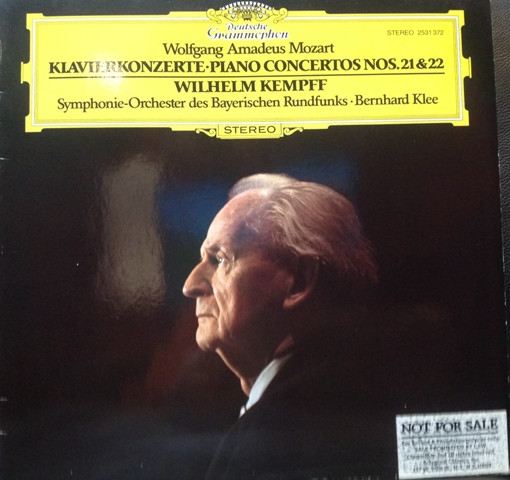
Initial Impressions At this point (it will change later), basically it's Sun Valley (circa $1,500 as tubed, not cheap at all, and that's the kit version only!) vs 2 much cheaper ss phonoamps, the Arcam rPhono and MoFi Studiophono (same link as in above System section). I used the flat settings, and with its own FET MC section (more below). While there are some significant caveats (more later too), for this tube lover the contest is not close. The ss phonoamps, best buys as they may be, in comparison seem to paint in broad strokes, whereas the brushwork is much more finely etched in the Sun Valley. One thinks of tubes as being smoother but that is not always true. Case in point, the Arcam is actually smoother in many ways, but the Sun Valley beats it handily at its own game, namely rhythmic finesse, or PRaT. Music is simply more articulated and nuanced. I will illustrate this with 2 LPs I acquired on my recent UK trip (see in pic at the bottom). This pair proves to be so revealing of the analog system that I have stowed them into my pile of Test Discs! Paavo Berglund is a Sibelius specialist noted for his 3 complete cycles of symphonies. In this sonically excellent digital LP, the Finlandia is supposedly the centerpiece. While the account is excellent, it does not quite have the sheer opulence of the same orchestra under Ashkenazy (digital Decca recorded by Kenneth Wilkinson), nor the romantic sweep of the Halle under Barbirolli (also on EMI, ASD). What's makes it a demo disc for me is the Tapiola. Like many other Sibelius tone poems based on Nordic myths, it's not at all an easy piece to bring off, its many rather still moments of beauty demanding the utmost of the conductor's skill at piecing things together. The Sun Valley elevates the atmosphere (which means everything in Sibelius) to a rarefied level, revealing playing of the utmost sensitivity and beauty. I don't have Berglund's other versions on hand, but this version is still available as a Seraphim CD release at some vendors. The LP is likely uncommonly seen. Even more surprising is the Brahms Double Concerto on EMI. This is a recording that musically is almost the complete opposite of the much vaunted recording of Oistrakh/Rostropovich/Szell (also on EMI). The very different (more subtle) personalities of Ferras/Tortelier/Kletzi present a less heroic interpretation that honors the work for its refinement and interplay. The first time I played this UK pressing with the Arcam it didn't register as much (I have it before on an Angel LP). When I played it through the Sun Valley I was quite astonished by how much more I enjoyed it. The dialogue between the 2 great soloists was learned and deep, blending perfectly with the Philharmonia (at its peak) under the equally elegant Kletzi. It's a whole fabric in a work that can sound disjointed. Yet another example is a late DG recording of the immortal Wilhelm Kempff. The seamless rapport between the soloist and the BRSO under Klee is priceless (more so than the pianist's earlier Mozart concerti recordings). The very subtle but myriad colors of this pianist are utterly spellbinding as rendered by the Sun Valley. Now, I have concentrated on classicals because that's my benchmark and I firmly believe no review is near complete without playing a lot of classicals (which is why I abhor Ken Kessler). Suffice to say, the few vocals and jazz I played were done very well too - no problem there, and you shall find many examples in HR's review. For my serious reservations, see below.

MC Section All of the above findings were heard through the Sun Valley's own built-in FET headamp, the small board mounted on the side (left in bottom pic). This is unlike HR's review, where he basically uses his expensive Step Up Transformers (SUT) into the MM section. He only gives the MC section a brief mention, and it seems I rate it higher, but then you should know I frequently prefer active headamps to SUTs. Given current practices, I seem to be in the minority. Mind you, except for initial testing after the built, Andy didn't use the MC section, so I basically ran it in for him. I should also note here that I did not use an MM cartridge for my time with this unit. Loading For the MC section, vkmusic lists the loading as 50 ohm, but the manual says "Corresponding Cartridge MM (47k ohm), MC (20-50 ohm)". That is weirdly worded. Does that mean only 20-50 ohm cartridges are recommended? I do know a few phonoamps have the lowish 50 ohm as fixed loading (100 is more common choice), but I shall note here that theoretically this is certainly not ideal for my Denon DL-103. With the Arcam rPhono and MoFi Studiophono I was able to use 300 and 500 ohm, respectively. I mention all this for completeness sake, but I am not one who obsesses about loading - note the good result described above even with the "incorrect" loading (tube magic helps).

SUT into MM Section I did test this out with my trusty vintage Fidelity Research FR-3G. It is modest in cost and works very well with the Denon DL-103. Indeed, the high impedance setting is likely specifically designed for this cartridge, deservedly prevalent in Japan (and elsewhere). I think you will have to fork out several times its cost for a modern product to compete (as an example, I prefer the FR to the Lundahl that is built into my Shindo Monbrison.) As expected, this imparted a bigger and warmer sound and improved the dynamics. However, this came at the expense of some treble air and, more significantly, the loss of some of the wonderful rhythmic zest I heard before. Although I have other esoteric vintage and modern SUTs (like the popular and excellent Cinemag 3440A), I didn't bother to try them out and reverted back happily to the built-in FET headamp. SUT matching can be as rewarding (or frustrating) as tube rolling. Don't forget one also has to roll an extra pair of cables for best result and that's surely a chore.

Gain The manual lists the following: "Gain: MM35dB, MC +22dB (High) * Gain can be selected the cartridge output (HIGH/LOW) (HIGH when selected +4dB (MM)/+2.5dB (MC)". vkmusic changes the second part to "(LOW when selected -4dB (MM)/-2.5dB (MC)", which is perhaps just a little more clear. I take it to mean maximal MC gain is 22 db + 35 db. From my experience, I think the spec for the MC section is overly "optimistic". In my case, using the Denon DL-103, the LOW setting, supposedly only 2.5 db lower in gain, is much less, and basically useless. More on gain below in Shortcomings section.

Tube Rolling As Andy's unit came with costly good NOS small tubes I didn't roll those. Although neither the manual nor vkmusic is totally clear about this, I don't think the 2 12AX7 (V1 and V2) should be substituted with cousins U7 and T7. But V3 can, as in Andy's unit's use of U7 (it seems VK himself prefers a little softening). This is not surprising at all. The manual for my Fosgate states that the 12AX7 (V3 of the all tubed MC section) could be replaced by the 12AT7 if a little more treble is desired. I did roll the rectifier. It's one of the overkill aspect of this design. For the 3 small tubes a small 6X4/EZ81 would be more than enough (my Fosgate Signature 6-tube phonoamp uses one, as do too my Shindo Monbrison and Citation I preamps, with just one supplying the plethora of signal tubes). The octal base is certainly a conscious move to appeal to those who want to roll a larger variety of tubes, including the most iconic rectifiers, like the WE 274B. I tried a few. An old ST 5U4G was better than the GT 5U4GB, but my favorite turned out to be a 1952 5R4GY, which imparted more refinement (5U4 has a bit of grain). Worst was the 5Y3, which sounded flaccid. Of course one can also try 5AR4 and its likes but I didn't as I always prefer the direct heated rectifiers when it comes to the octals (note that the 6X4 is also indirectly heated). If you, like me, have a bunch of rectifiers it can be fun rolling them, and rectifiers are known to make as much difference in the sound as the tubes they supply. The sound difference is likely in good part due to the difference in voltage drop, which affects the gain somewhat (the 5AR4 should have the highest gain due to its smallest voltage drop). I should note here that Andy has rolled quite a few rectifiers and prefers the PSvanve 274B replica for its smoothness, though he notes it is a little opaque in the lower reaches. Also note that the manual mentions 274B, 5AR4, 5R4, but not 5U4.

Bells and Whistles I only tested out the Roll Off briefly. Engaging it certainly changes things the way a Treble Tone control would, but I left it defeated otherwise. Since most of my LPs are RIAA, I didn't test out the various EQ curves as I never find it particularly useful nor necessary (several of my vintage preamps, like Marantz 7 and Citation I, can perform this function). Personally, I'd have preferred a variable MC loading feature over these EQ's.

Cables Like with all components, cabling is critical. Through the course of this romp I largely used the Gotham 2111 (EMT replica) but I also tried Gotham DGS-1, GAC- 2, -4/1, GAC-1 Ultrapro and DIY 47 Lab, especially when the rectifier is rolled. So I'd not recommend any in particular.

Shortcomings While the Sun Valley excels in uncovering the minutiae in the grooves, and in the most meaningful way, it does have serious weakness in Gain and Dynamics. This is certainly so with the stock FET MC section. Even with my Denon DL-103, which has average output for an MC, the Gain is on the low side and I had to rely on more gain from my tube preamp. Even with MC cartridges of lower impedance than the 103, users of passive devices or 1:1 TVCs will have a good chance of being dissatisfied. I personally have no issue with this really as I can crank up my active preamp. I have said this many times before, and will again: For those who play vinyls, an preamp with gain is not an option but a necessity. However, what concerned me more is something else. This is not the most dynamic of phonoamps: with the orchestra in full throttle, there is loosening of the fabric and some coarseness. You may wonder, because you may have read about its vivid nature and even "explosiveness", so why a different opinion here? Well, if you play a jazz or pop LP the alternative narrative is definitely true because it's much easier to get the max out of those genres. That holds even for much of classical, especially baroque, chamber music and solo instruments. MY litmus test for dynamics is large orchestrals (as it should be), which is what I am talking about. With this kind of music the Sun will play loud but lose control and compress a little more than desirable. It is arguably less dynamically controlled than even the 2 budget ss phonoamps I compared it to in this article. In this aspect, of paramount importance to a listener of big orchestral works, I'd not even try to compare it with my big ones, the all-tube Fosgate Signature, the LCR Aurorasound Vida, Parasound JC3 and the transimpedance AQVOX (despite its high impedance the Denon works great in this phonoamp). Now, yes, some of this particular shortcoming can be ameliorated by using a SUT and the MM section only, but it is not a complete cure. Sound is definitely bigger when a SUT is used but, as mentioned, this has its own trade off. Even then, the dynamics is not quite up to the big ones or, say, some full function preamps (like my Shindo Monbrison). Now, even more than before, it is fashionable to use a SUT so this is likely not of concern to those interested in this product. A tubed active headamp (section or stand alone) is after all quite rare. And yes, I'm aware that there are those who will immediately disqualify me for "incorrectly" using the 103 on medium mass arms and loaded too low to boot; well, there are many places in the chain that can compensate for "non-ideal" situations. Why do we roll cables, I ask? For my money, I'd prefer a totally "incorrect" 103 over the ridiculously over-rated and popular Hana's. Yup, I know from my experience with the Hana SL. Insider news: the innards of the Hana's are vastly inferior to the Denon DL-103.

Caveats  I encountered a curious problem. One day, I turned the unit on and it sounded faulty, with drop-outs and distortion, or even no sound at all. I suspected a contact problem and flipped the several toggle switches to and fro; turned the knobs too every which way. Finally it went away. I called Andy and he said it had happened to him too, especially after changing something. I don't know whether it's this particular unit or not. The Japanese love these little switches and I concur and think of them as sonically transparent. The ones on my various gear have never developed a problem. Quality issue? Who knows! For what its worth, let it be known that Kevin's unit is fine.

A Formidable Rival I'll let the cat out of the bag here. For my taste and the music I listen to most, the Sun Valley was trumped by one of my big guns. Can you guess which one? It's so easy but if you can't, stay tuned for the next episode, when I shall do my summation on the Sun Valley.

 Primary


13 August, 2023

Arcam rPhono MoFi Studiodeck Revisited


Click pics to enlarge. Note the passive 597 horns atop the loudspeakers.

Letter from NYC (23-4): Reconnaissance, or Renaissance? Part I
NYC Analog Log (23-I): Revisiting Arcam rPhono, MoFi Studiophono


Arcam rPhono Review
MoFi Studiophono Review

From this post on, I shall chronicle the Rehabilitation of my System(s) in NYC. Needless to say, especially now with the recent acquisition of the MoFi Studiodeck, the narrative shall be analog-centric. I shall start from the time I arrived, quite before the new TT entered in my life.

I arrived late at night. As soon as I got up the next morning, I hooked up the simplest system. As the last system I used when I exited NYC in 2020 was mostly in its original place on the TV rack, all I needed to do was hook up an amp to my Shindo Monbrison. As I wanted to ease myself in, the versatile Almarro 205A EL84 SE amp was an easy choice. Unlike its more powerful and splendid 6C33C brethen 318B, it also generates considerably less heat.

I started with CD, and was more than happy that my 1-bit Micromega Stage 2 worked perfectly from the first moment, even after 3 years of dormancy. Same with the el-cheapo 14-bit Magnavox CDB-262. Both made wonderful music, though in their very different ways. Through the Harbeth P3 ESR SE, sound was even better than I remembered. Could the enhancement be due to the presence of the 新时 597 Passive horns? More on this would appear later in this Log (maybe Part 3), or perhaps even later in an article of its own.

Pretty soon I got the itch to play vinyl. As I knew ahead I was going to play with different phono amps I forwent the phono section of the Monbrison. I quickly hooked up the Arcam rPhono and was more than delighted by how well it handled the Denon DL-103 (loading approximately 300 ohm) on my Technics SL-1200 Mk II. Particularly in jazz, where the fast transients were just brilliant. I was so taken that I even took it to head honcho Andy for him to evaluate. Andy later reported that it was very even handed and just lacked that last bit of smoothness that he prefers in a tube preamp.

The rPhono is unusual in that, like Arcam's rDac, it has a flat polymer base with no feet. I found that sound improved significantly after I placed 3 Vibrapods underneath. There is something else that I had not noticed before. The rPhono has 4 gain settings for MM, 30, 40, 50 and 52 db. Add the 30 db MC gain, MC should have 60, 70, 80 and 82 db of gain. But in actual use, even with my Denon DL-103, which has a fairly healthy output, 40 in this system definitely lacked oomph, and 50/52 had to be used. I maxed it out. So, it'd be natural to conclude that those gain spec's are  "optimistic", not an unusual occurrence for a phonostage.

I also tried out the MoFi Studiophono but not for very long because of a new arrival (next in the pipeline). The Studiophono has 4 loading options: 100, 500, 1000 and 47k and, as there is no 300(+), I loaded the Denon DL-103 at 500. The sound was quite good but I gave the nod to the Arcam. I doubt the loading difference has much to do with the outcome. This is a somewhat awkward conclusion, as the rPhono has long been discontinued (the Studiophono is still current and available). Should you be interested in the Arcam, you'd have to find one on the second-hand markets, probably for a pittance as it is a dark horse and so little known. It may not the last word in anything, but it is a surprisingly solid device.

 Every Saturday is Vegan Day at the Senior Citizen Center. Indian Food.

The Economist Obituary for pianist Andre Watts.

20 July, 2020

Early Memories of an Indian Audiophile Counterfeit and Pirate Music

Editor: It's my pleasure to introduce another writer to the blog, audiopro from Mumbai, India, a friend of Prem and Vivek, whom you'd remember from a previous Virtual Home Visit. audiopro also frequently contributes to the Indian forum hifivision. For some reason, these Indian friends all have kind of a philosophical bent, which is just what I like! This first article was actually an email. I liked it so much that we are publishing it here. People from the US and Europe will find it fascinating but people from many other countries in Asia and elsewhere will certainly find resonance. Even today, with wider and official availability, it is actually still hard to be an Indian audiophile. Personal Import duty starts at 40% and can go up to 75%! Wow, that really hurts!

Letter from India (2)
A walk down memory lane...
by audiopro

Growing up in India in the 80's was a different universe. I grew up on billboard and much later on MTV hits. I remember waking up at 6:30am to watch the MTV top hits countdown. Those were the days of music videos. Elton John's sacrifice, Nirvana Team Spirit, Michael Jacksons Jam, Remember the Time, Speed Demon, Thriller, Aerosmiths Amazing, Crying and Crazy and so on.

India was a shut economy those days. It was difficult to find all sorts of English music and imported audio equipment at a store. Hence there existed a large grey market where you had shops that recorded whatever you wanted. You gave them a list of songs and they recorded what they had, which was surprisingly almost everything you asked for. If he didn't have a song he'd call your landline and give you choices or leave a message and you'd call back frantically. We bought metal tapes that were carried by people visiting foreign countries. They worked as carriers and sponsored their trip by selling articles that they brought back. I remember buying Maxell Metal cassettes and TDK ones. They were my favourite. I loved the dark grey finish of those cassettes. The smooth acryllic covers. Opening the plastic foil wrapping of a cassette was like unveiling a new iphone, maybe even better! The Sony C60 and TDK B90 were the go to ones if you didn't want metal. Whenever you struggle to get something you tend to appreciate it. I had a cassette rack and a cassette drawer. Each cassette was labeled like Super Mix 80s, etc.

Then, getting a system was another story. In those days Mini combos ruled the market. You had local manufacturers who made stuff which looking back was really decent but they lacked the brand, fit and finish of a Sony or Panasonic or Philips mini compo. Sony, Philips (Netherlands), Pioneer, Hitachi did not exist in India but the grey market was so large, at least aspirationally, that they even had a few service centers in India and sometimes ran ads here! You went to a shop and he showed you a catalogue. My 10 year old eyes would shine when I saw the plethora of Japanese mini combos featured in that catalogue. I could barely reach the top of the counter but yet it was magic.

I lived in a small quiet suburb on the outskirts of Mumbai. Today the city has expanded and this suburb has become the center of it. But in those days we were cut out from the main city unless one used the train or owned a car. So we grew up in a suburb cut off from city life in a country that was already cut off from the rest of the world. Those were beautiful days and I would happily give up the internet, etc and go back to humanity.
Everyone of us had a setup, be it a walkman, radio (called a 2 in one, sometimes with a double deck) or a mini combo. My first setup was a Fisher mono radio and then came a Sony FH series mini combo with a CD player. Man! I felt like I owned a Dartzeel! My neighbour had an Akai mini combo, another had a locally made one. Sony was the standard pretty much.

Every evening between 6-8pm you played music and you played it loud. The entire locality would be abuzz with Ace of Base, Michael Jackson, Aerosmith, Queen, Guns and Roses etc. You had a rocker who wore black T-shirts and played Pink Floyd (and your grandma was scared of him), you had a pop neighbour who played George Michael and Richard Marx and so on. In fact it was an unspoken expectation where one person played lovely music into the night. I remember Madonna being played loudly for the entire locality to hear at 9-10pm which in those days was considered very late. That was the only way I could listen to the True Blue album. My dad's brother was dating someone and when I heard she had the True Blue album, I begged him to get it for me to use it for a few days. If someone owned an original Thomson cassette or an Original Billboard tape there would be a line begging to borrow it. Even if I hated the mix I'd try and listen to the tape because it was an original Thomson! Sometimes the person would lend it to you secretly and you had to hide it nor play it loud or you'd have neighbours kicking your door, trying to figure out how you got that tape! With time the official cassettes became widely available and stores sprouted up. I still remember buying an album once a month because that's what my pocket money allowed me to do. The Now series, Krushchel Rock, Meatloaf's Bat out of Hell II.

We had very little but no one really complained. It was beautiful, pure, innocent and it was all we had. We had posters of Hollywood stars in our cupboards, Calvin Klein perfumes and Denman brushes were sought after. Everyone wanted George Michaels Aviators!

TV was a similar story. You had video cassettes that you got from the local store. Again everything was bootlegged but that's how the system functioned. Robocop, Ghost Busters, Superman, Terminator, Police Academy, Top Gun, Gods Must be Crazy, Evil Dead, Blood Sport, Child's Play, Lethal Weapon, Twins, True Lies, Total Recall! Today kids take the net for granted and have no idea what they are missing out on. We were born human but ruined into robots.

Then as we grew up our parents got basic cars that didn't come with a stereo. Slowly we grew up and had our own cars. So came the aftermarket car stereo setups. Pioneer was the king and we had amplifiers with Pioneer helmet speakers and subs being fitted in the cars. As labour was cheap it was easy to modify car doors, have boxes built for your speakers, etc so that it would fit in aesthetically yet be functional.

The affluent had KEF, Sansui, Goodmans, Tannoy, B and W, JBL, Pioneers, Kenwoods, Sony, Wharfedales, Bose, etc. Again all this was available via the grey market. You didn't have much of a choice as such. You just went with whatever was brought in. Then there was a large second hand market and so on...it was beautiful.

All this sowed a seed of passion for music because it was all around us and we worked hard, very hard to source it. Today we seek DSD, lossless music etc. and talk about going back to good old NOS DAC's. In those days we wanted music, we wanted skateboards, BMX bikes, Spalding basketballs, Butterfly table tennis rackets. We valued passion, we valued innocence. I wonder what changed...I really wonder....but the memory remains...

Editor's Postcript: 
This article brought back so many memories! I came to the US when I was sixteen (on a Pan AM flight). Prior to that our home in Hong Kong was very small and there was only a TV, no music playback equipment except a small radio. Unlike audiopro, I didn't have an avid interest in music then but was aware of what's happening. As I am older than audiopro, my memory includes vinyl in its heyday. HK was a little ahead of India because it had always had a large (and rich) expatriate (colonial) and business community (including many Indian traders) who could afford the luxury goods. Also, HK has always been a free port, which is why HK audiophiles are lucky. But back in the 60's and early 70's, most people were not well off, and some were desperately poor. The radio would play western music and both official locally pressed and imported LPs were available. However those were so expensive for most people that there was a large Pirate Industry. Say, you made $100 a month and an official LP was $20 and a pirate $5. The pirated LP's were mostly pressed in Taiwan or Vietnam because the record companies did not have representations there. They had translucent and ghastly colored vinyl (now back in vogue for young people)(pic below from interesting Chinese article in popd.hk; English translation; the "Top Hit" is likely a compilation). In the West, there too have been counterfeit's and pirates too but they seem to be much higher in quality (see here). Of course, piracy was even crazier when the cassette came (you can tape off radio too). Just like in India, any song can be had and you can make your own compilation, all for a reasonable sum. I remember my richer classmates bringing to school the latest Chicago LP, whatever, for showoff and for lending to their buddies. I wasn't interested in the music but I was somehow jealous. And audiopro mentioned Butterfly table tennis rackets. Ping Pong Ball has always been popular in poorer countries, and HK was no excpetion. I spent at least a couple of hours playing table tennis everyday! The Chinese made rackets were cheap and had good wood but lousy rubber surfaces, so we would peel the surface(s) off and resurface with Japanese Butterfly!

台灣生產的翻版黑膠,以彩色為主,招紙上更註明翻版唱片的公司名字,甚為明目張膽。