Showing posts with label My Corner. Show all posts

07 January, 2017

Kondo System Loudspeaker Matching LS3/5A Pioneer S-A4SPT-PM VP 47 Lab 4737 TAD TSM-2201 JBL Kondo S-18


Pic of system during evaluation. The Kondo system is connected to the loudspeakers on top, whereas the LS3/5A's below are driven by Flying Mole CA-S10 digital amp to the left of the M7. And No, the Pioneer's are not trapezoids (just lens distortion). Click to enlarge.

Kondo System Bookshelf Loudspeaker Matching: Pioneer S-A4SPT-PM and -VP, 47 Lab 4737, TAD TSM-2201, KEF LS50, LS3/5A and JBL Subwoofer
My Kondo System, Part V
Review: Audio Note M7
Review: Pioneer S-A4SPT-PM, Part II
Review: Pioneer S-A4SPT-VP
Review: TAD TSM-2201, Part II
Kondo Ongaku SP (S-18) and Biyura
Letter from NYC (61) 2016 (17)

Revised Feb 3, 2017: For the last two weeks I inverted the loudspeakers, that is with the tweeter down. The effect is dramatic, and I am very pleased. This is added to the discussion in "Sonic Impressions: Effect of Placing Loudspeakers High Up"

Links to My Kondo System, Part I (background info on Kondo and Ongaku); Part II (all about M7); Part III (the most important one, detailing set up and listening experience); Part IV (largely phono related, and Kondo preamp/amp were not used; skip if you are digital only)

For those interested in 47 Labs 4737 alnico loudspeaker, Part II (with Flying Mole CA-S10 amp) and Part III (with Naim Nait I amp) contain extensive testing.


The Evaluation took place in HK but the article is written in NYC.
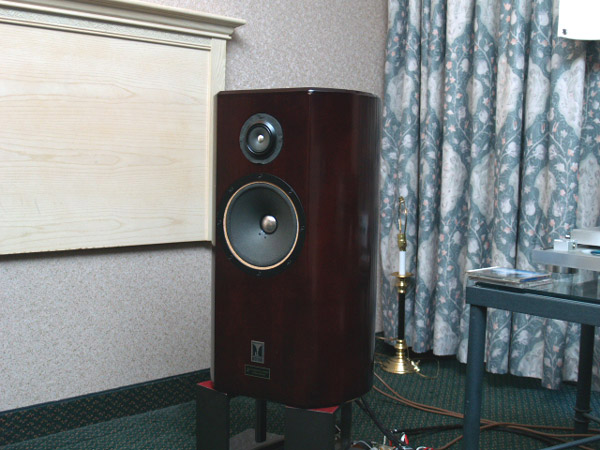
pic: R: Kondo S-18 prototype from Positive Feedback CES 2007 Report; L: S-18 leaflet. Click to enlarge.


ENIGMA: What Loudspeakers for Kondo?
As with many SET amps, one of the major difficulties with Kondo is loudspeaker matching. Like most SET amps, ideally you really need efficient loudspeakers to get its best.

What Kondo san himself used and/or designed This must be what we ask first. YL I believe, in his earlier days, even before Ongaku, he was a horn user and involved in YL horn designs (my YL horn system here; I have yet to write more extensively on these marvelous creations and their superb sound). I have done a bit of research on YL, but there is not that much on the internet. I believe, like JBL and Altec, there were few official enclosures). Branded Kondo Since YL, Kondo san had designed many smaller loudspeakers but they are virtually unheard of. Kondo's official site has discontinued loudspeaker model names (but not info) accessible only via its Japanese page (here). Ongaku SP (S-18) The S-18 is composed of the M-18 full range unit (many Japanese designers, like 47 Lab, Sparkler, Air Tight etc, favor fullrange loudspeakers) and the M-1 tweeter (likely a first order crossover - just a cap). I did hear the S-18 many many years ago, when Kondo san himself attended a HK hifi show (organized by the now-useless magazine 發燒音響). In the smallish hotel room, it was among the best sound I have ever heard in a show. The Positive Feedback pic shown above looks however bigger than I remember. Also, this German site's Las Vegas 2008 report must be virtually what I heard. BiYura (Field Coil) Kondo san passed away in 2006. In 2011 the Biyura Field Coil loudspeaker was unveiled in various hifi shows, including that in HK, which I covered (here). As you can read, I did not like the sound then. For this article, I did an exhaustive search and it seems the Biyura made apperances in quite a few hifi shows, but none after 2014. As there is not even a mention in Kondo's Japanese page, I assume the BiYura remains a prototype, if not an abandoned project. I am curious whether Kondo san himself had a hand in its conception, or if it is solely Masaaki san's effort.

It appears: 1) Kondo loudspeaker systems are perpetually in a state of flux, almost always in prototype stage, then and now. There may be multiple reasons for this: it is in keeping with most artisanal designer's tendency to forever tweak; also, many Kondo dealers also distribute other horn systems/efficient loudspeakers and hence may not be that interested in a Kondo loudspeaker (think Avantgarde in HK and Living Voice in the UK); 2) Kondo san likely was never completely satisfied with his loudspeaker creations (under the Kondo name). None ever remotely achieved sustained production (The S-18 and the Ruthy 4 perhaps were better known and had sold a few). Maybe Masaaki san is like that too with his field coil.

What Users and Dealers Use Aside from a few appearances by Kondo themselves using the S18 and Biyura, all manners of loudspeakers (not just horns) have been used in audio shows (to get an idea, google images using "Kondo hifi show"). My friend JC, Australian dealer (Audio 101) for Kondo, uses Avantgarde Trio and Tannoy Westminster. I have also heard an acquaintance's Kondo gears with Audio Note UK loudspeakers (sacriledge!). What I Use In my old house, I did not get to play that much with the Kondo's, but they did well with my Canterbury. In my current small abode, I could only manage to do it the way in the pic, which is why I actually carried out this not inconsiderable project of bookshelf loudspeaker matching, of which this is only the first report. 

Equipment used in Evaluation:

Digital: 47 Lab Shigaraki Transport/DAC
Analog: Pro-ject RPM1.3/Clearaudio Concept MM
Preamp: Audio Note (Kondo) M7
Amp: Kondo Ongaku
Loudspeakers: as titled
Subwoofer: old JBL active subwoofer

Audio Note M7
The now discontinued M7 went through many iterations and is the most famous preamp of Kondo design (for the difference in versions, see my article here). All generations have similar chassis, internal structure and bespoken silver laden parts. This M7 you see in the pic is actually my second one. A few months ago I chanced upon this early unit and grabbed it because it is a full function preamp with a smaller footprint that actually slots into my IKEA shelf with room to spare/ventilate. As opposed to my other one (line only, 12AU7x2; last version), this one is a much earlier design, branded Audio Note but made in Japan, before Kondo san and Qvostrup split up and the latter founded AN UK (this is also why there are M6 and M8, but not M7, in their made in UK preamp lineup). This one uses 6072 in both the phono and line stages.

TAD TSM-2201
For info on these 86 db, 4 ohm sealed enclosure loudspeaker (8" woofer, the largest in this group), see my previous detailed TSM-2201 review. That review was when I first got them, and they were used upright. Subsequently I took them to my current abode and have actually also used them with Kondo (go to end of this sprawling article; used horizontally, on the same IKEA shelves but with them lying down, long sides parallel to the floor). The sound was excellent then but later I had to reconfigure, so the top of the shelves are higher now and I could only use them disadvantageously upright.
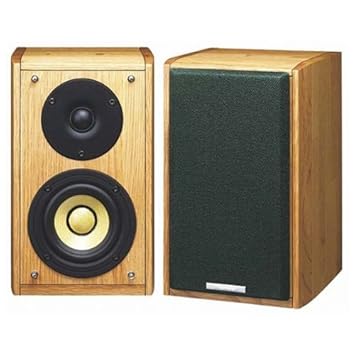

R pic: -PM; Lower L pic -VP


Pioneer S-A4SPT-PM and -VP
My initial impressions of S-A4SPT-PM, especially when compared with the legendary Yamaha NS-10, was not entirely favorable. They were likely not quite run-in at the time. Recently, after I decided to re-make my Kondo setup, I brought them to my current abode, where I first used them very satisfyingly on the desktop with 47 Lab Gaincard for quite a while. Sound was much better than at my old place, so they were probably finally run-in.
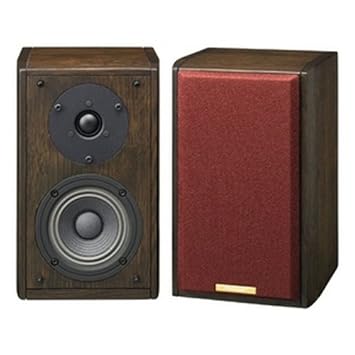
As I took to the PM more, I decided to acquire a used pair of its sibling, the S-A4SPT-VP. This is a slightly later and more expensive version with a different woofer (alleged to be TAD, though given the Pioneer/TAD duality, imho it is just a matter of semantics and marketing) and more luxurious finishing of ebony color. Both loudspeakers are likely of somewhat limited production, so in the West they are now only largely available through the internet (for a reasonable sum). The VP sold well in HK, but unlike the PM did not have any coverage in the West (only real online review is in Chinese, from Singapore).

Both are 84 db, 6 ohm loudspeakers with a 4" woofer, real wood enclosure and a small rear port. They differ in that the -VP reaches lower (spec'ed at 50-40k Hz vs the 60-40k Hz of the -PM). The -VP also has a higher crossover point than the -PM (4,500 Hz vs 3,500Hz). Despite similarity, they turn out to be surprisingly different in character (see below).
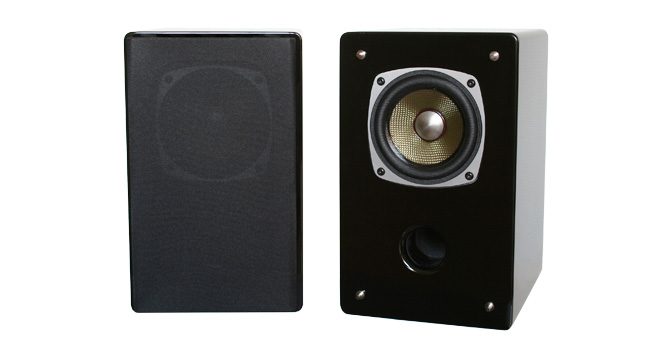
47 Lab 4737
These are also called the Lens Alnico or Lens II. All else being the same, it differs from Lens (also called Lens I or Lens MkII) (4722) in that the driver magnet is alnico. My initial impressions was favorable. Since then, there has only been one review in dagogo. It is an 85 db, 4-ohm  4" fullrange with MDF enclosure and a small front port. My pair is well used, obtained by trading my KEF LS50 towards them.

LS3/5A
The 82 db 2-way with 4.5" woofer and sealed enclosure is arguably the most famous bookshelf in history and needs no introduction. In HK, after reluctantly selling my Harbeth to my good friend wss, I still have the Rogers (15 ohms, serial number 2xxx) in the pic as well as a rosewood pair of KEF (Raymond Cooke Edition, 11 ohms). I have been using them with my Flying Mole digital amp (the one next to the left LS3/5A) for casual listening, so they are in condition.

KEF LS50 This 85 db, 8 ohm loudspeaker with coaxial drivers is quite a famous loudspeaker now. See my reviews (KEF LS50, Part I, Part II, Part III). I had traded them towards my 47 Labs 4737, and hence they are not formally part of this evaluation. Documentation of this period here. Note in the pic the Ongaku was used as an integrated (click to enlarge).

JBL Digital 12 Subwoofer
This is an early JBL active subwoofer I bought on the cheap in HK (in the US, the kind you can find in your local craig list for nothing). Aside from a pic or two (see here), there is virtually no info on the net. I did find its Frequency Response is 29Hz to 150Hz. Adjustable Crossover Frequency is 50-150Hz. Just a bulky veneered black box with no legs, it is rather old fashioned in looks and lacks sex appeal. I have it upright, with its 12" paper (my preferred cone material) woofer the large port underneath firing backwards. I use the hi-level rather than line input (I always do; you don't want to corrupt the output of a good preamp!). Previously I had used these very effectively with larger JBL loudspeakers (here). In most ways I prefer them to the subwoofer that I have, the REL Strata III.
Sonic Impressions
  • Audio Note Japan M7 Line Although the sound is similar to my later Kondo M7 (described here), it is not quite the same. In this older M7, the "silvery" treble is still there, but less pronounced, reinforced by a somewhat warmer midrange (some may prefer this). My later unit is on loan to a friend so I cannot yet do an A/B comparison. Phono This being a used unit, the 6072 tubes are a bit noisy. Using Stefan Ashkenase's excellent performance of Chopin's Piano Concerto No. 2, which I happen to have on both LP and CD, the LP just mercilessly killed the CD. Don't forget the 47 Labs digitals cost many times more than the Pro-ject analog rig! Part of this is the intrinsic superiority of analog, but the gulf is so wide that one has to conclude that this phono section is of the utmost quality.

  • Kondo Ongaku as Integrated and Audio Note M7 + Kondo Ongaku In My Kondo System, Part III I detailed the difference between using the Ongaku as an integrated amp and as an amp with the M7 as preamp. That was in my old house, with Tannoy Canterbury HE. At the time, I found it a toss up. Then, in the smaller abode, configurations changed several times. First: Ongaku + M7 and TAD Long before this evaluation, from 2012 to 2014, I had actually tried both ways with the TAD TSM-2201 (see above). I briefly chronicled it near the end of this sprawling article, although I failed to mention that this time around adding the M7 as preamp was better than using the Ongaku as integrated (too bad too that I had accidentally deleted the pics - will have to restore them later). Then in 2014 I had to reconfigure the system to: Ongaku as Integrated due to lack of space on top of the now erect shelves for the Kondo M7 (article here, showing the KEF LS50 used at the time). During this period, I traded the KEF LS50 towards the 47 Labs 4737 (R pic; click to enlarge). Then in late 2016, after I acquired the Audio Note M7, the system became Ongaku + M7 and Loudspeaker Rotation With the more inefficient small loudspeakers, there is no question that the addition of the Audio Note M7 injects significantly more vitality into the system. The sound improved to the extent that I decided to test out all the small loudspeakers I have.
  • Effect of Loudspeakers Placed High Up The shelves are the IKEA Kallax. When prostrate (30.375") the height is quite suitable for placing bookshelf loudspeakers. However, when used erect (57.875") the shelves are too tall for a sitting person. The resulting sound would have 1) less bass; 2) a leaner balance; 3) soundstage and imaging that are a bit too high up (which is better than too low, like the ESL-57). These drawbacks can be minimized, but not erased, by listening standing up and further away. Tilting the loudspeakers forward can lower the height a little too, but not by much. More effective would be to have the loudspeakers one shelf lower (except for the TAD), but I have yet to try that. The higher position I reckon also has the advantage of a little less boundary effect. As we know, many audiophiles are anal-rententive when it comes to the listening position, imaging and soundstage, and will sneer at this kind of setup. While I am not against those values, in general I want to be able to listen to my system no matter where I am in the room - a well dispersed rather than a narrowly focused sound (ESL being an example of the latter), which all my systems can do. Addendum Feb 2017: As of Feb 2017, I now have the speakers (currently LS3/5A) "upside down", that is with the tweeter beneath the woofer. This brings the tweeters down by at least 6 inches. The result is quite remarkable. Even though the tweeters are still way above "ear-level", they seem to have entered a "comfort zone". The imaging is bigger and more natural, the panorama wider and closer to the real experience. Most noticeably, big orchestral pieces seem more at ease, and I find myself playing a lot more Bruckner and Mahler. With the woofers higher, there is less bass and cabinet resonance (see below) and the subwoofers need to be turned a little higher up in volume and crossover point, easily achieved. Marvelous!
  • Isolation/Cabinet Resonance As the shelves are not the sturdiest and as the loudspeakers sit on the same surface as the electronics, one can expect some resonance. However, since the loudspeakers have small woofers, except for the larger and fuller bass of the KEF LS50 (a large rear-port too) I did not hear much resonance/smearing. Nonetheless, I inserted slabs of industrial absorbers (gift of wss) underneath the loudspeakers. The effect is not as audible as under my Yamaha NS-1000M, leading me to think these work better for low bass, which most bookshelves lack. The 47 Labs transport has its own isolation platform, whereas the Kondo Ongaku is too heavy for devices. Underneath each of the three pointed feet of the Pro-ject turntable I put a small slab of Japanese made gel-like polymer (which they place under items to prevent sliding; sold in home stores in HK). Here I'd like to mention the lower shelf again. The LS3/5A (side panel separated from bookshelf wall; base decoupled a little with small crumbs of egg carton) has a little more audible resonance here than when on the top shelf, BUT the resonance is benign, indeed beneficial, as it actually re-inforces the bass, making the loudspeakers seem a little larger. One is reminded of the BBC and LS3/5A cabinet design principals of not using very thick (real wood, not MDF) panels and letting the enclosure "breathe". I have long been a fan of classic BBC design, and all in all think the IKEA shelves work remarkably well. My friend jules came by and without prompting thought the same thing. There are audiophiles who are fanatical about "isolation" but my experience is that in most cases they tweak away most of the music. Don't try to control everything, you can't; instead only concentrate on the harmful (meaning "audible") resonances. Heresy? So be it.
  • TAD TSM-2201 Despite having the largest woofer in the group, placed high up and used upright, the TSM-2201's sound lacks heft, and is indeed a little lean, more so than previously (see above). Reflective of the spec's, at the same volume setting, the 2201 actually plays a little louder, but that is no indication of true efficiency, as the sound tightens up more than the others at higher volume, a sign that more power is needed. To a certain extent, this can be eased by lowering the volume of the Ongaku (10 o'clock, vs 11-12 o'clock for the others) and cranking up the volume of the M7. On the other hand, given its provenance as a monitor, it is no surprise that the sound is significantly more accurate than the others in the group, especially when it comes to classical music playback. It is also true that sealed box monitor designs usually sacrifice bass extension and weight for a flat bass response, not the case for all the others in this evaluation.
  • KEF LS50 This is based on memory. The LS50 and the TSM-2201 have by far the largest enclosures in the group, yet the LS50's are easier to drive and their smaller 5.25" woofers, aided by rear ports and higher impedance, pumps out a lot more bass than the TSM-2201's (8" woofers). Sound was good but, with the rear ports really too close to the wall and the more prodigious bass, resonance was an audible problem. Too bad I could not have them in-room.
  • 47 Labs 4737 When I substituted these for the LS50 I immediately got a cleaner sound, and they were what I used for this system until well after I got the Audio Note M7. Coherence was a given (this is a fullrange) and there was no audible box coloration. Rhythm and pace were very good too. Bass weight and extension were surprisingly good. As the dagogo reviewer noted, treble is on the smooth side, but that is no problem with the Kondo system. They however don't play as loud as the Pioneer's (see below).
  • Pioneer S-A4SPT-PM and -VP As soon as these replaced the 4737's I knew I was onto something. -PM The sound immediately opened up. The soundstage is large and airy. Macrodynamics was very impressive for such small sizes! Extension at both frequency extremes were very satisfying. Although these are reasonably neutral transducers, the TAD TSM-2201's rendering of instrumental timber and microdynamics are better still. Also, rhythm and pace tend to be a trifle literal. Nonetheless, overall they are very satisfying. -VP In comparison with the -PM, the -VP has even better bass extension and perhaps neutrality. However, after listening to a lot of music, I found myself missing something. It took me  a while to point my finger at it: despite its hifi virtues, I was not enjoying the -VP as much as the more loose-limbed -PM! Then I tried out the -VP on my desktop with Micromega MyAmp. Bingo, with its excellent bass weight and extension, it makes the perfect desktop loudspeaker! It is staying in the study.
  • LS3/5A While the KEF 11 ohm is a little sharper than the Rogers 15 ohm, goes a little deeper in the bass and plays a bit louder, the difference is not that great (less than between the 2 Pioneer's). The real surprise (actually not) is that the Kondo system drove them very well (contrast this to the 86 db TAD). Neutrality is as good as any in the midband, less so in the treble and midbass (the famous hump). They resolve more than the Pioneer's, but less than the TAD TSM-2201. Its rhythm and pace is good but transient response is a trifle slower. Dynamically it is just as good as the Pioneer's. But what really catapults it to the top is a hard to define engaging quality, an ability to involve the listener.
  • JBL Subwoofer Encouraged by the dynamic result of the Pioneer's, I thought of adding a subwoofer to augment the bass. As these bookshelf speakers all do not go very low, for the Crossover Frequency I usually start at roughly at 75 or so (there are only indications for 50, 100 and 150) and work my way up. For this group, frequently the best sound is around 100Hz (I usually prefer higher to lower; some others the other way). Then I'd set the volume. Usually just a small turn (say, turning from starting point 7 to 8 or 9 O'clock) will suffice. Sometimes I needed to go back and forth a couple of times between volume and crossover frequency to achieve the best result. When properly dialed in: 1) I don't "hear" the subwoofer, but 2) I know it is working if the orchestral bass is suitably (but not overly) reinforced (maintaining the right timber); 3) the lower pitched instruments gain body, and this help to lower the soundstage and imaging a little. If I put my fingers on the subwoofer driver, it vibrates very little, but the effect, on music like Messiaen's Turagalila, is astonishingly big. Now, besides chamber music, which the Kondo system has always played beautifully, I play this piece, and my favorite Mahler and Bruckner, with sufficient satisfaction that my other rig with the big Yamaha's are getting less play.
Observations/Conclusions
  • Audio Note M7 + Kondo Ongaku As mentioned, in contrast to my experience in my old house and with my large 15" 8 ohm Tannoy Canterbury HE (here), with the more inefficient small loudspeakers, there is no question that the addition of the Audio Note M7 injects significantly more vitality into the system. This is because 1) compared to the 96 db Tannoy, the small loudspeakers are 10-14 db less efficient; 2) the Tannoy has a much larger woofer that gives heft, and the smaller loudspeakers are placed high up. Although addition of the subwoofer helps a long way, it does not a 15" woofer make; 3) driving power of the Ongaku is limited. Gain/Volume Used as an amp, the volume setting of the Ongaku is critical to the sound, and it varies with the loudspeaker used. With the hardest-to-drive TAD TSM-2201 (despite its 86 db spec being the highest in the group), which tense up when cranked up, the volume setting of the Ongaku is the lowest in the group. All the others more or less have the same higher setting. The process of employing the Gain and Volume is similar to using them in preamps that have both (think some vintage ARC and MFA preamps). Loudspeaker Impedance Based on the next entry, I think it is fair to deduce that the tubed Ongaku prefers higher impedances. Loudspeaker Efficiency It goes without saying that the Ongaku is best used with loudspeakers of as high efficiency as possible. I'd love to match it one day with my 104 db YL horns. I am sure that would completely outstrip Tannoy, not to mention the likes of Avantgarde.
  • 47 Labs 4737 In this system, the overall performance of the 4737 (4 ohm), although very good, lags behind the Pioneer's (6 ohm) and LS3/5A's (11 and 15 ohm). I have to mention that I do think they sound better with its original mate, the solid state 47 Labs Gaincard (maybe a future report; this is in keeping with the dagogo review cited above, which prefers solid state to tubes). The 4 ohm impedance is harder to drive with tubes (same for the 4-ohm TAD TSM-2201; and remember 47 Labs is NOT a tube company). 
  • Pioneer S-A4SPT-PM and -VP The dynamically loose-limbed performance of the -PM is an absolute delight. In this system, dynamically it trumps the LS3/5A but its overall performance suffered just a little because of its somewhat literal rhythm and pace. That is still better than the over-controlled -VP, which I think is better for solid state.
  • LS3/5A More than any of its rivals, the virtues of the LS3/5A are many and more evenly distributed, and its faults are minor. As mentioned, the real surprise is that the Kondo system drove them very well (not the case with even more flea powered SET's). Its 82 db sensitivity is the lowest in the group, but it is audibly just as efficient as the others. Although it needs enough watts, the impedance curve of the LS3/5A is benign and it is not a current-hungry transducer (see JA's measurements in this mega-article in Stereophile).
  • Subwoofer Many audiophiles like to have a sacred cow to hold on to. Count among this group LS3/5A worshippers; ESL and ribbon die-hards; Shun Mook sect, the list goes on...most of these people would never use a subwoofer, because it would "corrupt" the "purity" of what they worship. Bag of nonsense. In my opinion, in audio the only that matters is the end result. The serious classical music listener needs to have the lower octaves, and with smaller loudspeakers, the subwoofer, properly implemented, is a necessity. But care is needed. I'm not saying adding a subwoofer is an art, because it is not; but it'd be wrong if one wants to "clearly hear" the subwoofer - rather, one wants to "feel" it. Less is more.
  • How Good Is it? I am not the one to say, but I will tell you my classical music friends jules and Seng (you have met them before; or you can search my Blog) both highly approve of the system (with subwoofer on). It won't on all fronts beat the WE/Yamaha setup, but at least it is on a more equal footing, with virtues its own. What I can say is, even with my humble bookshelves, I think I am getting more out of Kondo than I have ever gotten, and more than some other similar Kondo systems that I have heard. YMMV.
  • What's Next? Of course, I'd love to have my shelves prostrate (lower) again, but that would take some time. Meanwhile, I intend to test out my Pioneer SP-BS21-LR (Andrew Jones design), Yamaha NS-10 and Dayton Audio B652 (I will take a pair back to HK). With the subwoofer entrenched in the system, it would prove very interesting!
Postlude: A Reader's Question I was asked: "...if possible I would like to hear how you came to obtain such a prized 'holy grail' audio component as the legendary Ongaku? I know your blog is geared towards the more affordable spectrum and "bargains", so seeing the Ongaku in your set up always made me curious to how and when you acquired it..."

Difficult Question to Answer Actually I don't spend big money easily, though my Western Electric stuff are even more expensive than Kondo. Well, curiosity got the best of me, perhaps. That would be the simplest answer.

In reality, it is not a good piece to own. In many ways, Kondo does not reveal its secrets easily, and I have heard some suboptimal Kondo setups, including dealers and sometimes my own. This led people, including some friends, to want to find any excuse to put Kondo down. Of course, many SET amps face this too, as they are immediately disadvantaged by their low power. It is also true that much cheaper SET amps, like Wavac and Verdier, not to mention even cheaper Sun Audio, deliver much more performance for the buck. Kondo is definitely of low C/P ratio, though not because of its performance, but because of its price. Kondo's unique virtues are unfortunately of subtle nature, not easily revealed to the casual, not to mention the skeptical, listener. I kinda agree with what someone said this about Kondo: "...The Kondo sound is not the most dynamic, it is not the most accurate, nor is it the most realistic sound which I have heard. Yet, there is something very seductive about the Kondo sound that once it gets into your head, you will have a very hard time getting it out..." (from dagogo).

As expensive and coveted as it may be, Kondo is in some practical ways actually both hifi and ANTI-hifi. It silvery nature can be "hifi" sounding - too bright if matched with the wrong ancillaries. Its "anti-hifi" nature is that it doesn't really go well with much of modern "revealing" hifi equipment; also, playing every loud and dynamic hifi discs to impress the crowd is also not its virtue. In my opinion some Kondo systems are ruined by not realizing this dual nature. Rather, Kondo will reward those with an intimate connection to the myriad and subtle aspects of music (same case for Western Electric, and there are many bad setups too).

Another interesting thing is, as "legendary" as Kondo may be, aside from show reports, there is really not much written about them (in English). Maybe I bought Kondo just to contribute to the literature! :-) Question answered?

05 April, 2016

Sparkler S303, 47 Lab 4718, Raos MC Mono

Letter from NYC (48) 2014 (4): Epic: Taming the Shrews; Two, not One!
My Reference Station III Updated/Big Re-shuffle
Talk Mono: Raos MC Mono, Part II
Review: 47 Lab 4718 Shigaraki Phonoamp, Part III
Review: Sparkler 303 CD Player, Part III
Review: Gotham DGS-1 Cable

Note: see also my Vibrapod review.

The Big Re-Shuffle (I) Although I am freer this time, I think I have spent way too much time on my Reference System III. This is because I have decided to re-configure and locate my first MC Mono Cartridge there. Getting it right was a journey. Compounding the problem, I also decided to run-in my Sparkler S-306 and 47 lab . As you shall see, that took quite a while. Now things have settled quite a bit and I'd like to chronicle it.

Re-Configuring System III This is the oddest system that I have, as it uses a buffer amp ahead of a super high-gain vintage preamp. Of course, with the extra electronics in the chain, I try for the utmost transparency that I can get. For detailed description of the contribution of the buffer amp and preamp, see system's previous incarnation. I get up early, and this is actually the system I listen to pre-dawn. After the upheaval, this is the current line-up:

Digital: Sparkler S306 CDP
Turntable 1: Thorens TD-309/Denon DL-103AL
Turntable 2: Pioneer PL-10/Raos MC Mono
Phonoamp 1: AQVOX 2CIMkII
Phonoamp 2: 47 lab 4718 Shigaraki
Buffer Amp: Elekit TU-8500
Preamp: Langevin 102
Amp: Lepai 2020A+ or Wavac MD-811
Loudpseakers: Almarro M1A/Dayton B652 or YL 4-way horns

Review: 47 Lab Shigaraki Phonoamp, Part III
Review: Raos MC Mono, Part II

47 lab 4718 in Prior Shootouts I had logged only very few hours on this phono amp prior to trying out the present combo. Part I has basic info and review links, and my initial experience with the Denon DL-103; Part II with the similar Denon DL-A100.

4718 + Raos For the present combo, my considerable initial reservations were detailed in Rao's review, Part I, but things slowly improved, especially after a change to turntable. I had problems with the initially peaky upper midrange presentation, but I also liked the 47 Shigaraki's utmost directness. I tried various phono amps. As described, some were not compatible in terms of hum, and all of them did not have the jump factor of the 47 Lab. So the review of these two cannot be separated. Jump factor is not everything, but counts for more in a mono playback, even for classical music - you'd want the instruments to sound bigger and have more slam. The Proceedings:
  • Interconnects For quite a while, the unbroken-in 47 4718 Shigaraki's peakiness made me moan and grieve. Swapping interconnects helped. Both the Canare L-2T2S and Belden 8451 were able to tie me over this period. Their slight softness at the frequency extremes and slightly restrained dynamics helped. Since 47 Lab's own cables are (very simple non-shielded single-run) solid core designs, I later swapped in a pair of DIY 2-conductor (simple twisted) solid core Sumitomo (one of my faves), to great effect. It is staying in for now. Compared to twisted cables, solid cores can be richer in the midrange if only because they are so often a bit soft at the frequency extremes, and the 47 Lab benefits from that. Hence, I recommend use of solid core cables with 47 Lab products. I have actually gotten hold of some bare 47 Lab cables. In HK I made a pair (without its proprietary and expensive connectors) and it worked well with the Shigaraki CDP. I shall make some more in NYC to use (report later).
  • Tweaks Again, a single Vibrapod (review here) placed below the Shigaraki phono module (less so two placed below its power supply) helped smooth out the sound to a considerable extent (a piece of wood helped too). However, after further run-in and a change of turntable, I removed it and to my surprise the sound became better. The single Vibrapod smoothed things out but smeared things a little; without it the sound is more incisive and rhythmically exacting. Note here that 47 lab thinks its ceramic has the best resonant properties; but I'd recommend a little damping during the break in period.
  • Pioneer PL-50 Substituted As part of reconfiguration, I switched the Raos to the Pioneer PL-50. I was quite taken in by the Sonic Sea Change from the previous AT-PL120. The PL-50 is less impactful, but more nuanced in rhythm and texture, thereby ameliorating to a great extent the initial rawness of the Raos. If the AT-PL120/47 Lab combo is Yang + Yang, too much of a good thing, whereas the PL-50/47 Lab combo is Yin + Yang, more balanced. While the AT-PL120 delivered the Curzon/Van Beinum Brahms (Decca) with more drive and sheer piano sound, the Pioneer revealed more subtleties in the strings and woodwinds, and was less harsh during the heaven-storming climaxes, a good trade-off. Once again, I am impressed by the Pioneer, much like its nearly identical sibling, the PL-12D, simple and surprisingly good.
Review: Sparkler S303 CD Player, Part III
I haven't listened much to this CD Player. For my initial impressions, see Part I and Part II. After moving it to this station, I began running it in. In many ways, the sonic presentation, as least initially, is not that different from the 47 lab 4718, rhythmic and lean, no surprise since the two companies are closely related. With run-in however, the rough edges gradually smoothed out (I use AC; should be better with DC, as North American distributor vkmusic recommends). Some Notes:

  • Support While I may like the looks of the small legs, I don't think they are good ergonomically or sonically. The CDP is so light that just pressing a button would cause it to slide and shift. One would think when the CD is spinning, there must be at least some lateral movements too small for the eyes to detect. I hear sonic improvements when the vibrapods are placed underneath, firmer and richer. Even two small slabs of wood (in the front and back) bring out a more stable sound.
  • Interconnects Like the 47 Lab 4718, a smoother interconnect is preferred. I tried various. Lacking another solid core, both the milder Belden 8451 and Gotham DGS-1 did very well. But with run-in, I was able to use one of my long-term reference, the Gotham GAC4/1. See below for more on the cables
  • Sound With run-in and some care in set up, the S303 finally shines! The music is mid-row perspective, with good ambience cues (a property shared by Philips 16-bit chips). Most impressive is the rhythmic savvy, which also makes one sit up and take notice of the phrasing of the musicians. The bass is clean and tuneful, with good finish (a property of non-oversampling). Although treble/upper midrange are not particularly sweet and have bite when appropriate, they are truthful. Masekela's Hope sounds mecurial, brimming with shimmering details (as it should), whereas most systems I have heard concentrate on brute force on the last cut (sigh). The S303 passes my test of replaying the Bach Violin Concerti on period instruments (Kuijken/La Petit Bande, Pro-Arte), which it did not initially. Sokolov's piano (DG), Van Morrison Moondance (Warner) were all well rendered. Compared to the better CD players, the sound can still occasionally be just a little tight (I am using horns!) when the going gets rough (like when Van Morrison belts it out). Here, I discovered something about my two Gotham cables: the reference GAC4/1 can handle more dynamics than the DGS-1, but the DGS-1 is surprisingly even more nuanced with rhythm and tonal shades. With the GAC4/1, the Sparkler's sound moves a little closer to regular players, whereas the DGS-1 accentuates its strengths, except in the most complex passages.
Conclusions
  • 47 Lab 4718 Shigaraki Phonoamp (MC) Since I have been listening to a lot of mono LPs lately, using mostly this phono amp, I think the unit is finally close to run-in, and it's time to give it a fair assessment. Shortcomings For sure, there are several: No thrills, no features for any adjustment, and not even MM; it takes time to run-in (the quoted reviews did not mention this); it is very particular about the associated gear, be it interconnects or the turntable; given that I have a tube system, I think it will not do as well in brighter systems (usually ss, but sometimes tube too). Strengths As with most 47 Lab and Sparkler products, the sound is honest and direct, which doesn't necessarily mean in-your-face. Directness is about the unadorned musical communication; rhythm and pace are superb, undeniably exciting. Maybe it should not be your only phono amp (especially if you listen to big orchestral stuff), but one of several. Think, how many phonoamps has its own sonic stamp (which, ironically, the absolutist may not even want)? For me, it is perfect for my mono setup. Although I haven't reported on stereo playback, it does them well too, opening up with run-in and able to handle large-scaled music reasonably well.
  • Sparkler S303 CD Player Again, I am close to running it in, and my impressions are much more favourable. Its strengths are much the same as those of the S306 DAC (reviewed here). I cannot do a comparison, but I do keep to my view that the S306 is a little sweeter. However, the S303 has perhaps even more rhythmic flair. The transport section certainly makes a difference. Compared to my reference digital products (like my Sonic Frontier SFD-IImkII) the Sparklers come out short if I play large scaled orchestral music, but they bring freshness to almost everything else! Good stuff!
  • Direct Drive vs Belt Drive Again, the experience shows the tendency of direct drives (especially less ones) towards leanness. Match cartridges with care. But the bass drive is certainly impressive!
  • My System I am happy with it. Given the presence of a buffer amp and long interconnects it is till very transparent.
  • Gotham DGS-1 The surprise here is that the humble DGS-1 went head-to-head with the venerated GAC4/1, each with virtues of its own. A sleeper! Gotham is discontinuing it and it is available for a very reasonable price at Gotham USA. Grab some if you are the type that always puts musicality first over hifi virtues.

26 December, 2014

2014 in Review Sparkler Audio, 47 Labs, Micromega, Flying Mole

2014 in Review: Extravaganza!
Capsular Reviews: Sparkler Audio Products
Capsular Reviews: Micromega MyRange Products
Capsular Review: Flying Mole CA-S10

Revised March 11, 2015 (short note on MyGroov)
Revised Feb 3, 2015 (correction of info on Sparkler S301A)

Like 2013, 2014 went by in a snap, busy with personal agendas which mostly had nothing to do with HiFi. This year I made about the same number of entries in this Blog as last, far fewer than in previous years. However, unlike 2013 and like 2012, I managed again to restore one choice vintage item, and, near the end of the year one thing happened after another, as I finally caught up with some long-coveted Japanese esoterica/legends. Add to this some other bargains, this entry is substantial and more than a retrospective, since it shall also contain some latest brief reviews! Read on...

Most Notable Events of the Year
  • Brook 7 Preamp The restoration of this pair of vintage monoblock preamps must be counted as my best effort of the year! For details, please read the cited article. A short quote: "...This kind of sound is impossible to describe, so different it is to almost all other vintage and all modern preamplifiers. Although not without its faults, it is on the same footing as Western Electric, and for me that is the highest accolade..." The significance of this event for me is like the pivotal event of 2012, the re-firing up of my Western Electric arsenal (link here).
  • Decca Cartridge This came about because my good friend shidi got the vintage Decca ffss MkIII cartridge...which he sent to my NYC home...well, I listned to it for 3 months and was badly smitten, and am sure there is a Decca in my future. The distinctive lightning-fast leading edge is something once heard, never forgotten. I think it is just as good with mono records, and I would prefer to listen to mono on this Decca stereo than many true mono cartridges.
  • Departure of An Old Friend An era has ended when I saw my beloved alnico Klipsch La Scala sold to a friend to make room. He is happy and I have mixed feelings. I hope he buys my other pair and realize my dream of stacked La Scala's!
Click pic to enlarge. Cramped quarters! Next to the right 47 Labs 4737 loudspeaker is the Shigaraki transport, behind which are its power supply and the Shigaraki DAC. Sparkler Audio's S306 DAC rests on top of the 47 Labs DAC's power supply. One shelf lower you can barely see the Flying Mole CA-S10 beneath the Sony DVD player.

Year-End Bonanza!
I feel guilty for having bought myself so many presents at the end of the year, enough for a few Christmas...well, one thing led to another... Here is the saga presented chronologically:
  • 47 Labs Shigaraki  4716/4715 CD Transport/DAC (Official Japanese website has more info but the US importer website is in English and has a very complete set of review articles; note too that as usual the price in the US is quite a bit higher than in Japan). 47 Labs' claim to fame is the Gaincard amplifier, which uses a humble opamp, very few parts and ultra-short signal path to achieve excellent sound, but sold for a high price. Fame led to many DIY clones, called Gainclones (which includes HK's Clonesaudio). Shigaraki ware (信楽焼) is pottery and stoneware made in the Shigaraki area of Japan. Shigaraki ware were employed to make casings and platforms for 47 Labs' still-not-cheap entry level series. However, the recent death of 47 Labs' supplier has put an end to the series. I don't actively peruse the second-hand markets these days, but by chance I spotted a set and got them. I have previously heard them to good effects several times, but in my own systems (System B/C, described here, in need of update) I could not only appreciate the music they make, but also nail down their specific qualities. The transparency and sinuous tactile quality belie the simplicity. I have heard non-oversampling before (including my old trusted UK AN DAC2), but this is even more direct. There is no free lunch (as with vintage preamps, like the Brook 7 above), with complex material things get unraveled, so you have to weigh your priorities. Full review shall follow in 2015.
  • 47 Labs 4737 loudspeakers ("Lens")  This is the sleeper in the 47 Labs canon. My friend JC, Australian dealer of 47 Labs, has expressed often to me his admiration for its previous incarnation, the non-alnico 4722. Again, by chance, I got hold of a second-hand pair. In my current limited space, it is wonderfully smooth and matches my System B/Ongaku (described here, in need of update) better than any others I have tried. North American readers should note their dealer makes no mention of the newer model. Full review to follow in 2015.
  • Sparkler Audio NOW, this is the REAL news. Founder and designer Kazutoshi Tsukahara was with 47 Labs' Kimura san for a while, and co-developed the 47 Treasure line. Just recently, they parted ways, and Sparkler Audio was formed (official site in English). The products are fully in the vein of 47 Labs, but the prices are much more friendly. With help from old friend vkung, shidi and I procured 4 of their offerings (more detailed reviews to follow): 
  1. S303 CD Player Doesn't it remind you of 47 Labs' Flatfish? Since I already have the 47 Labs Shigaraki set in HK, I ordered a 120V version for me to bring back to NYC. Being impatient, just the other day I took it to my old house, where I put it into my dedicated 120V line and reference system (see my detailed system description in the side-bar to the right). Boy, even raw, did it sound good! In my estimation, it does everything the Shigaraki does (and likely better), in a more convenient (and cheaper) package. Note, I haven't done an A/B comparison. Full review to follow in 2015.
  2. S301A Loudspeakers I have a suspicion this is the sleeper in the Sparkler offerings. The humble fullrange has no right to sound this good (and I am a fan and reasonably knowledgeable of fullrange's)! Its previous incarnation, the S301 used a Fostex FF105WK (see Taiwan 牙尖嘴利 cynicalaudio Blog in Chinese, or in translation), but the 301A uses the Mark Audio CHR70 (info in Madisound), though the cabinet is likely the same. I am driving it now on my desktop with Micromega Myamp. Surprisingly, or perhaps not, it conveys music in the exact same sinuous way as the Sparkler/47 digitals. Full review to follow in 2015. 
  3. S306 DAC (Pascal) According to Sparkler, this DAC is basically the same one in the CDP. I am using it in my System C (described here, in need of update), driven by Sony. In combination with Cyrus I or Flying Mole CA-S10 (see below), it sounds fantastic, with qualities much like the Sparkler CDP or Shigaraki. This is the perfect way to get the 47/Sparkler sound on the cheap! Full review to follow in 2015.
  4. S304 Tuner I love its looks. RTHK4's signal is weak in my area. With a rabbit ear I could pull it in (with some noise). Mainland stations are loud and clear. Sound is lucid. Full review to follow in 2015.
  • How to buy Sparkler Sparkler's website does not list its distributors. Here is what I know: North American readers should contact Victor of vkmusic, a wonderfully helpful person who  heroically promotes and builds up brands like Elekit, and now Sparkler. Hong Kong readers should contact Dominique of iAngel Music, dealer of 47 Labs and Sparkler (2/F, Eton Tower, 8 Hysan Avenue, Causeway Bay; telephone 29107904). Australasia readers should contact Jack of Audio 101 (who hasn't updated his website to include Sparkler). I know all of them, and Sparkler is surely to do well in their hands.
Click pic to enlarge. Note the Sparkler S304 tuner next to the Micromega MyAmp. For the moment, Sparkler S301A loudspeakers sit on top of my TAD-2201's.

Best Buys
  • Sparkler Audio Products If you ask me, they are bargains of the decade! See above.
  • Micromega My Range Products If you are a follower of this Blog, you would know the high regard I have for Micromega. The first My Range (official link here) product, the MyDAC, garnered universal praise (summarized in MY review). Now, the Range is fully fleshed out, and I bought almost all of them (HK readers note, some of these, like the MyZic and MyDac, are available at bargain prices locally, so shop around):
  1. MyAmp This one is now driving my desktop, connected to the computer bu USB and the Sparkler tuner by Kimber PBJ . Sound is good, but so far my views are not exactly in agreement with the commercial press. Note too in my computer environment there is RF noise and sometimes the relays get triggered for no reason. Keep cell phones away too. Full review in 2015.
  2. MyZic I tested this headphone amp briefly with Sennheiser 600 and AKG 501. Both sounded excellent. A bit lean, but lithe and rhythmically excellent. Full review in 2015.
  3. MyGroov I first lent it to my friend trazom, who just recently got back into vinyl. He liked it and bought a unit! I recently got it back and took it to my old house. It was unfazed by my considerably more expensive electronics there. Sound is open, balanced and, as one expects from this company articulate, with excellent rhythm and pace. Full review and group test later.
  • Belden 1694A Aside from Gotham, and more easily obtainable, best digital cable you can get cheap (if you DIY). Recently, during a visit to my friend WSS (here) I got the feeling something is not optimal with his digital setup. Later, I made a Belden 1694A cable for him and also lent him my trusted Kimber D-60. He invited a bunch of friends to the shootout (I was not present) and all declared the Belden the winner over even the mighty Kimber, not to mention the resident AN UK digital cable.
  • Parasound JC3 Now that there is a JC3+, for those who do not regard loading as so important, the older JC3 can be had for a song. Follow the link.
Curiosity
  • Flying Mole CA-S10 This is a surprise in a way, but not so much so. I usually don't like Class D amps - they usually have poor bass definition and are short on harmonics. This amp is not quite an exception, but its sins are to a much lesser degree and overall sounds quite good, not to say much better than most T-amps that I have heard. I am also puzzled by the press, which claims it is dry. In my system, it sounds naturally warm. Full review to follow in 2015.
Best Music I bought in 2014

What is the best hifi gear without great music? Nothing. And so I recommend this true collector's item, one of my best purchases in recent years.  I am surprised Warner released this set - this collection gathers together all the recordings Kraus made for three separate labels – Parlophone, Ducretet-Thomson and Discophiles Français. Eighty per cent of them have never before been made available on CD in Europe, nor ever widely available in NA. Others have long been oop, previously available in various French EMI Reference issues. Sound is mostly decent mono, and remastering standard is high. Now, is mono hifi? Serious music lovers know it is. A digital system that cannot replay good mono material is not worth its salt, but 47 Labs and Sparkler pass with flying colors.

04 August, 2014

My Systems: Significant Updates

The Yumcha Diaries 飲茶後記 : 02-08-2014: A day with  feikeung
My Systems: Significant Updates

Saturday was a wonderful day. I started by visiting Wo Sir Sir (WSS) to hear his Quad 2812 (see previous article). Then WSS and I went to yumcha, where we were joined by Ah So, trazom and jules (owner of the 2905). But the real surprise was the unannounced appearance of old friend feikeung, aka on9keung, who lives mostly in nearby SZ.

After yumcha, WSS, feikeung and I went to Elephant Holdings. In their wonderful and comfortable large showroom (pic here, but it's even classier with the blinds up) we auditioned Audio Note's flagship AN-E Sogon driven by Einstein electronics. Sound lacked presence and was a little too polite for my taste. I thank Eddie for his hospitality.

Afterwards, feikeung came to my humble home. Over a bottle of wine, we talked about the world while auditioning my humble systems. I shall take this opportunity to update information about the systems in my "new" home, which has changed in the past year.

System A
This has undergone a lot of change since I last wrote about it (here). Most significantly, I no longer have the luxury of placing the loudspeakers on stands. They are on the wood table now. Normally the system consists of:

CD Transport: Sony BDP-S190
DAC: Arcam rDAC (CAS through dongle)
Preamp: Kondo M7
Amp: Western Electric 124B (original)
Speakers: Yamaha NS-1000


But on this occasion the preamp is the very rare self-powered Brook Model 7 monoblock preamps, recently restored by a dear friend. The fleshy sound has great presence and excellent timing. How wonderful to discover new things in every CD we played!  I am writing a a bigger article on this preamp; watch this space.

On the Yamaha NS-1000: thus placed, they still sound very good. These speakers image so well that the soundstage clearly extends to behind the LCD TV. But when played loud, they have a little too much bass resonance (exciting the wood underneath). I improved things by changing the DAC to the Arcam rDAC (review to come too), which seems a perfect fit. On this occasion, the bass control knob of the Brook 7 works really well. feikeung is a picky man, but he liked the system.

System B and System C
Compared to its original configuration (here) System B has undergone changes no less drastic than System A. The bookcases are now vertical rather than horizontal. System as it is now:

CDP: Revox A730
CD transport: Sony DVP-PR50P
DAC: Micromega MyDAC
(Integrated) Amp: Kondo Ongaku
Speakers: KEF LS50


On that night, performance was so-so, but for some reason, the next day sound was excellent! You will hear more about this later in a cable test.

You will note below System B I added a System C for quick listening. It uses the same Sony player's analog out (not bad). The small Cyrus amp is convenient and I actually listen to this system more than to the others:

CDP: Sony DVP-PR50P
Integrated Amp: Mission Cyrus I
Speakers: Harbeth LS3/5A (15 ohm, single wire)


Sound? It is not the best I could do with the LS3/5A, but it is pretty good ! feikeung liked it.

Desktop
Basically I swapped out the LS-50 for the TAD TSM-2201:

CAS: Dell/Windows 7/iTunes/AIFF/USB
Amp: Dared MP5
Speakers: TAD TSM-2201

Sound in this setting is quite similar to before (described here).

20 May, 2013

Reference System A (Yamaha NS-1000, Western Electric 124, EAR 912)


My Reference System A
Follow-Ups: Yamaha NS-1000, Western Electric 124B, EAR 912
Review: Marantz CD23DA
Review: TAD TSM-2201, Part III
Review: KEF LS50, Part II
Quick Shootout: Yamaha NS-1000 vs TAD TSM-2201 vs KEF LS50

posted from the UK

KEF LS50, Part

Part I: Reference System A
It is time to catch up with myself. I just realized that while I have posted about my current, and scaled down Reference System A (here), I have not described its sound. The system now comprises:

Pic is not up-to-date, but topology is unchanged. Yamaha and the WE amps to the left.

CD Player/Transport: Marantz CD23DA, Studer A-730, Revox C-221
DAC/Headphone amp: YBA WD-202 (connected with Kimber D-60 co-axial)
Preamp: EAR 912
Amp: Western Electric 124B (original)
Speakers: Yamaha NS-1000

At the time of the cited post, the system was not functioning due to outage of one of the midrange units of the Yamaha NS-1000s. Sometime after that I did manage to re-connect the corroded loose wire with some effort. The sound was absolutely splendid and everything that I expected. Here, I'd like to take a little time to detail how I chose the components:

Good Sound Needs Good Planning
With limited space, I had to choose my components carefully, and there were size constraints. Here are the reasons why each was chosen and how each contributes to the overall picture:

Yamaha NS-1000 because I believe you should always have the largest woofer/loudspeaker you can get away with. Two 8" woofers may equal a single 12" in surface area, but I will take the latter anytime!
  • Close-to-Wall Placement Previously I had these in-room in my old house, and I got a cavernous soundstage (here). In my new place, I do not have this luxury and the Yamaha's are placed close to the front wall (balcony doors actually). This did not faze the Yamaha's, which are monitor speakers after all, designed to have little boundary effects;
  • Soundstage and Imaging No longer in-room, the soundstage is necessarily not deep, but images are of good size, fleshy and superbly well focused;
  • Bass The 12" woofer delivers very clean bass that goes satisfyingly low even with pedal points; Although this setup cannot plumb the depths my Canterbury setup can, I am happy with what I have.
  • Realism Again, although not as uncanny in its delivery as the Tannoy system, the illusion of live event is reasonably well conveyed. Let me state that I believe good bass and imaging that is fleshy and of good scale are two vital factors in delivering the realism that we crave for; the sort of sharp and small images many modern speakers deliver (and audiophiles work towards) are more often than not artificial and work against the music.
  • Efficiency As stated below, the fact that they can be driven by low-powered WE amps attests that the Yamaha NS-1000s are not really difficult to drive - but you need high quality amplification. Too many people use gears of lower quality and simply cannot make the best of them. Of course, keep in mind that if the room is much larger, you're certain to need more power..
WE 124B amps These were chosen simply because their sonic uniqueness are irreplaceable (previous posts here);
  • High Resolution and Clean Sound These belie the common misconceptions that vintage gears are euphonic - the best are not if brought up to good electrical conditions. The resolution extends to the smallest details, including the all-important harmonics and hall ambiance clues. And by cleanliness I mean an airy feeling and treble of the highest purity, and very low background noise.
  • Power This may come as a surprise to you. The WE 124B employs a pair of WE350B/6L6 in push-pull configuration. With the 6L6Gs I am using, rated power output is about 12 watts. Now, 12 watts for the notoriously "hard-to-drive" Yamaha NS-1000? You bet! IF those 12 watts are of the highest quality! This gives credence, yet again, to the notion that the first watt(s) is/are the most important. WE users know that the WE amps deliver a lot more than their ratings say, and match well with many speakers. It is notable too that the bass control is superb, evidence of high quality output transformers.
  • The Western Electric Magic But all these considerable virtues do not  describe the WE magic. PRAT As described in more details previously, Western Electric's supremacy is in the way it delivers the music. Every little rhythmic accent, dynamic nuance is conveyed like nothing else I have heard. Even SETs have to make way.
EAR 912 I wrote about this briefly in my EAR Overview. Its balanced sound leaves little to write about, though I can imagine some tube aficionados may find it too starkly "modern". Suffice to say its neutrality (just slightly on the warm side) just lets the signal through intact and does not mask the qualities of other components in the chain. This is important as the true sound of WE is reflected. Another most welcome feature of the EAR 912 is its surprisingly compact size for the full functionalities on offer (I harbor a secret wish to re-install a turntable).

Digital Source The setup has changed quite a bit, and constantly evolves, partly because CDPs need to be run, at least occasionally, to be kept in condition. The EAR 912 has balanced inputs and outputs, so I am in the process of installing my trusted Studer A730 and the Revox C-221. But first:

Marantz CD23Da (info at thevintageknob) This one-of-a-kind player certainly looks different from any other. In Chinese circles it is referred to as the "Rice Cooker" 電飯煲 due to its round glass top (newer rice cookers have done away with the glass). There were several iterations of this classic of the 1-bit era, which utilizes the TDA1547 chip. Mine is the last Da version, which can be used as a DAC with the RCA coaxial input, and employs the plastic CDM-9 instead of the metal CDM-9 Pro. Its performance impresses:
  • Analogue Output The full bodied sound is a joy to hear. The best of the TDA1547 machines have beautifully sweet treble that their multi-bit and delta-sigma counterparts struggle to equal, and the CD23 is no exception (this is one reason I like the YBA as its treble is sophisticated, albeit in a different way). Compared to the YBA WD-202 (with the Marantz as transport) the midrange is more forward but its fleshy texture paints a more vivid picture. Overall, the boldness of the Marantz is just as enticing as the more subtle YBA. This is one of the best Marantz 1-bit players, certainly superior to the more common CD-72, CD-16 etc. Only a few makers, like Micromega, made 1-bit machines that are as enticing. Transients are typically a little soft, and some may find the music a tad "slow" and so perhaps not for uptempo music.
  • Digital Output Used as a transport with the YBA WD-202, the sound is surprisingly similar, with the differences as noted above. Although the Sony BDP-S190 (and predecessor DVP-SR50P) is a pretty good transport, direct comparison shows the older Marantz to be much more flesh-and-blood. All this strengthens further my conviction that the transport is of paramount importance in digital playback, and the excellence of the Marantz CD23 is as much due to the superior CDM-9 mechanism as the well-implemented DAC section. For those interested in the superiority of older CDPs used as transports, I recommend the thorough Hi-Fi Advice Overview of Philips and Marantz CDPs.
  • Uncover it! As with all the covered top loading transports I have come across, the CD23 benefits from having the cover removed/opened when spinning. This means you have to find some way of weighing down the spring-loaded button on the rim - I use a small screwdriver handle. The sound becomes clearer and livelier. I have a pic but it is not with me as of this writing and I shall load it later. 
Part II: Yamaha NS-1000 vs TAD TSM-2201 vs KEF LS50
  • Important Qualifier: the comparison only shows the results for close-to-wall placement. The TAD or the KEF were placed on top of the Yamaha, and I adjusted my chair/listening height accordingly.
  • TAD TSM-2201 Against the wall, and driven by the WE124 amps, the TAD's delivered a completely different sort of performance compared to their normal deployment in my Reference System B. The sound had more than a little semblance to the Yamaha NS-1000's, accurate but big, bold and fleshy. If anything, they were fuller and even more impressive in the midbass. The gain in drama and presence was offset by the lost of soundstaging and hall ambiance, which it does in spades in System B. It is a different set of virtues and different people are likely to respond in different ways. The important thing is, true to its monitor nature, the TAD TSM-2201 works just as well against the wall as in-room.
  • KEF LS50 The same did not hold true for the KEF's.The height greatly diminished the bass, even if the ports were close to the wall. The great imaging ability of the KEF was lost and its performance was not even as engaging as in my "go-to" system. or my desktop (superb results, see the following article). Without the monitor TAD's immunity to boundary effects, the KEF's need more careful placement and support to bring out their best.
  • Yamaha NS-1000 As good a performance as the TAD's delivered, they were outclassed by the Yamaha's. The Yamaha simply brought out significantly more of the nuances delivered by the WE amps. The older and much bigger 3-way's simply have more details and resolve harmonics and small spatial and timing clues better. And of course they reach quite a bit lower than the TAD's. One thing this shows again that size is important!