Showing posts with label Talk Headphone. Show all posts

10 March, 2020

On Headphone Listening Pt. III The Finale! Jupiter Audio Research HD600 abbasaudio OTL Amp (also Schiit Valhalla 2, Eddie Current Dana Deux)

On Headphone Listening, Part III The Finale! JAR HD600 abbasaudio OTL Amp


By mrgoodsound 


Part I, Part II

This article will be part three of a series on headphone listening, and for now, a finale. I have received my heavily modified HD600 headphones, and output transformerless amplifier, both of which have been on order since late 2019 and will be the main subjects of this article. After living with both for several weeks, I am ready to share my thoughts and feelings on them.

In some ways, the findings in this article and my current headphone system have been a work-in-progress for 5 years. As I mentioned in part one, I began my journey in audio with headphones and have been chasing a sound that only existed as a concept in my head. Until now I had never quite gotten there, despite many hours and dollars spent. Like all good stories this one has a beginning, middle, and end.

In the beginning


Schiit Valhalla 2
The first headphone system I would consider myself satisfied with was a stock pair of Sennheiser HD650s and the Schiit Valhalla 2 amplifier. I would define satisfaction in this case as the ability to listen for a period of at least several hours without fatigue and with involvement in the musical program. The HD650 was chosen for its linearity in the critical middle frequencies and lack of distracting sonic aberrations. The Valhalla 2 was chosen (at the time) because of its optimized power current delivery into the Sennheiser's 300 ohm load. Unfortunately, I did not comprehend just how important its transformerless topology was until much later. The Valhalla 2 had several compromises in its design, chiefly the use of copious amounts of negative feedback to lower the output impedance and achieve sonically unimportant low distortion figures. I understand that Schiit as a mass market company did not want to manufacture a 'specialist' amplifier that was only good for headphones with high impedance voice coils, and thus feedback and a cathode follower were incorporated into the design. Their marketing images showed the Valhalla 2 connected to an Audeze LCD-2 for example, despite this being a pretty terrible match.

This amplifier was still a superior match to virtually all transistorized and hybrid options I had tried, but unfortunately, these compromises meant that the Valhalla 2 had a dryness and grain to its middle to high frequencies which caused fatigue after several albums worth of listening. This could be alleviated to a degree with a warmer or laid-back source, but given that I wanted to listen for more than 1-2 hours at a time this ear irritation became the reason I started to look for upgrades to the Valhalla in 2017.

In the middle


Original Zana Deux, credit 6moons.com
To cut a very long story short, 2 years of time and many thousands of dollars were wasted searching for the ideal solution. I began reading headphone forums and researching all the high-end valve-based amplifiers available on the market. I tried many headphone amplifiers ranging from $1000 to $3000 (!) but was ultimately disappointed with each. Most of these models were traditional transformer-coupled single-ended designs. It is widely agreed that in these designs, the quality of the output transformer is responsible for the integrity of sound. For reasons I still cannot fully explain, it seems that the sonic compromises of output transformers are more easily detected or even amplified when listening with headphones. You cannot get over the impression that you are 'monitoring' the music rather than indulging in its aesthetic qualities. Some of these amplifiers made attempts at revealing subtleties in the sound but usually at severe compromise to one or more parameters such as dynamics or transients.

At first I thought the matter was related to impedance, as most audio transformers are specified with secondaries of 4/8/16 ohms, but then a later experiment with an output winding specifically optimized for ideal damping factor into a 300 ohm load proved disappointing, so I ruled this out.

I decided to return to OTL amplifiers, and settled on trying one model in particular, the Eddie Current Zana Deux. This model has been around since 2005 and is well-known in Head-Fi circles. It had a certain mystique about it and a very flattering review on 6moons. Unfortunately this experiment would further detour me from the ideal path. The amplifier was extremely colored and musically unsatisfying. I again attribute this to its design compromises: a copious amount of negative feedback and giant capacitors to output couple the giant 6C33C triodes, ruining any chance of musical integrity. I did own the latest version, the 'Super', and as I understand the original would've better suited me.

Discouraged and apparently frustrated after these experiences, I took several months hiatus from headphone listening and tinkered with stereo equipment instead. It wasn't until I exchanged PMs with an audio acquaintance from Denmark that I learned of the manufacturer Abbas Audio, and saw that he had an OTL amplifier in his catalog of products. I took quite a large gamble to order this amplifier unheard, and it is the subject of today's review.

Jupiter Audio Research HD600 Mod 

My JAR HD600s
Having sold my HD650 before taking a break from headphone listening, I needed a new pair of high Jupiter Audio Research through forums. Jupiter is an independent manufacturer of modifications to the popular Sennheiser HD600 & HD650 headphones. Many community-sourced modifications exist already for these models, most of which involve applying mass-loading and dampening to the driver housing and spider. I never tried these for fear of irreversible damage to my favorite pair, but I was attracted to Jupiter's mods as they took things a step beyond the DIY solutions. He fabricated a 3D printed screen to take place of the headphones cup grills and provide the necessary rigidity and dampening to the headphone housing. Some unnecessary elements of the stock housing were completely removed, and some experimentation was had with the amount of damping foam present in the rear of the driver.

The mod is fantastic! All the positive elements of the stock sound are retained but a much higher technical level is achieved. The sound possesses more clarity and cleanliness at all frequencies, transients become sharper and less smeared, and a pervasive softness present in stock form is replaced with a sense of solidity and previously unheard composure. The character of the headphones does not change, and the limits of the driver can still be heard, but I highly recommend it to anyone who is already a serious fan of the HD600 or HD650.

In the end: abbasaudio OTL amplifier


This amplifier has transformed my headphone listening experience. It is no longer possible to listen to music via headphones as background noise. Unfortunately many of the technical design details are not available in English, so I will speak only to what I can. The 6080 triode was chosen for the output lamp based on its exceptionally low plate resistance, making it a natural for a design without transformer loading. The passive parts and wiring are largely vintage. Of note are the 'bumblebee' paper-mylar coupling capacitors typically found in American-made electronics of the 1960s.

I now understand that the properly designed output transformer-less valve amplifier is an ideal (read: less compromised) solution to drive high-impedance headphones such as the Sennheisers. The sound from this amplifier is incredibly immediate and pure; both in its tonal colors and its clarity of the emotion and message of music. Grip on the drivers without over-damping is outstanding, with an ability to maintain composure and drama under the most complex and demanding of musical passages to a degree that I previously thought the Sennheiser's were not even physically capable of.

My headphone listening station
Despite the measured roll-off of the HD600 driver, the depths of low frequency content through this setup is surprising, not unlike Stax, but without the electrostat's plastic bass timbre and lack of muscle. It has been said before, on this very blog, that bass is the foundation upon which musical energy is built. I was completely oblivious before to just how much was missing in the presentation with an inability to resolve low-frequency information. With this amplifier the space in and around my head is pressurized in such a way that a believable sound field is created and the absolute presence of music is felt, at all times, even during passages of silence. I have not experienced this before and previously resigned to believe that headphone listening despite its intimacy was not capable of sounding more or less detached to a degree, as if one was 'monitoring' the playback rather than being immersed in it.

Above all else, the emotion of music is transmitted intact, regardless of genre or source. I am nearly always subject to involuntary physical movements and reactions when listening to music through this system. I have been moved to tears, on multiple occasions, with both popular and symphonic music! This is absolutely unprecedented for me. If only I could achieve such emotional compulsion as consistently and thoroughly through my speaker system, though I am convinced I will get there eventually. I tried to listen through this system while writing parts of this article, and was unable to. The music takes attention, whether I am listening to FLAC, MP3, a streaming service, YouTube or 78 RPM shellac rips.
The guts of the Abbas OTL amplifier

To temper myself after writing the above paragraphs, I went back to listen multiple times and try to hone in on deficiencies in the sound. The input stage of the amplifier using the EC88 lamp is based on a SRPP scheme, which is known for having a heightened sense of dynamism or speed. Indeed, the amplifier is intense, and perhaps slightly more so than what peaks in recordings of large scale music call for. However, given that the aesthetics of the musical performance are not disturbed, and a vividness is given to headphone listening that otherwise would not be there, I hesitate to call this a shortcoming.

For the JAR600, the Sennheiser driver has its limitations. It cannot resolve high frequency (>7kHz) transient information very well. There is a ceiling to its ability to portray subtle contrasts and intonations in music. Its frequency linearity and presence may be too monitor-like for those preferring euphony, and there is nothing wrong with that. However, anything that I would consider a true upgrade is very far away from its price point.

I consider this to be an audiophile victory of the highest degree, and well deserved in terms of the investment made to get to this point. The abbas OTL amplifier cost just over $1,000. It is also capable of serving as a pre-amplifier or buffer with simple modification, which I will attempt later.

Unfortunately, it is not clear if he is still offering it as a serial product. I loathe to heap so much praise onto a product that may very well not be available for purchase anymore, but such is life, and it is not too different from raving about a vintage amp you can't reasonably find anymore. What is equally exciting and daunting is that for the first time since 2016 I feel the HD600s are the weakest link in my headphone chain. Possible candidates for upgrades are the ZMF Verite and MySphere 3.2, although considering both these models cost well over $2,500 I do not think I will be experiencing them anytime soon.

I will conclude with some practical recommendations. For lovers of music who want to put together a headphone system without breaking the bank, I recommend the Sennheiser HD600/HD650 models. Be mindful that Sennheiser has recently switched production from Ireland to Eastern Europe and compromised quality control. I would recommend sourcing a made in Ireland pair, which shouldn't be too hard. You may modify them yourself at a later date or send them to Jupiter Audio to be modified.

For amplifiers, either the Schiit Valhalla 2 or Bottlehead Crack will satisfy on a budget. The latter is sold as a kit but is so popular several well-built examples are always available on the second-hand market. I believe this will serve most peoples needs, unless you are married to synthetic electronic music with deep bass content, in which case you may consider any number of planar magnetic models and an inexpensive transistor amp such as the Schiit Magni. Some have also reported success with using a small subwoofer playing in parallel with headphones.

30 December, 2019

On Headphone Listening Pt. II Sennheiser HD600/650 Stax SRA-12S ZMF Focal Audio-Technica

From mrgoodsound: Follow-up Thoughts On Headphone Listening


This is a Part II post. For Part I, please see here.

For this post, I would like to share some philosophy on what makes headphone listening engaging to me, and provide some context with my own headphone experience.

The X Factor


Before I begin, I'd like to state that I do experience 'goosebumps', 'shivers' or 'frisson' from auditory stimuli, including hearing the right music on a 'good' system. I open with this because from what I understand this physical reaction to sound is unique to each individual and not everyone experiences this, or experiences it the same way.

All audiophiles have individual 'sounds' that they are looking (listening?) for whenever they audition a system or individual component. These 'sounds' are more felt as much as they are heard, and the enthusiast knows if system Y or component Z has 'it', even if they cannot express 'it' in words their colleagues will understand. Often as their colleagues are listening for their own 'sounds'. To simplify, I will just call the presence of these 'sounds' the X factor.


I am not sure if there is any greater audiophile thrill than the discovery of a component or combination of components that contains your personal X factor, or if there is any greater disappointment than substantial investment into a system or component which does not.

I wouldn't be able to effectively communicate in words my personal X factor to the reader for multiple reasons, the biggest of which is the shared vernacular we audiophiles use to discuss sounds has some words so completely diluted by the mainstream press and the un-experienced that they have become meaningless. Instead my goal is to give some ideas of what I am looking for in a good headphone system, in order to achieve goosebumps. I think this is important to discuss, because I spent so much time, money and frustration trying to obtain the correct balance of these traits.

  • Tonality/timbre: Unfortunately there is a disturbing trend in the high-end headphone market to sacrifice even response or natural timbre for lightning fast transient response and shoving macro-detail into your face (literally). Admittedly, it is difficult to begin with to get a driver smaller than your palm firing directly at your ear from millimeters away to produce anything resembling a linear response. In a speaker system, I can actually be more forgiving of vulgarities from metal domes and HF horns in exchange for liveliness and immediacy. With headphones, I do not feel the trade off is as worth it, and avoiding fatigue takes higher priority. Focal comes to mind as an offender, as I cannot listen their Utopia ($4000) or Clear ($1500) models for more than a few tracks without serious fatigue from metallic timbre and overemphasized leading edge transients.

  • Imaging: In my opinion precision imaging is very overrated in all forms of sound reproduction. Of course with headphones the acoustic interaction of a listening room is not part of what reaches your ear-brain system, and we get a presentation similar to near-field monitors, albeit even more intimate. But who wants to focus with laser precision on tiny instruments on a tiny stage inside their head? My favorite headphone systems have generally been a bit diffuse or even 'smeared' with how aural images are spread out.

  • Soundstage: Headphone listening can be described as intimate for a number of reasons. I will say that I dislike headphone systems that sound too 'in-your-head'. We are talking about a few millimeters here, but the best systems I've heard were able to project a sound-field slightly in front of my eyes, with a teeny tiny bit of front-to-back depth. This is in contrast to a flat plane of sound inside my head, behind my eyeballs. The latter is what is typical from even very expensive solid-state headphone amplifiers, the headphone outs of receivers, integrated amps, and CD players.

  • Euphony: It is highly desirable for me to have a headphone system to lean towards 'euphony'. This is a cop-out descriptor I admit, a lot like 'musical', it doesn't mean much by itself. But to achieve a mouth-open-drooling-stupor listening session, I want music to be played through my headphones imbued with a bit of richness or saturation of tone, that I don't necessarily 'need' in a two-channel system to stay interested. So far I have only achieved satisfaction in this area with models from Sennheiser, AudioTechnica, ZMF, and certain vintage Stax (only with un-amplified acoustic material).

Practical Headphone Advice Based On Experience


Over the past few years I have squandered my fair share of money on headphones and headphone amplifiers trying to chase a type of sound I formulated in my head (that I never quite reached). I really don't want to present myself as any sort of expert, and I try in general to avoid dogmatic thought now more than ever. However I have formed very strong opinions after several years and the below encapsulates my thoughts (read: biases) on the various types of headphone gear available on the market, broken down by driver type/manufacturer.

Dynamic Headphones

I am heavily biased to dynamic driver (moving cone) headphones.

Sennheiser: For me, the undisputed king of the hill is the Sennheiser HD600/650 (doesn't matter which, I like them both equally). They win at linearity from the lower mids through the presence region, have above average resolving ability and as such service all genres of music. These models have been around for ages, can be modified to slightly improve performance past stock and are available at prices anyone can afford. Their high-impedance voice coils make them suited to what I believe is the ideal amplifier topology for headphones, output transformer-less valve amplifiers. I do not care at all for the HD800, which is perhaps the most overrated headphone of all time.

ZMF: Relative newcomer, as they have released several models that have become very popular in recent years. Also using high-impedance dynamic drivers, and besting the Sennheiser HD600 in several technical areas such as bass extension and cleanliness of transients. My opinions vary on their models from strong dislike (Eikon) to like (Auteur). Ultimately I find them to be too expensive for what they are and the approach of using wooden enclosures as a tuning mechanism not ideal, but novel. I really understand why they have a strong fan base though, it is deserved for at least having a unique approach which works to taste.

Focal: Strong dislike. All of their models retain irregular, metallic timbre with vulgar overtones on string instruments. Very comfortable and well built.

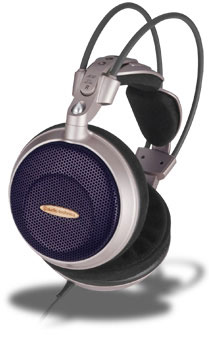
Audio-Technica: Unfortunately, only their discontinued models are worth the time of day, many of which are fetching collectors prices on the second-hand market now. They frequently have 'Japanese' tuning which is far from neutral but suites certain genres. The best models have emphasis on fast transient response and airy but warm sound. I really like AD-2000.

Headphone bonanza from 2017 Toronto meet-up.


Electrostatic Headphones

These are supposed to be the 'most advanced' headphones, using ultra-thin membranes which are electrically energized to produce sound. I had attended a headphone enthusiast meet-up several years ago in which I heard all the modern Stax models, many vintage units, and several expensive electrostatic amplifiers. Based on this experience, I had written off electrostats as wispy and limp sounding and unable to cope with electric music. This opinion persisted until very recently.

Stax: I dislike the SR-009 and SR-007 mkII based on my listening experiences at the aforementioned meetup and again at a dealer in Toronto with Stax's own recommended energizer units. I recently acquired from a friend three vintage Stax models, the SR-3, New SR-3, and SR-5; as well as the SRA-12S integrated earspeaker amplifier/pre-amplifier, which has changed my opinion. These very early units (1970s) have thicker diaphragms versus the ultra-thin modern models, and trade some transient response for a warmer sound with a bit more heft, a bit more euphony. I still find them largely allergic to electric music, but they impress with jazz and chamber music. I will write more on these models and the SRA-12S (a very interesting unit indeed) in a separate post.

Stax SRA-12S amp + SR-5 headphones. One of the best headphone setups I have heard.

Sennheiser: I had the opportunity to hear the HE-60, with its own drive unit and several electrostatic amplifiers. It is the real deal, too laid back for my taste but again absolutely charming with acoustic music. Unfortunately these are becoming very difficult to find in good condition and fetch collectors prices.

From what I understand speaking with individuals more experienced with owning electrostatic headphones than I, the real issue with building a 'good' electrostatic system is a shortage of 'good' electrostatic amplifiers/energizer units. From what I can tell, Stax themselves have manufactured a grand total of two amplifiers which were all tube-based from input to output. Their modern models are all hybrids, either with FET input and triode output or vice versa. The most popular 'high-end' commercial offerings are solid-state. There are very few all tube-based units, many of which are cost prohibitive and fewer still employing DHTs.

Orthodynamic (Planar) Headphones

To date I am wholly unimpressed with this category of headphones. I feel that orthodynamic headphones have too many compromises in vital areas of sound and tend to homogenize music more than electrodynamics or electrostatic types.

Audeze/Hifiman: These two companies are really two sides of the same terrible coin. They engage in anti-consumer practices such as price creep, product variation, silent revisions, terrible quality control and shoddy customer service. They release new models every few months with minuscule tuning differences, but slowly and surely increasing the prices. Two pairs of the same Audeze model can sound drastically different, with variations of up to a few dB in published, repeated measurements. Hifiman all follow virtually the same tuning, with a depressed presence region and bump in the lower treble that I do not like at all. Their most expensive models don't do much to distinguish from the inexpensive ones.

MrSpeakers: Very well built and very comfortable. Strong dislike. Completely dead, dull, lifeless. Frequently releases new models with minor engineering revisions for higher prices, ruining resale for existing owners who did not even have the latest model for 6 months. Has recently re-branded to Dan Clark Audio.

In terms of sound, I find all of the orthodynamics I have experienced thus far homogenize too much in too many areas of reproduction including dynamic compression, lack of micro-dynamic expressiveness and very colored presence to brilliance regions. Orthodynamics are also traditionally hungry for current and recommended to pair with solid-state amplifiers. They will not respond to output transformer-less valve amps. Their main sonic advantage is deep bass extension with low harmonic distortion, which is on the bottom of my personal priority list. The only plus side I can think of is that these two brands have extensive distribution and dealer networks, so most living in metropolitan areas can audition before buying. Perhaps the tuning or presentation will agree with you, or you primarily listen to electronic music where deep bass is a priority, and the pricing on an open box or 'demo' unit will make sense. I cannot really recommend these though for the reasons stated above.

A visual summary of the above paragraphs.

On Headphone Amplifiers


In the next article of this series on headphone listening, I will discuss my experience with headphone amplifiers and offer some practical advise. I will also discuss in detail the Stax SRA-12S integrated energizer/pre-amplifier which is a very high value for money unit, if you can find one used.

Until then, Happy New Year and thanks for reading!

17 December, 2019

On Headphone Listening LET US WELCOME A NEW WRITER!

Editor's Note: I am more than delighted to introduce you to another writer, mrgoodsound. It all started with comments on two of my posts. I sensed a kindred spirit and I asked him to email me. We talked a little and I was really surprised and excited when I found out he is 24 year old. That someone so young and passionate about music is already deep into the hobby bodes well for audio's future. I encouraged him to start his own blog but for a start he is writing here. I expect it to be a regular column. Not as often as I'd post because he has got a pretty demanding job. He basically has carte blanche, can write about anything he wants and is free to express opinions that may differ from mine. This is a first for this blog, and I am really happy about it! Let us welcome and encourage him!


From mrgoodsound: Introduction


Hi all,

Our host doctorjohn has invited me to contribute some articles for his blog. I am a 24 year old audiophile from Toronto, Canada who has been into the hobby for at least 5 years. I got into audio via headphone listening, and I quickly found I could appreciate the differences between equipment that others claimed they couldn't, or that shouldn't exist based on an incomplete 'objective' measurement. I got hooked, and I can easily state now that audio is my biggest passion in life. I 'graduated' in the past 2 years to two-channel audio and the wonderful world of possibilities that has come with it.

I can't say I come from a musical background but I have always appreciated music, now more so than earlier stages of my youth. My tastes range from rock/alternative/indie to jazz and classical. Since 'discovering' jazz about 1 year ago, it now encapsulates 80-85% of my listening. I just love hard bop and bebop. Listening to artists like Mingus and Coltrane now blows my mind like The Smiths or Oasis did when I was 17.

My current tastes in audio line up more or less with what content is already being published on this blog. I have a definite preference for valve equipment, analog sources, and highly efficient loudspeakers (preferably featuring horns). I may do a post later about the components of my system in detail, but here is a summary:

Digital sources: Sony CDP-X779ES, Philips CD-303, Mission PCM4000
Analog sources: Sony PS-X800, Lenco L70, Lenco L75, Thorens TD-124 mk I, Rek-o-kut B-12H
Pre-amplifiers: 'The Truth' line stage, 4P1L DHT line stage built by Radu Tarta
Power amplifiers: Sansui AU-717, 6550 amplifier built by Lance Cochrane, Eico HF-81
Speakers: JBL Studio 590

Probably like you, I have been reading this blog for over a year and especially appreciate the information about vintage equipment and concepts not frequently discussed in the 'mainstream' audio press.

Lastly, John asked me to pick a good name to post under. I wanted to keep it simple, so I chose mrgoodsound, because I love good sound.

I hope to post every few weeks and offer some sort of fresh perspective for readers. Please feel free to comment any feedback you may have.

On Headphone Listening


For my first articles, I decided to focus on a topic I could offer some perspective on, and that John has not covered in depth in his own writing. I am talking about headphone listening, or 'personal audio' as some in the industry are now referring to it as. I don't intend to make a case for one or the other, rather just share observations based on personal experience.

Why headphones? I am sure everyone has read some variation of a 'headphone versus speaker listening' thread on their favorite audio forum. These discussions are usually rather polar. One side admits that due to time, space, noise or financial constraints a two-channel system is not ideal and they get their music fix from a headphone system. Another party will claim that headphones 'just don't do it' for them and they don't understand why anyone would bother investing in a high-end headphone rig.

What gives? I will talk about the stereo enthusiast who has never gotten goosebumps from a headphone system next time. First, the individual who resorts to headphones out of necessity. There are a variety of socioeconomic and personal factors involved, but I will stick to those I have experience with.

From a financial point of view, headphone listening offers a low barrier to entry. Anyone can make a $20-100 investment into a pair of headphones and plug them into their smartphone and begin enjoying music. Even the most budget-conscious speaker system, short of purchasing total junk, will come out to a bit more than that. This factor mostly affects youth without the means to spend, but serves as an important distinction of how someone will get into audio one way instead of another. I see at high-end shows today efforts made to put together new systems for $500-1500. Valiant efforts, but even these amounts can be considered more than 'serious' investments for the average individual who is not yet 'committed' to audio, and just wants to better their listening experience.

As a slight detour, this happens to be how I started. My first 'serious' investment was a pair of Sennheiser HD598 headphones. I chose these because as an uneducated consumer I equated the Sennheiser brand with quality and this particular model had a history of good reviews. At the time I plugged them directly into my computer or phone and was content with the sound, but not as impressed as I would have hoped for the $200 expenditure. I haven't had these headphones for some time now, but I imagine in the present I would find this combination to sound totally unappealing.

I am sure everyone reading this now has their own memory of being Alice and chasing the white rabbit across the field and down the hole. Being tech-minded, I began reading enthusiast forums to see if I was missing anything. Here I was introduced to the idea of external amplifiers to make my existing headphones sound better, and external D/A converters to make the external amplifiers sound better. A lot of time and money was traded here, making purchases on the advice of the blind leading the blind, and only for lessons learnt from mistakes and not for good sound. I would consider a blood pact with the devil to recoup some of these funds and spend it instead on audio ventures I am only getting into now nearly 5 years later, with a deeper understanding of the sound I am chasing. Alas, life doesn't work this way.

In terms of space, I think everyone can understand the effects of urbanization and the move to apartment/condo living over recent decades. However, even those fortunate to own homes are not so fortunate. Modern floor plans and familial living arrangements leave little room suitable for a a high-end stereo system, and compromises have to be made. Most local audiophiles I have visited here in Toronto make do with a small section of a basement or the corner of a living room. Being at an age where I am beginning to save and look towards purchasing my first home, I have been seriously disappointed with how few local listings feature any sort of space a 'serious' audiophile would consider 'ideal' for two channel stereophonic sound. A headphone system only requires a little bit of space on a desk at most.

This ties right into noise, where the stereo may only be enjoyed at its fullest in brief windows where family members, roommates or neighbors are not disturbed. As real estate prices rise uncontrollably in cities such as Toronto, Vancouver and Hong Kong; families resort to generational living (grandparents, parents, children all under one roof) or renting apartments with neighbors to live within economic means. These last two points are largely why 'personal audio' as an industry has enjoyed a serious boom in the past decade in Asia. Headphones may be enjoyed without disturbing others, and some models allow you to shut out others from disturbing you.

The final factor is time. Let's consider the individual who has the finances and space for a serious two-channel system, or is dedicated to making one work, and does not need to worry about noise considerations. Many of my older, local audiophile friends meet these criteria. What most of them also have in common is that they are working professionals and/or family men, and find maybe 2-3 hours a week where they can sit down and enjoy music from their systems uninterrupted. This is a sad reality of life, and does not really score a point for either camp, other than to say headphone systems may be taken 'on-the-go' as portable solutions.

I think it is interesting to explore these factors and how they contribute to how an individual may get bitten by the audio 'bug' as well as the individual perception of how to go about getting better sound while still making decisions that work within the constraints of real life. I am not sure how much has been written about this topic to date as I haven't really looked into it.

Next time, I will write about how the listening experience differs with headphones from an audiophile perspective, and add some practical gear advice for choosing the right pair of headphones.

Posted by mrgoodsound

19 February, 2019

Elekit TU-8150 6V6 6AQ5

Click pics to enlarge. Right, atop my Wavac MD-811.

Review: Elekit TU-8150(DX), Part I

Update: Part II (Triode vs Pentode; Input 1 vs 2) and Part III (Small Loudspeaker Matching) and Part IV (Input 2 mod) have been published.

Being a long time Elekit fan, I own many of their products and have written a lot about their more recent offerings in my Blog. Should you be interested, here are some links:

Overview: Elekit, Part I
Elekit TU-8500 Full-Function Preamp
This article contains a 6V6 Overview

Imagine my delight when I learned about the new TU-8150. Beside 300B, my TU-8300 can run all sorts of common pentode/tetrode/beam tubes but that does not interest me. IMHO, none of those tubes (including NOS) run as triode can hold a candle to 300B (even current production). So, why does the TU-8150 interest me? Because it can use one of my absolute favorite tubes, the even more lower-powered 6V6, which neither the TU-8300 nor the TU-8200 can. If you run through my blog, lately I have been using vintage 6V6 push-pull amps, and I have been clamoring for a 6V6 SE amp, which I have heard to good effect before (here).

I immediately rang up and ordered one from Viktor of vkmusic, and I got the amp in 2 days. If you are in North America, buy from him, a die-hard supporter of Elekit who has contributed much to the company, who also offers reliable technical support.

This Flyer summarizes the Features of this amp:

 photo TU8150 leaflet Englishf_zpsv6shu1sz.jpg


DX version  Note that vkmusic supplies the kit as "DX" version, with the following upgraded parts: 1) Amtrans AMRT carbon resistor set; 2) 2 x Amtrans AMCO 0.1 for the Coupling Capacitors. And this is the version I built.


Building the Kit Like all Elekit's, building the kit was not difficult. The manual is beautifully illustrated and logical. Note: 1) the only difficulty I had was soldering the thick metal tabs that anchor the frames of the output transformers. My 40W solder, even temperature-controlled, was just not powerful enough, and it took me several attempts; 2) be careful with soldering the loudspeaker binding post - I had it upside down and had to redo it; 3) vkmusic's upgraded Amtrans resistors are longer than the stock resistors; Victor advises kind of an S-bend to shorten the distance between the legs so as they can be stuffed onto the board, but I found that too elaborate, and just bending the lead right where it exits the body does the job for almost all of them. I had it finished in a couple of days over the Lunar New Year.

In the above pic, note that the 6V6 socket modules are idling. Also note that the board uses pins which one inserts into the main board. The unit shows the 6AQ5 board installed. It is actually below the top board, which is just for anchoring and leveling with the taller 6V6 socket. Look carefully and you will see 3 levels where the sockets are.

Listening (6AQ5)
  • Tubes I did a lot of initial listening using the 6AQ5, which is a smaller tube with similar electrical characteristics to the larger 6V6. The stock pair are very late production GE 6005's (note different vendors have different tube options). For the 12AX7 I used an old D-getter RCA grey-plate in lieu of the stock JJ.
  • Jumper It was set to Elekit-recommended Ultralinear. The jumper's plastic handle felt loose but I was assured by VK that it is OK, as the same jumper has been used a lot in other models without any problem.
  • Op Amp  Op amp was the stock NJM4580D.
  • Power Socket Note that the Power Socket is the Figure-8 type (C7/8) which some may frown upon. I used the stock power cord.
    Image result for nezet bruckner 5
  • Sound with System II As used, the system comprised the Sony XA-5400ES SACD/CD player, Technics SP-1200 Mk II/Hana EL Cartridge (report to come on the Hana), Aurorasound Vida Phonoamp, Shindo Monbrisson Preamp and YL 4-way horns (104 db). The amp wasted no time in making an impression. My attention was seized by the very good Rhythm and Pace. At first there was a little grain in the treble, which quickly decreased with time, but it should be noted at least half an hour of warm-up is required for it to sound its best. Sound with the 6AQ5 is generally very full bodied and rich, perhaps just a little homogenous - after all, the new tubes and transformers especially needed to be run in (longer than caps and parts in my experience). But given the good transient performance, all was engaging. Dynamically it did a very respectable job. To cite two examples: the audiophile favorite, stimela (track 12) from Hugh Masekela's album Hope, while not as explosive as it could be (this is after all 2.9 WPC), sounded lively, involved and full of microdynamic detail; and Yannck Nezet-Sequin's Bruckner 5th (ATMA, not particularly well recorded) sounded organic and big, as it should, much better than it had previously through earphones. By this time, I was enjoying it hugely.
    Image result for nielsen concertos gilbert
  • As Headphone Amp At this point, I took time to construct my AkitikA amp kit (report to follow). I moved the TU-8150 to the living room, behind my workbench, and fed it with my Linn Karik CDP. Through the AKG-701 earphone sound was luxurious and detailed. Nielsen's three (somewhat quirky) instrumental concertos sounded better than I have ever heard them in the readings by NYPO/Alan Gilbert (Dacapo). The sound was so good I actually played this CD multiple times through the kit-building period. It should be noted: 1) the loudspeaker outputs automatically disengage themselves when a headphone plug is inserted. But I think as a precaution, to make sure there is loading when the amplifier is on but headphone not plugged in, loudspeakers should always be connected; 2) Using the TU-8150 as integrated headphone amp, the volume and dynamics were respectable and sound is excellent.
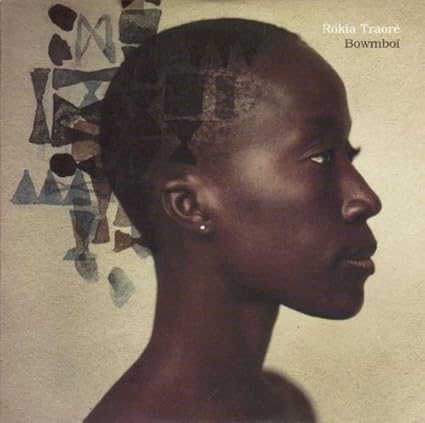
    Bowmboi by Rokia Traore
  • Back to System II After I finished building the AkitikA, which took several days, I re-installed it in my System II. Sound was surely a little better than before and I thought it was close to being run-in. I played the wonderful Rokia Traore's Bowmboi. While it was very good, I knew her voice was a little too smoky and that there is more delicacy and sinuous delivery to be had.
  • On to System III Desiring a slightly crisper delivery, I switched to System III, comprising Sparkler S-303 CDP and Schiit Saga as Preamp directly into the Elekit. Surely, Traore's voice was how it should be. Similarly, Masekela's men also had more rhythmic snap. This was in part due to the snappier delivery of the Sparkler, and in part due to the non-euphonizing nature of the Schiit, which did an excellent job driving a long interconnect. However, on some material, a bit of shrillness creeped in when played loud. In the end, I still prefer a tube preamp. By now, I knew that I had wrung most of the performance out of the amp, so it was time to move on.
 Listening (6V6)
MilesDavis MilesInTokyo1960s.jpg
  • Switching to 6V6 It was pretty easy. Only 4 screws needed to be removed to take off the upper chassis. Then I replaced the 6AQ5 boards and its top boards with the 6V6 boards (now only two tiers). I plugged in the pair of 6V6 I had been using in my Grommes LJ5, Sylvania smoked glass VT-107A's.
    Amtrak Blues
  • Sound with System II Everything else being equal, the 6V6 immediately sounded cleaner and clearer, as if a thin veil had been lifted. Now, Masekela's men and Traore sounded like in System III above, yet when the music got loud there was no roughness. From this point on, I concentrated on music only and here are a few that I really enjoyed. The first was Alberta Hunter's Amtrak Blues (CD, CBS). This lady is truly legendary and her life is an incredible story (wiki entry, make sure you read it). I actually got to hear her live and at the time bought her later The Glory of Alberta Hunter on LP. Her full voice on this CD is a delight and the session men were also very well recorded. And then there is Miles in Tokyo (CD, CBS/Sony), not the best recorded of the many Miles albums, but I positively dig the player of saxophonist Sam Rivers, who only appeared with Miles in those few days but was generally credited for pushing the sound of the Miles Davis Quintet forward. And two LP's were particularly outstanding. Boulez' Varese LP (Columbia) had delectable rhythmic swing and brilliant playing, a marvel from start to finish. Zubin Mehta's Bruckner Te Deum (London) had me dashing to turn down the volume, as the masterpiece opened with a choral fortissimo on an organ pedal. Yes, the amp clipped as I had the volume too high, but I was able to finish the piece at a slightly lower, but still very satisfyingly full level.
Comments Let me cut to the chase: this little amp is now my favorite Elekit amp!
  • Operation Ultra steady. I have it on all day and it barely gets warm.
  • Sonics It is always hard to describe the sonics of something. For this amp, I would choose Fluent. Many tube amps are easy listening, sometimes referred to as "liquid", but that is not at all the equivalence of fluency, which mandates a good sense of rhythm and superior transparency. Nothing about the TU-8150 grates on you, and everything contributes to keep your interest. Playing disc after disc attests to the superb musicality of this little amplifier with a big heart, neigh, soul!
  • As Amplifier As with most flea powered amps, particularly if you play vinyl, personally I'd use this with a Preamp to maximize the gain and delivery of the first watt. However, it will sound pretty good as an integrated amp (my System III's Schiit is essentially passive volume). Volume Knob Setting when used as Amp The TU-8150 employs an IC in its preamp section, so it is not just a passive volume knob on an amp. That said, I found not much degradation when the volume knob is maxed out - no overloading or undue hardness. Dialing back may bring a tad more refinement, but the optimal setting is likely dependent on the rest of the system. I have it anywhere between 12:30 and 3:00 Power My YL horns are 104 db, so I have no problems, even with big pieces, as you can read above. I'd think it will work well with loudspeakers over 90 db in sensitivity. Just for the hell of it, I did briefly hooked it up to the LS3/5A, but even with volume knob of both amp and preamp maxed out, there was only moderate volume; however, even then the music sounded nice and lively, not seriously compromised nor muffled, which to me means loudspeaker matching will not be too difficult in general.
  • As Headphone Amp I think this shall make a very nice headphone amp. But make sure the loudspeakers are connected if you even want to pull out the headphones.
    Te Deum (Vinyl, LP) album cover
  • Hybrid? The presence of an op amp in the preamp stage will turn off some tube purists. But I ask myself, do I actually heard sand? Honestly I cannot say I do. The sound is rich and creamy when it is supposedly to. I have heard many all-tube amps that sound a lot more transistory (like German Octave, not to my taste). Elekit has had a long history of using IC/op amp in their products and the designer's skill is apparent.
  • 6AQ5 vs 6V6 In my listening, the 6V6 is unquestionably better. I am staying with 6V6 just because I have a large stash. Although electrically similar, the bigger envelope of the 6V6 likely confers an advantage (just as 6SN7 has it over 6CG7). However, I am equally sure the performance of the 6AQ5 can be much enhanced by rolling in older and better tubes. The suppled GE's are coded 82-52, which is from the very end of 1982, just before tube productions ceased altogether. Older 6AQ5's are plentiful and cheap and one can have fun rolling tubes.
  • Power Cord The supplied C7 doesn't look very promising. The best way to upgrade would be to buy a C7/IEC adaptor and use your regular cables.
Coming Next I named this article Part I because there are more things that I'd like to test on and that will take time:
  • Pentode and Triode Operation These should be very interesting to try out. Triode lowers the output from 2.9 wpc to 1.6 wpc. I think it will work for me but for most others it will be academic.
  • Op Amp don't have anything other than the OPA2227 Victor sent me for the TU-8500. Victor told me it is OK to use here too, so I may try it.
  • Tubes I may tube roll a bit, particularly the 12AX7. I won't go crazy about it, but I may get a few nice used 6AQ5 to try out.
  • Loudspeakers I'd like to try out others, particularly my Almarro M1A, for compatibility, so readers with less efficient loudspeakers can get a better idea on what to expect.
  • Power Cord Not my usual area of interest, but in this case I shall seek some improvement using either adaptor or DIY power cord (the C7 female connector is not easy to get).
  • Headphones I'd like to try my high impedance (600 ohm) Beyerdynamic.
As I finish writing, I also just finished listening to Strauss' Alpine Symphony, one of my favorites. Great stuff! This is not the best version in performance or sonics, but it was awesome enough!

Note: Part II has been published.


Alpine Symphony (Vinyl, LP, Stereo) album cover

01 July, 2017

Editor's Note: The Times They Are A-Changing
Letter from NYC (63) 2017 (2)
Brief Review: Grado SR-80e Headphone
Headphone Talk VIII: Grado SR-80e vs Audio Technica ATH-AD700

The Times They Are A-Changing
Here is a brief note to those who follow my Blog regularly; you must have noticed my output recently has taken a nosedive. Here, in the wee hours, suffering from jetlag, I am penning a few words.

Lately, a succession of unexpected matters relating to my family has consumed most of my time. The challenges ahead are considerable; while there will be strife, I shall focus on keeping a strong mind.

At this moment, audio, even listening to music, is indeed as they say, "guilty pleasure". But listening to music shall never lose its paramount importance, and it is often therapeutic, even lifting (think a Bruckner symphony). What equipment I use however becomes less important. In HK, if I only have an hour of stolen time, I am not going to fire up my Kondo rig, instead I'd use my Flying Mole (see Sidebar, "System C" "Newer Location"), which currently is driving my Dayton B652's. You will be surprised how satisfying this ridiculously inexpensive setup can be.

What about writing? That will go on, as it is another form of therapy. If you ask me, anything that demands concentration is therapeutic. I actually itch to do so. Although recently there has been few published posts, that doesn't mean I have shelved my writer-self; in the pipeline are quite a few half-written ones on good topics crying to be finished. I should however try not to be as comprehensive and compulsive as before, so as to get more out. After all, as an adult one doesn't always need to detail or justify one's impressions.

And Yet Things Don't Change...Listening On
My listening and writing activities may be curtailed, but they are very much alive. Here in NYC, I have a little more time and shall try to catch up a bit. A few hours ago, like yesterday, I fired up my Reference System I, and listened at very low level (sounds great). However, with the current weather it gradually grew too warm for comfort, and I then switched to listening on my Headphone Setup, which comprise an ancient Magnavox FD-2041 CDP fed into Meier-Audio Corda Swing (my previous brief review here) driving Grado SR-80e headphones.

Grado SR-80e Like the similar SR-60's, these likely need little introduction. The review in Whathifi is excellent, and I basically agree with all the points made. Since I listen at quite a low volume, its small shortcomings are quite irrelevant. vs Audio Technica ATH-AD700 (my previous review of the Audio Technica here) The differences are considerable. The Grado has a drier, possibly more precise and definitely upfront sound; the Audio Techica is more laid-back, more embedded in ambience. Piano (Messiaen Vingt Regards Pour L'Enfant Jesus; EMI/Beroff) is impeccable on the Grado, but a string quartet (Brahms; EMI/Alban Berg) is more wholesome on the Audio Technica, with more ease, more string sheen and better intimation of bow and bridge sound. As I only have less than 20 hrs on the Grado, I expect the SR-80e to further improve and smoothe out a bit.

Meier-Audio Corda Swing Mine is likely an earlier version of the current Corda Jazz. It works quite fine with the smoother AT, but is a likely little dry with the more forward Grado. There is plenty of gain (I use the low gain) and sound is lively. Although a German design, I think it is built in China by Shanling.

Magnavox FD-2041 This is exactly the same machine as Philips CD204, employing the CDM-2 mechanism and 14-bit TDA-1540 DAC chip. Sound is quite musical and organic, as one expects of the TDA-1540, with its unique je ne sais quoi (not everyone will agree, but to each his own). I also think the low oversampling rate of that earlier era makes for a more direct sound closer to non-oversampling than later extensive oversampling (artificial).

The setup is satisfying, though not quite at the level of my Stax System (here).

20 December, 2016

Stax SRS-2170

Review: Stax SRS-2170 System
Headphone Talk VII: Electrostatic Headphones
Letter from NYC (55) 2016 (11)

My attitude towards Headphone is described in Headphone Talk I

As a long-time audiophile, I am simultaneously amazed, alarmed and sometimes amused or even dismayed by the exponential growth of headphones, headphone amps and so-called "head-fi" sites. The reasons are too numerous, so I shall leave that for a planned "Hi-Fi Basics" article.

Suffice to say, I do have some rather peripheral interest in headphones, and own several respectable headphones (Audio Technica ATH-AD700, Grado SR80e, Sennheiser HD-600 and now Stax SRS-2170) and headphone amps (listening experience of my Meier Audio Corda SwingPro-ject Headbox II and the amazing bargain Micromega Myzic, which I have yet to write about). That is not all: some of my preamps have excellent headphone outputs (certainly not the usual value added feature). Both my Nagra PL-P (listening notes here) and Manley 300B preamp (here) drive headphones in the best way possible, i.e. through dedicated transformers. I doubt most current headphone amps costing into the thousands can beat those two.

This surprises me: only after researching my own blog did I find out I have actually written on quite a few headphone and headphone amps!

The Best Earphones? Best du jour?
These days, new technologies are being used to make earphones of all kinds, and reviews are all over the audio websites and magazines. Planar magnetic earphones (led by HiFiMan, Audeze and now, Oppo) are all the rage. Each is touted to be better than the last, and a breakthrough in sound. Is that truly so? I'd reckon, no.

Even my friend shidi Andrew asked me whether he should get a pair of planars. My answer to him is basically encoded below.

Electrostatic Headphones in General
  • Power Supply Electrostatics, whether loudspeakers or earphones, have the inherent disadvantage of having to be tethered to a power supply. So the usual headphone amps and outputs cannot be used with an ESL headphone. However, as I note there is now self-biasing ESL technology (no power supply needed) used for ESL supertweeters (the Enigmacoustics Sopraninos are currently the darling of the audio press), I harbour hope perhaps this technology can be used in headphones in the near future to free the ESL from its power supply.
  • Adaptors There are adaptors which both provide the connection and power supply for ESL headphones, facilitating use with a regular loudspeaker system. Stax used to make these (SRD-7 Pro) and there are also current offerings (from the like of Woo Sound - the Wee). However, I don't see how the serious audiophile would be willing to insert one of these between their amplifier and loudspeaker. One can also of course wire the loudspeaker input to a phono jack so as the normal headphone output can be used. As for me, I'd just stick to the companion amp.
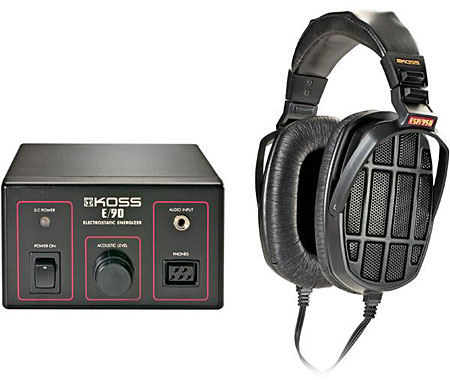
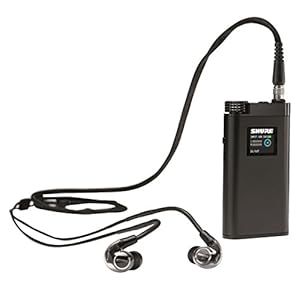
  • Stax and Other Makers Stax is virtually synonymous with the ESL Headphone. There have been others, but they have been few and far in between. In the past, there have been Koss, Beyerdynamics and perhaps others (some are rebranded Stax). Now, paradoxically, there may be renewed interest, as Sonoma and HiFiman have just made their rounds at HiFi shows with their new ESL headphones, which are due for release. Caveat, I think these are likely to be more expensive than Stax. What is more interesting to me is the Shure KSE1500, recently well reviewed by John Atkinson in Stereophile (November 2016), a unique in-ear ESL design with a portable amp, expensive but quite different. Even more interestingly, in the same issue, Herb Reichert wrote of the Koss ESP 950/E90 ESL system (link), still in production but issued in 1990, a full 26 years ago. HR compared them favourably, indeed preferred them to Audeze's magnetic planar LCD-X and LCD-4 (the same article contains links to TJN's 1992 review). Also, another Stereophile reviewer Steve Guttenberg also presents another view in cnet, and the article also interestingly compared the Koss system to the Stax SRS-2107 system. These are all worthwhile reads, highly recommended.   
  • My Stax Experience-Vintage Over the years I have periodically encountered STAX earphones, always to great satisfaction. Just a few years ago, along with his AKG 501 and 701 and Grado RS-1, the same Andrew also lent me his old Stax SR-3 and SR Lambda Pro, with a driver. While I had sampled the AKG's and Grado early on, because of the nuisance of hooking up the dedicated amp, I never listened to the Stax's until I had to return them to him. And boy, what had I missed! For the hallmark sound, see description below.
  • My Stax Experience-Current In NYC my friend Kane owns the current SR-507 with the tubed SRM 007tII amp. As I remember, the sound is luxurious, in the same vein as below.
  • (In)Visibilty of ESL Despite its virtues, ESL technology has always been on the fringe of audio, and this is as true of ESL headphones as ESL loudspeakers. Imagine, a great company like Quad has not had US distribution for a few years until recently. Part of the reason must be the difficulty in servicing Quad ESL's (costly and cumbersome). But Stax headphones are a different story - they are famous for their longevity and many old units are working perfectly. One interesting observation: If you google "electrostatic headphone" you will get Stax among your entries, but if you use "electrostatic earphone" you get pages of Shure only. The vagaries of googling!
SRS-2170 System (SR-207+SRM252S) (Official link with spec's)
SRS-2170 is Stax's entry level system. As it comprises both headphone and matching amp, the package is very reasonably priced in my opinion. It has been well received and even managed to have a few reviews (see cnet and avhub). I agree with those and shall be brief here.
  • Comfort is unsurpassed.
  • Sound Although "entry level", these deliver Stax's hallmark sound that can only be called luxurious, with a large soundstage, plenty of air and warmth. Nothing grating to the ear, yet everything was crystal clear. (the same cannot be said about some of the current, very hifi cans). As expected from ESL, transients are fast (but natural) and bass is tight and tuneful.   I cannot imagine better replay of classical music. Large orchestral music have scale and flow that surpass the usual dynamic headphones. To name just one very important virtue: a very realistic rendition of massed strings (many modern designs fail miserably in this). Chamber music is even more superior - what glorious string tones and tensile interaction! Jazz also benefits from the fast leading edge - pristine percussion and brozen brass, all with superb rhythm and pace. Another difficult feat: a reasonable facsimile of  hall sound, if that can be portrayed by headphones at all. It all adds up to one word: natural.
  • Upgrade? Personally, I don't really think so, or at least not at all in a hurry. Although this is entry-level Stax I don't really hear that much difference between the SRS-2170 system and the more expensive vintage Stax or the current (middle level) SR-507/SRM007tII that my friend has. The SRS-2170 system is an overachiever that has most, if not all, of what Stax has to offer, at an eminently affordable price. I am sure you get more as you go up the ladder, but it is likely a case of diminishing returns.
Conclusion

  • The Best For once, I shall say what is the best: Stax, even entry level, is the best for me, and I am not at all tempted by newer and sexier offerings. If you are into headphones at all, you should try Stax. Stax is durable, and older offerings offer much the same sound and can be obtained at bargain prices. Just get one!
  • vs Planar Magnetics The hottest headphones of today are almost all planars. I have never had one in my own system, but I know the sound. A good analogy is Planar Magnetic loudspeakers (e.g. Magnepan) vs ESL loudspeakers (e.g. Quad and Martin Logan). Now, I know quite a bit about that, as an owner of Maggies and Martin Logan, and interested student of Quad. With large speakers, ESL suffers from dynamic limitations, and in the case of Quad (except the 29xx series) less than full size images, while Maggies tend to grate a little in the treble, not as refined and luxurious as the ESL's. However, with the cans over our head, the situation is totally different. Unless one listens to heavy metal and a steady diet of rock (which is not the average audiophile), I personally have not heard better than Stax, and shall remain an ardent fan.

08 June, 2016

Headphone Fiio X-1 AuGlamour R8

Headphone: The Bus Ride
Review: FIIO X-1, Part II
AuGlamour R8 In-Ear Earphones, Part II

Headphone Talk VI

Part I

Yesterday was yumcha day, and I travelled by bus. By the time I got home I had managed to listen to 9 Beethoven sonatas on my FIIO X-1. I used the AuGlamour R8.


Listening on the Bus
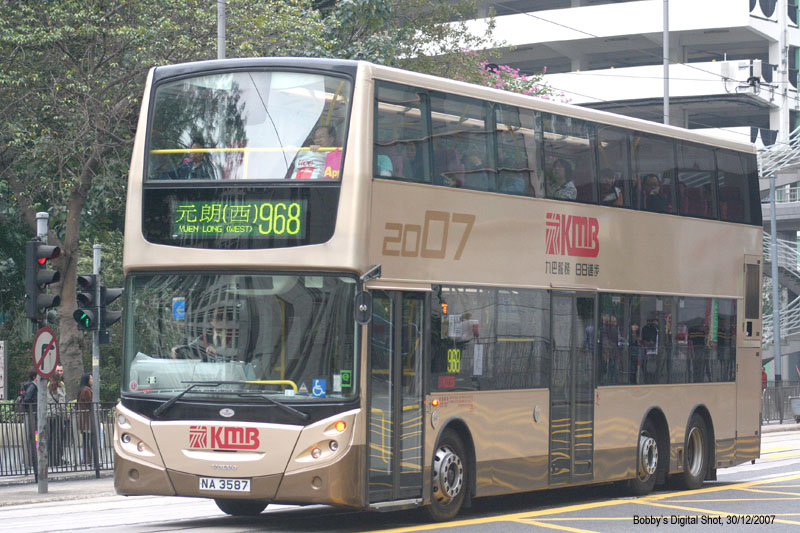
Like the UK, HK's buses are mostly double-deckers. Except for the stairwell, the upper deck is sealed and hence quite quiet in terms of isolation from outside noise, which makes it ideal for headphone listening. The MTR (subway) is in comparison less ideal.

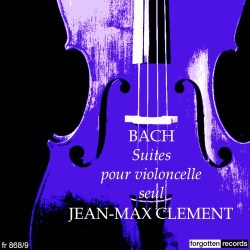
I have only used the FIIO X-1 for a few weeks, and I usually only ride the bus on Saturdays, yet I have already listened to 2 cycles of Bach Cello Suites (Jean Max Clement, Jan Vogler) and 1 of his Solo Violin music (Amandine Beyer). Now I have started listening to Annie Fischer's almost complete Beethoven cycle.

What prompts me to write this article is that for at least two of the artists my perception of their playing through headphone is quite different from listening to the CDs on my regular systems:

In the case of Jean Max Clement, whose original L'Oiseau Lyre LP's cost a fortune, with my regular system I find the playing nuanced but too refined, ultimately a little flat and boring. With the upfront sound of the AuGlamour R8, I could relish more in the minutiae, subtle inflections and coloristic efforts. Indeed it seemed more lively and dynamic.


As for Annie Fischer's Beethoven, this is a rather idiosyncratic cycle, made late in her career with many out-takes and much editing. With my regular system, everything seem rather piecemeal, one moment (a few bars to a whole movement) of brilliance followed by something prosaic and unnatural. With the earphones, that feeling certainly does not completely go away, but one can revel more in her brilliance than her waywardness, making it a more enjoyable experience.

For the other musicians cited (Beyer's Bach, Vogler's Bach), the headphone experience is commensurate with listening to the regular systems.

I mulled on my experience and had a discussion with my friend whlee, who also once used earphones. We came up with some observations.

Thoughts on (Headphone) Listening
  • The On-The-Go Factor The average audiophile thinks sitting down in the so-called "sweet-spot", perhaps drawing the curtains and dimming the lights, makes for the best listening. While that is indeed a simulation of the "live experience", I ask what are we focusing on? There is no real performer to hold our breath for...we can concentrate on listening to the music, but it still is a far cry from the real venue. On-The-Go is different - we feel alive, partaker of our own fate. It is well known people, even seasoned listeners, enjoy car music. In what is basically a bubble, one can listen to NYC's WQXR happily while travelling to upstate NY. This is because while riding, we get a lot of stimulation from the scenery. In a way, not so different from watching a movie - think Terrence Malick's Tree of Life, where the music and scenery reinforce each other. That we enjoy it so much on the go does not at all mean it is better than our home setup - it is just different. E.g., overall, the Annie Fischer and Jean Max Clement are lacking in overall flow and coherence, but with the earphones one gets distracted by the heightened microdynamics, minute details and not mind so much the lack of flow.   
  • Near-Field vs Perspective While the headphone listening experience is for certain "near-field" ("near-head" is more accurate; how can it not be when we are wearing the cans on our heads?), it is not completely devoid of perspective, but no matter how good the phones are, they are still "near". Indeed, the sound is directly pumped into the ears, devoid of any reflections - absolutely no simulation of the live venue. Near-Field This is closer to the headphone experience, but not the same. Even a near-field setup in a room has plenty of reflected sound, though one may not be aware. Near-Field vs Mid or Back Row Perspective One can setup an audio system based on near-field listening (as studios do) or from a perspective farther away. Most home and hi-end systems gravitate more towards the latter. This would favor orchestral music and less so chamber and solo music. The headphone is exactly the opposite: The big music, Mahler, Bruckner, don't do so well on the earphones, but the smaller ensembles, jazz and chamber music, can do better. which is why I do not even load complex music onto my FIIO X-1.
  • Judging a performance Listening to earphones yields a different perspective, but it is not one ideally suited to evaluating the merit of a component or a performance - being akin to the kind of "Heightened Awareness" under the influence of drugs or alcoholThe musical examples cited above illustrate my view. As a corollary, "reviews" by head-fi sites are to be taken with a grain of salt, if not worthless.
  • Listen to More Music The whole point of using the media player and earphones is to listen to (catch up with) more music. A basic level of competency is enough. To make extravagant claims is ridiculous.
I enjoy my humble setup very much but have no desire to spend a lot more money for this kind of listening.