Showing posts with label Brand-Meridian. Show all posts

04 November, 2020

Genesis Digital Lens Theta Data Basic II Meridian 200 Gotham 10601

Brief Review: Genesis Digital Lens
Two DAC's: Ensemble Dichrono Hi-Dac vs Sparkler S-306
Two Swing Arm Transports: Theta Data Basic II vs Meridian 200


Calling this a "review" is an overstatement. Rather, just brief notes. I am trying to finish off my stash of articles. Today is the last day of quarantine. Tomorrow I shall return to my old house, which is in the "countryside", where the signal is poor. Wifi is likely poor. So my communications will be fewer and farther in between.

Genesis Digital Lens In HK, I have long used de-jitter devices. Early on, I briefly used the Sonic Frontier Ultra Jitterbug, but I preferred the Monarchy Audio DIP. But when I got my hands on the Genesis, all others fell by the wayside and it became central to my digital setups. With 5 inputs and 3 outputs it acts as a great switchboard that allows one to run multiple combinations. For detailed description of what was then quite revolutionary, see Stereophile. The Genesis was probably the first device to use 500Kb of RAM as buffer. Is it obsolete 20+ years later? I think not, and this 2018 article agreed with me.

Two months ago I chanced upon one at US Audiomart, at a very good price, and the seller delivered it to me! I first tried it in the LR streaming system. It did its usual good job with my Micromega Stage 2 and MyDac. However, it would not work well with bluetooth. There was no jitter figure, music got through, but there were not infrequent stutters, sign of the poor quality of the digital signal. I then took it to the audio room, where I connected it in System II with 2 transports and 2 DAC's.

Theta Data Basic II This is a hell of a transport. Stereophile has a detailed review on the I, but the II is even better, with addition of balanced output, addition of one more transformer and an updated anti-jitter circuit (info from an excellent Taiwanese page). Basically a modified PS Audio Lambda, it nonetheless is better sounding, and it has that trademark killer bass that its forerunner Data had. I still have the legendary original Data (Stereophile; the one converted from a Pioneer LD player), which I have always regarded as the best transport. However, previously I did compare the 2 and the sound was shockingly similar. My Data Basic II reads discs very fast and I think there is a lot of life left in the Philips CD9 Pro; unfortunately the same cannot be said about the Data. I used the balanced output.

Gotham10601 This is the Gotham AES cable, very slim and flexible. I regard it as the best digital cable. In HK I still have the old Kimber (Illuminati) DX-50, and the Gotham has a lot more detail and is also more pacey.

Meridian 200 This is a classic Meridian transport employing the CDM-4. Stereophile reviewed it together with the 263 DAC, whereas Gramophone had the earlier bitstream 200/203 combo (the DACs can be ignored). I used the coaxial output with the Belden 1694A.

Sparkler S306 needs no introduction in this blog. NOS TDA-1543 conversion. This was after I reversed the input wires. Hooked up with the Belden 1694A.

Ensemble Dichrono HiDac This is a very expensive DAC, but I got it with the Dirondo transport for a very good price. Critical reception was mixed (see 6moons and positive feedback). Hooked up with either Ensemble Gigaflux BNC or coaxial Belden 1694A.

Brief Comparisons 
  • Theta vs Meridian There is little question that the Theta excels in more areas: resolution, drive, dynamics and bass. This could also partly be due to the AES connection. Error displayed is very low on the Genesis. But the Meridian is no slouch. It is a little more diffuse and less resolved but it is still eminently musical. Error displayed is just slightly higher than the Theta. Both are highly recommendable if one can find an honest seller or test thoroughly. The CDM4 though shall likely last longer.
  • Ensemble vs Sparkler Similarly, there is little question the Ensemble excelled in all the things the Theta did. However, in my highly resolved system (using Yamamoto CA-04 preamp) the Ensemble proved to be on the yang side. The Sparkler had less resolution but was subtly articulate and more listenable over time. I still have work to do on the Ensemble in the future.

27 October, 2019

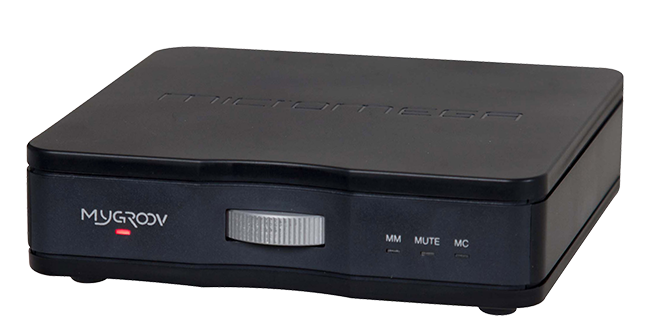
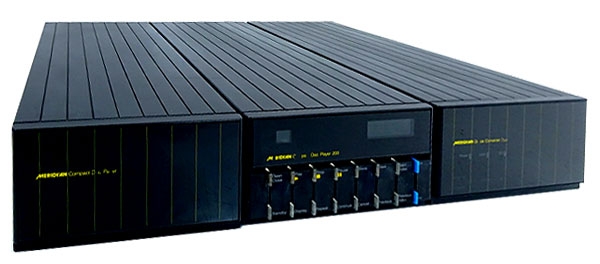
Micromega MyGroov MyDac, Meridian 200, Akitika GT-102, Schiit Saga


Click pic to enlarge. On rack, from top, Thorens TD-125, Audio Technica AT-PL120, white Micromega MyDac atop Meridian 200 and a bit of 47 Labs Shigaraki phonostage , Schiit Saga; lower middle, Micromega MyGroov in front to MoFi Studiophono; right, Pioneer PL-10.

Let's Get It On: Akitika GT-102 + LS3/5A, A Happy Union
What's Going On: Reconfiguration of System III, a Cheap and Effective All Solid State System
Review: Micromega MyGroov, Part II
Review: Micromega MyDac, Part III
Review: Akitika GT-102, Part II
Review: Meridian 200 CD transport
Review: Schiit Saga, Part III
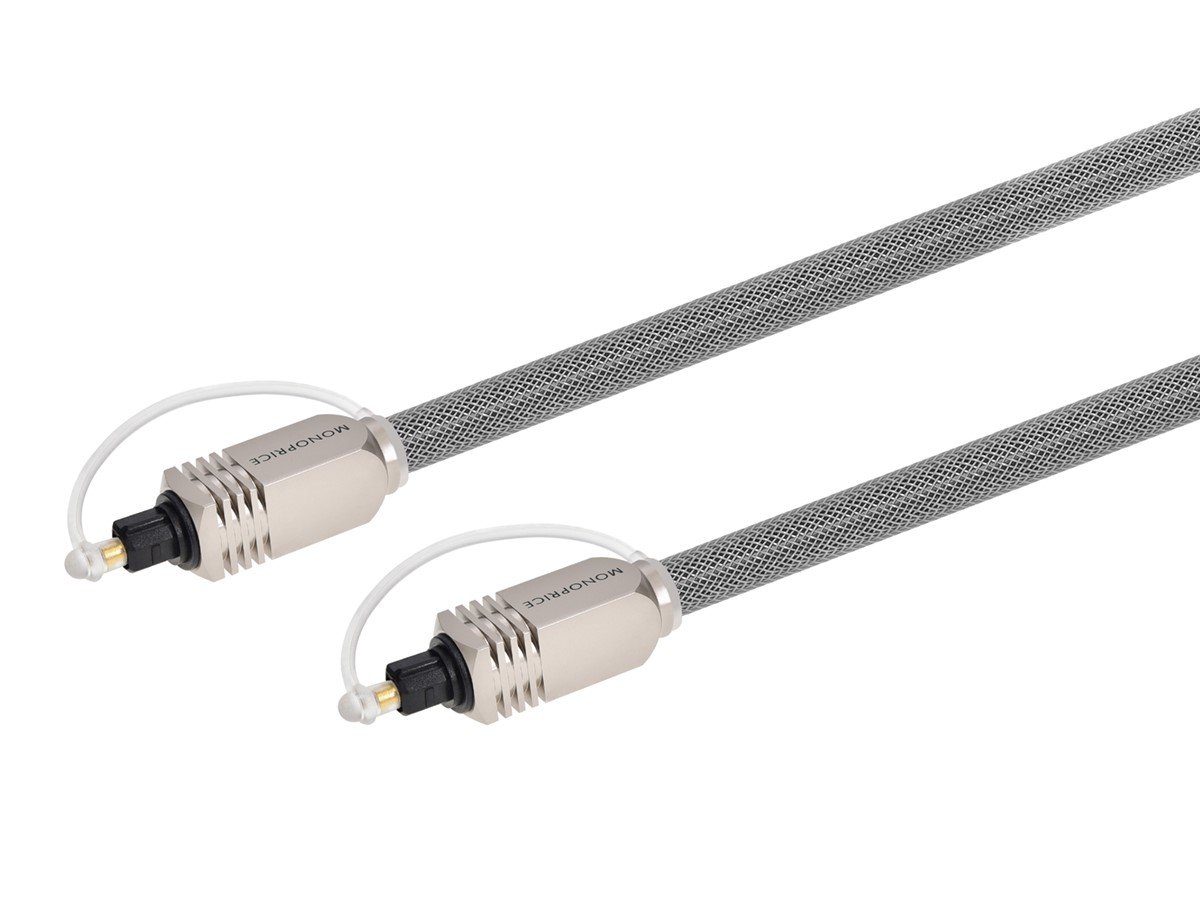
Review: Monoprice Toslink Cable

Micromega MyGroov, Part I
Micromega MyDac, Part I
Akitika GT-102, Part I
Schiit Saga, Part II
47 Labs 4718, Part III
Pioneer SW-8 Subwoofer, Part II

Many of my articles are basically housekeeping. In the process I try to seek a moderate improvement or some insight into some of my under-used equipment. This article is one of them. It doesn't really review anything new; instead working things out and going deeper into things. 

From time to time, I reconfigure my systems. Usually this is brought about by a particular piece of equipment. In this case, it was because I moved the Thorens TD-309 from System III to I for my Koetsu Black, which weighs a little heavy. Also, as it was basically not used, to reclaim space I dismantled System IV in the living room, so quite a few pieces of equipment were again available for use.

System III This is by my seat. For someone as overreaching as I, it is not easy to cram everything onto one rack, so I tend to use things with small footprints. Ever since the arrival of Schitt Saga (here) and Akitika GT-102 (here) they have been used together with the Audiomaster LS3/5A to great effect. The crispy and fast sound of the Schiit actually suits the Audiomaster LS3/5A, the darkest of my 3 pairs. Thinking to improve things, I propped in the Nagra PL-P and was surprised at the somewhat rolled off sound. Not synergy and so out it came. Then I focused on reconfiguring my sources.

For digital, as I had moved my Sparkler CDP to System I, for some time I had been using the Linn Karik CDP. Desiring to be able to occasionally play albums on my computer, I decided to go separates. I recruited my ancient Meridian 200 transport and Micromega MyDac.

For Analog, the Pioneer PL-10 with Rao's MC mono cartridge remains, but is assigned to an adjacent shelf. In place of the Thorens TD-309 I swapped in my Audio-Technica AT-PL120 with the Shelter 201 MM cartridge. This turntable, with removable headshell, is great for comparisons, but for the near future I may keep it an MM turntable (with maybe 78 rpm option in the future). I also added a third turntable. My Thorens TD-125 (with SME 3009 and Denon DL-304) from System I, now displaced by the TD-309, claimed the top shelf as I shoved the AT to the shelf underneath (just enough room to carefully maneuver without the cover). Needing a third phonoamp I added the Micromega MyGroov. The Kondo Shigaraki phonostage is MC only, but both Micromega MyGroov and MoFi Studiophono are MM/MC, making the system highly configurable. I tried multiple combinations.

Image result for micromega mygroovMicromega MyGroov (official link)
Aside from European (French and Spanish) reviews (link) there are virtually no other for this humble component. In Chinese, there is a surprisingly good one from Taiwan's HiFi HiVi. Switch Mode Power Supply and Surface Mount technology are used. See Part I link above for my previous, very favorable, impressions.

Micromega MyDac (official link) This one has been rave reviewed by many when it came out but surprisingly I don't see it mentioned much afterwards (perhaps it is too cheap for its own good). In my detailed Part I review you can read my utter enthusiasm for it. Actually before this round I briefly tried it out in System I with Theta Data Basic (btw a great transport) and the combo went almost head-to-head with the formidable Sparkler S306, which is my reference. Kudos!

Image result for meridian 200Meridian 200 CD Transport I have used or heard quite a bit of Meridian digital products (to me their specialty,) from the first 200 series to the much later 800 series, and they in general offer excellent sound. Perhaps one day I shall write an overview. The 200 is Meridian's first CD transport. It was initially paired with the 1-bit (bitstream) 203 DAC, which I used to own in HK but sold for its ultimate lack of resolution (though it was musical). Meridian's own archive has this excellent early review of the 200/203. Meridian later replaced the DAC with the delta-sigma 263 (see Stereophile), which is likely much better as I still own (in HK) their 206, a similar one box CDP. Another reason for loving them is the styling - early Meridian had the most elegant industrial designs. Yet another is the longevity of the Philips CDM-4 mechanism, and the sound of course.

A photo of Gaye looking away from the cameraSonic Impressions
  • Akitika GT-102 + LS3/5A As before, the combo with Schiit Saga and LS3/5A worked a treat, especially with digital. The LS3/5A are placed near field and in front of my horns, and they just disappear. At low level, the images are relatively small, but crank it up to normal listening level, the images flesh out. In fact, one could easily mistake the sound to be coming from the large horn system behind. From vocal CDs to Bruckner LP, the sound is highly articulate, just enticing. Few bookshelves can equal, let alone surpass, the LS3/5A.
  • Schiit Saga This round reaffirms that the Schiit Saga is a very neutral device, not for systems already on the lean side. I started using it as a passive preamp, but soon found myself running out of gain for analog, especially my DL-304 (0.2 mV). I then used the Saga as a buffer amp into my Langevin 102 preamp and the analog sound fully fleshed out. More discussion below...
    Let's Get It On.jpg
  • Analog + Passive Preamp? t shows once again that a passive device is not optimal for an analog based system. I know there are purists out there who insist on passive preamp but who also use analog. Maybe with a high output MM (like the Shure 44-7) one can get away, but with a low-output MC it is just lacking in muscle.
  • Micromega MyGroov This is not the most "precise" (as in pinpoint details) phonostage, but it is a highly musical one (Perhaps one can view it as a somewhat upgraded Schiit Mani). It musical warmth and finesse more than compensates, and it proves to be a much better match with my Thorens TD-125/SME3009i/Denon DL-304 than the leaner 47 Labs. It is very cheap and unjustly neglected. My Part I impression stands.
  • 47 Labs 4718 As mentioned in Part III (link above), it is getting run-in. Sound is smoother now but still can be insistent occasionally. As mentioned, it did not gel with my Denon DL-304 (nor my mono rig for that matter). But a later sub of Denon DL-301 Mk II (review coming) was very promising. I then switched in DIY 47 Labs cables and it was superb. This is the best sound I have heard from it.
    Monoprice Premium S/PDIF (Toslink) Digital Optical Audio Cable, 6ft-Large-Image-1
  • Micromega MyDac/Meridian 200 I first connected the DAC with my Linn Karik and the sound was lovely, so I was totally shocked when I switched in the Meridian 200. Synergy! It was like flowers blossoming, everything was alive with colors. It went head to head with the vinyl systems. I liked Marvin Gaye's Let's Get it On so much that I pulled out his What's Going On - just did not want to stop. Absolutely superb combination. USB The MyDac played my humble iTunes/AIFF files very well too, (in fact in this setup better than many CAS setups I have heard) and that will be sometimes useful. Toslink What was most amazing was that the Optical Input, connected to the same Meridian 200 with a $6 Monoprice cable, sounded virtually indistinguishable from the coaxial input (Belden 1694A). I checked my notes (see link above) and, my, I forgot I made the same observations before. It is good keeping a blog to check on oneself. I'd guess there must be some effective re-clocking or de-jittering in the MyDAC for every input to sound alike. In such a small product, quite an achievement. The Micromega MyDac is a serious rival to the Sparkler digital products.
And so I arrived at the current configuration:

CD: Meridian 200 Transport and Micromega MyDac (Belden 1694A coaxial; Monoprice Toslink)
Turntable 1: Audio-Technica AT-PL120
Turntable 2: Pioneer PL-10 with Rao's MC Mono
Phonoamps: 47 Labs 4718 ShigarakiMicromega MyGroov, and MoFi StudioPhono
Buffer Preamp: Schiit Saga
Active Preamp: Langevin 102
Amp: Akitika GT-102
Loudspeakers: Audiomaster LS3/5A (15 ohm)
Subwoofer: Pioneer SW-8

Schubert: Sonatas D845 & D894Subwoofer Finally, I added a subwoofer, the cheap and excellent Pioneer SW-8 (see link above). The LS3/5A does not reach deep, but its subtle mid-bass hump gives one a satisfying feeling that is frequently enough. But not quite for classical music, at least not for Bruckner and Big orchestral and Piano music. It took me a while to dial in, but the result was more than worth the effort. The fuller sound actually gives more support and air at the top. I went through an entire Bruckner cycle (LP, Jochum, DG) with great satisfaction. CD playing benefitted greatly too. The piano sound of Radu Lupu's Schubert D845/D894 (CD, Decca) was resplendent, not quite like my horn rig, but very reasonably close. Especially in Schubert, the often foreboding rumbling bass notes are very important in the overall feeling.

In this system, if I only play digital, I can get away without using the active preamp. And if I switch out the tube in the Schiit Saga, the difference will be minimal, and it will be an excellent and all solid-state system! A bargain to boot!

27 July, 2015

DSD from Vinyl Rip, Harbeth SHL5

ScreenshotsTalk CAS/Talk Vinyl: Ripping Vinyl to Digital
Home Visit: Harbeth Super HL5, E.A.R. 868, Parasound Zphono USB
Overview: Harbeth

This article comes from two visits to my friend 唐吉訶德 Tony's place. A lot has changed between the two visits: Tony has acquired an EAR 868 preamp, close cousin of my 912. I had also brought back from NYC my Parasound Zphono USB expressly for him to play. Also, Tony has experimented extensively with various ripping methods and both DSD and PCM formats.

Digitizing Vinyl
  • This is something I am curious about, but not something that I'd do myself on a large scale. I just have too many LPs (numbering more than 10k) - transfer is impossible, especially if you consider the cleanliness required. But I can see the urge to occasionally transfer a favorite LP to digital file, especially if it is not available on CD. Back twenty years ago, a Taiwanese friend moved to work in China and could not bring his vinyls with him, so he digitized his collection, so vinyl ripping is not at all something new to me.
  • Some people (including reputable people like AMR/iFi's Thorsten Loesch) say if done well the digital file should sound very close to analog playback. Also, I have noted reviews have favorable comments on Devialet's A to D phono section.
Overview: Harbeth
Recently, in the HK forum review33, someone asked about Spendor SP100 vs Harbeth M40. My view expressed can serve as a brief overview of my experience with Harbeth. First, in Chinese:

"...唐吉訶德的問題是 SP100 vs M40。 在我看來,不容易討論。表面看來兩者都是承傳 BBC 的設計,但我相信用起來絕對不一樣。

先說 Spendor, 大家都知道我是它經典產品的粉絲,更用過不少, 不妨看看我的總結

如果不是玩了號角,我是永遠不會賣 SP100 的。 它容易推, 更受膽。連 Unison Research Smart 845 單端都有超凡效果。我賣了給好朋友,他用普通的 KT88 膽機也推得不錯

另外一個朋友,也受了我們的影響,買了新款一點的 SP100R, 用 Verdier 膽機也推得很好

這些都是實例,所以 SP100 受膽是不容置疑的。但我也相信,用適當的石機(如以前的英國合併)也會很好。還有,留意, SP100R 還是大致保留了前身的味道。 我會猜 R2 也一樣。

現在的 Spendor 變了很多,新產品我沒太大興趣。但他們既保留了 SP100, 不會在它身上做太多變動的。這種樣子的東西只有少數的知音(尤其在臺灣和日本)。

再説 Harbeth, 我的經驗少許多,但也不太少。M40 我以前在朋友 Wher 哥舊家聼過,用石后級,效果非常不錯。40.1 就沒聼過。

最近在 ”Conrad Johnson Classic 60 Power Amp“ 這 thread 裏,我說過我對膽機推 Harbeth 的保留:

”...用在 Harbeth 身上,我有點保留。多年前我玩過第一代 Compact 7 及 HL5。用膽機推,高中漂亮,但低音始終不好。M30 我不敢說,你可去 Harbeth 同好會 問問。

講到英國喇叭,很多人都以爲像 LS3/5 一樣受膽, 其實不然。 除了 Harbeth 外,我玩過的Celestion SL6, Spendor SP1/2, 乃至 Proac Tablette 2,都不容易用膽玩得好。

在我看來,Harbeth 的低音比較難搞。連他們的 LS3/5A 低音都和其它 LS3/5A 不一樣,多些。

爲了了解 40.1 我在網上看了很多資料,有些非常值得細讀, 尤其是 Stereophile

這幾篇文章一流,Harbeth 同好必讀。 除了 Art Dudley 的 review 外,還有編輯 John Atkinson 和 Alan Shaw 來回辯駁,都圍繞著低音的問題。中國人的音響雜誌什麽時候才可以出一些這樣的文章和對話!


6moons 的波蘭人也值得細讀,不像 Art Dudley, 他用的是石機.

玩 Harbeth, 我自己可能會選擇膽前石後。

M40.1 太貴了,我會偏向 SP100R2...".


To translate, basically, based on my experience with the old Compact 7 and HL5, my own general advice on Harbeth to others is (1) Harbeth loudspeakers have very good treble and midrange, but (2) do not think of them as tube-friendly BBC-derived speakers; (3) bass control is the difficult part, so consider solid state amp rather than tube amp. If you carefully read this Stereophile link, you shall see much debate between the reviewers and Harbeth's Alan Shaw on the bass response, a fascinating read.

Harbeth Super HL5
Many years ago, I owned a pair of Compact 7, brother of the original HL-5. Like the Spendor SP1/2 and Celestion SL-6SI that I had, the treble and midrange were excellent with various tube amps, but not the bass, which would sound loose. I never owned the 2-way HL-5 but heard it many times; it too had bass that was hard to control. I am a tube man, but these experiences led me to conclude Harbeth's match better with solid state. The HL-5 evolved into an ES version. Then, a supertweeter was added and it became the Super HL5. The Super HL5 was generally well reviewed (see TAS; 6moons; StereoTimes) and sold well. The latest version is termed the Super HL5Plus.


Parasound Zphono USB (official info)
Parasound's ultra-compact and budget Z series products are popular with consumers and professionals alike. The Zphono USB is basically a Zphono with addition of an A to D Convertor. It has been well reviewed. The best read is enjoythemusic, which compares the analog playback with digitized copies. For some reason, Parasound has discontinued it, though at the time of writing it is still available.

While I was in NYC, I bought one at discounted price. I tried it briefly with my Denon DL-103 and was surprised by its solid performance as a phonoamp. I never got around to digitizing, so I took it back for Tony to play.

EAR 868 Preamp
Basically, this is said to be similar to my 912 (see my Overview EAR). It has been well reviewed by Positive feedback and soundstage. Tony bought a new one and had to run it in for a long time (small phono signals, large number of transformers). I also lent him my 912 to compare.

There are significant differences between the 868 and 912. The 868 uses 2 instead of 3 tubes in the phono section, and it lacks the 3-position attenuation feature. And of course, no meters.

Home Visit II
Like me now, my friend Tony lives in a small flat. Although the effective listening area is not much more than 100 sq ft, that doesn't dampen his enthusiasm. Tony is an experienced audiophile who has played with a large number of gears. Perhaps due to space limitation, in recent years he has delved fully into CAS. Now, he has embarked on digitizing vinyls, which was the real raison d'etre for my two visits. His current equipment:

Vinyl Setup: VPI/Kuzma 4Point/Ortofon Jubilee
Phonoamp: Parasound Zphono USB or EAR 868 built-in phono
ADC for vinyl ripping: Parasound Zphono USB or Terratec
CAS Server: Macbook Pro/Audirvana

DAC (PCM): Weiss DAC2
DAC (PCM): Meridian Explorer
Preamp; EAR 868
Amp: Marantz 8B
Speakers: Harbeth SHL-5

Click pics to enlarge. R, setup; L, Korg


Home Visit I
The visit was a few months ago. Equipment was rather different:

Vinyl Setup: VPI/Kuzma 4Point/Ortofon Rohmann
Phonoamp: EAR 834P or Hovland built-in phono
ADC for vinyl ripping: Korg MR-2000S (DSD files)
CAS Server: Macbook Pro/Audirvana
Digital Interface (DDC): Weiss INT204
DAC (PCM): Weiss DAC2
Preamp; Hovland HP-100
Amp: ARC D-115MkII
Speakers: Harbeth SHL-5

Detour: ARC D-115 The reason for the detour is my personal interest in ARC, and the D115 (see here). This unit actually used to be mine, and it was my second one! Back in the late 90's I used to own one, and it was really powerful, capable to drive almost anything. My first sample used Sovtek tubes and the sound was a trifle bland compared to other tube amps, more modern if you like. This second sample though was fitted with the original Philips 6550 (themselves worth quite a bit now) and it sounded better. When I sold it to Tony, I was shocked how good it sounded driving the JBL 4312's! Massive, room-filling sound. I almost wanted to renege on the deal! A bargain!

Comments
  • Vinyl Setup Tony's vinyl setup is fairly high-end. Although I am generally not a fan of VPI turntables (especially older ones, imho often lacking in rhythmic verve), as a Kuzma (Stabi/Stogi) and Ortofon (MC3000/5000/Kontrapunkt C) user, I have reasonable confidence in the neutrality of his source. Ditto the excellent amplification used on both visits.
  • General Sound/Harbeth Super HL5 For such a small space, sound was properly scaled, decent enough. Particularly gratifying was the good bass control of the Harbeth. Based on my previous experience with the Compact 7 and HL-5, I know that is not easy to achieve, so kudos to the system. Naturally, the Harbeth sounded more run in during the second visit.
  • Vinyl Rips/Visit I On this occasion, Audirvana was used to rip to DSD. Weiss INT204 converts the DSD on-the-fly to PCM192. The Korg can play DSD files but was not heard on this visit (and has since broken down). During this visit Tony's vinyl setup was in overhaul and I heard only stored files. My recollection is they sounded similar to, but not as good as Visit II.
  • Vinyl Rips/Visit II On this occasion PCM was used. I stayed for a long time and compared files derived from various ripping methods with direct analog playback. In general, the files sound very close to direct analog playback and accurately reflect the characters of different equipment.
  • Parasound Zphono phono section vs EAR 868 Tonally, the two are very similar, indeed almost dead-ringers. However, the EAR has better dynamics. This is in accord with my previous impressions in NYC (not as dynamic as my reference gears, as expected).
  • Parasound Zphono USB in action Compared with Tony's regular ADC (Terratec), files ripped by the Parasound is just a little less detailed. However, it seems warmer and flows more naturally. Note here that the Parasound is only 16/44.1, not the 24/96 and 24/192 files made by Tony's regular ADC. Tony also likes its volume control for recording.
  • EAR 868 vs 912 This is based on Tony's experience. Tony says the 912 is a bit better in every way. Also, he said the meters of the 912 are supremely useful when transcribing vinyls. Tony compulsively archives and crosschecks his rips, and so was able to play me the same cuts ripped previously using the 912 - they sounded very close to those ripped using the 868.
  • 24/96 vs 24/192 Tony says often he prefers 96 to 192. Again, this is in accord with my experiences.
  • Meridian Explorer Briefly we heard the Explorer in lieu of the Weiss. Though less dynamic, the little Explorer is warmer and rhythmically more suave.
Conclusions
  • Ripped vinyl files can sound very similar to analog playback. This is indeed food for thought. For me, analog source is superior to digital source not because it has more tonal allure, but that it brings more force and drama to the proceedings (especially with pop music). It seems that this force and drama is not (all) lost after proper digitizing. Fascinating.
  • The Parasound Zphono USB is a screaming bargain!

12 June, 2015

Lepai 2020A+, Almarro M1A, Meridian Explorer, 47 Treasure 0547

Letter from NYC (40) 2015 (2): Lepai 2020A+ T-amp, Part I
Overview: Almarro
Review: Almarro M1A Loudspeakers
Review: Dayton Audio B652, Part III
Review: Meridian Explorer, Part I
Review: 47 Treasure 0547 USB DAC/Passive Preamp
Talk CAS: Meridian Explorer
Review: Sparkler Audio S303 CDP, Part I

Addendum: See Review: Lepai 2020A+, Part II.

As my big Aurorasound Vida and phono amp shootout is taking me more time than expected, I thought of writing something else first. This article was triggered by my recent purchase of a $15 amp. The write up should have been short and sweet but, as often with me, things rolled into considerable proportion, as you can see from the title and subtitles.

Previous Encounters with T-amps
Tripath chips (and similar others) have taken the world by storm, and deserve their success, as implementation is easy, cheap and consistent with the dutiful modern sensibilities of miniaturisation and conservation. I have never owned a T-amp before, but have encountered them often (brands include the early Sonic Impact to modern-day Trends, Topping, King Rex etc), usually in systems with efficient speakers (horns, Bastanis, etc). My general impression is that sound is usually good and smooth. As a matter of fact, not much to offend (unlike many ss amps), but nothing much to get excited either. Rhythm and pace and bass performance are usually not quite top-tier; harmonics are also invariably shortchanged (one reason why a seasoned SET lover would give T-amps a miss). I have also heard some "hi-end" products that employ Tripath, but just like hi-end D-amps, these just do not interest me at present (likely not in the future either). One thing I like about certain Tripath chips is their low power output which, according to this horn user and "first watt" adherent, is a good thing.

Pics from FF's. Click to enlarge.

Lepai 2020A+ T-amp
Lepai is a Parts-Express brand that offers many models. The 2020A+ is the most basic and a best-seller. Despite its giveaway price, it has received quite a few reviews; most are rather generic to be truly useful, but I do recommend these two articles in about.com and FF's electronics, for their commendably serious treatments and pics of the innards!)

PE must sell a whole lot of 2020A+ (usual price ~$28) for there to be so are many "Open-Box" specials available, which is how I got mine, at $15. It came with everything, but the wall mart and knobs have some minor scratches, nothing to dwell on. Why did I get one? Not for my desktop; I was thinking of installing a system in my kitchen (oily fumes despite ventilator; still thinking about speakers, maybe diy cheap Mark Audio?).

Ergonomics Minimal, but that is just fine by me. I had no need of the tone controls and kept them bypassed all the time.

Mods That a $20 amp becomes a favourite for mods attests to its sonic worth! There are many excellent threads on mods that range from easy (a few caps) to the epic. Try these in the Parts Express forum , Telefpreen and diyaudio (the last thread got started because the member thought it to sound, even stock, better than the Sonic Impact T-amp (now re-issued by Dayton/PE), the one that started it all and an older benchmark). I am pretty sure I will mod it when I have time for Part II!

Power Supply Upgrade As mentioned in those threads, upgrading the power supply rating will increase power and lower the chance of clipping. My PS is a current version (3A) but when I get back to HK I shall try it with a 5A supply (an old laptop PS). Yes, I do plan to take this thing with me, so wait for Part II!


pic of M1A from Audio technique.


Overview: Almarro

My first encounter with Almarro was in HK, my friend JCR33's A205MkII. I then went to the HK dealer's showroom, which was my first encounter with the M1A loudspeakers, driven by the A205MkII. Soon after, I heard the A318B at a friend's place. My impressions were generally good. When I later returned to the US, I ordered The A318B and the M1A in white ash. I then acquired a used A205MkII.

Almarro's Website has good links to all of the reviews.

A205MkII This is probably Almarro's most popular product. I have had experience with several other single-ended EL84 amps. The Almarro is not as subtle or refined as my little known vintage Conar integrated which, if my memory serves me, uses the same tube complement. Neither is it as mercurial as a friend's old Wavelength, though the Almarro's bass control is better. Run on NYC's high voltage of 123-125V, my sample shows a dull red glowing of the plates of the EL84's with NOS tubes, indicating overly high plate voltage; the tube is run hard.

A318B This is also a popular product. The "B" version is with negative feedback; the "A" is without. The designs are different (see the 6moons interview; link above) but the "B" version is certainly what most people have. Again, I have had quite a few encounters with the 6C33 tube before. In HK, I have an old Japanese Audio Professor custom 6C33 SET amp that uses quality Tango transformers; its sound is sweeter and fuller than the A318B, but the Almarro is more transparent, more like my friend's Graaf 6C33 OTL amp (which I once compared to the Audio Professor, preferring the latter for better bass control). With old stock 6SN7 and 6SL7 rolled in (a must; the Russian ones are terrible), the A318B delivers a well rounded performance, transparent, with good rhythm, control and drive for a SET amp. Grant you, the 6C33 is not as sweet or mellifluous sounding as more famous (and expensive) direct-heated triodes like 300B, 2A3, 45 etc, but Almarro's implementation gives you all the sophistication of a good SET amp, without the penalties of the bad SET amps out there (many, especially Chinese ones). The 6C33 can be a lean sounding tube, and its treble can be less than pristine, but the A318B gets it right.

Almarro M1A
Almarro's loudspeakers are much less well known than their amps (I do not know of anyone else who has a pair), which is a pity since they are reasonably priced. They also use self-designed drivers and sport good woodwork.

The M1A is the sleeper in the Almarro canon. There is virtually no info on the internet (HK dealer has a page in Chinese from a local magazine, the highly unreliable 發燒音響). A pity. As you shall see, it is a superb product. I hope my coverage addresses this negligence a little. Official spec's:

Drivers: 1x1.5" tweeter, 1x5" woofer
Frequency response: 50Hz - 26kHz
Sensitivity: 89dB
Impedance: 6 ohm (not on website; I filled this in as it says so on the back)

pic from What HiFi, exactly what my setup looks like.

Meridian Explorer
The Audioquest Dragofly started a trend of remarkably small USB DAC/headphone amps. I really don't use headphones much and do not need one, but the Explorer is recently discontinued and halved in price to make way for the Explorer 2 (which incorporates their proprietary, fascinating and potentially ground-changing MQA technology). As I have always been a fan of Meridian digitals (which since the 16-bit era to now has never faltered), I could not resist and bought one. Incidentally, this is my first 192-capable DAC (but I don't have a 192 file)!

The Explorer has been well reviewed. See SoundstageWhat HiFiStereophileHiFi+, and TAS (note Neil Gader uses only the line out, like I would!).

Setup It was easy as my Mac requires no driver. However, I did encounter an anomaly not mentioned in any of the reviews. As I only have AIFF files ripped from CDs (44.1) by iTunes, I was surprised that all 3 lights lit up, indicating 192 playback. I went to Utilities/Midi Player and discovered somehow my playback was at "192"! I set it to 44.1 and the two other lights went out, as it should. Then I remembered with iTunes you have to change the frequency each time as needed (which is why no "hi-res" users use it). Make sure you know your setting.

47 Treasure 0547 USB DAC/Passive Preamp
While 47 Treasure's 0147/0247/0347 got much press and accolades, this little passive preamp with a USB DAC slipped off the radar. I bought this for my friend Andrew, and for this article played with it a little to compare with the Meridian.

Like Elekit, 47 Treasure's USB DAC module is available by itself, cheaply, so people can just add one to their equipment. The USB DAC board uses discrete components and requires an external power supply (provided). The selector, volume pot and cabling are the same as in their 0147/0247 preamps.

I use it as a USB DAC, volume max to the Lepai amp.

Test Equipment
For testing, I put together an impromptu system:

CDP - Sparkler S303
CAS1 - MacBook Pro/iTunes/Meridian Explorer or 47 Treasure 0547
Loudspeakers A - Almarro M1A
Loudspeakers B - Dayton B652
USB cable for Meridan: Stock
USB cable for 47 Treasure: generic
Speaker cables for M1A: Acrotech 6N-1010
Speaker cables for Dayton B652: Belden 8471
Cable from 47 Treasure to Lepai: Mogami 2534

1/4" Cables As the Meridian uses 1/4" phono jacks and the Lepai has a 1/4" input beside a pair of RCA inputs, I made a 1/4" phono cable (single run of Mogami 2534 for stereo) and a 1/4" to RCA stereo cable (2 runs of slim Belden 8451). Connectors are Amphenol.

Sonic Impressions
  • Lepai 2020A+ Using CAS/Meridian Explorer, from the word go, I was impressed. As noted before, like most T-amps, the sound was pleasing, but this little amp has more going for it. I was surprised by the full harmonic palette and by the rhythm and pace. Yes, the treble is slightly wiry but nothing indigestible. Normal listening is tremendous, but care needs be taken with the volume, as the amp crakles/clips when it is cranked up. Background is quiet. Much of the excellence also has to do with the Almarro M1A loudspeakers. When I switched to the Dayton B652, performance drops but is still very good. Within its very modest output, the performance is so good that for once I feel mods are justified and desirable (people on the net expend a huge amount of time modifying mediocre/worthless gears to make them "giant-killers"), and that is exactly what I will do in the near future. I find engaging/disengaging the tone control to make little difference. Since acquiring the Lepai, I have almost neglected my usual "casual" rig; as a matter of fact, I have completely reconfigured it, but that is for another article.
  • Almarro M1A I have to confess this is actually the best sound I have ever got out of the M1A. I have previously driven them with the Almarro amps as well as Elekit 300B amp and McIntosh MC-2200, but the results were not as good as this time!  The M1A's have a very pure and extended treble (think silk dome old Proac's and Sonus faber's), allied to surprisingly good and taut bass (especially for a port enclosure). In these respects, the M1A's are as good as, or better than, many loudspeakers of similar size that I have owned/heard and written about (B&W CM1, Vienna Acoustics Haydn SE, etc). For the M1A I have always used an old but superior pair of Acrotech 6N speaker cables. But this combination somehow is the most astonishing, more personal, more at ease. Synergy, I scratch my head! Suffice to say the M1A's take time to yield their secrets. It could also be finally run-in, as I really haven't used them that much. Nancy King's sadly oop King on the Road (Cardas) just vibrates with primal energy (emitting from just three people, sans amplification!) and conveying fully the spontaneity of the performance. R2R specialist UltraAnalogue Recordings' only CD, the very well recorded Weijenberg and Lee, revealed all of the considerable youthful energy it holds. Bravo!
  • Dayton B652 (See also my previous short reviews: Part I, Part II) Switching to the $40 Dayton  (wired with Belden) perspective changed a little. Images are further back and transients are not as fast. Music is just not as present and full-bodied. But make no mistake, there is nothing unpleasant about it. Not counting the source, this system costs less than $60 and sounds like a thousand bucks (provided you don't listen too loud). As I have mentioned before, there are some negative opinions on the B652 on the internet, but for me, no matter if I use partnering equipment that is cheap as the Lepai or expensive as my reference electronics, the results are fantastic. I love them! Soon I shall upgrade the cap and wires inside to see if even more can be gotten out of them.  
  • Meridian Explorer I am very pleased, this little device is great! If you don't need the promised MQA streaming, this older version, equally capable of hi-res at 192 Hz,  at $150 is a steal. It doesn't put a foot wrong; for size and limited PS derived from the USB cable, it has very good rhythm and pace, good soundstage and scale. I tried briefly the headphone output with my new Grado SR-80e, and the sound was splendid. Any line out (as I am using it) tethered to a basic headphone amp (popular now for desktops, as one can see from the Schiit offerings) is a compromise, but the Meridian did well enough. I actually took my portable CAS setup to several friends' places, and it never shamed itself. The sound is quite neutral, more so than my Sparkler S303 CDP, which in comparison immediately shows its lean mid bass.
  • 47 Treasure 0547 This little USB DAC board is a surprise! My experience tells me to believe in asynchronous USB, but this device (isochronous; correct me if I am wrong) surprises me to say the least. It holds its own against the Meridian Explorer. Even with the extra cabling and selector and volume pot in the signal path, I could detect little significant difference in all sonic parameters between the two. Given the natural supremacy of (good) British gears in PRaT, this is an achievement. DIYers who need a USB DAC board should well consider this.

21 November, 2010

Home Visit: ARC + Magnepan

Home Visit: ARC + Magnepan

(Written mostly at the Incheon airport when I was returning to the US, but finished in NYC)

You shall remember sowk, whose nice setup I visited sometime ago. Just recently, he became interested in a pair of Adams speakers and we talked. I said if he likes ribbon tweeters why not consider Magnepan, cheaper and most likely better? Imagine my surprise why hardly a week passed and he already had a pair of MG12 in his house. I was very glad sowk was instantly smitten by the sound of the Maggies and said he came to this brand "too late". Well, it's never too late...

The equipment was largely the same as my previous visit. The ARC LS26 is now gone. He bought another LS5 Mk III (the black one), and his nephew added power supply caps in the black box below. sowk also took out his unused AQVOX DAC, for which he bought a Stello transport. Since the AQVOX supports USB, at my prompting he installed iTunes (easiest) the night before and we also experimented with a little CAS. Gears used as of the visit (I understand the CAS stuff is changing fast):

Digital:
--Stello transport to AQVOX DAC
--Meridian 508.24
--CAS-Windows 7-iTunes-USB out to AQVOX
Preamp: ARC LS5MkIII with power supply cap mod
Amp: ARC V70
Speakers: Magnepan MG-12
Connection all balanced.

The MG12 proved ideal for the room. After moving the Maggies out by more than a foot, we were instantly impressed by the clear and refined sound emerging from the setup. Once again ARC proves a wonderful match and the V70 had more than enough juice for even the biggest moments. In terms of overall balance, despite the newness of the Maggies this particular setup moves to the front rank of the Maggies I have heard. Need I say more...

For CD playback, we were quite impressed by the neutrality and evenhandedness of the brand new AQVOX. For the balanced and USB facility and upsampling ability, I think it's a good buy. Most of us prefer the upsampling OFF. However, for overall impression, com-buddy and I think the Meridian one-box still convincingly edges out the separates in musicality and fleshy tonal allure.

As for the simple CAS USB setup, the sound of the 44.1 lossless AIFF and WAV files were quite reasonable, but not quite as good as playing a CD. Again, I have heard quite a bit of CAS, even outrageously expensive setups, and NONE can outperform conventional digital playback of quality. I won't even mention vinyl.

03 September, 2010

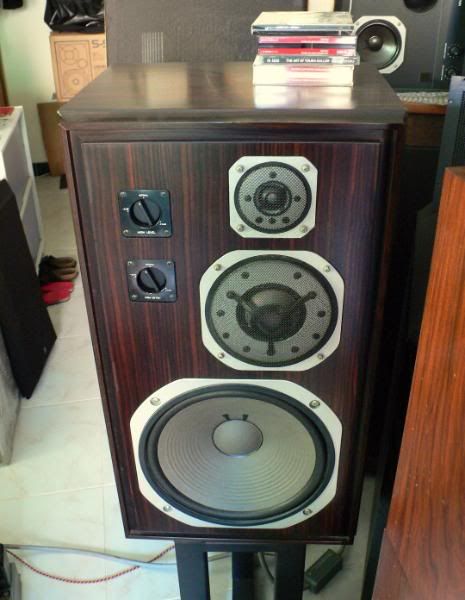
Review: YAMAHA NS-1000

Note: After the big job of re-labeling I just performed on this Blog, as part of my re-organization, I'm going to eliminate my other sister audio Blog (Review and Overview), to let everything be archived here. Today I'm duplicating all reviews from my sister Blog here. This may cause inconvenience for a few users who follow some of my items; my apology. In the long run, this shall be a lot more efficient. For regular posts, scroll down to 01, Spetember and below.

Figure: The making of Yamaha Beryllium drivers (via TheVintageKnob)

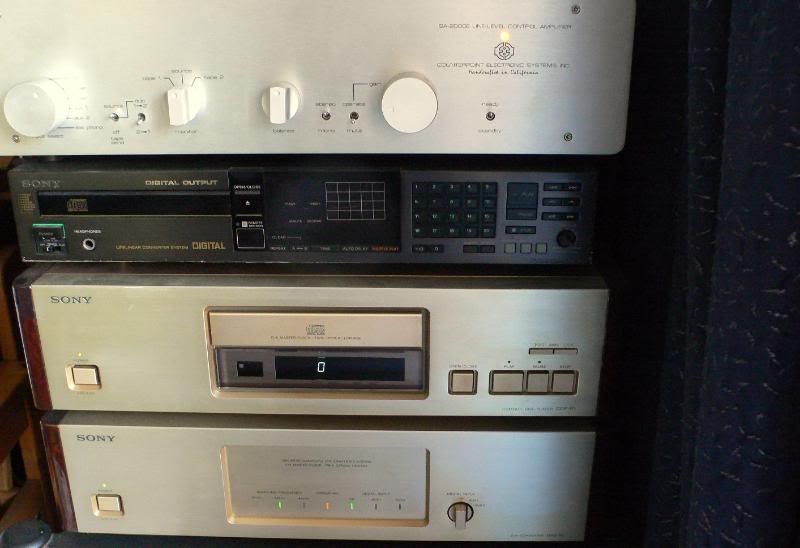
Review: YAMAHA NS-1000 (Sony CDP-R1/DAS-R1 and CDP-553ESD; Meridian 206; Counterpoint SA-2000E; Bryston 4B)

Before my coming articles on iPod and Music Server, I'd like to introduce you to this famous pair of monitors, which I happened to be using for the assessment of my digital iPod files.

YAMAHA NS-1000(M), from the mid-70's, enjoyed a long production life, and has several permutations. It is famous for being a very accurate monitor, and even more for being the first to utilize Beryllium drivers, not one but TWO at that, pre-dating Focal JM Lab by almost 30 years! Talk about "progress"! Read this site for history, spec's and more (make sure you click "more")! NS-1000 is also undeservedly infamous for being "bright".

Figure: Right speaker (designated) of mirror-image pair.

My pair (serial # 11466R/L) is the heavier "home-use" version with REAL wood cabinets, and how beautiful they are. These used to belong to a friend of tubediyer and I had the luxury of trying out before buying.

When they first arrived, sound was decidedly sluggish, probably due to long-term dis-use. I have them 2/3 of the way into the room, in relatively close-field position. After re-running them in, sound steadily improved. One day, I began to get only intermittent sound from the right mid-range unit and it eventually lost sound altogether. I took it out and found that the soldering joint for one crossover cable had completely disintegrated! I had difficulty cleaning and re-soldering the terminal. But after I finally managed to do it, sound took a significant step forward.

I have been driving the Yamahas from my second station, appropriately a half-Japanese one. Let me digress a little to talk about these CD players. The SONY CDP-R1/DAS-R1 was the flagship of the 16-bit TDA 1541A era. Connection using the propreitary SONY Twin Link optical cable is said to offer the best jitter reduction. Although this method does not seem to confer more details (and non-ATT opticals are not my favorites), compared to the other S/PDIF inputs though a darker background is revealed. What I love most about this DAC is its composure, an ability to maintain a rock-like stability during loud passages. I personally judge its ability in this regard to be better than most of the theoretically superior 24/96 and 24/192 decoders, including the very expensive ones. And better than most of the famous professional CD players of this era, including Studer/Revox (D730/226) and EMT (mind you, I have the EMT 931) , though perhaps not better than the little-known SONY professional 3000, a rare bird that I had the good chance of hearing in NYC recently.

A replay of a Bruckner or Mahler symphony is such a pleasure through this machine. Let me cite some examples. On the Tennstedt Live LPO Mahler 5 (Japanese EMI) the first BIG orchestral crescendo is not rendered correctly on most machines. On the R1/D1 you can hear the entire backbone of the cresendo, and it just seems steadier, longer and better, each moment a little more than the previous, and isn't that what we want?? On most machines, the crescendo just peaks too quickly, a sort of premature ejaculation! Last night I played the ALTUS (Alt-129) Shostakovich 1st, captured by Japanes engineers in the late 60's, and the recording has a shocking realism, definitely among the best live recordings I have heard. I must tell you that through the Sony combo it doesn't matter whether I am using the Yamaha or the sensational Usher X-708 I can rest assured I get all of that. Here I must also praise the worthless (in terms of current price) CDP-533-ESD, which uses a priceless transport and delivers a pristine signal that I sometimes prefer to the R1 (hush...)!!! If you find one with laser in good condition, grab one, it'll slaughter most modern transports! And the sound through its own DAC is not bad either...

Figure: Meridian 206

That said, there's a downside to the Sony R1/D1: a certain inaccuracy in rhythm and pace, something most audiophiles who just listen to slow saliva songs do not undertsand . So, while it plays the 3 B's great, Stravinsky's unusual meters may just seem too earthbound. Even in vocals, my newly acquired Meridian 206 (Delta-Sigma version) just beats it. Nothing is perfect, as the Meridian shall lose something in large-scaled replay. There are many generations of Meridian. I don't quite like their 1-bit era, but this 206 is a surprise indeed. The sound bears more resemblance to later 506/508 Meridians, which are not that far off (even better in some ways) than current ones. One can safely say though, Meridian knows their digital!

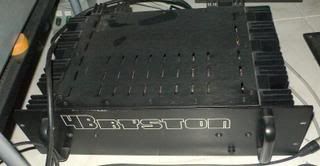
Figure: The original Bryston 4B. Ugly!

Where are the contributions of the preamp and the amp? They are sleepers and guardians. The Counterpoint 2000E is just a 3000 in linestage configuration and a close approximation to the 5000. The Thousand Series is in general more analytical than the older Point One series, more extended at the frequency extremes and less euphonic. The E version denotes balanced-out option provided by IC conversion. Despite that, I have determined that it is the better way to connect the XLR-in-only Bryston 4B, losing very little the tube liquidity and gaining dynamics. Now to the amp, my 4B is an old version, which looks a lot coarser than the subsequent ST and SST versions. However, in terms of driving power, the older versions is a powerhouse and more powerful! It is supposed to be "coasre", but I find an hour of warm-up and mating with a tube preamp is just fine. The 4B its little brother 3B are my ss workhorses.

The setup drove Yamaha beautifully. I get a big sound and do not suffer from so-called "agressive highs", and this without attenuating much of the pots! The 90 db Yamaha's are not that difficult but do need power for the bass to fill out. After a good amount of run-in at good level, sound is fast. and the amount of detail it retrieves is simply phenomenal. With my setup, nothing grates the ears. Most of the negative criticisms simply reflect the low-quality equipment people partner these with. What's pricelss is the sense of presence, as evidenced by playback of the CDs mentioned above. The comments about its similarity to JBL is not completely unfounded. Bass is deep and tight, but peters out around 40 Hz, though it does not have the mid-bass coloration of JBL. Meanwhile, the soundstage is to die for, matching the best of the modern speakers. What is really unusual to me is that they lack almost nothing; it's hard to pinpoint particualr weakness. Great Monitors that I can trust testing to!

A lot of people have heard my Yamaha's and they were all surprised by the performance of these 30+ year-old designs. Robin the music-loving Scot came one fine day and could not stop marvelling. He is as good a judge as any, as he has recently got a pair JM Lab Mini-Utopia Beryllium! Two weeks ago Danz also came by. He was amazed that they sounded nothing like what he heard before. We had all heard these previosuly at a delaer, driven by a Music Server and Benchmark DAC. Very dry and distorted sound; perhaps the computer playback had needed some improvement. Well, matching I guess.

10 comments:

CapnDad said...

Hi,

I'm scouring the internet trying to find the right configuration (left/right) for the NS-1000M speakers. i.e. aer the tweeter and midrange speakers supposed to be on the outside or the inside? I've had them on the inside for the past 25 years and I think I'm wrong.

thanks,

John Davis

CapnDad said...

Hi,

Are you saying that the NS-100M speakers ae to be configured with Left and Right from the listeners perspective or from the speaker's perspective? I've had the tweeters and midrange speakers on the inside for the past 25 years, but perhaps that's been wrong all this time?

Thanks,

john Davis

doctorjohn said...

Hi, sorry for late reply.

I was told to have the tweeters outside, but have no link to back this up yet. Let me call the person who told me this.

In general (as in JBL) the studio stuff has no definite rule. The NS1000 manual says it can be placed horizontally too (this gives better sound with a lot of pro or pro-derived speakers)

Centrally placed tweeters may have better "pinpoint" imaging, but outwardly placed ones may result in a better soundstage. Mine is quite enormous!

Experiment with toe-in too.

Glad to hear from another user. Cheers.

CapnDad said...

Thanks for the reply. We spent all day Saturday setting them up. We experimented with toe-in,distance apart, distance from the ear, and so on. We ended up with the Tweeters on the inside mainly because when they were outside they felt like they were too far apart. but not having a lot of room, we surmised we could just switch them to compensate rather than push them closer together.

That worked well. At the end of the day after all the small moves, an inch here and an inch there, they sound amazing!

We've had them for almost 30 years now and I've had them repaired once... last week...when the tweeter separated. Now they sound good, or better, than new.

Cheers

CapnDad said...

THanks for the reply.

We spent all day Saturday setting them up again after coming back from Tweeter repair. The Tweeter had separated so there was no crack and no need to replace the domes with inferior cone products.

We experimented with the Tweeters on the inside and the outside, but ended up with them inside. A lot of that has to do woth room size, and we just felt that on the outside they needed to be pushed closer together. Rather than do that we switched them.

That, combined with a lot of toe-in experiments in half inch increments, got us the sound we love. Good sound stage, great tone, and much less fatigue than we've had in different rooms.

Great speaker, and I can't believe sometimes that when I bought them it was simply because they sounded good.

cheers

doctorjohn said...

Hi, I am glad you're finally getting the sound you want. I spoke to some friends and we all agree there's no fixed rule.

One day I'd urge you to try them horizontal. My space doesn't permit it though previously I got great result from my JBL 4312B that way.

A tube preamp can remove most of the "glare". In my system the Yamaha never sounded harsh at all. Curious what gears you're using?

TruthSpinner said...

In my pair I experience ringing from one of the midrange drivers when I knock on top.

Any idea what might be causing this?

doctorjohn said...

Curious, this ringing. Tubes can ring due to microphonics, but drivers! You don't happen to have a tube preamp on top?

CapnDad said...

I must have missed your earlier reply when you asked what gear I'm using. I'm running a MacIntosh MA6300 Integrated Amp, Rotel RCD971 HD CD Player, and a Linn Basik turntable.

TruthSpinner said...

Nope, this happens under all vercumstances. Somehow I am able to induce hearable (quite so) vibrations in some metal part(s) inside the driver, and I guess this should not be possible?