Showing posts with label Showroom Audition. Show all posts

19 August, 2012

Showroom Audition: KEF LS50 and Blade!

pic courtesy of Andrew's iPhone.

Showroom Audition: KEF LS50 and Blade!
Brief Overview: KEF

Sunday was a hot day. I was just languishing and certainly wasn't thinking of venturing far when I made a casual call to my 師弟 Andrew, that man of indomitable spirit. Needless to say, one hour later I found myself joining him and another old classmate Philip in the Kowloon Cricket Club where we just chilled out for a couple of hours.

Andrew had some time before hosting his "back to school" dinner (he has no kids, but plenty of excuses!). I suggested visiting the KEF showroom in Star House to listen to the new and rave-reviewed LS50. A call revealed that the room was being used for a surround system audition. That was the second time I was not able to gain access, as the day before I went to the place before yumcha but someone else was auditioning the LS50.  So it's best to call beforehand.

We then called the Causeway Bay store and within an hour found ourselves auditioning in their really comfortable show room. We were joined there by our friend oozz and his girlfriend.

I must say the service was absolutely impeccable. Staff Mr. Ko was courteous, knowledgeable and very helpful, and he made the experience very pleasant.

Brief KEF Overview
There is no need for me to write much on the background of KEF, certainly one of the most influential companies. In the excellent official website, you can find great coverage of its background and, most commendably, a comprehensive library and photo gallery on older models (something most other manufacturers should do better at). Obviously KEF takes pride in its heritage!

Over the years I have heard quite a few KEF speakers, but have owned few. I think I must have encountered most of the 103-107 Reference series, but there was always something wrong with what I heard (with one exception, see below). Most of the time they seemed rather muffled and overly polite. The bass just dragged and the treble sounded shut-in. I think they probably needed a lot of power to come alive. On the other hand, I had favorable impressions of the later Uni-Q's, usually found in entry level and modest setups. No wonder there, as I am a fan of concentric drivers and a Tannoy user! In the 90's I also helped some non-audiophile friends set up simple systems using their best-buy and decent Coda loudspeakers. Nonetheless, my own interest in KEF was largely for their BBC-related work.

T27 and B110 KEF virtually completely re-wrote history with these two driver units. Of course, these were made famous by the BBC, which used them in the immortal LS3/5A. But they were ubiquitous and could be found in many loudspeakers of the era, including KEF's own kits and the excellent Cresta MkII (sounds uncannily like a LS3/5A, and not to be confused with the Mk I, nor the later Cresta's, which are completely different animals). Of course, the wonderful Linn Kan I also used the B110 but a different tweeter. IMHO, the Kan and Cresta Mk II sound just as good as the LS3/5A. A good pair of the latter is still missing in my arsenal. If you have a pair for sale, contact me! Of course, in the 90's KEF also made several versions of their own LS3/5A's. In general, these have more extended treble, tighter bass and could play louder than the usual ones. Some LS3/5A loyalists like the difference, some don't. I do and I won a rosewood pair.

Reference 104 I used to own a pair of these rather awkward but wonderful speakers (later exchanged for the Yamaha NS-1000). Mine was the later aB version (official link). While it sports the T27 tweeter, the bass unit is a larger version of the B110 called the B200. In addition there is the famous BD139 Radiator, yet another KEF innovation! The sound of the 104 is majestic and, yes, it sounds like a bigger LS3/5A, capable of playing Mahler and Bruckner! I have heard these driven magnificently by a pair of powerful Conrad Johnson Premiere 4 monoblocks. But if you, like me, use only a medium powered tube amp, the sound is just slightly slow and the bass a little ripe. I suspect it will take to a solid state amp, but I never tried it during my time with it. Incidentally, the BD139 is featured in earlier versions of that other magnificent beast, the Sonus faber Extrema (changed to TDL later).

More recently Truth is, KEF in the recent past has lost much ground in the competitive high-end. Many two-channel audiophiles only thought of KEF mainly when it came to multi-channel AV needs. But things started to change for the better after KEF was acquired by Asian Gold Peak, which to its credit has injected new life into the company. Their recent efforts in their Flagship series were bold to say the least.

KEF LS50
This 50th anniversary product is the latest in the Flagship series, sold only directly by KEF in their showrooms. It has garnered rave reviews (HiFi News) and just collected the 2012-2013 EISA award. The first shipment sold out in HK, but a second one is imminent I was told. The cabinet proper has a nice black piano wood finish. The curved front baffle is more unusual, being made of glass composite, which worries me, as it is susceptible to scratches and probably difficult to clean. There is no grill.

At KEF's huge listening room we heard it with the following electronics:

System 1 Marantz KI Pearl Lite SACDP/amp (description here) Mr. Ko explained that this modest combo was used because it is likely more in the price range of potential customers (although someone is using Soulution to drive them!). Despite the size of the room, and although I am not a fan of the Marantz sound, KI or not, the LS50 turned in a decent performance. The soundstage was well spread and imaging was very good - one could sit anywhere and still enjoy it. The sound was just a little too laid back (like too much feedback, probably at least partly due to the Marantz combo) and the bass was truncated and not the cleanest at loud level, though this is a huge room.

System 2 Krell (?Phantom+Evolution) After demonstrating the Blade, Mr. Ko offered to connect the LS50 to the much more expensive Krell system and of course we were delighted. No doubt about it, the LS50 got much better, but too bad we couldn't stay for long!

KEF Blade
The two top models in the Flasghip series are Muon and Blade. Previously I have only seen them in shows and have always wanted to audition them. Both sport fabulous industrial designs. One cannot find many reviews on the net; there is one by HiFi Choice and an informal audition by Stereophile. The point-source driver in the Blade is likely similar to the one in LS50 but not identical. The two pairs of woofers are mounted back-to-back, in quasi isobaric fashion. Mr. Ko kindly offered to let us audition it after we listened to the Marantz combo driving the LS50. Using the Krell electronics, the Blade gave a command performance even of large works. Everything you could possibly want is there: a large soundstage, solidly fleshed out images and tuneful deep bass. And yes, it made the LS50 look and sound like a kid! :-)

Considering we were listening to unfamiliar material, the demonstrations convinced me of the merits of KEF's renewed assault on state-of-the-art. If I can bring a pair of these home, I think it will sound even better! Since the Blade is out of the question, the LS50 it shall be then?

After the audition, we were treated to a fabulous dinner at trendy 浙江軒, complete with several bottles of excellent white wine, including Corton-Charlemagne! It was also nice to be able to dine with several other old friends. Thank you Andrew and Jane!

11 October, 2010

The Yumcha Diaries 飲茶後記: 09-10-10 (HiFi 德 VPI Classic vs Aries)

The Yumcha Diaries 飲茶後記: 09-10-10

Showroom Audition: Ernest Audio HiFi 德
Talk Vinyl: VPI Classic vs Aries


A Classic is born
I was chatting one day with my friend Keung and we talked about VPI turntables. He expressed some interest in the Scoutmaster, and I was interested in the newer Classic. Spontaneously I called 阿明 of HiFi 德 and arranged an audition on this day after yumcha.

A little more on VPI and the TTs. I have not always taken to the sound of VPI. More than 10 years ago I heard a low model VPI (forgot model) with a Rega arm and did not like the rather mechanical sound (perhaps it was the setup). However, later, as heard at jeffr33's place, a Scoutmaster was lively and dynamite, and that had caused me to re-evaluate its offerings. VPI is a curious company that is highly eclectic in its multifarious approach to TT design. Many people still swear by the suspended HW-19, one of the company's huge early successes. VPI's reputation has grown in leaps and bounds in recent years coincident with the introduction of its unipivot JMW arm series.

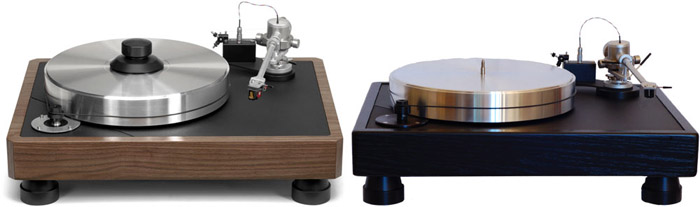
After selling well for many years, the Scoutmaster has been eclipsed by the same company's Classic. The Classic has been in existence for a while, and had undergone small modifications, but it is quite different in design as well as appearance from the Scout and Aries series (including the similar flagship HR-X). Due to the popularity of the Classic, HiFi Duck does not even stock or demo the Scoutmaster.

One of the reason why the Classic is so hot is due to several awards in TAS, including Harry Pearson's endorsement as Editor's Choice 2010 :

"...The Classic, correctly named, has been made even better with a few quite small changes, which give it an even smoother sound. These are tiny changes, but consistent with Harry Weisfeld’s mechanical bent. The man is always on the lookout for a sonic improvement, no matter how slight. Oh yes, the changes, as told by HW himself: “I grounded the motor with an aluminum heat sink, the platter was changed to one piece of aluminum rather than two pieces, with a damping ring attached to its bottom (to make it quieter), and the arm increased by 6mm “for lower tracing error and better tracking.” And the price remains the same. You yourself can do a bit of improving if you opt to pay for the stainless-steel version of the Classic’s arm ($200), which I recommend for cleaner sound from your cartridges, and $700 for the stainless-steel record clamp that fits over the outside edges, the best way of the LP. The speed stability is so good thanks to Weisfeld’s design (based on earlier turntables, those from the golden age of same) that I think you can get by without the SDS speed control device (at $1200), which makes speed changes easier than does adjusting the Classic’s belt. A steal at $2500, this one does not suffer by comparison with the Clearaudio Statement and has prompted me to retire the much-loved Scoutmasters..." (note that in the full article, not available on the web, HP also quoted designer Harry Weisfeld's tall claim that the Classic may be his best creation regardless of price, but keep in mind HW likes to say that kind of thing). It should be noted also that HP's huge praise also elicited all kinds of comments on the net, in avguide (TAS) forum itself, including allegations of over-praise.

TAS' sister magazine HiFi+ also has a rave review from Roy Gregory, but the review I enjoy the most for its fastidiousness was from Germany (6moons).

Sibling Rivalry
So much for background. As the Scoutmaster is not available, 阿明 proposed to compare the Classic with the Aries. Based on his experience, he said that should offer some insight on how the Classic fares against its sibling. The VPI arms differed slightly in length and two different cartridges of roughly equivalent price were used. The gears are as follows:

-VPI Classic/JMW 10.5 arm(upgraded steel arm with VTA adjustment device)/Clearaudio Symphony
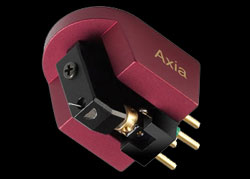
-VPI Aries 3/JMW 9 arm/Transfiguration Axia
-Clearaudio Reference Phono
-VTL preamp 5.5 II
-VTL power monoblocks MB-450-II
-Rockport Grand Mira II

We listened to several LPs. Heard as a whole, the system was hard to fault, no matter which turntable was in use. Matched with the excellent VTL tube products (which have a modern tube sound that I love; no soggy stuff!), the Rockport Mira's delivered superbly clean sound across the frequency spectrum. Here I must say HiFi 德 has always been very good at system setups. They have reliably provided some of the very best sounds at various hifi shows (same cannot be said of most of the majors). And this setup impressed all of us too.

Transfigured
As it was, the Classic combo was a little steadier in sound, a shade warmer and more solid. The Aires 3 combo sounded a little more extended and more refined. While part of this may be due to the difference in TT/arm, the difference in cartridge likely plays a major role too. What was definitely evident was that both setups bear similar sonic signature: supremely composed and rock solid; fast and explosive, as well as nuanced and refined, as the music demanded, all delivered with excellent rhythm and pace (PRaT). Here, I wonder whether HW's naming of his products are entirely appropriate. The Classic is mighty, as dynamic as the Aries, whereas the Aries is definitely not a brute (Aries is a Greek God of the violence and blood-lust of savage war = Mars in Roman; witness Holst's The Planets)! Suffice to say I enjoyed both setups more than a lot of hugely expensive vinyl setups I have heard:-)

Given the price advantage, for those who favor metal platters (many like whlee and me) and a classic look, the Classic indeed looks like a bargain.

A note on the Clearaudio Reference Phono. Thanks to Andy's loan, I actually got to test this at my home some time ago. While it is not a bad phonostage, to me it is not truly exceptional and lacks character (I certainly prefer tubes). Its gain is not exceptional too for such a high-priced product; I was unable to use it with my Ortofon MC-3000 (0.13V).

Knowing I was intrigued by the character of the Axia, whlee reminded me that my last experience with Transfiguration was at Lincoln's home, which had a very refined sound that I still remember. I'm sure I shall investigate this brand further.

阿明 told us just that morning An Indian customer came in to buy a small Clearaudio TT (I forgot the Emotion or the Performance) to take back to his country. But then he saw the Classic, compared the two and walked away with the much larger and heavier VPI, worrying about the over-weight charges!

阿明 also told us that the VPI Classic is selling like hotcakes in Germany (remember the 6moons review), and Germany probably produces more mid-end and hi-end turntables than anyone else. This should tell you a lot about what knowing and frugal Germans think about their own products. Personally I have always thought most of the German turntables (as well as other hifi items) underachieving and over-priced. I am glad the Germans themselves think so.

Man of Action
I would like to thank 阿明 for setting up the demo (and for finding about about the intriguing anti-skating on the Clearaudio Concept). 阿明 is superbly knowledgeable about the products he sells. For once, here's a man who is all action, not all talk. And whatever he is not sure, he immediately jumps on it and finds out, no bull-shit. I nominate him MAN OF ACTION OF THE YEAR.

17 July, 2010

The Yumcha Diaries 飲茶後記: 17-07-10 (Bauer, Avantgarde, AMR, Kondo, Kiso)

The Yumcha Diaries 飲茶後記: 17-07-10

The Oz Connection
JC was back in town on this day. It was also nice to see classicalkan and his cute boy. They are due in Australia in August and we look forward to his report on JC's current system. As it was a rainy day we decided to postpone our planned visit to hear tubdiyer's 4343.

David and Goliath
After yumcha the seven of us went to Avantgarde Hong Kong. When we arrived there was a large crowd of mixed sex in the main listening room auditioning 第一鼓. Sales manager Jeff Yip ushered us into the smaller room, where we spent time with an expensive small system:

Digital: Weiss (I think Jason/Medea)
Preamp and Amp: Kondo M7 + Souga (2A3 PSE)
Speakers: Kiso Acoustics HB-1

Tell you one funny thing. As I was writing I googled "Kondo Souga" hoping to find more info or a link for you. Guess what popped up first? MY brief audition of Souga at another dealer!

Well, the sound of Souga was much better this time, for sure. At $130K the small Kiso speakers had better be good! And they were, as driven by these expensive electronics. The violin was a little artificial paradoxically, but that may be Eugene Fodor. A Japanese jazz CD was well rendered, with snappy timing, crisp piano and serviceable bass (let's not exaggerate that it's a big speaker).

The Kiso are certainly not the first to use resonating cabinets of thin wood that simulate musical instruments. Not even Ocellia was there first. According to daiwok, the concept has long been in existence. If you can accommodate larger speakers and are handy, you might want to follow daiwok's footstep and assemble the Saba Reso (see also here). I have auditioned the Saba Reso at daiwok's place, and they were phenomenal; I had never heard Starker's Bach to better advantage. All at a tiny fraction of the price of the Kiso, and you get more bass, a lot more. But that's for another article.

When the rival gang left, we moved into the main room and auditioned the large system. Here, the "director" Edward Choung took over:

Digital: AMR CD-777
Preamp + Amp: Kondo M77 + Gakuoh (300B PP)
Speakers: Avantgarde Duo Grosso

We listened mostly to CDs. The sound was reasonably good, especially behind the desk. My impression is that the Duo Grosso is better than the regular Duo that I had listened to in the past, and it had better be given the extra cost. Mr Choung was an enthusiastic personality(at times almost overly so), tirelessly explaining to us facets of the gears in use, especially since we were unfamiliar with the AMR brand.

Another chip on the shoulder
The AMR's look aroused suspicion in us about its origins. It's a British company but the look of the machine somehow had something Chinese about it. The pompous English on the official website was not reassuring either. My ears perked up when Mr Choung alleged it used the 16-bit chip. At the time, in the unfamiliar surroundings I could not really assess the performance level. Back at home, I read its website and the reviews. I was surprised to read in the 6moons review that Thorsten Loesch, who used to be active in my cheaptubeaudio Yahoo group, and whom I respect as a technocrat, may have something to do with it (at least with its progenitor CD77)! So it IS a bona fide UK company after all...

The multi-bit chipset used is actually the Philips UDA1305AT, a chip new to me and believe me, I have heard my share of CD players with all kinds of chips. Now, THAT's interesting and I am glad! I urge you to give it a listen. Old technology, new implementatio, and I admire a company that does that. Official gibberish here:

"...At the heart of the CD-777 Processor is AMR’s ‘continuous calibration’ Multibit Digital-to-Analogue Converter circuit using the Philips UDA1305AT Multibit Chipset. This is the first time this New Old Stock chipset has been used in a CD source and is worthy of the title “son” to the “King of Multibit” Philips TDA1541A chipset used in the multi-award winning CD-77. With AMR’s understanding of digital design down to the silicon die-level, the sonic performance of this “Prince of Multibit” chipset has been taken beyond the textbook limit. Producing visceral music that other mega-buck CD players cannot match, it must be heard to be believed. Along with AMR’s OptiSample, the CD-77 boasts full remote control of all sampling modes: Direct Mastering (AMR’s custom Non-Oversampling), Oversampling (2X, 4X) and Upsampling (96 kHz, 192 kHz)..."

"...The UDA1305AT is also superior to the TDA1543 and TDA1545. An added bonus is that this chipset has been off the radar and until now never been used before in a high-end CD player. Amongst its features are a continuous calibration concept, fast settling time to enable 2, 4 and 8 times oversampling (serial input), adjustable bias current for maximum dynamic range, internal timing and control circuits, I-squared-S bus input format (time multiplex, two’s complement, TTL up to 384KHz), no zero crossing distortion, low power consumption and low total harmonic distortion. Full-scale output is 2mA, THD at 0dB is -90dB, A-weighted S/N ratio is -101dB and current settling time to ±1 LSB 200ns..."

CAS vs CDP
Without even prompting Mr Choung showed us the CAS ability of the AMR. Using a netbook he played back downloaded high-res files and compared them with ripped files from CDs as well as the CD itself. Needless to say, the CD playback was superior.

Analogue is King
Since there were a plethora of turntables around, we asked to play an LP. Mr Chuong obliged and took quite a bit of time setting up the analogue setup:

-Feickert (Das Laufwerk Triple) turntable (tonearm not sure) with an Ortofon SPU Gold cartridge
-fed into an Ortofon SPU-T100 step-up transformer
-then into AMR PH-77 phonoamp.

He played a first-edition Take Five (red-label; 6-eyes). the sound instantly trumped the CD replay, but that was not all.

It's all about Curves!
Again, the spotlight was on the AMR PH-77. This unusual phonoamp is prodigiously equipped:

"...The PH-77 is the only phonograph source able to lay claim to exclusively feature a comprehensive catalogue of 23 equalisation (EQ) curves: every LP record can now be replayed using the one and only correct equalisation curve. This includes AMR's exclusive RIAA Direct Metal Mastering 'Curve' which transforms DMM records from being 'bright/edgy' to the life-like analogue recording that it always was.

This along with 8 levels of gain, 64 steps of load, 3 inputs for unprecedented flexibility in cartridge choice and matching and the onboard 24bit/96kHz Analogue-to-Digital converter, the PH-77 is undeniably one of the most significant reference phonograph sources ever produced..."

For sure, Take Five sounded better with the Columbia curve engaged. I don't recall another phonoamp as versatile as this one. Somewhat surprisingly, it lacks a phase switch. Mr Chuong's reply: "...I was told when the engineer records something in reversed phase, he has the effect in mind and it is supposed to be listened as it is..." Well, I'll take that with a grain of salt...

The last thing we asked for was to remove the step-up transformer and only use the MC phono section of the PH-77. Sound immediately flattened significantly, as predicted by Mr Chuong. Nonetheless, this is yet another interesting offering from this company, one that I shall watch intently from now on.

The showroom has a lot of TTs to look at. The Feikert line at least looks good. Nottingham I have no interest in at all. Of all the TTs, what interested me the most was the Bauer Audio DPS on silent display (read the HiFi+ review). The elegance of this particular sample from Jonathan Midgley was unfortunately visually disturbed, if not destroyed, by a hopeless marriage with a clutzy Triplanar.

While we were engaged in the main room, Mr Yip in the small room took the pains to show some video to classicalkan's little boy (so as to contain him?). We spent a lot of time there and I am really impressed by the service of the two gentlemen. Commendable indeed!

No, we don't carry this...
After that, we went to nearby Prestige HiFi because I wanted to take a look at the Thorens TD-309, which has been winning praise. Despite its reasonable cost and spunky look ( sassy to me, maybe ugly to you), it actually has many interesting design features (read the pdf file). I saw every Thorens deck (mostly ugly) except this one.

Sales: "...Sorry, we don't carry this..."
DJ: "Why?"
Sales: "...Nobody would be interested in HK..."
DJ: "...But I am! Can you get my a quote anyway?..."
Sales (after a call or two): "...sorry, we don't do this ah..."

So, even if you want one, the dealer refuses to get one for you. What kind of dealer is that? Thumbs down for Prestige Audio. This is the kind of dealer I dislike a lot.

Just an hour ago, Avantgarde HK told me they carry everything in the Ortofon catalogue, and Ortofon makes some very cheap cartridges and acessories. HiFiDuck sells the Concept, the lowest in the line of Clearaudio, for a good price. That's service.

We did not stay, not because of the turntable, but because the sound emanating from a Thorens TT was shockingly anemic, as if bled of all music.

11 April, 2009

Brief Audition: KONDO dealer

Brief Audition: KONDO

The dealer in Tsuen Wan keeps a very neat shop, and the staff is unfailingly courteous. There are only some audiophile CDs. It's most imperative you bring your own. I visited twice but did not stay too long each time.

Using 47 Lab digital sources and M7 line preamp and of course Kondo cables, driving a pair of small Kharma's, the first time I heard the Gaku-On, monoblock version of the Ongaku, employing 2x 211 each channel in PSE fashion. The sound bore resemblance to the Ongaku. I thought I could detect the shimmering and inimitable treble, superb transparency as well as the excellent presence factor. With 45 watts on hand, the Kharma performed well enough but not up to the standard that Kondo obtained with his weird speakers many years ago in the hifi show.

The second time, everything stayed the same, but Souga replacd the Gaku-On. At first I thrilled to the very clean bass, but after a while I became aware of a leaness that was a bit much. The pair was virtually brand-new and I don't think nearly run-in. However, even then, you could detect that the treble and presence factor have the same signature. It'd be interesting to hear whether the midrange will firm up when run-in. The Souga seems to be selling well. Allegedly, half of the first lot of 10 have been sold.

I thought the Souga looks good. I personally find the squarish Gaku-Oh and Neiro not too good looking; the colors of the knobs, front plate and top plate just clash a bit. I still like the Ongaku look the most.

20 December, 2008

Brief Audition: Vienna Acoustics "Music"

Vienna Acoustics "Music" (Jadis)

Yesterday, after yumcha, we auditioned the flagship Vienna Acoustics "Music" at the new dealer, Jadis. Thanks to sokps for the arrangement.

Vienna Acoustics has had an intermittent presence in Hong Kong. I have always liked their musical sound, but the way they voice their speaker is anathema to a whole generation of HK audiophiles brainwashed for those most dubious of hifi values, "pinpoint imaging". "small mouth" etc (not that they are bad in those departments). Size for size, (like Usher I may add) Vienna speakers sound bigger and fuller than most other brands, and not over-etched in treble, and that is plainly not what HK people like. Nor do the average HK audiophile, a stressed-out crowd who need only to drink from Choi Kam's saliva, know how to appreciate dynamics. Nor do these "audiophiles" know what is "presence", as most of them have never attended a live concert of any kind. I'd rather not go on. Suffice to say, Vienna Acoustics has not met with success in HK, and their old models were sold at bargain basement clearance prices (Apliu St for example). Second-hand prices are pitiable.

Stereophile reviewed some of the older models back a decade ago, and that possibly accounted for VA's presence in HK then. After some lean years, the much more recent praise lavished on the more recent models by Stereophile and latecomer TAS may be pivotal in its revival in our sector.

I totally forgot about VA until a recent review of the Haydn Grand by TAS. I was thoroughly intrigued by the tweeter mounting in the port; at first I thought it was an unusual tweeter horn! So in NYC my picky WE friend and I went to Harvey's and auditioned it. Even driven by a cheap NAD amp, sound was really "Grand"! I was thoroughly impressed by its presence and delightfully full and dynamic sound. I also thought this current generation of VA seems more detailed and cleaner than older models.

I have never liked the sound of the Jadis showroom, but even then, driven by top-of-the-line MBL digitals and preamp, and paired with Boulder monoblocks, the sound of "Music" was indeed very "musical", and I am using this term in the only way it should be used. Most importantly, there is an alluring aura, an atmosphere that is hard to describe. You have to hear it yourself. It made the Weavers (Analogue Productions) sound, well, "woven"! Alive, and you can feel the live atmosphere. I didn't take too much notice of the BIS 4 seasons and Telarc Strauss that followed, but when we put on the Biber I just borrowed from the library, I was transfixed. It was exactly the atmosphere that Biber's music demands. It was so good even the salesman investigated the cover. I regret to say my Yamaha NS-1000M, excellent though it is, failed to deliver the same atmosphere when I played it at home later (but the Tannoy did). By all means go hear the beauty that is "Music"!

When we finished a young couple was auditioning the Haydn Grand. sokps said, "Surprising bass!", but I already knew that. If you're in the market for a pair of bookshelves that can do almost everything well, you should go hear these!

Note: If you are interested in any VA product, go to the US importer Sumiko site for FULL reviews by many magazines. Must have cost Sumiko dearly but it's very entertaining!