Showing posts with label Brand-Sennheiser. Show all posts

10 March, 2020

On Headphone Listening Pt. III The Finale! Jupiter Audio Research HD600 abbasaudio OTL Amp (also Schiit Valhalla 2, Eddie Current Dana Deux)

On Headphone Listening, Part III The Finale! JAR HD600 abbasaudio OTL Amp


By mrgoodsound 


Part I, Part II

This article will be part three of a series on headphone listening, and for now, a finale. I have received my heavily modified HD600 headphones, and output transformerless amplifier, both of which have been on order since late 2019 and will be the main subjects of this article. After living with both for several weeks, I am ready to share my thoughts and feelings on them.

In some ways, the findings in this article and my current headphone system have been a work-in-progress for 5 years. As I mentioned in part one, I began my journey in audio with headphones and have been chasing a sound that only existed as a concept in my head. Until now I had never quite gotten there, despite many hours and dollars spent. Like all good stories this one has a beginning, middle, and end.

In the beginning


Schiit Valhalla 2
The first headphone system I would consider myself satisfied with was a stock pair of Sennheiser HD650s and the Schiit Valhalla 2 amplifier. I would define satisfaction in this case as the ability to listen for a period of at least several hours without fatigue and with involvement in the musical program. The HD650 was chosen for its linearity in the critical middle frequencies and lack of distracting sonic aberrations. The Valhalla 2 was chosen (at the time) because of its optimized power current delivery into the Sennheiser's 300 ohm load. Unfortunately, I did not comprehend just how important its transformerless topology was until much later. The Valhalla 2 had several compromises in its design, chiefly the use of copious amounts of negative feedback to lower the output impedance and achieve sonically unimportant low distortion figures. I understand that Schiit as a mass market company did not want to manufacture a 'specialist' amplifier that was only good for headphones with high impedance voice coils, and thus feedback and a cathode follower were incorporated into the design. Their marketing images showed the Valhalla 2 connected to an Audeze LCD-2 for example, despite this being a pretty terrible match.

This amplifier was still a superior match to virtually all transistorized and hybrid options I had tried, but unfortunately, these compromises meant that the Valhalla 2 had a dryness and grain to its middle to high frequencies which caused fatigue after several albums worth of listening. This could be alleviated to a degree with a warmer or laid-back source, but given that I wanted to listen for more than 1-2 hours at a time this ear irritation became the reason I started to look for upgrades to the Valhalla in 2017.

In the middle


Original Zana Deux, credit 6moons.com
To cut a very long story short, 2 years of time and many thousands of dollars were wasted searching for the ideal solution. I began reading headphone forums and researching all the high-end valve-based amplifiers available on the market. I tried many headphone amplifiers ranging from $1000 to $3000 (!) but was ultimately disappointed with each. Most of these models were traditional transformer-coupled single-ended designs. It is widely agreed that in these designs, the quality of the output transformer is responsible for the integrity of sound. For reasons I still cannot fully explain, it seems that the sonic compromises of output transformers are more easily detected or even amplified when listening with headphones. You cannot get over the impression that you are 'monitoring' the music rather than indulging in its aesthetic qualities. Some of these amplifiers made attempts at revealing subtleties in the sound but usually at severe compromise to one or more parameters such as dynamics or transients.

At first I thought the matter was related to impedance, as most audio transformers are specified with secondaries of 4/8/16 ohms, but then a later experiment with an output winding specifically optimized for ideal damping factor into a 300 ohm load proved disappointing, so I ruled this out.

I decided to return to OTL amplifiers, and settled on trying one model in particular, the Eddie Current Zana Deux. This model has been around since 2005 and is well-known in Head-Fi circles. It had a certain mystique about it and a very flattering review on 6moons. Unfortunately this experiment would further detour me from the ideal path. The amplifier was extremely colored and musically unsatisfying. I again attribute this to its design compromises: a copious amount of negative feedback and giant capacitors to output couple the giant 6C33C triodes, ruining any chance of musical integrity. I did own the latest version, the 'Super', and as I understand the original would've better suited me.

Discouraged and apparently frustrated after these experiences, I took several months hiatus from headphone listening and tinkered with stereo equipment instead. It wasn't until I exchanged PMs with an audio acquaintance from Denmark that I learned of the manufacturer Abbas Audio, and saw that he had an OTL amplifier in his catalog of products. I took quite a large gamble to order this amplifier unheard, and it is the subject of today's review.

Jupiter Audio Research HD600 Mod 

My JAR HD600s
Having sold my HD650 before taking a break from headphone listening, I needed a new pair of high Jupiter Audio Research through forums. Jupiter is an independent manufacturer of modifications to the popular Sennheiser HD600 & HD650 headphones. Many community-sourced modifications exist already for these models, most of which involve applying mass-loading and dampening to the driver housing and spider. I never tried these for fear of irreversible damage to my favorite pair, but I was attracted to Jupiter's mods as they took things a step beyond the DIY solutions. He fabricated a 3D printed screen to take place of the headphones cup grills and provide the necessary rigidity and dampening to the headphone housing. Some unnecessary elements of the stock housing were completely removed, and some experimentation was had with the amount of damping foam present in the rear of the driver.

The mod is fantastic! All the positive elements of the stock sound are retained but a much higher technical level is achieved. The sound possesses more clarity and cleanliness at all frequencies, transients become sharper and less smeared, and a pervasive softness present in stock form is replaced with a sense of solidity and previously unheard composure. The character of the headphones does not change, and the limits of the driver can still be heard, but I highly recommend it to anyone who is already a serious fan of the HD600 or HD650.

In the end: abbasaudio OTL amplifier


This amplifier has transformed my headphone listening experience. It is no longer possible to listen to music via headphones as background noise. Unfortunately many of the technical design details are not available in English, so I will speak only to what I can. The 6080 triode was chosen for the output lamp based on its exceptionally low plate resistance, making it a natural for a design without transformer loading. The passive parts and wiring are largely vintage. Of note are the 'bumblebee' paper-mylar coupling capacitors typically found in American-made electronics of the 1960s.

I now understand that the properly designed output transformer-less valve amplifier is an ideal (read: less compromised) solution to drive high-impedance headphones such as the Sennheisers. The sound from this amplifier is incredibly immediate and pure; both in its tonal colors and its clarity of the emotion and message of music. Grip on the drivers without over-damping is outstanding, with an ability to maintain composure and drama under the most complex and demanding of musical passages to a degree that I previously thought the Sennheiser's were not even physically capable of.

My headphone listening station
Despite the measured roll-off of the HD600 driver, the depths of low frequency content through this setup is surprising, not unlike Stax, but without the electrostat's plastic bass timbre and lack of muscle. It has been said before, on this very blog, that bass is the foundation upon which musical energy is built. I was completely oblivious before to just how much was missing in the presentation with an inability to resolve low-frequency information. With this amplifier the space in and around my head is pressurized in such a way that a believable sound field is created and the absolute presence of music is felt, at all times, even during passages of silence. I have not experienced this before and previously resigned to believe that headphone listening despite its intimacy was not capable of sounding more or less detached to a degree, as if one was 'monitoring' the playback rather than being immersed in it.

Above all else, the emotion of music is transmitted intact, regardless of genre or source. I am nearly always subject to involuntary physical movements and reactions when listening to music through this system. I have been moved to tears, on multiple occasions, with both popular and symphonic music! This is absolutely unprecedented for me. If only I could achieve such emotional compulsion as consistently and thoroughly through my speaker system, though I am convinced I will get there eventually. I tried to listen through this system while writing parts of this article, and was unable to. The music takes attention, whether I am listening to FLAC, MP3, a streaming service, YouTube or 78 RPM shellac rips.
The guts of the Abbas OTL amplifier

To temper myself after writing the above paragraphs, I went back to listen multiple times and try to hone in on deficiencies in the sound. The input stage of the amplifier using the EC88 lamp is based on a SRPP scheme, which is known for having a heightened sense of dynamism or speed. Indeed, the amplifier is intense, and perhaps slightly more so than what peaks in recordings of large scale music call for. However, given that the aesthetics of the musical performance are not disturbed, and a vividness is given to headphone listening that otherwise would not be there, I hesitate to call this a shortcoming.

For the JAR600, the Sennheiser driver has its limitations. It cannot resolve high frequency (>7kHz) transient information very well. There is a ceiling to its ability to portray subtle contrasts and intonations in music. Its frequency linearity and presence may be too monitor-like for those preferring euphony, and there is nothing wrong with that. However, anything that I would consider a true upgrade is very far away from its price point.

I consider this to be an audiophile victory of the highest degree, and well deserved in terms of the investment made to get to this point. The abbas OTL amplifier cost just over $1,000. It is also capable of serving as a pre-amplifier or buffer with simple modification, which I will attempt later.

Unfortunately, it is not clear if he is still offering it as a serial product. I loathe to heap so much praise onto a product that may very well not be available for purchase anymore, but such is life, and it is not too different from raving about a vintage amp you can't reasonably find anymore. What is equally exciting and daunting is that for the first time since 2016 I feel the HD600s are the weakest link in my headphone chain. Possible candidates for upgrades are the ZMF Verite and MySphere 3.2, although considering both these models cost well over $2,500 I do not think I will be experiencing them anytime soon.

I will conclude with some practical recommendations. For lovers of music who want to put together a headphone system without breaking the bank, I recommend the Sennheiser HD600/HD650 models. Be mindful that Sennheiser has recently switched production from Ireland to Eastern Europe and compromised quality control. I would recommend sourcing a made in Ireland pair, which shouldn't be too hard. You may modify them yourself at a later date or send them to Jupiter Audio to be modified.

For amplifiers, either the Schiit Valhalla 2 or Bottlehead Crack will satisfy on a budget. The latter is sold as a kit but is so popular several well-built examples are always available on the second-hand market. I believe this will serve most peoples needs, unless you are married to synthetic electronic music with deep bass content, in which case you may consider any number of planar magnetic models and an inexpensive transistor amp such as the Schiit Magni. Some have also reported success with using a small subwoofer playing in parallel with headphones.

30 December, 2019

On Headphone Listening Pt. II Sennheiser HD600/650 Stax SRA-12S ZMF Focal Audio-Technica

From mrgoodsound: Follow-up Thoughts On Headphone Listening


This is a Part II post. For Part I, please see here.

For this post, I would like to share some philosophy on what makes headphone listening engaging to me, and provide some context with my own headphone experience.

The X Factor


Before I begin, I'd like to state that I do experience 'goosebumps', 'shivers' or 'frisson' from auditory stimuli, including hearing the right music on a 'good' system. I open with this because from what I understand this physical reaction to sound is unique to each individual and not everyone experiences this, or experiences it the same way.

All audiophiles have individual 'sounds' that they are looking (listening?) for whenever they audition a system or individual component. These 'sounds' are more felt as much as they are heard, and the enthusiast knows if system Y or component Z has 'it', even if they cannot express 'it' in words their colleagues will understand. Often as their colleagues are listening for their own 'sounds'. To simplify, I will just call the presence of these 'sounds' the X factor.


I am not sure if there is any greater audiophile thrill than the discovery of a component or combination of components that contains your personal X factor, or if there is any greater disappointment than substantial investment into a system or component which does not.

I wouldn't be able to effectively communicate in words my personal X factor to the reader for multiple reasons, the biggest of which is the shared vernacular we audiophiles use to discuss sounds has some words so completely diluted by the mainstream press and the un-experienced that they have become meaningless. Instead my goal is to give some ideas of what I am looking for in a good headphone system, in order to achieve goosebumps. I think this is important to discuss, because I spent so much time, money and frustration trying to obtain the correct balance of these traits.

  • Tonality/timbre: Unfortunately there is a disturbing trend in the high-end headphone market to sacrifice even response or natural timbre for lightning fast transient response and shoving macro-detail into your face (literally). Admittedly, it is difficult to begin with to get a driver smaller than your palm firing directly at your ear from millimeters away to produce anything resembling a linear response. In a speaker system, I can actually be more forgiving of vulgarities from metal domes and HF horns in exchange for liveliness and immediacy. With headphones, I do not feel the trade off is as worth it, and avoiding fatigue takes higher priority. Focal comes to mind as an offender, as I cannot listen their Utopia ($4000) or Clear ($1500) models for more than a few tracks without serious fatigue from metallic timbre and overemphasized leading edge transients.

  • Imaging: In my opinion precision imaging is very overrated in all forms of sound reproduction. Of course with headphones the acoustic interaction of a listening room is not part of what reaches your ear-brain system, and we get a presentation similar to near-field monitors, albeit even more intimate. But who wants to focus with laser precision on tiny instruments on a tiny stage inside their head? My favorite headphone systems have generally been a bit diffuse or even 'smeared' with how aural images are spread out.

  • Soundstage: Headphone listening can be described as intimate for a number of reasons. I will say that I dislike headphone systems that sound too 'in-your-head'. We are talking about a few millimeters here, but the best systems I've heard were able to project a sound-field slightly in front of my eyes, with a teeny tiny bit of front-to-back depth. This is in contrast to a flat plane of sound inside my head, behind my eyeballs. The latter is what is typical from even very expensive solid-state headphone amplifiers, the headphone outs of receivers, integrated amps, and CD players.

  • Euphony: It is highly desirable for me to have a headphone system to lean towards 'euphony'. This is a cop-out descriptor I admit, a lot like 'musical', it doesn't mean much by itself. But to achieve a mouth-open-drooling-stupor listening session, I want music to be played through my headphones imbued with a bit of richness or saturation of tone, that I don't necessarily 'need' in a two-channel system to stay interested. So far I have only achieved satisfaction in this area with models from Sennheiser, AudioTechnica, ZMF, and certain vintage Stax (only with un-amplified acoustic material).

Practical Headphone Advice Based On Experience


Over the past few years I have squandered my fair share of money on headphones and headphone amplifiers trying to chase a type of sound I formulated in my head (that I never quite reached). I really don't want to present myself as any sort of expert, and I try in general to avoid dogmatic thought now more than ever. However I have formed very strong opinions after several years and the below encapsulates my thoughts (read: biases) on the various types of headphone gear available on the market, broken down by driver type/manufacturer.

Dynamic Headphones

I am heavily biased to dynamic driver (moving cone) headphones.

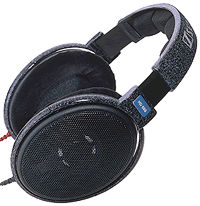
Sennheiser: For me, the undisputed king of the hill is the Sennheiser HD600/650 (doesn't matter which, I like them both equally). They win at linearity from the lower mids through the presence region, have above average resolving ability and as such service all genres of music. These models have been around for ages, can be modified to slightly improve performance past stock and are available at prices anyone can afford. Their high-impedance voice coils make them suited to what I believe is the ideal amplifier topology for headphones, output transformer-less valve amplifiers. I do not care at all for the HD800, which is perhaps the most overrated headphone of all time.

ZMF: Relative newcomer, as they have released several models that have become very popular in recent years. Also using high-impedance dynamic drivers, and besting the Sennheiser HD600 in several technical areas such as bass extension and cleanliness of transients. My opinions vary on their models from strong dislike (Eikon) to like (Auteur). Ultimately I find them to be too expensive for what they are and the approach of using wooden enclosures as a tuning mechanism not ideal, but novel. I really understand why they have a strong fan base though, it is deserved for at least having a unique approach which works to taste.

Focal: Strong dislike. All of their models retain irregular, metallic timbre with vulgar overtones on string instruments. Very comfortable and well built.

Audio-Technica: Unfortunately, only their discontinued models are worth the time of day, many of which are fetching collectors prices on the second-hand market now. They frequently have 'Japanese' tuning which is far from neutral but suites certain genres. The best models have emphasis on fast transient response and airy but warm sound. I really like AD-2000.

Headphone bonanza from 2017 Toronto meet-up.


Electrostatic Headphones

These are supposed to be the 'most advanced' headphones, using ultra-thin membranes which are electrically energized to produce sound. I had attended a headphone enthusiast meet-up several years ago in which I heard all the modern Stax models, many vintage units, and several expensive electrostatic amplifiers. Based on this experience, I had written off electrostats as wispy and limp sounding and unable to cope with electric music. This opinion persisted until very recently.

Stax: I dislike the SR-009 and SR-007 mkII based on my listening experiences at the aforementioned meetup and again at a dealer in Toronto with Stax's own recommended energizer units. I recently acquired from a friend three vintage Stax models, the SR-3, New SR-3, and SR-5; as well as the SRA-12S integrated earspeaker amplifier/pre-amplifier, which has changed my opinion. These very early units (1970s) have thicker diaphragms versus the ultra-thin modern models, and trade some transient response for a warmer sound with a bit more heft, a bit more euphony. I still find them largely allergic to electric music, but they impress with jazz and chamber music. I will write more on these models and the SRA-12S (a very interesting unit indeed) in a separate post.

Stax SRA-12S amp + SR-5 headphones. One of the best headphone setups I have heard.

Sennheiser: I had the opportunity to hear the HE-60, with its own drive unit and several electrostatic amplifiers. It is the real deal, too laid back for my taste but again absolutely charming with acoustic music. Unfortunately these are becoming very difficult to find in good condition and fetch collectors prices.

From what I understand speaking with individuals more experienced with owning electrostatic headphones than I, the real issue with building a 'good' electrostatic system is a shortage of 'good' electrostatic amplifiers/energizer units. From what I can tell, Stax themselves have manufactured a grand total of two amplifiers which were all tube-based from input to output. Their modern models are all hybrids, either with FET input and triode output or vice versa. The most popular 'high-end' commercial offerings are solid-state. There are very few all tube-based units, many of which are cost prohibitive and fewer still employing DHTs.

Orthodynamic (Planar) Headphones

To date I am wholly unimpressed with this category of headphones. I feel that orthodynamic headphones have too many compromises in vital areas of sound and tend to homogenize music more than electrodynamics or electrostatic types.

Audeze/Hifiman: These two companies are really two sides of the same terrible coin. They engage in anti-consumer practices such as price creep, product variation, silent revisions, terrible quality control and shoddy customer service. They release new models every few months with minuscule tuning differences, but slowly and surely increasing the prices. Two pairs of the same Audeze model can sound drastically different, with variations of up to a few dB in published, repeated measurements. Hifiman all follow virtually the same tuning, with a depressed presence region and bump in the lower treble that I do not like at all. Their most expensive models don't do much to distinguish from the inexpensive ones.

MrSpeakers: Very well built and very comfortable. Strong dislike. Completely dead, dull, lifeless. Frequently releases new models with minor engineering revisions for higher prices, ruining resale for existing owners who did not even have the latest model for 6 months. Has recently re-branded to Dan Clark Audio.

In terms of sound, I find all of the orthodynamics I have experienced thus far homogenize too much in too many areas of reproduction including dynamic compression, lack of micro-dynamic expressiveness and very colored presence to brilliance regions. Orthodynamics are also traditionally hungry for current and recommended to pair with solid-state amplifiers. They will not respond to output transformer-less valve amps. Their main sonic advantage is deep bass extension with low harmonic distortion, which is on the bottom of my personal priority list. The only plus side I can think of is that these two brands have extensive distribution and dealer networks, so most living in metropolitan areas can audition before buying. Perhaps the tuning or presentation will agree with you, or you primarily listen to electronic music where deep bass is a priority, and the pricing on an open box or 'demo' unit will make sense. I cannot really recommend these though for the reasons stated above.

A visual summary of the above paragraphs.

On Headphone Amplifiers


In the next article of this series on headphone listening, I will discuss my experience with headphone amplifiers and offer some practical advise. I will also discuss in detail the Stax SRA-12S integrated energizer/pre-amplifier which is a very high value for money unit, if you can find one used.

Until then, Happy New Year and thanks for reading!

11 March, 2013

Headphone Talk: Darkvoice THA332 headphone amplifier Sennheiser HD-650 headphones

Headphone Talk IV: Darkvoice THA332 headphone amplifier
Sennheiser HD-650 headphones
Follow-up: YBA WD-202 headphone output
 
Official website (in Chinese)
Official website (in English)

As I wrote in Chapter I of my Headphone Talk, my good friend Andrew loaned me his two Darkvoice 黑嗓 headphone amps. It wasn't until recently that I hooked up the smaller of the two, the discontinued (though still available from the net) THA332. I must say I like the older looks better than the aluminum sported by some newer models. I fed it the trusted Sony DVP-PR50P.

Although Darkvoice has a good reputation in the head-fi circle, the brand has not received attention from the commercial press, and formal reviews are lacking. For the 332, only a few comments could be found.

Tube Complement Input stage uses the 6J1 pentode. For tube rolling, EF95/6AK5/5654/CV4010/M8100 are are good, but the Western Electric 403A is necessarily the most desirable. The loan unit uses the WE403A. Output stage uses the 6C19 pentode (compatible with 6AQ5), and in this unit the stock tube is used.

AKG K701 vs Sennheiser HD-650 Lately I have been using the K701 with mostly the headphone output of my YBA WD-202 DAC. I have been contented with the musical sound, but the Darkvoice trumps it in terms of air, resolution and dynamics. However, despite the better bass on offer a little of the slightly lean character of the K701 remains. Knowing that the Darkvoice likely was designed with high impedance phones (some say the Sennheiser) I switched in the venerable HD-650, and there is little question the Sennheiser scaled greater heights. I haven't listened to the HD-650 much, but my impression is that it is quite similar to the HD-600, which I own. As the HD-600 tends to be a little woolly and unresolved in the bass I was surprised by how the HD-650 was driven by the Darkvoice. Compared to the K701 there is much better bass presentation - clean too! So I agree with those who said the Darkvoice should be used with high impedance cans if possible (though its performance with K701 is still eminently satisfying).

21 September, 2010

Review: Pro-Ject Headbox II

Review: Pro-Ject Headbox II

And now for something much easier to write than the last post!

Pursuant to my last post on the Sennheiser HD-600, I decided to get a cheap headphone amplifier to go with it. That is because I have decided to take my HD-600 to SZ, where I'm materializing a small headphone setup.

Pro-Ject is an interesting company that I have always watched. Although they have grown more ambitious, I firmly believe their heart are in the right places when it comes to budget gears.

Long before they have branched into other electronics, I heard the original version of the cheap RPM 4 through a much more expensive setup consisting of Verdier Control B preamp, Unison Research Smart 845 and Spendor SP-100. icefox's setup not withstanding, it's still one of the best analogue playback I have heard. On the internet, you read a lot of negatives about Pro-ject's, about their arms or whatever. But since that experience nothing can shake me from an admiration for Pro-ject.

The Headbox II can be had for around HK$ 800. In view of my positive experience with this company, its diminutive size as well as look made that a no-brainer for me.

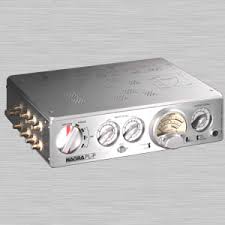
After I got it home, I hooked it up to the tape loop of the Nagra PLP. No, it was not as mellifluous as the Nagra, but it was close. What surprised me the most was that it drove the inefficient HD-600 easily. With most music I seldom had to venture beyond 11-12 o'clock for satisfactory sound level. With earphones off, the mix was tonally closely related to what came through the main speakers. Later, back in the PRC, the Pro-ject delivered highly satisfactory result with the humble Sony DVP-PR50P. Music had a natural breath, even tonal balance and never a shrill moment. One also felt enough power on hand, enabling one to hear deep into the mix with full bass.

The combination of the Senneheiser 600 and Pro-Ject Headbox II is a clear winner.

27 July, 2010

Review: Sennheiser HD600 and 580 Earphones (as driven by Nagra PL-P)

Review: Sennheiser 600 and 580 Earphones (as driven by Nagra PL-P)

Normally I am not one to listen to headphone much. In NYC I use a pair of Audio Technica ATH-AD700 late at night. Since that article was written, my bedroom setup became the Linn Majik I, and its headphone output was excellent, whether playing CD from an old Proton CDP or LP from an Audio-Technica SP1200MkII/Benz Micro Silver.

Nagra Headphone Amplifier!
In HK I have not the need until recently, when I had a guest in my study and I needed to use a headphone in the early morning. Admittedly, part of this was prompted by my recent acquisition of a Nagra PLP. Most people are familiar with this preamp, but VERY few people have commented on, or even used its headphone section. This is a SERIOUS headphone amplifier! Two large transformers, several times larger than the MC step-up's and certainly costly, are dedicated to the headphone output. The transformers can be glimpsed in the Nagra brochure on line (download here). With tranformers, by serious professionals, one can be assured the headphones shall be driven well and there'd be few issues due to impedance mismatch. A switch on the front selects between preamp and earphono outputs. So the PLP can rightfully be viewed as a DEDICATED headphone amp with tube amplification, including MC-capable phono!! If you are a Nagra user, you MUST try it out.

Sennheiser, the older the better?
As stated in my previous post, I still have my first headphone, the Sennheiser 414, so the brand is familiar to me. For my current purpose, I started off borrowing a pair of old Sennheiser HD-580 from BenYC, who's knowledgeable on earphones, old and new ones alike. These are really old models and difficult to drive, but the sound on the Nagra PLP can only be described as absolutely correct. Full, yet not bloated; neutral, yet rich in timber; detailed, yet not etched. String music is just luxurious. And comfortable to boot. I wanted them.

A note on the sound, which was for sure superior to the make-shift setup I used in NYC, the AT-Majik combo, good as that was. There is little question the Sennheisers are more solid sounding and superior. Of course, the Nagra "headphone amp" here I am sure has contributed much. Perhaps one does need dedicated headphone amps afterall! :-)

Unfortunately, the HD580 has long been discontinued. Fortunately, its elder brother, the venerable, and perennial, HD600, is unbelievably still around, and still made in Ireland! This model has long been a high-end staple (Stereophile review). I went shopping in Mongkok. Almost all the shops in Yau Sing carry the 600, and I bought a pair for just over $2k. That's actually not much different from the price over 10 years ago. Not cheap, but a bargain for a classic, one deserving to be partnered with the Nagra! It's THAT good!

A note on the sound of the 600. I heard little difference between it and the 580. I actually prefer the more straightforward black of the 580 to the "marbled" 600. Nonetheless, wonderful!

22 April, 2010

Earphone: Audio Technica ATH-AD700

Earphone: Audio Technica ATH-AD700

I haven't listened to earphones in a long time. But recently in NYC, where I don't have a subscription to the internet and use the library WiFi, since I found out in a particular spot in my bedroom/study I have good free access to the internet at night I have been perusing this advantage, despite the attendant perils. At night I need to use a headphone.

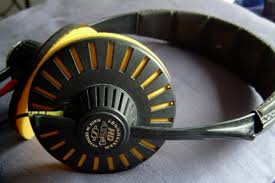
I dug out my 30 year-old Senneheiser HD-424. The foam pad has long gone south, so I did without. The sound is very pleasant, though bass-shy. And it has never been entirely comfortable.

Browsing the internet, I finally gave in and bought from Amazon a pair of Audio-Technica ATH-AD700, for $79. As with Amazon, it came quickly, in 1 day! I was shocked by the flimsy packaging, and the hideous purple color of the perforated outer metal grill, though on the web it seems black. Maybe I didn't read some fine-print.

But the sound IS well-balanced, natural, as the reviews attest. Most notably, bass is a lot stronger than my Sennheiser. It is however very big, and odd looking, though it compensates by its comfort. I have less than 10 hrs on this now. Sound is slightly veiled but I expect improvement as it runs in. As it is, it already is better than my old Sennheiser.

A good buy, IF you can take its bulk.

Incidentally, why do people buy a dedicated headphone amp (for these easy to drive earphones)? My NAD 325BEE does respectfully. Also, my M-Audio Firewire Solo does too, at less cost!