Showing posts with label Brand-Counterpoint. Show all posts

18 February, 2024

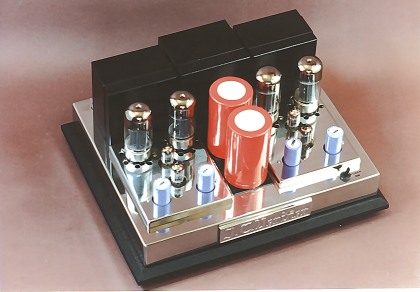
Counterpoint Overview SA3000 ANUK Kit 4 Marantz CD60 CDA90 Limited

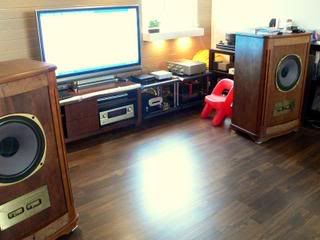
Click pics to enlarge. R, in use the Revox 221 CDP, Counterpoint SA-3000 Preamp, (Rotel 870BX) and the original Bryston 4B.

Letter from Hong Kong (24-7): More days after the Longest Days

Written in Shenzhen

This article picks up after my last article left off and chronicles what I have been doing in my old house in HK.

I'm slowly but hopefully surely rehabilitating some of my gear in HK. I meet with many obstacles, as long periods of disuse do harm to all things electric. When I first got back to the old house last year, all electric outlets near the floor were out, and the electrician had to install a new fuse box! 3 phase for HKD 3,000.

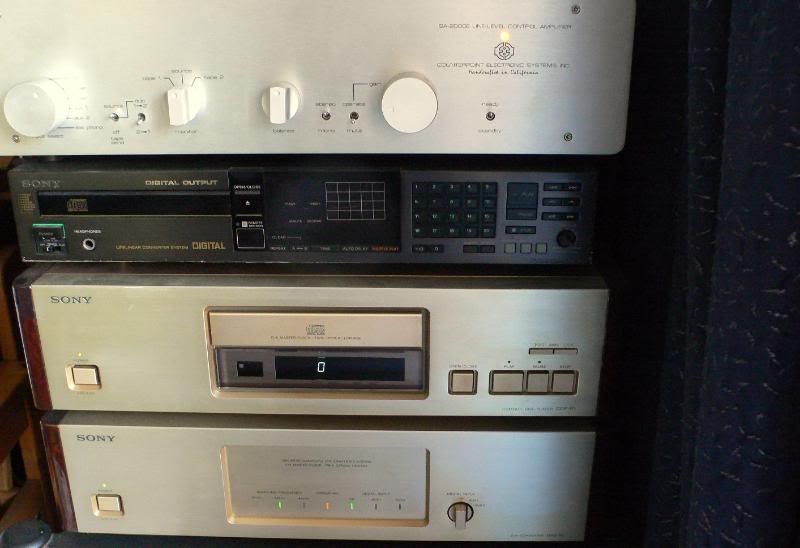
Counterpoint SA-3000 As mentioned in the last article, in Station A I was until recently using the MFA Magus Preamp. I had actually tried the Counterpoint first, but on turning on it'd not come out of relay. All the indicator lights on the board were green. I suspected a tube problem but could not entirely remove the top plate because one of the Philips screws had a worn out slot that no Philips screwdriver could grip. So I put it aside for a long time.

Last week I gave it another try. I found a silver colored sharp tipped tool that looks like companion to the Ortofon screwdriver that comes with its cartridges (not sure what it's for). I hammered it a bit into the center of the defective screw slot and voila! the Philips screwdriver now could grip it and I took out the screw. I first changed the 6DJ8 tubes to no avail. Then I noticed the (latter-day International) 6CA4 tube was barely warm. I dug out a replacement tube (a better old-stock Zaerix, likely Eastern European) and Eureka! it came back to life!

Sound at first was a little grey but over time it improved quite a bit. Compared to the MFA Magus, the sound is more laid back, but still involving. Over a few visits, it worked quite well with my equally old and trusty first-gen Bryston 4B driving B&W 801 Mk II. The lighter character works well with the super full bodied 801. The unit now has a gold-pin Zaerix 6DJ8 in the line section. Two Mullard's sit in the phono section but I've yet to test that section out. For more info, see the Brief Overview below.

Brief Overview: Counterpoint Over the years I've owned a few and heard even more. I don't pretend to be an expert but I'm a fan. This Overview is by no means exhaustive! For years on end, owner and designer Mike Elliot maintained an Altavista Audio site which was chockful of info, and offered upgrades, but then his health forced him to shut it down. It's too bad there's no site like arcdb.com (for ARC) to archive this brand's stuff.

There have always been a sleuth of comments on this brand, two of which I'd like to address here:

"Counterpoint is  poor man's ARC 窮人的 ARC" This saying is at least popular in Hong Kong, but it's nonsense. I think I know why this comment came about. First, ARC had always been held in the highest regard in HK (and I'm a fan of their oldest stuff) so this saying honors contemporaneous Counterpoint, meaning one can aspire to "high-end" on a lesser budget. But I demure. IMHO, Counterpoint has its own sound, and its best is no less than ARC, albeit at lower cost. The other thing is, like ARC, Counterpoint had many hybrid designs, reflective of the era actually (my excellent Melos 222 Preamp used in Station B is hybrid too).

"...Prone to Failure...药煲" Basically no, but...Now, these products happen in an era when ALL tube gear are prone to issues like microphonics and failure because of the unreliable tube supplies at the time. As tube power amps are more demanding of tubes, they fail often during this era, and that includes ARC, CJ and Melos products. Counterpoint had few all tube products but then even the small tubes used in the hybrid amps were prone to failure at the time. Whether Counterpoint, ARC or CJ or Melos, the use of 6DJ8 is always prone to microphonics. Counterpoint is actually better as it can run on cheaper but quality 6DJ8 (like an Amperex) whereas its ARC counterparts, not to mention the then-popular Audible Illusion (which I have never liked) run the tubes harder and demand higher grade and much more expensive 6922.  Another important factor is that Counterpoint was purist and in most amps did not have protection circuit. The accidental and briefest of shorting in the speaker cable connection would result in demise. But if one takes care, it'd be alright. My experience is mostly with preamps which in my opinion are well built and reliable.

SA3/3.1 The 3 is less seen, the 3.1 more often by far. This is an all tube unit, full function with good MM phono stage, with separate PS . I had once owned a 3.1, and heard them at others numerous times. It's a sturdy unit, but subtractive in its virtues. Good, but not the best for me. Riding with the 5/5.1, they are overpriced.

SA5/5.1 Again, mostly the 5.1 heard. Sturdy all tube unit with good full function MM phono stage and  separate PS. I have never owned one but have heard several. They are superior to the 3/3.1 in dynamics and sheer presence for sure. Very decent, but still not close to the last word in resolution, though the 5.1 is Elliot's own favorite (more than the 5000, see below). Currently, they are overpriced imho.

SA7/7.1 This is still all tube, basically an updated SA3/3.1, full function with MM phono, but I personally think it is much better, at least in resolution. I still own a 7.1, which I have to fire up again. Now, by this time, surely to cut cost, the chassis had become much lighter metal. AND, the power supply is incorporated within, no longer separate. So, a much cheaper unit to build. Despite all this, for me the sound is much more transparent than both the 3 and 5 series, although the lighter chassis and onboard PS likely contribute to the more serious issue of microphonics. The SA7 is notorious as Stereophile then gave it a horrible review. The tubes used might have had played a negative role, as I always use good old-stock tubes to best effects. To conclude, for me the 7.1 is better than the 3 and 5's. Perhaps less oomph, but more refinement and resolution. Also better price. My ranking may sound like heresy and there is a factor that one has to keep in mind. Many of the 3s and 5s have had mods that will surely affect the sound (it's a fact that the more expensive the old gear, the more chances that it had been modified; no one will modify a 7.1 or 1000). YMMV.

SA1000 With this series, Counterpoint Preamps entered the big chassis and hybrid preamp era. I had owned one. It's full function with MM phono stage (2x 12AX7 in phono; 1x 6DJ8 in line section). Its sound is subtractive, but very smooth and pleasant, less immediate and upfront than the all tubed 3/5/7 (the observation holds for the entire thousand series) but still musical. Aside from a small degree of greyness, one would be hard put to hear it's hybrid. A bargain and underrated entry preamp in my opinion, at least for those who desire a built-in phono.

SA3000 As above, this one I still have, and listen to! This is a solid cut above. Instead of the ss rectification of the SA1000, this is tube rectified (6CA4). The line still employs 6DJ8, but the phono employs also 2x 6DJ8 and is both MM/MC! Although I've not fired it up this time (I'll soon update), in my recollection the MC Phono section is highly capable (FET based headamp section), even with my Denon DL-103! THIS IS A BEST BUY. SA2000 This is just a line-only SA3000, without Phono.

SA5000 This is the flagship and all-out effort, the only one with separate power supply. It's like a beefed up SA3000, 6CA4 rectified, with 2x 6DJ8 in both Line and Phono stages. Tube regulation is added (2x 6DJ8 and 12AX7)! I have never owned one but did get to spend a long time with a mint sample (Danz' unit which I brought back for him). I was not entirely happy with it, however. In this article on the BAT VK3i I wrote: "...At the same time I have the Counterpoint SA-5000 here, and comparison with the VK3i betrays the Counterpoint’s dynamic limitation, a slight midrange recess and mild emphasis of upper treble..."

The dynamic limitation is a characteristic of the entire 1000 series. As for "hybrid sound", I think only in the 5000 is it particularly evident. Let me say that I'm not against hybrid preamp at all. The ARC SP11, which I own, has the hybrid sound too but the 5000 is even more on the pale side. The best hybrid design to me is my Melos 222 (and likely its predecessor 111 and successor 333), which I still use in my Station B. If I don't tell you it's hybrid, you'd never guess. The very expensive CJ preamps have been hybrid for a long time, and I've heard many models to reasonably good effect. My pick of the Counterpoint 1000 series is the SA3000. For those who wish for a more traditional tube sound, go for the older 3/5/7. The SA5/5.1 is in many ways very similar in sound to my trusty MFA Magus. In my Station A, the Magus produces a more dynamic and upfront sound that most tube die-hards may prefer, but I also like the SA3000 for its lighter hand and more subtle resolution. Both prove to work well with my Bryston 4B (despite use of XLR-RCA convertors).

SA2 This is a legendary headamp. I've heard it once but the demo was not very good in general. A wasted opportunity. One of my dream gear!

SA12 To me, this is the best (hybrid) ss amps I have heard. My unit was an early one with 12BY7 tubes instead of the later 6DJ8s. It's so musical that if I don't tell you you'd never guess it's solid state output. I sold it to a friend who clamored for it. I was told by a tech that, as it has no protection whatsoever, one should be very careful with speaker cables. Even the briefest short will result in the unit's demise. If you come across a good unit (or the SA100) by all means consider purchasing it! Aside from this I have no experience with other amps. Our friend Humphrey has a pair of the legendary SA-4 OTL amps (very rare, so are the 6LF6 tubes) which I hope to hear one day!

The small black box atop the CDA94 Limited is the April Music (Stello) U2 USB convertor. Note the large italic Limited

Marantz CD60 + CDA94 Limited Both of these are 100V, plugged into my 100V line (Chinese Gold Ox Step Down). The Marantz CD60 model number for some reason had been used several times by the company, so it could be confusing. Not to be confused with the current CD60, this much older CD60 was very popular in its days. It has the CDM4 transport and 16-bit TDA1541 DAC. Mine is a "water goods" (or "grey goods" or "parallel import") 100V version, not the ones sold in HK (230V). HK audio lore has it that the Japanese domestic 100V ones have better components than the export versions, and it's true (even if it's just a few parts). Here in Station A it is used as a transport, hooked up with Belden 1694 to the CDA94 Limited (I believe the link has the wrong pic of a regular CDA94, as my specimen has a large Limited logo; see also the many pics in hifido). The CDA94 Limited was never exported (not to HK, nor the West I believe). As I had both the Marantz CD94/CDA94 I can attest that the "Limited" is indeed the best sounding (by a small but significant margin as compared to the regular CDA94; difference not as large as between the internal DAC of the CD94 and CDA94). There are 2 coaxial inputs. On the other one a Stello U2 USB(B) to SPDI/F convertor was connected via also a Belden 1694. During my 2-month stay in HK at the end of 2020 I actually streamed NML and Spotify on my Chromebook. The CDA 94 Limited has XLR outputs (transformer coupled I believe). As my Bryston 4B has only XLR input I'm already thinking of trying out the Douk T8 Pro Preamp (which has both XLR in and out) to create a fully balanced Station A!

vs Revox C221 The Marantz CDA94 Limited belongs in the top echelon of 16-bit, just as the Revox C221 ranks among the top in Bitstream (my write up). So, being an avid student of both 16-bit and bitstream, the matchup was both fun as well as predictable. As my Pioneer T-07A suffers now from an unusual problem (midway it'd sputter, not skip but producing unusual digital noise), I had been using the C221 in Station A, so it was definitely re-run-in.  Unfailingly musical but, true to its studio origin, the C221 renders music in a sunny and explicit manner (Micromega 1-bits have a little more yin, or subtlety). The CDA94 Limited is likely not so re-run-in, but it does put out classic 16-bit sound. For me, that is, a less upfront perspective, better hall sound and ambience, and weightier bass quality. Even though a little darker, the proceedings benefit the big symphonic classical works. Bruckner through the Marantz had more breath and weight, but vocal and jazz fans just might prefer their material though the more explicit Revox. The difference is quite substantial, and that involves both technology and house sound preferences. Suffice to say this is just a start to this project.


Audio Note UK Kit 4 It took some time to fish out some tubes for the long abandoned ANUK Kit 4 (see here). Finally found 2 pairs of "matched" old-stock 6V6's and installed a pair of UK Brimar 6SN7 (with interesting somewhat curved plate structures) that I didn't even know I had. The 12AX7s were stock Yugo EIs. I was really surprised by the sound. Finally, the amp seemed run-in, or at least out of the initial murky period! In Station B, with the el cheapo Philips AK601 and Melos 222 Preamp driving the Ruark Crusader II, sound was really engaging! More than the ANUK Kit 1, or Preamp and Phonoamp kits, this one immediately showcased its rhythmic elan. Pacey, confident, it certainly made me want to tap my toes. Given that I am a huge 6V6 fan, I'm really gratified. Now, this is a more modern sound that is different from my vintage Bell and Grommes. If you are interested in 6V6, you should read my Overview. No, the Kit 4 does not have the subtleties and sheen of the best vintage samples, but it's worthy on its own. I'm sure it's superior to an old Raphaelite/SinoVT 6V6 PP amp that I had (here). More useful power than my SET amps for the Crusader, it's a highly worthwhile addition to Station B.

I stop here, but there are a lot more coming very soon, on Reisong trannies, Micromega and the mighty WE274B (even used in SZ now!!!) Going back and forth between SZ and HK has galvanized my audio libido. Watch this space.

18 January, 2011

The Yumcha Diaries 飲茶後記: 08/15-01-11 (SP-100, Tannoy Kingdom Royal)

The Yumcha Diaries 飲茶後記: 08/15-01-11 (SP-100, Tannoy Kingdom Royal)

08-01-11, SP100 Works its Magic again
Those who have known me know that I have been a Spendor fan for the longest time (those who don't can read about my experience in my Spendor Overview). I have owned the SP-100 for more than 10 years and had only recently sold it to a friend. This bulky yet non-floor standing speaker is old fashioned by any standard, and not popular with space-constrained HK people. That is unfortunate. Despite this, for various reason, SP-100 is gaining ground these days. I'd like to think it is because of value. When so many of the speakers now, regardless of price and "prestige", focus more on appearance and deliver anemic sound, a classic like the SP-100, now in its silver-wired R version, shines more than ever.

I only recently made the acquaintance of Patrick, an old friend of whlee. An avid cyclist, Patrick is new to hifi, yet the speed with which he transforms his system is amazing. He recently started with a pair of demo B&W AV floor standers, and made the plunge for a pair of SP-100 soon after.
Considering the newness of the speakers, their performance was striking, especially after some work. His equipment now:

Digital: Naim CD2
Preamp: Counterpoint SA-2000E
Amp: Verdier L'Amplificateur (also briefly the Naim Nait 2)
Speakers: Spendor SP-100R on Sound Anchors stands
Cables: Mogami interconnects and various others.

His beautiful cabinet functionally serves as a divider between the dining and living sectors. When we started, the speakers were further back and in the way for access to some of the dining seats. Sound was good but could use a little more clarity in bass definition. We experimented quite a bit with moving the speakers forward and more near-field. All the way upfront, forming an equilateral triangle with the listener, the sound was quite "hifi" (rather like that preferred by some planar people), but a bit uncomfortable and artificial (also like some of the planars we eard). Moving back a little was more comfortable and we locked in on that.

Despite some quirks, Patrick's long rectangular room is actually a good one. There was very little room-mode problems (and these speakers can pump out bass!), soundstage was deep and wider on the left than the right. Toeing-in was not necessary.
The combination delivered lively music full of air. At first, treble was slightly reticent, but removing the "cold-solder" (screw-on) spades on the jumper wires and using bare wires instead restored treble clarity. Here I'd like to direct you to a 2008 UK HiFi+ review of the SP-100R. The reviewer did not spend much time describing the sound but what he wrote was exactly what we heard:

"...From the word go I was extremely comfortable listening to the SP100’s. OK, you’re probably thinking that this was a nice nostalgia trip back to the days when everything seemed less complicated and loudspeakers sounded warm, a bit flabby and rather vague. And I won’t deny that there was a little bit of nostalgia, and there was a very, very mild hint of character that did evoke the days before Dire Straits were invented. But as for the other negative traits that one used to associate with the generation, forget it. To begin with the Spendors possessed a snappy, tight and extremely rhythmic bottom end, with an attack and punch that could be quite ungentlemanly when required. Sluggish? Definitely not, and with the ability to go loud and deliver decent in-room extension to about 30 Hz, orchestral music had that great sense of authority and scale that makes it so believable, while well-recorded rock music with real drums was just awesome. So the midrange then, a bit syrupy and thick? No. Fresh from having been hit between the eyes by a snare drum and sawn off at the neck by Robert Fripp’s astringent guitar on the 12” single of David Bowie’s ‘Fashion’ I can report that things were very much up to speed in the midrange department, and I can’t honestly say that I was missing the top end extension of some rare and expensive tweeter diaphragm, as it sounded suitably sweet and open to me..."

Even tough k.c. nodded in approval. Enough said? Mission accomplished, almost prematurely!

15-01-11, Let Thy Kingdom Come
This was a busy day. First up was gthk's Tannoy system. Back in the heydays of JC yumcha, I heard his system of Westminster Royal. Some of my cohorts had heard his next Tannoy, the Kingdom, but I didn't. He has recently upgraded to the Tannoy Kingdom Royal. Equipment used:

Turntable: Clearaudio Reference with new arm
Phonostage: Viva Fono
Digital: Accuphase DP800/801
Preamp: Audio Note M8SE
Amp: Audio Note Ongaku
Loudspeakers: Tannoy Kingdom Royal
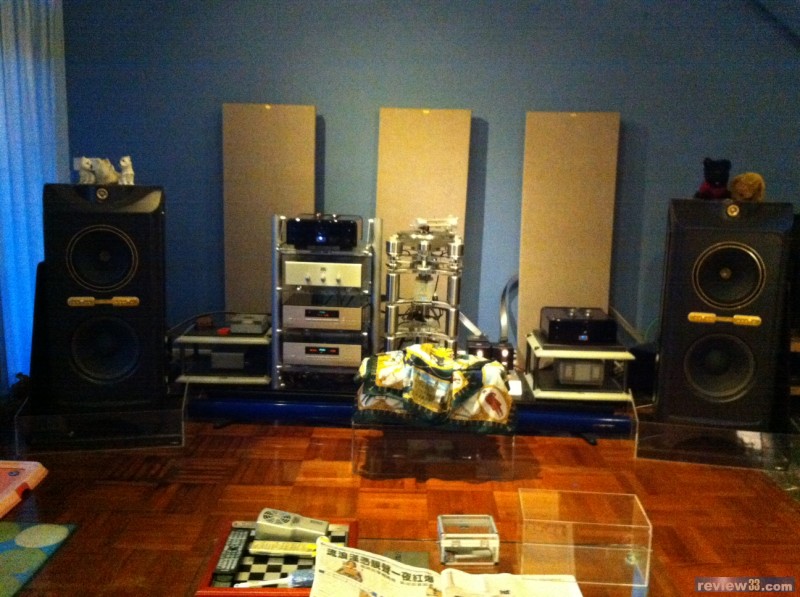
picture of gthk's system

Looking more snappy than the old version they replaced (yet still a little odd-looking; has a trace of the Italian crept into England?), The Tannoy Kingdom Royal (you must read the link and pay attention to the spec's, 24-61kHz! -6db) are very new and, believe me, as a Canterbury user I know how long it takes to really run-in the accordion-like "hard-edge" of Tannoy concentric's. Yet at least the concentric portion, including its larger than ever 3-inch HF driver, sounded quite musical. Together with the exceptionally revealing gears used and contribution from the supertweeter (this one is a real one, not like the ones of old), the high frequency might be more prominent than traditional Tannoy users may like, yet commendably it delivered airiness and stayed clear of stridency. The 15" bass unit was certainly not run-in and understandably sometimes not perfectly controlled by the amp (which has only 20+ wpc) in this VERY large living room (500+ sq ft). The Audio Note amplification as usual delivered excellent PRaT. For a change, some day I'd hope to hear The Kingdom Royal driven by high-powered tube amps in big works like Mahler and Bruckner! This is definitely a pair of speakers with infinite potential.

Gary is a vinyl junkie who listens mostly to vocals and pop. Of all the LPs played, we were most impressed by the sonic realism of the exceptionally expensive Bianca Wu LP (even the CD is excellent in sound), more for the great playing of the New York musicians than her singing perhaps. In no small measure I think this was due to the contribution of the Viva Fono phonostage (click on link above), which was superbly quiet, detailed and nuanced. I was most interested in its use of 2x 300B tubes as rectifiers!

The poor Accuphase flagship! If we had not requested a demo they would have sit out the session. The sound was not quite up to the vinyl setup but was still smooth and enticing (and they better be at that price!). Note much of the equipment are more prevalent in Asia than in the West, judging by the absence of formal reviews.

Then went to visit limage. Post later.

03 September, 2010

Review: YAMAHA NS-1000

Note: After the big job of re-labeling I just performed on this Blog, as part of my re-organization, I'm going to eliminate my other sister audio Blog (Review and Overview), to let everything be archived here. Today I'm duplicating all reviews from my sister Blog here. This may cause inconvenience for a few users who follow some of my items; my apology. In the long run, this shall be a lot more efficient. For regular posts, scroll down to 01, Spetember and below.

Figure: The making of Yamaha Beryllium drivers (via TheVintageKnob)

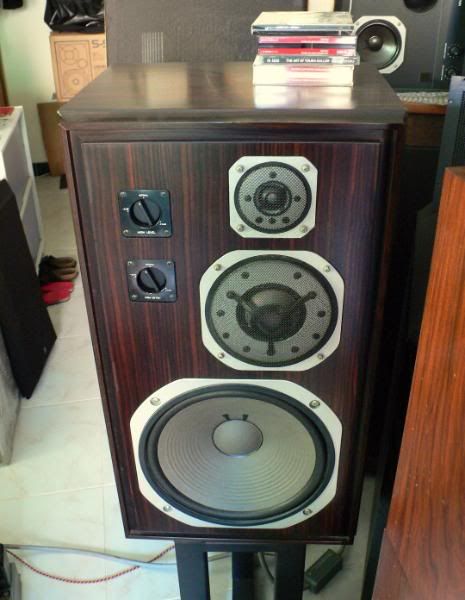
Review: YAMAHA NS-1000 (Sony CDP-R1/DAS-R1 and CDP-553ESD; Meridian 206; Counterpoint SA-2000E; Bryston 4B)

Before my coming articles on iPod and Music Server, I'd like to introduce you to this famous pair of monitors, which I happened to be using for the assessment of my digital iPod files.

YAMAHA NS-1000(M), from the mid-70's, enjoyed a long production life, and has several permutations. It is famous for being a very accurate monitor, and even more for being the first to utilize Beryllium drivers, not one but TWO at that, pre-dating Focal JM Lab by almost 30 years! Talk about "progress"! Read this site for history, spec's and more (make sure you click "more")! NS-1000 is also undeservedly infamous for being "bright".

Figure: Right speaker (designated) of mirror-image pair.

My pair (serial # 11466R/L) is the heavier "home-use" version with REAL wood cabinets, and how beautiful they are. These used to belong to a friend of tubediyer and I had the luxury of trying out before buying.

When they first arrived, sound was decidedly sluggish, probably due to long-term dis-use. I have them 2/3 of the way into the room, in relatively close-field position. After re-running them in, sound steadily improved. One day, I began to get only intermittent sound from the right mid-range unit and it eventually lost sound altogether. I took it out and found that the soldering joint for one crossover cable had completely disintegrated! I had difficulty cleaning and re-soldering the terminal. But after I finally managed to do it, sound took a significant step forward.

I have been driving the Yamahas from my second station, appropriately a half-Japanese one. Let me digress a little to talk about these CD players. The SONY CDP-R1/DAS-R1 was the flagship of the 16-bit TDA 1541A era. Connection using the propreitary SONY Twin Link optical cable is said to offer the best jitter reduction. Although this method does not seem to confer more details (and non-ATT opticals are not my favorites), compared to the other S/PDIF inputs though a darker background is revealed. What I love most about this DAC is its composure, an ability to maintain a rock-like stability during loud passages. I personally judge its ability in this regard to be better than most of the theoretically superior 24/96 and 24/192 decoders, including the very expensive ones. And better than most of the famous professional CD players of this era, including Studer/Revox (D730/226) and EMT (mind you, I have the EMT 931) , though perhaps not better than the little-known SONY professional 3000, a rare bird that I had the good chance of hearing in NYC recently.

A replay of a Bruckner or Mahler symphony is such a pleasure through this machine. Let me cite some examples. On the Tennstedt Live LPO Mahler 5 (Japanese EMI) the first BIG orchestral crescendo is not rendered correctly on most machines. On the R1/D1 you can hear the entire backbone of the cresendo, and it just seems steadier, longer and better, each moment a little more than the previous, and isn't that what we want?? On most machines, the crescendo just peaks too quickly, a sort of premature ejaculation! Last night I played the ALTUS (Alt-129) Shostakovich 1st, captured by Japanes engineers in the late 60's, and the recording has a shocking realism, definitely among the best live recordings I have heard. I must tell you that through the Sony combo it doesn't matter whether I am using the Yamaha or the sensational Usher X-708 I can rest assured I get all of that. Here I must also praise the worthless (in terms of current price) CDP-533-ESD, which uses a priceless transport and delivers a pristine signal that I sometimes prefer to the R1 (hush...)!!! If you find one with laser in good condition, grab one, it'll slaughter most modern transports! And the sound through its own DAC is not bad either...

Figure: Meridian 206

That said, there's a downside to the Sony R1/D1: a certain inaccuracy in rhythm and pace, something most audiophiles who just listen to slow saliva songs do not undertsand . So, while it plays the 3 B's great, Stravinsky's unusual meters may just seem too earthbound. Even in vocals, my newly acquired Meridian 206 (Delta-Sigma version) just beats it. Nothing is perfect, as the Meridian shall lose something in large-scaled replay. There are many generations of Meridian. I don't quite like their 1-bit era, but this 206 is a surprise indeed. The sound bears more resemblance to later 506/508 Meridians, which are not that far off (even better in some ways) than current ones. One can safely say though, Meridian knows their digital!

Figure: The original Bryston 4B. Ugly!

Where are the contributions of the preamp and the amp? They are sleepers and guardians. The Counterpoint 2000E is just a 3000 in linestage configuration and a close approximation to the 5000. The Thousand Series is in general more analytical than the older Point One series, more extended at the frequency extremes and less euphonic. The E version denotes balanced-out option provided by IC conversion. Despite that, I have determined that it is the better way to connect the XLR-in-only Bryston 4B, losing very little the tube liquidity and gaining dynamics. Now to the amp, my 4B is an old version, which looks a lot coarser than the subsequent ST and SST versions. However, in terms of driving power, the older versions is a powerhouse and more powerful! It is supposed to be "coasre", but I find an hour of warm-up and mating with a tube preamp is just fine. The 4B its little brother 3B are my ss workhorses.

The setup drove Yamaha beautifully. I get a big sound and do not suffer from so-called "agressive highs", and this without attenuating much of the pots! The 90 db Yamaha's are not that difficult but do need power for the bass to fill out. After a good amount of run-in at good level, sound is fast. and the amount of detail it retrieves is simply phenomenal. With my setup, nothing grates the ears. Most of the negative criticisms simply reflect the low-quality equipment people partner these with. What's pricelss is the sense of presence, as evidenced by playback of the CDs mentioned above. The comments about its similarity to JBL is not completely unfounded. Bass is deep and tight, but peters out around 40 Hz, though it does not have the mid-bass coloration of JBL. Meanwhile, the soundstage is to die for, matching the best of the modern speakers. What is really unusual to me is that they lack almost nothing; it's hard to pinpoint particualr weakness. Great Monitors that I can trust testing to!

A lot of people have heard my Yamaha's and they were all surprised by the performance of these 30+ year-old designs. Robin the music-loving Scot came one fine day and could not stop marvelling. He is as good a judge as any, as he has recently got a pair JM Lab Mini-Utopia Beryllium! Two weeks ago Danz also came by. He was amazed that they sounded nothing like what he heard before. We had all heard these previosuly at a delaer, driven by a Music Server and Benchmark DAC. Very dry and distorted sound; perhaps the computer playback had needed some improvement. Well, matching I guess.

10 comments:

CapnDad said...

Hi,

I'm scouring the internet trying to find the right configuration (left/right) for the NS-1000M speakers. i.e. aer the tweeter and midrange speakers supposed to be on the outside or the inside? I've had them on the inside for the past 25 years and I think I'm wrong.

thanks,

John Davis

CapnDad said...

Hi,

Are you saying that the NS-100M speakers ae to be configured with Left and Right from the listeners perspective or from the speaker's perspective? I've had the tweeters and midrange speakers on the inside for the past 25 years, but perhaps that's been wrong all this time?

Thanks,

john Davis

doctorjohn said...

Hi, sorry for late reply.

I was told to have the tweeters outside, but have no link to back this up yet. Let me call the person who told me this.

In general (as in JBL) the studio stuff has no definite rule. The NS1000 manual says it can be placed horizontally too (this gives better sound with a lot of pro or pro-derived speakers)

Centrally placed tweeters may have better "pinpoint" imaging, but outwardly placed ones may result in a better soundstage. Mine is quite enormous!

Experiment with toe-in too.

Glad to hear from another user. Cheers.

CapnDad said...

Thanks for the reply. We spent all day Saturday setting them up. We experimented with toe-in,distance apart, distance from the ear, and so on. We ended up with the Tweeters on the inside mainly because when they were outside they felt like they were too far apart. but not having a lot of room, we surmised we could just switch them to compensate rather than push them closer together.

That worked well. At the end of the day after all the small moves, an inch here and an inch there, they sound amazing!

We've had them for almost 30 years now and I've had them repaired once... last week...when the tweeter separated. Now they sound good, or better, than new.

Cheers

CapnDad said...

THanks for the reply.

We spent all day Saturday setting them up again after coming back from Tweeter repair. The Tweeter had separated so there was no crack and no need to replace the domes with inferior cone products.

We experimented with the Tweeters on the inside and the outside, but ended up with them inside. A lot of that has to do woth room size, and we just felt that on the outside they needed to be pushed closer together. Rather than do that we switched them.

That, combined with a lot of toe-in experiments in half inch increments, got us the sound we love. Good sound stage, great tone, and much less fatigue than we've had in different rooms.

Great speaker, and I can't believe sometimes that when I bought them it was simply because they sounded good.

cheers

doctorjohn said...

Hi, I am glad you're finally getting the sound you want. I spoke to some friends and we all agree there's no fixed rule.

One day I'd urge you to try them horizontal. My space doesn't permit it though previously I got great result from my JBL 4312B that way.

A tube preamp can remove most of the "glare". In my system the Yamaha never sounded harsh at all. Curious what gears you're using?

TruthSpinner said...

In my pair I experience ringing from one of the midrange drivers when I knock on top.

Any idea what might be causing this?

doctorjohn said...

Curious, this ringing. Tubes can ring due to microphonics, but drivers! You don't happen to have a tube preamp on top?

CapnDad said...

I must have missed your earlier reply when you asked what gear I'm using. I'm running a MacIntosh MA6300 Integrated Amp, Rotel RCD971 HD CD Player, and a Linn Basik turntable.

TruthSpinner said...

Nope, this happens under all vercumstances. Somehow I am able to induce hearable (quite so) vibrations in some metal part(s) inside the driver, and I guess this should not be possible?

15 July, 2010

The Yumcha Diaries 飲茶後記: 26-06-10 and 03-07-10

The Yumcha Diaries 飲茶後記: 26-06-10 and 03-07-10

03-07-10 鄔 Sir Sir 地認識了一些老發燒友
一次的機緣,讓我認識了幾位老一輩的發燒友。覺得他們挺有趣的,就此記下。

事情是這樣開始的。沒多久以前, 飲茶前在 Pro Sound 唱片店無意聽到一位先生跟朱老闆在聊天中提及聞名已久的盧華煇 (ML)。 知道此人是發燒友後, 就跟他搭訕, 聊了起來。原來此人就是也聽説過的 "鄔 Sir Sir"。鄔 Sir Sir 性隨和(爲了方便朋友,也就這樣自稱),大家言談甚歡, 就約了改天去盧先生那裏拜訪。

就在王羽佳的音樂會上又踫到了朱 老闆和 鄔 Sir Sir 等一票人。音樂會完了就跟了他們去宵夜。坐上還有另外兩位:一位 DIY 先生,也就是朱先生 Pro Sound 店裏那部聲音不錯的 DIY 12E1 膽後級的製造者;另一位是古典發燒友。這幫人都是注重聼現場古典音樂的人,在發燒友中少見,大家遂聊得很開心。

房術
言歸正傳,是日飲茶後就隨 "鄔 Sir Sir"上了盧先生的場。用“場”一字,再貼切不過,因爲屋子裏藏了不少玄機。 其中之巧妙,盧先生也在開場前一一為我們詳細介紹。先說主聆聽空間, 原來是間六面與外隔絕的“屋中屋”,有地台墊高的“房内房”, 比起大多錄音室的隔音處理有過之而無不及。所有的電都經過大排大排的 Isoclean 處理。房内的木板很多都有弧度的,有調聲之用。相對來講,頂尖的器材好像變了配角似的:

Vinyl - Clearaudio Statement-Goldfinger
Digital Transport- Metronome Kalista Reference SE on stands
DAC - Wadia 931 Controller + 922 monoblock DAC
Phonopreamp - FM Acoustics 222 MkII
Preamp - Audio Note M10
Amp - Edge NL Reference monoblocks
Speakers - JM Lab Grand Utopia EM

耳鳴
此房隔音之佳,我想一時無倆。同行 whlee 說一進屋就耳鳴, 令我想起當年去鄉下 Delaware 探望我二姐時,那令人難眠, 寂靜如雷轟的夜之聲。器材放在不起眼的地方,面對著的只有喇叭和放大器,感覺很舒暢。此刻想起二姐那標緻無雙的瓜子臉孔, 卻只能緬懷...

聲音也好。就算我這號角喇叭和單端三極管愛好者和盧先生口味可能南轅北轍, 也能盡情欣賞他的一些首本戲。如果你去拜訪,請聼聼以下的幾首黑膠:

-Direct-to-disc 日本妹鋼琴,彈得一般, 但音效一流。
-Manger 靚聲王 LP 第三首的鋼琴,第二的詭魅之聲。

如果你聼過後,覺得你播這些比盧先生播的好的話,就請你在網上發表, 邀請我們去聼聼, 以證其實。

話又說回來, 在背景寧靜和細節重播上,Clearaudio Statement 肯定是優秀的,可是我認爲這個唱盤似乎有點遺漏了音樂重生最重要之一的一環, 那就是節奏感。 這是我聼過 Statement , 甚至於 Master Reference (乃至於大部份 Clearaudio 唱盘) 後都沒能揮去的感覺。如果你擁有或聼過這些唱盤, 不同意的話,不妨說說你的觀點。盧先生自覺得正在升級的 Continuum 在小品的重播是比 Statement 更生動的, 但大爆棚就以後者爲優。 我期待短期内能聽到盧先生頂級的 Continuum。

在這裏我沒用"前輩"或者"師傅"這些人人掛在嘴上可沒放在心裏的表面之詞。這些年, 見過太多庸俗不堪的 "前輩", 以老賣老的老不朽。 盧先生令我耳目一新。 他有他的觀念,可他沒有説教, 平和, 可嘉。鄔 Sir Sir 那天說, 音響對一些人來說,像宗教一樣黑白,一笑。

26-06-10 A Challenge to digital amps
The day was stormy, but that did not prevent us from squeezing in a "challenge" between yumcha and the HKPO-Wang Yuja concert. The resident system was simple and digital (Tact and Lyngdorf). We brought over a very cheap system: Counterpoint 3.1 tube preamp and Adcom 555 MkII amp. I shall be brief. To most of us, the cheaper conventional system scores over the digital amps in most aspects, particularly in bass and dynamics.

30 July, 2009

The Yumcha Diaries: 25/07/09

The Yumcha Diaries: 25/07/09
Horns, more please

After yumcha, four of us went to audition BenYC's new horn setup. It's a "clone" of the Jensen Imperial. Sometimes you can hear the real thing (asking for >>$100k) play magnificent music at YK audio.

The alnico drivers are actually not expensive, according to BenYC. Instead of a one-piece enclosure, he made a ported bass enclosure (side vents) according to Jensen spec, and made two open-back enclosures for the midrange horn and the tweeter, to which a supertweeter is added passively. A cheap dbx 3-way professional ss crossover feeds 3 amplifiers at recommended crossover points: SUN VT-25 LE, SUN 6V6SE and ASL EH-6V6 PP (rugged, and could be used in this originally 6L6 PP amp!!) monoblocks, driving the tweeter assembly, midrange and bass, respectively. The rest of the equipment include PS Audio Lambda, Parasound PCM-63 DAC, Counterpoint SA5.1.

The system was just setup and still in early tuning stage. Compared to the previous (non-alnico) Klipsch La Scala, which I sold to BenYC, there was certainly more details up above though a slightly etched quality was apparent and coherence seemed to be lacking slightly. Later, it was revealed BenYC's kids had "re-equalized" the curve! :-) Ah, sweet kids...

Although not yet perfect, the detailed sound revealed very good presence, as a good horn should do (though many don't) and I agree with whlee that one could tell the quality and potential of the drivers. I am not quite sure I agree bass is better than La Scala, which has deep bass if you do it right.

Anyway, an good setup with eminently deep potentials, which I look forward to re-auditioning soon. I also have to re-arrange my house now (friends know how big a task that is) to receive the La Scala back. This I plan to put beneath my current alnico pair, so as I can play them stacked! Isn't that something to look forward to! :-)

11 January, 2009

Return Visit: Tannoy Canterbury/Counterpoint 5000/Verdier

Return Visit: Tannoy Canterbury

Danz' system has been changing fast. When I first visited, his system consisted of an AYRE combo driving the Tannoy Canterbury (pre-HE version with foam surrounds).

As noted in the previous report, when Danz decided to go tube (as it should be for Tannoy) we took the SUN AUDIO 2A3 to his place, but it was not quite enough for his large place.

A little later, he got the VERDIER L'amplificateur 6550 PP amp, and I got to listen very briefly. Sound was certainly an improvement from the Ayre amp, though with the Ayre preamp still in the chain, gain setting still posed problems for Danz.


Pic: The beautiful Verdier


Things moved quickly! Now Danz has a Counterpoint 5000 full tube preamp and the updated equipment list is as follows:

-Music Server (EAC/Foobar) - USB - Benchmark DAC (also Musical Fidelity X-Ray)
-Nottingham Hyperspace TT/arm/Shure M97x
-Counterpoint 5000 MM/MC full-function preamp
-Verdier L'amplificateur 6550 PP amp
-Tannoy Canterbury

It's pretty amazing, in the large room, with more than 10 people jammed into the room, sound was still quite easeful, and more than loud enough. How many systems can you say that about? "No, no more than 2-3 people!!! Otherwise there's no sound!" Does that sound familiar? That's what you hear frequently even from people who regard themselves as sifu (optimistic in most instances). I never buy that sort of thing.

The interesting thing about Danz' Canterbury is that with every change in partnering gears we could/needed to adjust the Treble Enery and Treble Rolloff, both accesible from the front and adjustable while music is playing. This time the center seems a little bit less filled; so we toed in the speakers a little and that improved, but not completely resolved, things. A perceived bass excess was cured by balancing the curve, by upping the treble energy and rolloff.

I have to say Danz' system has improved by leaps and bounds. Now, with excellent tube gears driving the Canterburys, sound was pretty much tonally correct and easeful. The system excells in big orchestral pieces, which were delivered with confidence. Paradoxically, with the resident digital source, small combo's and solo instruments could use a little more spice. This is the reverse of the usual situation you find in an audiophile home.