Showing posts with label Brand-Naim. Show all posts

08 January, 2023

Naim Nait 1 Revisited


Letter from Hong Kong (23-2): ELO on How GOOD is GOOD?
Naim Nait I Revisited.

https://m.youtube.com/watch?v=2a06ch6BlZw

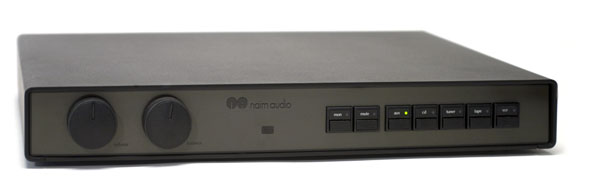
I watched a YouTube video recently that really speaks to my heart. It is a review of a piece of vintage equipment that I was the proud owner of some 35 years ago, 1987 to be exact, and which has become legendary in the meantime - the original Naim Nait. In the review, one thing he mentioned struck me so much that I could not nod my head (and heart) enough in agreement: the music that comes out of this humble little box makes one think the performance of the musicians amply justifies their pay! This was exactly my belief! I got the same experience in my room of an apartment shared with friends when I first started to work after I graduated from college. Back then I used a Rega Planar 2, Naim Nait and Linn Kan, all first generation. Man, what a wonderful experience playing some cool jazz music (which was chic that time for a young lad trying to act like a mature person - before I actually fell in love with jazz). I then became a stereo salesman selling cheapo stereos to the mass. I often asked my customers to imagine that they were sitting in the room with a whiskey on the rocks in their hand, with lights dimmed out and with cool and smoothing jazz music playing through the stereo (what a lovely moment!) This description was simply based on my actual experience!! And as a result, I sold lots using this same storyline, LOL. Anyway, my Nait1 was given to my sister in HK and I got it back a few years ago but sadly lost it during office relocation...Luckily, recently I was offered a recapped unit for trial thanks to a generous music lover! Hopefully, I can measure how far I have gone from my 初心 [Editor: "Initial Heart", meaning one's goal or determination early on, with the connotation that they get weathered or even lost with time]!

During the search for Audio Nirvana, the road is rocky, and often I lost my 初心 or even sometimes came to a point of complete standstill, only to revive after a period of hibernation (much like what Dr John had gone through recently). Mind you, I have many different hobbies as well as personal issues to deal with - enough to be distracted.

Recently, like many music lover/hifi enthusiasts, from time to time, I have been asking myself or re-evaluating the question of what I am looking for in a stereo system. Am I contended with my current setup? Any room for further improvement? What is my ultimate goal to achieve in my system? Self-doubting is a disease, or simply a common character for a "ma fan" (troubled) hifi enthusiast. We were thought of by others as trouble seekers!

How much detail is needed for a music lover to enjoy music, or is it just the audiophile (running the mill like a Guinea pig in a cage) just endlessly chasing the last bit of irrelevant detail from the recording? There must be a point in the chase when one has to call it a stop....

Like me, other friends I know have been consistently upgrading their systems, with different speeds and each with his own holy grail (there are surely numerous trails). Some like to upgrade bit by bit and enjoy the slow burn; some try to leap to almost the end point by acquiring top gear regardless of any monetary concern. Some stripped out hifi attributes and search for pure music enjoyment by using vintage gears. While some focus on certain trees in the forest, opt for certain types of music, say, those with less dynamic requirement, in a smaller listening environment. Whereas for me, I am fascinated by 刀仔鋸大樹,i.e. using cheap equipment (not necessarily cheap sound) and cheap tweaks to achieve effect of acquiring mega buck equipment and I stand by keeping my inventory minimum by NOT collecting more equipment than I actually need. 

I think I am the greedier one, as I simply want it all but would spend only minimum amount of money! That's a tall goal and, of course, the road is even more rocky and painful, as well as fun. Perhaps deep down I don't want it to end soon and hence set this almost unreachable goal!

With each addition or subtraction of equipment, cables make a difference, but whether it is favorable or not, one need to really put his ears on to listen critically. I am all for cheap cables but somehow a well-designed but expensive cable does make a huge improvement. I don't like blanket statements, such as expensive gear are overpriced only because of audiophile demand and vanity. When I test a cable that is uber expensive to me, I won't deny that it has transformed my system's performance if that's the case! 

Do I need every musician standing in my living room to play the music? Or do I need to hear the singer exhaling the faintest air into my face? What about the deepest bass; pristine and crystal clean treble that do not pinching your ear; midrange that is lush and with intensity? How good is good? 

I had been eagerly waiting for the arrival of NAIT and hoped it can humble me and be a beacon for me in search for Audio Nirvana! Yesterday, the NAIM Nait 1 finally arrived, and I immediately hooked it up to my WEA. I used DIN adaptors with my "Studer" cable for interconnect. For the speaker cables, I used the newly acquired Viard HD12 bought at a sale. I used it in lieu of the other loaner Luna Orange cable, which I think is superior to HD12 but Nait1 does not take spades and only banana plugs...LOL

Nait 1 surprised me with its capability to drive my Dynaudio Crafft  to an acceptable level with volume knob dialed up to only 9 o'clock! I am enjoying music coming out of this setup. With adequate dynamics and intensity, and it can play music at a realistic level!

I began to test music (both Youtube and Tidal) played through my Bluetooth (TV, Laptop and Cellphone) on my Aiyima A08 and they are also very enjoyable as well; even if my laptop has a slight edge, I can live with all three devices! If I am not critical about the imaging, the depth of soundstage (by all means already quite acceptable to me), I can surely spend all day listening to music from BT!

Suddenly, I remember a scene a few years ago, when my friend, who is a committee member of HKIPF, a respectable photo organistion in HK that holds high quality photo exhibitions from abroad as well as promote local artists, asked me if I would want to hold a photo exhibition. At that time, I had only picked up photography for only slightly more than a year and I had never dreamt before that I could achieve this goal so soon. But he asked me a very interesting question: do I mind loose, out of focus and blurred images in my works? I said I don't mind as, if done well, it could add a special feel and ambience to the works. Suddenly I felt relieved and eventually held my first solo photo exhibition based on his great help!

Since I am not a "pixel peeper in raw file" type photographer, naturally I am also not the type of hifi people who must chase down the last bit of detail in the recording. As long as the music is true to the original recording (as far as practical), there's no point in chasing the perfect sound - just sit down and enjoy the music! 

Now I am more at ease. What's the point in chasing the extra detail retrieved, the clearest high's or lowest low's or truest in-your-face mids? As long as the picture is portrayed well enough and holistically, that will be more than sufficient; the others will be nice to have, once the fundamentals are achieved.  When in doubt, music always comes first!!

So much for the conundrum, and I hereby wish everyone gets closer to their own holy grail and reach their own Audio Nirvana in Year 2023! Just remember, it's the process that one should cherish and enjoy. Hifi is the means only; enjoying music is the main goal!! 


31 October, 2020

Naim SBL Golden Note AP7 Mk II

\

Click pics to enlarge.

Letter from Hong Kong (20-12): Eric L sets up shop

My search for a proper streamer is ongoing, but not very active, as I'm not in a hurry: my laptop and Sparkler S503 are doing a fantastic job!

Surfing Review33 used equipment column is my daily chore, just in case there's a decent Streamer selling at a well below market price. One day, I was surfing and trying my luck. Randomly, I browsed various categories and happened to check out the loudspeakers. There was a pair of NAIM SBL selling at a cheap price. It is a classic, well regarded during my LINN/NAIM days back in late 80s. It was next on my list after Linn Isobarik and before Sara! Without a wink, or maybe after a few winks, I grabbed it without deciding how I was going to deal with it! Man, what I really need is a streamer and how can I bring this home while I have my Dynaudio Crafft, which I am so content with?

An idea popped up in my mind! I can put it in my office! Did some measurements and realized it fits perfectly on one side of the wall!! It is an absolute snug fit! But would it be too showy? What the heck, it's staying in my office. OK, what about source? That did not cause me any concern since I have the oh so reliable Taobao K16 BT receiver. For Laptop, I have my Huawei P40 Pro and the company HP Laptop that I occasional bring to work (only when I need to ZOOM); it sees more time at my home, haha.

Well, I did need an amp. My goal was to find an extremely cheap Int Amp or even a NAP140 or 160 power amp directly driven with volume controlled by my P40 Pro phone. Initially, my friend volunteered to lend me his famous frying pan MF A1s to try and I happily obliged. But then I saw an int Amp from Gold Note AP7 Mk2 for cheap, at only $2k, I immediately grabbed it based on: 1) It fits my budget; 2) Rave review of its bigger brother from Darko; 3) Fancy, made in Italy; 4) Compact size.

Nowadays, due to COVID19, you cannot audition and have to press your luck. Well so far it pays off on various purchases.

I also have a pair of Gotham GAC1 and 47 OTO I.C. but 47 is so finicky that I had to revert back to GAC1. What about speaker wire?? Luckily my friend Kwong lent me his Audioplan to use, which is a very decent silver coated S.C.

Finally I was all set to go. Setup was a breeze as it's minimal. I fired it up on a Saturday afternoon to reasonable level (of coz my normal listening level during weekdays lunchtime or afterwork will be much lower). In a nutshell, it does pump out respectable mid bass which rolls off quickly as expected. But it's quite musical and with decent extension of high frequency.

I would say my main system is still superior , more polished, smoother, musical and better in digging into the essence of music, but as a second system, it has far exceeded my expectation for a budget of only 7000HKD!! The combo actually give me great pleasure and provide stress relief to my hectic job, with endless deadlines, one after another non-stop! I can stay in my room with door closed listening to favorite tunes and unlimited choice from Tidal!

Recently been digging songs from Van Morrison and a song from Chan 陳果 's 留下來坐坐! The male narrative part is so magnetic and without it the song is just mediocre and the trest of the CD remains middle of the road (I can focus on just that song)!

Jane Motis in concert
https://www.youtube.com/watch?v=TijmJAEgRtE

Fever by Musica Nuda
https://www.youtube.com/watch?v=DgRN0JiEpOY

Caledonia Soul Music by Van Morrison
https://www.youtube.com/watch?v=F34zwWJ4bP4

21 July, 2020

Naim NAC-42 233 MC Card The Color of Preamps


Click all  pics to enlarge: lower left corner; the red and black wires are my addition, the + and -ve of 24V DC. The vertical boards are MC Phono Boards. Pic immediately below shows the Jameco on the power bar.

Review: Naim NAC-42 Preamp with 233 MC Card 
Naim Nait 1, 2, 3

Revised 3/14/22: A few corrections after a reader pointed them out.

If not for the lockdown, I'd never have acquired this piece of equipment. It was quite a bit of work to get it going, just to prove on the cheap whether a hunch is correct or not. As Naim is well documented on the net, I'll not cite much for background.

My Unit The Serial Number of my recently acquired very reasonably priced but mint US 120V Naim NAC-42 (1979-85) Preamp is 7416, which Naim's Website tells me is from 1983. My unit came with the 233 MC Card but without power supply, which is usually derived from its matching 110 Amp. In terms of looks, those large knobs are kind of whacky - I prefer the looks of the Nait 1 and 2 that I had before. I was also surprised by the size of the shoebox, a little larger than I remember of the Nait 1 and 2 (but my recollection could be faulty). At the bottom of this article is an old review.

Why This Project? Sit tight, for this will be heresy to some: I wanted to show that the magic of the earlier Naim's (which many prefer to later ones) come mostly from the Preamp Section than from the Amp Section. Let me tell how this came about. It started with the NAD 3020 I have always loved this iconic NAD integrated amp and have written a lot on it. Around 2014 I acquired a 220V unit and tested it in NYC before bringing it back to HK. I didn't write about it then but one of the things I did was to evaluate the preamp section (3020 has preamp out-amp in jumpers which can be removed to facilitate the use of either section). Used with my other amps, the sonic signature remained very similar. I concluded that the NAD sonic signature largely comes from the preamp section. This was corroborated by my friend Hoi when I visited him (here). On to Nait 1,2,3  Back in HK I then got to use all 3 generations of Nait's, but not their power amps, which are overpriced. I particularly admire their rhythm and pace. My first was the Nait 2 which truly astonished me. As I wrote in my Special Integrated Amp Article: "...These are excellent but not as neutral as the Cyrus. The sound is bolder and Naim's famed "Rhythm and Pace" is very much in evidence (more than its modern counterparts), but there are things to watch out for: (1) the vital vocal midrange is a little recessed; (2) Lower midrange to upper bass is a little emphasized; (3) Treble is just that little bit reticent. Its primary strength is in its portrayal of the leading edge, an area I have not heard its equal. It is best partnered with its own CD players, which shall yield a sound that is uniquely rhythmic and pacey, not neutral but a paradigm in what it excels in. In a complete set, it can lay claim to a unique sound not heard with other brands, and here I tip my hat. An example is my Nait II and CD2 (TDA1541A) combo. With it, the ATTACK of a single plugged string (like guitar), or drumming, is phenomenally live. Even more surprisingly, the "rhythm and pace" benefits tremendously a slow instrument like the organ. With Bach's organ work, you can literally feel the different degree of attack that the organists applied on the keyboard, and it's a revelation. For a good read click for this TNT audio article. Note that the phonostages are either MM or MC, and they are excellent..." My first was the excellent Nait 2 but some reason I didn't write it up individually. Then came Nait 3 (here) and last, the Nait 1, which I only let go when I left HK (here). Of the 3, in terms of the most prized Naim rhythm and pace, I'd say it's a toss up between the 1 and 2 (the 2 is from memory a little airier), but either is significantly better than the 3. Incidentally, I have heard the later 5(i) and it is not even close to even the 3, not to mention the 1 and 2. So! Given the unique early Naim sound which I know so well and love, I wanted to investigate whether the Naim Preamp is responsible for the sonic signature. This project is on the cheap and I'd not have to get a Naim amp, which are expensive. Nait 1 was produced from 1983-88; Nait 2, 1988-93; Nait 3 1993-2000, so my 1983 NAC-42 likely most corresponds to the Nait 1. Does it have the magic?

Power Supply One can power the Preamp from a Naim Amp of the period, or one can use one of Naim's Power Supplies (or an aftermarket one). This ecoustics forum thread gives a run down on which ones to use and how to connect. Basically, what is needed is a 24V DC power supply, easy enough, right? But we shall see. As this Naim project is just a diversion I was not about to go all the way to build, not to mention buying, a serious power supply. I toyed with the idea of using one of those cheap Chinese DIY 24V kits but that's still too much work so I resolved to use Wall Warts. Online discussions mentioned the preamp uses very little power, estimated to be 0.5 A or less.

Connectivity Except for the Phono Inputs of some units (others even use BNC), the Naim's of this era all use various DIN connectors, which they claim are superior sounding (actually many UK manufacturers like Meridian and Quad also used DIN connection early on). The Preamp Output is the most interesting, utilizing a 4-pin DIN that sends both the signals to the amp and 24V DC power supply back from the amp to the preamp (signal and power supply grounds are common). Tuner Input uses a 180 degree 5-pin DIN, as does the Tape In and Out.

A Lot of Work! First, I had to gather some parts. I have leftover quality 5-pin Rean DIN male connectors but for 4-pin it seems only generic ones are available, so I ordered a 5-pack. I also ordered the appropriate 2.5mm male socket for mating with wall wart. The extra unlabeled 4-pin DIN is supposed to be used for the SNAPS Power Supply, but it is not even connected to the circuit board. As seen in the top pic, I decided to avail myself of this socket by soldering a red wire (for 24V+) and black wire (for 0V) to the appropriate points on the circuit board (red wire and green star ground). I constructed a 4-pin DIN to Male 2.5mm DC plug socket adaptor (rightmost grey cable) for mating with the wall wart. Thus I did not have to connect the power supply to the preamp out cable (less soldering difficulty). The 4-pin DIN is connected to 2 runs of the slim but sonically good Belden 8451 (my go-to hookup wire, used also in my TU-8150 bypass). For Tuner Input I divided up the 4-conductor Mogami 4534 for both channels and connected it to the 5-pin DIN. Boy, soldering those tiny and close-together DIN pins was a royal pain, especially with the lower-quality 4-pin connectors (I ruined one)! Finally I was ready to go!

Turntable: Technics SL-1200 Mk II with Denon DL-103
Bluetooth Receiver: Dayton Audio BTR-01 Digital Out with Belden 1694A
DAC: Micromega MyDAC
Amp: Akitika GT-102 with Gotham 50025
Loudspeaker: Audiomaster LS3/5A 15 ohms

Comments and Sound
  • Power There is no on-off switch on the preamp (it is on the 110 amp). When the power is plugged in, the light stays on. To turn off, I had to unplug the wall wart.
    DFU240050F1121
  • Interference First I used a Switch-Mode Power Supply and, sorry, that was no go. I heard a high-pitched frequency sound and knew that was interference. So I ordered a 24V regulated Linear (transformer) DC Wall Wart, made by Jameco in Taiwan (Part # 174879, here), a really high quality unit. Despite the heft, its rating is only 0.5 A. I have had it on for many days and it only gets lukewarm, so I deem it sufficient (I do unplug when signing off). The background was totally quiet. I highly recommend Jameco Linear DC power supplies if you are looking to upgrade your Switch Mode DC supplies and your current requirement is not high (more current of course available for lower output voltages).
  • Scratchy Pots Initially occasionally one channel or both would cut out. Rocking the selector back and forth would restore sound and with time the problem disappeared, even without cleaning.
  • Cables Before I forget I shall say that, in contrast to most Flat-Earthers, I have always disliked the stock Naim interconnect cables (which are made by Chord, whose cables I don't like because of their subtractive nature). Yes, I have compared before and I prefer my Gotham, Mogami, Belden. And, for loudspeaker cables I never used NACA either; I have use Gotham  (50025 and 50150) and Belden 9497 to great effect.
  • Sound - Line I knew exactly what I was in for. Coming off the Artemis, I felt the top lacked a little air but the ear soon adjusted. The sound was exactly like what I wrote about the Nait's (shaded text above). Very good rhythm and pace, more apparent on jazz. As I was just streaming I did not even try the CD.
  • Sound-Phono Wunderbar! I played the Hank Jones Happenings (Impulse, shown in next to top pic) was swinging hard! And, with the keyboard, that famous Naim quality was again evident - we can virtually feel (and hear) how Jones touched the keyboard (again, see shaded text above). This was the first time I used a Naim MC card and I have to say I think it is superior to my experience with the MM Cards (well, I prefer MC).
Conclusion My write up is short, but actually I listened to the Naim endlessly for at least three weeks. I am convinced, like the NAD 3020, The Naim Preamp, or Preamp Section of the Nait's, is largely responsible for the Naim Sound.

I hear you. This is not "neutral"; this is a "color". Well, if "colors" make music sound real, I want more colors. If colors make me feel and hear how Hank Jones touches the keyboard, I want more colors. I am glad vintage Naim is so "colorful". And perhaps Western Electric is colored too?

I'd gladly have continued using the NAC-42 in this baking hot weather (I only use a fan). But then by chance I got a Yamamoto Preamp, which beckoned me away...I told you, no relationship is forever, but a fling now and then is rejuvenating...who wants to be tethered to something that is always "correct" - meaning you are always wrong in your desires?

Pic above from 7/89 Streophile; review below from tomtomclub page

22 May, 2018

Naim Nait I, 47 Labs 4737, ATC S50


Naim Nait I Revisited
47 Labs 4737 Loudspeaker, Part III

For 47 Labs 4737, you may also want to read Part I (used with Kondo Ongaku) and Part II (used with Flying Mole).

Naim Nait I
This is one of the most famous and influential integrated amplifiers of all times, famously beloved by a die-hard crowd who would not have anything else beside Naim and Linn, for whom the term "Flat-Earth" was coined. For an introduction, I quote from my popular special article on Integrated Amps:

Nait Nait I, II, III
The III is completely different cosmetically. These are excellent but not as neutral as the Cyrus. The sound is bolder and Naim's famed "Rhythm and Pace" is very much in evidence (more than its modern counterparts), but there are things to watch out for: (1) the vital vocal midrange is a little recessed; (2) Lower midrange to upper bass is a little emphasized; (3) Treble is just that little bit reticent. Its primary strength is in its portrayal of the leading edge, an area I have not heard its equal. It is best partnered with its own CD players, which shall yield a sound that is uniquely rhythmic and pacey, not neutral but a paradigm in what it excels in. In a complete set, it can lay claim to a unique sound not heard with other brands, and here I tip my hat. An example is my Nait II and CD2 (TDA1541A) combo. With it, the ATTACK of a single plugged string (like guitar), or drumming, is phenomenally live. Even more surprisingly, the "rhythm and pace" benefits tremendously a slow instrument like the organ. With Bach's organ work, you can literally feel the different degree of attack that the organists applied on the keyboard, and it's a revelation. For a good read click for this TNT audio article. Note that the phonostages are either MM or MC, and they are excellent.


Although I don't count myself a Flat Earther, and am certainly not a proponent of the over-rated and over-priced LP12, I do appreciate these early Naim's. I have heard a lot of later Naim, but imho the very qualities Naim are famous for are found in greater abundance in the early products, be they amplifiers or CD players, and they are rightly legendary.

This is my third Naim integrated. I have used and written about the Nait 2 and 3 before, but they are now gone. For CD replay I use the Tuner Input with my own DIY DIN cable employing Gotham DGS-1.

Stravinsky: Le Sacre du printempsSubwoofer Connection This created a little difficulty. It would be too involving to make a Tape In-Out DIN cable, so I had to use the high-level (speaker cable) connection. In so doing, I also had to switch my Kondo system from high level out to RCA pre-out for the subwoofer. Before that was achieved, I actually had both the 47 Labs 4737 and the TAD TSM-2201 sounding at the same time, and it was actually very good, showing that the Nait I is capable of driving the TAD.

Tchaikovskyvs Flying Mole CA-S10 Good as the Flying Mole was, the improvement was immediately apparent. The Flying Mole has very good PRaT, but in comparison is of a tighter, more generalized kind. The Nait I, like the Nait II I used before and mentioned above, astutely distinguishes the (even slightly) stronger beats from the weaker ones, and make things swing.

Even in classical music this is discernible, making for music that is easier to follow. Tonally it is also a little warmer than the Flying Mole. Replay of Currentzis' controversial Le Sacre with his MusicAeterna (Sony, here) fully justifies his claim that he is presenting the rhythms in a different light, and in this system it is highly exciting, not at all "smoothed over", as claimed by some classical critics (likely they have lesser equipment). Yo-Yo Ma's Bach Trios (Nonesuch) naturally just swings. And Esther Yoo's magnificent account of the Tchaikovsky (DG) was very well rendered too, her rich tone very much in evidence (though not quite like the Kondo system) and the way she naturally phrases impressive.

Image result for barenboim saensPhono By connecting my humble Pro-Ject RPM3 fitted with a Clearaudio Concept MM, I finally got to evaluate the phono section of the Naim, and it did not disappoint nor call attention to itself.

For some reason, this very humble and make-shift vinyl setup is just too lean for me - and I attribute that to the cartridge (it is just as lean going into the Kondo/Audio Note M7. Adding a small shim (made from expired credit card) between the cartridge body and tonearm effectively slightly increased the tracking weight and changed the VTA, and the sound warmed up a little; Swapping out the Gotham GAC 4/1 cable for the Kimber PBJ had a similar effect.

Image result for morricone missionThe Saint Saens Organ Symphony, in the version by Barenboim/Chicago (DG, New Zealand pressing), is undeniably exciting but somewhat artificial, being closely miked, but it plays into Naim's strength - perfect tracking of how the strings scoop, the bass grumble, the tympanis pound and the organ growl, giving the finale that precious take-no-prisoner inexorable feel. Meanwhile, Morricone's Mission is highly atmospheric, and haunting when appropriate. Often, replays I have heard struggled to fully portray the many vocal and instrumental facets of this score, but the Nait I is successful. Simply marvelous for a shoebox!

My friends WSS and JL came to audition yesterday, and they were very impressed by the big performance turned in by the 47 Labs 4737/Naim Nait I, aided by the subwoofer of course! Now, both of these people are Quad 2812 users, and they are contemplating adding a subwoofer now!

Home Visit- ATC S50 and another Ongaku
My friends and I also visited our old friend Andy, whom you last met here. His system has changed a bit.

Turntable: Clearaudio Statement/Goldfinger 2
Phonoamp: Clearaudio Statement Phono
CAS: Aurender N10
DAC: EMM Labs DAC2X
Amp: Kondo Ongaku
Loudspeakers: ATC S50


Gone are the Wilson Alexias. Instead he is using the rare 40th Anniversary Special Edition ATC S50 (official "blib", shamefully without spec's), on which there is almost no info on the internet. Only 10 pairs in the world (probably all for Asia). Basically, it is a take-off on the classic SCM-50 (same internal volume and dome midrange), finished in more "upmarket" fashion.

Surprisingly, Andy is using the Kondo Ongaku (its second coming; the first is here) to drive the ATC S50. That is even more of a tall order than mine driving the TAD TSM-2201. Sound is generally on the super clean side. Digital replay of audiophile tracks were reasonable (DAC-out routed to the Clearaudio Phono preamp, which I personally dislike, rather sterile to me) but the vinyl playback was inconsistent and a little too lean for me. Personally, I'd add a subwoofer.

Andy now enjoys motorcycle riding. His Honda is a beauty!


30 December, 2016

2016 in Review

pic has distortion at the edges - the Pioneer loudspeakers are not trapezoids! Click to enlarge.

2016 in Review
Letter from NYC (58) 2016 (14)

A belated Season's Greetings!

This Blog is now over 8 years old. Due to family matters, my output (in terms of articles written) hit an all-time low in 2012/13. Since then, there has been a small but steady increase. However, since I am buying fewer things and the stuff I do buy in HK tend to be small "gadgets", there is less to report on "serious" current products. However, I now focus more on older products and my own things that I have neglected previously, a valid trade-off. A little more than a year ago, I started the "HiFi Basics" series, but due to my somewhat compulsive nature have managed only 3 articles so far. I hope 2017 shall see more entries under that label.

Most Significant Events
  • Kondo System Re-Make In a coming article I shall detail my efforts at matching loudspeakers to my Kondo Ongaku. Mind you, this is at my present small abode in HK. There were quite a few candidates and the results were, to say the least, quite surprising! After I started this effort I acquired an old Audio Note (Kondo design) M7 with built-in Phono. Its smaller size allowed me to use it in on an IKEA shelf (see pic above). It would be a shame not to use a turntable, so I just managed to squeeze in the smallest that I have, the humble Pro-Ject RPM 1.3. Then I added a subwoofer!!!! I assure you the end-result was quite satisfying, earning the approvals of my music lover friends Seng and wss! Coming soon...
  • Vintage Cartridges Although this started 5 years ago when I re-tested my Empire 2000 cartridges (here), things didn't get serious until recently. Shure SC35C After initial failure, I finally got this "DJ" cartridge right (here)! Although my sample is current production, it is a replica of a vintage creation. I have yet to put this low compliance cartridge on a heavy arm, and it is already darn good. Warning: In some systems the treble could be just a little on the unrefined side. I rather think of it as a "monitor" type product, not the kindest to bad recordings. I just noticed its street price has gone up quite a bit to around $59. Still, quite a bargain! Shure M44-7 The ones currently sold are replicas of this vintage relic, beloved by DJ's. My sample just happened when I spotted a vintage body and NOS Empire replacement on Ebay, and so may not be representative. In any case, I just installed it yesterday as replacement for the SC35C on my cheap AT PL-120 and was absolutely floored - my cartridge of the year! Stanton 380 I heard this at my friend Andy's and took one back home to play. It has a very attractive rich hue and plays anything well. There shall be big article on these cartridges soon. Happy New Year already! Mono Cartridge Finally I got a mono MC, the Taiwanese Raos, and I am very satisfied. Unfortunately, Master Rao has passed away and these are not obtainable. Nagatron Ribbon Cartridge heard at Andy's was very impressive!

Vintage Loudspeakers Although in 2016 I have heard megabuck loudspeakers of the caliber of Magico Q7MkII, top-rated in any magazine, my kudos go to much older designs:
  • Dahlquist DQ20 (reviewed here) was astonishing in how it made the music come alive, unequivocally leaving an expensive and well reviewed modern loudspeaker in the shade.
  • JBL L20T Even this unassuming vintage JBL (reviewed here), which can be had for perhaps $200, is over-achieving. I was thinking of trying out Andrew Jones' new Elac B5/6 just for fun (I have a thing for inexpensive bookshelves), but after I got these JBL's I completely dispelled the idea (after all, I know his designs, as I have his recent Pioneer SP-BS21LR).
Headphone Stax SRS 2170 (my review here) is all I need in a headphone! Although this is a current product, both the design and the sound have been around for a long time. Vintage reproduction again!

Buffer Amp Though a niche product, the iFi iTube is just wonderful. If you need some bloom, give it a serious thought!

Cable The Gotham DGS-1 continues to gain my admiration. Although not the best in hifi parameters, there is definitely something that is very attractive to this simple cable - a fluency that just makes music come alive with great presence and PRaT (the best analogy is non-oversampling in digital conversion). More and more of this cable are finding their way into my systems.

Brief Mentions My 47 Lab 4718 Shigaraki Phonoamp is finally running in and providing solid support for my mono Raos cartridge. My resurrected EAR 509 Mk II dealt a coup de grace to unreasonably priced Conrad-Johnson. I also acquired a Naim Nait I - no surprise as I previously owned and loved a II and still have the III. Sound is in the same mould.

Happy 2017!

31 August, 2015

Review: Micromega IA-60 Integrated Amp; CD-10, Part II

Click pic to enlarge.

Review: Micromega IA-60 Integrated Amp; Micromega CD-10, Part II
Review: Naim Nait 3
Yin vs Yang

Note (3/3/16): Micromega CD-10, Part III, vs Sparkler S306 has been published.

After acquiring the ridiculously good Micromega CD-10, it took some time to hunt down its companion IA-60. The result was so surprisingly satisfying that I decided (for my limited purpose and time) to further simplify my reference system in my "new" home, eliminating tubes (Western Electric 124, which shall go back to my old house). Also, just by chance and impulse I got a Naim Nait 3 (I have used the Nait 2 before).

My review of Micromega CD-10, Part I was brief, so I copied it below so you don't have to go back.

Micromega CD-10 (official link; you should read the technical details). Here I welcome yet another member of Micromega into my family. Launched quite a long time ago (I commend Micromega for not changing models often), it has been well reviewed (I particularly like HiFi World and the ever-reliable Alvin Gold in techradar; for comparison of the whole CD line, read HiFi+ or in Chinese only u-audio).

The CD-10 (as do the CD-20, 30) uses the ever-reliable AD1853 chip, in contrast to the Cirrus Logic chip used in products meant for CAS (see my reviews of the fantastic MyDAC, Part I, Part II). The amazing thing is, the sound is like deja-vu: very much alike! And that is all to the good.

The CD-10 runs surprisingly warm for a CD player, even in standby.

Sound Just like the MyDAC, the CD-10 delivered all the important things in music, the venue, the tactile quality, the timing. See further Sonic Comments below.

Micromega IA-60 (official link of comprehensive technical details)
Micromega's amplification has never gotten as much attention as their digital products, and that is a shame. Many years ago, I owned a Tempo 1 and it was an excellent sounding thing (my friend icefox thinks so too). Unlike the CD-10, the IA-60 was only reviewed in tandem with the CD-10 (witchdoctor, and in Chinese only u-audio).

The IA-60 is rather warm even in standby. In operation it can can get pretty hot. While your hand can stay on, it is still definitely warmer than usual. Adequate ventilation is a must.

Sound As you would expect from Micromega, just like the CD-10, the IA-60 delivered all the important things in music, the venue, the tactile quality, the timing. The reviewers cited above are pretty spot on when they noted its reasonable driving power and somewhat light bass quality. My Yamaha NS-1000 is demanding but the IA-60 delivered just enough control and drive to let the musical finesse come through. If my memory does not fail me, this generation of amplifiers is better than previous ones (like my Tempo 1), more airy, more shimmer on top, and more grunt. See further Sonic Comments below.


Naim Nait 3
Naim's earliest integrated amps, the Nait 1 and Nait 2, are arguably their most iconic products, and with good reasons. For my assessment of Nait 2, read my Integrated Amp Guide (incidentally one of the most-read articles in my Blog). For the Nait 3, surprisingly one can still find a few reviews on the internet: TONEaudio (the 3R is essentially the 3 with remote) and soundstage (reviewed in tandem with the CD3.5).

Among vintage afficionados and even many Naim old-timers, it is often the older the better. Many, including myself, like the old shoe box look; but I also like the look of the 3 series (so much better than current Naim). The Nait 3 commands a lower second-hand price than its predecessors. This is partly also due to the absence of a phono section (though many buyers now don't use it). The Nait 3 has more power than the 1 and 2, and beside the DIN inputs sports a single RCA input as a concession to modern conveniences (Nait 1 and 2 are DIN only). Since I previously had the 2, I was more than curious about the 3.

Sound Using the Micromega CD-10 as source, via the RCA input, the Nait 3 immediately took control of the Yamaha and never let go. While its control was superior to the Micromega, for a while I was not at all sure which I preferred. The story is intriguing. See further Sonic Comments below.

System:
CD: Micromega CD-10
Amp: Micromega IA-60 or Naim Nait 3
Loudspeakers: Yamaha NS-1000
RCA Interconnects: Canare L-3C2VS and Mogami 2549
RCA to DIN Interconnects: Mogami 2534 and Gotham GAC-4/1 and Gotham GAC-2

Mahler: Symphony No.6Sonic Comments
  • Micromega CD-10 This is a beauty. Whether driving my Brook 7/WE124, the Micromega IA-60 or Naim Nait 3, it delivered prisitine digital, with SOUL. Use with confidence in any system (even a Naim one).
  • Micromega CD-10 + IA-60 Given the sterling quality of the CD-10, I'd not just put the performance of the CD-10 + IA-60 down to "synergy" only. The IA-60 is outstanding on its own - its agility and finesse serves up all types of music with great panache, and is class-leading. Miraculously, initially, its rhythm and pace trounces that of the Nait 3 (but see below)! Soundstage is deep and there is plenty of air. When it comes to driving power, I am satisfied by its performance with my Yamaha NS-1000, by no means the easiest speaker to deal with and an unlikely partner. Even in the big Mahler, when one wishes for a bit more power, a good sense of scale is preserved and the music has inexorable momentum. The IA-60's speed and accurate leading edge portrayal more than compensates for its limited power. Those with smaller or more efficient speakers will get even more out of the IA-60, but given the extended treble bright speakers should be avoided.
  • Micromega CD-10 + Naim Nait 3 RCA Input For convenience, this is what I used at first. Although the sound was more forward, it had more composure than the Micromega IA-60; on the other hand, the perspective seemed flatter and not as lively; the Mahler did not have a sense of threat, of struggle. DIN Input I borrowed a Naim RCA to DIN interconnect (old style; Chord made) and was immediately served a more dramatic sound. However, like before (when I had the Nait 2) I did not like this cable's roughness and lack of refinement. I decided to DIY some RCA to DIN interconnects with Mogami 2534, Gotham GAC-2 and GAC-4. It took some time to source the archaic DIN connectors, not something the usual electronic store has. My efforts were amply rewarded: the sound through the DIN inputs was superior to the RCA input - better dynamics, leading edge and scale; and Naim's inimitable rhythm and pace is back. Finally I had recaptured the unique feeling I had with my old Nait 2 (previous description). This puts the Nait 3 just a little ahead of the Micromega IA-60 in overall terms, though the latter still has a faster transient and more overt excitement.
  • Yamaha NS-1000  They continue to amaze me. Even in totally unfavorable arrangement, against the wall they deliver very good depth, and a properly scaled soundstage, without which the spirit of a Mahler symphony cannot be rendered. This very good recording was totally satisfying.
  • Yin vs Yang In a way, this is yin vs yang. The Naim is a little more masculine, more in reserve, in control, but the Micromega beguiles with its mellifluousness.
Conclusions
  • Micromega CD-10 As with most Micromega digital products, this is a winner.
  • Micromega IA-60 or Naim Nait 3 Despite so many years apart, both serve the music very well. Best buy's.
  • Yamaha NS-1000 What can I say! You don't get better speakers than these even at 10 to 100 times the price. Yes, you heard me.