Showing posts with label Talk CAS. Show all posts

22 May, 2020

Dayton BTR01 FX AUDIO BL-MUSE-01 Aukey BR-C1 HK008 Bluetooth Receivers vs USB Streaming iFi iTube Naxos Music Library Spotify Youtube


Click pics to enlarge. Dayton BTR01 in action. Aukey BR-C1 in foreground; iFi iTube and Micromega Mydac in left background.

NY Diary (20-16): Streaming on the Cheap; Bluetooth, Part I
Review: Three Bluetooth Receivers, Dayton BTR01, Aukey BR-C1 and HK008, vs USB
Review: iFi iTube, Part II
Streaming Naxos Music Library (NML) (with Chromebook)

This is a very long article that follows my Bluetooth Journey chronologically, not a more categorical presentation. I chose this way because it would tell more of the joys and frustrations of the journey.

Getting the NML through you NYPL account

This is picking up where I left off in the last Diary Entry on Streaming NML (here). Since writing that, I haven't stopped streaming but have done some adjustments, and some of the results surprised me, to say the least. I'll start with a bit of re-cap.

BEFORE: Ancient Dell Laptop + Unitek USB Cable The Unitek is my go-to USB cable (better than the Belkin Gold, see here; but it seems available only in HK). The Dell was a loaner, pre-Windows 10 but running the 10 (I also tried my even older XP Dell; it displays but cannot run the NML Player). Sound With the Micromega DAC, sound was quite good. The treble was surprisingly detailed, but sometimes with a steely tinge on period instruments or when the going got rough. Cable Swaps I dug out more cables and toggled them, resulting in a somewhat warmer, but just as detailed, sound. So the updated system:

Bluetoon Receivers: Aukey BR-C1 and Dayton Audio BTR01 (chronicled below)
DAC: Micromega MyDAC (DIY 47 labs)
Preamp: Elekit TU-8500 (Gotham GAC-2111)
Amp: Akitika GT-102 (Acrotec 6N-1010)
Loudspeakers: Audiomaster LS3/5A (15 ohm)
Stands: el-cheapo Energy stand used without spikes
Blue Ray Player: Sony S-5000ES (Audio Out; Canare 2T2S)
Turntable: Audio-Technica AT-PL120/Denon DL-301ii


My New Chromebook (skip this part if you have no interest in Chromebook) As described in Diary (20-8), some time ago I irrevocably crippled the browser of my 2012 Macbook Pro and computing on ancient laptops has been a patchwork. Finally I couldn't stand it anymore and impulsively bought an entry level Acer Chromebook 14 for $200, before tax. Considering that computer prices have shot up with increased demand during the pandemic, that was a comparatively good deal. I ordered it from BJ's and was shocked it showed up the next day. I guess it was available at my local store and they delivered it together with other people's groceries. Nonetheless, efficient and deserving of praise! Basic but has Flaws Opening it up surprised me - a nice carrying bag is included. This is my first Chromebook, and it is a very basic one. I liked the fact that it has an aluminum chassis (of course at the cost of additional features). The screen is large, but images, though fairly good, lack some contrast  (Apple it ain't). Working on it feels remarkably like working on a Macbook Air. I use the computer to mostly read the news, write (obviously) and watch a little youtube, certainly no gaming and high demand stuff, so this basic model is good enough for me, and I can sit and write with it on my lap for hours. I open multiple tabs when I write (sites with relatively little ads and pop ups) and stream music at the same time, and the speed is acceptable (not with some youtube videos though) and happily the battery lasts forever. I/O's are few, 2 USB and a HDMI but regrettably no SD card slot. I also tested the earphone out and it was acceptable (no worse than Apple). Drawbacks There are a few, some unforeseen by me. It's not the price, but the ecosystem. Keyboard It is a little different, but adjustment is easy. I do miss several keys that I use a lot (Pg Up/Dn, Home, End and Delete) and hence cannot yet execute some DOS commands (but these keys on an external keyboard work). There are Chromebook shortcuts for these but it will take a little time to learn them. Input Sometimes I have to type in Chinese (not that often). With Apple, it is the best. With a PC or Android Cell Phone, I use the very good Google Pinyin Method, which can easily toggle between the Traditional and Simplified Chinese characters. So I was really surprised the Chromebook cannot; it's one at a time (reason here). And the Fuzzy Logic is not as good. This is a minor gripe though. Wechat This is the Social Media almost all Chinese use. On my Mac and PC, I like to install the Wechat app and use it when I type a lot. But despite some unofficial attempts, this is basically not possible on a Chromebook. As for Wechat's web edition, it can be displayed but fails to login even after scanning the QR Code. This may not be surprising as anything Google is not available in China. So for those who have to interact a lot with Chinese friends and associates, the Chromebook is not a good choice. This is not my case, so it is good enough for me.

Round 1: Initial Woes USB Aargh! I plugged the USB in, and NO sound from my Micromega. MyDAC requires a driver for Windows, but this Chrome ecosystem is apparently different. Next, I thought of my Meridian Explorer but could not find it. Anyway, that was a disappointment (but there is a surprise later). So, I grudgingly continued to use the ancient Dell. Bluetooth (BT) A day later, I decided just to try out Bluetooth. Last year I tried out some cheap Bluetooth stuff with my then-functioning Macbook Pro, and I had great difficulties (here). So I got them out. Well, the Chromebook proved better in this department. The Dayton BTR-01 was detected but would not pair, (surprise later too) but I was glad the Monoprice BHS-839 Headphones paired (it will see some use in the kitchen). When all seemed lost...

Round 2: Aukey BR-C1 Bluetooth Receiver This is a tiny (2") el-cheapo Rechargeable BT Receiver with a mini-jack analogue output. I bought it from Amazon soon after I wrote the Bluetooth/Monoprice Earphone article. Make sure you read the purchasers' feedback (that was what I did when I tried to decide which one to buy). The top one from a tech-savvy guy is most interesting, and I will quote him below.


Two changes and this goes from mediocre to nearly perfect "audiophile"
Reviewed in the United States on March 22, 2017
Verified Purchase

Upon first play using one of my reference pieces I use, 1.618 by BT, I knew something was off about this gadget. Being a bit electronics and audio proficient, I opted for an autopsy.

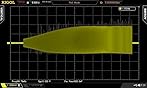
1st image: 65-second, 20 Hz to 20 kHz logarithmic sweep at -3 dB and half system volume w/ 85-86 uF stock output capacitors & filters.
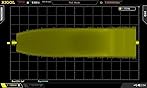
2nd image: 65-second, 20 Hz to 20 kHz logarithmic sweep at -3 dB and half system volume w/ ~290 uF output capacitance.

I set up the wrong multiplier for the scope between both sets of measurements. Please compare shape, not the measured values.

The micro responsible for driving this entire device is the ISSC IS1681S made by the Microchip subsidiary ISSC. It's a Bluetooth 3.1 + EDR device that supports a mic and stereo sound. The power source, aside from being plugged in via USB, is a 2YL6 "jellybean" Li-Ion SOT-23-5 charging regulator and a 250 mAh, 0.9W lithium battery. ISSC's site change that this IS1681S can live for 10 hrs on a 120 mAh battery. I didn't map the schematic, but 2x A2SHB-marked transistors, also a jellybean part, drive the left and right channels though 2 caps in parallel-ish and one inductor. The capacitance of each channel on the board is 85-86 uF, which is where I make my point.

A crude linear intensity sweep showed roll-off for everything below 650 Hz. The 3dB point is dead on 51-52 Hz, and the 6 dB point is at 20 Hz. This means that any low mids and high bass is easily being attenuated. As the capacitance is driven by MLCC caps, 0805's being the largest used here, which suffer from letting DC through at higher loads, the isn't enough for driving any decent speaker setup. Even at half volume I was getting a significant DC offset.

I had some 220 uF's sitting around from another project, specifically EEU-FR1C221, so I cut the leads of two of them and soldered them on. Away went the DC offset. Away went the 3 dB & 6 dB low-mid & low frequency attenuation And up went the peak-to-peak amnplitude. I can go louder now along with only a 0.82 dB roll off from 97 Hz to 60 Hz, which is good enough for me. My monitors go down to the mid 50's. Frequency response is flat from 97 Hz to 20 kHz.

Why does this matter? Aukey spent the time and money to inlay 4 steel pieces and 2 screws holding them in to add 20 grams of mass to this device. I'll admit that the thick-walled ABS case and rubber foot coupled with the texture of the plastic are spot on for the feeling of quality. I didn't expect perfect audio, but I didn't expect +6 dB attenuation in bass. The range of the bluetooth transceiver is great, despite the steel blocking a good part of the antenna on the left. However, if they remove the steel and minorly adjust the PCB layout, they will be able to accommodate similarly spec'd electrolytic caps and provide *excellent* sound for bluetooth device that costs $20.

Aukey, please remove the weights and use the cost differential to fix the frequency response. you do this, you'll get 5 stars from me. 2 were taken off because that roll-off starts/stops pretty high up in my opinion and physical presence was prioritized over function.

Amazon gave me a discount for leaving this guy in my cart for a few days (doesn't mean that it will or won't happen to you) so I got bluetooth audio that sounds equivalent to a shielded line-in input to my monitors for $12 so this was a fun experiment that netted me a very capable device I'll want to keep. I want to buy more, mod them, and share them.
Resound: Beethoven Symphony No. 9, Vol. 5
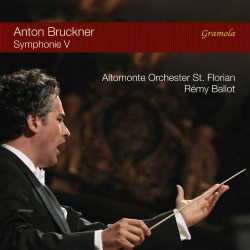
And They Lived Happily Ever After? When I first got it last year, I tested it briefly and it did not work with my Macbook Pro either. I almost forgot about it this time. In the early evening, I brought it out for a trial. Connection SURPRISE! It paired easily with the Chromebook! The connection is fairly stable, though at times it'd stutter a little, though overall it is acceptable. Sound Level At first, the sound level was quite low and I had to crank the volume up. Then I realized and checked the Chromebook's volume, which was at my usual low setting (I usually work almost silent, preferring to listen to music from my real systems). I maxed it out and, voila, the level became more normal, though I am certain it is below the standard 2VErgonomics For this price, don't expect that much! It has a lot of features for car and earphone use, which is useless to me and irrelevant here. Battery There is a Lithium Battery inside, and USB charging is easy and quick. Once charged, it lasts forever. If you don't want to do recharging, of course you can have it permanently hooked up with a USB charger (not included). Audio Output There is only a stereo Minjack. I used a generic adapter for RCA. Weight It is so light that it tends to be dragged back by the interconnect (and adaptor). The Vibrapod gives more traction as well as control vibrations. Sound I mostly streamed NML. Initially, I was a little unsettled. It seemed more generalized, less detailed. On the other hand, it seemed rather pleasant, not much treble glassiness. Cable swapping made only a small difference (I settled for the Kimber KCAG). Anecdotally, the sound reminded me not a little of my 2018 Bluetooth session with my HK friends icefox et al (here). Then, as I gradually grew more and more acclimated to the sound. I started to suspect I might find it on par with the USB streaming before. I found that hard to accept, as Bluetooth, especially non-Apt X and low-end ones, are universally regarded as way inferior and not fit for audiophiles. It took another day of constant streaming to sort out my impressions. All that remained was switching back and compare (which I did two days later to the same conclusion). Yes, in this system I prefer the Aukey Bluetooth. It's too bad my other BT devices don't work (surprise later). In the next bullet, I shall dwell on its virtues. Radio I spent some time enjoying Radio Garden (link set to Italian Radio Emilia-Romagna). I roamed over the globe, stopping by in Africa and India for some stirring music, finally checking in to RTHK4, Hong Kong's classical (and jazz) radio. Around the World in one hour! I urge you to explore this site but warn you that it can be addictive! :-) Pro's Some of you will no doubt question my high end credentials for preferring BT. Although it is hard to isolate the various elements, a few words to explain my preference are in order. Organic It is about the whole, not the components. There is something holistically right about the BT/Aukey. It breathes naturally and gets to the heart of the music. Now, as mentioned in my first article on NML streaming, its free feed is not even close to CD standard, not to say hi-res, though it is good enough for me (and mrgoodsound, though as a subscriber he may have a slightly better feed) to enjoy the music. Smoothness Compared to the USB streaming before, the Aukey BT is smoother, which is why initially I had to undergo a period of adjustment for what I first perceived as loss of high frequency content and detail. After more listening I became aware that there is about as much detail there, but the distribution is different. With USB, the images are smaller and the edges are sharper; with the BT, images are more fleshed out. I can imagine in the wrong system (say a less resolved one) the BT could come across as more muddy or bloated. But in mine the massed strings certainly sound more real. Soundstage and Hall Sound In terms of depth, the Aukey extends a little further back, but that is not significant compared to its surprising ability to convey the Recording Venue (Hall Sound). In my opinion, accurate Hall Sound goes hand in hand with Listening Comfort. Years of listening to classical music in audiophiles' system taught me the vast majority have no idea of what the hall sounds like - what they hear is a cardboard cutout. Case in point: I went through the excellent Beethoven Symphony Cycle by the Vienna Academy under Martin Haselbock (Alpha). They were recorded in different venues (each deliberately matched with the venue of each work's premiere) and I definitely hear the different halls. Another example: Remy Ballot's Bruckner Cycle was recorded in St Florian Cathedral, where Bruckner was based, and I can hear the reverbs. For a 16-bit aficionado (I am confident the 16-bit chips have the best hall sound, bar none), that's quite something to say! The small orchestra is clearly heard; the vibrato-less strings never grating, very exciting! If you have a streaming service, try it! The cushion of the hall sound lets me hear the really big symphonic works with comfort. Con's Effective Distance It is not very much; long distance champ it is not. But, are you kidding? For $15, I have no complaints. Also, here I do want to address the question raised by the technically minded Amazon commentator concerning the stock unit's roll-off under 670 Hz (-3db at 50-52 Hz; -6 db at 20 Hz). In my opinion, the very gradual rolloff to -3 db at 50 Hz is nothing much to worry about (unless your system is really lean in the lower midrange, midbass and bass) - not a few tube gears probably do that, and cable changes are able to help. In my case, I worry even less as the LS3/5A has a signature midbass bump that will flatten out the curve some, especially since I am using wood-based stands (without spikes) that probably make bass yet a little fatter. Indeed, I am not lacking in bass. I don't feel the need for a sub.

Round 3: Extra! + iFi iTube Late one night, I was playing Bruckner. I was actually contented but the idea of adding a Buffer came to me. I pulled out my little used iFi iTube (my review) and connected the Aukey (with KCAG) to it, using the Belden 8451 to connect to the preamp. Wow! It's not just better, it is significantly better! As Buffer (0 db Gain) I was not surprised that the Buffer sweetened the strings and brass a little, but I was happily surprised by Greater Ease and even more by the Enhanced Dynamics! That adds a lot to the big symphonic experience (like Bruckner)! Aukey has no spec's so I don't know whether there is an impedance issue, but the buffer surely improves things. As Buffer (6 db Gain) Even though the volume knob on the preamp had not even reached 12 o'clock, over the next few days I also tried out the 6 db gain setting. Unlike the previous round, I heard a little difference. Perhaps because I feel the Aukey is low in output volume (or perhaps the compression of the BT plays a role too) the additional 6 db gain adds a little more spice. I A/B'ed some: this is different from cranking up the preamp by 6 db; the attack is a little better. This is the setting I now use. As Preamp (6 db Gain) I briefly tested this, eliminating the Elekit preamp altogether. Just like before, the iFi did not cut it - the perspective is flatter and there is less presence. Maybe good enough for the desktop (which is what some of the reviewers use), but not in a real system. vs Chromebook Audio Out At the end of my comparisons, using the same cable and adapter I connected via the headphone output. I had tested this a few nights ago with my Grado SR-80 and it was par for the course, no worse than my Macbook Pro (not saying much). In this system, the sound was acceptable but not as wholesome as the Aukey. The tinny treble (strings) though was much improved; surely the iTube has helped!
Round 4: Miracle 1, Dayton BTR01 Revived!  + Micromega MyDac The Dayton is a Parts Express Product. It is a BT 3.0, non-AptX Receiver. As I was finishing the article, I opened it up and took a pic. The Chip used is CSR 57E6-87CG. The Op Amp NE5532P is seated on a socket, so should you like you can do some rolling. I googled the chip and guess what I found? A pic of FX Audio BL-MUSE-01 which looks exactly the same. I investigated further and found the innards are identical too! So, The Dayton is OEM'ed by FX Audio, which is a reputable Shenzhen enterprise. Dayton is out of stock right now, though more are due in imminently, whereas FX can be bought anywhere on Amazon and Ebay (the cheapest I have found is this). However, should you be interested, personally I'd pay a few bucks more and buy from PE, because they have a 5-year Warranty and are famous for their service. During this covid crisis, Parts Express must be hurting and they have lowered their free shipping requirement from $100 to $49, and you can include a few adaptors or whatever you need with your order! Of course, those near Hong Kong I am sure can easily purchase the FX from Taobao for even less. Connection As mentioned, first I had trouble; it was detected but would not pair. This was when I was using the Aukey. I moved it further away and plugged it in and forgot about it for about 2 hours. After a while I saw the blue light blinking and I was suddenly able to pair it! I moved it back into the system and it maintained the connection (I turned off the Aukey). As a matter of fact, it has been almost 3 weeks; every night I broke the connection when I turned off my Chromebook and it would re-connect with no problem the next day. The connection is super-stable (visible direct line) I suspect the initial impasse was due to too many devices around. Now, another strange thing: I tried again with my old Macbook Pro and, unlike before, it paired! Go figure! I have no idea why the Dayton works now with my Macbook but not before. Perhaps the 2 hrs of "warming up" did something? Ergonomics This is a small but quite well-built device, with great ergonomics. Power Supply is via a 12V wall wart (Linear PSU is a possible upgrade path). There is a stereo pair of Analogue Output as well as a pair of S/PDIF Outputs (Coaxial and Toslink). The Digital Outputs allow me to use a DAC of my own choice in lieu of the onboard one. I wasted no time. Sound I first used the Coaxial Output (Belden 1694A) into the Micromega MyDAC (iFi not used). A big smile broke on my face! The sound has everything the Aukey has, and significantly more. Retained is the musicality. Improved are the resolution, dynamics, even treble smoothness. In fact, the punch, and bass heft, sometimes surprises me. Brass and Massed Strings have sheen, no etching on most discs; no easy task! Fabulous! Toslink Actually I knew from before: with the Micromega, Toslink (Monoprice) is almost indistinguishable from Coaxial, and so it proves here (I think there must be some re-clocking inside). Analogue Out I connected it with the KCAG to the preamp. No surprise, sound was still quite good, but a little flatter and not as dynamic. I even added the iTube buffer (+6 db) to beef it up, but the sound was naturally still better with the Digital Outputs. However, just like the Aukey it is pretty decent and would be satisfactory without an A/B Comparison.  Lossy NML vs lossless AIFF I played my lossless AIFF files on iTunes. At first, they stuttered kind of badly, though not disconnecting, but that went away after I turned the BT off on my chromebook. Streamed over BT (lossy itself), the difference is there, but not by as much as one would think. Previous Review When I bought it, there were only user reviews. Imagine my surprise that there is now a TNT Review. Damn! I could have been the first! :-( But, wait a second, I just finished reading it. It is a complicated and crazy review, which I completely disagree with (rare in my experience with TNT), so maybe this review will right things!

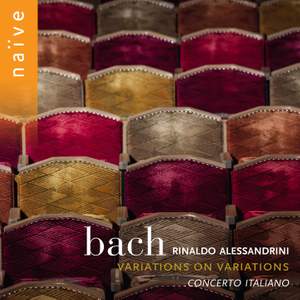
Variations on VariationsRound 5: BT vs USB On my Macbook, I have almost 1T of music stored as AIFF in iTunes. In there is an AIFF file of Concerto Italiano's recording of Bach's Goldberg Variations (orchestral transcription) which I love and have previously recommended. So I played the lossless file via USB and compared it to Chromebook playing the lossy NML file with BT. Suffice to say, as an audiophile, I think the USB is still better, but, being a direct connection, not by as large a margin as I'd imagine. Somehow, despite the better resolution of the USB, the wholesomeness of the BT still came through and it is not shamed (I can see with certain music it might even be preferable).

HK008 dangling on the DIY minijack cable. Aukey on Keyboard.

Round 6: Deja-Vu (HK008) After 2 weeks of thorough immersion in streaming, a few days ago I finally fired up my horn rig because, as is my custom, I wanted to test again the TU-8800VK before shipping it out. This is a much more efficient system, so I didn't use the iFi and just inserted the Aukey via the amp's Minijack input, and it played delightfully. System:

BT: Aukey BR-C1 or HK008 (DIY Mogami 2534 with Rean Minijack connectors)
Amp: Elekit TU-8800VK (Belden 9497)
Loudspeakers: Klipsch Heresy I
Subwoofer: Pioneer SW-8

A few hours later, the Aukey ran out of battery and had to be recharged. I substituted the even smaller $10 "HK008" (Amazon), which paired instantly. Amazing! The sound is virtually indistinguishable from the Aukey, so I am not going into details. I continued my streaming with the HK008 as I wrote, until...

Round 7: Miracle 2, MyDAC USB Revived! This is truly amazing (to low tech me). I had almost finished the article when I wanted to find out the cost of a used MyDAC. I poked around and ended up wasting some time reading old reviews, one of which reminded me that there is a small switch behind the MyDAC that switches between USB 1.0 and 2.0. For Windows, 1.0 does not require a driver but 2.0 does. I looked behind my unit. It is set at 1.0. My heart sank but I connected my Chromebook anyway. No sound, as before. What the heck, I thought, and tried out the 2.0. Success! I think that may be because my Chromebook's USB is 3.0 and it won't work on the 1.0. As for the Macbook Pro, may be the USB is 2.0 and that works on 1.0? I have always thought it was from 2012, but I just checked it, and it says "Late 2011". The 3.0 came out in 2011, but maybe my Mac still had the 2.0. BTW, my Unitek Cable and the Extension are 2.0. Anyway, that teaches you again the well-worn lesson - don't give up until you have tried everything! Sound Now I am able to use the same NML lossy files and make a direct comparison between USB and BT. There is no question the USB is still better (in bass heft particularly) but the BT is not far behind. For the small difference, until I have a dedicated computer in my audio system (may never happen) I am staying with BT.

Comments
  • Chromebook I don't make much demand on my computers, so my cheap and cheerful unit is welcome. Its ecosystem reminds me of Apple more than PC. It is not an ecosystem of choice for those who have to interact a lot with Chinese friends and associates. More relevant for here, from my limited experience above, in terms of streaming, BT seems OK. As for USB, I think it is OK too. As USB 2.0 came out in 2001, before Computer Music has taken off, I doubt there are many old DAC's with only USB 1.0 input. Because the USB didn't work earlier, I bought a $12 HDMI to S/PDIF Converter (also has a Minijack out) which has just arrived. I shall stream via the HDMI output. I might also reclaim from a friend my Musical Fidelity V-Link (a good USB to S/PDIF convertor that does re-clocking) to try out. As I believe S/PDIF to be better sounding, that would be interesting, but it will have to wait as I'd not like my friend to worry about my knocking on his door during the pandemic. :-) :-(
  • Akey BR-C1 and HK008 You can add streaming to your main system for peanuts. With some care, the sound is not bad at all, even good enough for this jaded audiophile. Despite their limited ergonomics, they punch above their weights, literally. Recommended. Also, make sure the distance is not too great and avoid having multiple BT devices on at once as it will cause pairing problems. AND, they are so portable that you can take it to your audiophile nemesis' place to embarrass him (I do that even to my friends, and certainly my HK friend icefox does too)! And good for a gift! The HK008 is not available right now but any generic one will likely be an equivalent. I regard BT as a bona fide Music ServerFor those who do not already use a DAC in their system, these are reasonable choices. Given the somewhat lower output, use of a buffer, especially one with gain, will significantly improve the sound.
  • Tube Buffer The iFi I use is now in its Mk II iteration, and it is not exactly cheap, certainly not commensurate with the prices of the BT devices. But there are very cheap ones available, and I intend to try out one of these soon (FX).
  • Dayton BTR01 as vilified by TNT reviewer I completely and wholeheartedly disagree with the TNT reviewer I cited earlier. That reviewer basically worked in an obstacle course, and, unforgivably, he did not test the digital outputs of this fine device. Had he used the digital output options he would have been surprised. If you ask me, that reviewer's own home limitations disqualify him as a reviewer, no matter how good his ears are/were. His must be the most incomplete review I have ever read on TNT - in the end, that review is more about HIM and his HOME than about the device. Sigh...TNT, you can, and usually, do a lot better! The corollary is, think of BT as a cheap Streamer, not something to send audio over long distances. This is important conceptually. If you want more distance, I am sure it is not impossible but be prepared that implementation will take more trial and error, not to mention more money and possibly frustrations. 
  • Dayton BTR01 as I Hear It The Dayton is a GREAT device, and a great bargain, whether you use its analogue out or, much better, its Digital Outputs into your DAC of choice. Or you can get the FX Audio BL-MUSE-01, as it is exactly the same. It is musical and, at least with lower-res files (like the NML), does not even shame itself against the standard USB. Grant you, its Distance of Operation (the only thing the TNT reviewer was concerned about) I cannot assess, as here in this room everything is within sight. But, based on Features and Sonic Attributes, HIGHLY RECOMMENDED! For those who already has a DAC in their system with an unused Coaxial or Toslink Input, this is a no brainer - downright FUN!
  • BT vs USB As mentioned above, the USB resolves more and is more audiophile oriented. However, there is also something wholesome about the BT, perhaps a subtractive virtue. It sounds best when it is digitally extracted. With a suitable DAC, like the crazy bargain but highly musical Micromega MyDAC, BT is highly satisfying! As I don't have a computer in my audio systems (that may someday change), the BT is now my choice for Streaming. This is because I don't work at a desktop and literally have the laptop in my lap. I'd use the USB if I do work at the desktop but as it is I'd not like to be tethered to a USB cable.  The price of this, ultimate resolution, is an acceptable price to pay. The most important thing is, it can be musical.
  • Audiophile Phenotypes and the Good and Bad Things about Computer Music Today in computer music, there is little question purchasing hi-res files (once so touted) is rapidly waning and Streaming is already Mainstream, even for audiophiles (not so good for musicians). If you consider youtube a form of streaming (which it is) it is astonishing how many audiophiles partake in that experience (my friends all do it, and think of those Ken Micallef clips mentioned in the last post). The great thing about computer music is that so much of it is available free or for a small fee. I think all can agree on that, but audiophiles differ greatly in how to receive (retrieve) the stuff. For people like me (and likely my colleague mrgoodsound), with streaming, as long as the music sounds good enough, absolute sound is of no concern. The important thing is to explore music, and when we are listening to something new and exciting, analyzing the sound is the last thing on our minds, and that is why I think one does not and should not need to spend too much on Streaming Equipment. I also think, people like us are likely to buy the music we discover (especially hard copy; I know mrgoodsound does). But I know many audiophiles have a different mindset, and they demand "the best" when they stream, which is why in 2 consecutive recent issues, Stereophile's JVS (kind of an audio Decameron figure; even his prose smacks of it) reviewed 2 Music Servers (Innuos and Wolf) with base prices of USD 13,750 and 9,295, respectively. And you still need to provide the DAC! I am afraid the only people well served at these extreme prices are the manufacturers and the reviewers. If I go with Aukey or HK008, my Music Server + DAC is less than $15! What I am saying is, I doubt these will turn around a piece of music that I do no take to. Maybe you ask, when is "good enough" good enough? Well, for me, proof of Good Enough (my motto) is that I have listened happily to BT Streaming for more than two weeks on my LS3/5A. Seriously, I don't even feel like I need my big rig, such a game changer it is! During this long period, I had gone through many Symphony Cycles: 3 Beethoven, 1 Brahms, 2 Bruckner and a Prokofiev, and that is just symphonies! I even thought that I should not have shipped some of my favorite CD's back from HK when I relocated - they are mostly available on NML.
  • BT Upgrade? Another proof of how much I love BT is that after my experience with the Aukey but prior to the successful pairing of the Dayton I was contemplating taking a risk and getting the Arcam rBlink BT Receiver (AptX), which has been discontinued and is now on sale for $150. I have always liked Arcam and had their first-generation rDAC. The Arcam is obviously better built and ergonomically similar (no optical out though). After my success with Dayton I banished the thought, as its digital output is probably not that different and I don't really need the DAC part of it. But if you don't have a DAC and want BT, you may want to consider it. As for on the cheap, I am actually tempted by many Amazon/Ebay offerings that promise long distance BT for $50. Not many of these though have Coaxial Out. For me, a good BT digital Output is now a requisite, that is all I need. Also, I haven't yet tried a better PSU. I do have a 3A Multi-DC-Voltage Linear PSU around but, being easily satisfied, I somehow never put it into use with my numerous wall wart devices! Good enough is good enough for me, but I think this time I shall try it out. As I am streaming day and night, any improvement will be welcome.
  • My Doubts about Computer Music Corollary, despite its strengths, I suspect there is something not entirely wholesome about USB Streaming. Grant you, I am not at all the last word in Computer Music, but I continue to harbor doubts. Cheap and cheerful is where I draw the line, and this round of BT experience is supportive. I think back about my HK friends, icefox and his cohorts, all uber-experienced audiophiles (and audio wanderers, even vagabonds) used to auditioning big and megabuck systems (which include expensive Music Servers)  - perhaps I now really know what they were experiencing. There are so many bad computer audio setups out there (including at shows and dealers) that I completely distrust writers who wax lyrics about them. Remember: Cheap is good, but Cheerful is even better! Since when has our audio hobby become a big technical mess? BT is just Simple, Unadulterated Joy, a rare phenomenon in audio today!
  • NML Youtube Spotify Mind you, lest you wonder, for a very serious classical listener who wants the broadest coverage of music, Spotify is out of the question, and even Tidal and Qobuz are not in the equation (they have hi-res files but are way behind NML in coverage). But then, even NML is not perfect. There are quite a few esoteric labels not under its stable, and even for those that are, selected albums can be missing. As an example, Vikingur Olafsson, the trendy Icelandic pianist whose Bach track below notched around 8 million views on Spotify, is a DG star, yet his other DG albums are not on NML. I suspect this may be a calculated move on the part of the label. CD Recommendation All of my recommendations come from Streaming. For each one you see I'd estimate there are 20 albums that I decide not to include. This is not at all because they are not good, but because I deem then not generally recommendable (e.g. esoteric, difficult or sonically compromised). Quality The NML Free Feed (likely 64kbps) is good enough for me, and my listening experience is so much the richer for it. I'd not mind listening to Tidal or Qobuz too, but where'd I find the time? vs Youtube Using BT, I listened to the Bach Youtube below (official); it is virtually identical to the NML feed, so I may listen to the occasional Youtube through BT in the future. vs Spotify This gets fascinating. Spotify says its non-premium stream is 160 kbps, which should sound a little better than NML's 64 kbps. So I used the same Bach track as comparison. It sounds no better, so I think 160 is likely the maximum. BUT, this is crazy: it sounds different, and worse for it! I went back and forth, and the Spotify definitely is louder, has less treble definition and more bloated bass. I also compared Spotify with Youtube by using Carla Bley's Live 3 Blind Mice Track, which features as drummer Billy Drummond, one of the Musician Audiophiles in Ken Micallef's series, and the result is the same. I am certain Spotify equalizes the sound for more bass, like the "Loudness" function of yore. In its Android app, there is an equalizer function which one can use to remedy, but the web player offers no such facility. Nonetheless, I shall explore a little more of Spotify for what is not on NML (like Jazz). I searched for one of my favorites, Bruckner's 8th Symphony, and while there were few, I was surprised to find a 2014 live New York Philharmonic performance under Alan Gilbert. I listened to the whole 80 minutes (excellent performance).
Basic Repertoire Any Bach keyboard music, especially when it is played so well by Vikingur Olafsson, is Basic repertoire. While we are on the keyboard, I am a fan of the eclectic keyboardist Carla Bley.


09 January, 2020

Streaming Naxos Music Library New York Public Library low-res vs CD


Click pics to enlarge. Note under album cover availability of Premium Sound Quality (not to library users); under that is Album Booklet, so you get all the notes if you click (I read every one that I stream)!

NY Diary (20-3): Streaming, Finally, and For Free!
Naxos Music Library via New York Public Library
Talk CAS: WMA vs CD, Part I

Amended 1/19/20: Genre availability (near end of article) updated. Connection/Drop Out bullet added.

This actually can be regarded as a continuation of the last article. I am sure some readers now will disown me because I now stoop so low as to listen to low-res files! :-)

Why Stream? Although I have a huge collection of CDs and LPs, I still like to kind of keep up on some artists and new recordings. As by this age I have rather narrowed my tastes when it comes to music and musicians that I like, there is no need to cast too wide a net. Streaming is a good way to keep up, but since I don't have that much time, I was reluctant to shell out for a decent service (like Qobuz), especially since Classical Music is not the focus of most streaming services (and of computer music in general). Streaming surely can be fun (my HK audiophile friends and I even enjoy Bluetooth together; here). Enter...

The New York Public Library (NYPL) As I have mentioned before, on my occasional trips to Manhattan, I continue to borrow CDs from the NYPL. The day before my visit, usually I'd do a little searching for my favorite performers on their website. More and more I see the term Web Resources. So finally I decided to try it out. What it is is that the NYPL has linked up with Naxos Music Library (this old article indicates the Toronto and Edmonton Public Libraries also have this service; probably a lot more libraries by now). Unless I have missed something, access however is kinda indirect - there is no direct link. On the NYPL website, search for a classical piece or artist, say "Isabelle Faust", and among the results displayed will be physical media, followed by "Web Resources". Under the latter is a link: click "Access Naxos Music Library" and log in with your Library Card Number and you will be logged onto NML, not to the item in particular, but to NML's Home Page, where you can search for anything you want.

Naxos Music Library (NML)
  • Biggest Classical Streaming Provider NML is the oldest streaming service, originally started with institutional subscriptions (like universities) in mind. Naxos started with the immense holdings of their own classical labels and, because they have always been a big distributor for numerous smaller classical labels, soon snowballed into the biggest classical streaming service provider (directly or via giants like Tidal). It is so big that Giants like Universal and Warner also make their whole catalogue available on NML. That is not so exciting for me, as I have many of those discs. What is undeniably exciting is that many valuable small labels and the live recordings issued by various orchestras on their own labels (think CSO, LPO, LSO, Seattle etc), which I love, are also available. That means, almost all classical's are there (as of this writing, almost 150,000 discs).
  • Interface Unlike other Streaming Services, the Interface is Perfect, designed for Classical Listeners in mind. One can search in various ways, including by Label, which is good for serious collectors (I file my music by labels). Just try to search with mainstream providers, it will drive the classical listener crazy! And Liner Notes (Booklet) are available to read with a click. Fabulous, and important for learning! Like the Bach album cited below, it contains several rearranged pieces, and the booklet explains why this was done (for good reasons).
  • Cost For the regular and Premium subscribers, NML is not cheap, but I do think you get your worth, not for someone like me with a large library, but excellent for a starter. For Library users like me, it is a Godsend. It is free, and it has everything - isn't that what a library is ideally supposed to be? Yes, resolution is lower, but we will deal with that later.
  • Options and Playlist Via the Library interface, there is no personal account and no options - you get what you (don't) pay for, and a playlist cannot be created. Music is heard through a "Play Queue", where you can queue up as many tracks as you want, an dit will play them in succession; however, upon logout all history is erased, and the next time you have to start afresh.
Sound Quality
Ah, this is going to be a minefield for me! First, let me give you Naxos' FAQ page, which is interesting, but bound to raise the eyebrows of audiophiles. Just snippets here:

Q: In what format is the music streamed?
A: The music is streamed in Microsoft WMA 9.0 format, at 128Kbps, 64Kbps or 20Kbps, depending on the type of Internet connection used.


Q: How is the sound quality compared to a CD?
A: The standard streaming rate of 64Kbps produces near-CD quality. If you have a broadband Internet connection, you can choose 128Kbps for a quality equivalent to CD. If you have a dial-up Internet connection, the music is streamed at 20Kbps, which is equivalent to FM sound quality. Of course, the sound quality is also dependent upon the type of speakers or headphones used.

Q: Can I set the default search page and streaming rate?
A: Yes, through the My Account page. You can select which search page (Standard or Advanced) you prefer to have as your default when you log on; and at which speed you would like the music to stream (20Kbps, 64Kbps or 128Kbps).

  • What am I getting for free? As mentioned before, without a private account, I cannot control anything. I am not sure at all, but I'd judge that the library's subscription is the minimal standard - 64Kbps if I am lucky, 20 if I am not. It should be noted that, for non-Premium service, Naxos uses a "variable bit-rate" type of encoding.
  • System I did all this on my small System III, my Apple Macbook USB connected to Micromega MyDac; Schiit Saga; Akitika amp; Audiomaster LS3/5A (15 ohm, augmented by Pioneer SW-8 subwoofer), quite humble and fit for the task, right? But it actually is a very good sounding system, and can be regarded as near-field monitor system (details here).
  • Connection/Drop-Out Occasionally I'd get a drop-out (a crackling pop), usually at the end of a track. This could be NML's fault, but more likely could be my own bandwidth problem, as my computer is connected to the internet via WiFi, not LAN (the modem is in another room, separated by a wall). A quick breaking and restoring of the USB connection restores sound in a couple of seconds. A nuissance, but...
    JS Bach: Violin Concertos
  • Listening I started by searching for one of my favorite violinists, Isabelle Faust. I was delighted that there were a large number of entries, including her more obscure pre-Harmonia Mundi efforts. The first piece I played was the Berg Violin Concerto (Harmonia Mundi = HM). I was writing, and the sound level was lower than usual, but I was thoroughly captivated. It was atmospheric, and foreboding, and I could easily tell the soloist, conductor and excellent orchestra were breathing as a whole. The library has a physical CD, but I could not locate it, likely misfiled, so it was a joy to be able to hear something I have wanted to for a while. Then I went on to her double album of Bach concertos (HM), and it was just as great. The harmonious blend and rapport on offer made me listen to 2 full-length CD's worth of music! So, for listening to music, the NML passes the test - the music comes forth intact. I was very happy exploring music I'd never otherwise get to hear, and that was deeply satisfying for a music lover. But what about absolute quality?
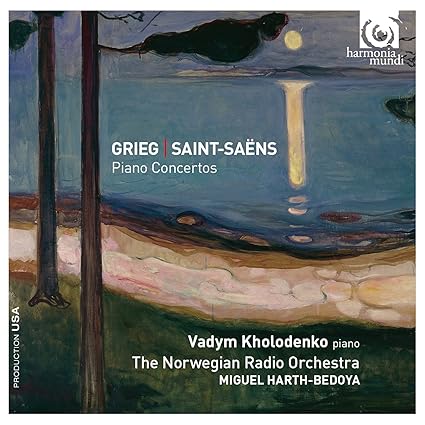
    Grieg: Piano Concerto; Saint-Saens: Piano Concerto No.2
  • Litmus Test Satisfied as I was with such low-res, I'd not like you to doubt my audiophile credentials! So, I did what I had to do, to compare what was available through NML with a physical disc. I happened to have borrowed the Kohlodenko CD of Grieg and Saint-Saens Piano Concertos (HM), and so I played the equivalent file in NML. I cranked up the volume and erected my rabbit ears. Well, it was quite good! The shape of the music was absolutely there, and musically satisfying, but my audiophile self told me that, for sure, there was more to be had. And so I played the CD through the Meridian 200 transport, into the same Micromega MyDAC. Absolutely, greater separation, macro- and micro-dynamic shadings, more instrumental harmonics (be it strings or winds or brass), more rhythmic exactitude and a more crystalline and varied piano tone. And, the bass was more resolved and less tubby than before. Even the pauses had more meaning. However, what is more important that that is: there is nothing that is unpleasant in the lower-res offering.
  • So? The difference was apparent, and does that make the lower-res format unworthy? No, not at all. What I didn't emphasize was that when I streamed, that was the first time I heard the disc, and after the Grieg, I was eager to hear the Saint Saens, and even if I knew I could get more by playing the CD I didn't switch. See, when one is exploring, a little less sonic quality does not really matter. The joy of discovery outweighs everything else. As I said, the shape of music, the rise and fall, the gestalt of it all, is mostly retained in the lower-res version, enough for one to appreciate the music.
  • Casual vs Critical Listening I don't know about you. Half the time I listen to music in a "casual" way. I would be typing away or reading. But, I still know what is good or bad! And sometimes if it's good, it would stop me in my tracks. Great music making just comes through - there is no barrier, no matter the bit-rate. Many of my audiophile friends (such as BenYC in HK) listen to a lot of Youtube historical material for enjoyment. I do occasionally too. But yes, when I get a craving for sonic thrill, or testing out something, I'd put on a great sounding album and wallow in its glory. There is no substituting that either. Our gigs are supposed to play the best recorded music, but a rounded audiophile has to be able to play sonically lesser material for musical enjoyment.
  • Music Recommendation This Blog has always recommended music. What has troubled me in the last year or so was lack of access to newer recordings. With the streaming service offered by the library, that is history. Now, I can confidently recommend music based on what I hear with the streaming service and be rest assured that what one gets with a hi-res file, or CD, is even better. Meanwhile, I get all the thrills! When you read this, some of my newfound Music Recommendations are already in the side-bar.
  • Genre NML is basically a classical service. There are a limited number of items that are from other genres, but none of them are from the major labels. You are not going to find Bird, Monk, Coltrane, Miles etc (except in negligible crossover works). I'd guess the NYPL platform is basically for Classical Music. Fine for me, but perhaps not for you.
This music service will no doubt immeasurably broaden my horizon. There will be more articles about this, including testing in my horn system, which I suspect will be even more rewarding.

13 July, 2018

HiFi Basics: The Source Digital Buying Guide

HiFi Basics VI: Know Your Source(s)
Brief Digital Front-End Buying Guide

Note: In an older article (here), I detailed how an unfortunate encounter with a bad digital setup compelled me to write this article. If you think digits are digits, I urge you to read the link based on a true event.

The Audio System Hierarchy It is commonly acknowledged that, with the exception of the Loudspeaker, The Source is the most important part of the audio chain. Not everyone will agree with this but I mostly do, though I think the Preamp is just as important.

Many audiophiles never get the best out of their loudspeakers (there are plenty that are no good anyway) because of various factors (like gear choice, placement restriction, room anomaly, etc.) Fortunately, when it comes to the Front End, it should be easier to get at least semi-decent sound, though most could be better, and some can even be disastrously bad (as witnessed above.)

Digital Front End/Physical Format or Not? Today, there are many ways to get digital playback. Many, especially neophytes, eschew physical formats and rely solely on the computer. In my opinion, it is not a good way to start/go, fraud with trappings, for reasons that I shall mention later.

Although I am an analog man, for more than twenty years in humid HK I listened mostly to my CD's (I have several thousands.) I have always paid the utmost attention to digital sound and equipment in my own and others' systems and probably have experienced more models than most people, including most reviewers; this is just to say I know exactly what I like.

My Basic Digital Beliefs

Using the Right Player and Ancillary Equipment (do not have to be expensive,) 16/44.1 (Red Book CD) can and should sound Excellent. This is a belief held for a long time by a minority but reasonably large number of current audiophiles. Today, this is even more true as, judging from the large number of recent CD's I listen to (mostly from the library), I personally believe Red Book digital recordings have improved and reached maturity. Unfortunately, in my view, when it comes to consumer hardware (even those from companies with professional roots,) be it CD/SACD/Multi players, CAS servers or streamers, no improvement of similar magnitude has been wrought - perhaps there are more competent players around, though inspiring designs, as always, remain few and far in between.

A Well Implemented Digital System should sound like a good Analog System (and vice versa). Up to a certain point, that is. While a good analogue system shall always and decidedly outperform a good digital system in important musical aspects, these are frequently on the somewhat subtle side and require trained ears. In a good system, at least when listening not so critically, the two should sound quite similar in tonal balance, dynamics and PRaT. For me, it is important to achieve this near-parity in my systems.

However, in home visits this balance proves more elusive to find. While many people simply have unmusical digital sources, a surprisingly high number of self-proclaimed analogue die-hards actually mess up their vinyl setups. This is because they over-tweak their vinyl setups for "improvements" and let them deviate badly from the norm - without knowing it. In a way, this is as much a sign of over-confidence in one's setup skills as deficiency in knowledge of what the norm sounds like, the latter of course a common fault among audiophiles. One time, I visited an experienced turntable addict and heard all his turntable setups (almost ten), yet they all sounded a little off. I then asked him to play his Studer A730 (16-bit) CDP and everything was well. This is yet another reason to have a good digital system - to serve as a benchmark and baseline for analogue. Of course, there are those who believe analogue should be highly "flavored", and who can argue with them?

In Digital Design, there has been Little Progress. For more than 30 years, we have been told about advances after advances. Each new chip or DAC du jour is "state of the art", according to the same reviewers (this is particularly bad in many head fi sites). This makes me really angry: almost all of these serve only to illustrate that the "state" is transient and their making sorely needs "art".

In each era and with each technology, there are some outstanding designs amid the sea of also-run's and losers. Just because two manufacturers use the same and latest chip and technology doesn't at all mean that they will both sound good or the same.

If you ask me, even prehistoric 14/44.1 (given a Revox 225 or Philips CD100/200/300 series) can sound very good. The 16-bit era produced the largest number of classics. This was followed by the uninspiring true 1-bit bitstream era, which serves to illustrate that improvement in numbers is not an advance although, even then, there were a few outstanding designs from Micromega (and Revox).

And then there is the issue of Non-Oversampling (NOS). But this method (or rather, just repudiation of the method of oversampling) did not even merit a mention in Robert Harley's recent article on the history of digital (of course, he is a prototype of the type of reviewer I mentioned above). Even in this modern world of high sampling rates and high bits, there are still many adherents, so there must be something about it. I, for one, find NOS generally more musical. Now the NOS Sparkler S306 is my reference DAC.

For the longest time my reference DACs for large scaled orchestral works are two highly disparate products: the more than 20-year old tubed "20-bit" Sonic Frontier SFD-II (using the unique UltraAnalogue chip) and the even older 16-bit Sony DAS-R1 (using the classic TDA-1541). These are not NOS DAC's, but they are exceptionally built.

Physical Format/CD/SACD Disc Playback

For this, we rely on Transports/DACs/Players, which I believe is absolutely necessary even in a CAS based system.

Assessing Your Disc Player Aside from reading reviews or testing them in friends' systems (it is an important part of audio), how do we assess their merits, or lack of? I say, not difficult at all, and it depends on which level you feel confident at.

vs DVD/BR/Multi Players At the very basic level, many people have a DVD or Blue Ray Player (no matter how old) somewhere. Provided it is a quality brand, say Sony (my favorite, but other major brands, say Philips, Marantz, Toshiba etc will do too), measure your equipment (as transport or as player) against it, and it better be better (not as easy as you think, especially when it comes to blu-ray audio, given the general competence of any BR Player, such as my cheapo Sony BDP-190)! Or, get an old universal player by the reputable Oppo or Marantz and the likes (like my old Marantz DV-6001, which plays SACD's surprisingly beautifully) and measure your gears against it.

vs Digital File Or, even measure your setup against a digital file (here is an example where an overpriced German CDP fared badly against an iPod/DAC as source). CAS to me is not the ultimate word in digital, but a simple setup, like my MacBook (iTunes AIFF files) + Meridian Explorer (here) can be a very useful tool (I have taken it to many people's setups to embarrass their digital setups, and it has never shamed itself).

vs Old Players Don't believe in what the magazines constantly proclaim, that newer is better - top shelf old gears sell for a pittance and they can really show you up! Up one level, if you have experience with vintage players of repute, measure your stuff against them.

Transport As we witnessed in the link above (and here it is again), Transports can make a huge difference. I still like my various Theta Data's and Roksan DP1, but they are getting quite long in the tooth and some are impossible to restore (like my defunct Audiomeca Kreatura) and so I do not recommend them to others. At our friend jules' place, we also prefer his ancient and monstrous Forsell Air Reference to his sleek and modern Orpheus.

I'd also avoid modern transports that ask for silly money and opt for a DVD/Blu-Ray Player instead - they are quite reliable in use and surprising in performance. I use my cheap Sony BDP-190 with my Sparkler S-306 DAC to great effect. Do I feel anything lacking? No!

AND, by all means avoid those terrible DIY transports!

DAC I'd buy an old 16-bit TDA-1541 DAC (Philips, Marantz, Arcam etc) to have a reference. For more money, the Sonic Frontier SFD-2. As for modern DAC's, I haven't heard anything better than the very reasonable Sparkler S-306 (anecdote: a friend who also had the Metrum basically ditched it after hearing the Sparkler; I'd love to do an A/B with jules' Totaldac); it is small, non-oversampling and using TDA-1543 (see here). This link also tells you about why I disliked the Weiss Minerva, which is well reviewed by the audio press and serves as epitome of what I think is wrong with modern hifi. Anecdote: our friend Joe L was recently flabbergasted by the sweet sound emanating from one of my favorite classic 1-bit Micromega products, the Microdac; he ditched his modern Moon CDP.

CDP Some people prefer a one-box solution. I can understand, but modern CDPs are way overpriced and underwhelming (even the latest Naim dedicated CDP is not at all as good as their old classics, like the 16-bit CD-2), and I'd go the Transport/DAC route, since a cheap DVD/BR player can be used as transport and the DAC can also play files! But I'd forget about hi-res and get a good old DAC like the ones I cited. But, if you see a classic CDP in good condition, like Philips/Marantz to Meridian or Linn, do some research (laser etc) and think about it.

SACD? This is controversial, and I can see why. I personally like anything that is well recorded, and many SACDs are. But I am not sure at all SACD is inherently superior to the best PCM. Note that in NYC I have the Sony SCD-XA5400ES SACD player, no slouch. It is also worth noting that some older multi-players like my Marantz DV-6001 in HK, which is not real SACD playback, just PCM conversion, somehow makes SACDs sound surprisingly beautiful (and I have heard hundreds of SACDs from th local library). Go figure.

Upsampling Simple. Usually it is a give and take scenario. It can safely be said that most of the ears I trust do not believe in it. It is a bit like the Proac Response 1 - the 1S is an upsampled version; the 1SC even further upsampled, but the original remains by far the best. YMMV.
Computer As Source (CAS), but NOT Sole Source

NOT as Sole Source Make no mistake, I am not against CAS, rather quite against Computer Audio as Sole Source. As I am writing at my desktop now, I am listening to my MacBook Pro/iTunes/AIFF files played through the Micromega Myamp and Yamaha NS-10M - quite enjoyable (here). If you check my Label "Talk CAS" you will see I have written quite a bit on this subject, but from the vantage point of the occasional (though musically discriminating) user. I am also a keen observer, and have witnessed quite a few long time audiophile friends who have switched their digital playback from physical formats to CAS, but the changes to my ears were not for the better. Some of these systems were documented in my Blog (usually labelled "Home Visits"). Note too these people had never given up their analog rigs, despite proclamations that CAS could be just as good or better.

On the Cheap I have personally experienced a considerable number of people, including industry people, who use CAS to horrid effect (and don't realize so). There is a common denominator to these setups: they are expensive. Many use expensive clocks, convertors and exotic connections. This is a bit like the world of vinyl - if your quest for the "best" is based on numbers or theories or heresays and is not supported by discriminating hearing ability and musical values, you are much more at risk of going astray than the budget person using simpler and money for value gears. I have never heard a Squeezebox (Touch or not) sound bad, but in HK all the expensive CAS systems that employ some Weiss (including the dealer's demos) sound quite bad to me (even my iTunes/Meridian Explorer sounds better). In my opinion, there is no point to do CAS the expensive way - it should almost by definition be on the cheap.

Have a Reference The problem with the audio neophyte is that he has to have some references, and that can be peers or shows. But equally effectively, I'd urge someone with only files to compare against the same physical format as played in an old machine, as detailed above.

Files Sampling Rates and Upsampling One of the biggest promises of CAS is that with hi-res files (such as 24/192 PCM or DSD) you can get higher resolution than CD and this problematic promise has caused many an audiophile to invest unduly in CAS playback. But the drawbacks are many, to name a few: 1) there are very few real hi-res files available; 2) many files are found to be upsampled fakes; 3) they are intangible, which means they are susceptible to system failures; 4) you don't even own it and legally not allowed to make a copy; 5) as usual, the classical music fan is ill served.

Connection USB is the most ubiquitous, but others have championed connection with I2S, Firewire etc. The neophyte is left wondering and susceptible.

Streaming Partly because of the File Problems, Buying Files is rapidly on the wane. The other reason is because of the emergence of Streaming, which is imho a good thing. For a small fee, one can get to explore a lot of new music, ideal for the urban dweller with little space.

20 June, 2018

Sparkler S306 DAC, RELStrata III for Quad ESL-2812, TAD TD-3401

TAD TD-3401, Part III: with Full Wavac System
The Amazing Sparkler S306 DAC, Part III: 
Sparkler S306 vs 47 Labs Shigaraki
Subwoofer for Quad 2812
Talk CAS: Cheapo Bluetooth Device vs. Meridian Explorer
Talk CAS: Tidal, Youtube, Radio Garden

The better half of this article comprise further reports on TAD TD-3401 and Sparkler S306 DAC. However, I also tie up some loose ends here.

TAD TD-3401, Part III: with Full Wavac System
On Sunday I re-visited Sang to spend more time with the TAD-TD-3401. This is basically a brief report that is the continuation of the last report (Part II) below (or here). On this day we tested out the full Wavac system by using the Wavac PR-X2 preamp in lieu of the Verdier Control B. The sound, as expected, was crisper than using the Control B. The piano sound was just awesome.

On this day (after much begging and cajoling) my taskmaster icefox finally agreed to come to listen again to my current systems. I was just about to leave Sang's place when icefox arrived in Yuen Long earlier than expected, and I asked him to join us at Sang's place. icefox was impressed by the performance, and harbored the same opinion that the 3401 is superior to the 2401/2402.

Regarding the Wavac, icefox still wished that it could be a tad cooler and thought the piano a little too clanging. For me, it was the opposite. More than most audiophiles, I am very particular about the leading edge, and have always thought the Wavac to be better on this front. However, since the TAD TD-3401 is a faster and more precise transducer than the Tannoy Canterbury, the resultant sound could sometimes be a little sharp. It is a small price I am willing to pay (especially since we get more details with the Wavac) but I can totally understand the other camp. So we were all consistent in our preferences.

Very soon, To Sir and then Mila joined us too. To Sir has a self-assembled big TAD System (which I have never heard) and is obviously a TAD expert. Both he and Mila were delighted with the 3401.

Now we go back a day or two...

Top Shelf: Note Sparkler S306 under 47 Labs Shigaraki DAC, behind Shigaraki Transport.

This is my third write-up of the Sparkler S306 DAC. For basic info please read Part I, where the Weiss Minerva proved utterly inept in its face. In Part II, the S306 went head to head with NOS AMC without shaming itself.

Sparkler S306 DAC
As mentioned in the links, ever since I bought it, I have used my S306 (serial Number 2) exclusively in my Yamaha NS-1000 system. Just could not bear removing it. Yesterday, however, with a little extra time on my hand, I decided to implement it in my Kondo system (pic above):

Transport: 47 Labs Shigaraki (Belden 1694)
DACs: 47 Labs Shigaraki vs Sparkler S306 (Gotham DGS-1 and 2111)
Preamp: Audio Note (original; Japan) M7
Amp: Kondo Ongaku
Loudspeakers: TAD TSM-2201
Subwoofer: JBL 12" paper cone 

Just one recording for illustration shall suffice. In the EMI (Warner) Oistrakh box is a performance of Schubert's Piano Trio No. 1 (with his long-term partners Oborin and Knushsevitsky). This 1958 recording is good but not exceptional in sound. In fact, with the 47 Labs Shigaraki DAC, in this Kondo system there was some harshness in the upper midrange, particularly with the Gotham 2111.

I was dumbfounded when I swapped in the Sparkler. It is very hard to describe the tonal differences, but the bit of hardness is gone with the S306, despite its being obviously more airy in the treble and elsewhere a little leaner than the Shigaraki. What is easier to describe is the utterly sinuous quality of the Sparkler. While the 47 Labs delivered a musical performance, with the Sparkler it is at another level: there is more resolution; the leading edge is sharper; the three instruments are more separated and easier heard; Oistrakh's playing is more sinuous and the cellist more mellifluous. The whole performance sparkled (pun intended) with an utterly disarming rhythm and pace.

This is not the first time Sparkler astounded me in its grab of musical intent. I have not reported this before, but in my Yamaha system, I once played the Andris Nelsons recording of Shostakovich 10th (DG) and felt something amiss: there was a brooding and threatening atmosphere that went missing (compared to my first hearing the CD in the same system). I checked and, lo and behold, the DAC was not connected and it was the Sony Blu-ray player's analogue section I was hearing. Now, as I reported in Part I, the Sony is no slouch, but it just did not deliver the charged atmosphere the way Sparkler could.

And so, despite the use of its matching transport, the 47 Labs Shigaraki DAC was displaced by the Sparkler S306 in the Kondo system.

The 47 Labs Shigaraki continues to serve in the system below as the DAC for the Sony DVP-PR50P, and it improved upon the Arcam rDAC and Sony's own analogue output.

Time Out: World Cup
After playing the imitable Celibidache's Brahms Symphonies, it was time for some food. Once again I opted for 肥姐 蠔餅 (Fat Lady's Oyster Omelette) which I wrote about last time. This time a plain red went well too with the dish.

On this day it was Germany vs Mexico; the latter's quick and precise counter-strikes were really impressive. In a way, Germany played like a bad DAC - no finesse; whereas Mexico was like the Sparkler, microdynamically alert,with tensile strength, exceptional leading edge, PRaT.

Time Out: Subwoofer (REL Strata III) for the Quad ESL-2812
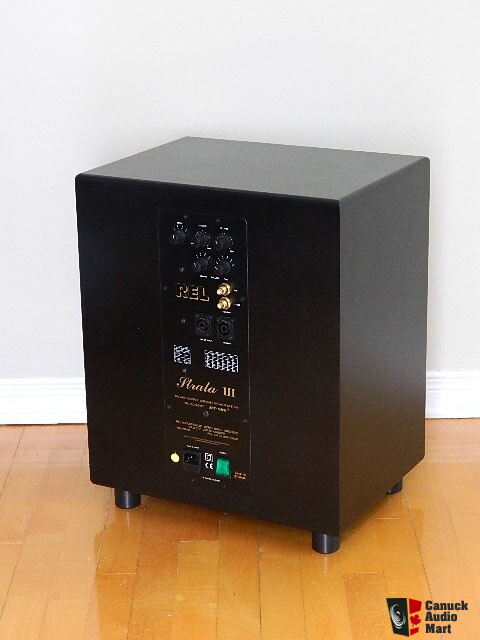
As you know, the Quad ESL crowd is a special breed. They swear by their ESL and are in general very reluctant to add a subwoofer. So, I am proud to say that after listening to my 47 Labs 4737 augmented by subwoofer (here) both Quad ESL-2812 owners WSS (whose system was last reported here) and JL were persuaded to give it a try. They lugged my down-firing REL Strata III from icefox's cavernous place (he used it to augment his Tannoy) to WSS's small den.

REL STRATA III Subwoofer, Black, Mint Condition!The REL Strata III was an old product, but one of the more expensive offerings. It was generally very well received at the time and you can find quite a bit of info on the internet (pic borrowed from canuckaudiomart).

The afternoon I was there, with the low-level input we tried crossing over from 69 Hz to 95Hz. All worked quite well. The volume is indented. We started with 3 small clicks, but eventually went down to just one click. If you touch the woofer unit, it was barely vibrating. This very small bass augmentation however had the eminently audible effect of improving upon the liveliness of the presentation. The ESL always been too polite for me. It is good for a few instruments, but when the orchestra comes in, it is always underwhelming. The subwoofer improves upon this most important aspect. The effect of the subwoofer here is a bit different from what I get with my own systems - with the ESL one picks up the gain in presence more than bass extension. I am not sure whether that is due to the ESL or this REL. The important thing is, used judiciously, it is definitely a plus for the Quad ESL-2812, though I think other subwoofers may be worth trying too.

Back to the icefox crowd.


Click pic to enlarge. The black Bluetooth Device next to the Meridian Explorer.


The Bluetooth Crowd and the Generic Cable
Back to the icefox crowd. They spent a few hours in Yuen Long, but the program didn't exactly unfold the way I had wanted it to. After two hours with 15" woofers, I am sure anything else is an anti-climax. It would have been better the other way around. :-) Nonetheless, I don't think the sound at my place disappointed them unduly.

This is also the Bluetooth Crowd. Many of them use Tidal Streaming through their Cellphones. Arranged in advance, icefox brought his el cheapo Bluetooth device (from Taobao, less than USD 50; the black thing). Despite its small size, I think it has the latest technology. We connected it to the Kondo M7 with icefox's generic RCA cable, and the sound was quite acceptable, better with some cuts than others. icefox also played some youtube, which to my ear sounds even better. We then did some brief comparisons.

Tidal (Cellphone) vs Macbook Pro My Macbook Pro is very basic, unadulterated iTunes (no "mandatory" Amarra) playing lossless AIFF files. Through Bluetooth, the Macbook has a warmer and more detailed sound.

Meridian Explorer (USB) vs Bluetooth We then played my Macbook AIFF files through Bluetooth and also through USB (my favorite Unitek) connected to the Meridian Explorer. The USB connection is again warmer and more detailed. It better be, as I actually hold the Meridian Explorer in high regard (here). Actually, from memory I also think the sound through the wireless dongle of my Arcam rDAC is better than the Bluetooth.

Image result for Radio gardenInternet Radio Through my Macbook icefox also played his favorite Italian Radio Emiglio Romagna, but not through the official site, instead using Radio Garden. I can attest it was very good and the programming of much baroque music was to my liking. I also like the fun way one navigates in Radio Garden. Give it a try!

Belden 8451 vs Generic Cable We then compared the two 1/4" to RCA cables. My go-to 1/4" to RCA cable, which I use with my Meridian Explorer and Fiio X-1, is a DIY one is made from Belden 8451 (info) with Amphenol connectors. The sound was at once more controlled and detailed, but the crowd pointed out correctly that it was also a little tighter than the generic one.

For a while, there has been a little bit of a phenomenon going on with those around icefox (that means a lot of people). People give generic cables (some from Apliu Street) serious tries and devote much time to comparison, just like, e.g., one would compare Audioquest with Kimber. In general, these are pragmatic people who rightly eschew expensive cables. Many also use cables of vintage origins (WE or not). Many of these people own expensive systems (such as the two WE systems recently featured).

I don't have any problems with this. However, from the vantage point of a professional cable user, I do think one can achieve just as much, and more, playing around with professional cables and other things. Take an example, at our WE/Altec 604 friend Vincent's home, I didn't report it, but we did compare my DGS-1 with his favorite generic cable. To me, the DGS-1 was just more nuanced and had more finesse (I gave him a pair). Similarly, while the generic cable that came with my Thorens TD-309 was surprisingly good, it was surpassed by Gotham cable. Note too these about generic cables: 1) they vary greatly in quality; the ones that come with your USB devices, TVs, TV boxes etc are usually not too good; 2) they are usually smoother, less dynamic and extended at the frequency extremes, which I'd venture is why some audiophiles use them, but imho this is more of like patch-up works on flawed systems.

Nonetheless, the exercise with the Bluetooth device was highly entertaining and downright fun! How often can you say that about audio? As CAS is just peripheral to me, I can entirely see the point of doing things on the cheap, and the quality was pretty good! BTW, like me, icefox thinks usually the expensive, complicated, technical and "serious" CAS systems sound terrible. YMMV.