Showing posts with label Brand-Musical Fidelity. Show all posts

29 December, 2023

2023 in Review

Click pics to enlarge. Top, interior of He Museum 和 美術館, designed by Takao Ando. I choose it for this article because the spiral staircase makes me think of Time, and I extrapolate the "Totem Pole" to audio rituals. Or maybe this is simply spinning vinyl on a changer? Great Photo courtesy of ELO.

2023 in Review

I shall start with our Prodigal Sons.:-) I just heard from Ray, just in time to put his bit into this article! As for Senore Surdi, he's having a good time and we shall hear from him next year!

Ray Salamat

I seem to be on a very particular kick lately. As a hobbyist, I think we are all want to try stuff that intrigue us. Maybe it's not better than what we already have but it keeps that fire alive and gives us new perspective about the pursuits we pursue. I already know that with the limited means that I have that I've probably already met the summit, that I could turn on a couple of items, put in some NOS tubes, direct the speakers so, tweak the turntable/tonearm/cartridge so, and I will achieve nirvana between my ears. However, this does not stop me to investigate and satisfy that curiosity.

Right now for me would be the musicality of a simple back-to-basics British-based system. I acquired the reissued Musical Fidelity A1 as soon as it became available in the US. I am enthralled by the sound it makes as a Class A amp. I've had various Class A amps before. Least of my favorites are the Pass Aleph 3 and its descendants [Editor: I had the 3's. They were a perfect fit for the efficient TAD TSM-300. Also heard the monoblock 2's to good effect at jules', but I get the point]. For me, they lack drive and would be perfect driving highly-efficient Klipsches, which don't need a lot of kick to get going. (I do have an Aleph J driving Klipsch RP-160 that I hook up once in a while and that combination sounds extremely pleasant playing streaming radio.) I also have two JLH 1969 amplifiers, one of them is the wonderfully-designed Eastern Transmission Audio JLH69 available on AliExpress [Editor: last winter I wanted it bad! I love the cool look. Maybe it's not too late...If I do it'd not be the first time I follow in your footstep (like ETA's 300B amp)]. These have more drive than the Aleph's, but the ETA, in particular, is one of the best SS amps I've heard if you don't need power and you're fine with softly-defined images (the anti-Wilson WATTs). The MF A1 reminds me of the Bedini 25/25 that I once had. The only difference is the Bedini may be a tad more detailed, but then it did belie its solid-state origin more than the A1. The reissued A1, in contrast, has a velvety sound with an open soundstage and enough pace/drive that borders on magical. Some may say, where's the detail? They may be correct, but they may also be millennials who grew up on a different staple of sound that is supposed to be hi-fi than I did, and I'm not even that old! I really like the A1's very continuous mid-bass to upper midrange coherence. When I listen to it, it gives me a feeling of my chest cavity getting full, as opposed to some amps that enter your consciousness by stimulating your listening in a more cerebral way. Nothing wrong with that, but made to choose priorities, I would pick the former ahead of the later. I think Doctor John would tell you that the Kondo Ongaku achieves both at the same elevated level at the same time. Am I right, sir? [Editor: Yes and No. The Ongaku is actually quite hard to voice right! It needs efficient loudspeakers.]

Continuing my British kick this year, I finally bought some mint Linn Kan mk 1's (late ones before the change to mk 2, and tweeter change). I have been meaning to get a pair but have been picky with the condition. I wanted to try the Kan's with my evergreen Naim Nait 1 and also see how they contrast with my LS3/5A's. After running them with the Nait, and also in particular, with my Sugden A51 amp (freshly recapped and all), I have to say I can hear the appeal now. I might even have to say that in a world where you are either an LS3/5A man or a Kan man, the needle for me might have moved a bit to the Kan's. They are such a kick for music that I listen to. They are a "slave to the rhythm", to quote Grace Jones. They don't do "space" or "pleasant" as much as the LS3/5As, but what they have they keep you in rapt attention. My advice for mini-monitor fans is to get both, LS3/5A and Linn Kan. They are the perfect antidote for each other [Editor: I still have a perfect pair of the Kan I! Well, the treble is quite a bit more explicit than the 3/5A and the speed is certainly faster and pacier].

Also will be trying other British speaker classics: Royd Sapphires and Wharfedale Diamond IIIs. The idea is to drive these with simple Brit integrateds: the Nait, the A1, Sugden A21, Mission Cyrus 1, Audio Innovations Alto, and the almost British NAD 3020a. Rotate small speakers, integrated amps, listen at low volume late at night, rinse, and repeat [Editor: all the Brit stuff are in vogue again. Leak is revived and I read Rogers may bring back the Cadet... etc...You're not getting the Sandwich? Well, the Brits certainly are masters in the integrated amp genre. BTW, last time I got back to HK I found my Nait I in its original box! It's tempting to bring it back to China to play with...].

Until I tire of this kick....and hook up my 300Bs and 2A3s again. Maybe even get some 211s! Or try a Krell KSA250, who knows what will intrigue me next?

mrgoodsound: Here's a snippet the Editor got out of the Lion's Mouth...

"...I am not sure what I can say -- I replaced hifi with guitars and that is also winding down. I got a 1963 Vox AC30 just like the Beatles.

I just got back today from a week long visit to Tampa...I got home and immediately went to noodle on guitar, could not get any of my guitars to sound good. Went downstairs and turned on my ancient Telefunken radio for the first time in ages. Every time I turn it on I wonder if it will still work -- it usually requires some percussive maintenance. I listened to youtube for a few hours and remembered how good music can sound if you do everything by the esoteric book as I did. I went upstairs and my mojo was back on the guitar. Funny how that works. I am at peace with my sound..." (Editor: I miss his writings!)

ELO: My POTY of 2023 (only limited contestants actually LOL)

Time is ticking and 2023 has almost come to an end. My biggest upgrades of my setup are the SPEC RSB-301 (here) and UMI 1:1 Signal Transformer (here), and of course the new flat.

I can now confidently say, my own POTY goes to the UMI! How I regret not having immediately installed it into my system (I had received it from DJ in June or earlier?). SPEC RSB-301 came in second place and is already providing a very good improvement in sound, but UMI simply shocked me by its performance!! I simply cannot wax more accolades on it and, mind you, I'm not paid to write these posts.

Since October, I have reached a point that I would not want to tamper even slightly with my system, being afraid the "magic" will disappear even with the slightest move. And this is how good the UMI is in my setup. Go hear it yourself, but mind you, your current setup must be reasonably well tuned as it otherwise it cannot show its full strength. Don't blame me for that~ I have learnt my lessons well and don't tell me that I did not forewarn you.

For now, I will retreat back to my world of music gleefully and until next time, adios! Upgrade the SMPS of WEA to a proper LPS is another step I would like to try.

Shawn P

2023 is coming to an end and it has been very special to me in relation to my “Hi-fi” journey. Lack of space had been the one main reason why I had not been able to set up my system for a long time. The space issue improved somewhat at the end of 2022 when I moved into a new flat where a room is “earmarked” for my audio gears. It is a very small room but I can finally deploy my gears after more than 10 years of waiting. Coincidentally, I started communicating with doctorjohn around the same time, which changed my gear portfolio profoundly. I purchased my first 300B and first 845 amplifiers (both APPLauseaudio) because I had the space and most importantly I learned that doctorjohn was happy with the sound of it (even if he had issues with the APPLauseaudio 300B, here). I eventually purchased another EL84 amplifier from TaoBao and it also sounded very good. While these TaoBao amplifiers sound different from my foreign made ones (obviously, I was not lucky enough to enjoy 300B or 845 before); however, they all sound good. With these experiences, I am now buying more gear from TaoBao. I am not saying the “expensive” gear are a waste of money and in fact, I would be more than happy to own some if I could afford the same but my point is that these affordable gear give people with limited resources (like me) a chance to get a taste and I think that is what cheaptubeaudio.com is about. Last but not least, I wish everyone a Merry Christmas and Happy New Year!"

Doctorjohn

The most Significant Event of the Year has to be the re-opening of China after two years of Zero Covid policy. I've been back to Hong Kong (where my stuff still sounds great ,here), NYC (where I made some fab new friends and heard some great stuff, see below), Taiwan and UK. Audio Shows have been exploding across China, stretching both organizers and participants alike. Even I, not normally a fan of shows, have been to the Shenzhen and  Guangzhou shows.

Hong Kong It's wonderful to be able to finally bring back some audio stuff to China, in particular tubes. It's also a pleasure to borrow (English) books and mags again at the HK Public Library. I enjoy reading through HiFi News (will borrow Gramophone when I have time). I just reserved Valentin Berlinsky's biography (founding cellist of Borodin String Quartet). It's a game changer!

More Books I really should write more about this since my first article. Suffice to say, I have read a lot more after that report. The local SZ Library has a lot of Nobel Winner Orhan Parmuk and I greatly enjoyed his A Strangeness in my Mind. I also savored Mario Varga Lhosa's The Discreet Hero. Sometimes, for lack of the English version, I sought out the Chinese translation, and that was how I read Llhosa's  The Feast of the Goat, and The Kite Runner, novel by Afghan-American author Khaled Hosseini. Recently, I'm making my ways though Raymond Chandler: have already read Lady in the Lake and High Window (yes, I've watched those movies). Now just starting the iconic The Big Sleep...more to come...The library has enriched me all my life!

Best Sound Heard this year was in NYC, where I had the fortune of re-acquainting myself with Philip, and met new friends Michael and 肥嘟嘟. I was fortunate to have caught the magnificent JBL C60 (here) and 4320 (here). I have heard neither before, and I rate them highly, on the same level as the magnificent L300 (my JBL pick for the longest time, and it won't change soon; but I do think the C60 and a stacked 4320 can usurp its place - that's how good they are!)

Best of the Year It's been a year of Bounty! Several vie for The Best. Foremost has to be the miracle that is the Direct Heated Triode Preamp Nobsound (Douk) E6 (R pic, where you can also see the Sommer and Canare interconnects; Part I here, with links to II and III, which you should also read). Then there is of course the astonishingly effective 1:1 UMI Signal Transformer, which ELO raved about (here) and listed as POTY above. I have one now and  love it and shall write it up also soon. Let's not forget the miraculous Xinshi 新时 597 (here) passive resonator (pic below next to amp), which I still have to officially write up (my NYC friends just love it). 

Even the best has to be partnered by worthwhile gear for the whole to shine. My recently acquired BRZ A20B SE Amp (L pic; Part I here, but also read Parts II and III) qualifies as the budget amp of the year, being 2/3 the price of its equally worthwhile older sibling BRZ FU-50 Amp (here). An even better amp is the APPLause 300B (here). The latter two I actually had mentioned in the 2022 in Review but I didn't really write them up till this year. Time tells us even more about the gear.

And then I don't underestimate the value of my SMPSs (here). Neither should you trust the conventional "wisdom" that LPS is better. Not in my case (chronicled here). In particular the crazily high value Wanptek. But I discovered only recently that the Wantptek has a noisy fan that turns on as current draw approaches 1A (my DAC and other 5V stuff, including preamp, does not go near this figure, but the Douk 12V T8 Pro preamp [under test] does), so not for everyone! Decent cables are important, and provided you do the termination yourself, can be had cheap. Lowest cost would be the Canare L-2B2AT and Belden 8451 (here). And then the luxuriant sounding Sommer SC Club Mk II and excellent Belden 8428 (nightmare to terminate) recommended by reader Attila (here)

To make the most out of these cheap gear, some modest mods are desirable, even mandatory. I have found the generic Chinese caps to be excellent and crazy cheap: I had tried Audiophiler (on the Nobsound E6) and "Solen" (due to ridiculously low price, certainly Solen in name only; on the ETA Preamp and both BRZ amps) to great effect. Who needs Mundorf (costs more than the gear)? And the hook up wires in these cheap gear should be changed out. I use the cheap Canare mentioned above.

Streaming Thanks to a friend, now I can stream Tidal, which changes my listening significantly. I can now access more jazz and pop, though classical remains my métier.

Analog Front I am very pleased with my new MoFi Studiodeck (here), easily more recommendable than the likes of lower end Rega, not to mention way over-rated VPI. I love the Adjustable Loading Resistor (here) for my trusty Denon DL-102. And I was stunned by the VAS Retipped Ortofon MC200 (here), perfect if you have a light arm (like SME 3009i) but want to use MC (you must have a high gain SUT though).

Vintage Amp I didn't really write about it, but the Bell 3DT (here) is simply superb!

There! A Hot Pot! We're heading for 2024, and it better be a better year for the world!

17 December, 2020

Pro-ject RPM 1.3 Audio-Technica CN-5625 Musical Fidelity A1s Sony Discman

Click pics to enlarge.
 
Letter from Hong Kong (17): Eric L on his Latest Office Setup

Since last reported, my office setup has undergone some major upgrade; only the Naim SBL remains (and is still a keeper). My friend Dr. Lo lent me his MF A1s (modded) [Ed: see Footnote 1] and it replaced my Gold Note Amp (which is still a nice little amp). The MF has a richness, and layered bass, which serve up a very cushioned foundation - rare qualities at this price point.

While I'm still using the Taobao Bluetooth H-10U, I need to thank doctorjohn (DJ) for providing me with the Pro-ject RPM 1.3 Turntable [Ed: see Footnote 2]. Initially, I was half serious on going back to analog (I sold my Linn LP12 eons ago), but I asked him for advice on a cheap one with decent sound. He immediately said he's got a perfect one for me! I also asked my friend Dr. Lo to lend me a phono unit made by Ray, the same nice guy who fixed the Antique W.E. Amp (refer to my previous Blog post). The phono will be compared against the MF's.

With the help of Kwong, who picked up the TT from DJ in Yuen Long, it was delivered to my office in Kwun Tong, Kudos~ Having said that, I still haven't met up with DJ in person despite having chatted numerous times over the phone, LOL!!

I hooked up the TT immediately to the phono input of MF. There was an annoying loud hum coming out of the left channel. After much time debugging, the culprit turned out to be the female RCA output socket. After a quick fix, the party began. According to DJ, the cheapo Audio-Technica CN-5625 conical cartridge really shines with this TT, much more so than the much more expensive Clearaudio Concept MM he had tried out before [Ed: see Footnote 3]. DJ gave me a box of old LPs and I played a few of them to see if they are still in playing condition. Al Stewart's Year of the Cat and Santa Esmeralda's Please don't let me be misunderstood played superbly: great bass sounding analog, with good enough clarity in the highs and fleshy midrange!! Rimsky's Scheherazade was also a surprise treat, with enough suspense to keep me interested. Pet Shop Boys (another fav of mine in my younger days) What have I Done to Deserve It also played with rhythm and beat! However, Some nice LPs like Roberta Black 's, were too dirty to play; shame... But I was already very happy! Is it the best sound I have had? Perhaps not, but it was very listenable and, most importantly, it alleviated the analog complex I had been harboring over the years! [Ed: see Footnote 4]

Also tried to hook up to a Sony Discman with satisfactory result and will look for a proper CD setup in the future, but no hurry. Perhaps would visit shop to buy a few new LP and an LP cleaner kit!

Though not often in my office these days, I am happy to spend even limited time to reminisce on my good ole analog days!

Eventually bought a huge bottle of record cleaner liquid from Mobile Fidelity and a brush, waiting for spare time to do a major cleaning! 

I also bought a brand new LP by Master, Audiophile Female Voice which includes Kari Bremmes, Chie Ayado, Radka Toneff and Inger Marie!!! And the sound coming out was clean and crisp with a lot of clarify and musical!! The system really shines and I'm more than satisfied with it! 

 ***

Footnotes: [1] The original MF A1 was designed by Tim de Paravicini, who I just learned had just passed away due to cancer. Perhaps I shall write a RIP. The A1's many derivatives sound quite similar and are great products, top in my books (treated in detail here, incidentally one of the most-read articles of this blog). BTW, its phono is excellent, as one shall expect (I wager Ray'sDIY  phonoamp won't outclass it entirely); [2] This cheap (cheaper in HK than in the West) turntable had been reviewed previously here. The reason I got it was (a) to see how far a cheap TT can go and (b) its fundamental design is very sound - outboard motor and a tonearm whose comprehensive adjustability even shames many much higher priced TTs. The chassis resembles a boomerang to some but Mickey Mouse to me, so I call it the MM TT. After setting it up for Eric, I listened to a few LPs and could not stop. Sound was pretty good, and involving; [3] When I moved in 2018, I packed it into its original box. This time I opened it and found the stylus of the Clearaudio Concept MM (a modified AT-95) was trashed. Just as well, as it was not at all a good sounding cartridge at all. It was carried over from my Clearaudio Concept turntable. As I don't have too many cartridges here, I installed the AT CN5625, a workhorse conical cartridge. I believe conical cartridges to be especially suitable for pop rock. Surely, it sounded much better than the Concept MM (from memory); [4] many years ago, long before the resurgence of vinyl, I used to roam HK's Apliu Street for used LPs. Jazz, even classical, were not cheap, but pop records begged for customers (then only audio people would use vinyl). I often bought pop records for HKD 10 (like the dollar records in the US). Some, like Beck, would command a lot more in western markets. Apliu Street  records often were quite dirty and years of storage in humid HK means they grow moldy. A lot of washing ahead for Eric!


16 August, 2020

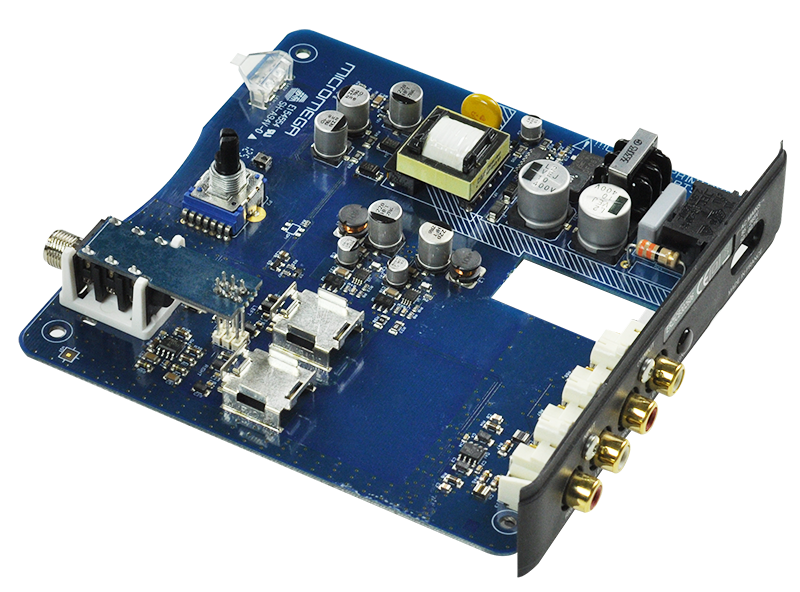
Micromega MyZic Meier Corda Swing MF V-Can II, Beyerdynamic DT880 300 ohm

click pics to enlarge. Top to Bottom: innards of MyZic, Corda and MF.

Headphone Amp Meet: Micromega MyZic, Corda Swing, Musical Fidelity V-Can II, Schiit Magni 3 and Vali 2 (using Beyerdynamic DT-880 300 ohm)

For someone who hardly listens to Headphones, I sure have more cans and amps than some Head-Fi people! I really should sell of most of them, but so lazy am I. After the lockdown started I am by myself and the daily routine just gets boring. How many hours can one listen to music or write? Many, yes, but not all day and night! To put a little variety into it, I sometimes retire into my bedroom a little earlier and listen to a little music through the Headphone while reading. So! Might as well do so comparisons.

I use only the Beyerdynamic DT-880, not because it is my favorite (that would have to be Sennheiser HD-600 and, even more so, my Stax 2170 System)  but because it may not be broken in (I have no idea about how long it takes). I deliberately did not include my Schiit Valhalla 2, and Schiit hardly needs more coverage. My AKG 701 and Grado SR-80 are also just bystanders.

For source I used the 14-bit Magnavox FD-2041 (here). Unlike the vast majority of head-fi people, I don't listen at very high volume and only classical music at bed time (sometimes I listen to WQXR on my clockradio).

For all I know, except for the Corda, which I bought used (report here), all the amps are probably not quite run-in! The Corda is undoubtedly the best built, with a built-in LPS. The worst built is the V-Can II (fortunately I bought them cheap when it was closed out at a HK Show). The 2 Schiit's employ fairly hefty LPS wall warts, whereas the MF uses a small SM supply. The Micromega is SMS too, but built in. Surprisingly, almost all were not built in China. The Schiit in the US, the Micromega in France, the MF in Taiwan. The only uncertainty is Meier Corda, which says "designed in Germany", which I take to mean it was built elsewhere.


Sound There is going to be relatively little here. Given that almost everything is underused and perhaps not broken-in, I consider it a level field. My goal is to give praise to under-sung gear, and there are surprises here.
  • Schiit Magni 3 and Vali 2 Using only high gain, the sound of the two are more similar than different. Tube rolling helps in the Vali 2 but not enough. Both, despite reasonable driving power, seem to constrict the sound to the center of the head, making these a failure in classical replay. Dynamics are blunt, with little subtlety.
  • MF V-Can II This was very well regarded in its day (see here). Despite its built, it sounds pretty good and not electronic, very close to the Corda in presentation and air.
  • Corda Swing Now, we are talking. The orchestra panned out, with superior micro- and macrodynamics. The symphony, whether Brahms 4th (Bernstein/VPO, DG) or Franck (Paray/Detroit, Mercury) has breath and depth. Pleasurable and musical. But the Crossfeed thing is useless for me. The Swing is a discontinued model, but I note that the next step up, the long running, well reviewed and similar Jazz, is trashed by audiosciencereview. I have read this site quite a few times. IMHO while this fellow may know something about measurement, I'd wager he knows little about music (like his trashing of Dayton B652), a manifestation of the worst of head-fi.
  • Micromega MyZic This is the most distinctive sounding of the bunch. I was immediately captured by the sense of massed strings. More, there is a sense of separate instrumental groups, like when the Wind Choir chords. the sound field is also the widest in the bunch. Before fully warming up, there is a trace of veil, but musically it is faultless. The Official Page contains many review links, and it has received accolades in Europe and HK (I got mine at a good discount in HK), though it has no presence whatsoever in the US. It deserves to be better known.
My brief observations are based on classical music, which makes my observations likely completely different from other reviews. YMMV.

06 January, 2012

Editor's Note: 2011 in Retrospective

Editor's Note: 2011 in Retrospective
Brief Reviews Manley Magico Shindo Fosgate M-Audio

Second Revision 22/06/2014 (on the Shindo Entry)
First Revision 13/01/2012 (on the Shindo entry)

This year's retrospective is different in that some of the stuff I cite have not been written up by myself yet, so I offer some brief reviews here. I have been a little busy lately and I hope in the next week I shall catch up with more of the backlog. Stay tuned!

Year of the Tannoy Canterbury Indeed, 2011 was year of the Canterbury, as far as this writer is concerned. Three friends have acquired the Canterbury SE, and I hope we have a happy future together.

Most Notable Event of the Year Rehabilitation of my Garrard 301 by my dear friend Robin the Scott.

pic of Magico courtesy of JCR33; click to enlarge.

Best Sound of 2011
Well, as I have mentioned before, the best overall sound, for the second year in a row, remains my NYC friend AL's magnificent Infinity setup (write-up here, not be confused with AL-HK, the jazz-wine connoisseur), and that's unlikely to change any time soon.

But this year I have heard several formidable setups, from which I have picked a handful. The first two by older masters were simply impeccable, disarming on hearing the first note. The ones that followed were yet imperfect, yet impressive and harboring huge potentials:
  • First must be counted AL's new horn system now being set up just outside his kitchen. As of two months ago it was using mostly professional, and reasonably priced, JBL drivers. yet the sound as driven by 300B amp already bettered almost all of the JBL systems I have heard in HK (except the one below). In a short time, I suspect it may usurp Infinity's place in the upstairs salon. I am positive you shall hear a lot more about this in the future, when master AL is ready for the system to show to the world.
  • Magico Ultimate horn system, as heard at HK dealer Sound Chamber (the same setup Romy the Cat heard). A brief write-up is due. I thank JCR33 for getting us to hear these behemoths, as the demo pair left for China soon after.
  • Our friend welborne's Bastanis Atlas Mandala setup (write-up here). I understand they are being updated, so I look forward to the next audition.
Most Important Acquisitions
There were several. Most important were three very different preamps.
  • Manley Neo-Classic 300B preamp (left pic can be enlarged by clicking on it) While the 300B SE/PP amp (which is excellent, I have used it before) of Manley's wonderful and statement-level Neo-Classics series has received many reviews and much accolade, its companion 300B Preamp has had quite a low profile. There are no reviews from the major English audio press. You can find reviews from hometheaterhifi, Audio Video Revolution and Image HiFi (in German). I suspect this is because of its ungainly nature, built like a tank and resembling more a serious amplifier. I ran into an irresistible bargain and acquired it brand new. It is absolutely outstanding and there shall be a detailed review in the future.
  • Shindo Monbrison I actually acquired this older version more than a year ago. The fellow who sold it to me claimed it was the unit reviewed in 6moons. I have no problem with the reviewer's sonic assessment, but he made some mistakes in describing the tube complement. This is not the place for rectification; that shall be done in my coming full review. It took me long to get it going because, contrary to the seller's statement on the unit's health, all the tubes that came with the unit were almost completely spent. Fortunately the ECL84/6DX8 used in the linestage of my unit are inexpensive and available on Ebay, while I already have good EF86's (used in the phono stage) in stock. After re-tubing, the sound is quite dramatic, with great presence, a good match for horns. You shall hear more about this in the future. Revision Note: A FULL Shindo Monbrison report finally been written. Please click here.
  • Leben RS28CX preamp Again, a full function preamp that stands up to the other illustrious preamps that I have. Suffice to say it serves me daily in HK! Review here.
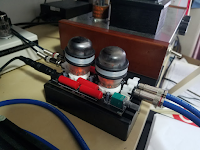
  • Fosgate Signature Phonoamp (click pics to enlarge) The next item is yet another preamp, but for the phono. Ever since it came out it has garnered much attention, including a review in TAS. There is also a nice review in Audio Beat. This is one of those rare phono preamps with a fully active MC pre-pre section. As noted in the Audio Beat review, the 60 db gain for MC may be a little low for some people but it is perfectly fine in my case, even with the very-low-output Denon DL-304 (0.2 mV), since I mostly use preamps with high gain and efficient speakers. I am happy to report tube rolling is a breeze as the phonoamp does not seen to run the tubes unduly hard and many NOS tubes sound quiet in it. One thing that puzzles me about the industrial design: the two round cans flanking the tubes lead one to think they are input transformers; no, they aren't, this is a strictly active device and those are for decorations only. Incidentally, I think there is a new 10% price hike, but you can still find many selling at the original price of USD 2500. Review later.
Best Buys of the Year
Not surprisingly, digital products comprise half of my nominations. It is quite amazing how good cheap digital products are now. Why buy over-priced and over-rated stuff like Weiss?
  • Elekit TU-875 preamp and TU-8230 amp If you can solder, Elekit is it. Bargain of the Century. Reviewed here.
  • Musical Fidelity M1 DAC Better than it has a right to be. Reviewed here. I am curious about MF's V-Link now.
  • M-Audio Firewire Solo (click on pics to enlarge) You may be surprised by this inclusion. As you know, I dabble in CAS but it is just a marginal medium for me. I have long bought this very cheap device and did intend to write it up, but it was never a priority. M-Audio is a highly respected pro-sound company that makes cheap and great stuff. For less than $200 you can have a firewire DAC-ADC capable device that can serve both as a preamp via its analog out and headphone amp! Here are some reviews from Sweetwater and the excellent French Audiofanzine. I bought it because my dinosaur Dell laptop, which weighs a ton and should not be deemed portable, has a firewire output! I tested it two years ago with the super-bargain Sony DVP-PR50P and Audioengine A2 active speakers. I burned several CDs using lossless WAV format. The sound could not be faulted, even in comparison with the Sony's superb analogue out. I also tested its earphone output with my Audio Technica ATH-AD700 headphone and an old Sennheiser, and the sound was equally superb. The control software installed without a hitch and is easy and intuitive to use. The manual is clear and detailed. What more can you ask for such a paltry sum? I then shelved it for more than a year, so that alone was not enough for me to write it up. What prompted me to write this up now is because I lent it to my friend Tony 唐咭柯德 and his feedback is highly positive. Mind you, this is a man who has engaged in CAS extensively, and has numerous (mostly USB) devices in his systems, including Linn Majik DS. Basically, he thinks the M-Audio came out ahead. Why should you buy expensive things like Weiss, which I have heard several times and regard as good but way over-priced? Note that this device is 24/96 only, but M-Audio makes a 24/192 Pro 610. If any reader has used that, I'd be happy to hear from you. Note also it has only phone jack connectors, so adapters are necessary if you intend to use RCA or XLR. If you have firewire output, seriously consider M-Audio! But if you are a Mac user, research Mac issues, including at M-Audio's own forum.
  • AQVOX 2CI MkII A fantastic phonoamp, but perhaps not for everyone. Reviewed here.
  • Vibrapods Good isolation devices on the cheap (briefly reviewed here).
  • Belden 8471 Great speaker cables at giveaway prices, reviewed here.
  • Audioengine A2 active loudspeakers Review here. I hereby redress my previous failure to include it in my Best Buy 2010.
Vintage Best-Buys
  • Technics SP-10 What a marvelous turntable! It makes you think twice (just a little) about suspension and idler wheel designs. My experience here.
  • Denon AU-1000 step-up transformer. If you ask me, it stands up to the very best. Not cheap, but still a bargain. Reviewed here.
Rediscoveries
This is a new feature this year, and it is long due. Often in pursuit of the new we forget what we already had experienced. Re-visit your old favorites and it can be a surprise as your system improves!
  • Empire cartridges If you have one, listen to it! You may be surprised! My experience here.
  • Lehmann Black Cube If you are a vinyl newbie, or simply need another phonoamp, think about this one. It decisively trounced the Ray Samuels Black hawk during our recent tests. The old version is likely as good as the newer ones and a good buy at bargain price.

07 July, 2011

Review: Musical Fidelity M1 DAC

Review: Musical Fidelity M1 DAC

Revised and expanded July 16, 2011

While I am quite settled into my SET world and don't look much beyond in terms of amplification, I have retained quite an interest in digital products. One of the heartening things these days is that good digital products can be had quite on the cheap, and there is no better example than the Musical Fidelity M1 DAC.

This very reasonably priced (even more so in HK) and well-equipped DAC has been widely and glowingly reviewed (a good one from HiFi World; see also HiFi News, TAS). Of course, that alone does not arouse my curiosity. Think of the rave-reviewed Benchmark DAC1, which has always left me cold (non-involving sound), and it costs quite a bit more than the MF. More extravagantly, I think of dCS, which always seem to sound "good" but fail to draw me into the performance (interestingly, the HiFi World review compared the M1 to a dCS, albeit subtly).

Neither does the name MF previously mean much to me in digital products. Many years ago I had their Tubalog DAC for a while, but soon sold it because of its lack of details-the tubes were just buffers in the worst sense, ones that robbed details (much like their gimmicky X-10). Since then, I have heard quite a few of their CDPs, like X-Ray and A3, and none of them impressed me too much.

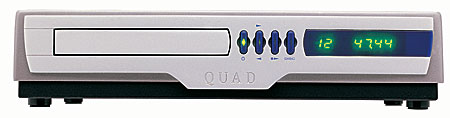
Neither am I necessarily a convert of upsampling, having heard just too many clinical sounding and expensive products. But I am not against it either, as I know if well implemented the result can be very good (an example is the Quad CDP-2, which is a very good sounding unit that like the M1 upsamples to 192kHz).

So what exactly drew me to the M1? I'd guess it was a combination of the following: (1) the wordings used in some of the reviews, much more detailed and "sincere" than the generic "rave" review; (2) The features, including balanced input and output; (3) great measurements across the board.

I bought a second-hand sample and was delighted from the start. I used it in the following system:

CD: Audio Research CD2 as transport-Gotham XLR digital cable
Digital Switching Station: Genesis Digital Lens.
DAC1: Audio Note DAC-2 (old version; PCM-63) connected with Gotham coaxial digital cable
DAC2: Musical Fidelity M1 connected by Gotham XLR digital cable
SACD: Marantz DV-6001 analogue out
Preamp: Kondo M7
Amp: Elekit 2300 or Wavac MD-300B (Ongaku is too hot in the summer)
Loudspeakers: Tannoy Canterbury

Since many of the cited reviews were very well written, and in great details, I'd not write much except to note a few of my impressions.

Most of all, I was impressed by the superbly clean, well-delineated and coherent sound, which does not highlight anything and impressively maintains composure even at loud level. Perhaps since I use tubed equipment, I found nothing etching or over-bright at all.

Comparison with the analogue out of the ARC CD2 (older Delta-Sigma unit using CDM12) reveals the ARC to be very slightly fuller in the midrange, but less well delineated (though it is no slouch in this area). Hence the M1 may not be for those who wants a very rich midrange or upfront sound in the vocals, although it is by no means recessed. With the M1, instruments, including vocals, have excellent presence, but always in a natural way. Aside from the XLR input, I also tested the RCA input, which worked equally well with the Marantz multi-player, raising the CD playback to a level almost comparable to the ARC as transport. Although the M1 has excellent measured performance, I still marginally prefer feeding it indirectly through my Genesis Digital Lens, which theoretically removes jitter originating from the transport, and which I use as a versatile switchboard. Last, but not the least, (unlike things like Benchmark) the M1 has a very good sense of the music's flow, good PRAT if you will.

In very big pieces perhaps the M1 loses a little ground to the AN DAC2 (as well as my Sony CDP/DAC R1) but its performance is still way above average, remarkable for something at this price. And all this with the RCA analogue out, as I have not even tested its XLR out! Neither have I used its USB in (may not be as great; see TAS review cited above). Maybe that's for another day.

The M1 is a wonderful product. Use it with a good transport, or even with a DVD player (which usually serves quite well in this regard) and the sound will beat many, if not most, of those way over-priced, so-called high-end CD players (particularly those from Germany). A bargain.

Addendum (July 16, 2100): M1 DAC vs V-DAC
There is a question on the internet regarding how different the M1 DAC is from the same company's much cheaper and compact V-DAC, which similarly has garnered much praise and did well against rivals costing much more in group tests.

The best info is from a Japanese site, where you can see the internals of both. Aside from the obvious difference of power supply (the V-DAC uses a wall-mart), as the author noted (Babelfish translation), the DAC section is very similar (pics of the DAC section are 180 degrees from each other) but I think the analogue output seems better in the M1.

26 September, 2010

Review: Muiscal Fidelity A100-X Quad 99 CDP

Review: Muiscal Fidelity A100-X (and Revel Ultima Gem I), Part I
Review: Quad 99 CDP

The MF A100-X is a close cousin of my favorite integrated amp, the iconic A1 designed by Tim Paravicini (EAR). I quote myself:

Musical Fidelity A1 and A100-X and variants
From a pure sonic viewpoint, personally I think the A1 (and its closely related siblings A1-x, A1-S, A2 etc) as well as the higher powered A-100-X are the best integrated amps ever. Their unique look is entrancing. But they run alarmingly hot. One must have adequate ventilation. They are musically so wholesome that one wonders why a tube amp is needed. They even have better bass! Power is limited but if your space is not too big it's enough. In this respect the A-100-X is superior, with enough power to drive a good speaker even in a larger LR (info here). If the A1 were not so good, they would not be introducing a new version so many years later (though its power rating is closer to the A-100-X)! I haven't heard the new one. I am using an A1-S in my bedroom, which is air-conditioned in the summer, but it's in winter that the amp is comforting!!! It's a great match with my Audio Physic Step. Here is a must-read site. MF is NOT a brand that I like too much but, hey, the A1 was designed by none other than the great Tim Paravicini, now founder of EAR. If you know the excellence of EAR gears, you'd like this one. The MC/MM phonostage is excellent. (click for full overview).

The web does not have much info on the A100-X. This little bit is interesting:

Product Info
(from cached file) The Musical Fidelity A100 is a strongly biased into Class A (roughly 93% of music is in Class A), the A100 benefits from the sonic advantages of Class A operation, without the drawbacks of immense heat and vast power consumption of pure Class A. It is a low feedback design with passive preamp, phono and RIAA stages, and a sophisticated power supply.

Info on Italian site


Serendipity, A Gem!
A few weeks ago after yumcha I went into 影音寄賣 (Central) and immediately spotted a mint-condition A 100-X quietly sitting in a corner. My heart literally fluttered. As the price was reasonable and condition excellent, I bought it without hesitation. For testing, 榮哥 hooked it up to a pair of old Revel Ultima Gem I. Before hooking up, he was worried the sound may not be too good, as the 50 wpc on hand, though twice that of A1, is really quite limited. But we were testing only for function.

When the music played we were quite pleasantly surprised by the absolute rightness of it. The 2010 AV Show CD was rendered as well as I have heard anywhere. Most impressive was the quiet background, from which pristine sound emerged. It was so good that for twenty minutes it literally stopped everyone in his track.

I have always liked Revel loudspeakers, particularly the Ultima's and Salon's. I'd refer you to JA's review in Stereophile. I'd buy this pair downright if it were not for the dark wood finish, which is not to my taste for this particular styling.

Back Home
I tested the A100-X in my living room with the following gears:

Digital: Quad 99 CD-P
Analogue: Clearaudio Concept/Ortofon MC3000
Speakers: Usher X-708; KEF LS3/5A; ATC SCM7

A note on the CD player which I just brought back from SZ. This is a wonderfully natural player that is woefully under-rated. And I don't usually like oversampling technology. This shows with every kind of technology, some people do it right, and some don't. Mine is the original version with Philips CDM-Pro 2 laser (as reviewed by KK).The later version CD-P2 is basically the same player with a different laser mechanism (as reviewed by Stereophile).

While not quite matching the refinement of the Revel heard at the shop, it partnered the Usher X-708 extremely well, delivering a lively and dynamic sound. With the less efficient ATC SCM7 sound turned a little stressful at high volume. My KEF LS3/5A did surprisingly well, even with a Bruckner symphony. With simpler material, like RR's Rameau, sound is truly sophisticated. Although 50 wpc is only nominally more powerful than the A1's 25 wpc, subjectively it seemed to have significantly more power.

Just to satisfy my curiosity I gave the MC phono section the ultimate challenge by using my Clearaudio Concept setup. The Ortofon MC-3000 has a very low output of 0.13, but the A100-X handled it with aplomb. It was quiet and good sounding and, although lacking a little necessarily in ultimate dynamics, everything moved with good PRaT. A marvelous phonstage!

At the start of the article, the "Product Info" was from a previous MF website page used by some seller. MF doesn't have info on the A100 anymore. I was much intrigued by the statement "... It is a low feedback design with passive preamp..." and shall test this out by using a preamp in Part II. Perhaps there's really no preamp section, as the usual volume pot noise prevalent on the A1, which some attribute to DC (see must-read site cited previously), is completely absent.

07 September, 2008

Home Visit: My Long-Lost cousin

HOME VISIT:
Tannoy Canterbury

(Note: this system is changing fast, and a re-visit sometime soon shall be reported)

About a week ago, r33 member Danz, whom I have neither met in person nor on the net, sent me a PM to discuss amp-matching, and I almost jumped up when I read he is using the Tannoy Canterbury, MY reference loudpeaker! :-)

Very soon we were having long discussions on the phone. Danz recently got this pair from his father-in-law when the latter went for the Tannoy Kingdom!!! Some people are just so lucky! Well, this is an earlier generation Canterbury, with identical cabinet, but with foam surrounds rather than the current hard edge (HE). Aside from this, it also differs from mine (HE) in that it has a dust cover and I think the metal horn part is wider and perhaps a little shorter. The back is similar in being bi-wired and VdH internal wiring is used. Danz says this is alnico but I am not 100% sure (the HE is alcomax). There is very little info on the net regarding this generation of Tannoy (mostly Japan/Far-Eastern sale).

Before this Danz was using JM Lab Mezzo Utopia, driven by Ayre combo. Danz said he thought he knew what's bass until he got the Tannoy! :-) Hence he's still using the gears for JM Lab. One problem he faced was that the Tannoy at 9x db was just too sensitive (unlile the 9x rating of JBL, TAD etc) for the Ayre combo and he had trouble at night with the volume setting.

Danz wanted to explore tube driving Tannoy for tonal gain too. As he stated that one of the main goals he wanted to achieve was late night low-level listening, I suggested Single-ended Triode, to me the most perfect tube reproduction possible.

Saturday morning Danz's gang of three, including his Yuen Long sister (a VERY knowledgeable audiophile) and brother-in-law Sang88 (using Verity Rienzi driven by ASR) showed up to listen to my Tannoy Canterbury. With the Revox C221 fed into Counterpoint SA-3000 I demonstrated two 300B amps to them:

1. Fixed-bias Antique Electronic Supply (AES, subsidiary of Cary) SE-1 (kit, no longer in production). This is ss rectified and 1x 6SL7 driving 1x 300B per channel. EH 300B is used on this one.

2. "Auto-biased", tube (5U4) rectified, 1x 6SN7 driven Sun Audio "300B". This is "mis-matched" as I built it upon the VT-25 kit, using the 5k output instead of the 3.5k output if one were to use the proper 300B kit. This effectively significantly reduces the output. I'd estimate around 4 watts. It also has a even more controlled bottom end. DC filament supply. Note that Mr Chan, the dealer, sold a lot of this type to the USA before. I have previously compared this to the Sun 300BTE I built from the 2A3 kit (3.5k), and to me there is less difference than you think, Cetron 300B is used on this one.

After the "demo", I see that Danz preferred the Sun Audio, so I lent it to him. I went to yumcha and returned after lunch with rcwy, tubediyer and sokps to his nice and big flat (300 ft LR) on top of Kwun Tong.

The gears:

--Musical Fidelity X-Ray as transport.
--Computer Hard Disc drive, installed by sang88, in use even more than MF (I think its performance here is impressive and better than the MF).
--Benchmark DAC
--Ay
re K1xe/V5xe pre/power

--AQ interconnects; Gotham 50040 speaker cable and jumper.

Except at Da Cheong (and also that time with JC in Sai Kung; boy, I miss those days!) , it is not often we get to hear Tannoy driven by high powered ss amps! I know the Ayre combo very very well from previous experience.
Sound was decent but missing a little the easeful character of Tannoy. Danz was really very kind to let us tweak the system, by experimenting, within permissable limits, with placement, toeing in, roll-off and energy settings etc, sometimes with a little benefit, sometimes to no obvious avail.

Then we just hooked up the DAC with the Sun amp. With volume knob barely reaching 9 o'clock the speakers were thundering. Ehhh, are we listening to my speakers??? No, but mightily similar. In this even larger space the bass is a little loose, but a lot of the graceful and easeful sound is back. Mind you, the built in volume knob means altering the loading impedance and hence frequency response.

Then we hooked up the Ayre preamp. Much better control and, in many ways, better linearity, but personally I feel that the "live" character suffers a loss. Of course, for me a TUBE preamp is the soul of the system. Nonetheless, sound was really promising!

After this, we went to rcwy's place to listen to his Tannoy 15" Lancaster. That needs no introduction. All in all, a really fun and revealing day!

P.S. Remember to click on pic to enlarge!!!

19 August, 2008

BEST BUY: Integrated Amplifier and Receivers

BEST BUY: Integrated Amplifier and Receivers

Last revised August 20, 2012

This is the first in a series of "Buying Guides", which shall cover all components in replay. Of course, these do not aim at total coverage as they largely reflect my own experience of gears that I have used myself.

BEST BUY Integrated amplifi
ers/Receivers
No matter my ultimate preference, the budget integrated is an area I have always retained an interest in. These days in HK and NYC I listen to my second systems more than my main systems! While an integrated amplifier, especially a budget one, is ostensibly a compromise, it takes real judgment and art to achieve a good design, something surprisingly few manufacturers (especially non-UK ones) have managed to do. Provided your speakers are not too difficult for the limited power on hand, a good design can even outperform the same companies' separates in coherence and musicality, if not in power.

I have observed that a lot of audiophiles, including many who think of themselves as old-hands, really cannot handle the variables in matching, and do not even know when the system veers alarmingly from the norm. I'd say even if you don't "need" one, it is essential to have one on hand for testing of musical balance, a sort of reality test for audiophiles who love to delude themselves. This article covers mostly old models. As mentioned, few makers achieve a good design, not to say one that is a bargain (an abused term these days). Many manufacturers today, especially non-UK European ones, make rather expensive integrated and promote the notion that the short signal path brings benefits. While that is not false, with few exceptions, their implementation is usually quite bland, compared to their UK counterparts.

The older integrate
d's all have surprisingly strong phono sections that surpass many outboard phono amps that you can buy these days. That's good news for the TT user!
 
SOLID STATE (UK): 
The best integrateds are overwhelmingly British, and mostly older ones. One really miss the stereotype of the old UK/European audiophile: stingy, cheap, calculating every penny AND very demanding! UK gears are not quite the same now. I miss the old days, don't you?
 
The mod
ern and updated versions of these classics may have a "little" more power but they are largely the same (or inferior). They all claim continual refinement but looking at the circuit board makes you realize many are largely the same; sometimes the good is even refined out with the bad! So even evaluation of an old model can serve to illuminate newer ones.

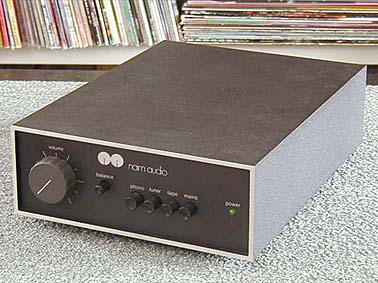
Musical Fidelity A1 and A100-X and variantsFrom a pure sonic viewpoint, personally I think the A1 (and its closely related siblings A1-x, A1-S, A2 etc) as well as the higher powered A-100-X are the best integrated amps ever. Their unique look is entrancing. But they run alarmingly hot. One must have adequate ventilation. They are musically so wholesome that one wonders why a tube amp is needed. They even have better bass! Power is limited but if your space is not too big it's enough. In this respect the A-100-X is superior, with enough power to drive a good speaker even in a larger LR (info here). If the A1 were not so good, they would not be introducing a new version so many years later (though its power rating is closer to the A-100-X)! I haven't heard the new one. I am using an A1-S in my bedroom, which is air-conditioned in the summer, but it's in winter that the amp is comforting!!! It's a great match with my Audio Physic Step. Here is a must-read site. MF is NOT a brand that I like too much but, hey, the A1 was designed by none other than the great Tim Paravicini, now founder of EAR. If you know the excellence of EAR gears, you'd like this one. The MC/MM phonostage is excellent.

Linn Majik
(2010) Finally I got hold of one and this jumps now to head of the queue.
It is superbly bold sounding, with outstanding PRAT. It merits a separate review!

Cyrus I, II (III)
The II adds the option of adding a separate power supply (which now commands a higher price than the amp itself). Even at the current inflated second-hand price, thes
e are bargains. It sounds without grain, quite neutral (even a little hifi-ish) and has surprisingly enough power to drive the best of the cheap to moderately priced speakers (people have even used it to drive Magneplans, not that I advise that!). The organic whole, the integrity of the sound simply is first-class, and it outperforms in coherence many gears a hundred time its price. It drives the B&W M805 and LS3/5A very very well, and that's no mean achievement. Its MC/MM stage is even better than most "class A or B" components, and it works via the TAPE OUT with just the power cord plugged in (and the power switch NOT turned on; that is, in the long British tradiiton of "standby" mode). Even used just as a phono stage it is a sure bargain, and some say it comes close to a ML phonostage. Click for further Info.

Nait Nait I, II, III
The III is completely different cosmetically. These are excellent but not as neutral as the Cyrus. The sound is bolder and Naim's famed "Rhythm and Pace" is very much in evidence (more than its modern counterparts),
but there are things to watch out for: (1) the vital vocal midrange is a little recessed; (2) Lower midrange to upper bass is a little emphasized; (3) Treble is just that little bit reticent. Its primary strength is in its portrayal of the leading edge, an area I have not heard its equal. It is best partnered with its own CD players, which shall yield a sound that is uniquely rhythmic and pacey, not neutral but a paradigm in what it excels in. In a complete set, it can lay claim to a unique sound not heard with other brands, and here I tip my hat. An example is my Nait II and CD2 (TDA1541A) combo. With it, the ATTACK of a single plugged string (like guitar), or drumming, are phenomenally live. Even more surprisingly, the "rhythm and pace" benefits tremendously a slow instrument like the organ. With Bach's organ work, you can literally feel the different degree of attack that the organists applied on the keyboard, and it's a revelation. Click for a good read. Note that the phostage are either MM or MC, and they are excellent.

NAD (revised Aug 20, 2012)I originally wrote: "...For once I agree with Ken Kessler that the "venerable" 3020 is flaccid-sounding and hopelessly over-rated. I got a 3020i as a close-out from Ming Fat and till I sold it some years later I never realized what the hell was it all about!. I much prefer the current remote-equipped 315BEE, which garnered rave reviews everywhere. After reading the detailed review by Ken Kessler in Hi-Fi News I bought one, and that's a first for me with this reviewer! Now it's the 316BEE. I also have a 325BEE in NYC. Buy any of their BEE series with confidence..." Now, while the BEE's are great buys, I have to make a revision here: (revised Aug 20, 2012) I finally got to hear the original NAD 3020, which was a revelation (review here). It deserves the term "legendary", and was certainly much better than the underwhelming 3020i I had before. Its all-rounded nature and musicality puts it into the top eschelon of integrated amplifiers.

LFD My experience with the Zero Mk III was enlightening. The phono section is superb, and driving power is awesome. The internals look very much like the much earlier Mistral, which if available is probably even more of a bargain. 

Quad
Quad 77 was the first and only integrated
amp Quad made. It is a much under-rated amp with sound distinct from the old Quads of 303, 405, 306, edging very very close to the sound of the current 99 series, which curiously has no integrated amp (as it has volume built into its CDP). This is a crisper sound than Cyrus/Naim and it can drive even ATC very well. A classic. The only problem is that most of the remotes have broken down, so use the front buttons. At its current price (likely less than a Nait), grab one if you see one. No phonostage. I am keeping mine.
 
Arcam, Meridian, Exposure, Audiolab, AVI, Rega, Creek, Rotel 
Unless otherwise noted, phono is an option with these, which means the units in HK are largely without. The Arcam 290 (excellent optional phono) was the only Arcam integrated that I liked very much. A little dim, grainy and earthy, but powerful and able to drive the LS3/5A. The Meridian 501 looked great and sounded fine but was seriously underpowered, and that stupid remote! If you can find it, the old 100 series is a lot more fun. Yawn, the famed Exposure XX is very powerful but tonally shut-in and not attractive. Audiolab 8000B (line only) is better than the dull 8000A (MM/MC) and the lean 8000S (line only), but with this brand you have to go to the 8000C(MC,MM)/8000P to get better sound. AVI is an even performer but rare in HK. The old Rega Brio (MM phono) is too light sounding; I reckon you have to go to higher models to get more. But the old look is fabulous, much better than the new ones. I have never owned a Creek but have always liked the sound of the old black boxes with green letters (which have phono); the new aluminum fascia of the Destiny and Evo series look hideous. Rotels are always good value for money, and the old models (MM/MC phono) can be had for very little money, though one may wish to investigate their separates instead (like the 870BX amp I have).

Linn Classik (old version)This is a very good complete system. The integrated is fine, the tuner is outrageously excellent and the CD player is competent (but a far cry from their excellent CDPs. I am not familiar with the newer version. The integrated amp part is good but not as good as the older Majik.

SOLID STATE (non-UK):The problem with many non-UK integrateds is that they are just too bulky or expensive for me. Why not go separates for the size! So my experience is limited, but there are some gems.

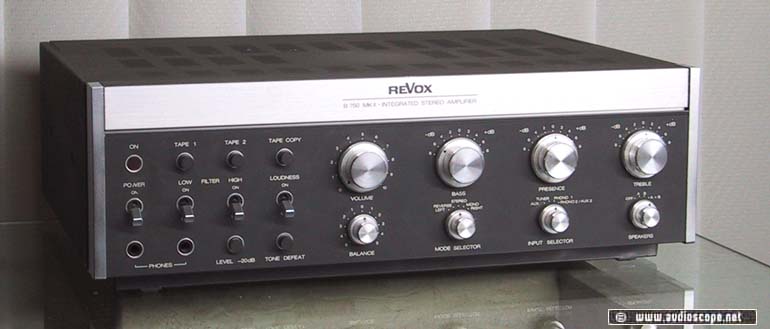
Revox/StuderImpeccably built and neutral sounding, a good one will shame most modern "high-end" solid state gears! I was very surprised by the performance of BOTH the preamp and the amp sections of my B-750 MkII. The former is as good as a solid state preamp can get, and the latter has enough real world power to drive my ATC20 to very satisfying level! If you can handle the bulk, try one!

Copland
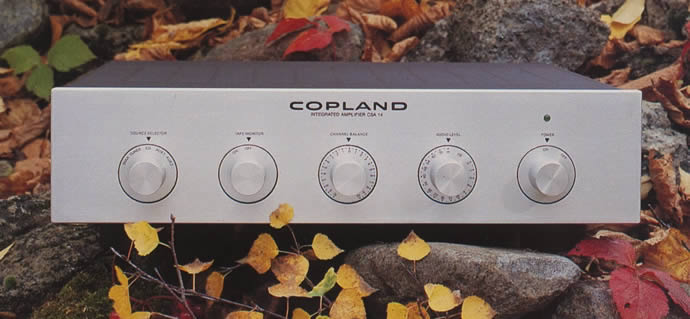
Ever since I saw and heard the CSA-14 driving LS3/5A at Golden String I wanted o
ne. This is a bulky but very well built 120 wpc integrated amp with 2x 6DJ8 in the input stage, and therefore it has a warm sound and fluidity. In contrast to the next incarnation CSA-28, which is almost exactly the same inside and out, this model even has an ss MM phonostage!!! That makes it a ridiculous bargain at current second-hand price, which is not much more than a Nait! Copland also makes good tube amplifiers (superior output transformers).

Pathos
I have never owned any Pathos, but my good friends did. It was many years ago that I encountered the fascinating, mammoth and now classic Twin Towers, which established
Pathos' name. However, although the sound was excellent, its driving power left something to be desired with speakers like Sonus Faber Electa Amator or even LS3/5A. It was not until another friend used the smaller but more powerful Classic One (pictured) with his B&W Nautilus 804 that I took note of the very fine all rounded performance. Yes, the preamp tubes helped greatly in delivering the mellifluous sound!


Densen
The Beat B-100 is a fabulous chunk of aluminum. I think it really is just an amp with a volume pot, but it is highly resolving, surprisingly dynamic and rhythmically enticing. This brand never caught on in HK. I sold it because it's just too chunky but sometimes I regret it. If this were available in a UK shoebox I'd get one...

Accuphase
Big but excellent products. Mine was an E-204 I think. It ran pretty hot but gave excellent sound with hard-to-drive speakers like ATC
20. The MC/MM phono is also exceptional. Mine was black, and I was told that meant hong goods for the old models. I miss mine.


McIntosh 
More than an integrated amp, this is a receiver. Now, this is a curiosity. The integrated amp portion is solid state, and an excellent one at that, more powerful than the UK stuff, and it looks fabulous too. What makes it unique is the tuner, a fully tubed section!!! IMHO, the tuner section rivals that of the finest McIntosh tuners! And so it is a great bargain. My review has more details. If interested in its siblings and other priceless gears from this company, click here for a great site.


Marantz
Early USA Marantz are excellent, and surprisingly powerful too. In an era where horrid sounding ss amps were being made, it was a comfort to many. I picked up the 1040 for US$10 by the sidewalk, though I spent $70 fixing it up later! It's worth it, as it can even drive my Magnepan MMG to excellent level. I am using this in my bedroom in the USA. Visit this excellent Marantz site.

There is too much to cover, but so much for now. Note that I do not really include true tube integrated amps (not amp with volume knob) for the reason that they are cumbersome and the vintage ones are difficult to service.

Perhaps I shall add to this article in the future
---to be continued.