Showing posts with label Brand-Bell. Show all posts

29 June, 2023

On the Move


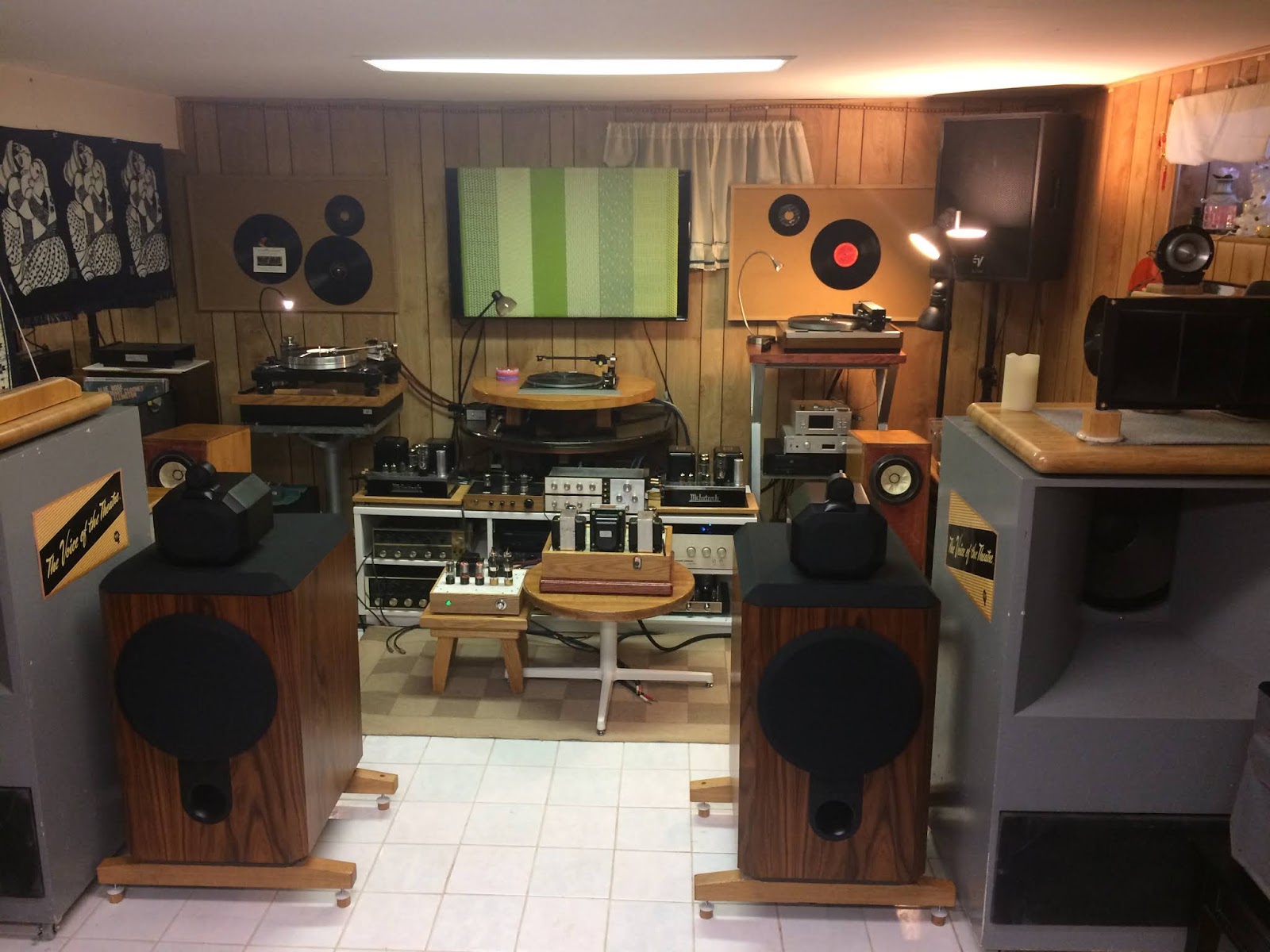
Click pics to enlarge. Casual LR system. Micromega Stage 2 (and el cheap Magnavox TDA1543 CDP); Shindo Monbrison and Akitika GT-102 are not used in this iteration. The BELL 3DT borrowed from Andy is making magnificent music! Harbeth P3ESR; on top 新时 "WE" 597 passive resonators.

From the Editor: The Wayfarer and his Clouded Mind
Letter from NYC (23-1): Home Alone, again!

By now, many regular readers are likely wondering why it has been so quiet in this Blog. The answer is simple - I have been very busy for the past month and a half to write or even to co-ordinate. Even Part IV of the Nobsound E6 mega-trip, already fully etched in my head, was shelved for the moment. But rest assured that full activity shall be resuming in a short while.

I have been moving around quite a bit. Months ago, after the abandonment of China’s Zero-Covid policy, and then following the abatement of the resultant huge covid wave, China and Hong Kong removed their covid quarantine requirements and restored cross-border travel. Many immediately crossed the border, but for quite a while I was not among them. Having lived in Shenzhen for almost two and a half years, I was getting lazy really, or used to “lying flat”. It took me at least 2 months to take the first trip back to HK.

Disorientation
The older one gets, the harder for one to adapt quickly. The first time back in HK was disorienting. It’s like slowly putting back a familiar jigsaw puzzle. A kind of Haziness not unlike jet lag pervaded me. The main purpose of the trip (and the ones after) was to update administrative matter and check out my old home, which took up considerable time. Within a month I made several day trips for practical matters. I always started my trip around 6:30 and returned in mid afternoon so as to avoid the peak commuting hours. After a few trips, the haziness mostly cleared, but never went completely away. It was tiring. The good thing is I managed to fix an electrical problem in my old house and even enjoyed some SET amps. Although only for a period, I had some revelations which I shall share with you later.

About 10 days ago, I left HK for New York, but with a 4 day stop-over in Taipei, Taiwan, where I visited my uncle’s family. I tried but did not successfully hook up with local audiophiles.

Arriving in NYC was even more disorienting. I suffered from quite severe jet lag. As of this writing, the haze in my head had not completely lifted. It was like HK redux, putting back the jigsaw puzzle again. After an absence of almost 3 years, given the American bureaucracy there are a lot more to take care of than in HK. I made some progress. Of course, that did not stop me from hanging out with friends Andy and Mark the other day. I had brought Andy a pair of the 15 ohm Beydas LS3/5A and “WE” 597 (新时). You shall read about them later.

The fact that I’m writing this is sign that I’m recovering from my fatigue. More articles shall be coming in short succession. A few pics now for your perusal.

A serious drawback. I don't have WiFi here. The Portable Hotspot of my T-Mobile is virtually useless. This article was finished with help of the library WiFi. A pain.

Wow, finally, a decent bagel for breakfast!
HK old home. Sun Audio VT-25 amp and DIY 45 Amp
B&W Matrix 801S2 and Ruark Crusader II
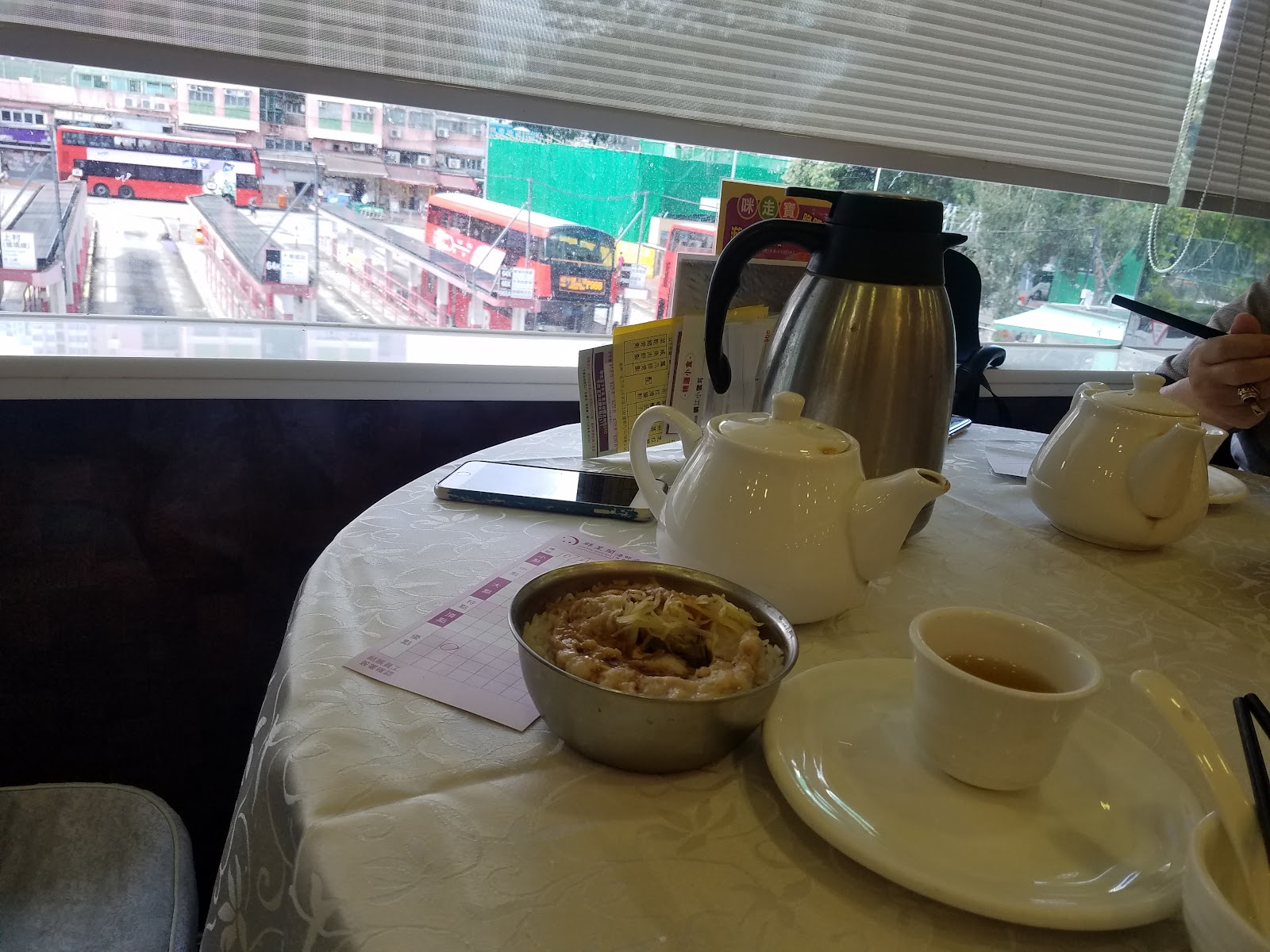
In HK, best to start the day with dimsum and tea. Rice with meat pattie and salted fish.
The wonderful Bell 3DT

08 January, 2019

B&W Matrix 801 Mk II, Gotham GAC-1 Ultra Pro


The Big Fat Ladies, flanked by the Altec A7's. In the rear: on shelves, from left, VPI Prime, Lenco GL-75 and Thorens TD-125;  on top of rack, McIntosh MC-30's flanking Harmon Kardon Citation I and Chinese Preamp; on the shelves, my two McIntosh C-20's and Conrad-Johnson Premier 3 Preamps; in front, Conrad-Johnson MV75 amp flanked by Chinese Blue Velvet Preamp (with regulation diode tubes).

B&W Matrix 801 Mk II and Gotham GAC-1 Ultra Pro
Making the Rounds, Again

This past Sunday the same old crowd gathered again, this time a full house. VAS Stephen's wife, and electronic wizard Paul put in rare appearances. First, We first visited R on Long Island. Then it was a rare Sunday for Kevin to be available, and we all went to his house in the late afternoon.


Click pics to enlarge. Top, a pair of Bell 2122's flanking the Marantz 8B; Right, half way through lunch.

Altec A5 + 6V6 amps
R's stuff has not changed much since my last report (here). This time James sourced a pair of Bell 2122 and restored them for him (using teflon caps), so this pair in the pic is now R's, not mine, which I took back last time (for more on the Bell 2122, read here). All remarked that this pair did not sound quite as open as my pair, though still very good. Such are the vagaries of vintage gear restoration, or perhaps the caps are not yet broken in.

I brought with me my long time reference loudspeaker cable for horns (and most others), the Belden 9497 (reported here). I am not surprised that it sounded substantially better than R's lamp cords (literally). They are not coming out of the system.

A few meters of cable did not even begin to repay R's excellent lunch of Roast Pork and Home-Made Sausages, garnished by a wonderfully citric Apple and Fennel Salad tossed with honeyed walnuts, all washed down with an excellent vintage Chilean Shiraz at its peak. Magnifico!

I sincerely thank R for having us to lunch twice in a month! We have to think of more toys to keep him going...

The Return of B&W Matrix 801 Mk II


Click pics to enlarge. Top, the Appetizers, mostly Cold Dishes; Clockwise from 3 O'Clock, Bamboo Shoots, Pig's Ear, Beef with Tripe, Sausages and Fish, surrounding a very nice Merlot; Below Right, Addition of the Lamb Soup, served with Noodles.

Serendipity! After talking with Andy and I, Kevin had pretty much decided he'd like a pair of B&W Matrix 801. Our great leader Andy then happened to spot a pair for sale, and Kevin drove two hours to pick them up.

This is a pair of Mk II's in mint condition, with original boxes, and obviously well taken care of. They were inherited, which the seller then used for a while before re-boxing them.

The B&W 801 Mk II is one of the best loudspeakers I have heard (my experience). I am really glad that this pair is now in the possession of Kevin, as I'll get to hear it.

These as yet do not have proper stands. Kevin had improvised a pair of stop-gap stands which I am sure he will replace with something more suitable in due course.

At first, the sound as not at all close to what I know they are capable of. Well, these were placed very close and not elevated enough. I urged Kevin to move them further in room (in front of the Altec's) and have they wider apart, but for the day we only managed to have them a little more forward than in the pic, and even those few inches, which made the baffles clear the Altec enclosures, improved the sound.

The Chinese Blue Velvet Preamp, which works well with the horns (including at my place), proved to be less ideal for the system, now using CJ MV-75 amp. Things coarsened considerably at higher volume. The replacement CJ Premier 3 Preamp could play much louder. We tried several loudspeaker cables but settled with a pair of Straight Wire. But the most astonishing change came with swapping out the DIY cable between the preamp and amp for the Gotham GAC-1 Ultra-Pro I brought with me.

WOW! Now we are talking! The images fleshed out and the soundstage increased substantially in both depth and width, but the most impressive was the sheer coherence and liveliness. Andy turned around and said to me: "...just a cable change?"

Image result for B&W 801 bass alignment filterBass Alignment Filter They even came with the optional Bass Alignment Filter (read the very interesting treatise here), which we did not use on the day. Apparently, Kevin had briefly tried them out, reporting the result of less mid-bass. In Stereophile's review of the Matrix 801 Mk II, the reviewer deemed the use of the filter essential, but the same reviewer did not think it should be used in the more upscale 800 model that followed (here). Unlike Kevin's, my pair did not come with the filter, but the sound is already superb and full range to me. Being a tube preamp user, I'd be most hesitant adding the filter between the preamp and amp, but I surely would like to hear the effect at Kevin's. More fun (and articles) to come!

Thoughts
  • B&W Matrix 801 One of the greatest loudspeakers ever made, and for baby boomers many of their favorite recordings were likely mastered using these as monitors. It is very revealing, but at the same time highly musical and authoritative. Personally, I regard the Matrix series as superior to the Nautilus and Diamond series that followed.
  • Belden 9497 You never go wrong with the 9497. While I have never heard it sound bad with any loudspeakers, with horns they are simply the best. Next time, I'd like to try a double run to bi-wire the B&W 801.
  • Preamp Choice While the Chinese Blue Velvet Preamp (simple circuit with basic power supply and simple diode regulation) performs well with our horns, it did not do so well with the B&W 801. Instead the much better built and regulated CJ Premier 3 (not a personal favorite) performed much better. To me, this re-inforces my belief that simpler (including vintage) preamps are better for horns whereas harder to drive loudspeakers demand more modern (highly regulated) preamps (see my thoughts in my Citation I article).
  • Gotham GAC-1 Ultra Pro While I have never formally reported on this particular Gotham cable (previously mentioned here), I have used it a lot. To me, it is even cleaner and more detailed than the older GAC-2 and 4, not to mention the supremely musical DGS-1. The air and soundstage are tremendous. With the B&W 801 it sounds just perfect, but with horns it can sometimes be just a little too revealing. I have not tried the other more expensive Ultra Pro's, but I know some people in HK swear by them. Definitely worth a try.
What a wonderful day. Many thanks to R and Kevin!

More Pics

Thorens TD-125 with Rabco Tonearm and Pickering 380 Cartridge
Lenco GL-75 with Decca Tonearm and Shure M44-7
Tea and Fruits after the Royal Meal
Princess on Her Chair

27 February, 2018

Bell 2122, Citation I, and more

For all pics, click to enlarge. Left, Chez Andy. Note Bell perched on top of Cary. Garrard 401 with Odyssey arm in foreground.

Letter from NYC (80) 2018 (6): Making the Rounds

I think I have been a bit under the weather of late, the symptoms even premonitory of S.A.D. (Seasonal Affective Disorder). So what better than to counter with time spent in good systems? That all the visits came with great food and wine made it all the more enticing. Many thanks to Andy, Kevin and Stephen for their hospitality. There is too much to cover, so I shall try to be brief and, sorry (anonymous reader who had left a comment), no food pics (for this post)!

Chez Andy - Bell and Citation redux
Andy had recently gotten himself a pair of Bell 2122 (info here) and spent a great deal of time doing basic restoration on the line section (phono section and tone controls left in circuit). On this occasion, Andy had switched to the Citation I's line section, so it was used as full-function preamp. Equipment has changed a bit since last reported:

Analog 1: Garrard 401/Odyssey tonearm/Ortofon 2M Red (hot-rodded; see below)
Analog 2: Walker Proscenium Gold Signature/Pickering 380 with elliptical stylus
Preamp: Harman Kardon Citation I
Amp: Bell 2122
Loudspeakers: Altec A5 (with JBL 075 tweeter and Entec subwoofer)

Although I had listened to Andy's system quite often, I had somehow neglected to report that for quite a while he has been using the Altec 288 driver (instead of the JBL) with the 515 woofer, so that makes it a bona fide A5 system.

Despite some obvious anomalies, the sound this time was truly inspiring. Every note of Ivan Moravec's Beethoven (Connoisseur Society LP) was clear as a Bell (punt intended). Most impressive were the inner voices, which were never subsumed. The PDQ Bach LP (Vanguard), recorded live at Town Hall, was full of life, yet never strident.

Back home, the Rostropovich/Richter Beethoven Sonatas (Philips) had a much weightier tone, which also benefited the two Jazz LPs, Portrait of Marian McPartland (Concord) and Oscar Peterson We Get Requests (Verve/Speakers Corner). However, I could not quite reproduce the palpability of the Moravec, and the PDQ Bach became a torture LP, which set me on a new quest, the details of which shall follow in a future post.

Chez Andy, the lightness probably had multiple causes: the fast speed and relatively light balance of the Citation I, compounded by the exact same qualities in the Bell amplifiers. But it too threw into sharp relief the sterling qualities of the system, a palpability and clarity that would be very hard to emulate.

We had listened mostly to the Garrard/Odyssey/Ortofon. But it should be noted that the Ortofon Red was specially modified (in particular a shortened cantilever) by Stephen (of VAS, see here). Andy has high regard for it, and I can hear why. Also, Andy loaded it at 100k, which he said smoothed out a rough peak. The exercise also once again reaffirm the exemplary qualities of the Citation I.

The visit was made even better by lunch: excellent lamb and wines! Sorry, no pics!

Chez Kevin
A few days later, I re-visited Kevin (system covered in great detail here). James brought his newly acquired CJ PV 5, and the purported purpose was to compare with Kevin's unit. I also brought my newly re-enlisted Dynaco PAS 3. My impressions will be published in another article.

Keep the Distance! Somehow we ended up re-positioning the smaller loudspeakers. The Conrad Johnson MV-75, so lackluster with the Altec A7, fared better (as it should) with the B&W CM5 and Rogers LS3/5A (late bi-wire version), which are much hungrier for power. Way in-room and free of boundary effects, the bookshelves performed admirably with all kinds of music: soundstage was deep and wide, and images were close to life-size. Indeed, with simpler music one can almost mistake them for the big horns in the back! As expected, the B&W sounded bigger but more diffuse and the LS3/5A more accurate and well proportioned. I was also impressed by the performance of Kevin's second-system turntable, a lesser known Technics direct drive fitted with a humble P-mount Pickering MM.

Many thanks to Kevin for the delicious lunch (fried rice and turnip soup) and hot-pot dinner washed down with a surprisingly good vintage Australian shiraz! Again, no pics.

Whirlwind New Jersey Tour
The next day, the full gang headed for New Jersey. First stop was a short stay chez Paul, an electronic wizard. It was too bad we were only doing drop-off's and pick-up's, as among his goodies I spotted Tannoy 15" Gold, Marantz 7 + 9, Philips CD-1000, Dahlquist DQ-20, Stromberg Carlson monoblocks and much more.

Next we re-visited Stephen at VAS (covered before here). Partnered with Focal floorstanders, the same setup sounded much airier. We were even more impressed by his bespoke MONO cartridge than his very good stereo one. This guy is seriously talented!

After a quick lunch hosted by Stephen, we visited veteran Mr Ma, a well respected electrical wizard. In his crazily jam-packed workshop we listened to Classe Digital/ARC SP 6/Eico HF-20 (modified as power amps) driving Altec 604H's. Sound was very good with simpler material. Littered around the room were, to name a few, ARC CL-60, Meridian/Philips CD100, IMF, R2R decks, Counterpoint SA7 and Radio Craftsman RC-2 (which R bought and hopefully I'll get to hear soon).

As if that wasn't enough, Stephen and his lovely wife treated us to a marvelous Chinese dinner, washed down with an excellent Napa red and a refreshing Riesling. Again, sorry, no pics.

Life is good.


16 February, 2018

Altec A7, Bell, Grommes, WE 285L, Langevin 402B, Ortofon MC-5000, T-20


Click pic to enlarge. Bottom Row, Bell Amps; Middle Row, C-J PV5 to the left and Premier 3 to the right; Top: from R, C-J PV-75, Grommes Amps, Sun Audio 2A3.
Two 6V6 Amps: Bell 2122 and Grommes Little Jewel LJ5
Ortofon MC-5000 Cartridge (vs Ortofon hot-rodded 2M Red)
Three Step-Up Transformers: Ortofon T-20, WE 285L, Langevin 402B
More Horns Without Pain: Altec A7
Letter from NYC (77) 2018 (3): The Amazing 6V6

After hearing the A5, barely a day had passed when Andy and I visited Kevin to hear the A7 (previous visit here.) Equipment had changed a bit. Through a mutual friend, he acquired an Ortofon MC-5000 which had previously belonged to me! Before I left for HK last time, I had also lent him my Bell 2122 and Grommes Little Jewel LJ5. For this round I also brought with me the WE 285L and Langevin 402B SUT's for fun. Equipment:

Analog: VPI Prime; Arm 1 with Ortofon 2M Red hot-rodded (MM); Arm 2 with Ortofon MC5000 (MC)
MC Step Up's: Ortofon T-20, WE 285L, Langevin 402B
Phonoamp: Conrad-Johnson Premier 3 (using Tape Out)
Preamp: none for Bell 2122; C-J Premier 3 for Grommes LJ5
Amps: Bell 2122 and Grommes LJ5
Loudspeakers: Altec A7 augmented by JBL 075 as supertweeters and an old subwoofer

Here I shall detour to write briefly on what I know of 6V6 tube and amps. As power rube, the 6V6 is famously still used in guitar amps, but now rarely in hifi. I probably know and have heard more than most audio tube aficionados, as the 6V6 tube's low power precludes useful applications with conventional loudspeakers, which won't do it justice like an efficient horn would. And that's a shame, as it is one of the most wonderful tubes!

Overview: 6V6 Tube and Amps

  • 6V6 Tube Astonishingly, the 6V6, like the 6L6, has been in continuous use since its inception in 1936 and, if I am lucky, I will get to witness its centenary less than twenty years from now! For a surprisingly good history, read this wikipedia entry. Sonics The intrinsic sound of the 6V6 can be described as possessing uncommon clarity and lucidity (that other tetrodes/pentodes struggle to equal, let alone surpass). In fact, some knowledgeable old timers in HK regard this tube as 琴王, meaning "violin king", nonpareil in the portrayal of the violin (or other stringed instruments). On the other hand, perhaps due to its low power, it often sounds a little lean in the bass. Like the 45, there are a huge number of different old stock 6V6s out there, and almost all brands and constructions sound very good. 6V6G vs 6V6GT As usual for G vs GT, the earlier and larger G (ST type) has a warmer sound than the smaller GT type. However, to me (as we just found out, at Kevin's), the 6V6G lags quite a bit behind 6V6GT in resolution and speed, which doesn't stop it from being favored by the "older is better" vintage crowd (prevalent in Asia; I know many of them and imho they don't know what high fidelity is). Big Family The 6V6 is but one member of a large family, with siblings and cousins like 6F6 (used in a lot of radios, and said by some to be closest to WE349A), 6Y6, 6W6, 6K6, etc. Perhaps the most famous "cousin" is the WE349A, whose price has been driven up insanely partly because of people who use it as substitute for the 6V6, a dubious application in an attempt to get the "WE sound on the cheap". Durability The 6V6 is known to have a good life and survive beyond its ratings. However, I don't feel this to be true of Russian and Chinese tubes - I had quite a few die (same for Russian 6SN7/6SL7) when I first fired up my old Audio Note Kit 4, but that was a long time ago (perhaps current ones are better; I sure hope so).
  • 6V6 Usage Amps For a while, from the forties to the fifties, the 6V6, like the 6L6, was ubiquitous in home use amps (loudspeakers of the day were efficient). Therefore, there were innumerable models, even from the same company, though, in terms of sheer number, they were outnumbered by the higher powered 6L6, which survived for much longer in home use after the emergence of stereo and lower efficiency loudspeakers. Topology As for the era, most 6V6 amps were mono Push-Pull and had classic, simple designs. Most were mass market Integrated Amps with a Phono Section (usually employing 6SC7). There were fewer Power Amps, which usually employed larger irons and were built to a higher standards (like Radiocraftsman C-400 and RC-2, McIntosh 15W-1/20W-2, WE made by Dukane KS-16617-L1), though some were integrated with loudspeakers in consoles or guitar amps (like Ampex), and some were for professional use (like Langevin, descended from WE; one may also count the WE 133, which employed the 349A). In terms of Circuit, they can be roughly divided into two eras: the earlier ones were driven by an Octal Tube (typically 6SL7, like the Bell 2122 here), which were later replaced by the smaller Noval Tube (typically 12AX7, like the Grommes LJ5 here), an evolution exemplified by the various iterations of the Bell 2122 and Grommes LJ amps over their life spans. In Our Times 6V6 is little employed in home use. Classic push-pull operation were few and far in-between, some examples being the Audio Note Kit 4 of yore and, more recently, an amp module from Swiss hi-end Swissonor. The 6V6 is sometimes used in DIY amps by horn or fullrange driver users, mostly in Single-Ended configuration (like the Sun Audio 6V6 amp). It should be known that there were a few vintage SE 6V6 amps (like the one auditioned here in this blog). The 6V6 is also known as a good Driver Tube (likely with interstage) used in many DIY applications, with or without interstage (as well as in commercial products, one example being the Audio Note Jinro; the related 6Y6 is also used as driver in Wavac SET 811 and 300B amps).
  • Bell 2122 I acquired this pair (an "A") from an old hand, whose Altec A5 was amongst the best horn sound I have heard. He had restored it meticulously and proof was in the listening. Here are notes from a previous 6V6 listening session more than seven years ago! The History of Bell can be found hereBell 2122 The site claims the 2122 was rolled out in the late 40's, but  some 2122's for sale that I have seen claim those were manufactured in the 50's, so the model could have had a long life. Some also had a sticker proclaiming "licensed by Western Electric" (what is not?). We do know that the later 2122C replaced the 6SL7 driver with the smaller 12AX7, and by 1957 Bell had rolled out their completely different looking slimline models.
  • Grommes Little Jewel LJ5 Grommes has survived today as Grommes Precision, whose webiste has a History Page. Its cached Past Product Guide did not have the LJ5, but one can see that, as in Bell products, by the time of LJ5 (circa 1957) the noval 12AX7 had replaced the 6SL7 used in its predecessor LJ2. There is more info on LJ5 in radiomuseum. By 1959 their amps had become slim-line like Bell.
Info: Ortofon MC-5000 Cartridge; Ortofon T-20, WE 285L, Langevin 402B SUT

  • Ortofon MC-5000 This is second from the top in Ortofon's '000 series (Official Info) and employs the famous Replicant Stylus diamond which continues on successors like the Winfield, A90/A95 and Anna. The MC-5000's internal impedance is 6 ohm and output is 0.14 mV. This is one of my reference cartridges and my experience is briefly documented here
  • Ortofon T-20 (Official Info) This was originally designed for the MC200 cartridge which has an output of 0.09 mV and internal impedance of 3 ohm, both even lower than the MC-5000, which however should still be an excellent match.
  • WE 285L Western Electric 285L, the input transformer for the 124-B Amp, has a secondary of 75k ohms (pins 5 and 6) and two primaries. The 600 ohm primary (pins 1 and 4) was used for microphone/professional inputs (in conjunction with the 170B) and the 124-B is configured as such. But it also has a 30 ohm input (pins 2 and 3) which makes it suitable for use as a step-up transformer for certain cartridges, and the MC-5000 should be one of them.  
  • Langevin 402B This is reputed to be internally identical to the WE 618A. Like the WE 285L, it also has a 30 ohm primary (in addition to 120 ohm). Secondary is 50k. The figures seem perfect for a SUT and suitable for the MC-5000.
Sonic Impressions

  • General The Altec A7 turned in another fine performance. In this incarnation it seemed quite a bit smoother than the A5 we heard at R's. Although this might be partly be the intrinsic character, I think there could have been more transient information and attack. Sound with 6V6 furthered the promise shown last time with the Sun Audio (the C-J MV-75 need not apply).
  • Bell 2122 After amplification by the phono section of the C-J Premier 3, line level signal via Tape Out was fed directly into the Bell. The sound exhibited all the lucidity the 6V6 is famous for, with superb microdynamics, articulation, rhythm and pace, save for bass which was a little lean. It should be mentioned that this pair has the phono section disengaged. A brief mention here that Andy also has a pair with the phono section intact and less luxuriously restored. He thinks it doesn't sound as good, so restoration is a trial and error thing and demands patience.
  • Grommes LJ5 Unlike the above, this was not directly driven, rather controlled through the Premier 3's line section. Despite addition of a preamp and regardless of where the volume knob was set on the Grommes, the sound was softer than the Bell 2122, with less microdynamic nuance. However, the smoothness was eminently suitable for classical replay. It should be noted that the phono section is intact in this pair and we surmised that the ceramic coupling capacitors were compromising the sound.
  • Ortofon MC-5000 and 2M Red With classicals the MC-5000 turned in a performance much as I remembered it - very neutral and detailed, with excellent rendition of microdynamics. The Ortofon T-20 initially sounded quite coarse but became quite decent when proper VTA was dialed in. However, it was thoroughly outclassed by the WE 285L, which turned in the best performance that I have heard from it (better than in my setups), with that je ne sais quoi subtlety and finesse that is WE, where every phrase becomes distinct, with nonpareil rhythmic pointing and flow. The Langevin 402B did not fare as well in this setting. However, jazz and pop were quite bland and here the hot-rodded and peaky 2M Red gave good performances. This puzzled me as I don't recall such preference when I used the MC-5000.
Comments

  • 6V6 Amps With high efficiency horns, 6V6 should be seriously considered. Aside from the most famous models they are very reasonably priced, especially the integrated amps covered here. However, our experience poses questions: one wonders why the outwardly similar Bell and Grommes sound so different (even why two pairs of Bell sound different): is it due to the difference between driver tubes, restoration methods (like removal of unused stages) or component use (particularly caps)? There is no quick answer, and I promise you shall hear more of it. However, one thing is certain, particularly with more complicated integrated's - it would be highly desirable if you have some electronic knowledge and soldering skills to tackle the vagaries of restoration (the most important asset though is a good ear). Integrated vs Power Amps The ubiquitous integrated's tend to be more mass-market. Compared to the more famous power amps, they have much smaller output transformers, but, as heard, they sound just as good in their own ways. I have heard most of the famous big power amp brothers with big transformers, like the Radiocraftsman RC-2 and C-400 and the Dukane KS-16617-L1, and I don't think they sound as nimble as they less "endowed" brothers (I had better impressions of Ampex and McIntosh). When it comes to output transformers, size matters and it may not always be "the bigger the better".
  • The SUT's Those considered here are theoretically all suitable for low cartridges with low internal impedances, and so they proved. But it is amazing how different they sounded, and the spec's really are meaningless. The Ortofon T-20 is good value for money. But, for a lot more money, the WE 285L was remarkably much more enticing, though the Langevin 402B sounds better in my own setup (with 3 ohm Air Tight PC-1 and Shindo Monbrisson MM). The cartridge and the cable (I went through 8 cables to find the right one for my Langevin) make a huge difference - synergy is the word. My own thinking is, like arms and cartridges, you cannot have too many SUT's.
  • The Perfect Complement What is audio without good friends and good food? I thank Kevin for painstakingly making every one of his house specialty, Shanghai Style Wonton. The stir-fried cauliflower with cured pork (home made by Stephen's relative) was equally inspiring. All washed down with two excellent wines from Andy! Thank you all, if all audio meets were so fulfilling for the ears and tastebuds!
  • Spec's and Rules For a hobby that relies so utterly on our senses, it is amazing how many audiophiles choose to believe less in their ears than in spec's and rules. So many newcomers on the internet seek opinions, so many more trolls offer opinion based solely on spec's and rules rather than experience! I do think while one should have some technical grounding, proof in the pudding is in listening. Early in this session, I found the sound of the MC-5000 a bit unnerving. I discovered that the tail of the tonearm was way down, and so raised it by almost 1 cm! Sound smoothed out quite a bit, while theoretically it should perhaps have gone the other way. Andy surmised perhaps it was because of the profile of the Replicant Stylus. Who knows! Our rooms and equipment do not function in an anechoic chamber, and there are always local anomalies. If we spend a lot of time positioning loudspeakers (and one should) we should equally spend time matching equipment and cables. Spec's and Rules are not at all everything! In hifi, think SET amps, Non-Oversampling, even active preamps (which many think are unnecessary) and cables (which many laughably think all sound the same). Well, in the picture below are some closely spec'ed craft beers, and they all taste dramatically different. Incidentally, if you ask me, American Craft Beers are now the best in the world. Thumbs up for choice!