Showing posts with label Brand-MFA. Show all posts

01 February, 2019

Infinity IRS Beta MFA Luminescence ARC Reference Two Reference 600 Goldmund Studio Madrigal Carnegie


On center rack, under the Thorens TD-125 turntable (fitted with a Rabco arm) is the MFA Luminescence preamp; beneath is the Infinity Electronic Crossover; Audio Research Reference 2 seen on bottom shelf of rack to the left; Goldmund Studio Turntable on rack to the right.

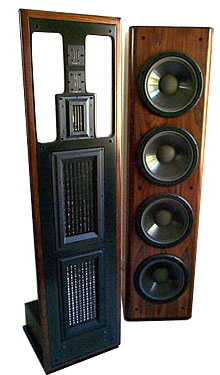
I am truly delighted to publish this article on a second pair of Infinity IRS Beta in our circle. The first pair of course is Andy's (first reported here). Ever since he heard them, our friend Mark has clamored for a pair. After many years he is finally able to fulfill his dream. Congratulations!

HiFi Basics VIII: Home Visits, Peer Influence, Mentors and an Open Mind
1205irsbeta.jpgPeer Influence Perhaps second to the unfortunate hyperboles regularly dished out by audio magazines (particularly TAS), one of the main reasons why audiophiles are so addicted to the hobby is actually peer influence. The more connections (including internet peers) one makes, the more things one discovers and potentially covets. This is the arguably beneficial aspect of having peer groups and peer support. Unfortunately, there are negative aspects too. The Peril of Like Minds One would think like minds would foster growth, but my experience tells me this is not so with audio. Small Circles of like-minded audiophiles usually have nothing much to offer in terms of good sound. Just three very common examples: 1) DIY'ers and modifiers put too much emphasis on material factors and sneer on commercial gear but their creations are often highly unmusical; 2) the majority of Tube Rollers and Vintage Aficionados are too into historical values to pay sufficient attention to performance factors; In HK, the "LS3/5A is the best loudspeaker ever" crowd mostly know nothing about high fidelity, indeed little about music reproduction. The smaller your world, the less the sound of your system is going to improve. Mentors are important in all fields of human endeavor, and audio is no exception. Problem is, no two individuals are alike, and social norms get in the way. The rare truly enlightened mentor works with the preferences and idiosyncrasies of his protege, to encompass them in a solution, but the average mentor often gets in the way, and forces his solution down the throat of his charge. The important thing is, the protege must grow up and there is always a "let go" moment. Unfortunately, in the Confucian East, where respect for the so-called sifu is taken to ridiculous extremes, we are all often left with a bunch of copy-cats. Astonishingly, "#me-too" is proving far too common in our age, even in audio.

Home Visits The audiophile experience knows no bounds. No audiophile, no matter how much time or money he has, can be said to have experienced everything great (our friend icefox in HK comes close though). Thus it is important to seize the opportunities for home visits in order to broaden one's horizon. But there is a catch from my viewpoint. Current vs Old Gears Unduly influenced by the magazines, many audiophiles believe in progress and foreswear anything but recent gear. This is a BIG mistake, as my experience tells me the best systems all have one thing in common - they have at least quite a bit of older or vintage equipment in them. Put it another way, I have heard many ultra modern systems, including much of the most expensive loudspeakers and electronics covered by TAS (like Jonathan Valin's stuff), but while at best they can sound reasonably good, mostly they don't make it to the best (this Blog has a Year in Review feature, where I list the best sound I have heard that year; browse should you like). Mind you, by no means is vintage anything better - far from it, most adherents don't do so well. But, and this is a big but, the discerning ear is capable of turning good vintage into gold. Stores and Shows For myriad reasons, Stores and Shows usually don't put forward the best sound, but they are important for audiophiles starting out or without peer support, especially in the US, where many are not even within driving distance of a dealer. In a place like HK, audiophiles are much luckier  - there are many stores and many specialize in second hand stuff, including vintage stuff. HK is also so small that many audiophiles get to do a lot of home visits.

Progress? There really has not been progress in audio. Detractors will point to the digital revolution (for it is that) but for us old-timers analog is still vastly better. The modern denizen of the world prides (positive) attitude and individuality, but ironically that is precisely what modern audio lacks, and this lack is unacceptable in audio, a venture into the senses. Beware! Reviewers always say something "tugs at the heart string", but if it is something modern or recent, take it with a coarse grain of salt.

Open Mind Hence, it is important to keep an open mind. While I am a big proponent of good vintage gears, efficient horns and low powered amplification, I am not adverse to other approaches. I still own ESL (the overachieving Martin Logan Source), panel (Magnepan 1.7), dynamic classics (LS 3/5A, Sonus faber Electa Amator II), which I enjoy from time to time. And I am certainly fond of BIG Line Source loudspeakers like the Infinity IRS Beta, as executed by my friends (this article tells you why), even if I personally would not take this approach. There are too many dogmatic audiophiles, all claiming there is only one way to heaven, but none of them are right.

Experiment, fail, stand up again, own, disown - there is no expressway. No amount of internet discussion and queries can substitute for hands on experience. Last, I'd like to say, for every successful system, there are dozens of failures. It is easier to identify problems than to appreciate virtues. Only the trained ear can do that. Aside from appreciation of real music (as opposed to audiophile stuff), getting to experience first hand the various approaches to audio reproduction helps one grow. Persist!

The Mighty Infinity IRS Beta, another pair!

On Sunday, Andy, Kevin, James, VAS Stephen, his lovely wife Jenny and I descended upon Mark's Long Island home to listen to his newly acquired Infinity IRS Beta.

Background This Stereophile Review by J Gordon Holt et al is truly excellent (no one writes like that anymore). Each side has 4 x 12" woofers - making it the equivalent of a 24" woofer. Given enough power, the system certainly can deliver real world dynamics. While touted, as Holt describes, the IRS Beta is certainly not without flaws. The Beta was supposed to be the flagship, but its success spawned the even bigger IRS V, which was regarded by some, including Harry Pearson of TAS, as better and the best (here). Unfortunately, the V's monstrous size and weight (the floor has to support 1,500 lbs), not to mention price, precludes its use for most people. Regardless, the IRS Beta is truly a legend.

Rather than dialing them in himself, Mark basically emulated the settings of Andy, which deviate significantly from the settings Arnie Nudell recommends. Infinity advises to have the bass cross over at 110 Hz, and the three knobs behind the panel to be close to center, which is not how Andy hears it (note too that JG Holt literally did it differently from Nudell; see link above). This is legitimate - after all the knobs have to be used to accommodate the room. It should be said too that the dimensions of mark's basement are quite close to Andy's (by eye).

The system we heard on that day comprised the following:

CD Transport: MBL 1521
DAC: MSB Link (Nelson) with Powerbase
Turntable: Goldmund Studio/Goldmund T3F arm/Madrigal Carnegie Cartridge
SUT: Ortofon T20
Full Function Preamp: MFA Luminescence
"Buffer Preamp: Audio Research Reference Two
Panel Amps: Audio Research Reference 600
Bass Column Amp: MBL

Saint-Saëns: Symphony No. 3 "Organ Symphony" / Debussy: La Mer / Ibert: Escales (Ports of Call)
I have recently been evaluating RCA Living Stereo LP's and CD's (article to come), so I immediately played the SACD (CD layer) of Munch's famous recording of Saint Saens' Organ Symphony, one of my all-time favorites. Just a few bars were more than enough to convince me that this system is going to be Best Sound of the Year in my Year in Review, and it is just January! So, I can totally understand the beatific smile on Mark's face. No, one does not come across this kind of sound often, and I reckon most audiophiles have never heard sound like this. You could pick out and "touch" any instrument in the mix, so clear was the soundstage. Most impressive for me were the clarity of the celli and the breathlessly chirping woodwinds, which most systems would struggle with.

This is not to say the system is perfect but the virtues far outweigh the deficiencies. While there was no grating in the treble, there was a certain "whiteness" to the sound. While this is to be expected from ribbons, I did think it should be warmed up further. With vinyl playback, I was surprised by how close the sound was to digital.

MFA Luminescence I had thought the MFA Luminescence (used for phono amplification and fed into the "Bypass" of the Audio Research) would contribute more warmth - the unit of my HK friend jules sounded warmer from memory; but then this model had gone through many iterations and a lot depends on tube rolling too. We played a Carpenters CD, and the voice of Karen Carpenter was definitely too lean. James started to tinker with the crossover frequency, opining that 134 Hz sounded better, but Andy and I would not agree; to me that muddled the sound. What really made the difference was Andy's highly effective move to switch the loudspeaker cables, which fleshed out the sound and restored normalcy to Karen Carpenter's voice.

Goldmund Studio/T3F arm and Madrigal Carnegie Cartridge These are exotic but coveted items.  Andy has the Goldmund Studio turntable but I have not heard it. It is an unusual beast, a direct-drive on a suspended chassis!!! Andy says it has a very special ambience (Roy Gregory of HiFi+ seems to be impressed too in his survey of new direct-drives). Andy told me the one Mark has is a later version with a better JVC motor than the original's Pabst, and the T3F arm is also better than the T5 arm. As for the Madrigal (Mark Levinson) Carnegie Cartridge, it too has a solid reputation. Judging from remarks made in this vinylengine thread, Benz was the OEM and its sound is highly neutral and resolved (various people compared it to the Ortofon MC3000, Ortofon Rohmann and AT OC-9), which jells largely with my own impression. Mark uses it with the Ortofon T20, which is itself on the neutral side. No wonder I found the sound to be quite similar to the MSB digital (I have to say MSB is not a personal favorite either). Next time I visit I shall bring a few SUT's that I think will change the sound.

In all, a fuller mid bass would be beneficial (for all ribbons indeed) and Andy suggested moving the bass columns more into the corners. This was not carried out as the loudspeaker cables were not long enough. As we left it, the bass contour could use some shaping. I thought the MBL (I don't like their electronics, especially in the bass - they all lack a tactile feel) was likely not the best candidate for the job. As this article went to press, I just learned that Mark had recently changed to an Accuphase amp, which reportedly did a much better job.

Rome was not built in one day, and neither would a great Infinity System be. Andy took a long time to arrive at his current settings and Mark had benefitted greatly from his experience. I am sure further improvements can be wrought with time, but it is already mightily impressive.

It was a great day. Icing on the cake was the joyful time we spent eating Chinese Hot Pot, one plain, the other fiery hot. There were fish balls aplenty, two kinds of beef, squid, large prawns, conch, bamboo shoots and other vegetables, all washed down with all kinds of alcoholic beverages. What was particularly gratifying was the long time spent at the table debating various issues.

Here, big thanks to Mark's wife and father-in-law, who had to skip church service to prepare all the food. There was so much leftover that we are already scheming for a return visit to mop them up.

16 October, 2013

Review: iFi iPhono, Nagra BPS


Review: iFi iPhono, Nagra BPS

Talk Vinyl: iFi iPhono vs Musical Surroundings Phonomena II (also Nagra BPS, Audio Technica AT-PEQ3, AQVOX 2CI and Fosgate Signature)
Talk Vinyl: Naim Nait I vs Jolida JD-9 vs MFA Magus B vs iFi iPhono

ifi Audio Micro iPhono MM/MC PhonostagePart I: iPhono
Prologue When I first wrote about the iFi iPhono (here) almost a year ago, I could not find any reviews. Subsequently, a few appeared, and here are some links:

Reviews: AnalogPlanet; EnjoytheMusic; MonoandStereo
Interview: Designer Thorsten Loesch Interview in MonoandStereo

First, A Long Digression 好事多折磨
In case you wonder why the real review of the iPhono took so long, it was because it was to be months before I actually heard it in my own system! It went through several guest systems before joining mine. I would like to spend a little time describing the journey as some of the results add to my understanding of this unit, and I'd also detour a little to write up briefly on some other phonoamps I have encountered. In case you cannot wait, you can jump to the real review below. I'll give you the conclusion on iPhono first: the iPhono is a wonderful phonoamp, but it may take time and care to reveal its considerable strengths.

Detour: First Impression of iPhono (by others) My unit finally arrived about one month later. As I usually do not have time to spin vinyl these days, and as my usual abode has no vinyl set-up, I asked friend A (vinyl and tube fanatic who uses Quad ESL-57) to pick it up for me and test it out. After a short try he told me the sound was not bad but a little too thin for his taste and I completely understood because I know he likes vintage equipment and a fatter sound. Then I asked him to pass it to friend B (vinyl and jazz fanatic who uses Mark Levinson to drive big MBL speakers) who likes his music big and upfront.The iPhono did nothing for him in this system either. So far, things did not look too good...

Detour: My Second Impression of iPhono (first was at the dealer) actually took place on foreign turf! Friend B decided to renovate his apartment. He had to move temporarily into a smaller place where he listened to a pair of Quad ESL-57 placed side-by-side with reinforcement by corner placement (see pic). This actually sounds a lot better (fuller bass) than many "normally" placed ones! The little Nait I amplifier did a good job driving them. On the day I went to pick up my iPhono we actually did a small session of phonoamp shootout (MM only). The turntable used was a Linn LP12 (Valhalla) fitted with a Decca arm and Decca Maroon cartridge. Loading was at the standard 47k, so some may argue about that.

The result was not surprising. The iPhono easily bettered the Nait. The ultra high-gain hybrid Jolida JD-9 (a unit bought in Shanghai) was more overtly exciting than the iPhono but less refined. The owner had also borrowed my MFA Magus B, and on this occasion it was used as a phonoamp via its Tape Out. The MFA was decidedly the best, and that did not surprise me as its phono section is amongst the best I have heard, very quiet for a tubed unit as well. 

Mahler Symphonie 3 Jascha Horenstein Mahler Symphonie 3 - Norma Procter, Jascha HorensteinReview: iFi iPhono

Shortly after I reclaimed my unit I took it to New York (thanks to its universal PS, one reason I bought it) where I finally had the chance to really test it out during the nearly 3-month stay. I knew that it was probably not run-in, so it was one of the first things I plugged in! In NYC I spin vinyl almost exclusively. Equipment used this round:

Analog 1: Linn LP-12 Lingo/Ittok LV-II/Airtight PC-1
Analog 2: Clearaudio Concept/Koetsu Black
Analog 3 (mono): Thorens TD-309/Denon DL-102
Other Phonoamps used: Fosgate Signature (my experience here); AQVOX 2CI MkII used only for MC (here); Musical Surroundings Phonomena II (here); Nagra BPS; Audio Technica AT-PEQ3 (only MM)
Digital: Ensemble
Preamp: Manley Neo-Classic 300B
Loudspeaker/Amp 1: Magnepan MG 1.7 (used with Sunfire 300 amp)
Loudspeaker/Amp 2:-YL Acoustics 4-way Horn Speakers (used with Wavac MD-811 SET amp)

My previous phonoamp group review covers some of the units on hand for comparison, so it is relevant for this article. I dare you to find a more detailed or useful iPhono review! :-) I must have played more than 100 LPs during my stay, but I will single out 2 of them. The Unicorn Horenstein Mahler 3rd (in the US also on noisier Nonesuch) is a magnificent recording of a magnificent performance, with a huge orchestra and more than one chorus! Note that this famous recording is now on HDTT reel-to-reel tape!The Miles Davis Tutu is of course classic and one of my favorites, still Marcus Miller's best effort. There are many passages of complex instrumental interplay that tests the phonoamp's savvy. Another reason I use this LP is because I have the CD and I use them to make sure both the digital and analog rigs are balanced. Vinyl enthusiasts should do this often; too often they tweak so much that the sound is way off.


Observations I am not going to give a blow-by-blow description of how various LPs sound with the iPhono. It is not necessary, because (thankfully for all the right reasons) its sound really does not stand out. But over the few months I made some observations that I think are interesting:

  • Note 1: My impressions are almost exclusively based on the MC setting (I do not listen to MM much, though the mono Denon DL-102 uses the MM setting). For MM, usually I'd prefer tubed amplification.
  • Note 2: I got so caught up by my listening that I did not spend any time evaluating the equalization curves (though I have many mono LPs). After all I do believe the basic aspects of the phonoamp are much more important.
  • Run-in I suspect the unit needs quite a bit of run-in. I am sure it had a lot less than 20-30 hours on it when I got it back. Initially the sound was a little uninspiring, but I just played on. Read on.
  • Vibrations I have said before that my racks in NYC leave something to be desired (placed on stone slabs on thick carpeted wood floor). Certainly, it made my preamp prone to microphonics. I found out the light and slim iPhono was quite susceptible to vibrations! I could hear a trace of smearing much like microphonics in nature. Putting two Vibrapods (here) underneath immediately cleaned up the sound and gave the impression of more solidity. I also noted that the susceptibility to vibration decreased with time and run-in; I wonder why? I also tried Tony's trick of putting some books on top but in my setting that did not reap extra benefits, so for the entire duration in NYC only the Vibrapods were used.
  • Background Noise (lack of) You should note that among the battery of phonoamps here iFi is one of the few that fearlessly publish various specifications (AQVOX and Nagra do; Fosgate and Phonomena don't). One listen and you know why: one is immediately impressed by the extremely low noise floor (Signal to Noise Ratio 82dB). This is black background unusual for a budget phonoamp, indeed unusual for any phonoamp! In comparison, it is as quiet as (or quieter than) the more expensive AQVOX and battery operated Nagra (no mean feat!) and certainly quieter than the (pretty quiet) Phonomena II and Fosgate Signature (which is excellent for a tubed unit). This low level of noise, especially in MC, is quite an accomplishment. Now, that brings up the next question/observation.
  • Dynamics, or Is there Life in Low Noise? This is a little hard to describe. Experienced listeners know that with lowered noise and darkened background often comes a degree of "reticence" in the music making, as if the baby has been thrown out with the bathwater. It is often debated whether the "diminished dynamics" is just erroneous human perception. In such cases, often the music only comes to life when you crank up the volume. Now, personally, especially as a tube and vinyl person, the debates aside, I am not obsessed by noise level but I do think any component/system that cannot be enjoyed at a low volume, that does not have good microdynamics, is bad, period. Not so the iPhono - in my reference systems it performs just as well (and sounds just as as well and quiet) at all volume settings, with all kinds of music (unlike the Phonomena II). Its dynamics are properly scaled. In the grand opening of the Mahler, the iPhono puts you in a mid-hall perspective. In contrast, the Phonomena II is upfront. While the latter may have more overtly exciting bass and slam, overall its presentation is falsely highlighted dynamically. As the movement goes on, with the iPhono one is aware of natural progression, of unfolding drama, whereas the Phonomena II increasingly seemed to be a pastiche of highlights. I do think the composure demonstrated by the iPhono means that while it will work best in a balanced system, in less ideal circumstances I rather think it should work better in an over-energized system than one more sedate. The corollary is that the iPhono, unlike much modern hifi, does not set out to "impress" - it rather demands you to listen carefully (and you can do that at low volume!)
  • Hall Sound Experienced listeners listen for the hall sound, or that of the recording venue. In digital, a good example of the faithful rendering of hall sound would be the 16-bit TDA1541 chip; nothing else since has really come close (all you have to do is compare a 16-bit Revox B226 with a later delta-sigma Revox C221 and you will know what I mean, though the latter is a very fine machine otherwise). The iPhono is exceptional in this regard. The Mahler just heaved and sighed, bathed in the hall acoustics. I am not surprised, given that designer Thorsten Loesch is a fan of the 16-bit chip! In contrast, the upfront Phonomena II gave no clues to the hall, a serious failing to my ears.
  • Rhythm and Pace The iPhono is excellent in this regard. The flow of music is always natural, yet not without a spring in the step. Take Tutu as an example, the various instruments were not unduly highlighted but the delicate interplay came over as part of a whole fabric. The Phonomena II on the other hand seemed to be more visceral initially, but soon I got worn down by a certain uneasiness - the music just did not flow as the phonoamp imposes its own insistent quality.
  • Gain The gain of the iPhono is pretty standard. Since my favorites are big orchestral music I use the +6 db setting. At high volume, I do find it a little more dynamic and not much noisier. The gain is sufficient for my Koetsu Black, Air Tight PC-1 and Denon DL-304.
  • vs Fosgate Signature In some ways the iPhono breathes in a way not unlike the Fosgate. The tubed unit has more bloom (as it should) and dynamics, though comparison gives credit to the iPhono for running it close in its fine grain, details and smoothness, an achievement for a solid-state unit.
  • vs AQVOX 2CI MkII The AQVOX is quite a different beast in its design. Used in balanced mode it has higher gain (though reduced by my use of an adaptor I am sure). The AQVOX is more overtly exciting and dynamic than the iPhono, though the latter runs it close in details and S/N ratio. I love the AQVOX and it shall remain one of my references, but comparison certainly made me respect the iPhono!
  • vs Audio Technica AT-PEQ3 (only MM) Michael Fremer (Stereophile, Vol. 32 No.12 December 2009) had this to say abount the AT: "How about a sweet sounding starter phono preamp that lists for $119...? It's the Audio-Technica AT-PEQ3, a little plug'n'play box with a wall-wart power supply that's quiet, sounds clean and surprisingly dynamic, and get's the job done remarkably well.". Using the mono DL-102 I did compare this against the MM section of the iPhono and Phonomena II. The AT-PEQ3 is more like the iPhono in reduction, a unit that lets the music flow naturally, unlike the upfront and unnatural Phonomena II. Of course, it has appreciably less details and dynamics. I also briefly added a step-up transformer for MC use - not bad! A fine unit at the price!
  • vs Musical Surrounding Phonomena II If you have read this far you know that I do not much like the Phonomena II. Yes, I much prefer the iPhono! To me, all the praise heaped upon the Phonomena II just shows how wrong hifi has become.
Conclusions

  • The iPhono is unusually fine-grained and quiet (not just at its price, but comparable to most products regardless of price). It makes the music flow naturally, and has excellent rendition of hall sound. It doesn't play to the gallery, instead rewards in the long term.
  • The iPhono compares well to more expensive phonostages (even to the Nagra BPS reviewed below), and so is surely a BEST BUY. I think mid-priced phonoamps, not to mention budget ones, will have a hard time going up against the iPhono.
  • In the company of all the phonoamps I have,  for three months I listened mostly to the iPhono (save for comparison purposes); that should tell you more than this review how satisfying the iPhono is!
  • Take time to run-in and check for isolation.

page_BPSPart II: Nagra BPS
I have always been a fan of Nagra and have owned its tubed full-function preamp, the wonderful Nagra PL-P (my reviews here and here) for a number of years, so I am quite familiar with its phono sound. Recently I acquired a BPS and took it to NYC, where I tested it by the side of the iPhono.

Whereas the phono section of the PL-P preamp and the newer VPS phonoamp are tube-based units, the BPS is a solid-state device. Although tube-based, the VPS uses solid-state devices for its last 16 db of gain (unlike the PL-P, which I think is all-tube). Like its more expensive brothers, the BPS employs transformers (wound in-house) for MC step-up function. Like the PL-P, the BPS is battery-operated, though in a simpler manner by using a simpler 9V cell. Thus, you can infer that the BPS is no cheap compromise, as borne out by its sound.

The BPS (official literature) has been well reviewed (using multiple high-end cartridges) by TAS and Stereophile. 6moons has a review too but it is limited to use of the Denon DL-103.

After spending so much time writing on the iPhono, I am going to be a lot briefer when it comes to the BPS: simplement fantastique!

Observations
  • Much of what I wrote about the PL-P (links above) can be applied to the BPS! Indeed, comparing the BPS to the PL-P (from memory, though I did have the PL-P on hand but did not fire it up) is not unlike comparing the iPhono to the Fosgate (see above).
  • The battery-operated BPS is very quiet. But the iPhono is subjectively equally (perhaps even more) so. In this regard, the achievement of the iPhono is outstanding. If blind-folded and asked to tell which is battery operated, I just may say iPhono!
  • The BPS is fast and  has a leading edge that is just right in speed and sharpness. Its superb microdynamics make music easily come alive. In these respects I do prefer it to the much cheaper iPhono. Here, for the same reasons that I detailed in the section on background noise in the preceding iPhono review, I should say I am not usually a fan of batter-powered equipment, but the BPS does not suffer any of the shortcomings of battery operation. In terms of macrodynamics, it is certainly not wanting. In some regards, sonically it resembles AQVOX the most.
  • Like the iPhono, if you don't use care in cabling tonally the BPS may be a wee tad towards the lean side, but still far from lean (think Phonomena II). It has just a tad more bloom than the iPhono. In both my systems, it rendered everything faithfully and, importantly, delightfully. I am not sure what the 6moons reviewer was talking about when he mentions the mid-bass/bass. My opinions are closer to the TAS and Stereophile.
Conclusion
  • The BPS, though not cheap, is actually a Best Buy!  It is now one of my references.

31 August, 2008

Hone Visit: LaScala, Tannoy, JMLab

Home Visits

(I) 不狂野的 La Scala
昨天一清早赫然看到 R33 上寫著 sktung 會在 7:30 拜訪 LaScalawong, 而后者說會准備早餐, 遂去電自邀。謝謝 sktung 在 MTR 接我,8:00 已在聽音樂了!

打通了的村屋廳很大, 器材簡單, Klipsch La Scala (后期,粉磁
)大約按(我個人不推崇)的 Leo/音響之路 的玩法:

  • 擺在廳中間
  • 上面壓著 Corian 板, 沒用超高。
  • 下面用釘,木架及 Corian 承著, 高了一尺左右。
  • SONY SCD-1 for SACD
  • SONY CDP for CD playback
  • QUAD QC24 (6111 nuvistor) + II-40 monoblocks (\"re-issue GEC\" KT88 PP)
聲音正統, 干淨, 幼細, 定位精確, 倒是規矩得不太像號角。 因離后牆遠,低音少點, 但打鼓還是有板有眼。 唯一可以挑剔的是播某些音樂時中低有那麼一點點的轟轟聲。 整體不像 BenYC 和我的 La Scala, 但我絕對同樣欣賞。

Lascalawong 兄是好客的性情中人, 故太座亦是,非常感激她從老遠買早餐回來。 我早吃完了美味的白粥, 炸兩及咸餅, sktung 還在拼命地照像, 好一個廢寢忘食的發燒友!

這次才發現 lascalawong 是超級軟件發燒友, 珍藏甚多!


(II) 一点都不好玩的 Tannoy

跟著, sktung 回家報到,lascalawong 經不起我施壓就硬把鄰居鄧先生叫起來,而我倆就去了他家聽剛買的 Tannoy Edinburgh.

喇叭漂亮得要命, 舊款,“水虫“面,12 寸, “蓮花”, “布”邊單元。店說是鋼磁,但我想不是。用的器材再簡單不過,全國產, Spark 膽 CD 機 + Music Angel KT88 PP 合並 (換了一些舊膽)。

一首歌,已知非凡, 肯定好過我聽過 90% 的 Red/Silver。再試 AV Show CD, 沒有一曲播得不好。很少聽到那麼通透誘人的 Tannoy。

太棒了!沒得玩, 乖乖聽音樂。


(III)可收可放的 JM Lab Mezzo Utopia

三人午饭过后,意犹未尽, LaScalawong 遂致电 kyu888, 20 分钟后又开始了第三场。在 JC Letterbox 饮茶认识 kyu888 时已留意到他上过杂志二三次, 器材里有我喜欢的 MFA Luminescence 胆前级。其他:


  • VPI 19 唱盘,Denon 103R 唱头
  • 专业 MC 唱头放大
  • CEC TL-51/ DX71
  • Accuphase P-800 后级

kyu888 是个仔细的人, 对相位,增益等都一丝不苟,所以第一张唱片放出来我就吃了一惊。一点不像听过(不少)的 JM Lab, 竟然像号角般能量充沛,结像饱满, 现场气氛浓烈。 对一个用号角的人来说,这是最高的赞美。中低频的密度足以令 JBL 用家汗颜!至于低频的延伸稍逊, 我想是喇叭的关系。

唱片一张又一张, 都是天碟, 不亦乐乎! Opus3, M&K sampler, Mobile Fidleity, Living Stereo, Mercury, 没有播得不好的。

走前才听 CD, 很不一样,瘦一点, 但还是非常好, 前后感和阔度都优越。两个多钟头,一下就过去了, 还望下次去听更多的天碟。

kyu888 深信胆前级是必需的;我再赞成不过!