Showing posts with label Streaming-Bluetooth. Show all posts

08 June, 2024

Kinnie Sarone Bluetooth Antenna vs USB Lossless

Click pics to enlarge. Right shows U4 used as Preamp

Letter from Shenzhen (24-8): Listening Notes
Bluetooth vs USB

The recent arrival of Douk U4 and our experience with it here in China and in HK (review to come soon; this article is actually a Prologue) made me re-consider the topic of USB vs Bluetooth. My Streaming is very simple, and "primitive" to many of you digital-savvy souls. But many of the newer readers of this blog will be really surprised that I have dabbled in Digital Files for a long time. Like everyone else, I started with Lossless Files, even before 2008, the year of inception of this blog. In digital, a year is a lifetime!

My Computers and WiFi It should be mentioned that I had always been mainly a desktop user, and did not have a really good Laptop until 2012 when I got a Macbook Pro. In 2018, when we moved back to NYC, the Mac became my main device. A catastrophe in 2020 made me acquire a cheap HP (on which I type now) and a basic Chromebook (now unsupported, blah). The Laptops have always been run on WiFi, so no Ethernet for now. Also, the WiFi of China Mobile, our carrier, is notoriously bad, ad it is here in SZ.

My Lossless File Period Before Streaming there was Lossless File playback via the computer (or iPod etc). It has to be emphasized that for me, with an extensive CD and LP collection, it has always been a peripheral concern but, like many audiophiles, I tried to dabble in it. I used iTunes (for its good ergonomics) and ALAC (for its metadata ability). Did I rip my own CDs? Basically no. I have great CDPs that are more musical, but I did rip a few tracks for testing. What I ripped mainly were CDs borrowed from the library, or OOP ones borrowed from friends; up to the time we left for NYC in 2018 I had basically used up my Macbook's 1TB.

Milestones To name just a few (nostalgic?): Transports: Logitech Squeezebox 3, iPod, Wadia iTransport. USB DACs: HRT, Micromega MyDac, Meridian Explorer. You can find mentions of all of these in the blog if you search. Don't forget before this we laboriously made CD-R's and I still have stacks of them (not all playable now due to short lifespan).

BUT with my moving around and Streaming services, that period is long gone. With the Tidal, when WiFi permits I stream Max, but most of the time is is just HiFi (CD quality 16/44.1). That is enough. Is Tidal streamed my basic way as good as CD? I don't think so, but it's good enough.

My First Bluetooth Period. From 2018 to 2020 in NYC I just listened to my LPs (and CDs). In 2020, during the Peak of the Coronavirus Delta Pandemic, which was a time no New Yorker would ever forget (wonder where's Andrew Cuomo now?), I took up Streaming in earnest from my Laptop to DAC. As I sat too far away from the my HiFi Station to be tethered to a USB cable, I used Bluetooth for the first time and my first forays were chronicled in detail. The article detailed my humble gear and my feeling then of USB vs Bluetooth. Upon re-reading the article, I find much of the sentiments can still be used to express my current feelings a full four years later. For most of these four years, streaming via USB has been my main mode of listening.

My Recent USB Period Since I have come back to Shenzhen, I have used mainly USB. Here, through some iterations, my working desk has always been 90 degrees to various IKEA Kallax shelf, where I put my audio stuff. Everything at my fingertip. For almost 3 years, I have been connecting my cheap Laptops (run on WiFi) and streaming Tidal (previously NML) via USB directly to my no-name DAC, a TDA1305 bitstream one, and it has served me very well (before that the Meridian Explorer). In fact, I had rarely entertained the thought of buying another DAC.

What I have been thinking about is, after what I had heard in the 2023 SIAV SZ show, of a Streamer Transport or Bridge (I'd always prefer to use my own DACs; few current ones will likely past the muster of this man, analog at heart). What I'd choose for Streamer/Transport/Bridge would definitely be the compact Chinese ones I heard at the show, be it Matrix or Eversolo or even the Silent Angel I read about (all are making strides overseas) - but they are not exactly cheap. Plus the hassle of getting a Server. So, not necessarily for now. There are other significant ways to improve things (the UMI 1:1 is a great example). I tell you about this only to show I'm not entirely ignorant of current trends - whether or not it's as good as portrayed (experience tells me it is not so). In this blog though, ELO uses a Wattson Emerson Streamer (I like its compactness too; but it's expensive) and I think Shawn P is mulling on getting a Wiim Pro when the price is right. Me? I think I need to upgrade my computer first!

The Unique Hong Kong Experience of Bespoke Bluetooth Players One reason for the paucity in my circle (both NYC and HK) of Streaming equipment (NAS, Streaming Transport, Streamers and Network Bridge etc) is simple: these older and highly experienced fellows almost all are serious analog fans and most own more than one turntable and tons of vinyls and CDs. Under the influence of icefox, quite a few of those in HK, have gravitated to Bluetooth as a worthwhile adjunct, in particular through two highly tweaked limited production Bluetooth Players designed by local HiFi figures of good repute. I have heard these multiple times and they have put in excellent performances:

1) The more expensive Sarone (pronounced SAR 1, here and here), brainchild of "WE Yip 西电叶“, appeared first on the scene and made a huge splash. It is quite famous now and has been featured in local HiFi mags, appeared in shows, even sold by HK dealers.

2) But the cheaper Kinnie (here and here) has also quietly gained quite a bit of traction among icefox's extensive circle too! Previously a reader had asked me where to buy Kinnie stuff. He can be contacted on Facebook. Or you can contact him via Whatsapp (email me for telephone number). What I understand is the Player itself has sold out its limited run, but Kinnie is developing a second gen version with added functions. The powerful antenna though is still available.

The ideas behind both of these specialized players are similar: take the most minimal heart of BT chip/function, shun as much digital manipulation as possible and do the analog amplification well, which includes the use of much hard-to-source (and not cheap) bespoke and vintage components (including Western Electric stuff). There's a lot of proprietary R&D behind these things! This would be an approach that is completely different to common mass market offerings, no matter how touted. Remember too, BT has an analog heartbeat, and is only digital in limited stages!

My Current USB + BT Period Because I heard the wonder that the unbelievable Kinnie's antenna did for the Douk U4 (to be included in upcoming Douk U4 review), I actually got hold of a rather crude generic antenna for the U4 and it proved helpful (I am sure it's not quite on the level of the highly bespoke Kinnie, but it did also have positive effect on the finicky BT of Sound Burger). I just have to save up a bit more money to buy the Kinnie Antenna!...and maybe the Kinnie Player...and maybe Sarone...

As they are part of the reviews I'm conducting, I have actually been listening to quite a bit of BT lately, not only on the U4 but also on the closely related PJ Miaolai A7 amp (reviews to come soon). Currently, the BT is quite listenable but I think in my humble setups the USB is still a little better.

This is all a very recent development but I'm pretty certain I shall be listening to a lot more BT from now just for the convenience. In fact, the BT improvements and freedom from being tethered to an USB cable have allowed me to have two setups now simultaneously. More details later. Nice!


LOCAL CHEAP EATS

I can't begin to tell you how good this Roast Pork is, and
the Free Soup is Chock Full of Ingredients (18 RMB)
Wonderful Roast Chicken with Succulent Meat and Crispy Skin.
Delicious Soup and Pickled Radish, and Bottled Pepsi! (18+2 RMB)
Braised Fish with Spicy Brown Sauce (18 RMB)
Pork and Chives Dumpling with hard-to find real Hand-Made Dough (15 RMB),
topped with a small self-served Assorted Cold Dish (3 RMB).
Authentic Cantonese Style Wonton Noodle (13 RMB)
Wonderful Fujian Style Wonton, 2 Flavors (7 RMB)
Guangxi Buddy Ho Fun 老友粉 (15 RMB)
Vegetarian Buffet! (30 RMB)
Beef Brisket Noodle and Iced Milk Tea (34 RMB in more expensive Cha Chan Teng)

21 August, 2022

Aosibao APPLauseAudio Union Audio Anubis LS3/5A Xinyi Sini

Click all pics to enlarge. Above, from National Geographic, a man living on the receding shoreline of Java, Indonesia, has his house flooded with water as a permanent and worsening state. I doubt he still listens to his audio, but it's obvious they are his worthy possessions. 

Editor’s Note: A New Trajectory, Previewed
Letter from Shenzhen (22-11): My Lowest Fi - but a High
HiFi Basics: What’s the Correct Audio Value (and Why Bluetooth can Help You)

Editor: Subsequent events prove that I was not entirely on the money with the Anubis. Its place in the living room means less critical listening. Simply put, the clone ("Stirling 史特灵") just completely killed it. I have opened up the Anubis and a post-mortem is coming. 

I shall start with myself (and it’s lengthy), but this Note is not just about myself. Collectively, this Blog has some new and surprising articles coming from its authors. This is kind of a Preview.

This letter first traces an Inner Journey of mine that led to the start of a new phase here in China. Shenzhen is literally a stone-throw away from Hong Kong (where I still have quite a bit of treasured audio equipment). Yet, with the complicated requirements of border crossing, and consideration for family, one cannot easily move around, and so for now I don’t have access - neither to equipment nor the large number of exceptionally endowed fellow audiophiles (only in terms of equipment).

The past 10 years For most of this period, although I had drastically (by my standards) scaled down my activities, whether in NYC or HK. I still had access to my stuff and would buy something now and then, not to mention I still had all my audio friends around - and so I still had things to write about.

Pandemic and Watershed Moments The pandemic changed everyone’s life, as it did mine, in more ways than I would want to relate here. In NYC From the Fall of 2018, when I repatriated to NYC, till March of 2020, when Covid hit NYC in full stride, I had not acquired much, nor did I feel the need to. Then, finding myself alone and in isolation, for the next few months (before I exited NYC for HK) I did what many audiophiles did (I’d think): I perused listings and actually acquired a few things (the most notable being my Yamamoto preamp). But by far the most significant event during this period was getting into Streaming and Bluetooth. Reviewing the small and inexpensive gadgets in many ways re-affirmed this blog’s cheaptubeaudio roots. Even more importantly, it portended a way of listening which has extended into my current life here without my humongous collection of LPs and CDs. Mind you, many of my friends in HK, at least those around Icefox, had long been pioneers and influencers in this respect, and I was a latecomer. Now, they are emphatically not novices, but seasoned audiophiles (many use complicated and ultra-expensive horn systems and WE) who play LPs and CDs, but who employ BT a lot for casual listening. I know there are skeptics, but I’d say (and I think my predecessors would agree) that if you can make your BT (or low-res files) sound satisfying to you, your system is right on the money. Yes, given the right circumstances (like in my NYC home) for the greatest pleasure I’d simply play LP, but the portability and comprehensiveness of Streaming is just indispensable, and not partaking in that can only be your loss. In Shenzhen The Past Year and A Half In terms of audio, this period had been the most atypical in my audio journey, indeed an anomaly. I just streamed music and didn’t buy a thing. People like ELO repeatedly reminded me that Taobao is audio heaven (and it’s true), but I never perused it. Indeed, I had gone into Retreat. In terms of exploration of music, if you read my Streaming articles, you’d know it has been the most fruitful. Before streaming it’d have been impossible to think of living here. Without diddling in audio, I had time to expand my musical horizons. Let’s not forget: Audio Hibernation is not Inaction; Music Appreciation continues unabated, or even heightened in sensation. As Alex, once prominent in tri-state audio activities, said in our wechat group, it forces one to listen harder to the music. And that has its considerable rewards (not that my setups sound so bad).

Hitting the Play Button Again
As I mentioned in my recent article on the wildly popular Aiyima T9, the audio aspect of my life here (as opposed to musical appreciation) had started to change after its arrival. Like the advent of Spring, or a single digital switch from 0 to 1, it woke me from an audio hibernation. The last was no exaggeration, for during the preceding year and a half I had not harbored any thought of new acquisitions. It’s not that the Aiyima, competent as it is, is an earth-shattering event in my long audio life; it was just the right timing.

More Personal History
It was not the first time I had taken a hiatus. For the longest time in NYC, as chronicled here, I just used a modest system as a means to listening to music. Thirty years ago I repatriated to Hong Kong. For more than a year before that, having rented out my apartment (and sold or given away my stereo, but not my LP collection) I was kind of nomadic. I then spent some time living with my mother (and saddled her with my LPs) before leaving for HK, and did not really keep a steady system, though by this time I did start to acquire some vintage electronics. When I arrived in HK, as an expat, the University paid for my stay in a hotel. I had in advance shipped about a hundred CDs and listened to them on a Discman I bought, through generic earphones. After 4 months, I was given a cavernous University apartment but I still felt impermanent and did not really install a decent stereo system. Another 8 months later, given a different contractual arrangement, I moved out of the campus into a local “village” type apartment. And gradually there I started to build a meaningful system. I bought a second-hand pair of Spendor LS3/5A (plentiful and cheap in those days) and brought back from the US one of my Dynaco ST70s (with the more desirable earlier trannies). My student DIYed a “Marantz 7” for me and I was all set with a cheap Philips CDP - the rest is history, albeit a very long one which I may write about some day (I am inspired by Signore Surdi’s recent Tannoy article, very much down his memory lane)

Quitting vs Hibernation
I have met many audiophiles who, for various reasons, often rather abruptly, called it quits. Many reasons were offered, ranging from WAF factor, interest in another hobby to lack of money. It’s not my place to question anyone’s choice, but my observation is most of these individuals lost interest in music. If you look into what they listen to, you’ll find a lot of audiophile picks (much mediocrity) but few selections of their own liking. Mind you, the reverse is not necessarily true, as quite a few who are only obsessed with audiophile tracks soldier fearlessly on (but usually the longer they go, the more they begin to like some real music - the power of music is such that few remain incorrigible to the end). Suffice to say, the more one really likes music for the holistic aspect, the more one stays an audiophile (who wants to get more out of music).

Audiophiles are Very Lucky Today
Cheap equipment has improved to such a degree that, if one loves music and develops a strong personal value system, one does not need to spend much to really enjoy music. Even more than that, streaming has put an end to having to own all that physical media (and in cases like my generation, moving them around wherever we go, which btw showcases our dedication to software). Of course, ultimately, vinyl and tapes sonically reign supreme, but those are only for stable (and discriminating) folks to enjoy, and who today will count himself as destined to stay in one place?

Chinese Audio Products, Then and Now
For the last twenty years, perhaps more, many people, including older yahoo cheaptubeaudio group readers, have asked me why I don’t “review” more Chinese products. Well, there had been many reasons, and I must say that my early exposures in the mid 90’s were not encouraging, which stopped me from buying Chinese products (with few exceptions, I only review what I buy), or even from looking at them as bargains. Over the next decade, things started to change as I heard some very competent stuff. Much of it was DIY oriented, but things by then started moving in the right direction.

It was not until the Digital and T-amps arrived that I started to consider the cheap and cheerful stuff. It was really a revolution, as it made good sound available in a small and green package (even an old Class A veteran like Ray of Rayaudio recognizes the development as such). There is no question the Chinese manufacturers saw an opportunity and they surely wedged themselves into the preeminent positions in the bargain market - deservedly so (and here, especially as one who champions efficient loudspeakers, I shall re-emphasize that all the “high-end” digital amps are mostly nonsense).

Bluetooth, and Why it is a Good Audio Tool
As mentioned in detail above, during the pandemic, I finally took up Streaming and BT and never looked back. In terms of Streaming, I use free sources (mostly NML through the NYPL, and sometimes others,) which are not hi-res. I use mostly USB, but sometimes resort to BT, and I don't find the divide so big. Mind you, I’m aware that I’m likely a laughing-stock in some circles. Like everyone, I know BT is lossy, but BT today can be surprisingly listenable (I have been streaming for 2 years, sometimes eschewing USB for BT). What most people forget is that BT is kinda like Radio Wave which is analog in its transmission, and that could be a strength. Talking about the latter, remember the many audiophiles who sneer at FM, who (just like with LP playback) decry its limited bandwidth and dynamics? It’s likely these people have never heard a great tuner. The superb sound of Analog Sources serves as the best proof that there is something seriously wrong with over reliance on measurements.

In audio, I maintain that it matters very little if your system can play audiophile tracks well; whereas it matters a lot more if you can stream over USB or BT well. The former usually means there are many “unlistenable” stuff in your encounters; the latter however conveys pleasure even in musical but not sonically impeccable material. Many years ago, my friend Hoi (a horn user and a classical fan) said to me that it’s most important to be able to playback mono well. Time only makes me agree with him more. There’s a treasure trove of mono stuff that are heritage material (especially jazz) that should be listened to (I spend at least a few hours per month exploring the latest jazz, but I’m sorry to say most of the stuff sound tepid next to a mono Ellington or Miles). One my friend Andy likes is Ellington Uptown. It will likely sound execrable in a “high end” system, but I can enjoy its music with my humble setups, and that is what I advise you to strive for too. This kind of album mercilessly exposes the over-inflated audiophile “values” that often in the name of resolution creep into the system: wiry treble, lean midrange, un-natural bass. When a system is right (especially with horns), this kind of album can be listenable and enjoyable, and our sonically vastly superior audiophile albums that we enjoy for the physical thrills (make no mistake, I love them too) will not be worse for it. In passing, I cannot help to mention that this album, even in a latter day “mono” Columbia pressing (ubiquitous, as it was likely a best-seller in its days) really comes to life with a true mono cartridge (even the ridiculously well built and cheap Denon DL-102)! We often say there has been no progress in audio, which I agree with in sonic terms, though I make an allowance that compact and green and ridiculously cheap modern digital amps have changed the landscape (including mine) forever.

Value, that is what it is. NOT audio value, but musical value - more often than not, you cannot have “all” of both (but you can have most of it if you listen and work hard), and it is YOUR CHOICE. But audiophiles are a masochistic bunch: we mess up ourselves as much as we make improvements, meanwhile murmuring to ourselves that it must be our fault!

A New Budget and Acquisitions
Now, what’s happening to me. After the Aiyima T9, I have decided to spend not much more than USD 1k on Chinese products, and I finally went for some tube equipment (just to remind myself)! This is a much harder decision than you think. Given that I have tons of gear and good tubes in NYC and HK, I’m not about to spend a lot on swapping tubes here. But there is little doubt in my mind that Chinese transformers have gotten a lot better (indeed likely the best in the world now in general), so bring forth the tube amps!

I also got some cheap cables and I’m getting some tools and a soldering station, all to make my life here a little easier and more interesting. I chose equipment that are cheap and good-looking. Some previews:

AOSIBAO 6P1 PSE The 6P1 is not so far away from the 6AQ5/6V6 and EL84. This is a hard-wired, tube rectified, all-tube amp with 2 meters for about USD120. As expected, sweet sound from the 6P1, and it’s a great pleasure to look at! I may do a little tube swapping but it sounds pretty good as it is.

APPLauseAudio 300B amp Finished in hammer tone, in pseudo-WE fashion, this is at least several rungs lower in price from the better known Chinese WE imitators (and miles from that newly launched garbage “WE”). At USD 350, it is hard-wired, double tube-rectified. I also chose it because it uses a 2-stage triode-pentode 6F3 (similar to 6BM8) in front, ensuring good driving power. It is solid sounding and I think will put many competitors to shame.

My preliminary evaluation is that both of these sport decent transformers. I hear good bandwidth and tight bass, signs of quality. They also do not unduly overheat. At this price, especially if you are handy to upgrade parts (which are not bad), they are ridiculous bargains.

Union Audio Anubis LS3/5A (Update 11/27/22: I have kept the original text here, but reservations have emerged - see Editor's Note at top) I wanted another pair of loudspeakers but would not like to spend time auditioning. So I picked this “clone” of the venerable BBC monitor. It freely admits of following the sound but with some updates (and is 8 ohm, though a 15 ohm version is coming). At USD 300, this is an excellent choice. I don’t have my LS3/5As (or Harbeth P3 ESR) with me, but, given my long-term familiarity, I can safely attest that the sound is in the same vein. I’d think it is slightly more polite and less forward in the midrange, smoother and more efficient in the bass. Most of all, it does not suffer from the slower transient of the LS3/5A. It has completely transformed the sound of my System 2 (less used living room). In fact, unlike before, whenever I get the chance now, I happily listen to and tweak this system. I’m struggling over whether to get a pair of cheap stands to use them occasionally in the Study (which houses my main system). See, in audio one thing begets another, and I have to exercise restraint.

XINYI Sini Audio amp Now, this is a real surprise (from here in Shenzhen no less). I bought it with another function in mind, but it came up with such a good effort that I was charmed off my pants. It’s a bluetooth amp with auxillary input and output. The input chip is a Chinese JL bluetooth chip (different from the Aiyima one) but the output chip is the familiar TDA3116 (same as the SMSL I own). There are 4 versions: single 3116 vs double, and audiophile upgrades for both (I guess only caps for USD 2 premium). Given my efficient loudspeakers I opted for the single chip one. The result is so good that I’m contemplating also buying the double-chip one. At USD 6 for the whole amp it is absolutely the LOWEST Fi in my entire life - but that is referencing the price, not the quality! I’d not be surprised if Goldmund takes this, puts it in a nicer case, calls it JOB Mk X, and sells it for Euro 2000. But they won’t as it’ll sound much better than their lousy and crazily expensive digital amps.

I’m just too excited to report all this to you, and there are more, but not too much more. All of these will be duly reviewed in depth soon, so watch this space.

Finally, even more exciting stuff are coming from some of the other Authors! In no particular order:

--For those interested in Tannoy, Michele Surdi has more on amps that he has used and a few loose ends that are quite interesting. Plus, I don’t know where he gets all these nice brochures! His contribution makes sure this site shall contain the most comprehensive useful information on the Tannoy Prestige series. He shall likely contribute on some other surprises too! Maybe the heat in Europe is cooking him to our advantage!

--ELO was abroad and had just returned to HK. His soul searching continues. He has a couple of articles left with me and one audition (albeit brief) is a surprise, on something that I had been interested in a long time. Soon.

--Some of our occasional contributors have things up their sleeves, but they are just too busy. Let’s hope they find a moment to pen something.

--Last, but absolutely not the least, my dear colleague mrgoodosund is boiling soup in a BIG cauldron. I may have inklings, but true to our understanding, I’m not to divulge. I love his surprises, even when his views are not quite in agreement with mine (such as on LTA; but I can totally understand his view). In fact, with like-minded individuals I look at different views as healthy, and contribute to our understanding. No less a mind than the great Kierkegaard argued with himself in Either/Or.

I am thankful for the contributions of all. This blog is not a corporation, does not monetize (even if it can), nor adhere to a schedule or fixed agenda. All in due time. Check back often. Salut!


22 January, 2021

Kyoeon You Sheng Heng H-9A Meridian Explorer Waveguide for Laptop


Letter from Shenzhen (21-5): doctorjohn muses on Internet and Data Usage
Kyoeon 友昂 (You Sheng Heng 友聲恆) H-9A Bluetooth vs Meridian Explorer
Talk Tweak: Waveguide for the Laptop


First, I have to thank Eric L for gifting his fabled el-cheapo Bluetooth (BT) device to me. I took it along with the Meridian Explorer to use on the Laptop and in China.

During the Quarantine, I employed the Hotel's WiFi and my 2 bargain basement laptops, an HP with Windows 10 Home (Edge and Firefox), and an Acer Chromebook. For general purpose, Edge is easier to use as its bing search engine works here. Firefox and Chrome work but their default search engine Google obviously doesn't and I have to remember to open a bing window (or the local baidu.com) for search. bing is not as good as Google, but I use it mainly for low-level purposes (such as dictionary) and it's OK.

My daily routine is less drawn out than before. Using the local network, ALL the HK news sources that I usually read, Apple Daily, SCMP (even if it's now Chinese owned) and even hk01 are blocked out. Through my email I get a NY Times capsular newsfeed everyday and it's highly informative (you can too by just registering). Then I read msn, which, with Hotmail, is available here. Finally, I peruse Yahoo, which I didn't before. The real surprise is, I can sometimes get through to World Journal, the US Chinese newspaper with Taiwanese background (actually not, given its opposition stance).

My US (T-Mobile) and HK (China Mobile) phones are on roaming, and they both work here. If one doesn't use the phone and forego voicemail, there is no charge, and one can still receive free SMS/texts, important for carrying out banking and government transactions. Wechat of course works here. Even Whatsapp does, at least for the text, though not pics nor video.

When it comes to cell phone, most android phones are tethered to a Google account, as are mine. As much as I use some Google features, and know how to use a few apps etc, I am not a fan of the closed-in system, just as I am not a fan of the Apple ecosystem (my US iphone is an ancient 5s). I have a Samsung Galaxy S7 and a Redmi Note 5, but I avoid their proprietary apps and systems entirely. I never use any Cloud nor any sync, instead just keeping as few files and pics as possible. I use Apps minimally. Wechat is unavoidable in China. My HK friends use Whatsapp, so I have it, but I dislike its basic premise of enabling anyone in the Contacts access. Just because someone is in my or someone else's contacts doesn't at all mean I want to chat with him on social media.

Pics are important. I usually take pics with my HK phone, and the gallery is linked to my Google pics. But I don't access Google all time, so I downloaded the Your Phone App (Microsoft) on my Laptop. It mirrors the gallery of my Android phone very well, and I can download whatever I need (easier than Bluetooth, which doesn't necessarily work well across all devices), BUT it doesn't work here!

Reducing dependence on any ecosystem and minimal app usage comprise my modus operandi. Today, various OS interfaces have improved greatly. In the past, though not dependent on it, I like the Apple way (my US iphone 5s and my lamented 2012 Macbook Pro, which I ruined). Now, for my admittedly limited ways, my humble Redmi is just as good as my iPhone. And I can use my current laptop and chromebook with ease. Even Samsung got better - anyone who has used their earlier phones surely would not miss their "logic".

Which brings up the question of backing up and syncing everything. I have never lost a phone or wallet, so restoring data is a moot point for me. I understand its value, just in case, and it may be a good way for someone locked into a single system, say an Apple user, but not for a cheapskate who uses all makes. I hate to change cards or even switch cards so I keep separate phones. The great thing about syncing is supposedly to be able to access everything on any device. I can see the point for someone using Google for work or learning, but not for the casual user. People spend so much time tending to their backup, talking care of notifications! And have you asked yourself what have you backed up over the years? I can assure you most of it is just baggage. I have moved many times in my life. Every time I move, I find a few boxes that have not been opened since the last move, yet I still find it difficult to dump the box. Crazy, right? We keep so much junk, and the Cloud is full of them. Mind you, one of these days the Cloud is going to break and rain on everyone. You have been warned. Thanks, I'll keep using my little paper notebook, where I have noted down all numbers and important info. Not a few friends have called me over the years for numbers when their devices crashed.

And passwords and security questions? You are bound to forget a few and they cause you trouble, so either have a good personal system or have as few accounts as possible. A big news recently concerns Stefan Thomas, someone with 2 password guesses (out of 10) left before he loses FOREVER 220 millions worth of bitcoin. It is estimated 20% of bitcoin holders are locked out of their moneys because they cannot remember the password. Thank you, I'll hold on to my somewhat outdated ways.

Of course, I need to surmount the blockade sometimes. To this end, my HK roaming data card's portable hotspot works well. By tethering it to my laptop I can access anything Google, including this blog, and all the HK news. To keep data usage to a minimum, I use it only briefly every day. For writing, I basically draft the article on WordPad and then, with the help of my HK card, load it onto the blog and make adjustments. At the same time, I briefly check the HK news.

It all comes down to time. Rationing data has the advantage of focusing oneself. Instead of checking things umpteenth times a day and responding to things fed by others I'd rather use the time to face an empty sheet (or doc) or mull over what I have written. Constant and Instant Access more often than not numb, even stupefy, people more than enlighten them.

Bluetooth vs Streamer

I actually tested Eric's el-cheapo BT from Taobao in HK (using its RCA out). I tested it against the diminutive HK008 (using a minijack to RCA adaptor) I had reported on before. Through my main setup (to be reported later) the sound level of both, even if maxed out, were just too low to really work. The Meridian Explorer, with adaptor in the line output, was much more satisfactory.

I took Eric's BT (Kyoeon or You Seng Heng H-9A) with me to Shenzhen. I tested it against the Meridian using my laptop and Grado S-80e Headphones. With the BT, I plugged the earphone directly into it and was shocked by the very loud volume. There is a huge discrepancy between the minijack and RCA outputs. I am puzzled, but that is the case. With the Meridian Explorer (connected with my favorite HK Unitek USB to Micro USB cable), the headphone and line outputs are more evenly matched.

The Hotel WiFi was fairly good. After all, the TV ran on it. The performance of the BT, however, left much to be desired. Unlike the HK008, which can be charged, the H-9A needs to be plugged into the outlet to work and, in the hotel, there was a constant background noise that is likely interference. Also, it seemed rather demanding of internet quality. In the wee hours, when most people were sleeping, it worked well, but it basically stopped working after 9 am and would break off more than connect.

I did get to test the BT against the Meridian Explorer (1st gen). Through the earphone, the differences are quite obvious. Sound of the BT is fuller, with a richer but slightly less defined bass. The most important difference will likely elude a lot of people, but it is an area where I am sensitive to: The BT is rhythmically a little more savvy, with better articulation and phrasing of strings.

There's BT and then there's BT. AND, more expensive may not at all equal better. Remember Eric L sold his iFi Zen and preferred the el-cheap H-9A? icefox told me the H-9A also worked well for our friend Mila (the barber featured in one of the Virtual Home Visits). Another anecdote, my NYC friend Andy preferred the diminutive HK008 (not much bigger than 3 stacked US Quarters) to the Dayton/FX BT-01 which I had also extensively reported on before. icefox once postulated to me that the el-cheapo Chinese BT's sound good because of the simple Chinese chip (unlike iFi). If I am not mistaken, the chip itself can output analog sound (but at low level). One can augment the output and add all kinds of refinement around it for sure, but circumstantial evidence indicates that, perhaps again, less is more. An analogy may be found in NOS DACs.


Waveguide for the Laptop

Given the poor BT Connectivity in the Hotel Room, sometimes I just listened to music through the laptop's built-in loudspeakers. Now, these are much maligned and people would automatically defer to headphones but, limited as they are, like TV, they are not that bad because they are basically small "full range" loudspeakers. These may lack ultimate extension and certainly dynamics, but they are timbrally correct. Your hifi setup is more likely to be timbrally wrong than these. If you don't believe me, play a familiar voice (say the President's) through the hifi and see if you think the voice is correct. In HK, everyone knows the voice of opera singer Leung (梁醒波) but every time I hear his voice at a HiFi show it is wrong, often very wrong (particularly with those ultra-expensive Scandinavian and German loudspeakers and electronics), when he simply sounds correct on any TV.

The sound of my HP PC laptop emanates from fenestrations close to the hinges that span almost the entire width of the device. I simply inserted a width of thin cardboard or paper into the crevice and anchor the "Waveguide" towards my head. Voila! The sound (especially the piano) is much more focused! And for simpler music, such as baroque or chamber music, it is quite decent. As I write, I am listening to Schubert's Trout Quintet.

Every device has a different location for loudspeaker and some may be less amenable to tweaking. My Acer Chromebook's sound emanates from underneath, on both sides (the curved chassis is a waveguide itself, a smart design), and my paper "Waveguides" had a small effect that is much more subtle than that for my PC. You have to experiment with your device to see if the result is worth it to you.


01 September, 2020

Loudness War Compression Headroom


From SOS article below. L, a 1980 CD; R, much more recent CD. If you read the article you'd know what shocking things that represents.

New York Diary (20-28): The Loudness Wars, Compression, Dynamic Headroom and The Inconveniences of Life

Over? Everyone knows about the Loudness War and how audio has been negatively impacted by young people who grew up on highly compressed and low-res music. The Loudness War peaked around a decade ago (this 2011 Atlantic article is fun), and later recording professionals even declared it over. This excellent 2014 Sound on Sound (SOS) article gave a detailed report on why that was. To make a long story short, the powerful Streaming and Media Services now do loudness equalization for whatever they play so there is little competitive advantage to maxing things out. But is it truly all over? Not quite, as one can see from this article (which is a rare one that seriously considered classical playback) and an even more recent one.

Difference between Streaming/Media Services Even I know different services do things a little differently. NML is basically classical, so can serve as a marker. Spotify, which I use quite a bit also, is definitely louder than NML. Every ten minutes or so, they ram loud ads into my ears. They don't normalize the loudness of the ads, but as I don't listen very loud, it is within tolerance. :-( Occasionally I toggle between NML and Spotify, and I always have to get up from my chair to adjust the volume. More on Spotify below.

TV If you think you have it bad with music in the US, I'll tell you it cannot possibly compare with Chinese TV. Say you are watching your favorite serial in China, and the ads come on almost 20 db louder - really irritating, downright terrorist attacks. The rationale behind that eludes me: the louder it is the more I dislike the ad (I usually mute it).

Birds Do It, Bees Do It Even in HiFi Audio, where you'd think standards would be adhered to, it is not necessarily the case. Chinese Audiophile CDs When I had my EAR 912 Preamp, I'd avoid playing my friend's Chinese "audiophile" CDs (I own few). Many of these, regarded as well recorded, like the female singer 童麗 (妙音,九洲), are totally into the red and made the needles on the meters bang around. The only company that honorably never does that is rhymoi (瑞鳴). Audio Note UK DACs These typically have much higher output (current ones are spec'ed at 3.2V but I suspect my old 2.1 was even more than that), AN said that is because they can play into their amps directly but I think that is totally nonsense. No one is going to use an ultra expensive Level 5 DAC to feed a lower level integrated with volume. I am sure they did it to juice up the "jump factor" of their SE amps (I don't condemn this practice, as many flea-powered amps need all the help they can get). BTW, ANUK is not alone. Take the current R2R hot potato, Holospring May, its RCA output is a highish 2.9V (whereas another R2R hot potato, Denafrips Terminator is 2.3) Preamps Among audio equipment, the role of the preamp in the chain is the big divide. Some insist on No Gain, some More Gain (particularly Vinyl Addicts). Most Tube Preamps (especially if the maker also markets phono products and amps) hover around 10-13 db Gain (My Artemis LA-1 and Manley Retro 300B both 13 db); some are even higher (the current Shindo Monbrisson, likely also my old one, my Yamamoto CA-04 and ANUK M10 have 16 db gain; the famed Jadis JP80 has 20 db!). But they are very different in design and, hence, how they work that volume control (there is no set value for the volume pot; for tube amp it's usually 50 or 100K). For Shindo and Yamamoto, given that my horns are ultra efficient, I only need to turn it up a little bit; for Artemis, more. Of course, part of that has to do with matching the Input Sensitivities of the maker's own amps, but one can also perhaps view this as a certain manipulation of loudness (different designers prefer different levels) for that "jump factor". Mind you, as an impure one who believes in poly-stylistic endeavors, I am not at all wary of manipulation. For me, in audio, there is no gospel. Which brings me back full circle to the following question.

Loudness War in Classical? Pop music has long been sold on loudness. As for jazz, it is better in general. But, what about Classical Music, which is supposed to be the beacon of recording integrity, the one immune to the war? Is that true? This is little talked about and based on mostly facts, though perhaps not without a little assumption. But my intensive streaming experience had me in doubt and there are more questions than answers.

Streaming on Spotify Loudness Variations between Genres As I also listen to some Jazz and Pop on Spotify, I am sure as a whole, as always, classical albums are less loud than jazz and certainly less hot than Pop. However,even streaming on NML, many recent classical albums, particularly of lean and mean baroque music (which young people, even me, take to) surprised me by their loudness. On these albums, performed by as few musicians as one to a part, their loudness is unsettling. I know, because I listen to a lot of baroque music, HIP or not. Sometimes I just lower the level on the computer, but that is audibly detrimental to the sound. A string quartet's loudest moment should not sound as loud as or even louder than an orchestra in full cry (this never happens with the LPs I play). The engineers more often than not record up close too. This is highly unsettling and makes me get up often from the chair - dial up for orchestras and down for smaller ensembles (I can understand why mrgoodsound insists on a remote). This naturally raises the question if the engineer had upped the gain (even in conjunction with a little "judicious" compression) to obtain a more "impactful" or 'fuller" sound (in fairness, I actually think all engineers use these when they deem it necessary). But, Is this the Engineer's doing or is it Spotify? I decided to conduct some simple experiments. Using BT, I picked two AIFF tracks on my iTunes on Macbook and compared with the same tracks on Spotify via Chromebook (as the Mac's browser is crippled), both outputs maxed, without changing the preamp volume setting. Compared to Spotify, the Schubert Quartet track (Doric Qr/Chandos) on the Mac was almost inaudible. On the Mac, a cover of Billy Holiday's Strange Fruit by Rokia Traore (a favorite singer of mine; the song is certainly relevant for these times; in the youtube below her live performance is worth hearing even with the heavy African accent) fared better, much louder than the Schubert and certainly clearly audible, but still not as loud as through Spotify. I will grant there may be maximum level differences between the Macbook and Chromebook, but I am pretty certain the results shall stand even if I take that out of the equation (I can burn a couple of tracks on my chromebook to compare but I can't find my external disc drive). What does this mean? I think: 1) despite the "normalization" across the board, classical music is overall definitely not quite as loud as pop, so Spotify uses different criteria across genres; 2) even within just the classical genre, albums, particularly of chamber music or small groups, tend to sound louder than expected (I don't notice this as much from the chamber music CDs I borrow from the library); 3) let us not forget that labels do have room to maneuver in what they send to Spotify and not everything is necessarily Spotify's doing. I am sure I will have more to say about this down the road. Suffice to say, this is kind of a nuisance in my my streaming experience.

Headroom Gain, whether present or not, has no direct relationship with Headroom; rather, the design, and the Power Supply does (Naim people and most Flat Earthers will agree on this) as we see in the Artemis. In my experience, with most Preamps and Buffers of various designs, for a given piece of music, I usually only have to set the volume initially but, as I have found out, not so with he Artemis LA-1. Sometimes during orchestral climaxes I will find it a little too loud and would have to dial back a little, such is its dynamic capability. Or one could think there is not enough resolution at low level but I doubt this is the case, as it has always been a priority in my systems to be able to listen to microdynamic details even at very low level. In any case, it is clear the Artemis LA-1 (as mentioned in the last article below) has more headroom than most. This is not a factor of its having 13 db gain, as my Manley (of equal gain) does not exhibit this trait as strongly. The More Headroom the Better? This is of course a rare quality, but one that does not always work well in some circumstances, one being the streaming environment, replete with "normalization" and unexpected and not end user controllable dynamic manipulations. The last link I provided on the loudness war at the start of the article describes this situation in depth. In my case, a preamp with less headroom, say the Elekit TU-8500 I used before swapping in the Artemis, is in some ways more suitable for streaming. This is not a casual observation. How Compressed is High Fidelity? We audiophiles sneer at compressed music, but is what we are listening to truly uncompressed? Of course they are not, compared to live music. It is actually quite misleading and even arrogant for an audio journalist to even talk about no compression. Recording, Mastering and Media Limitations The engineer has to work with microphones, playback and mastering equipment and they all have headroom limitations, and the end formats themselves have limitations too (certainly LPs and CDs). Audiophiles who believe in numbers sneer at the LP (this goes on everyday in some threads). Well, yes, of course the LP has less headroom than CD, so why does it sound better? Numbers tell us that the LP has less dynamic range, and therefore more compressed, but how come in a good system it sounds more dynamic? Believe me, this is particularly true of rock and pop. The harder the music goes the better the LP sounds (my AC/DC LPs, which I picked up in HK for next to nothing, sound way better than the CDs, ditto Led Zep). You just look at all the young musicians - most dig LP. Plackback Equipment Limitations And then our equipment, even the most expensive ones, leave much to be desired. What is Happening in an active Preamp? My view of the preamp is completely at odds with the orthodox view, be it a straight wire with or without gain. Large scale symphonic music being my primary diet, I am pretty sure I hear things quite differently from the majority of audiophiles (and so may not be applicable to you). Many audiophiles, particularly the technically minded ones, tend to view the preamp as a nuisance and an obstacle, hence the popularity of passive devices and the proliferation of digital devices, even phonoamps, with volume control (whether digital or analog). Many of these can sound fairly good with simpler audiophile material but they usually fall down with symphonic works. Why? Unlike many audiophiles, I'd say I don't know for sure, and the preamp, which mostly attenuates, is a mystery to me, but I'd say this: there is a lot more we don't know about the preamp than the amp. This article tells you why only horns and huge line source loudspeakers can reproduce the dynamics of live performance (the rest is BS), and I am a firm believer of that. Just look at my inner circle, all horn users and many large Infinity users. But, the amp has an impossible task of swinging enough current for that instantaneous peak. However, audiophiles don't think of the preamp that way, more as a switchboard. I happen to think differently. I think that demand of the instantaneous peak is equally challenging for the preamp. Proof for me is that, although I'd use a passive device in some instances (like Leak, of high input sensitivity), I have seldom heard a passive device (volume pots, buffers and even expensive TVC's with gain) sound better than a good preamp with gain. Big classical devotees, like my friend Andy, always find passive devices lacking. Actually, the problem is likely not gain, but headroom. Buffering Of course, there is also the issue of buffering, which helps for sure, which is why some passive devices like Autoformers and, likely, mrgoodsound's The Truth, would be better than the so-called highest quality megabuck resistor laden volume control (that could be ridiculously costly). A tube preamp naturally buffers so has an advantage. I am a believer of buffering.

This is just some observations and food for thought. As I finish this article, I was listening to Arrau's German Radio Recordings of Brahms Concertos and the levels were among the lowest I have ever streamed; I estimate greater than 15 db lower. But guess what, I cranked my Yamamoto Preamp way up, and the 1969/72 sound just came alive; more than that, it was wholesome and perfectly captured the hall sound (as is typical of German Radio Productions). It managed the not inconsiderable feat of conveying the majesty at hand. Highly satisfying. So, why do today's levels have to be so high?...Again, it casts doubt on audio progress. Sigh...


08 August, 2020

Benchmark DAC1 Gotham GAC 4 Ultra Pro Symposium Roller Block Jr Sparkler S503II


Click pic to enlarge. iFi Zen Blue atop Benchmark DAC1; to the right Sparkler CDP with supporting device underneath. I must say very clean pic!

Letter from Hong Kong (20-5): Going Somewhere? Eric L Soldiers On

Editor: As usual, Eric muses a little on his HiFi Journey, then reports on some recent acquisitions and activities.

HiFi Listening vs Photography - Their Different Natures In my seemingly endless Quest for HiFi Nirvana, I have gone through many cycles like a Sine Wave. I had even taken a hiatus; after I cooled down, I sold my whole system. Although sometime later I was to rekindle my interest and start from scratch again, during the interim I actually was never uncomfortable nor felt something was missing, especially when I was focusing on street photography some 3 years ago. The reason for my love of photography is that I can actually share my work easily on public media. About a year later I became more serious and even had my first personal photo exhibition. Although I was almost always alone when I was shooting, somehow being a HiFi hobbyist feels much lonelier. You can post on I.G the photos of your system, but you cannot actually let the audience hear exactly how good it sounds, nor can you wear your stereo system around your neck to show off to others (Yeah, you can boast on the forum or to your friends). Just like now, we are trying so hard to describe by means of static words the sensation of listening!


Sine Curve Phenomenon During the past 6 months, I have been on the uphill limb of the Sine Curve again and who knows when I would reach the peak! So far I'm experiencing a joyride and, like many others, am enjoying the usual pleasure and pain in seeking the Holy Grail! Nirvana or Hell, what the Hell! As long as I'm truly enjoying the moment, getting there is half the fun, and there is still a long way to go!

Spending Limit Looking back, I have never spent more than USD 2k for a single purchase; in fact, most of my purchases cost less than 1k or even much less. I always think, with sufficient know-how and knowledge, one can identify bargain products with PPR that are way off the chart and build a system which can best many "exotic" systems costing 5, 6, even 10 times the price! This Principal I also apply to my other hobbies, like photography, wine tasting and fine dining! I have never had great lust for 3-Star Michelin Restaurants; instead I become ecstatic if I can find a hole-in-the-wall eatery which serves a hearty and delicious meal with an affordable price tag!

Recent Additions
I had finally given up on my faulty pair of 47 I.C. After all the frustration it had given me, I bought a new pair for around 100USD and a pair of Gotham GAC4 Pro for less than 90USD. Yes, I did order the NOS Lite DAC AH that has an underground reputation. Unfortunately, as I was ready to pick it up, the shop informed me that during testing of the unit, noise was detected and they had to reorder another unit from Shenzhen for me..During the waiting period, I also picked up a first generation Benchmark DAC1 for less than $200USD ! If it proves not to my taste, I can still use it as a headphone amp at the office!

Source On AirMac: Youtube; On Huawei P40+: Tidal, MOOV and Youtube (somehow Youtube did not click with the phone...); loads of old CDs, some almost 30 years old.

Bluetooth Streaming
1) Cheapo BT unit H10U thru GAC4 Pro
2) Zen Blue/Benchmark DAC1 combo thru Belden Cable
3) Zen Blue/Lite DAC AH (to be acquired)
4) Meitner MA-1 (on my wish list
CD Playback
5) Sparkler Audio S503II thru 47 Lab cable
6) Sparkler Audio S503II/Benchmark DAC1

Amplification icOn4 passive line amp, 47 Lab Gaincard single PSU (can convert to twin Power Humpties). Loudspeakers my most trusted Dynaudio Crafft monitors thru Mogami speaker cable. Super tweeter (on my wish list)

Supporting Devices Symposium Rollerblock Jr. Taobao 3 piece supporting base (amazing hifi improvement at the expense of slight inherited edginess).

In the meantime, I had convinced my friend Kwong to purchase the 47 lab Cable Kit since he plans to upgrade his amplifier to bi-amp his system . Hope Kimura san is healthy enough to accept the order since I heard his health condition is not great lately...

Interim Report Card -- Ta-da!
First of all, I no longer believe in a full mark, as I believe there is no perfect scoring system that can assess sound [Ed: see Footnote 1]. It is highly subjective, especially since nowadays all music is based on 0s and 1s, an absolute mystery to me. However, let's say if the performance of the Sparkler S503II by itself scores 75/100, then relatively speaking (correlate with numbered list above):

1) 70
2) 60 ( ZB/DAC1 sounds less involved compare to rest of the combinations and, despite having tried many permutations, I have to admit that I haven't got a clue).
3) TBA
4) still dreaming
5) 75 Top scoring! (the Sparkler CDP running thru 47 lab cables sounds the best in terms of musicality, PRAT, timing and rhythmic progression. Detailed yet delineated; although intensity is on the light side it is still very acceptable).
6) 67 (the Benchmark DAC1 adds more flesh to the music. Without A/B, it is a very respectable combo. But once I start comparing to the standalone S503II, I quickly notice the relative deficiencies in attack, PRAT and timing. The S503II standalone is a rare gem, hence the score spread. Benchmark DAC1 was a legend in its own time, well regarded and rave reviewed, claimed to be a Goliath; its descendants are still well regarded. Well then, S503II is the Giant's slayer's slayer!)[Ed: see Footnote 2]

Interim Verdict
A word on the little miracle H10U plus GAC4 Pro (1). I don't know whether it's due to both my P40+ phone and the H10U being well run in, or the addition of the new Gotham GAC4 Pro cable, the whole performance has been taken to another level: great instrument separation, attack; although the PRAT is still slightly short of (5), the difference is small enough and totally acceptable. The performance is respectable, and Tidal music streaming is so versatile. Every time I play this combo, I'm in awe of the outcome; I suspect the GAC4 Pro is doing a lot of magic here [Ed: see Footnote 3.] Truth is, I have absolutely no problem with listening to this combo with Tidal choosing songs from female singers for me: Katie Melea, Mary Black, Patrick Barber, Laura Fygi, Sarah Brightman, Diana Krall, Sara K, Stacy Kent, Sophie Zelami, Cassandra Wilson etc etc. And I can easily immerse in the music like a fish in water! That says a lot as I'm usually quite picky and my mind reacts immediately if I sense something I don't like. That says a lot! Meanwhile, I'm still waiting for another device which can dethrone this little gem!


Honorable Mentions:

a) Symposium Rollerblock Jr Placed under the S503II, it stabilizes the soundstage and cleans up the display [Ed: amazing effect on the display!] without sacrificing any of the musicality. It is definitely an essential kit.

b) Taobao 3 pcs isolation kit For less than 20USD, it works wonders, improves the overall sound performance by 20%, especially in clarity and information retrieval. There is a trace edginess which is absolutely tolerable, even if it may not suit all setups (I would imagine it works really well on tube gears).

So much for now. I can't wait for my 47 lab and GAC4 Pro cables to fully burn in, and for the Lite DAC AH to arrive; until then, stay tuned and adios!

Editor's Footnotes: [1] I applaud this way of thinking when it comes to scoring. A dire contrast would be the scoring used by the audio magazine I most detest: Taiwan's Audio Art magazine, which also operates a large netzine, www.audionet.com.tw. Except for the brief reviews, this magazine scores every piece of gear for what it deems as the10 most important audio parameters. Every piece gets at least 9 10's and at most one 9. Many get 10 10's. So the Bar Graphs look like the worst of the Loudness War - no waveform, just a solid rectangle. This magazine reviews tons of (mostly) German gears that I deem worthless (and crazily overpriced). Yes, I have heard a lot of these in HK. This magazine is so beautifully printed and with great production values; unfortunately it seems the values of the writers are completely misplaced and corrupted by its commercial success (they also produce the largest Taiwan Audio Shows, one f the most important in the world; [2] I have heard in detail the original Benchmark, not a bad DAC, and it is also precisely its somewhat literal manner that stopped me from acquiring one to try; [3] The GAC Pro is a relatively new series that is a bit different from the classic GAC series. I only have the GAC-1 Pro and it is excellent! All Gotham cables excel in PRaT.

25 July, 2020

iFi Zen Blue Bluetooth H10U Metrum Adagio

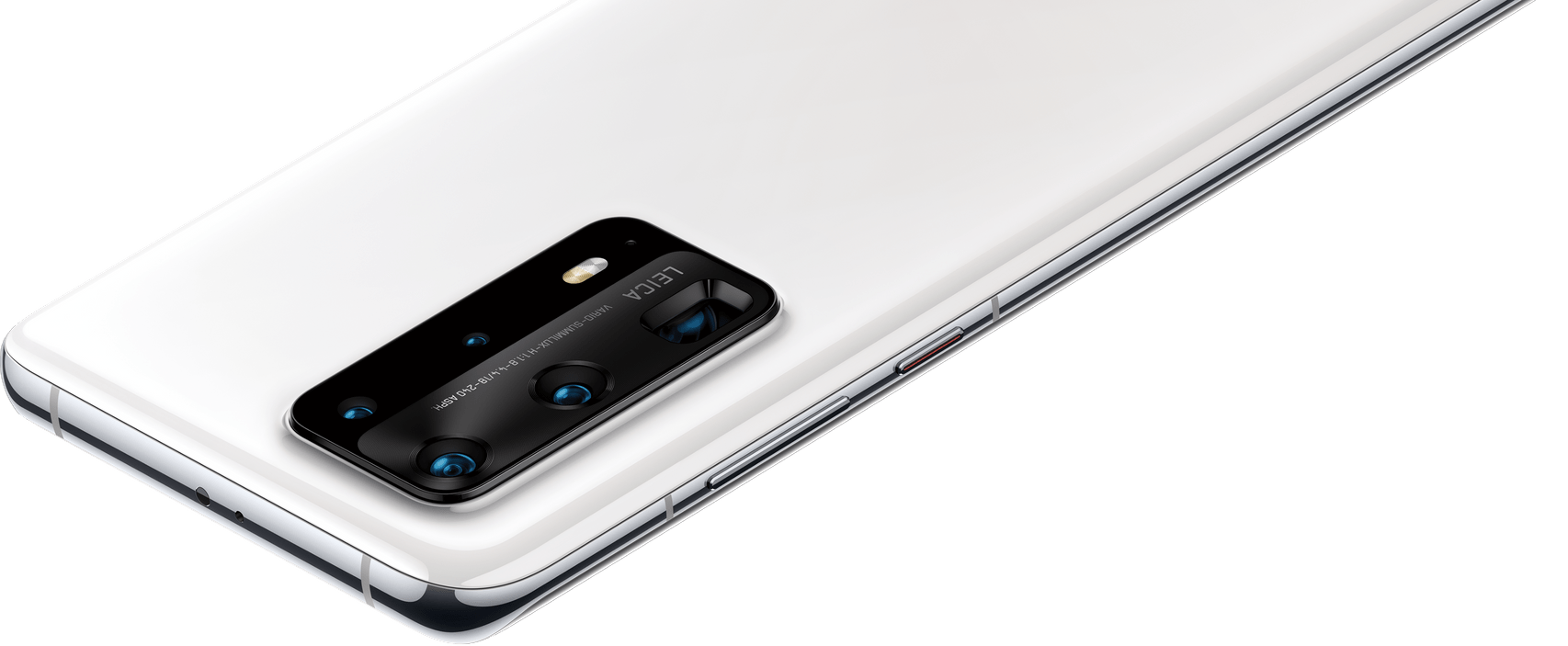
huawei p40 pro+ kv back

This marks the first time a phone cam is highlighted in this blog; drooling! 😃🔯

Letter from Hong Kong (20-4): Streaming from a New Cellphone, Eric L Thinks Aloud! Where is he going?

Amended 7/26/20: mrgoodsound's Comment and Tidal Impressions added. Small change to mention of R2R DAC.

Editor: Since his last article, on his own will, Eric L has called a time-out, left paradise and re-entered purgatory (hell was beckoning)! He has upgraded his generic Taobao device H-09 to the same company's H10U. Also, he has gotten a new Cellphone, the top Huawei, known for its formidable camera (remember Eric is a photographer).

This article is divided into 2 Parts. Eric first wrote Part I. As the article was almost ready for publication, I was surprised, but delighted, to find Part II in the draft!

Part I. Struggle with my newly acquired Huawei P40 Pro+, dinosaur Air Mac, iFi Zen Blue and cheapo H10U

This would be an interim report. As a newbie in Streaming Music, I'm still looking for the best solution. I am toying with the idea of a DAC that can play high-res files, including DSD and 24-bit files (up to 200 MB per song!) In the meantime, I'm still struggling to find the best solution to my current setup, to the point that I almost stopped using my Sparkler CD Player completely.

I acquired a brand new Huawei P40+ smartphone since: 1) My Samsung S6 was really coming to the end of its life after 6 years of good service; thanks! 2) I want to be able to take great pictures with its Leica lens when I don't have my Fujifilm X100F on hand; 3) I can use it as a music player! 4) it looks sophisticated!

I joined both Tidal and MOOV (HK based music platform focusing more on local high res songs) within a day of buying the phone.

P40 Pro+ with iFi Zen Blue (Initially) I connected the new phone to my Zen Blue (ZB) for music playing. Well, the sound that came out was really polished, with each instrument well delineated and having the right amount of air surrounding it. I played through the sea of songs from Tidal, anything from R and B, classical, jazz and vocals, overwhelmed and dazzled by the choices it provides. I then asked myself, is this the sound that I'm looking for?

The A/B Hell One morning, knowing it is a painful exercise, I reluctantly opened the Pandora Box of HiFi and entered the Equipment A/B hell. I use Chris Botti and Yo Yo Ma playing (live) the song from Cinema Paradiso, both of which I like so much as both players play with such hearts. As this video can be found on both Youtube and from Tidal as well, I ended up testing with total of 6 combinations:

Youtube on AirMac with H10U or ZB
Youtube on P40+ with H10U or ZB
Tidal on P40+ with H10U or ZB

4 hours went by, and I even drew a table to tally up all the different combinations. But I threw it away as I collapsed exhausted - the A/B Hell was too much of a torture for my old soul! I just needed to relax and listen to the kind of music I like and played through the system with the correct virtues.

Results were pretty much in line with my original impressions. Having had some burn-in, ZB had become more approachable, but so had the cheapo H10U ! I don't know about the brand new P40+. After the test, I also did prolonged listening with my P40 Pro+, first with ZB and then H10U. The Air Mac has a mobility issue since the battery is completely dead and it must be hooked up to power, rendering it no longer a laptop; its BT also always stutters and I need to repeatedly disconnect and connect...Yikes!

H10U vs Zen Blue Here's the dilemma, the much improved cheapo BT device H10U (one up from the H9A  in previous articles) really possesses some magic! The ZB has better delineation of the instruments, better separation and airiness around as well! ZB ticked many boxes in HiFi terms BUT it simply lacks some magic: I no longer feel compelled to focus on the music, and can do other things while having it on as if it were background music! This is not what I want! Unplug the ZB and connect the H10U, suddenly the songs become interesting again: I can feel the emotion of the cellist, which has my poor soul bobbing up and down on a string; the trumpet of Botti has also become more purposeful. I sense a bit more the ebb and flow of music. The excitement factor is back (though not in full)! Less HiFi , more raw but more energetic and that's live music that audience can react and relate to! I think the Sabre DAC chip used in ZB is not my cup of tea...

Now most of the music is played through P40 Pro+/Tidal (and occasionally through the combination of Youtube/P40 Pro+/H10U). I still miss the sound of the Youtube/Air Mac/H10U combo but have to sacrifice for convenience rather than Sound Quality (SQ)...

To be or not to be?

Which brings me to another potentially important factor which DJ had mentioned: would an external DAC help to improve the sound? Both ZB and H10U does offer the option of hooking up to an external DAC. So for the last week, I have been searching for the right cheapo DAC that has the highest Price Quality Ratio. DJ suggested Micromega MyDac or MicroDac etc but they are so rare in the market and they do not play hi-res or DSD. Therefore, I have been thinking, whether I shall go all the way for best SQ and acquire a giant killer on the cheap? I have looked around, I'm most interested in a DAC which is NOS, R2R with FPGA. Don't ask me exactly what these terms means since I am not a techno savvy guy. I just know NOS can sound really good based on my experience with Sparkler CD Player. My only experience with R2R is the Musette from Metrum Acoustics which sounds a tad polite to me, but it's just the entry level unit using one R2R DAC per channel instead of 4 per channel used in their flagship Pavanne and Adagio. There are recent rumours on financial difficulties for Metrum and the designer Cees had left and formed a new company called Sonnet and released  a new DAC called Morpheus . Both Adagio (with world class digital volume control) , Pavanne and the new Morpheus received top accolades from 6Moons and many other HiFi review forums. I have no doubt that they are very good as my friend also distributes Metrum and he offers me a great deal on a like-new demo unit Adagio with a 12 month warranty. I need to audition it as it's way out of my budget, but if I can use it as a preamp, I can sell my icOn4 and Sparkler CDP and simply use the Sony BDP as a transport! In between, I almost bought a nice 2nd hand Meitner MA-1 v1 DAC for a real good price but even though I had reached a verbal agreement with the seller, I failed to get it since he had consigned it to a HiFi consignment shop and it was sold the day before unknown to him! Bummer! Ed Meitner is the designer of the famous DAC from EMM Lab and the brand Meitner is a scaled down version which was retailing at 7000 USD when new in 2011 and is now less than 1/4 of the price. MA-1 V2 is said to have big improvement but I am content with V1 since the sound that came out is very analog sound which I can easily live with (I had a brief audition at the consignment shop, though I definitely was not in a good mood.)

However, if I go cheap and DSD is not a must, my targets will be either Sparkler DAC, MyDac , Chord Mojo or Schiit Modi 3 [Ed: do you mean the Multibit?] as they are really compact and that's what I like about them. Size matters!!

My search is still frustrating and today I opted back to listen to more music from CDs. I bought a new pair of 47 OTA kit cable to hook onto my CDP via icOn4. I immediately notice that the new one fits much tighter to the female ends of the machines; the older ones likely have distorted in shape from extended use and suffered from loose fit.

Silver Lining: Youtube/Mac/H10U is still the most engaging combo and does wonder! Next step , I will find out if a new DAC is able to improve the SQ of my Tidal/P40+/H10U combo so that I can gain my mobility while keeping the SQ with loads of PRAT?

Part II. It's not over yet....the Door is still Revolving but it may stop soon

Flirting with Metrum Yesterday, I finally found some time for an audition of the Metrum Acoustics Adagio. Distributor Ben was really nice and had it set up with his own award-winning Volent speakers. The songs were played through ROON, then a Streamer, the luxury Bespoke TVC Preamp, the Adagio, and finally the Amp, the name of which I fail to remember.

I played through some of his DSD files and some songs which I normally listen through Tidal, sat back and enjoyed the sound, which I'd describe as smooth and natural, pleasing to listen to. The instrumental timbres were good and the soundstage was huge and deep. However, I began to feel a tad too at ease and comfortable on certain songs which usually would have me tapping my feet tapping and swinging my body! Like audiopro said, TIMING is KING ! And I totally dig it as I came from the LINN/NAIM camp of more than 30 years ago!

Metrum uses PCM/NOS/R2R. Unlike the Delta/Sigma used by Meitner, it cannot play DSD files (has to be converted to PCM first). So I would not be able to exploit fully on DSD, damn.

Due to limited time , I had to leave with some doubts in my mind. Perhaps I need another audition?

Back to BT This morning, I started playing some music from OPUS3 disc through my Sparkler CDP. It was really enjoyable and the new version does improve in airiness, instrument separation and the delineation of instruments without sacrificing too much of the PRAT that my older Sparkler aced. Then, I switched back to the Tidal/H10U combo and begin to play the same tunes that I had played yesterday at the Audio Shop. To my astonishment, I wasn't losing much SQ at all! Of course, I didn't have the uber fathomless soundstage nor the ultimate silkiness of sound, but the excitement was back again! And the musicality, when compared to my Sparkler, was comparable, which is saying a lot!

Then the most eye-popping moment came. I used my P40 Pro+ to play some of my favorite Tiny Desks Youtubes. Taimane's ukulele simply just explodes at will but on a dime becomes romantic when called for; the Cajon player is wicked, his fingers strumming out clean attacks and an engaging bass line. My body was possessed and started shaking and I even involuntarily screamed out with joy! if you have not heard of Monsieur Perine, I would heartily urge you to give them a try. I played their Sabor a mi and the sense of "being there" was so strong that I actually felt I was in the concert myself! Yes, my setup is not set up to be laid back, but to be as engaging and truthful as can be to reveal the essence of music! Suddenly my urge for an upgrade of DAC has vanished !!

Thinking Aloud Redux This Morning I rang my friend Kwong (who introduced the H9L , then H10U to me) and told him about my revolving door experience in the name of truth. I told him after all the tedious and the painful search for audio truth, I found out the answer has always been there, from Day One (sounds like a movie script, doesn't it?) I told him, the H10U rocks and actually trumps all others; the lowly BT is probably the most amazing audio discovery of my audio journey. He replied with a grin on his face (I actually visualized that even if we were just on the phone, lol), "With all the money you have saved (wait, I haven't even spent anything yet, lol), why don't you get a "super tweeter ", same one as used in MBL. With the right capacitor, it could improve the sound across the spectrum! And it would only cost less than $2k HKD even with Mundorf! You can also upgrade your power conditioner to a higher grade Long Yu and a second hand one is less than $3k!" What a devil he is! Or perhaps upgrade my laptop? I can't stop giggling~ Itchy still I guess...

Conclusion/Confession? I hereby proclaim that, Youtube/H10U/P40 Pro+ combo is the most HiFi, musical and engaging BT combo that I have experienced. It can give a lot of way more expensive rigs run for their monies! Mind you, the H10U costs only $8 USD and Youtube is free - that says a lot! Do I need a DAC? I would say yes, but it is less of a priority right now. If nothing is wrong, don't change for the sake of changing! I'd rather spend more time on enjoying music. My bar is actually quite low; I don't have any complaints for the music I'm listening to; their shortcomings are minor to me and I can happily live with them, through perhaps not forever after~

Here is the Botti/YoYo Ma Youtube on Cinema Paradiso!

Sabor a Mi was popularized by Eydie Gorme and Trios Los Panchos. I have the original
LP (the left half). Gorme is Sephardic; no wonder her perfect Spanish! A personal fav.


Editor's Postcript:
Everyone writes differently, and that's the fun of it. I myself (I think audiopro and perhaps mrgoodsound too) tend to write in a more presentation, google slide, style (except in some Diary entries). Eric L though has a more fun and dramatic style which I try to preserve as much as possible in my editing. Viva diversity!

This article actually is unique in that he is THINKING OUT LOUD! Some of it we have discussed in private emails. I think he has too many questions now so I invite our writers, friends and readers to weigh in! Let's make this a Roundtable of sort! My weighing in will be long.

Summary In a capsule, I think this is what Eric is going through: In terms of Bluetooth Streaming Device, Eric is sick of the limitations of his ancient Air Mac, BUT unfortunately it is still the better sounding. For convenience, he will rely on his new P40 Pro+ Cellphone. As for Streaming Platform, aside from his favorite Youtube, he has now subscribed to Tidal and Moov, which can provide more true hi-res music, hence his recent interest in DACs.

Bluetooth vs Hi-Res Streaming I think it is important not to lose sight of why we listen to BT in the first place: to explore, to discover and to enjoy new music on the cheap. Hi-Res Streaming will offer that too, but in a different way, as hi-res files are in the minority. Psychologically, unfortunately, Hi-Res Streaming inevitably skews the audiophile subscriber towards more unworthy but sonically good material. For a classical listener like me, NML (huge classical library, low-res; for me it's free) and Spotify together supply most of what I need to keep reasonably up to date with new releases, and these have a LOT more material than many other services, including possibly Tidal, not to mention Qobuz. As I have mentioned in my previous BT articles, when I am in exploration mode, I don't wear my reviewer's hat. Our own mrgoodsound, certainly an exacting individual, feels the same and now subscribes to Tidal (he's well versed in streaming, and is not using BT ). Caution also for Hi-Res Streaming: there are too many factors that affect sound, the computer settings (like buffer size), software (jRiver, Audirvana, Amarra etc), DAC etc and it is not unoften to hear bad sound. It is not going to be smooth sailing all the way. I know, not everyone has the right make-up to embrace BT, and many readers probably skip these articles or at least wonder why we are devoting so much space to low-res BT. Suffice to say, many highly experienced audiophiles I know use it for fun. Corollary: Hi-Res Streaming can easily sound less musical than simple generic BT.

Bluetooth Receivers Think about this, our HK friends, all experienced users, and I (a latecomer), all use very cheap units. I have said just experiment a little on the cheap and just feel it. It is great that Eric is honest to himself, and conceded that the more polished and branded ZB (as of present) doesn't connect with him as well as the generic ugly duckling. It is entirely possible that the Sabre DAC chip (superior measurements always but its name is foreboding and perhaps prophetic) does not sound as organic as a "lesser" chip (this happens too many times in the history of DAC's; the TDA 1543 and NOS were previously exclusively used in the lowest end, as in the Magnavox CDPs I wrote about).

Tidal This is anyway an excellent company, rated by What HiFi as still the best provider. What's commendable is that Tidal pays the artists significantly more than Apple and Spotify (though that is still not saying much). My HK friends like icefox all use Tidal. It is also open secret that friends can share a "Family Subscription" at even lower cost, bad for business but generous to you. Which Level for You? Now, this is interesting, my friend jules, a discriminating listener for sure, maintains the basic membership sounds better than the premium one (this seems corroborated by mrgoodsound, who in an email said, "...I tried it and I guess I must concur, the ‘high’ setting seems to sound less loud/rude and a bit warmer than the ‘hi-fi’ setting, which is glassy in comparison..." MQA Another factor that Eric did not mention is Tidal offers Masters or MQA, series (free now for HiFi Members, one rung above Premium) and that adds another dimension to the complexity, as MQA has greatly divided digital fanatics and much vitriol had been spilled. Am I curious? Yes, I'd love to hear it for myself. Am I going to go all-out? No.

Streaming Device As I intimated in one of my BT articles, every device sounds different. This is not surprising, as the BT signal goes through the device's player (automatically maxed, but controllable by the device's output volume control). For me, my Acer Chromebook 14 sounds significantly better (and louder) than my Windows HP 14. Two laptops work very well for me (the Chromebook also would be next to useless in China) as when I run out of battery on one I switch to the other (that's how much time I spend on this blog, almost 1.5 battery charges a day, including 2-3 hours of news in the morning), but I always use my Chromebook for streaming, even when it is charging. My iPad sounds the worst, and I don't even want to try my ancient iPhone 5S. If you can, stream from a computer, not cellphone. For Eric I highly recommend him to replace the battery, either through Apple or DIY (here), not expensive, but then the BT drop out issue likely will remain, though it is possible it can be improved (here). Of course, with a DAC that has USB, Eric can also stream through the USB. I am pretty sure streaming hi-res will also sound better through the Air Mac than through the smartphone.

DAC's One has to think very hard here. For old-timer me, it is much easier. With a huge vinyl and CD collection, I don't even think about Hi-Res files, despite trumpets blowing all around me. As far as I can see, there is no way any file sounds better than analog (including R2R), and I have heard all the bests. This is not a measurement thing, but a mechanical (direct touch) thing. SACD/DSD Although I like SACD (but I regard it as just a different form, not necessarily superior to PCM), and have a small collection and a hi-end player (Sony XA-5400ES), it is only an occasional foray and insignificant part of my diet, and so I would not consider DSD files. Also, a lot of the so-called DSD files are not native, but converted and PCM in origin. True DSD files have a heavily classical tilt (record labels like BIS, Challenge, Pentatone, Tudor, Channel), and jazz, rock and pop lovers can just forget about it. SACDs sound good, but their CD layers also sound close (I have probably listened to more SACDs than most people, as the library has tons of them in classical titles, though I usually just listen to the CD layer). But I understand the curiosity (even I succumb to hyperboles sometimes, unfortunately). Features Very few DAC's have everything (even less if you include MQA, though some software, like Audirvana, can unfold MQA) and I think even in those that do, some features are likely afterthoughts. I am a long-time student of DAC's but I am almost immovable in my stand. Vintage vs Present Every generation has a few outstanding products amid the vast sea of also-runs. Personally I'd rather listen to a vintage classic any time before I summon up the energy to listen to current jacks of all trades. Too many times in audition, a Studer 730 (16-bit, 1541A) sounded more musical than hi-res and expensive DACs. This is not to say I cannot be swayed. e.g. I loved the sound of the Berkeley Alpha (as heard here; solely PCM, no DSD, though some from Series II on supports MQA through a firmware upgrade) and would not mind testing it one day. That day will come, because DACs depreciate faster than anything else, with the exception of AV amps. No hurry. But That is one DAC that I want. Now, if I really want to experience all these hi-res files and MQA, I'd do it on the cheap and choose (mind you I have not heard it) the $200 iFi iNano DSD (original silver or newer BL) though it only has ONE input, USB (for BT digital out of the H10U, Eric can use his ZB). No, I haven't heard it, and don't have access to files, but it has received many good reviews (like HiFi+ and HiFi News). Of course, double the sum and one can have more connectivity (as in its big brother Micro iDSD and the Chord Mojo Eric has thought about). Ergonomics This is important. Say connectivity, much as I may consider Sparkler seriously, their connectivity sucks. Like mrgoodsound says, there is no reason why they only have 1 input to their DACs. I'd demand a custom one with USB and Coaxial (my own choice). The ergonomic consideration is also why I'd never go the current mode route. Multiple digital inputs is very useful, even necessary for someone like me. I miss my digital switchboard, the incredible Genesis Digital Lens!

The Metrum Audition Although I have never visited the place, I have heard it sounds good. But what Eric finds lacking may be part of the system's sound. A few years ago, my friend jules obviously thought it sounds good, as he acquired a pair of Volent 3.5. However, in my audition I found the Volent polite and bland compared to the cheapo vintage Dahlquist DQ20. His Volent quickly disappeared. In general, I don't like low efficiency loudspeakers (aside from some classic 2-ways), which more often than not do not deliver on PRaT. I noticed in the setup the ultra-expensive Bespoke TVC was inserted between the Streamer and the Metrum, maybe acting as a buffer? Very high end and complicated, but perhaps simple is best? On R2R DACs I remember our mrgoodosund said he doesn't like the ones with discrete ladders. Myself, I have only heard jules' 4-piece Totaldac; it was good but I didn't hear the qualities Sparkler and low-end Magnavox so consistently deliver. Also, for some reason, hi-end hi-res streaming is almost always emotionally vapid. This is part of the attraction of Bluetooth, which is sort of radio wave transmission. I have had the experience of hearing the same album sound better through the radio than my CD player! Yup!

Supertweeter Basically, all of these ribbon/panel tweeters are Chinese made. I found out from Eric the one his friend is urging on him is the (now Chinese company) Swan RT2E-A (here), which is well regarded and sold by reputable companies like Madisound. At 93 db, it may just work with Eric's Dynaudio Crafft (86 db) with just a cap and avoid the trouble of an L-pad. In the past, I have used Aurum Cantus and Fostex with my Tannoy's to good effect. Indeed, what Eric's friend is saying is that adding one can actually clean up the bass, which is my experience. However, it is cumbersome. Moderation!

Of course, I'd also love it if Eric gets a high-end DAC, as we'll all hear about it!

mrgoodosund weighs in:

I will comment on a few things.

-On hi-res: I think is a complete waste of time and effort. To elaborate on why would require a lengthy diatribe, but it ties into my philosophy regarding digital audio as a whole. Well, I would especially not bother with it if one is using Bluetooth.


-On bluetooth/streaming: I don't use it, I have no need for it in my current setup. I use an old laptop or Mac Pro as a dedicated file player. I assume ZB in this article is referring to the ifi? I have been really unimpressed with all of the iFi gear I have heard. It does not surprise me that a cheap taobao unit sounds better. I do use Tidal because it can communicates with a USB DAC in exclusive mode, something Spotify does not support. Otherwise, I prefer Spotify UI and that playback can be remotely controlled from another device. I recommend Eric sources an old computer for cheap and dedicate it to his streaming purpose, or maybe there is a RasPi solution. I am old school and not really versed in this area.

-On DAC: I will clarify I am not a big fan of discrete ladder R2R DACs (I think John wrote I don't like R2R DACs, quite the opposite!) of which Metrum falls under. I don't think very highly of Metrum DACs, although I have only heard one mid-level unit. I use a TDA1541 based DAC with a rather exotic implementation. I can recommend for Eric the Modi Multibit, or to buy a TDA1543 DAC board off ebay and add an active buffer like JELabs http://jelabs.blogspot.com/2020/04/the-good-bad-and-ugly-tda1543-nos-dacs.html

-Supertweeter: when I think of supertweeter I think of operation solely above 20kHz. it is not clear to me where the RT2E linked is supposed to integrate. I very much like and recommend the TakeT units from Japan, the most inexpensive of which are $60/pr and will breath life into sleepy inefficient two-way speakers. http://www.taket.jp/batpure/batpure.html


Eric's Dinner with Family: Octopus, Tuna and Shrimp in Citrus Sauce
 US Angus Wagyu Chuck from Snake River Farm
Of course!