Showing posts with label Brand-Spendor. Show all posts

09 July, 2020

Spendor 3/5R2 Review

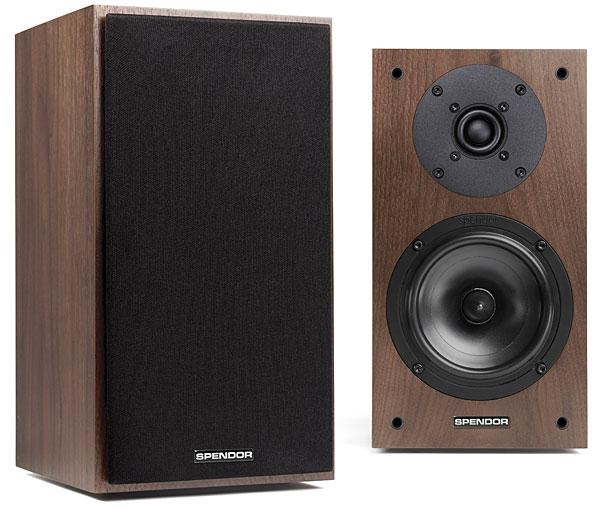
Click pics to enlarge. Left pic from Stereophile of the S3/5R2 but Vivek's later sample has a diameter 1 cm larger. See his text.

Letter from India (1): Spendor S3/5R2 by Vivek R

Editor: We met Vivek R only recently in a Virtual Home Visit. He recently bought this and emailed me this mini-review, which he posted in India's hifivision. Now, as discussed in the previous home visit, Vivek has a particular interest in BBC derived loudspeakers.

Vivek is a very cultured person, works in the finance sector, and a is a music fanatic. His wife is a journalist as well as an author of children's books. Based in Mumbai, they met in the US!

I bit the bullet and bought a Spendor S3/5R2. Creating a separate post for this as it has no comparisons with others of it’s ilk. Of course I have heard the lovely Graham 3/5 and Harbeth P3ESR in altogether different rooms and front ends - so there is no comparison to make.

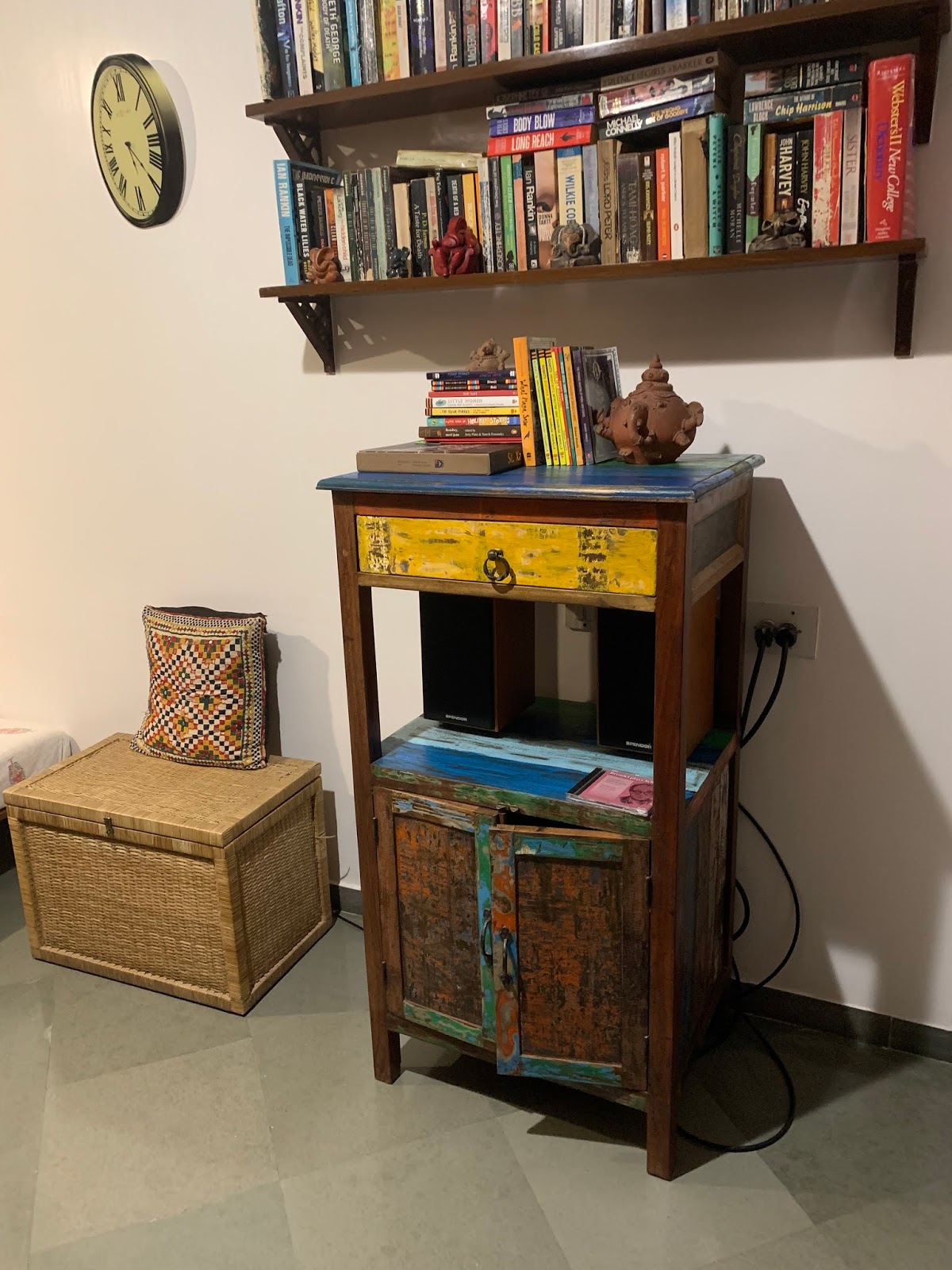
It is for my bedroom and against the wall and it is not even on stands - in a shelf (and like a scene from the Gladiator “kill kill kill” the audiophiles scream)[Editor: see right pic, click to enlarge. Vivek's wife's children books are on top surface]. And it is magnificent for my purposes. And lighter on the pocket too.

Sound Midrange to die for and amazing vocals. Highs without fatigue. But that you knew, right?

And bass that works well with much of rock, jazz, (you hear it, you wont feel it and not much texture), classical as long as it is not complex -e.g. with Schoenberg’s Pelleas and Mellisande, those raw emotions of love, jealousy and betrayal get a bit miniaturised. Play Kendrick Lamar and the vocals are amazing but the deep bass goes “dok-dok-dok” as opposed to “dunnng dunngg” with the Graham even - you get the drift.

Play a string quartet and it sings.

I am really enjoying this and suspect it is a keeper and not honeymoon period. Only time will tell. I am using the Clones 55pm and Elekit 8500 pre.

I googled like a maniac before I bought this and think will put in what I learned for the sake of others.

1. This is 165wx190 depth. Exactly BBC LS 3/5a turned by 90 degrees. So this is a narrower baffle - some feel it does not float voices (see stereophile review of the 3/5se - thank you my friend DJ for pointing it out), but there is one difference in specs with the R2 - see later. Don’t know if it makes a difference sonically. I have no complaints though.

2. The S3/5R2 come in 2 versions. Ones that have serial number starting 206 have a 14 cm woofer [Editor: like the pair reviewed by Stereophile] and the later 236 with a 15 cm woofer. I could not find a review comparing the two. I got the 236 version.

3. This 236 series has the same dimension of woofer as the Spendor classic S3/5. That latter version (now discontinued) has apparently better quality parts. I could not find any comparisons, but I gather that under real life conditions they are pretty similar.

4. The new and the more expensive 4/5 is reverting back to the wide baffle format. It is positioned closer to the other ones like Graham, Harbeth etc. Likely a big difference.

08 July, 2020

Tannoy Canterbury Spendor SP100 EAR 912 509 YS Thorens Zorin


Click Pics to Enlarge. Tannoy Canterbury HE behind Spendor SP-100.

Virtual Home Visit (5):  Tannoy Canterbury HE and Spendor SP100

The name of my HK yumcha friend trazom used to come up quite often in after yumcha activities (dealer or home visits), yet I haven't really written an update for quite a while. Trazom is Mozart backwards, what a moniker! Maybe I should call myself Renkcurb or Hcivokatsohs, Bruckner and Shostakovich in reverse. Almost unique among HK audiophiles, although trazom listens to all kinds of music, his heart belongs to opera.

Early in our acquaintanceship, I wrote in detail about him in 2009 (here and here). He gradually fell under our influence and became a very different kind of audiophile (tube oriented) and took up vinyl again. Two years later, I sold him my Spendor SP-100 and he acquired tubed preamp and monoblocks from  YS Audio (here). Although 2015 was the last time I wrote about him, up till the time I left HK, I have actually listened to his setup several times. In the interim, he had upgraded his YS amps. I then lent him the Leben RS-28CX Preamp, then sold him the EAR 912 Preamp. Before I left HK, I lent him both my Tannoy Canterbury HE's and EAR 509 monoblocks. His current setup:

CDP: Lyngdorf CD-2; Esoteric K-03
Analog: Thorens TD-125/SME 3009; Zorin Setup

Phonoamp: YS Audio Concerto Plus MC
Preamp: EAR 912; Leben RX-28CX
Amp: YS Audio KT-120 monoblocks; EAR 509 monoblocks


From Right, from Top to bottom; Zorin TT, YS Phono; EAR 912, 509; Esoteric, EAR 509; Thorens, Leben, Lyngdorf. 

A word about the analogue setup. Around the time trazom updraded his YS Audio Amps, he bought the Zorin Turntable (YS is distributor in HK). Zorin is a Taiwanese company that now only maintains a Facebook Page. Its products are very beautiful and competitive in price. I was not really enamored of the sound. While very good, it seemed to lack something, soul perhaps. One day, out of the blue, trazom called me and said there was a used Thorens TD-125 with SME 3009 arm for sale for around USD500 and I told him to jump on it without delay, which he did. I heard it later and, yes, that was the kind of sound I like!

Every audiophile is different in his preference and his ways. The Spendor SP-100 and Tannoy Canterbury always sounded a little tighter at trazom's than at my place.

He also put together something in his study. I sold him my pair of the famed Pioneer S-A4SPT-VP (evaluated here), and I see he has paired them with an old Pioneer receiver!

trazom's other hobby is to build toy models (mostly Japanese designs, OEM'ed in China). During the Lockdown, he built many kits, See below:


27 July, 2015

DSD from Vinyl Rip, Harbeth SHL5

ScreenshotsTalk CAS/Talk Vinyl: Ripping Vinyl to Digital
Home Visit: Harbeth Super HL5, E.A.R. 868, Parasound Zphono USB
Overview: Harbeth

This article comes from two visits to my friend 唐吉訶德 Tony's place. A lot has changed between the two visits: Tony has acquired an EAR 868 preamp, close cousin of my 912. I had also brought back from NYC my Parasound Zphono USB expressly for him to play. Also, Tony has experimented extensively with various ripping methods and both DSD and PCM formats.

Digitizing Vinyl
  • This is something I am curious about, but not something that I'd do myself on a large scale. I just have too many LPs (numbering more than 10k) - transfer is impossible, especially if you consider the cleanliness required. But I can see the urge to occasionally transfer a favorite LP to digital file, especially if it is not available on CD. Back twenty years ago, a Taiwanese friend moved to work in China and could not bring his vinyls with him, so he digitized his collection, so vinyl ripping is not at all something new to me.
  • Some people (including reputable people like AMR/iFi's Thorsten Loesch) say if done well the digital file should sound very close to analog playback. Also, I have noted reviews have favorable comments on Devialet's A to D phono section.
Overview: Harbeth
Recently, in the HK forum review33, someone asked about Spendor SP100 vs Harbeth M40. My view expressed can serve as a brief overview of my experience with Harbeth. First, in Chinese:

"...唐吉訶德的問題是 SP100 vs M40。 在我看來,不容易討論。表面看來兩者都是承傳 BBC 的設計,但我相信用起來絕對不一樣。

先說 Spendor, 大家都知道我是它經典產品的粉絲,更用過不少, 不妨看看我的總結

如果不是玩了號角,我是永遠不會賣 SP100 的。 它容易推, 更受膽。連 Unison Research Smart 845 單端都有超凡效果。我賣了給好朋友,他用普通的 KT88 膽機也推得不錯

另外一個朋友,也受了我們的影響,買了新款一點的 SP100R, 用 Verdier 膽機也推得很好

這些都是實例,所以 SP100 受膽是不容置疑的。但我也相信,用適當的石機(如以前的英國合併)也會很好。還有,留意, SP100R 還是大致保留了前身的味道。 我會猜 R2 也一樣。

現在的 Spendor 變了很多,新產品我沒太大興趣。但他們既保留了 SP100, 不會在它身上做太多變動的。這種樣子的東西只有少數的知音(尤其在臺灣和日本)。

再説 Harbeth, 我的經驗少許多,但也不太少。M40 我以前在朋友 Wher 哥舊家聼過,用石后級,效果非常不錯。40.1 就沒聼過。

最近在 ”Conrad Johnson Classic 60 Power Amp“ 這 thread 裏,我說過我對膽機推 Harbeth 的保留:

”...用在 Harbeth 身上,我有點保留。多年前我玩過第一代 Compact 7 及 HL5。用膽機推,高中漂亮,但低音始終不好。M30 我不敢說,你可去 Harbeth 同好會 問問。

講到英國喇叭,很多人都以爲像 LS3/5 一樣受膽, 其實不然。 除了 Harbeth 外,我玩過的Celestion SL6, Spendor SP1/2, 乃至 Proac Tablette 2,都不容易用膽玩得好。

在我看來,Harbeth 的低音比較難搞。連他們的 LS3/5A 低音都和其它 LS3/5A 不一樣,多些。

爲了了解 40.1 我在網上看了很多資料,有些非常值得細讀, 尤其是 Stereophile

這幾篇文章一流,Harbeth 同好必讀。 除了 Art Dudley 的 review 外,還有編輯 John Atkinson 和 Alan Shaw 來回辯駁,都圍繞著低音的問題。中國人的音響雜誌什麽時候才可以出一些這樣的文章和對話!


6moons 的波蘭人也值得細讀,不像 Art Dudley, 他用的是石機.

玩 Harbeth, 我自己可能會選擇膽前石後。

M40.1 太貴了,我會偏向 SP100R2...".


To translate, basically, based on my experience with the old Compact 7 and HL5, my own general advice on Harbeth to others is (1) Harbeth loudspeakers have very good treble and midrange, but (2) do not think of them as tube-friendly BBC-derived speakers; (3) bass control is the difficult part, so consider solid state amp rather than tube amp. If you carefully read this Stereophile link, you shall see much debate between the reviewers and Harbeth's Alan Shaw on the bass response, a fascinating read.

Harbeth Super HL5
Many years ago, I owned a pair of Compact 7, brother of the original HL-5. Like the Spendor SP1/2 and Celestion SL-6SI that I had, the treble and midrange were excellent with various tube amps, but not the bass, which would sound loose. I never owned the 2-way HL-5 but heard it many times; it too had bass that was hard to control. I am a tube man, but these experiences led me to conclude Harbeth's match better with solid state. The HL-5 evolved into an ES version. Then, a supertweeter was added and it became the Super HL5. The Super HL5 was generally well reviewed (see TAS; 6moons; StereoTimes) and sold well. The latest version is termed the Super HL5Plus.


Parasound Zphono USB (official info)
Parasound's ultra-compact and budget Z series products are popular with consumers and professionals alike. The Zphono USB is basically a Zphono with addition of an A to D Convertor. It has been well reviewed. The best read is enjoythemusic, which compares the analog playback with digitized copies. For some reason, Parasound has discontinued it, though at the time of writing it is still available.

While I was in NYC, I bought one at discounted price. I tried it briefly with my Denon DL-103 and was surprised by its solid performance as a phonoamp. I never got around to digitizing, so I took it back for Tony to play.

EAR 868 Preamp
Basically, this is said to be similar to my 912 (see my Overview EAR). It has been well reviewed by Positive feedback and soundstage. Tony bought a new one and had to run it in for a long time (small phono signals, large number of transformers). I also lent him my 912 to compare.

There are significant differences between the 868 and 912. The 868 uses 2 instead of 3 tubes in the phono section, and it lacks the 3-position attenuation feature. And of course, no meters.

Home Visit II
Like me now, my friend Tony lives in a small flat. Although the effective listening area is not much more than 100 sq ft, that doesn't dampen his enthusiasm. Tony is an experienced audiophile who has played with a large number of gears. Perhaps due to space limitation, in recent years he has delved fully into CAS. Now, he has embarked on digitizing vinyls, which was the real raison d'etre for my two visits. His current equipment:

Vinyl Setup: VPI/Kuzma 4Point/Ortofon Jubilee
Phonoamp: Parasound Zphono USB or EAR 868 built-in phono
ADC for vinyl ripping: Parasound Zphono USB or Terratec
CAS Server: Macbook Pro/Audirvana

DAC (PCM): Weiss DAC2
DAC (PCM): Meridian Explorer
Preamp; EAR 868
Amp: Marantz 8B
Speakers: Harbeth SHL-5

Click pics to enlarge. R, setup; L, Korg


Home Visit I
The visit was a few months ago. Equipment was rather different:

Vinyl Setup: VPI/Kuzma 4Point/Ortofon Rohmann
Phonoamp: EAR 834P or Hovland built-in phono
ADC for vinyl ripping: Korg MR-2000S (DSD files)
CAS Server: Macbook Pro/Audirvana
Digital Interface (DDC): Weiss INT204
DAC (PCM): Weiss DAC2
Preamp; Hovland HP-100
Amp: ARC D-115MkII
Speakers: Harbeth SHL-5

Detour: ARC D-115 The reason for the detour is my personal interest in ARC, and the D115 (see here). This unit actually used to be mine, and it was my second one! Back in the late 90's I used to own one, and it was really powerful, capable to drive almost anything. My first sample used Sovtek tubes and the sound was a trifle bland compared to other tube amps, more modern if you like. This second sample though was fitted with the original Philips 6550 (themselves worth quite a bit now) and it sounded better. When I sold it to Tony, I was shocked how good it sounded driving the JBL 4312's! Massive, room-filling sound. I almost wanted to renege on the deal! A bargain!

Comments
  • Vinyl Setup Tony's vinyl setup is fairly high-end. Although I am generally not a fan of VPI turntables (especially older ones, imho often lacking in rhythmic verve), as a Kuzma (Stabi/Stogi) and Ortofon (MC3000/5000/Kontrapunkt C) user, I have reasonable confidence in the neutrality of his source. Ditto the excellent amplification used on both visits.
  • General Sound/Harbeth Super HL5 For such a small space, sound was properly scaled, decent enough. Particularly gratifying was the good bass control of the Harbeth. Based on my previous experience with the Compact 7 and HL-5, I know that is not easy to achieve, so kudos to the system. Naturally, the Harbeth sounded more run in during the second visit.
  • Vinyl Rips/Visit I On this occasion, Audirvana was used to rip to DSD. Weiss INT204 converts the DSD on-the-fly to PCM192. The Korg can play DSD files but was not heard on this visit (and has since broken down). During this visit Tony's vinyl setup was in overhaul and I heard only stored files. My recollection is they sounded similar to, but not as good as Visit II.
  • Vinyl Rips/Visit II On this occasion PCM was used. I stayed for a long time and compared files derived from various ripping methods with direct analog playback. In general, the files sound very close to direct analog playback and accurately reflect the characters of different equipment.
  • Parasound Zphono phono section vs EAR 868 Tonally, the two are very similar, indeed almost dead-ringers. However, the EAR has better dynamics. This is in accord with my previous impressions in NYC (not as dynamic as my reference gears, as expected).
  • Parasound Zphono USB in action Compared with Tony's regular ADC (Terratec), files ripped by the Parasound is just a little less detailed. However, it seems warmer and flows more naturally. Note here that the Parasound is only 16/44.1, not the 24/96 and 24/192 files made by Tony's regular ADC. Tony also likes its volume control for recording.
  • EAR 868 vs 912 This is based on Tony's experience. Tony says the 912 is a bit better in every way. Also, he said the meters of the 912 are supremely useful when transcribing vinyls. Tony compulsively archives and crosschecks his rips, and so was able to play me the same cuts ripped previously using the 912 - they sounded very close to those ripped using the 868.
  • 24/96 vs 24/192 Tony says often he prefers 96 to 192. Again, this is in accord with my experiences.
  • Meridian Explorer Briefly we heard the Explorer in lieu of the Weiss. Though less dynamic, the little Explorer is warmer and rhythmically more suave.
Conclusions
  • Ripped vinyl files can sound very similar to analog playback. This is indeed food for thought. For me, analog source is superior to digital source not because it has more tonal allure, but that it brings more force and drama to the proceedings (especially with pop music). It seems that this force and drama is not (all) lost after proper digitizing. Fascinating.
  • The Parasound Zphono USB is a screaming bargain!

17 August, 2014

Spendor BCIII BC3 All Roads Lead to Rome

Spendor BCIII, BC3
Home Visit: limage, the CAS heretic
Talk CAS: All Roads Lead to Rome?

After covering the HiFi Show, let me return to the weekend before last. I reported my Saturday, which started with a visit to Wo Sir Sir before yumcha, and my time with feikeung after. The following day I found a little time and paid a long-overdue visit to old friend limage. But first, background on the BCIII:

Click pics to enlarge. R: pic of a recent pair from HiFiDo. I suspect this is now limage's pair; L: crossover pic from audioplanet-classical BBC coils, but wires not original.

Spendor BCIII BC3
Compared to its famous predecessor, the venerable 3-way BCI, the larger 4-way BCIII is relatively little known and reviewed. Both were designed by Spendor's founder, the legendary Spencer Hughes (this letter written by him is hugely informative), certainly one of the most important figures behind all the BBC loudspeakers of his time.

The Spendor BCIII loudspeaker was introduced in 1979. It is a 4-way design based on the classic BCI. It also used an additional 12" driver for bass reinforcement. For spec's of the BCIII, consult the informative owner's manual or the Japanese BCIII Page (computer-translated). For great pics, including internals, read the Spanish audioplanet thread (computer-translated).

BCIII begets Spendor S100/SP100??

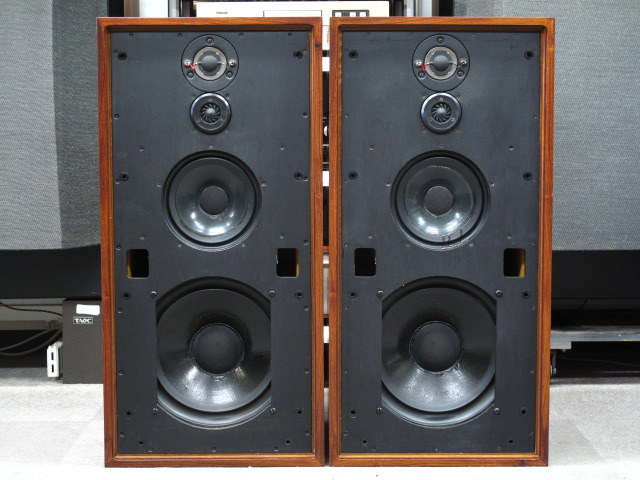
My particular interest in hearing the BCIII centers on my long-time allegiance to Spendor, in particular the later SP100 (see my overview; originally S100; now in R2 incarnation). Although the SP100 is a 3-way, its size, driver and port arrangement bear more than a passing resemblance to the BCIII.

Spendor's website claims: "...the Spendor SP100R²...is an evolution of the Spendor BC3, S100, S100P, SP100 and SP100R loudspeaker systems...". Indeed, this is not just talk: as quoted in Art Dudley's Stereophile review of the SP100R2, "Spendor remains among the few high-end speaker manufacturers that design and make their own drive-units; indeed, as company owner and design director Philip Swift mentioned in a recent conversation, some of the tooling used to make the drivers in my Classic SP100R2 review samples was used in the early 1970s, to make their classic BC3 monitor. That distinction, according to Swift, is more than just marketing fluff: "One of the things that sets Spendor apart is that we understand how our drivers work.""

Another loudspeaker that looks more than similar to the SP100 is the Harbeth M40, and many like to compare the two. But the M40, as with most of Harbeth's products, is more difficult to drive and imho has less of the "traditional BBC sound". In passing and if I may digress, I came across this revisionist history thread which should be of interest to BBC loudspeaker fans.

Home Visit: limage's den, click pics to enlarge.

limage Redux
It has been more than 3 years since I last saw limage. You must read or re-read my previous visit, which remains relevant to this article. This fastidious, stubborn and self-confident man has not changed one whit during all this time, which is to the good. limage does not change equipment frequently; he believes more in executing details (like cleaning pins and contacts).

When I last visited him at his glorious old house, he was using Maggies, so the change to the completely different BCIII came as a surprise. Another major difference is that limage has fully embraced CAS. The layout of the new house, in particular the audio room, bears more than a passing resemblance to that of old. The rest of his system:

Analogue: Technics SP10-(forgot what arm)-Ortofon A-90
Step-Up Transformer: Kiseki
Phonostage: EAR 834
CD Playback: Ensemble Dichrono combo (last generation; not auditioned)
CAS: Windows 7/J River/J Play/USB/DAC (HK DIY)
Preamp: Gnostic Technology 27D (HK DIY)
Amp: Conrad Johnson Premiere 1
Loudspeakers: Spendor BCIII

Some General Thoughts on the Setup and Sound
  • If you know limage at all, you'd know whatever he chooses to play with will sound more similar than different (no better proof of his skills; and of course he is experienced enough not to choose equipment that will ill-suit him). What you see in the pics here is typical of his approach, in particular his "room-coupling" approach, yet another attempt at minimizing the room effect. Typically, the speakers are placed rather close to the side walls, in mid-room, closer to the seat than the front wall. In the old house, the Maggies were so close to the seat that the term "near-field" should perhaps be used, and everyone knows near-field more easily avoids room problems but is not for everyone. This round, the BCIIIs are relatively further away, more comfortable imho.
  • I heard both CAS and analog, but not CD playback. Needless to say, I prefer vinyls. But, overall, the sound was definitely better than my last visit. Smoother, with less of that old Maggie ribbon sound.
  • limage is proud that he has clean bass without any treatment. Indeed he, as usual, has done a great job. But I do think while the midrange and treble are cleaner than before, the bass of BCIII is a just a tad slower than ideal. You just cannot have everything!
  • Again, the bass is leaner than my own preference. limage says it goes down to the mid-30's, but my subjective feeling is less so. Note here that the official spec's of the BCIII states a lower frequency response than the SP100, but my own listening tells me it is the opposite. I'd love to hear the SP100 is his room!
Some Info and Thoughts on limage the CAS Heretic
limage has totally immersed himself in CAS. He claims that his rips/perfect copies are mostly better than the CDs they derive from. He also played some Hi-Res files. He also claims in some instances the digital copies better the vinyl counterparts. In the brief visit, I did not challenge him, or asked him to make a CD/CAS or LP/CAS comparison. In many ways, I am completely different from him, but I love what he does and respect his preferences, even if they are different from mine. Whether in a hypothetical given instance or two I may dispute his claims is really not important, and perhaps I do not want to know (maybe same for him).

Concerning CAS, limage has tried everything. Given my disinterest in CAS (despite this excellent demo) I shall report briefly limage's delightful preferences and views:
  • limage prefers Windows to Apple, purely on sonic reasons.
  • limage not only uses the popular J River, but he also uses the controversial J Play.
  • limage believes there is a sweet spot for music server digital buffer, not the larger the better.
  • the DAC sounds much better without the lid. How about that (I believe him)!
My thoughts on the CAS:
  • Excellent as it is, it still has not convinced me of CAS' superiority. Chief among my concerns regards a certain sameness of playback, regardless of genre, performer or recording. A certain synthetic quality, if you may, even if appealing. But then, to me, limage has always been after the broad strokes, not subtleties.
  • Whatever my preference, it is clear that this CAS sound is a lot better than most of the CAS sounds I have heard, including those from so-called experts (that includes HK dealers of high-end Weiss etc). This is a relatively simple setup, yet it effectively shows that all roads lead to Rome. It also shows, as with all aspects of hifi, the human ear is the most important when it comes to CAS, not numbers and specifications. You shall note that many of limage's preferences are highly controversial, but if you believe me, if I were into CAS I'd rather follow him than all those numbers given out at various forums.
  • I'd think a good 44.1 through the Ensemble DAC may sound even better, but that is just a guess...
  • To throw a gauntlet: if limage truly believes CAS sounds better, then please sell me the Ensemble CD combo to me! I'd have better use for it! :-)
Candid Talk
Suffice to say limage and I, who have gone way back, talked a lot about various matters. I sincerely appreciate his candid nature, rare in HK's narrow hifi circle. These conversations are what I treasure, and hifi differences fade into nothingness.

01 July, 2011

Overview: YS Audio aka Audio Experience

pic: YS Audio's humble showroom; Solo2

Overview: YS Audio (aka Audio Experience)
Review: YS Audio Balanced A2 + Sonata KT88
The Yumcha Diaries 飲茶後記: 25-06-11 Spendor SP100

History of YS Audio (official website)
YS Audio took its name from its founder YS Chui, a known tube designer in HK. In the heydays of the early 90's, they had a store in a Kowloon shopping mall 聯合廣場, near Prince Edward MTR. Although this area of HK had a large number of hifi stores then and the building is next to the largest second-hand store in HK, its location nonetheless was a little odd, since the mall largely catered to teenagers. At that time I visited the store many times but came away with nothing. The products always looked beautiful and there were many interesting designs (you should visit the history page), but the prices were above average. I don't know why, the sound then was always a little too soft and euphonic for me.

(官方網頁) YS-Audio 始創人徐日生是香港有名的真空管放大器設計師, 九十年代十年間曾在發燒音响音响天地等雜誌撰文1988年起生產高級真空管放大器, 由1998年全部 YS-Audio 的產品都以Audio Experience 品牌發售。公司產品全部由徐日生先生和徐志偉先生在香港廠房親手制造自從由1998年起本公司的產品以銷售到海外為主, 多年來得到很多外國音响愛好者的讚賞

Later, YS Audio closed its shop in 1998 and operated out of a unit in an industrial building, its current location, which is to say the least a little out of the way for most of us. By necessity YS turned to other methods of selling, via Ebay and the internet. It must have been hard for them to have build up their reputation bit by bit, largely by feedback and word of mouth. For more than a decade, until recently, I rarely heard about, or had a chance to hear their newer products. But I am glad they have come back with a vengeance!

Fast forward to now, although the father is still very much involved, I'd think the son, Nelson Chui, has a large input in the designs. I say that because, from what I hear, the sound of YS Audio has changed dramatically and, for my taste and no disrespect to the founder, for the better.

YS Audio Solo 2
Purely by accident, I became reacquainted with YS Audio. First, a friend bought one of their amps (report below). Then, in close succession, a friend in the US asked me to buy their Solo 2 phono pre-preamplifier for him. As almost no one makes an active pre-pre these days, I became intrigued, called up and went for the pick-up. Back home, I tested it out and was very pleased by its performance (reported here). I called my friend and told him the good news and soon another friend in NYC also wanted one, and thus I met Nelson.

Showroom Audition
My friend icefox has been trying out and considering phonoamps for quite a while, and was interested in some of YS's products from the good words-of-mouth he heard. When we first talked on this topic I had never heard any YS phono products. Later, after I heard the Solo 2 we talked on this again and decided to pay a showroom visit. icefox is also fond of my ICL Model 4 phonoamp (imho a great product on par with EAR834, but that is for a later article) and would like a comparison. So I called up Nelson and asked if we could do that and he agreed without hesitation. Thumbs up!

Sound in the YS showroom was excellent. Click on the pic to enlarge, as I don't really remember the equipment used too much (should have written this up much earlier), but roughly:

Turntable: An old Sota with a humble arm and an AT cartridge
Preamp and Amp: Reference one/Sonata Reference KT88
Speakers: KEF LS3/5A
Phonoamps used : Solo2 step-up amp, Concerto plus and Concero Plus MC-TSE phono preamp.

We heard several of the YS phonoamps, including using the Solo 2 in lieu of the built-in stepup. There were differences but they uniformly made music; even the cheapest one was very good. As for the ICL, perhaps it showed a subtly greater rhythmic finesse but not everyone is sensitive to that. The preamp used was a balanced one, and the amp a Sonata Reference KT88. Although we listened mostly to the LS3/5A, Nelson actually has several pairs of speakers around, and a brief listen to a pair of Maggies revealed their KT120 amp to be a good match.

Nelson was very relaxed and we wasted a lot of his time! But we came away with great admiration for the products.

Concerto Plus
The next time I heard a YS equipment in depth was at SG's place (report here). Judging by the very good mono playback, the Concerto Plus is a winner.

Balanced A2 + Sonata KT88
Back to my HK friend, you have met this classical music and opera lover before in this blog (previous visits). For the longest time, we tried to persuade him to convert to tube gears, at least a tubed preamp. Recently, to make space I made the painful decision of selling the Spendor SP100 to him.

At first, even after some re-run-in (absolutely necessary after long-term disuse), the SP100 was not really making a sound that I thought was appropriate. Imagine our surprise when one day he bought the Sonata KT88 (most basic version with Chinese c-core power transformer) out of the blue. Apparently he liked the demo and the very reasonable asking price. We heard the amp driven by a digital preamp and the sound was definitely an improvement over the digital amp before, although a little lean. A tube amp takes forever to run-in.

Not much later he surprised us again by acquiring also the Balanced A2 preamp. And on this day we went after yumcha for an audition. I am happy to report the YS combo made the best sound I have heard at his house. The SP100 sound came back like magic! A smooth and refined top, beautifully transparent mid-range, and extended bass (although the host likes it rather lean)! I should add that that the host had done quite a bit of small-tube rolling to have arrived at the present ones used, nothing too expensive, but effective. heroic length is not needed (nor recommended).

As expected, the YS made a sound that has the bloom of tube, but not at all euphonic, a modern and neutral tube sound. Although that may not appeal to many of HK's misguided vintage tube aficionados, who mistake euphonics for musicality, they certainly appealed to me.

18 January, 2011

The Yumcha Diaries 飲茶後記: 08/15-01-11 (SP-100, Tannoy Kingdom Royal)

The Yumcha Diaries 飲茶後記: 08/15-01-11 (SP-100, Tannoy Kingdom Royal)

08-01-11, SP100 Works its Magic again
Those who have known me know that I have been a Spendor fan for the longest time (those who don't can read about my experience in my Spendor Overview). I have owned the SP-100 for more than 10 years and had only recently sold it to a friend. This bulky yet non-floor standing speaker is old fashioned by any standard, and not popular with space-constrained HK people. That is unfortunate. Despite this, for various reason, SP-100 is gaining ground these days. I'd like to think it is because of value. When so many of the speakers now, regardless of price and "prestige", focus more on appearance and deliver anemic sound, a classic like the SP-100, now in its silver-wired R version, shines more than ever.

I only recently made the acquaintance of Patrick, an old friend of whlee. An avid cyclist, Patrick is new to hifi, yet the speed with which he transforms his system is amazing. He recently started with a pair of demo B&W AV floor standers, and made the plunge for a pair of SP-100 soon after.
Considering the newness of the speakers, their performance was striking, especially after some work. His equipment now:

Digital: Naim CD2
Preamp: Counterpoint SA-2000E
Amp: Verdier L'Amplificateur (also briefly the Naim Nait 2)
Speakers: Spendor SP-100R on Sound Anchors stands
Cables: Mogami interconnects and various others.

His beautiful cabinet functionally serves as a divider between the dining and living sectors. When we started, the speakers were further back and in the way for access to some of the dining seats. Sound was good but could use a little more clarity in bass definition. We experimented quite a bit with moving the speakers forward and more near-field. All the way upfront, forming an equilateral triangle with the listener, the sound was quite "hifi" (rather like that preferred by some planar people), but a bit uncomfortable and artificial (also like some of the planars we eard). Moving back a little was more comfortable and we locked in on that.

Despite some quirks, Patrick's long rectangular room is actually a good one. There was very little room-mode problems (and these speakers can pump out bass!), soundstage was deep and wider on the left than the right. Toeing-in was not necessary.
The combination delivered lively music full of air. At first, treble was slightly reticent, but removing the "cold-solder" (screw-on) spades on the jumper wires and using bare wires instead restored treble clarity. Here I'd like to direct you to a 2008 UK HiFi+ review of the SP-100R. The reviewer did not spend much time describing the sound but what he wrote was exactly what we heard:

"...From the word go I was extremely comfortable listening to the SP100’s. OK, you’re probably thinking that this was a nice nostalgia trip back to the days when everything seemed less complicated and loudspeakers sounded warm, a bit flabby and rather vague. And I won’t deny that there was a little bit of nostalgia, and there was a very, very mild hint of character that did evoke the days before Dire Straits were invented. But as for the other negative traits that one used to associate with the generation, forget it. To begin with the Spendors possessed a snappy, tight and extremely rhythmic bottom end, with an attack and punch that could be quite ungentlemanly when required. Sluggish? Definitely not, and with the ability to go loud and deliver decent in-room extension to about 30 Hz, orchestral music had that great sense of authority and scale that makes it so believable, while well-recorded rock music with real drums was just awesome. So the midrange then, a bit syrupy and thick? No. Fresh from having been hit between the eyes by a snare drum and sawn off at the neck by Robert Fripp’s astringent guitar on the 12” single of David Bowie’s ‘Fashion’ I can report that things were very much up to speed in the midrange department, and I can’t honestly say that I was missing the top end extension of some rare and expensive tweeter diaphragm, as it sounded suitably sweet and open to me..."

Even tough k.c. nodded in approval. Enough said? Mission accomplished, almost prematurely!

15-01-11, Let Thy Kingdom Come
This was a busy day. First up was gthk's Tannoy system. Back in the heydays of JC yumcha, I heard his system of Westminster Royal. Some of my cohorts had heard his next Tannoy, the Kingdom, but I didn't. He has recently upgraded to the Tannoy Kingdom Royal. Equipment used:

Turntable: Clearaudio Reference with new arm
Phonostage: Viva Fono
Digital: Accuphase DP800/801
Preamp: Audio Note M8SE
Amp: Audio Note Ongaku
Loudspeakers: Tannoy Kingdom Royal
picture of gthk's system

Looking more snappy than the old version they replaced (yet still a little odd-looking; has a trace of the Italian crept into England?), The Tannoy Kingdom Royal (you must read the link and pay attention to the spec's, 24-61kHz! -6db) are very new and, believe me, as a Canterbury user I know how long it takes to really run-in the accordion-like "hard-edge" of Tannoy concentric's. Yet at least the concentric portion, including its larger than ever 3-inch HF driver, sounded quite musical. Together with the exceptionally revealing gears used and contribution from the supertweeter (this one is a real one, not like the ones of old), the high frequency might be more prominent than traditional Tannoy users may like, yet commendably it delivered airiness and stayed clear of stridency. The 15" bass unit was certainly not run-in and understandably sometimes not perfectly controlled by the amp (which has only 20+ wpc) in this VERY large living room (500+ sq ft). The Audio Note amplification as usual delivered excellent PRaT. For a change, some day I'd hope to hear The Kingdom Royal driven by high-powered tube amps in big works like Mahler and Bruckner! This is definitely a pair of speakers with infinite potential.

Gary is a vinyl junkie who listens mostly to vocals and pop. Of all the LPs played, we were most impressed by the sonic realism of the exceptionally expensive Bianca Wu LP (even the CD is excellent in sound), more for the great playing of the New York musicians than her singing perhaps. In no small measure I think this was due to the contribution of the Viva Fono phonostage (click on link above), which was superbly quiet, detailed and nuanced. I was most interested in its use of 2x 300B tubes as rectifiers!

The poor Accuphase flagship! If we had not requested a demo they would have sit out the session. The sound was not quite up to the vinyl setup but was still smooth and enticing (and they better be at that price!). Note much of the equipment are more prevalent in Asia than in the West, judging by the absence of formal reviews.

Then went to visit limage. Post later.

07 September, 2010

The Yumcha Diaries 飲茶後記: 04-09-10 and 28-08-10 and 21-08-10 (Yamaha, ESL)

The Yumcha Diaries 飲茶後記: 04-09-10 and 28-08-10 and 21-08-10 (Yamaha, ESL, Magnepan)
Talk R2R: Otari

Part I.
04-09-10 Return to Robin's Nest

About a year ago, my good friend Robin the hairy Scott visited me and got smitten by the Yamaha NS-1000 (my review here). He soon got a pair and never looked back (for our visit at that time, click here and read Part II). Now he has upped the ante and gone one step further, and got the big brother FX-3, which shares the same Beryllium tweeter and mid-range, but with a larger 15" woofer.

As Robin is a very busy (and important) man, it took several weeks to arrange the visit, but it was worth the wait, not least because he finally got his recently acquired expertly-restored Otari MX-5050-B2HD Reel-to-Reel machine working for us! The visit was not without mishaps. Two of our cars were not able to find parking around Seymour Road, so I arrived late as the tapes rolled. Finally, six of us cramped into Robin's nest.

REELity Check
What impressed me most was an old Duke Ellington tape, which gave a remarkable presence, a live feeling that rivaled with the best I have heard. Some of the tapes were quite old and had minor pitch instability (due to stretching of tape) and I would guess the machine would benefit from a little alignment, but a Mozart tape was pristinely rendered too (see video below). Perhaps tape quality varies.

The ARC SP-11 and McIntosh 275 formed the same invincible combo; I doubt Robin shall ever part with them, and he shouldn't. He continues his TT tweaking though. Robin's Garrard 301 with highly modified RB300 (Michell counterweight etc) is now mounted on a double-granite plinth with some kind of expensive cones between the layers providing shock absorption. The Ortofon Kontrapunkt B gave a hugely pleasant sweet and crystalline sound that was addicting, particularly on plucked acoustic guitar strings. Though I felt it veered off from neutrality, it was towards the pleasant side and I was left in no doubt as to why there are so many aficionados for this variant (my C version is more hifi, for sure).

Robin played quite a few obscure but great-sounding albums for us, and Nelson surprised us by taking out his iPhone. The SoundHound software correctly identified every one of those songs. If you have an iPhone (or Android etc) I'd think it would be a very worthwhile download! Click here for a youtube demonstration on how this software works. Marvelous! Too bad I don't have a 3-G phone. If I do, I'd use it quite often, not least in concert to identify those unannounced encores!

As it was, I thought the vinyl setup more balanced, but the reel-to-reel surely had its allure. If I have any reservations, it would be about the height of the speakers. They were only a few inches off the floor, as it was sometimes in the studio, but I felt in the smallish LR sound was weighted down and most of the music was beneath the top of the speakers. I am used to much taller images and that caused me a little discomfort. Robin told me he had them higher earlier and balance was off. For these heavy beasts, it would take a while to provide the proper stands.

I eagerly look forward to our next visit. Robin is a handy man who gets literally to the bottom of everything. He is going to buy an oscilloscope and calibrate the tape machine. Now, THAT is an audiophile!

After the visit, we went for happy hour in Kennedy town, where we were joined by oozz. At his suggestion, we went to Saikung for French food. And then we all went back to my place to audition Nelson's B&W CM1. What a full and crazy day!

Reeling On

As Lascalawong could not make it for this return visit, I took a video clip for him to reciprocate his effort last time. Here is Robin introducing his prized Mozart reel. Enjoy!


Part II.
28-08-10 Small Panel, Big Sound

On this day I was in a hurry so I only stopped by icefox's loft briefly after yumcha, with a few others.

As soon as I was inside, I was surprised by the big and reasonably dynamic sound the Quad ESL57 produced in this large space, firing in the opposite direction as Spendor. This pair is actually daiwok's and it must be one of the most beautiful pairs I have seen. Look at those sexy legs! :-)

I believe icefox was drivng them with a pair of Manley 4xEL84 PP monoblocks. At less than 30 watts, the music was fluently rendered, once again proving that an EL84 amp is one of the best matches for Quad ESLs. The most surprising thing was that images were full and tall, the sound big. Once again this proves a large room sometimes works wonders. I have heard more "refined" Quads, but I prefer this big-hearted performance.

While I liked the performance, I cannot agree at all with those ESL freaks who say this panel performs better than icefox's Spendor SP-100. ESL, no matter how you work it, is not at all an all-rounded speaker. It does what it can very well, but is hopelessly bandwidth-limited and dynamically restricted. To call it the best transducer is not to know music in its full glory at all. My cohorts stayed for much longer and heard the SP-100 as well as 15" Tannoy Golds in corner York cabinets. They too reported that the Spendor SP-100, even the Tannoy, far-out-stripped the ESL in performance.

I'd use this space to briefly mention again icefox's Spendor setup. I have paid him several visits since my first visit, and his systems have steadily improved. The SP-100 now is mostly driven by legendary monster 200 wpc EAR 549 amps, and sometimes by Nagra VPA. These markedly outperform the previous Symphonic Line (of course). If you pay him a visit, ask him to play some Mahler!

When I have more time, I shall re-visit icefox and listen to the ESL57 in depth. Watch for more report on the amazingly rapid progress made by this young man. I call him 教父 now.

Part III.

21-08-10 Bigger Panel, Bigger Sound
Now, size matters. Our friend jules recently got a pair of Magnepan 3.5. We visited him while he still had the 1.6, and planned to compare them side by side.

As soon as I stepped out of the elevator, and BEFORE I stepped into the apartment, I knew there was no need to compare. Sound emanating from the room was instantly bigger than previously. Even if we did not listen to LP, as driven by Orpheus-Cello-ML, sound was pristine. Compared to the previous visit, there was more fullness. The big panel seemed just right for his not-big LR. Ry Cooder's Jazz was lightning fast and classical piano was thundering. It was so satisfying that our friend k.c., surely discriminating ears, instantly praised it and proclaimed it to be (+/- the word "among") the best Maggies he has heard. I agree. But I do have one reservation; none of the Maggies I have heard, including my own, goes deep enough, and I'd add a subwoofer.

jules' pair of 1.6 went to tubediyer, via welborne. More reports later I'm sure.