Showing posts with label Brand-Ortofon. Show all posts

17 September, 2023

Ortofon MC 200 VAS Cartridge ReTip


Letter from NYC (23-15): VAS Re-Tipped Ortofon MC 200

Written in Shenzhen

Long-time readers of this blog, particularly those into analog, know about VAS Cartridge Re-Tip Service. Ever since I made the acquaintance of Steve and his son Ray, I have periodically covered them and used their services (as do others in our NYC group). So let this be known. It's astonishing that over the past decade they have repaired just about every high- to highest-end MC cartridge that you can name - and custom modified many! In our wechat group, it's astonishing what our friends show, all manners of cartridges old and new! They are so inundated with work now that they don't need my article; still, I always report on what I have heard, especially when it's good...

Summary of my Experience on VAS Restorations and Re-Creations
For this article, I re-read some of my past articles (yes, I'm quite compulsive about that) and, if I may say so, I am happy that I had been thorough. My first encounters were with the Denon DL-103 based cartridges, first the VAS Ebony 103, then the VAS Ebony Mono (Cartridge of the Year 2019), both wonderful creations. Incidentally, for the record I returned them to VAS after trying them out, not because I didn't want to buy them, but because I just know VAS will have something perhaps even more interesting down the road that I can borrow to try out. I also have some cartridges that I haven't even tried out yet, among those an Audio Techinca Art 2000 and a Kondo IO-M. I hope they have not gone bad in their boxes...

Excited by what I heard from the VAS cartridges, I sent my Koetsu Black to VAS for Repair, and the result was just fabulous. It pays to read this post carefully, as it kinda compares VAS' work with another's. I also sent my Denon DL-301 to VAS, and the result was great too! I just loved to have re-read this last post, as I had completely forgotten about my interaction with Richard (C)! This is one of the beauties of this blog - it's my personal Audio Diary. Another interesting experience was at Kevin's, with the "VAS" Ortofon 2M Red, a humble MM rendered much bigger! :-)

A few things of note. VAS gets many dead cartridge bodies, and they experiment with them. The Ortofon 2M Red had long been the part of the standard package in budget or super-budget offerings (I had one before) and Steve just played with it. Nobody would re-tip a 2M Red (cost of re-tipping would exceed value of cartridge), but VAS just had fun and ran with it, and we are glad we shared in the fun. It's good to have a kid's heart - especially to make something greater out of something humble! Incidentally, there seems to be a newer trend of diversification and expansion of MM offerings that use the same upgrade formula of MC (stylus material and profile). This last point on the Spirit of Experimentation is important when it comes to the Denon DL-103. Despite its humble price, it has a Golden Heart. It has long been a staple for me, something every cartridge is judged against. VAS holds the Denon DL-103 high in esteem and they have only praise for the excellent Alnico Motor and Sturdy Built. VAS told me some popular modern alnico cartridges are greatly inferior in construction. Of course, I cannot mention names! In conversation, they also told me of quite a few name brands to avoid, but I'd not buy those at those prices anyway - I had witnessed just too many terrible "high-end" analog setups! With VAS, there's a lot more to be had from the rock-solid fundamentals of the DL-103 - that I'm very glad to report! What I appreciate about VAS is their hearts are in the right places. No Nonsense.

Ortofon MC 200, Part I (Official Info)
This came as an utter surprise! When Richard and I visited them recently, Steve handed me this. I was perplexed. It looks like a DJ cartridge! Steve said, didn't you always wanted to hear the Ortofon MC200? And then I realized that something was lost in translation. I likely had once mentioned that I regretted not having bought an MC2000 (I had bought the wonderful MC3000 Mk II and 5000 on clearance in HK years ago, and I still have them).

But, as I scrutinized this completely unfamiliar Ortofon, I became more and more excited. Man, this is a veritable relic! This is an extremely low output (0.09mV) feather-weight (6g) MC cartridge that tracks light (1.3g) and can be used on a light arm, when the conventional practice is heavy MC cartridge on a heavy arm! From decades ago, we have this tiny cartridge that houses a Samarium Cobalt motor with a Boron Cantilever and Micro Line Stylus (wow, how modern that sounds, $$$ right?). This particular VAS restoration is with Boron Cantilever but a PA stylus.

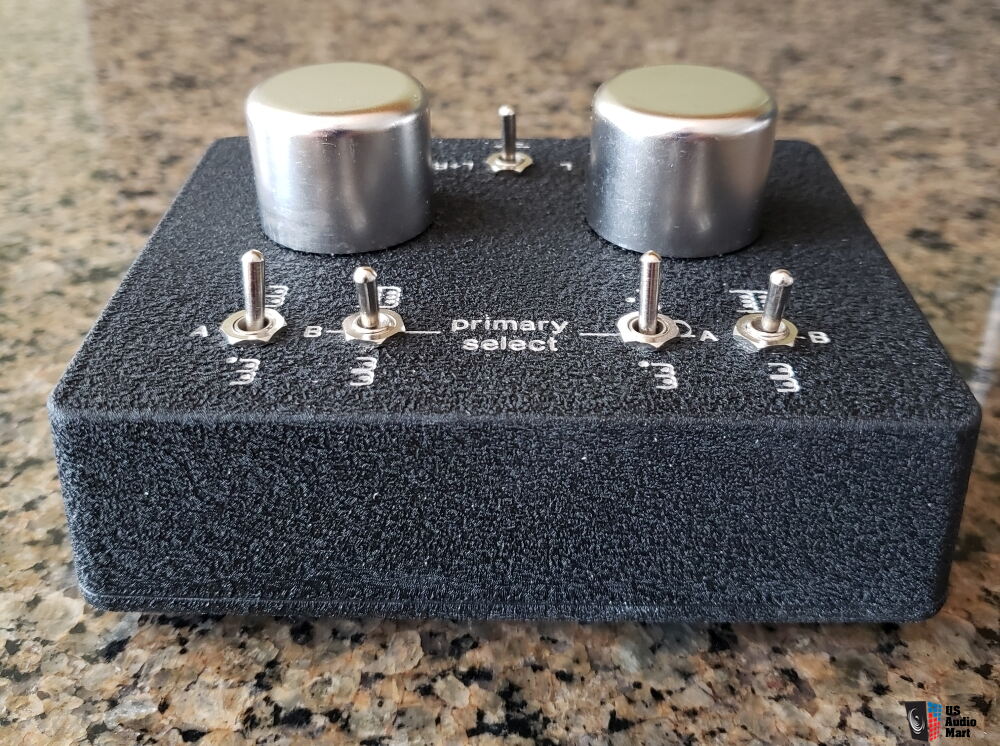
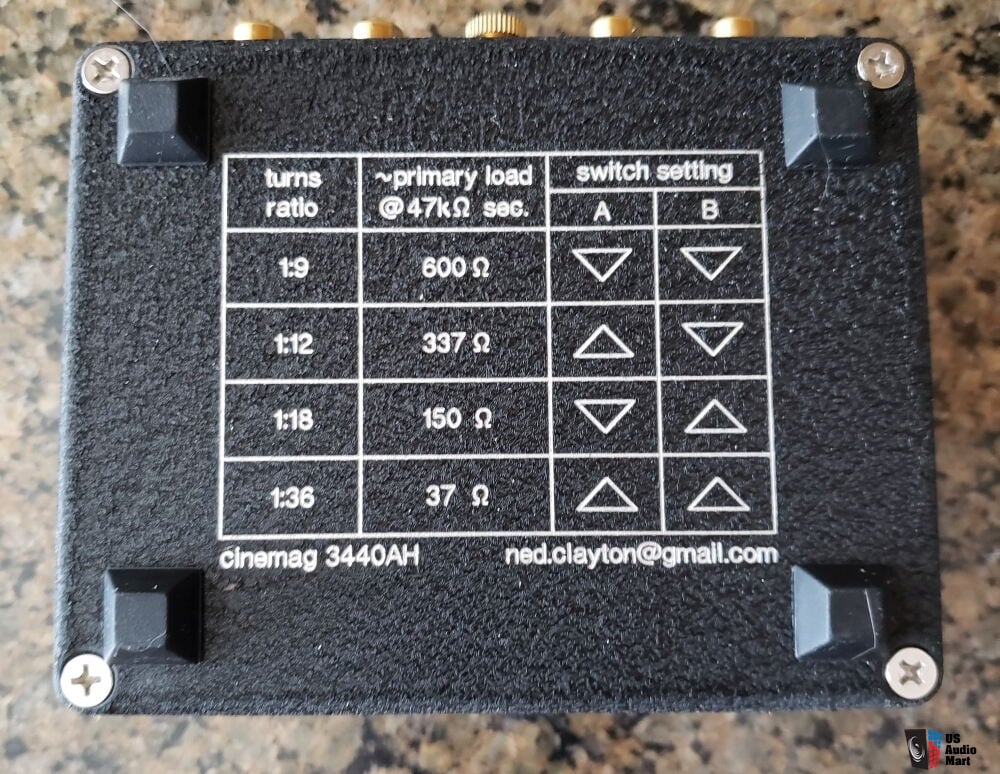
I installed it on my Technics SL-1200, a medium-mass tonearm. I used the 37 ohm setting (1:36) on a Cinemag 3440AH (made by Ned Clayton) into the MM stage of my Aurorasound Vida, and the sound pleased me from the word go! It was very smooth, yet full of microdynamic details! It sounded like an expensive MC (which it should be)! Perhaps my Midas Denon DL-103 on the MoFi Studiodeck had a little more drama (and a little grain) but the MC 200 held its own. And I likely didn't even have the best SUT. I was running out of time and could not have taken it to Kevin to match it with its perfect partner, the Ortofon T20 SUT. This would have to wait for months for Part II on my next return to NYC, but I'm confident the Ortofon MC 200 is a winner. That it can be used on a light arm is highly unusual! I'm sure I shall install it on my SME3009i to try!

Another fascinating restoration from VAS! Salute!

 Cinemag 3440AH Phono Step Up Transformer SUT

Cinemag 3440AH Phono Step Up Transformer SUT


14 July, 2020

BBC LS5/1A Western Electric 124 Conrad Johnson Premier 7 Soundsales AM 8/1 Jorgen Schou No. 251


Click all pics to enlarge. Many more pics with captions at bottom. jules' living room is small, but the sound with the LS5/1A is big!

Virtual Home Visits (8): BBC LS5/1A, Western Electric 124, Conrad Johnson Premier 7, Soundsales AM 8/1, Jorgen Schou No. 251, and other goodies

Editor: I have known Jules for over 25 years. Jules is an engineer involved in a lot of Hong Kong development projects, quite a busy man! With two kids, I have no idea how he finds the energy to acquire so many audio classics. Jules is also a classical music fanatic and still buys CDs regularly in addition to streaming via bluetooth.

Regular readers will recognize him as a frequent host of our HK home visits. Truth to tell, by the end of my stay in HK, I was not that keen on home visits, except when there are rare gears to be heard, and jules surely gave us several surprises. In particular, I urge you to read my last visit, a mammoth but informative article about more than the RARE LS5/1A and jules' Reel-to-Reel setup; in that article you will also earn how a CD Transport and DAC can drastically degrade the sound (The visit before that is also a good read as it reported on how a "respectable" modern loudspeaker got trampled by a vintage one).

At the end, I shall write some Footnotes.

Not surprisingly with Jules, equipment has changed quite a bit!

Analog: Garrard 301 with 2 arms - SME 3012s1/Ortofon SPU AE/Jorgen Schou step up and Decca arm/Decca mk2 [Editor: see Footnote 1]
CD transport: Forsell Air Bearing Reference Mk2
Bluetooth: Cheapie from Taobao
DAC: Totaldac D12 dac
R2R: Studer A807 and Telefunken M21
Phonoamps:-Built-in Phono of CJ P7 (below) or Diatonic Precision DP10 (solid state, HK brand) [Editor: see Footnote 2]
Preamp: Conrad Johnson Premier 7 [Editor: see Footnote 2]
Power amp: Western Electric 124 or Soundsales AM 8/1 [Editor: see Footnote 3]
Speakers: KEF LS5/1a

It's too bad I cannot be there!

Editor's Footnotes: 

  • 1) For better pics of this and other Decca cartridges, see my home visit to Kevin, another Decca arm/cartridge user, here. The Step-Up Transformer uses the rare vintage Jorgen Schou No. 251 that is supposedly a perfect match for some SPU's.
  • 2) Having heard so many CJ preamps (and used the PV10), the only one that attracts me is the P7, which I have not heard. This is a classic (read J Gordon Holt's stereophile article for details), and I am particularly interested in its use of 6GK5 which is also used in my Melos 222. Jules and I listen in much the same way and we both agree that the CJ P2 and P3, so prevalent in my NYC circle, are just too sluggish sounding. Jules said the P7 is more neutral sounding, and he prefers its tubed phonostage's dynamic bloom to the HK brand's solid state.
  • 3) WE 124 needs no introduction and has appeared in this blog many times. Unless you are from the UK, you'd not have heard of Soundsales. This vintage amp maker was associated with the BBC. If you google "Soundsales AM 8/1" you find almost nothing in writing, but if you switch to image search, there are a lot of pics, many originating from HK. Apparently, there is a cult following. I asked Raymond what's the difference between the Soundsales and the WE, which is much more expensive as they are tubed with WE tubes, he said:" ...124 聲音更多內在變化起伏,絕不拖泥帶水,節奏明快,而高中音帶有西電 DNA 的 吸引力。雖然 8/1 輸出比 124 大一倍,但聽感上 124 的驅動力更強更豐富...." the WE 124 is superior in microdynamics and rhythm and pace, and its treble and midrange of course has the mesmerizing quality unique to the WE DNA. Although the power of the Soundsales is supposedly twice that of the WE, subjectively the WE 124 is grander and more effortless in its drive..." There! As I expected.

Garrard 301; Decca Arm/Cartridge in the back; SME 3012/SPU in front
Jorgen Schou Step Up Transformers
Forsell on top, multibox Totaldac below
Studer R2R
From top to bottom: SS Phonoamp, PSU and Dual Chassis of CJ
WE 124 and vintage Step Down Transformer
Telefunken R2R
Soundsales AM 8/1 (pic from the net)
Rare Pair Of BBC Vintage Sound Sales Tube Power Amp AM8/1 | eBay

25 December, 2019

Air Tight PC-1 Koetsu Black Goldline Denon DL-103 Ortofon LH-9000 LW-7N AQVOX 2CI Mk II Aurorasound Vida Fosgate Signature Mono Button


Click pics to enlarge. David and Goliath? In the US, David is priced at 1/50 the price of Goliath.

Talk Vinyl: Mono Button, Headshell, Cartridge Wires, Viennese Waltz
New York Diary (19-24):
Air Tight PC-1 Re-visited vs Koetsu Black Goldline vs Midas Denon DL-103
Aurorasound Vida vs AQVOX CI Mk II vs Fosgate Signature
$5 Ebay Headshell vs $240 Premium Headshell 
Review: AQVOX 2CI Mk II, Part III
Calibration of Analog Sources in System II

Revised 12/28: AQVOX tested with Midas Denon DL-103
Revised 12/26: Addition of Fosgate Signature Phonoamp

Mega Article on AQVOX, Parasound and Aurorasound (this older article features all the phonamps and cartridges in this present article, which can be regarded as a Part II of the older article).
Fosgate Signature Phonoamp as last heard

After I finished my long and gratifying session with the VAS Ebony Mono, and after brief flings with the Denon DL-102 and Shure SC35C (here), I reinstalled my Midas Denon DL-103 on the Thorens TD-124/Schick 12". This was all into the Parasound JC3 phonoamp, which has a Mono Button, which is fed directly into the LTA MicroZOTL.

One thing led to another, and this article snowballed.

Mono Button with Mono Cartridge
Whether with the VAS Ebony Mono or Denon DL-102, engaging the Mono Button produced no discernible effect. This is also true in my System I, where the Mono Button of the Aurorasound Vida phonoamp produced no effect with these two cartridges. This shows the cartridges are not picking up anything from the vertical plane, and are hence true mono cartridges. Nonetheless, I usually habitually engage the mono button anyway when I play mono records.

Mono Button with Stereo Cartridge
I really wasn't doing any critical listening and was typing away on my computer but, after listening to two stereo LPs, it disturbed me a little that the sound of the Denon DL-103, while good, was not open enough. I looked around a bit and suddenly saw the Mono Button of the JC3 was still engaged!! Pressing the button again immediately opened up the soundstage and distributed the instruments. That is to be expected but what was not was a smoothening of the treble and small loss of bass impact. I then went back and forth with the button and confirmed that with stereo records the Mono Button firms up the bass but also paradoxically makes the treble a little sharper (?focused). Of course, the Mono Button is designed to let one cancel out the vertical modulations of the stereo cartridge when playing a mono record. But judging from the above, it may benefit the playback of some sub-optimally recorded or non-RIAA stereo recordings (which a mono cartridge does too).

Headshell and Cartridge Wires
After a while, I got itchy again in trying to improve the replay with the Midas Denon DL-103. This cartridge was permanently installed on the only expensive headshell I have, the heavy magnesium-carbon fiber Ortofon LH-9000 (here) which was an impulse buy (always a wrong thing) in HK when I acquired the Schick arm in 2012 (in the pic in the original post). Somehow, despite its hefty price, or because of it, from the first sounding I have always been suspicious that it may not be the headshell for me.

See, for a start, I don't like the cartridge wires that come with this headshell (left pic); I frown upon the relatively thick strands. The wires are the LW-7N that Ortofon sells separately at an outrageous price. They are much thicker (lower in AWG) than the generic ones that usually come with my generic headshells. Ortofon actually sells all sorts of cables but they have never caught on with anyone, certainly not in HK and US. Almost all their cables are LC-OFC, 6N/7N copper, and all made in Japan, just like most of their tonearms and tonearm cables (basically Jelco). In my experience, these Japanese cables are smooth but lacking in dynamic expression.

It has always been my belief that thick cables sound worse than thin ones (as stated in this HiFi Basics article). So, 7 long years later, I swapped out the Ortofon for a generic Korean made perforated metal one that costs around $5 on Ebay, roughly 1/50 the price of the LH-9000 at established US retailers (cheaper on Ebay, at maybe half the price, which was around the price I paid for mine in HK)! In the case of the cartridge, the output signal is so small that a very small-gauged wire (high AWG) is enough to carry it; the larger the diameter (lower AWG) of the wire the more the delicate signal is going to be altered.

It has always been my audio belief too that one flat surface should not be placed upon another. This is true of smaller loudspeakers and their stands. For small loudspeakers like LS3/5A, one may get away with a little blue tac at the corners, which serves the dual purpose of securing the loudspeakers as well as decoupling. For larger loudspeakers, stands with flat tops are more often than not suboptimal. Two examples: The original Epos stand for their medium sized ES-11 and ES14 (great loudspeakers btw!) has an open-frame top, and they sound best that way; ditto the magnificent but voluptuous Spendor SP-100, which also sounds best on an open-frame stand. This is likely true of the cartridge/headshell interface too, particularly if both headshell and cartridge body are metal. I happen to like the look of these generic headshells, cool and retro. I also like the perforations, which should help resonances - witness Rega derived tonearms that have so many holes punched into them that they look like they are bullet ridden from an ambush! There is a reason why the open-framed Orsonic headshells fetch good sums on Ebay. For my cheaper plastic body cartridges I fuss less, but in my mind I don't like having the top of a metal-bodied cartridge right against a metal headshell (of course the metal screws unavoidably do bind them together at two points), and if the sound is not entirely satisfactory I'd insert a shim of cut expired credit card between them. I did that in this case (you can see in the pic; it helps with the VTA too). Note too that the Ortofon LH-9000 also has a thin strip of anti-vibration material taped onto its underside, so someone there was thinking along the same line.

Guess what, my worst premonitions all came true! The cheaper headshell was more to my taste - more air around instruments, a larger soundstage and a livelier and more subtle presentation. Whether it is due to the wires or headshell or a combination of the two I won't say. Of course I could swap the wires and try out all combinations, but I am not about to do that - one is just as unlikely to use an expensive headshell with generic wire than to use expensive wire with a generic headshell. Somehow, I just love the cheap package!

Which brings us to: how complicated vinyl playback can be! Aside from the turntable and the arm and the cartridge, even the littlest things, the headshell and cartridge wires, influence the sound greatly. In my experience, people who constantly tinker get bad sound (how can they not if they only concentrate on a few records for A/B); people who don't tinker can go either way; the best is to tinker less and concentrate on the music more - improvement comes with experience and in due time - there is no expressway to "heaven".

Unwanted Noise/Resonance/Vibration Control in audio has always fascinated me. In my experience, most of the time, the "solution" is worse than the "problem". Most, if not all, AC Line "Conditioners", Spikes and Cones, ridiculously expensive racks like Finite Element are just some examples that kill the liveliness of music, perhaps only suitable for those who use hot solid state amps and "state-of-the-art" loudspeakers. Those of us sympathetic to tubes seldom need these paraphernalia's.


Air Tight PC-1 redux

I then rearranged the positions of the 3 turntables in System II for some easy testing. For the first time in at least 2 years I played my Linn LP-12/Ittok/Air Tight PC-1 (here). I had looked forward to this moment ever since I got my Koetsu Black re-tipped by VAS. A comparison is in order.

For this part, as usual everything in System II went through the Shindo Monbrisson preamp, which drove the same LTA MicroZOTL 2.0 amp. Aurorasound Vida was the phonoamp for the Linn. I played 3 LP's that I had played using the gears in the above section, and the result was both spellbinding as well as instructional.

with Aurorasound Vida Henry Krips is almost forgotten today. He previously amazed me with his Suppe Overtures (here). This time, I got his Johann Strauss Favourites (HMV Concert Classics). Before, I thought it was well played but not quite inspiring. Not so with the PC-1: all of a sudden, the orchestra swinged and swayed, and Krips deftly applied to the English orchestra a Viennese lilt. The all-important upbeats acquired more emphasis, subtle retards became evident. Most delightful were the percussions, which felt purposeful, a sine qua non of good reproduction. In the Thunder and Lightning Polka, the rapid bass notes depicting the thunder were superbly resolved, no easy task. This LP is so telling that it is going to be my go-to test LP for cartridges. As amazing was Swarowsky's Saint Saens Symphony No. 3 (Urania). Despite excellent sonics, it was a straightforward account that bordered on boring, and the pickup Viennese orchestra had some weak playing. Again, not so with the PC-1: orchestral texture became more refined and colorful, and dynamics improved to the extent that it was actually not bad at all! Similarly, on Beecham's Ein Heldenleben (HMV Concert Classics) the Royal Philharmonic seemed like a much better orchestra with the PC-1, and combined with the subtle conducting (no bombast) of Beecham it deserves its reputation as a great interpretation.

vs Koetsu Black Goldline AQVOX As the Aurorasound Vida's MC input is now occupied by the PC-1, I first connected my Koetsu (on my Thorens TD-309 turntable, here heard with the Vida) to my AQVOX 2CI Mk II, and then played the same 3 LP's. Although better than previously with the Midas Denon DL-103, compared with the PC-1, it was evident the music was rendered with a broader stroke. I fiddled with cables, which did not help too much. Aurorasound A little piqued, I did the hard work of disconnecting the Linn/PC-1 so as to connect the TD-309/Koetsu rig into the MC input of the Aurorasound, which was how I played the Koetsu last time (here). Ah, the playback became more focused, and the Koetsu found more of what the PC-1 did (like the Viennese lilt). However, ultimately, the PC-1 was just more detailed and dynamic. The Koetsu Black is already a top-notch cartridge, but the PC-1 belongs in even  more rarified company. From this, I concluded that I wanted to use the Koetsu on the Aurorasound, so I recruited my Bob's Device SUT (here) for input to the MM input and the result was largely the same, perhaps with just an extra touch of force, which I didn't really need. Based on the Koetsu Black alone, it would seem safe to conclude that the Aurorasound Vida is better than AQVOX CI Mk II. Although there is no question the Aurorasound is formidable, but, as audio, particularly analog playback, is all about matching, I was not ready yet to draw this conclusion... Fosgate Signature The next day I connected the Linn/Koetsu rig to the Fosgate and, as they say, the rest is history. In this system, the Koetsu did even better than on the AQVOX, and perhaps even better than on the Aurorasound. The Koetsu did everything the PC-1 did, but at a somewhat smaller scale, but I feel it has been optimized. What amazes me is that the all-tube Fosgate yields not one iota to either the AQVOX or Aurorasound in the transient portrayal of the leading edge; every emphasis is microdynamically portrayed, no mean feat, with the additional benefit of a smoother sound.

with AQVOX I then connected the Linn/PC-1 rig to the AQVOX. The PC-1 was instantly everything it was on the Aurorasound, but with a little more grain. Remembering that I had bypassed the capacitors before (here), I switched them back in and now there was more warmth needed in this very high resolution system. I also adjusted the gain (front knobs; not = volume knobs) and experimented with cables (Gotham DGS-1 and GAC-2111 in lieu of the previous GAC-2) and got closer and closer to what I was hearing before. There were several thing that were amazing: 1) as some have commented, the current amplification phonoamps thrive on low-impedance or low-output cartridges, and the PC-1 vs Koetsu is 2.5 vs 5 ohm; 2) even with the gain turned way low, the AQVOX was even more dynamic and even faster than the Aurorasound, with either cartridge. Make no mistake, for my taste, because of its more refined nature the more expensive Aurorasound is still the better phonoamp, but the AQVOX would not be easily dismissed and I am going to explore more around the findings of today. For now, given that I had found a home for my Koetsu (i.e., the Fosgate), the PC-1 going back to the Aurorasound (the MM used for the Denon DL-102).

AQVOX with Midas Denon DL-103 With all of this, it is also apparent the TD-124/Schick/Midas Denon DL-103 needs some rejuvenation or upgrade. I went back to the rig and replaced the Parasound JC3 with the AQVOX. Surprise! With those 3 LPs I got back much of the quality missing before. In Johann Strauss Favourites, much of the Viennese lilt was back, and the bass notes in Thunder & Lightning Polka was surprisingly very well resolved. In Saint Saens, the brooding atmosphere was highly satisfying and the strings and winds had surprisingly sheen. And the Ein Heldenleben was positively luxurious, if a little lighter. How good it was can be judged thus: I was getting more than a little sick listening to the 3 LPs, but this round I wanted to hear entire sides and never lifted the needle mid-way, so pleased I was. What is a little surprising is that the end result rivals the playback by the Koetsu Black Goldline - in terms of tactility, the Denon was at least an equal, but perhaps the Koetsu was slightly richer from the mid-bass down. Again a great performance by this humble evergreen. However, it is also clear the PC-1 remains in a league of its own.

All of this is a bit exhaustive and exhausting - audiophile behavior. This article represents the biggest analog testing session lazy me have done in a long while, since the last big one linked above. But it is undeniably rewarding as I have achieved as much parity as I could have mustered. More rehabilitation of cartridges and phonoamps are in order.


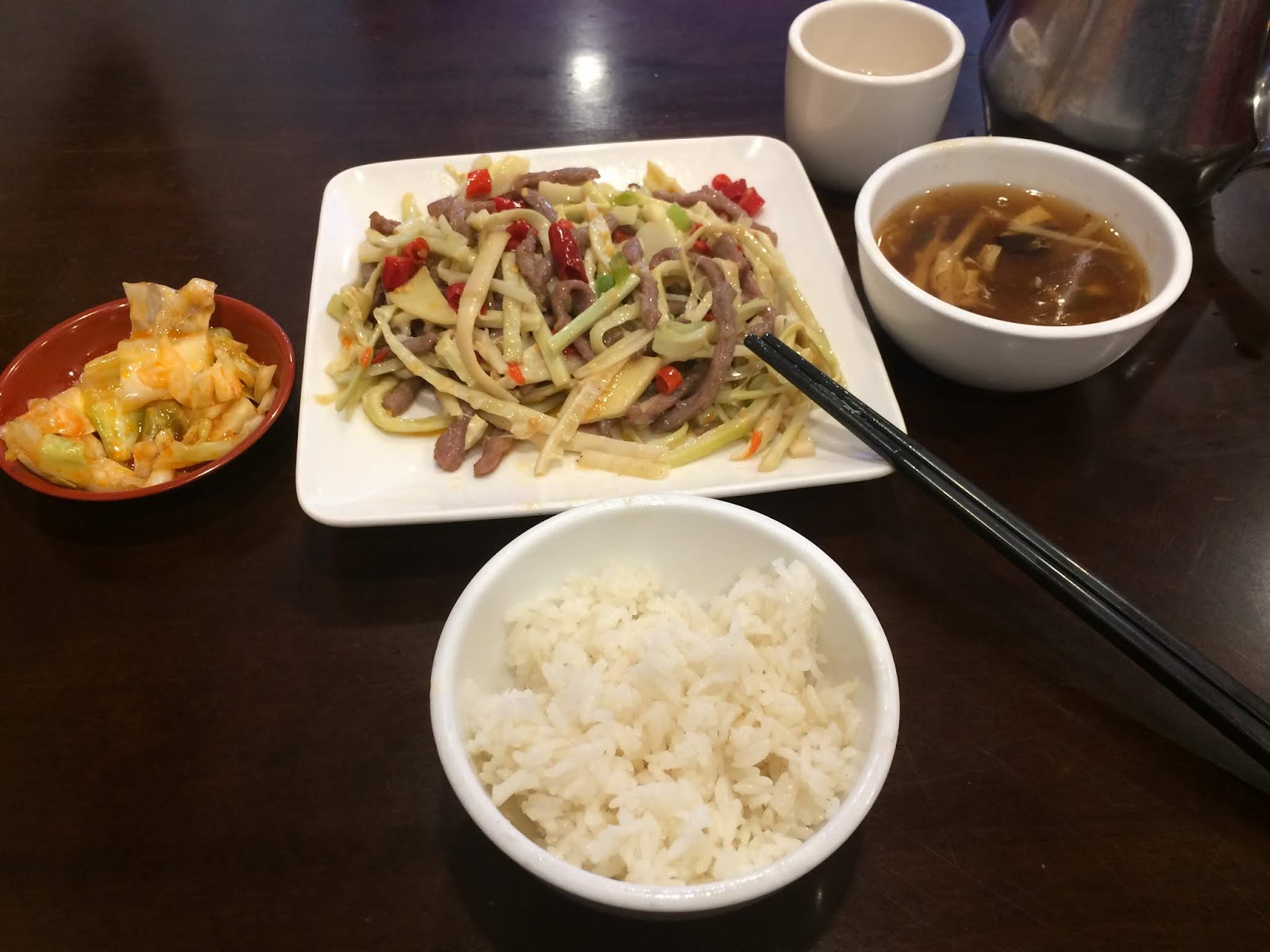
Simple Lunch, Spicy Beef with Dried Bamboo Shoots
Lightly Pickled Cabbage as Condiment

16 February, 2018

Altec A7, Bell, Grommes, WE 285L, Langevin 402B, Ortofon MC-5000, T-20


Click pic to enlarge. Bottom Row, Bell Amps; Middle Row, C-J PV5 to the left and Premier 3 to the right; Top: from R, C-J PV-75, Grommes Amps, Sun Audio 2A3.
Two 6V6 Amps: Bell 2122 and Grommes Little Jewel LJ5
Ortofon MC-5000 Cartridge (vs Ortofon hot-rodded 2M Red)
Three Step-Up Transformers: Ortofon T-20, WE 285L, Langevin 402B
More Horns Without Pain: Altec A7
Letter from NYC (77) 2018 (3): The Amazing 6V6

After hearing the A5, barely a day had passed when Andy and I visited Kevin to hear the A7 (previous visit here.) Equipment had changed a bit. Through a mutual friend, he acquired an Ortofon MC-5000 which had previously belonged to me! Before I left for HK last time, I had also lent him my Bell 2122 and Grommes Little Jewel LJ5. For this round I also brought with me the WE 285L and Langevin 402B SUT's for fun. Equipment:

Analog: VPI Prime; Arm 1 with Ortofon 2M Red hot-rodded (MM); Arm 2 with Ortofon MC5000 (MC)
MC Step Up's: Ortofon T-20, WE 285L, Langevin 402B
Phonoamp: Conrad-Johnson Premier 3 (using Tape Out)
Preamp: none for Bell 2122; C-J Premier 3 for Grommes LJ5
Amps: Bell 2122 and Grommes LJ5
Loudspeakers: Altec A7 augmented by JBL 075 as supertweeters and an old subwoofer

Here I shall detour to write briefly on what I know of 6V6 tube and amps. As power rube, the 6V6 is famously still used in guitar amps, but now rarely in hifi. I probably know and have heard more than most audio tube aficionados, as the 6V6 tube's low power precludes useful applications with conventional loudspeakers, which won't do it justice like an efficient horn would. And that's a shame, as it is one of the most wonderful tubes!

Overview: 6V6 Tube and Amps

  • 6V6 Tube Astonishingly, the 6V6, like the 6L6, has been in continuous use since its inception in 1936 and, if I am lucky, I will get to witness its centenary less than twenty years from now! For a surprisingly good history, read this wikipedia entry. Sonics The intrinsic sound of the 6V6 can be described as possessing uncommon clarity and lucidity (that other tetrodes/pentodes struggle to equal, let alone surpass). In fact, some knowledgeable old timers in HK regard this tube as 琴王, meaning "violin king", nonpareil in the portrayal of the violin (or other stringed instruments). On the other hand, perhaps due to its low power, it often sounds a little lean in the bass. Like the 45, there are a huge number of different old stock 6V6s out there, and almost all brands and constructions sound very good. 6V6G vs 6V6GT As usual for G vs GT, the earlier and larger G (ST type) has a warmer sound than the smaller GT type. However, to me (as we just found out, at Kevin's), the 6V6G lags quite a bit behind 6V6GT in resolution and speed, which doesn't stop it from being favored by the "older is better" vintage crowd (prevalent in Asia; I know many of them and imho they don't know what high fidelity is). Big Family The 6V6 is but one member of a large family, with siblings and cousins like 6F6 (used in a lot of radios, and said by some to be closest to WE349A), 6Y6, 6W6, 6K6, etc. Perhaps the most famous "cousin" is the WE349A, whose price has been driven up insanely partly because of people who use it as substitute for the 6V6, a dubious application in an attempt to get the "WE sound on the cheap". Durability The 6V6 is known to have a good life and survive beyond its ratings. However, I don't feel this to be true of Russian and Chinese tubes - I had quite a few die (same for Russian 6SN7/6SL7) when I first fired up my old Audio Note Kit 4, but that was a long time ago (perhaps current ones are better; I sure hope so).
  • 6V6 Usage Amps For a while, from the forties to the fifties, the 6V6, like the 6L6, was ubiquitous in home use amps (loudspeakers of the day were efficient). Therefore, there were innumerable models, even from the same company, though, in terms of sheer number, they were outnumbered by the higher powered 6L6, which survived for much longer in home use after the emergence of stereo and lower efficiency loudspeakers. Topology As for the era, most 6V6 amps were mono Push-Pull and had classic, simple designs. Most were mass market Integrated Amps with a Phono Section (usually employing 6SC7). There were fewer Power Amps, which usually employed larger irons and were built to a higher standards (like Radiocraftsman C-400 and RC-2, McIntosh 15W-1/20W-2, WE made by Dukane KS-16617-L1), though some were integrated with loudspeakers in consoles or guitar amps (like Ampex), and some were for professional use (like Langevin, descended from WE; one may also count the WE 133, which employed the 349A). In terms of Circuit, they can be roughly divided into two eras: the earlier ones were driven by an Octal Tube (typically 6SL7, like the Bell 2122 here), which were later replaced by the smaller Noval Tube (typically 12AX7, like the Grommes LJ5 here), an evolution exemplified by the various iterations of the Bell 2122 and Grommes LJ amps over their life spans. In Our Times 6V6 is little employed in home use. Classic push-pull operation were few and far in-between, some examples being the Audio Note Kit 4 of yore and, more recently, an amp module from Swiss hi-end Swissonor. The 6V6 is sometimes used in DIY amps by horn or fullrange driver users, mostly in Single-Ended configuration (like the Sun Audio 6V6 amp). It should be known that there were a few vintage SE 6V6 amps (like the one auditioned here in this blog). The 6V6 is also known as a good Driver Tube (likely with interstage) used in many DIY applications, with or without interstage (as well as in commercial products, one example being the Audio Note Jinro; the related 6Y6 is also used as driver in Wavac SET 811 and 300B amps).
  • Bell 2122 I acquired this pair (an "A") from an old hand, whose Altec A5 was amongst the best horn sound I have heard. He had restored it meticulously and proof was in the listening. Here are notes from a previous 6V6 listening session more than seven years ago! The History of Bell can be found hereBell 2122 The site claims the 2122 was rolled out in the late 40's, but  some 2122's for sale that I have seen claim those were manufactured in the 50's, so the model could have had a long life. Some also had a sticker proclaiming "licensed by Western Electric" (what is not?). We do know that the later 2122C replaced the 6SL7 driver with the smaller 12AX7, and by 1957 Bell had rolled out their completely different looking slimline models.
  • Grommes Little Jewel LJ5 Grommes has survived today as Grommes Precision, whose webiste has a History Page. Its cached Past Product Guide did not have the LJ5, but one can see that, as in Bell products, by the time of LJ5 (circa 1957) the noval 12AX7 had replaced the 6SL7 used in its predecessor LJ2. There is more info on LJ5 in radiomuseum. By 1959 their amps had become slim-line like Bell.
Info: Ortofon MC-5000 Cartridge; Ortofon T-20, WE 285L, Langevin 402B SUT

  • Ortofon MC-5000 This is second from the top in Ortofon's '000 series (Official Info) and employs the famous Replicant Stylus diamond which continues on successors like the Winfield, A90/A95 and Anna. The MC-5000's internal impedance is 6 ohm and output is 0.14 mV. This is one of my reference cartridges and my experience is briefly documented here
  • Ortofon T-20 (Official Info) This was originally designed for the MC200 cartridge which has an output of 0.09 mV and internal impedance of 3 ohm, both even lower than the MC-5000, which however should still be an excellent match.
  • WE 285L Western Electric 285L, the input transformer for the 124-B Amp, has a secondary of 75k ohms (pins 5 and 6) and two primaries. The 600 ohm primary (pins 1 and 4) was used for microphone/professional inputs (in conjunction with the 170B) and the 124-B is configured as such. But it also has a 30 ohm input (pins 2 and 3) which makes it suitable for use as a step-up transformer for certain cartridges, and the MC-5000 should be one of them.  
  • Langevin 402B This is reputed to be internally identical to the WE 618A. Like the WE 285L, it also has a 30 ohm primary (in addition to 120 ohm). Secondary is 50k. The figures seem perfect for a SUT and suitable for the MC-5000.
Sonic Impressions

  • General The Altec A7 turned in another fine performance. In this incarnation it seemed quite a bit smoother than the A5 we heard at R's. Although this might be partly be the intrinsic character, I think there could have been more transient information and attack. Sound with 6V6 furthered the promise shown last time with the Sun Audio (the C-J MV-75 need not apply).
  • Bell 2122 After amplification by the phono section of the C-J Premier 3, line level signal via Tape Out was fed directly into the Bell. The sound exhibited all the lucidity the 6V6 is famous for, with superb microdynamics, articulation, rhythm and pace, save for bass which was a little lean. It should be mentioned that this pair has the phono section disengaged. A brief mention here that Andy also has a pair with the phono section intact and less luxuriously restored. He thinks it doesn't sound as good, so restoration is a trial and error thing and demands patience.
  • Grommes LJ5 Unlike the above, this was not directly driven, rather controlled through the Premier 3's line section. Despite addition of a preamp and regardless of where the volume knob was set on the Grommes, the sound was softer than the Bell 2122, with less microdynamic nuance. However, the smoothness was eminently suitable for classical replay. It should be noted that the phono section is intact in this pair and we surmised that the ceramic coupling capacitors were compromising the sound.
  • Ortofon MC-5000 and 2M Red With classicals the MC-5000 turned in a performance much as I remembered it - very neutral and detailed, with excellent rendition of microdynamics. The Ortofon T-20 initially sounded quite coarse but became quite decent when proper VTA was dialed in. However, it was thoroughly outclassed by the WE 285L, which turned in the best performance that I have heard from it (better than in my setups), with that je ne sais quoi subtlety and finesse that is WE, where every phrase becomes distinct, with nonpareil rhythmic pointing and flow. The Langevin 402B did not fare as well in this setting. However, jazz and pop were quite bland and here the hot-rodded and peaky 2M Red gave good performances. This puzzled me as I don't recall such preference when I used the MC-5000.
Comments

  • 6V6 Amps With high efficiency horns, 6V6 should be seriously considered. Aside from the most famous models they are very reasonably priced, especially the integrated amps covered here. However, our experience poses questions: one wonders why the outwardly similar Bell and Grommes sound so different (even why two pairs of Bell sound different): is it due to the difference between driver tubes, restoration methods (like removal of unused stages) or component use (particularly caps)? There is no quick answer, and I promise you shall hear more of it. However, one thing is certain, particularly with more complicated integrated's - it would be highly desirable if you have some electronic knowledge and soldering skills to tackle the vagaries of restoration (the most important asset though is a good ear). Integrated vs Power Amps The ubiquitous integrated's tend to be more mass-market. Compared to the more famous power amps, they have much smaller output transformers, but, as heard, they sound just as good in their own ways. I have heard most of the famous big power amp brothers with big transformers, like the Radiocraftsman RC-2 and C-400 and the Dukane KS-16617-L1, and I don't think they sound as nimble as they less "endowed" brothers (I had better impressions of Ampex and McIntosh). When it comes to output transformers, size matters and it may not always be "the bigger the better".
  • The SUT's Those considered here are theoretically all suitable for low cartridges with low internal impedances, and so they proved. But it is amazing how different they sounded, and the spec's really are meaningless. The Ortofon T-20 is good value for money. But, for a lot more money, the WE 285L was remarkably much more enticing, though the Langevin 402B sounds better in my own setup (with 3 ohm Air Tight PC-1 and Shindo Monbrisson MM). The cartridge and the cable (I went through 8 cables to find the right one for my Langevin) make a huge difference - synergy is the word. My own thinking is, like arms and cartridges, you cannot have too many SUT's.
  • The Perfect Complement What is audio without good friends and good food? I thank Kevin for painstakingly making every one of his house specialty, Shanghai Style Wonton. The stir-fried cauliflower with cured pork (home made by Stephen's relative) was equally inspiring. All washed down with two excellent wines from Andy! Thank you all, if all audio meets were so fulfilling for the ears and tastebuds!
  • Spec's and Rules For a hobby that relies so utterly on our senses, it is amazing how many audiophiles choose to believe less in their ears than in spec's and rules. So many newcomers on the internet seek opinions, so many more trolls offer opinion based solely on spec's and rules rather than experience! I do think while one should have some technical grounding, proof in the pudding is in listening. Early in this session, I found the sound of the MC-5000 a bit unnerving. I discovered that the tail of the tonearm was way down, and so raised it by almost 1 cm! Sound smoothed out quite a bit, while theoretically it should perhaps have gone the other way. Andy surmised perhaps it was because of the profile of the Replicant Stylus. Who knows! Our rooms and equipment do not function in an anechoic chamber, and there are always local anomalies. If we spend a lot of time positioning loudspeakers (and one should) we should equally spend time matching equipment and cables. Spec's and Rules are not at all everything! In hifi, think SET amps, Non-Oversampling, even active preamps (which many think are unnecessary) and cables (which many laughably think all sound the same). Well, in the picture below are some closely spec'ed craft beers, and they all taste dramatically different. Incidentally, if you ask me, American Craft Beers are now the best in the world. Thumbs up for choice!

11 November, 2015

Quad 2812 revisted, Quad QMP, Ortofon Quintet Mono

AVI AVITAL / BETWEEN WORLDSThis CD is not as easy to replay as you may think.

Quad 2812 revisited
Breif Reviews: Quad Elite QMP monoblocks,  Ortofon Quintet Mono, Ortofon SPU
Yumcha Diary 24-10-2015

Yesterday, between yumcha and a concert in the evening, I spent my (and the host's) precious time at our old friend WSS' cozy den, which I have visited several times since my last report. WSS is a true music lover and in many ways not your typical audiophile (which is why I'd like to hang out with him more than most others). This article describes not just this visit, but also serves to summarize our findings and doings over time. Equipment has undergone quite some changes. Current configuration:

Turntable 1: JC Verdier La Platine/SME3012R-Air Tight PC-1/Ortofon TA210-SPU
Turntable 2: Garrard 301/SME M2-12/Ortofon Quintet Mono
Phonoamp 1: Phase Tech EA-1 IIs (no MC; step-up by EAR MC-4)
Phonoamp 2: ARC Reference 2 Phono
Digital: Sony DVP-PR50P (standing in for his out of commission AN CDT4/DAC5)
Preamp: AN M8
Amp 1: Quad Elite QMP monoblocks
Amp 2: AN Jinro Shochu

ARGERICH - BARENBOIM / PIANO DUOS
Image result for ortofon quintet monoPristine Piano Sound through the Quad ESL.

Sound Notes
  • Analogue Supremacy I'd not belabor this. The 3 analogue sources fed into the 2 phonoamps (some described in last report) still reign supreme in this system.
  • Ortofon Quintet Mono Since my last report, WSS had a Garrard 301/SME M2-12 practically "forced" upon him , on which he installed this cartridge (Output 0.3 mV; info here) . It is a true low-output mono MC cartridge, a very even-handed performer that handily delivers the virile and tactile qualities mono cartridges are known for. Those who favor low-output MC cartridges, who want to experience mono, but who cannot afford more exotic fares like Ortofon's own SPU and the likes of Miyajima should consider it.
  • Digital Woes (or David vs Goliath) Sometime ago I spent quite a bit of time at WSS, and the digital playback nagged at me - substantially slower and less lively than the analogue. In my experience, Audio Note UK digital's usually over-emphasize, not under. I made for WSS a Belden 1694A cable (here) and it trounced his considerably more expensive AN-UK silver cable, as well as Kimber! Things seemed to have improved somewhat, but on a subsequent visit, when I played the Avi Avital CD shown above, the magnitude of the problem revealed itself. This CD is a crossover genre, which usually is geared towards the lively, but at WSS it was utterly un-involving. The epiphany came when I got home, nonplussed, and just to cross-check played it in my very humble Micromega system (here), and everything simply came alive! I then knew something was seriously amiss with his digital system. On a subsequent visit, I joined force with with my infamous taskmaster icefox, who brought his Sony DVP-PR50P (see review here) for stand-in duty. Guess what! The el-cheapo Sony completely trounced the AN UK (this did not surprise us, as it had happened in similar circumstances many times before - an expensive digital system proves inadequate next to much humbler kins, again and again giving lies to "advances" in digital "technology"). One thing though, sometime later WSS told me his DAC went caput. So, maybe its suboptimal performance was (at least partially) due to this. I look forward to a rematch. But I tell you, many "senior" audiophiles, including some who think they are audio experts, have visited WSS, yet completely failed to realize the magnitude of the problem. To me, these people don't even know the HiFi Basics I am about to expound (Watch for next article!)
  • Quad Elite QMP A Quad amp almost always does a decent job anywhere. And with the Quad 2812 it goes without saying. The Elite series just proves Quad has not lost its qualities that stem from the 300/400/600/900 series, all from old current-dumping technology. In this system, it proves every bit the equal of the AN Jinro Sochu, and the larger power reserve at hand was particularly evident in a remarkable rendition of Stravinsky's Rite for 4 hands.
  • Ortofon SPU  Just a brief comment. As usual, the SPU is emotive and involving, though it presents details in a less truthful perspective, but what ultimately nags at me is the lack in resolution by modern standards. Not my fav, but there are fans.

06 July, 2015

Langevin 102 Preamplifier


L: Langevin 1961 Catalog, from internet (Preservation Sound); R: system upstream. Click pics to enlarge.

Letter from NYC (42) 2015 (4): Langevin 102 Preamplifier - My Reference System III
Review: Elekit TU-8500, Part VI Use as Buffer Amp
Review: Lepai 2020A+, Part II

Links relevant to this article:
Reviews of Lepai 2020A+, Part I; Dayton B652, Part III; Almarro M1A
Phonoamp Shootout (with Parasound JC3, Part II)
Elekit TU-8500 Review Part I (with links to II-V)


Casual got Serious
Compared to years past, I had less spare time during my stay in NYC this year, and what time I had were piecemeal. My large systems (see equipment list in sidebar) saw relatively little use compared to my "Casual System". This left me to ponder a drastic upgrade of the system to reference status - "casual" should also mean quality!

Acquiring the Vida, which can hook up two turntables in Reference System II, freed up the Parasound JC3. Also, I have long wanted to set up my professional Langevin preamp, which has enormous gain and . So I got the idea of using my Elekit TU-8500 as buffer amp, to control the listening volume. All sources are connected to the TU-8500 System is now as follows:

Digital: Sony XA-5400ES SACD/CDP
Turntable 1: Clearaudio Concept/Ortofon Kontrapunkt C
Turntable 2: Audio-Technica AT-PL120/Raos MC Mono
Phonoamp 1: Parasound JC3
Phonoamp 2: Elekit TU-8500
Buffer Amp: Elekit TU-8500
Preamp: Langevin 102
Amp: Lepai 2020A+ or McIntosh MC-2200
Loudpseakers: Almarro M1A or Dayton B652

Click pic to enlarge.

Langevin 102 preamplifier

Considering the innumerable roles audio play in our lives, it is appalling how poorly audio history is documented. Which is why we all should contribute a little.

History The best known Western Electric is the best documented, but its various spinoffs are less fortunate. Langevin is the most important of these (actually incorporated much earlier and long supplier to WE), but its history is barely documented on the internet. Its very close ties with WE is immediately obvious from the similarity of its products (at its peak in the Golden Era) to WE. The products are superior in every aspect, and deservedly escalate in value.

The professional world in which most Langevin products are used provide tidbits of information (see here, here, and here). Langevin products and consoles were widely used in recordings. The company lasted into the transistor age, and its name was later acquired by Manley, which did not seem to do so well by it.

Documentation Descriptions and Schematics on the 102 series (A-G) are available in original Langevin literature from vintagewindings. My unit looks to be the 102-B/F fitted with the optional 103-B (for more info on 103 A-C, see vintagewindings) input panel and has a matching 201 Power Supply. Also, from the technicalaudio site, you can get more useful Langevin info: Description of Various Line Series; 1952 Catalog.

Acknowlegement: most sincere thanks to the folks who selflessly put these valuable info on the internet for free. Salut!

Design and Tube Complement The 102 is similar to the more famous WE 106 preamplifier, which employs the famous WE 348 and WE 349 tubes. The 6SJ7 is electrically identical to 6J7 except for pinout. Mine was re-wired for 6J7 (with its top-cap), hence enabling use of WE 348. And WE 349 can be used in lieu of the output tube 6V6. Output is similarly transformer-coupled. The 103B panel is not used. Right now, I am not using WE tubes, instead Sylvania 6J7 and National Union 6V6. The 201 Power Supply can use both 5Y3 and 5U4 types. I have used both but settled with the Tungsol 5Y3 for less heat, as sonically it is as good as the We 422. My unit was restored by Master Huang 臺北黃老闆 in Tapei, who has restored numerous WE units, including a pair of WE 124 that I have. He has very high praise for the unit.

Gain Like the legendary WE 106, these being professional equipment not originally designed for home use, the gain is enormous. I am not sure of the spec but the 102A is in the vicinity of 55 db! My unit thus is configured for both fixed and variable outputs (I use the former). Hum is therefore a potential problem, especially with high efficiency speakers. It would be interesting to try out this for phono direct in (after only RIAA application and sans phonoamp)!

Setup and Sonic Impressions
  • Settings The setup has three volume knobs, and setting is somewhat aribitrary, arrived by listening. The lepai 2020A+ was used as an amp, with volume around 12 o'clock. The volume of the Langevin (fixed output) was around 11 o'clock. With these settings, the volume knob of the Elekit TU-8500 hovered around 10-12 o'clock. The interconnect from the Elekit output to the Langevin input is very long (not desirable but of necessity), around 15 feet.
  • General Sound I first listened to the system using the dirt-cheap Lepai amp, and the result shocked me, that is how good it is. I would think most of this is attributable to the excellence of the Langevin 102. The sound has strength in every department. Most importantly, it is superbly lively. Indeed, it gives my Reference System I (always cooler than reference System II) a run for its money, lacking only power and bass heft.
  • Langevin 102 Particularly impressive is the pristine high frequency. A miracle, in fact, considering the input is through a very long interconnect and a buffer amp. I think there is not a little of the single-ended 6V6/349A quality here. You may want to know older Chinese vintage tube lovers dubbed the 6V6 tube 琴王 the king of string instruments. The sound is very similar to my WE 106 (in which I use WE 348A/349A), and that is the highest accolade. In passing, note too Shindo used to use the WE 349A in his Giscours. As with the 6V6, the sound can turn lean with bad recordings, but with most material the midband and bass are beyond reproach.
  • Elekit TU-8500 I rolled in RCA 6201 black plates and the sound was so good I let them stay. So users should try 12AT7 family tubes too! Set to unity gain (actually 1.1), the Elekit performed flawlessly as a buffer amp. Its neutrality allowed the full flavor of the Langevin to emerge. Commendable! Too bad I do not have the iFi iTube on hand to compare (next year perhaps). Not surprisingly, it also functions very well as a phono amp for the Raos MC Mono cartridge (shall be covered in a coming article). With this, I think I shall conclude my series on this gem.
  • Parasound JC3 As mentioned in my last article (roll down), with an Ortofon Kontrapunkt C, I played Willy Deville's Miracle (acquired after hearing it played in Audioarts) and was compelled to listen to the entire side, a luxury for me these days. The high gain of the JC3 is not needed in this setup (indeed a detriment) but its quietness was again proved in this very high gain setup - remarkable!

Article finished in HK.