Showing posts with label CD Recommendations-Jazz. Show all posts

24 February, 2022

Ornette Coleman Eddie Lockjaw Davis Miles Mingus

Streaming Jazz (22-1): Miles, Mingus and Two Sax Greats
Letter from Shenzhen (22-3): Streaming Jazz


Background First, a little of my jazz “background”. Although I listen mainly to Classical, I do change genre once in a while. Even if you prefer Bordeaux, won’t you enjoy a Burgundy sometimes?

Less known to my readers is that I had long been a jazz listener. My first LP was a randomly bought Thelonious Monk Solo (Columbia). I didn’t buy that many but for the longest time my favorite was Coltrane’s My Favorite Thing (Atlantic). As I lived in the West Village, I also periodically visited the famous joints like Village Vanguard, but my favorite was little known Arthur’s Tavern, which offered lesser performers (even amateurs sometimes) - it was hit and miss but the place just had the right atmosphere - rowdy and no tourists (Japanese ones dominate the Blue Note).

Paradoxically it was my return to Hong Kong that saw exponential growth in my jazz knowledge and arsenal. Frequent meetings with audiophiles invariably made me acquainted with more jazz material (including Brubeck’s Take Five; which most audiophiles fail to replay well). Most of all though, it was the then thriving used CD market that had me buying frantically (very reasonable prices). By the time I left HK I had amassed a rather huge (and dare I say valuable) collection of Jazz CDs (between 1k and 2k in number I’d say). I sold all my LPs and CDs to a friend, but I actually miss the Jazz CDs more than the classical ones. But I rarely write about Jazz because Classical takes precedence, and there are just too much to write about. This musical offering is an exception.

It came about recently. After downloading the Chinese Kuwo player (one post down), I started playing jazz, and still haven’t stopped. This post will discuss a few favorites. I'll start with the one known to all audiophiles.

Miles Davis In HK I had built up a reasonable Miles library, including local audiophile favorites like the Gil Evans albums, particularly Sketches of Spain. But over the years during my trips back to NYC, I bought many “lesser” albums from J&R cheaply, up to the time they closed for good. There are numerous articles on the net regarding which of this prolific and great artist’s albums are the best, and I urge you to read them. For me, Spain and Kind of Blue always brought comfort and pleasure. Regarding the latter, a HK friend traded his 45 LP reissues with me and said he could not understand it at all. His experience reminds me of my early days in jazz - yes, it takes time to get into any genre, but the rewards are great. There is no Miles album that I don’t like, but, unlike many critics, I am enthralled by his later periods for their progressive stance and embrace of Electronica. As an example, one of my favorites is Tutu, and I like also Decoy and Siesta. Purists need not read further...Although almost everything by Miles is available on Kuwo, some require membership (reasonable payment) so I just stick to the free stuff (enough already). This round, I streamed, aside from those mentioned above, Seven Steps to Heaven, Tribute to Jack Johnson and Nefertiti, great albums!

Mingus Great as Miles is, his conceptions at all times have an over-riding order and control that may be more ethereal and sometimes a little too much. Moreover, he was not a big band leader and more often than not sought collaborations in his projects (like Gil Evans). My heart belongs even more to Mingus. For many years, one of my reference discs is Ah Um (Sony/Columbia). But even greater is the insanely good The Black Saint and The Sinner Lady (Impulse!), now one of my desert island discs. Mingus said in the original Liner Note "... I wrote the music for dancing and listening. It is true music with much and many of my meanings. It is my living epitaph from birth til the day I first heard of Bird and Diz. Now it is me again. This music is only one little wave of styles and waves of little ideas my mind has encompassed through living in a society that calls itself sane, as long as you're not behind iron bars where there at least one can't be half as crazy as in most of the ventures our leaders take upon themselves to do and think for us, even to the day we should be blown up to preserve their idea of how life should be. Crazy? They'd never get out of the observation ward at Bellevue...". I for one can only listen to this and not dance! When it comes to jazz I am not necessarily an advocate for the horns. But here Mingus coalesced them into an incredibly vocal consort that pumped out, above all, ecstasy and erotic cacophony. This round, I am approaching my 10th play of this album, and I am still awashed by the sound! If you ask me, after Ellington, Mingus is the greatest band leader. For a more lyrical vein, Mingus Mingus Mingus Mingus Mingus (Impulse!) is good. I have more to stream.

Despite many albums with excellent sound (Impulse! certainly always delivers), Mingus is not at all an audiophile fav, but he was a really interesting man. Here is a solid discussion on The Black Saint and The Sinner Lady. While doing research I discovered this Open Letter to Miles Davis! This is a must read! We found out that Miles was dismissive of the way Thelonious Monk (another one of my heroes) played and there is a discussion on whether Brubeck swings (not for me, what about you?). :-)

Eddie Lockjaw Davis My first acquaintance of this exceptional saxophonist is from the many (Pablo) Montreux ‘77 albums, featuring prominently Oscar Peterson at his best. Incidentally, this entire Norman Granz sponsored series is just glorious, with few duds. Not only did I discover Jaws, I also fell in love with the piano playing of Tommy Flanagan. For vinyl fans, these are frequently seen in “dollar” bins. The typical French Tricolor cover is unmistakable. Bonus is, the sound of Pablo is almost always exceptional. Back to Jaws, I highly recommend the Cookbook series (Prestige). As an Amazon customer commented: “...Excellent, uncomplicated music from the man who candidly explained how he got into music: " I decided to become a musician when I was a kid, by watching musicians. I saw that they drank, they smoked, they got all the broads and they didn't have to get up in the morning. That attracted me." Admirable...” Note that "uncomplicated" as the music may be, Jaws made them invariably interesting by his rhythmic drive and savvy. I also dig the chordal Hammond organ playing of Shirley Scott, which to me is a perfect fit for Jaws’ outbursts. (I disagree with the sentiment expressed in this review and align much more with this review). Scott is under-rated and her playing is totally different from, say, the more popular Jimmy Smith, but she is more of a team player and less overt, and her contributions are pristine. Suffice to say, I regard Scott as someone who never got her due.

Ornette Coleman The more I listen to Jazz, the more I take to many progressives. I follow the pianists more than the hornists (late John Lewis is a favorite, and not just his MJQ period). But I don’t feel in sync with everyone. Much as I like Coltrane, some of his works feel more like intellectual pursuits and I’d like a more corporeal feeling. I came to Ornette Coleman early. Maybe 10-20 years ago I bought his iconic Free Jazz LP (used, a late pressing). I liked it but it is over the years that I’ve come to appreciate its greatness - to be exact, over 37 minutes of greatness. Grant you, this is not for a beginner, but those with modern music stamina can withstand it, provided they are in sympathy with the style (not often). This is a seminal album, indeed THE seminal album. The musicians involved read like a who's who (including another personal fav, Eric Dolphy). This excellent reiew gives you pics of the backcover etc. And here is another good one. Many Ornette Coleman albums, even earlier ones, are also very good; he’s never boring. I thoroughly enjoyed Change of the Century, At the Golden Circle (Live), Of Human Feelings, The Shape of Jazz to Come. That Coleman is not at all a crowd favorite is evident from Kuwo: almost all his albums can be streamed free, whereas almost all Billy Cobham albums require membership (I have a fondness for the latter's Power Play, an album I heard many years ago when it first came out. Light and melodic stuff - Mahavishnu it is not but very entertaining).

Audiophiles always play a few jazz cuts, but usually very safe stuff with little dissonance (say, Take Five), even bland stuff (say, Diana Krall). And Chinese audiophiles take to older sax greats like Coleman Hawkins, Sonny Stitt and Ben Webster. (Make no mistake, I love them too, but one cannot have too much caramel). That is because older (and more inventive) greats like Charlie Parker, Lester Young etc are only available in lesser sound. But there is much greatness to be explored! Stream more older Jazz, and you will be amazed by their inventiveness!

Kudos to the Jazz Greats!

23 February, 2019

Elekit TU-8150, 6V6 Pentode Triode


Click pic to enlarge. Cover off the TU-8150 for convenience. Input 1 in front is used. Note the Op Amp has been removed from its socket (to the front of the lower/right channel 6V6). Note also the red jumper to the back of the same tube is set to Pentode Mode. The 12AX7 is not on fire - there is a decorating diode underneath.

Review: Elekit TU-8150 (DX), Part II

See Part I for Basic Info. Part III  (Smaller Loudspeaker Matching) and Part IV (Input 2 mod) have also been published.

In this article, I tested the Pentode and Triode Modes, and assessed the effects of the Op Amp as well as the difference between Inputs 1 and 2. All using 6V6 and System II (Shindo Monbrisson preamp; for details see Part I). You will notice that I played exclusively LP's for these sessions, so any lack of power should have been instantly evident. High Impedance Earphones, Tweaks and Potential Mods are addressed.

Symphony No. 2  In C Minor "Resurrection"  (Vinyl, LP, Stereo) album coverListening
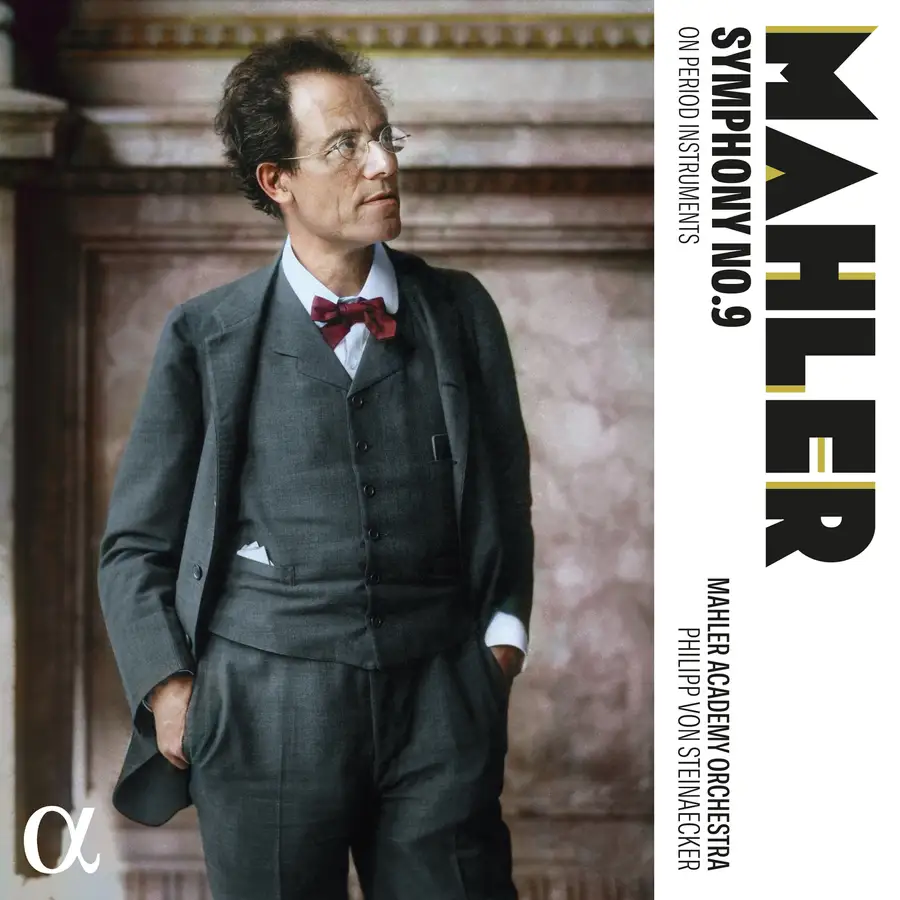
  • Pentode Mode vs Ultralinear Mode In later vintage and modern tube amps, the pentodes are frequently run in Ultralinear Mode (all Mullard 5-20 and Williamson's types are). The reasons are complex and I am not equipped to go into it, but if you google "Pentode vs Ultralinear" you will find a huge amount of basic info as well as discussion out there, some heated. Suffice to say there is a pentode mode revival of sort and there is no consensus on which mode sounds better. While Elekit recommends Ultralinear (same power output as pentode; 2.9 WPC), my experience tells me it is worthwhile to experiment. In the pic above, right behind the output tube is the screen grid resistor, which is connected on the tracks to the one side of the red jumper. As for the other side, the line straight ahead is Ultralinear Mode, tied to the Center Tap; a little outward is the Triode Mode, tied to the plate and one end of the output transformer (hence tying the screen and the plate); and a little inward is the Pentode Mode, tied to the other (B+) end of the output transformer. Pentode Mode Operation Personally I found the Pentode Mode to be more natural sounding. This I think is due to what I perceive as better dynamics (both micro and macro). The effect is subtle but audible. Zubin Mehta's justly famous Mahler Symphony No. 2 (London LP) was rendered in all its splendor - there was enough power for the big moments, yet what captivated even more was the delivery of the VPO in the softer music, the sweetness and heartbreak and transcendence.
    Greatest Love Songs
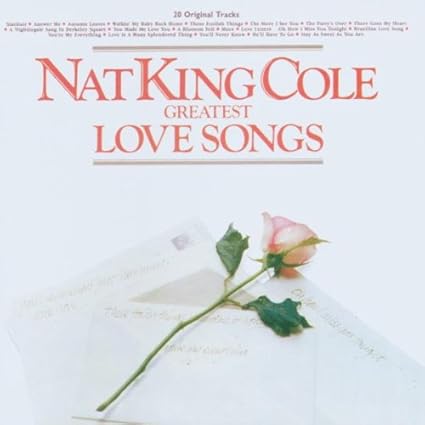
  • Triode Mode This reduces the output from 2.9 to 1.6 WPC, but with most material I really did not notice the drop in power, even if the preamp volume knob has to be churned up a little more. I did a lot of listening in this mode, which to me seems to add a little more refinement to the sound. The popular EMI compilation of Nat King Cole's Greatest Love Songs (EMI/Capitol UK) can sometimes be a little sharp (I suspect the mastering is digital) but here it was just perfect. More, I just bought a few cosmetically seriously challenged jazz LPs recently, and listening was so good that I finished the crop in just one evening. The many instruments in Oliver Nelson's Fantabulous (Argo) all had ravishing timber, and the swing was well neigh irresistible. Coleman Hawkins was no Brazilian jazz champion but his playing on Desafinado (Impulse) was as usual golden toned and comfortable. Some people could not stand Hank Jones' Happenings (Impulse) because he was using a Baldwin electronic "harpsichord" but I enjoyed its being so different and the Elekit made the best out of the quaintness. Even in mono, Jimmy Smith was king of his instrument. I just dug his interplay with Kenny Burrell, his often partner, on Organ Grinder Swing (Verve). Gene Ammons' The Twister (Prestige) had a starry cast but the mono sound was not quite as good as the others. Nonetheless, all thoroughly enjoyable, as was Mancini's fantastically recorded Peter Gunn (RCA), though I'd not call it jazz. All in all, a magnificent session. Of course, with really large scale music, like the aforementioned Mahler, the Triode Mode inevitably chokes the music a little when compared with Pentode Mode. One should also note that to many the more robust sound of the Pentode is worth more than the more refined sound of Triode.
  • Op Amp The Elekit TU-8150 is no doubt primarily geared towards the desktop and earphone crowd, and hence has an unusual arrangement in preamplification. The manual says: "This model contains a preamplifier stage configured with an OPamp to resolve the problem of low gain when connected to a portable audio player..." Gain vs Volume At first I didn't notice much difference, but after a lot of careful listening I did realize that it was best to relatively maximize the preamp gain and minimize the amp's main volume, thus bringing about more refinement and expand the soundstage. To experienced audiophiles, manipulation of the volume and gain (like old ARC gear) can be beneficial. This also means the stock Op Amp has a (very mild) deleterious effect on the sound. Bypass As I don't plan to use phones or portable devices and use a real preamp with gain, I naturally looked for ways to bypass this stage. Looking at the schematic, this Op Amp Preamp stage is before the main volume pot (50K), utilizing power from the 12AX7's heater supply. This gain stage could be bypassed simply by removing the Op Amp. By doing so, the sound improved a notch, a little airier and smoother. It is not going back in my system though I may yet try the OPA2227 that I have.
    The Five Piano Concertos (Vinyl, LP) album cover
  • Input 1vs Input 2 Input 1 is the frontal 3.5mm mini-jack, and Input 2 is the rear RCA input. The Elekit spec sheet curiously stipulates Input 1 as "Priority". They may be referring to the fact that as soon as a mini-jack is inserted into Input 1, Input 2 is disengaged. In the schematic, one notes that Input 2 is routed through a 10k resistor (R101 and R201) into Input 1. This is probably to equalize the levels of the 2 inputs. Using Input 1 Using an RCA to min-ijack adaptor I re-routed the signal from my preamp to Input 1. Without going through the 10K resistor, the sound definitely had a little more gain, and improved in clarity and presence, all this despite the use of adaptor. Prokofiev's Piano Concertos (Ashkenazy/Previn/LSO, London LP) sounded wonderful - the piano sparkling, the woodwinds characterful and the low brass growling!
  • 1 + 1 > 2 Assessed on its own, each maneuver produced only a small improvement. But, interestingly, the overall improvement proved to be beyond the sum of the increments. Now, the music was comfortably expansive and luxurious, but rhythmically sophisticated when called for.
  • Potential Mods It is because of the excellence of the amp that I think mods are valuable for users like me: 1) The long signal signal path of the RCA Input 2 is certainly not ideal, but looking at the schematic one can disable R101 and R201 and solder a jumper wire between the RCA terminals and TP (Test Point) 3 and TP4, thus bypassing the Op Amp stage altogether; 2) Even if the Op Amp is removed, because of the associated circuit the signal still passes through 2 more resistors before reaching the 50K main volume pot - the 4.7K resistors (R102 and R202) before pins 6 and 2 of the Op Amp and the 22K resistors (R103 and R203) connecting pins 6 and 7 and pins 2 and 1 before the 50K main volume pot. That is 26.7K (22K + 4.7K) of resistance that can be bypassed if TP3/4 are used. If one uses the RCA Input 2, even with the Op Amp removed, there is a total of 36.7K of resistance before the 50K volume pot, making a total resistance of 86.7K if the main volume is maxed out. One notes that in SET amps the line level signal usually directly goes to the main volume pot, and 100K is the more popular value. One can use jumpers and eliminate those 4 resistors (R102/R202 and R103/R203). One can also try a 100K volume pot. While I would think the fewer resistors in the signal path, the better the sound, I am not about yet to do the (simple) surgery - the sound is entrancing enough, so let it wait, but I am pretty sure I'd carry these out one day (maybe Part IV?).
  • High Impedance Headphone The Headphone Outputs are taken from the output transformers, so naturally they are of excellent quality. My 600 ohm Beyerdynamic DT-880 performed even better than my lower impedance AKG 701 (see Part I). Prokofiev's Piano Concertos sound almost as enjoyable as through the horns. Note though the volume had to be cranked up, so head-banging rock fans need not apply, but then this is not their kind of headphone amp. For those who value all-roundedness and tonal splendor, this is as good as I have heard. Although my Schiit Vali 2 and Magni are connected to a different source (an old Proton CDP), I do think/extrapolate that the Elekit surpasses them. From recollection, the performance does not suffer in comparison with my Manley 300B (transformer coupled) and Nagra PL-P Preamps. Mind you, I am listening to LPs!
Highly gratifying!

Perhaps that is enough for now, so further testing, including with different loudspeakers, will have to be treated in the next episode.

16 November, 2017

Vinyl Jazz and Pop


Vinyl Talk: Scouring the Dollar Bin
Jazz and Pop Recommendation
Letter from NYC (73) 2017 (12)

Article finished in HK

By Dollar Bin, I mean the bargain bins in used vinyl, which usually require you to get on your knees. And they are not always a dollar, sometimes 2-5. But I buy mostly One Dollar stuff. Sometimes one can spend a whole day and not get anything. Occasionally, one gets lucky, and find interesting stuff. Some people scour the bins for records they can resell for profit, but I mostly just pick up things I'd like to try. I can listen once, or even sample a track, and get on with it if it is no good. Recently, on one dreary day I visited a few stores I have never been to, and got some items that I enjoyed.

Although most people, including myself, think of myself as a classical listener, there are days I actually spend quite a lot of time with jazz and pop.

Jazz
The most astonishing find here is Carla Bley's A Genuine Tong Funeral, performed by Gary Burton Quintet and friends (my copy is an old French RCA re-issue). The music is ultra sophisticated and reminds me of the death and ascension aspects in Strauss' tone poems, from Till Eulenspiegel to Metamorphosen. One can also connect it with St James Infirmary from the audiophile fav Satchmo plays King Oliver (my copy is $5, pristine UK mono). But the truly amazing Armstrong was the mono Louis Armstrong and his Hot Seven, Vol 2 (Columbia Mono), recordings made in 1927 and sounding thoroughly present and engaging through my horns (I took it to Andy and he too shook his head in disbelief at the realism). The Jazz Giants '56 pitched Lester Young against Roy Eldridge, with a star-studded back up, including pianist Teddy Wilson. Noisy copy, as was Ellington Indigos (I particularly like Ray Nance's violin) but great stuff. This late Blue Note LP found Charles Lloyd in Copenhagen utterly relaxed and playing several instruments, in a lighter vein that I prefer to his current more somber ECM stuff. But to me the find is the neglected Buck Hill (Scope. Steeplechase), a postman who plays after work. The one that left me non-plussed was Art Tatum/Ben Webster, the two seemingly playing in different universes. A curiosity is the forgotten Jean Durand Baby, did you hear?, folk songs in Creole, French and Spanish, no less ably sung than Belafonte.


Some Pop
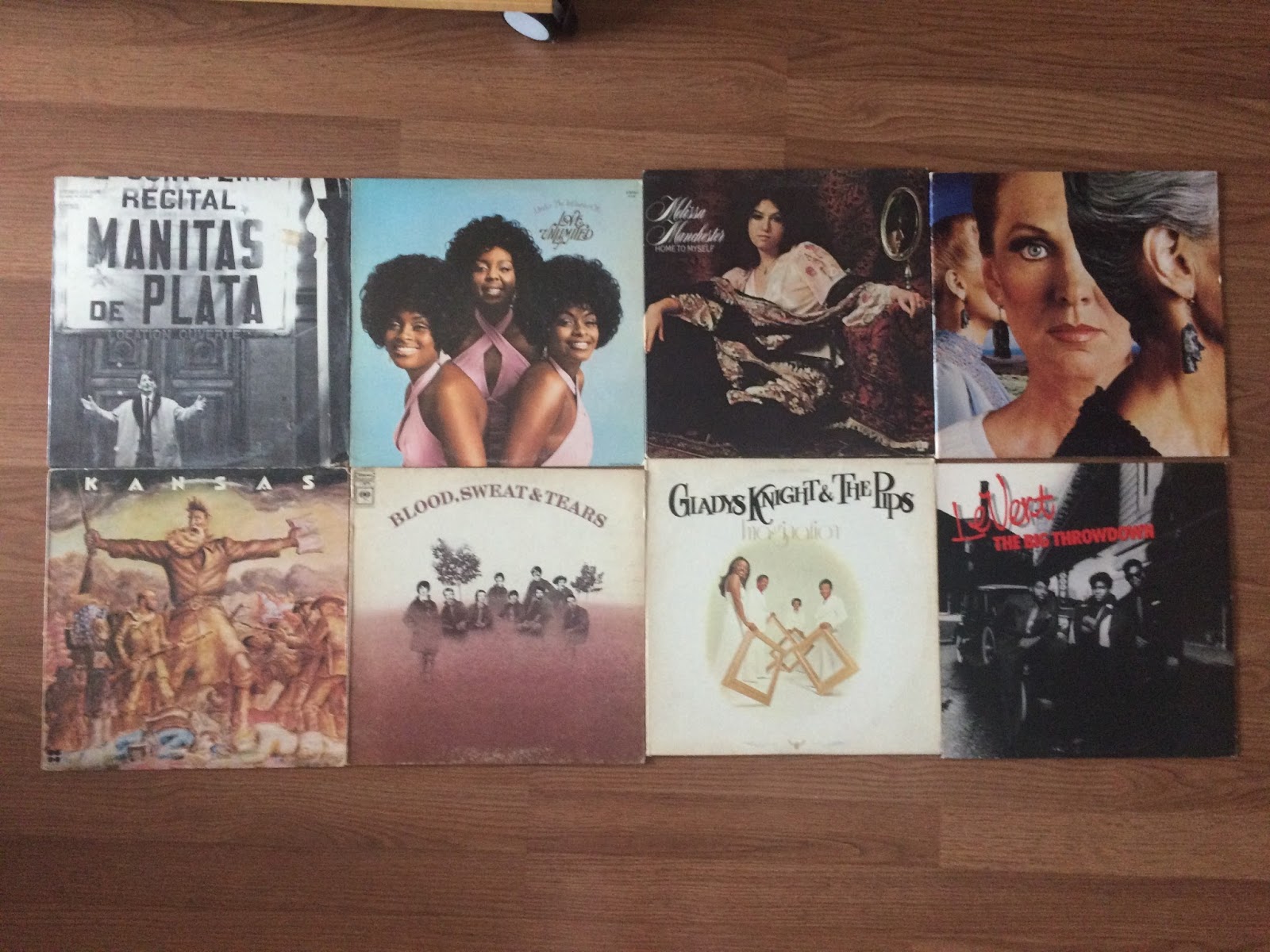
I won't write more on these pop stuff, but suffice to say I enjoyed them, especially the Soul stuff. I just love the covers!


21 July, 2011

CD Recommendations: Concierto de Aranjuez

CD Recommendations: Concierto de Aranjuez

The blind composer Rodrigo wrote one masterpiece, the Concierto de Aranjuez for guitar and orchestra. For more info on this piece, read the wikipedia entry, which is lively and informative, though far from complete. I am sure you already know much of the music. If you think you don't, listen to the youtube clips supplied below and you shall realize you do.

There are literally hundreds of recordings available (click here), and it is hard to make a bad recording of this transcendentally beautiful music. Personally I'd opt for a Spanish guitarist accompanied by a Spanish orchestra if possible. Narcisco Yepes recorded it several times, but some versions seem to be out of print (for available ones, see here). All of them are delightful, so I'd go for the budget one shown (Universal/DG).

Yang Xuefei's version (EMI) is easily available, and has interesting fillers. I am not sure how "Spanish" she is, but she as always plays with character (to me much more interesting than those Japanese female guitarists). The Spanish orchestra and conductor are good too.

The wiki entry neglected to mention that the composer himself arranged his work for harp (for the great Zabaleta) and this version is performed to perfection in a new Sony/RCA issue (info in German; artist's website). Xavier de Maistre, harpist of the VPO, is magnificent, strong, fleet, nuanced, indeed better than some guitarists! And the fuller sonority of the harp is a great pleasure. This may not be easy to source but is worth it.

Jazzed Up
Over the years there have been numerous arrangements of this syblime music. Most famous is Miles Davis' version (arranged by Gil Evans), which Miles delivers in his sparse style (Columbia).

But last year I chanced on the Jim Hall version and fell in love with it (CTI; info here). The Hall version stays quite close to the original and I prefer it because of its use of guitar, which is still best in delivering that certain sultry feeling.

You can listen to Miles and Hall in the youtube clips below. Many other arrangements veer too much towards pop and should be avoided if you have heard or love the originals.

Youtubes
There are tons of videos on this music. I have selected a few, mostly of the slow movement, for your enjoyment/comparison. First, classical guitarist Xuefei Yang's Proms performance is not for the full classical orchestra, but it is atmospherically shot. I particularly like Yang's rather individual, even somewhat masculine, way. The EMI promo for her CD is great to watch too.


The Miles Davis version is great, but I still like the guitar better:


It's too bad Miles' version is the one every jazz lover thinks of, but I think Jazz guitarist Jim Hall's version (with a great band) is actually better, more atmospheric and closer to the original. You get the best of all worlds here, guitar and trumpet!

27 January, 2011

CD (DVD) Recommendations (4)

CD (DVD) Recommendations (4)
I cannot begin to tell you how the 2 sets I am recommending today have delighted and stunned me. All I can say is grab them!

Classy, Classic and Classical
Classically trained Cecil Taylor is a grossly under-valued jazz pianist. This issue is by the curiously named Real Gone Jazz/Music Melon, part of the ubiquitous mcps group, one of those re-issue labels that proliferate wildly in Europe. I ran into some of these CDs at HMV Hong Kong.

This 2-CD set, at HK$69, comprises three rather early but utterly magnificent Taylor albums, Looking Ahead (1958); Hard Driving Jazz (1959) and Love For Sale (1959), and the original covers are shown here rather like iTunes. Irritatingly, no personnel info is given (but you can find that on the net), though a rather surprisingly thorough and up-to-date biography is included.

One listen to the first cut and I was hooked, and transfixed. Sound quality could be very good. The front says "Digitally Remastered and Enhanced for Superior Quality". As no licensing info is provided I presume these used alternate sources (such as LP). These should be early stereo (and sound like such) but I did wonder whether "Enhanced" means re-channeled stereo from mono sources.

In Europe, the copyright for these recordings have lapsed. In the US, these probably could not be sold, and indeed Blue Note still issues these as singles. It would be fun comparing a Blue Note original and this. Nonetheless, if you are interested in jazz piano at the highest level, grab it.

While researching Taylor I came across an interesting Taiwan Blog in Chinese (here).

Jazzy Beethoven!
Paavo Jarvi, son of the wonderful Neeme Jarvi, is a conductor that I admire greatly. Very much his own man, and of the modern age. Here, his Beethoven cycle with the Deutsche Kammerphilharmonie Bremen out-HIPs any of the period specialists. Interpretively fresh as daisy, the performances are fast, rhythmically propulsive, texturally lean, very much sturm und drang, and shed light on every symphony. On the way were countless rhythmic felicities and unusual sonorities, bringing Beethoven much closer to Haydn. The playing was excellent throughout.

My set of DVD (Sony) sound first-class, but you could also collect them on CD or SACD (Sony/BMG). This is a set I'd not do without.

29 May, 2010

CD Recommendations (2)

CD Recommendations (2)

What I use for testing gears change all the time. For the Magnepan evaluation here are a few CDs that I have used (besides LPs). They turn out to be all by Black artists. :-)

Ah, Jimi Hendrix!
I am quite a Jimi Hendrix fan. It has always been said his albums don't sound too good, but I think that's not true of current re-masterings (early rock CDs can be pretty awful). I highly recommend Axis: Bold As Love. The first 2 tracks are breathtakingly exciting on the Maggie. As a matter of fact, some of you may remember limage used to play a crazy swirling electronic track (from his son) on his system. The first tracks here should have the same effect. Sound is excellent. In case you think you have all of Hendrix' albums, think again...the latest is Valleys of Neptune, a controversial new release of previously unreleased (some say half-baked) material. I think it's not as exciting as the classic Hendrix albums, but it is a worthwhile one, in good sonics, remastered by Eddie Kramer, who recorded most of Hendrix' studio efforts.

In case you don't know, years ago Stereophile did a feature on Kramer. In his home he uses Klipschorn, driven by humble vintage Japanese electronics (either Yamaha or Luxman)!

Hugh Masekela
This jazz musician is adventurous with his African roots. Track 12 of his album Hope, Stimella: The Coal Train, is familiar to most audiophiles. The plain CD (originally Triloka label) has long been out of print. Everyone knows about the expensive Analogue Production LP and SACD/CD re-issues, but now you have the additional option of buying again the cheaper plain CD, this time on the Sheridan Square label. Note that it is highly misleading that many internet vendors still use the old template which says Triloka label. I believe that's wrong. The new plain CDs you can buy are Sheridan Square label. Correct me if I am wrong. As for the music, this live performance is eminently listenable, and not just for the last track either!


Rokia Traore
Ever since I heard Rokia Troare (official website)during a visit to JC, I have become a fan. All of her CDs are sonically and musically excellent, but some may be hard to get. The newest one, Tchamanche, , should be relatively easy to get. If you're willing to shop online, grab while you can the equally wonderful Bownboi, which has been out of print but recently available again.