Showing posts with label Talk Cable. Show all posts

09 September, 2020

Belden 8402 8412 8422 Tin Plated Copper

Brief Reviews: Belden 8412 and 8422 as Interconnects, Part I
New York Diary (20-29): Audio Lores, Influencers and Over-Influence

Note (9/11/20): I went back to using my other cables and what a relief!

The Conductors (and braided shield) of Belden 8412 and 8422 are made of the exact same Tin-plated Copper (as in the 9497 loudspeaker cable) as the better known and discontinued (though available at a premium) 8402. Among audiophiles that is; in professional circles 8412 is the new classic. They are much more similar than different, but the 8412 and 8422 are a lot cheaper and, hopefully after you read this, worthy of your consideration. The price of 8402 is inflated because what is selling are remnants but, as you know, many audiophiles gravitate to vintage or classics and think older is better!

8402 This cable needs no introduction. Like the Belden 9497 Loudspeaker Cable, it was first advocated by the Japanese. This is a classic Microphone Cable with 2 conductors and 2 shields. Belden and Tin-plated copper began their emergence in the DIY community, especially influenced by Jon Risch (whose time-consuming projects I'd never attempt). The 8402 was popularized by the underground and then Influencer Jeff Day set it into the orbit. Spec 8402  2 x 20 AWG (26x34) Conductors have EPDM Insulation. There are 2 Shields: Rayon (fiber) and Tinned Copper. (same as conductor) Outer jacket is CSPE. Impedance is 52 ohm and Capacitance 55 pF/ft. Connection This is pure lore. Lore has it that the Japanese connect the metal shield at both ends for an ostensibly more emotive sound. In the US we usually use floating ground - connect only one end (usually proximal, unless you have different star-grounding plan) and cut off the other (usually distal), which has superiority in shielding (connecting at both ends loses shielding advantage) and noise rejection. There is/was a so-called third way; someone connects both conductors to +ve, and uses the shielding as ground/return. Mind you, this is no earth-shattering stuff. Back in the early days of Gotham, people tried all sorts of things: say, for GAC-4/1 (or Mogami 2549), 4 conductors, some would make 1 x +ve and 3 x -ve , and vice versa. Also, some Gotham have very sophisticated double metal shielding (the Belden's in question are only single metal + another fiber), and one can separate the 2 and choose to connect either or both to ground or not. Many ways; also many ways that are at odds with manufacturer's recommendations. But are not audiophiles a crazy bunch? Cite the spec's when necessary and insist on a non-redbook way when it is suitable for them. Look, I deliberately do not provide a link to any of these, because I think it is totally empirical, system dependent. One guy connected it the Japanese way and waxed lyrics, then sometime later converted it to floating ground and admitted it was better. My experience I thought I wrote about it briefly, but I could not find it in my blog! Anyway, here. Some years ago my yumcha friend Dave gave me a pair of old-stock 8402, finished with classic Switchcraft connectors (I think connected the Japanese way). It sounded reasonably good, full and weighty, but a little dark. Compared with Gotham, it also lacked rhythmic finesse. I did not linger too long on it. Note I don't have this cable with me here in NYC.

8412 and 8422 The 8412 can be thought of as 8402 Mk II, very popular with professionals. I bought these in the US, very cheaply, and terminated them with Switchcraft look-alike, nickle-plated Rean connectors. These use the same Tin-Plated Copper for Conductor and Braid. and If you look at the spec's of 8412, it is very similar to the 8402, differing just in outer jacket material (EPDM) and spec (higher 58 ohm and 67 pF/ft). The 8422 is similarly constructed. Its conductors are smaller, 22 AWG (16x34), which is what interests me. Cotton is used in lieu of Rayon. Insulation is different (PE for conductors and PVC for outer jacket) and so are the spec's (90 ohm; 32 pF/ft). Ergonomics As one removes the rayon or cotton fibers, they disintegrate into tiny flecks; make sure you don't have a fan on and keep a wet cloth to wipe up. Kind of messy.

Sound

Part I "Show Some Respect"... I made a pair of each using the "preferred (Japanese)" way, connecting the shield at both ends. I tested them in my streaming system. First, 8412 went into the Micromega MyDAC in lieu of the Kimber KCAG. Pretty good; a richer sound but enough treble and air for me, even if a moment ago I was listening to my favorite silver cable. Then, the 8422 replaced the Gotham GAC-2111 (EMT replica) between the Yamamoto CA-04 preamp and Akitika GT-102 amp. Pretty good too. Now, I was streaming classical music and I liked the deep soundstage (The LS3/5A is a champ in this respect; now I am using 15 ohm Rogers instead of the Audiomaster) and solid sound. But, after a (long) while, the "solidity" nagged at me a little and I remembered my encounter with the 8402. What if the audio lore is just that, unsuitable for me?

Part II Better be Inquisitive... Next day, I made a pair of each with the shield floated (cut-off) at the distal end. I first exchanged the 8412. Surely, a little more air and openness, which I preferred. Next, I exchanged the 8422 - same feeling. Now that I had 2 pairs of each, I tested various combo's. After some fiddling I found: 1) the 8422 and the 8412 share the same basic sonic imprint, but the 8422 sounds lighter on its feet and has somewhat smaller images than the 8412; 2) Using 2 pairs of 8422 the sound may need a little more weight, just as using 2 pairs of 8412 the sound needs some more litheness.; 4) the better balance was obtained by using the 8412 at the front and the 8422 from preamp to amp. That's what I maintained from this point on.

Part III Janus Faced? Now what of the audio lore? This was emphatically answered in this round. Up till then I have been streaming classical music and I was OK with it. To round out the test, I played some of my favorite vocal material. First up was Nick Cave's The Boatman's Call. Now, this is not an up-tempo album, far from it. The first track is a little heavy and murky in the bass, but now especially so. A few more tracks, and I was missing some of the subtle colors from the backing instruments. Next up was Van Morrison's Moondance and my jaws dropped: where has all the mystery and ecstasy gone? It was just plain slow, even lugubrious. I pulled out more; all suffered the same ailment. Readers know I listen to these albums frequently and, just before the Belden residency, with all Gotham cables, the rhythmically savvy Micromega Stage 2 made these albums shine through the LS3/5A. I then stepped up my comparison. Mind you, since I was not streaming, the signal went through The Gotham DRG-1 instead of the 8412, and then the 8422. When I made the shocking discovery, I was using the 8422 pair with the "classic Japanese" termination. I swapped in my pair with the floated ground and immediately the sound, though similar, opened up a little and gained some pace, but still not enough to raise the dead. Now, why had I not been as disturbed when I was streaming classical music? Simple. Listening to classical is just very different as one is listening as much to what's going on vertically (harmonically) than linearly. Although I had a nagging suspicion that the proceedings were too "weighty" for their own good, I was discovering all the things that the Belden were doing right: weighty brass, good instrumental colors, an unfazed nature, all pluses in my book, and it was fascinating to fathom the subtle difference in sound of the big chords and moments (from my usual Gotham). On the other hand, listening to pop music the rhythm is extremely important. Without a sense of drive, all is lost.

Part IV A New Lifeline As usual, there is a twist, and this is most unexpected. Just yesterday, I took delivery of a pair of Harbeth P3ESR SE. I swapped out the 15 ohm Rogers LS3/5A and was immediately stunned. The pop music instantly became more pacey. The footsteps were still a little heavy, but now the pop music marched in formation, not stumbling. This is not a loudspeaker review, but you will have one soon. I also took the time to swap in the 8412 for the 8422 and my previous impressions stood. Yes, the venerable LS3/5A is a little "slow" (slower transients) in comparison, but one would not notice if one were using rhythmically alert Gotham cables. The combination of LS3/5A and Belden 84x2 was emphatically not a match made in heaven.

Conclusions
  • 8402/8412 As one long schooled in professional interconnect cables (for me, mostly Gotham and sometimes Mogami), Belden confounds, especially since I am a great devotee of their similarly tin-plated 9497. My impressions of the 8412 is no different from my memory of the 8402. My opinion is: there is no reason to stake out 8402 as 8412 can be had much cheaper. For: innate steadiness, superb texture and good balance (except for bass); Against: lackadaisical timing (especially in the bass). This, for me, is a significant caveat, or fly in the ointment. Not everyone loves the 8402; some netizens complain of darkness and dullness - that is a direct result of the slow-moving bass. This Cable should not have received blanket recommendation. My advice: 1) the Belden 84x2 would likely not work well if your loudspeakers (and system) are of the more relaxed kind, or vintage; it'd work better if your system is on the fast and brash side and you need to add some texture; 2) under any circumstance I'd think it not ideal to use more than one of these; better mix and match with other cables like Gotham. 8422 imho this cable, being a little quicker on its feet, is more balanced than 8402/12, but I suspect 8402 advocates are texture freaks, so be it.
  • The Japanese Connection As the 84x2 already has good texture and smoothness, connecting the shield at both ends confers little further advantage but extracts the penalty of smearing the low midrange and bass. Take Marvin Gaye's What's Going On, his dubbed voice overs are significantly less easy to separate from the background vocals and instrumentals when using the Japanese Connection. I prefer by far floating the shield.
Audio Lore, Careless Whispers and Over-Influence
  • Reverence or Reverie? Audiophiles are an odd bunch. Many in our hobby treat it like a religion. Some look for a master to subjugate themselves to. Guru says it's best to connect the shield at both ends; yes, master. Of course, the disciple tries floating the shield too, and is only too eager to confirm that his master (and hence his own belief) is right. You see what I mean? When one has a preconceived notion, a follow up action is unlikely to receive unbiased attention. It is good to have some reverence for others' opinions, but don't let that turn into reverie, to become Superstition.
  • Wide-Eyed Journalism I'd like to call it shoddy journalism, but I shall try to be kind. After all, this is less serious, a hobby, where truth is harder to arrive at than, say, journalism on politics (or is it?) Again, it's good to be receptive to something new, but try not to be too eager to join the party. I say this not because the journalist held a different opinion than mine. I say this because he devoted very little time to find out the nature of his subject. Look hard and you will find no more than a line or two on wherein the difference lies. There certainly was no mention of the timing penalty imposed by the Japanese connection. If a journalist does not try to approach his subject from different angles, to not fact check as much as possible, he is prone to producing fake news. Even in my case, if the Harbeth had not materialized, I'd have given the 84x2 even lower marks. When the Harbeth made things better, I worked hard to find the merits of these cables. This is after all a professional cable which, in my book, deserve closer scrutiny than commercial ones. I also would like to say that on the net audio writing is getting shorter and shorter. From blog to microblog to facebook etc, increasingly piecemeal and unworthy. One reason is that some journalists get saddled by too many toys. When one spends so perilously little time on something before moving on to something else, how can you trust his opinion(s)? Now you know why I could not generate any interest at all in Duelund. And, believe me, I was playing with Western Electric cables more than 20 years ago, and mine were better than what they are selling now or what's passing as the genuine thing.
  • Over-Influence The journalist is an influencer; in this case highly so. It is unfortunate. Those of us who can use a solder make it ourselves, but there are many more others who don't and buy it assembled. As the 8402 got popularized, all kinds of operations sprang up to sell ready made ones. If you peruse Ebay, all say "terminated the Japanese way, with shield connected at both ends". Well, one voice. When it comes to cables, do you believe in one voice?

31 March, 2019

HiFi Basics Cables Gotham Cables


HiFi Basics IX: Cables - A Guide, or, do they make a difference?
Guide to Gotham Cables

The short answer is: Absolutely, and sometimes even profound. Below I shall detail some of my beliefs, and in so doing you will know well what I personally use:

InterConnects This is the most important Category. Almost all I write here are applicable to cables elsewhere in the playback chain. 
  • Cables as Tone Controls Nothing illustrates the conundrum of audio "titration" more than cable swapping - we all do it, though there are people who believe cables make no difference (false, and forget them). The problem with the Cable Freak (many out there) is that he overdoes it, and swings too often between a craving for more "transparency/neutrality" and more warmth, not realizing the real problem lies elsewhere in his system. The solid state user and modern loudspeaker users (I include most audio reviewers in this group) are more susceptible, because their gears are more often than not on the sterile and "white" side, even unlistenable. Tube Users and Vintage Aficionados' fare better, and generally tend not to use very expensive cables (well, let us not forget they also tend to roll tubes like using tone controls). Advice: never spend too much on cables, but do have a few spares for swappingThink of Cables as no more than Finishing Touches on a System (but they do make a difference).
  • Red and White By this I mean the generic cables that come free with most electronics. These vary greatly in quality, but they all have one thing in common - reasonable, even good delivery of midrange - but on the down side they are invariably deficient in treble and bass extension, and certainly not very dynamic at all. A huge army of cable "objectivists" believe that is all you need since they are indistinguishable from more expensive cables. Not so, but one should not laugh too hard. Why? Because many expensive cables that manipulate the sound sound worse. At least these cables are forgiving, whereas many "boutique" and "artisan" (an overused word, usually employed to justify high price, that I detest) cables are highly unmusical.
  • Audiophile Cable Companies Basically, like most companies that offer accessories and tweaking devices (most are lousy), the audiophile cable companies capitalize on system anomalies (the more expensive, the more so)! The jargons used and the false promises are almost criminal. I also really do not believe audio magazines (trade or net) should review a lot of cables, as it is so system dependent. It is also worth noting that there is little objective measurements on cables (even Stereophile does not offer any measurements, not even a mention of capacitance and resistance etc). As in much of hifi, the few measurement parameters are hardly adequate. Two cables of close resistance or capacitance are likely to sound very different. In HK I have heard many expensive cables (top of the line Siltech and Oracle, for example) in many expensive systems (especially at dealers), but I cannot say that they offer anything special. In fact, they more often than not make the systems too colored. Just to name a few, Siltech, Nordost, Cardas, VdH, Audioquest etc, I have heard a lot of them and generally I do not like them. Ditto MIT, Oracle etc, but their resistor networks (which I'd rather not have) fare a little better. Haven't you noticed one thing? The cable marketing is detestably basically "the bigger the better", so as they get more expensive, the fatter and heavier they get. That means all kinds of extraneous and unwanted materials get into the cable, just to impress you. What has that got to do with "straight wire with gain"? Weird Geometries Many high end cables employ conductors of different AWG and unusual geometry. Were you to terminate yourself, you'd be lost as to what strand to use for what. I definitely frown upon this, as this goes against the simple is best (not science perhaps, but a good philosophy for so many things) rule and, not surprisingly, this kind of manipulation is almost the exclusive provenance of the hifi world. If you look at respectable professional cables (below), they don't do this at all.   
    • Professional Cables Although the different Professional Cables sound different (think Gotham vs Mogami vs Belden), the companies honestly strive for truthful reproduction, including neutrality and transparency (unlike hifi cable companies), or a balance thereof, and so are within a safety envelope, and one can use the differences between professional cables to adjust one's system. This also illustrates that, best intention notwithstanding, there is no one definition of neutrality or transparency (same with recording engineers). The professional cable companies also give clear specifications for their products, something the audiophile cable sector just largely ignores. For myself, I'd be happy to use mostly Gotham Cables, because within this family different models sound somewhat different, and the differences can be exploited (the "Size" Bullet below lists the models I use). I have three large systems and multiple sources, and they are all wired almost exclusively with Gotham. Even so, occasionally I do have to use something else, like Mogami or DIY "47 Labs".
    • "Western Electric"/Vintage These are cloth types and there are many variations. Most of them are not optimal, but really old high AWG tin-plated solid cores that have an insulating layer that has to be scraped off are very good. These can be very detailed, and too much cannot be used at once.
    • Constructing Cables Given the success I have had with Professional Cables, I find it largely unnecessary to construct cables, by which I mean making whole cables, not just soldering the connectors (except for a few pairs using antique WE material, which have their own sound). This is actually a whole other world, and many, including a few friends, spend a huge amount of time trying different conductors and other materials, time better spent listening to music. Take the most popular, CAT 5, yes, I have listened to many, some with heavy braiding, but while they sound reasonable the professional cables are better.
    • Copper Cables Copper is basically the standard, and cannot be easily surpassed, not by silver, and you can forget about gold. Copper is good as is. Silver plating makes it worse - avoid. The "surprise" is, older tin-plated copper usually sound pretty good. I am sure that is heresy to many, so take it with a grain of salt.
    • Silver Cables More often than not, silver sounds paler and inferior to copper cables. I actually have quite a few old ones lying around. The only one I still employ from time to time, and can recommend, is Kimber KCAG, which has a very simple geometry and very neutral sound (the connector is also excellent). I have two old Audio Note silver cables (made in Japan, before the schism) that sound quite good (AN-S and AN-V), but both can be a little pale and indeed not quite neutral. These are likely more like the Kondo cables now. I have also heard some current AN UK silver cables; at my friend WSS' place, I prefer my Gotham cables.
    • Size In general, the softer the cable, the better the sound (think of the softness of Gotham, even Mogami, less so Belden). Don't you think the better the copper, the softer it is? I believe the thicker the diameter, the more colored the sound (think NBS, Cardas etc). Size can be due to many things. Number of Conductors I don't like a large number of conductors. Two conductors (e.g. Gotham GAC-2, GAC-1 Ultra Pro), Four Conductors (e.g. Gotham GAC-2111, "EMT replica", GAC-4, both used 2+2), and often just One Conductor (e.g., my beloved coaxial Gotham DGS-1; using the shield as the other conductor) work well for me in all three of my systems. AWG the size of each conductor matters a lotI prefer smaller conductors (higher AWG numbers), 22-24 usually working the best in my book. Shielding I don't like heavily shielded cables, as even non-shielded cables work well in my systems. Most Gotham's, being professional, have non-intrusive (soft) shielding (and good shielding at that). Insulation and Dielectric Material The more of these used, the worse the sound.
    • Stranded vs Solid Core For my taste, stranded is almost always better. Stranded has better and more even frequency response (why professional cables use them), important for classical music replay, while solid core projects the midrange more, which is why certain audiophiles prefer them. It should be noted CAT 5 is solid core. The larger the core diameter, the more imprecise the sound (which is why 47 Labs solid core is of very high AWG), though some may like it because because of a perceived gain in impact.
    • Length Shorter lengths sound less relaxed. 1.5 - 2 meters is the usual recommendation. Longer interconnects are usually frowned upon, but many of us use them. For me, I like to have my preamp in front of or next to me, which means a longer interconnect to the amp. The deficiencies of longer lengths are mildly subtractive in nature, sometimes perhaps even beneficial and, most importantly, can be easily made up elsewhere. I don't understand audiophiles who use short cables, and struggle to connect every time they swap components. If cables make you use swear words, that is not a life. Unfortunately, that is true of too many audiophiles.
    • Connectors RCA Let's face it, there is NO perfect RCA plug for all seasons, especially for vintage users who are often faced with tightly spaced connectors. For me, the plug should be small and utilize a minimal amount of metal, like Switchcraft and similar Neutrik/Rean look-alikes (Amphenol is OK too). Bullet Plug is great but not for me as it will ruin vintage connectors. Chunky connectors I do not like (I for one dispute WBT sounds good, and I own several sets)! They are made to accommodate all the extraneous layers of unwelcome elements of thick cables. Why have a cable with internally small gauged conductors end up in a massive block of metal? It is idiotic. XLR In many ways I can relate to XLR connectors, which are by nature chunky (yet their elements that actually make contact are not chunky), more than chunky and shiny RCA connectors. A simple and good quality Neutrix (or Switchcraft or whatever) is better quality than many over-priced chunky RCA connectors. You figure.
    Loudspeaker Cables In general, in terms of cable construction, my preferences for these are much like mine for interconnects. Forget stiff, unwieldy cables. Opt for fewer conductors, stranded, professional, copper, straightforward geometry. Some concerns particular for loudspeaker cables:

    • Bare Wire Given the proper binding post, I believe bare wire sounds better. The more efficient the loudspeaker, the more bare wires of high AWG (thin) sound good. And bare wire connection is easier for users of vintage gear. My favorite is Belden 9497 and I connect it bare on both sides. "Western Electric" These cloth type cables are popular with horn and vintage enthusiasts, but most of them are not good. Tinning with Solder Some people like tinning the end with a little solder, but I don't like this - while it keeps the strands together, the contact is actually less good than just wire alone (though fraying is an issue).
    • Thin vs Thicker Cables It is my opinion thicker cables with larger or more conductors usually do not sound as good. This is evidenced by my use of Gotham: over the years, in most applications and with most smaller loudspeakers the Gotham 50010 and 50025 sounded better than the thickest 50040 (10/25/40 are diameters), with better agility, resolution and clarity. Another memory lingers in the mind: with the LS3/5A, the Kimber 4TC sounds a lot better than the 8TC. Current Demands This is the exception. If I run less efficient loudspeakers like ATC or Magnepan, the 50040 would fare better, more composure and dynamics due to better current delivery. Here a Belden 9497 still sounds very good tonally, but you can tell it is reined in (however, better that than runaway, which is how a lot of audiophile cables sound).
    • Bi-Wire? This is controversial - many are adamant that a "better" Single Wire Cable + Jumpers are better than a bi-wire cable. I don't hear it that way. Grant you, I agree, in many instances, especially smaller loudspeakers, bi-wire is a gimmick, but I have quite extensive experience with larger or more inefficient loudspeakers, where bi-wire is simply more dynamic. This is true of the B&W Matrix 801 Mk II, Spendor SP-100 (it is actually tri-wire, so use jumpers between the tweeter and midrange inputs), Harbeth LS5/12 (magnificent!) and Magnepan. My favorite bi-wire cable is the Belden 1810A. Jumpers Should you have to use jumpers, you must replace the lousy ones that come stock - they are woefully bad. I myself use a short run of loudspeaker cable, particularly the Belden 9497.
      Image result for screw on fork banana vintage
    • Spade vs Banana I abhor spades and use basically bare wires or Bananas. I shake my head when I see audiophiles fasten a thick spade with a wrench. Banana Connector The best is the BFA type (see pic). BFA stand for British Federation of Audio, and Linn uses this for their amplifiers. To me, the merit of this is the thin and curled copper sleeve, ensuring maximal contact. I use the so-called Nakamichi (Chinese), which are convenient screw-on types, but it would be perhaps even better to use just the copper sleeve without a connecting block (available cheaply on Ebay) and wrap a heat-shrink around it. Vintage Connection Short of bare wire, banana is still better than spades for vintage amps with their screw-on terminals. I use the small 5 mm fork adaptor pictured.
    Digital Cables These too make a great difference in sound. Again, most of the observations on interconnects apply. At my peak I ran several digital systems using my Genesis Digital Lens as Switchboard, and have tried out many. For DAC's that can accept many different inputs, one can switch for fun, but if you ask me there is no significant superiority when it comes to XLR vs RCA/BNC.
    • RCA/Coaxial/S/PDIF This is the most common Input. I use solely professional cables, usually the incomparable Belden 1694A and sometimes the Gotham GAC-1 (10070; not to be confused with the GAC-1 interconnect, 10001). Coaxial vs USB Incidentally, whenever I compare, the Coaxial sounds better to me.
    • BNC This is always a problem. Some manufacturers (like ARC) regard it as superior to RCA and do not provide for the latter. I use an adaptor, as it is difficult to get proper BNC connectors that allow you to solder (I do not have crimping tools).
    • AES/EBU Some regard this balanced connection as superior to RCA, but I am not so sure. I do use it. My favorite is Gotham GAC-2 (10601; not to be confused with Interconnect GAC-2, 10401). It is a very soft and thin cable. On the Sonic Frontier SFD-II Mk II, it sounds better than the GAC-1/10070.
    • AT&T This is basically defunct now, but on older transports and DAC's (like the Sonic Frontier SFD-II, Theta Data etc) I find it superior. A common complaint is brightness, but not to this tube user!
    • Optical This is definitely the least ideal of the digital cable formats. Generic ones really suck. The only one that I have found that sounds surprisingly good is the Van den Hull Optocoupler, an anomaly since I usually find anything from that company uninspiring/colored.
    • I2F Firewire There are several formats regarded by some as superior. I don't use them, but I have heard quite a few expensive setups employing these connections, none remotely musical.
    Power Cords This for me is the last frontier, which I have not really explored. They do make a difference, but I think much less in magnitude than interconnects. I have heard and seem tons of expensive power cords and cannot help come away from the conclusion that most are colored, the bigger the more so. I myself would stick to my principles - softer cables, not too thick. One day I do intend to DIY a few more, including of course Gotham (which some of my fellow Gotham users endorse highly. Connectors I do use decent ones, but perhaps hospital grade is over-doing it.

    Corollary/Postscript Perhaps the strongest persuasion for not using expensive cables is my own audition experience. Over the years I have heard at least hundreds of setups large and small (including dealers), cheap and expensive, yet there is one common observation: those who spend a lot on cables usually have the most unbalanced sound. That alone is proof enough that most cables mess up rather than improve the sound.

    21 January, 2019

    Subjective, Objective, Cables


    Pic shows Andy's EMT 930 fitted with EMT TSD-15 Cartridge.

    Subjectivism vs Objectivism (via Thorsten Loesch)
    Home Visit: Chez Andy

    While not this article's focal point of discussion, nothing better illustrates the great divide between Subjectivism and Objectivism than the Turntable, which is inferior to Digital in spec's, yet superior sounding.

    The February 2019 issue of TAS was most interesting for Steven Stone's Coverage of RMAF 2018. Not for what he covered (CAS) per se, which is peripheral to me, but for a passage that even when browsing quickly somehow caught my attention:

    "...I had a long conversation during the show with Thorsten Loesch of Abbington Musical Research and IFI. He told me a fascinating story about confirmation bias. That’s when you are so sure of something that even strong evidence to the contrary will not persuade you to change your mind. 
    Thorsten put together a blind ABX testing where he told participants it was a comparison of two power cables. But when he went behind the curtains, ostensibly to change the power cable, what he actually did was switch the speaker cables on one channel, so the system was playing out of phase. Thorsten had three different types of audiophiles take his test: subjectivists, objectivists, and those who were neither. The subjectivists and neutral listeners heard the effects of the system being thrown out of phase. The objectivists heard no differences. It was a robust test with clearly correlated results.
    And how noticeable is having one speaker’s channel out of phase with the other? Ten years ago, at CES I entered a room with an “All Digital System” that had all the DACs and electronics in the loudspeakers. I listened for about ten seconds, then I turned to the gentleman who was giving the presentation and told him, “One of your channels is out of phase with the other.” He told me that was impossible since all the connections were hard-wired. I thanked him and left. A day later he caught me in the hall and explained that indeed one channel had been mis-wired out of phase.
    The fact that the objectivists in Thorsten’s test were the ones who were so set in their opinions that it blinded them to the aural facts in front of their ears is a delicious irony. Why? Because those audiophiles who embrace ABX testing with the most fervor are those who believe most strongly in effects of expectation bias, which is why sighted testing is, in their eyes, flawed. Thorsten’s test indicates a strong tendency for objectivists to listen with closed ears whether the test is blind or sighted, which isn’t very objective, is it?..."
    Thorsten Loesch I have known (on the net only) him for quite a long time, long before he became an industry figure. I quite like the man. Opinionated, yes, but who isn't? Solidly grounded in engineering, yes, which cannot be said of most of his detractors. But I most admire him for the help he offered many people, and for his fondness for some vintage equipment despite being fully aware of numbers. He is someone who should really know both the subjective and objective sides of audio.

    Internet Discussion Of course, his comments immediately seized attention in certain forums. In the long thread here there were debates on what he said, including a little vitriol. Nonetheless, it is an interesting thread:
    • I agree with what a commentator said, that the terms "Subjectivism" and "Objectivism" as used in audiophilia bear no resemblance to their more rigorously defined counterparts in Philosophy (or Psychology).
    • When it comes to SET amps, Non-Oversampling DAC's (what I like), no reader of Stereophile will have missed the gulf between the Subjective Assessment of the admirers of such gear (Art Dudley, Herb Reichert and Ken Mecallef) and the Objective Measurements (usually terrible in numbers) of John Atkinson. What do I believe when it comes to these things? The subjective side of course.
    As the Subjective/Objective arguments most often pertain to cables, I now give a take on my own experiences by telling you my latest moves.

    Two Recent Examples of How I Changed the Sound by Changing a Cable After I installed the Grommes LJ5 in my system to my great satisfaction (just roll down to my last article or click here), something nagged at me. Using the Grommes as Integrated's, I wanted to improve the sound delivered by my System III's Thorens TD-309/Denon DL-A100 (basically a DL-103) - it wasn't quite as good as the Thorens TD-124/SME3012/Denon DL-103 from System I fed into a SUT then directly into the Grommes. Grant you, although the two cartridges are virtually the same, there were differences in setup - the TD-309 goes through a solid state phonoamp (47 Labs Shigaraki) and then through a buffer amp (Schiit Saga); the TD-124, likely a better turntable to begin with, is used with an excellent SUT going into Grommes' tubed phono section. But I wanted to narrow the gap, even achieve near-parity.

    What did I do? I just changed the phono cable of the TD-309. Out went the VdH The Second, not a favorite, but a stopgap that worked well when last used with the Wavac MD-811, and in came the Gotham GAC-2, one of my two go-to cables (the other is Gotham DGS-1, which is already in use for connecting the output of the 47 Labs to the Schiit Saga). The sound improved so much that the TD-309 setup no longer feels so different from the TD-124 setup, which is as it should given the similarity of the cartridges.

    Another recent example would be the transformational change brought about by the Gotham GAC-1 Ultra Pro in Kevin's system (here). So, what a difference a cable makes! This makes me take this opportunity to write the following:

    Cables, do they make a difference? The short answer is: Absolutely, and sometimes even profound (as illustrated by the examples above). This prompts me to write soon a "HiFi Basics" article in which I shall cover some of my beliefs on cables. Watch this space.

    Home Visit: chez Andy

    Andy and I do not need a reason to get together. Generous to a fault, Andy always cooks a simple but tasty meal and serves fine wines. On this occasion, Kevin and I enjoyed the excellent steak (actually from Mark) and wine.

    Before Kevin arrived, I listened to two interesting cartridges. First was VAS Steven's revamped Denon DL-103 with ruby stylus! (on the Garrard 401/SME3012) which was used with a small Fidelity Research SUT (much like my beloved FRT3G, seen at the bottom of pic, right of middle). I also heard Andy's newly acquired EMT TSD-15 (current version; used on the EMT 930). The EMT is well known, as it has been widely and favorably reviewed, whereas the ruby Denon is an unusually tweaked oddity, but it is likely you will hear more about both in the future.

    27 May, 2018

    Gotham GAC-2111 (10550) and DGS-1, Part II

    Talk Cable: Gotham GAC-2111 (10550) and DGS-1, Part II
    Parlez-vous Francais?

    Background info can be found in Part I, from which I copied and mildly edited the following passages:

    Gotham 10550 GAC-2111 (specs) This unusual cable is Gotham's replica of a classic EMT cable. The conductors are very small in gauge and the insulations rather stiff, making it difficult to handle. Sonically it is a winner. Superbly transparent and with an abundance of top end air, somewhat less exuberant than GAC-2 and GAC-4, this cable shoots straight to the top echelon of Gotahm cables. A great bargain.

    Gotham 60001 DGS-1 (specs) This is a thin coaxial cable, the cheapest in the Gotham range. It is somewhat rolled off on top, not as detailed as GAC-2, GAC-4 or GAC-2111, but there is something very attractive (even definitive) about its midrange presence and ability to invoke the live atmosphere. Another Gotham winner, likely more suitable in brighter systems.


    Lento GAC-2111 vs DGS-1
    Yesterday morning, after cups of coffee I started to make some cables, two pairs of Gotham DGS-1 and one of GAC-2111. And I have been evaluating them since last night in my Kondo system. Note that previously I had not compared them rigorously, which is the reason for this article.

    GAC-2111 First up was the GAC-2111 late last night, which sounded simply divine. Nah Youn Sun's Lento was the perfectly intimate album for the wee hours. And then I played The Best of Sinne Eeg (mine is the CD version). It is highly unusual for me to listen to "eurojazz", if these were "jazz" at all, but it was a fitting conclusion for the day. Both sounded magnificent.

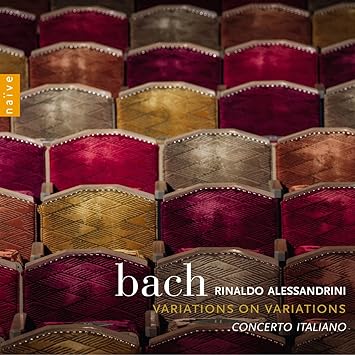
    Bach - Variations on variations | Rinaldo Alessandrini, Concerto ItalianoOn to today...This morning I continued to audition the GAC-2111. I loved the fastidiously dissected strands of Bach in Concerto Italiano's Variations on Variations (Naive), each clear as daylight. Sunshine in music, indeed.

    Time Out for Food (Shenzhen) or, cover your ears...

    The Freshest Beer Then I skipped out to Shenzhen for lunch. This time it was braised fish 紅燒魚塊 and pork sautéed with fine vegetable slivers and vinaigrette sauce 魚香肉絲. This joint always has the freshest beer. The so-called "Tsing Tao" (the version in Shenzhen is a Sino-Asahi venture which, though still a good light beer, bears no resemblance to its HK, Northern China and Export cousins, though they too are different from each other) has May 5th, 2018 as production date, how about that! The fresher the better, when it comes to beer! The food is, as usual, well prepared.

    Would Confucius be Appalled? One caveat. Eating in China, you have to put up with certain things, and here are my pet peeves...In such eateries, some customers smoke, which is annoying. But what, to me, is equally irritating is witnessing the general public's Table Manner. Modern day (PRC) Chinese seem oblivious to their surroundings by letting out the sound of mastication without any inhibition. One hears "jap...jap...jap..." and, believe me, it is not for the faint of heart, as the sound can emanate as much from a well dressed and pretty lady as from a sweaty laborer. The lack of civic concerns/pride permeate every aspect of life. Just the other day, a few mainland visitors were nearly blocking the sidewalk in Yuen Long. I overheard a HK passerby remark to his wife: "Mandarin speakers..."; his wife asked what he meant, and he replied, "...don't you think Mandarin speakers (meaning those from PRC) think the public spaces are their private properties?" Food for thought.

    I guess, you pay for what you get...but then, maybe not, as the same phenomenon can be observed even in high end restaurants, though the tables there are not usually as proximal to each other nor shared, thereby lessening the torture.

    DGS-1 After I returned from lunch, I switched to the DGS-1. The richer midrange and darker hue of the DGS-1 was immediately apparent. The same Bach album I had listened to before lunch sounded surprisingly different. The DGS-1 has less details than the GAC-2111, but its presentation is fleshier and images are larger. The harpsichord's midrange is often too thin with many cables, but the DGS-1 gets it just right. This album is so good that I have listened to it several times. The arrangement for Goldberg Variations is just sublime.

    Ne Me Quitte PasAlbum.jpgNe Me Quitte Pas I then listened to that most emotive of singers, Jacques Brel (Barclay/Universal). The difference between the two cables were startling.

    With GAC-2111, this somewhat lean remastering is undeniably exciting, though sometimes unravelling at the edges. INe me quitte pas, Brel's iconic song,  the vehement declamations and word bending are sometimes discomforting. With the DGS-1, the delivery is more fluid. All that makes me wonder, which is the real Jacques Brel? At the bottom of the article is a youtube of this song (not the same performance).

    Sonic Impressions
    • My impressions this time are in keeping with what I have observed before, but there are some additional findings.
    • The GAC-2111 is tremendously detailed, yet balanced. What surprises the most is its outstanding rhythm and pace, which loses nothing compared to the DGS-1. This cable will likely please those with an audiophile bent, but those whose systems tend to be on the bright side should use with care.
    • The DGS-1 paints with broader strokes, its presentation fleshy and dramatic. On its own, one is very satisfied, but in comparison with GAC-2111, one could clamor for just a little more resolution. Its excellent rhythm and pace is of a more subtle kind than the GAC-2111, but equally valid.
    • Since my Kondo system has quite high resolution, on the whole, and by a small margin, perhaps DGS-1 is preferred, yet I am sure I shall be rotating it with the GAC-2111. Both are wonderful!

    27 October, 2017

    MoFi StudioPhono, Schiit Saga, Shelter 201, Citation I, Monbrisson, Gotham

    pic: Innards of the StudioPhono. Click to Enlarge. Caution: the case is well designed. After unscrewing, take off the cover gently; you will encounter a little resistance, but gentle wiggling helps. I actually like the look of it, well laid out and built.

    Review: MoFi StudioPhono, Part II
    Review: Schiit Saga, Part II
    Review: Shelter 201, Part II
    Review: Shindo Monbrisson, Part III
    Review: Harmon Kardon Citation I, Part III
    Talk Cable: Gotham GAC-2 and DGS-1
    Letter from NYC (70) 2017 (9)

    MoFi StudioPhono, Part I and Shelter 201, Part I
    Schiit Saga, Part I
    Shindo Monbrisson, Part I (extensive basic info and review); Part II (vs Manley 300B preamp)
    Harmon Kardon Citation I, Part I (basic info and review), Part II (in a group preamp shootout)

    Round I (MoFi Studiophono; Shelter 201)
    Using my Reference System II, In Part I of my MoFi StudioPhono review, I used the Schiit Saga as preamp. Since elsewhere I did find the Saga to be on the neutral/lean side, this time around, I swapped it out for my usual tube preamps, and that made all the difference in the world. Whereas last time I had to use a smoother cable (DIY 47 Labs) with the StdudioPhono to tone down the sound, this time I re-instated my Gotham DGS-1 with no problem. I also think more run-in helped.

    Equipment Used:
    Analog 1: Audio-Technica AT-PL120/Shelter 201
    Analog 2: Thorens TD-125/SME 3009i/Denon DL-304
    Preamp: Shindo Monbrisson and Harmon Kardon Citation I
    Amp: Wavac MD-811
    Loudspeakers: YL 4-way Horns


    LPs Used: For this rather big round of testing, I relied on several LPs which I wrote up in my last post (roll down, or here). The same LPs were played through both preamps' own phonostages, and through the StudioPhono through the preamps' linestages.

    As there are a lot to cover, I shall be brief with each entry, and sum up my findings in my Conclusions section.

    StudioPhono + Shindo Monbrisson
    Through the line section of the Shindo Monbrisson, the StudioPhono performed brilliantly. As with the Schiit Saga, I was particularly impressed by the way it separated the orchestral instruments and defined them in space. In Finlandia, I definitely could visualize the front, middle and back of the orchestra. As also with the Schiit Saga, the bass reached impressively deep and was suitably taut. The Shindo's warmth and sweeping power in the bass, however, was like a great air cushion and immeasurably enhanced the StudioPhono. However, when it came to the Budapest Quartet, there was still a little lingering leanness.

    MoFi StudioPhono + Harmon Kardon Citation I
    The performance was still very good, warmer than with the Schiit Saga. However, the line stage of the Citation I, though still warm, lacked the depth of the Shindo, and at higher volume things became just a little ragged. The lower brass in Bruckner 4th did not have quite the desirable heft.

    Interlude: MoFi StudioPhono chez Andy
    I took both cartridge and phonoamp to Andy's for a brief listen. On the Garrard 401, the Shelter 201 replaced a Decca cartridge. In his more forgiving system, the sound was quite listenable, without any undue leanness. The Shelter, however, did not have the color and force of Decca. Andy actually thought the StudioPhono to possess a reasonable warmth, whereas he was not too enamored of the starker sound of the Shelter. We noted the calibration may not have been precise.

    Round II (Shelter 201, Denon DL-304, MoFi StudioPhono and Full-Function Preamp Use)
    Up to this point, I had used mostly the Shelter 201. Then, I added to the source my Thorens 125/SME 3009i/Denon DL-304, likely better in every way than my go-to Audio-Technica.

    StudioPhono
    As mentioned in Part I, the StudioPhono had no problem whatsoever with the low-output Denon DL-304. Indeed, through either the Shindo or the Harman Kardon, the sound acquired a new smoothness and have a subtler inflection, while retaining all the positive attributes mentioned above.

    Shindo Monbrisson
    I then turned my attention to the performances of my preamps in their intended full-function mode. Most interestingly, much as I like my Shindo, I did not find running the Shelter 201 into its MM section to be decisively superior to using the StudioPhono. Although it produced fleshier images and a fuller tone, the Shindo was darker, less detailed and somewhat colored. It also did not reveal space in the highly accurate manner that StudioPhono did. With the MC Denon DL-304, which I first ran through the Western Electric 285L and then through the Shindo's own input trannies (which I prefer in this case), it was a different story - clearly superior to Shelter 201, through the Shindo MC stage it in almost all aspects of performance surpassed the StudioPhono, which however still managed to have image definition and layering precision to its advantage.

    Harmon Kardon Citation I
    Used as full-function preamp, the Shelter 201 performed much like with the StudioPhono, with just the right added warmth. Unlike the Shindo MM section, the Citation I was almost just as good in the areas where the StudioPhono excelled, and a little better it other parameters - not surprising given the Citation's modernist tube bent. I did not get to use the Citation with DL-304 as it would necessitate trials with SUTs.

    Round III (Schiit Saga; reunited with StudioPhono in System III)
    At the end of my last trip (see Schiit Saga, Part I; link on top), I left the Saga in my Reference System III, but was not happy with the phono setup. Equipment:

    Analog 1: Pioneer PL-50/Raos MC Mono
    Analog 2: Thorens TD-309/Denon DL-A100
    Phonoamp 1: 47 Lab Shigaraki

    Phonoamp 2: AQVOX 2CI MkII vs MoFi StudioPhono
    Digital: Sparkler S303
    Buffer: Schiit Saga
    Preamp: Langevin 102
    Amp: Wavac MD-811
    Loudspeakers: YL Acoustics 4-way Horn Speakers


    This time, most of the time I was preoccupied with System II, but as the StudioPhono was soon to be retired from this station (which has too many good phonoamps and preamps), I refocused on System III.

    I swapped in the StudioPhono for the AQVOX, using the same Gotham DGS-1 cable to the Saga. But I also swapped out the phono cable, switching from Mogami 2534 to Gotham GAC-2. That did it! A Miracle! Unlike the duo's performance in System II (again, see Part I link), the sound was synergistic, indeed superb. It even had gravitas in the Bruckner 4th. And in Pollini's Chopin Piano Concerto No. 1 (EMI HMV Concert Classics), the strings now sounded much sweeter, the woodwinds natural and the piano focused. Most amazingly, even though I knew the StudioPhono was good in the bass, I was surprised that the system had a sweepingly solid bass foundation much like the Shindo - for this credit must go to the Langevin 102 preamp.

    Note on Remaking of System III  I also did a bit of re-cabling for the rest of the system. For the Sparkler CDP, I installed the Gotham DGS-1, to excellent effect. Now, only a small trace of dryness remains, even in big-boned pieces like Finlandia (PO/Ashkenazy, Decca) and Brahms 3rd (VPO/Giulini, DG) - some of this is definitely the inherent character of Sparkler; and some of this may be due to the recording (the DG is certainly drier than the Decca). I also installed the (DIY) Belden 8451 (another unsung hero; good at cooling things down) and it similarly improved the mono LP playback. I hereby declare this system ship-shape. Done!

    Yes, the Schiit Saga forced me to re-cable the system, almost from top to bottom, but it is eminently worth it, and it is staying in the system (saves me space)! More below in Talk Cable and Conclusions.

    Round IV (Shelter 201 with Nagra PL-P in System IV)
    The Shelter 201 did well in my newly promoted System IV (here.)

    Round V (Linn LP-12 Lingo/Ittok LV-II/Air Tight PC-1 in System II)
    This is part of Restructuring. System I right now is seeing less action, so I decided to move the Linn LP12/Ittok/Air Tight PC-1 to System II. Also, in System II, my Thorens 125/SME 3009i/Denon DL-304 is doing so well that I did not want another Denon cartridge in the system, Hence, I moved the Thorens TD-124/SME 3012/Denon DL-103 to System I. Suffice to say, the sound of the Linn/Air Tight was just absolutely splendid through the Shindo. Even more detailed, warmer and sweeter than the TD125/SME/Denon DL-304, the PC-1 exudes a subtle elegance. More on System I later.

    Cable Talk: Gotham GAC-2, DGS-1 vs Mogami
    I have been using professional cables for the last 20 years. Prior to Gotham, I used mostly Mogami (2534 and 2549) but that changed after Gotham. Generally speaking, Mogami is neutral but a little on the "white" side, suitable for warm tube and vintage gears. While Gotham is just as neutral, their cables have a bit more warmth and excelled at the frequency extremes: an airy and extended treble and a tactile and deep-reaching bass. I have used the (Austria made) shielded 4-conductor GAC-4 and 2-conductor GAC-2 for the longest time in HK. The GAC-4 is a little airier than the GAC-2 and hence preferred by most HK audiophiles. Here in the US, I bought a roll of GAC-2 (earlier) and coaxial DGS-1 (later) each and have been using them mostly in my systems. With my sensitive horns, the GAC-2 is more than transparent enough, with a wide soundstage and excellent imaging. The DGS-1 is less so in those parameters, but even more direct and emotive (a parallel would be non-oversampling in digital). Due to the large number of equipment that I have, I cannot make Gotham cables fast enough, and so sometimes in less critical stations/areas use other makes, including Mogami. This was the case when I first tested the Schiit Saga at Station III (see part I, link above). This time I shuffled things around and re-cabled with Gotham and things got much better. With neutral gears like AQVOX, Schiit Saga and MoFi StudioPhono, Gotham works well but Mogami doesn't. It should also be noted that some of the current Gotham cables (like the Ultra Pro series) are even more resolving, but I wonder if it has gone overboard (I have the GAC-1 Ultra Pro, which I like, but Andy thought it too bright).

    Conclusions

    • Shelter 201 This round hasn't changed my impression of this cartridge. This is a commendably highly resolving cartridge with a very neutral tone. It is sensitive to VTA. Although generally MC-like in resolution and musical enough, it is not quite as nuanced in microdynamics and tonality. Should be partnered with warmer gears.
    • MoFi StudioPhono The StudioPhono finally found its footing in the round. Perhaps further run-in helped. The StudioPhono has outstanding resolution - image specificity and definition in space are world class. Its bass quality and reach are irreproachable. This is very neutral phonoamp and care should be taken with cabling and partnering gears - not for people who prefer warmth. It is not quite an EAR 324 (from memory) but a seriously good bargain that performs way beyond its price point.
    • Shindo Monbrisson As usual, it was big, bold and colorful (or as Art Dudley would say, force and touch), but with the Shelter 201 it surprisingly sounded colored and uneven. This is in fact a little puzzling, as before I had used it with numerous MM's to great effect. Even so, it shone with low output MC's. My fondness for it has not abated.
    • Harmon Kardon Citation I Compared with older vintage preamps, the Citation I is a model of neutrality. Its phono section is just superb, very neutral, not unlike the StudioPhono with tube warmth added. Its line section is neutral too, but gets a little taxed when the going gets rough, lacking the Shindo's sweeping power.
    • Schiit Saga As before, I am convinced the Saga is like a surgical instrument. While it sometimes demands one to think out of the box, it is a valuable piece of kit. As I said before, if your system needs more details, it is a good choice; but if your system could use more warmth, stay away.

    16 April, 2017

    Belden 9497, Part IV, 9497 vs 497 MkII

    L: Japanese 497mkII; R: US 9497 (click pic to enlarge). pic courtesy of icefox.

    Definitive Review: Belden 9497, Part IV
    Talk Cable: USA Belden 9497 vs Japanese 497 MkII

    See Part IPart II and Part III.

    It is amazing how the humble US Belden 9497 has remained in my various systems for as long as I remember. I first wrote Part I in 2009, then Part II in 2012, and Part III in 2014. And now in 2017 it is time for the last one (ha!), as my dear friend Seng finally brought me some 497 MkII from Japan and I have used them for long enough to make some comments.

    There are very few blogs/magazines that anally re-visit again and again what they deem worthwhile. For that I am proud. But the Belden deserves it, as many of us have never been able to find something better. Different, maybe; better, no.

    Tested in my Kondo system.

    Sonic Impressions

    • Air The US 9497 is airier in the high treble, more open.
    • Upper Midrange The Japanese 497 MkII has just a touch of hardness here, making the US 9497 a smoother listening.
    • Bass Similar.
    Conclusion

    • The 9497 is the better cable, and cheaper!

    04 February, 2015

    Brief Reviews: Five USB 2.0 A to B Cables

    Copartner Usb A/m To Usb B/m Cable E119932 Awm 2725 80c 30v Vw-1 28awg Ll84201 Csa Type Awm I/iia 80http://i00.i.aliimg.com/img/pb/713/105/913/913105713_639.jpgClick pics to enlarge: L, Unitek; R, Copartner
     
    Brief Reviews: Five USB 2.0 A to B Cables from Unitek, Copartner, Sunf Pu and Belkin
    Talk CAS/Talk Cables - USB Cables


    Revised March 25, 2015 (Friend Nelson's evaluation added; see Sonics Part II below)


    My readers know that I do not go to heroic lengths for my desktop but, excited by the recent changes made to my desktop, on a whim I put this quintet to test. The current desktop configuration: Microsoft Windows 7-iTunes-USB-Micromega MyAmp-Sparkler S301 (pic at bottom of article).

    The Cables:

    Gold Series Hi-Speed USB 2.0 Cable - HeroImage
    • Belkin Gold This is the only well known member of the trio here, and long a TAS favorite. The official website lists it as Part Number F3U133, but you could buy it substantially discounted at Amazon and other sites. Only problem is, it is commonly available only in 6-, 10- and 16-ft lengths (designated -06, -10 and -16), not the shorter 3-ft/1 m preferred by audiophiles (I agree longer ones sound worse usually). Belkin apparently also makes a 3-ft version that bears the same Part Number F3U133, followed by -03 (like this one sold at Amazon and others), but for some reason this one does not say "Gold". Confusing? You bet! Mine is 6-ft, marked in gold letters and clearly labelled "Gold Series".
    • Belkin Hi-Speed 2.0 Shielded My grey 10-ft cable seems to be an old model. It is rather thin, marked E330337 Style 2725, and is 28 awg + 26 awg. These spec's don't match anything I can find on the net.
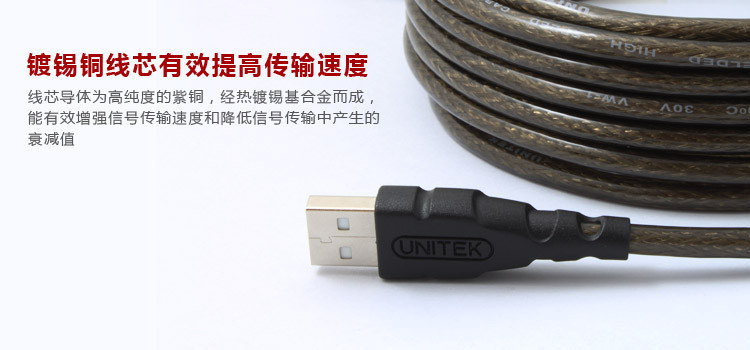
    • Unitek 科盛國際 This is a Hong Kong company (official site) without great US presence. Even in HK, the USB cables are not widely available. Try Wanchai 298 Computer Center (where my friend Nelson bought one for me) or Mongkok Computer Center. Mine is 1.8m, model Y-C419 (3m and 5m are available as -C420 and -C421). This cable (pic above) is unusual in that it has a brown transparent sleeve, through which one can see its braided shield.
    • Copartner 聯穎科技 This is a brand from Taiwan (official site) that is not hard to find in the US. Mine is marked E119932 Awm 2725 80c 30v Vw-1 28aw, same as this one that is available at Amazon and PC World. Mine is 10-ft, bought for a dollar or two from (I think) Parts Express, one of those Buyout Specials (pic above).
    • Sunf Pu 松普科技 Again, this is a brand from Taiwan (official site), though it seems its products do not have a good US presence. My 6-ft model is actually an old Hewlett-Packard cable OEM'ed by Sunf Pu which I found in my drawer, marked E132276-A 24/28 AWG CSA LL-64151-A.
    Sonics Part I (my quick evaluation)
    • Best sound was obtained by the Unitek, Belkin Gold and Sunf Pu (though marked HP). They sound somewhat different from each other. The Belkin Gold is quite smooth, the HP a little crisper, and the Unitek somewhere in between. I ended up using the Unitek now. Highly recommended for HK readers.
    • As these are 6-ft in length, it DOES seem possible that USB cables should not be too long. The longer (10 ft) Belkin Hi-Speed and Copartner were obviously inferior, but to be fair, it would be nice to test out their 6-ft counterparts.
    • I am also going to let my friend Nelson , who uses exclusively CAS, to test out these for me, so the article may be updated when his verdicts come in..
     Sonics Part II (Nelson's evaluation, and editorial thoughts in italics)
    • Nelson listens almost exclusively to CAS, Windows/iTunes to Micromega MyDAC, Counterpoint electronics to Haydn Grand SE. I think he spent more time than I did in his comparisons (His CAS should not be too different from mine, given his Micromega DAC!).
    • Similar to me, Nelson picks Unitek and Sunf Pu (HP) as the best of the lot, with Unitek the winner. Different from me, Nelson regards the Belkin Gold as the worst performer, kind of "foggy" in his own words (I can understand this, "smooth" (my term) and "foggy" (his) are but two sides of the coin). In his opinion, the Belkin Hi-Speed and Copartner performed somewhere in between.

    04 June, 2012

    Review: Canare L-2T2S and Sommer tricone MkII

    Talk Cable: DIY Cables, a Must for any Audiophile
    Review: Canare L-2T2S and Sommer tricone MkII interconnect cables

    For the longest time, my reference interconnect cables have been the various Gotham cables, and that is unlikely to change at all. However, from time to time, I do try out a few other makes. Before I go into my recent forays, let me say why I think DIY cables is a necessity.

    Why DIY Cables? Simple, "Audiophile" cables from audio manufacturers are mostly scams. The most balanced cables I have heard have all been no-frills professional cables. Unfortunately, most are sold as bare cables and termination is required.

    Design your own cable? No. Some people assemble their own cables from core conductors and add shielding etc. In my experience, most of these sound unbalanced. There is much to choose from professional cables that self-assembly is a waste of time.

    So when I say DIY, it is limited to termination. 十個名牌音響線九個不平衡;十個自作音響線九個不能聼。

    RCA connectors I use cheap connectors. My own inclinations on RCA connectors: the connector must be rust-proof, light and made of THIN metal (such as the imitation "Canare" sold in HK). Many expensive boutique connectors, such as WBT, use chunky metal, but they look more impressive more than they sound good. Think about it, why would you want to use an expensive cable composed of many fine strands of conductors, then attach a huge metal chunk at the end to connect to a tiny female RCA connector (usually cheap even on expensive gears, and made from thin metal) on the machine?

    Solder The solder must flow easily and quickly. Use sparingly, just enough to do the job and no more. I use standard stuff (I still have the older tinned ones, which I prefer). There are people out there who swear by difficult-to-manage silver and other expensive solder formulas, but I'd urge you not to get anal about it. The whole thing about solder that is like no solder (that is totally transparent) is nonsense. If you believe that, you might as well use solder-less screw-on connectors (but not WBT; use cheap ones, like the very light aluminum ones, the "brand" of which I forgot, available in HK).  

    Which cable model? Most professional cable companies make a large number of models. Picking and choosing can be rather bewildering. My philosophy, if you can term it that, is to try out the cheapest model. With the reputable manufacturers, they never disappoint. You can then move up the price point if you wish, but I find the more expensive does not at all equate the better. More conductors, more complex configurations/geometries, more shielding etc may bring about better RF rejection or measurements, but sonically there is no guarantee.

    A Note of Caution There are plenty of so-called cable experts out there, who terminate for you for a substantial fee. They claim perfect soldering etc. Some of these people may have the skills, but they also inflate their own significance. You can also develop them on your own to save yourself a lot of money. and have some fun on the way. 除了專業音響工程店外,十個所謂HiFi音響線專賣店十個黑;其它十個賣HiFi線的九個騙。

    Illustrated Guide to DIY Cables This profusely illustrated site for how to terminate a cable is simply great. I just discovered it and am happy the author and I have much in common when it comes to cables.

    And now brief reviews of two cables.
    Canare L-2T2S (official info)
    I have always liked Japanese Canare cables. The cables are soft to touch (a good sign) and sound musical. This is unlike Japanese Mogami, which tends to be much leaner. Japanese Softone/ICL equipment comes with cheap Canare cables that sound surprisingly good. This L-2T2S model is very cheap (HK $ 16/m), and available by the foot or in bulk (like here).

    This cable has a fully fleshed out midrange and finely balanced sound. It has neither the ultimate attributes nor serious deficiencies. It matches perfectly my Thorens TD-309 turntable. A great starter cable. When I have time, I may compare it to Gotham GAC-2. People who find Mogami too lean can try this out. Who says there is only one "Japanese sound"?!

    Sommer tricone MkII (official info)
    I have never heard Gotham (old stock or current products) I don't like, but that is not the case for German Sommer. I have heard Sommer cables several times and in general they seem to be lacking somewhat in rhythm and pace. A friend even lent me the very expensive (around US $200) Epilogue. It is not a bad cable, revealing and balanced, but one expects a little more musicality, particularly at the price. The cheapest of the line, the tricone MkII, is no exception, but for the ridiculously low price (HK $12/m) its performance is very good indeed and there is much less to complain about. Overall, I still prefer the Canare L-2T2S.

    FYI, I also got a bit of much more expensive Galileo 238 plus (HK $38/m) to try, and shall report later. I am not the only one who suspects the cheaper Sommer models sound better than the more expensive ones.

    Incidentally, I noticed that the word "highflex" on my tricone is in italics, whereas that on the website picture is not. I called 雅歌 and was informed that Sommer sometimes changes things without notice.

    Where to get Canare and Sommer in HK
    Most HK audiophiles get their Sommer and Canare from Apliu street, particularly 雅歌. The staff is very friendly, honest and helpful. They won't recommend anything unless you want them to; no hard sell here. Here are their details:


    Acoustic Engineering Co Ltd 雅歌工程有限公司
    G/F., 66 Yen Chow St., Sham Shui Po
    Telephone: 2729 1022
    Fax: 2725 6787
    E-mail: acoustic01@biznetvigator.com

    However, 雅歌 is only the retailer who gets their supplies from the distributor. For Sommer at least, 雅歌 gets their supply from Palonn 柏龍, who is listed in Sommer's official website as a Hong Kong distributor, although the same website also lists another two dealers for China, and both have HK addresses (one even has a "sommer hk" website). So, it is a little complicated. But unless you plan to buy a roll, Apliu Street and 雅歌 is still your best choice.