Showing posts with label Brand-Shindo. Show all posts

17 May, 2022

Shindo Petrus Telefunken EF800

Editor's Note: Calling Reader ERIC

This brief note is just a little housekeeping.

Under my 2011 Year in Retrospective article, reader ERIC asked whether I know what's the tube sitting next to the 412A in the Shindo Petrus, I didn't know.

More than 10 years on, reader GORD had just kindly posted the answer: it is the Telefunken EF800. Thank you Gord! This is the kind of support that keeps me going!


23 December, 2020

Shindo Lafite Field Coil Monbrison 300B Wavelength Crimson 71A


Click pics to enlarge. Beneath the TV are the Monbrison Preamp and the F2A amp (only side showing). Beneath are the 300B Limited monoblocks. The DAC (pic below) hides behind the screen.

Brief Home Visit: All Shindo Setup

Weeks ago, before this current Fourth Wave in Hong Kong, I visited R (with his wife and son), a former student and ENT specialist, who is a classical music aficionado. The visit was relatively short and, as courtesy, I voluntarily wore mask almost the whole time.

His living room (I reckon around 400 sq ft) is way too big for his gears. R is a very considerate family man who plays his music at lowish level, lower than I'd like. He also prizes refinement over loudness. I knew that from a previous visit to his old flat, before he got into all Shindo.

Throughout, R just streamed music. No LP was played. DAC is an old Wavelength Crimson, which employs, by chance, the 71A tube (not a current version). Preamp is the Shindo Monbrison (newer version than mine), which drives the 300B Limited monoblocks (all WE tubes). This marked the first time I listened to Shindo loudspeakers, in this case the Lafite.

A Word on Field Coils Before permanent magnets became the norm, field coils were used. Each driver needs a power supply (tube traditionally) to deliver the magnetic field and the PSU can be bigger than an amp! Being very old drivers, vintage field coil drivers are highly prized (beside the rare-as-hen's-teeth WE's [a coming WE report will have pics of these], many others, like Jensen and Motorola, made them). The Lafite is an 8" full-range field-coil driver (Official Spec's). I doubt Ken Shindo developed it all by himself. After all, Japan has well established companies specializing in making field-coil drivers, from the "more reasonable" Maxonic to the ridiculously expensive Feastrex (which I have heard but was not won over on that occasion). One thing, the DC PSU can be done on the cheap, or can be very expensive. Today, except for DIY efforts, boutique units are usually solid state. Thumbs down to all the Shindo dealers and the small circle of writers who write about them - none of them ever wrote as much as one word on the internal power supply of the Lafite or the larger Latour. I reckon it is solid state.

Perhaps because of the lowish volume, sound was smooth but not quite lively enough for me. Indeed I did not quite feel the directness of a full-range driver, not to mention the qualities mentioned by the dealers and select writers (next paragraph). Indeed the sound reminds me a little of another Shindo system, my friend Simon's, which though showing some WE qualities, was smooth rather than direct, and lacking somewhat in presence.

Aside from a couple of user comments, there is no real Lafite review on the internet. There are "reports" on the dealers' setups by the likes of Jeff Day and partimeaudiophile but these (especially the latter) look like insider activities that really should not see print. When dealers and writers wine and dine and party together, what do you think happen to the reports? They look like ads. You'd think all these minds will do some useful poking or probing, like finding out more about the PSU, but no. It bothers me that a small group of writers and dealers befriend each other and generate lofty prose that some people buy into (now, Art Dudley did not do that). You only see them do this for expensive stuff, right? And it also irks me that, as happens so frequently, reviewers with little experience in horns and vintage equipment wax lyrics on these modern systems.

This is not to say I think the Lafite is over-rated. I think there are several problems with Raymond's setup: (a) he has plenty of room but the system is placed against a wall, and I advised him to relocate that to where the sofa is (where I took the pic). This would put the loudspeakers in the middle of the room and they should sound more open; (b) equipment are placed on Sound Mechanics stands (this is a HK brand that use HDF, which hopelessly damps the liveliness out of music[very expensive Finite Element does that too]). So, waiting for those to be rectified, I'd postpone judgement; indeed I hope to hear them again!

27 October, 2017

MoFi StudioPhono, Schiit Saga, Shelter 201, Citation I, Monbrisson, Gotham

pic: Innards of the StudioPhono. Click to Enlarge. Caution: the case is well designed. After unscrewing, take off the cover gently; you will encounter a little resistance, but gentle wiggling helps. I actually like the look of it, well laid out and built.

Review: MoFi StudioPhono, Part II
Review: Schiit Saga, Part II
Review: Shelter 201, Part II
Review: Shindo Monbrisson, Part III
Review: Harmon Kardon Citation I, Part III
Talk Cable: Gotham GAC-2 and DGS-1
Letter from NYC (70) 2017 (9)

MoFi StudioPhono, Part I and Shelter 201, Part I
Schiit Saga, Part I
Shindo Monbrisson, Part I (extensive basic info and review); Part II (vs Manley 300B preamp)
Harmon Kardon Citation I, Part I (basic info and review), Part II (in a group preamp shootout)

Round I (MoFi Studiophono; Shelter 201)
Using my Reference System II, In Part I of my MoFi StudioPhono review, I used the Schiit Saga as preamp. Since elsewhere I did find the Saga to be on the neutral/lean side, this time around, I swapped it out for my usual tube preamps, and that made all the difference in the world. Whereas last time I had to use a smoother cable (DIY 47 Labs) with the StdudioPhono to tone down the sound, this time I re-instated my Gotham DGS-1 with no problem. I also think more run-in helped.

Equipment Used:
Analog 1: Audio-Technica AT-PL120/Shelter 201
Analog 2: Thorens TD-125/SME 3009i/Denon DL-304
Preamp: Shindo Monbrisson and Harmon Kardon Citation I
Amp: Wavac MD-811
Loudspeakers: YL 4-way Horns


LPs Used: For this rather big round of testing, I relied on several LPs which I wrote up in my last post (roll down, or here). The same LPs were played through both preamps' own phonostages, and through the StudioPhono through the preamps' linestages.

As there are a lot to cover, I shall be brief with each entry, and sum up my findings in my Conclusions section.

StudioPhono + Shindo Monbrisson
Through the line section of the Shindo Monbrisson, the StudioPhono performed brilliantly. As with the Schiit Saga, I was particularly impressed by the way it separated the orchestral instruments and defined them in space. In Finlandia, I definitely could visualize the front, middle and back of the orchestra. As also with the Schiit Saga, the bass reached impressively deep and was suitably taut. The Shindo's warmth and sweeping power in the bass, however, was like a great air cushion and immeasurably enhanced the StudioPhono. However, when it came to the Budapest Quartet, there was still a little lingering leanness.

MoFi StudioPhono + Harmon Kardon Citation I
The performance was still very good, warmer than with the Schiit Saga. However, the line stage of the Citation I, though still warm, lacked the depth of the Shindo, and at higher volume things became just a little ragged. The lower brass in Bruckner 4th did not have quite the desirable heft.

Interlude: MoFi StudioPhono chez Andy
I took both cartridge and phonoamp to Andy's for a brief listen. On the Garrard 401, the Shelter 201 replaced a Decca cartridge. In his more forgiving system, the sound was quite listenable, without any undue leanness. The Shelter, however, did not have the color and force of Decca. Andy actually thought the StudioPhono to possess a reasonable warmth, whereas he was not too enamored of the starker sound of the Shelter. We noted the calibration may not have been precise.

Round II (Shelter 201, Denon DL-304, MoFi StudioPhono and Full-Function Preamp Use)
Up to this point, I had used mostly the Shelter 201. Then, I added to the source my Thorens 125/SME 3009i/Denon DL-304, likely better in every way than my go-to Audio-Technica.

StudioPhono
As mentioned in Part I, the StudioPhono had no problem whatsoever with the low-output Denon DL-304. Indeed, through either the Shindo or the Harman Kardon, the sound acquired a new smoothness and have a subtler inflection, while retaining all the positive attributes mentioned above.

Shindo Monbrisson
I then turned my attention to the performances of my preamps in their intended full-function mode. Most interestingly, much as I like my Shindo, I did not find running the Shelter 201 into its MM section to be decisively superior to using the StudioPhono. Although it produced fleshier images and a fuller tone, the Shindo was darker, less detailed and somewhat colored. It also did not reveal space in the highly accurate manner that StudioPhono did. With the MC Denon DL-304, which I first ran through the Western Electric 285L and then through the Shindo's own input trannies (which I prefer in this case), it was a different story - clearly superior to Shelter 201, through the Shindo MC stage it in almost all aspects of performance surpassed the StudioPhono, which however still managed to have image definition and layering precision to its advantage.

Harmon Kardon Citation I
Used as full-function preamp, the Shelter 201 performed much like with the StudioPhono, with just the right added warmth. Unlike the Shindo MM section, the Citation I was almost just as good in the areas where the StudioPhono excelled, and a little better it other parameters - not surprising given the Citation's modernist tube bent. I did not get to use the Citation with DL-304 as it would necessitate trials with SUTs.

Round III (Schiit Saga; reunited with StudioPhono in System III)
At the end of my last trip (see Schiit Saga, Part I; link on top), I left the Saga in my Reference System III, but was not happy with the phono setup. Equipment:

Analog 1: Pioneer PL-50/Raos MC Mono
Analog 2: Thorens TD-309/Denon DL-A100
Phonoamp 1: 47 Lab Shigaraki

Phonoamp 2: AQVOX 2CI MkII vs MoFi StudioPhono
Digital: Sparkler S303
Buffer: Schiit Saga
Preamp: Langevin 102
Amp: Wavac MD-811
Loudspeakers: YL Acoustics 4-way Horn Speakers


This time, most of the time I was preoccupied with System II, but as the StudioPhono was soon to be retired from this station (which has too many good phonoamps and preamps), I refocused on System III.

I swapped in the StudioPhono for the AQVOX, using the same Gotham DGS-1 cable to the Saga. But I also swapped out the phono cable, switching from Mogami 2534 to Gotham GAC-2. That did it! A Miracle! Unlike the duo's performance in System II (again, see Part I link), the sound was synergistic, indeed superb. It even had gravitas in the Bruckner 4th. And in Pollini's Chopin Piano Concerto No. 1 (EMI HMV Concert Classics), the strings now sounded much sweeter, the woodwinds natural and the piano focused. Most amazingly, even though I knew the StudioPhono was good in the bass, I was surprised that the system had a sweepingly solid bass foundation much like the Shindo - for this credit must go to the Langevin 102 preamp.

Note on Remaking of System III  I also did a bit of re-cabling for the rest of the system. For the Sparkler CDP, I installed the Gotham DGS-1, to excellent effect. Now, only a small trace of dryness remains, even in big-boned pieces like Finlandia (PO/Ashkenazy, Decca) and Brahms 3rd (VPO/Giulini, DG) - some of this is definitely the inherent character of Sparkler; and some of this may be due to the recording (the DG is certainly drier than the Decca). I also installed the (DIY) Belden 8451 (another unsung hero; good at cooling things down) and it similarly improved the mono LP playback. I hereby declare this system ship-shape. Done!

Yes, the Schiit Saga forced me to re-cable the system, almost from top to bottom, but it is eminently worth it, and it is staying in the system (saves me space)! More below in Talk Cable and Conclusions.

Round IV (Shelter 201 with Nagra PL-P in System IV)
The Shelter 201 did well in my newly promoted System IV (here.)

Round V (Linn LP-12 Lingo/Ittok LV-II/Air Tight PC-1 in System II)
This is part of Restructuring. System I right now is seeing less action, so I decided to move the Linn LP12/Ittok/Air Tight PC-1 to System II. Also, in System II, my Thorens 125/SME 3009i/Denon DL-304 is doing so well that I did not want another Denon cartridge in the system, Hence, I moved the Thorens TD-124/SME 3012/Denon DL-103 to System I. Suffice to say, the sound of the Linn/Air Tight was just absolutely splendid through the Shindo. Even more detailed, warmer and sweeter than the TD125/SME/Denon DL-304, the PC-1 exudes a subtle elegance. More on System I later.

Cable Talk: Gotham GAC-2, DGS-1 vs Mogami
I have been using professional cables for the last 20 years. Prior to Gotham, I used mostly Mogami (2534 and 2549) but that changed after Gotham. Generally speaking, Mogami is neutral but a little on the "white" side, suitable for warm tube and vintage gears. While Gotham is just as neutral, their cables have a bit more warmth and excelled at the frequency extremes: an airy and extended treble and a tactile and deep-reaching bass. I have used the (Austria made) shielded 4-conductor GAC-4 and 2-conductor GAC-2 for the longest time in HK. The GAC-4 is a little airier than the GAC-2 and hence preferred by most HK audiophiles. Here in the US, I bought a roll of GAC-2 (earlier) and coaxial DGS-1 (later) each and have been using them mostly in my systems. With my sensitive horns, the GAC-2 is more than transparent enough, with a wide soundstage and excellent imaging. The DGS-1 is less so in those parameters, but even more direct and emotive (a parallel would be non-oversampling in digital). Due to the large number of equipment that I have, I cannot make Gotham cables fast enough, and so sometimes in less critical stations/areas use other makes, including Mogami. This was the case when I first tested the Schiit Saga at Station III (see part I, link above). This time I shuffled things around and re-cabled with Gotham and things got much better. With neutral gears like AQVOX, Schiit Saga and MoFi StudioPhono, Gotham works well but Mogami doesn't. It should also be noted that some of the current Gotham cables (like the Ultra Pro series) are even more resolving, but I wonder if it has gone overboard (I have the GAC-1 Ultra Pro, which I like, but Andy thought it too bright).

Conclusions

  • Shelter 201 This round hasn't changed my impression of this cartridge. This is a commendably highly resolving cartridge with a very neutral tone. It is sensitive to VTA. Although generally MC-like in resolution and musical enough, it is not quite as nuanced in microdynamics and tonality. Should be partnered with warmer gears.
  • MoFi StudioPhono The StudioPhono finally found its footing in the round. Perhaps further run-in helped. The StudioPhono has outstanding resolution - image specificity and definition in space are world class. Its bass quality and reach are irreproachable. This is very neutral phonoamp and care should be taken with cabling and partnering gears - not for people who prefer warmth. It is not quite an EAR 324 (from memory) but a seriously good bargain that performs way beyond its price point.
  • Shindo Monbrisson As usual, it was big, bold and colorful (or as Art Dudley would say, force and touch), but with the Shelter 201 it surprisingly sounded colored and uneven. This is in fact a little puzzling, as before I had used it with numerous MM's to great effect. Even so, it shone with low output MC's. My fondness for it has not abated.
  • Harmon Kardon Citation I Compared with older vintage preamps, the Citation I is a model of neutrality. Its phono section is just superb, very neutral, not unlike the StudioPhono with tube warmth added. Its line section is neutral too, but gets a little taxed when the going gets rough, lacking the Shindo's sweeping power.
  • Schiit Saga As before, I am convinced the Saga is like a surgical instrument. While it sometimes demands one to think out of the box, it is a valuable piece of kit. As I said before, if your system needs more details, it is a good choice; but if your system could use more warmth, stay away.

19 April, 2016

Shure SC35C, BAT P5, ARC PH1, Shindo


Review: Shure SC35C Cartridge, Part II
Letter from NYC (53) 2016 (9)
Review: BAT VK-P5
Vinyl Talk: MM vs MC, Part I
Phonoamp Shootout: BAT P5 vs ARC PH1 vs Musical Surroundings Phonomena II vs Parasound JC3

Note: At first I was perplexed that I got terrible results from the Shure SC35C (see Review: Shure SC35C, Part I), but I now know why. Read on.

Shure SC35C
Puzzling First Impression Almost a year ago, I read a Stereophile article by Herb Reichert, in which he (like others on the net) praises the evergreen $35 DJ Shure SC35C cartridge, used on a Pioneer direct-drive PLX-1000 (his review of the TT here). Now, HR is a seasoned reviewer (though now on the cheap), and the Pioneer he uses is almost the same thing as my AT-PL120 (I suspect they have the same OEM). As he got curious about the Shure, I did too. I bought one from Amazon and enlisted my idling Pioneer PL-10 for the purpose. As stated in my Note and the link above, the result I got was terrible. Frankly, I have never heard a worse sounding setup.

Rejuvenation/Culprit Revealed Still perplexed by the result, this time around I decided to shift the SC35C to my Audio-Technica AT-PL120 for a second chance. As I took off the cartridge leads on the Pioneer headshell, I noticed that they have deteriorated quite a bit, with clip barely hanging on. I installed it on the AT-PL120 and was immediately captivated. Yes, it was a little rough at first, but now I could hear the potential (more sonic notes down below). There! Cartridge Leads are easily damaged with time and during manipulation, and any poor connection adversely affects the sound. The degree of damage the leads did still amazes me.

I added the AT-PL120/Shure SC35C to my reference System II. As I have 2 Thorens tables fighting for the Shindo Monbrisson's 2 phono inputs, I needed to add a phono amp anyway, I used the opportunity for a little fitting.

BAT VK-P5
This is an older model, a super-bargain at current second-hand prices. As you can see from the pic, its battleship built and topology bears great resemblance to its current offerings, including the current flagship VK-P12SE (just rave-reviewed in the current May/June 2016 TAS). If you compare, the more expensive offerings differ little in topology, more in component grade and added options, like input transformers (I prefer my own) and output transformers. The P5 uses 8x6DJ8 and 2x6SN7. I have all old stock tubes in them.

The P5 is highly configurable. The maximum (high) gain of 56 db is a little low for very low output cartridges (like my Denon DL-304), but the low gain is a highish 50 db. One can further trim two pots to attenuate another 6 db (44 db). Two dip-switches allow for loading and capacitative adjustments.

For some reason, I have never formally written this up. Perhaps it is because I have previously only used it in balanced mode with the BAT VK-3i preamp, not my usual connection (RCA, as I use SET amps). My previous experience, with Air Tight PC-1 and with Koetsu Black, was very positive, and so is completely at odds with the surprisingly negative review on 10audio (usually this site is OK) and more in keeping with Toneaudio (summary only; more details in its review of the similar P6).

Compared to some other big names, BAT gears are less popular. I think this is due to their insistence on balanced topology. While the preamps have concessions to RCA's, the P5 phono amp does not; there is only a single pair of balanced output, necessitating the use of adaptors when used with non-balanced gears.

Audio Research (ARC) PH1 There is not much info on the net. For an introduction, see my previous experience.

Parasound JC3 Previously reviewed extensively (see here).

Musical Surroundings Phonomena II (see here).

System:
Analog Rig: Audio-Technica AT-PL120/Shure SC35C (and other after-market styli)
Preamp: Shindo Monbrisson (has MM stage)
Amp: Wavac MD-811
Loudspeakers: YL Audio 4-way horns
Phonoamps: Musical Surroundings Phonomena II; Parasound JC3; BAT VK-P5, ARC PH-1
XLR to RCA Cable: Gotham GAC-2/1 and DGS-1

Sonic Impressions
  • Shure SC35C (new stock) Compliance This is a very low compliance cartridge, and my low-medium mass arms are theoretically not optimal (I added a headshell weight). You can press on the stylus and it hardly budges, maybe great for child-proofing? VTF Recommended tracking force is 4-5 gm, and I use 4.5 with no problem. Output As we shall see, the high output of 5mV proved problematic to my system with high efficiency loudspeakers. Initial Sound/Run-In As soon as I mounted the SC35C in the AT-PL120, everything just snapped into focus. Force, colour, everything just exploded. Initially the sound was rather coarse at the top, but it started to smooth out after 20 hours. Likely not fully run in yet even as of this writing.
  • SC35C + Shindo Monbrisson Trying the other phono amps made me realize the presentation of Shindo's MM section - a somewhat softer presentation and narrower stage. But it was perfect for the rather long run-in period. The Shindo tamed the edge of the SC35C (it is important to remember my horns magnify such things) and for the initial period that was what I used. Unusually for me, but highly appropriate for MM, I played many rock and pop records. Even early on, the SC35C took well to rock and the male voices: Willy DeVille's Miracle, Leonard Cohen's Songs of Love and Hate, Dylan's Nashville Skyline and Pink Floyd's The Wall were all rendered with unforced dynamic swing, a fast, clean and powerful bass. On these rock/pop LPs the SC35C outperforms my MC's, and its ease of delivery is just admirable. Only when I played the period instrument Bach Violin Concerti (La Petit Bande; Proarte) or digitally recorded Linda Ronstadt For Sentimental Reasons was some residual upper midrange glare revealed. Of course, with MC's vocals and instrumental details are more nuanced, but the Shure is satisfying enough and rhythmically even more urgent.
  • SC35C + Phonomena II Like before, I had no luck with this one. I tried the various capacitance valued but none was able to change the sterile sound. Nothing offensive and neat, but not inspiring either, and that is a no no for LPs. Abandoned again.
  • SC35C + ARC PH-1 Now, this is more like it. The soundstage expanded in width and depth significantly. Bags of air was accompanied by a little over-the-top treble. To smooth out the sound, I resorted to an old Audioquest Ruby, a solid core cable. That did it perfectly. It shows once again that solid cores can sometimes work when stranded prove unsatisfactory. It also shows that one should consider what the vintage item was paired during its time. For the ARC PH-1, it was likely the era of Monster and MIT, old models that were not so transparent.
  • SC35C + Parasound JC3 or BAT VK-P5 Parasound JC3 Previously I had only availed myself of its excellent high-gain MC stage. I was surprised that the (47 db gain) MM sound was equally impeccably detailed, quiet and smooth. Just like the ARC PH-1, as compared to the Shindo, the soundstage width and depth both expanded. Tonally and dynamically a very even performer. This is a full balanced design. BAT VK-P5 The sound is very detailed and with a wide and deep soundstage. Surprisingly for a tubed unit, the transient attack is very fast and dynamics superlative. The unit also needs an hour to sound its best. As this is tube, there is a little more harmonics, but overall the sound is rather neutral, with just a hint of tube bloom; hence I can see why some tube people may not like this. I tried all of the capacitance options but the basic sound remained the same. As the output of the SC35C is a high 5mV, I used the lowest gain of 44 db by trimming the pots all the way down (see above). Parasound vs BAT Compared to the Parasound (even higher 47 db gain), the BAT subjectively sounds like the gain is too high, and the sound becomes just a little wilder/bright with certain styli. I interpret this to mean the BAT VK-P5 is more dynamic than the Parasound. Part of this is also due to its fast transient attack, again subjectively faster than the Parasound. Put it another way, the solid state Parasound veers towards the warm of tubes, whereas the tubed BAT tends not to be tubey. For BAT, I think it is somewhat unusual to be in the position of having insufficient gain for very low output MC's but seemingly too much gain for high output MM's. Hum Like when I had the Raos mono cartridge (here), both the Parasound and BAT have a grounding issue that I could not get rid of. When the music is playing, it is low enough to be inaudible, but one can just hear it during quiet passages. Maybe the fully balanced phonoamp deos not work well with unbalanced downstream gears?
  • Aftermarket Styli Old Stock 766-D7 (SS35C) I first tried this when the Shindo was used. The sound was somewhat veiled and too smooth. However, with the Parasound and BAT, the sound blossomed with a natural balance. It is a little more refined than the stock, but the stock has a stronger and more projected midrange (particularly evident with male voices). Pfanstiel 4766-D7 The box says Switzerland SS35C, 0.7 mil con., but the seller advertised it as N35X, which was why I bought it. Out of the box I knew something was different. The stylus is much more compliant. Indeed, at 4.5 gm, the belly of the cartridge was almost sweeping the record. I then tried 1.5 gm (like an N35X) and it worked very well, without tracking errors! The stylus looks conical, but it s behaving like an elliptical. Maybe the suspension has deteriorated? I don't know. In any case, the sound is very clear, more airy, extended and refined on top than the stock cartridge. Not withstanding the curious difference in compliance of the Pfanstiel, I have to say all three styli sound more similar than different.
Conclusion The SC35C is wildly good and cheap. It does many things better than even an expensive MC (like effortless bass) and makes one seriously wonder why one should spend more than $40. As a result of this, I have also embarked on a project of rejuvenating my Empire's (2000E/III and 2000Z) and I also took them to listen at Andy's setup. So more later as we delve deeper into MM vs MC.

04 April, 2016

Walker Proscenium, Goldmund, Jan Allearts, Versa Dynamics, Stanton, Nagra and more

Heloísa Eneida Menezes Paes Pinto, the girl from Ipanema. See below for more. For all pics, click to enlarge.


Letter from NYC (47) 2016 (3): Land of Esoterica, Men from NY, Girl from Ipanema
Talk Vinyl: Goldmund, Versa Dynamics, Walker Proscenium
Talk Vinyl: Shindo and Nagra vs Lamm and Jadis

The sophistication of New York is astonishing. Being a hotbed for music of all genres must have been related to the flowering of audio as hobby. I was just on the phone with Victor of vkmusic, Vancouver based North American distributor for niche market Elekit and Sparkler, and he said a lot of his sales are to NYC.

Here we are focusing on the underworld of man caves, where nearly forgotten treasures are brought back to life. Of course, you have to know the right (meaning crazy) people, and I count it my luck to have a friend like Andy L.


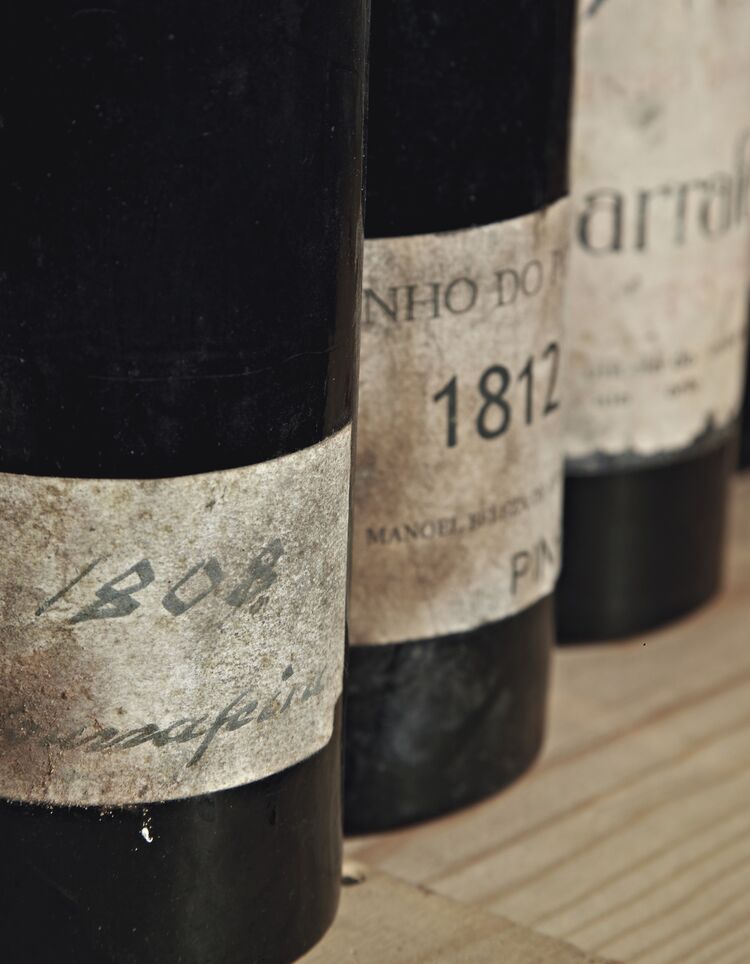
Poor me only knows the 1812 Overture, but R knows about and collects Napoleonic-era Port! Pic from Chistie's.

Lady and the Tramp I
Back to R, sort of Andy's protege, whom we met two posts ago. I actually had heard his system one year ago, but it now sounds immeasurably better. Andy just told me they had completely re-aligned the Wilson Grand Slamm's recently. No wonder, that was a LOT of work!

Together with Andy L and his friend Simon, we met up again a week ago. Simon services dental equipment and together with Andy they fixed his Versa Dynamics 2.0. Damping oil was also added to the Walker Proscenium (older version). I brought along my Shindo Monbrisson (MM/MC) and Nagra PL-P (configured for MC). Brief Notes:
  • Jadis JPS2 (official link) This is classic Jadis and I know it well. My friend PH listens to digital only and he only uses the buffered input (here). There is not much on the net on this per se; the best is a French review with a lot of nice internal pics (translated here; original link in French). However, its phono equipped brethren, the JP80MC, long-time Stereophile Class A, has had more reviews. This Stereophile is worth reading, and I think it described the sound accurately - lush, but potentially sluggish with some material. vs Shindo Monbrisson I was a little surprised that the Shindo (my review here), which uses vintage components, sounded more alert, with more pointed rhythms. Note too that later Jadis' have a more modern sound. While googling, I was surprised to come up with one of my own articles that I had forgotten about - a Jadis Overview! Luckily, after a re-reading, I didn't feel any need to revise...
  • Lamm LP2 This is the original version using the great sounding but troublesome (prone to microphonics and noise) 5842/417A tubes. This tube was famously used by the late Arthur Loesch and emulated by DIY'ers. A variant claiming direct heritage is now manufactured by Tempo Audio (Stereophile review). As for Lamm, I had previously heard its excellent LL2 preamp, so I had high expectations of the LP2. R has the WE417A in them and surprisingly I heard no noise at all. Good as it was, I also did not quite hear the sinuous quality that WE can bring to the music. vs Nagra PL-P Surprisingly, the Nagra used as MC phonoamp was more neutral and even across the frequency spectrum, with more low-level nuances. This was with the AC engaged.
  • Stanton 500/Rockport Sirius II This must be crazy, and only Andy can come up with this kind of combo. A cheap and cheerful vintage cartridge on a reference level turntable! Isn't that Lady and the Tramp? Talking about Rockport, they don't make turntables any more and have basically nil service. I have a friend who waited years for a part to no avail, and who finally gave up. Although a little veiled, the cartridge is eminently musical and plays all kinds of music well. Even R said for long-term listening he prefers it to his others. Note that I have a coming report on another "DJ" evergreen, the Shure SC35X...
  • Versa Dynamics 2.0/Jan Allaerts MC2 This setup somehow did not quite gel with the resident phono amps during last visit. This time, we didn't A/B but it seemed to like the visitors. I can attest that the Jan Allaerts is a very even-handed performer, with nothing calling attention to itself. I don't think this is the kind of cartridge that will reveal its secrets easily, so I'd like to hear more of it.
  • Kondo IO-J/Walker Proscenium (not sure which generation) Here the cartridge arm is also wired with Kondo silver wire. Needless to say, the cartridge is used with its mate, the Kondo KSL-SFz step-up. Here too, the rig seems to prefer the MM section of the Shindo. A very live sound with good attack and presence.
R showed me his unbelievable wine cellar; the collection has great breath and depth. It was the first time I laid eyes on port wine from the Napoleonic era (when there was no sound reproduction)! He then cooked us a nice dinner, washed down with very nice wines. No, we did not get to taste the port...

Andy's downstair setup. Pic is from last year. Setup has much changed. See text.

Lady and the Tramp II
Remember before my last visit (last year) to Andy he told me he had a surprise for us, which turned out to be a Goldmund Reference turntable (reported here)? Well, I just visited him a few days ago and was surprised again, this time without prior announcement!

I walked in and was shocked to discover yet another Walker Proscenium (not sure which older version), not something the man would usually identity with. At the crazy price, there cannot be too many Walker's around, and I have seen two within the same week!

Now, what is its mate? Gentlemen, Lady and the Tramp, episode II! Another cheap and cheerful vintage cartridge, the Stanton 380! A new preamp too, the Conrad-Johnson Premier 2. Amps are still the Canary 300B mono blocks. The horn system has changed much. While the Altec A5 cabinet and 515 driver remains, the midrange and tweeter horns have changed to JBL. Sound of the horn has changed much for the better, now smooth and eminently listenable. Andy has deliberately set up the LR system for listenability, to make even bad records playable, reserving classical playback for upstairs.


Girl from Ipanema We spent a whole morning listening to old records, including some mono's, and everything was pleasurable. But two records impressed the heck out of me.

Everyone has heard the classic Getz/Gilberto album, the epitome of Bossa Nova. In this setup, against a perfectly paced rhythm (most systems are too insistent), I heard nuances in Astrud Gilberto's voice that I have never noticed before, as if she were whispering, murmuring, purring and puffing to me. Engaging stuff! After the languid moment, the duel between Ben Webster and Don Byas popped me out of my seat. Outstanding playing! We finished with just one classical piece, the Elgar cello concerto (Tortelier/Boult/LPO; a classic Bishop/Parker recording; EMI ASD). The frequency extremes were rolled off but it still sounded reasonably good. Mission accomplished for a system that can play even bad records. Andy is quite satisfied with the Walker/Stanton combo.

But do you know the story behind the song? It is an entertaining read, as it involves a real persona (here and here). I only just discovered it during some googling. This is one of the reasons why I write - I almost always learn something while researching what interests me. Don't you think that is better than being fed with jokes, pics and links on What's App that make you have second thoughts about your friends?

Andy's Upstair Systems After two hours (!) we broke for a simple lunch of dumplings, washed down with some wine, of course. Then we ascended the stairs to the main cave for some classicals. The main setup hasn't changed much since a long time ago (reported in detail here), except for turntable rotation. Menu du jour:

TT1 - Goldmund Studio with Monster Cable cartridge
TT2 - EMT 930 with EMT cartridge
TT3 - Goldmund Reference with Ortofon 2M Black
Phonostage 1 - Conrad-Johnson Premier 15, Nagatron Z Coupler X'former (for Goldmund Studio)
Phonostage 2 - Audio Research SP-10 (for EMT and Goldmund Reference)
Preamp - Audio Research Reference II Mk I.
Amp for Tweeter/Midrange column - VTL MB-450 monoblocks (8 x 6550 each)
Amp for Bass column - McIntosh MC-2500 (for bass column)
Loudspeakers - Infinity IRS Beta
We played the same Elgar LP, and sound was very good all around. All three turntable setups sounded different, but I did not spend enough time to accurately nail the characters of each. EMT is EMT is EMT, always enjoyable but not the last word in anything. I have heard the Goldmund Reference several times before; with the 2M Black (not quite run in), sound was detailed and more brightly lit, but without the subtle nuances a good MC can give (and without MC peak either), nor the emotive broader stroke of an MM. This occasion also marked my first encounter with the Goldmund Studio. This is an unusual beast, a direct-drive on a suspended chassis!!!  Andy says it has a very special sound, and Roy Gregory seems to think so too (in his survey of new direct-drives).

I can spend whole days at Andy's. Not a boring moment!

Note on Versa Dynamics In researching I chanced upon some of Andy's postings on Versa Dynamics in Vinyl Engine. I copied them below:

"..I use Versa Dynamics Model 1.2 and Model 2.0 on regular basis. I love their performance so much in my system that I would never think about parting with them.  

They were designed and marketed by John Bicht in the 80s. In fact, John still provides parts, manuals, and repair services for these units through his Versalab website. 

Model 2 came out first. It has a air-bearing platter with vacuum hold-down and a straight-line tracking air-bearing arm. Gordon Holt of Stereophile gave it a great review in 1987. Then followed Model 1 with an air-bearing arm and a vacuum platter with a very unusual bearing arrangement. The styling was completely different from the Model 2 which was quite a bit more expensive than the Model 1. Both models went through some similar modifications during their rather short life spans on the market.  

Both turntables come with separate controller boxes and huge air supply systems which need to be placed outside of the listening room. Compressor for the Model 1 is considerably quieter than that for the Model 2, but still not quiet enough to be placed nearby.

Both models use stepper motors and are belt driven. Both use a 4-spring suspension system. Major difference is that Model 1 doesn't have a air-
bearing platter. The arms are essentially the same in design and performance, although the one on Model 1 looks like a simplified version of the one on Model 2..."

tonearm pics: L, Model One; R, Model 2

"...Here are pictures of the two Versa Dynamics Arms. You can readily see the difference. Model 1 looks like a simplified version of Model 2 which preceded Model 1. There is a difference in the recommended air pressure level for each model. They sound different since the two tables are substantially different in terms of platter, plinth and base design. However, the major difference between the two is that Model 2 has a levitated platter. 

Although there was a eddie current damping device for the tone arm on Gordon Holt's review unit, there isn't one on mine. When asked, John Bicht said they decided not to implement it on the final product for fear of causing interference since it was so close to the cartridge. I'd love to experiment with one, but I have no idea how it's done. Maybe some knowledgeable members can shed some light on this..."

25 June, 2014

Review: Manley Neo-Classic 300B preamp

Click pics to enlarge. L: cramped interior of heavily regulated design; R: battleship!

Letter from NYC (36) 2014 (8): Manley
Review: Manley Neo-Classic 300B preamp 
Review: Shindo Monbrison (old version), Part II

Revised July 31, 2014

Background Manley has never been popular in HK, and often lacks representation. Not surprisingly for a company with a studio arm, the old looks were workmanlike and probably low in WAF. But personally I prefer the old looks to the new ones. I have had previous experience with some Manley products. An untouted old DAC was a sleeper. The Neo-Classic 300B SE/PP amp (methinks old looks better too) (input transformer is a luxury!) of Manley's wonderful and statement-level Neo-Classics series has received many reviews and much accolade; it was good sounding as I recall.

Neo-Classic 300B preamp
Strangely, the 300B SE/PP amp's companion preamp has had quite a low profile. There are no reviews from the major English audio press. You can find reviews from hometheaterhifi, Audio Video Revolution and Image HiFi (in German). I suspect this is because of its ungainly nature, built like a tank and resembling more a serious amplifier (necessary for ventilation of all those tubes). I ran into an irresistible bargain and acquired it brand new.

Design The official link is excellent and a must-read. This is a tube rectified design. While I think a single rectifier tube may just do the job, the use of 2 certainly is no-holds-barred and a luxury. The interesting thing here is Manley does not state preference for either direct-heated 5U4 or indirect-heated 5AR4 (Manley's own photo shows the latter). Mine came with stock EH-5U4GBs, and I am happy with that as generally I have always had a preference for the greater presence in the sound the direct-heated tube produces. But one would think the sound would be different, as the 5AR4 would generate higher B+, though in a reply to my email Eveanna Manley said due to the regulation the end B+ would be the same. The use of 0D3 for regulation is certainly a "retro" move - these tubes were commonly found in really old designs.  In fact, the whole design, including the use of large octal based 6SL7 (double-triode; but older designs usually employed pentodes), does have something old-styled about it - many studio-originated old classic preamps, like the WE106 and Langevin 102 that I have, are huge. Make sure your have enough room on your shelf.

300B as preamp tube Manley is not unique in using the 300B as preamp tube, but the design had been around a long time and Manley may have been the first to do so (Manley also has a history of using tubes not commonly used by other manufacturers). As far as I know, several Chinese manufacturers (Audio Space, Ming Da) make 300B preamps, and there is an intriguing kit from Bottlehead called the BeePre (informative on the challenges of using the 300B as a preamp tube).

My System As you know, I have 2 Reference Systems (always updated in sidebar to the right), but both use the same amp and loudspeakers, differing only in source and preamplification (Manley is used in System I; Shindo in System II). Part of the reason is to compare and contrast, so you shall see a little of that later. For the last 4-5 years, although the turntables and phonoamps have been constantly rotated, the digital front end, amp and loudspeakers basically have not changed. System as of this writing:

Digital: Ensemble Dirondo/Dichrono Hi-DAC
Turntable 1: Linn LP12/Ittok LV II/Air Tight PC-1
Phonoamp 1: Parasound JC-3
Turntable 2: Clearaudio Concept/Koetsu Black
Phonoamp 2: Fosgate Signature
Amp: Wavac MD-811
Loudspeakers: YL 4-way horns

Sonic Impressions and Tube Rolling:
  • General There is nothing much "retro" about the sound, which is thoroughly modern - quiet, transparent, wide and deep soundstage, excellent imaging, accurate tonal balance and extended frequency response. The bass, as you can expect for 300B, is tightly controlled. However, one reservation: with the mostly stock tubes, although microdynamics were reasonably good, I had wished for better macrodynamics (but read on to Tube Rolling/5U4). This also implied rhythm and pace that is not quite of first order.
  • Microphonics/Isolation Despite its size and weight, the unit is prone to microphonics. Make sure it rests on a sturdy platform (mine is unfortunately not). The 6SL7 tube in particular is susceptible. Personally, I don't like these metal Manley legs with rounded tips: they slide on polished surfaces and cannot be as shock absorbent as rubber feet; also, they look like they are joined to the chassis by hardware, which adds resonance-prone weak points. This "industrial design" gets a minus from me. Beauty is only skin-deep, and beauty is in the eyes of the beholder. Why try your best to design a good product and get it compromised by cosmetics?
  • Direct vs Transformer Out Some of the reviewers cited above made a meal out of the superiority of Direct Out; indeed the Manley website recommends it. In my case, I find, as some listeners note, the difference is not huge. Now, in my setting I use long interconnects between the preamp and amp, and that may favor the transformer output. In any case, I'd think this shows the output transformer is of very good quality!
  • Headphone Output I prefer not to use headphones, but I did test it out with my Audio-Technica ATH-AD700, and the sound was excellent.
  • Tube Rolling/6SL7 I have to confess I never used the stock EH 6SL7s. I don't like them (nor the EH 6SN7s, even worse). I have a large stock of old tubes and any one sounds way better (though some may be worse in microphonics than the new Russian tubes). Consider rolling old-stock 6SL7 a necessity! I'd think even a pair of humble JAN Philips should be way superior!

  • Tube Rolling/300B Although my ultimate aim may be to roll in really old WE 300B (not the inferior re-issue WE), here for me the stock EH 300Bs are good enough. In my other 300B amps I have always preferred  Russian 300Bs to almost all other currently manufactured (more airy to me). I did briefly try Cetron (darker) and Golden Dragon (slower), but I preferred the stock EH. Keep in mind a good period of burn-in is necessary for best performance.
  • Tube Rolling/5U4 Every time I shifted to my Shindo front-end I developed the nagging feeling that the Manley sound was just a little too controlled, even polite. As noted above, macrodynamics was too reined-in for my taste, and not impressive enough on my horns. This time around, I decided to swap out the stock EH5U4GB rectifiers for a pair of old-stock Sylvania 5U4GBs. I played my Saint-Saens CD and I was dumbfounded by the difference. Now, that is macabre! The improvement in dynamics and rhythm and pace is so miraculous that I'd consider rolling in better rectifiers a MUST. The sound is simply bigger. I am a little surprised here: my experience with EH's coke-bottled 5U4G has always been positive, but I had never tried the straight-bottled (GT) EH 5U4GB before the Manley. The cheaper 5U4GB should have a slightly higher rating than the 5U4G, but the preamp has 2 rectifiers and won't need the margin. Use of straight-bottled tubes (ditto the 5AR4) though would allow more room for ventilation as the 2 rectifier tubes are close together. Considering how much real estate there is, not finding more room for the rectifiers is regrettable.
Manley vs Shindo Monbrison
  • Design Both use tube rectification (6X4 in Shindo) and tube regulation (6BM8 in Shindo), but the Manley is on a larger scale, necessary due to use of larger and direct-heated tubes. Manley also uses a lot of transistors in regulation, which Shindo eschews. Manley uses only triodes for amplification, whereas Shindo also employs pentodes (I don't know whether they are used as such or triode-strapped in some cases). Of course, the Shindo as a superlative phono section!
  • Parts and Stock Tubes Except for NOS OD3s (cheap) Manley's are current production tubes, whereas Shindo's stock tubes are good NOS. Similarly, Manley uses good modern parts whereas Shindo uses mostly NOS parts (like AB resistors), which are more expensive.
  • Sound The two preamps are very different. At its best (with NOS tubes), the Manley's sound is excellent, but it would not be easy to distinguish it from other high quality modern preamps (despite use of 300B). The Shindo possesses that elusive je ne sais crois quality, and is just more special. And despite the use of vintage parts there is nothing "retro" about its sound either - it is also quiet (a little less so than the Manley) and transparent (but warmer than the Manley) and it conjures a big soundstage (bigger than Manley). Its special appeal is harder to describe, and you may want to read Art Dudley's Stereophile writings on it. The Shindo just sounds big and sinuously full, and it takes you to the venue and goes right to the heart of music. Its dynamic expression and rhythm and pace are superior. A rough analogy: Manley is to panel loudspeakers as Shindo is to horns. At this moment I have to say I prefer the Shindo even if I have spent more time on the Manley to improve the sound (I haven't even rolled the 0D3). Of course, most importantly, the top-flight Shindo phono section is at least as good as any of my reference phonoamps that I use with the Manley (would be nice to try the well reviewed Steelhead one day), and that makes this one-box preamp a formidable rival (and a relative bargain) for whatever I could put together at Manley's end. Keep in mind the Manley is still excellent, just that as an analog man I have always preferred full-function preamps for convenience and integrated sound.

19 June, 2014

Letter from NYC (35) 2014 (7): The BIG Shindo Monbrison Report


Pics show unit of reader AA. Click to enlarge.

Letter from NYC (35) 2014 (7): The BIG Shindo Monbrison Report
Review: Shindo Monbrison (old version), Part I 

Addendum (10/28/17): Part II (vs Manley 300B preamp) and Part III (large phonoamp and preamp comparison) have been published.

Revised 30/06/14 New Info from reader PR added.

It is amazing that, aside from a brief mention in my 2011 retrospective, I have not written more about the Shindo Monbrison, one of my reference preamplifiers. I am glad finally I am redressing the problem. Since that post, I have received some feedback from readers, so first some consolidation, and revision of what I had posted before, then some new material.

My Shindo Monbrison I actually acquired this older version (serial number 153) in 2010!. The fellow who sold it to me claimed it was the unit reviewed in 6moons , and it certainly looked the same on the outside. Contrary to the seller's statement on the unit's health, all the tubes that came with the unit were almost completely spent. Fortunately the ECL84/6DX8 used in the linestage of my unit were inexpensive and available on Ebay, while I already had good EF86's (used in the phono stage) in stock. After re-tubing, the sound was, as I wrote, "...quite dramatic, with great presence, a good match for horns."

Tube Compliment - Mystery?

Initial Assessment I had no problem with 6moons reviewer Jules Coleman's sonic assessment, but it did seem to me he made some mistakes in describing the tubes and what they do (his description in italics, my comments in bold face):
  • "...Beginning on the left immediately behind the power switch, there is a chamber that holds the power transformer, a 6X4 rectifier, a 6BM8 pentode/triode voltage regulator and a smoothing capacitor bank..." Correct.
  • "...Along the rear behind the input jacks is yet another chamber running left to right that houses the ECC82 twin-triode line stage tube, another 6BM8 for line stage voltage regulation, two EF86 mesh plate phono tubes (one per channel), another 6BM8 for phono stage voltage regulation..." The 1x ECC82 and 2x EF86 are correct, but they are all positioned closely together by the PHONO inputs, so I think the ECC82 is NOT for the line stage, rather for the phono section. And the 2 other tubes are ECL84, not 6BM8/ECL82. Also these 2 ECL84s are close together and clearly far away from the other 3 phono section tubes, so both are for the LINE section, one for each channel (see pic above).
First Reader Feedback Soon after my post reader Ron from Germany was very nice in sending me emails (Jan 2012) on this old version:

"...I listen with this preamp (comparable "old" version) very happy for quite a while...The tube compliment of the latest version of the old casing version should be 2x EF86 Phono; 1x ECC82 / 12AU7 Line; 2x ECL82 / 6BM8 Line; 1x 6X4 / EZ90 Rectifier; 1x ECL82 / 6BM8 Regulation...I thought the actual (current) Monbrison with "window" in the front panel uses ECL94 not ECL84? I don't now if they are exchangable. All the old Monbrison I saw here in Germany and that are used by the people I know, all use ECL82. Only the very first Monbrison units have a completely other circuit with usual double triodes..." 

My Reply "...I thank you so much for contributing! These rare gears and old versions need more info. I wrote an addendum in my article:

Addendum 09/01/12 Reader Ron from Germany was very nice in sending me an email on this old version: "...I listen with this preamp (comparable "old" version) very happy for quite a while...The tube compliment of the latest version of the old casing version should be 2x EF86 Phono; 1x ECC82 / 12AU7 Line; 2x ECL82 / 6BM8 Line; 1x 6X4 / EZ90 Rectifier; 1x ECL82 / 6BM8 Regulation. Maybe the previous owner changed tubes by himself..."
So, it could be that Shindo changed something here or the previous owner had had his unit modified. Now, this raises the question on why mine uses the ECL84/6DX8 (close to the current version's ECL94) instead of ECL82/6BM8 (both are similar triode-pentode tubes, but they have different pin-outs). It is possible Shindo changed from ECL82 to the similar ECL94 because the former got more expensive and the latter is still quite cheap. At the least, re-wiring of the tube sockets would be necessary for proper operation. When I get back I'd check the soldering. Shindo is well known to change parts without notice and for variations between units. The mystery shall not be solved in a while.


P.S. I did check after I got back to NYC and my unit showed NO sign of rewiring.


Second Reader Feedback Then I got emails from reader AA in Bangladesh (Feb 2012):

Email 1 "...I have bought a pre-owned Shindo Monbrison...looks like to be the exactly the same version you have. And you are absolutely right that 6moons was wrong about the tube complements, and its good to know your one and my one is not one off. My one uses the following tubes:
2 x Tungsram EF83 mesh plates - EF86 is a direct replacement and will provide more gain;1 x Philips 6189W (12AU7 / ECC82); 2 x ECL84 (unknown brand); 1 x Brimar 6X4;1 x ECL82 (unknown brand).
Most of the tubes in my pre-amp is also spent. The phono tubes are extremely microphonic and has hum/noise. One of the ECL84 is meshed and provides less gain then the other causing channel imbalance.
Could you kindly let me know what tubes (brands) originally came with you Monbrison? and which ECL84 and EF86 you have installed now?..."

My Reply "...It is wonderful to receive your mail that clears up things! I'd like to ask you for permission to post your comment as well as the pics in the article...

I am not sure what brand of ECL84 and EF86 they were.
Not Tele for sure. Likely German RFT or Siemens.

The line ECL84 is not demanding. Any brand will work well. I got some Mullards (labelled RCA/GE) for nothing and they are fine. The phono EF86 demands more. I have some RFTs and they hum a little in my system, but then my speakers are >100 db.
.."

Email2 "...I have ordered the following tubes from ebay: 2 x Valvo EF83; 2 x Valvo EF86; 2 x Telefunken ECL84; 1 x Telefunken ECL82; 1 x Siemens EZ90

Since my pre came with Tungsram EF83 mesh plates installed, I'd like to see what difference it will have with EF86. Studying the tube data, the tube pinouts are exactly same and the 86 should provide more gain.

I have seen another Monbrison series II got sold on ebay.de recently (highest bid 3900 Euros) and could clearly see pair of Siemens ECL84 installed. Also I have seen someone in Germany selling NOS unplayed backup set of tubes for Shindo Monbrison (but the seller's advertisement was expired dated 2011):Valvo ECL 84; Tungsram EF86; Telefunken.ECL82; RCA 6X4; Tungsram ECC82.

So I'm guessing, Siemens and Telefunkens being German and having a reputation of being very accurate and clinical, were used in the ECL 84 and ECL 82 positions. But the ECC82, I'm preferring a 1960s Mullard and the EF86 probably needs to be also very high quality and preferably a mesh plate. Also note the new Monbrison uses a Telefunken ECL94S which seems to be a fantasy tube relabeled ECL80 series by Ken Shindo.

BTW, I think all Shindo Monbrison series II has the same tube complements and 6moons was responsible for making people believe otherwise. Unfortunately I am afraid your German friend was wrong as well in reporting other Monbrisons using 3 x ECL 82.

...As much as I love this unit, its a bit frustrating with the hum and channel imbalance issue. I am waiting for the tubes that I ordered, and then I should be able to report back in details..."

I think Reader AA's emails strengthen some of my beliefs - at least our units are the same! I'd love to hear more from him! Or from ANY Shindo Monbrison user for that matter!

Third Reader Feedback Then I got emails from reader PR in the UK (Jun 2014):

"...I have recently bought an old-style Monbrison, serial number 160. I can confirm the valve complement to be: 1x 6X4 (Philips); 1x ECL82 (Mazda); 2x ECL84 (Philips); 1x ECC82 (no markings, brand unknown); 2x EF83 (Telefunken)...Works well ..."

This again agrees with what reader AA and I have! PR's unit also has serial number very close to mine.

Short Note on Monbrison (?Current Version) 
The next and ?current version of the Monbrison not only has a different look, but also different tubes. Jeff Day at 6moons reviewed it, listed the tube complement ("...two Telefunken ECL94S, two 12AU7, two 12AT7 and two 6X4WA..."), but unlike the previous review by Jules Coleman avoided remarking on what the tubes do. The dagogo review provided more details: "...The power supply is tube rectified, in this case with two 6X4 tubes where the old Monbrison had only one. The preamp is equipped with 4 line inputs and two phono inputs; one phono input is for MM cartridges and the other for moving coil, utilizing custom amorphous core step up transformers. There are a total of four twin-triode tubes in the phono stage, one pair in each channel, and the linestage tubes are genuine NOS Telefunken ECL94S’. These are the tubes on display in the ‘window’ on the front of the Monbrison..."

Research on earlier Monbrison 
For this article I re-researched the Monbrison. There is not much still but When I did an image search I uncovered some interesting things. Most intriguing is a French thread - I can read a little French so was able to find some info and translate it here:

Imagepic borrowed from thread
 
homecinema-fr thread on Shindo This is a long thread, but around page 24 (on my computer) muse92 posted both pics and tube compliment of his Monbrison. You will notice from the pic that the positions of the line and phono tubes are very different. His tube complement is "...2 x 12AX7 JAN Philips; 2 x 12AU7 Mullard; 1 x 6X4 USA; 1 x  6BM8/ECL82..." He thinks "...the 2 x 12AU7 are for the line section and the 2 x 12AX7 for the phono section..."

muse92 also asked what is the tube complement for the "1st version", as he has read (just like us) contradictions on the internet.

To which riesling replied: "...Il s'agit d'un Monbrison produit très probablement avant 2000, donc dans la version précédant celle avec les EF86 dans la partie phono.Il possède un transformateur en entrée et un transformateur Lundahl en sortie.Le 6X4 et le ECL82 (ou 6BM8) règlent l'alimentation.Les ECC82 (12AU7) sont dans la partie line (donc CD), les ECC83 (12AX7) dans la partie phono..." Basically he confirmed what muse92 said, that "..It is a Monbrison probably before 2000, so the version before the one with the EF86 in the phono section. It has a transformer input and a Lundahl transformer output.The 6X4 and ECL82 (or 6BM8) regulate power supply. The ECC82 (12AU7) are in the line section (ie CD), the ECC83 (12AX7) in the phono section..." riesling again: "...On peut appeler cette version la première version, celle avec les tubes EF86 la deuxième version. La version III est celle avec la fenêtre et le bouton vert (la dernière à être commercialisée en Europe). Le modèle actuellement vendu en Asie et aux Etats-Unis (fenêtre et bouton noir) est alors la IVe version..." "...We can call this version the first version, the one with the EF86 tubes the second version. Version III is the one with the window and the green button (the last to be sold in Europe). Then the fourth version is the model currently sold in Asia and the United States (window and black button)..."

Then there were some musings on the sonic differences between versions. Both persons knew someone who preferred the older versions, but let us not go further.

My Summation on the Tubes in the Various Versions of Monbrison
  • Variations Typical of Shindo san, the long-running Monbrison has had many iterations. Keep in mind Shindo has also been known to one-off modify/add/subtract features for clients.
  • Power Supply In my version (also the one that readers AA and PR have) and the version before mine (perhaps the one muse92 has) 1 x 6X4 does the rectification and 1 x ECL82/6BM8 provides regulation. The next (?current) version doubles the 6X4 and dispenses with the ECL82 regulation.
  • Line Section In my version 2 x ECL84 are used. In the next (?current) version 2 x (similar) ECL94S do the same job and are displayed in a window. In the version before mine (muse92) 2 x ECC82/12AU7 are used.
  • Phono Section In my version, the phono section uses (likely definitely) 2 x EF83/86 (still not sure which one is stock) and also uses (I judge likely, by topography) 1 x ECC82/12AU7. The next (?current) version uses 2 x ECC82/12AU7 and 2 x ECC83/12AX7. The version before mine (muse92) uses 2 x ECC83/12AX7.
  • ?Possible Variations/Reader Ron in Germany As mentioned above, Ron had a unit very much like mine (and AA's), except that in his opinion: (a) the 1 x ECC82/12AU7 is for the line section and (b) 2 x ECL82 are used also in the line section instead of the ECL84. After reflections and subsequent info from AA and my research info from the French thread I have my doubts: (a) the usual line section does NOT need that many tubes; the ECL82/6BM8 is a triode-pentode with high gain, so I don't think the ECC82/12AU7 is needed; (b) the ECL family tubes look alike, and can be easily mistaken; (c) since I haven't found anything else that corroborates Ron's assertions, and since no pics show anything like he described, for now, grateful as I was for his response, I have to discount his assertions. That said, I do think it is not impossible that certain units in Germany were wired for ECL82/6BM8 (different pinout from ECL84) and I'd love anyone to have such a unit to come forward with some pics! But until then, I have deleted the addendum to my original post, and THIS post represents my current thoughts. The only other source that reported so many ECL82/6BM8 is the original 6moons review by Jules Coleman cited above, but I do think he was seriously remiss in multiple ways.
My Sonic Impressions
  •  Having spent so much time on structural matters, I shall be brief. What I said before,
    "...quite dramatic, with great presence, a good match for horns...", sums it up. If you look, I have two reference systems, with two different preamps, but I can tell you the Shindo Monbrison is my favorite. It sounds big and airy, goes to the heart directly, without fuss, and partners well everything I throw at it. The phono section in particular is versatile and exemplary. If you need more description, I'd urge you to read Art Dudley's various comments on Shindo in Stereophile; he can say it better than I can.
  • Good as it is, I do think (as does Dudley) the Lundahl SUTs in the Shindo can be bettered (as related in my article on Cinemag). So, the tubed MM section is the star.
  • Original tubes frequently have an oval silver label with "SLC" inscribed on it. These are good tubes.

  • The tubes, especially the EF86's, can be noisy (maybe EF83 would be better?) and need some care (as AA also experienced).
  • It gets very hot; I keep the lid open.
  • Dudley thinks Shindo preamps are best placed on a wood platform, without any tweaks, but my Monbrison distinctly benefits from placement on Vibrapods (link here) (perhaps because my shelf is far from sturdy).
Postscript: This article is long in the making, but I hope I have finally added something to the Monbrison literature. I bet there may be future revisions. I'd love to hear from other readers and owners. I envision a Part II, where I'd attempt to contrast the Shindo with my Manley 300B preamp - they are very different!