Showing posts with label Audition. Show all posts

19 February, 2016

NAD 3020, 3140, Micromega CD-20, Klipsch Quartet

Note NAD3140 atop NAD3020 atop Micromega CD-20. Click pic to enlarge.

Home Visit: NAD3020 meets Klipsch Quartet
Review: NAD 3020 (original version), Part II
NAD 3140, 7020, Micromega CD-20
Talk Horns - Klipsch, the One-Stop Solution, Part IV

Note: Previous articles in Talk Horns - Klipsch, the One-Stop Solution (Part I, Part II, Part III) treat mostly what is now called the heritage Series, especially La Scala, but I'd think they make supplementary readings for this article.

Review: NAD 3020 (original version), Part I covers the same version of 3020 driving TAD-TSM-2201


During the CNY holidays I found some time to hook up with old friend Hoi, a very busy man/scientist who has scaled down his hifi from a complicated Altec horn system with electronic crossover and multiple amps to the current system you see in the pic.

Klipsch Quartet (sold 1989-1996) There is not too much info on the Quartet per se on the internet. But there is a lot more info on its slightly bigger sibling Forte II (Soundstage review; also this HiFiclassic review of its similar predecessor, Forte I), which is very similar, employing the same treble and midrange drivers/horns, the same 12" rear passive radiator, differing only in having a bigger woofer (12" vs the Quartet's 10"). The Forte's have considerable underground reputation and there are a lot of forum discussions, mostly on aftermarket mods. These are low for "floorstanders", so most users raise them so as the horns are at ear level. Also, because of the rear passive radiators, they cannot be placed against the wall. Note too these are still bona fide Paul Klipsch designs.

NAD 3020/3140 Hoi's 3020 is the original (see my review), but he is only using it is preamp, connected to the 3140's power amp section. From the looks of the knobs, the 3140 should be a contemporary of the 3020, and it puts out double the 3020's power (40 watts vs 20 watts). Hoi mentioned that the 3140's power amp section is not quite as refined sounding as the 3020's, but he preferred the higher power handling. In passing, in the pic also note the receiver version of the 3020, the 7020, essentially a 3020 + 4020A (my tuner review here).

Micromega CD-20 This is one model above my CD-10 (see my review), differing solely in having a better power supply. Hoi mentioned that he auditioned all three, and the CD-20 outperformed the CD-10 in large-scaled music; he also preferred it to the flagship, the upsampling CD-30.

Hoi's Comments
  • Bass Hoi regards the Quartet and Forte's as some of Klipsch's best designs. I agree. Hoi says, aside from a very large room, the Quartet has better bass extension and performance than the La Scala. I beg to differ (see below). Extension is one thing, impact another, as long as it is tactile, there is room for difference.
  • Tubes Hoi also uses tubes with the Quartet's (see the Unison Research Smart 845 on the floor, which is used with the McIntosh C20). He thinks now that is the minimum required for the Quartet. Maybe, but with the La Scala etc I enjoy much lower power. Well, if Hoi is totally satisfied with the performance of ss with Quartet, why would he tinker with tubes? :-)
  • 3020's Preamp Section Obviously Hoi is satisfied with the performance of the preamp section of the 3020, which he thinks impart most of the sonic signature (spacious and tubey feeling), although he also thinks the power section of the 3020 is sweeter than the 3140.
  • Tone Controls Hoi opines that tone controls, including the infamous Loudness Control, are a must to compensate for various recording deficiencies. I can allow, even sympathize, with that, and would not argue with those who regard these as necessities. But I personally don't need to have these, even at very low volumes (where the loudness control is said to cut in), because with my references of 15" woofers, bass can be physically felt even at low level. To me, this reflects that the system's bass is perhaps too lean. BUT, if you have these knobs, DO use them to equalize!
My Notes
  • Sonic Impression We were dining and chatting, but the sound was very familiar to me. You see, I have recently acquired another NAD 3020A and is now using it in my "new home" reference system with Micromega CD-10 as one of the sources, although partnering Yamaha NS-1000 (write up on this latest iteration to come). Do not forget I have also used the Klipsch La Scala and still own a Heresy I. As expected (as I know Hoi's preferences quite well), the sound is a little on the dry side, but has good balance, rhythm and pace, not to mention the kind of presence that only horns can render. But with the solid state, for me, bass is decidedly lean - I think I'd prefer tube electronics. Note online you can find a lot of Klipsch people who like solid state (including Hoi I think) - they point out the impedance curve is not so straight and ss would deal better with these. I think it is just the opposite - damping restricts bass as much as controls bass. I am sure this may be heresy to some - more on this perhaps in a later HiFi Basics article.
  • vs Cornwall and Heresy Aside from the rear passive radiator, designed to augment bass with a smaller woofer in a smaller enclosure, the Forte can be reasonably compared to these two look-alike classic Klipsch designs. As I have heard the much more expensive Cornwall (15" woofer) driven by tubes, resulting in a lot heftier bass (here), I'd prefer the Cornwall. But if you don't want to fuss, you are likely to find the Quartet (or Forte's) much easier to get quality bass from than the idiosyncratic Heresy (see here).
  • The Alnico Question Then there is this the BIG question. All Forte's and Quartet's are Ferrite. But Cornwall and Heresy can be had in earlier alnico versions. Personally, if obtainable, I'd prefer alnico. For more on alnico vs ferrite, and my experience with both ferrite and alnico La Scala, see here.
  • In Modern and Overall Terms Hoi's room and placement are not ideal, yet the sound was quite good: nothing vintage or outdated about them! I'd love to hear these further apart and more in-room, and more against the side walls; I think that will carve out a much bigger stage and generate heftier bass. I think there are a lot of room placement options for these, and they are relatively compact for what is on offer, making them suitable for smaller rooms. Apart from Klipsch, I can think of few designs that can wed horn virtues to conventional infinite baffle designs; that have good bass, yet retain high efficiency. IMHO, these are great speakers that can hold up against many much much more expensive modern speakers. They are very cheap, and Best Buys. 

07 February, 2011

Audition: Tannoy Edinburgh HE

Audition: Tannoy Edinburgh HE, Quicksilver, Phase Tech

Despite cancellation of yumcha, Saturday turned out to be a fruitful day for me, with a totally unexpected audition that pleased me immensely.

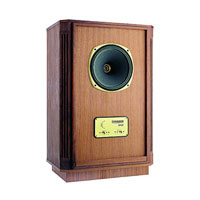
It was one of those R33 transactions. In the afternoon I went to the large and tastefully adorned working loft of Carl, a professional photographer, to pick up something. As soon as I walked in I caught glimpse of a pair of large Tannoy's. It was the Tannoy Edinburgh HE (Official Tannoy Edinburgh HE brochure)(More Edinburgh HE pics on Audiogon)(the later hard-edge 風琴邊 version, now discontinued; not to be confused with the earlier non-HE Edinburgh, which we heard also to great effect in Tsing Yi!). The Edinburgh is a little smaller than my Canterbury and looked magnificent in this large space. If I remember correctly, unlike the 15" drivers used in the Canterbury and Westminster Royal, the 12" driver here is not alcomax. But it's the sound that is important, not whether the drivers are alnico or not.
I didn't have too much time but Carl was very nice and played me a few tracks. Needless to say, the sound was so good that I was late for my next appointment. Carl setup is very simple but very effective, all placed neatly on TAOC stands. It's too bad I don't have a pic. The loft is >2000 ft, and the system took up just the space near the entrance. The speakers are placed along on the long wall, toed-in. I roughly estimate more than 15' for each side of the equilateral triangle formed with the listening seat. Here's the equipment list:

Analog: Acoustic Solid Machine/Ortofon AS-212S/Phase Tech P-1
Phonoamp: Phase Tech EA-3
Preamp: Quicksilver Line Stage Preamp
Amp: Quicksilver Silver 60 monoblocks
Loudspeakers: Tannoy Edinburgh + ST250 supertweeter on TAOC stands

A word on Quicksilver (Products). I have always liked the products of this unassuming company. My first encounter was the wonderful Philips 8417 amps many years ago in NYC. Later in HK I organized a group buy for their astonishingly cheap and wonderful Mini Mite monoblocks, surprisingly still in production after more than 10 years; as an anecdote, I even met a good friend through the group buy!

Carl played several pop and jazz tracks. The sound on Ricky Lee Jones and Miles Davis were altogether engrossing, wonderfully clear and neutral. The Quicksilver combo delivered wonderful neutral sound, proving they had plenty of juice even in this large space.

Amazingly, there was not a hint of softness to the bass (a character of the Mini-Mites)! And there was not a hint of slowness that one frequently encounters in vintage Tannoy drivers, proving yet again that modern Tannoy drivers are faster and can go much louder. The excellent sound also once again proves Tannoy positively thrives in a larger space, at least the modern ones, that is.

This was my first encounter with Japanese hi-end manufacturer Phase Tech (official website) not to be confused with Phase Technology, the American loudspeaker manufacturer. I liked what I heard, a direct and clear sound. Price for the P1 (Positive Feedback review) seems quite reasonable by modern standards. This company deserves closer scrutiny. From their website, their flagship phonoamp EA-1 positively makes my mouth water!

Serendipity! A great day!

02 October, 2010

Home Visits: Saba + Lenco +CAS

Home Visits: Saba + Lenco +CAS

Highly recommended: Vash's own Blog; Lenco Heaven

One fine day recently I called Vash and spontaneously arranged to visit him, primarily to listen to the Saba speaker and Lenco TT and Decca cartridge. Vash is a naughty fellow who experiments with all sorts of gears and DIY at a high level. This time the gears have changed a lot from my previous visit, and luckily I remembered to take my camera. The analogue setup and amplification are relatively simple:

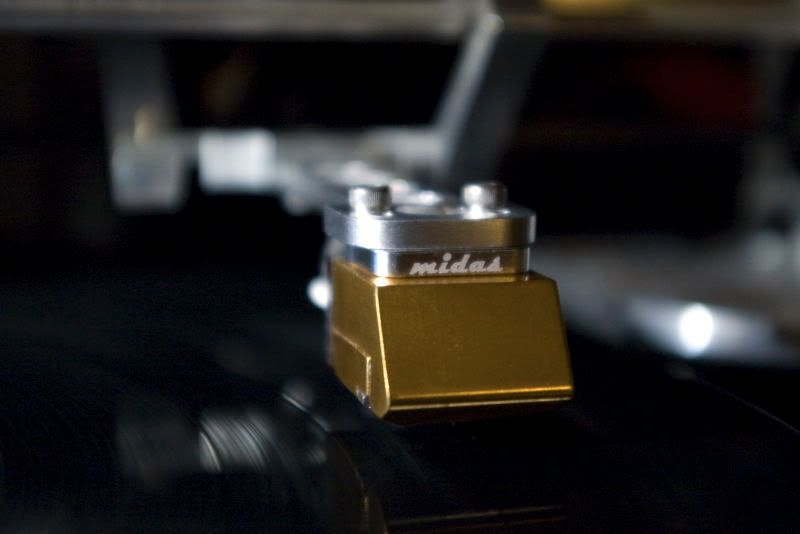
TT - Lenco-Daiwok L75TT + Trans-Fi Terminator Tonearm (air-pump) + London/Decca Jubilee (with Daiwok's branded accessories 'Midas Touch' sandwiched between head-shell and cartridge).
Phono - DACT CT100 (Battery powered)
Preamp - Restek Consens
Power amp - VTL ST-150 (2008 version)
Speakers - Saba Reso with Siemens tweeter (first order crossover)(The article on assemblage of the Saba Reso in Vash's Blog is highly entertaining)

The elaborate and eclectic Digital setups merit a little description:

The main DAC used is - Lavry Blue 4496 with 3 cards to accept 3 inputs. Obviously this accepts up to 96 only.
For regular CD replay: Meridian 500 + 518 as source
For CAS: Firewire interface into Weiss converter
For some CDs - Tandberg 14-bit player direct analogue out
For HDCD - Audio Alchemy DDE 1.2 DAC is used
For SACD - dCS p8i

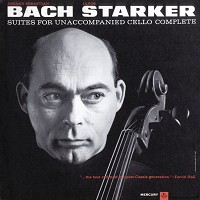
I stayed about one hour and listened to almost every combination. I must say the Saba Reso speakers, which I first heard so impressively at the home of Daiwok (tugged into corners), revealed even more of its potential this time when placed freely in the middle of the room. Needless to say, simple chamber music and cello solo were magnificently rendered, sounding dynamically close to uncompressed. The leading edge of Starker's cello was fast and lively, with no overhang; crescendos were for once completely natural and unforced, and all these I attribute partly to the speakers and partly the Decca cartridge/TT combo. Here the effect for my taste surpassed the Magnepan 1.6 I heard last time (and that was very good already). Even large symphonic works were delivered eminently satisfactorily. Whatever the simple speakers were missing in terms of ultimate composure and magnitude they were compensated by a superb fluidity and naturalness. The VTL 150 is a lot of power for these speakers but they seem to take it well enough.

One reason I enjoy visiting Vash is because of the balance he strikes between various media. Analogue and digital playbacks both sound balanced. And we could enjoy the various digital technology. I appreciate that he recognizes the achievement of some early players. Here's a man who chases after the newest hi-res files but can also hear the goodness of some old players. This is in stark contrast with many modern CAS people, who have very little experience with analogue or older technology, and that makes their preaching highly dubious (indeed there is a lot of commercial interest behind these things).

14 August, 2010

The Yumcha Diaries 飲茶後記: 14-08-10

The Yumcha Diaries 飲茶後記: 14-08-10

A good breakfast is a good start
Danz and his brother-in-law Sang picked me up early, to return some things to me and to loan me the little known Airtight MSM-1 Bonsai full-range speakers, of which I shall write a review later (it's magnificent! But does it give the Kiso a run for its money? Stay tuned) . Then we went to Sang's place nearby in Yuen Long for breakfast.

Perhaps we all should go audition or buy gears only when we had started our day with a good breakfast. This was what I got (and would not expect less) from Sang. Home (machine) -made bread! It's not the breakfast I'm sure, but Sang's setup has rather dramatically improved to a quite musical degree. The only significant difference from the last visit was the CD transport (visits 1, 2, and 3). He has abandoned his expensive Acuustic Arts CDP for the Sonic Frontier SFD-2 a long time ago, but now he is not even using it as a transport! Now, the old California Audio Lab Delta served very well, much more musical to my ears!

We sampled quite a few CDs over breakfast. I particularly enjoy early music in the morning, and Anne Sophie von Otter's "Lamenti" (DG111) and Musica Antiqua Koln's Bach Brandenburg's (DG) were refined and fluent.

After the great start, we took a ride out to Mongkok. It marked the first time I travelled on the newest bridge in HK, between Tsing Yi and Kwai Chung. The panoramic view of HK is spectacular, but hard to capture in a car, better in a helicopter!.

Old friends, incl Feikeung the Butterfly
The yumcha was full of surprises. As if the pleasant surprise of having Thomson and ilovesonata was not enough, feikeung, aka On9, appeared out of nowhere. As usual, we were totally upstaged by him. He and I talked about the Nagra PLP as headphone amp, but his monster Sennheiser would be a real challenge!

After yumcha only two of the nine people (aside from the inseparable twin Thomson + Frankie) made it to Thomson's place, and that's definitely their lost!

How could I have forgotten the coffee!
Thomson's setup I have visited I think twice before, and it has always been a good-sounding setup, aided by a wonderfully proportioned room. But this time, within the first few CDs played, I knew the sound has been upped a whole notch, and notable for its excellent balance. The setup is "simple" and more or less as before:

Digital: Studer 730
Vinyl: Linn LP12 (full updates I believe), Ekos-Archiva on Andante-Largo stands
Phonoamp: Linn Linto
Preamp +Amp: Cello Suite + Palette + Performance
Speakers; Dynaudio Evidence Master

First came a long CD session, and sound was immediately appealing, balanced across the full spectrum, equally adept at portrayal of intimate chamber music as well as symphonic scores. To name a couple: early Accardo playing small concert pieces was quite a treat, the sound full of rosin and lively; 鬼太鼓 full of special effects. But the CD I enjoyed the most was a track from "Star Wars: Return of the Jedi"; the low brass music was surely a challenge for any system, and this system rendered it with complete tonal accuracy and not a trace of excess.

The LP session that followed was even more delightful. Every strand in Saint Saens' Organ Symphony (EdW/Philips) could be heard, though perhaps the full organ was just a little lean. Michaelangili's Mozart concerto was delightful, the piano sound full and realistic. I asked for a Mercury, and got Dorati's Firebird (original pressing). Not a hair out of place.

We talked about the Cello Performance driving the big Dyna's so successfully. This pair cannot be easier to drive than Wilson speakers, say. I wonder why some people over-kill and use 2 pairs. It's all in the implementation. More is often less.

Thomson has always been a great host. The Italian red was wonderful, a little spicy and with good finish, complimenting the system to a T. We spent almost 3 hours there and I forgot completely about the coffee, and my umbrella left years ago!

As is sometimes the case, feikeung bestowed a gift for me, the Spanish film Alas de mariposa, which I watched in fascination later that evening. The complicated relationship in the family was really touching, and it is a beautiful and sensitive film indeed, from 1991. That's a long time ago! Thank you, feikeung!

06 August, 2010

Show Report: 2010 Hong Kong High End Audio Visual Show 香港高級視聽展

Show Report: 2010 Hong Kong High End Audio Visual Show 香港高級視聽展

(video clips added August 11, 2010)
(last revised August 8, 2010, revision in brown)
Attention:
click pics to enlarge 點擊照片就會放大

August 11, 2010
I just loaded 3 video clips of the Friday concert for your perusal. Enjoy!

August 7, 2010
I went again after yumcha, in the hope of somehow catching the Cabasse, kin of a holy grail. The sound in quite a few rooms have improved quite a bit, but the weakest rooms and the "pecking order" remained quite the same. New material shall be in Brown.

August 6, 2010
The show this year is much as usual, with the exhibitors occupying their usual rooms. Overall, sound was reasonable, perhaps better than before due to apparently lower attendance. Many attendees turned up early to buy the two-ticket package, which includes 1x LPCD and 1x SACD/CD. After these were sold out, only the hybrid SACD discs were available. However, inside the venue there seemed a lot less people than before. Same was true of August 7th.

As usual, for me and my friends, we hit the software counters first. Much to our dismay, this year there were no bargains CDs. In the past years, we were able to get discontinued Everest, Vanguard, Pope, Chesky, Harmonia Mundi etc for a good price. For the regular stuff, discount was small, the most generous being Silk Road, where I got my Lola Bobesco Brahms CD (talent) and Ida Haendel CDs (Hanssler) for whlee. Not so this year. In disappointment, I went to Encore and saw the 活動布景版 LeeHC and gang. Under his bad influence, even I bought 2 LPs, rare for me in HK (I buy my LPs in NYC). There I was also surprised to see jules hitting the CD bin. The coverage below is in no particular order, divided into categories by merit only:

******************************************************************
Good Try

I give Dah Chong credit for even exhibiting not one, but two legendary Cabasse speakers. On Friday as in the past I only got to hear the dull Chario.

But on Saturday Dah Chong finally gave airtime to the Tannoy Kingdom (which I never got to hear previously at these shows) . The Kingdom sounded powerful and rich, but even placing the two close together could not eliminate some bloating of the bass. Nonetheless, a 15 inch-er plays better than anything less at a big show, period. I thought I was not going to hear the The flagship La Sphere, but I checked one last time and my efforts were rewarded. There they were! This is the latest incarnation of the legendary Cabasse sphere, a breakthrough in engineering and art in its heydays, The eyeball in this model looks more like a globe. It comes with active crossovers and own amplifiers. Although the music played sounded like "Euro-trash" electronic music, the layered mid-bass and extended bass have a fluidity missing in many larger brethren. These I'd have to hear again with better material. I have little doubt of their true excellence. Thanks to CKL2 (phcklee) we have a youtube clip. Also, don't miss the smaller but ravishingly beautiful iO2 on silent display!At the entrance, there's a neat rack packed with Cyrus. I always ran into the dapper Richard Cheong when I exited the show. This time he has a gweilo kneeling for mercy!

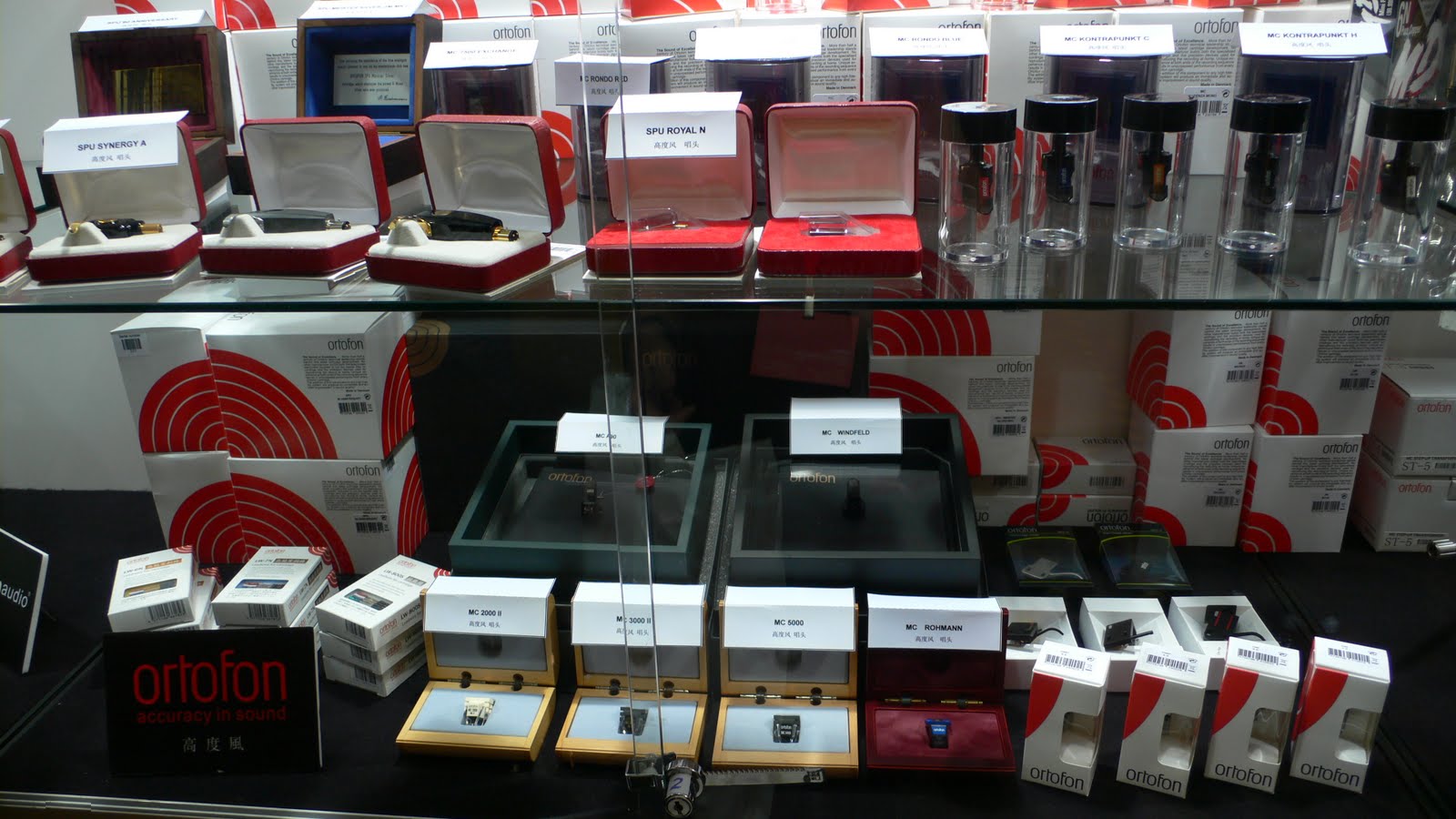
The sound of the Trio, with basshorn, as always remained good in the room of Avantgarde HK. On Friday I did not dwell on them too much as I have only recently visited the showroom and gave a detailed report. I like their silent display of a lot of Ortofon, wonderful commitment to vinyl!

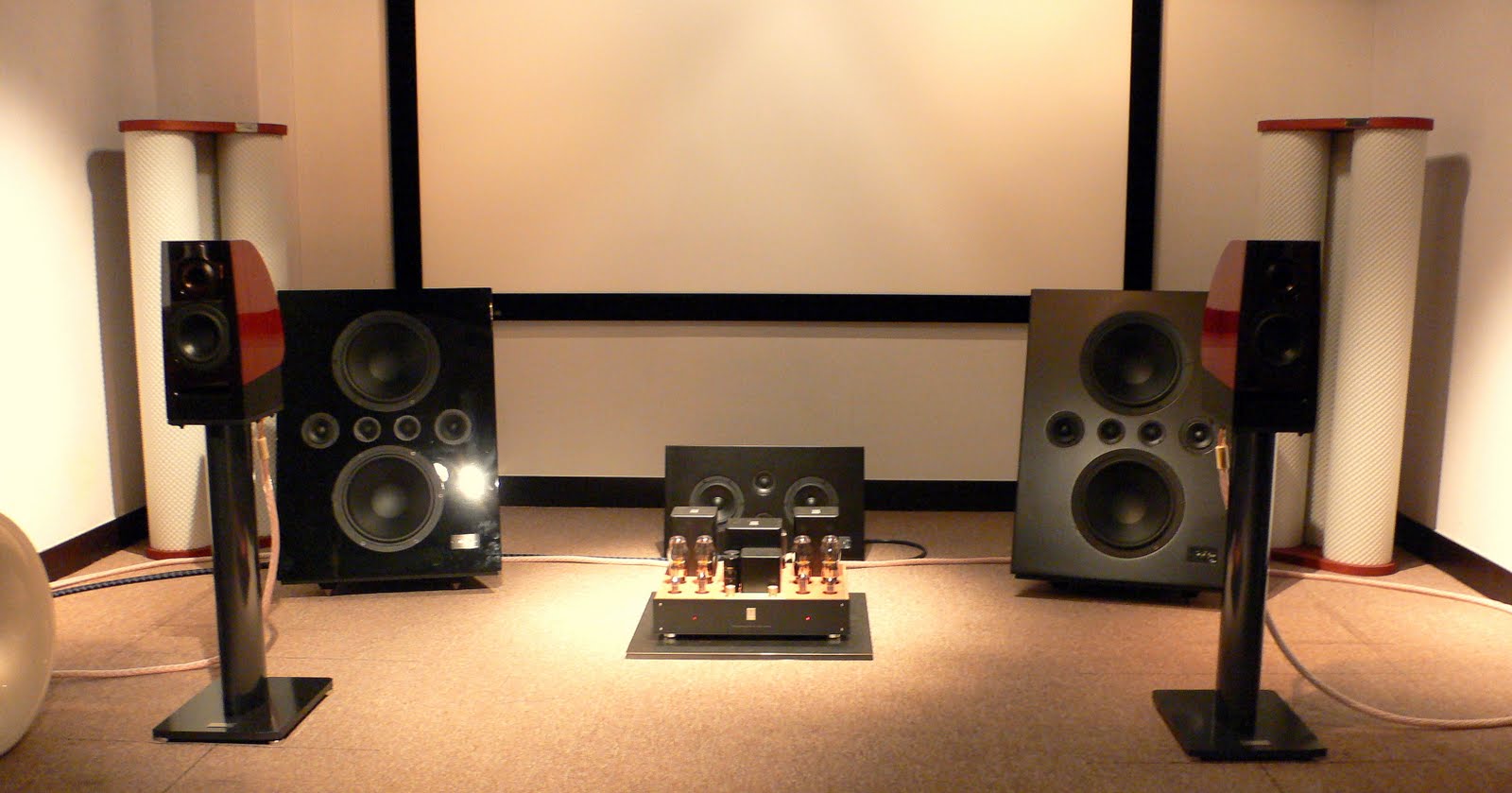
On Saturday though, accompanying Robin the Hairy Scot, we attended not one but two of the Trio sessions, and there he was, Masaki san!! Both featured the Trio + basshorn. It should be noted this pair of Trio is brand new, just out of the box! Click on the pic to enlarge. You shall note on the floor the limited edition Ginga turntable. On top of the right rack is the (sit tight) new Kondo Overture EL34 integrated amplifier, which Masaki introduced together with a new Kondo preamp G-70 (below the integrated). Both sessions utilized the AMR CD777 + Kondo G-70 preamp + M7 phono. The first featured some US ss monster mono-blocks. Sorry, I never would get to like the bland Livingston Taylor, no matter what it's played on. But a Paul McCartney 1991 unplugged CD perked up our ears. The voice didn't seem familiar but the rhythm and pace, as well as the varied hues were richly conveyed. Finally, Mr Chuong played an African percussion LP on the Kondo TT. Now we were talking. Tight rich bass, true timbre. The best vinyl playback of the past used to be HiFi Duck, but this year, this was the best sound of the show easily! Then came a switch to Gaku-Oh 300B monoblocks. Richer sound, but the Carmina Burana LP did not quite have all the requisite weight, though it did convey like no other playback the huge mass of choral forces singing and whispering. Robin asked the salesperson for the price and said to me these were at least worth the money (compared to much modern trash) . I agree.

(left) The large Adam loudspeaker (active woofers) sounded quite nice for a change (I don't usually like this company). I wish I had heard a high-res file on the Bladelius rather than analogue on the EAT. Notice that EMT preamp? Mouth-watering with 2 meters!

(right) It's common knowledge by now that Sonus Faber is now not what it was. At the show, SF Asia has a tiny deserted room with SF and ARC. Perhaps everyone prefers the old designer, Franco Serblin, whose Ktema speakers were well admired. Sound was fluent and comforting. Now, what are those large beautiful panels in the back?? They are treatment panels, and are they beautiful!

German Physiks can be very good, as we have heard at oozz' place. This flagship at the show sounded quite realistic with Cantonese opera and drew a huge crowd. Good job.

Wellwick always managed a clear and engaing sound at this show, with Elac, Densen etc. Both Harbeth + Manley and NAD + PSB = normal music.

******************************************************************
Could have been Better

Vivid Audio Giya did not sound as good as before in Excel's room. No wonder, Krell was doing service, ah, dis-service. What happened to darTZeel? That would be a better match!

Traditionally, HiFi 德 always managed good sound at the show. But this year, sound was too soft. The new Rockport to my eyes do not look too good. The brightest thing in the room was 阿明's hair! Sound was noticeably better on Saturday.

This year's MBL was a smaller variant, not enough to fill up the room. For some reason, the Wilson Sophia 3 + Boulder combination, despite a deep soundstage, was not as crystalline sounding as before.

Radar was too ambitious for dividing their large room into 3 sections. I only heard the Proac driven by flagship BAT, playing 24/96 files (that lousy Livingston Taylor again) through dCS. Not bad, but should have been even better. I wish I had caught up with Naim, though the cheaper one-box Uniti is what I'd like to hear.

(right and middle) Meridian Sooloos was played, but at small volume. Those active speakers look nice! I wish they had played the 808.

(left) For anyone who remembers Elephant shows of the past, this is just a ghost of the past.

Swiss Soulution had been heard to better advantage before, and should sound refined. Partnered with Eventus it was reduced to nothing special. These speakers in the past gave OK sound but are not worth the price (if one wants Italian, Franco Serblin's new Ktema line trump them in both sound and looks, see above).

TAD had their new heavy non-monitor speakers, but sound was not too good. I suspect their own electronics are not as good as claimed.

*********************************************************
Could have been Worse

Traditionally, Audio Space sounds none too good, but this year they have a pair of Tannoy around and sound was better, though still quite sluggish. I noticed their "LS3/5A" sells for $13800. No wonder second-hand market is thriving!

For me, Matisse Asia always produced highly artificial sound with their Verity. This year, things were just a little better on Friday with a Nagra hard-disc player around! Blue! But I recognized it for the red strip in the control. I wonder who brought it? My vote for most desirable item of the show. On Saturday this Nagra was gone.

***************************************************************
Bad

What happened to the trusty combination of Avalon + Rowland? Sound was pale and not worth describing. Wake up! The thing that salvaged the room for me is the display of the Project line. Cute boxes! Of the turntables, the one I like the most is the cheapest red and round Genie.

Also dozing was the Dynaudio Consequence SE, though I suspect here the Musical Fidelity Primo line was not up to the task of driving them properly.

Not sleeping but should be are Lansche Audio speakers, terribly coarse driven by Sim electronics.

Burmester, as usual, expensive non-music. “...you can choose to not believe, but you have to know..."

***************************************************************
More pics

I always take a pic of EAR. Don't you forget this brand! Who's going to sell me an Acute CDP to complete my line (I have the 912 +509)? This time around, the Bauer DPS look a lot better with a simple arm.

**************************************************************
More people

I followed our friend from Tsingyi inadverdently. Here's another one.

And this blurred picture, well...(you have to click on pic to see the frightening details)... 我最喜歡這一張,doctorjohn 的照妖鏡 (一向以來揭了不少妖精的假面具) 照到了一些 HiFi 精正在蠶食一個年青人。 問題是,此人正卻在享受著呢!

*************************************************************
The Concert that was too long
I went to the 1:30 concert on Friday to hear 阿陶, but I got more than what I bargained for. First up were the 香港鼓藝團, youngsters led by 銭國偉. I hate to be a spoiler, but in absolute terms the performances were too long, reasonably tidy but lacking in real flair.

The same can be said of The HK Police band , which though accomplished somehow cannot quite shake their serious (and morbid) demeanor (too many anthems and sessions at 浩園). The jazzy Summertime arrangement definitely did not suit them. The trumpet solo of the main theme sounded not languid, but funereal, though they got livelier later. The pipe band (click on pic, standing on the floor) was a lot more energizing, waking up my neighbor from stupor. Yes, hifi shows can be tiring!

Finally, 阿陶 appeared. How nice he was. He sang three songs and his voice was a little lighter than the closely miked recordings. We sat in the last row and the effect was a little muted. The incessant clicking of cameras spoiled the tranquility. Did anyone really tried to listen rather than take pics?

A concert then only for those who never went to concerts, which unfortunately comprise the majority of audiophiles. For serious concertgoers, it was not satisfactory, distracting, and too long.

Video Clips of Friday 1:30 Concert


**************************************************************
Postlude
今年場外買票的人多,但場内卻是空前地少人,證明主辦人的 CD 是賣得滿堂紅的, 可是秀就不太受歡迎。這不變得有點掛羊頭賣狗肉, 長久下來,會行嗎?不過,這樣也好,好久沒有逛得那麽舒服了, 大部分房間居然可以坐下來聼聼,這是前所沒有的。

反正就那麽一回事, 當然沒什麽驚喜。

記得先前那被 HiFi 精蠶食的年青人嗎?他已在 HiFi 的七彩漩渦裏消失了!


****************************************************************
Appendix
Here is another good write-up of the show, from computeraudiophile.

17 July, 2010

The Yumcha Diaries 飲茶後記: 17-07-10 (Bauer, Avantgarde, AMR, Kondo, Kiso)

The Yumcha Diaries 飲茶後記: 17-07-10

The Oz Connection
JC was back in town on this day. It was also nice to see classicalkan and his cute boy. They are due in Australia in August and we look forward to his report on JC's current system. As it was a rainy day we decided to postpone our planned visit to hear tubdiyer's 4343.

David and Goliath
After yumcha the seven of us went to Avantgarde Hong Kong. When we arrived there was a large crowd of mixed sex in the main listening room auditioning 第一鼓. Sales manager Jeff Yip ushered us into the smaller room, where we spent time with an expensive small system:

Digital: Weiss (I think Jason/Medea)
Preamp and Amp: Kondo M7 + Souga (2A3 PSE)
Speakers: Kiso Acoustics HB-1

Tell you one funny thing. As I was writing I googled "Kondo Souga" hoping to find more info or a link for you. Guess what popped up first? MY brief audition of Souga at another dealer!

Well, the sound of Souga was much better this time, for sure. At $130K the small Kiso speakers had better be good! And they were, as driven by these expensive electronics. The violin was a little artificial paradoxically, but that may be Eugene Fodor. A Japanese jazz CD was well rendered, with snappy timing, crisp piano and serviceable bass (let's not exaggerate that it's a big speaker).

The Kiso are certainly not the first to use resonating cabinets of thin wood that simulate musical instruments. Not even Ocellia was there first. According to daiwok, the concept has long been in existence. If you can accommodate larger speakers and are handy, you might want to follow daiwok's footstep and assemble the Saba Reso (see also here). I have auditioned the Saba Reso at daiwok's place, and they were phenomenal; I had never heard Starker's Bach to better advantage. All at a tiny fraction of the price of the Kiso, and you get more bass, a lot more. But that's for another article.

When the rival gang left, we moved into the main room and auditioned the large system. Here, the "director" Edward Choung took over:

Digital: AMR CD-777
Preamp + Amp: Kondo M77 + Gakuoh (300B PP)
Speakers: Avantgarde Duo Grosso

We listened mostly to CDs. The sound was reasonably good, especially behind the desk. My impression is that the Duo Grosso is better than the regular Duo that I had listened to in the past, and it had better be given the extra cost. Mr Choung was an enthusiastic personality(at times almost overly so), tirelessly explaining to us facets of the gears in use, especially since we were unfamiliar with the AMR brand.

Another chip on the shoulder
The AMR's look aroused suspicion in us about its origins. It's a British company but the look of the machine somehow had something Chinese about it. The pompous English on the official website was not reassuring either. My ears perked up when Mr Choung alleged it used the 16-bit chip. At the time, in the unfamiliar surroundings I could not really assess the performance level. Back at home, I read its website and the reviews. I was surprised to read in the 6moons review that Thorsten Loesch, who used to be active in my cheaptubeaudio Yahoo group, and whom I respect as a technocrat, may have something to do with it (at least with its progenitor CD77)! So it IS a bona fide UK company after all...

The multi-bit chipset used is actually the Philips UDA1305AT, a chip new to me and believe me, I have heard my share of CD players with all kinds of chips. Now, THAT's interesting and I am glad! I urge you to give it a listen. Old technology, new implementatio, and I admire a company that does that. Official gibberish here:

"...At the heart of the CD-777 Processor is AMR’s ‘continuous calibration’ Multibit Digital-to-Analogue Converter circuit using the Philips UDA1305AT Multibit Chipset. This is the first time this New Old Stock chipset has been used in a CD source and is worthy of the title “son” to the “King of Multibit” Philips TDA1541A chipset used in the multi-award winning CD-77. With AMR’s understanding of digital design down to the silicon die-level, the sonic performance of this “Prince of Multibit” chipset has been taken beyond the textbook limit. Producing visceral music that other mega-buck CD players cannot match, it must be heard to be believed. Along with AMR’s OptiSample, the CD-77 boasts full remote control of all sampling modes: Direct Mastering (AMR’s custom Non-Oversampling), Oversampling (2X, 4X) and Upsampling (96 kHz, 192 kHz)..."

"...The UDA1305AT is also superior to the TDA1543 and TDA1545. An added bonus is that this chipset has been off the radar and until now never been used before in a high-end CD player. Amongst its features are a continuous calibration concept, fast settling time to enable 2, 4 and 8 times oversampling (serial input), adjustable bias current for maximum dynamic range, internal timing and control circuits, I-squared-S bus input format (time multiplex, two’s complement, TTL up to 384KHz), no zero crossing distortion, low power consumption and low total harmonic distortion. Full-scale output is 2mA, THD at 0dB is -90dB, A-weighted S/N ratio is -101dB and current settling time to ±1 LSB 200ns..."

CAS vs CDP
Without even prompting Mr Choung showed us the CAS ability of the AMR. Using a netbook he played back downloaded high-res files and compared them with ripped files from CDs as well as the CD itself. Needless to say, the CD playback was superior.

Analogue is King
Since there were a plethora of turntables around, we asked to play an LP. Mr Chuong obliged and took quite a bit of time setting up the analogue setup:

-Feickert (Das Laufwerk Triple) turntable (tonearm not sure) with an Ortofon SPU Gold cartridge
-fed into an Ortofon SPU-T100 step-up transformer
-then into AMR PH-77 phonoamp.

He played a first-edition Take Five (red-label; 6-eyes). the sound instantly trumped the CD replay, but that was not all.

It's all about Curves!
Again, the spotlight was on the AMR PH-77. This unusual phonoamp is prodigiously equipped:

"...The PH-77 is the only phonograph source able to lay claim to exclusively feature a comprehensive catalogue of 23 equalisation (EQ) curves: every LP record can now be replayed using the one and only correct equalisation curve. This includes AMR's exclusive RIAA Direct Metal Mastering 'Curve' which transforms DMM records from being 'bright/edgy' to the life-like analogue recording that it always was.

This along with 8 levels of gain, 64 steps of load, 3 inputs for unprecedented flexibility in cartridge choice and matching and the onboard 24bit/96kHz Analogue-to-Digital converter, the PH-77 is undeniably one of the most significant reference phonograph sources ever produced..."

For sure, Take Five sounded better with the Columbia curve engaged. I don't recall another phonoamp as versatile as this one. Somewhat surprisingly, it lacks a phase switch. Mr Chuong's reply: "...I was told when the engineer records something in reversed phase, he has the effect in mind and it is supposed to be listened as it is..." Well, I'll take that with a grain of salt...

The last thing we asked for was to remove the step-up transformer and only use the MC phono section of the PH-77. Sound immediately flattened significantly, as predicted by Mr Chuong. Nonetheless, this is yet another interesting offering from this company, one that I shall watch intently from now on.

The showroom has a lot of TTs to look at. The Feikert line at least looks good. Nottingham I have no interest in at all. Of all the TTs, what interested me the most was the Bauer Audio DPS on silent display (read the HiFi+ review). The elegance of this particular sample from Jonathan Midgley was unfortunately visually disturbed, if not destroyed, by a hopeless marriage with a clutzy Triplanar.

While we were engaged in the main room, Mr Yip in the small room took the pains to show some video to classicalkan's little boy (so as to contain him?). We spent a lot of time there and I am really impressed by the service of the two gentlemen. Commendable indeed!

No, we don't carry this...
After that, we went to nearby Prestige HiFi because I wanted to take a look at the Thorens TD-309, which has been winning praise. Despite its reasonable cost and spunky look ( sassy to me, maybe ugly to you), it actually has many interesting design features (read the pdf file). I saw every Thorens deck (mostly ugly) except this one.

Sales: "...Sorry, we don't carry this..."
DJ: "Why?"
Sales: "...Nobody would be interested in HK..."
DJ: "...But I am! Can you get my a quote anyway?..."
Sales (after a call or two): "...sorry, we don't do this ah..."

So, even if you want one, the dealer refuses to get one for you. What kind of dealer is that? Thumbs down for Prestige Audio. This is the kind of dealer I dislike a lot.

Just an hour ago, Avantgarde HK told me they carry everything in the Ortofon catalogue, and Ortofon makes some very cheap cartridges and acessories. HiFiDuck sells the Concept, the lowest in the line of Clearaudio, for a good price. That's service.

We did not stay, not because of the turntable, but because the sound emanating from a Thorens TT was shockingly anemic, as if bled of all music.