Showing posts with label Brand-Denon. Show all posts

18 September, 2023

Denon DL-102 Adjustable Loading Resistor

Click pic to enlarge. The Red/White are the Tonearm Cables from my Technics SL-1200. The Orange Pair are loaded with small Trim Pots dialed to 1K by multimeter.

Letter from NYC (23-16): Denon DL-102, Part V
Talk DIY: Adjustable MM Loading Resistor

Written in Shenzhen

I have been using the Denon DL-102 for a long time - it's my mono reference. I have it on an SME type removable headshell. Whenever I scored a few mono LPs or simply wanted to hear some, I swapped it in. I always add some weight (a couple of blu-tac'ed coins) on the headshell and at the tail of the tonearm. I have written quite a bit on this cartridge (Parts I-IV scattered here), but usually in the context of comparisons with other cartridges.

The DL-102 made a significant impact in my record hunting. When I first set it up, I played my many mono Living Stereos (LM) and quickly concluded that the Heifetz and other soloists sounded  fabulous, perhaps even better than in in their stereo pressings. I also appreciate its way of playing a stereo record well. Say, while on a mono binge I suddenly wanted to play a stereo record, no problem! Unlike many true mono cartridges, it won't harm the stereo record. In fact, in Japanese Radio Stations, the DL-102 was used to play all records, mono or stereo!

The DL-102 is an MC cartridge, but a High Output one. Thus, most people, including me, just use the MM stage (standard 47K ohm). The vast majority of MM stages, even on phonoamps that accommodate MC, do not allow for loading adjustment in MM mode. Hence, 47K ohms is de rigeur. However, the DL-102 is said to be optimally loaded at 1K ohm (or is it >1K ohm?) and there are discussions on the internet. I have always wondered what a lower loading than 47K would sound like...

To alter the (47K ohm loading) of the MM phono stage, one has to insert a parallel resistor with the input. I discussed this with Andy and he lent me his ingenuous contraption (see top pic). Get a 2 (female) to 1 (male) RCA adaptor. Insert the phono cables into one set of female inputs, and in the other set insert a pair of RCA males loaded with desired resistors. This can be accomplished in 2 ways. The perfectionist can just solder (or screw on, with some connectors) the resistor of his choice between the + and - points of the male RCA connector. Or one can install a small Variable Resistor (VR) Trim Pot (like the ones commonly used as amp bias pots). The advantage of the latter is one can dial in a range of R values with the help of a multimeter. This is so convenient for experimentation - just make sure the pot has the range you want (the pot above looks to be 1-10K, just about perfect. Maybe 500-5K would be just as useful. Higher values near 47K are likely not necessary.

How to choose the Resistor Value? The law is of course 1/R = 1/R1 + 1/R2. So say we want 1K loading on the 47K ohm MM stage, it becomes 1/1000 = 1/47,000 + 1/R2 and R2 would be the resistor value you need. But no need to do that, as we all use the Parallel Resistor Calculators on the web! For the MM stage it is easy, you can even not calculate: since the 47K value is very high in comparison, the R2 value is basically just what you seek (within what we usually use - there are extremists out there) - say, 1000 ohm for desired 1000 ohm and 500 ohm for desired 500 ohm, 330 ohm for desired 330 ohm. Use a multimeter and dial in your desired loading. Error margin is smaller than the tolerance of the usual cheap digital meter.

How does it Sound (Loaded at 1K)? In a word, astonishing and transformative! One reservation I have always had with my Denon DL-102 running into 47K is it's a little too smooth. At 1K, there is significantly more top end air and a livelier demeanor. Very nice! Not kidding, sometimes one feels one hardly needs stereo!

Note: This is for MM Loading adjustment only. Does not apply to MC Loading due to completely different parameters.

Wunderbar!

As a parting note, I muse on the genre of High Output MC cartridges. They are interesting animals. because of their high output, they are almost always used with 47K ohm MM stages. Most of the time, results are satisfactory. Consider Denon's own DL-110, which I rate very highly, and it works very very well with MM phonos (despite some voices to the contrary). But there are times when one senses something can perhaps be improved. The case of the Denon DL-102 illustrated here points out that.

20 August, 2023

MoFi Studiodeck

Click pics to enlarge. AES SE-1 300B amp; Fosgate Reference phonoamp; Audiomaster LS3/5A; in far corner, Elekit TU-8300 300B amp.
Review: Mobile Fidelity Studiodeck
NYC Analog Log (23-3): C/P at its Highest!

Note: The first part of this article (in blue shade) is copied from a recent post that alerts readers of the sale. If you have read it before you may want to skip this part.

These days I don't often casually browse around the internet, my daily forays usually mostly limited to news, email checking and maintenance of this blog, in a word targeted and short. So I cannot even recall how I discovered this.

I had long been interested in MoFi's ventures into consumer audio, and I must say they have done it with style and substance. I purchased the Studiophono (contribution by Tim de Paravicini) and it is still competitive in its price class (here). At the time, I too wanted the Allen Perkins designed Studiodeck (or the Ultradeck) but refrained as I had too many TTs. BUT, now, with the substantial discount it proved impossible to resist. I opted for the deck without cartridge (USD 899) as I don't need the MM Studiotracker of the + version. Note that there is also an even cheaper "Foundation" version (USD 799), which does include the MM cartridge but is without the dust cover and HRX feet - well worth considering too.

I got it yesterday and of course immediately set it up. It deserves a lengthy report, which I shall write in due time. Suffice to say for now it compares favorably (and beyond) to my standard, the Technics SL-1200 Mk II, and that's no mean feat. I am writing this just to alert our readers.

Our author Shawn P told me that this was on sale too in Hong Kong (agent: Radar) for an even lower price, 5,800. Wow! Too bad the sales was over.

As a final note, unlike most lower priced offerings (and even some expensive ones) the arm is fully adjustable (VTA, Azimuth, etc). Because of its 10" effective length, unusual for a "starter" deck, it's necessarily a little larger in footprint than usual (19.5" by 14.25") and may not fit on some racks if you are not putting it on top.

If you are looking to upgrade, say, from your U-Turn, low end Pro-ject etc, this would be my choice. I'd pick it over Rega P3 (even P6) for example. In fact, money permits, this would serve the starter right off the bat too (perhaps with a Studiophono). For less money, my recommendation for starter deck remains Audio-Technica AT-PL120. This is not just for newbies at all: you'd have to spend a LOT more to get better performance. If you are experienced and want a second deck with full features, consider this moment!

-----------------------------------------------------------------------------------------------------

The above Primer just about covers all the salient points! Below I shall give more details, especially on aspects of design, including some that I have reservations about (fortunately these are peripheral issues).
 
It is important to note that, given the clout of MoFi, the internet is laden with reviews of their TTs, from trade mags to webzines. Ponder this: The majority of reviews are on the more expensive Ultradeck+ package, which include MoFi's own MM cartridges. No MC. I have no doubt as configured they sound good, but they do NOT qualify as thorough reviews. Most of these reviews, particularly those from big guns, only use the supplied MMs and do NOT attempt to evaluate the TT with other cartridges. That is completely irresponsible and, frankly, smacks of conspiration to promote MoFi's own cartridges. Thumbs down! Read all of them, and there are a couple on the cheaper Studiodeck and a comment here or there. Make up your own mind. This is why I don't even provide a link and why I think this review is special. I am an MC man!

Packaging, Unpacking and Installation It arrived quickly in a HUGE box. The TT and the Cover are in an inner box, cushioned in the corners by large foam brackets. Unpacking was easy and installation intuitive that the small manual is hardly needed (except for where to position the anti-skate wire knot); it is too sketchy by half anyway. 
 
The Plinth and Footers The Constrained Layer Plinth (one layer of aluminum inside, as opposed to 3 in the higher level Ultradeck) feels solid and knocking on it (with or without footers on) yields only a thud without much decay. The somewhat delicate spring-loaded HRX Footers are screwed on (I see it is sold by Music Direct separately for $199, surely an afterthought). My IKEA Kallax shelf unit is mass loaded with LPs and solid but its top is not quite level, so, with the help of a bubble, the footers allowed me to level the TT. Nice!

Dust Cover The smoked plexiglass cover is significantly heavier than the usual ones (say, the one on my Technics SL-1200). Unusually, the hinges on the cover and the receptacles on the plinth have no metal parts, instead made of some kind of polymer (rather than hard plastic) and are not completely rigid. The lips on the cover have a bit of yield. The weight, the pliancy and the spring loaded footers add up to mean that the cover should be off when playing. The lid when lifted fully back is at an obtuse angle with the plinth (surely so designed because of its weight) and that will wreak havoc with the spring loaded footers and TT level. Quite unlike my Technics and Pioneer TTs which allow me to play LPs with the lids open (at an acute angle) with no fear.
 
The IEC Power Inlet The plinth is not thick and the receptacle is in the back. The stock power cord is surprisingly robust yet not overly rigid (good in my book). If you use heavy aftermarket power cords, especially the kind with silly monstrous connectors (which is unlikely for people who use this deck), you should avoid having the cord weigh down the TT in the back. So, dress the power cable so the left rear corner is not weighed down.

The Arm looks to be reasonably well made. The straight main length is metal (I don't like the imprinted MoFi logo and thin white line). There are 2 joints. Like a lot of other arms, the shorter weight bearing rear section looks to be joined to the main by a rubber/polymer insert (if you go to MoFi's site for the better pics you can see a ring between the 2 sections). The counterweight is lined inside with rubber-like material for grip onto the arm. The other joint is similar, this time affixing the plastic headshell (with offset). Just to the rear of this joint on the underside there is a small screw which allows one to adjust azimuth (not in the manual). A plastic platform is collared around the arm base and holds the Arm Rest, Arm Lift and Anti-Skate. The Arm Lift is nice in quality and usefully a side screw on the collar allows one to adjust its height. Caveat: if the lever is pulled down too much too quickly the lift actually doesn't go all the way down. In my experience, a similar thing can happen on some other arm lifts. After the lift goes down and settles, pressing the lever a bit more will actually prop up the lift too. So do it gently with this turntable. Another small issue: out of the box I thought the arm lift well has bottomed out; it turned out what I thought was the black bottom was a black plastic protector for the shiny metal well and has to be removed - took me a while to figure out! The Arm Base looks to be plastic and a side screw enables adjustment of VTA. To their credit, MoFi supplies 2 small allen wrenches for all these adjustments. It should be noted that the 10" arm's effective mass is 30g, which favors low compliance cartridges.

Headshell, Cartridge Mounting and Alignment Surely MoFi wants you to buy your TT with their own cartridges, so MoFi doesn't make it easy on you. They provide NO templates for cartridge mounting. Thumbs down! I quickly used the Shure tracking weight gauge and the paper template that came with my Thorens TD-309 (Baerwald) and installed my Denon DL-103 (inside daiwok's Midas aluminum shell; some application notes here). With a little shim and VTA adjustment, done. I should also note here that the Finger Lift is awfully short - my fingers are slender and I can't imagine what it's like for those with stubby ones. - very dangerous. Cartridge Clips The captured ones look to be of good quality, but they cannot accommodate an odd ball one like the mono Denon DL-102, which only has 2 pins and requires 2 leads for each channel, achievable only by an open-back pin design.
 
In Play The motor is quite strong, much more so than, say, my Clearaudio Concept. It is high torgue, starts with a "kinky" snap on the belt, and reaches speed within seconds. Not as fast as direct-drive but impressive nonetheless. It should be noted some designers deliberately choose low torgue, particularly with motors mounted on the plinth, for reduction of resonance; that shows Allen Perkins is confident about his plinth's ability to drain away unwanted noise. Without a mat, when I apply the ancient Discwasher dust brush lightly, there are minor slippages but that's OK. Some reviews praise the Record Weight, but as a rule I don't like the sound of weights (deader) and don't use them. Initially though, another issue shows up a design fault: The On-Off Button is too close to the Headshell. Like many old-timers, I am used to using my fingers rather than the arm lift lever (the latter in down position). When I lowered the needle manually with my thumb and index finger, my other curled up fingers would accidentally hit the sensitive On-Off button and turn the TT off. I had to learn to work around the button and remember this, but it was not difficult. This is a case where the (good) industrial design is at odds with function. And, worth a mention again, when in play I can knock on the plinth with modest force and neither see nor hear anything untoward.

The Phono Cable The Studiodeck comes with an RCA cable, with ground wire. It's soft and looks between routine and bespoke. Sonically it really surprised me, as it doled out a fully fleshed out sound, perhaps rounded off a trifle at the frequency extremes, yet eminently musical. This really pleased me, even more than what the unassuming stock cable of the Thorens TD-309 did. Users should start with this cable. I rolled quite a few and ultimately settled on the Kimber KCAG. It is said in one of the Ultradeck reviews that its included cable is made by Cardas (the Ultradeck tonearm wire is too, whereas the Studiodeck is OFC copper). So this may or may not be by Cardas but I'm pretty sure it's bespoke as it has MoFi imprinted connectors. It's a good starter. My various Gotham cables all work very well too. Although I don't use it now, I give a thumbs up to MoFi here for attention to detail. In my system, I don't even need to connect the ground.

Sound This TT came very soon after I started investigating the Sun Valley Phonoamp, so the listening notes apply here, and below in blue shade I quote from my review (roll down to last article or here). Skip if you have read it before.

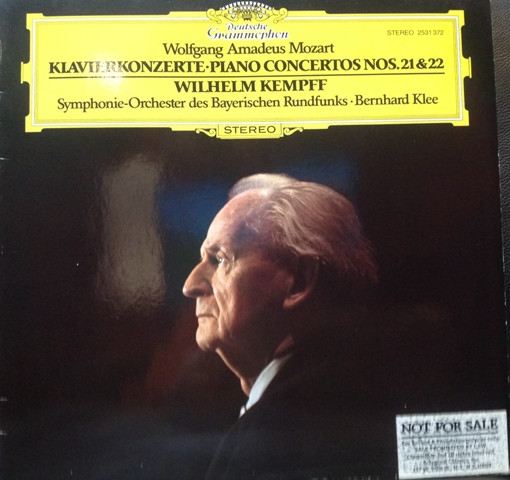
I will illustrate this with 2 LPs I acquired on my recent UK trip (see in pic at the bottom). This pair proves to be so revealing of the analog system that I have stowed them into my pile of Test Discs! Paavo Berglund is a Sibelius specialist noted for his 3 complete cycles of symphonies. In this sonically excellent digital LP, the Finlandia is supposedly the centerpiece. While the account is excellent, it does not quite have the sheer opulence of the same orchestra under Ashkenazy (digital Decca recorded by Kenneth Wilkinson), nor the romantic sweep of the Halle under Barbirolli (also on EMI, ASD). What's makes it a demo disc for me is the Tapiola. Like many other Sibelius tone poems based on Nordic myths, it's not at all an easy piece to bring off, its many rather still moments of beauty demanding the utmost of the conductor's skill at piecing things together. The Sun Valley elevates the atmosphere (which means everything in Sibelius) to a rarefied level, revealing playing of the utmost sensitivity and beauty. I don't have Berglund's other versions on hand, but this version is still available as a Seraphim CD release at some vendors. The LP is likely uncommonly seen. Even more surprising is the Brahms Double Concerto on EMI. This is a recording that musically is almost the complete opposite of the much vaunted recording of Oistrakh/Rostropovich/Szell (also on EMI). The very different (more subtle) personalities of Ferras/Tortelier/Kletzi present a less heroic interpretation that honors the work for its refinement and interplay. The dialogue between the 2 great soloists was learned and deep, blending perfectly with the Philharmonia (at its peak) under the equally elegant Kletzi. It's a whole fabric in a work that can sound disjointed. Yet another example is a late DG recording of the immortal Wilhelm Kempff. The seamless rapport between the soloist and the BRSO under Klee is priceless (more so than the pianist's earlier Mozart concerti recordings). The very subtle but myriad colors of this pianist are utterly spellbinding. Now, I have concentrated on classicals because that's my benchmark and I firmly believe no review is near complete without playing a lot of classicals (which is why I abhor Ken Kessler). Suffice to say, the few vocals and jazz I played were done very well too - no problem there.

vs Technics SL-1200 As I used both TTs in my evaluation above, it is more instructive to tell you the differences between the two. Regular readers would know I hold the Technics in high esteem. AND installed on it is nothing but the same Denon DL-103. First, the chief technical differences in the two TTs: 1) the Technics is famously direct-drive, a technology that has in recent years come back with a vengeance, whereas the MoFi is belt drive; 2) the MoFi arm ls longer and heavier, so more advantageous for the low compliance Denon DL-103 (I have added weights [Blu-tac'ed coins] on the Technics arm); 3) By its added weight the aluminum shell for the Denon supposedly confers advantages, but results can be mixed (should you like read the link provided previously). Despite the differences the two decks have the same, rather unmistakably glorious, sonic imprint - that of the Denon DL-103. But differences are there: Rhythm is a strong suit of the direct-drive (and some say suspension TT, but I demur) and the Technics is famous for that. The Technics is perhaps a smidgen faster in transients, but the MoFi is no slouch at all. Occasionally, the Technics can be too much of a good thing, as one senses a bit of an insistence to its rhyhm and pace - there is no such feeling at all with the MoFi; Smoothness Even on a heavy arm the Denon DL-103 can be a little bit grainy in the treble. The Technics can be slightly aggressive too in this respect. Perhaps with the higher mass of the arm and cartridge shell, the MoFi is a little smoother in the treble. A couple of reviewers irresponsibly made the observation that the last bit of air is lacking in the MoFi, but that is only because they only used the supplied MM cartridges. A good MC would bring all that out; Dynamics I give the nod to MoFi. In orchestral fortissimos the MoFi feels effortless, more so than many other TTs. In a crescendo, the MoFi makes you feel the volume of the orchestra is increasing incrementally over the span of it, whereas lesser TTs just sound pressed or peak out early (similar to power amps).
 
Summary on the MoFi Studiodeck Amazingly, there is no significant weakness. It plays with both Rhythmic Finesse and Dynamic Composure. Magnificent! Yes, there are small caveats, but they are insignificant. Now, who is this deck for? I say, for everyone, including newbies. Except for those starting out, who may have no cartridges on hand and only an MM phonostage, I'd recommend considering dropping the +package(s) and opt for just the deck. If one just want to taste MM and move on, many cheap ones can be had. An obvious choice would be the venerable Audio Technica AT-VM95 series (I'd pick the cheapest 95C, conical, $39), descended from the legendary AT-95 (on which many more expensive MMs [like Clearaudio] are based upon, only replacing the plastic shell with aluminum, much like what people do for Denon DL-103). I'm sure the MoFi MMs are even better, but then MMs are not MCs in my book. SO, you owe it to yourself to use an MC on this deck. The Studiodeck represents true economy, as I am confident you can use it with cartridges and phonoamps that are way more expensive than its price and still be satisfied. Right now I am using the Fosgate Signature phonoamp with it. In fact, if I have time, I might install my Koetsu on it! I am sure an incremental improvement can be obtained with the significantly more expensive Ultradeck but, unless there is a sale, I'd not consider it. The Studiodeck is likely the sweetspot.

Thoughts on the Technics SL-1200 There are at least tens of thousands of the old productions (Mk I to Mk 5) out there. Significant attrition due to heavy DJ abuse does not stop many of these to be available second-hand, but prices have climbed steadily. In 2016 Technics revived new productions (as well as its most iconic SP-10). The first ones are very expensive upgraded ones (G, GAE etc). By now, however, the technology has trickled down to the newest SL-1200, the $1,100 Mk 7. Unlike its very expensive brethens, there is almost no coverage in the audiophile press, and that's too bad. For a little more, the updraded SL-1200GR can be had for $1,800. And there is another worthwhile contender, the $1300 SL-1500C which dispenses with all the speed controls (that we don't use), adds auto return and upgrades to the GR motor. These are the TTs I'd buy in this price range (also the MoFi).

Thoughts on Denon DL-103 What more can I say? It's a classic that delivers all the drama inherent in the music, all for very little. There are nerds out there who insist that without proper loading and heavy arm it is unlistenable - don't let them deter you.

Primary
TT on IKEA Kallax shelf unit. "Midas" Denon DL-103, Fosgate Reference Phono
Oliver Sayes 71A SE amp.

25 January, 2020

Goldbug Medusa Clement II Arcam rPhono Denon DL-103R

Review: Goldbug Medusa and Clement II MC Cartridges, Part I
Review: Arcam rPhono, Part I
NY Diary (20-5): Goldbug Medusa, Clement II, Denon DL-103, DL-103R

4/10/20 Part II published. The combo continue to perform brilliantly in another system with Klipsch Heresy.

After I got my 12" Thomas Schick tonearm (critically the interchangeable headshell) back in action on my Thorens TD-124 (here), I have been rotating my cartridges, including the Denon DL-103 and a DL-103R which I recently found in the pile (I forgot I brought it over from HK), and doing a lot of evaluations and comparisons (here and here.) This article is a continuation.

In terms of finance, having some time on hand just before the Holidays was not a good thing. I perused several second-hand marketplaces and really for no good reason bought the items under review. That they turned out to be rather interesting is my luck.


Click pics to enlarge. Goldbug Medusa on Thomas Schick/Thorens TD-124. Arcam rPhono out of focus behind.

Goldbug Cartridges
While there is not that much information on Goldbug in English, there is just enough. It is best to start with the man behind it:

Sugano San Goldbug is said to be "designed" by Okihiko (aka Okie) Sugano. He is a famous Japanese figure in Audio, a most influential critic. Hong Kong audiophiles will know him by his name in Chinese characters, 菅野沖彦, for the longest time the anchor/bedrock of the Stereo Sound magazine, which is also published in Chinese translation and devoured by many (I actually think it is a lousy commercial magazine that praises everything; I rarely read it, except when it has a vintage special, which is usually infomative, if expensive). For those who want to read a very lengthy article on this multi-faceted man, read this article in positive-feedback; it is of Polish origin, and sometimes something is lost in translation (another short link is Roger Russell McIntosh Site.) For the rest of you, I shall have a brief summary in the next section. Note: Before I leave this section, I'd like to shed some light on what were mentioned in that article. Western readers should know: 1) Asian Culture is very hierarchal and deferential - great respect must be paid to "elders", including in audio. Lest you think Sugano san is something like HP of TAS, banish the thought; he is like HP, Gordon Holt, John Atkinson, 陳瑛光, whoever have you, combined, and then some, a veritable Godfather. A gathering is not just like, hey, let's get together and have some beer and music! No, you must defer to the elders and "respected" figures. Japan must be even more extreme, but I have seen this too often in HK, where people make me cringe by addressing certain elders as "sifu" (Master) 師傅前師傅後,很是肉麻; Truth is, from my perspective, the sound offered by many of these "elders" were, more often than not, oddly off-kilter, veering too far from neutral and usually emphasizing certain things at the expense of others, rarely balanced, but maybe that's their "selling point" (there are of course rare exceptions); 2) Japan Audiophiles actually pay great respect to those (usually older) "Golden Ears" who facilitate "Live-like" replay (whether real or not) and regard them as Artists. As an art lover, I have problem with this - perhaps this world has too many artists...


Finally, please don't confuse Okie Sugano with Yoshiaki Sugano, founder of Supex and Koetsu! This is a common mistake made by not a few on the internet. People just write Sugano, and they assume association with Supex and Koetsu (this shows the oblivion Goldbug has fallen into). Hey, Sugano (like Honda) is a common Japanese name!

Manufacturer: Mark Corps The reason why I questioned the "designer" laurel of Okie Sugano is that Goldbug cartridges were all made by his friend Imamura at Mark Corps. Sugano surely must have had input but it was the Imamura's who made the cartridges and remained mostly unsung. Here is a short blip from Audio Asylum thread:

"...Mid to high end MC carts made in Japan in the 70's and 80's, initially introduced the Mr Brier, so named because it was fitted into a hand made brier (briar) wood enclosure that was actually carved by the wife of the company's president, and shortly thereafter the Goldbug, Medusa and Clement but those three had a more conventional housing. All of the models shared the same low output coil arrangement but differed in cantilever and styli arrangement, the upmarket Brier quickly became something of a legend particularly in Japan and the USA and became the inspiration for later wood bodied Koetsu and Grado models, in Europe the Goldbug was better know however and in the 80's all Mark Corps. products where sold in Europe, the USA and a few other places are believed to have been with the Goldbug name used as a trademark rather than a model designation. At the same time the product line was updated with newer versions of the Brier in the form of Mr. Brier and later Ms. Brier, the Clement was also upgraded to Clement II but the Medusa appears to have been unchanged and the Mr. Briar cart effectively replaced the Briar while the Ms. Briar is an upgraded model with a line contact stylus, the Mr.Briar remained in the catalogue after the introduction of the Ms. BTW. The company also made the McIntosh cartridges that were available between 80's (see below), the generators inside the McIntosh models were broadly similar to the original Brier but had plastic housings..

The Clement II technical specification are : Generator Type : Moving Coil. Mount : Standard. Frequency response : 20Hz~35KHz. Output @ 5cm/s : 0,25mV @ 1KHz. Internal impedance : 14 Ohms. Recommended load : 40 Ohms or more. Compliance : 17 x 10-6cm/dyne. Tracking force : 1,2 to 1,4 grams. Weight : 5,8 grams. (My original manual said Weight 5.6 gm)

The Medusa technical specification are : Generator Type : Moving Coil. Mount : Standard. Frequency response : 20Hz~20KHz. Output @ 5cm/s : 0,2mV @ 1KHz. Impedance : 13 Ohms. Compliance : 9 x 10⁻⁶cm/dyne. Tracking force : 1,8 to 2 grams..." (My xeroxed copy of the original spec sheet said Impedance 12 ohms and Weight 5.8 gm).


Their Cantilevers/Styli The same spec's are largely quoted by various forum people and sellers. But when it comes to Cantilever/Stylus there were great variations. Medusa An Ebay seller stated "Aluminium apered hollow"; an Asylum inmate stated "special (super?) oval" (which is for sure special/super elliptical); and an Audiogoner stated "thosand needle .3x.7". My copy of original spec sheet says stylus tip is "Pure Oval" and makes no mention of cantilever material. My best guess would be the Medusa has an Aluminum Cantilever with a (?Special/Super) Elliptical StylusClement II An Audiogoner stated "Special Elliptical boro(n)" and a Russian seller stated "Beryllium". While these 2 elements (neighbor on the periodic table) are both stiff, they are not the same thing and certainly would affect sound in different ways. In the November '85 HiFi News Review of the original Well-Tempered Tonearm by the usually reliable veteran Chris Breunig, he wrote: "...lt has ousted the Zeta from my system, as a perfect carrier for the Garrott-Deccas, and with moving-coils such as the Empire MC1000 and the altogether delightful Goldbug Clement II, soundstaging and tracking performance have been exemplary. Those MCs are, incidentally, boron cantilever cartridges of high compliance...But my original manual made specific mention of Beryllium ("Pipe", which I take to mean hollowed) as Cantilever and the stylus is listed as "Pure Oval", same as Medusa. So I am sure the Clement II has a Beryllium Cantilever with a (?Special/Super) Elliptical Stylus. This makes sense as these are largely the same cartridge with the more expensive Clement II having a more expensive cantilever, the added stiffness of which was utilized to make it track at a lighter weight that is no doubt popular at that time (Think Shure V15). Readers should know that for this article I actually googled quite a bit for various Japanese sites (like Hifido, AudioUnion and Yahoo auctions), and sometimes used Google Translate, but I was not able to get more useful info. If any reader knows better, please comment or contact me.

Arcam rPhono
I didn't learn of this item from the magazines, rather during browsing encountered it on sale, new units at substantial discounts. Being a fan of the industrial design and and functionalities of Arcam's lifestyle r-series (I had used their first-gen rDAC, here), I already knew I wanted it. Then I did some research and found out that it had been very well received. The best and most detailed review was by veteran Alan Sircom (HiFi+), much better than the brief one by Fremer in analogplanet which, though positive, was obviously a hurried job that missed much of the sound and capability of this device. The strangest thing about the rPhono is that it was discontinued after only a year or so, unusually short. Perhaps they are going to release a Mk II, perhaps with remote loading (so far only featured in the highest end)? That would not be surprising, as my old rDAC had evolved into the remote-controlled irDAC before the current irDAC-II, meanwhile getting bigger with each generation.

  • Built I was surprised when I received the rPhono, quite a bit larger than I expected. It is very well built and beautiful to look at. The inside looks equally well built. Even the wall wart power supply is larger and than usual. 
  • Features and Ergonomics As you can see from the spec's and the busy back panel (pic below), this is an eminently adjustable device! As with many phonoamps, even more expensive ones (like my AQVOX), partly to keep signal path as short as possible, all the adjustment are crowded into the back (in the case of MoFi Studiophono, on the bottom). This is still more user-friendly than having them inside so that one needs to remove the cover for adjustment (like my Nagra PL-P/BPS and BAT P5). One unusual thing is that the switches are not the usual dip-switches, but are more like mini rocker-switches - a first encounter for me; even more than the former I worry about long-term use for someone who changes cartridges all the time (like me, now that I have a turntable with interchangeable headshells right in front of me.) And for MC Loading, see below.
  • Gain The rPhono has plenty of Gain. The Gain specified next to the switches are MM gains, and the MC gain over that is +30 db. So, lowest and highest gain for MC are 60 db and 82 db, respectively.
  • MC Loading This is MOST unusual in having (tiny) continuous trim pots for loading adjustment between 50 (7 o'clock) and 550 ohms (5 o'clock)! In the above pic, they are the tiny blue pots flanking the MC input. Assuming the trim pots are accurate, the middle position (12 o'clock) is 300 ohms. Elsewhere on the dial, well, it will be an approximation. Assuming the pots track the same way, one can dial both channels to roughly the same load. This is simultaneously a great feature and baggage for those compulsive about loading (I have to say I am not), who will love and hate it at the same time, because it offers the possibility of any loading value, but also the nightmare of worrying how accurate the dial-in is.


In Use/Sonic Impressions
As in the last round, setup is very simple. The Cartridges are mounted on interchangeable headshells on the Schick 12" arm on the Thorens TD-124, which is fed into the Arcam rPhono, which goes into the Linear Tube Audio MicroZOTL 2.0 amp driving the YL horns. Without running in, the rPhono immediately impressed by its pristine sound.

  • Gain There is plenty of gain. With my 104 db horns, even with my low output MC cartridges I could comfortably use the 30 db position (=60 db gain for MC), suggesting very conservative spec's (unlike many phonoamps which inflate the gain figure). After going back and forth I finally settled on 40 db (=70 db for MC) for its punchier presentation, without loss of refinement. I doubt I shall ever use the 50/52 db (=80/82 db for MC) position, as it was way too loud.
  • MC Loading For this round, I empirically had my loading midway between 50 and 300, that is roughly 175 ohm. Given that the Goldbug's have impedance of 12 and 14 gm, and the Denon DL-103R about the same, that should be alright. The regular DL-103 has a higher impedance of 40 gm, but I did not bother adjusting the loading.
  • Denon DL-103 vs DL-103R I had been comparing these siblings before the Arcam's arrival, using the current mode amplification AQVOX 2CI Mk II (see here, except that I switched to a regular DL-103 in lieu of the Midas one). I switched to the Arcam rPhono and was surprised that: 1) the sound was just as good, perhaps an even better match; 2) the Arcam seemed just as quiet. Call me impressed! With both phonoamps, the results with the Denon pair was the same: while the DL-103R had perhaps a little more resolution, it was also a little grainier than the DL-103 at the top, and the DL-103 had the better midrange and was more emotive. Many people confuse these two siblings, but they are not the same. I remain loyal to the DL-103, while others (including David Wilson) champion the DL-103R; YMMV.
    Persuasive Percussion (Vinyl, LP, Album) album cover
  • Goldbug Medusa As soon as I lowered the needle, it was obvious I was in a different world than the Denon siblings. The soundstage was deeper, the top more sparkling and the bass more agile. True to its claim, there was no MC peak (which the DL-103R and even DL-103 have a little). Strings were realistic, with a sheen of rosin; and piano was resonant. I basically subjected it to all my recent test records. Yes, it passed my litmus test of the Johann Strauss Waltz LP (here,) the slight hesitations and emphasis turned to perfection. And misirlou on Persuasive Percussion (here) was well-nigh irresistible, just as when it played with the Koetsu Black. Clement II After playing many more records, delighted, I turned to the Clement II. Basically, it is very similar to the Medusa, but with a slightly leaner balance and slightly faster transient (bass is even more tactile). This cartridge is an anomaly among the MC's, as it tracks incredibly light at 1.3 gm, a historical relic of sort, but I am impressed. I am VERY happy with both cartridges.
  • ? Goldbug vs Koetsu Black No, I didn't do a direct comparison; that will have to wait till Part II, when I move the Goldbug's to Station II, where the phonoamps are also different. But, from my recollection and juxtaposition, I am confident the Goldbug's are right up there with the Koestu Black. They share the virtues of excellence in microdynamics and musical values, but the Koetsu is most likely warmer, with the Goldbug's even more tactile. We shall see.
  • Arcam rPhono So, how good is the Arcam? It is damn good. Don't forget the Arcam came right after the AQVOX 2CI Mk II and Parasound JC3, and performed just as well in this setup! Its mid bass may be a trifle lighter than its bigger rivals, but overall it is still incredible. I am pretty certain it is quite a bit better than my other budget phonoamps, like the MoFi StudioPhono, the iFi iPhono and the Micromega MyGroov. As a matter of fact, sooner or later, I will likely move it to Station III as reference. More than most, this one deserves a Linear Power Supply. If I have time, I shall move it to Station II to test it out against the Aurorasound. Maybe.
I lucked out this time. Great Buys.


25 December, 2019

Air Tight PC-1 Koetsu Black Goldline Denon DL-103 Ortofon LH-9000 LW-7N AQVOX 2CI Mk II Aurorasound Vida Fosgate Signature Mono Button


Click pics to enlarge. David and Goliath? In the US, David is priced at 1/50 the price of Goliath.

Talk Vinyl: Mono Button, Headshell, Cartridge Wires, Viennese Waltz
New York Diary (19-24):
Air Tight PC-1 Re-visited vs Koetsu Black Goldline vs Midas Denon DL-103
Aurorasound Vida vs AQVOX CI Mk II vs Fosgate Signature
$5 Ebay Headshell vs $240 Premium Headshell 
Review: AQVOX 2CI Mk II, Part III
Calibration of Analog Sources in System II

Revised 12/28: AQVOX tested with Midas Denon DL-103
Revised 12/26: Addition of Fosgate Signature Phonoamp

Mega Article on AQVOX, Parasound and Aurorasound (this older article features all the phonamps and cartridges in this present article, which can be regarded as a Part II of the older article).
Fosgate Signature Phonoamp as last heard

After I finished my long and gratifying session with the VAS Ebony Mono, and after brief flings with the Denon DL-102 and Shure SC35C (here), I reinstalled my Midas Denon DL-103 on the Thorens TD-124/Schick 12". This was all into the Parasound JC3 phonoamp, which has a Mono Button, which is fed directly into the LTA MicroZOTL.

One thing led to another, and this article snowballed.

Mono Button with Mono Cartridge
Whether with the VAS Ebony Mono or Denon DL-102, engaging the Mono Button produced no discernible effect. This is also true in my System I, where the Mono Button of the Aurorasound Vida phonoamp produced no effect with these two cartridges. This shows the cartridges are not picking up anything from the vertical plane, and are hence true mono cartridges. Nonetheless, I usually habitually engage the mono button anyway when I play mono records.

Mono Button with Stereo Cartridge
I really wasn't doing any critical listening and was typing away on my computer but, after listening to two stereo LPs, it disturbed me a little that the sound of the Denon DL-103, while good, was not open enough. I looked around a bit and suddenly saw the Mono Button of the JC3 was still engaged!! Pressing the button again immediately opened up the soundstage and distributed the instruments. That is to be expected but what was not was a smoothening of the treble and small loss of bass impact. I then went back and forth with the button and confirmed that with stereo records the Mono Button firms up the bass but also paradoxically makes the treble a little sharper (?focused). Of course, the Mono Button is designed to let one cancel out the vertical modulations of the stereo cartridge when playing a mono record. But judging from the above, it may benefit the playback of some sub-optimally recorded or non-RIAA stereo recordings (which a mono cartridge does too).

Headshell and Cartridge Wires
After a while, I got itchy again in trying to improve the replay with the Midas Denon DL-103. This cartridge was permanently installed on the only expensive headshell I have, the heavy magnesium-carbon fiber Ortofon LH-9000 (here) which was an impulse buy (always a wrong thing) in HK when I acquired the Schick arm in 2012 (in the pic in the original post). Somehow, despite its hefty price, or because of it, from the first sounding I have always been suspicious that it may not be the headshell for me.

See, for a start, I don't like the cartridge wires that come with this headshell (left pic); I frown upon the relatively thick strands. The wires are the LW-7N that Ortofon sells separately at an outrageous price. They are much thicker (lower in AWG) than the generic ones that usually come with my generic headshells. Ortofon actually sells all sorts of cables but they have never caught on with anyone, certainly not in HK and US. Almost all their cables are LC-OFC, 6N/7N copper, and all made in Japan, just like most of their tonearms and tonearm cables (basically Jelco). In my experience, these Japanese cables are smooth but lacking in dynamic expression.

It has always been my belief that thick cables sound worse than thin ones (as stated in this HiFi Basics article). So, 7 long years later, I swapped out the Ortofon for a generic Korean made perforated metal one that costs around $5 on Ebay, roughly 1/50 the price of the LH-9000 at established US retailers (cheaper on Ebay, at maybe half the price, which was around the price I paid for mine in HK)! In the case of the cartridge, the output signal is so small that a very small-gauged wire (high AWG) is enough to carry it; the larger the diameter (lower AWG) of the wire the more the delicate signal is going to be altered.

It has always been my audio belief too that one flat surface should not be placed upon another. This is true of smaller loudspeakers and their stands. For small loudspeakers like LS3/5A, one may get away with a little blue tac at the corners, which serves the dual purpose of securing the loudspeakers as well as decoupling. For larger loudspeakers, stands with flat tops are more often than not suboptimal. Two examples: The original Epos stand for their medium sized ES-11 and ES14 (great loudspeakers btw!) has an open-frame top, and they sound best that way; ditto the magnificent but voluptuous Spendor SP-100, which also sounds best on an open-frame stand. This is likely true of the cartridge/headshell interface too, particularly if both headshell and cartridge body are metal. I happen to like the look of these generic headshells, cool and retro. I also like the perforations, which should help resonances - witness Rega derived tonearms that have so many holes punched into them that they look like they are bullet ridden from an ambush! There is a reason why the open-framed Orsonic headshells fetch good sums on Ebay. For my cheaper plastic body cartridges I fuss less, but in my mind I don't like having the top of a metal-bodied cartridge right against a metal headshell (of course the metal screws unavoidably do bind them together at two points), and if the sound is not entirely satisfactory I'd insert a shim of cut expired credit card between them. I did that in this case (you can see in the pic; it helps with the VTA too). Note too that the Ortofon LH-9000 also has a thin strip of anti-vibration material taped onto its underside, so someone there was thinking along the same line.

Guess what, my worst premonitions all came true! The cheaper headshell was more to my taste - more air around instruments, a larger soundstage and a livelier and more subtle presentation. Whether it is due to the wires or headshell or a combination of the two I won't say. Of course I could swap the wires and try out all combinations, but I am not about to do that - one is just as unlikely to use an expensive headshell with generic wire than to use expensive wire with a generic headshell. Somehow, I just love the cheap package!

Which brings us to: how complicated vinyl playback can be! Aside from the turntable and the arm and the cartridge, even the littlest things, the headshell and cartridge wires, influence the sound greatly. In my experience, people who constantly tinker get bad sound (how can they not if they only concentrate on a few records for A/B); people who don't tinker can go either way; the best is to tinker less and concentrate on the music more - improvement comes with experience and in due time - there is no expressway to "heaven".

Unwanted Noise/Resonance/Vibration Control in audio has always fascinated me. In my experience, most of the time, the "solution" is worse than the "problem". Most, if not all, AC Line "Conditioners", Spikes and Cones, ridiculously expensive racks like Finite Element are just some examples that kill the liveliness of music, perhaps only suitable for those who use hot solid state amps and "state-of-the-art" loudspeakers. Those of us sympathetic to tubes seldom need these paraphernalia's.


Air Tight PC-1 redux

I then rearranged the positions of the 3 turntables in System II for some easy testing. For the first time in at least 2 years I played my Linn LP-12/Ittok/Air Tight PC-1 (here). I had looked forward to this moment ever since I got my Koetsu Black re-tipped by VAS. A comparison is in order.

For this part, as usual everything in System II went through the Shindo Monbrisson preamp, which drove the same LTA MicroZOTL 2.0 amp. Aurorasound Vida was the phonoamp for the Linn. I played 3 LP's that I had played using the gears in the above section, and the result was both spellbinding as well as instructional.

with Aurorasound Vida Henry Krips is almost forgotten today. He previously amazed me with his Suppe Overtures (here). This time, I got his Johann Strauss Favourites (HMV Concert Classics). Before, I thought it was well played but not quite inspiring. Not so with the PC-1: all of a sudden, the orchestra swinged and swayed, and Krips deftly applied to the English orchestra a Viennese lilt. The all-important upbeats acquired more emphasis, subtle retards became evident. Most delightful were the percussions, which felt purposeful, a sine qua non of good reproduction. In the Thunder and Lightning Polka, the rapid bass notes depicting the thunder were superbly resolved, no easy task. This LP is so telling that it is going to be my go-to test LP for cartridges. As amazing was Swarowsky's Saint Saens Symphony No. 3 (Urania). Despite excellent sonics, it was a straightforward account that bordered on boring, and the pickup Viennese orchestra had some weak playing. Again, not so with the PC-1: orchestral texture became more refined and colorful, and dynamics improved to the extent that it was actually not bad at all! Similarly, on Beecham's Ein Heldenleben (HMV Concert Classics) the Royal Philharmonic seemed like a much better orchestra with the PC-1, and combined with the subtle conducting (no bombast) of Beecham it deserves its reputation as a great interpretation.

vs Koetsu Black Goldline AQVOX As the Aurorasound Vida's MC input is now occupied by the PC-1, I first connected my Koetsu (on my Thorens TD-309 turntable, here heard with the Vida) to my AQVOX 2CI Mk II, and then played the same 3 LP's. Although better than previously with the Midas Denon DL-103, compared with the PC-1, it was evident the music was rendered with a broader stroke. I fiddled with cables, which did not help too much. Aurorasound A little piqued, I did the hard work of disconnecting the Linn/PC-1 so as to connect the TD-309/Koetsu rig into the MC input of the Aurorasound, which was how I played the Koetsu last time (here). Ah, the playback became more focused, and the Koetsu found more of what the PC-1 did (like the Viennese lilt). However, ultimately, the PC-1 was just more detailed and dynamic. The Koetsu Black is already a top-notch cartridge, but the PC-1 belongs in even  more rarified company. From this, I concluded that I wanted to use the Koetsu on the Aurorasound, so I recruited my Bob's Device SUT (here) for input to the MM input and the result was largely the same, perhaps with just an extra touch of force, which I didn't really need. Based on the Koetsu Black alone, it would seem safe to conclude that the Aurorasound Vida is better than AQVOX CI Mk II. Although there is no question the Aurorasound is formidable, but, as audio, particularly analog playback, is all about matching, I was not ready yet to draw this conclusion... Fosgate Signature The next day I connected the Linn/Koetsu rig to the Fosgate and, as they say, the rest is history. In this system, the Koetsu did even better than on the AQVOX, and perhaps even better than on the Aurorasound. The Koetsu did everything the PC-1 did, but at a somewhat smaller scale, but I feel it has been optimized. What amazes me is that the all-tube Fosgate yields not one iota to either the AQVOX or Aurorasound in the transient portrayal of the leading edge; every emphasis is microdynamically portrayed, no mean feat, with the additional benefit of a smoother sound.

with AQVOX I then connected the Linn/PC-1 rig to the AQVOX. The PC-1 was instantly everything it was on the Aurorasound, but with a little more grain. Remembering that I had bypassed the capacitors before (here), I switched them back in and now there was more warmth needed in this very high resolution system. I also adjusted the gain (front knobs; not = volume knobs) and experimented with cables (Gotham DGS-1 and GAC-2111 in lieu of the previous GAC-2) and got closer and closer to what I was hearing before. There were several thing that were amazing: 1) as some have commented, the current amplification phonoamps thrive on low-impedance or low-output cartridges, and the PC-1 vs Koetsu is 2.5 vs 5 ohm; 2) even with the gain turned way low, the AQVOX was even more dynamic and even faster than the Aurorasound, with either cartridge. Make no mistake, for my taste, because of its more refined nature the more expensive Aurorasound is still the better phonoamp, but the AQVOX would not be easily dismissed and I am going to explore more around the findings of today. For now, given that I had found a home for my Koetsu (i.e., the Fosgate), the PC-1 going back to the Aurorasound (the MM used for the Denon DL-102).

AQVOX with Midas Denon DL-103 With all of this, it is also apparent the TD-124/Schick/Midas Denon DL-103 needs some rejuvenation or upgrade. I went back to the rig and replaced the Parasound JC3 with the AQVOX. Surprise! With those 3 LPs I got back much of the quality missing before. In Johann Strauss Favourites, much of the Viennese lilt was back, and the bass notes in Thunder & Lightning Polka was surprisingly very well resolved. In Saint Saens, the brooding atmosphere was highly satisfying and the strings and winds had surprisingly sheen. And the Ein Heldenleben was positively luxurious, if a little lighter. How good it was can be judged thus: I was getting more than a little sick listening to the 3 LPs, but this round I wanted to hear entire sides and never lifted the needle mid-way, so pleased I was. What is a little surprising is that the end result rivals the playback by the Koetsu Black Goldline - in terms of tactility, the Denon was at least an equal, but perhaps the Koetsu was slightly richer from the mid-bass down. Again a great performance by this humble evergreen. However, it is also clear the PC-1 remains in a league of its own.

All of this is a bit exhaustive and exhausting - audiophile behavior. This article represents the biggest analog testing session lazy me have done in a long while, since the last big one linked above. But it is undeniably rewarding as I have achieved as much parity as I could have mustered. More rehabilitation of cartridges and phonoamps are in order.


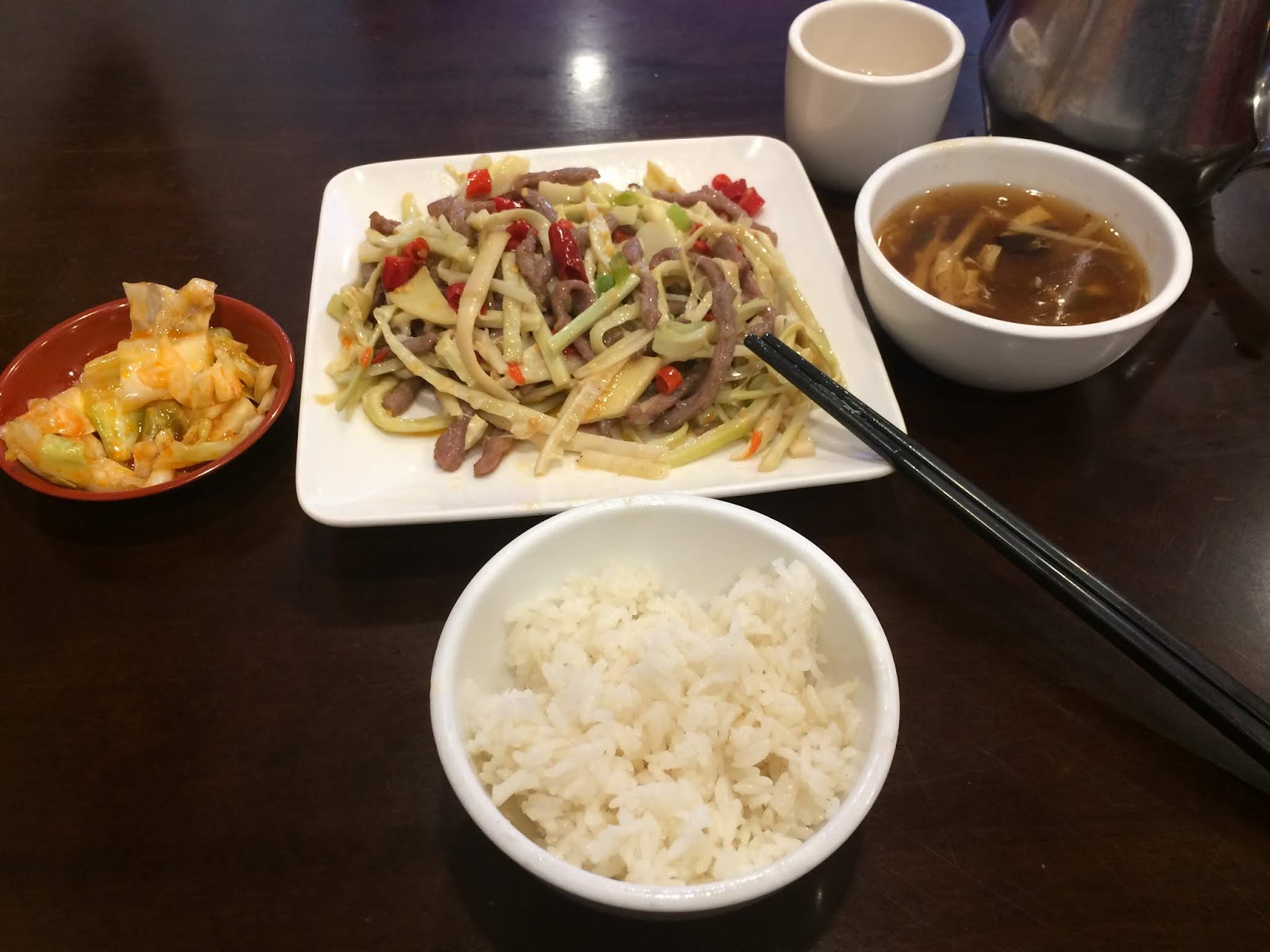
Simple Lunch, Spicy Beef with Dried Bamboo Shoots
Lightly Pickled Cabbage as Condiment

16 December, 2019

VAS Ebony Mono Denon DL-102 103 Shure SC35C Thomas Schick


NY Diary (19-22): 4 Low Compliance Cartridges
VAS Ebony 103 Mono
Shure SC35C, Part III
Denon DL-102, Part IV
Thorens TD-124 with Thomas Schick 12", Part II
Talk Vinyl - Mono Replay V
Talk Vinyl - 12" Arm vs 9" Arm, Low vs High Impedance

Shure SC35C, Part II
Denon DL-102, Part III
Thorens TD-124 with Thomas Schick 12", Part I

Evaluations in this article are largely based on a simple system (with one important detour): Thorens TD-124/Thomas Schick 12" arm into Parasound JC3 Phonoamp (mono button engaged) into Linear Tube Audio MicroZOTL 2.0 driving my YL horns. This article features 4 low compliance cartridges  that supposedly work best on heavier arms.

When I got back my Thorens TD-124 with Thomas Schick 12" arm I started to revisit the Denon DL-103 and derivatives (the VAS being one). This has been something I have been looking forward to, because the low compliance Denon DL-103 is regarded by some as only suitable for heavier arms (I happen to disagree, as I have always gotten great results on lower mass arms, Rega or even the ultra-light SME 3009i). But I suppose using a heavier arm in evaluation confers more legitimacy.

THE MONO SESSIONS

VAS Ebony 103 Mono Cartridge
I have previously written here and there about the excellent VAS cartridge rebuilds (here), including my own Koetsu Black and Denon DL-301 Mk II. I have also reviewed the excellent stereo  VAS Ebony 103 (here), which actually plays mono LPs extremely well. This time around, it is the stablemate mono version of it. It is the same exact cartridge as mentioned in the Official Info.

After briefly testing it out on my Pioneer PL-10 (light arm), to very good effect (better than my one-of-a-kind Rao's mono MC), I got sidelined by other projects and articles. But installation on the heavier 12" Thomas Schick arm was an eye opener. It simply played everything I threw at it superbly.

Concerto No.3 In C Major For Piano And Orchestra / Concerto No.3 For Piano And Orchestra (Vinyl, LP, Album, Mono) album coverJazz on a good mono cartridge is a given, and so it was with the VAS. I dug out my tattered copy of Garner Encores (Columbia 6 Eye, which I previously wrote about here) and it sounded simply fabulous, better than ever. It literally rolled on, and I played both sides. I have always not understood why Erroll Garner is not better regarded. In Johnny Hodge's Joe's Blues (Verve), the varied styles and colors of the brilliant personnel were superbly captured (more below).

Symphony No. 2 In D Major, Op. 73 (Vinyl, LP, Album, Mono) album coverThe shorter cantilever means a sharper attack and fast transient time and good PRaT, but that doesn't always benefit classical's. No need to worry, the VAS played my mono classical albums magnificently. I have always regarded late period mono records as excellent sounding. Bruno Walter's mono NYPO recordings (Columbia) belong to this camp. Brahms Symphony No. 2 was alternately lyrical (those singing strings!) and majestic, not at all inferior to his stereo Columbia Symphony remake. Similarly, Julius Katchen's Prokofiev 3rd (Decca) was crisply detailed and the piano sound was a delight (Ansermet's partnership goes without saying). If a cartridge can get the best out of both strings and piano, it is in already in the top echelon. Even Furtwangler's earlier low-fidelity Berlin recordings had more air about them than usual.

Denon DL-103 Plays Mono Given that the VAS mono cartridge is a tricked out Denon DL-103, I decided to listen to the same records using the progenitor. Well, there really was no comparison. Immediately noticeable was how much quieter the mono cartridge is. With the DL-103, instruments were not as full bodied and strings and brass had less sheen, and sometimes just a little coarseness creeps in (this is after all a solid state phonostage). I didn't listen that long.

Joe's Blues (Vinyl, LP, Album, Mono) album coverDenon DL-102 Mono cartridge
Swapping in the Denon mono cartridge proved quite illuminating. For a moment, it seemed I was listening to the VAS again. Blacker background and much steadier and full-bodied replay. But! The VAS was definitely a little faster in transient and this made for telling differences on Joe's Blues. The organist Wild Bill Davis had a distinctive style; he often made his phrases undulate wildly in dynamics; sometimes the effect strangely was almost like a portamento. VAS brought that out fully, whereas with the Denon it was less obvious. With the VAS, I think I could identify Davis in a blind test, but with the Denon I'd not be so sure (Jimmy Smith?), you see what I mean. The VAS also definitely made the colors of the horns and guitar more individualistic. This kind of superb microdynamic performance is uncommon, and it is what I really value as a listener, to feel the touch (or breathing) of the performer.

With the classical tracks, the differences were there, but minimized. In the Brahms, with the VAS the strings sounded more ethereal (important in this symphony), but the tutti were no less stirring with the Denon; as a matter of fact, I felt compelled to finish the record! On the Decca LP, it was apparent the voltage of the Denon was a notch down, but still very satisfying.

Detour: Onto the Technics SL-1200
I then wanted to get some insight into the contribution of the turntable. So I switched to System II, (see sidebar): The Technics SL-1200 Mk II is connected to the Aurorasound Vida phonoamp, then to the Shindo Monbrisson preamp, which then drives the same LTA MicroZOTL 2.0 amp and YL horns. I could have connected the phonoamp directly to the LTA but I could not be bothered as I know very well the system's sound and hi-end credentials, using the LTA or not (with LTA here).

Mozart: Concertos No. 20, 25 for Piano. Edwin Fischer, Krips. Pathe EMI OVD 4324Denon DL-102 As expected, the Direct Drive turntable upped the jump factor, but is slightly granier. The Decca disc gained traction and excitement and the piano tone was more chiseled, though here and there the scrawniness of the strings were somewhat exacerbated (they were present on the Thorens too; don't forget this is an FFSS record with a different curve from RIAA). The same increase in urgency also informed the Brahms and Joe's Blues. VAS Ebony Mono Exactly as on the Thorens TD-124, VAS immediately proved more accomplished. Just as with the Denon, there was more jump factor, but this different front-end revealed the VAS' virtues just as well as the other. Wild Bill Davis played in exactly the same inimitable way, wild indeed! In Brahms, the lyricism of the string playing was just as evident. Although the Technics was not as nuanced as the Thorens TD-124, it still managed to show to a considerable extent everything the VAS was capable of (the corollary is, the VAS played nearly as well on the Technics as the Thorens, no small achievement). I was so delighted I plowed on with other classical LPs. Edwin Fischer's Mozart's Piano Concerto No. 20 with the LPO (Pathe) is not quite as well recorded as the other two, but it was just as musically rewarding. The legendary Fischer's piano playing goes without saying, but the setup clearly revealed also his beautiful pointing of the orchestral lines as conductor - a little tug here, a little emphasis here that lifted the accompaniment out of the ordinary, even more potent than that provided by Philharmonia/Krips on the reverse side. The VAS made the musician's intent very clear, and there cannot be higher accolade. Even with much dimmer older material, the music was still engaging, as shown by Kreisler's Brahms Violin Concerto with Berlin Staatsoper/Leo Blech (from 78's; Dacapo), where Kreisler was just magnificent. This cartridge plays everything with insight.

Mono Appraisal
  • The Subject of (MC) Impedance Before I begin my appraisal, I'd like to digress a little on the subject of impedance, as it'd have some bearing on how I judge things (down below). Currently, low impedance MC cartridges, in mono even more than in stereo, are all the rage. This is because the high end has been making stereo low impedance MC cartridges for a long time, whereas their mono counterparts did not emerge until the more recent Mono Revival. This makes the offerings in this article anomalies. Indeed, the two ancient Denon's qualify as cultural relics, which makes the VAS an updated relic. :-) The lower the impedance, the lighter the coil, the fewer windings, and a more powerful magnet, but also a lower output. But lest you think this formula automatically leads to good sound, I can assure you this is not the case. Most of the high end companies produce low impedance stereo MC cartridges, but many to me are just bland (ZYX, many Lyra, Clearaudio, even many of today's Ortofon's, to name a few). I do think in general modern low impedance mono MC cartridges do better, partly due to the simpler requirements and the richer and more focused sound of mono. Impedance is not everything, as cartridge design is the art of manipulation of a limited few parts; the choice of material influences the sound just as much. Going back to high impedance MC designs, don't mistake me for favoring this approach. It just happens that some of my favorites belong to this group. The Denon DL-103 certainly (but also the DL-301 Mk II and DL-304; and the lovely Benz Micro Gold also has highish impedance). Of course, the high-output MC's by nature have high impedance and some can be good (Denon DL-102; I am also fond of the Denon DL-110; and several high output Dynavector's have serious repute); let us also not forget the inimitable Decca cartridges (not MC, in its own category), which I love. But high impedance MC can also be a disappointment too: witness my recent experience with the Hana SL (here), so you can bet I shall never consider their mono versions. As they say, the devil is in the details, and good sound is all in the implementation.
  • Mono Replay There is no question that, should you have a fair number of mono LPs, you should consider getting a mono cartridge - it makes a great difference. The much quieter experience is priceless. Contrary to the erroneous perception of most audiophiles, though mono the soundstage is wide and images are well defined and fleshy. With these modern mono cartridges you also get the additional benefit  of being able to play bad stereo records with aplomb! In these I echo the feelings of Philip Holmes cited in my Denon DL-102 link.
  • VAS vs Denon The difference between the VAS Ebony Mono and Denon DL-103 is instructive, but not unexpected. The heavier coil of the Denon (around 10x the output of the VAS) and its conical stylus (VAS is hyperelliptical and shorter) could go some way towards explaining the difference in sound. The most gratifying thing is the similar way they serve the music. The most interesting thing is that the VAS has character traits (fast transient, microdynamics) that are usually associated with low impedance MC's! I shall greatly miss the VAS when it's gone, but I could live with the Denon, as it is like a VAS with a somewhat broader stroke, but with its heart in the right place.
  • VAS in Perspective How does VAS stand in the crowded modern MC Mono field? Other than my venerable Denon DL-102, I have no modern offerings to directly compare. Although I can't tell you directly, I do have a bit of experience listening to some highly regarded ones in others' systems (Miyajima Kotetu and Zero here; Ortofon Quintet Mono here; both systems I know well and are good sounding). Let us first do some spec comparisons. Magnet I am not sure what magnets the Miyajima's or the Ortofon use, but the VAS (Denon) uses high quality Alnico, something usually found in more expensive cartridges. Impedance Miyajima's and Ortofon are all low impedance designs; in contrast Denon is high impedance. See my first bullet for more. Stylus Like Denon DL-102, both Miyajima's employ conical stylus, though interestingly more recent Kotetu's are now Elliptical (likely market demand outweighing designer's intentions, as even Ortofon SPU's now entertain all kinds of stylus profiles!). The Ortofon Quintet Mono is Elliptical and the VAS is Hyperelliptical. Sound? Well, if I have to extrapolate, I'd think the VAS Ebony Mono shall likely easily stand up to the Kotetu and Ortofon; in fact I suspect it as having more finesse and articulation. I cannot be sure about the Zero, but I'd relish a chance to find out! Some of you may object to this as an ungrounded wild guess, but I'd like to say it is an educated guess, so let me tell you my reasoning. The Miyajima's and Ortofon in question, being low impedance, of course did well in force and touch and certainly I heard that! The VAS does brilliance too, but it also does subtlety, and these two are not commonly found together even in expensive cartridges! I did not hear that aspect of excellence in the other two, but then they were not played in my system so I cannot be entirely sure. Even if based solely on what I heard in my own system, the VAS strongly merits consideration by anyone interested in a reasonably priced mono MC cartridge with truly hi-end sound. I (and a legion of others, including industry people, like the late Verdier, of Platine Verdier fame) have always thought of the unique, iconoclastic and idiosyncratic Denon DL-103 as an excellent cartridge with a sound of its own that is competitive with many more expensive cartridges, including the now-popular low impedance types. VAS, being a rebuild service, surely knows the sound of an unbelievably wide spectrum of cartridges, and, judging by its rebadged Denon offerings, certainly knows the evergreen classic Denon DL-103 inside-out. Some of its tweaks, like the shorter cantilever and hyperelliptical stylus to counter-balance the higher coil weight and impedance of the original, are, in my opinion, brilliantly applied, surely the result of many trials and errors!
STEREO SESSIONS

Shure SC35C Cartridge, Part III
Previously, I wrote about this wonderful and rather unsung cartridge (link above). What irks me, and Shure fans, is that Shure had regrettably ended their cartridge operation since then, sign of a company that does not respect its own tradition. Now, we can only pray for a resurrection, but don't get your hopes up. Meanwhile, prices for old stock and used items have risen quite a bit!

This low compliance cartridge also should (with caveats) benefit from a heavier arm, which I didn't previously have. And so, with great pleasure, I plugged it (with the stock stylus) into the Thomas Schick. The result? Very good indeed.

Chabrier Orchestral Music  (Vinyl, LP) album coverOn the Schick, it showed its mettle as a studio transcriber. Absolutely neutral and even-handed, with a full but tactile bass. So, what was the difference from my references? On Ansermet's Chabrier album (London) everything was in place, but missing just a little the swagger the humble Denon DL-103 MC can bring on. Similarly, on Persuasive Percussion's Misirlou track (Command Classics), the sinuous quality was not quite there. For us classical listeners, this has always been the case in MM vs MC, no exception, no matter what a reviewer says. But, one of the best MM cartridges, for sure. I kinda doubt my various V-15's would sound better. This round, I didn't play with the various styli I have, but perhaps I should!

Denon DL-103 Initially, on the Thomas Schick, I was using a Midas (aluminum shell) DL-103 (see link above), but for this article I shifted back to the stock version. While the heavier shell and the heavier headshell it was installed in theoretically profer an advantage, somehow I still narrowly prefer the stock one installed in a generic light shell. And for microdynamic expression, particularly at the leading edge, it proved better than the MM Shure.

Persuasive Percussion (Vinyl, LP, Album) album cover12" Arm vs 9" Arm
Previously, writing about the Thomas Schick 12" Arm (here) I made several remarks: 1) it is not "slow" as I have heard many 12" arm setups to be; 2) a good 9" arm is still faster. This round, even if I am not using a 9" arm, I still concur fully with what I wrote.

The Thomas Schick is a pretty neutral arm, and I don't hear colorations. Whether it was the Denon DL-103, Shure SC35C or the Denon DL-102, the tonal balance on the Thorens TD-124 is much the same as on my other turntables (Thorens TD-309, Technics SL-1200, Audio-Technica AT-PL120). The difference is in the background, a little cleaner and darker, not as dramatic as going from a stereo cartridge to a mono cartridge on mono replay, but is there nonetheless. Going from a 9" arm to a 12", no matter what cartridge, the music becomes a little less lively. I had a long talk with Andy, and he feels the same. Interesting, though we are in the same ballpark, he is a person who likes things a little smoother than I, but he does think there is not much advantage to the 12". Most of his arms are 9" (though heavier and of more repute than the humble ones that I have).

The biggest difference I think is found with the MM Shure SC35C. Previously I absolutely marveled at the sheer grunt of this cartridge, particularly with rock material (see link above), but on the 12" arm it kind of "grew up" into a respectable transcriber. For sure, whatever little grit it had in the treble when mounted on the direct-drive AT was now completely smoothed out, but the killer bass had also been trimmed a little, and I kinda miss a little the former excitable nature (Andy would definitely differ from me here). Part of it has to do with the turntable too, I am sure. Also, for my taste, from the previous proceedings, despite the heavy weight and high output of the MC Denon DL-102 (usually on my Technics direct-drive), it didn't gain from being on the 12" Schick.

On the other hand, the MC Denon DL-103 just may have benefited a little from the 12" arm. In stock form, or even with an aluminum shell, with lesser records it can sometimes still have a bit of coarseness in the treble. This is minimized, but not eradicated, by the 12" Schick.

All of this may lead me to install some of my other cartridges on the Schick. I suspect the 12" arm benefits MC's more than higher-output MM's. It is about time I listen to my various Ortofon's (MC-3000 Mk II, 5000; Kontrapunkt C) In due time, perhaps during the holidays?

The calming nature of the 12" arm should not be exaggerated. We are talking about quite subtle aspects of reproduction here! What I am talking here is unlike what I previously found in HK, where many 12" setups just plainly sounded slow (sometimes excruciatingly so), even staid, but I think that was because of the ancillary gear that they use. Many are vintage aficionados who use vintage equipment, which could slow down the sound if partnered improperly with a wrong front-end or loudspeaker. More, damaging is that, down to the last one, an Ortofon SPU is used. This (12" + SPU) is like a ritual in HK, probably in Asia! Certainly, in Japan, most phono setups use either the Denon DL-103 or SPU and most of the phonoamps are configured for them. I concede the SPU is rich sounding and pleasing on vocals in particular, but it is seriously colored and lacking at the leading edge, with subpar microdynamics. Used well, it could still be quite good. Setup skills is important in all cases.

In this hobby, balance is not what everyone seeks; some are addicted to having more and more of the same colorations. If we use Zero as the ideal, +/- 5-10, say, would be acceptable to me (Andy then will be +/- 2-5), but certainly not +/- 20 or more! But the holiday is coming up, and we all surely should relax our standards and enjoy more music, and the friednship of our fellow audiophiles (even if they deviated greatly from the norm)!