Showing posts with label Brand-Nagra. Show all posts

26 September, 2022

Nagra VPA MSA Quad 77 909 Pass F5 Pamphonic 3000 Tektron

Click pics to enlarge. Top, One of the Author's many setups. Nagra PP 300B amp in center; VPA monoblocks flanking it, all driving the Tannoy Yorkminster.

Letter from Italy (22-3): M Surdi on What Make His Tannoys Tango

Editor: There is so much I agree with and want to comment on, but I want to preserve the densely textured wholesomeness of M Surdi's writing that I shall refrain and perhaps later write a companion article. Keep in mind his room is fairly big.

Previously, M Surdi wrote on his long Tannoy journey, an article not to be missed (here). The current article discusses the electronics matching during the long period.

We may take it as a given that all audiophiles are OCD afflicted. However, even terminal maniacs must balk at a blow by blow description of the decades long pairing of the four sets of Tannoys I have described in my previous post - some 25 different power amps and integrateds (and that’s keeping preamplifiers out of the mix).

Any credit accorded to my musings should also take into account the fact that musical proclivities may change with time. As an archetypal Sixties survivor, I’ve travelled the usual boomer arc from rock to baroque, Animals to Allegri, ZZ Top to Zelenka, and most alliterations in between. The Tannoys caught me in mid-journey, when punch and drive (represented by Tina Turner belting out Acid Queen, on AR-LST’s no less) were gradually giving way to midrange, proportion and all-around tone. This obviously had an impact on amplifier choice and preferences (though Biber’s Missa Salisburgensis is no chocolate box affair).

That being said, in order to cut through product clutter, I’ll be passing my judgments by amplifier categories: transistor, class AB to A; tube, push pull to SET; and class D; with some final comments on bi-amplification. With the intent of keeping things from getting even drier I’ll also be throwing in some gratuitous comments on mismatches and quirky combinations. Not, however, before raising Two Useful Signposts: best amp ever heard on Tannoy’s are the Nagra VPA monoblocs, hardly a surprise since these are the best amps I’ve ever owned (and sold off because of serious mental issues). Worst amp, and by a long chalk, is the noxious Meridian 551, a high powered sand amp which in conjunction with the equally toxic 501 all digital pre was so bad that even patriotic British reviewers could only hang their heads in shame.

Now, to Sand Amps and Current Capability. It is a well known fact that dualcons are current friendly, paper sensitivity figures notwithstanding.This is due to the unavoidably exacting 2nd order crossover, which is not the easiest of electrical loads. Trading quantity for quality however is a generally unwise gambit and dualcons are not shy about revealing grit and glare. Worst case scenario is represented by the previously denounced class AB 150+ watt Meridian (on the DMTs), which exhibited glassiness to rival the entire window surface of the Burj al Khalifa. On the other hand the most memorable sandamp pairing was obtained with the equally class AB 50 watt Nagra MSA, (on Yorks and Cants), a combo so good that it beat out my reference, 20 watt class A Pass Labs First Watt F5. It may also be noted that the Yorkminster-Quad 909 pairing was unimpeachably endearing, to the point of setting something of a record in the price-value sweepstakes. Quirkiest solid state combination (with the DMTs) was the obscure Ariston Amplifier, a Scottish OEM Nait wannabe, which substituted the cheap Naim volume pot with an even cheaper and nastier integrated chip. Not too bad really but inferior to Stan Curtis’ equally IC kneecapped Quad 77 integrated. Not recommended finally would be pairing the otherwise patient DMTs with the dependable Mission Cyrus 2. This supposedly safe combo produced bass mooing which would have done a herd of Angus cows proud. Even Tannoys get the blues sometimes.

R. Pamphonic 3000.

In my experience Tube Push Pull is the default configuration for dualcons. I’ve had this architecture in anything from giant 845 transmitting triodes to midget ECL 82s, along with pentode, beam tetrode and strapped triode combinations, with results that have consistently achieved both current delivery and tone quality - with one noteworthy exception: I really do not recommend the extremely popular Leben 300 with the Cants. I own the 300XS version, expensively retubed with Blackburn Philips EL 84s, Blackburn Mullard ECC 83 and JAN 5751 drivers. The Leben is expressly designed to accommodate both the high gain ECC 83 and lower gain 5751 twin triodes, but exhibits notable transformer induced hum with both of them. This is due to a defective layout which I would ordinarily consider a deal breaker, were it not at least partially redeemed by an excellent build and a singularly captivating sound. The mains derived hum is nonetheless unbearable using the high gain Mullards and weaker, but still obnoxious, with the 5751. A pity really, but there it is. Quirkiest tube configuration was with my father’s late Fifties Pamphonic 3000 integrated (on DMTs, Edinburghs and Yorks). Not the last word in cone control but well provided with musical as well as sentimental value. Single Ended Triode setups are where the rubber meets the road when evaluating dualcon compatibility. Somewhat contradictorily, SET amps are designed for simplicity but discussion of their performance quickly gets complicated, so I’ll give you the short version first. Can you, should you use SETs on Cants? The answer is yes, but. And it’s the but part that needs some delving into. The issue here is performance vs.power. To put it bluntly, the lower the power the more immediate the result, but what you gain in sheer musical communication you lose on dynamic swings. My SETs are custom made to my specs by Tektron of Italy (disclosure: yes, I am friendly with them). I pigheadedly favored 2A3 and 45 DHTs driven by 6J5 single triodes (look Ma, no 300Bs). This means that on a good day I can get a whole watt out of the 45s, almost, and a whopping 2 watts out of the 2A3s. Leaving aside preamplifier and tube options, which could be extensively discussed elsewhere, this means that ideal results are content dependent on music played. Turning to boomer alliterations again, both acoustic Dylan classics and De Rore quintets easily approach perfection. Janis Joplin’s Pearl on the other hand, or my favorite Alessandrini version of Monteverdi’s Vespro are tremendously enjoyable, but while Janis’ voice is truly heartrending and the baroque violin passages almost unsettlingly moving, the rhythm section behind the voice has no propulsive strength, and the violin vaulted spaces are merely alluded to. You want those, you need my 20 watt 300B push pull Nagra amp. Volume is not the issue here - I can easily fill my 50+ sqm listening room with the 45s, nor are microdynamics, but macrodynamic contrasts are muted, and tube rolling is not that helpful. And the Missa Salisburgensis is really not a thing. This also begs any technical discussion of the ever varying effects of cetacean output impedances, even with dedicated 8 ohm tap only trannies. Listening to SETs is an (educated) ear‘s first proposition, and as such gladly accepted by the Canterburys. As to quirks I fondly remember my first elephant driving flea, a Tektron ultra minimalist 6EM7s desk amp which sold me on the whole custom SET concept (reported on 6moons). 

L. Tektron 2A3 amp.

Class D, or chip, amps are easily disposed of. I’ve used Trends Audio and Amazon ordered 60 bucks SMSL thingies to excellent effect, thus faithfully replicating Dr. John’s impressions (here). As far as I’m concerned, when budget considerations intrude, go for the Cants and click the SMSL 36 Pro for an apparently lopsided but actually very well reasoned allocation of funds. Always assuming audiophiles have any familiarity with reason, of course.

About Biamping now. Dualcons are excellently suited to this and I‘ve rigged twin Quad 909s horizontally on the Yorks and tried out an extreme horizontal setup on the Cants using 45 SET monoblocs on the highs and a SET 2A3 two chassis stereo on the lows. Also quite recently, to purge myself of this excess I’ve vertically amplified the 15 inchers with two SMSL 36 matchboxes. In all instances the effects were as expected, expanded soundstage and different, though not necessarily superior, bass articulation. A possible improvement then, but to my ear not worth the hassle and the danger of 16 plus cables lying around. Also, the larger soundstage may, or may not, have been paid for with a minute loss of immediacy.

All in all, less is more to my fusty 20th century taste. Lastly and leastly, the obligatory mention of cables. Though I generally biwire lately I have fallen into the habit of single wiring my antiquarian SETs with Belden 9497 as a philological tweak, this despite my having penned a few years ago (here) some pricelessly witty, if ever so tolerant, remarks on Dr. John’s predilection for the very same cable.  Must be a lesson for us all there. (Editor: LOL. It's so wonderful that because of that we actually became friends!).

18 August, 2020

Almarro A205A Mk II Nagra BPS Micromega MyGroov Schiit Mani


Brief Review: Almarro A205A Mk II
Brief Review: Nagra BPS vs Micromega MyGroov vs Schiit Mani

Last time I tried to fire up my Almarro amp, it produced some crackling noise and I turned it off immediately. A few days ago I decided to try it again. I noticed the transformer fuse cap (not the power fuse; on the side) was not entirely properly seated so I corrected that. No problem now! Strange.

Almarro A205A Mk II
This amp needs no introduction. The younger (and more sensible) Jeff Day owned the original and reviewed both for 6moons (link for Mk II which contains link to Mk I). He preferred the the Mk I by a little, but only recently discovered that his Mk I had the stock caps replaced by Jensen (see Positive Feedback)! That is, the Mk I was sent to him for review without telling him that it had the coupling caps replaced!

This is not unheard of. Many years ago, in HK, we went to a shop to hear a bargain Chinese amp, and it sounded reasonably good. My friend insisted on the one on demo and took it away. Another friend who bought one never got the sound he heard at the shop, just slow and soft. Finally they compared the innards. Guess what! The demo was modifed to fixed bias from the original's auto-bias! Of course that sounded punchier! Deception! That's not all, some years later, someone's had a problem with one of the output transformers and found out that the big potted transformer only has a much smaller one inside! So, size and weight can still be deceptive.

Although 6moons was the only review at the time, this model sold pretty well, and you often see it turning up second-hand, many modified with V-caps by the dealers. I bought mine second-hand many years ago and rarely used it. I substituted it for the ss Akitika and used the 16 ohm tap for my 15 ohm loudspeaker in my Streaming System:

CDP: Micromega Stage 2 or Magnavox CDB-492
Bluetooth: Dayton BTR-01 digital out to Micromega MyDAC
Analog: Technics SL-1200 Mk II, Denon DL-103; Micromega MyGroov
Preamp: Yamamoto CA-04L

I started with an RCA 12AX7 and a pair of Sovtek EL84. I was immediately grabbed by the excellent sound. Although just 4.8 wpc, it did not sound anemic at all. As a matter of fact, the bass was fuller and better shaped than the Akitika amp! There was a trace of leanness at the top. I rolled in a pair of old-stock Mullard's (one of their better tubes). Now, very sweet indeed! It really doesn't need a preamp. I used it directly and it was just as beautiful, but I need more than 2 inputs.

This is an amp with a very small footprint, yet it is laden with features. 2 inputs, headphone output at the back (decent) and, best for people like me, choice of 8 ohm and 16 ohm taps instead of the more usual 4 and 8 ohms. It generates some heat, but is not excessive. A great choice in a smaller space.

I did open mine. Guess what! Although the designer recommended value for the coupling cap is 0.01 to 1.0 (stock is 0.047), mine is 2.2 Sonicap!!! Someone before me must have wanted for bass! However, after listening for days, I don't think there is anything that I need to change, the bass certainly was not slow nor bloated, though one day I may still restore it to official value and see what it is like. Also, the signal wires going from the volume pot (below pic, silver colored) to the 12AX7 look different from the pics of Jeff Day. I was suspecting they were changed too. I googled the cached pictures of the many second-hand units and found a couple identical to mine, so I concluded they were stock. Power supply caps can be different too. So Almarro had some variations over its production span. My unit (serial # E16869) is likely a later unit.

For not much money on the second-hand market, often with extra's, this is an excellent starter SE amp employing one of my favorite tubes. The Almarro is definitely better than the Wavelength I heard more than 20 years ago (not the Junior, likely a simpler precursor). I'd advise those interested to look at the innards carefully to see whether there had been mods.

pic of BPS from 6moons.

Nagra BPS, Micromega MyGroov vs Schiit Mani

There is no miracle. Although the Schiit Mani is a good buy, it is outclassed.

The Nagra BPS is a fantastic battery operated phonoamp which I have written about here. It is not cheap, but I regard it as a bargain. In this system its incisive (but not oppressively so) nature is displayed to perfection.

The Micromega MyGroov also shines even more than before. Its detail retrieval is more than Schiit, almost approaching Nagra, while tonally it is warmer than the BPS. It is staying in this system. MyGroov is now not available stateside, but in Europe and The UK you can get one for Euro/GBP 200 (including VAT), a great bargain!

10 October, 2017

Klipsch Heresy, Nagra PL-P

My Ad Hoc Horn System, Iteration I. My regular rig to the rear.

Review: Klipsch Heresy I, Part II Wow!
Review: Nagra PL-P, Part III
Review: Pioneer Subwoofer SW-8, Part II
Review: Elekit 8300, Part II
Letter from NYC (68) 2017 (7)

4/10/20 Klipsch Heresy, Part III shows the system with different gears (LTA).

Klipsch Heresy, Part I
Nagra PL-P, Part I and Part II
Pioneer SW-8, Part I
Elekit 8300 Part I

In NYC, normally I use the master bedroom as my audio den and only have a modest Linn system (Karik/Majik/Kan I) in the living room. However, all of a sudden now I have the apartment to myself for a few days. I like to sit in the living room, and for the last few days sometimes listened to my Linn system, even brought in my humble Audio Technica turntable for vinyl (the old Majik has a very good phonostage). The Linn system sounded very nice but then yesterday I thought, why not an ad hoc horn system? This is a big room after all!

Equipment For this my Klipsch Heresy I's came out of storage (last heard in 2010). I brought the diminutive, but full-function Nagra PL-P out of hibernation (since 2011), and also pressed the Elekit 8300 300B amp into service. Equipment:

CD Player: Linn Karik
Analog: Audio-Technica AT-PL120/Shelter 201
Preamp: Nagra PL-P
Amp: Elekit 8300 300B amp
Loudspeakers: Klipsch Heresy I
Subwoofer: Pioneer SW-8 MkI

As I am to compare the sound in the LR to my main rig, a few words on the gear differences. The main rig has loudspeakers with 15" woofers and so shall always have lower reach and even better bass quality. They are also more efficient (104 db vs 96 db) and driven by a higher powered amp. But, the room is smaller, and that is a distinct disadvantage for horns. Would I love to hear how they sound in the living room!

Heresy I For basic info and details of my previous experience, please read Part I. In looking for the sensitivity of Heresy I (~96 db, significantly less than my regular YL horns), I came across this useful  official literature. The Heresy was designed to be used close to the floor on a small wedge-shaped pedestal so it is tilted towards the listener. From experience I knew it would be light in the bass if placed high and without room reinforcement, so a subwoofer was in order. The II and then the III changed drivers and increased the sensitivities and power handling a little. I can't find the specs for the I, but the current III is spec'ed at 58 Hz, so either floor/wall reinforcement or use of subwoofer is mandatory in my opinion. When Klipsch introduced the III, there were quite a few reviews but in all of them the III were placed on the floor. Only one attempted to raise it a little, and none added a subwoofer.

Pioneer SW-8 MkI Subwoofer
When I wrote Part I, there were no reviews per se on this Andrew Jones design. I tested it only briefly  and was favorably impressed. Since then, it has gone on to MkII iteration, which did receive an interesting review, the author claiming it to rival $1k subwoofers (I believe it). I remember buying it at substantial discount, something like $50 or $75. At that price I should have bought one more (as paired subwoofers are said to improve soundstaging)! At first, as the Nagra has a pair of preamp out's, I used the preamp-in connection, but later I switched to the high level inputs (via amp outputs) as it keeps the preamp signal purer for the amplifier. It is only 1 cubic foot in size, so understandably reaches down only to 38 Hz (if that).

Sonic Impressions

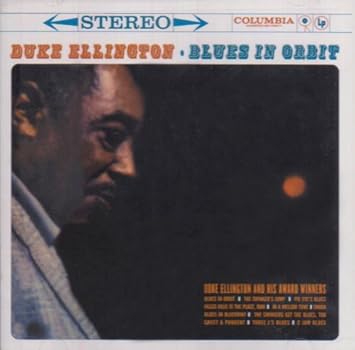
  • WOW! Klipsch Heresy I! Yes, after properly dialing in the subwoofer (which took a while; see below), it was that good! Placed high, I got life-like images that have excellent presence and definition. Duke Ellington's Blues in Orbit was just riveting from start to finish. As the Heresy's were not placed so far apart, soundstage was airy, but deeper than wide, with superb hall sound. The midrange had that alnico purity. This now was an unusual 4-way, with 12" woofers, but an 8" subwoofer. Given the 12" woofer, there was good heft to the sound but adding the sub definitely rolled out the low bass and provided a solid foundation for the full orchestra, mandatory in my opinion for true enjoyment of large orchestral works. The LPs I wrote about in my last article all sounded wonderful: the Klemperer Bruckner 4th probing and grand; the Barbirolli Finlandia fiercely exciting. After playing these familiar LPs for system setup I went on to enjoy many more. I listened to all Rachmaninov Symphony No.1 and No. 2 (LSO/Previn, EMI). Such glorious music that unfortunately don't often get programmed. Bruckner Symphony No. 8 (RCO/Haitink, his second, Philips), grand and what an adagio! etc, you get the idea how immersed I was. Sensitivity While the 300B amp was excellent for the job and never clipped, and while orchestral recordings were beautiful, when I played Led Zeppelin II I had the inkling that even more power would be beneficial. I'd prefer my Wavac 811 amp, but was not about to roll it out. vs My Main Rig Again, a larger room contributes to the feeling of scale and ease, which made the experience in some ways even greater than through my main rig. However, in terms of bass, even the augmented 12" here (the sub only goes down to 38 Hz) cannot quite achieve the awesome deep bass power of the 15" in my main rig.
  • Pioneer SW-8 Subwoofer This is a remarkable achievement. For such a low price, it has all the features necessary. Most importantly, it is very musical, with tight, tuneful bass. Adding a sub is basically a trial and error process, and the use of familiar recordings helps. As is my wont, and as the Heresy I doesn't go very low, I crossed over high, at roughly 2 o'clock on the dial (40Hz-150Hz), estimated to be around 110-120 Hz. As for volume, I initially dialled in too little (9 o'clock), but then I played the Led Zeppelin II and came to realize immediately that I needed more - a lot more, ending up at 1 o'clock. This is only an 8" sub after all. During loud and complex passages, sometimes it got just a little unruly, but I never heard the dreaded overhang, not to say mushing out. Pioneer now has a larger SW-10, and would I love to hear it!
  • Nagra PL-P My hifi agenda has a way of rolling itself out, like this current spur of the moment effort. I am so glad to re-discover and re-confirm all the considerable virtues of the Nagra PL-P (see supplied links top of page). It is really amazing that Nagra can pack a truly full-featured preamp in such a small enclosure (even much bigger ones usually don't have a mute button, not to mention a mono button). One ingenious feature is that the dual input level can also be operated in tandem. That is how I usually use it, but in this particular setup I needed a little more on the left side to center the image, so they acted as a balance control. Even more useful were the meters. On one record, I thought the amp was clipping all the time. I went to check and discovered the meters were in the red. I turned down the input level and the overload went away.

Iteration II, The Miracle Continues!

Last night was my last alone, so I had to restore the living room to what it was. More or less. I liked what I have been hearing for the past two days so much that I decided to leave the system in the living room by rearranging the front wall countertop. I moved out the CRT TV, which was not needed. and slotted the Heresy's in, slightly toed in. Out came my Linn system and in went the tubed electronics. Voila!

But, how's the sound, now that the Heresy's are close to the front wall instead of in-room, and much wider apart?

Magnificent! Overall, the sound is a bit smoother, fuller and warmer, and it almost makes the Elekit 300B amp sound sweet. Soundstage is of course wider, but surely not as deep. Images have retained their fleshiness and presence. Most miraculously, the orchestra is fully panned out and there is no center void. Try that wide a distance with lesser loudspeakers! I played the Bruckner and Elgar again. Utter magnificence!

In both iterations, the Heresy sounded stunningly beautiful with classical music. This is in dire contrast to what Art Dudley proclaimed in Stereophile (for Heresy III). Well, none of them have done what I have done, by raising the loudspeakers considerably and mating them with a subwoofer - that is what made ALL the difference in the world, turning a good loudspeaker into a GREAT one.

Although I will not often listen to these (it is the LR after all, and the master bedroom is already mine), I know I shall grab every chance available to listen to this system - it is that good.

On my Equipment list (right sidebar) this will now appear as Reference System IV.

04 April, 2016

Walker Proscenium, Goldmund, Jan Allearts, Versa Dynamics, Stanton, Nagra and more

HeloĆ­sa Eneida Menezes Paes Pinto, the girl from Ipanema. See below for more. For all pics, click to enlarge.


Letter from NYC (47) 2016 (3): Land of Esoterica, Men from NY, Girl from Ipanema
Talk Vinyl: Goldmund, Versa Dynamics, Walker Proscenium
Talk Vinyl: Shindo and Nagra vs Lamm and Jadis

The sophistication of New York is astonishing. Being a hotbed for music of all genres must have been related to the flowering of audio as hobby. I was just on the phone with Victor of vkmusic, Vancouver based North American distributor for niche market Elekit and Sparkler, and he said a lot of his sales are to NYC.

Here we are focusing on the underworld of man caves, where nearly forgotten treasures are brought back to life. Of course, you have to know the right (meaning crazy) people, and I count it my luck to have a friend like Andy L.


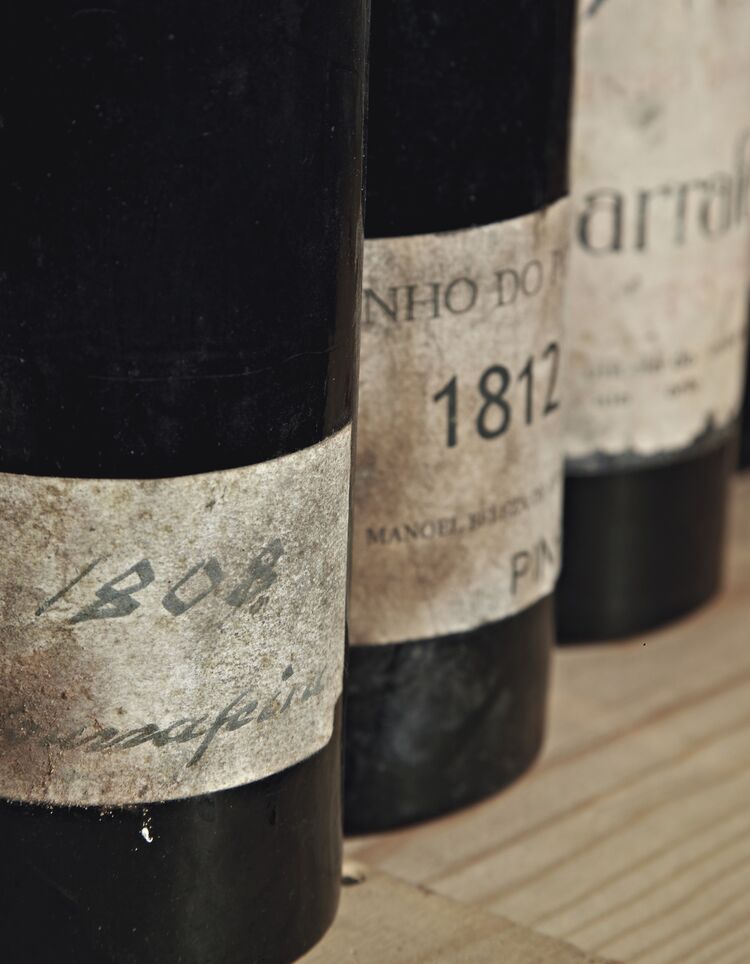
Poor me only knows the 1812 Overture, but R knows about and collects Napoleonic-era Port! Pic from Chistie's.

Lady and the Tramp I
Back to R, sort of Andy's protege, whom we met two posts ago. I actually had heard his system one year ago, but it now sounds immeasurably better. Andy just told me they had completely re-aligned the Wilson Grand Slamm's recently. No wonder, that was a LOT of work!

Together with Andy L and his friend Simon, we met up again a week ago. Simon services dental equipment and together with Andy they fixed his Versa Dynamics 2.0. Damping oil was also added to the Walker Proscenium (older version). I brought along my Shindo Monbrisson (MM/MC) and Nagra PL-P (configured for MC). Brief Notes:
  • Jadis JPS2 (official link) This is classic Jadis and I know it well. My friend PH listens to digital only and he only uses the buffered input (here). There is not much on the net on this per se; the best is a French review with a lot of nice internal pics (translated here; original link in French). However, its phono equipped brethren, the JP80MC, long-time Stereophile Class A, has had more reviews. This Stereophile is worth reading, and I think it described the sound accurately - lush, but potentially sluggish with some material. vs Shindo Monbrisson I was a little surprised that the Shindo (my review here), which uses vintage components, sounded more alert, with more pointed rhythms. Note too that later Jadis' have a more modern sound. While googling, I was surprised to come up with one of my own articles that I had forgotten about - a Jadis Overview! Luckily, after a re-reading, I didn't feel any need to revise...
  • Lamm LP2 This is the original version using the great sounding but troublesome (prone to microphonics and noise) 5842/417A tubes. This tube was famously used by the late Arthur Loesch and emulated by DIY'ers. A variant claiming direct heritage is now manufactured by Tempo Audio (Stereophile review). As for Lamm, I had previously heard its excellent LL2 preamp, so I had high expectations of the LP2. R has the WE417A in them and surprisingly I heard no noise at all. Good as it was, I also did not quite hear the sinuous quality that WE can bring to the music. vs Nagra PL-P Surprisingly, the Nagra used as MC phonoamp was more neutral and even across the frequency spectrum, with more low-level nuances. This was with the AC engaged.
  • Stanton 500/Rockport Sirius II This must be crazy, and only Andy can come up with this kind of combo. A cheap and cheerful vintage cartridge on a reference level turntable! Isn't that Lady and the Tramp? Talking about Rockport, they don't make turntables any more and have basically nil service. I have a friend who waited years for a part to no avail, and who finally gave up. Although a little veiled, the cartridge is eminently musical and plays all kinds of music well. Even R said for long-term listening he prefers it to his others. Note that I have a coming report on another "DJ" evergreen, the Shure SC35X...
  • Versa Dynamics 2.0/Jan Allaerts MC2 This setup somehow did not quite gel with the resident phono amps during last visit. This time, we didn't A/B but it seemed to like the visitors. I can attest that the Jan Allaerts is a very even-handed performer, with nothing calling attention to itself. I don't think this is the kind of cartridge that will reveal its secrets easily, so I'd like to hear more of it.
  • Kondo IO-J/Walker Proscenium (not sure which generation) Here the cartridge arm is also wired with Kondo silver wire. Needless to say, the cartridge is used with its mate, the Kondo KSL-SFz step-up. Here too, the rig seems to prefer the MM section of the Shindo. A very live sound with good attack and presence.
R showed me his unbelievable wine cellar; the collection has great breath and depth. It was the first time I laid eyes on port wine from the Napoleonic era (when there was no sound reproduction)! He then cooked us a nice dinner, washed down with very nice wines. No, we did not get to taste the port...

Andy's downstair setup. Pic is from last year. Setup has much changed. See text.

Lady and the Tramp II
Remember before my last visit (last year) to Andy he told me he had a surprise for us, which turned out to be a Goldmund Reference turntable (reported here)? Well, I just visited him a few days ago and was surprised again, this time without prior announcement!

I walked in and was shocked to discover yet another Walker Proscenium (not sure which older version), not something the man would usually identity with. At the crazy price, there cannot be too many Walker's around, and I have seen two within the same week!

Now, what is its mate? Gentlemen, Lady and the Tramp, episode II! Another cheap and cheerful vintage cartridge, the Stanton 380! A new preamp too, the Conrad-Johnson Premier 2. Amps are still the Canary 300B mono blocks. The horn system has changed much. While the Altec A5 cabinet and 515 driver remains, the midrange and tweeter horns have changed to JBL. Sound of the horn has changed much for the better, now smooth and eminently listenable. Andy has deliberately set up the LR system for listenability, to make even bad records playable, reserving classical playback for upstairs.


Girl from Ipanema We spent a whole morning listening to old records, including some mono's, and everything was pleasurable. But two records impressed the heck out of me.

Everyone has heard the classic Getz/Gilberto album, the epitome of Bossa Nova. In this setup, against a perfectly paced rhythm (most systems are too insistent), I heard nuances in Astrud Gilberto's voice that I have never noticed before, as if she were whispering, murmuring, purring and puffing to me. Engaging stuff! After the languid moment, the duel between Ben Webster and Don Byas popped me out of my seat. Outstanding playing! We finished with just one classical piece, the Elgar cello concerto (Tortelier/Boult/LPO; a classic Bishop/Parker recording; EMI ASD). The frequency extremes were rolled off but it still sounded reasonably good. Mission accomplished for a system that can play even bad records. Andy is quite satisfied with the Walker/Stanton combo.

But do you know the story behind the song? It is an entertaining read, as it involves a real persona (here and here). I only just discovered it during some googling. This is one of the reasons why I write - I almost always learn something while researching what interests me. Don't you think that is better than being fed with jokes, pics and links on What's App that make you have second thoughts about your friends?

Andy's Upstair Systems After two hours (!) we broke for a simple lunch of dumplings, washed down with some wine, of course. Then we ascended the stairs to the main cave for some classicals. The main setup hasn't changed much since a long time ago (reported in detail here), except for turntable rotation. Menu du jour:

TT1 - Goldmund Studio with Monster Cable cartridge
TT2 - EMT 930 with EMT cartridge
TT3 - Goldmund Reference with Ortofon 2M Black
Phonostage 1 - Conrad-Johnson Premier 15, Nagatron Z Coupler X'former (for Goldmund Studio)
Phonostage 2 - Audio Research SP-10 (for EMT and Goldmund Reference)
Preamp - Audio Research Reference II Mk I.
Amp for Tweeter/Midrange column - VTL MB-450 monoblocks (8 x 6550 each)
Amp for Bass column - McIntosh MC-2500 (for bass column)
Loudspeakers - Infinity IRS Beta
We played the same Elgar LP, and sound was very good all around. All three turntable setups sounded different, but I did not spend enough time to accurately nail the characters of each. EMT is EMT is EMT, always enjoyable but not the last word in anything. I have heard the Goldmund Reference several times before; with the 2M Black (not quite run in), sound was detailed and more brightly lit, but without the subtle nuances a good MC can give (and without MC peak either), nor the emotive broader stroke of an MM. This occasion also marked my first encounter with the Goldmund Studio. This is an unusual beast, a direct-drive on a suspended chassis!!!  Andy says it has a very special sound, and Roy Gregory seems to think so too (in his survey of new direct-drives).

I can spend whole days at Andy's. Not a boring moment!

Note on Versa Dynamics In researching I chanced upon some of Andy's postings on Versa Dynamics in Vinyl Engine. I copied them below:

"..I use Versa Dynamics Model 1.2 and Model 2.0 on regular basis. I love their performance so much in my system that I would never think about parting with them.  

They were designed and marketed by John Bicht in the 80s. In fact, John still provides parts, manuals, and repair services for these units through his Versalab website. 

Model 2 came out first. It has a air-bearing platter with vacuum hold-down and a straight-line tracking air-bearing arm. Gordon Holt of Stereophile gave it a great review in 1987. Then followed Model 1 with an air-bearing arm and a vacuum platter with a very unusual bearing arrangement. The styling was completely different from the Model 2 which was quite a bit more expensive than the Model 1. Both models went through some similar modifications during their rather short life spans on the market.  

Both turntables come with separate controller boxes and huge air supply systems which need to be placed outside of the listening room. Compressor for the Model 1 is considerably quieter than that for the Model 2, but still not quiet enough to be placed nearby.

Both models use stepper motors and are belt driven. Both use a 4-spring suspension system. Major difference is that Model 1 doesn't have a air-
bearing platter. The arms are essentially the same in design and performance, although the one on Model 1 looks like a simplified version of the one on Model 2..."

tonearm pics: L, Model One; R, Model 2

"...Here are pictures of the two Versa Dynamics Arms. You can readily see the difference. Model 1 looks like a simplified version of Model 2 which preceded Model 1. There is a difference in the recommended air pressure level for each model. They sound different since the two tables are substantially different in terms of platter, plinth and base design. However, the major difference between the two is that Model 2 has a levitated platter. 

Although there was a eddie current damping device for the tone arm on Gordon Holt's review unit, there isn't one on mine. When asked, John Bicht said they decided not to implement it on the final product for fear of causing interference since it was so close to the cartridge. I'd love to experiment with one, but I have no idea how it's done. Maybe some knowledgeable members can shed some light on this..."

03 January, 2014

Happy New Year - 2013 in Review

Happy New Year 2014 - 2013 in Review

As I grow older, and hopefully wiser, I have come to appreciate why facets of time never ceased to intrigue countless philosophers and writers. How did 2013 pass? My perception varies even as I start to think about it. Personally 2013 was a very full year; audio-wise much less so. Briefly:

Most Notable Event of the Year:
  • My acquisition of the Pioneer/TAD TD-3401. After the preliminary report I had the opportunity to listen to it a little more on two occasions. Every time I marveled at the presence, speed and power they deliver. They simply cannot be ignored! My jazz-fanatic friend Andrew came by one day and was smitten by it.
Best Buy
  • Micromega MyDAC This small DAC delivers truly high-end sound. No wonder it received so many accolades. I'd also watch out for the rest of the My components. I think I am going to buy too the phonoamp MyGroov. Watch this space.
  • Dayton Audio B652 Not perfect, but quite amazing for the price.Its vitality shames many high-end products.
  • Nagra BPS and iFi iPhono For the price, the exceptionally quiet iPhono is surprisingly versatile, and deserves a Best Buy rating in an instant. The much more expensive Nagra BPS does not appear so at first glance, but its exceptional sound and built quality more than qualifies.
Acknowledgement: The year began happily: it was a sunny day and I enjoyed a long brunch with friends. I'd like to thank Andrew and Jane for hosting the event and, more so, for the attention and consideration they have so generously given me over the past year.

16 October, 2013

Review: iFi iPhono, Nagra BPS


Review: iFi iPhono, Nagra BPS

Talk Vinyl: iFi iPhono vs Musical Surroundings Phonomena II (also Nagra BPS, Audio Technica AT-PEQ3, AQVOX 2CI and Fosgate Signature)
Talk Vinyl: Naim Nait I vs Jolida JD-9 vs MFA Magus B vs iFi iPhono

ifi Audio Micro iPhono MM/MC PhonostagePart I: iPhono
Prologue When I first wrote about the iFi iPhono (here) almost a year ago, I could not find any reviews. Subsequently, a few appeared, and here are some links:

Reviews: AnalogPlanet; EnjoytheMusic; MonoandStereo
Interview: Designer Thorsten Loesch Interview in MonoandStereo

First, A Long Digression å„½äŗ‹å¤šęŠ˜ē£Ø
In case you wonder why the real review of the iPhono took so long, it was because it was to be months before I actually heard it in my own system! It went through several guest systems before joining mine. I would like to spend a little time describing the journey as some of the results add to my understanding of this unit, and I'd also detour a little to write up briefly on some other phonoamps I have encountered. In case you cannot wait, you can jump to the real review below. I'll give you the conclusion on iPhono first: the iPhono is a wonderful phonoamp, but it may take time and care to reveal its considerable strengths.

Detour: First Impression of iPhono (by others) My unit finally arrived about one month later. As I usually do not have time to spin vinyl these days, and as my usual abode has no vinyl set-up, I asked friend A (vinyl and tube fanatic who uses Quad ESL-57) to pick it up for me and test it out. After a short try he told me the sound was not bad but a little too thin for his taste and I completely understood because I know he likes vintage equipment and a fatter sound. Then I asked him to pass it to friend B (vinyl and jazz fanatic who uses Mark Levinson to drive big MBL speakers) who likes his music big and upfront.The iPhono did nothing for him in this system either. So far, things did not look too good...

Detour: My Second Impression of iPhono (first was at the dealer) actually took place on foreign turf! Friend B decided to renovate his apartment. He had to move temporarily into a smaller place where he listened to a pair of Quad ESL-57 placed side-by-side with reinforcement by corner placement (see pic). This actually sounds a lot better (fuller bass) than many "normally" placed ones! The little Nait I amplifier did a good job driving them. On the day I went to pick up my iPhono we actually did a small session of phonoamp shootout (MM only). The turntable used was a Linn LP12 (Valhalla) fitted with a Decca arm and Decca Maroon cartridge. Loading was at the standard 47k, so some may argue about that.

The result was not surprising. The iPhono easily bettered the Nait. The ultra high-gain hybrid Jolida JD-9 (a unit bought in Shanghai) was more overtly exciting than the iPhono but less refined. The owner had also borrowed my MFA Magus B, and on this occasion it was used as a phonoamp via its Tape Out. The MFA was decidedly the best, and that did not surprise me as its phono section is amongst the best I have heard, very quiet for a tubed unit as well. 

Mahler Symphonie 3 Jascha Horenstein Mahler Symphonie 3 - Norma Procter, Jascha HorensteinReview: iFi iPhono

Shortly after I reclaimed my unit I took it to New York (thanks to its universal PS, one reason I bought it) where I finally had the chance to really test it out during the nearly 3-month stay. I knew that it was probably not run-in, so it was one of the first things I plugged in! In NYC I spin vinyl almost exclusively. Equipment used this round:

Analog 1: Linn LP-12 Lingo/Ittok LV-II/Airtight PC-1
Analog 2: Clearaudio Concept/Koetsu Black
Analog 3 (mono): Thorens TD-309/Denon DL-102
Other Phonoamps used: Fosgate Signature (my experience here); AQVOX 2CI MkII used only for MC (here); Musical Surroundings Phonomena II (here); Nagra BPS; Audio Technica AT-PEQ3 (only MM)
Digital: Ensemble
Preamp: Manley Neo-Classic 300B
Loudspeaker/Amp 1: Magnepan MG 1.7 (used with Sunfire 300 amp)
Loudspeaker/Amp 2:-YL Acoustics 4-way Horn Speakers (used with Wavac MD-811 SET amp)

My previous phonoamp group review covers some of the units on hand for comparison, so it is relevant for this article. I dare you to find a more detailed or useful iPhono review! :-) I must have played more than 100 LPs during my stay, but I will single out 2 of them. The Unicorn Horenstein Mahler 3rd (in the US also on noisier Nonesuch) is a magnificent recording of a magnificent performance, with a huge orchestra and more than one chorus! Note that this famous recording is now on HDTT reel-to-reel tape!The Miles Davis Tutu is of course classic and one of my favorites, still Marcus Miller's best effort. There are many passages of complex instrumental interplay that tests the phonoamp's savvy. Another reason I use this LP is because I have the CD and I use them to make sure both the digital and analog rigs are balanced. Vinyl enthusiasts should do this often; too often they tweak so much that the sound is way off.


Observations I am not going to give a blow-by-blow description of how various LPs sound with the iPhono. It is not necessary, because (thankfully for all the right reasons) its sound really does not stand out. But over the few months I made some observations that I think are interesting:

  • Note 1: My impressions are almost exclusively based on the MC setting (I do not listen to MM much, though the mono Denon DL-102 uses the MM setting). For MM, usually I'd prefer tubed amplification.
  • Note 2: I got so caught up by my listening that I did not spend any time evaluating the equalization curves (though I have many mono LPs). After all I do believe the basic aspects of the phonoamp are much more important.
  • Run-in I suspect the unit needs quite a bit of run-in. I am sure it had a lot less than 20-30 hours on it when I got it back. Initially the sound was a little uninspiring, but I just played on. Read on.
  • Vibrations I have said before that my racks in NYC leave something to be desired (placed on stone slabs on thick carpeted wood floor). Certainly, it made my preamp prone to microphonics. I found out the light and slim iPhono was quite susceptible to vibrations! I could hear a trace of smearing much like microphonics in nature. Putting two Vibrapods (here) underneath immediately cleaned up the sound and gave the impression of more solidity. I also noted that the susceptibility to vibration decreased with time and run-in; I wonder why? I also tried Tony's trick of putting some books on top but in my setting that did not reap extra benefits, so for the entire duration in NYC only the Vibrapods were used.
  • Background Noise (lack of) You should note that among the battery of phonoamps here iFi is one of the few that fearlessly publish various specifications (AQVOX and Nagra do; Fosgate and Phonomena don't). One listen and you know why: one is immediately impressed by the extremely low noise floor (Signal to Noise Ratio 82dB). This is black background unusual for a budget phonoamp, indeed unusual for any phonoamp! In comparison, it is as quiet as (or quieter than) the more expensive AQVOX and battery operated Nagra (no mean feat!) and certainly quieter than the (pretty quiet) Phonomena II and Fosgate Signature (which is excellent for a tubed unit). This low level of noise, especially in MC, is quite an accomplishment. Now, that brings up the next question/observation.
  • Dynamics, or Is there Life in Low Noise? This is a little hard to describe. Experienced listeners know that with lowered noise and darkened background often comes a degree of "reticence" in the music making, as if the baby has been thrown out with the bathwater. It is often debated whether the "diminished dynamics" is just erroneous human perception. In such cases, often the music only comes to life when you crank up the volume. Now, personally, especially as a tube and vinyl person, the debates aside, I am not obsessed by noise level but I do think any component/system that cannot be enjoyed at a low volume, that does not have good microdynamics, is bad, period. Not so the iPhono - in my reference systems it performs just as well (and sounds just as as well and quiet) at all volume settings, with all kinds of music (unlike the Phonomena II). Its dynamics are properly scaled. In the grand opening of the Mahler, the iPhono puts you in a mid-hall perspective. In contrast, the Phonomena II is upfront. While the latter may have more overtly exciting bass and slam, overall its presentation is falsely highlighted dynamically. As the movement goes on, with the iPhono one is aware of natural progression, of unfolding drama, whereas the Phonomena II increasingly seemed to be a pastiche of highlights. I do think the composure demonstrated by the iPhono means that while it will work best in a balanced system, in less ideal circumstances I rather think it should work better in an over-energized system than one more sedate. The corollary is that the iPhono, unlike much modern hifi, does not set out to "impress" - it rather demands you to listen carefully (and you can do that at low volume!)
  • Hall Sound Experienced listeners listen for the hall sound, or that of the recording venue. In digital, a good example of the faithful rendering of hall sound would be the 16-bit TDA1541 chip; nothing else since has really come close (all you have to do is compare a 16-bit Revox B226 with a later delta-sigma Revox C221 and you will know what I mean, though the latter is a very fine machine otherwise). The iPhono is exceptional in this regard. The Mahler just heaved and sighed, bathed in the hall acoustics. I am not surprised, given that designer Thorsten Loesch is a fan of the 16-bit chip! In contrast, the upfront Phonomena II gave no clues to the hall, a serious failing to my ears.
  • Rhythm and Pace The iPhono is excellent in this regard. The flow of music is always natural, yet not without a spring in the step. Take Tutu as an example, the various instruments were not unduly highlighted but the delicate interplay came over as part of a whole fabric. The Phonomena II on the other hand seemed to be more visceral initially, but soon I got worn down by a certain uneasiness - the music just did not flow as the phonoamp imposes its own insistent quality.
  • Gain The gain of the iPhono is pretty standard. Since my favorites are big orchestral music I use the +6 db setting. At high volume, I do find it a little more dynamic and not much noisier. The gain is sufficient for my Koetsu Black, Air Tight PC-1 and Denon DL-304.
  • vs Fosgate Signature In some ways the iPhono breathes in a way not unlike the Fosgate. The tubed unit has more bloom (as it should) and dynamics, though comparison gives credit to the iPhono for running it close in its fine grain, details and smoothness, an achievement for a solid-state unit.
  • vs AQVOX 2CI MkII The AQVOX is quite a different beast in its design. Used in balanced mode it has higher gain (though reduced by my use of an adaptor I am sure). The AQVOX is more overtly exciting and dynamic than the iPhono, though the latter runs it close in details and S/N ratio. I love the AQVOX and it shall remain one of my references, but comparison certainly made me respect the iPhono!
  • vs Audio Technica AT-PEQ3 (only MM) Michael Fremer (Stereophile, Vol. 32 No.12 December 2009) had this to say abount the AT: "How about a sweet sounding starter phono preamp that lists for $119...? It's the Audio-Technica AT-PEQ3, a little plug'n'play box with a wall-wart power supply that's quiet, sounds clean and surprisingly dynamic, and get's the job done remarkably well.". Using the mono DL-102 I did compare this against the MM section of the iPhono and Phonomena II. The AT-PEQ3 is more like the iPhono in reduction, a unit that lets the music flow naturally, unlike the upfront and unnatural Phonomena II. Of course, it has appreciably less details and dynamics. I also briefly added a step-up transformer for MC use - not bad! A fine unit at the price!
  • vs Musical Surrounding Phonomena II If you have read this far you know that I do not much like the Phonomena II. Yes, I much prefer the iPhono! To me, all the praise heaped upon the Phonomena II just shows how wrong hifi has become.
Conclusions

  • The iPhono is unusually fine-grained and quiet (not just at its price, but comparable to most products regardless of price). It makes the music flow naturally, and has excellent rendition of hall sound. It doesn't play to the gallery, instead rewards in the long term.
  • The iPhono compares well to more expensive phonostages (even to the Nagra BPS reviewed below), and so is surely a BEST BUY. I think mid-priced phonoamps, not to mention budget ones, will have a hard time going up against the iPhono.
  • In the company of all the phonoamps I have,  for three months I listened mostly to the iPhono (save for comparison purposes); that should tell you more than this review how satisfying the iPhono is!
  • Take time to run-in and check for isolation.

page_BPSPart II: Nagra BPS
I have always been a fan of Nagra and have owned its tubed full-function preamp, the wonderful Nagra PL-P (my reviews here and here) for a number of years, so I am quite familiar with its phono sound. Recently I acquired a BPS and took it to NYC, where I tested it by the side of the iPhono.

Whereas the phono section of the PL-P preamp and the newer VPS phonoamp are tube-based units, the BPS is a solid-state device. Although tube-based, the VPS uses solid-state devices for its last 16 db of gain (unlike the PL-P, which I think is all-tube). Like its more expensive brothers, the BPS employs transformers (wound in-house) for MC step-up function. Like the PL-P, the BPS is battery-operated, though in a simpler manner by using a simpler 9V cell. Thus, you can infer that the BPS is no cheap compromise, as borne out by its sound.

The BPS (official literature) has been well reviewed (using multiple high-end cartridges) by TAS and Stereophile. 6moons has a review too but it is limited to use of the Denon DL-103.

After spending so much time writing on the iPhono, I am going to be a lot briefer when it comes to the BPS: simplement fantastique!

Observations
  • Much of what I wrote about the PL-P (links above) can be applied to the BPS! Indeed, comparing the BPS to the PL-P (from memory, though I did have the PL-P on hand but did not fire it up) is not unlike comparing the iPhono to the Fosgate (see above).
  • The battery-operated BPS is very quiet. But the iPhono is subjectively equally (perhaps even more) so. In this regard, the achievement of the iPhono is outstanding. If blind-folded and asked to tell which is battery operated, I just may say iPhono!
  • The BPS is fast and  has a leading edge that is just right in speed and sharpness. Its superb microdynamics make music easily come alive. In these respects I do prefer it to the much cheaper iPhono. Here, for the same reasons that I detailed in the section on background noise in the preceding iPhono review, I should say I am not usually a fan of batter-powered equipment, but the BPS does not suffer any of the shortcomings of battery operation. In terms of macrodynamics, it is certainly not wanting. In some regards, sonically it resembles AQVOX the most.
  • Like the iPhono, if you don't use care in cabling tonally the BPS may be a wee tad towards the lean side, but still far from lean (think Phonomena II). It has just a tad more bloom than the iPhono. In both my systems, it rendered everything faithfully and, importantly, delightfully. I am not sure what the 6moons reviewer was talking about when he mentions the mid-bass/bass. My opinions are closer to the TAS and Stereophile.
Conclusion
  • The BPS, though not cheap, is actually a Best Buy!  It is now one of my references.

24 April, 2011

My Corner: An All-Swiss Affair

click on all pics to enlarge

Letter from NYC 2011 (16): Setting Up (II), An All-Swiss Affair!
My Corner: My Listening Setups in NYC (II) - First! And Foremost?
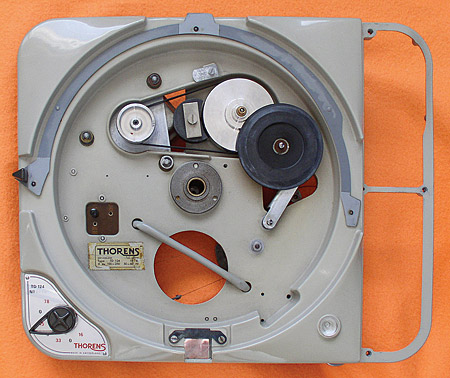
Talk Vinyl - The Incredible Thorens TD-124


After telling you about my humble Casual Listening Station, let me make a leap to tell you about the early setup stage of my Reference Setup. Allow me to postpone till later my Day-to-Day Setups (being middle ones, they are by nature more insecure). Deciding what goes into the Reference Setup is more headache than you think. The intention is a Reference station. I applied the following criteria and built around them:

  • A permanent and convenient setup for my cherished Western Electric and Langevin gears, able to partner both horns and panels.
  • As the WE and Langevin preamps each has only 1 input and no phono, to add another full function preamp (Nagra PL-P for now) for easy switching between analogue and digital sources.
  • To partner with the best analogue and digital source I have. Perhaps a phonoamp later.
Analogue: Thorens TD-124 MkI/SME3009 S2 imp/Denon DL-304
Digital: Ensemble dirondo/dichrono hi-dac (Sondoro series)
Preamps: WE 106; Langevin; Nagra PL-P
Amp: WE 124 (silver)
Loudspeakers: YL horns (occasionally Magnepan 1.7)

WE 106 and WE 124
The heart of my system, such utter transparency and refinement! This is in the initial stage of setup, and you shall hear about these later.

Nagra PL-P
Until I setup further the WE and Langevin monsters, I shall be using the wounderful Nagra PL-P for both digital and vinyl playback.

Ensemble dirondo/dichrono hi-dac
I have always admired Ensemble products for their refined sound. In HK, quite a few people I know are still using their older (non-Sondoro) gears. You shall find diverse opinion on this combo on the internet. For me, it takes in-depth listening to reveal the beauty of this set. Delivering exceptional details that never call attention to themselves, they really don't stand out immediately. Partnered with the wrong gears they could even sound just a little less full in body than some, but when done right show a fleshy presence which together with great rhythmic sophistication and dynamic exactitude deliver the illusion of a live event. Talking about dynamic accuracy, let us examine the last track, Stimela (the coal train) of this much abused Hugh Masekela album, Hope. In the opening, the drummer's insistent bangs mimick the sound of a train. Most digital playbacks would homogenize the multiple hits and give you only a sense of a small crescendo. Not so the Ensemble combo, which uncannily deliver a sense of gradual, and powerful, increase in sound. Not only that, about a third of the way, one of the hits is actually less forceful than what had gone before; this is not well rendered usually, but clear as day with the Ensemble combo.

Is the Ensemble combo the best I have? Perhaps in some tonal area my Theta/SFD-2 combo can give them a run for the money, but there is little question that the Ensemble set belong with the best (and better most for musicality). I use their own Gigaflux BNC cable (which I happen to have) and the DAC uses an Ensemble power cord (I don't have another one for the transport).

The Ensemble has some upsampling options which I shall perhaps cover later, but right now I am using the 48kHz setting, so the CDs are upsampled a little.

Thorens TD-124 (MKI), Survival of the Best
My friend Mark gave me this turntable with an SME armboard a couple of years ago, and I never got around to it. It just happened this time my friend princetonsound upgraded his TD-124 plinth and gave me the old one. It is not very pretty, but the plywood looks to be of good quality, prompting me to not waste more time and set it up this time.

My friend the vinyl guru AL also has the same turntable in his arsensal, so I called on him to help me. Initially the platter turned only reluctantly, but after cleaning the mechanical joints by turning on and off a few times and running it for a while things smoothed out. Not bad for an ancient machine that had not been run for God knows how many years! AL showed me around the TT, so to speak, and many thanks!

The next day I removed the SME 3009 S2 improved arm, with its Denon DL-304, from my workhorse Thorens TD-125 and installed it on the armboard. Although the cutout seems wrong I was able to do a satisfactory 2-point alignment. Lacking a proper hex-wrench the arm is improperly swung outward, but aside from not being able to cue up at the end groove, that doesn't affect the sound. I could not only adjust the VTA by placing 2 records and an extra mat on top. I had trouble plugging in the SME cable and had to lower the turntable by doing without the "de-coupling" rubber sleeves over the fixing screws. Some may prefer to have the turntable directly on the wood plinth anyway, said AL.

After leveling the TT and adjusting the speed using only the external fine adjustment (when I have time I may fiddle with the coarse adjustment inside), I put on my first LP. My jaws popped out. Why, my! Despite the light plinth, surely not ideal, EVERYTHING IS THERE!

Mind you, I am coming off not only listening to my TTs here in the NYC, but also to my Technics SP-10 and Garrad 301 in HK, and I was still grabbed by the balls! A big soundstage, crispy presence, airy and smooth treble AND, full and taut bass! The last I stress, because it has always been said the Thorens is a little light in the bass (compared to the Garrad); well, not so here! And I heard no undue rumble. I don't need to A/B to tell you the sound surpasses my other TTs and I would hedge it may even have an edge on the Garrad 301. Well, I have the exact same TT also in HK; it would be time to get that running and do the comparison. My Vinyl Golden Age!

Talking about the friendly rivalry of Garrad vs Thorens, Art Dudley of Stereophile had recently written about his just acquired Garrad 301, though he has yet to make comparisons with his Thorens, which he had written about and worked on extensively previously (Listening 40, 41 and for the restoration Listening 65). His articles are valuable in providing info on many aftermarket services. I look forward to his further comments.

Addendum
If you're interested in this wonderful Thorens turntable, visit the following indispensible sites:

Soundfountain's TD-124 page
(they have many wonderful pages on various vintage things)
analogue-classics TD-124 page (wonderful TT site)

(To be continued later)