Showing posts with label Brand-PS Audio. Show all posts

02 June, 2011

Group Review: 8 Phonoamps (ARC, AQVOX, PS Audio, Musical Surroundings, YS Audio, Linn, Elekit)

Group Review: 8 Phonoamps
ARC PH-1 and SP-9, AQVOX 2CI mkII, PS Audio GCPH, Musical Surroundings Phonomena II, YS Audio Solo 2, Linn Kairn, Elekit TU-875
Vinyl Talk: Phono pre-preamplifiers
Vinyl Talk: How good are outboard phonoamps?

In this age of the line preamplifier, many people actually prefer outboard phono units. For people like me though, who have held on to vinyl through the birth, middle age and old age of CD, full-function preamplifiers with built-in phono stages are still de rigeur.

It can be said many of my reference (tube) preamplifiers (Nagra PL-P, EAR 912, Verdier Control B, Shindo Monbrison, not to mention older units like ARC SP-10/11, Melos 222, Counterpoint SA-3000 nor truly classics like Marantz 7C) have built-in phono sections of exemplary quality that cannot easily be outclassed by even expensive outboard units. That said, occasionally I do play with some, and recently I tried or (re-) tested quite a few while setting up my various setups in NYC.

For the record, I prefer at least some tubes in the phono section (even with my efficient 100 db horns). I used mainly 3 turntables with my SET setup (see also sidebar) and this rambling review is in no particular order:

--Thorens TD-124/SME 3009 S2 imp/Denon DL-304
--Clearaudio Concept/Koetsu Black
--Audio Technica AT-PL120/Denon DL-102 (mono)
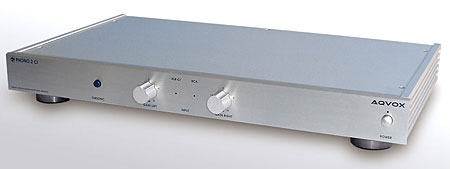
AQVOX 2CI MkII
This one intrigued me the most. Ever since I read Fremer's review in Stereophile I have wanted one, not because of Fremer, but because of the design. Not because of its fully balanced nature, but because of its innovation. My experience with this phonoamp tuned out to be exactly in line with the very thorough report in Stereophile, as well as reviews in tnt-audio and 6moonspositive feedback and particularly from 10 AudioSalute!

The seller of my unit had balanced tonearm cables whereas I do not, and was not about to re-terminate. So I started with the RCA inputs. It performed well but not quite distinctively. So I moved onto the XLR input. Not about to buy their own adapters, I decided to use my cheap Chinese XLR to RCA adapters. I knew this would not work as is, and certainly no sound was obtained by plugging them in directly.

I opened up the adaptors and saw that pin 3 is tied to pin 1, and that is the connection you have to break (pin 1 should not be used). Some quick de-soldering action later, voila! And what great sound! One play of Kondrashin's Philips LP of Shostakovich Symphony No. 15 and I decided it is going to be a long-term relationship. If you know this symphony, you will know that the equipment's main job is to (1) portray accurately the battery of percussion; (2) to convey a certain quality of life ticking away, an enigmatic quality. You may think (1) is not so difficult, and certainly the AQVOX performed miraculously in this aspect. Certainly, I tried the same LP on various phono setups, including tubed ones, and AQVOX's performance remained unrivalled. Even more importantly, it conveyed (2), proving it is not just merely an analytical machine, but a master communicator! A winner!
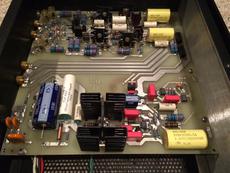
Audio Research PH-1(PH1)
It is interesting to study how ARC makes phono equipment. Indeed ARC played the most important role in keeping tube preamps and tube phono equipment alive during the transistor years. All the older tubed SP series (which they in recent years revived a little) preamps have built-in phono sections (seriously speaking, they are only MM stage) of superb quality. I have owned and am quite familiar with the SP-3, 6, 8, 9, 10 and 11. In HK, until a few years ago I used the SP-11 MkII as my reference (still with me). With my sensitive horns, the lowish phono gain of the SP-11 (higher than the others) was enough even with my MC, the Denon 103. During these years, ARC made the mostly solid-state MCP series of phono pre-preamplifiers to satisfy the requirements of increasingly low output MC cartridges.

In 1989, ARC abandoned the SP series and introduced the LS series linestages. Of course, they needed to make outboard phonoamps to go with these, and the PH series was born with the introduction of the solid-state PH-1. Since I have always had ARC SP preamps around and they have superb phonostages I did not really need to try these out.

When ARC introduced the tubed (actually hybrid) PH-3 I did try it out. The sound was not quite like the phonostages of the SP series: less full bodied even after tube-rolling, a lighter sound. But its Achilles heel was a lack of dynamics. The nominal 54 db gain was a bit over-rated IMHO. I sold it after a while.

Fast forward to now. Recently I got a PH-1 (full info here) in excellent condition, and I was surprised by its performance. At 48 db, the gain was low and I could not use it with my MC's even with my horns. But partnered with step-up transformers the sound was crisp and full, dynamic and lively, in the best of the ARC tradition.

There is an interesting review of PH-1 by Stereophile-Robert Harley. There is also an interesting comparison of PH-1 vs PH-3 in Audiogon. For me, the PH-1 is a keeper, a better phonoamp than the later, popular and rave-reviewed PH-3. For one as dedicated to tubed phonostages as I, that says a lot. YMMV.

Musical Surroundings Phonomena II can be quickly dismissed. Although it has enough gain for my MC cartridges, and loaded with features, I found the sound curiously lacking in finesse. It has good bass and reasonable dynamics but, most annoyingly, strings lacked sheen. I played several Heifetz mono LPs through the Denon DL-102 mono cartridge and the violin sound was so lackluster it was not better than the AT's built-in phono!!) A switch to the ARC PH-1 immediately restored normalcy. So much for all the rave reviews; it turns out the small prints are much more important than the rest of the reviews.

PS Audio GCPH (Stereophile, What HiFi?) fared much better (see also my previous experience). You can frequently find this phonoamp discounted and so it costs just a little more than the Phonomena, but its performance is in another league. There is just more music, and it performed evenhandedly with all set-ups. MM and MC alike. Heifetz? Yes, I recognize the sound, though I still give the edge to the PH-1. For a cheap full-function phonoamp, the GCPH is well worth considering.

YS Audio Solo 2 Phono pre-preamplifier
And now for something different, but what exactly is a pre-pre? Well, if a phono preamp is like foreplay (which is after all something before amplification), a pre-pre must be what happens before, I guess perhaps seduction, or whatever it takes to get to foreplay.

The active phono pre-pre is now a rare bird and no longer fashionable. In this high-noise age, it is no wonder stressed out audiophiles demand low-noise, and for additional gain when using low to ultra-low MC's usually opt for the even older but quieter technology of Step-Up transformers. An additional powered unit and an extra set of cables certainly can be cumbersome. But I have always thought the active pre-preamplifier has a valid reason for existence, as transformers can be colored and bandwidth-limited, and I still own the wonderful Klyne SK-1 as well as the Mark Levinson JC-1DC (one day I hope to acquire a Counterpoint SA-2). For myself, and perhaps I belong to a minority, if gain, noise or tonality are not issues, I prefer the potentially greater dynamics of fully active amplification rather than having a transformer in the signal path, but as always experimentation is the key here.

YS Audio Solo 2 is that rare bird. As a matter of fact, I cannot think of another CURRENTLY produced phono pre-preamplifier!! And it is one with a twist too. It is basically a solid-state device, but with a tube regulator (solid state rectification >> solid state regulator >> 6N3 regulator >> to gain stage)! I got it in HK but took it to NYC, where I proceeded to try it out in august company. Using the Chinese stock tube it proved immediately a winner. I set all my MC/MM full function preamps to MM and connected the Solo 2 with Kimber KCAG. As expected, it immediately proved its superiority over the JFET section of the Elekit TU-875. More importantly, it was not shamed by the step-up transformers inside the Verdier Control B as well as the EAR 912. Noise is acceptable for use with my Tannoy Canterbury HE, Gain is very good and sounds like more than its spec of 20 db. In NYC, it proved quiet enough to use with my 100 db YL horns. I also tube rolled a bit. The WE 396a proved superior, though a little noisier than the stock 6N3. Unfortunately, my Bendix 2C51 on hand proved too noisy in this circuit. But it is amazing the tube regulator has such effect on sound.
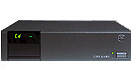
Why not get a free line preamp with your phonoamp?
Outboard phonoamps come in all sizes and prices, but I can tell you one thing: it will take quite an expensive phonoamp to outperform the phono section of (usually older) full-function preamp. And so it makes sense to buy an older full function preamp and just use its phono section via the tape loop. In such case, you would not want a bulky or hot tubed unit, but there are ample choices.

An example is Linn Kairn with Brilliant power supply. Used in MC mode, it has high gain, is quiet enough, and tolerant of loading (works equally well with my Denon DL-304, Koetsu Black and Ortofon MC-5000). Some say it is as good as the Linn Linto. I don't think so, but the performance is certainly very good. For the same price as an outboard phonoamp, you get a full preamp and remote facilities (the preamp ain't bad, but I am a tube man)!

Of course, it would be even better to go tube. Here, you'd want a unit that is not too bulky or hot. I highly recommend the hybrid ARC SP-9's phono section, which offers 46 db of gain. The vinyl replay is pristine, quiet and nuanced, and if I am forced I'd think perhaps even better than the PH-1 . The whole preamp uses only 2 tubes and is only warm to touch. I bet its line section will outperform almost all solid-state preamps in overall strength. Considering its price is only a little more than the PH-1, I think the SP-9 is as good a place to start with tube phono as any. As a matter of fact, the SP-9 is really hard to beat in overall performance, even with much more expensive equipment. It serves as a benchmark for me (see here).

If you're willing to build it yourself, the Elekit TU-875 full-function preamp is a no-brainer. Its MM stage is fully tube, liquid and airy, the MC is more than useable and quiet (though as noted not as good as the YS Audio Solo 2). It is small and simply wonderful as a phono unit, and you get an excellent line section. More on this preamp later.

07 July, 2010

Talk Vinyl: Current NYC setup (keywords Denon DL-304, Koetsu Black, Linn LP12, Thorens TD-125, SME 3009, BAT P5, GCPH)

Talk Vinyl: Current NYC setup

As I was about to write about a new "surprise" purchase, I realized I had not written about the extensive changes my vinyl setups underwent towards the latter part of my last stay in NYC.

Enter the Black. Koetsu vs Denon
The arrival of the Koetsu Black (read this Art Dudley review) induced great changes in my setup. The sheer weight of this cartridge precludes installation on any of my other arms except the Ittok on the Linn LP12/Lingo. Fed into the BAT P5 , the sound was not that far off from the Denon DL-304 used previously. After protracted listening I made the decision of not using the WE 285L transformers and just using the high-gain setting of the P5. The gain offered previously was not quite enough for the Denon, but the Koetsu's slightly higher output and somewhat wilder streak made the difference. Here, I shall repeat that, whenever possible, for step-up my preference goes to active devices rather than transformers. Aside from the gain and energy, the Koetsu is also bolder and more romantic, with a lush treble. The Denon DL-304 is quite neutral I'm sure (more so than the 103), but the black veers off from neutrality by a much smaller factor than I'd have thought.

As much as I was enamored of the Koetsu sound, I also gained even more respect for Denon, the DL-103 having long been a personal favorite. Indeed, it's always valid to ask, upon hearing any Denon, "Why pay more"?

Merry-go-round 1. What, 304 on the 3009?
Displaced by the Koetsu, the Deonon DL-304 went on the Thorens TD-125/SME 3009S2Imp. The cartridge is likely too heavy for the arm, and the "resonant structure" may not be perfect, but I didn't want to install it on the Technics SP-1200. The result on the SME 3009 though was surprisingly good. After the initial promising sound, I concentrated on mating it with phonoamp.

PS Audio GCPH
The neutral DL-304 had always taken to the tubed BAT more than the PS Audio GCPH. Previously, on the Linn LP12/Ittok, I had tried it extensively with the GCPH. With the gain setting maxed, the GCPH had enough gain for the DL-304 but the sound was just that tiny bit etched in the treble. While this brought great brilliance to percussion pieces I missed a little heft down below. At that time, the WE285L transformer fed into the BAT P5 outclassed the GCPH decidedly.

On the SME 3009 the DL-304 sounded lighter still. As I ran several TTs at once and with the BAT P5 now bonded to the Koetsu, I decided to try out the WE285L transformer in conjunction with the lower gain setting of the GCPH. Bingo, that did it, with added heft and elimination of the slight whiteness. Comparison with the Koetsu/BAT setup was close and I was immensely satisfied.

Is it the 3009 or the TD-125?
Assuming the TD-125 is similar in sound to the LP-12, the 304 on the 3009 sounded remarkably different from the Ittok. To be expected was a lighter and less dynamic sound, with the bottom lighter in heft and slam. However, it was also immediately apparent that there was a delicacy to the treble that was quite a bit more refined than the LP12/Ittok. Rhythm and pace was superior on the TD-125/3009 too: while pop material was obviously less heavy-footed, it was in certain classical material that the difference was most felt; the phrasings on violin recordings instantly felt more sinewy, the flow more organic. I'd venture to say, if you are a violin aficionado, there would be little reason to own the Linn combo.

As the TTs are more similar than dissimilar, I personally felt the arm to be more responsible for the obvious difference in sound. But is that completely true? Somehow, as in previous observations, I have a nagging suspicion that the TD-125 is also a superior turntable to the LP-12. What is inescapable is that the Linn is over-rated.

Merry-go-round 2. A sliver of Silver
Last, I installed the Benz Micro Silver on my bedroom system's Technics SP-1200. I was very pleased that the sound reached new heights. As a matter of fact, they proved so synergistic into the Linn Majik I integrated amp and Linn Kan I speakers that I may have to up my opinion on this particular cartridge by a notch. It has refinement as well as tremendous rhythm and pace that makes me think about how to further improve the main gig a little in this regard.

05 April, 2010

HiFi Letter from NYC 2010 (2): Magnepan MMG growing-up pains

HiFi Letter from New York 2010 (2): Magnepan MMG growing-up pains

This time I recovered from jetlag surprisingly quickly, and had little use of the second system after a few days. I concentrated on my main system, The first thing I did was to improve its performance. Current main system:

Digital: Linn Karik/Numerik (Linn RCA cable to preamp); Meridian 500/563 (Gotham GAC-3 XLR to preamp)
Turntables: Linn LP12/Ittok/Denon 304, Lingo power supply; AT PL1200/Grado Gold
Phono preamps: PS Audio GCPH; WE 285L (step-up trans) into BAT P5 (Gotham GAC-3 XLR to preamp)
Preamp: BAT VK3i (Filotex RG58 coaxial thru adaptor to amp) Amp: McIntosh 2200 (4-ohm tap)zzd

Placement
The day after I set up my main system, after not such heavy use, the system was already surprisingly in reasonable form. There was not that much I could do in positioning, but within a 2 sq ft area I experimented and obtained a small improvement. My room is ~12.5 ft in width and 20 ft in length (to the kitchen partition; 26 ft counting the corridor on the right). The speakers are placed ~10-11 ft from my listening seats, and are 6 ft apart (inner edge to inner edge). With those measurements, the manual was correct in saying having the panels upright resulted in better sound (but the opposite would be true for shorter listening distances). Here, I must add that I feel the larger Maggies with non-adjustable upright stands are NOT meant to be used in rooms too small, which would result in an over-bright sound. Take in only what you can swallow, that applies to hifi too. Unfortunately, audiophiles in HK most often ignore this, a result of the pitiable general situation of having money but not space. Blame the real estate tycoons, and the government.

Left or right, game of the mirror image
Some say the Maggies MUST have the tweeters inside. This is too dogmatic, and presumptive by not taking individual environments into account. While the Maggie MMG manual advices at one point to place the tweeters inside, somewhere else it encourages the user to switch the 2 panels and experiment, a good attitude that's there for a reason. In my space placing the tweeters on the outside reaped big rewards: a larger and deeper soundstage, more easeful climaxes and better gradation of dynamics, all at little cost. Okay, with solo instruments there is a slight shift in the position of the images, which also softens just perceptively, but I'd regard the gains far outweigh the slight imaging compromise (haven't you ever noticed even the best Maggies tighten up when the going gets rough?). Most importantly, on big pieces there was just more atmosphere. I surmise the improvements are due to 2 reasons: (1) the increase in distance between the tweeters by more than 1 ft yielded a better ratio, although mine is within the rough Maggie ballpark of 60%; and (2) moving the bass panels a little less close to the sidewalls cleans up the bass a little.

Here I must ponder what people mean by "holographic". Most people link it with imaging, and that's not true at all. Sometimes over-emphasis on imaging reduces the sense of holography, snifling out the real hall sound by creating an artificial soundfield (I'd refrain from using the term "soundstage" as it has no bearing to the real "stage" on which the musicians perform). By having the tweeters on the outside, presumably reducing imaging exactitude (though I hardly noticed), my sound definitely became more holographic and provided more ambient information and sptial clues on the performance venue. By the way, that was not the first time I felt like this; it had happened often (but not always) before with mirror image pairs, from vintage JBLs (4312A and Century Gold) to Proac (original Response 2). All I can say is, experiment.

(Click on pics to enlarge)

Cable Talk

Using the records shown I proceeded to determine which of the 3 pairs of speaker cables I had on hand was best suited to the task. I started with the Belden 9497 (twisted 2-conductor; TPC). The sound was, as usual, undeniably right, and transparent, showcasing all the concertante and solo moments. However, due to its relatively small gauge (for driving the current-hungry Maggies) its sound at big clmaxes was held in with a little restraint. This was particularly evident with the opening of Solti's CSO Mahler Sixth (London), which was less threatening than desired. A swtich to an old pair of Cable Talk Model 3 (thick stranded Cu-parallel conductors) immediately brought more gravitas, but then the sound was just slightly dark (not so bad for Maggies) and more importantly the inner details were audibly compromised. The violin and viola of Grumiaux and Pellicia in Mozart's Sinfonia Concertante (Philips) lacked sparkle and rosin and the highlighted viola sounded a little too close to the cello for comfort. I finally settled on Acrotec 6N-1010 Cu, a finely balanced cable that sounded more like the Belden, but with a little more weight due to its moderately heavier guage. This settled, my attention wandered to other perhaps equally important things.

Again, what a difference an inch makes
The MMG is spec'ed at 50-26k Hz +/- 3db. If you guess from the figure that the speakers, without port and enclosure, are prone to sound lean in the bass and with a certain prominence in the treble, you're largely right (otherwise tweeter-attenuation resistors would not have been supplied). In my well-damped living room, and with a tube preamp and the McIntosh, the treble, though a shade pale (like most Maggies), did not however sound over-bright. In an attempt to improve details in the inner spaces I substituted the original tweeter attenuation jumper (a solid block of metal) with a piece of wire (16 AWG vintage silver-plated Cu I have on hand) and I was gratified that opened the sound up a bit while exacting no compromise.

How low, and how much?
I have waited long enough to come to the million dollar question. What about a subwoofer to fill out the bottom? Note that almost all serious Western Maggie users use a subwoofer, and that includes HP of TAS, surely the person who had put Magnepan on the map. Despite this, I have yet to see a Maggie user in HK use a sub, ostensibly for fear of compromising the "purity" of the speakers. Is the fear rational?

Good as the sound of the MMG is, it DOES sound lean in the bass in my 250 sq ft+ room, which could actually accomodate a pair of MG1.7, but that's for later, if ever. As holographic and airy as they are, the MMGs just do not flesh out like the Martin Logan Source, and I don't expect them to. Robbed of the lowest fundamentals, maybe that bass is just not as rhythmic as you'd like, but with vocals and jazz it perhaps would not be so important. But big orchestral music simply demands reinforcement. Enter the subwoofer.

The experiment was conducted with a very modest AR powered subwoofer borrowed from a friend. It cannot have more than an 8" driver inside. From the start I did not expect it to plumb great depths, but to "fill in" a little. This old sub did not have high-level inputs, so I had to use the second pair of my preamp out. Using the same recordings I judged the adjustable crossover was best at or below 65 Hz; further up the band some compromise in mid-bass clarity was audible. The volume took a while to set, but it was just a notch or two above barely audible.

What's the difference? I say, not so subtle. While tonality remained much as it was, the bass fleshed out. It is important you feel it in the atmosphere, not in your pants. Solti's Mahler 6th became more subjectively threatening. The best way to tune the subwoofer I found is by using a well-recorded piano piece that has slow left-hand rumblings. This was more than amply provided by the Jorge Bolet's Liszt album, particularly on Reminiscenes of Don Juan. You want to hear the bass rumbling, but you also want not to lose the articulation, or for the faint bass notes to smear into one. You have to listen hard.

The "subwoofer" I don't think really extended the bass of the MMGs by much, maybe 10 Hz, but I feel it filled out the leaness in the bass without robbing the panel bass of its tunefulness. Unless your Maggies are big enough for your room you should investigate adding a subwoofer. Also, the type of music you listen to makes a difference too. Light vocal and jazz lovers are more likely not mindful of the bass leanness, but lovers of big orchestral works (me) would definitely feel otherwise.

30 July, 2009

The Yumcha Diaries: 25/07/09

The Yumcha Diaries: 25/07/09
Horns, more please

After yumcha, four of us went to audition BenYC's new horn setup. It's a "clone" of the Jensen Imperial. Sometimes you can hear the real thing (asking for >>$100k) play magnificent music at YK audio.

The alnico drivers are actually not expensive, according to BenYC. Instead of a one-piece enclosure, he made a ported bass enclosure (side vents) according to Jensen spec, and made two open-back enclosures for the midrange horn and the tweeter, to which a supertweeter is added passively. A cheap dbx 3-way professional ss crossover feeds 3 amplifiers at recommended crossover points: SUN VT-25 LE, SUN 6V6SE and ASL EH-6V6 PP (rugged, and could be used in this originally 6L6 PP amp!!) monoblocks, driving the tweeter assembly, midrange and bass, respectively. The rest of the equipment include PS Audio Lambda, Parasound PCM-63 DAC, Counterpoint SA5.1.

The system was just setup and still in early tuning stage. Compared to the previous (non-alnico) Klipsch La Scala, which I sold to BenYC, there was certainly more details up above though a slightly etched quality was apparent and coherence seemed to be lacking slightly. Later, it was revealed BenYC's kids had "re-equalized" the curve! :-) Ah, sweet kids...

Although not yet perfect, the detailed sound revealed very good presence, as a good horn should do (though many don't) and I agree with whlee that one could tell the quality and potential of the drivers. I am not quite sure I agree bass is better than La Scala, which has deep bass if you do it right.

Anyway, an good setup with eminently deep potentials, which I look forward to re-auditioning soon. I also have to re-arrange my house now (friends know how big a task that is) to receive the La Scala back. This I plan to put beneath my current alnico pair, so as I can play them stacked! Isn't that something to look forward to! :-)