Showing posts with label Brand-Audio Technica. Show all posts

20 July, 2024

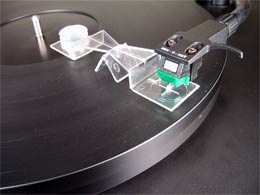
Audio-Technica AT-SB727 Sound Burger ELO


Review: Audio-Technica AT-SB727 aka Sound Burger! Part II by ELO

Sound Burger Part I covers the Basics, as reported by Doctorjohn and Shawn P

Douk U4Part I covers the basics, as reported by Doctorjohn

Editor: ELO's Sound Burger journey overlapped with his epic struggles with the Douk U4 (not to mention Douk E6). His chronicle cannot really be properly teased out and separated into a Sound Burger article and a Douk U4 article, but that is what we are doing here. So in this article there would be some mentioning of Douk U4 that might seem to have come out of nowhere. ELO's Douk U4 journey will be published together with Shawn P's experience in the coming Part II of Douk U4. A bit confusing to follow, but hopefully useful. I have inserted passages (in italics) to hopefully clarify the proceedings.

Sound Burger by ELO
My previous journey in Vinyl ended in 1991 and all my LPs were lost somehow in transition but I still remember the wonderful memories of music coming out from the Linn LP12/Ittok II/ Ortofon MC30 (Editor: that's a nice and cheap MC! Before today's ridiculous prices; I had the MC15!). When DJ bought himself the Sound Burger and introduced it to me, I immediately pulled the trigger and ordered one. I still got some LPs at home and Sound Burger is really a one-stop solution which fits my style and is cordless in power and signal, and compact. 

SB to Aiyima A08 Pro
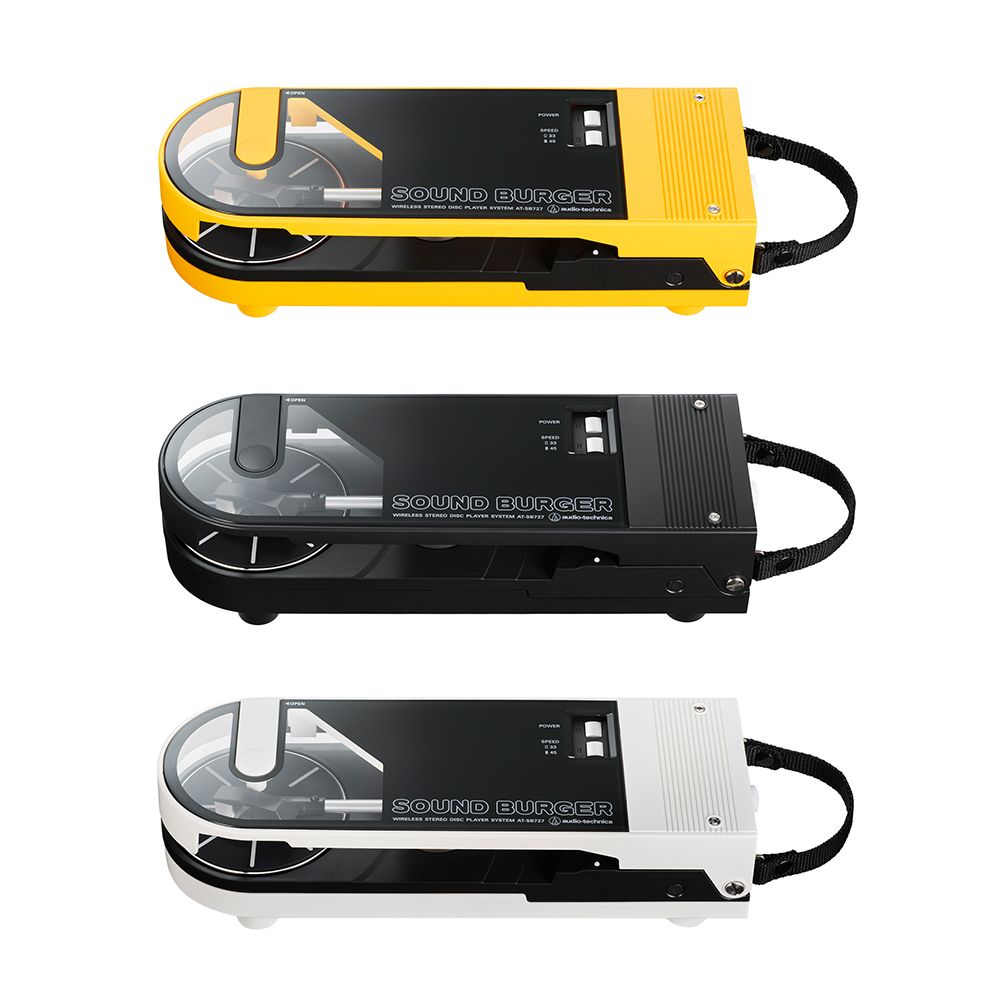
Placed an order of the Sound Burger (SB) from Audio-Technica Amazon JP in May and purchased a generic TaoBao Bluetooth antenna. I finally got the Sound Burger in early June in bright yellow which was so sharp and handsome! I then charged it for 24 hours and was ready for some wireless and cordless vinyl playback - how cool! I can even bring it along to BBQ or a hike ! Without putting on my critic's hat, I first listened to the SB through the BT of Aiyima A08 Pro.

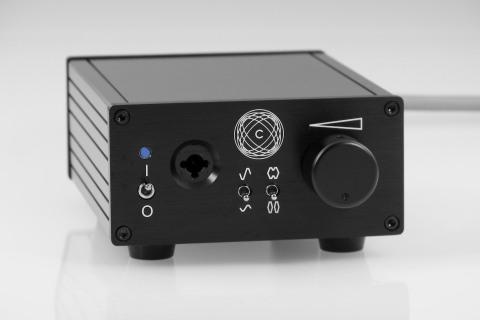
The sound was quite acceptable, pleasant with typical vinyl naturalness, airiness and lightness. Of course in hifi parameters it could not be compared to the overall sound quality with the WEA and it would not be a fair comparison at either! Surprisingly, no latency was picked up. I thought I would just occasionally play it and use it as a nice backup when feeling nostalgic. I then put the SB nicely on the shelf and kept on enjoying the sound from the revamped E6/ Aiyma combo streaming Tidal music (last article).

Editor: At this point ELO's U4 has had very limited use due to the Bluetooth compatibility issues with his devices. He actually had unplugged the U4 and prepared to pack up the unit and hand it back to me.

A week had passed before I had some additional music play time. I took this opportunity to bring out the Burger and play it through BT through my Aiyima. Played the Master Music label with songs from Kari Bremmes, Chie Ayado, Ann Marie Gundersen etc. The sound seemed to have shrunken significantly and gain was not sufficient, but analog is analog, which was natural and smooth with some decent bass in the foundation.

SB > Douk U4 > UMI 2 Clarity Plus > Douk E6 > UMI 1 > Aiyima A08 Pro
After a while, I began to think why not hook up the E6 and U4 again, combined with the UMI Duo? Well, since I still got some time left in my session, I immediately set hooked up SB to the U4/E6 combo. Without any expectation....Oh my friggin goodness! The soundstage had expanded and more details were present. There was adequate gain to be able to drive the SB to a respectable level. The extension on both ends were good, though not matching that of WEA. The overall sound was musical and smooth and with microdynamics. I liked the sound from SB a lot!! Sorry DJ, U4 had redeemed itself and it is here to stay - just the enhanced sound quality of SB is worth it!!!

Editor: In this configuration, the SB was hooked up via BT to the Douk U4 and the signal went through the tube buffer before outputting to the UMI 2.

SB's sound is a little light, yet in a comfortable way, with decent amount of  details and great separation of instruments. Bass is tuneful but on the light side; midrange is soothing with no edges, focused and natural (the strong suit of analog). I am surprised that I'm actually pretty used to the ceremonial side of playing LPs, thanks to the convenience of SB, which makes it a breeze! Soundstage is wide, and can project a nice stage in front of me. It's the ease of music that reminds me of how good analog is. The enjoyment is high and I can get to play the whole side of disc and stay purely in enjoy mode. How can a turntable that costs so little achieve so much??!! Up to now, Sound Burger is not just an afterthought nor a fad gadget, it's a very legitimate music reproduction device which has a solid place in my setup! Luckily I have around 20 or so LPs and that's enough for start and in the future I will hunt for LPs in Japan whenever I get the chance to visit.

Power Supply Improvements During this period by improving the Power Supply (article to come) I obtained way more music detail and nuance, quieter background and less digital noise, all without sacrificing the dynamics and PRAT of the music! This improvement now also extends to my SB as well!. The soundstage has widened further, dynamics has improved and bass goes deeper and with more body! I immensely enjoyed my new LP from Andrea Vollenwieder (only for 11 USD)!

P.S. Now whenever I flip through then website R33, I will automatically spend time looking at analog stuff. Wondering if there's a ultra cheap LP12 or Rega or Thorens that I could add into my setup....


23 May, 2024

Audio Technica AT-SB727 Sound Burger

Click pics to enlarge. Above, in HK the Sound Burger atop the shorned ANUK Kit 4. Note the tonearm transport lock and stylus guard in the back. I feel the title of the album perfectly describes the TT too! Make that Re-Birth!

Review: Audio-Technica AT-SB727 aka Sound Burger!
Re-Birth of the Cool!

Revision 5/26/24: Most importantly, 1) a WiFi antenna comes to the rescue of the BT performance (even if you have read the article before, you may want to re-read the relevant parts) I added a Bullet "what a difference an antenna makes"; 2) short video clip of the HK session is added. Other minor edits too.

There are 2 parts, from Doctorjohn and Shawn P.

From DJ
Now, this is pure serendipity! As I go to Hong Kong for day trips nearly every week, I have been availing myself of some old magazines on loan from the library. The Yuen Long Library has the HiFi News, which I have caught up with. But, when I make an extra effort, the next stop on the MTR is the more luxuriant Tin Shui Wai Library, which also has AudioXpressHiFi Choice and Gramophone and BBC Classical. HiFi Choice has always pandered to a less affluent readership than the HiFi News (but not to the level of What HiFi, which if I can get a hold of I'll read too), but sometimes I like browsing through it for cheap thrills. Guess what, I caught sight of the Audio-technica 2022 Re-Issue of the Sound Burger, which had sold out in no time and which I had thoroughly missed. But, guess again, some issues later, hurray, I found out that it has been reissued again - this time permanently. There are many casual reviews of this toy around - perhaps start with this almost anti-analog review, which is actually a commendably thorough one - except for its assessment of sound quality, where I think this review is much better.

There's another "urgent" reason how this came about. A while ago, in HK I tried to play the same Miles album pictured above with my Technics LP-1200 and I found one channel was out. It was highly irritating and, worse, with my multimeter I got nowhere. Perhaps the captured tonearm cable had developed a fault, It'd take a lot of time to get it going. So, in both HK and SZ I was without an analog rig.

AT-SB727 is the name now - a regular model! Not to create conflict with the 2022 limited edition of Ferrari Red, it's now available in Black and White and Porsche Yellow. For Western readers, this is likely available for 200 USD or GBP or whatever. BUT...For Hong Kong and perhaps some Asian Readers, there is a bargain if you buy from Amazon Japan (free shipping, and it got here fast)! I got mine for HKD 1,112 (Black; Yellow available; White seems sold out for now). That's a CRAZY good price. BUT again! ELO sent me a link that shows someone that sells over HK Carousell for not much more (black only), 1190 HKD, and you can have it instantly!!! Shop around. This thing is popular and around to stay.

Ergonomics Fair with quirks. Packaging No frills but reasonably sturdy. I actually accidentally dropped it from waist level and it was unfazed. Battery USB-C 5V charge for 12 hours for initialization - good for 12 hours of use. It is said to use supplied cable as others may not work, but my generic does. When charging, the Power LED is red with slow blink. Yes, be patient, it does take long (LED goes off when fully charged)! Tonearm Transport Lock It needs to be removed to work. Lid Slide the Latch on the side to have it open (spring-like action) Stylus Guard Needs to be removed when playing. Slide it out gently. Power On Indicated by White Color of the LED. To Play 1) Lift the tonearm and pull all the way to the right until it "locks" with a small "click"; 2) Pull the rubber Tonearm Rest/45 Adaptor Out; 3) Place the LP on the Platter and insert back the Tonearm rest/45 Adaptor onto the spindle (nice touch as record clamp and shock absorber!); 4) Pull the tonearm back towards the LP (at which point it starts to spin) and place the stylus over the LP (remember about 0.5 cm in from the edge; never too close to the edge for fear of stylus damage); at the end of the side, lift the tonearm back to the outer rest position to stop the spin. Power Off After removing the LP, re-insert the Tonearm Rest/45 Adaptor; place the tonearm back securely. Hit the Power button to turn off; close the lid.  

Round 1 HK I have no idea where I got my Miles album, but It's nice to have! Top pic showcases it. Played through my Melos 222 Preamp and ICL 2A3 amp (with Sylvania Single Plates and Raytheon 717A) and Ruark Crusader II, the sound was thoroughly engaging if a bit subtractive. As I had no adapter, I could only use the supplied generic 3.5mm to RCA cable. At the bottom of this article is a short video clip of the session with Miles.

Round 2 Shenzhen Here I pit it to more thorough tests. I only have 4 LPs here, acquired during the 2023 SZ SIAV Show for RMB 15 each. I enjoyed the browsing (as is my wont, I only did the dollar bins) but was not able to play them until now. WELL! Into my 6J4/6P6P Preamp (now sporting old stock 6V6G's) and BRZ FU-50 amp (sometimes sporting WE274B and old-stock metal or glass 6J7 via adaptors) The results just fascinated me!
  • 3.5mm/Line Out Unlike in HK, I dispensed with the generic cable and used my trusty el-cheapo DIY Canare 2B2ATInitially The first one I played was the French Columbia/CBS Pressing (btw, usually good and better than American generics) of Varese's Deserts. It's really a very "hifi" piece, even if on this occasion rendered with a somewhat softer edge than usual, but I enjoyed it immensely! Then, Josef Suk's superb artistry. Finally, two mono disks. The Gieseking (too bad it's a Jap pressing; if it were UK it'd be worth a lot more) was surprisingly flowing and gutsy; even the Kubelik VPO Mahler 1st was very good, full of air and drama! I kid you not - I was happy as a duck during tide in, wallowing in my first vinyl experience in SZ - such are our audiophile attachments and sentiments! It's like for that special occasion you splurged for a nice dinner at a French restaurant (but LOL this sum would not be enough today)! Later Improvements! See below for more observations. One thing of note, background noise is almost nil, very quiet.
  • Bluetooth The BT is basic, BT 5.2 SBC. That doesn't bother me, as I'm not necessarily a fan of AptX etc. But Pairing is Trickier. You long press the BT button on the side, and the Power LED starts blinking White. As some of the online reviews have attested, connectivity can be fiddly. The White LED blinks fast until Pairing is achieved, at which point it blinks slowly. Paired with the Douk U4 The first time I hooked it up with the Douk U4 (formal review to come) it took tens of seconds but it worked. Sound was fair but, as expected, not as good as Line Out, but on a subsequent try I got markedly inferior sound, with latency problems, exaggeration of surface noise and even weird "motor-boating" sounds!  Pairing with the Aiyima T-09 took forever. At first it just refused to do so. I turned off the BT on every nearby devices but it still didn't work. Then I powered off my Douk U4 (even if selector was not on BT) and it worked! However, even with this better BT device, although the extraneous sounds and latency problems were no longer present the sound was not nearly as good as the Line Out. Part of this is surely due to comparison with the all tube amplification setup - I'm after all a tube man. Please also note that I don't have here any BT loudspeakers or Earphones to assess. BUT, a surprise later. Read on (last Bullet).
  • vs Streaming Tidal (on the same Douk U4 via USB of my notebook) I found the Varese and Suk albums on Tidal (different covers). Compared to the Burger Line Out both sounded sharper. Whereas the Suk was perhaps overly warm on the LP, the Tidal was steely and massed strings were hardly acceptable. The percussive Varese presented a different scenario. The uninitiated would probably gravitate towards the digital, with its cleaner edges, quicker starts and stops and even timbral "clarity". BUT, for the experienced listener, on the analog playback the fuller brass and percussion sounds were definitely more accurate. Even more importantly, the sense of continuity was easily superior.
  • Warm Up Effect This is a force to be reckoned with! In my euphoric state I actually played the albums several times over. During the same session, the same Varese LP which had previously sounded somewhat soft after some time suddenly significantly gained focus and transient speed, to the point that it almost rivaled the digital Tidal in clarity but way surpassed it in continuity, fluency and confidence. I can only attribute this to warm up effects. It's known the motor of a cartridge needs running in, and even more known that a phonoamp needs more warm up. In fact, most phonoamps need to be continuously powered up to be at their best, and I suspect that is the case here.
  • What a Difference an Antenna makes Most of us think of Wifi and BT Antennas as just a (mostly black) rod with a flexi joint and screw on SMA connectors. But there are crazier offerings. Barely into the testing, I got my antenna. I replaced the Douk U4 stock antenna with it and repeated some of the Burger pairing exercises. Still kind of guessing and a somewhat fiddly waiting game but, guess what? Aided by the new Antenna, when U4 was paired with the Burger, all the previous latency and noise problems were gone! In fact, the performance got close to (but not exactly the same as) the Line Out. A Miracle! This could be more of a reflection on the Douk U4's BT reception than the Burger's transmission.
Thoughts
  • Overall Assessment This review goes into greater depths than others online, and looks at it from an audiophile angle, on which I have more to say below. But, as the other reviews have mentioned, its Portability and BT Capability combine to make it a contender and a niche product. And I'm one of those in the niche. While it's certainly not at all a top-tier turntable, it's heart is absolutely in the right place, as is to be expected of audio-technica, a company I highly respect, for its generous supply of cheap cartridge bodies and styli to the world (but they do make excellent high-end cartridges too, like ART). The cartridge you have here is used by some entry level TTs with a cosmetic makeover (at a mark-up). Even more famous is the AT-95, which had formed the basis of many a turntable and cartridge manufacturer's tweaked base models (again, with big mark-up; like Clearaudio), I always recommend AT TTs at any level, and still in NYC use an over-achieving AT-PL120, a screaming bargain. Hidden Agenda Yes, I do have one. If I get the opportunity I intend to take the Burger to some "super-analog" setups and make the owner rethink things...at least to return to basics...In our experience, many "super-digital" setups get as messed up as "super-analog" ones - are you one of them? This toy is like the TT equivalent of a Naim Nait 1 or Cyrus 1 or NAD 3020, able to tell whether you have gone way overboard (many do). Litmus Test, kind of!
  • Lid You don't have to close the lid when you play back an LP, as you can see from the top pic. Enclosure (even partial) generates turbulence, which is not good. From my experience ALL TTs and top-loading CDPs sound better (no exception) with the lid open (in the case of the latter you have to insert a toothpick or something to defeat the mechanism).
  • Stylus Guard I'd not replace it at the end of session. IMHO, pulling it off and re-fitting it again and again increases the chance of damage to the stylus. The protection of the Arm Rest and Lid are enough, and AT styli are famously sturdy.
  • Stylus Upgrade? The stylus can be pulled off and changed. Well, there is an LP Gear version that for a small premium substitutes an Elliptical Stylus for the stock Conical. The elliptical would have a little more detail over the conical, but the latter can be more "wholesome". For myself? I'd not change.
  • Cartridge Upgrade? As you can probably see from one of the pics below, the cartridge is just glued to the shell, which is secured with screws to the arm. Unless you are savvy, I'd not advice tinkering, as the cartridge is soldered to the tonearm wires (I found that in one of the forums but I'm not able as yet to find it again). One can remove the cartridge with a razor blade and de-solder the tonearm leads, but attaching a new one will take considerably more finesse (it'd have to be a narrow-bodied one like the AT [not many of those], and one'd have to realign and adjust tracking and anti-skating weights, and there's no obvious path in this TT). I'm not confident enough to unravel the tonearm's secrets (totally covered up), so maybe some readers can advice me. That's a tall order! Perhaps one day I shall develop the courage to take apart the tonearm casing...
  • Built-In Phonoamp/Line Out Long before Pro-Ject etc, AT was among the first to supply decent built-in Phonoamps with its TTs, an example of which is the evergreen AT-LP120 I cited just above (top Bullet; now in its late USB iterations). AT also once marketed a decent  super-budget standalone AT-PEQ3 (reviewed here), which I think I got near close-out at USD 35. So I know their MM phonoamps are decent. And it proved in the SB727 too. This review is mainly based on the very good Line Out performance.
  • Potential Phono Out Mod See the pics below. IMHO, it'd potentially be a game changer. Should AT revises this TT, I'd love a Line/Phono Out Switch.
  • Power Supply Alternatives? The Battery is actually 3.6V, specified to have max of 4.2 V. The USB-C DC Supply is 5V, so may have a bit of regulation built in. As you can see in the pic below, one can disengage the battery. I just wonder if then the 5V DC Supply will still work on its own. If so, one can replace it with a 5V DC Supply of one's choice, be it SMPS or LPS. Of course, some may think of the battery as the best DC source (as well as lowest noise), but YMMV (I'm usually not a fan of battery, as it is usually rhythmically inferior). If you know that I can remove the battery without damaging the electronics, let me know!!!
  • Warm Up Effect What I said above is also because I think this TT will sound its best if it's continuously ON. If the battery can be removed with no detrimental effect that's what I'll do with a 5V DC supply.
  • Who is This For? As I use mainly its Line Out, I'm not in a best position to judge its BT prowess. But, I'm sure this is the perfect thing for someone who has a few vinyl albums that he wants to play from time to time! AND, one cannot imagine a better space saver for vinyl replay! Collapsible and out of the way for most of the time! For heavier use, I'm sure most would gravitate to AT's other (larger) offerings. One thing is for certain, the AT sound is not bad at all. Highly recommended!
  • Conclusion Even as one with over 10 TT's, I'm wildly fond of this TT, and will buy more later. Just Lovely!
From Shawn P
Doctorjohn messaged me a week ago and told me that he would buy a new toy. I thought that it must be something special as a “warning” of getting something new was rare.

He then showed me the Amazon webpage of “Sound Burger” and I immediately recognized that was something I had seen in the 80s only that it was too expensive for me.

It was called a different name and the current name “Sound Burger” certainly gave me an impression that it was a toy which was exactly what doctorjohn told me he was going to get.

No, I was not interested in getting one because, again, it was a toy and I was not sure how a record could be played well when it is kind of dangling in the air.

Nevertheless, I did some research and found that Sound Burger is not a toy but a good turntable. Reviews were good and I thought I can deploy this guy easily without much setup and space, perhaps I should consider.

Back tracking in time a bit (in fact, plenty), the last time I played a vinyl record was more than 5 years ago and at the time I did not have a dedicated room for the system, I was using a headphone amp with the turntable.

Using a headphone amp with a turntable is not something ideal as I was able to hear all the pops, tracking issues, incorrect anti-skate setting etc. very clearly. But I did enjoy the sound of vinyl. Back to the present, my turntable has been in storage for 5 years and I just could not get myself into setting it up again. I thought, it has been untouched for 5 years and it may need lubrication and other adjustments before I could get it to work properly.

The idea of having Sound Burger ready to go in minutes became increasingly attractive in particular the price was right and the wrong could not be too wrong, that is only if it turned out to be a bad buy.

So I pulled the trigger on the same day doctorjohn did and I am sure his and mine Sound Burgers took the same fight getting to Hong Kong.

I bought the yellow one simply because that looks more 80s to me. It took several hours to charge it up and I was ready to listen to my vinyl with speakers for the first time in 35 years! The first one I played was, of course, an album from my favourite band Anzen Chitai (安全地帯), their third album “Anzen Chitai III : Dakishimetai (抱きしめたい)”. Well, it sounded good but not as good as I expected. Needless to say, my Pro-Ject Carbon is a better turntable and I used it with a Schiit phono amp. My expectation was perhaps to high for the Sound Burger. But I liked how it sounded, it is different from digital files for sure. I enjoyed it out of the box.

I then took out the Chariots of Fire and that album sounded pretty good. In fact it sounded a lot better than its CD counterpart. Just about every aspect improved with the vinyl version. I thought vinyl would produce a looser phantom image but this particular vinyl produced a very solid phantom image. That cannot be said with the Anzen Chitai III.

With the Chariot of Fire, I was quite happy with the Sound Burger and it seemed the Sound Burger was getting better after several hours in operation. As mentioned by doctorjohn subsequently, it requires some warm up.

The first day of listening ended with an album from Masahiko Kondo (近藤真彥), Summer in Tears. I had never bought any of his albums in the 80’s which shows how much I liked him. That said, the reason why I bought this particular album was because it has several songs adapted by Hong Kong singers/bands, including one by Anita Mui and one by Grasshoppers.

I never liked the way he sings but, to my surprise, this album was very good, in fact the best out of the three I listened to that night. Very good soundstage, good bass, clear. It was great, finishing my first day of listening with such a good album.

I noticed the output of the Sound Burger was on the low side and I decided to introduce our beloved Nobsound E6 preamp to the chain the next day. Wow! The Sound Burger sounded fantastic with the E6. The main issue I noticed (without E6) was that the higher frequencies sounded a bit grainy/sandy, in particular with higher signal level. With the E6, the graininess was gone, everything became “meatier” with improvement on clarity. Instruments and vocals became more well defined. It was a great success with the E6.

I do not consider the Sound Burger a toy now and will likely continue listening to my vinyls with it."

The Motor that drives the Belt
The Headshell can be loosened, but the Cartrdige is glued on
The Tonearm Out. Looks like one can easily attach another cable
to it to facilitate a Phono Out Upgrade
An aluminum Platter, not bad! Lower left shows the Battery Lead sticking out from below.
Battery. 3.6V

17 December, 2020

Pro-ject RPM 1.3 Audio-Technica CN-5625 Musical Fidelity A1s Sony Discman

Click pics to enlarge.
 
Letter from Hong Kong (17): Eric L on his Latest Office Setup

Since last reported, my office setup has undergone some major upgrade; only the Naim SBL remains (and is still a keeper). My friend Dr. Lo lent me his MF A1s (modded) [Ed: see Footnote 1] and it replaced my Gold Note Amp (which is still a nice little amp). The MF has a richness, and layered bass, which serve up a very cushioned foundation - rare qualities at this price point.

While I'm still using the Taobao Bluetooth H-10U, I need to thank doctorjohn (DJ) for providing me with the Pro-ject RPM 1.3 Turntable [Ed: see Footnote 2]. Initially, I was half serious on going back to analog (I sold my Linn LP12 eons ago), but I asked him for advice on a cheap one with decent sound. He immediately said he's got a perfect one for me! I also asked my friend Dr. Lo to lend me a phono unit made by Ray, the same nice guy who fixed the Antique W.E. Amp (refer to my previous Blog post). The phono will be compared against the MF's.

With the help of Kwong, who picked up the TT from DJ in Yuen Long, it was delivered to my office in Kwun Tong, Kudos~ Having said that, I still haven't met up with DJ in person despite having chatted numerous times over the phone, LOL!!

I hooked up the TT immediately to the phono input of MF. There was an annoying loud hum coming out of the left channel. After much time debugging, the culprit turned out to be the female RCA output socket. After a quick fix, the party began. According to DJ, the cheapo Audio-Technica CN-5625 conical cartridge really shines with this TT, much more so than the much more expensive Clearaudio Concept MM he had tried out before [Ed: see Footnote 3]. DJ gave me a box of old LPs and I played a few of them to see if they are still in playing condition. Al Stewart's Year of the Cat and Santa Esmeralda's Please don't let me be misunderstood played superbly: great bass sounding analog, with good enough clarity in the highs and fleshy midrange!! Rimsky's Scheherazade was also a surprise treat, with enough suspense to keep me interested. Pet Shop Boys (another fav of mine in my younger days) What have I Done to Deserve It also played with rhythm and beat! However, Some nice LPs like Roberta Black 's, were too dirty to play; shame... But I was already very happy! Is it the best sound I have had? Perhaps not, but it was very listenable and, most importantly, it alleviated the analog complex I had been harboring over the years! [Ed: see Footnote 4]

Also tried to hook up to a Sony Discman with satisfactory result and will look for a proper CD setup in the future, but no hurry. Perhaps would visit shop to buy a few new LP and an LP cleaner kit!

Though not often in my office these days, I am happy to spend even limited time to reminisce on my good ole analog days!

Eventually bought a huge bottle of record cleaner liquid from Mobile Fidelity and a brush, waiting for spare time to do a major cleaning! 

I also bought a brand new LP by Master, Audiophile Female Voice which includes Kari Bremmes, Chie Ayado, Radka Toneff and Inger Marie!!! And the sound coming out was clean and crisp with a lot of clarify and musical!! The system really shines and I'm more than satisfied with it! 

 ***

Footnotes: [1] The original MF A1 was designed by Tim de Paravicini, who I just learned had just passed away due to cancer. Perhaps I shall write a RIP. The A1's many derivatives sound quite similar and are great products, top in my books (treated in detail here, incidentally one of the most-read articles of this blog). BTW, its phono is excellent, as one shall expect (I wager Ray'sDIY  phonoamp won't outclass it entirely); [2] This cheap (cheaper in HK than in the West) turntable had been reviewed previously here. The reason I got it was (a) to see how far a cheap TT can go and (b) its fundamental design is very sound - outboard motor and a tonearm whose comprehensive adjustability even shames many much higher priced TTs. The chassis resembles a boomerang to some but Mickey Mouse to me, so I call it the MM TT. After setting it up for Eric, I listened to a few LPs and could not stop. Sound was pretty good, and involving; [3] When I moved in 2018, I packed it into its original box. This time I opened it and found the stylus of the Clearaudio Concept MM (a modified AT-95) was trashed. Just as well, as it was not at all a good sounding cartridge at all. It was carried over from my Clearaudio Concept turntable. As I don't have too many cartridges here, I installed the AT CN5625, a workhorse conical cartridge. I believe conical cartridges to be especially suitable for pop rock. Surely, it sounded much better than the Concept MM (from memory); [4] many years ago, long before the resurgence of vinyl, I used to roam HK's Apliu Street for used LPs. Jazz, even classical, were not cheap, but pop records begged for customers (then only audio people would use vinyl). I often bought pop records for HKD 10 (like the dollar records in the US). Some, like Beck, would command a lot more in western markets. Apliu Street  records often were quite dirty and years of storage in humid HK means they grow moldy. A lot of washing ahead for Eric!


01 July, 2017

Editor's Note: The Times They Are A-Changing
Letter from NYC (63) 2017 (2)
Brief Review: Grado SR-80e Headphone
Headphone Talk VIII: Grado SR-80e vs Audio Technica ATH-AD700

The Times They Are A-Changing
Here is a brief note to those who follow my Blog regularly; you must have noticed my output recently has taken a nosedive. Here, in the wee hours, suffering from jetlag, I am penning a few words.

Lately, a succession of unexpected matters relating to my family has consumed most of my time. The challenges ahead are considerable; while there will be strife, I shall focus on keeping a strong mind.

At this moment, audio, even listening to music, is indeed as they say, "guilty pleasure". But listening to music shall never lose its paramount importance, and it is often therapeutic, even lifting (think a Bruckner symphony). What equipment I use however becomes less important. In HK, if I only have an hour of stolen time, I am not going to fire up my Kondo rig, instead I'd use my Flying Mole (see Sidebar, "System C" "Newer Location"), which currently is driving my Dayton B652's. You will be surprised how satisfying this ridiculously inexpensive setup can be.

What about writing? That will go on, as it is another form of therapy. If you ask me, anything that demands concentration is therapeutic. I actually itch to do so. Although recently there has been few published posts, that doesn't mean I have shelved my writer-self; in the pipeline are quite a few half-written ones on good topics crying to be finished. I should however try not to be as comprehensive and compulsive as before, so as to get more out. After all, as an adult one doesn't always need to detail or justify one's impressions.

And Yet Things Don't Change...Listening On
My listening and writing activities may be curtailed, but they are very much alive. Here in NYC, I have a little more time and shall try to catch up a bit. A few hours ago, like yesterday, I fired up my Reference System I, and listened at very low level (sounds great). However, with the current weather it gradually grew too warm for comfort, and I then switched to listening on my Headphone Setup, which comprise an ancient Magnavox FD-2041 CDP fed into Meier-Audio Corda Swing (my previous brief review here) driving Grado SR-80e headphones.

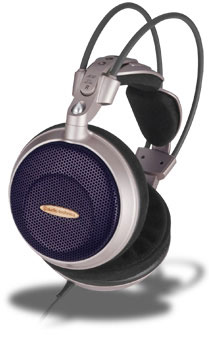
Grado SR-80e Like the similar SR-60's, these likely need little introduction. The review in Whathifi is excellent, and I basically agree with all the points made. Since I listen at quite a low volume, its small shortcomings are quite irrelevant. vs Audio Technica ATH-AD700 (my previous review of the Audio Technica here) The differences are considerable. The Grado has a drier, possibly more precise and definitely upfront sound; the Audio Techica is more laid-back, more embedded in ambience. Piano (Messiaen Vingt Regards Pour L'Enfant Jesus; EMI/Beroff) is impeccable on the Grado, but a string quartet (Brahms; EMI/Alban Berg) is more wholesome on the Audio Technica, with more ease, more string sheen and better intimation of bow and bridge sound. As I only have less than 20 hrs on the Grado, I expect the SR-80e to further improve and smoothe out a bit.

Meier-Audio Corda Swing Mine is likely an earlier version of the current Corda Jazz. It works quite fine with the smoother AT, but is a likely little dry with the more forward Grado. There is plenty of gain (I use the low gain) and sound is lively. Although a German design, I think it is built in China by Shanling.

Magnavox FD-2041 This is exactly the same machine as Philips CD204, employing the CDM-2 mechanism and 14-bit TDA-1540 DAC chip. Sound is quite musical and organic, as one expects of the TDA-1540, with its unique je ne sais quoi (not everyone will agree, but to each his own). I also think the low oversampling rate of that earlier era makes for a more direct sound closer to non-oversampling than later extensive oversampling (artificial).

The setup is satisfying, though not quite at the level of my Stax System (here).

10 June, 2016

Direct Drive Turntables

Brief Overview: Direct Drive Turntables (with budget emphasis)

UNDESERVED BAD REPUTATION Audiophile Aversions Among audiophiles, direct drive turntables as a genre has a reputation of being hard-hitting, lean sounding, even crude or only for DJ's. Some of this is because the average audiophile only knows the cheaper Direct Drives or the ones intended for DJ use. Fact is, there were many esoteric hi-end turntables (except for EMT, majority Japanese) that are classics and coveted by connoisseurs. Another factor is due to the Linn-led suspended table, belt drive crusade (for it was really that) - any other methodology (including my favorite, Idler Wheel Drives) were deemed heretical and adherents burned at the stakes (spectacles even now staged on the internet). Motor Noise One of the important turntable design parameters is how to isolate the motor noise for a supposedly clear midband. Belt drives do this with relative ease (though a lot depends on how you mount the motor), but all the great direct drives have Herculean engineering to minimize this. It is all in the implementation. Why I like them While I'd not deny belt drives do have their own set of virtues, I have always liked Direct Drives for their speed, transients (much as you would for panel speakers) and slam. As noted above, I appreciate all kinds of design. Maybe a Direct Drive should not be your only turntable, but it should be one of several. The Direct Drive's Rhythm and Pace is different from the Belt Drive (or even the Idler Wheel), a little more insistent (even take-no-prisoner), less subtle, but undeniably exciting if you can tame its "undesirable" aspects. Another reason I like Direct Drives is because they are less cluttered, usually more compact and, though suspension-less, heavy for size. Also, Classic Direct-Drives are Screaming Bargains, because a High-Torque Direct Drive Motor is very expensive to develop and produce. Take the Technics SL-1200, its price (then and even now) is so reasonable only because it sold in huge numbers. By comparison, a second-hand Linn LP-12, with a cheap low-torque motor, is NOT innovative, and NOT a good buy!

Current Revival Fashion recycles; styles that have gone out of fashion all of a sudden make a comeback. This is no less true for audio. While belt drive still rules the analog hi-end (albeit in suspensionless designs mostly), tides are certainly turning for the Direct Drive, as in recent years quite a few new direct drive designs have emerged (Read the informative article by Roy Gregory in theaudiobeat). Many of those mentioned in the article have reviews on the net, and it is fun reading them, just google the manufacturer's name and direct drive. No doubt more is to come. Also, in Stereophile, Herb Reichert gave a rave review of the Pioneer PLX-1000, a clone of the Technics SL-1200.

 Drive Turntables - My Experience
  • Price/Performance Ratio Current vs Classics I'd be interested in comparing the current crop (pretty expensive, understandably) against the classics, say the cheapest and ubiquitous Technics SL-1200! Someday I hope... Classics vs Classics This gets more interesting. Disclamer: I don't own the most expensive ones, but since EMT's and classic Japanese turntables are popular in HK, I have heard a lot. If you stick to Technics, It is definitely true the more expensive SP-10 is better than the SL-1200. BUT, imho they are the bargains among quality Direct-Drives, maybe even "giant-killers". Some classic Direct Drives, like Micro Seiki, Pioneer P3(a), not to mention EMT's, command a very high price, but should you spend so much? Here is an anecdote: my friend Edward once asked Walt Bender, godfather of vintage gears, about EMT, and he said he thought the Technics SL-1200 is just as good, and totally under-valued. Well, take it with a grain of salt - aside from mechanics, they do sound quite different. Point is, for a modest outlay, one can get a very good direct drive design.
  • Technics SL-1200 General The most famous of direct drives is without a doubt the Technics SL-1200 and variants, in constant production for decades and a DJ staple. I need not further elaborate as there is a huge amount of info on the internet. Literally, millions have been sold (unique among "hifi" gears), and as a result, obtaining one is not difficult (though still escalating in value). Also, many parts are available, so refurbication is not a problem. Mods Given the underground cult (deserving imho) there are many hifi mods dedicated to them, chief among them KAB. But I think the most significant mod would be to replace the tonearm, a somewhat laborious project (guides available on the net). Re-Birth! The SL-1200 has been discontinued for a few years, but a completely updated anniversary edition, and maybe more, are coming the summer of 2016. It has just received a rave review from HiFi News (not yet on the net). This one is immortal! My Experience This is the one of two turntables that I have in both NYC and HK (the other is Thorens TD-124). For my own general experience see here, also here for matching with the incomparable Decca cartridge. Currently, in NYC I use it with my mono Denon DL-102 (here). All those combo's - how's that for versatility? The Technics SL-1200 is not as good as the SP-10, but it is mighty good! I have never heard a modified one, but I'd be curious. One day, I'd hope to go that route too, although I have to say, given my variety of experience, I don't think the stock arm is that bad!
  • SL-120 This is a curiosity, more for home use than DJ purposes. Unlike the SL-1200, it is not quartz-locked and the motor is an enclosed type (which some say is better). It has an armboard, which allows mating with any tonearm, an advantage over the SL-1200. If you see one with a suitable arm board for you, buy it! An after-market armboard costs a bit, and if you subtract that sum from your cost, the turntable really costs very little. I just acquired one in HK (SME board) and you shall hear more from me.
  • Technics SP-10 (top pic; info here) This is Technics at its pinnacle, and my personal favorite. The sound has bite, but is smoother than the SL-1200 - everything is just a little better. For my experience, see here and here (which includes a link to the Revox direct-drive). It is commonly said that the plinth is undesirable, but I personally have never heard feedback or unwanted noises emanating from that. That said, recently at my friend seng's place, putting Vibrapods under the feet dramatically improved the fluency of the sound. In HK, a noted audiophile, limage, has stuck with this TT for decades, and he gets good sound from it. This is worth all you can throw at it (if you are convinced your measures will work). Unfortunately, it is getting more expensive.
  • Audio-Technica AT-PL120/AT-LP120USB These are basically the same thing, with the current version sporting USB ADC for digitizing purposes (and reversing PL for LP). This is a blatant clone of Technics SL-1200. Although still massive at 27 lbs, it is made in China and not as sturdy as the Technics (one knock at the plinth's surface and you'd know; a hollow sound vs the Technics' dull thud - plastic vs metal). Perhaps it is too cheap (in street price) for its own good. For some reason, I have never formally "reviewed it", but my satisfaction can be gleamed from my experience with the Empire Cartridges (here) and Shure SC35C (here). Note here that for the last month, partly fueled on by Andy, I had been playing with MM's using this turntable. I cannot say things were as refined as my other more expensive turntables sporting MC's, but I can say I really did not feel much was wanting. I'd think there's no better testament to its value. Also, its built in phonoamp (MM) is not bad at all, making it a screaming bargain.
  • Taiwanese "Super OEM" Hanpin While researching, I read this: "...As vinyl began to wane as a mainstream format, Chinese (editor: Taiwan) company Hanpin produced the ‘Super OEM’ turntable, the most well-known model of which is the Stanton STR8-150, but which has been adapted and re-badged by numerous companies. What the Super OEM had in it’s favour, besides good build quality, was that it was the first deck to take advantage of the expiration of the Technics motor patent. So, finally, there was a Technics ‘clone’ on the market with truly similar performance.
    The beauty of the Hanpin design is that, working from a solid base with that motor, manufacturers are free to then innovate around that. So bell & whistle features like line-level output, reverse play, pitch correction, and digital pitch readouts have all appeared on Super OEM decks, reaching a zenith with the Reloop RP-8000 and it’s built in midi controls..."
    So, there it is. The Audio Technica AT-LP120(USB) is made by Hanpin. The aforementioned Pioneer PLX-1000 too (see Stereophile link above). Somehow, I doubt the more than twice as expensive Pioneer is built much better. I'd be most curious to hear the Pioneer though. I also would love to hear Hanpin's own copy (official link here). I wonder if Hanpin is one of the reasons why Technics ceased production of the 1200? If so, that is a bad thing!
  • EMT (950/948/938) I have never owned one, but they are popular among Asian vintage collectors. Hence, in both NYC and HK I have heard many (including the non-direct-drive ones, like the 927 and 930). EMT is well documented on the internet (try the wiki entry; stefanopassini, emt-profi.de and febtech.de). Most of the EMT's are not direct-drives and imho they are now way over-priced. However, the direct-drive 950 does have a fair claim to be the best direct-drive turntable. Although the price is sky-high one should keep in mind it was very expensive originally. As for the sound, it is hard to assess the turntable individually, as they are usually used with their own 12" arms and EMT cartridges, which like Ortofon's SPU's, have a full midrange sound that is noticeably not modern (which is what many prefer, but I have my reservations). In NYC, my friend Andy has a good 950 setup, and in HK I have heard the related 948 (here) to good effect. I have never heard the 938.
  • Goldmund Studio As mentioned in theaudiobeat, this is a classic, and a curiosity. The most interesting thing about it is that it is built by Audiomeca, with a suspended direct drive! I have heard one in my friend Andy's place to good effect.
  • Revox (790/791/795) These look very elegant. I owe the 791 (with a Shure cartridge) and the sound was lean and certainly take-no-prisoner! Unfortunately, it broke down (an often occurence) and I have yet to service it.
  • Micro Seiki Here is a very interesting article, with valuable links. Again, the brand is very popular in Asia. Micro Seiki made all sorts of turntables but the ones I have heard tend to be hi-end models, including direct drives. Somehow, most of them sound kind of mechanical to me. Not one of my favorite brand.
  • Pioneer I have heard several times (like here) the expensive and iconic P3, usually to good effect. However, I never got the feeling that it is much better than its much cheaper Technics brethens. That said, I have never used one myself.
  • Rockport Sirius III This is yet another all-out effort. I have heard it previously in HK to good effect. Anyone interested in direct drives should read this huge article in IAR. Note that Rockport is notorious for not supporting their old products. Thumbs down.
p.s. This article is not meant to be exhaustive, concentrating on my own experience mostly.

08 April, 2016

Turntable Setup/Starter Kit EAR MC4 Technics SL-1200 Audio-Technica AT-PL120 VTA Problems

Comedian Buddy Hackett had turntable routines up his sleeve, literally. The transcription turntable and arm look familiar. Can someone tell me what make it is?

Letter from NYC (49) 2016 (5) Set Up, not Upset 
Talk Vinyl: Turntable Setup Guide/Starter Kit
Talk Vinyl: DJ Turntable (Technics SL-1200MkII/Audio-Technica AT-PL120) VTA Problems

Note: In response to a reader's query, I started to write about the setup problems (especially the VTA) I faced with my DJ Turntables, the discontinued Technics SL-1200mkII and its clone, the much cheaper Audio-Technica AT-PL120. Then I thought I might as well incorporate that into an article on Turntable Start Up and Setup.

Perhaps of Interest: For where I came from (analog speaking), read my rambling Talk Vinyl: All My Turntables on my 40-year journey.

I do not claim to be a setup expert, far from it. My approach, if it can be so termed, is more personal, loose-limbed, certainly ad-hoc and on-the-cheap, though of course I do listen very carefully.

This article is also my meagre effort to counter some of the rampant and misplaced obsessions found on the net. While I respect someone with a simple setup (say, an old receiver, a Technics SL-1200 and a Shure) who enjoys music, tries to get the most out of it, and writes about his findings with different styli, it is another thing to read about the capacitance or loading that is absolutely required for a certain cartridge, or how a cartridge can only be used with a certain type of arm. While there may be kernels of truth in some of these, kernels are all they may be. As an example, many declared that the Rega 250/300 and the SME3009 are unsuited to the Denon DL-103, while not having used such, but I have used these combos for a long time, and satisfactorily (heresy!). I am not the only one who thinks differently: tonearm modifier and manufacturer Origin Live (I like them) goes even further here. Suffice to say, the newcomer should take everything with a grain of salt, even (some say especially) majority opinion and conventional "wisdom".

As analog is not even close to an exact science, listening is much more important than reliance on tools and adherence to theories. Over the years I have heard way too many mega-buck analog rigs that were meticulously set up (that employ all manners of expensive gadgets that together may cost more than my turntable, like expensive professional scales, lasers, tweaks etc), yet sound suboptimal, even downright dreadful. Something went wrong with their assessment. Perhaps too much attention was paid to "objective" parameters and too little to listening?

All of my (simply set up) turntables may not be the last word in anything, but they are usually eminently listenable - across genres and all the way to the classical end-groove; so setup, while important, is not the obsessive thing some make it out to be. Newcomers should not be scared off, though YMMV.

General Turntable Setup Guide for Beginners
A Google search will turn up a plethora of articles, solid evidence for the vinyl resurgence. Therefore, I shall not elaborate on this, instead just commenting on various aspects in the next section. Here are 2 links that I think are very helpful for the beginner:

The Ultimate Turntable Guide (from iamthejeff) The first half of this article is a buying guide. The second half covers setup in a relaxed manner, with particularly good links, including video instructions.

Beginner's Guide to Cartridge Setup (from Audiophilia) This is a more tightly written and comprehensive article on setup only, and should be carefully read.

After these introductory articles, peruse these very good article written in layman language:

This article in soundfountain is concisely written. It covers the tonearm-cartridge interface, compliance, resonance etc. Similar articles (here and here) are also worthwhile.

As for alignment, soundfountain also has a good article. (in fact, read all of their articles). You may also want to read this well illustrated one from the mostly hi-end TAS.

Personal Notes and Tips on Turntables, Phonoamps and Setup 
  • Internet Resources Although the novice has an equal chance of getting good or bad advice (especially in forums), one cannot deny the internet can be a very useful place for vinyl lovers. Vinyl Engine is a must for the novice and the seasoned alike. Make sure you navigate their menu bar: the Database, Tools and Library are particularly useful. Lenco Heaven is mainly a forum, much less organized, so although it has some useful information, it is Lencocentric and difficult to navigate for the uninitiated/casual visitor.
  • Turntable Type I believe there is no best, and so have no strong bias against any type; in fact, I always think one should have at least one Idler-Wheel Drive, one Belt-Drive and one Direct-Drive (at least), and I do. Here is a good article on Direct Drive vs Belt Drive. As for suspension-less turntables, I have nothing against them (I have some too), save for the fact that in general these tend only to be more effective with increasing mass (Rega is the exception), and I frown upon large and ungainly turntables. One reason I like Direct Drives is because they are less cluttered, usually more compact and, though suspension-less, heavy for size. Entry Level Turntables? Here I part ways with some of the common advices. I do not recommend the usual starter turntables out there (like Project Debut, Rega RP1, etc) for the following reasons: 1) as satisfying as these may be in the short term, they may not outperform a cheap but good vintage deck. e.g. I'd think my Pioneer PL-10, which can be obtained on Ebay for $50 or less, is as good as the current entry level offerings up to many times its price; 2) vinyl is addictive, and one sooner or later upgrades. Therefore, it is better to buy something that you would still want to hold on to as a second TT (like a Technics SL-1200) or something that can be easily sold (Rega is good in this regard). My Recommendations Budget/Current Although I haven't heard one (I'd like to), among the current budget decks the one that I'd buy is the super-budget basic version of U-Turn Orbit (no VTA adjustment; for $179). But then, $70 more (at $250) buys you a LOT more flexibility  (with built-in fine-sounding phono and USB ADC for digitizing) in the form of Audio Technica AT-LP120USB (essentially my AT-PL120 with added USB ADC). All of these are hassle-free, almost one-button buyable, plug-and-play. Beyond Budget/Second-Hand However, for an even better turntable, one could invest double the amount (or more) and energy (a lot of work sourcing or bidding) in a vintage turntable in good condition. The Technics SL-1200 (or SL-120) with a good arm is a relatively painless choice. For the more adventurous, a good manual Thorens TD-150 or 160 or Lenco would shame many current offerings, but the chance that you have to do some servicing is commensurately higher (the net offers good guidance). Other good vintage turntables, like the Pioneer PL-12/10 can be had for a song if you look around. With the internet, few problems cannot be solved, so have some confidence in yourself! My Top Choices For even more money, my top choices would be Garrard 301/401, Thorens TD-124, 125, Lenco (mine is L75), Technics SP-10. Complicated Designs No, I am lazy and I'd never play with fussy tangential tracking arms, pumps and vacuums, you get the idea! But I have to tell you, when done right, such as those touched by the magic hands of my friend and guru Andy, the result is fabulous! Cost-no-Object I got you there! Eh, I don't do this category, but I have heard a lot to tell me not to do it! Also, by nature, almost down to the last one, I don't like these chunks of metal and acrylic. I don't think, even if I have the dough, I'd want to spin vinyl on something so overbuilt like a Clearaudio Statement (besides, it has no rhythmic flair to speak of)! That is not style!
  • Tonearm Most budget tables will come with their own tonearm. But should you don't have one (say, just bought an armless Technics SL-120) I'd recommend the cheap Rega arms (the older RB250/300 to the newer RB202/303), which have served me well for two decades. Many vintage tables come with various generations of SME 3009 arms, and these I also love (with the exception of the Series III). For a moderate layout, Jelco is reputable and does OEM for Ortofon. For a 12" arm, I also recommend Thomas Schick. Gimballed vs Uni-pivot For a good articles on the various types of arms, here is a good article from TNT. Most beginner's TT has gimballed arms (which makes the uni-pivot U-Turn stand out) for good reason: easier to adjust and obtain good performances from. I do think in general gimballed arms have better dynamics, better for classical music perhaps. 12" vs 9" Arms Understandably starter TT's never have 12" arms. 12" arms, like my SME3012 and Schick, track better and have a blacker background, but they are audibly a tad slow, even more so if used with Garrard's and Ortofon SPU's (a combo favoured in Asia). Here is my experience of 12" vs 9". In general, I prefer 9" (or my 10" SME3010) arms, and I never have undue tracking errors. 
  • Cartridge Budget Starter cartridges are always MM/MI, and that is how it should be, as these make less demands on the phono stage. For MM upgrade, a safe bet is Shure, from the common home-use $80 Shure M-97XE to the amazing $35 "DJ" heavy tracker Shure SC35C (Stereophile review; my article to come), unless you, like Andy, want to wander into the jungle of vintage MM's. When you are ready for MC, start with the ridiculously inexpensive evergreen Denon DL-103. Many people, including the great J.C. Verdier, use this in conjunction with very expensive associated equipment! For every aficionado, there is a detractor, and here the internet can be confusing. In theory, the Denon should be used on a heavy arm, and so many demur on putting this cartridge on even a Rega, not to mention a 3009i, but as mentioned above I have used these to good effect. FYI, there is a big discussion between respected designer Thorsten Loesch and Denon-hater Romy the Cat that illustrates why analog is so fascinating. My 3009i has fixed SME headshell and it works like Throsten says. My Top Choices I am still basically for the MC, which I think particularly benefits classicals, though perhaps I should re-visit MM's after my experience with resurrecting my Empire 2000's (here) and my recent Shure SC35X (report to come). Besides the Denon DL-103, I like the Denon DL-304older Ortofons (I have the MC-3000 and MC-5000). More Expensive There are so many great MC cartridges out there that we are living in a time of plenty. Unlike expensive equipment, these cartridges are mostly exceptional. Problem is, they are stratospherically and unrealistically priced. I do have an Air Tight PC-1 (acquired second-hand) which is truly exceptional, and my favorite. If you are into expensive stuff, I'd go with the Japanese boutique brands (Koetsu, Miyajima, Kondo, for example) rather than the likes of Van den Hul (heard the Colibri too many times and never liked it) and Clearaudio (heard the Goldfinger many times too). I also like Benz-Micro, but they seem to have forgone the lower end of the market. And then there are the Ortofon SPU's - very popular, full-bodied old-world sound, but I in general prefer a faster sound.
  • Stylus Guard Be careful when taking one off or putting one back on. Many cartridges are ruined this way.
  • Cartridge Screws and Washers These are pain-in-the-butt, but of course necessary evils! Cartridge installation/un-installation is another common way to ruin a cartridge. The Denon cartridges in particular will have you scream out loud! Sometimes a cartridge installs better with the screws upside down. Tighten enough but not too much.
  • Headshell I am not particular about this. Expensive headshells made out of exotic material are not necessarily good sounding (I have a heavy carbon Ortofon LH-9000 and I am not sure I like it) so I avoid them (I'd like an Orsonic though). I like the looks of vintage plastic ones like those on SME and my Pioneer, but replicas are usually less well made. A very good quality and reasonably priced aluminum headshell is the Ortofon SH-4. Buy a few of them!
  • Tonearm Wire Everybody hates those cartridge clips, but that is life! The wires make a big difference in sound. In my experience, the cheap and thin ones that come with headshells usually don't sound bad, but I had issue with the "better" ones supplied with my Ortofon SH-4 (thicker stranded in clear plastic sleeves), so it is not a question of price. Experiment! Also, the thin ones easily suffer damage - an improper connection can adversely affect sound, as recently happened to me (see my coming SC35C report)!
  • Tacking Weight I always follow the manufacturer's instructions. I almost always use the suggested weight, sometimes 0.1g more, never less (unless using after-market replacements, where anything goes).
  • Counterweight and Headshell Weight In case your counterweight is not heavy enough to balance a heavy cartridge (not something that would happen to a beginner), use Blu-tac to affix some coins (or whatever metal) to add weight (as I did here). You can do the same to a headshell if the cartridge is too light or if you think it should be used in a heavier arm (as I did here). There are also headshells with screw-on additional weight (a la Stanton). And then there are thread-through weights (pic), which I find very useful. 
  • Anti-Skating Unless the cartridge flies over the label after the end groove, I pretty much just dial in the tracking weight. Note that some people don't believe in it (VPI and Thomas Schick). A serious way to test this would be to get a HiFi News Test Record (TNT review; current version has a different cover), which I don't have (and maybe should get).
  • Stylus Force Gauge This is essential. My favourite is the elegant Shure SFG-2 (right). Prices currently vary quite a bit, so shop around. One problem, it only goes to 3g, and so cannot be used on certain oddballs, like the Shure SC35C (4.5g). For this purpose, the Rek-O-Kut is perfect (left; up to 5.75g; see Art Dudley in Stereophile). It is fashionable to use electronic balances, but I doubt the accuracy of the cheap ones, and I think the expensive ones are overkill's.
  • VTA Now this is a topic on which much venom have been absurdly spilt on the internet. Basically you'd want the cartridge body to be parallel to the record surface. I do this several ways: raise or lower the tonearm, change the height of the platter, or put shims between the headshell and cartridge. Tonearm Height With adjustable arms, like my SME's and Linn Ittok, this is simple - just loosen a screw, raise or lower the pillar, and re-tighten. Rega's are more trouble, as you have to add rings or invest in an expensive after-maket VTA adjuster that could cost as much as the arm. Then some turntables have a fixed arm (like my Pioneer) that cannot be raised or lowered, in which case the next step may help. DJ Turntables I don't see this mentioned much on the net but, even with the arms at the lowest position, the tails of both my SL-1200MkII and AT-PL120 tonearms are by far too high (by almost 1 cm), nescessitating draconian measures for VTA adjustment by the following methods: Platter Mat and Height In the case of Pioneer, if the cartridge body is too tall, you can only resort to using a thinner mat (hasn't happened yet, as it matches well with the Empire 2000, Shure SC35C or Raos MC Mono that I have used). Usually, with my DJ tables (as we shall see later), the tail of the tonearm is too high and I'd have to resort to adding height to the platter (I use expendable LPs, which surely have the same resonant signature as the record being played). Shims/weight between the Headshell and Cartridge In the case of my DJ tables, sometimes raising the platter height is still insufficient, in which case I'd insert shims between the headshell and cartridge so as to raise the front of the arm (I use small strips of cut plastic, like expired ATM or credit cards). One can also use the heavier headshell weight pictured above. I do NOT constantly adjust VTA. I like the advice given in the above link to Audiophilia: "...One could spend a good portion of their remaining days on earth tweaking their cartridge’s VTA. It will, after all, vary depending on the thickness of each record played. While it’s worth investing a reasonable amount of time to find a VTA setting that works well for a representative sample of records in your collection, don’t obsess over it. Life’s too short, and there’s too much music to be heard...".
  • Alignment (see also my earlier post on the subject) This is an important step, and I can see why some can easily go anal. Aside from tangential tracking arms, there is NO perfect alignment, but that doesn't prevent many from tirelessly fighting over it. I do align, but I'd not lose sleep over it if I run into problems. I also remind you of the time I played with my friend's Decca, incredibly good sounding despite a gargantuan geometric error (reported here; nothing I could do about it). One-Point Protractor This is a relative rarity, requiring one to only align to one null point. Rega and VPI does this, but I myself use Baerwald (without any problem) on the Rega, and SME does this too, although their method of sliding the tonearm assembly is a different animal. Two-Point Protractors These are more common. There is not much point buying a cheap one, since one can print out (taking care that the computer is using the right scale; no re-sizing) the free protractors available at Vinyl Engine (links above). The "Stupid" Protractor is probably enough for most people. I tend to use Baerwald, but if I run into trouble I'd not hesitate to try the other geometries. If you run run several turntables and intend to try many cartridges, invest (like me) in a Dr. Feickert Protractor, surely modelled after (but better than) the Dennesen. I mostly play classical records, usually all the way to the end, and almost never have undue end-groove distortion even with the simplest Baerwald protractor (such as the free Vinyl Engine), so there.
  • Mat A mat changes the sound, sometimes drastically, and it is a jungle out there. There are NO rules and NO bests. I'd think every case is different and there is with little correlation with price (I'd avoid the very expensive ones). I usually stick with the one supplied by the manufacturer. Overall, I like the feel of rubber mats the best (they are essential on metal platters). Substantial felt mats are OK, but not the flimsy ones that can come out coupled to your record with static (like the one on the Pro-ject RPM1.3). I'd like to try a cork mat one day.
  • Record Weight Usually I find the sound is better without. But they have the advantage of steadying the record, useful with mildly warped ones.
  • Phonoamp A comprehensive survey is beside the scope of this article. The first thing to consider is the basic MM amplification, which I consider to be the foundation of it all, and nothing betters Tube. Because of noise issues, the additional MC gain is very difficult to achieve using tube (but not impossible), which is why Step-Up Transformers (SUT's) are often used even by accomplished tube designers (see section below). My Preference There are some who prefer outboard units, but I prefer a high quality full-function TUBE preamp (like the Shindo Monbrisson I use). Current tube preamps that fit the description are in general on the expensive side (Shindo, Leben, etc), which is why some full-function tube preamps have SS phono sections (Rogue, AVA, etc). Tube preamps that have MC facilities are even more expensive (EAR, Shindo, Audible Illusions, CAT etc), and those that use SUT's don't use very expensive ones, so there is potential for you to outgrow them. Vintage Offerings For better value one will do well to look to more recent vintage Full-Function Tube (or hybrid) Preamps. Many American brands are superb in this department: ARC (SP3/6/8/9, not to mention SP10/11), MFA (Magus), Counterpoint (3/5/7.1), Conrad-Johnson (many models), Melos (222/333), Precision Fidelity, to name a few. Of course one has to be careful and should only buy from a seller who knows the condition of the phono section (as many only uses line). These always have a Tape Loop so you always have the option of using them as outboard units. Just the phono facilities is worth the price, and you get a full preamp. Some of the more famous ones may even have gains high enough for medium-output MC duties, but not usually for low output, unless your loudspeakers are highly efficient (like mine, which is why I can more or less get away with using the Denon DL-103 with an ARC SP-11). Outboard Phonoamps As I have several systems, I do use them. For the phono amps I favor, I refer you to my various Phonoamp Shootouts (here, here and here; there're more, but these are the major ones). I'd advise buying one with both MC/MM capabilities. Among the budget phono amps I like, in increasing price, are the Micromega MyGroov (which I notice is on sale as of writing); the feature-laden iFi iPhono; and the evergreen Lehmann Black Cube (mine is the regular one, which is more expensive than the inaptly named Statement). One step up would be the Nagra BPS and AQVOX 2CI-II. Then, my reference Aurorasound Vida, Parasound JC3 and Fosgate Reference, not to mention the full-function Shindo and Nagra PL-P that I still use, or the ARC SP10/11, Melos 222 that I haven't used in quite a while.
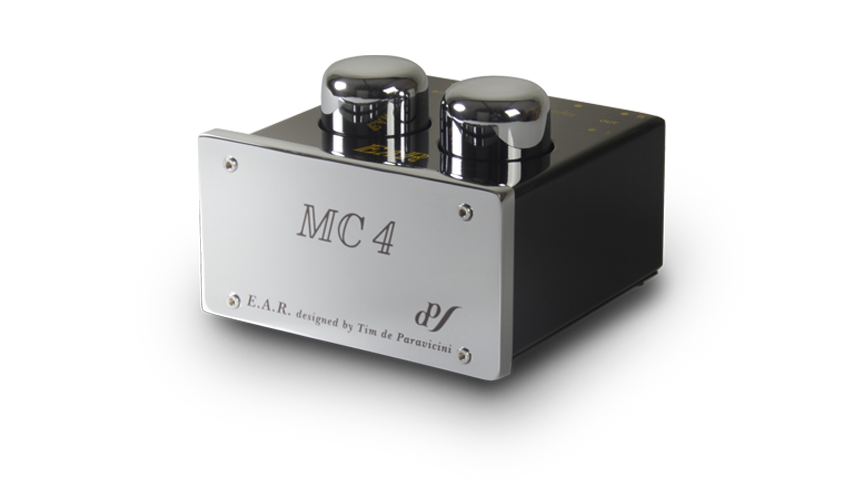
  • Step-Up Transformer (SUT) and Pre-Preamplifier If you want to use an MC cartridge with an MM phono stage, you'd have to add around 10-20 db of amplification ahead. Because of noise, this is most easily achieved by using a passive SUT. Since vintage ones are just as good or superior, we should include them in our considerations; hence it is a wide world out there. Due to the nature of the subject, even introductory articles are somewhat technical. You may start with these in vinyl engine and theanalogdept but keep in mind impedance (see section below too) is not an easy subject even for designers, which is why there is so much heated discussion around. Buying a SUT to "match" a particular cartridge is expensive and does not always work out. It is desirable to have a few lying around; vintage ones are good and keep their resale value (think Cotter!). As for current offerings, K&K Audio (Stereophile) is great value, available both as kit and assembled (here; their MC Step Up guide is also good). Like Shindo, K&K used Lundahl transformers. And then there is Bob's Devices. They used to also manufacture cheaper units using the Cinemag 3440A, but they seem to have gone upscale, with the 1131 only, for considerably more money (here). I can attest to the superb performance and value of the Cinemag 3440A (here). Better yet, get an SUT with multiple taps. A good and modern one is the EAR MC-4 (see Stereophile; it is also the same transformer in my EAR 912, so I know it very well; see my report here), which is a bargain, as it is several SUT's in one. For  For Denon Naturally, Denon makes many SUT's, and even the cheapest AU300LC (my experience here) is good, and it is still easily available. Trial-and-Error If you have the option to try different ones, by all means do so. Sometimes, a "mis-match" will sound best in your system, so cast theories aside and use your ears (just one personal anecdote: in my old setup, using the Kondo SFz SUT with Denon DL-103, surprisingly the 1 ohm setting sounded better than the 40 ohm, go figure). PrePreamplifiers or Headamps these are active devices that supply the additional gain, not something in vogue now. I have the Mark Levinson JC-1 (DC), Klyne SK-1(here), Audionix and Ortofon MCA76 (both treated here); they all serve their useful purposes, but the Klyne is no doubt the most useful and it sounds great too. A good one can be very quiet, but less so than a good SUT.
  • MC Loading The basics are covered in many of the links above. This is a subject of much heated debate. In my experience, it is rather setup dependent - some systems are more responsive than others. Active MC Phonoamps Many, like my Fosgate Reference and BAT P5, have several impedance settings; others, like the Parasound JC3, has only the standard 100 ohm (John Curl does not believe in loading, but he bowed to public pressure in his later JC3+). Given that there are so many "experts" on loading values on the net, it almost tickles me when I think a lot of good designers don't (to name but two, the aforementioned John Curl; and Linn offers reason not to). My view is a better phono amp with no loading choice (like the JC3) is much preferable to a lesser phono amp with great loading choices (like the Phonomena II). Loading a SUT? Since SUT's are imperfect, many people add resistors to change the load. I don't do this and I don't believe in it (beside, it is too much trouble). MM Capacitance I don't do this either, but then I seldom use MM. Remember, loading is not the only way to change the sound, altering VTA and tracking weights are easier and effective.
  • Phono Interconnects Use the best and most neutral one you have. The interconnect for the source is always very important.
  • Test Records For dialling the sound in, best is to use a few good classical records, supplemented by some vocals and jazz perhaps. For assessing performance parameters, the HiFi News Test Record is surely indispensable for most even if I dispense with it.
p.s. I can go on and on, and have an unfinished feeling, but I'll stop here. Maybe more revisions and additions later. It has taken too long.