Showing posts with label CD Recommendations-Classical. Show all posts

27 April, 2020

Streaming Naxos Music Library Classical Music Magazines


Click to enlarge. Micromega MyDAC next to Elekit preamp. Blue Ray player beneath Akitika amp.

New York Diary (20-15): Streaming Classical in Time of Corona
Guide to Classical Magazines
My small System for Streaming.
Naxos Music Library, II

Previous Article on the NML via NYPL

For the longest time, this blog has covered classical music. But for almost a month, since I set up my system in the living room, I haven't updated the music column. Recently, having received a few surprising, and encouraging, feedback (some on my YouTube Classical Basic Repertoire), I felt I have to start streaming again so as to find more current offerings to recommend. As I now spend all of my waking hours in the LR, first thing is to set up a small system there:

DAC: Micromega MyDAC (Kimber KCAG)
Preamp: Elekit TU-8500 (old Audio Note AN-V)
Amp: Akitika GT-102 (Acrotec 6N-1010)
Loudspeakers: Audiomaster LS3/5A (15 ohm)
Stands: el-cheapo generic stand used without spikes
Blue Ray Player: Sony S-5000ES (Audio Out; Canare 2T2S)
Turntable: Audio-Technica AT-PL120/Denon DL-301ii

Basically, this is moving out part of my System III (sidebar) into the LR. As is my wont, it starts simple but is likely to get more complicated as I go along. A note on the BR player; as denoted by the ES suffix, this was Sony's well reviewed flagship BRP (here), one I acquired when it was closed out but it has seen little use in the last decade. Sony players are known for their sonic excellence (even my el-cheapo BDP-190, which I wrote about preferring it to Weiss)

Before I moved on to Streaming, I played a few CDs to ensure the sound was of good quality. Having confirmed that, I used (via wifi) an old loaner Dell laptop nominally running Windows 10 (originally a Windows 7 unit). My favorite USB cable was not long enough and I had to compromise and use a generic USB extension cable to reach my seat. Even then, despite occasional crackles, sound was good enough, even better than it was in the audio room. Regrettably, I cannot add a sub now, because it is being used in the big system behind. But the sound was fuller and surprisingly bassier than before in the audio room. I think this is as much due to use of the wood based stands (the ones in the audio room are much higher quality Sonus faber stands with spikes) as a tubed preamp.

As before, I accessed the NML through the NYPL. Since the modem is in the LR, the connection is now better than in the audio room. The only times I get disconnected is when I concurrently visit websites with a lot of ads and videos (like news sites), no doubt due to the aged computer's lack of capacity.

How to Start? Faced with over 150K discs, one realizes too much is too much. For me, I am only interested in relatively new recordings. And for every great composer, there are a hundred lesser ones that only specialists may be interested in. So, browsing is not as easy as pulling items off the shelf in the Performing Arts Library. It is much easier to find specific discs than to browse. For the beginner, it'd be even more daunting. Therefore, it is much easier to rely more on classical music websites (including this blog) for some recommendations. Before we visit them, a few pointers.

Online CD Reviews There is a lot out there. Even more than audiophiles, classical music listeners in a vaster universe listen in different ways, and have different preferences:
  • The same recording (especially the daring ones) can polarize opinions. If you are curious about a certain recording, it is good to read more than one review to get the gist. Take one of the albums I listened to, the Sibelius 2nd conducted by Rouvali, as an example: it's highly praised here but severely panned here. Me? I think it is somewhere in the middle and I can understand both views, but I stop short of a general recommendation. In this blog, when I decide I like a recording, I recommend it and include a link that I agree with, but that doesn't mean sometimes there won't be a dissenting opinion.
  • Critics all have bias, even serious ones, and can be nationalistic. Just like audiophiles, some may prefer a big fat sound, others a more pacey delivery. Some like their baroque music to be played in historically informed fashion (like lack of vibratos), others still cling on to older, more romantic ways of playing. American Critics tend to think US orchestra are the most virtuosic (I prefer European Orchestras, especially the ones formerly in East Germany, for their subtlety and refinement). Even more than that, UK critics are widely alleged (especially by US critics) to easily pander to their own musicians (I think that is at least a half truth).
  • Amateur User Reviews That includes me. Many professional critics read music, whereas this is not the case for amateurs. However, music is for all, and even a musician's feeling and opinion may not be right for you! Amazon reviews can also be interesting, and some commentators are quite experienced.
  • Vendors Many vendors include quotes of reviews, and they can be useful. Prestomusic is a large UK vendor and its homepage has some useful info on new releases etc. On many albums, there are capsular reviews from subscription UK magazines that are useful and otherwise not available. The US vendor ArchivMusic also frequently have such reviews from both UK and US magazines (but less so now).
  • Forums and Composer Sites There are all kinds of sites devoted to reviews, discography of artists and composers. Many of these have informative posts on a certain topic.
Best Of Many sites have some "Best" articles (some detailed below). These can be useful to the newbie.

Classical Magazines Once you know what you want an opinion on, it is easy, just google and many reviews will come up. But what if you just want to browse, read a webzine like you would a print magazine? There are of course some very good ones that one has to subscribe to, but there are also some free internet sites. I'll start with my favorite (even if I don't read it as a zine, only selected reviews).

Free Webzines
MusicWeb-International This UK site is the most comprehensive free webzine. The reviews, though not without a bit of pro-UK bias, are mostly fair and sometimes more than one reviewer will review the same disc and give different opinions. There is a lot to this magazine, including surveys of composers like Mahler. A very useful feature is the Monthly Indexes, where the best albums of the year are listed. I just perused this and have listened to several album;, some I like and they end up in my music column, some not so enthusiastic about. And then there are good performances that I listened to (like Edward Gardner's Schubert cycle, or Lepauw's mammoth complete Bach Well-tempered Clavier) and liked but decided they are only for more advanced listeners. It will likely take one years to go through what they recommend over the years!

Classics Today This US site is about 2/3 free. It has good reviewers, the straightest shooting of which is David Hurwitz, who often trashes more wayward readings. If he says something is good, it usually is. If he trashes it, you might find it praised by others and still like it. the other writers are good too (you might recognize Robert Levine as also a Stereophile writer).

All Music Guide AMG used to issue heavy and comprehensive books (I still have two, one on classical, one on rock) but is now web only. It is free but coverage is not as extensive as some others. I find the reviewers very reliable though.

Classical-Music This the official UK BBC Classical Music Magazine website, which only lists a few Monthly Choices, but they can be useful. This is a pretty good magazine that I used to borrow from the library in HK.

Subscription Magazines
The best magazine in terms of comprehensive coverage is UK's  Gramophone. This magazine has the longest history, dating to before the war, and there are some very old reviewers around. This is valuable for their historical insights and recollections. This magazine though is a little more patronizing to UK institutions, understandably given such a tradition. I used to read this religiously in HK. Too bad that the Queens Library system does not subscribe to a single classical magazine (though they have jazz' Downbeat). The website has some free articles that are useful, like the 50 Best Recordings series on the right, useful for beginners.

The best of the US magazine is the ultra-conservative and very good American Record Guide. It has almost no pictures (no pic of album cover, a shortcoming) and few ads. I like it a lot more than the other one, Fanfare.

Postscript: I am currently addicted to streaming, and shall soon rejuvenate the Music Column. Also, this little system is going to get further development. Maybe it is time to match the BRP to a generic DVD player for use as transport (remember our Russian friend?).  Maybe a bit of phonoamp shootout also. Maybe adding back the sub. Too many maybe's....

Basic Repertoire
My recommended Astor Piazolla album in the Music Sidebar has one of his most popular tunes, Oblivion. But here is Piazolla's most famous tune, Adios Nonino, played by the great man himself. Incomparable.

16 June, 2019

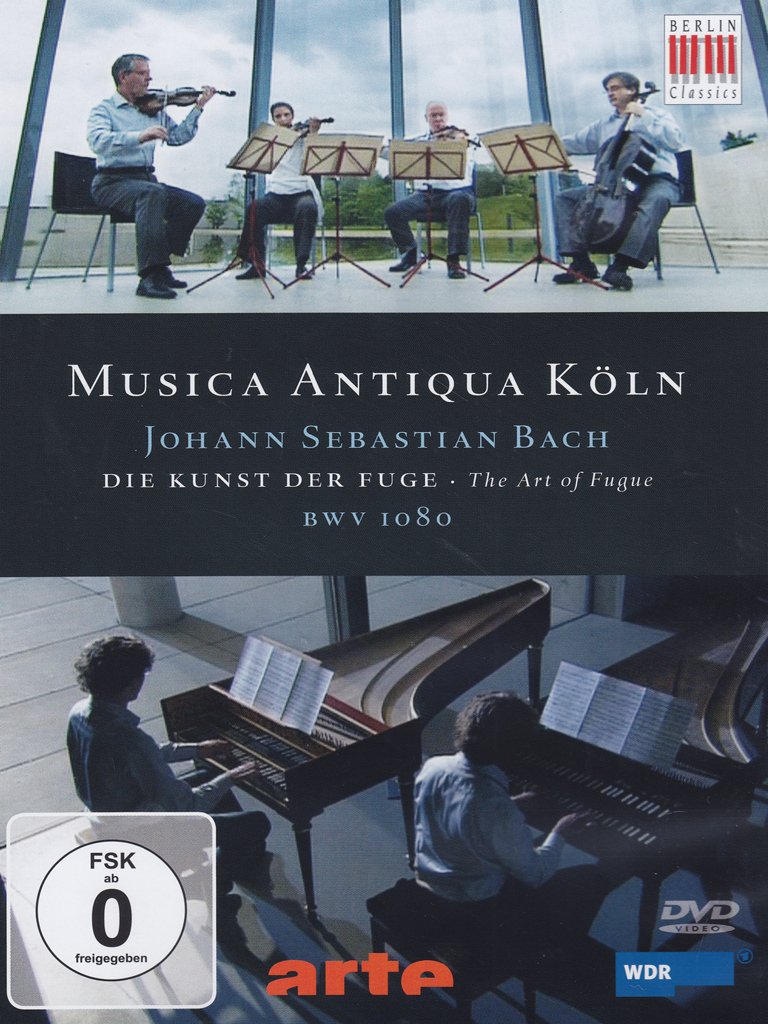
Image result for goebel art fugue ando dvd berlin classicsNY Diary (19-4) Bach, Musica Antiqua Koln and Reinhard Goebel

Readers who read my classical recommendations know that I just cannot have enough Bach. It would not be stretching it to say I feel he occupies just as important a place in my heart as audio. Fortunately, the two complement each other.

Johann Sebastian Bach Brandenburg Ctos/Orchestral Suites/Chamber Music [13 CD]Musica Antiqua Koln (MAK), the trail blazing early music ensemble under the leadership of violinist Reinhard Goebel, which dissolved in 2006, to me has never made a bad recording. In the early days of historically informed performance (HIP), although there were quite a few contemporaneous English ensembles (like the English Concert or Academy of Ancient Music), the MAK's driven ways and sheer virtuosity has always been surpassing. Indeed their Bach recordings, now still available in a super-bargain 13 CD box (from Universal), is indispensable. Grab it while you can.

J.S. Bach: Brandenburg ConcertosThe Brandenburg Concertos in that box has always divided opinions, being of extremely fast tempi and lean aesthetics, and is still a daunting listen today, when fast tempi are more common. The set also has a sterling account of the lofty Art of the Fugue. In my sidebar, I also recommended another version of the piece, but the MAK's more austere approach here is just as valid.

Goebel is today more of a conductor, and I just savored repeatedly his recent Brandenburg Concerto (from the library) set (from Sony) with the Berliner Barock Solisten (comprising members of the BPO, but playing in HIP-informed ways). Tempi are just as fast, but I find the playing literally even more breathtakingly virtuosic. The momentum is now better sprung and the dance elements are more noticeable. Indeed there is just a more color to the proceedings. At the same time, I also heard the Chailly/Gewandhaus set, but though not without interest, it did not capture my attention nearly as much as this one. Recommended without any hesitation.

Just like the Sony CD, there is a much later MAK recording of Art of the Fugue, likely recorded not long before they dissolved, but it is on DVD (from Berlin Classics, and still available). The MAK played in the stunning Langen Foundation (a museum near Dusseldorf) designed by renowned architect Tadao Ando. Not only is the playing definitive, but the photography and conceptual layout are so impressive as to illustrate why sometimes (even non-vocal) music benefits from well integrated imagery. Embedded below is an almost complete youtube offering.

03 January, 2019

Bruno Walter Mahler

Bruno Walter: Mahler
CD and LP Recommendation - Classical


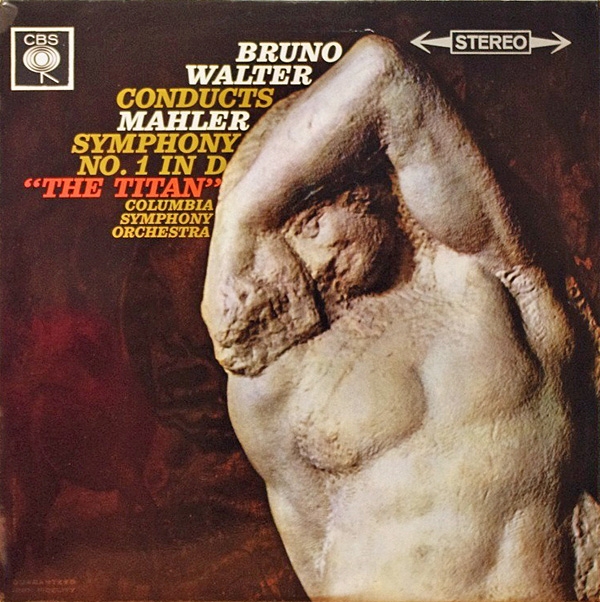
Today I was surprised by the web edition of Stereophile, which published a 1963 article by J Gordon Holt, highly praising Bruno Walter's Stereo Mahler 1st (Columbia Symphony).

Personally I feel Walter's recordings of some of the Mahler Symphonies have never been surpassed, only sometimes equalled. They are essentials in the Mahler cannon.

The 1st is a record I have cherished ever since my first foray into classical's. Mine was an Odyssey reissue. I have always regarded it as one of the very best. My other favorite is the cataclysmic Kletzki/VPO recording, perhaps followed by Horenstein/LSO.

Image result for walter mahler 2Walter's Mahler Stereo 2nd (NYPO) was my first version, and it has remained my preferred version. The all-important opening imho has never been better served, so atmospheric it is. Mine was also the Odyssey reissue, and I still love that cover!

Image result for mahler 9 walter odysseyWalter's Mahler 4th and 5th are in good sounding mono, and very good, but perhaps not as outstanding as the 1st or 2nd.

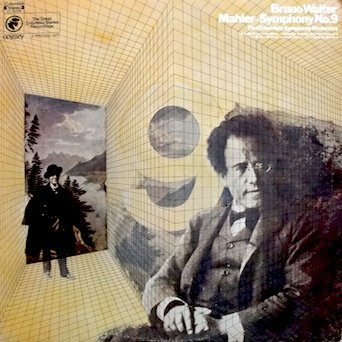
When it comes to the 9th, Walter (Columbia Symphony) again is supreme. Mine is the Odyssey re-issue, and again I love the artwork! But what is even more unforgettable is the ancient/mono VPO version, sonic limitations notwithstanding.

And then there is Das Lied von der Erde, and I love both his versions for Decca (mono; VPO/Ferrier/Patzak) and the under-rated Columbia (stereo; NYPO/Miller/Hafliger).

There is a great survey on Musicweb-International of Mahler by Tony Duggan, a reliable guide:

Mahler 1st
Mahler 2nd
Mahler 4th
Mahler 5th
Mahler 9th

You can see Walter is always there.

02 May, 2018

Henry Purcell: Dido and Aeneas
CD Recommendations: Classical Vocal

Regular perusers of my CD recommendations will have surely noted a dearth of vocal works. There are several reasons.

Although I have always preferred orchestral works, in my youth I had gone through most of the famous operas and sacred vocal works, and know them reasonably well. These days, however, I don't often listen to them, as usually I don't have time to read the libretto, which I consider a must, especially in the absence of visual clues.

Writing for an audio blog means most of my readers are audiophiles, who as you know don't usually listen to vocals outside of the pop and jazz canon, so it is easier to recommend orchestral works. Also, as I buy very few CD's in recent years, to ensure someone can get it, the CD's that get posted all come from the library and usually date within the last few years. The library separates classical vocals from the rest, and it is a much smaller section which I peruse only once in a while. Just the other day, however, I came across several exceptional issues and decided to write this article.

Purcell Dido and Aeneas This has long been one of my favorites. The music is splendid; the libretto a model of concision - quite the opposite of, say, Donizetti (you guessed it, not a favorite composer). I have several old versions on LP's (remember Janet Baker?), but the version here presented by Fabio Bonizzoni is a modern one (hence HIP informed). The period band La Risonanza play with great feeling, and the singers are very good. I have always liked Belinda's music the most, and here Stephanie True sings o so sweetly. Superior sonics. (Challenge, SACD, 2016)

Handel Cantatas (Agrippina condotta a morire; Armida abbandonata; La Lucrezia) The tragic heroines are sung with great flair by soprano Eva Mei, who is accompanied with equal flair by the period band Il Giardino Armonico under Giovanni Antonini (read their website on the stories behind these cantatas). To avoid sameness, it is still recommended that you listen to one at a time. Superb sound. (Teldec, CD, 1999; available in several versions; this library copy is Japanese).

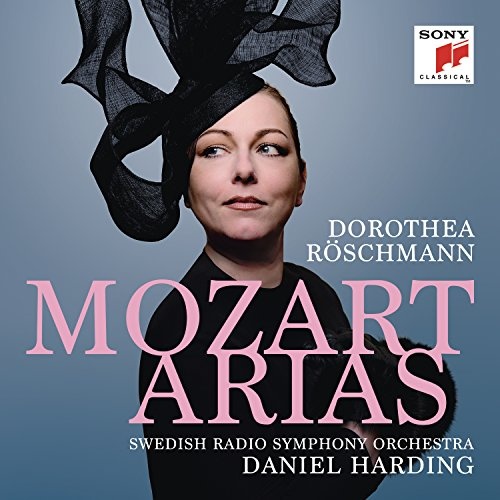
Mozart Soprano Arias I have actually heard quite a few single CD's by famous current singers. Most of them are well sung, but perhaps too well - 60 minutes or more of creamy tone can get a bit too much. Not so Dorothea Roschmann, whose superb characterizations hold one's attention. Praise also to the alert playing of the Swedish Radio Symphony Orchestra under Daniel Harding. (Sony, CD, 2015). Sabine Devielhe's album is even more interesting given the scholarship and direction of Raphael Pichon, whose period band Pygmalion play with great passion. (Erato/Warner, CD, 2015).

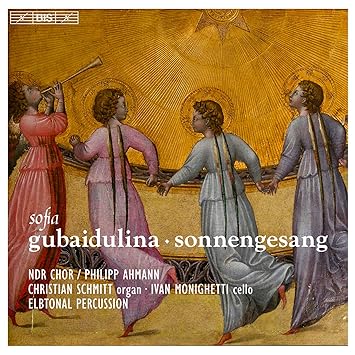
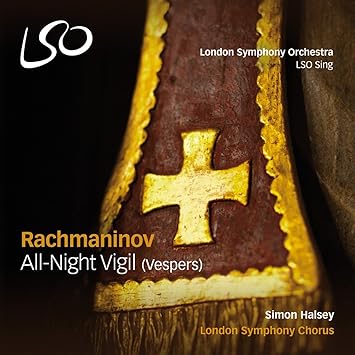
Rachmaninov's Vespers gets a good outing here from the always excellent LSO Chorus, directed by Simon Halsey, but without orchestral support it is not for everyone (LSO, SACD, 2016). More interesting to me, but not for anyone with catholic taste, is the choral and organ music of Sofia Gubaidulina. Sonnengesang = Canticle of the Sun (written for Rostropovich). Here the cello solo is superbly projected by Ivan Molighetti, with excellent organ and choral contribution from the NDR Chor, all in superb sound. The other two works are to me equally excellent and no mere fillers. (BIS, SACD, 2016).

Many of these works can be heard on TIDAL.

Sofia Gubaidulina: SonnengesangMozart: The Weber SistersRachmaninov: All-Night Vigil (Vespers)

Mozart Arias

03 October, 2017

Great Performances on Vinyl


Editor's Note: Great Performances on Vinyl
Classical Music Recommendations
Letter from NYC (67): 2017 (6)

What are Favorite Recordings For?
Every audiophile has his favorite recordings. Some of these are for enjoyment, while others are used as "tools" to tweak his own system (and that of friends), even to booster his own ego ("in my system I can hear that subway rumble beneath Carnegie Hall/count three guitars in the backup band") or, worse, to put down another system ("yours can't"). We are good guys, but sometimes we, as audiophiles, do smile the occasional evil smile (to borrow from Sam Tellig)! I admit I do, usually when I take a few CD's to a very expensive system. And others do that to me!

OK, here we are not talking about the evil smile; rather, first I'd like to share with you some musical moments in my listening, great performances that make me realize how well the orchestra had carried out the intent of the conductor. This is only possible when the conductor was in great form, when the orchestra was thoroughly committed, and when it was captured well by the recording engineer, and when the system gets it right. So while these recordings have superb sound, the focus here is not on the recording quality per se, rather on why I found certain moments particularly illuminating. This would also give you some insight into how I listen.

The Perfect Crescendo, Noble Brass Utterance, Unshakable Bass Foundation and the Long Line

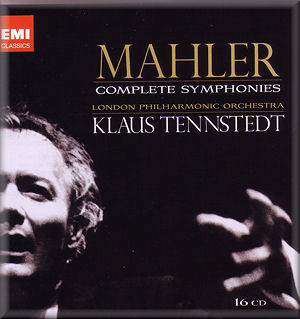
The Crescendo is one of the most basic aspects of music, yet often we don't really pay attention to how well or badly it is executed. In concert, I do get aroused by a particularly well executed one, but many lesser performances don't deliver this too well. On recordings, it per se had not been one of the things that perked up my ears, until I played the Live Mahler 5th (LPO/Tennstedt, EMI) CD on my 2 chassis Sony 16 bit TDA-1541 flagship CDP-R1/DAS/R1 (this was documented here). As described, I was dumbfounded by the beauty of that first PERFECT full orchestral crescendo after the opening trumpet fanfare. What truly fascinated me was that many other CDP's failed to reveal this. While the durations are exactly the same, I assure you there is an immense divide between the natural, grand Sony crescendo and most others, which gave the feeling of peaking prematurely (rather unmanly, don't you think?). The single CD may not be easy to get; however, you can get it in EMI's super-bargain Tennstedt Mahler box set, which contains all of his studio and live recordings (see this detailed review).

The well executed crescendo is a thrilling experience - as it is a short journey, it is not often that we get to smell the roses along the way, but when things do come together, when the calibration is precise, it is more than thrilling, it is spine-tingling. This is another reason why I prefer tube. For some reason, most ss gears just tighten up more and more as the orchestra swells.

Utter, not Shout Two days ago when we visited R we played another LP that I bought in the UK, the HMV Concert Classics Bruckner 4th (Philharmonia/Klemperer, EMI). It sounded so good that I had been playing this non-stop in my own system after I got home. As is usual for Klemperer's  EMI recordings, the sound is exemplary (but typical EMI/Angel sound, not quite as full in the bass as Decca/London). This is an unsentimental but ultimately monumental reading, conducted with a clear view of the long line. I gave a copy to Andy, and he loves it, citing in particular the feeling of one single climax for the symphony (early in the last movement). Though he has other idiosyncrasies, one of Klemperer's traits is to never editorialize, and so the playing here is very clean, though not at all sterile. The brass utterances are warm, purposeful and always patiently built up to great effect.

As for crescendos (and decrescendos), those in Bruckner are of a quite different kind from Mahler. There are so many of them and, coupled to the lack of tone painting and frequent woodwind and string stirrings, one doesn't quite listen in the same way. But when I did pay attention, the quality of the execution in dynamics was apparent.

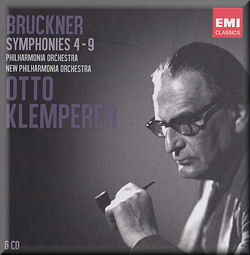
Just as in Mahler, where some would not listen to anything other than Bernstein no matter how much he pulls the score one way or another, not everyone will warm to Klemperer's cooler ways. But if you do, the LP is not hard to get. In CD form, this reading is available in an excellent sounding bargain box set (which I have in HK). For an unusually insightful review of the set, go to musicweb-international.

Bass Foundation Just a few days ago, I played an LP I bought in the UK. Sibelius Finlandia (Halle/Barbirolli, EMI) has been a favorite LP of mine (the other pieces, especially a bewitching Pohjola's Daughter, are arguably even greater in performances) for decades and my US budget Seraphim copy is pretty worn out.

This time, on my reference horn system, I was stunned by several things I hadn't quite felt before. I doubt this is just because the UK LP is superior, it is rather because my listening ability and playback equipment have improved greatly over the years.

The Finlandia is a sweeping performance. The precisely calibrated playing. The crescendos are shorter than that one in the Mahler, but I experienced the same satisfaction. The purposeful winds and brass utterances, just as in Klemperer. And, even more than Klemperer, a superb bass foundation. As the music moves inexorably along, the sweeping bass foundation, though sometimes just felt rather than heard, is always there and comforting, like the presence of a Guardian Angel. This is as it should be. Interesting, my different preamps render this differently, and my Shindo Monbrisson excels. I'd write about this in detail in my next article.

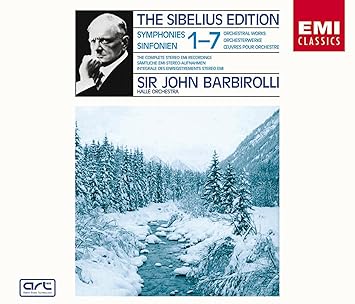
The LP is not hard to get. At this moment in CD form it seems to be only available in the set pictured (here is a review by gramophone ).

---------------------------------------------------------------------------------------------------

And now I am going to mention two recordings that are a bit different. They did not shed as much insight on the audio interface for me as the above mentioned ones, but they are great in their own rights.

Simply Fizz During our visit to R, Andy brought along Simon's Chabrier Espana (OSR/Ansermet, London LP). It is a romp from start to finish, impeccably conducted and stylishly played, as is usual for this team in French repertoire. If you like (as I do) Offenbach's La Gaite Parisienne (my fav is Boston Pops/Fiedler, RCA), or the Bizet-Shchedrin Carmen Suite (my fav is an unsung dark horse, NSO Ukraine/Kuchar, Naxos), you will like this one even more.

Borderline Recording? Some time ago in a dollar bin I found the Dvorak "American" Quartet (Budapest Quartet, Columbia). The Quartet was paradoxically all-Russian by this time, and this was their almost never issued last recording. First violinist Roisman's tone is pretty lean, and when combined with Columbia's usual sound (on the aggressive side) will reveal the least of the system's bright aspects. Otherwise, the performance just kept growing on me - it is magnificently of one piece. Even the recording quality grows on me - it has great separation of the instruments and the individual timbers of the rest of the quartet are magnificently caught (particularly the viola). In a way, it is somewhat of a living dangerously, on the edge kind of thing, but highly satisfying. I found another copy and gave it to Andy, who also loves it. We took it to R's and the playback made us smile (no evil!). There is no CD, but you can easily buy this LP for very little money, though I just saw someone unconscionably asking for $255 on Amazon! The crazy world of discontinued recordings!

10 May, 2016

CD Recommendations - Classical

CD Recommendations - Classical (Click on pic for reviews/details)
CD I am Playing
The name Sokolov is enough. Content also filmed.

CD
Excellent new works comissioned by Gabetta.
CD
Incomparable Dvorak from Panocha Quartet, Suk Trio and friends.
CD
First rate performances from names new to me.

CD
Great pianist at the service of music

CD
Top choice for the War Sonatas
 
CD 
Sterling production from these forces, as usual. Unusual world music material.
CD
Bravura performances highly suited to the genre.

CD/LPs I am playing now
 I have never heard of Gottfried Finger before, but this magnificent Viol disc certainly changes that!

CD

Stylish readings of under-rated music; superb recorded sound.
 
CD

Best set of Bach's solo violin works I have heard in a LONG time! Watch this name!
 
CD
Surprisingly mature playing and interpretation from a young violinist!
CD
Superbly played piano CD; never a boring moment! Ranks with the very bests.
 
CD
One of the most sympathetic Rachmaninov pianists I have heard in a while.
CD
Unknown music wonderfully performed.
 
CD
A must for violin lovers, in excellent mono sound.
 
CD
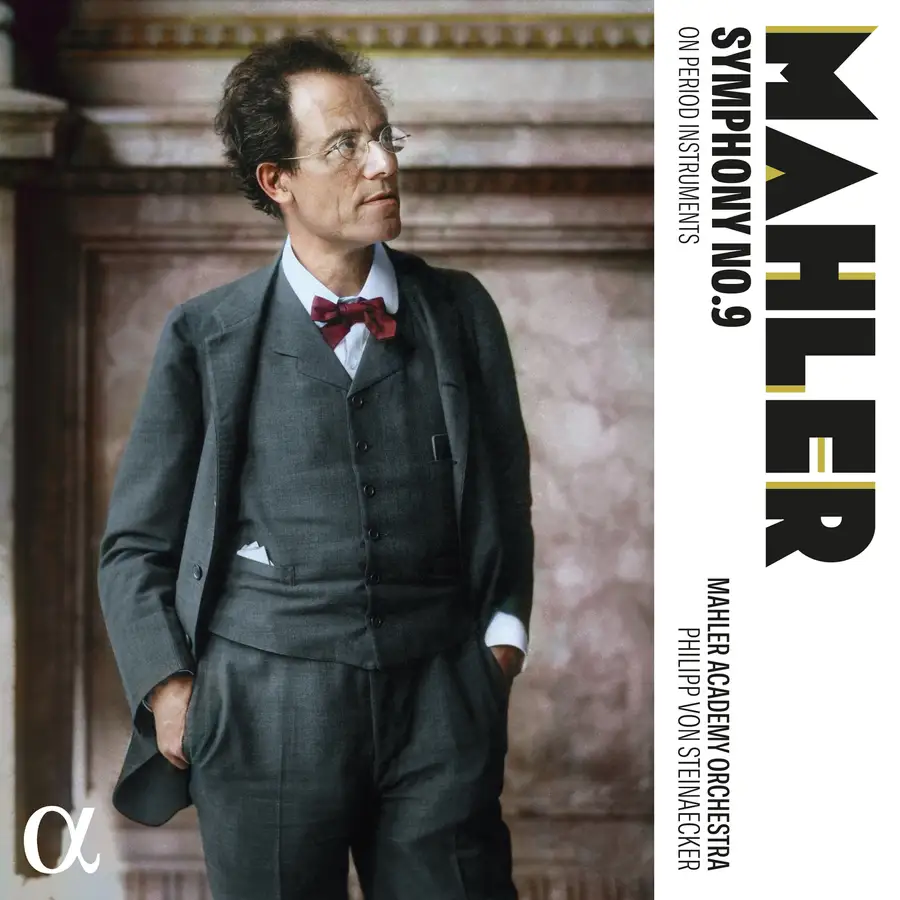
A great example of non-sentimental yet exciting Mahler. Beautifully recorded.
CD
Ultra sophisticated playing that turns these little gems into masterpieces.

CD
The best solo violin disc I have heard in a long long time. A MUST!

CD
Stunning second installment in this double cycle.
 
CD
Fantastic! Bach on the Accordion and Bandoneon, aided by some friends. Have been listening non-stop.

CD
Hilary Hahn has been contributing to the violin repertoire with comissions and stimulating partnerships. This is not something to go through in one sitting but many pieces are very fine.


CD/LPs I am playing now
Stunningly recorded recital, beautiful playing; must-buy!
CD

Mostly mono, but well re-mastered. Sublime Playing!

CD
Lola Bobesco is much underated. Her fluid playing makes the Viotti surprisingly captive. Wonderful!

SACD

SACD
Stylish accounts
CD I am Playing
Controversial performance full of details that should be heard at least once.
 
SACD I am Playing
Wonderful original instrument Beethoven cycle.
SACD
Wonderful performance and recording.

SACD I am playing
Good performance and excellent recording. 
SACD
Superb! Lucid readings and the usual pristine sound from Channel Classics
SACD
refreshing reading of one of my favorite pieces
SACD
Gergiev gives his usual pointed reading with his band