Showing posts with label Classical Music - Streaming. Show all posts

28 July, 2024

Streaming Classical


Streaming Classical (24-2)

Piano Chinese American George Li has already released several albums. His pristine and surprisingly subtle pianism are heard best on Opus Klassik Awards winner Live from the Mariinsky as well as the newer Movements (both on Warner). In the latter, he plays Ravel and Schumann ravishingly (as you know, I don't take to Schumann piano works easily). Another pianist of Chinese heritage is Tianqi Du, who broke out a while ago with an excellent Bach Goldberg Variations; now comes an album of good Bach Concertos (both on Naive). I'm a fan of Zlata Chochieva, recommended here before. Her latest double album, Im Freien (Naive) is just wonderful. Here you shall find the same juxtaposition of Schumann and Ravel, as in George Li's album recommended above. On the Fortepiano, Olga Pashchenko (recommended before) has a pair of impeccable Mozart Concertos albums 9+17, 20+23 (Naive). The contribution of the period orchestra Il Gardelino are well nigh perfect. These sound better than Robert Levin's series on AAM own label (where he is balanced too far back). For Duo Piano, a surprisingly satisfying program, Vienna, Theme and Variations, from Pianoduo Amacord (Zip Records). Why surprisingly, you may ask? Well, I'm even more demanding of Piano Duos than Solo Pianists (you guessed it, Labeque Sisters have never made it on to my very short list; and then there are the utterly forgettable recordings like DG's Jussen Brothers). To close this section, another new name, Reed Tetzloff, whose Beethoven PC4/5 (Aparte) are surprisingly engaging!

Harpsichord While I've rarely been moved by his classical recordings (on ECM), somehow I had overlooked Keith Jarrett's CPE Bach Wurttemburg Sonatas (on the piano), which are just dynamite and, yes, I enjoy them more than on the harpsicord (vs Esfahani)! That says a lot, as I don't usually dig CPE.

Violin A David Oistrakh pupil, Liana Isakadze is forgotten now. Recently, there had been a spate of very good Schoenberg VC's, but her old account (TYXart) holds its own! The Moscow SO under Kornienko played with great character, and the rest of the orchestral program are excellent too! DG's newest fiddler lady Maria Duenas delivers a refreshing Beethoven (VC) album, well supported by VSO/Honeck. It's been a while for a new album of Janine Jansen, but the new Sibelius and Prokofiev with Oslo/Makela (Decca) is just wonderful! 

Organ Anna Lapwood's 2 albums on Sony are eclectic and hugely enjoyable!

Trio I find it pretty amazing that there are so many Trios on the horizon, and for me most are better than Trios of the past (like the over-rated, overly safe and plain Jane Beaux Arts). The refined Neave Trio has many recordings, but I particularly like the newest Rooted and the older French Moments (Chandos). Trio Khaldei's newest album has a transcription of Debussy's La Mer, and it's just sensational! The rest of the program is good too in a somewhat reverberant recording (Evil Penguin).

String Quartet Polish Apollon Musagete Quartet is unusually refined for a young ensemble. Their latest recording is the best Schubert I've heard in a while (Chopin Institute). Also try out Russian Soul (Oehms) and their Panufnik to start.

Chamber I'm not quite a fan of Francesca Dego as Solo Violinist but on her chamber music recordings with friends and stablemates all sound very good. Mozart Piano Quartets are very refined and the Horn Trios with Martin Owens are all wonderful (Chandos). The Mozart PQs have long been personal favs and are somehow in vogue now! Another recording led by Finghin Collins (Claves) is even better! The excellent Armida Quartet and pianist Martin Klett team up for a superb Franck and Martin album (Avi). And my beloved Calefax Reed Quintet's newest American Rhapsody album is just the right thing to cheer one up (Pentatone).

Baroque
Guido Belastracci delivers a fabulous Viola da Gamba program, Virtuosity and Grace (Arcana). Ha! Good things can come in pairs, as this program also contains CPE. Gaspard La Roux received royal treatment from Justin Taylor and his mentor William Christie (Harmonia Mundi). I'll listen to anything played by Cafe Zimmermann, and the newest Young and Foolish (Alpha) is as good as any. Mozart and again CPE. That's 3 albums that I recommend that contain CPE, highly unusual!

Orchestral
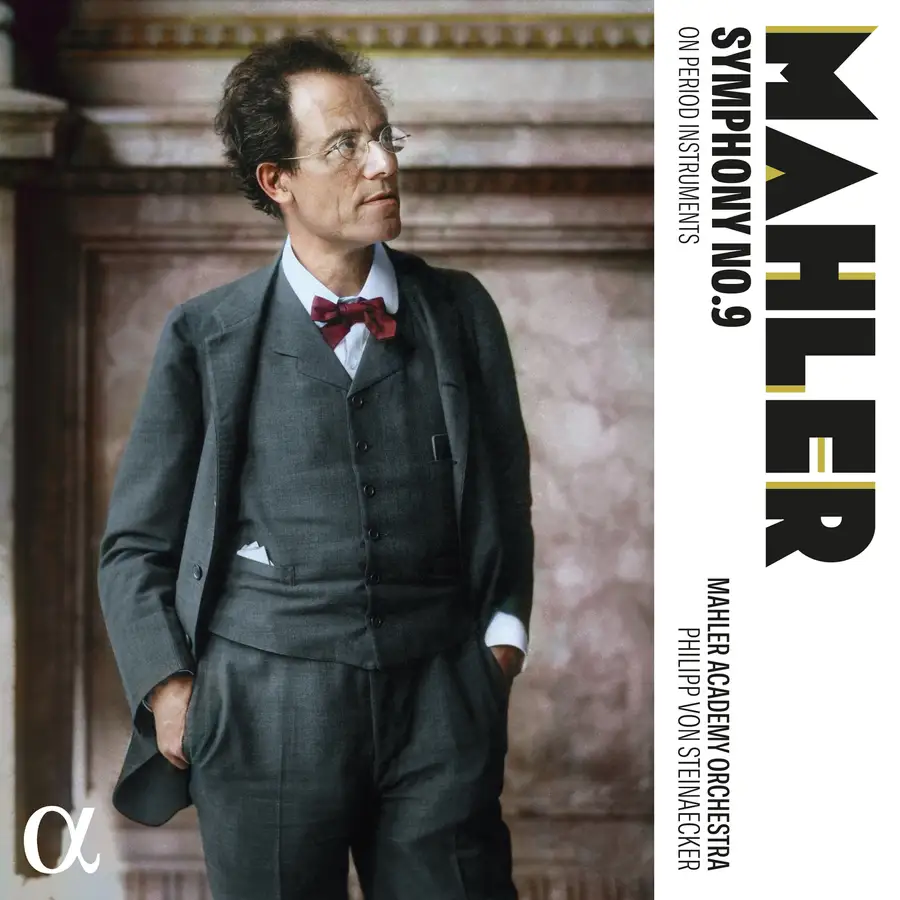
The biggest surprise is Mahler 9 played with period instruments, as performed by the little known Mahler Academy Orchestra under Steinaecker (Alpha). This shoots straight to the top of my M9 list! Quite a sonic treat! Villa Lobos' Uirapuru was made famous by Stokowski's album on Everest. But I think the Odense Symphony under Jan Wagner is even better in performance and sound (Bridge). HKPO's newest director Tarmo Peltokoski has his debut recording on DG. The Mozart is decent. Mezzo Stella Doufexis' French orchestral song program is impeccable, and the Deutsche Staatsphilharmonie Rheinland under Karl-Heinz Steffens deserve equal credit. This album is no less enchanting than, say, Schwarzkopf's Strauss songs.

Choral
No, not the usual lukewarm Brit Choral music so bafflingly beloved by Brit critics. The Bruckner Motets performed by UK's St Albans Cathedral Choir under Andrew Lucas (First Hand) are really sublime, and I've known these pieces for a long time, being a Bruckner fan(atic). Another surprise is Ein Deutches Barockrequiem performed by Vox Luminis under Lionel Meunier (Ricercar). This is a highly scholarly effort to mirror the baroque texts of Brahms' German Requiem. Although a huge Brahms fan, I still haven't taken to his German Requiem, whereas I like this album very much. One has to listen very intently to both of these albums to get the full impact. Not background music.

New Music
A surprisingly large entry, this batch! Garth Knox (a viola player himself) compositions are never boring. The newest Open Spaces with the Ragazze Quartet (Channel) is no exception. If you like it, check out his older ECM albums D'Amore and Salterello. I've long been a fan of Lera Auerbach, and the latest offering of her Violin pieces by Christine Bernsted (Naxos) is sublime. I also find the compositions of Philip Sawyers highly worthwhile. His latest Double Concerto album feature soloists of the supreme caliber of no less than Daniel Rowland and Maja Bogdanovic (Nimbus). But, really, check out all his compositions, they are that good! Another staggeringly good composer is Liza Lim. I really dug the sonorous delights in her latest Annunciation Tryptych (Kairos). As for the old guard, I liked Kagel's odd Organ compositions, as in "Rrrr...", performed by Gerd Zacher (Aulos) and the older Heterophonie (Wergo). As for long-time fav Schnittke, I love his little known compositions on  Discoveries (Toccata Classics). Quite a gem. For this audiophile, these new(ish) compositions are the best way to appreciate our systems.

Historical Eudice Shapiro (Doremi) is very good and sonically decent.


25 March, 2024

Streaming Classical

This is a classic account by the young Frager, the Prokofiev never surpassed. This is the LP cover, not used in Tidal. See below.

Streaming Classical (24-1)

Baroque
Bach First, the lovely Triple from Les Muffati (Ramee). This label concentrating on Austrian artists has never disappointed me! Here, one relishes in vitality while bathed in gemutlichkeit, far removed from some of the over-aggressiveness of HIP. I pray there will be further installments, particularly of the Brandenburg’s and Orchestral Suites. Then, the Sonatas for Violin and Harpichord played by the wonderful violinist Sirrka Lisa Kaakinen-Pilch (Ondine). Biber The same violinist shines in the Mystery Sonatas (Ondine). Believe me, I’ve committed her tongue-twister of a name to my memory! Should you like more Violin Sonatas from this master composer, go to Gunar Letzbor (Pan Classics); and he also has even more Biber elsewhere (Challenge).

More Violinists
Great fiddlers are in abundant supply these days. Forget about “big” names! Beethoven While Bulgarian Liya Petrova is fabulous in Walton VC (Mirare), her Beethoven VC is even finer; this is coupled with the controversial Mozart 271a, here given a very very convincing reading (Mirare). Russian Alena Baeva, whom I have followed ever since I heard her ages ago in HK give an equally fresh reading of the Beethoven VC with the unheard of Auvergne National Orchestra (orchestra’s own label). I also highly recommend her in one of my favorites, Wieniawski’s VC2 (Chopin Institute) and the recital album Fantasy with husband Kholodenko, another pianist that I like (Alpha). Debussy The elusive Violin Sonata features in several excellent releases by non-French violinists. In Flame (Orchid), Irish Gwendolyn Masin shows real flair in a quasi-French program (equally good Ravel; she has many other interesting recordings, like Bernstein with Saxophone Quartet), while Russian Anna Ovsyanikova also excels in Les Saisons Francaises (Stone Records), which has less familiar couplings (like Poulenc). Meanwhile, English-Dutch Michael Foyle is more restrained but suitably refined in The Great War Centenary (Challenge). All these excellent violinists play chamber music better than many a bigger name.

Cellist Anastasia Kobekina’s Venice (Sony) is choice, by turns electrifying and dark in mood, but all just lovely. The best Cello album since Raphaela Gromes’ Offenbach on the same label.

Pianists
Rachmaninov Lukas Geniusas has an uncommonly lucid Rachmaninov program (Alpha) that makes a convert even of me, who somehow usually has trouble with Rach’s solo piano works (as I do with Schumann). Prokofiev Nikita Midoyants is refreshingly not bombastic but just fluid in Sonatas 4 and 8 (Aparte). But the real gem is The Young Malcolm Frager (Parnassus). This performance of Prokofiev 2, partnered by Paris Conservatory Orchestra under the great Rene Leibowitz, was once issued on a Living Stereo RCA LP (also old Classic Sound re-issue; the pic shows the RCA cover; this is on HP’s list). Both performance and sonics of the Prokofiev have never been surpassed (while the Haydn is dispensible). While we’re on French Orchestra of this period, their ways with Prokofiev is inimitable: witness Jascha Horenstein’s performances (especially Symphony 5) with the Concerts Colonne (Vox). Mozart Frager can also be heard in early but wonderful performances on the fortepiano in Concertos 13, 17 and 23 with Bulgarian forces (Balkanton). Forward to now, it seems this is the great age of Mozart Piano concertos. Aside from Jean-Efflam Bavouzet’s wonderful cycle (Chandos), we have Robert Levin’s excellent HIP cycle (AAM own label). Delectable too are Charles Richard Hamelin in 20 and 23 (Analekta) and Dejan Lazic in 23 and 14 (Challenge; on Tidal you won’t find it under his name, but try conductor Willem de Vriend). Lazic and friends’ Piano Quartets are also refined (Onyx).

Harpsichord
I much enjoyed the recital by Elizabeth Joye, modestly titled Miscellanes (L’Encellade) as well as the Byrd program by Stephen Barr (Resonus). Those more adventurous should sample Geottlieb Muffat's magnum opus Componimenti musicali per il cembalo, as played by Alexandra Nepomnyashchaya (Linn; yes, this is the first time I recommend an issue by this label, whose offerings overall do not impress me performance- or sonic-wise.).

Organ Messiaen For some contemplative repose, try La Nativite du Seigneur performed by Mark Steinbach (Aeolus).

Guitar I was turned off by the ridiculous cover “art” and didn’t listen to this album for a long time, even if I’ve followed and previously recommended once Sean Shibe, but Lost and Found proves to be an excellent program (Pentatone).

Accordion Janne Valkeajoki’s Rameau (Orchid) is quite refreshing change from the usual up-tempo tango or gypsy stuff. You would never guess how well it works in French baroque.

Harmonica Gianluca Littera's Solo (Dynamic) is potentially interesting (all transcriptions, including quite a few jazz items), but needs a good system get through, otherwise it would sound towards the bland side (the harmonica has only such a limited harmonic spectrum). Not one to upend Toots Thielemans but then this fellow is only on his own! I'd like to hear him accompanied by others instead of himself.

String Quartet
Dvorak I’ve been a fan of the old Talich Quartet, but the latest formation is even better in the famous American Quartet (Dolce Vita), helped by superior sonics. When the playing and recording is this good, I actually enjoy even more the smaller pieces or fillers, in this case Waltzes. But the greatest surprise is that some the the best Dvorak playing ever comes from the veteran American Fine Arts Quartet, who are already 2 albums in their cycle. The first, Spirit of Bohemia, is excellent but the second, Quartet 2, is even finer (Naxos). As with the Talich, the fillers, in this case the Bagatelles, prove to be gems. This quartet is unbelievably good (better than the old iterations), and I’ve previously recommended their Mozart Piano Concerto transcriptions with wonderful pianist Alon Goldstein (Naxos), several albums’ worth of delights. The Parker Quartet I've always admired. With violist Kim Kashkashian they deliver a good Dvorak quintet but it's the flanking Kurtag pieces that take the crown. This is as good a place to start with this composer if you don't know him.

Piano Trios The Trio Con Brio Copenhagen is more refined and well honed than most. The Passenger (Orchid Classics) combines the rarely played Weinberg Trio with Schubert's 2, and both are very well done. I had to read the notes on NML (Tidal has none of course) to find out the Weinberg piece has a waltz theme linked to his score for the film named The Passenger. Their many other issues (like Tchaikovsky, Shosty) on the same label are worthwhile too. Vadim Gluzman is a violinist I've long followed (on BIS). His recent Trio recording Live from the Concertgebouw with regular partner cellist Johannes Moser and pianist Korobeinikov delivers valedictory Shostakovich Trios, which this time around sandwiched the delectable performances of Silvestrov's Fugitive Visions of Mozart. More offbeat is the Turina Piano Trios by sensitively performed by Mata, Mata and Arauzo (IBS).

Modern Music Aside from the wondrous Kurtag and Silvestrov noted above, two excellent Ligeti releases are of note. Ensemble Intercontemporain under Pierre Bleuse  (Alpha) deliver three concerti and a host of chamber works, while Les Siecles under Roth (Harmonia Mundi) serve the composer equally well. There is only an overlap of one piece, the wonderful Chamber Concerto for 13 instruments. Audiophiles should really listen to this music as the sonorities are so fresh.

Orchestral
Tchaikovsky Two albums of tone poems and less known pieces are well performed by Alpesh Chauhan (Chandos) and well recorded. Klaus Makela, so refreshing in Sibelius, does not disappoint in his second Stravinsky album (the Debussy Jeux is arguably even finer) (Decca). Great sound of course. Rouvali’s Sibelius cycle continues with an excellent 4 (Alpha). Although not the weightiest and darkest, he makes it work very well indeed.

Live Historical Recordings Shostakovich These performances lose nothing to any modern accounts. Even the sound, though not hifi, is so real. You must try New Philharmonia Kurt Sanderling in 10 (ICA) and Rozhdestvensky BBC SO and BBC Phil in 4 and 11 (ICA). Shattering impact! Marvelous!


23 December, 2023

Streaming Classical


Streaming Classical (23-6): Power Bass!

I have listened to so much good music that I’m way behind in my recommendations (even at the rate of maybe only 1 in 10, or 20 that I've heard).

Baroque Keyboard
Byrd is increasingly recorded. We have the Complete Keyboard Music well rendered by veteran harpsichordist Pieter-Jan Belder and nicely distributed among harpsichord and organ (Brilliant Classic). On the modern piano, we have the charismatic Kit Armstrong in an inspiring Byrd and Bull album (DG).

Recently, I heard live in SZ the Russian sensation Alexander Malofeev in a program that includes Georg Muffat’s Apparatus Musico-Organisticus. I was so curious that I actually listened to several versions of this magnum opus on Tidal. All are good but I give the nod to Tobias Lindner, also playing both organ and harpsichord (Organum). On more familiar ground of Bach, Bach and L’Italie is a good recital from harpichordist Justin Taylor (Alpha). But the one you have to listen to is Andras Schiff’s program on the Clavichord (ECM). The sonorities are very confusing - sometimes you swear you are listening to another instrument! Test your understanding of instruments as well as your system!

Baroque Chamber
I have a soft spot for violin and organ, and Nadja Zwiener’s 1723 (Ramee - a wonderful label) is well-nigh perfect! It’s amazing recorder great Michala Petri is still at it! On Corellimania (OUR Recording) she’s partnered by two stars of their own. Everyone knows I’m a fan of Biber’s Mystery (Rosary) Sonatas. Vox’s recent re-issues of old Suzanne Lautenbacher’s recordings show they are still competitive musically! I enjoyed the totally unknown late baroque Harp Quartets of Godecharle as played by Societe Lunaire (Ramee again). For a bigger and brasher recording, look no further than Water and Fire, with Handel’s blockbusters played by the aptly named B’Rock Orchestra under Dimitry Sinkovsky (Pentatone).

Chamber
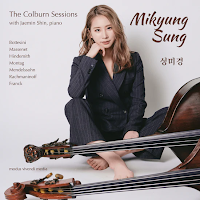
Bounty! Two Lower String player of note that gave me the greatest pleasure! Top pic shows Cellist Raphaela Gromes in an Offenbach program (Sony). I'm an Offenbach fan (RCA Fiedler's Gaite Parisienne is one of my fav albums), but few know he was an accomplished cello virtuoso, and this album is so comforting that I have listened to it many times. Album of the year (BTW, it won the Opus Klassik Chamber award!)! Not far behind is the Double bass recital from Mikyung Sung (Modus Vivendi). These two albums shall test your (and your system) understanding of bass tone. Forget about the utterly boring Gary Karr, who puts me to sleep! Another excellent threesome is the Trio Metral, whose Chausson and Ravel (La Dolce Vita) are wonderful. The refined (sometimes too much so as to be fuzzy, as in their Haydn) Chiaroscuro Quartet is lovely in Mozart’s Prussian Quartets (BIS). The Schumann Quartett curates an excellent program (with some rarely heard but fascinating pieces) on 1923 (Berlin Classics). For a wind ensemble, you cannot go wrong with the veteran Ma’alot (used to be on MDG). Start with their Beethoven (Avi Music).

I have followed Composer Julia Wolfe (Bang on a Can). The work that gave me most pleasure recently is LAD. The original is for Bagpipe, on Dark Full Ride (Cantaloupe). But Sean Shibe made a meal out of it on the guitar, on album softloud (Delphian), which then inspired violinist Rahki Singh, whose violin transcription is on Purnima (Cantaloupe again). I absolutely DIG this music! Highly dramatic and, dare I say, a challenge for the audiophile! Listen to all three! Is amplified music chamber music?

Concerto
The best Beethoven piano concerto recording (no. 5) I have heard in quite a while came from Cliburn winner Yucnhan Lim (Decca/DG). The Korean Gwanjiu Orchestra and conductor Seokwong Hon are completely unknown to me, but do they deliver! It must have been an important date for Gwangjiu (historical massacre) for the programme to contain Isang Yun’s apocalyptic memorial tribute, which just took my breath away! One of the year’s best discs. In a lighter vein, I very much enjoyed the obscure Piccolo Concertos played by Francesco Viola (Naxos). Whenever I think of the piccolo, I think of Shosty, who used this instrument’s high tessitura to tighten his grip on us!

Symphonic
Maxim Emelyanychev and his Scottish Chamber Orchestra delivered great Mendelssohn, Schubert and Beethoven (Linn). I’m not a great fan of Linn recordings, but they are the exceptions. Similarly period-inclined, the Danish Chamber Orchestra Adam Fischer have been on a roll - first, very good Brahms and now Haydn (Naxos). What a wonderful conductor - I listen to everything he does, from Haydn to Mahler (with the Dusseldorf). An excellent orchestral Nielsen disc is that conducted by verteran Niklas Willen (Naxos). There have been a spate of Shostakovich recordings: No. 12 BBCPO Storgards (Chandos), No. 14 OPRF Mikko Franck (Alpha) - these two are very good; then Nelsons concluded his BSO cycle with 2 3 12 13 - the reviews are more ambiguous but I like this issue. All are vastly superior to the mediocre stuff Noseda continues to deliver (and only the British like). In case you yearn for something post-Shosty, I highly recommend Elisaveta Blumina and Thomas Sanderling’s album of Ystvolskaya, Silvestrov and Kancheli (Grand Piano)

Choral
You MUST listen to the stunning a capella works of Ensemble Zene’s Hungarica (Aparte). I challenge you audiophiles to play it! Goose Pimples! And then Ensemble Aedes and Les Siecles in Poulenc’s Litanies a La Vierge Noir and Stabat Mater (Aparte again).

Historic
Treasures abound. For all the hundreds of Beethoven Quartet cycles out there, still nothing can quite surpass the Budapest Quartet on their Library of Congress recordings (Bridge). Sound not perfect but quite serviceable (there are several volumes; have played them many times)! The great Yvonne Loriod (wife of Messiaen) finally gets her box of early recordings (origin 1956-63 Vega, now Decca France) - what a complete pianist!

15 December, 2023

Streaming Classical


Streaming Classical (23-5): Who should play Ellington?

Now re-entrenched, I have been streaming like crazy, even more than before! This issue is compact, but the next one will come in rapid succession.

Chineke! fails at Ellington - and Tchaikovsky! But I must talk about something that bothers me first. The subtitle of this issue of Streaming Classical is prompted by the latest recording of the UK Chineke! orchestra. In case you don't know, here are words from their official website: " Chineke! was founded in 2015 by the double bass player, Chi-chi Nwanoku CBE, to provide career opportunities for Black and ethnically diverse classical musicians in the UK and Europe. Chineke!’s mission is: ‘Championing change and celebrating diversity in classical music’." That's all to the good, and certainly not unique. Orchestras had been formed based on fervent beliefs of every kind, often to promote much of the musical world's politically or ethnically under-privileged. Philharmonia Hungarica was formed by Hungarian exiles (and they made the first complete Haydn symphonies recording with Dorati). Barenboim' formed the East-West Divan Orchestra to promote exchange between Jews and regional non-Jews (you must say he had an urgent agenda, and foresight). Venezuela's incredible El Siestema (recently plagued by controversies) produced a brilliant orchestra (Simon Bolivar, and successors) and a star conductor (Gustavo Dudamel). All of these have done good work and made an impact, as do Chineke!

I have followed Chineke! closely and listen to all their releases. Good as some of the pieces are, none I'd classify as top drawer (keep in mind I often criticize the BPO). That doesn't bother me. It's not easy for anyone to say something new in classical recordings. BUT! What bothers me is that, very frankly, they play Ellington horribly! The only great thing about this recording is that it prompted me to seek out the Ellington recording (top pic), which is an absolute blast - I cannot tear myself away from it and listened to it many times! Make sure you do this Holiday Season! Ellington/Strayhorn did a great job and the musicians played it in indescribable fashion that honors both Jazz and Tchaikovsky. One can confidently say that all involved understood Tchaikovsky as well as Jazz (of course). The Chineke!? They understood neither Tchaikovsky nor jazz. What really irks me are the UK critics. BBC Music says: "... it’s undoubtedly a long overdue pleasure to have a professional recording of this piece..." whereas the Guardian says"...It’s the latest life-enhancing recording from Chineke! Orchestra (Chineke!/Decca) and guaranteed to put a smile on your face...". Hello! have you heard the Ellington recording? You listen to both of these and tell me otherwise!

One problem is, the orchestra needs building with stronger conductors. I hope that will materialize one day, but the current crop won't do. At this point, they are quite behind the East-West Divan, not to mention the Simon Bolivar, though those two have really strong conductors behind them. Given that musical funding in the UK is a struggle these days, this is a goal that is perhaps lofty. My best wishes.
While we're on orchestras with a political or ethnic mission, do you know in Germany there's a Jewish Chamber Orchestra dedicated to playing works of Jewish composers, once forbidden or not. Their recent Weinberg release under chief Daniel Grossmann (Onyx) is simply one of the best Weinberg issues.

Solo Violin In the last issue, I talked about the availability for Streaming now of the entire Hyperion catalogue, but I left out one of my favored artists in their stable, Alina Ibragimova! The Telemann Fantasias for solo violin are just her meter. The always reliable Isabelle Faust has also just released an excellent solo baroque album (Harmonia Mundi).

Pianists It seems baroque keyboard music on the modern piano is on the rise (aside from Bach). Bruce Liu’s second album, Waves (DG) contains very good Rameau (which I prefer to Tharaud etc), though I’m not so sure of the rest. Incidentally, he played a number of these in a Shenzhen recital I heard recently! As a fan of transcriptions I was drawn to Juliette Journaux’s moody Wanderer without Words (Alpha). Sexy Vanessa Benelli Mosell’s opera-related Casta Diva (Decca) is also quite entertaining, but she has more serious aims elsewhere, as evidenced by [R]evolution, with interesting music by Stockhausen! More keyboard on Early music below.


Guitarist Plinio Fernandes puts out a good first Recital (Decca).

Accordionist Theo Ould on Laterna Magica constructed a good program mixing the old and the new (Alpha) that may appeal to crossover fans alike.

Chamber Music
Violinist Mi-Sa Yang and pianist Adam Laloum puts out a delightful “French” recital program (Mirare).

Trio For me, the best album (musically and sonically) I heard of this most difficult formation is the unsung Auer Trio, whose emotionally wrenching Smetana and Dvorak (Hungaroton) I have put on repeat button. Very close, and also heard repeatedly, is the passionate Rachmaninov album of Trio 258 (Challenge). On the same label are the wonderful Delta Piano Trio, who have 2 wonderful albums, one of music of Lera Auerbach and one named Origin. Both are absolutely special.

String Quartets I heard tons. The Escher Quartet appealed greatly to me both on their Janacek/Haas and Barber/Ives Programs (BIS). I was won over by the Sacconi Quartet’s delicate Schubert and Beethoven (Orchid). Those who want something a little more new-age, but still serious, can try Painted Light by the Solem Quartet (Delphian).

Concertos I don’t think it’s just sentiment, but Lars Vogt’s last recording of Mozart’s Piano Concerti 9 and 24 (Ondine), directed by him from the keyboard, are really special. Tetzlaff brother and sis, close friend of Vogt, issued a memoriam album of Brahms Double Concerto (Ondine) that is excellent, but the coupling Viotti VC, which I have always liked (also Lola Bobesco on Talent) is equally beguiling! Back to Mozart, Anne Queffelec, a pianist I have long liked, played the PC 20 and 27 (Erato) with consummate naturalness; more, very ably accompanied by orchestra under Hong Kong’s own Lio Kuokman! And then there is reliable Mozartian Jean-Eflam Bavouzet’s Vol 7 and 8 (Chandos). Every album in the series includes some scintillating Mozart Overture(s) by the conductor Takacs Gabor-Nagy, and they steal the limelight! They are must-hear items! So wonderful! Switching instrument, I enjoyed the Villa-Lobos Cello Concertos 1 and 2 by Brazilian forces (Naxos).

Symphonies
When it comes to Mozart symphonies, there’s an embarrassment of riches. Il Pomo D’Oro under Maxim Emylyanechev offer 29 40 (Aparte); Academie fur Alte Musik Berlin under Berhard Forck (Pentatone), 31 and 35; Ensemble Resonanz under Richardo Minasi 36 and 38 (Harmonia Mundi). No need to choose. Listen to them ALL!

Kammerakademie Postdam under Antonello Manacorda (Sony) continue to put out wonderful albums. Their Schubert and Mendelssohn (and ongoing Beethoven) are musts!

07 October, 2023

Streaming Classical

Streaming Classicals (23-4): Great Recordings and Bad Vibes

A Long Soujourn I haven’t written about Streaming for more than half a year! Well, I was in NYC (and UK) for more than 2 months and did not have the bandwidth to. In NYC, I played only physical discs, both LPs and CDs. Yes, it sounded wonderful! But do I miss real media now that I have returned to streaming in Shenzhen? Yes and no. I miss my large collection, but I also love exploring new albums through streaming. No matter what, enjoy the music! It’s the music that’s important, not the bits.

MQA Officially close to demise, it is not quite dead. It’s astonishing it has kind of a surge in presence in China, of all places. Does it concern me? No, not at all.

Apple is up to their Rotten bit again Among the recent news, one particularly alarms me. We all know Apple has been posturing to enter the high-stake hi-res streaming market in a big way. We also know from history Apple is pretty much garbage when it comes to providing high quality music on the go. And now it seems they want to give classicals a go. Just our bad luck! So, imagine my chagrin when it was announced that Apple has acquired one of the best classical labels, Swedish BIS. This is one of my favorite labels! I hope in due time it shall remain available on Tidal, Naxos etc but I’d not hold my breath!

Hyperion
The other big news is Universal had acquired Hyperion, long a hold-out in the streaming world. Wow, as soon as the deal was sealed, one sees an avalanche of the Hyperion catalogue, previously unavailable for streaming. Although they do not have too many of my favorite artists, we can enjoy their catalogue now. My pick would be the Takacs Quartet.

Bach Recordings of the Violin Concerti are a dime a dozen, but truly enjoyable ones are less common. One exceptional recent release is Himmelsburg, by Lina Tur Bonet with Musica Alchemica (Glossa). It pairs the BWV 1041/42 with 2 transcribed from the harpsichord. Utterly natural playing. When it comes to the Solo Violin Works, I’m glad to report another excellent (and very fluid) version by Bojan Cicic (Delphian). And the excellent Goldberg by Vikingur Olafsson (DG), a deceptively easy listen! Much more extreme (but perhaps interesting) is Maya Beiser’s Solo Cello Suites, the title of which, Infinite Bach (Islandia), alludes to overdubbing and electronic manipulations (she has done this before, with Bach and Glass). An interesting interview of the artist here.

Biber When it comes to baroque violin, I’m a devotee of the Rosary Sonatas, a masterpiece that merits different interpretations. Meret Luthi and Les Passions de L’Ame (Prospero) do the work justice

Ysaye The master’s Solo Sonatas are the most challenging works written after Bach. If anything, they are even harder to well characterize. There have been many notable recordings of select sonatas, but the recent complete set of Hilary Hahn (DG) stands out for total command, with much more depth than most of her recent (shallow) outings.

Beethoven No version in the past years can come close to the sheer joy and refinement the partnership of Antje Weithaas and Denes Varjon provides (Avi)

Fabio Luisi Ever since I played Luisi's Nielsen cycle with the Danish National (DG), I have been enthralled by his performances across the board. Luisi is one of those conductors who may not be a household name, but whose performances are hard to fault and not easy to find sometimes! His magnificent Dresden Staatskapelle Strauss series (Sony) is not that easy to come by (but on Tidal). Try the gloriously atmospheric Alpine Symphony - a piece that separates the boys from the few men. Even more obscure are the excellent Honneger Symphonies (OSR, own label; on Tidal). His other orchestra, Philharmonia Zurich, also contributes some excellent albums, including a great Bruckner 4th (own label; Tidal).

Concerto Gems Concertos are supposed to be showpieces, no? Yes! When it comes to Jennifer Higdon's Duo Duel (Naxos). Marvelous sonorities! And Olli Mustonen  and friends did proud by Rautaavara and Martinu (BIS)! Not far behind is Peter Jablonski and friends in a Bacewicz collection (Ondine).


21 March, 2023

Streaming Classical Douk Nobsound E6


Streaming Classical (23-3): Finally, Good Performances of Russian Works are Trickling In
Letter from Shenzhen (23-9): Either/Or, Tale of Two Preamps


Updated 3/24/23: Minor editing, and some more info on Liss added.

Editor: The Sub-Heading refers to my listening experience using 2 preamps that complement each other. Sometimes when I find the sound of a recording not to my liking, I make sure I listen to it on the other preamp, which may save the day. This bit of audio experience I shall briefly detail more at the end of this article. First, the recordings.

In one of the Streaming Posts last year, I lamented the dislocation of Tugan Sokhiev, one of Russia’s (and the world's) pre-eminent conductors, who resigned as director from both his French post (Toulouse) AND the highly prestigious Bolshoi Theater, thus robbing us of a potentially highly competitive Shostakovich cycle (with the Toulouse Warner had already released No. 8 and 10).

Browsing prestomusic today, to my surprise I see an imminent release by the dissolved team; it’s due in April, them being accompanists for my heroine Elizabeth Leonskaja in Beethoven 3 and 4. Warner indicates this was from 2017-8 concerts. I’m looking forward to it but can’t help wondering if this is a way for Warner to partially fulfill their contractual obligations, which are surely in limbo. My view: Toulouse forced out Sokhiev, the best director they ever had, who over a decade raised their profile and brought them a priceless Warner recording contract that other orchestras as good or better than them (truth: many out there) would kill for; Toulouse should have the decency to release Warner of any obligations. It’ll take years for Toulouse to regain the footage they have lost - not likely. When Art gets used by Politics, the only losers are the Artists.

And so a potentially excellent Shostakovich cycle by Sokhiev was violently aborted. Instead, mediocre conductors like Giancarlo Noseda soldiers on with useless UK recordings (LSO Live; NSO Washington are equally bad; only praised by UK press;). Avoid his spineless Shosty cycle. This fellow has never produced any significant stuff, in any area, but the UK press always inexplicably praise him. Ditto LSO, which, despite their high individual skills, now make one impersonal and underwhelming recording after another. No personality. Ditto over-rated conductors, like Rattle, who goes on to water down other orchestras. Emperors without clothes.

Isn’t that hypocrisy? Banish all great Russian musicians in their own music? Instead have them performed by politically “correct” yet musically pallid Westerners that soften everything? That’s really cultural appropriation, if you ask me.

Russian conductors (and musicians) are unfairly shunned like the plague by decision-wielding me-too politicians and bureaucrats (a few brave Austrian official voices notwithstanding). Have you noticed that even Russian labels (like Mariinsky’s own) have few new issues? That’s a sad void. And so it’s an obligation to promote the few recordings that trickle in.

Dimitry Liss, who heads the phenomenal Urals Philharmonic, has received coverage here before. Now, he is giving us Shostakovich 10 (Fuga Libera), a work which is close to his heart. This was not the first time Liss has recorded this. Just compare this to the previous recording he did with his other orchestra, the Phil Zuidnederland, and you shall be impressed by the superiority of the Russians. Listeners who really know Shosty will know why he MUST be continuously performed by Russian musicians, no matter who’s in charge. And then there is the excellent and substantial release of two of Prokofiev’s best works, Symphony 2 and PC 2 (pianist Korobeinikov).

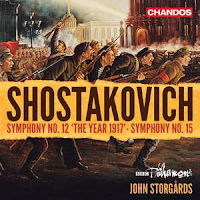
While we’re on Shosty, fortunately there ARE worthy UK efforts recently, from the team of BBC Phil and Storgards. Their newest release of 12 and 15 is refreshing (Chandos), no less because of the rarity of 12, which I somehow have always loved. The enigmatic 15 is of course a masterpiece. The team’s previous 11 was good too, and this one is promising as a cycle. Not exactly heart-on-sleeve, but meticulously crafted, paced and delivered (unlike the clueless Noseda). Very good sound.

Too many unworthy recordings, but all is not lost. Occasionally we have a GREAT one. Now, Stravinsky is not even considered all-Russian really, given his long exile and sojourn in the West. But he was. And NOTHING is more Russian than his masterpiece Les Noces (Russian Wedding). This is not an easy piece to listen to, especially as it is sung in Russian. If you note the genesis of the piece, it has a convoluted history. The version most often performed is the later 4-piano version, not Stravinsky’s first choice. And so I have listened to it as such, until I recently came across this stunning original 1919 version, which the composer has only partially finished (completed in 2007 by Theo Verby)! Featuring Cimbaloms and Pianolas, no less! The performance by Ensemble Aedes and Les Siecles under Mathieu Romano is beyond reproach (Aparte). As I streamed it on NML, I was able to read the fascinating booklet notes, where the vocal coach showed how she devised ways to teach the French choir how to enunciate Russian, and indeed they sound quite authentic! A labor of love! The filler is a curiosity, Bolero arranged for choir! Sound is stunning - this is goose pimple material! This is my Album of the Year! I don’t see anything coming close. The only caveat is certainly not every reader will find it comfortable listening, though I fail to see why someone who likes Le Sacre will not like this. And audiophiles should flock to this stunning recording (as they should to Berio; see below).

As I let the tremendous colors of the performance wash over me, I was reminded of some past moments of utter joy. One from long ago, when I first listened to Berio’s epoch-making Sinfonia. The raucousness, the jaw dropping thrills on a good system (in case you want to listen, there are many good recordings out there now, say, Chailly on Decca)!

The other association was not so apparent. I thought of Gergiev, now completely ostracized by the West. I recalled his magnificent concert performance of Prokofiev’s Love of Three Oranges with the Mariinsky in 2008 that I had the fortune of attending in NYC. I still remember it vividly, so authentic and thrilling! The Russian colors of this rarely performed (or staged) Prokofiev piece is as strong as Stravinsky’s.

My words then shall serve now equally well: "...The performance makes you really ponder the empty slogans used to promote many also-run conductors and orchestras...

There is a whole contigent out there worshipping mediocrity, giving standing ovations to undeserving performances. Sign of the times. Thankfully, we still have the Russians..."

Since we mentioned LSO before, here are my concert reviews of Gergiev that include his LSO visit in NYC in 2009. Believe me, the LSO don't play like that now with most conductors.

I also thought of him as I had just recently watched a (Tidal) older video album of him conducting Prokofiev Symphonies 1 and 5, and PC 1 with a very young Trifonov. It’s fabulous stuff, magnificently played by all. You can stick with your Noseda, I’ll follow my Russians.

Another surprise is Rafael Payare. I didn’t like a previous album of his (of all composers, Shostakovich) but I was surprised to see him conduct the Montreal Symphony Orchestra in Mahler 5 (on prestigious Pentatone no less). Doing some research I was surprised that this new name to me is now director of the MSO, an orchestra I have long loved. Well, the recording is superb, with coiled tension and great playing, and in great sound! I don’t know why M5 is so popular in concert programs - most conductors fail in live performances (like the flaccid BSO/Andris Nelson and Baltimore/Marin Alsop I heard at Carnegie some years ago).

For something more angular, I’m a fan of the music of Grazyna Bacewicz and have previously recommended her String Quartets (Silesian on Chandos) and Violin Concertos (Kurkowicz on Chandos). Her string music for orchestra are somewhat more astringent, but well worth listening to, as performed by the Primuz Chamber Orchestra (Dux).

Violin
The exceptional find for me is Maria Milstein, Moscow-born and Holland based. Her Prokofiev playing are now references for me. Both the Concertos, with the Phion Orchestra under Otto Tausk (Channel), and the Two Violin Sonatas album (which includes Prokofiev)(Challenge) with husband Mathieu van Bellen, are indispensable. Van Bellen is also violinist of the excellent Busch Trio. All together, they deliver an excellent Dvroak Piano Quintets album (Alpha). Maria Milstein and her pianist sister Nathalia also shine as duo in several excellent albums (Mirare). As if that’s not enough, Maria is also part of the Van Baerle Trio, which also includes a personal fav, pianist Hannes Minaar, and they do excellent work (Challenge).

Next, two German violinists. Arabella Steinbacher is no stranger and always delivers. Also, as a major violinist, she has recorded a lot of less known works, like Milhaud. Her newest Bach album (Pentatone) refreshingly pairs the 3 concertos (I hate issues that do without the double concerto, my favorite; here it features the equally excellent Christoph Koncz) with 2 significant Arvo Part works. And then a name that I have only previously encountered in chamber music recordings, Veronika Eberle. The Beethoven VC with LSO/Rattle (LSO Live) is very good, but the new, unorthodox and long cadenzas by Jorg Widmann seriously rattled many critics. I must say I enjoyed it!

Finally a male! Daniel Rowland, formerly of the Brodsky Quartet, is very active in chamber music. (Challenge) has issued several excellent recordings with friends. The most palatable one for most listener should be Exstasis, which is mostly Piazzolla. There are also a few tunes composed by Bandoneonist Marcelo Nisinman, who grew up with the master a constant presence in his house. No wonder the authenticity of his playing and compositions! The highest honor I can pay to this group is that they are the BEST tango quintet after the master’s own (and there are quite a few others in the same stable, but none measure up to this one)! On the same label Rowland has also recorded excellent albums of the music of Vasks and, the latest, that of Ukranian Silvestrov. Of the Quintet members, Ukranian Pianist Natacha Kuritskaya and Serbian Cellist Maja Bogdanovic have recorded albums with Rowland (and on their own) and I fully intend to explore them.

Speaking of the Brodsky Quartet, their Golden Oldies album (in celebration of their existence) of encores is more fun than usual (Chandos).

Keyboard
The big find for me is Yeol Eum Son. I don’t know what’s happening, but why so many complete Mozart Sonatas cycles all of a sudden? For me, her (Naive) recording goes to the top of the list, surpassing the recent Mao Fujita and William Youn. Compared to Leonskaja, she is less sumptuous but more naturally sparkling. For those who don’t want a Mozart mega-dose, her earlier recording of PC 21 with the ASMF under Marriner is impeccable (Onyx), and it closes with several solo piano pieces, including a superbly subtle K330. Her other Onyx and Decca albums are all worth exploring.

Since we were on Prokofiev PC2, I found another older but highly worthwhile recording (with the PC1) by unknown-to-me Ukranian pianist Anna Shelest and the Janacek Phil under Niels Muus (Sorel). Great sound and playing all around.

It’s very common now for pianists to experiment with improvisations and instruments like fortepianos, old pianos, even harpsichords and clavichords etc, but few has taken things to the dimension that Anthony Romaniuk does. On Perpetuum (Alpha) he plays on many keyboards, including synthesizer! Most are short classical pieces but some are improvisations. A string of short pieces (beloved by this chic label’s producers I must say) can lose traction after a short while but somehow Romaniuk maintains interest. I shall later explore his earlier album in the same vein, Bells.

Polish jazz pianists seem to make a specialty of playing Bach (like Jacques Loussier did long ago). Marcin Masecki’s new album with the MACV (on the obscure Warsaw Chamber Opera label) has one concerto each of Bach, CPE and Mozart. NML indicates “arranged by Masecki” but I hear only some embellishments and jazzy cadenzas. He has an earlier album of Bach concertos with pianist Piotr Orzechowski (Decca), on which he plays a Wurlitzer and Orzechowski a Rhodes! The latter instrument was played at a very slow tempo (surely due to the slow response), not suitable for all listeners, but a curiosity!

Polish Organist Julian Gembalski delivers a superbly idiomatic Bach Organ Concertos (despite the name, these are solo works) album (Musicon). These can sound boring in lesser hands, but here they live and breathe. Wonderful style and sound!

Chamber Music
Heading the list is the recording of the 2 masterpieces of Mozart’s String Quintets, K515/6 by the Ebene Quartet with Antoine Tamestit (Erato). Not since the augmented Grumiaux Trio (Philips) have I heard a more competitive recording! This recording shades out the very good one by the augmented Van Kuijk Quartet (Alpha) but the latter’s Mozart Quartets are just wonderful and among the best!

I listen to every recording of the wonderful Brahms Horn Trio. Among the current crop, my favorite is Marie-Luise Neunecker, as usual coupled with the Ligeti homage. How can this recording not be good, as it features the usual partners of one of my favorite violinists, Antje Weithaas (BIS)!

Anything by Tetzlaff and associates is not to be scoffed at. The latest is Schubert’s Piano Trios with Lars Vogt (Ondine), who has passed away recently. The tempo is slow, the playing detailed yet gentler than usual, but given the circumstances (of Vogt's passing), one possibly reads a little more into it. Worth exploring. For a different way of playing, from a different era, listen to the same pieces performed by Grumiaux, Fournier and Magaloff (Philips mono, on Tidal).

Speaking of the Brodsky Quartet, their Golden Oldies album (in celebration of their existence) of encores is more fun than usual (Chandos). Very sweet!

Saxophone
The classical Saxophone has basically been usurped by jazz. But it does not need to be so. A fresh force is Huw Wiggin. His new album Rhapsody (Onyx) features more new works than the older Transcription dominated Reflections and is better for it. I enjoy his new album better than many a new jazz album!

Either/Or: 2 Preamps
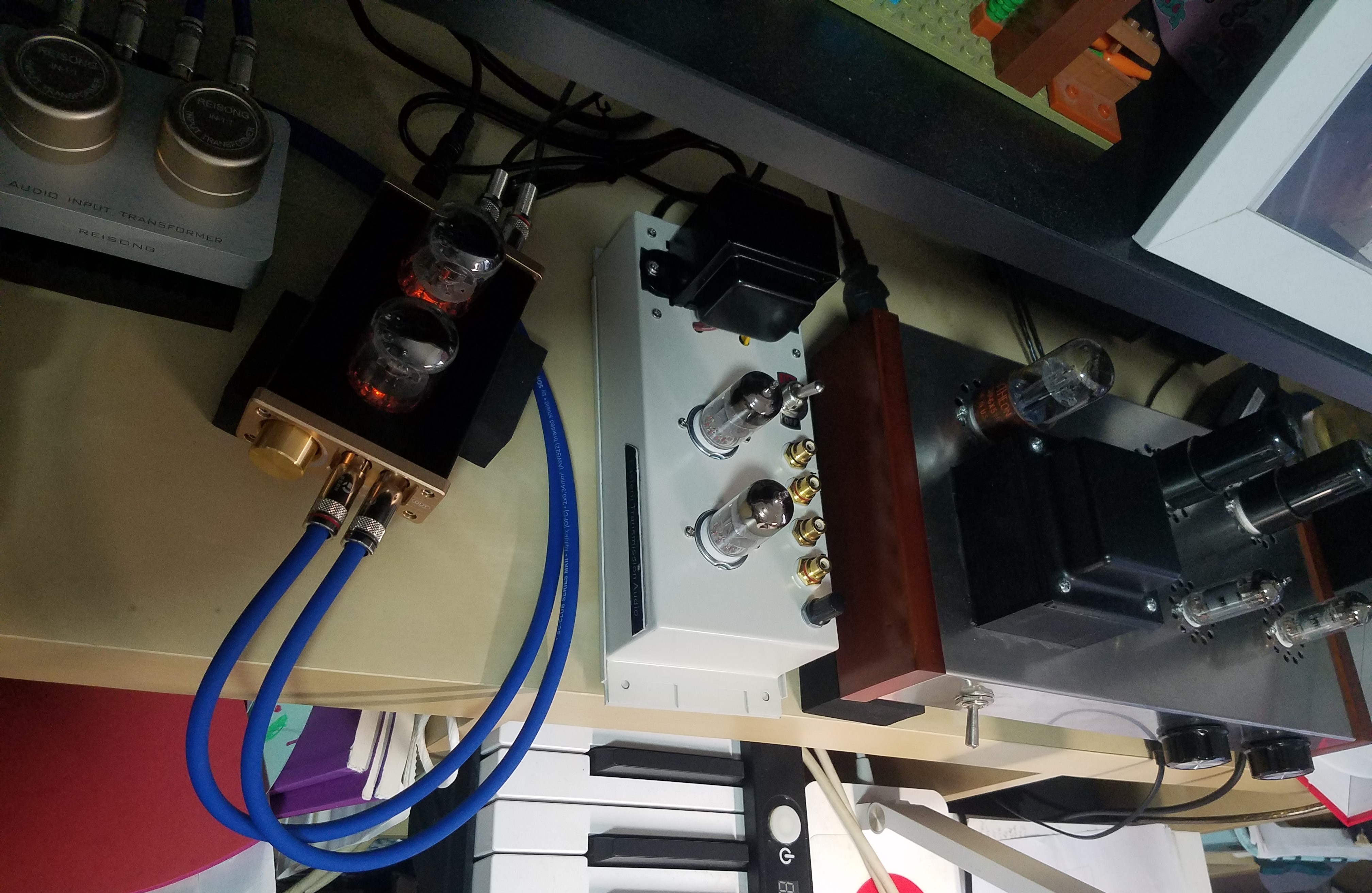
Recently, I was loaned a Nobsound (Douk) E6 Preamp, which uses the unusual 2J27S Direct Heated Pentodes. The chassis is very small and the tubes sticking out are big (almost size of a shorter vintage 6SN7) but the sound is big (Review here). Before this, I have been using the modified Eastern Transmission Audio (ETA). In a nutshell, the diminutive Nobsound has a bigger, bolder sound, bigger images, but less control. The ETA has somewhat smaller images but greater depth and better dynamic gradations.

I stream mostly on NML, which has a leaner sound sometimes. I also do Tidal, which seems fuller, but colored. With some recordings, neither seem perfect. Sometimes switching from one preamp to the other brings improvement, even change of view of the performance. Let me just cite 2 examples using albums covered above.

When I streamed the Van Kuijk recordings with the ETA, I frequently feel the sound to be a little on the white side. This is a consistent observation of the Alpha label. When I switched to the Nobsound, the strings instantly became just a little fuller sounding. Just what it needs. On the other hand, when I streamed the Schubert Trios with the Nobsound, things are just not as woven as I’d like. Switching to the ETA firms up the piano and knit things together.

You get the gist. Which one is more accurate? I don’t look at it that way. Truth, whether in audio or politics, has many facets. In audio, unlike in reality, we can search for truth as long as we want. Nothing is forced down our throats.