01 January, 2011

Review: Elekit TU-8300 amplifier

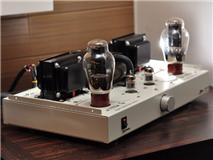
(L) 2 Verdier amps (R) Elekit TU-8300

Review: Elekit TU-8300 amplifier
(reviewed by Danz, with minor edits by DJ)

Revised Sept 8, 2017: A bit of update from my Elekit Overview added at bottom.

Editor's Note:At the end of September, 2010 I wrote briefly about my visit to cna music, HK dealer of Elekit. What I didn't tell you then was that I actually bought a TU-8300 300B amp!

In early November I lent my virtually new Elekit 8300 amp to my friend Danz (and let him do all the run-in! :-)). He did a thorough evaluation and wrote this excellent review, which mirrors my own feelings about this amp. Danz and I share many things in common, including a foam-surround version of the Tannoy Canterbury (last visit here). Danz' system has been changing fast.
What Danz wrote:
As my JC Verdier 2A3 SET amp sounds a bit inadequate to drive my Tannoy Canterbury for some large scaled symphonic works due to its meager 3W output, I think it’s time to upscale the power section of my system. Even though the JCV 6550 push-pull power amp I’ve acquired about 2 years back is powerful enough for most of my listening, I prefer the additive characters of SET, hooked by the intimacy & immediacy of the SET beauty. It may be a personal preference, but, I think whoever has the chance to live with SET should understand what I mean, providing that he has the right speakers.

My impressions on this 300B amp started with disappointment, but later turned the opposite.

I’m no critic, who can describe equipment in many technical terms. I only know a few jargons. So, how can I differentiate the good gears from the bad? I simply sit there and listen. IMHO, a good system will let you sit there for hours without the desire to change CD unless the CDP stops. A good system can unveil the music behind the CD(s) on which you’ve long given up and declared as poorly recorded or performed. (well, some really bad CDs are beyond salvation). A good system should not be good only for one or two types of music only.

Danz' Day 1:
I simply replaced my JCV power amp with the Elekit TU-8300 without changing anything else. My source was Sonic Frontier CDT1/SFD2; the preamp was JC Verdier Control B. Cables used were Sommer Epilogue interconnects and Gotham speaker cables.

My first impression of the amp was its power. It was like an honest and strong man who can give you all the power you need and all the details in the CD's, except music! I thought, it may need more warm-up time.

I was expecting the warm-up period time to pass soon, so I could listen to some real music. But I literally gave up after about 3 hours, as I couldn't hear real music. It was simply giving out a non-attractive sound which will urge any music lover to turn off the system. I tried to remain patient, since I believed DJ wouldn’t pull my leg. You know, getting this amp all the way from NT to KLN was a lot of work! I even once said to myself, “How dare you, DJ!”

Danz' Day 2:
Whenever my brain was not occupied by work, I kept on thinking about the listening experience the night before. I was certain that there must have been something wrong!

Unlike my previous experience with other local made 300B amps, the character of the Elekit was not fat, nor slow nor bass-shy (yes, I did live with one for about 2 years and the kind of music I could listen to was limited to only female vocals and chamber music). In fact, it was so powerful, analytical and clean (I’m sure someone is laughing at me about the word “analytical” I’m using here to describe a 300B amp! Mind you, all I have done was comparing with my current gears.) It was simply the opposite of my JCV 2A3! I’m not saying that my 2A3 is not powerful. Believe me, it is very powerful in its own class, but not quite powerful enough to drive the Canterbury for particular types of music. My JCV 2A3 is a seductive amp which has a dash of its French designer’s romantic genes. It plays music so well; however, sometimes it shows its inadequacy in its portrayal of complicated symphonic works. All these thoughts reminded me of the time I’ve spent on searching for the right interconnect to raise the system’s analytical ability.

Harboring the above thought, I did think 300B is the right way to go for my Canterbury in terms of the right power envelope it provides. However, in order to play real music, I needed to do something to suppress the analytical character of the Elekit.

After a long day of work, once back home, I changed the interconnect between pre and power amps from Sommer to Gotham. Well, as hinted in the beginning, music came out so well that I started to retrieve some of the CDs I had given up on before, to unveil their true beauty.

That night, I forgot about HiFi. It was simply music.

Danz' Conclusions:
The Elekit TU-8300 has completely changed my impression of 300B amp. It is a strong and analytical amp which can also play music well. Compared to my JCV 2A3, this Elekit tends towards the honest side, while the JCV is a bit colored towards romance.

This amp is also highly sensitive to interconnects, but I’m not sure about power cables though, as I’ve not tried others.

Apart from the 300B, this amp is also fun to play with as it can accommodate other pentode tubes for taste changing/tube rolling. However, I’ve not tried any other tubes since, the original setup can play music so well already. I’m only a lazy music lover!

After this experience, I’ll definitely get a 300B amp for my system. Well, will it be this Elekit? I don’t know yet & let’s see what will come up later. But, I’m sure that this amp is a real bargain at its price range.

Editor's Postlude:
In my system, while the Elekit was not quite as emotive as my other SET amps (Sun Audio, ICL, Wavac, etc), it was musical enough, and its power and control are rather unparalled. That said, there is a touch of the hybrid in its sound, probably due to the use of ss in constant current source.

Before I left for NYC, I did try SE EL34. While predictably it did not have quite the presence and live music feeling of SET, it was surprisingly robust in sound. I'd easily rate its EL34 sound better than that of the Audion Sterling.


TU-8300 Update

Official Info (hit 外觀.仕樣>> for more pics)
Japanese website with good pics
Japanese website that chronicles the assembly
Japanese website showing details of the parts

If you're reading this, you may remember that I have previously published a review (by my friend Danz) of this 300B amp (click here). This is a limited edition product, but may still be bought (as kit) from various places on the internet.

I took this amp to NYC, where it is driving my YL speakers ably. The amp is certainly run in by now, and my impressions have not changed much. It has a trace of leanness about it, but its driving power is quite exceptional. Not for the romantically inclined, but a strong contender.

The input sensitivity is way too high for my 104 db YL horns. I lowered it by adding resistors, but some background hum persists. Also, I changed the coupling caps to NOS Russian Military, which increased warmth.


Elekit TU-8300 Official Page

31 December, 2010

Editor's Note: Happy New Year!

Two Faces of Our Lovely World

Editor's Note: Happy New Year!


W3H1: Why I have installed the Flag Counter; What have I learned; Where are the Readers from; How many Countries?
The year 2010 left quietly. My hifi was not on. SZTV was showing the Buddhist Bell-Ringing Ceremony led by high monk 印顺大和尚, and I was falling asleep. How uneventful, but is that not a blessing, considering the millions in the world suffering from all manners of natural and, sorrowfully, man-made disasters?

Shortly before the year's end, I accidentally discovered and installed the Google Flag Counter gadget. I was delighted it allowed me, and you, to see where the unique visitors of this Blog come from. At the time of writing, It has now been barely 4 days, and there have been 652 Unique Visitors (meaning each visitor's repeated page loads count only as one) from 57 countries. Something touched my nerve: our heavily burdened world, like all aging beings (for it has life), undoubtedly is getting smaller. Predictably, the majority of my visitors come from Hong Kong and USA, but the latter's proportion still surprised me a little. And I struggled with the names of some of the small (and rather new) countries, like Moldova. Hello to you all!

The important thing is, after gleaming all this information, I am more determined than ever to strive for providing useful information for our hobby, particularly on older gears on which not much info on the net is available. Stay tuned.

弘法寺鸣钟108响迎新纳福 (video of same event last year)

Why 108 times?

Allow me to diverge a little. The aforementioned Buddhist ceremony usually takes place on Chinese New Year's (coming February 3rd), but Shenzhen, like HK, is a modern city that likes to embrace the world. For people like us, there are 2 new years per year! This tradition is also honored in Japan, but their new year is celebrated on the western calender.

In case you wonder why 108 times, here are English (relatively simplified) and Chinese (much more complicated) explanations I found on the net:

"...
Buddhist belief has it that one rings a bell 108 times at midnight on New Year’s to ring away the 108 bonno (Earthly Desires) that shackle mankind and keep one from reaching inner peace. In a strict ceremony, the bell will be struck exactly 108 times in keeping with the Buddhist belief that each reverberation symbolically represents the purging of the 108 bonno or mortal desires, such as greed, jealousy and infidelity, that bedevil humankind. In this one, all comers may approach and ring the bell to help cleanse themselves on their path to Nirvana..." (from here)

"...对于鸣一O八声之原因,或谓是对应十二月、二十四气、七十二候之数。或谓可使百八烦恼清醒觉,故佛教称为“百八钟”,也叫“百八杵”。敲钟用的“钟椎”又称做“杵”。“钟”的敲击板眼,随着“门派”及“方域”的不同,佛教界没有统一的规定。就是常见的“百八钟”的义解,也是不尽一致的。

首先,佛教认为,人生无常,祸福相依,一年之中有108种烦恼。唐代怀海禅师所制《百丈清规》称:寺院“晓二时鸣大钟一百零八声,以觉醒百八烦恼之迷梦”。钟声有108响,代表人的108种烦恼,“见惑有88使,修惑有10使,合称为九十八随眠,再加上无惭、无愧、嫉、悭、悔、睡眠、掉举、昏沉、瞋忿、覆等十种,便成108。”佛教的基本教义就是“四谛十二因缘”,而其中核心就是“苦谛”。佛教认为人生多苦多磨难多烦恼。有所谓生苦、老苦、病苦、死苦、怨憎苦、爱别离苦、求不得苦、五取蕴苦等八苦。人有六根(眼、耳、鼻、舌、身、意),每根有六种烦恼,六根就有36种烦恼,三世就有108种烦恼。又是苦,又是烦恼,这么多磨难何以消除?据《增一阿含经》说,钟声可以“降伏魔力怨”,钟声被誉为“妙响音”,所以百八钟声可以“醒108个烦恼之睡”,即人们所说“钟声响,烦恼尽”。这一习俗在唐代十分盛行。后来,随着中日文化交流,唐代鉴真大师将此习俗带入日本,此风俗在日本流传至今。

其次,民间盛传:一种说法,一个人在一年中至少有108个烦恼,登寒山寺钟楼撞钟,或聆听钟声,便能消除一年的烦恼,逢凶化吉。再有一种说法,人一生中有108种烦恼,听了佛寺108下钟声就能去掉所有烦恼,年年吉祥如意。又有一种说法,钟声取108这个数,是为108种神佛陀歌功颂德。还有一种说法,108是9的倍数,按照源于《周易》的说法,9数含有吉祥之意,9又是一个最大位的阳数,有极高、极大的含意,9的12倍就是108,这108就意味着至高无上的吉祥。

更有一种说法是:“钟声晨昏叩一百八声者,一岁之义也。盖年有十二月,有二十四气,又有七十二候,正得此数。”一年12个月,24个节气,72个候。古代称五天为一候,按农历360天计,一年分为72候,把12、24、72相加,得108,既可代表一年,又符合108种烦恼之数。因此,若迎新年听钟声108声,既能解除新的一年中烦恼,又能消除人生108种烦恼,真是大吉大利。“鸣钟一百零八下,以醒一百八烦恼之睡也。”尽管此说也不见经传,这个说法乃世俗所杜撰,与佛教无关,但是作为人民的祈愿幸福平安,也是能够增添108这个数字的神奇魅力,存此丰富多彩的传说,也映照出人们对钟声的关注程度。

敲钟时默偈、闻钟时诵偈也富有鲜明的特色。早钟部份的叩钟偈,在钟声偈三遍默诵完后,接诵大方广佛华严经名及佛菩萨圣号,晚钟部份则接妙法莲华经名及佛菩萨圣号,配合击钟一句一叩,摄心叩诵全偈三遍,共得108下。“一百零八”,代表众生繁多的无明烦恼和习气,叩钟的目的即是在提醒修行人,要以精进用功的击槌,破除自己无始以来的贪瞋痴烦恼,同时应以深切的慈悲愿心,让这份沉稳悠扬的钟声与愿力,上彻天堂,下通地府,使听闻到钟鸣的无边众生,都能得到心灵的安定、启发了自性的智慧光明。


敲钟也是有规矩的,《百丈清规·法器》章说“引杵宜缓,扬声欲长。凡三通,各三十六下,总一百零八下。起止三下稍紧。”尽管寺院敲钟都是一百零八下,但是各个寺院敲钟的方法不尽想同。杭州灵隐寺敲钟的方法——前击七,后击八,中间十八徐徐发,更兼临后击三个,三度共成一零八。讲究的是轻重分明,缓急有序。苏州寒山寺却是每10秒均匀敲击一次,也是有自己的特色。
..." (from soso)

Addendum: Breakup of Readership at the Time of Writing:

28 December, 2010

Talk Vinyl: Pro-Ject RPM1.3 Genie, Speedbox, Ortofon 2M Red

Talk Vinyl: Pro-Ject RPM1.3 (Genie 3) + Speedbox II

Clearaudio Concept Part III
Ortofon Kontrapunkt C/H Part II
Overview: Pro-Ject


Mickey Mouse Business
Call me a child. About 2 years ago I saw the first version of this TT, then simply called Genie, in What HiFi and I immediately wanted one. I know I have better TTs around, quite a few of them, but I still wanted one...

It was not because I am a fan of Mickey; quite the contrary. I simply admired the simple and elegant design, in such a cheap product! Now, no one shall criticize me for having lost my "cheap" touch! And the red color was smashing (not the white belt though). A de-coupled motor, and that arm with low-slung counter-weight looks well thought-out and in-line with modern thinking; besides it is directly wired and terminates in gold-plated cartridge pins.

The early version was only available in Europe but apparently sold well enough for Pro-Ject to continue tweaking it. This version 3 has also been officially granted the designation RPM, in line with the rest of the line. Reviews of the RPM1.3 have been uniformly excellent (HiFi Choice, What HiFi). The curious thing is that, for all indications, this is actually higher in the pecking order than the popular Debut. Also, this is now available in the USA and HK/Asia.

As with many European things, the price in HK is a lot better than that in the US, costing only a little over HKD 2k. The HK version also comes standard with the Ortofon 2M Red MM cartridge, which alone costs close to USD 100, making this a huge bargain.

Pro-Jecting Confidence
As I have said before, ever since I heard the big and confident sound of an early and humble RPM3 at my friend hoi's house (Denon 103, through the Verdier Control B, Unison Research Smart 845 and Spendor SP-100) I was convinced of the excellence and value of Pro-Ject. Since then I have heard several Pro-Ject TTs, and all of them sounded at least musical, and frequently striking, bolstering my confidence. I shall remain a fan of the company's budget offerings, though I notice that they are making much more expensive products now too, and I hope they would not neglect their budget offerings.

Ortofon 2M Red
For in-depth reviews, read the links provided by Needledoctor. The very fine review by Noel Keywood of HiFi World is particularly impressive and puts MANY reviews of hi-end cartridges in magazines like TAS to immediate shame.

A big, rich sound vs Clearaudio Concept
I'd not spend too much time elaborating on the sound. I made no concessions and put it in my regular setup:

Preamp - EAR 912
Amps - various SET amps (ICL, Elekit, Sun Audio)
Speakers - Tannoy Canterbury HE

Suffice to say it sounded great right out of the box, with the 2M Red. As with many Pro-Ject TTs, the sound was like a canvas painted in bold strokes. In my all-tube system, with the stock 2M Red, the sound was robust and, as mentioned in the reviews, slightly reticent on top but full in the mid-bass. Most noticeable was the excellent rhythm and pace, a little less fast but perhaps more bouncy than the excellent Clearaudio Concept, Dynamically, the Pro-Ject is a little more scaled back compared with the Clearaudio, but still no slouch. Overall I'd judge its performance superior to the original Rega P3/Bias/Elys I used many years ago. I never was as enthusiastic about the P3 (except the arm, which was for many its raison d'etre) as the UK crowd, and I hope Rega has significantly improved things in its current (much more expensive) P3-24, as competition is much stiffer now, as the much cheaper RPM1.3 amply demonstrates.

More comparison with the Clearaudio Concept. Much to my surprise, the much lighter RPM1.3 is more immune to vibrations than the sensitive Concept! Unlike the Concept, which took an intense dislike to the glass surface of my rack, the RPM1.3 was much more tolerant.

Excellent as the 2M Red was, I have to say I was used to just a little more detail and usually use MC's. So I soon swapped out the 2M Red with the much more expensive and heavier Kontrapunkt C/H, which of course took things to another level, demonstrating that the arm is not shamed by much more expensive cartridges. The heavier Kontrapunkts also had the counterweight almost all the way to the back; perfect!

During swapping I encountered small difficulties:

1. The screws mounting the 2M Red are ridiculously poor in quality, and with their very narrow and esily damaged slots surprisingly difficult to remove! Come on Pro-Ject, don't skimp on this!

2. The cartridge pins (directly wired) and wires were too short to mount the Kontrapunkts. I gingerly pulled on them and to my relief dragged out additional lengths reasonably easily. I talked to the dealer later, and he told me that there is actually quite a bit of leeway. But exercise caution with the delicate wires!

While on the negatives, I'd like to mention another 2:

3. The "arm-rest" is terrible. The U-shaped rest is very loose and you can easily dislodge the arm if you run into it. Be careful!

4. The ultra-thin felt mat is also downright dangerous, easily dislodged. Make sure you don't damage your cartridge by a flying and flipping mat!

Enter the Speed Box II
I could not resist the temptation to get the Speedbox II, also cheaper in HK than in the USA. The difference is subtle but definitely there. Things became a little more delineated. Most interestingly, with orchestral recordings, the massed strings felt more real, more en masse, and that's an achievement for a budget TT.

Conclusion
Despite some shortcomings, the Pro-Ject RPM 1.3 performs way out of its league. For anyone who wants to start playing vinyl, or for someone more experienced who wants a second TT, this would make a good choice. It doesn't even disgrace itself when played side by side with the several times more expensive Clearaudio Concept (some may actually prefer the more robust sound). Even with the Speedbox added, it's still small change, coming in at less than HKD 3k. I cannot imagine money more well spent.

27 December, 2010

Overview and Review: B and W, CM1

Overview: B&W
Review: B&W CM1


Introduction
B&W is still one of the world's largest (and best) speaker companies, with a legion of fans, but even their fans seem sometimes to prefer the brand for the wrong reasons.

B&W is a dichotomy. While their flagships, in particular the legendary Matrix 801 in all its incarnations, have long been references in all the important recording studios, their "trickle-down" products and particularly lower-end commercial lines have had variable voicing, leading to their preference by budget fans who regard them as "rock-and-roll" speaker but also criticism as "colored products". This hardly does the company justice.

CM1
Let's begin with the CM1, a current product. Let me also preface that I have not had first-hand experience with B&W's popular (and populist) older 6, 7 and CDM series products. Those I have listened to many times in other people's homes, usually partnered with more humble electronics. Even then, I thought they sounded decent but not my cup of tea in terms of details and balance (preferring something like Proac and Spendor in those days) . Given the excellence of the CM1, I would be rather curious about their current 6 series, slightly cheaper than the CM series, and differently voiced.

My sample was provided through the generosity of a friend. I have long had fascination, and preference, for first-order crossovers. The CM1 is an example, with minimalist crossover to the tweeter, which has a hidden cooling tube (a la Nautilus). The resultant sound amply confirms that simplicity can frequently be the best. For gears used, read my sidebar (HK equipment).

Used with good equipment, the CM1 shone from the start. The sound is fast and well controlled, whether with ss or tube gears. Most importantly, there is a sophistication to the seamless sound, and smoothness, even as the detail retrieval is class-beating. That is what I associate with simple crossovers (which MANDATE well-matched drivers). For more description, read the Soundstage review, as well as Robert Harley's praise in TAS. I take exception though to one of RH's comment, about the CM1's limited dynamic prowess. This has not been true in my experience; partnered with the superb EAR912 preamp, the CM1 even rendered big symphonic works with aplomb in my 250+ ft LR. It does lack deep bass, something my over-achieving Usher X-708 possesses, though what it had was amply satisfying; perhaps that is what pop-oriented listeners shall find wanting. For the classical listener though, at this price range the CM1 is a no-brainer.

The Matrix series
M805 (excellent Stereophile review) - This was my first encounter with the Matrix series. My pair came with dedicated Sound Anchors stands (much better than current B&W stands). The sound was wide open, with a phenomenal soundstage. At that time I was using only tube gears. One thing that bothered me about the 805 then was its lack of ultimate bass control. I put it aside, then decided to sell it. On the day of sale, before the buyer came, I casually hooked it up to a Cyrus I integrated amp. I was astonished to find out that on the whole the sound was better than my considerably more expensive all-tube setups. And the Cyrus even sailed through a Mahler symphony with aplomb. From this point on, I knew B&W works as well with ss amps as with tubes. It never hurts to try!

M804 - These are wonderful and easy to drive. Tonally they are probably closer to the M801 by sharing the same tweeter and midrange driver.

M801 (wonderful Stereophile review)- I have heard several pairs before. Long before I was an "audiophile", I was smitten by a pair of these in a large NYC loft. What authoritative bass! The M801s have an undeserved reputation of being difficult to drive, which is emphatically not true. I acquired several years ago a pair of Mk II, and they responded beautifully to good medium-powered tube amps, such as the vintage Marantz 8 or a modern ARC Classic amp or Audio Prism Debut, provided of course you use a preamp of good control (no vintage preamp needs to apply). Make no mistake, I use ss amps too; my Krell KSA100 and Bryston 4B (old version) do a splendid job when partnered with a tube preamp of good quality.

The 801's bass is definitely authoritative; listening to these makes it hard to go back to any woofer less than 15" in size (except Spendor SP-100). The depth the woofer plumbs is simply astonishing; if you think JBL with its midbass prominence is it, think again. The midrange is no slouch too, with beautiful presence and directness. The tweeter casts a large soundstage.

These remain for me a reference in dynamic speakers
(so does the Spendor SP100). Most in HK have been gobbled up by the China market, so good luck on finding a good pair.

The M802 and M803 on the other hand seem neither here nor there to me. I have heard many 802s and few of them impressed me.

The Nautilus series
The ultimate should be the original Nautilus, which I have never heard. Judging by the same designer's more recent wonderful Vivid Giya speakers, they must be worthwhile.

However, it is a rare occasion that I am impressed by a Nautilus product, let alone being moved. Yes, they have a clean sound, but not too involving. Like much power conditioning, in achieving a blacker background a good degree of presence has also been sacrificed.

Many of the poor sounding N801s and N802s I have heard were driven by expensive but under-achieving modern MLs and Krells, bad choices IMHO. These need a good tube preamp and perhaps powerful tube amp. On the other hand, the N805 frequently sounded reasonably good. One of the best I have heard in this series was the N804, which I heard with an all-tube setup. Even then, I prefer the Matrix series.

As for the more recent Diamond incarnations, I don't believe they add anything (if not subtract!). Overall, it is my belief that the Matrix series are musically superior to the Nautilus series.

24 November, 2010

HiFi Letter from NYC 2010 (8): Rare Langevin preamp, Emergency kit, Sony DVP-SR200P, PR50P, Martin Logan Source and Linn Kan redux

HiFi Letter from NYC 2010 (8): Rare Langevin Preamp, Emergency Kit, Sony DVP-SR200P, DVP-PR50P, Martin Logan Source and Linn Kan redux

Bargain Basement Emergency kit
Actually this picture is no longer update, but that's really not important. What's important is the my continuous astonishment by the sound of my new room. Even a cursory setup of bargain basement gears necessitated by household circumstance reveals the sound to be very different from our old flat, from which we haven't yet officially moved out. Interestingly, in recent issues of TAS, Robert Harley is also chronicling the joy of the sound of his new room/house (also better).

The ML is placed a little more than 1/3 into the room, quite close to the sides (bookcases and LP storage), with some toe-in. While listing the initial setup I shall take the opportunity to expound on some of them, especially on their suitability as "emergency kit":

Analogue: Audio Technica AT-PL120/Grado Gold using its BUILT-IN phono.
Both the TT and cartridge are the greatest bargains in analogue land (as reported previously). The AT's more-than-competent built-in MM phono, which you can bypass, takes the phrase "plug and play" to a new level. No need to have a phonoamp! The TT may be discontinued soon, if not already; a new version is the same TT but adds USB facility. The Grado is supremely musical and its warmth is a good match with leaner direct-drives).

Digital: Sony DVP-SR200P
Cousin of the now discontinued and already legendary DVP-PR50P, which is sold out in HK, discontinued, but perhaps still available in Malaysia, where it was made. The PR-50P even garnered attention in Europe (Lencoheaven thread). Since the PR-50P is discontinued, some people started buying the SR-200P, which has a different look, i.e drawer vs top-loading, but the same digital parts, though now made in China. The SR-200P is available in the USA for as low as $25! I bought one in HK but only made a brief comparison between it and its more handsome predecessor. I think the PR-50P sounds more wholesome, the SR-200P leaner, but they certainly share the same sound and the SR-200P shall not be shamed by comparison with many much more expensive and "proper" CDPs, not to mention CAS. Interestingly, in the Amazon link provided above, reader Jake wrote that the SR-200P and hence by extrapolation the PR-50P are actually re-branded PHILIPS. Fascinating, no wonder the musical sound! I'd advise everyone to buy one for its infinite portability and giant-killer sound before the next model change, while still available!

Preamp: Langevin studio preamp
My dear WE friend brought this rare beauty for trial. This uses 6SJ7 (changed to 6J7) input and 6V6 output transformer-coupled, lovingly restored by 臺北的黃老闆. I shall write more later on this priceless item.

Amp: McIntosh 2200 and later the amp section of the Marantz 1120
Speakers: Martin Logan Source or Linn Kan

Roll Out the Carpets!
On my last trip I was preoccupied by the Magnepan 1.7 and did not fire up my Martin Logan Source. Hooking them up after more than 1 year of absence, and after some positioning and trials of toe-in (a must) I was floored by the sound they made in my new room. Although there were huge speakers 2 ft behind them, they carved out a cavernous soundstage that was way deeper than in my old compromised LR. The sound was also a little smoother and more luxuriant in the treble, while the bass was tuneful and well-controlled. In all aspects the sound trumped that in my previous locale. The speed, uncanny imaging and realism was a constant delight. The near full-range hybrid also provided much more realistic playback of orchestral music than what I heard from the many whimpy and even down-right odd-sounding old Quads ESL 57s and 63s in HK (except icefox's, and perhaps cpsjj's on vocals).

As I now have a pair of large speakers, I was thinking of selling them for space, but now I have changed my mind. After the renovation of the rest of our flat is over, I shall move the Maggie 1.7 in and have a comparison. It is not unlikely that I shall sell my 1.7 as I continue to prefer ML. What a bargain!

Since a lot of dust will be generated by renovation, in the next two weeks there shall not be electrostatics! I retired the ML just now and wrapped them up. In their places went my Linn Kan's on Sonus faber adjustable stands. Sound was surprisingly robust and bore a strong resemblance to what went before. There, must be the sweet spots. I ended up at about 28" height. BTW, I always think the so-called "ideal height of 24 " stands" for LS3/5As completely mistaken. No disrespect, but that height was probably determined by shorter people and are for short people. Having them higher brings our more flesh and realism. For me, I'd say anywhere 28" and 30".

My WE friend loved the PR-50P and after being impressed by my SR-200P again snatched it away from me. It shall be useful for him to take to customers' house when their systems need to be de-bugged. A customer of his was so impressed by the sound and look of his previous temporary loan of the PR-50P that he offered $200 for a $50 product, which my friend declined. I have asked him to do an A/B comparison in his small rig (Wavelength 6BQ5 SE amp and full-range speaker).

What is clear to everyone who has heard the new room is that the room is the real star! I must count myself a lucky man.

21 November, 2010

Home Visit: ARC + Magnepan

Home Visit: ARC + Magnepan

(Written mostly at the Incheon airport when I was returning to the US, but finished in NYC)

You shall remember sowk, whose nice setup I visited sometime ago. Just recently, he became interested in a pair of Adams speakers and we talked. I said if he likes ribbon tweeters why not consider Magnepan, cheaper and most likely better? Imagine my surprise why hardly a week passed and he already had a pair of MG12 in his house. I was very glad sowk was instantly smitten by the sound of the Maggies and said he came to this brand "too late". Well, it's never too late...

The equipment was largely the same as my previous visit. The ARC LS26 is now gone. He bought another LS5 Mk III (the black one), and his nephew added power supply caps in the black box below. sowk also took out his unused AQVOX DAC, for which he bought a Stello transport. Since the AQVOX supports USB, at my prompting he installed iTunes (easiest) the night before and we also experimented with a little CAS. Gears used as of the visit (I understand the CAS stuff is changing fast):

Digital:
--Stello transport to AQVOX DAC
--Meridian 508.24
--CAS-Windows 7-iTunes-USB out to AQVOX
Preamp: ARC LS5MkIII with power supply cap mod
Amp: ARC V70
Speakers: Magnepan MG-12
Connection all balanced.

The MG12 proved ideal for the room. After moving the Maggies out by more than a foot, we were instantly impressed by the clear and refined sound emerging from the setup. Once again ARC proves a wonderful match and the V70 had more than enough juice for even the biggest moments. In terms of overall balance, despite the newness of the Maggies this particular setup moves to the front rank of the Maggies I have heard. Need I say more...

For CD playback, we were quite impressed by the neutrality and evenhandedness of the brand new AQVOX. For the balanced and USB facility and upsampling ability, I think it's a good buy. Most of us prefer the upsampling OFF. However, for overall impression, com-buddy and I think the Meridian one-box still convincingly edges out the separates in musicality and fleshy tonal allure.

As for the simple CAS USB setup, the sound of the 44.1 lossless AIFF and WAV files were quite reasonable, but not quite as good as playing a CD. Again, I have heard quite a bit of CAS, even outrageously expensive setups, and NONE can outperform conventional digital playback of quality. I won't even mention vinyl.

12 November, 2010

HiFi Letter from NYC 2010 (7): My New Didicated Audio Room I

HiFi Letter from NYC 2010 (7): My New Dedicated Audio Room I

A Room with A Sound
Today marks the eighth day in NYC but, unusually for me, only the second time I am on the computer (via the free WiFi in the public library).

Almost from the moment I arrived I got busy with mother's new apartment in the same building, moving and packing things and never got out much. It is one more bedroom, but the significance of that is that I get to have a room for hifi only, a first for me in NYC, and of course I took the master bedroom!

This room does not really need refreshing, and the size is 10.5 x 16-18 ft. It is wall-to-wall carpeted. After some strenuous work in positioning things I was greatly relieved when my rudimentary setup proved great sounding beyond my greatest hopes. This room has a "blackness" I have seldom encountered anywhere in HK except perhaps at ML's place, and I attribute it to the thick wall-to-wall carpet. I shall report more on the sound later.

Writing is Life
One persistent feeling I had when computerless is an agitation to get back to my Blog. I must not be absent for too long! Some articles wait to be finished, while others are in the pipeline. And there were 2 readers' mail (one from the US and one from Canada) I haven't addressed.

People who don't write much, or write only to attack and criticize others, don't know what it's like to write on a more coherent, and larger, scale. There is a non-hifi reason why TAS and Stereophile, or HiFi News, are widely read; their writers are undoubtedly talented writers who imbue their articles with humor, little observations of life (sometimes surprisingly touching and candid). I may not like the preferences of some of the critics, but I can never doubt their passion. It takes a certain mindset, and a take on life, to bring an article to life.

Music is Transcendence
I get so tired everyday moving my equipment and storage units. But the hardest work, moving my >20,000 LP's, is paradoxically also the most rewarding. Browsing records after records, admiring the cover art and taking the opportunity to re-file comprise a journey of re-discovery. I would gladly file away for days! I am now about half done.

I don't actually listen that much right now, but when I do, starting with happy hour, I am so relieved that there is music in life. All the hard work is worth it.

27 October, 2010

Talk Vinyl: Restoration of Garrad 301 Part I

Talk Vinyl: Restoration of Garrard 301 Part I

As you know, I am very fond of Garrard 301 and have long regarded it as the best of turntables (see my previous Vinyl Talk article). I have TWO of them and, interestingly, both were acquired around the same time in the pre-R33 era and under somewhat unusual circumstances.

From Malaysia with Love
The first one was a mint cream-colored version I acquired together with an EAR 834P. This was before R33 and the items were selling via the second-hand forum of Audioboard (remember?) and I think on GotoHK and Yahoo. The seller was a nice Malaysian gentleman who was re-locating back home. My dear colleague who went with me also bought his Klipsch Heresy. On his very last day in HK I bought also his Lowther TP1 with Queen Anne legs and he delivered them in an open truck! I hope he is well and enjoying life and hifi in Malaysia.

The TT came with a rudimentary plinth that has a hole for a Rega arm. I screwed on my Origin Live basic mod RB300 and that was the start of a lasting marriage (again see my previous Vinyl Talk article)! Sometime ago I lent it together with an SME IV to my friend whlee. He built a nice plinth for it and its serving well with a nude Denon 103. He is enjoying it so much I'd hesitate to take it back from him.

From RTHK with Love 臥虎藏龍-韜光養晦?
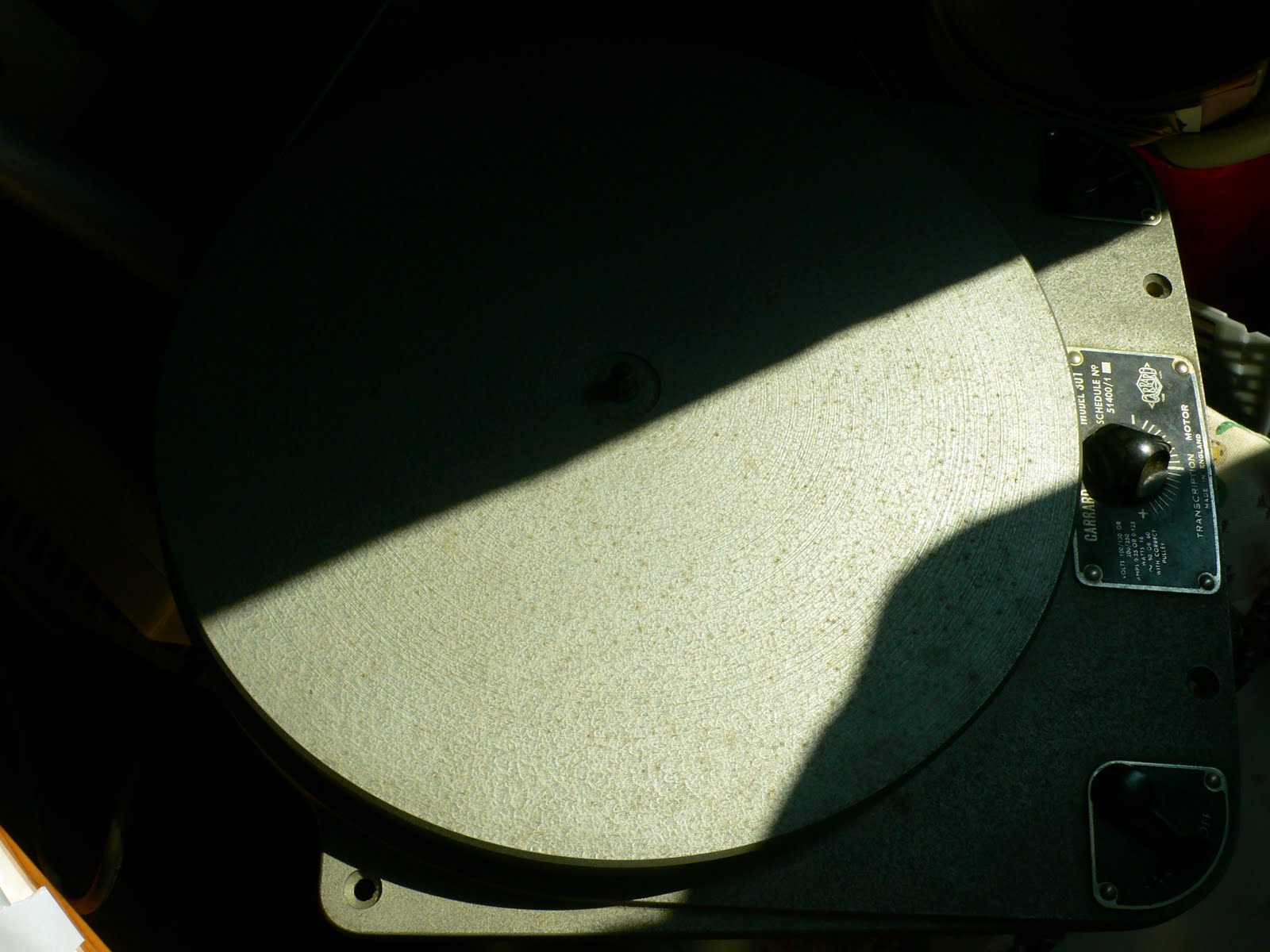
At the time my neighbor across from my house collected Volkswagen's and had them strewn all over the place. One day finally I went inside his house and was surprised to see some wonderful vintage hifi gears. Tannoys, 300Bs etc. I found out he was previously in this business in Apliu Street (now again in 好望角). He was cleaning house and sold me a Japanese San Ei VT62 SET amp, AND a grey (grease bearing) transcription 301, which he said was from RTHK, untested and without even power cord.

For years I never got around to power it up. It was kept in a wood crate that originally housed my MI-300, tugged under a table that had a big heavy CRT TV on it, and with a couch in front. That meant I never even saw it for years.

Recently, my washing machine broke. As I have it out on the balcony, I dreaded delivery of a new one and removal of the old one, as the machines had to go through my cramped living room. I made enough room and finally got it done. One side benefit was that the path was clear for removal of the big old CRT TV too. That also meant I finally got my 301 out.

A few days ago icefox visited me and I became motivated to hook up a power cord to the 301. I turned the knob and...NOTHING! You can imagine our disappointment!

As a last resort, I measured the AC voltage: 33 V AC???? I plugged the power into another outlet and voila! we heard some noise but the platter (just sitting tilted on the table) did not turn. Then we propped up the TT to ensure all parts were free from interference. Voila! The platter moved! You can imagine my joy. Apparently the first AC outlet was hooked up via a wall adapter which had been knocked loose during my struggle with the huge wood crate and the table over it. Lesson: watch your connections!

Hurray! The TT shall be off soon to my friend Robin's place for his expert restoration. He had also given me his old plinth (pictured) but I think I shall make a new plinth and mount a 12" arm on it when the restoration is done. Maybe a Thomas Schick? :-)

11 October, 2010

The Yumcha Diaries 飲茶後記: 09-10-10 (HiFi 德 VPI Classic vs Aries)

The Yumcha Diaries 飲茶後記: 09-10-10

Showroom Audition: Ernest Audio HiFi 德
Talk Vinyl: VPI Classic vs Aries


A Classic is born
I was chatting one day with my friend Keung and we talked about VPI turntables. He expressed some interest in the Scoutmaster, and I was interested in the newer Classic. Spontaneously I called 阿明 of HiFi 德 and arranged an audition on this day after yumcha.

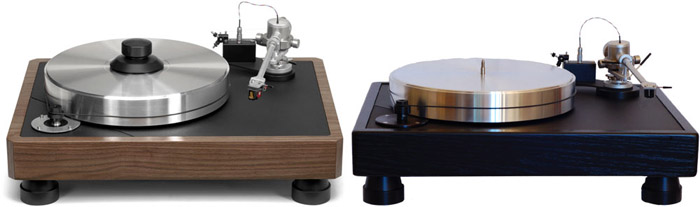
A little more on VPI and the TTs. I have not always taken to the sound of VPI. More than 10 years ago I heard a low model VPI (forgot model) with a Rega arm and did not like the rather mechanical sound (perhaps it was the setup). However, later, as heard at jeffr33's place, a Scoutmaster was lively and dynamite, and that had caused me to re-evaluate its offerings. VPI is a curious company that is highly eclectic in its multifarious approach to TT design. Many people still swear by the suspended HW-19, one of the company's huge early successes. VPI's reputation has grown in leaps and bounds in recent years coincident with the introduction of its unipivot JMW arm series.

After selling well for many years, the Scoutmaster has been eclipsed by the same company's Classic. The Classic has been in existence for a while, and had undergone small modifications, but it is quite different in design as well as appearance from the Scout and Aries series (including the similar flagship HR-X). Due to the popularity of the Classic, HiFi Duck does not even stock or demo the Scoutmaster.

One of the reason why the Classic is so hot is due to several awards in TAS, including Harry Pearson's endorsement as Editor's Choice 2010 :

"...The Classic, correctly named, has been made even better with a few quite small changes, which give it an even smoother sound. These are tiny changes, but consistent with Harry Weisfeld’s mechanical bent. The man is always on the lookout for a sonic improvement, no matter how slight. Oh yes, the changes, as told by HW himself: “I grounded the motor with an aluminum heat sink, the platter was changed to one piece of aluminum rather than two pieces, with a damping ring attached to its bottom (to make it quieter), and the arm increased by 6mm “for lower tracing error and better tracking.” And the price remains the same. You yourself can do a bit of improving if you opt to pay for the stainless-steel version of the Classic’s arm ($200), which I recommend for cleaner sound from your cartridges, and $700 for the stainless-steel record clamp that fits over the outside edges, the best way of the LP. The speed stability is so good thanks to Weisfeld’s design (based on earlier turntables, those from the golden age of same) that I think you can get by without the SDS speed control device (at $1200), which makes speed changes easier than does adjusting the Classic’s belt. A steal at $2500, this one does not suffer by comparison with the Clearaudio Statement and has prompted me to retire the much-loved Scoutmasters..." (note that in the full article, not available on the web, HP also quoted designer Harry Weisfeld's tall claim that the Classic may be his best creation regardless of price, but keep in mind HW likes to say that kind of thing). It should be noted also that HP's huge praise also elicited all kinds of comments on the net, in avguide (TAS) forum itself, including allegations of over-praise.

TAS' sister magazine HiFi+ also has a rave review from Roy Gregory, but the review I enjoy the most for its fastidiousness was from Germany (6moons).

Sibling Rivalry
So much for background. As the Scoutmaster is not available, 阿明 proposed to compare the Classic with the Aries. Based on his experience, he said that should offer some insight on how the Classic fares against its sibling. The VPI arms differed slightly in length and two different cartridges of roughly equivalent price were used. The gears are as follows:

-VPI Classic/JMW 10.5 arm(upgraded steel arm with VTA adjustment device)/Clearaudio Symphony
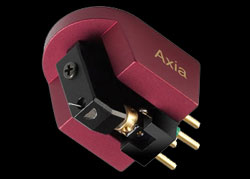
-VPI Aries 3/JMW 9 arm/Transfiguration Axia
-Clearaudio Reference Phono
-VTL preamp 5.5 II
-VTL power monoblocks MB-450-II
-Rockport Grand Mira II

We listened to several LPs. Heard as a whole, the system was hard to fault, no matter which turntable was in use. Matched with the excellent VTL tube products (which have a modern tube sound that I love; no soggy stuff!), the Rockport Mira's delivered superbly clean sound across the frequency spectrum. Here I must say HiFi 德 has always been very good at system setups. They have reliably provided some of the very best sounds at various hifi shows (same cannot be said of most of the majors). And this setup impressed all of us too.

Transfigured
As it was, the Classic combo was a little steadier in sound, a shade warmer and more solid. The Aires 3 combo sounded a little more extended and more refined. While part of this may be due to the difference in TT/arm, the difference in cartridge likely plays a major role too. What was definitely evident was that both setups bear similar sonic signature: supremely composed and rock solid; fast and explosive, as well as nuanced and refined, as the music demanded, all delivered with excellent rhythm and pace (PRaT). Here, I wonder whether HW's naming of his products are entirely appropriate. The Classic is mighty, as dynamic as the Aries, whereas the Aries is definitely not a brute (Aries is a Greek God of the violence and blood-lust of savage war = Mars in Roman; witness Holst's The Planets)! Suffice to say I enjoyed both setups more than a lot of hugely expensive vinyl setups I have heard:-)

Given the price advantage, for those who favor metal platters (many like whlee and me) and a classic look, the Classic indeed looks like a bargain.

A note on the Clearaudio Reference Phono. Thanks to Andy's loan, I actually got to test this at my home some time ago. While it is not a bad phonostage, to me it is not truly exceptional and lacks character (I certainly prefer tubes). Its gain is not exceptional too for such a high-priced product; I was unable to use it with my Ortofon MC-3000 (0.13V).

Knowing I was intrigued by the character of the Axia, whlee reminded me that my last experience with Transfiguration was at Lincoln's home, which had a very refined sound that I still remember. I'm sure I shall investigate this brand further.

阿明 told us just that morning An Indian customer came in to buy a small Clearaudio TT (I forgot the Emotion or the Performance) to take back to his country. But then he saw the Classic, compared the two and walked away with the much larger and heavier VPI, worrying about the over-weight charges!

阿明 also told us that the VPI Classic is selling like hotcakes in Germany (remember the 6moons review), and Germany probably produces more mid-end and hi-end turntables than anyone else. This should tell you a lot about what knowing and frugal Germans think about their own products. Personally I have always thought most of the German turntables (as well as other hifi items) underachieving and over-priced. I am glad the Germans themselves think so.

Man of Action
I would like to thank 阿明 for setting up the demo (and for finding about about the intriguing anti-skating on the Clearaudio Concept). 阿明 is superbly knowledgeable about the products he sells. For once, here's a man who is all action, not all talk. And whatever he is not sure, he immediately jumps on it and finds out, no bull-shit. I nominate him MAN OF ACTION OF THE YEAR.