17 July, 2010

The Yumcha Diaries 飲茶後記: 17-07-10 (Bauer, Avantgarde, AMR, Kondo, Kiso)

The Yumcha Diaries 飲茶後記: 17-07-10

The Oz Connection
JC was back in town on this day. It was also nice to see classicalkan and his cute boy. They are due in Australia in August and we look forward to his report on JC's current system. As it was a rainy day we decided to postpone our planned visit to hear tubdiyer's 4343.
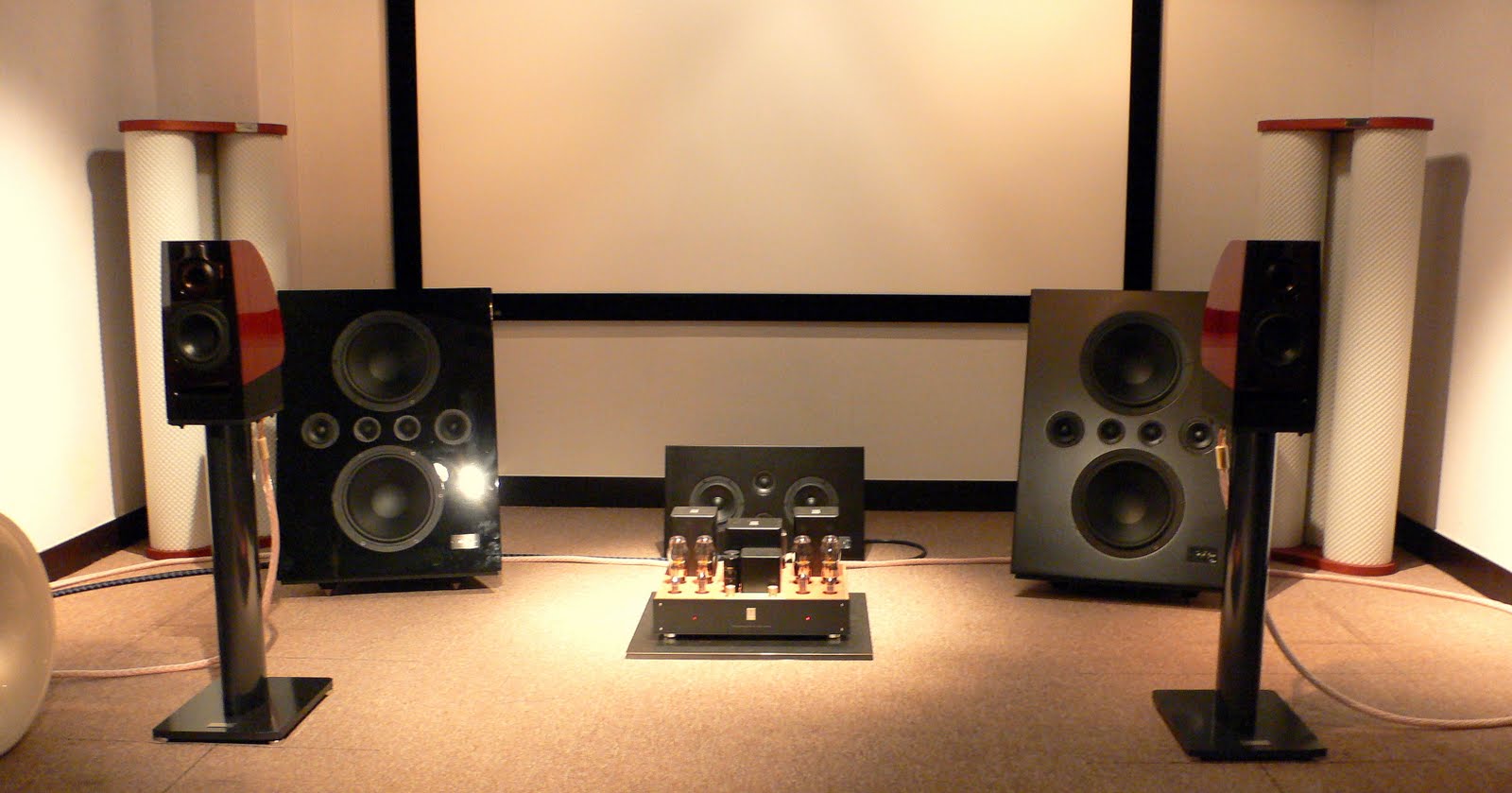
David and Goliath
After yumcha the seven of us went to Avantgarde Hong Kong. When we arrived there was a large crowd of mixed sex in the main listening room auditioning 第一鼓. Sales manager Jeff Yip ushered us into the smaller room, where we spent time with an expensive small system:

Digital: Weiss (I think Jason/Medea)
Preamp and Amp: Kondo M7 + Souga (2A3 PSE)
Speakers: Kiso Acoustics HB-1

Tell you one funny thing. As I was writing I googled "Kondo Souga" hoping to find more info or a link for you. Guess what popped up first? MY brief audition of Souga at another dealer!

Well, the sound of Souga was much better this time, for sure. At $130K the small Kiso speakers had better be good! And they were, as driven by these expensive electronics. The violin was a little artificial paradoxically, but that may be Eugene Fodor. A Japanese jazz CD was well rendered, with snappy timing, crisp piano and serviceable bass (let's not exaggerate that it's a big speaker).

The Kiso are certainly not the first to use resonating cabinets of thin wood that simulate musical instruments. Not even Ocellia was there first. According to daiwok, the concept has long been in existence. If you can accommodate larger speakers and are handy, you might want to follow daiwok's footstep and assemble the Saba Reso (see also here). I have auditioned the Saba Reso at daiwok's place, and they were phenomenal; I had never heard Starker's Bach to better advantage. All at a tiny fraction of the price of the Kiso, and you get more bass, a lot more. But that's for another article.

When the rival gang left, we moved into the main room and auditioned the large system. Here, the "director" Edward Choung took over:

Digital: AMR CD-777
Preamp + Amp: Kondo M77 + Gakuoh (300B PP)
Speakers: Avantgarde Duo Grosso

We listened mostly to CDs. The sound was reasonably good, especially behind the desk. My impression is that the Duo Grosso is better than the regular Duo that I had listened to in the past, and it had better be given the extra cost. Mr Choung was an enthusiastic personality(at times almost overly so), tirelessly explaining to us facets of the gears in use, especially since we were unfamiliar with the AMR brand.

Another chip on the shoulder
The AMR's look aroused suspicion in us about its origins. It's a British company but the look of the machine somehow had something Chinese about it. The pompous English on the official website was not reassuring either. My ears perked up when Mr Choung alleged it used the 16-bit chip. At the time, in the unfamiliar surroundings I could not really assess the performance level. Back at home, I read its website and the reviews. I was surprised to read in the 6moons review that Thorsten Loesch, who used to be active in my cheaptubeaudio Yahoo group, and whom I respect as a technocrat, may have something to do with it (at least with its progenitor CD77)! So it IS a bona fide UK company after all...

The multi-bit chipset used is actually the Philips UDA1305AT, a chip new to me and believe me, I have heard my share of CD players with all kinds of chips. Now, THAT's interesting and I am glad! I urge you to give it a listen. Old technology, new implementatio, and I admire a company that does that. Official gibberish here:

"...At the heart of the CD-777 Processor is AMR’s ‘continuous calibration’ Multibit Digital-to-Analogue Converter circuit using the Philips UDA1305AT Multibit Chipset. This is the first time this New Old Stock chipset has been used in a CD source and is worthy of the title “son” to the “King of Multibit” Philips TDA1541A chipset used in the multi-award winning CD-77. With AMR’s understanding of digital design down to the silicon die-level, the sonic performance of this “Prince of Multibit” chipset has been taken beyond the textbook limit. Producing visceral music that other mega-buck CD players cannot match, it must be heard to be believed. Along with AMR’s OptiSample, the CD-77 boasts full remote control of all sampling modes: Direct Mastering (AMR’s custom Non-Oversampling), Oversampling (2X, 4X) and Upsampling (96 kHz, 192 kHz)..."

"...The UDA1305AT is also superior to the TDA1543 and TDA1545. An added bonus is that this chipset has been off the radar and until now never been used before in a high-end CD player. Amongst its features are a continuous calibration concept, fast settling time to enable 2, 4 and 8 times oversampling (serial input), adjustable bias current for maximum dynamic range, internal timing and control circuits, I-squared-S bus input format (time multiplex, two’s complement, TTL up to 384KHz), no zero crossing distortion, low power consumption and low total harmonic distortion. Full-scale output is 2mA, THD at 0dB is -90dB, A-weighted S/N ratio is -101dB and current settling time to ±1 LSB 200ns..."

CAS vs CDP
Without even prompting Mr Choung showed us the CAS ability of the AMR. Using a netbook he played back downloaded high-res files and compared them with ripped files from CDs as well as the CD itself. Needless to say, the CD playback was superior.

Analogue is King
Since there were a plethora of turntables around, we asked to play an LP. Mr Chuong obliged and took quite a bit of time setting up the analogue setup:

-Feickert (Das Laufwerk Triple) turntable (tonearm not sure) with an Ortofon SPU Gold cartridge
-fed into an Ortofon SPU-T100 step-up transformer
-then into AMR PH-77 phonoamp.

He played a first-edition Take Five (red-label; 6-eyes). the sound instantly trumped the CD replay, but that was not all.

It's all about Curves!
Again, the spotlight was on the AMR PH-77. This unusual phonoamp is prodigiously equipped:

"...The PH-77 is the only phonograph source able to lay claim to exclusively feature a comprehensive catalogue of 23 equalisation (EQ) curves: every LP record can now be replayed using the one and only correct equalisation curve. This includes AMR's exclusive RIAA Direct Metal Mastering 'Curve' which transforms DMM records from being 'bright/edgy' to the life-like analogue recording that it always was.

This along with 8 levels of gain, 64 steps of load, 3 inputs for unprecedented flexibility in cartridge choice and matching and the onboard 24bit/96kHz Analogue-to-Digital converter, the PH-77 is undeniably one of the most significant reference phonograph sources ever produced..."

For sure, Take Five sounded better with the Columbia curve engaged. I don't recall another phonoamp as versatile as this one. Somewhat surprisingly, it lacks a phase switch. Mr Chuong's reply: "...I was told when the engineer records something in reversed phase, he has the effect in mind and it is supposed to be listened as it is..." Well, I'll take that with a grain of salt...

The last thing we asked for was to remove the step-up transformer and only use the MC phono section of the PH-77. Sound immediately flattened significantly, as predicted by Mr Chuong. Nonetheless, this is yet another interesting offering from this company, one that I shall watch intently from now on.

The showroom has a lot of TTs to look at. The Feikert line at least looks good. Nottingham I have no interest in at all. Of all the TTs, what interested me the most was the Bauer Audio DPS on silent display (read the HiFi+ review). The elegance of this particular sample from Jonathan Midgley was unfortunately visually disturbed, if not destroyed, by a hopeless marriage with a clutzy Triplanar.

While we were engaged in the main room, Mr Yip in the small room took the pains to show some video to classicalkan's little boy (so as to contain him?). We spent a lot of time there and I am really impressed by the service of the two gentlemen. Commendable indeed!

No, we don't carry this...
After that, we went to nearby Prestige HiFi because I wanted to take a look at the Thorens TD-309, which has been winning praise. Despite its reasonable cost and spunky look ( sassy to me, maybe ugly to you), it actually has many interesting design features (read the pdf file). I saw every Thorens deck (mostly ugly) except this one.

Sales: "...Sorry, we don't carry this..."
DJ: "Why?"
Sales: "...Nobody would be interested in HK..."
DJ: "...But I am! Can you get my a quote anyway?..."
Sales (after a call or two): "...sorry, we don't do this ah..."

So, even if you want one, the dealer refuses to get one for you. What kind of dealer is that? Thumbs down for Prestige Audio. This is the kind of dealer I dislike a lot.

Just an hour ago, Avantgarde HK told me they carry everything in the Ortofon catalogue, and Ortofon makes some very cheap cartridges and acessories. HiFiDuck sells the Concept, the lowest in the line of Clearaudio, for a good price. That's service.

We did not stay, not because of the turntable, but because the sound emanating from a Thorens TT was shockingly anemic, as if bled of all music.

15 July, 2010

The Yumcha Diaries 飲茶後記: 26-06-10 and 03-07-10

The Yumcha Diaries 飲茶後記: 26-06-10 and 03-07-10

03-07-10 鄔 Sir Sir 地認識了一些老發燒友
一次的機緣,讓我認識了幾位老一輩的發燒友。覺得他們挺有趣的,就此記下。

事情是這樣開始的。沒多久以前, 飲茶前在 Pro Sound 唱片店無意聽到一位先生跟朱老闆在聊天中提及聞名已久的盧華煇 (ML)。 知道此人是發燒友後, 就跟他搭訕, 聊了起來。原來此人就是也聽説過的 "鄔 Sir Sir"。鄔 Sir Sir 性隨和(爲了方便朋友,也就這樣自稱),大家言談甚歡, 就約了改天去盧先生那裏拜訪。

就在王羽佳的音樂會上又踫到了朱 老闆和 鄔 Sir Sir 等一票人。音樂會完了就跟了他們去宵夜。坐上還有另外兩位:一位 DIY 先生,也就是朱先生 Pro Sound 店裏那部聲音不錯的 DIY 12E1 膽後級的製造者;另一位是古典發燒友。這幫人都是注重聼現場古典音樂的人,在發燒友中少見,大家遂聊得很開心。

房術
言歸正傳,是日飲茶後就隨 "鄔 Sir Sir"上了盧先生的場。用“場”一字,再貼切不過,因爲屋子裏藏了不少玄機。 其中之巧妙,盧先生也在開場前一一為我們詳細介紹。先說主聆聽空間, 原來是間六面與外隔絕的“屋中屋”,有地台墊高的“房内房”, 比起大多錄音室的隔音處理有過之而無不及。所有的電都經過大排大排的 Isoclean 處理。房内的木板很多都有弧度的,有調聲之用。相對來講,頂尖的器材好像變了配角似的:

Vinyl - Clearaudio Statement-Goldfinger
Digital Transport- Metronome Kalista Reference SE on stands
DAC - Wadia 931 Controller + 922 monoblock DAC
Phonopreamp - FM Acoustics 222 MkII
Preamp - Audio Note M10
Amp - Edge NL Reference monoblocks
Speakers - JM Lab Grand Utopia EM

耳鳴
此房隔音之佳,我想一時無倆。同行 whlee 說一進屋就耳鳴, 令我想起當年去鄉下 Delaware 探望我二姐時,那令人難眠, 寂靜如雷轟的夜之聲。器材放在不起眼的地方,面對著的只有喇叭和放大器,感覺很舒暢。此刻想起二姐那標緻無雙的瓜子臉孔, 卻只能緬懷...

聲音也好。就算我這號角喇叭和單端三極管愛好者和盧先生口味可能南轅北轍, 也能盡情欣賞他的一些首本戲。如果你去拜訪,請聼聼以下的幾首黑膠:

-Direct-to-disc 日本妹鋼琴,彈得一般, 但音效一流。
-Manger 靚聲王 LP 第三首的鋼琴,第二的詭魅之聲。

如果你聼過後,覺得你播這些比盧先生播的好的話,就請你在網上發表, 邀請我們去聼聼, 以證其實。

話又說回來, 在背景寧靜和細節重播上,Clearaudio Statement 肯定是優秀的,可是我認爲這個唱盤似乎有點遺漏了音樂重生最重要之一的一環, 那就是節奏感。 這是我聼過 Statement , 甚至於 Master Reference (乃至於大部份 Clearaudio 唱盘) 後都沒能揮去的感覺。如果你擁有或聼過這些唱盤, 不同意的話,不妨說說你的觀點。盧先生自覺得正在升級的 Continuum 在小品的重播是比 Statement 更生動的, 但大爆棚就以後者爲優。 我期待短期内能聽到盧先生頂級的 Continuum。

在這裏我沒用"前輩"或者"師傅"這些人人掛在嘴上可沒放在心裏的表面之詞。這些年, 見過太多庸俗不堪的 "前輩", 以老賣老的老不朽。 盧先生令我耳目一新。 他有他的觀念,可他沒有説教, 平和, 可嘉。鄔 Sir Sir 那天說, 音響對一些人來說,像宗教一樣黑白,一笑。

26-06-10 A Challenge to digital amps
The day was stormy, but that did not prevent us from squeezing in a "challenge" between yumcha and the HKPO-Wang Yuja concert. The resident system was simple and digital (Tact and Lyngdorf). We brought over a very cheap system: Counterpoint 3.1 tube preamp and Adcom 555 MkII amp. I shall be brief. To most of us, the cheaper conventional system scores over the digital amps in most aspects, particularly in bass and dynamics.

07 July, 2010

Talk Vinyl: Current NYC setup (keywords Denon DL-304, Koetsu Black, Linn LP12, Thorens TD-125, SME 3009, BAT P5, GCPH)

Talk Vinyl: Current NYC setup

As I was about to write about a new "surprise" purchase, I realized I had not written about the extensive changes my vinyl setups underwent towards the latter part of my last stay in NYC.

Enter the Black. Koetsu vs Denon
The arrival of the Koetsu Black (read this Art Dudley review) induced great changes in my setup. The sheer weight of this cartridge precludes installation on any of my other arms except the Ittok on the Linn LP12/Lingo. Fed into the BAT P5 , the sound was not that far off from the Denon DL-304 used previously. After protracted listening I made the decision of not using the WE 285L transformers and just using the high-gain setting of the P5. The gain offered previously was not quite enough for the Denon, but the Koetsu's slightly higher output and somewhat wilder streak made the difference. Here, I shall repeat that, whenever possible, for step-up my preference goes to active devices rather than transformers. Aside from the gain and energy, the Koetsu is also bolder and more romantic, with a lush treble. The Denon DL-304 is quite neutral I'm sure (more so than the 103), but the black veers off from neutrality by a much smaller factor than I'd have thought.

As much as I was enamored of the Koetsu sound, I also gained even more respect for Denon, the DL-103 having long been a personal favorite. Indeed, it's always valid to ask, upon hearing any Denon, "Why pay more"?

Merry-go-round 1. What, 304 on the 3009?
Displaced by the Koetsu, the Deonon DL-304 went on the Thorens TD-125/SME 3009S2Imp. The cartridge is likely too heavy for the arm, and the "resonant structure" may not be perfect, but I didn't want to install it on the Technics SP-1200. The result on the SME 3009 though was surprisingly good. After the initial promising sound, I concentrated on mating it with phonoamp.

PS Audio GCPH
The neutral DL-304 had always taken to the tubed BAT more than the PS Audio GCPH. Previously, on the Linn LP12/Ittok, I had tried it extensively with the GCPH. With the gain setting maxed, the GCPH had enough gain for the DL-304 but the sound was just that tiny bit etched in the treble. While this brought great brilliance to percussion pieces I missed a little heft down below. At that time, the WE285L transformer fed into the BAT P5 outclassed the GCPH decidedly.

On the SME 3009 the DL-304 sounded lighter still. As I ran several TTs at once and with the BAT P5 now bonded to the Koetsu, I decided to try out the WE285L transformer in conjunction with the lower gain setting of the GCPH. Bingo, that did it, with added heft and elimination of the slight whiteness. Comparison with the Koetsu/BAT setup was close and I was immensely satisfied.

Is it the 3009 or the TD-125?
Assuming the TD-125 is similar in sound to the LP-12, the 304 on the 3009 sounded remarkably different from the Ittok. To be expected was a lighter and less dynamic sound, with the bottom lighter in heft and slam. However, it was also immediately apparent that there was a delicacy to the treble that was quite a bit more refined than the LP12/Ittok. Rhythm and pace was superior on the TD-125/3009 too: while pop material was obviously less heavy-footed, it was in certain classical material that the difference was most felt; the phrasings on violin recordings instantly felt more sinewy, the flow more organic. I'd venture to say, if you are a violin aficionado, there would be little reason to own the Linn combo.

As the TTs are more similar than dissimilar, I personally felt the arm to be more responsible for the obvious difference in sound. But is that completely true? Somehow, as in previous observations, I have a nagging suspicion that the TD-125 is also a superior turntable to the LP-12. What is inescapable is that the Linn is over-rated.

Merry-go-round 2. A sliver of Silver
Last, I installed the Benz Micro Silver on my bedroom system's Technics SP-1200. I was very pleased that the sound reached new heights. As a matter of fact, they proved so synergistic into the Linn Majik I integrated amp and Linn Kan I speakers that I may have to up my opinion on this particular cartridge by a notch. It has refinement as well as tremendous rhythm and pace that makes me think about how to further improve the main gig a little in this regard.

01 July, 2010

HiFi 天碟 Golden Discs (3): Film Music I The Soundtracks of Wim Wenders

HiFi 天碟: Film Music (1)
The Soundtracks of Wim Wenders


In general I am not a fan of soundtracks, but there are notable exceptions. I shall start with Wim Wenders. All his soundtracks have fantastic sound.

Wim Wenders is one of my favorite directors. Every inch the auteur, he is never afraid to experiment. His compass is vast, from documentaries to road movies to love stories. If you have not watched any of his films, you have missed much sensual experience (nothing to do with sex, which is largely absent in his films), and certainly you have missed mesmerizing performances by many of the world's most beautiful women, like Natasha Kinski (Paris, Texas) , Solveig Dommartin (Wings of Desire and Until the End of the World) and Milla Jovovich (The Million Dollar Hotel), to name just a few. Talking about Jovovich, who can forget her in Luc Besson's Joan of Arc?

Wenders is obviously a connoisseur in music too. Whether using original music or compilation, his film music more often than not form "concept albums", where the individual numbers cohere into a greater whole. This last attribute can in general be said of the better film music (such as from Preisner and some of Morricone, to be covered later).

A listing of Sountracks from his Official Site is missing many items. Perhaps many have been discontinued.

Until the End of the World
Many of Wenders' soundtracks not only feature U2, some even are musically directed by them. These all have the signature of Wenders, but Until the End of the World has to be my favorite of the bunch (and of all his soundtracks), and really the only one you need to have for Wenders' films featuring rock band compilations. From this soundtrack I discovered people like Daniel Lanois, Neneh Cherry, Nick Cave and the Bad Seeds etc. Paradoxially, this is IMHO one of Wenders' worst films.

Paris, Texas
Fantastic Soundtrack by Ry Cooder. It is very short, simple and atmospheric, but the guitar work, like solo violin music, is endearing to most simple-minded audiophiles.

And it is not just for the slide guitar either. If you can, catch the movie too! Great film that shows the "road-movie" side of Wenders.
The story is simple and heart-warming. Natasha Kinski here is no longer at her youngest, but her portrait of a ravished woman has inner beauty, making one regret all the more the many trash films that wasted her.

Lisbon Story
A non-story. Despite the nominal billing, the real stars in this film are the beautiful city of Lisbon, and emphatically Teresa Salgueiro, playing herself, beauty and beautiful voice of the band Madredeus. Ainda is actually the name of the album.

I have collected quite a few of Madredeus' albums, but Ainda remains the best to me. The music is based on Fado, but modernized.

Wings of Desire
An unusual film in Wenders' canon, not only for the structure and cinematography, but also for the atmospheric instrumental score. However, this soundtrack may not be so useful to those who have not watched the film, as it includes German monologues.

The beautiful Solveig Dommartin, who died young, is the remarkable actress in this film. It is hard to believe that she learned the acrobatics (lots of it) in eight weeks!

Buena Vista Social Club
Probably the greatest thing Ry Cooder ever did was to bring these wonderful Cuban musicians to the world's attention in this documentary. The compilation coherently blended the vocal and non-vocal numbers.

But if you have the chance, catch the film. There's a lot more in the film about these musicians. Their arrival in glitzy New York from Cuba is literally eye-opening for them, and a reminder for us of the repression of communist rule. It's most touching.

Several of the stars, like Ibrahim Ferrer, Omara Portuondo and Rubén González went on to make their own internationally released albums. You really don't need that many albums of Cuban music; the soundtrack still is the best. Of these, the one I like the most is Ruben Gonzalez' solo effort, beautiful piano playing by any standard, excellently recorded too.


Soundtracks to die for

31 May, 2010

The Yumcha Diaries: 29-05-10 A Tale of THREE Maggies

The Yumcha Diaries: 29-05-10A Tale of THREE Maggies

After more than 2 months in NYC, it was nice to be back in HK and to have met up again with old friends and tasty dim-sum. It was also a little unsettling to learn of the health issues of an old friend. We ARE all getting old!

A Visit to Excel
After yumcha, five of us went to Excel Central hear their Magnepan 1.7. When we arrived, the Maggie 1.7 was already playing in their LARGE room (over 500 ft we estimate). The 1.7 must be getting a lot of attentions.

Sound was reasonably good at low volume and with simple material, but not top notch. The 2 entry level PrimaLuna Prologue integrated amps used (One/EL34, Two/KT88) have long been favored by 俞師傅. However, in this large room, they simply could not drive the Maggies adequately. Clipping was heard with vocals and Mahler seemed to be playing in a tunnel. A switch to the huge Krell integrated amp brought much better control, but the whistling on the Masekela Hope album and the cymbal touches were white in color and inaccurate. Despite the sonic shortcomings it is commendable that bass was quite full and good, though sluggish due to lack of power. Overall, the demo did not do the 1.7 justice.

Back to the Magnepan 1.6
Disappointed, we all went to jules' setup for some rejuvenation. His current setup:

Digital: Orpheus combo
Preamp: Cello Suite
Amp: ML ML3

Even though jules, busy with work and being dad to 2 young children, had not fired up his set in months, sound was really enticing, as usual. Rokia Traore and Masekela (see "CD recommendation 2" below) were immediately brought back to life. The VPO came out of the tunnel in Mahler 5 too. Indeed it was hard to fault the pristine sound. Since the amplification was familiar to me, I attribute the mesmerizing delivery of the treble, vivacious and rhythmically enticing, to the Orpheus (Anagram) digitals. This is digital done right and a relatively rare example of good-sounding 24/192. We spent a happy 2 hrs there before dispersing.

An Previous Visit to VASH
I'll use this space to tie up a little loose end. Months ago I had the pleasure of visiting Vash to audition his Magnepan 1.6 and, even more importantly, I was eager to hear his CAS. I hadn't brought a camera, but while sipping his latte I drew a picture of his wonderful home, full of toys. On that date his VERY complicated system comprised the following:

TT - Clearaudio Champion/Rega RB250 w/Clearaudio Audioquint tonearm wire + Expressimo Heavy Weight mod.
Phono - DACT CT100 (Battery powered)
SACDP (and DAC) - dCS p8i
CD Transport - Meridian 500 + 518
PC output via M-Audio Firewire Audiophile to p8i digital input
Balanced line stage - DACT CT100+CT101
Non-balanced line stage - Transcedent Sound GG (custom built with dual mono tubes power supply)
Power amp. - Sunfire Architect's Choice series II signature.

I must say Vash was one fearless man! Music was played LOUD, and the 1.6 was vibrant, fast and exciting. With Vash's GG preamp, sometimes there was a slightly restless quality. On that day, another DIY preamp of mellower flavor was also tested. Highly commendable too was the CAS playback, amongst the best I have heard. All in all, a highly satisfying afternoon.

29 May, 2010

CD Recommendations (2)

CD Recommendations (2)

What I use for testing gears change all the time. For the Magnepan evaluation here are a few CDs that I have used (besides LPs). They turn out to be all by Black artists. :-)

Ah, Jimi Hendrix!
I am quite a Jimi Hendrix fan. It has always been said his albums don't sound too good, but I think that's not true of current re-masterings (early rock CDs can be pretty awful). I highly recommend Axis: Bold As Love. The first 2 tracks are breathtakingly exciting on the Maggie. As a matter of fact, some of you may remember limage used to play a crazy swirling electronic track (from his son) on his system. The first tracks here should have the same effect. Sound is excellent. In case you think you have all of Hendrix' albums, think again...the latest is Valleys of Neptune, a controversial new release of previously unreleased (some say half-baked) material. I think it's not as exciting as the classic Hendrix albums, but it is a worthwhile one, in good sonics, remastered by Eddie Kramer, who recorded most of Hendrix' studio efforts.

In case you don't know, years ago Stereophile did a feature on Kramer. In his home he uses Klipschorn, driven by humble vintage Japanese electronics (either Yamaha or Luxman)!

Hugh Masekela
This jazz musician is adventurous with his African roots. Track 12 of his album Hope, Stimella: The Coal Train, is familiar to most audiophiles. The plain CD (originally Triloka label) has long been out of print. Everyone knows about the expensive Analogue Production LP and SACD/CD re-issues, but now you have the additional option of buying again the cheaper plain CD, this time on the Sheridan Square label. Note that it is highly misleading that many internet vendors still use the old template which says Triloka label. I believe that's wrong. The new plain CDs you can buy are Sheridan Square label. Correct me if I am wrong. As for the music, this live performance is eminently listenable, and not just for the last track either!


Rokia Traore
Ever since I heard Rokia Troare (official website)during a visit to JC, I have become a fan. All of her CDs are sonically and musically excellent, but some may be hard to get. The newest one, Tchamanche, , should be relatively easy to get. If you're willing to shop online, grab while you can the equally wonderful Bownboi, which has been out of print but recently available again.

27 May, 2010

HiFi Letter from NYC 2010 (6): Magnepan MG 1.7 Listening Tests (2)

HiFi Letter from NYC 2010 (6): Magnepan MG 1.7 Listening Tests (2) (finished in HK)

Marantz 9
Next I fired up an old pair of M9. I decided just for fun to drive them from my Marantz 7. These are all old versions. The M7+9 gave a superbly clean sound, but where's that legendary bass oomph? Feeling something missing, I replaced the M7 with my usual BAT VK-3i. I was shocked by the difference. Even using the non-balanced ouput the BAT delievered a lot more: there is iron-grip control, and dynamics completely trounced the vintage machine. Importantly, the bass now was phenomenal, as it should be.

I have always preferred the better modern preamps to the usual vintage (Marantz, McIntosh, Fisher etc). If you just play simple music, you may find a certain vintage preamp flavorful, but for all-around performance, there's no comparison. This little exercise was just a reminder, as if I need reminding. The other side of the coin is that vintage tube amps in good condition can be formidable.

(click on pics to enlarge): (L) Fisher 80AZ; (R) The wondrous Art-Deco Altec 323, fronted by WE285L, Langevin 402A and 402B step-up transformers.

The Wonderful Flavor of 6L6 amps
A good friend brought over a large variety of 6L6 amps for me to check. At about 20 wpc, these lacked real muscle to drive the Maggie, but for smaller-scaled music, most vocals and acoustic jazz, they performed miraculously. There's a sweetness to the 6L6 that tonally most becomes the more analytical Maggie, more so than the more powerful EL34. The Fisher 80AZ, using 6L6GC in place of the original EL37, delivered clean sound and remarkably quiet background, but it terms of finesse it yields to the wonderful, and under-rated Heath W3M, using Tungsol 5881. In terms of power and control, as well as tonal allure, they all had to yield to the WE 274-equipped WE124 (pictured in last post); its ability to drive belies its nominal 12 wpc rating. Indeed, if you only listen to smaller things this is a great speaker for the WE. Another amp from the WE era, the rare-as-hen's-teeth Altec 323 (pictured pair from the 40's) delivered the same transparency, trailing behind the WE124 just a little in terms of rhythmic savvy.

(click on pics to enlarge) (L) Biasing ARC VT130; (R) Theta+SFD2

Fully Balanced Power!

By chance I ran into some balanced gears and made a new friend. My visit to the seller, who uses Martin Logan SL3, would be the subject of another post. Suffice to say the gears I bought from him enabled me to create a fully balanced system (except for phono inputs) for the first time. A revision of reference system is in order:

Digital: Theta Data Basic II into Sonic Frontier SFD2
Analogue 1: Linn LP12/Ittok/Koetsu Black into BAT P-5 (high gain)
Analogue 2: Thorens 125/SME 3009 S2 Imp/Denon 304 (into WE285L) into PS Audio GCPH (low gain)
Preamp: BAT VK-3i
Amp: Audio Reserach VT130
XLR cables used: Gotham GAC-3

Now, the system, both analogue and digital, are balanced. Of note is that the noise floor of the BAT VK-3i preamp, which is much lower via its balanced outputs than RCA outs. This proved quite beneficial as the 8x matched Amperex Holland Globe 6DJ8 I use are inherently noisier than the the stock Sovtek 6922, but tonally much more alluring. Compared to using RCA connectors, the balanced preamp/amp configuration IMHO offered superior dynamic swings and control. I should re-iterate here that the inexpensive BAT VK-3i is really quite a bargain, a fully balanced TUBE linestage that doesn't cost an arm and a leg.

The ARC VT130 (together with its sibling VT150) is an odd product in the ARC series. Despite the designation, its 4x 6550 per channel yields only 110 wpc, 10 more than the contemporaneous VT-100. Its design is for sure related to some of the D series amps (like the D115) , without extra 6550 as regulation; and to the balanced V-series amps, but not in triode mode. IMHO, it is unnecessarily big, laid out more extravagantly than the D- and V-series amps, with a bulky cover that covers everything. I suspect the bulk is why it has never been popular here in HK. Sonically, it's another matter. Though it still contains solid state components in the signal path, its sound is definitely more tubey than the D-115 MkII, which I have in HK. The D115 betrays its hybrid nature when it is switched on, a little white in tonality, and that does not completely go away even after a full warm-up. Not so the VT130: it sounds quite warm even at power on, and reaches full bloom in about an hour. As for power, I'd say they are about equal, but the balanced connection gives it an more effortless quality.

In all, this is now my reference for the Maggie 1.7. At 110 wpc of balanced tube power, the system is powerful enough to handle everything, from fusion to big symphonic work. It doesn't have the brute power of some ss amps, but it trounces them in almost everything else. Neither does it quite have the tonal allure of a WE system, but its even attributes rewards everyday listening.

In the next and final part of this Magnepan 1.7 Listening Log, there are some loose ends to tie up, and I shall do some summation on what I have learned. Stay tuned.

06 May, 2010

HiFi Letter from NYC 2010 (5): Magnepan 1.7 listening tests

HiFi Letter from NYC 2010 (5): Magnepan 1.7 Listening tests (I)

I got really busy with the 1.7's. A chance to try all kinds of tube power amps. In recent years I have spent most of my time with SET amps and completely neglected my medium- and high-powered amps. The 1.7 provides me with an excuse to fire them up. Firing these up took a lot of work. Digging out the proper tubes for them, test and match the tubes and carefully bias them.

Listening began with the same gears I used to listen to the MMG (see last letter). As alluded to previously, immediately the sound struck me as more at ease, but also more extended at both ends. This implies more liquidity, a more fluent musical flow as well as tonal richness. I used this setup for quite a while to run-in the speakers. Truth be told, they really did not need much run-in; a few days was all it needed to remove the tiny bit of grain in the treble.

McIntosh MC2200
Praise must be given to the McIntosh MC2200 amp, basically a cheaper and more industrial looking 2205 (no meters either). Like all McIntosh ss amps of yore, it uses output transformers (now used only in higher models). This is a 200 wpc amp that is VERY heavy and built like a tank. It even has a 1-ohm tap. I wish I had a pair of Apogee to try this amp on. The even load of Maggie surely stressed it not one bit. Sound was superbly controlled, liquid and smooth even in the loudest moments. My WE tube friend marvelled at the synergy between this amp and the 1.7. Note that Lyric HiFi also uses McIntosh to demonstrate its 1.7. There is neither transistor hash nor dark colorations of some vintage gears. I'd say this amp is definitely a best buy for a Maggie. Given the chance I'd like to buy another one to use the pair in bridged mono mode. Now, THAT's cost-effective! This is the only ss amp I used this time (although my NAD 325BEE drove my MMG quite well, I have too little time to test it out on the 1.7 and it likely will be marginal; so be it).

Artemis Lab LA-1
At this time I got a new toy. I have previously heard Artemis Lab only at shows and, despite the looks, my impressions were generally positive. My interest in the LA-1 line preamp revolves around its use of 5687, a tube I like and popularized by AN and Kondo. If you know the layout of the Kondo M7 you should find the chassis here eerily familiar: 2-level, with only small holes to let the wiring go between the compartments. In this "poor-man" version, there is no expensive silver, and the design is also different and notable for its use of plate choke and constant current source. Perhaps later I shall write a more detailed review.

The Artemis LA-1 immediately proved itself a winner. As noted in some web reviews (avguide; positive-feedback), it is eerily quiet (more than my BAT VK3i, though that may be the problem of my particular unit, as my BAT P5 phonostage is dead-quiet) and goes loud with great ease, perfect for this classical listener. The BAT VK3i is a little tight in comparison. It's very revealing, making tube-rolling not only fun but essential for system synergy. The Tungsol is smoother and generally suitable, but with certain amps that are slightly dark, Philips/Sylvania is preferable. So the system changed to:

Analogue: Linn LP12/Ittok/Koetsu Black; Thorens TD-125/SME 3009 S2 Imp/Denon 304
Digital: Meridian 596V
Preamp: Artemis Lab LA-1 (mostly using Tungsol)

pic: Marantz 8B, Dynaco ST70 and, waiting in the wings, WE124 (click to enlarge)

Marantz
8B and Dynaco ST-70

Perviously, I had used the Marantz 8B quite satisfactorily with the MMG. And in HK, another Marantz 8B had satisfactorily driven a host of "difficult" speakers, including Magnepan MG-12, Thiel 2.3. Even ATC 20 performed miraculously well with it. Don't under-estimate its 35 wpc, it's a power-house in disguise. And best value. One in good condition (mine is) should sound quite transparent and be quiet in operation.

I am glad to report that the Marantz 8B had no difficulty whatsoever handling the MG 1.7. This amplifier must also be rated a best-buy Maggie amp. Compared to the ss McIntosh, there is a little more bloom on vocals, a little more rosin on the violin, and a slightly bigger soundstage. But in some ways the MC2200 is a little smoother (perhaps because I was using the leaner Siemens EL34 on the 8B). Overall, there is rather little to choose between the two and I could live happily ever-after with either, both big bang-for-the-buck.

Moving down the food chain, I tried out the humble Dynaco ST-70 (mine is bone-stock). A little sweeter in the treble (this amp has the best treble imho), open, but looser at the bottom and not quite as powerful, though control was good enough in my large LR. This is THE best-buy in the budget sector. If you don't listen to the big orchestral stuff like I do, it will do nicely. This attests to the drivability of the 1.7.

Throughout, sound of the MG 1.7 was just wonderful and never gave me the tight feeling I get with a lot of Maggies. My WE friend again marvelled and completely agreed that it is a best buy.

That concludes Part I of the listening report. There are quite some surprises coming. Stay tuned for Part II and more.

30 April, 2010

HiFi Letter from NYC 2010 (4): Magnepan MG 1.7

HiFi Letter from NYC 2010 (4): Magnepan MG 1.7

(revised May 6, 2010)
Part I

Ever since Magnepan came out with the all-(quasi) ribbon MG 1.7 I have been following it. The speaker has been sweeping all before it, garnering great praise and Magnepan cannot keep up with production. As my previous letter (a few posts down) mentioned, Jonathan Valin of TAS has spent a huge amount of time listening to it and writing about it on the TAS Blog (no printed review yet), claiming unparalled coherence that is superior to the 1.6, 3.6 and 20.1. Being a full-range driver fan and a Tannoy user, of course this aroused my interest. It's imperative you read JV's account in detail, for he went out on a limb, and this is sure to incite unrest among people in the Maggie clan.

To encapsulate what's so revolutionary about the MG 1.7: the bass panel of this model uses quasi-ribbon, said by the manufacturer to be "...a departure from Magnepan's 40-year history of using planar magnetic drivers for the bass or lower midrange. The use of quasi ribbon technology down into the lower midrange and bass will provide a new level of coherence..." (there's also a "supertweeter" in this model). This is a first for Magnepan; all their "higher" models' bass panels still use the old planar drivers. Although there's no official news from Maggie yet, I'm sure that is set to change.

Audition at Lyric HiFi
Lyric HiFi is the only dealer in NYC (unlike the MMG, you cannot buy direct from Magnepan). I have not visited them in years, but I remember the early days when I auditioned the 4-pole Infinity setup with Goldmund turntable, still one of the best sound I have ever heard in a shop. Well, the demo of the MG 1.7 looked almost like an afterthought. It is in one of the small rooms, more long than wide. The panels are about 6 ft apart and only 2 ft or so from the front wall, so not much of soundstaging. They were driven by old Lector digitals and a current McIntosh integrated (big), hooked up by the cheapest Nordost Flatline. Sound was not great, but not bad either. I was surprised by the smoothness. Certainly, there wasn't the "lean" quality mentioned by some users of older Maggies. I wondered how it would sound more in-room. So as usual you get little from the shop demo. Nevertheless, I eventually gave in to my impulse and decided to give it a try. My pair is with the usual aluminum trim, NOT quite as aesthetically pleasing as the traditional wood trims (now special order and I didn't want to wait).

First Impression
The night before delivery I packed up my MMG. When the 1.7 came I was astonished by how big they were, and the packing was even bigger, several times the volume of that for the MMG. Even given my familiarity with the 1.6, I was a bit unsettled by their actual size. Although I'd estimate only a 50% increase in radiating area compared to that of the MMG, the 1.7 looks a lot larger. I drove it with:

Digital: Meridian 596
Turntable 1: Thorens TD-125/SME 3009 S2 Imp/Denon 304 into PS Audio GCPH
Turntable 2: Linn LP12/Ittok/Koetsu Black into WE285L into BAT P5
Preamp: BAT 3i, later Artemis Lab LA-1
Amp: McIntosh 2200 4-ohm tap

Right off the box, you'd be surprised what I noticed immediately. It's not the speed of the bass, nor the difference in tonal balance. It's the ease. It just seems easier to drive than the smaller MMG. I was quite surprised.

Part II
First a little digression. I am quite familiar with the sound of the 1.6, and indeed Maggie in general. My first experience decades ago was the wonderful Tympani in a Long Island basement, still the best setup in my opinion. Rumor has it that Magnepan is developing a new version - now, THAT would be something to wait for.

Through the years I have heard quite a few Maggies. What got me personally into it in HK was acquiring a pair of SMGa (modified to bi-wire) from my friend jules. It was easy to drive and the sound was refreshing, enough to win praise even from discriminating listeners. Then I got to know quite a few of the HK Maggie clan, and frequently listened to models ranging from the MG 12 to the 20.1. Due to home constraints and personal preference, the setups varied widely, the resulting sound too. As an example, for the 1.6, sound from the homes of jules and Vash differ greatly, though both are enticing.

My own experience in NYC began with the MMG, and that has been amply chronicled in this Blog. Keep in mind my reference in my home here in NYC still remains the Martin Logan Source. The 1.7 though opens a new chapter.

Placement
Although the 1.7 sounded good right out of the box, within the confines of a few square feet I spent time dialling in the best placement. One advantage of this taller pair is that my left speaker now towers over the couch in front of it, hence an improvment in the left channel. Aside from a little booming at first, I found I could place these almost flush against the side walls (more advantageous for maintaining good proportion between speaker distance and listening distance). Unlike the MMG, the 1.7 certainly demanded placing the tweeter in the center (the manual more unequivocally mentions: "In most rooms the speakers will sound better with the tweeters inside".

One interesting thing. In the manual AND in a separate sheet, Magnepan says: "The 1.7 has exceptional phase characteristics that are accomplished without the use of compensation networks. To realize the optimum phasing, the 1.7 should be angled inward to be on-axis with the listener (Do not place parallel to the front wall)". No doubt this is not going to happen with HK users who cling to the superstition of "no toe-in". Well, some people want to show you they know better than the manufacturer. With electronics and modifcations I'd say maybe (but only occasionally), but with loudspeakers of good repute, and in the absence of measuring equipment (not just a microphone to measure room response) it would be foolhardy, not to say arrogant and ignorant, not to consider the manufacturer's suggestions. I experimented quite a bit and did find toeing-in to yield a more focused sound.

The easeful character pervades nearly all music I played. This can only be attributed to better integration. What is eminently clear next is a certain warmth that is missing in many Maggies, dispelling certain old Maggie users report on the net. Watch upcoming Part III for detailed listening report.

23 April, 2010

Talk Vinyl: The Neurosis of Alignment

Talk Vinyl: The Neurosis of Alignment
or: The Basics of Cartridge Alignment Protractors, a Rough Guide
or: Freeware versus Theoreticians, Neurotics and Swindlers
or: Simple 2-point vs Dennesen

(last revised April 24, 2010)
Although my system has remained largely unchanged, the arrival of Koetsu Black has resulted in major upheaval's for all my turntables, as I swapped around cartridges. Installing required protractors and stylus force gauge. I used some vintage devices loaned by a friend, AND checked out some Freewares to see how good they are.

Should cartridge alignment be a protracted affair?

Free tools
I'm not going to go into this topic of protractors too much. Suffice to say having one is helpful, but don't go anal over it. There are many variations, but if you're a starter, the BEST place to start would be Vinyl Engine:

(1) start here to acquaint yourself with various devices;
(2) then here to download some templates which you can print out free. Note that the various methods differ significantly in their "null-points". More on that later.

There are many other free protractors. To cite just 2 examples, the ones from tnt/enjoythemusic and styli.co.nz. For these 2, the ones I printed out seem to have "null-points" that are neither Baerwald nor Loefgren. Even just eyeing the pdf, you can see the 2 differ obviously in their points. These seem to deviate significantly from either Baerwald or Loefren. Does that matter? Read on.

(3) Important Reminder: As alluded to on the (always) confusing TNT website, when you print out ANY of the templates, you cannot just print. You MUST go to "Print Preview" and make sure the (default) "fit to page" is turned OFF. It depends on the browser, but you do NOT want anything that fits the image to the page. For my XP, I had to select "None". Only this way can actual size be printed. 2 of the Vinyl Engine templates have built-in rulers to let you check. Only this way is it fool-proof.

If you're not sure about printing one out yourself, you can buy any number of aftermarket tools with prices between $1.50 (Garage A'Record) and hundreds (I'd go for the $1.50 one).

If you really want to get serious, you can even design a even more accurate one for yourself, free. There are free software's out there (including one on the tnt website cited) that optimize everything for your arm/cartridge. Some "experts" out there, including some in HK, use these free software's and make custom protractors for a hefty fee. You pay, unreasonably, for your laziness.

Dennesen Protractor and Technics Stylus Force Gauge
I did not use any of the aforementioned free tools in the actual setup (but read on), instead I availed myself of a friend's Dennesen Protractor, as shown in pics. It's a 1-point Baerwald type. I found it easy to use and the result, as judged by listening, was very good. Suffice to say there are plenty of neurotics out there who talk and worry about a 0.5 mm difference. I would not be one of them. The device is quite old, long out of production, and undoubtedly the precursor of the Feickert (as well as others like the Clearaudio and even Project).

I proceeded to set up my LP12/Ittok and Technics SL-1200 with the help of the Technics balance, also pictured. Both set up thus showed very little groove distortion (if any) and low surface noise. After almost a hundred LP plays, I consider my job done.

How different are they?
Just for fun, I checked both using the various free templates and found out both the LP12/Ittok and Technics SL-1200 MkII showed near-perfect alignment with all the templates. The LP 12/Ittok appears dead-on, the Technics not far behind (due to its intrinsic property, some of the cartridges had to be pushed all the way to the front of the headshell, and even then it misses by ~ 1mm).

Is that surprising? Well, IF alignment is proper, the cartridge should not be too much off at any point in theory, and given the inevitable parallax error of our feeble eyes even harder to detect. My view is that ANY of these free protractors get about the same results compared to each other and are comparable to the much more costly Dennesen (or their modern counterparts).

And now we come to the TD-125/SME. The use of Dennesen on the unique SME arm has a unique built-in problem. The protractors assume a fixed pivot-point of correct length, but the SME by necessity has a movable pivot (it aligns the cartridge by moving the pivot). My old alignment (Benz Silver) used a self-made 2-point protractor. The Denon DL-304 obviously had different properties. Using the old pivot point and "aligned" with the Dennesen, the body of the cartridge was obviously not parallel when assessed by the various 2-point protractors. I re-aligned the whole thing using the Vinyl Engine Baerwald protractor, and the result was also in excellent alignment with the Loefgren. I noted that I had to push the arm all the way forward in its slot. I think the 2-point protractors are good for SME.

Tell you something, in the past, when I did not have one on hand, or when helping a friend who did not have one, I would just draw one myself and approximate the 2-points, and the results have been quite good so far. Any 2-points may not get you the ultimate precision, but it would not be too far off either. If some of this sounds like heresy, so be it. I have been listening to LPs for almost 40 years, and there have not been too many LPs that jumped out of the groove during heavy modulation, and I don't hear too much distortion on well-worn LPs, and I don't even wash my LPs usually.

Tell you something else. I have also listened to too many really high-end setups that were probably aligned using expensive tools or by dubious self-proclaimed experts, and few of them tracked well in reality, and most were noisy. It is amazing how bad some of them were/are! Why should that be? Who knows! My advice, do it yourself.

Theoreticians, Neurotics and Swindlers
The world of turntable setup discussion is populated MAINLY by these 3 types. While some genuinely try to coax better performances, much of the discussion is rather cerebral. The Theoretician believes in the infallibility of "science" and dismisses the ears. The Neurotic fusses over everything and probably never plays anything else other than his Test LP. The Swindler tells you turntable setup is HARD, that sound would be terrible even with minimal deviation (from HIS ideal), that HIS ears are the only dependable ones and charges dearly for his service. I hope you don't have these people as your friends.

Take your fate in YOUR hands
In the end, what matters is listening. Do your TTs play reasonably well with a range of records, all the way to the end groove? All of mine do, and I am no expert. In 40 years of listening, the simple 2-point method (or 1-point in the case of the protractor supplied with the Rega turntable) has worked very well for a host of combinations, and it shall continue to do so. Print out (properly) some of these templates and check yourself. You may be the next expert!

22 April, 2010

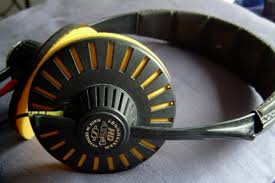
Earphone: Audio Technica ATH-AD700

Earphone: Audio Technica ATH-AD700

I haven't listened to earphones in a long time. But recently in NYC, where I don't have a subscription to the internet and use the library WiFi, since I found out in a particular spot in my bedroom/study I have good free access to the internet at night I have been perusing this advantage, despite the attendant perils. At night I need to use a headphone.

I dug out my 30 year-old Senneheiser HD-424. The foam pad has long gone south, so I did without. The sound is very pleasant, though bass-shy. And it has never been entirely comfortable.

Browsing the internet, I finally gave in and bought from Amazon a pair of Audio-Technica ATH-AD700, for $79. As with Amazon, it came quickly, in 1 day! I was shocked by the flimsy packaging, and the hideous purple color of the perforated outer metal grill, though on the web it seems black. Maybe I didn't read some fine-print.

But the sound IS well-balanced, natural, as the reviews attest. Most notably, bass is a lot stronger than my Sennheiser. It is however very big, and odd looking, though it compensates by its comfort. I have less than 10 hrs on this now. Sound is slightly veiled but I expect improvement as it runs in. As it is, it already is better than my old Sennheiser.

A good buy, IF you can take its bulk.

Incidentally, why do people buy a dedicated headphone amp (for these easy to drive earphones)? My NAD 325BEE does respectfully. Also, my M-Audio Firewire Solo does too, at less cost!

HiFi Letter from NYC 2010 (3): More thoughts on Magnepan

HiFi Letter from NYC 2010 (3): More thoughts on Magnepan

(revised May 6, 2010)
Bigness
Do you want your sound big? Your image big? What does it mean by big? I think there are several facets to the perceived "bigness".

It is amazing how the majority of audiophiles have been brainwashed by "pinpoint" imaging, which of course exists not in the real world. Even considered on its own term in sound reproduction, imaging is only desirable if it is accompanied by good texture, what some would term "fleshiness". Real music is made of flesh and blood, so its reproduction should too convey the good presence of the musicians.

How often even expensive systems fail in that regard! Many people have "images" that can be "located", but they are pitiably small, low in height and bland. Can that be good reproduction?

This the Maggie owner usually does not need to worry about. Due to the height of the panels, the sound is usually big, even in systems of certain leanness (unfortunately too common). I'd not say Maggies have presence that is as truthful as horns or electrostatics (like my Martin Logan Source), but it offers a good semblance. So what we get is imaging that does relate to the music.

An acid test for coherence is reproduction of MONO music. A good CD transfer, or better yet a proper mono LP playback (e.g. my Denon 102 cartridge) should yield full and solid sound with even better instrumental timber than stereo - and THAT the Maggie does very well. You'll be amazed how badly many of today's speakers cannot do this most simple of things, a sure sign of their incoherence.

Speed and Coherence
When you have a speaker with drivers of different nature, people tend to dismiss it for incoherence. In reality, even if 2 drivers look alike, they can be incoherent in marriage. An example of this would be quite a few Dynaudio speakers for me (especially the 2-ways).

And Maggies? I think the incoherence is there, just a little more subtle. Jonathan Valin of TAS hinted that the "true" ribbon Maggies are possibly MORE incoherent that their "lesser" quasi-ribbon brothers, and regards the 1.6 as possibly the most coherent of the bunch. On the TAS Blog, he now stresses this even more in his raves about the superior coherence of the new 1.7. Now, would that make you start to doubt all the other reviewers (and users) whose praise for Maggies were absolute in the past? It should, if the coherence of the 1.7 is truly in another class.

But I think he has a point. I have ALWAYS thought the treble of many big Maggies "somewhat" unnatural, and not superior to their domed counterparts. Funny this treble is precisely what some Maggies die-hard's crave, those who regard a Maggie as not worth listening to if it doesn't have a "true" ribbon.

I think the reason why the treble sometimes bother me is not because of itself per se, rather because it sticks out for its speed, which is faster than the bass panel, fast though that is. Just a little, and it matters little whether your amplification is fast or slow, the difference stays. One can hear this sometimes even in the agile MMG. Occasionally, on a big SOLO piano recording the treble and bass notes of the same chord seem disjointed and coming from different spaces. Interestingly, with big orchestral pieces one almost never notices, except sometimes the spotlighted solo's (like the oboes and solo violin in Ein heldenleben on the Kempe/EMI recording) stick out a bit too much by unduly highlighting the leading edge.

Speed and Dynamics
How dynamic is Maggie? Hm...in my book the answer is not very, at least not in the top eschelon. Let us look at micro-dynamics first. Due to its speed, micro-dynamics seem superb at first, but careful listening makes one doubt a little. The speed and the slight "whiteness" impose themselves and rob the instruments of some natural harmonics, hence the perceived "air" is somewhat artificial. Ones hears many details, but somehow the small inflections and rhythmic subtleties are not the best conveyed. Repetitive notes sometimes have a mechanical "ringing" quality to them.

What about macro dynamics? I'd say even the large panels are somewhat limited. The lack of true bass substance means to a full-range listener lack of the ultimate macro dynamics. Can a Maggie faithfully reproduce a bass drum whack? The answer is NO, not in any of the Maggies I have heard. I'll relate to you a story. Once a well-known Maggie person came to my house and listened to Mahler's 5th on my Tannoy Canterbury (15") and liked it a lot; when we went to his place he made sure he played me that too on his "true ribbons". He said to me, proudly: "See, the Maggie can do it too!" but although it was well done I didn't have the heart to tell him there is no comparison in the fortissimo; on the Maggie you don't perceive physically the weight and power of the full orchestra in cry, which to me translates to lack of ultimate dynamics. Incidentally, have you noticed Maggie users are very careful about the volume? It's for a good reason; regardless of room and ratio there is a limit to how loud the Maggies would go before unraveling musically, or even mechanically. They are loudness restricted, and hence dynamically restricted.

It depends on what you listen to. Speed has something to do with perceived power. In jazz, fast transients may be overtly exciting, but in classical, even hard rock, too fast a perceived speed lends an unpleasant breathless quality. For balance, personally I think Maggies should not be paired with gears of super speed; too much of a good thing. Slowing things down a little brings paradoxically more perceived power. Experienced men should know that, no? To that end, I think a tube preamp is a good thing for Maggie.

Let's not exaggerate. Maggies are wonderful things, especially for the money. But they are NOT the perfect transducers as some claim, or the most truthful. Even the most experienced Maggie fans are more often than too intoxicated by their open airy sound to remain blind to their shortcomings.

I am most intrigued by the recent introduction of MG 1.7. the first Maggie to extend the (quasi)-ribbon technology to the bass panel. Preliminary words on the net, including those by JV, have been highly favorable, though dissent is starting to emerge by traditional Maggie users (claiming it is "cold"). Would that be my next upgrade? Or would it be one at all?