07 May, 2012

Talk Vinyl: Mono Replay, Part II

Talk Vinyl: Mono Replay, Part II
Talk Vinyl: Denon DL-102, Part II

In this article I shall examine a few facets of mono replay. Specifically, what do we sonically value in mono replay, and are those values present in the majority of mono records?

Same recording, Stereo vs Mono
This section concentrates on recordings that were originally issued in both stereo and mono pressings, and seek to compare them. The comparison cannot never be fully valid. A complicating factor is that in most cases we do not know whether the mono version is just a "down-mixed" or "summed" stereo, or a different mix altogether (a good way to know would be to employ one of the full-featured vintage preamps. Comparing the stereo version played with the selector set to "L+R" one can compare it to the mono version and see if it is the same mix. One day perhaps).

Of course, there are even more worthwhile recordings only in mono, but for this article that is besides the point.

Equipment Used:
-Mono: Thorens TD-309 / Denon  DL-102 / Canare 2T2S lead out
-Stereo: Thorens TD-124 / SME 3009i / Denon DL-304
-Preamp: Shindo Monbrison
-Amp: Wavac MD-811A
-Speakers: YL 4-way horns

I believe this is a rigorous comparison. The two cartridges belong to the same family and they are fed into the same Shindo MM stage, though the MC is of course stepped up by the internal Lundahl transformers. Indeed, sonically both the stereo and mono replays have the same tonal balance that attests to their neutral character; I can play the stereo on the mono, and vice versa, and get similar sound. Of course, I have yet to do the ultimate in mono replay: Use a single speaker. Maybe one day.

You may want to read Denon DL-102 Part I.

Tonal "Purity" at Bargain Price?

Classical lovers have it good. Over the years I have amassed a considerable number of Mono LPs, in particular almost all the mono Living Stereos worth talking about. The reason is simple: the original stereo shaded dog's command extremely high prices and are frequently not even of great quality (many invisibly but certainly damaged by needles), whereas the mono equivalents can be dirt-cheap. In general, these are worth getting, particularly if you want it mainly for the soloist. Yes, Heifetz likely sounds just as good in a mono pressing (and I have most of them) than in a stereo one, maybe even better. This should not be surprising - the violin is small instrument with a focused tone; there is no reason why mono should not sound just as good, if not better. More often than not, the mono violin sound is smoother and richer in color. Take the mono copy of the Erick Friedman disc pictured above, the violin sound virtually jumps out in its intensity, a far cry from the thinness of the CD issue (I have the original Silver Seal) that is mysteriously coveted by Asian audiophiles. Yes, I believe mono renders the better violin sound.

What about the piano? I'd say for the much larger and more complex instrument mono still does a decent job, but often not necessarily better than stereo. When it comes to chamber music, it goes without saying mono does a great job. And then a good mono pressing is also often superior to a later stereo pressing. More tonal purity on offer.

But wait, what about the orchestra "behind" the soloist? If you are like me, you'd want the orchestra in all its splendor. In that bygone era, the orchestra was no mere accompaniment; unlike today, the conductors too were all highly skilled in the art of collaboration. In those magnificent Heifetz concerto performances, for me the orchestra sometimes is the main course! Here the story gets more complicated. While some mono discs, like my UK Heifetz Bruch 1, have surprisingly resplendent orchestral sound, others don't. When it comes to purely orchestral performances, no matter how good the mono replay, one more often than not miss the stereo spread. Read this thread on that most famous of Living Stereo's (and my favorite), the incomparable Boston Pops/Fiedler Gaite Parisienne. I have all the issues evaluated, though my original stereo pressing is a later maroon label Victrola. I concur with the opinion expressed by the person who posted the thread.

Pop/Jazz and the Jump Factor, at a Price
Pop and Jazz lovers don't have it as good as the classical folks. Jazz mono's and select pop mono's have always had quite a following, and many more famous ones and first issues, like Blue Note, command high prices. Although I don't have a huge collection of jazz and pop mono's I do have enough to make a statement or two.

Similar to classical music, in general the smaller combo's work better than large bands. My several Verve mono's in general sound as good as their stereo equivalents (but not necessarily better). Peter, Paul and Mary In Concert, as well as many of their mono issues, sound excellent. Likewise, my 6-eye Mono Brubeck's Time Out sounds better to my ears than the my later "generic" stereo copy. But I am sorry to say that, although as expected it gives a faithful portrayal of the voice(s), my mint copy of Mono Belafonte at Carnegie Hall does not quite conjure up the magical atmosphere of my tattered stereo copies.

Factors Affecting Mono Replay
Aside from mixes, there are other factors that affect the outcome. I shall treat these under this section, as I believe audiophiles who are newly drawn to mono are mostly pop and jazz inclined.

Gain and Level Some of the best mono-only LPs that I have feature one of my favorite jazz pianist, Erroll Garner (his LPs are worth nothing, even the seminal Concert by the Sea). They don't all sound equally good but, true to its name, Encores in Hi Fi (Columbia) certainly does! What magnificent ensemble and piano tone! What Jump Factor! But wait a minute, does your preamp have sound level meters? Some of mine do (Nagra PLP; EAR 912), and I found this recording, like many other pop and jazz mono's, was cut at an extraordinarily high level (classical recordingss less prone to be so). It spends most of its time in the red! :-) So, like everything else, level match when you compare.

Gain is something that tests your knowledge of music. I have met many audiophiles who do not have enough gain in their playback, but they prefer that way and swear by the smoothness and "refinement". I have nothing to say to that, but for me, music is all about dynamics, micro and macro, without which there is no possible hope of tricking one into believing it's live. A good example is my Denon DL-304 low output cartridge. Although its 0.18V output is seemingly not much lower than the DL-103's 0.23V (and I have highly efficient speakers), in practical terms it is much harder to match with the phonostage. Improperly matched, the sound is anemic; properly done, it is wholesome. Suffice to say the much healthier 3.0V output of the mono DL-102 has quite an advantageous start with the jump factor!


Overall System Balance Stereo and Mono playback both have their advantages, but a good system should be able to play both well. Failing to do so implies gross imbalance. While Mono playback, as we shall see, can play stereo records in an insightful way, a good stereo system should also play mono well. Unfortunately, most modern systems with their sucked out middle and exaggerated extremes simply cannot do the simple job of playing back midrange dominant mono recordings.

Presence (or Lack of) I believe the singular most important aspect of mono playback is its directness of utterance (which equates great presence and jump factor). But the system has to be able to deliver that! Again, most modern systems with their sucked out middle and exaggerated extremes simply cannot do the job. If you must have an example, let me say presence and the jump factor is a lot easier to get from a tube (SET or WE) driven efficient horn or wideband system, or Tannoy, than from most over-priced and over-rated sins of modernity, say Burmester (if you object, substitute any number of inefficient speakers, ceramic drivers, ribbon tweeters and the likes, you get the picture).

Recording Quality There is no miracle. Just as in stereo, the better the recording quality, the better the mono replay. Most mono recordings lack air and sound at least a little constricted, and many have a tunneled sound field (on a stereo setup). But late in the mono era, with the advent of stereo and advances in recording quality, sound could be excellent and the sound field is much larger due to more air in the recording (that carries venue information).


Mono Plays Stereo - Anachronism?
Many monophiles like to play their stereo recordings with their mono cartridges. While losing stereo information, what is there to gain?

My view is that, with a good stereo recording, mono playback sounds good too, but not manifestly better. Sometimes, mono edges out stereo in directness of utterance. An example would be the second track of Miles' Tutu. A little after the lead in, there is a quieter passage where the various Marcus Miller "instruments" challenge the soloist and each other. With mono playback, their outbursts easily became taunts, which I am sure is what the music is all about.

Conclusions
I think having a mono replay facility is like having a mirror: it sheds light on the stereo replay and the system in general. Here are my two cents:
  • Do you need dedicated analogue mono replay? I'd say it completely depends on whether you already have a sizeable or treasured mono collection. If you do, a mono cartridge is eminently worthwhile for the insight it brings. If you don't, personally I feel there is little reason to do so.
  • In any system (your own or others'), if you feel the mono replay has a lot more jump factor or presence compared to the stereo, you need to examine the issue of gain as well as system balance. The MC in use may just be not dynamic enough, mismatched to the phonostage, or the system itself lacks presence.
  • If it is jump factor you're looking for, why not try a good MM cartridge? I still remember the jump factor my defunct Goldring 1012 imparts to rock!
  • On classical mono's While there are unquestionably bargains, the most desirable ones are those with violin soloists. Big orchestral works generally fare less well.


15 April, 2012

Talk Vinyl: Mono Replay, Part I


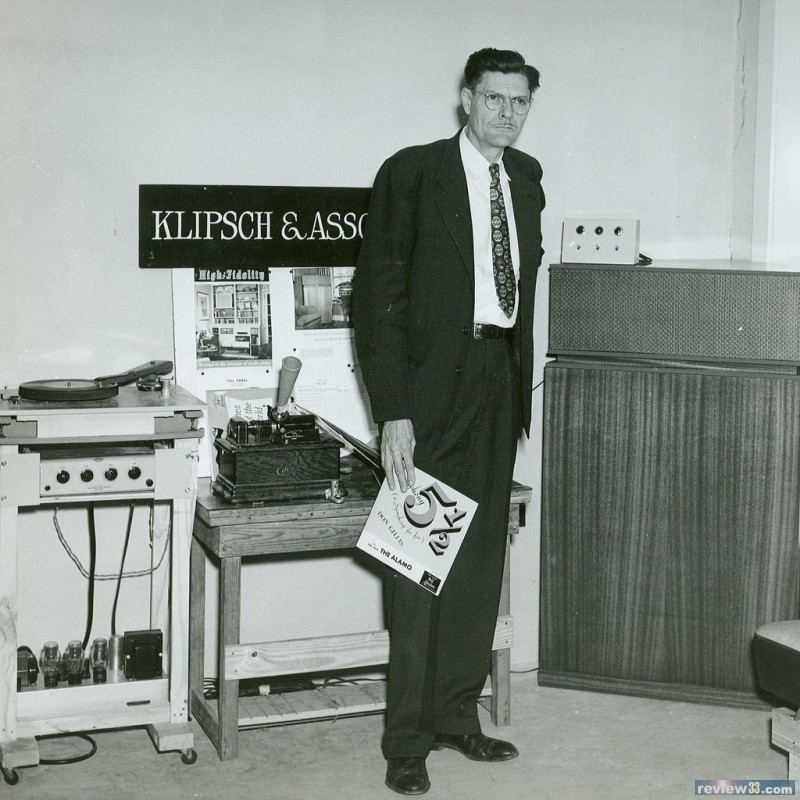
pic shows Paul Klipsch with his masterpiece, the Klipschorn, and Brook amplification. The setup would make a great, perhaps even definitive,  mono playback.

Talk Vinyl: Mono Replay, Part I Background

In case you haven't already heard, there is now a modest resurgence in mono analog playback. This is not a fad, but a thorough re-evaluation by analog lovers and audiophiles, a wicked commentary on why much of modern gear and developments in audio are not the advances in sound reproduction the discerning ear had hoped for.

In HK, there are a few mono addicts in my circle, and I must say I am somewhat infected by their enthusiasm. But, unlike most of them, I look at it from quite a different angle.

Like many a classical music lover of a certain age, mono recordings have long figured in my diet. Many of the greatest artists, like Edwin Fischer, Fritz Kreisler and Furtwangler, had only left us mono recordings from shellacs and the 78' era. Whether remastered on LPs or CDs we had been listening to them for the longest time. But for many people, mono is a new thing. Some started being curious about the "obsolete" technology, and others got drawn in because of their objectivity when exposed to ask the crucial question - why does it sound good at all?

For myself, in recent years I have re-evaluated mono recordings and their replay, from an audiophile perspective. What I find are sometimes surprising, and let me do this step-by-step, starting with facts.

The MONO Analog Renaissance

Well-Known Fact: Despite more than two decades of repeated claims of breakthroughs in digital replay, and now everyday proclamation of CAS advances, analog replay in general has enjoyed not only a resurgence but real growth. Modern day CAS people, who think they are saavy, should really look into this rather than concentrating on meaningless or, at best, dubious measurements. They would do well to hone their ears instead.

Not So Well-Known Fact: MONO analog replay, which has always had its advocates, is enjoying a surprising resurgence of its own. For the longest time, there have only been a few mono cartridges available, like the Denon DL-102 and a model or two from Grado, Shure and Ortofon. Today, there are quite a few newer "boutique" MC mono cartridges, like the Miyajima, and more loom on the horizon or can be made to order. Mono replay has even earned attention from the mainstream press, like Art Dudley in Stereophile.

There MUST be something here, but it is difficult to tell someone new to mono why mono replay can sound superior to stereo, and why it is a viable and living thing. There is not much organized writing on the Internet, but if you google key words you get to read a lot of discussions in various forums, some quite interesting. If you're new to mono, you could start here: enjoythemusic; Stereophile article.

First, back to how mono recordings were made and played. For the technical side, search the internet for the difference between mono and stereo LPs.

Mono Replay in History
To thoroughly understand why some audiophiles are attracted to mono recordings, we must have some historical perspective.

Mono Replay in the 78 Era The earliest reproduction is by mechanical means. Indeed, early recordings were mechanically recorded and replayed by spring-loaded gramophones. Has subsequent technologies rendered this most ancient methodology completely archaic? Unfortunately not. Many people who have heard violinist Heifetz swore that the 78's played through the gramophone most accurately conveyed his tone and playing. Note that Heifetz made many stereo recordings in the LP era (many Living Stereo's treasured by Audiophiles), but many connoisseurs regard the recordings on tape less faithful to his tone than 78's played on the mechanical gramophone (and digital remastering atrocities).

Mono Replay in the LP Era All serious music fans of a certain age grew up with both stereo and mono recordings. That goes without saying for classical fans, but the situation is similar for jazz fans, they too have a veritable treasure trove in mono recordings. Take Blue Note, many swear by the mono pressings, or mono recordings by Rudy van Gelder. Even rock fans may prefer the mono Beatles masterings to the stereo ones. With the advent of stereo, most people just use their stereo cartridge and setup to play mono.

One important thing to note is that there are different kinds of mono LP's: 1) recordings remastered from 78's. Needless to say many of these qualify as immortal recordings, which is why they were remastered for the (mono or stereo) LP crowd. However, some who still have the original 78's for comparison (some use the gramophone even) swear that the LP remasterings do not sound as good as the originals, and Heifetz' tone was used as an example; 2) mono recordings recorded on tape. There is little question that tape recording techniques improved steadily as the LP went along, so that at the dawn of stereo mono recordings enjoyed similar technical standards. Late mono recordings are of the highest quality 3) recordings with both mono and stereo mixes. When it comes to availability, this is easily the largest group, due to popularization of the LP, and because for quite a few years recordings were issued in both mono and stereo to satisfy those who haven't made the switch. While some of mono masters might just have been down-mixed stereo, many recordings had separate mono and stereo masterings. Replayed with the same stereo cartridge (usually; or mono cartridge as the case may be), the details are often different. As usual, the engineer is a factor in the equation (and perhaps the biggest one). It should be noted that on acoustic jazz recordings and small combos early stereo often simply put different performers in the two channels and the resulting sound has nothing much in between, which leads many people to prefer the mono equivalents, which put things smack in the middle. The early Beatles albums serve to illustrate this, and there are good reasons why the mono pressings are coveted. 


Mono Replay in the Digital Era Many reared on vinyl soon found out digital was certainly not "prefect sound forever". Nothing brought this more to the fore than replay of mono recordings. Most of the earlier mono digital remasterings were well-nigh unlistenable. Some of this could be attributed to the tipped up treble of much modern equipment, which paradoxically compromises the most the bandwidth-limited mono recordings (due to midrange suck out). While I am on this point, let me emphasize that, even with a digital remastering, a proper hifi system should be able to play mono recordings with some semblance of fidelity. Consistent failure usually means the system is not balanced. Another significant factor is incompetent remastering, which is unfortunately ubiquitous. In this regard there is good news as more quality mono remasterings are appearing due to the careful efforts of people like Mark Obert-Thorn in classical (whose output on budget Naxos must be commended), and even some good pop mono, like the Beatles, are getting the respect they are due - the new mono remasterings sound fantastic (that is saying a lot for digital mono).

I believe for someone new to mono the basic understandings are important. In Part II I shall detail my impressions on my mono playback using the Denon DL-102 cartridge and comment on why I think some of the enthusiasm I see in my friends are over-the-top. By no means do all mono LPs sound good or benefit greatly from dedicated mono replay, but mono replay is certainly worthwhile when the material and system come together.

09 April, 2012

Letter from UK 2012 (3): Liverpool

Letter from UK 2012 (3): Liverpool

On a windy and dreary day we visited Liverpool. In many ways the city is like Manchester, with few tall buildings and an even more compact central area. One can see the radio tower everywhere, and the broadcasts were redolent with, what else, The Beatles.

Albert Dock To a New Yorker, this looks like combination of South Street Seaport and Red Hook. The re-vitalization of the waterfront is on all counts a highly successful effort.

Merseyside Maritime Museum This is a very nice museum for kids and adults alike. I enjoyed the exhibit on the fascinating tale of the tragic fates of three cruise ship associated with Liverpool, the RMS Lusitania and RMS Empress, and the Titanic of course. The story of the RMS Lusitania, sunken by a German U-boat, is especially engrossing, and I noted that the exhibition (probably deliberately) did not cover many points discussed in depth in the wikipedia entry.

As Liverpool played an important role in the slave trade, the International Slavery Museum, enclosed within the same compound, proves highly educational.

Tate Liverpool This branch of the Tate came as a most welcome surprise. On exhibit in the small spaces are literally the who's who in modern art, from the Dadaists to Andy Warhol, as well as little known names. The various artists seem to play off each other in the relatively small space, and I enjoyed it more than many larger modern art museums. My favorite has to be Marcel Duchamp's infamous Fountain.

After a quick meal at an Irish pub I managed to get a few LPs from the charity shops on Bold Street before retreating back to Chester.


.

03 April, 2012

Review: Thorens TD-309 Part I

pic: my Thorens stable: top; the new TD-309; bottom, the venerable TD-124 with SME3009 (my TD-125 is unused at the moment)

Review: Thorens TD-309 Part I
Talk Vinyl: Denon DL-102 review Part I
Talk Cable: Gotham GAC-2111, DGS-1

Online Manual for TD-309 (must-read for those interested; its wonderful illustrations make understanding the deceptively simple turntable easier)

Unusual Looks and Design Ever since the Thorens TD-309 came out, I had wanted one, for its daring looks as well as unusually sophisticated design (not obvious at first glance), both out of the mainstream and perhaps not for everyone. I inquired then at the HK dealer, and found out they shamefully did not even import it. I decided to wait. Secretly I thought to myself that the unusual design would not sell well and I would wait for clearance when it is discontinued.

Reviews As I think most aspects of performance had been well covered in the many reviews from around the world and as I agree with the majority opinion that the turntable is exceptional, I shall not go into great details in my review, instead concentrating on a few points not covered as well. Best of the reviews were HiFi News UK, Ralph Werner/Fairaudio.de Germany, avhub Australia and High Fidelity Poland (you might also want to read HiFi Choice and Goodsounds). The Stereophile review is not on line but it made Class B of Recommended Components. Note one unusual thing, the Australian article revealed Steve Harris (UK) as one of the designers; well, he is the reviewer in the HiFi News article, isn't that conflict of interest?

One-time Sale Fast forward to late last year, when I suddenly saw in Mong Kok the non-glossy red version on sale at a good discount. On inquiry I found out that the dealer was selling it even cheaper. I was struggling as I wanted a black one, and only the red was available in HK. My procrastination turned to wonder when I found out in the US Audio Advisor had a special for both the non-glossy black and red ones at an even more unbelievable price (sorry, the sale had long ended), and I immediately ordered one. It seemed these were Thorens overstock. Audio Advisor still sells the glossy black and red ones at regular price, and the HK dealer still does not usually carry this model and does not have even have a glossy one on display (shame on them), but the non-glossy red one possibly may still be found on sale. 

Packaging I did not get to see the turntable until three months later. As one of the reviews mentioned, the packaging was a little flimsy, but everything inside were in place. A little oil had leaked out but I think part of the reason was that mother had improperly placed the box on its side. Unpacking was a breeze and the manual is truly excellent. I double checked the alignment of the installed Audio Technica AT95 cartridge with the supplied (commendable) paper mat/protractor and it was good. The turntable was up and running in no time.

Isolation Ability In the hotly contested low- to mid-priced group, it is not often (if at all) that one sees a more costly to implement suspended design, and that is wonderful. The unusual suspension design works a treat on isolation. Believe me, I know, as my racks are "soft", their spikes resting on stone slabs on the thick carpet (no spikes through the carpet).

Construction/Ergonomics While construction quality and ergonomics are generally good I have several reservations:
  • Use of plastic for the triangular sub chassis as well as for the arm rest are regrettable. Don't tell me that's for resonance control!
  • The RCA connectors are rather light weight and a little too recessed, making them somewhat difficult to reach.
  • As noted in Stereophile, the clips on the tonearm wires are flimsy; great care should be exercised when mounting and dismounting.
System Used
-Shindo Monbrison preamp (built in phonostage)
-Wavac MD-811 amp
-YL Acoustics 4-way horn loudspeaker

Sound with AT-95
As all the reviewers have mentioned, right out of the box, the sound was wonderful. I was surprised by the fine balance of the Audio Technica AT-95. Aside from a slightly fat mid-bass, there was little to fault. Immediately apparent was the turntable's excellent PRaT, making evrything fresh and exceiting. As one of the reviews had mentioned, I noted too a slight leanness in the upper midrange. A few play and I switched cartridge.

Sound with MONO Denon DL-102
 Previously, I had heard this cartridge to great effect in mono replay. My own efforts though were hampered by the lack of a suitably heavy arm for this heavy cartridge. I first installed this on my cheap Audio Technica turntable, but the arm could barely be balanced and the sound was only so-so, rather thick and lacking in life. Later I switched the cartridge to the Technics SP-1200MkII and the sound improved significantly. I was happy with the vital presence of the midband but knew more resolution could be had.

Background for DL-102 While the DL-102 qualifies as "legendary" even if it is still in production, there is really nor many serious write-up's on it. Here are some great links to let you understand more about this wonderful mono cartridge. The best technical article (basic spec's, nuts and bolts) is Murray Allen's Denon DL-102 Page. It is worthwhile to note that the frequency responses for the cartridge loaded at 47k (the usual MM phonstage) and at 1k (Denon's official spec) are almost the same, just slightly shifted in amplitude. This seems more in keeping with my experience below. The best all-around consideration is Philip Holmes' One Cartridge for All LPs. The important thing here is what all mono-philes understand, that mono replay of stereo LPs yield great sound (I agree). It should also be noted that, in contrast to the previous author, this author found loading at 1k provided much better results.

When Denon DL-102 Meets Thorens TD-309 And so with the arrival of the TD-309, the DL-102 was the first thing I wanted to try. Installation was a bit of a pain. I had trouble fitting the flimsy clips of the TD-309 onto the cartridge (as this is a true mono cartridge, two clips had to be attached to each cartridge pin). Where the cartridge is mounted, the arm only has 5 mm of overhang adjustment, and I was short by 1 mm or so on the Baerwald points. I could have perfectly aligned it by loosening one of the hex screws at the rear and moving the arm tube, but I decided just to let it go. It should be noted that the counterweight still had quite a bit of leeway to accommodate even heavier cartridges, making it a versatile tonearm.

As soon as the needle hit the groove, I knew I finally am getting there in my MONO quest. In terms of tonal balance, the improvement from my previous admittedly rather improvised mono setups was only too obvious: much more air and refinement in the treble, more transparency in the midband and a much cleaner midbass. So much so that the little leanness in the lower midrange noticed before had remained. I was surprised but delighted that the setup was able to resolve this. One more minor gripe: Like one of the reviewers I did too find that dynamics were slightly reined in on some material. Although the spherical stylus is not supposed to be sensitive to VTA, a small adjustment brought improvement. What is more amazing about the transformation is that the cartridge finally displayed all the rhythmic finesse and musicality that should be typical of Denon. Say what you will, Denons are champs in this area. But that's enough for now, as I shall cover more about mono replay in another article. One final important thing though...

Attention! Cable for the Turntable
The TD-309 comes with a 0.75 m length of RCA cable for connection to the tonearm output. I used it with the stock AT-95. It looks slightly better than the ubiquitous generic red and white cables; the diameter is greater, I think due to shielding. I soon swapped it out for better cables, like the Audio Note AN-V. However, after a while I realized things were not what they seem. With the stock cable, the sound is more balanced; several other cables I tried accentuated a little the high midrange leaness and seemed to restrict the dynamics a little. Only when I swapped in Gotham cables did things improved. So, do not underestimate the stock cable, with this turntable it is not easy to beat. You have to go through quite a bit of trial and error to better it. I happened to be soldering some new cables and so tried them out. Here are the best:

Gotham 10550 GAC-2111 (specs) This unusual cable is Gotham's replica of a classic EMT cable. The conductors are very small in gauge and the insulations rather stiff, making it difficult to handle. Sonically it is a winner. Superbly transparent with an abundance of top end air, somewhat less exuberant than GAC-2 and GAC-4, this cable shoots straight to the top echelon of Gotahm cables. A great bargain.
 

Gotham 60001 DGS-1 (specs) This is a thin coaxial cable, the cheapest in the Gotham range. It is somewhat rolled off on top, not as detailed as GAC-2, GAC-4 or GAC-2111, but there is something very attractive about its midrange presence and ability to invoke the live atmosphere. Another Gotham winner, likely more suitable in brighter systems.

31 March, 2012

Letter from UK 2012 (2): Manchester

Letter from UK 2012 (2): Manchester

This article is dedicated to my friend Daiwok, former Mancunian, Fish-n-Chips authority, Midas, fine chef and Lenco-maniac (sorry if I missed other attributes).

On a fine day I am glad I got to spend a few hours in Manchester. There was little on the way. Power lines and animals grazing on the pastures outnumber buildings and people, even cars. 

Despite the lack of tall buildings in the horizon, one immediately knows one is approaching the city by the appearance of nondescript housing blocks. More, for someone who has gotten accustomed to genteel Chester, I felt an injection of adrenalin, an inkling of the energy of the city. The gritty thoroughfare was lined by shops catering to the various minorities, mostly Afro-Caribbean, outside which people congregate. In a few moments I saw more "colored people" than days in Chester. I guess it was like getting into Manhattan through Harlem.

Although much grit has remained, the city feels energetic; urban renewal (some say thanks to the 1996 IRA attack) and competent designs are everywhere to be seen. I like the dearth of tall buildings and the manageable scale. Around every corner, you get to see the new meeting the old. Even the gargantuan Arndale Center seems well integrated and not so imposing.

My driver parked just outside the center of town, in the big Wing Yip Chinese supermarket. The tower at the entrance is garish (what do you expect?), but surely great advertisement. It is reasonably well stocked, but not to the standard of ones in New York, catering mainly to the Cantonese. Its one distinguishing feature is its adjoining warehouse, where you can buy provisions in the bulk. I was told there is little difference between retail and wholesale here, as the same store caters to both clienteles.

Walking down Oldham Road, I soon got to Oldham Street. I had done my homework (visit this great website for music shopping), and surely I found the famous record shops. As I expected, Manchester is THE rock and roll town, and they only have pop music. But I was not disappointed, indeed glad that vinyl is thriving. Solace once more came in the form of an Oxfam shop, where I scored a few classical LPs.


Pass the craggy expanse of Piccadilly and one arrives in Chinatown, which looks like any other smaller ones (like Philadelphia). I was taken to a small Casino for a cup of free espresso, not bad! As usual, mostly Chinese inside (sad), mostly senior citizens. The Chinese here seem the same breed as our US 唐山 variety; unlike NYC, the PRC presence is yet not overwhelming.


Just at the edge of Chinatown is the Manchester Art Gallery. Obviously the Chinese don't hang out here. Judging by its holdings catalogued on its website, the small museum probably shows only a tiny fraction of its collection. It houses mostly an English collection, particularly the pre-Raphaelites. I was told by the very friendly staff that, unlike their more high-brow cousins down South who concentrated on the Europeans, Mancunians collected under-valued British Art. I enjoyed the Turner and Francis Bacon, also a few small works by more famous names, Renoir, Modigliani, Sisley, Boudin and the likes.

The cold and grey returned in the afternoon. So it is this morning in Chester. 


25 March, 2012

Letter from UK 2012 (1) Chester

Letter from UK 2012 (1) Chester I


Greetings from Chester UK!

I brought great weather to this part of town. Since I arrived, the sun just followed me wherever I went. Where I stay is tranquil and comfort to the soujourner, if myself the infrequent traveller can be called one, and at  this stage I am more of one in my hifi journey than real life.

This is still mostly fairy book and picturesque England, yet this tourist town is quite sophisticated and very friendly when it comes to foreigners. I chuckled in delight when I saw the "Roman soldiers" giving a guided tour to little kids clad in fake armor. Easter signs are everywhere. There is a special "Alice in Wonderland" show somewhere. Somehow, I like the preservation of innocence of a bygone era. Much more palatable than Asians dressed as Mickey Mouse in Asian Disneylands! Kids are lucky here.


Walking around the center of town was a delight. I bought an LP from the local OXFAM shop, but didn't have much luck otherwise. The pictured record store is huge but caters only to pop music.

As usual, I don't eat out much, but lunch at the French Chez Jules was a bargain. Later, before I headed home I had a pint of local ale and it proved even more special; I delight in tasting unheard-of varieties. Not warm, but slightly cool, perfect. Great beer! Real Ale!

But the best was walking along the Canal. Quay-side bars are but one sign of rejuvenation. I do wish I had a better camera!


22 March, 2012

Letter from NYC 2012 (23): More is Less, Less is More, More or Less

click pic to enlarge: all in a family; top, my new Thorens TD-309; bottom, my reference Thorens TD-124

Letter from NYC 2012 (22): More is Less, Less is More, More or Less
Talk Vinyl: Empire Cartridge redux
and Mono vinyl replay (Denon DL-102)

In the last article, I touched upon the importance of feelings in our evaluation. Without honing our skills in evaluating the correctness of our feelings (for they can be incorrect) we cannot begin to talk about "less is more". Here, I assume you know your feelings well.

Less is More?
When it comes to hifi, this much used adage more often than not is less a genuine realization than a mental state. When it comes from the mouth of someone who is simply fed up or in self-denial, it is not the quite the same as when it comes from someone who has done and seen much (no one can claim to have done or seen it all). I am not implying anything, nor trying to be glib, but I do believe "less is more" is more credible when coming from someone who has wandered in the wilderness of hifi for a long time, not from someone who is a mere internet researcher.

Just to quickly toss off some of MY takes on "Less is More":

  • Less tubes, less components, less maintenance.Single Ended Triodes While I take pleasure in many vintage equipment, when it comes to simplicity and ability to ease oneself into the music, SET (properly matched with efficient speakers) reigns supreme. Well, in general, that is, and there is one exception...
  • Less setup pains.Western Electric (WE)Sonically, nothing else comes close. I think you can hook up anything to real WE and be mesmerized. WE confounds and repudiates. Think of it, I don't usually like interstage transformers, but there are rare examples that I like, as implemented in WE (and perhaps by Wavac). I like push-pull less than SE, but WE is another story...in a way (not monetary unfortunately) it is "less is more" because the rest of the chain becomes not so important, such is WE's overwhelming excellence.
  • Less (no) Digits, More Music.Vinyl There is so much garbage written about analog replay by digital nerds, particularly those CAS people. If you do it right, going vinyl is so much easier than getting good CAS sound. Almost any of the plug-and-play entry turntables shall trump an expensive CAS setup. Class A Benchmark or even Weiss? They pale, bleached out of life, when compared with a reasonable and inexpensive vinyl setup! For a song (indeed not much more than some CAS software!!!!) one can start with the Project RPM1.3 (my review here). A little more shall get you the wonderful Clearaudio Concept (my review here and here). I only mention these, because they are plug-and-play and any newcomers can get instant gratification. Lack of software? This is another nonsense perpetrated by the anlaogphobes. In the western countries, one can easily source many used LPs with a little effort, and the new vinyl catalogue is more extensive than one thinks. And then there is always the internet for those who live in less convenient locations. Why not listen to both?
  • Less Components We are not talking about "Straight Wire with Gain" here (some even think no gain is better, not me). Although it is not always true that the simpler the circuit/layout the better, in certain areas it is generally true. Well-implemented Fullrange and Concentric loudspeakers, which use less drivers or crossover components. Surprisingly, Surface Mount components when well done (think Linn, Primare).
That was digressing. When I started to write, I meant to tell you some recent experiences of Less is More:
  • State of the Empire As ususal in NYC, in the early morning I listened to My Casual Listening Station, which now has my Empire E/III cartridge in it. This really is a damned fine cartridge! The vinyl replay through the humble setup gave my main system a run for its money. Even my 2000Z with replacement stylus is not bad! More money does not really buy you more cartridge!
  • Mono Playback I finally have a proper arm for my Denon DL-102 mono cartridge. The arm on my humble new Thorens TD-309 turntable supports the DL-102 beautifully. Finally, I get all the details and gone were the bloated bass when mounted previously in my Technics SP-1200 arms. More report on this turntable later. The mono cartridge plays stereo wonderfully too.

Letter from NYC 2012 (22): Observations and Feelings

Letter from NYC 2012 (22): Observations and Feelings
Talk Digital: Much Ado about Nothing, CAS and Measurements

Friends, I have so much to report, yet everything takes time, and time is on the short side these days, with family duties that have to be duly attended to. But I must tell you I feel I am turning over new leaves, and several articles in the mental pipeline shall be more than worth their salt, I pledge! But first...

Audio - Science, Religion, or Metaphysics?
After more than two decades of encounters with audiophiles of all kinds, I can say for most of them, if not all of us, the approach is a combination of all of the above. Audio beliefs can often be based on sheer faith that comes alarmingly close to religious cult. When it comes to this kind of thing, why don't we read what sages from a simpler age has left for us?

Kierkegaard on Feelings and Observations, relevant for audio? Remember the great philosopher behind the masterpiece Either/Or? I invoke his views on the inadequacies of human observations:
  • (from wikipedia entry) "...The scientist can learn about the world by observation but Kierkegaard emphatically denied that observation could reveal the inner workings of the spiritual world. In 1847 Kierkegaard described his own view of the single individual:
    God is not like a human being; it is not important for God to have visible evidence so that he can see if his cause has been victorious or not; he sees in secret just as well. Moreover, it is so far from being the case that you should help God to learn anew that it is rather he who will help you to learn anew, so that you are weaned from the worldly point of view that insists on visible evidence. (...) A decision in the external sphere is what Christianity does not want; (...) rather it wants to test the individual’s faith..."
Unfeeling Digital Apologists I refer to those digital advocates out there who fanatically follow measurements and routinely tout the superiority of the newest DAC on the block (particularly those CAS folks on head-fi forums), and who cite all kinds of measurements in the case against vinyl (without even having heard a good analog setup). If you're one of them, I think you need to read the rest of the article on Kierkegaard. Like religion, music is a spiritual matter, and measurements/observations do not even begin to tell the story, indeed even hinder us in our quest for fulfilment. Think, why do some people still employ non-oversampling and 16-bit chips (I can assure you those "obsolete" methodologies can yield good results)? Why vacuum tubes, why single end? Why does vinyl still sound better? These people are not mad, they know the right thing because they utilize their feelings in their search for perfect sound, which shall never materialize if one only concentrates on numbers.

Perils of Internet Research If one extrapolates from Kierkegaard, the problem with many audiophiles, particularly younger and computer-savvy ones, is that they read too much and feel too little. Or should I say, the problem is audio experienced through others rather than through oneself. There is no quick way to find out what is the "best", except to find out oneself! Come to think of it, this is a generation of audiophiles without much personality, true experience and hence true opinions.

Get in touch with the music. If something is said to be good, but does not sound or feel right, then it is probably not good, at least not the right thing for you. Learn to trust yourself. No hifi virtues can compensate for music that does not feel right.