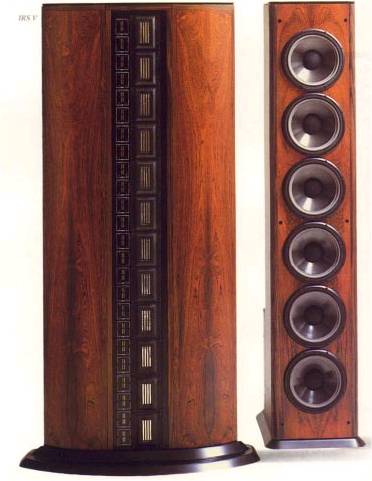
Click pics to enlarge. Top, TAD TSM-2201, inverted. Under, 47 Labs 4737. Flying Mole amp close to the right speaker.
Small Systems, Simple Foods, Simple Pleasures
47 Lab 4737 Loudspeaker, Part II
Yamaha NS-10M, Part II
Flying Mole CA-S10 Revisited
Micromega MyAmp revisited
Home Visit: Quad 2812 + WE 124
Kondo Loudspeaker Matching, Part III
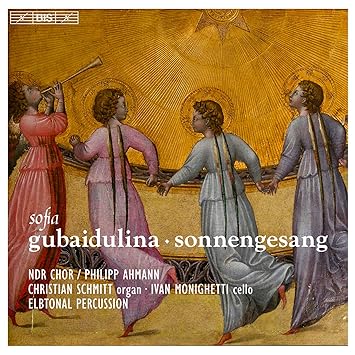
CD Recommendations: Three Versions of Misa Criolla, and more
Modified May 19, 2018
When I grew up, we didn't have much money, but spiritually we were rich.
Click pics to enlarge. Top, TAD TSM-2201, inverted. Under, 47 Labs 4737. Flying Mole amp close to the right speaker.
Small Systems, Simple Foods, Simple Pleasures
47 Lab 4737 Loudspeaker, Part II
Yamaha NS-10M, Part II
Flying Mole CA-S10 Revisited
Micromega MyAmp revisited
Home Visit: Quad 2812 + WE 124
Kondo Loudspeaker Matching, Part III
CD Recommendations: Three Versions of Misa Criolla, and more
Modified May 19, 2018
When I grew up, we didn't have much money, but spiritually we were rich. Father was a complete artist
琴棋書畫,無一不通, renowned especially for his Peking Opera performances and Chinese brush paintings. Naturally, I grew up with paintings and going to the opera. These activities were frequently interminably long for a kid and often dreaded, but every day today I am grateful that the idea of art appreciation was thus ingrained in me.
Father was also a diligent student of the ancient scripts
文言文 - he read voraciously his whole life. For a living, he was editor of a movie magazine for several years, and after each mandatory visit to the press would bring back children's magazines
(especially
兒童樂園). I thus grew up with books and developed a healthy reading habit, though these days I read more CD booklets than books!
More important than even the events were the conversations overheard.
Artists and those around them appraise, value and weigh things quite differently from the rest. Merit is tied to inborn talent, creativity, artistic achievement, even moral and humanistic concerns - and money definitely cannot buy everything, not the intangibles. What better way to teach children, I ask? Although I possess none of father's talents, I am an art lover for live, and art has immeasurably enriched me.
That brings us to: why are we audiophiles? I am sure you, like I, think
many audiophiles are just in it for the primeval sonic thrills, not the music. That is fine, but just too bad - a spiritual quest in music adds a dimension to the quest for ever-better audio replay, and vice versa - they complement and enhance each other, like wine and food.
Bubbles: Audio Breakthroughs, Nouvelle Cuisine, New World, One World, Robert Parker and his likes
Father had many friends better-to-do than him, and he frequently took me along to their dinners, and I had a lot of fabulous food (imagine
real 青衣 and
花旦魚 for a late-night meal). Those were also days when food tasted a lot better. It is hard to believe that in my life I actually had witnessed the near/extinction of several fishes - basically gone is the incomparable (particularly to one with a Shanghainese heritage)
黃魚, and now even the venerable
紅衫 is reported to be on the brink!
Two kinds of Richness: Aside from the richness of my LP and CD collection (and audio gears as renderers), I am not a rich man (early retirement doesn't help). But I am blessed with friends better-to-do than I, or simply over-generous, that I often get to sample and taste a lot of what I cannot afford, even esoterica. This got me thinking.
The sheer variety of everything available today is truly astonishing. You can (literally) make a career tasting wine or beer or whatever of your choice. But is most of it worthwhile? I think not.
It is a kind of decadence (gluttony is after all one of the seven deadly sins)
that everybody is in a race for discovering the latest new taste, but is that really new? And what is it that is new? Take wine as an example, when New World and Robert Parker exploded on the scene, even I was swept along. But
for me what was hailed as revelatory, or revolution, soon turned into perfumery, even perfunctory. Today, although the quality of French wine is possibly/certainly in decline, I remain indifferent to the vast majority of New World wines (though there are always exceptions, especially in the bargain sectors). Most of the highly rated Robert Parker wines don't do anything for my admittedly Catholic taste. Perhaps my palette is shot, or is it?
One World and Fusion is even more over-rated. Take 1986's
Graceland as an example. I don't understand what all the fuss was all about. In this album, Paul Simon did a good thing by bringing extremely talented African musicians to the fore (revived his own career too), and they deserved all the accolades. But what of his own contributions? To me his lyrics and singing were just patched onto the African stuff (there is no way he can really play African rhythm), and the two run parallel and never meet. YMMV.
Fusion food can be good, but there is still little point, and you will never get me to pay for so-called gourmet foam food. In the film
Babarella, set in a future age when humans have sex by taking pills, Jane Fonda wanted to repay the hero with sex, but he wanted it the old-fashioned way, which she discovered she actually enjoyed. Wouldn't you want the same with Jane Fonda?
 Time Out for Food (Shenzhen)
Much of the current (affordable) HK food is sloppy or gimmicky - the basic ingredients are not good enough. As I live close to the border with Shenzhen, it is actually just as easy for me to go to SZ for food. So, on this Sunday, I did go to a favorite local no-frills dive 快餐店 in Futian 福田 for my favorite spicy beef with pickled chili 野山椒牛肉. Marvelous. 不但止牛肉是牛肉,而且手工細,切得細,炒得剛好。魚香茄子超正宗,酸甜辣剛好,絕無取巧。The other two non-spicy dishes are for take-out. Four dishes, including beer, all for RMB 65.
Back to audio. Simple can be very good. I hope you don't get lost in all that computer stuff. But be wary of "breakthroughs" and "progress" - more often than not, they may bring more convenience but not better sound, not at all.
In HK and NYC, more and more I hear people say: "I only want the best!" But, is there such a thing? I say, it is all good to stick with one's best, hold on to one's beliefs while remaining open-minded, but
it is no good to relentlessly search for the best, to have no sense of arrival, no room for happenstance, no thankfulness - which, actually, I say, is a manifestation of no self.
 Living Room Small System gets (sonically) Bigger
This system is simple in the extreme. My trusted Sony DVD player DVP-SR50P as source, fed into the Flying Mole CA-S10 amp, which drives the 47 Labs 4737 loudspeakers, though now, there is addition of subwoofer...

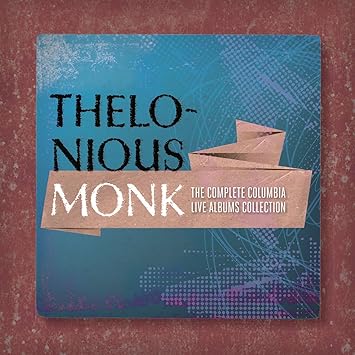
- 47 Labs 4737 Loudspeaker, Part II For background and previous exploration of the 4737 ("Part I"), see here. With the small Flying Mole amp, the 4737 sounds exceptionally good, and surprisingly big, again reinforcing my previous conclusion that it works better with solid state amps. One thing to note is that it is sensitive to interconnects. For its size, the sound is detailed, full and fleshy, and bass is amazingly good (better than the Air Tight Bonsai). Thelonious Monk's Live at The It Club sounds resplendent, and redolent of atmosphere. It don't mean a thing if it ain't got that swing - absolutely, and the 4737 swings ( a key feature of its excellence)! But you know, I am a classical orchestral man, and so I decided to make use of the Flying Mole's preamp-out, which I hooked up to the same JBL subwoofer (the Kondo setup uses the high-level input; the Flying Mole the RCA-in). Wow, the bass augmentation makes the sound even bigger and it gets close to the Kondo system above. The live atmosphere of the excellent 1977 Giulini/BPO recording on Testament was miraculously rendered - the Webern Six Pieces unusually lush and Pictures majestic (better than his studio efforts). The way Giulini carefully managed dynamics is mightily impressive, and those BPO brass at their finest! The German Radio recording is excellent. Another morning I audaciously played one of the Fantasias disc in the DG Helmut Walcha box. The system sure-footedly tracked the very great organist's every move (they are lithe), and one does not want for the ultra-deep notes. Just Grand!

- Flying Mole CA-S10 This is a model from over 10 years ago, when Class-D digital amps and switch-mode power supply were not as ubiquitous as today. And so it had garnered quite a bit of press (see Stereophile, techradar, soundstage). All noted its very clean sound but some concern were voiced about the well-lit treble. As with all things digital, second-hand price a decade later is a mere fraction of the original cost, and that makes this superbly built and classily finished item a bargain. Ever since I had acquired one, I have used it in a bookshelf system in the living room (see top pic), and over time I have tried it with almost all of my small loudspeakers (Dayton B52; Pioneer S-A4SPT-PM and -VP; Pioneer SP-BS21-LR; and KEF 11 ohm and Rogers 15 ohm LS3/5A), and it had always delivered pristine sound in this setting, and I had never suffered any treble issues. The sound has always been highly detailed, lucid and with excellent rhythm and timing. With 47 Labs 4737 As noted above, the sound with the 4737 is superb, but that was after I had tackled an unexpected issue. Initially, there was a high frequency ringing that I had never noticed before with any of the other speakers. Changing interconnects did not help and I was getting frustrated. Then I thought just perhaps it was amplifying RF noise (my power bar behind was quite overstuffed), and so I swapped in a thicker power cord (presumably more insulated) and that did the trick. I am not sure why the 4737 brought out this aspect of the amp whereas the other loudspeakers didn't - the 4737 does not seem to have a more hyped-up treble to me. In any case, as noted above, with the addition of the subwoofer, the sound is taken to another level. Of all my setups, I actually listen to this one the most - the Kondo just generates too much heat in summer.
 Time Out for Food (Yuen Long)
HK has a thriving Food Writing industry, but like audio reviews, most of the hyperboles are undeserved, and much is gibberish. In my opinion, there is not much good food in Yuen Long. Thankfully, there are exceptions (aside from the one mentioned here, 添記 is another one - the roasted pork belly 燒肉 is simply divine).
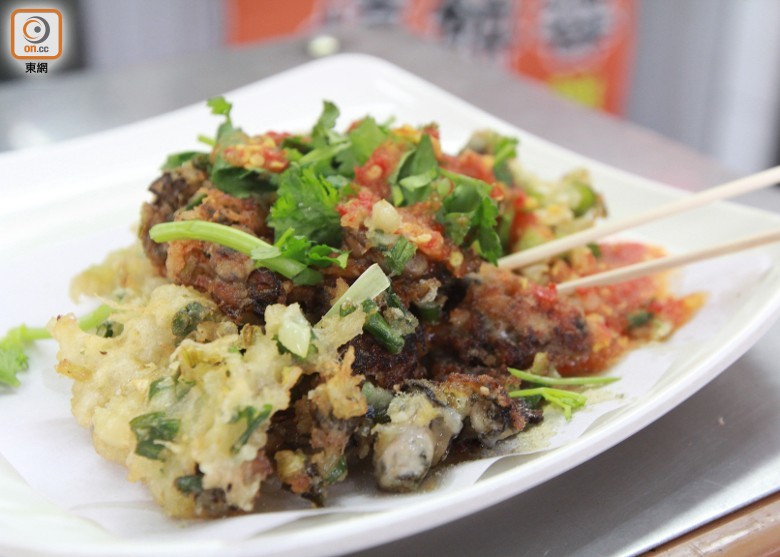
 One of my favorites is the roadside 肥姐 蠔餅 (Fat Lady's Oyster Omelette), which she serves with coriander and a chili sauce that is likely Thai or Vietnamese derived. The Lady is super hard working and super nice and I always have a chat with her when I visit. She is famous not only for her oyster dish, but also for the wrong reason - her daughter was plagued by the very rare Guillain-Barre disease and is still today suffering from its aftermath, which made her life very difficult (for reports and more pics in Chinese, see here and here). The lady sometimes had to close shop for a day to take care of her daughter - a substantial financial loss given the exorbitant rent.
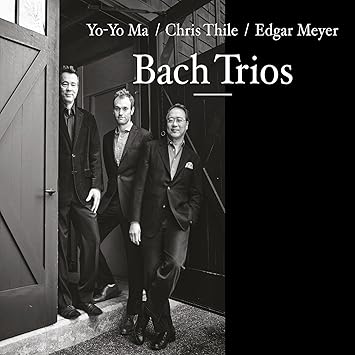
A few days ago, I had one of these for dinner (calorie watchers need not consider), but here let me tell you a secret. Wash it down with a simple white wine - the wine need not be great, but the effect is dynamite. If you consume this roadside, which is best, go to 711 and get a small bottle of wine. They don't have great stuff, but the HKD 10 bottle of Chilean Chardonnay (which tasted as much Sauvignon Blanc as Chardonnay - I had a double-take) on sale was more than capable for the job. The combination was explosive on the taste buds (yes, mine are still alive)! I had this at home, accompanied by Yo Yo Ma's divine Bach Trios, immaculately rendered on the small system. Yes, as much as the wine enhanced the food, the music did the same - the mandolin danced on the taste buds, and the bass drew out the after-taste. Marvelous!
A few days later, some good friends gathered for dinner. There were a lot of great food, Spanish ham, premium sea-cucumber, rack of lamb etc. A bottle of Lalande de Pommerol and another Haut-Medoc were both splendid. While I enjoyed it greatly, should I compare it with my humble solitary moment above with a Robert Parker-like scale? Absolutely not - each moment is a capsule, influenced as much by circumstance and the intangible as the quantifiable.
I am a fish lover. I like all kinds of fish, no matter cheap or expensive. I always say God is magnanimous, as He has imbued each species with its own taste, and you can find even in the cheapest offering things that you cannot find in the most extravagant. To translate - a very expensive fish is not necessarily better tasting than a cheap one, it all depends. The important thing is, there is no best.
 Happy Hour at WSS and Misa Criolla
You have met my dear friend WSS, the Quad 2812 user, before. Although his equipment has remained largely the same as
last visit, there is an important new addition: a pair of Western Electric 124.
After his recent rearrangement of equipment I have visited him several times. I have little spare time these days, but when I suddenly have a few hours to kill my first choice would be to visit WSS because I really enjoyed chatting with him, and listening to his many CDs. Most importantly, here is a real music lover and a well read man. Sound here is always good enough for me to sit through several hours, but each time my audiophile vistor ego would act up. The sound seems just a
little muted (not an unfamiliar feeling here, just like last time). Personally I find the WE 124, though still not quite as sinuous sounding as they can/should be, to outshine the much more powerful Quad Elite QMP monoblocks - the microdynamics is just more nuanced and better, and that is needed here.
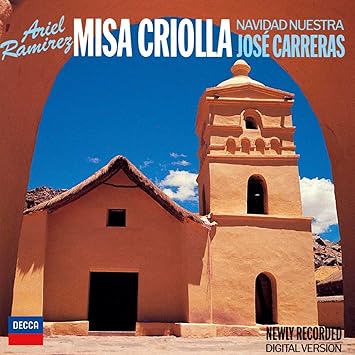
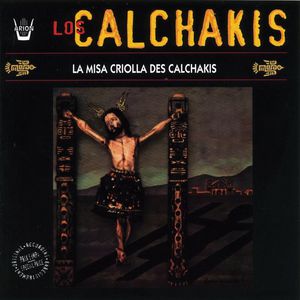
One discovery at WSS. A scaled down version of Ariel Ramirez' folk mass
Misa Criolla, made famous in audiophile circles by the long out of print Philips recording featuring
Jose Carreras (good news: it had been recently reissued on CD, but labelled Decca, I urge you to grab it quickly; be warned that Carreras made other versions but this is
the one). This chamber version is by
Los Calchakis (Arion). You may have to source it from overseas, but though a stingy 17 minutes, it is worth it, as the recording and performance are exemplary. WSS also played me another oop Philips LP of the composer conducting the mass, a rare collector's item apparently.
Sometimes I wanted to tweak his system, but WSS wasn't always enthusiastic.
Things could always get better, he says, but it is just a system used to listen to music. I agree, but I wager few audiophiles would really
understand the sentiment.
 Click to enlarge. Note the small white Micromega MyAmp in the center.
My Desktop Gets Bigger Too
Like the Living Room Small System,
I have tried all my other bookshelves ((Dayton B52; Pioneer S-A4SPT-PM and -VP; Pioneer SP-BS21-LR; 47 Labs 4737, TAD TSM-2201 and LS3/5A)
on my desktop, but the Yamaha NS-10M easily takes the palm.

- Yamaha NS-10M For some background on and my previous words on the venerable NS-10M, see here and here. On the desktop I have them inverted so the tweeters are at ear level. Driven by the solid state Micromega MyAmp, the sound is truly astonishing. Although everything played well, the most astounding aspect is how well it renders piano playback. Sophie Pacini's breathtaking Waldstein and Liszt (Warner) literally pinned me to my uncomfortable seat, as do Daniil Trifonov's Transcendental Etudes (DG). No bass overhang, no fizzy treble, perfect leading edges, every strand clear as daylight, yet emotionally true. No subwoofer needed. Here, I'd like to add that this experience makes me think the NS-10M, like the 47 Labs 4737, is more suited to good solid state amplification.

- Micromega MyAmp Considering how much of a Micromega fan I am, it is surprising I have not really "reviewed" this. Truth is, I have too much stuff to test, and desktop is not priority. Since I have written capsules on it, the MyAmp has received many favorable reviews (TAS, HiFi Choice, Chinese U-Audio). Recently, I have been using the MyAmp on my desktop. Its small footprint and superb connectivity go without saying, but what matters most is the sound - simply superb! It plumbs the depth of the NS-10M, while simultaneously offering the most subtle of tonal and rhythmic virtues. Through USB, I connect it directly with the iTunes of my Macbook Pro, and its replay of the various CDs mentioned is beyond reproach. I also connect it with my Micromega CD-10 (here), and the sound is just as good, though I do not detect any glaring superiority when compared to ripped files through USB - attesting to the excellence of the USB implementation. A winner!
Brief Update on My Kondo System - Loudspeaker Matching System Part III
In
Part I of Kondo Loudspeaker matching, I detailed my previous experience with Kondo driving the
TAD TSM-2201. I liked the sound, but it was on the lean side, likely indicative of lack of power.
Recently, I re-instated the TAD TSM-2201 in my Kondo system, in inverted positions (see top pic). For some reason, the sound appeared to be better than before, and so I decided to work on it. After some careful dialing in of the subwoofer and a few changes of interconnects the system performed so well that it is what I use now. No, it is not as relaxing as the LS3/5A, but for the mean time I like the more accurate nature. It could still be fuller, but playing loud is easier than before. My friends seemed to like the system on their visits too. I am quite satisfied.

 Long Live 759 Yesterday was so hot that I didn't feel like drinking hot tea. So I brought a bottle of Ernst Ludwig medium-dry Riesling from the 759 store. It got better and better as it got chilled in the ice bucket, and fit perfectly with the meal. I actually don't quite understand those who insist on red wine with Chinese meal, as I find white wines much more suitable (sauvignon blanc is another favorite).
 Click pics to enlarge. Behind the Altec 604's are a pair of classic Proac 5's.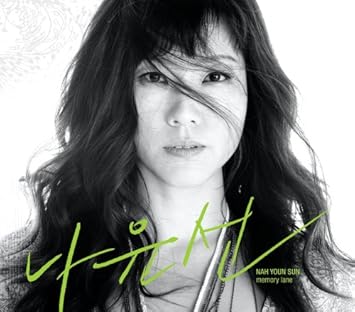
 The star of the setup without doubt is the Altec 604-D. The cabinets are small but they are well nigh perfect for the relatively small space. Sonically, they are anything but small. After switching in my Gotham DGS-1, replay of jazz was well nigh perfect. This Wynton Marsalis Quartet CD is not one of Blue Note's better albums, but redeemed by the Diana Reeves cut. Even better is the enigmatic Nah Youn Sun, much better known in Europe and Asia than in North America (it seems Korean transliteration is even worse than Chinese, as there are many variations of her name on the internet; Nah is the last name; her official site). Her subdued and considered compositions on Memory Lane was intimately conveyed, with full atmosphere.
 Back to Central As I had some time to kill before my concert in evening, I returned to Central and met up with the WSS gang. First, a brief sojourn at Mr Lo's to audition yet again his current Goldmund/Rockport combo, not quite my cup of tea.
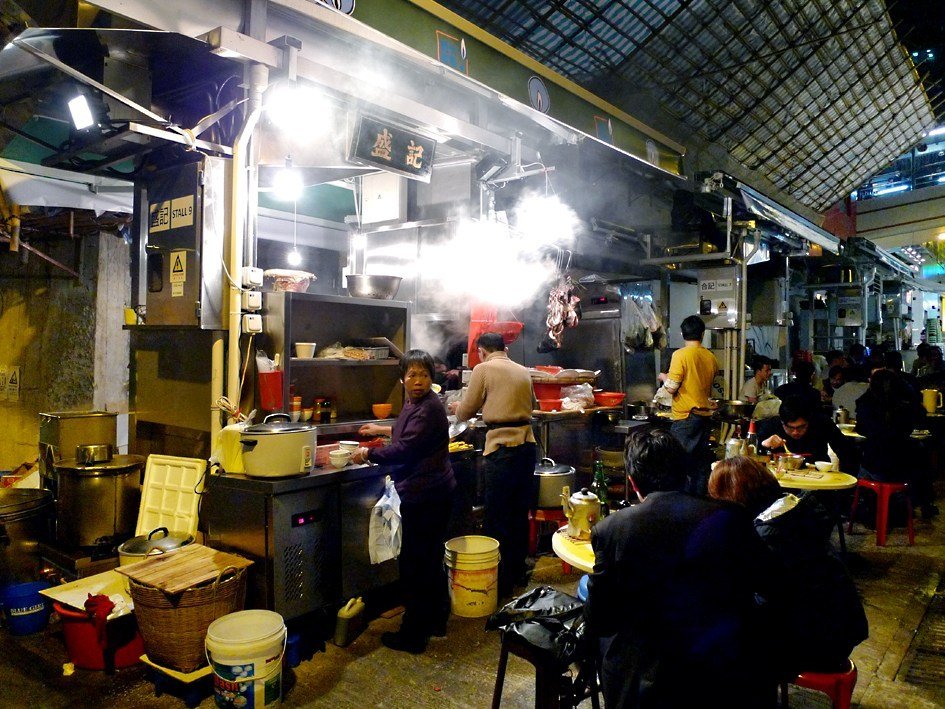 Dai Pai Dong
 I then attended an excellent concert given by the great pianist Dang Thai Son in City Hall (see my classical blog), which looks gratifyingly exactly the same as in my childhood.














 Posts
Posts