13 December, 2023

UMI Class A Amp JBL 4365 K29800SE Air Tight Meixing Raphaelite


Preview: UMI 优美 Class A Amplifier
Letter from Shenzhen (23-15): Great Food 吃喝玩樂 and JBL


All of a sudden, with a few days on hand, and access to a car, we embarked on an impromptu journey to some nearby Guangdong cities. It was a jam-packed 2 days, chronicled here in order. 天時地利人和,又有两位任勞任怨的司機,故臨時起義,驅車北上,兩天壹夜,吃喝玩樂之際沒忘音響正事。

Shunde, 顺德
Shunde is famous for its authentic Cantonese food. I had some advice from our own ELO, who apparently goes there often. He remarked that there is no bad eat there. This past Thursday, we started out mid-morning from SZ and had lunch at a famous local restaurant 黄但记 (new shop). Very nice! 順德菜不用介紹。本刊作者ELO 常去,说揾食容易,鲜有不好吃的。星期四中午打卡黄但记,吃得快樂,普洱茶也不俗。自家陳村粉質感壹流,薄但彈牙,XO 醬兜兜,就把其它油膩炒河粉比了下去。鵝腸超值,最關鍵是新鮮,咬下去不止有咬的爽脆感還有延續的延綿質感,不是冰凍貨可以比。那微甜的醬味不是香港人熟悉的,但吃上海菜大的我覺得非常棒。柚皮本身好的,鮑汁卻過濃,好此味者應該點蝦子。點心也不錯。

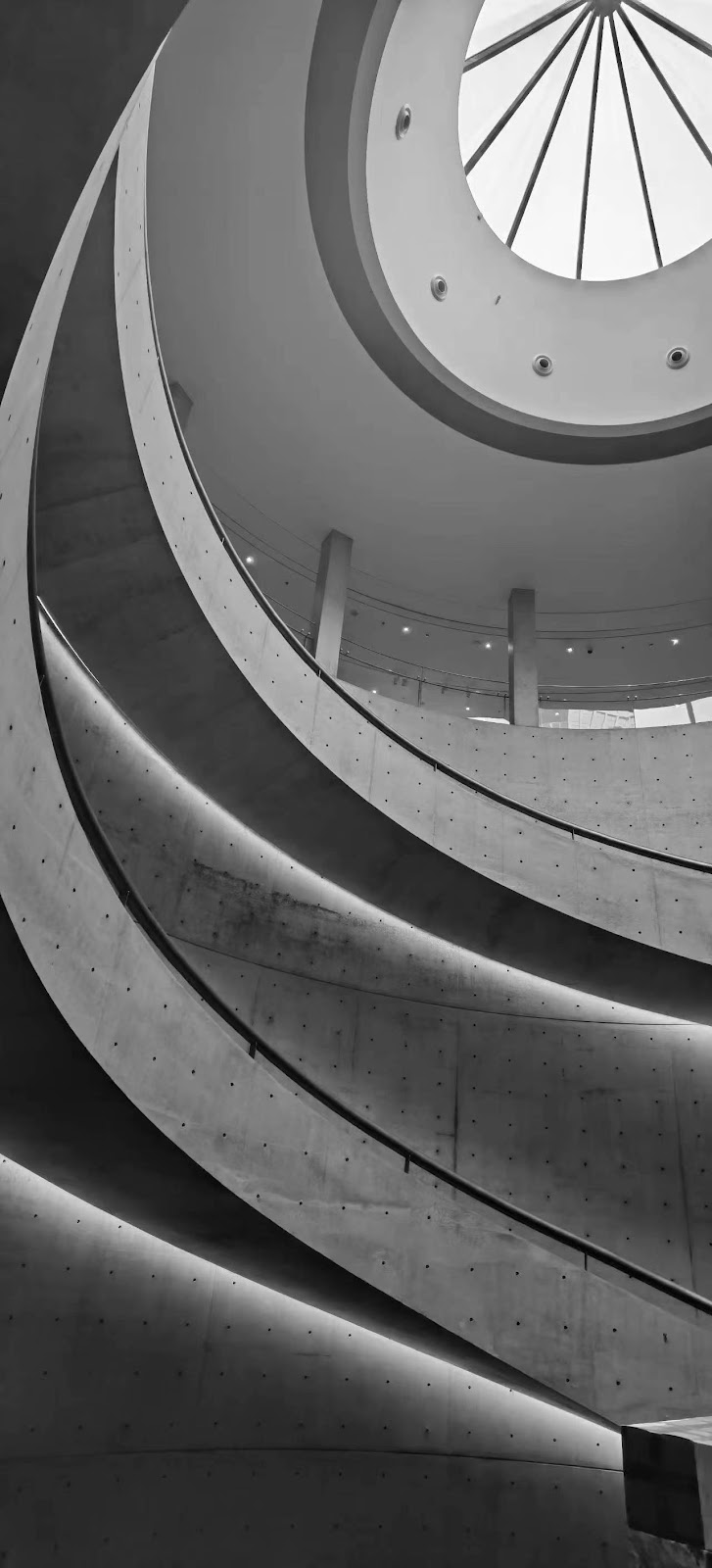
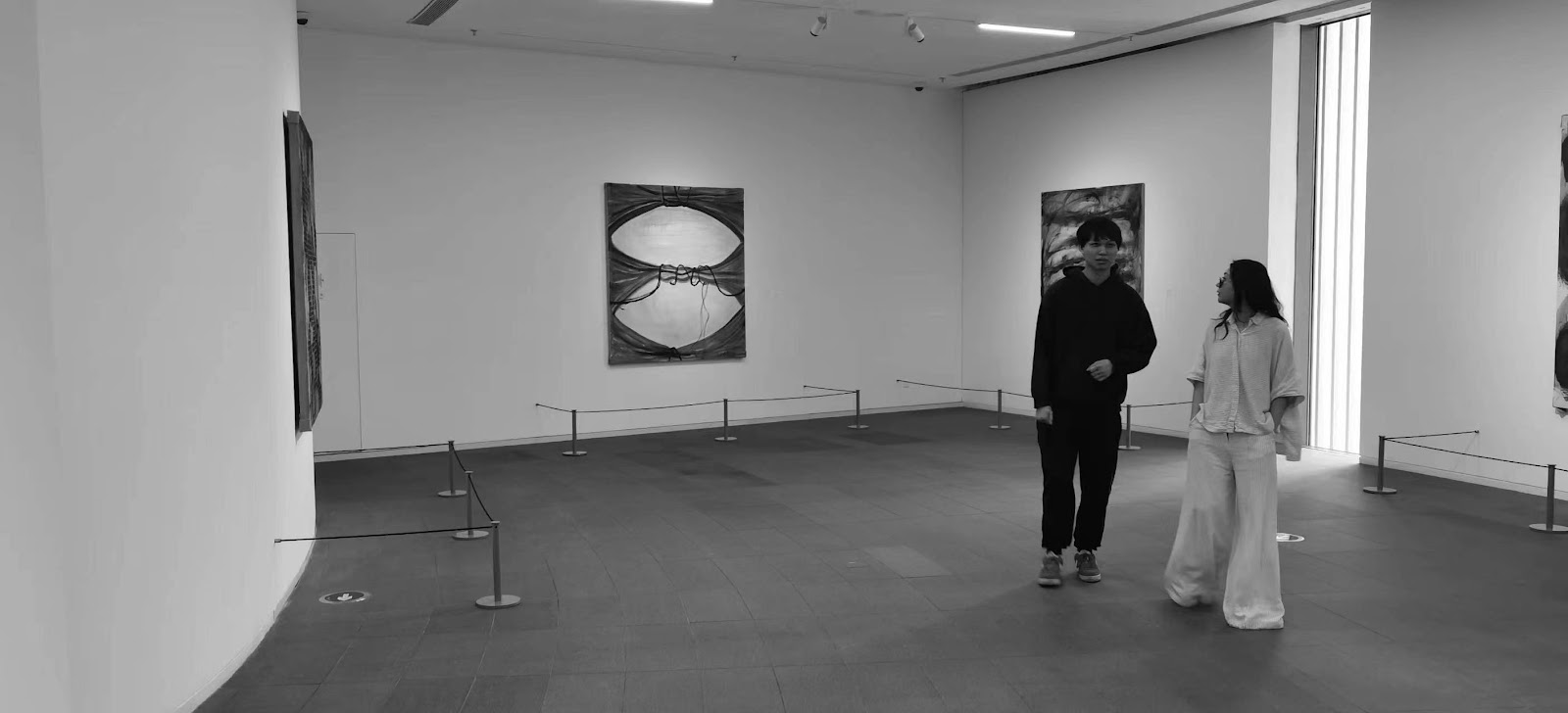
Then, thanks to the suggestion of ELO, we went to the nearby He Museum 和 美術館. Designed by no less than Takao Ando, it was a perfectionist endeavor 7 years in the making. We didn’t have that much time so just walked around the immaculately finished and landscaped exterior (a rarity in China) and went in to survey the cafe and admire the pond. Still, we got a glimpse of some classic Ando touches, like the regularly spaced small punched out wells in concrete walls in which one can glimpse small bits of exposed supporting steel rods. I attach at the bottom some ELO photo of the inside. In case you wonder why is this museum here? Well, it was built as a statement by Chinese Appliance Giant Midea 美的, whose headquarters are right across the street. 然後去打卡電商巨頭美的總部旁邊的“和”美術館(嚴謹制作,打造7年!)。不用說,建築師名家安藤忠雄出品,必屬佳作!

Foshan City 佛山市, Lingnan Xintiandi 嶺南新天地
Then we drove another hour. Built by Hong Kong’s Shui On Group, the first and most famous Xintiandi (new world) is of course the one in Shanghai, which I have never been to. This one though is mightily impressive (for pics and comprehensive plans, see here). The Lingnan style roof structures, color scheme and deliberately carved out alleys and backways seemed quite authentic. I didn’t take any pics but we did enjoy coffee here. We perhaps only did half of it, so big it is! Lots of wonderful looking cafes and restaurants and interesting shops and stalls. 瑞安打造的嶺嶺南新天地非常大,除了經典的顔色和屋頂,還喜見非常多細節,雖然花街柳巷是營造的,卻毫不違和,值得壹贊!喝了杯咖啡,舒服!
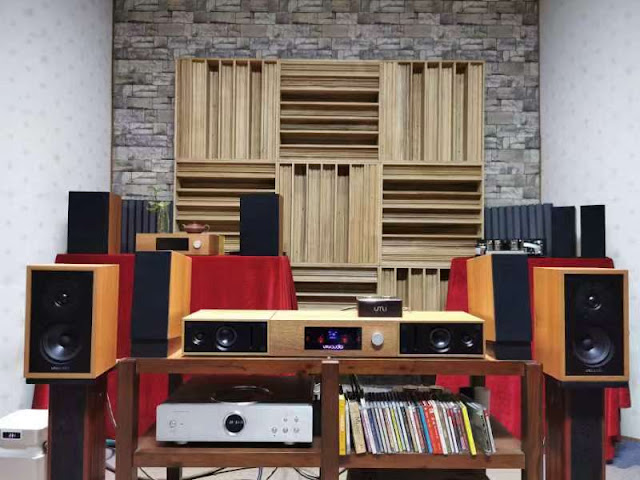
Class A Amp in center, flanked by matching mini loudspeakers. But we mostly heard the much larger 35 clone on stands. Own CDP (lower left) was used, fed into the UMI 1:1 transformer (small black box on top). 

UMI 优美 (UMLAUDIO)
Another hour of driving and we arrived at a vast industrial district (Foshan is one of the important industrial centers; all our apartment steel doors come from there). UMI is actually a maker of transformers, especially step-downs, that are sold world wide. Regular readers would have read about its astonishingly good 1:1 Audio Transformers 音频牛 (Report by ELO, who now cannot do without it; I can't either, but have yet to write a detailed long report, soon...). The audio section is a hobby and fringe part of the UMI, not its main business (strangely, note that officially they are UMLAUDIO, not a typo!). The section is small, with a couple of technicians working and a small audio room. I had been wechatting with the Engineer Mr Li, David 李工, who had told me about his small and cheap Class A amp. It sounded very good with their own 3/5 clone loudspeaker and top loading CDP. But what truly impressed me was the focused sound I got from my cellphone Tidal via the built in Bluetooth Receiver. I was quite smitten by the full bodied sound of the cello and piano I got from the new Sony album of Raphaela Gomes (now a personal fav). I should have a review sample in due time and look forward to testing it out in detail. We also listened to the very cheap matching small speakers and they are really quite decent by themselves (when not compared to the bigger 3/5s)! A very good (in both looks and sound) complete system for a reasonable price. The inside of the amp shows quality parts, including capacitors. Of course, the transformers are all bespoke. The small one is for digital and standby functions. There is no heat-sink. Instead, the output devices are affixed onto metal tunnels with fan cooling. Parts quality is decent, so I don’t understand how they can make money! 行也匆匆,接下来去了一个工業區探访优美音响的李工。李工是個非常溫文的人,話不多,是個實幹派!我們報道過他那冇得頂的1:1音頻牛,是個寶物。這次聽了他那膽前石後的甲類合拼機,雖然只有20瓦,配搭他家的仿35,聲音却非常靠譜。更令我驚訝的是藍牙非常好聲。也聽了那配對的小小喇叭系統,都非常稱職。看看機器裏面那些零件,尤其電容,都不錯的。變壓器都是自家的,這個價,我覺得沒錢可賺,屬于打天下産品。其實音響只是這公司的小副業,主業是各種變壓器。我將會詳細測試這部合拼機,請留意下文。

Sanshui 三水
Another hour of driving to Mr. Lai’s 黎先生multiple award-winning restaurant 假日豬肚包雞. Mr Qian 钱先生met us there. I first visited this restaurant in 2007 while on a trip with some HK audiophiles, and the superb signature dish (chicken wrapped in pork stomach) had been etched in my memory. So wonderful to have a second act! Most gratifyingly, the second act was just as good as the first! 又壹個小時去到三水。時隔15年又去到黎先生獲獎無數的餐廳假日豬肚包雞,新店環境更好,重要的是重溫舊夢壹樣那麽味/美好!黎生溫文典雅,像書生多過餐館老板,端莊的太太也熱情招呼我們,壹謝再謝!你如果去三水,這是必需打卡的地方!深圳,甚至香港,豬肚雞到處都是,但你吃壹次你就會明白檔次。那酸菜魚也是驚喜,酸菜自家腌的,而魚是即殺的,微辣也惹味!牛丸超正,是軟的,牛肉味重,不像潮汕那些只有質感的。如果香港飲茶那些所謂蒸牛肉是用這丸子就發達了!正哦!

Click pics to enlarge. Center Air Tight 2-chassis Preamp. R Philips CDR700. JBL K29800SE. Air Tight amps behind. See bottom pics.

JBL K2-9800SE
After this, we retired to Mr Lai’s home nearby to listen to his JBL K2-9800 SE. I had heard the regular version many years in HK. It was to my liking and so it proved here. Unfortunately, we could not listen for very long as one Air Tight 211 monoblock developed a problem that made the sound wax and wane. 跟著去了黎先生家聽 JBL 9800SE, 聲音不錯但有問題,壹只後級有故障,右聲道時有時無,需要維修。希望下次來可以正瞻風貌(还要喝多点酒)。

Goodnight! 累!休息!
Exhausted, we retired to a local hotel. For 2xx rmb including breakfast, it was a good deal (but the coffee was horrid). 入住了三水的佳田酒店,OK, 二百多連早餐。早餐非常好,味道可以,居然有牛腩粉,我吃了兩碗,還有皮蛋瘦肉粥,各種雞蛋配菜,超值。可惜咖啡是三合壹,非常糟糕!只能喝菊花枸杞茶。啡友不宜。

JBL4365. Center top Meixing 300B Preamp driving the 211 PP monos. Flanking R top Philips CDR700, below which (silver chassis with 2 knobs) a SE version of UMI 1:1 transformer. See bottom pics.

JBL 4365
In the morning, Mr Qian picked me up and we went to his large room (about twice or thrice the size of Mr Lai’s) to listen to his JBL 4365, which is like a professional (and cheaper) 9800. Sound was very good and typical of modern JBL monitors. As for the equipment, it was obvious Mr Lai just followed Mr Qian, a lot of duplication. CD source was the same venerable Philips 700 (TDA 1547 1-bit), so you know the host likes things musical. Here were also the Air Tight 211 monoblocks, but not in use. Instead, Amplification was all Meixing (Mingda), a monstrous 300B Preamp and a back-breaking monoblock pair of 211 PP (only one pair for PP; the other 2 are for rectification!). Vinyl was played on an Amari TT sporting a Hana SL cartridge, fed into a delightfully retro-looking 2-chassis Raphaelite Preamp. As is the norm, the amps took a while to warm up and just when I started to really get into things my cohort came to pick me up for the next stop. It’s worth noting that Mr Qian is very exacting about details and power cleanliness. He DIYs all his own cables (also used by Mr Lai) and spends a lot of time tweaking. It’s also interesting Mr Qian does not believe much in damping the room, nor cares much about soundstaging. Yet music sounded very clean and focused. 早餐完,錢生把我接去了他家。器材不少,但非常整潔。錢生個性豪爽,直來直去,岩我嘴型。系統聲如其人,也是直接爽快。玩音響方面,錢生可比我執著甚多,凡事壹絲不咎。電是直拉入房間的,經過多重處理。所有線都是自家焊的。音源必需有相位選擇。CD 出來接優美李工的1:1音頻牛,不過是特別版。放大是美星旗艦一套(這篇文章描述非常詳盡)。那300B前級比我的300B後級重3倍,用膽2倍!單聲道211壹邊四根,兩根是推環,另兩根原來是整流!真系,哦地見識少!Amari 唱盤經拉斐爾前級播放,聲音濃郁,和數碼截然不同。另外,虽然钱生对音场定位不是特别注重,东西还是聚焦的。钱生也不特意房间处理,这点和我一样,但他花很多功夫在避震上。值得留意,黎先东西很多都是钱生设置的,所以结构和声音略同。可惜,正進入狀態之際,同行來接我,只有期待下次拜訪!

Back to Shunde 顺德 2
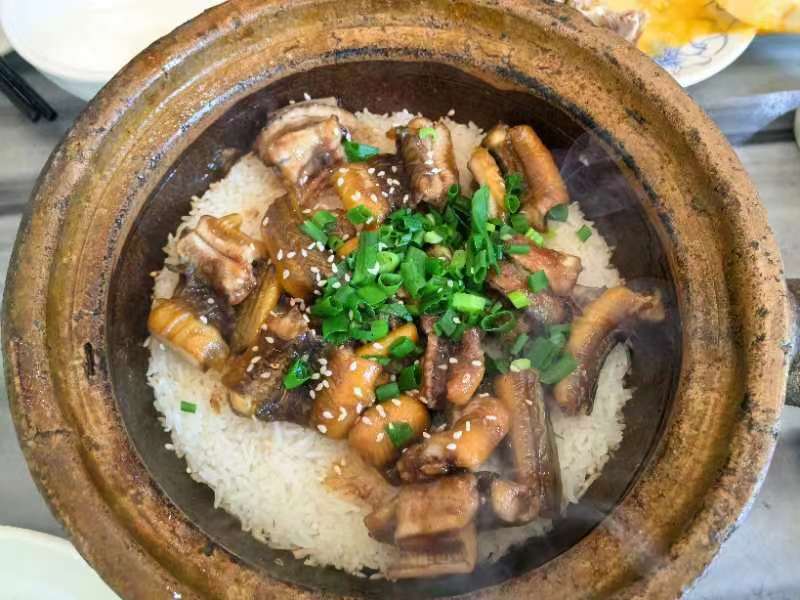
Our trip back to SZ passed through Shunde again, so we quickly hit a clay pot rice place. Again, very good! 匆忙原因之壹是我要趕回深圳晚上聽音樂會。回程又經過順德,順路快快打卡了一個網紅煲仔飯。非常地茂,不便宜, 但食料超新鮮,淡口但美味。那腐乳通菜我們吃了兩碟,沒吃過那麽美味的!味道和香港的完全不壹樣,我琢磨有加酒和糖。

Back to SZ 回到深圳
Thanks to my drivers, I made it back in time for the concert by the SZSO. Mahler 3, wow! Just lovely! What a fulfilling 2 days! 趕回深圳聽音樂會,深交的馬勒3棒!

Midea Headquarters 美術館對面美的總部
Chicken wrapped in Pork Stomach Hotpot 無敵猪肚鸡
Air Tight Preamp (PS separate)
Air Tight 211. All Cables by Mr. Qian 黎生處所有線材都是錢生做的
錢生 美星 300B Preamp 前级
Amari 唱盤。墨綠2部是拉斐爾前級
右側是煲仔飯餐廳 黃鳝,排骨,臘味都好,但米粒太碎,是敗筆。
鹽水雞,五柳旦都淡味,我喜歡。
SZ Symphony Mahler 3! 深圳音樂廳深圳交響樂團馬勒3!

Below are ELO's pics of the Interiors of the He Museum 和 美術館 内部

04 December, 2023

6N2 Overview BRZ A20B 6N2 6N3C SE Amp Cap Change 6SN7 6SL7

Review: BRZ A20B 6N2-6Π3C SE Amp, Part III, Capacitor Change, More Tube Rolling and Preamp Matching
Letter from Hong Kong (23-10): Shawn P on 6N2
Review: Eastern Transmission Audio 6N3 Preamp, Part III
Review: BRZ FU-50 Amp, Part II
Overview: 6N2/6N1 Tube Rolling Guide, Part II

Revised Dec 10, 2023: Preamp Factor section modified. Tube Advice sectin amended.
Revised Dec 5, 2023: Tube Advice section re-written. 

BRZ A08 Part I gives details of the amp and slight modification.
BRZ A08 Part II details the First 2 Rounds of Tube Rolling (6N2 and 6N3C)
BRZ A08 Part IV introduces the WE 350B and a new development, Failed Volume Pot!!!!!

Eastern Transmission Audio (ETA) 6N3 SRPP Preamp (Parts I-III)

BRZ FU-50 Amp (Parts I-II)

Note that basically Parts II and III combined gives an Overview of 6N2/6N1 Tube Rolling!

Here in Part III, originally I was to simply cover only Capacitor Change and Tube Rolling of Octal 6SN7/L7, with a bit of comparison with BRZ FU-50 amp thrown in. But events turned out less straightforward, to the extent that I just have to re-write/modify the Comments I wrote in Part II, and I have re-structured the review series by revising and re-locating that section here. So, even if you think you have read it in the old Part II, re-read it anyway - the conclusions are somewhat different. Yes, just like with people, it takes time to know things. After a while, long after visits to this Part III has peaked, I shall further re-arrange and move the 6S_7 tube rolling below to Part II. That shall make a more logical whole for readers not of the first wave.

Click all pics to enlarge. Left 3x 6SL7, Right 3x 6SN7, all really old stock.

Round 3: 6SN7/6SL7
For the Primer on appropriate Adaptors, please refer to Part II. As expected, Gain of the 6S_7 are lower than 6N2 and roughly equivalent to 12AU7 and 6CG7 (see Part II). Although the gain of 6SL7 is higher than that of the 6SN7, it's not by much and not always obvious in this setting (even if it's supposedly a forerunner of 12AX7). All of mine (see pic, just 7 randomly plucked from my stash) produced good results. The 6SN7s seemed a little more refined and highlight soloists more, whereas the 6SL7 had a more layered soundstage. If I have to pick, it'd be silver plate Ken-Rad 6SL7 (VT229) and an ordinary looking Tung-Sol D-getter 6SN7 (not in pic above, but on amp at the bottom).

In terms of certain audio parameter (like imaging), the 6S_7 is not superior to, say, the better noval tubes, say 12AX7 and 6DJ8. But, as experienced tube people know, the larger octals have a more organic sound, though the lower gain requires (certainly in this case) the preamp to contribute more!

After all this tube rolling, I'd like to point you towards this bit that Shawn P contributes:

Shawn P on 6N2 (and 6N1)
6N2p is interesting in various ways. The internal elements are silver, they are very cheap, they seem reliable (I have not encountered a dead one) and most interestingly, 6N2p is perhaps the only tube which I have more experience with than doctorjohn.

I have two Decware amplifiers and they both take 6N2p and these amplifiers also take 6N1p and 6DJ8.  Recently, I also purchased another EL84 amp from TaoBao which also takes 6N1p and 6N2p (no 6DJ8 for this).  Hence, I was able to compare 6N2p with different tubes with the same amplifier.  


So how did 6N2p compare with the others?  When these tubes were used in my Decware SE34I, the 6DJ8 sounded the warmest with least punch, the 6N1p sounded cleanest and not as warm as 6DJ8 and the 6N2p made the amp sounded more powerful but also roughest.  That all made sense since 6N2p had the most gain out of the group.  I also observed the same with my newly acquired TaoBao EL84 amp which only has one 6N1p/6N2p before the EL84.  When the TaoBao amp was used with 6N1p, it sounded thin and when the amp was used with 6N2p; it sounded thicker and became much more musical and enjoyable.  


6N2p is not a bad tube but smoothness is not its strong point.  BTW, the Russian 6N2p-ev did sound a bit cleaner than the 6n2p.


I think, after all the Tube Rolling Talk, perceptive readers can take this series (Parts II and III) as a Primer on 6N2 and 6N1 (same pin out) Tube Rolling Guide! I don't think there are better ones on the net.

Round 4: Capacitor Mod and a little Transformer Vibration Damping
Not sure of the BRZ's stock blue "RIFA" boxy caps, I swapped in the "Solen" Polypropylene Caps (0.22uF, 630V). Definitely NOT made in France at the price (Top pic; 1.5 RMB each; I was looking at Audiophiler but they don't have the appropriate values)!

I also loosened the transformer screws (power and outputs) and slipped under them some rubber strips (from heat shrinks). This was to combat vibration, a method I used very successfully in the Dynaco PAS3 (here). However, my effort was not exactly complete as one power transformer screw had two washers underneath (impossible to loosen in a tight spot; top pic, top right corner), between which were grounded the power supply and circuit. Unfortunately, overall, at this point I cannot tell you of significant improvements. Maybe a little faster and less rounded at the edges, maybe not.

Round 5: A Preamp Change
Although I have several preamps, given the character of the amp, I knew early on that I'd like to try my Eastern Transmission Audio (ETA) 6N3 SRPP Preamp. As mentioned, this is a super high-gain preamp and its fast (take-no-prisoner) character I thought would likely suit the BRZ amp to a -T.

But the ETA had been having hiccups for a while already (which was why I didn't use it in Parts I and II). It was losing one channel and so got shelved aside. A couple of days ago, I looked at it and it seemed the output wires had frayed some (my shoddy work during mod). I resoldered the Input and Output RCA Terminals and it came back to life.

In fact, just as predicted, the ETA (with Russian 6N3) elevated the performance that had me rethink the potential of this amp. The high gain and punchy character proved eminently beneficial to the BRZ. It's not just a simple question of getting enough impact, it's that the combo now had much more nuance and microdynamics! Just one illustration. The superb album Aux Etoiles (Bru Zane) mixes the better-known with the unknown. The many unknown tracks, which previously sounded rather generic, sprang to life and held one's attention quite a bit more. No small achievement! In retrospect, the 6J4/6P3P Preamp itself was a bit rounded at the edges too.

Great, right? Not quite. I didn't mention that this preamp had also before this begun to fail at the volume pot. The pot works only for 7-9 o'clock. And then mostly wanes for the rest of the dial, sometimes with hum. it is certain the preamp's pot has gone south. Problem is, the pot is so small and there is so little room. I have to think about how to get in a better one. With other amps of high input sensitivity (like most SET amps, such as my BRZ FU-50 and APPLause 300B amp), even with the severely limited range of the defective pot, it's not a problem. In fact, I used to curse it for having too much gain too soon (still does, but it works here).

BUT, with this low input sensitivity BRZ amp, when the lower gain 6S_7 etc were used, the volume would have to be upped a lot more, into the pot's failed zone. Some classical albums just have too low a level to work. Fortunately, the solution was to stick to the high gain 12AX7 to make the volume fall within the pot's useable range. The sound of ETA + BRZ is simply brilliant, despite that both are cheapest in their categories! The sound now is not as euphonic or "rounded", more neutral but still sweet. But, given the ETA pot failure, I'd withdraw recommendation of the ETA (will amend that review article). Also, I still rotate my 6J4/6P3P 

Round 6: vs FU-50 The BRZ FU-50 Amp has long been an everyday amp for me. I have actually telescoped two rounds into this paragraph. Using either 5881 or EL34 (RFT), the sound of the cheaper A20B amp still lags behind the same company's FU-50 amp (using Chatham 5R4WGA, Raytheon 717A and Russian FU50). The FU-50 had more detail, harmonics, transient information and better leading edge - in a word, the DHT characteristics. The FU-50 amp is better built, being tube rectified, choke smoothed and with a better driver stage, for about 50% more money (though, again, one has to spend to upgrade tubes). FU-50 Capacitor Mod and Power Transformer Damping Two days ago, I also did to the FU50 amp what I did to the A20B (above). I changed the stock "RIFA" caps to "Solen" (0.22 uF, 400V; see pic at bottom). And I slipped in rubber strips underneath the Power Trannie (the Output screws looked a little complicated so I didn't do it). The sound gained a bit smoothness and harmonics. I was satisfied and did the comparison again with the A20B and of course the same results were even clearer.

Round 7: Back Track and Reality Testing
After all the changes (caps and preamp), I tried some of my favorite tubes and played some favorite cuts, and everything was even better. More importantly, I went back to the stock Beijing 6N2 and Russian 6N3C tubes. Yes, still enjoyable, but now obviously a far cry from using my old stock tubes. So, it was quite obvious that all the work have significant results. I then switched out the Russian 6N3C for the Chinese (Valve Art) EL34: much better, though of course still not as good as the old stock tubes.

Comments
  • The Basics and Value of this Amp This is an imperfect, but eminently likeable, amp. Grant you, I bought it for NO good reasons (at least I thought so) - I just wanted to see what I'd get for this ridiculous price, and I was really quite pleased, to say the least! BRZ is a company that builds super-budget products. They are all encompassing, manufacturing everything from DIY boards to chassis and both ss and tube amps. That's why they can undercut everyone. Now, these are built to a ridiculously low point, so expect less than ideal parts quality and perhaps occasional hiccups (so far though nothing has happened to my FU-50 amp but keep my ETA woes above in mind). DIYers can possibly reverse engineer and improve parts quality (plenty of room). Caps are easy but resistors are more problematic. Keep that in mind when you read about my cautions.
  • The Basic Sound The Heart is in the Right Place. That is important. Even with stock Beijing 6N2 and Russian 6N3C the sound was musical and pleasing. That tells me the transformers are OK in quality (at least for now, and God knows how many times I've powered on and off the unit for tube rolling!) In fact, in this setup here in SZ, the sound is on par with, perhaps arguably even more musical than the far more expensive Elekit TU-8800 in NYC with Klipsch Hersey. Of course, sonic memories, especially from quite a ways back, can be unreliable. But just that thought is an endorsement perhaps.
  • The Driver Tube Technically, the 6N2 is like a 12AX7. Use of just one triode is not the best driver for 6L6 or EL34 (better for EL84). Above, Shawn P remarked that his much more expensive (but still bargain by American standards) Decware EL84 and EL34 amps also use the 6N2 (although the latter uses 2x), and Decware advises Preamp Gain. This sounds right, but won't sit well with those stuck with passive "wire without gain" beliefs! Phase? Each channel being driven by a single triode, should this amp be phase inverting? I don't know and BRZ doesn't give me an answer. I don't have a scope, so I just reversed the loudspeaker cable leads. That seems to focus the sound more in the center; so I think this amp may be phase inverted (I'd welcome corrections). This is how I connect it now.
  • The Preamp Factor It follows from the above that with real world loudspeakers, I regard a Preamp (with good gain) a must, and I'd withhold recommendation for those who want to use it as an integrated amp. Mind you, although the preamp sure helps, there is intrinsic limitation on how much half a 6N2 can swing. So, no matter what you do, this will never be the most incisive amp and, sometimes, adjusting the volume knob on the preamp is a little tricky (the amp side is always maxed out). It can be picky with Preamps. As you can see, in terms of gain (and tone) the ETA Preamp suits it more than the 6J4/6P3P Preamp. It follows that high gain, incisive preamps would be better matches (this means some solid state preamps may too). But I still use the 6J4/6P3P Preamp sometimes because I like the 6SN7/L7 and this Preamp can provide the gain (dial almost maxed) whereas my ETA preamp with its defective volume pot cannot at this moment. Also, for the longest time I have in this preamp Raytheon 6X5, Mullard EF94 and RCA 6V6), but recently I swapped in the Hytron 6X5 (from HK stash) and I think it gained some clarity!
  • Who is this amp for? It's a good Super-Budget amp (and the stock tubes sound good enough), particularly for those starting out on the SE path (in fact, it redefines the term "super-budget"). Those people can roll tubes a little bit but I'd not go crazy on that, as the cost would be disproportionately high compared to the cost of the amp. While it's surprisingly good (my Beydas 3/5 are not so efficient), it is not for rock fans. Again, with real world loudspeakers, I regard a Preamp (with good gain) a must, and I'd withhold recommendation for those who want to use it as an integrated amp.
  • Tube Advice This section is geared towards the beginner. For the Beginner without a Tube Stash I'd think stick to the stock tubes for a while. The 6N2 is rather plain vanilla, but is serviceable (remember even expensive Decware uses it). Keep an eye on the 6N3C - if the plate shows just a little focal redness, it's likely OK (as in my case; and I'm not the only one judging by TB feedback), but if the redness increases, be cautious. I'd think if your stock amp comes with Russian 6N3C, you may want to  also get a pair of Chinese EL34s (if just to satisfy your curiosity), as they are reasonably priced, have a little more power than 6L6 types and in general Chinese EL34's sound pretty good. Tonally, it's a toss up. when using my 12AX7 but not when using the stock 6N2, I prefer the stock Russian 6N3C to  my ancient Valve Art (from defunct Guiguang). 6N2 Swap As with most amps, swapping the driver tubes deliver proportionately greater benefits than changing power tubes. So the 6N2 is the first tube you should consider rolling. The improvements from Russian 6N2 variants would not be worthy imho, because the 12AX7 looms large. Get the 12AX7/6N2 Adaptor. I also probably would hesitate before getting any of the modern 12AX7s, as they would be more similar than different from 6N2. I'd buy on Ebay old stock 12AX7 tubes that test well (often in lots). Any of my well used 12AX7 tubes (in Part II) trounced the new stock 6N2, and not by a small margin. As for the 6S_7/6CG7 covered in Part II, they are for more experienced users who already have the tubes, and they positively demand a high-gain preamp. It would not be surprising that such users, despite more demand on the preamp, may just prefer the 6S_7 to the 12AX7 (as I do). Power Tube Caution With the power tubes, unless proven otherwise, I'd like to err on the safe side. Given the official BRZ recommendation and the looks of the small resistors, I'd say this amp is NOT for the ambitious Power Tube Roller. Don't use power tubes that draw significantly more current than 6L6GC and EL34. I'd NOT use KT66/7581/7027 (and definitely not other Kinkless Tetrodes like KT88)! Also, due to the Ultralinear operation, I'd also not use lower rating tubes, like 6L6G/GA. It's a restricted window. This amp is also for those who, like me, have a stash of EL34 and 6L6GC type tubes. Modern Tubes vs Old Stock There is an increasing number of articles that extoll the virtues of modern replica tubes (be it "Tung Sol" or "Mullard", many sponsored by tube vendors, LOL; I ask, are they more authentic than my $1 rmb "Solen" cap?). Forget about them. While the modern day variants can be reasonably good, they are NOT commensurate with the classic tubes they were modelled after! Forget and Resist! Take your time to get into the old-stock world, which one must. The Inexactitude of Tube rolling After this report was first published a few days ago, I rolled in again the Executone (Sylvania) 6L6GC, which did not impress me at first (in Part II); holy, it overtook the 5881 in performance! Perhaps my better driver tubes on adaptors help, or perhaps tubes unused for the longest time need a bit of re-running in too. So I'm adding this bit (also to Part II) to tell you how tube rolling results may change as things change.
As of this moment of conclusion to the article, my last tube combination, RCA 12AX7 (on adaptor) and Russian 6N3C sound musically just fine with my ETA 6N3 Preamp, quite satisfying!

Tung-Sol 6SN7 with RFT EL34s
Caps (black, foreground) Changed in FU50 Amp

28 November, 2023

BRZ A20B 6N2-6Π3C SE Amp vs 6L6GC 5881 EL34 12AX7

Click pics to enlarge. Top, on the amp, Mullard box-plate 12AX7 (on adaptor) and Tung-Sol 5881. Front, from L to R, Valve Art Chinese EL34, East German RFT EL34, Mullard xf1 large brown base EL34, Executone 6L6GC, 6SN7 adaptor.
Review: BRZ A20B 6N2-6Π3C SE Amp, Part II, Tube Rolling
Letter from Shenzhen (23-14): Digging through my Hong Kong Tube Stash

Overview: 6N2/6N1 Tube Rolling Guide, Part I
Part I gives details of the amp and slight modification.
Part III is quite substantial and a must, as it covers Tube Rolling of 6S_7 types, Capacitor Mods and Preamp Matching!

Note that basically Part II and III combined gives a detailed Overview of 6N2/6N1 Tube Rolling!

Left, adaptor for 12AX7 https://m.tb.cn/h.5kfN5Fb

Tube Rolling As the closest equivalent to the 6N2 is a 6AX7, which nobody has, one would want adaptors that would allow use of the much more ubiquitous 12AX7. They differ only in how the heaters are wired (the 12AX7 heaters can be wired either 12V or 6V). and the adaptor's small circuit board takes care of the conversion. One can then also roll in the extended lower gain 12A_7 family for different effect. Without need for adaptor one can also roll in pin compatible but similarly lower gain 6CG7 (like a larger 6V U7). One can also roll in 6SN7/L7 (like an even larger 6V U7+) with yet another adaptor. These 2 tubes, especially the latter, draw more current but the amp should be OK with them.

Right, adaptor for 6SN7 https://m.tb.cn/h.5PQ8s5u

Tube Adaptors for 6N2 The ingenuous adaptors have a small round circuit board at the bottom, where the pins are soldered to the underside and the socket clips on top. The small circuit board takes care of the conversion, basically rearrangement of pins. For some, for a premium, there are deluxe versions with a metal surround. My cheap versions are just wrapped in heat-shrink. One should be gentle when handling these. As the top socket is soldered onto the bottom circuit board, one should grab the top portion when when inserting tubes, and grab the bottom portion when inserting onto the amp. This is to prevent stress on the solder joints.

Please note that I'm not one of those 3-noters (one who A/Bs tubes and proclaims the gospel after very short clips - many of these people in HK; yes, I have seen some ass turn the amp off and on after 3 notes of 蔡琴). If a tube is not downright bad, I listen to quite a few albums before even considering switching. Short A/Bs are the quickest way to proclaim one knows something when one doesn't.

ROUND 1:6CG7/6DJ8/12AU7/12BH7
First, I just happened to have some of these old stock tubes around (for testing of the Douk T08 Pro as substitute for 6N1). These are all pin compatible but all of them are lower in gain than 6N2.


The first tube I tried were the 6CG7s. Immediately noticeable was that the gain was lower than the 6N2 (Beijing). I had to crank up the preamp (6J4/6P3P) quite a bit to achieve the same volume (finally, a use for these high-gain preamps!). The GE has that lightly veiled quality one so often finds with that brand. The Japanese Selectron was superior, combining nicely the crispness of the 6N2 with some 6CG7 warmth. Very good (if you have the gain in front)! Then I rolled in the 6DJ8 (Amperex Holland). Same low gain. I heard the typical cleanly sorted sound of the 6DJ8. Good but a little too light and I preferred the Japanese 6CG7. Then the adaptors arrived. I did not have an X7 on hand and so used the 12AU7 (Australian Radiotron). Gain was about the same as 6CG7 and the sound was very nice, just a little lighter. In time, I may test this out further. Then I tried the higher gain 12BH7 but did not like the thickish sound (often the case when used as U7)

As I go to HK now perhaps once a week to run errands, a few days ago I took the opportunity to return to my old house and dig through my stash of tubes. I didn't spend that much time on it, and quickly fished out a few 12AX7s, 6L6GC  and EL34 types for testing. I didn't include KT66/7581/7027 types due to concern about resistor ratings. They are unusually small (see pic in Part I) and there was a TB buyer comment that said the amp broke down because he used the wrong tubes (he didn't specify but I'd guess it's a power tube) and he had a pic of KT66 on the amp! Not exactly confidence inspiring! And forget about KT88! And, since the amp runs Ultralinear, I'd forego my favored 6L6G/GA too. I don't think I have a WE350B in HK (a few in NYC). Note too that the tubes I took are not necessarily my favorite tubes, just what I could find quickly.

12AX7s. From L: Mullard Long Plate; Likely GE with support rod; RCA long black plate; Telefunken smooth plate, and Mullard box plate.

Round 2: 12AX7
The first 12AX7 I put in was the Mullard Long Plate. It had about the same gain as the 6N2. I was shocked by the sound - rich but audibly veiled. No go. I then slotted in the tube second from left in the pic. Its grey ribbed short plates and support rods almost make it look like a GE 5751. Much better sound, clear and sorted. Then it was the turn of the Mullard box plates. Surprise, a very even performance! Just as clean and sorted, but with a little extra body. Good. Next was the RCA, which was a little less clean at the edges, slightly less focused, but imparting a somewhat larger sense of presence. RCA 12A_7 types have never let me down (unlike GE and even Mullard). Finally, the Telefunken smooth plate. Initially I was tickled by the litheness and seemingly enhanced upper harmonics, especially noticeable with strings. After a while, one realized that all came at the cost of lower mid solidity. One more thing, with more dynamic large orchestral music, the Tele is more parched and restricted than the others. These findings are all par for the course, and consistent with my previous understanding of these tubes.

Round 3: 6L6GC/5881/EL34
First was EL34. The Chinese Valve Art's had long ago been used in my (re-issue, VAC made) Marantz 9 to very good effect. The sound was very good, a little cleaner but also a little less emotive, and so commensurate with the Russian 6N3C. The Mullard xf1 large brown base EL34 was quite different. Compared to the Russian and Chinese tubes, there was significantly more microdynamics and a mellifluousness. Unfortunately, it too has a slight veil that I did not quite like. The Double D getters are my favorites but I have yet to find them. Slotting in the German RFT cleared up all the fog but also lost some subtlety - still reasonably good nonetheless. I was surprised when I introduced the Tung-Sol 5881. Previously these have not been favorites (as you can see in my review of Elekit TU-8800; as mentioned in Part I, that article also voiced some of my tube preferences, worth reading of you like to roll tubes). The 5881 is very controlled (too much so sometimes) and cleaner than the usual 6L6 types, but in this amp with just enough sparkle at the top to make it sufficiently lively. Surprisingly listenable. At first,  the 5881 handily trumped the Executone 6L6GC (likely Sylvania) that followed, which sounded just plain. But after Part III was first published a few days ago, I rolled in again the Executone (Sylvania) 6L6GC); holy, it overtook the 5881 in performance! Perhaps my better driver tubes on adaptors help, or perhaps tubes unused for the longest time need a bit of re-running in too. So I'm adding these lines to tell you how tube rolling results may change as things change. It's too bad that I could not try my preferred 6L6G/GA in this amp - they likely may not do well in UL operation. For reasons mentioned above, no higher current types were tested.

Comments
  • The Basics and Value of this Amp This is an imperfect, but eminently likeable, amp. Grant you, I bought it for NO good reasons (at least I thought so) - I just wanted to see what I'd get for this ridiculous price, and I was really quite pleased, to say the least! BRZ is a company that builds super-budget products. They are all encompassing, manufacturing everything from DIY boards to chassis and both ss and tube amps. That's why they can undercut everyone. Now, these are built to a ridiculously low point, so expect occasional hiccups and less than ideal parts quality. DIYers can possibly reverse engineer and improve parts quality. Caps are easy but resistors are more problematic. Keep that in mind when you read about my cautions.
  • The Basic Sound The Heart is in the Right Place. That is important. Even with stock Beijing 6N2 and Russian 6N3C the sound was musical and pleasing. That tells me the transformers are OK in quality (at least for now; and their FU-50 amps holds up very well in my system)! In fact, in this setup here in SZ, the sound is arguably even more musical than the far more expensive Elekit TU-8800 in NYC with Klipsch Hersey (if my memory holds).
  • The Driver Tube Technically, the 6N2 is like a 12AX7. Use of just one triode is not the best driver for 6L6 or EL34 (better for EL84). In conversations with Shawn P, he remarked that his much more expensive (but still bargain by American standards) Decware EL84 and EL34 amps also use the 6N2 (although the latter uses 2x), and Decware advises Preamp Gain. This sounds right, but not for those stuck with passive "wire without gain" beliefs! So, it'd be good if you have a preamp with gain. The preamp sure helps, but there is intrinsic limitation on how much half a 6N2 can swing. So, sometimes, adjusting the volume knob on the preamp is a little tricky. Phase? Each channel being driven by a single triode, Should this amp be phase inverting? I don't know and BRZ doesn't give me an answer. I don't have a scope, so I just reversed the loudspeaker cable leads. That seems to focus the sound more in the center, leading me to think this amp is phase inverted.
  • Who is this amp for? It's a good Entry Level amp (and the stock tubes sound quite good), particularly for those starting out on the SE path. Those people can roll tubes a little bit but I'd not go crazy on that, as the cost would be disproportionately high compared to the cost of the amp. While it's surprisingly good (my Beydas 3/5 are not so efficient), it is not for rock fans. It benefits from a Preamp with good gain. With the power tubes, unless proven otherwise, I'd like to err on the safe side. Given the official BRZ recommendation and the looks of the small resistors, I'd say this amp is NOT for the ambitious Power Tube Roller. Don't use power tubes that draw significantly more current than 6L6GC and EL34. I'd NOT use KT66/7581/7027 (and KT88)! Due to the Ultralinear operation, I'd also not use lower rating tubes, like 6L6G/GA. It's a restricted window. This amp is also for those who, like me, have a stash of EL34 and 6L6GC type tubes. With real world loudspeakers, I'd withhold recommendation for those who want to use it as an integrated amp - better results with a preamp with gain.
  • Limitations Beside the practical tube use limitations detailed above, some re-emphasis on the sonic ones. As inferred above, due to limited driving power of the 6N2 (or equivalents), while a modest improvement can be obtained by tube rolling, do not expect night and day differences. While it certainly is not the most powerful amp (I estimate it to have a little less power than 300B), neither does it come across as wimpy or lackluster - the slight softness contributes a certain pleasing euphonic character. I have been listening to it happily ever since it arrived.
Part III will have Tube Rolling with 6SN7/L7, Capacitor Change, Preamp Matching, and more!

All Mullard. xf1 EL34 and box plate 12AX7. Tubes more expensive than amp.

22 November, 2023

Overview SE Pentode Tetrode vs DHT BRZ 6Π3 6H3C 6N3C

Click pics to enlarge.

Review: BRZ A20B 6N2-6Π3C SE Amp, Part I
Letter from Shenzhen (23-13): Back to Normal

Part II detailed Tube Rolling and Summation
Part III is quite substantial and a must, as it covers Tube Rolling of 6S_7 types, Capacitor Mods and Preamp Matching!
Part IV introduces the WE 350B and a new development, Failed Volume Pot!!!!!

Note that basically Parts II and II combined gives an Overview of 6N2/6N1 Tube Rolling!

In my last post I related my recent sonic woes. I'm glad to report that, with time, things have become normal again. For no good reason, I happily resorted back to the Beydas LS3/5As. During this time, just because of the crazy low price, I bought something I never thought I'd and have been enjoying it since it arrived. I seize this chance to cover some of my fundamental beliefs.
Overview: SE Pentode (Tetrode) vs DHT I've had quite a bit of experience very early on, long before I started using the name Cheaptubeaudio on Yahoo Group. In fact, my first SE amp was not DHT - it was the Audion Sterling SE EL34. Its very reasonable price (at that time) and performance started me on the road to SE amps. 300B vs SE Pentode/Tetrode Things happened in rapid succession from that point on. I acquired my first SE DHT amp, the original UK Audio Note Kit 1. The 300B immediately overtook the EL34. Sometime later, I got an Audion Silver Night 300B. It was very good and different enough from the ANUK, but what was glaringly obvious was how much better sounding the same company's similarly built 300B is over the EL34. Yes, there are idiots out there who insist EL34 SE rivals or surpasses 300B, well, well...I went on to have numerous 300B amps , only some of which I have written on (AES SE-1Softone/ICL, Advance, Sun Audio, Manley Neo-Classic [switchable PSE/PP], Verdier, Wavac etc, through the APPLause I use in Shenzhen now, and know many others well through friends, like Cary 300Bsei and many DIY ones, even the garbage Sophia.). But I did have one of the best SE Pentode/Tetrode amps - the built-like-a-tank old tube rectified Wai Lee 伟利 Amp (HK), whose trannies were said to be wound from WE material and which could use 2x 6J5 instead of one 6SN7). That was a versatile amp that took in every kind of tube, including esoteric ones, like 12E1. Suffice to say, DHT still reigned supreme. Later on, I never really dabbled much in SE pentode amps but did own one in the form of Elekit 8300 (a 300B amp that can also use pentodes, but again I always went back to 300B). More recently, I reviewed the Elekit 8800 (I urge you to read this article as it gives you my take on the various pentodes and tetrodes). Here, let me just say again that I still retain an interest in SE EL84 (as in my Almarro A205A) and SE 6V6 amps , as I think these tubes inherently sound better than the higher powered pentodes/tetrodes). Also, one can also make a compact and good sounding SE amp out of the triode-pentode 6BM8/ECL82 (I have San Ei and Elekit).
Point: take away the few losers or poorly built ones, In SE mode, DHT amps simply sound better than Pentode/Tetrode. Point: a good modern day 300B amp and good modern 300B tubes will sound superior to a good pentode/tetrode amp with even the most expensive NOS tubes. So, the 300B inherently (even in a modern incarnation) sounds good! But 300B is not the end-all.
And so I went on to explore other DHTs to great satisfaction. 2A3 (Sun Audio, Softone/ICL); 10/VT25 (Sun Audio); VT62 (Japanese San Ei) 45 (DIY and Yamamoto A-08S), 6C33 (Japanese Audio Professor, Almarro A318B), 845 (Unison Research Smart 845), 211 (Kondo Ongaku), FU-50 (BRZ). There are others that I'd try (like 205)!
And then, there is the very odd but miraculous DH (Pentode run as Triode) 2J27 (Nobsound/Douk E6 PREamp). Also, let's not forget that triode odd bird (but indirectly heated) 6SN7 (the amazing LTA MicroZOTL)!!!
SE Pentodes/Tetrodes Triode vs Ultralinear In deference to the low efficiency of most modern loudspeakers, many of the designs opt for the higher powered UL operation. A few allows switching between Triode and UL, and it's a very rare bird that uses pentode (like my Elekit 8150). It's a balance game, but I personally am not a UL fan and don't think it really sounds like Triode. But, given real world conditions, UL can work well and to each his own. 
BRZ 6N2-6Π3C SE Amp Now, given my preferences, the only reason I bought this amp was because it's ridiculously cheap and I have all the upgrade tubes needed! Why not have another toy! But it turned out more than OK.
Design Solid State Rectification. Driver tube is the Chinese 6N2, and power tube is the Russian 6Π3 (=6H3C/6N3C) operated in UL. A rather simple circuit judging by the circuit board. FYI, this tube is a 6L6 type that likely is not even as robust as an old 6L6GC/5881 etc. I used to hate this tube, but here it was surprisingly OK.
Built Not to the level of the BRZ FU-50 amp (link above), but the looks is still crazy good for this price! Chassis is nice. The main circuit is on a smallish board. Immediately noticeable are the very small resistors, and one cannot help but wonder about their ratings (see pics below). The main coupling caps are blue nominal RIFAs, as is typical of this company. Unlike the FU-50 amp, the signal wire is generic Chinese, not even the very cheap (but good) Canare 2B2AT in the FU50 amp.
Bluetooth A Selector toggles between the Line In and BT. Note that the Input RCAs are soldered onto the BT board. So signal goes through both the switch and the tiny BT board before it goes to the volume pot. Sorry to say (see below) I never tested the BT before I did my mod.
First Impressions Right out of the box, the amp sounded quite decent. I was both surprised and pleased. It has a warmth and musicality that benefitted the music, and in some ways the mid and bass were better than the FU-50 (likely greater watts). The Russian 6Π3 sounds better than I remembered.
Stock. Lower right corner is the BT module
MODS As I have no need for BT on the amp, and looking at the signal path, I decided to remove the BT module and upgrade the signal cable with my trusted Canare 2B2AT (this is my go-to mod wire, see here; also see pics below). The stock cable was terminated on both ends with computer plugs. As the stock RCA sockets were soldered onto the BT board, I didn't bother removing them. Instead I installed a pair of my own. The sound improved in clarity.
Caveats There are a few. First, I asked BRZ whether I can roll in higher current tubes, like KT66 and KT88. The answer I got was equivocal, only 6H3C/6N3C or EL34 recommended. So! At your own risk.
Initial Conclusion This is a surprisingly good amp with the stock cheap tubes. I have plenty of old stock 6L6 and EL34 types, which I shall bring back from HK and test out. Also I have bought adaptors for use with the 6N2. The Tube Rolling would be in Part II.
There are 2 thru-holes for the L and R channel signal cables, but the shield is occupied by
the computer type connector, so I soldered the shield to the center pin.
Probably can do without the shield!
After removal of the BT board. The 6V current source are insulated.
The BT module. If you want to keep this module, you can easily solder
your preferred wire to the thru-holes next to the connector. This way
you can retain BT function and still upgrade the wire.
A small red hotspot on the plate of one of the 6H3C tubes. Common. Let's see.