25 November, 2012

Audition: iFi Audio iPhono

Audition: iFi Audio iPhono
The Yumcha Diaries 飲茶後記 : 24-11-2012

Note: The full review is belatedly published in October 2013 (link here).

New Kid on the Block
iFi Audio, a spin-off of UK's AMR, has been making waves all over at hifi shows, thanks to its comprehensive range of affordable, attractive and rather ingenious "Micro" components (the Micro range).

The ironic thing is parent company AMR is still rather unknown in the US, and certainly now eclipsed by its offspring!

In Hong Kong, the dealer is Avantgarde, and you may recall that that was where I first encountered AMR's top Reference components (link here). As I wrote in that article, I was delighted that the man behind AMR is none but Thorsten Loesch, an old internet friend (I have yet to meet him) whom I respect immensely. My delight was further heightened when I found this Interview with iFi/Thorsten Loesch when I was researching (yes, I research extensively before I write anything)!

iFi iPhono
The iFi Micro range comprises several components, some of which, like the iUSBPower has garnered much attention, but the one that by far arouses me most is the phonoamp, the iPhono (Detailed Official Info), which boasts Decca and Columbia equalization curves (trickled down from AMR flagship), and that is revolutionary at this price! Think about this, a specific equalization curve card from hi-end Boulder or FM Acoustics would cost you many many times the price of this phonoamp! The handsome unit is powered by a switch-mode universal power supply, with regulation built in.


Audition at the Dealer
After the day's yumcha, I listened to the iFi Phono at the dealer, and here I thank the impeccable professionalism and service of sales manager Tony. It was used in a smaller room, partnered by components that cost way way more. :-)

Analog: TW Acustics Raven One - SME V - Benz Micro Ruby
Phonoamp: iFi iPhono
Amp: AMR AM-777
Speakers: YG Acoustics Carmel


A brief comment on the setup Now, this is NOT a cheap setup! Aside from the iPhono, the "cheapest" thing is AMR's integrated amp, from its Premiere series (one rung down from Reference series). The turntable is of known quality, and the use of the warm Benz Micro I think is a cunning move to balance the "whiter" sound of the YG loudspeaker and perhaps even the solid state AMR electronics. You may be interested in a review of the AMR amp. This is not necessarily a setup for a tube aficionado like me, but it has its merits.

I have to say the sound was a just a trifle "white" for me, but I know that is the sound here, from previous experience. The important thing is, the system is able to tell what is what. From the start, it was clear the sound was clean and detailed. Although a trifle "white", in no way was the sound cutting or offensive, and the whole of the recordings were laid out before us. The coveted Muddy Waters (an Original Master pressing) was ultra clean and bass was tight and well defined, though some swagger (very important) was missing. Oistrakh's EMI re-issue is often a challenge on the ears, but here it was quite acceptable. Like Waters, Jennifer Warnes' voice was on the spot, though, again, a bit cool.

Tony's Contraption: Symposium devices under and magazines on top!


Tony effused over the iFi gears, and started to tweak them for us. First, he installed Symposium isolation devices under the iPhono, then put some magazines on top. Surely, the sound benefited, resulting in a sturdier and more textured sound.

At this point, after some extrapolation I became convinced of the device's merit, and promptly ordered one (eh...to be honest, I had decided to buy one before I walked in! :-)). When I take shipment, I shall have it tested by two friends and then myself, and of course report further.


20 November, 2012

Preview: KEF LS50

The KEF stereo pair is likely more perfectly matched than the duo on the TV screen. :-) Yamaha NS-1000 to the L wall, used in against-the-wall assessment below.
 
Preview: KEF LS50, Part I

KEF LS50, Part I, Part II, Part III

Official KEF LS50 Info

KEF Makes Wave 
KEF seems to be on a roll. After the sensational Muon and Blade, KEF introduced the LS50 to mark its 50th anniversary. The look is as bold as its bigger brothers. For my taste, it is dashingly beautiful; just look at the sensuous waveguide!

I previously wrote about my my KEF Overview and Audition of KEF Blade and LS50 at the Dealer. A bit later, I ordered a pair but had to wait 2 months for the new shipment and allocation. It must be one of the few successful new bookshelves!

The LS50 received rave reviews everywhere. The most comprehensive is HiFi News, and there are many others in various languages available at the official site linked above (here is just one, in English from What HiFi). Soon after it won the yearly European EISA Award (for what it's worth).

Quick Preview
For a quick setup, I installed it in my "Go-To" System (description here). The KEF LS50 replaced the Pioneer SP-21BR-LR.

The Go-To System (Gulag 1/Island B), for Quick Sessions of Radio and CD Replay:

DVP/CDP: Sony DVP-PR50P
Integrated Amp: Musical Fidelity A-1S
Tuner: (tentative) NAD 4020A

Fresh out of the box, the LS50 trumped the humble Pioneer in sound. The Pioneer does nothing wrong, but that does not close the gap between it and the LS50, which does everything right! Hey, it better be, as the KEF is much more expensive (though still a bargain). Some observations:
  • The sound is direct, open and uncongested. One expects nothing less from a co-axial "point-source" driver. This is a serious rival to the Tannoy Autograph Mini (and I suspect it is quite a bit more potent).
  • The sound is lively, with excellent PRaT. (the Pioneer is a little weak here). Transients are fast, and the leading edge is well conveyed (unlike some older/classic co-axials).
  • Although highly revealing and neutral, the sound is highly textured and has a sheen, which renders violin replay heavenly. I ran through several Bach violin concerti by the likes of Oistrakh, Szeryng and Menhuin, and it was sublime!
  • The solid enclosure is happily rather immune to the environment. Whereas the light-weight Pioneer suffered from colorations introduced by the platform on which it was placed, the LS50 did not, at least not at the admittedly lower volume that I use. Rest assured that I shall test these with proper stands (my Foundation), but that's for later.
When these are run-in, I shall install them in Reference System B to have a go at the TAD TSM-2201. I suspect it shall be a tough fight - that is how good the LS50 is!

19 November, 2012

Headphone Talk III: AKG K501, K701, Part II

Dared MP-5 atop the Harbeth LS3/5A in my new desktop system. Note the AKG K501 in the foreground.


Headphone Talk III: AKG K501, K701, Part II
Headphone Amp: Dared MP-5
My Latest Desktop System

Latest Desktop: Dared MP-5 + LS3/5A
For what the last iteration of my desktop was like, please refer to my last article. The current one differs only in the substitution of the venerable Harbeth LS3/5A. A few cuts and it is eminently clear that the LS3/5A is the better speaker than the Pioneer Pure Malt. That is no surprise. The LS3/5A is not at all the omnipotent thing some of its devotees portray it to be, but it is very good nonetheless.


I could bring in better amps to drive the LS3/5A but, come on, this is only a desktop. Are you sure you're always on your audio toes when typing away?

Dared MP-5 Suffice to say, even given the "difficult load" of the LS3/5A (nominal 11 ohm), the very humble Dared MP-5 (which I reviewed earlier) performed admirably. I re-read what I wrote, and almost all of it is still applicable! If you go with the flow, the setup is eminently listenable, its sins only of omission.

Dared MP-5 + AKG
Please the basic sound of the Dared, please refer to my last article cited above. The undeniable surprise here is that the sound is not as detailed as the iPod Classic! Compared to the iPod Classic, the Dvorak New World has a more recessed soundstage, and is not as pungent and exciting. There is more warmth, a more laid back nature. BUT, when it came to Ida Haendel's recital, there is little question that the continuity and articulation was superior, coming close to the feeling in the large system.

To conclude, it is clear that the tubed Dared, while not at all the last word in resolution, brings something more of a human face to some music. It is not at all "neutral", but it is musical and eminently listenable.


17 November, 2012

Headphone Talk II: AKG K501, K701

AKG K501 (grey) and K701 (white) atop the monstrous DarkVoice amp.

Headphone Talk II: AKG K501, K701
Headphone Amp: iPod Classic 160 GB

In the last article I stated my approach to headphones. Now, I can begin to chronicle my journey through this crop of top earphones. I shall start with the most humble "headphone amp" though...

AKG K501 (official info)
Many, particularly AKG fans, swear by this long discontinued model. Now, no mainstream reviews can be found, but see here for an informative net review, and there are plenty others on various Head-Fi sites. Suffice to say this is certainly a classic.

AKG K701 (official info)
Although descended from the classic K501, AKG aficionados are split between the merits of either. Being more recent, and could still be bought, the K701 has been praised almost universally by the mainstream press (What HiFi, Stereophile) and the excellent enjoythemusic. The K701 is easier to drive, and even more "transparent", but some traditionalists demure on whether these are improvements. This is also certainly a classic.

Apple iPod Classic 160GB + AKG K501/K701 (iTunes AIFF file)
Yes, this is what I start with, as it is what I listen to the most (and on the move)! Yes, CAS at my service (not the reverse). In case you dismiss the iPod as a "serious" audio device, think again, and please read Stereophile's amazingly comprehensive review (and measurement) of the original iPod Classic. Mine is a later generation with much larger storage (160GB vs 30GB). Whether the later versions sound worse (some say) than earlier ones, who knows. But it is universal knowledge that the iPod Classic sounds better than Touch versions, not to mention iPhone. Here are my observations:

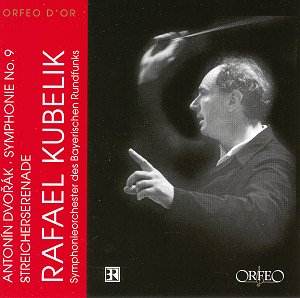
  • As John Atkinson noted, the iPod Classic has good impedance characteristics and is capable of driving most headphones. Indeed, it drives the AKG K501 amazingly well. I wallowed in the glorious brass playing of the Bavarian orchestra under the masterful direction of the under-rated Kubelik. The iPod capably delivered all the subtle inflections and rubati that only a master musician like Kubelik could bring to Dvorak. The earphone performance further strengthened my conviction that this is one of the greatest performances. In contrast, another audiophile favorite, the Kertesz/LSO (Decca) seems coarse!
  • The iPod Classic is very clear, but has a touch of leanness to it. And so, the later AKG K701 sounds a tad dry. shidi told me these cans are not run in, and that is likely the case (the situation matches the description in the Stereophile review cited above). More later, but at this moment I lean towards the older AKG K501.
  • While the iPod is surprisingly potent in big brass, how does it fare in more intimate material? Here, I may have uncovered a bit of weakness. Ida Haedel's wonderful Testament disc is a favorite of mine, but in many ways this disc is difficult to playback. From around 2:30 into the first cut, Corelli's La Folia, through the iPod the violin and piano seem to play rather noticeably mechanically, and I know this should not be the case. Switching to the Dared MP5 immediately restored fluency, though at a cost of details.
To be continued in Part III.

14 November, 2012

Headphone Talk: A Classic Crop, Creme de la Creme

pic: Treasure trove on loan. Found your favorite?


Headphone Talk I: A Classic Crop, Creme de la Creme

Me, the Reluctant Headphone Man
I bought my first pair of headphone, an old Sennheiser HD-424 with foam pads, in the mid-seventies, when I was still living with my parents and commuting to college. Not much later I moved out and listened only on my regular stereo, and those buds were promptly forgotten. I still have them and they still work, though the foam had long deteriorated. More recently, I bought a pair of Audio Technica ATH-AD700 on impulse, but seldom used it.

You see, I am not much of a headphone man. Who would be if the sound coming through the loudspeakers is enticingly good? So, as recently as a year ago, if you tell me I'd be listening to headphones I'd just laugh at the suggestion. But things have changed and I am a pragmatic man - I'd do what has to be done with the enthusiasm I had previously reserved for other audio matters. What's of prime importance is to listen to as much music as possible. I shudder to think what would be life without Bach and Bruckner

As you may recall, I have a pair of Sennheiser HD-600, which I use in SZ with my Pro-ject Headbox II (more links later). I didn't bring them back to HK, and have been thinking of buying another pair for my everyday needs. My friend BenYC recommended the AKG-K701 and I was looking around for a good price (a lot more expensive in HK than the USA).


Serendipity! A Treasure Trove My shidi, that man of inexhaustible energy, once again surprised me and came to my rescue. when he told me of the wonderful collection of headphones he has in his closet. Why, he never listened to them! He being man of action (as opposed to my procrastination), a boatload of headphones and the tank-like DarkVoice headamps (see pic above) were deposited at my doorsteps before I knew it, his lovely wife Jane being the driver! Thank you, dynamic duo! Now, I have a great deal to write about! I assure you, the crop is creme de la creme!

No Head-Fi Nut Here, Please!
But, I should state that I come to headphones from a different angle, one more relaxed, more musically oriented, more utilitarian if you will. No, I shall never be like the many Head-Fi people who populate the various on-line forums. Although I shall detail my impressions of the many classic cans I have on hand now, the approach shall be a broad-stroked focus on musical values. That means, no endless (and unfortunate) pursuit of the elusive (to be polite) digital Holy-Grail; no hi-res files; no latest and so-called "best" DAC du jour; no million-dollar headphones, no million-dollar headphone amps here. Just a running log on some justifiably famous cans that can be had for a reasonable sum.

My Stand, and Pitfalls You Should Avoid:
Lest you think I am not qualified to write about headphones, and before you decide to read my takes on the classic cans, please note the following:
  • To understand where I am coming from, please read my experience on the various headphones and headphone amps I own (click here). Although I'd be the first one to say the experience is limited, it is by no means trivial. Many more "comprehensive" talks out there focus on just that, trivia. Let me make my two cents clear: I believe no headphone experience gets close to listening to a really great audio system. There is just way too much hyperbole out there in so-called Head-Fi land. Any forum which, as stated above, proclaims a better DAC every day, a better headphone amp every other day, and a better headphone every week is precisely the kind of website you should AVOID at all cost.
  • Lest you think I don't have so-called dedicated headphone amps of high caliber, don't forget I have used the Nagra PL-P's dedicated headphone outputs (link above), as well as the Meier Korda Swing (report here).Oh, I almost forget my Manley Neo-Classic 300B preamp(link here)!
  •  No matter how humble, something that delivers pleasure is worth writing about. That includes my iPod Classic. If you think that is too low, or not good enough to judge serious cans (I use the AKG's), look elsewhere.
  • My standard is my accumulated experience, and that is very much conventional hifi and analog/vinyl based. Yes, digital can be eminently listenable (I listen to it every day), but sonic nirvana it is not. More importantly, judging things by digital replay can only lead you astray.
  • When using CAS, I listen to lossless AIFF files ripped by iTunes. Basic, no frills.
  • I listen to mostly classical music at sane level. No loud pumping here. Not much rock. Mind you, not the ultimate test for headphone amp prowess; ymmv. But I assure you a lossless classical file, with its dynamic range, represents the greatest challenge for Head-Fi.
Part II shall be the official start of my headphone journey, which I hope some of you will share with me.

30 October, 2012

Editor's Note: A New Leaf


Editor's Note: A New Leaf
Review: TAD TSM-2201, Part II
Review: Pioneer SP-BS21-LR, Part IV

My last post was exactly one month ago, and it was just a commentary. Some readers who regularly visit the Blog have wondered about the relative calm, and perhaps secretly whether my productivity has taken a nose-dive (I assure you not). And no, a storm is not brewing here (as of this writing hurricane Sandy is threatening the East Coast, where my roots are).

Truth is, I am turning over a new leaf. Although I shall not publicly elaborate on the nature of this change, I feel obliged to show you some changes in my daily audio setups. Suffice to say I do not get much serious listening time, but I do squeeze in music whenever possible.Those only interested in the gears may skip the next admittedly rumbling section.

封面Desert Island, Gulag Archipelago or Man in the Holocene? - Questions and Facts
  • Question: We hear the term "desert island" all the time, but do we understand it?And how many people remember Alexander Solzhenitsyn's Gulag Archipelago? What about Max Frisch's novella Man in the Holocene?
  • Question: When it comes to the fabled "desert island", Is it getting stranded (involuntarily) in no man's land, or is it serendipitous arrival in unspoiled paradise? I suspect it can be both, but not necessarily always so.
  • Question: Is the latter thinking not just a defense mechanism, one employed to lessen the painful realization of the former? Or does a dramatic change in one's life provide impetus towards a philosophical change, one that turns inward in one's search for nirvana (not that we ever get there in audio)? I suspect it can be both, but again not necessarily always so.
  • Fact: I still have full possession and unrestricted access to all my hardware, and my reference setups have remained largely unchanged. But, free time is piecemeal now, and shall remain so for quite a while. It is time to forget about 15" woofers (aka my beloved Tannoy Canterbury). It is time to set up new stations that suit current needs.
  • Fact: I still have possession of all my software, but perhaps it is time to think about what I would listen to in my limited free time. Indeed, more than the one on hardware, this is the real "desert island" question. Should I gather all my Sonopress/Toshiba/Nimbus (etc) out-of-print CDs, just because they command good resale prices and are desired by Asian collectors? Or should I just get together all CDs by my favorite performers (like Richter), Or should I take everything I have when it comes to my favorite composers, like Bruckner? Or should I just take large box sets for convenience? The answer, not surprisingly, is an amalgamation of all of the above, but I can assure you, intrinsic musical value comes first.
  • Fact: Let's admit it, people like me are in conditions much better than Solzhenitsyn's, rather more benign and closer to Frisch's Man in the Holocene for sure. Nonetheless, Gulag Archipelago us a good way to describe my current approach to listening. The most difficult thing to overcome in the Gulag is not the lack of commodities, but the restriction on freedom.
  • Fact and Declaration: None of this is going to stifle my writing nor the growth of the Blog. Rather, my writing may reflect a new direction, and there for certain will be more overviews based on my experience, on materials that should be written. Less new gears, more accumulated experience that hopefully contains at least morsels of wisdom.
My Gulag(s), My Archipelago
After much thought, and some experimentation, I set up various stations in 2 areas which I term Gulag 1 and 2. For Gulag 1, indeed the term archipelago is appropriate, as the various islands are intimately linked. The system is in its initial phase. I am sure there are many changes to come.

If you look carefully, you can see all 3 islands of the archipelago, as depicted below.
Reference System A (Gulag 1/Island A):

CD Player: Sony BDP-S190
CD Transport: Sony DVP-PR50P 
DAC/Headphone amp: YBA WD-202
CAS: Logitech Squeezebox 3
Preamp: EAR 912
Amp: Western Electric 124B (original)
Speakers: Yamaha NS-1000

Prior to setting up, I tested the Yamaha, which I haven't used in quite a while. One speaker's midrange made no sound. I opened it up and, ha, the old problem (see here) - a broken off connection due to corrosion! It is a pain to restore, and I have yet to do it. But I can assure you the WE drove the NS-1000 nicely, and I look forward to when the system thrives. It should be a completely different sound as before (as the speakers can now only be placed against the front wall - no longer in-room, and ~ 6 ft apart). You will hear more of this, for sure.

The Go-To System (Gulag 1/Island B), for Quick Sessions of Radio and CD Replay:

DVP/CDP: Sony DVP-PR50P
Integrated Amp: Musical Fidelity A-1S
Speakers: Pioneer SP-21BR-LR
Tuner: (tentative) NAD 4020A

This system gets the job done quickly. The imaging is reasonably good though soundstage is not deep (speakers are only 3 ft apart). The sound is quite neutral - one hears things as they should sound like, and surprisingly little can be faulted. A bit of de-coupling (blue-tac) between the speakers and the platform upon which they are placed proved beneficial. I think I shall work further on this aspect (not much else to work on). Once again, praise to Pioneer!

The Even Quicker Go-To System (Gulag 1/Island C) - Is this hifi?

iPod Dock with built-in speakers: Gear4 StreetParty Size 0

What do you expect of something self-degradingly named Size 0? Well, not a whole lot, but it more than does the job of playing music. I picked up this "demo" item in Richer Sound (Chester, UK), for less than 10 GBP. My iPod Classic has mainly lossless classical AIFF files, and these unlike pop MP3's cannot be really played loud, but the sound is surprisingly clear and not devoid of texture - the piano is not just a tinkly thing, and violin is thankfully not a caricature either. One does not really feel the certain lack of bass, as the sound has an integral nature to it, leading one into the music. Here is a review of this gadget, and I agree with it.

Coming Projects:

  • Test out the usefulness of YBA WD-202's headphone output. I shall be borrowing some classic headphones from friends, and you shall be seeing reviews here. No, that would not make me a head-fi person who chases after the DAC du jour ! Never!
  • Tuner shall again be a part of my system(s).
  • Blue Ray capability is here. The BDP-S190P is hooked up to the TV via HDMI, but I have yet to acquire a Blue-Ray disc! 
Reference System B (Gulag 2) The alternate system:

CDP: Studer A730 (at the moment)
(Preamp) Kondo M7 Line
(Integrated) Amp: Kondo Ongaku
Speakers: TAD TSM-2201

The Ongaku can be used as an integrated amp, or as amplifier partnered with the M7 (see previous write-up's on Kondo Ongaku + M7 Part I and Part II). Each has its merits.

I actually listen to this as much as the Gulag 1 archipelago. A brief report. I am surprised, and elated, that the TAD and Kondo make good music together. Or perhaps I am not surprised, given the superb performance the TAD achieved with lower-powered Wavac MD-300B previously (report here)! The realism is first-rate, and it trumps Reference System A (Gulag 1) at this point. But of course, WE is not yet operational in Gulag 1! Gulag 2 may gain more functionality in due course - I aim for it to be a SET center. We shall see.

I am cautiously optimistic about my new setups. Challenges come big and small. Let us greet them with glee. Amen.

26 September, 2012

Editor's Note: Lossless

Editor's Note: Lossless

That laughable CAS word that is a violation of the laws of thermodynamics. It doesn't take much to notice that, in our disintegrating planet, entropy relentlessly increases all the time, and there is nothing we can do about it. There is too much one doesn't know, and when it comes to audio, that is doubly true. Think of the CAS gurus (so many on the net) as religious fanatics, and what they believe in and expouse are based on faith rather than (what they think) reason.

In this edition of the Stereophile letter, veteran Steve Guttenberg's article is almost a lossless copy of what I have been saying for years and years:

http://www.stereophile.com/content/accuracy-not-answer

20 September, 2012

Review: Pioneer BS-21-LR, Part III

Review: Pioneer SP-BS21-LR, Part III
Pioneer SP-BS22-LR

My Review, Part I
My Review, Part II


Strictly speaking, this is really not a review, but I just found that the SP-BS21-LR has just been replaced by the SP-BS22-LR.

I'd like to inform you that, while the older SP-BS21-LR can still be had, this new version has just received accolade from TAS. Don't you think TAS always lags behind Stereophile in discovering bargains? Even more informative is this must-read article in cnet. The revamped line is also well described in hometheater.about.com. I'd also like to say these articles should duly reinforce, for you, my confidence in and observations on the previous version.

If you look carefully, aside from the coverage in the links provided above, the revamped line now has only 1 bookshelf. Previously there were 2, the other being the larger SP-BS41-LR rave-reviewed by Stereophile (see my Part I for links).

The drivers are different looking. The woofer has less of an "adapted" look, while the tweeter has even more of a flare. The review in cnet stresses that the new SP-BS22-LR can play louder, which is great news indeed. Obviously, that obviated the need for the larger 41BS in the lineup.

Although I haven't heard the new SP-BS22-LR, I can recommend it with confidence! But don't you think the older version looks better? The new grill is hideous, if you ask me.