12 February, 2013

美國郵政總局2013年蛇年生肖郵票。(麥錦鴻提供)

Editor's Note: Happy Year of the Snake

The Dragon has just departed, and it's the Snake's turn.

With the world's finance in protracted turmoil, no wonder even financial experts toy with the Chinese zodiac/horoscope, and you shall find diverse views of what the year is going to be like, in any parameter important to you.

Amid all the schisms of the World, one does find some encouraging signs. Even if it may be lip service, I am glad the US Post continued to issue Chinese Lunar New Year stamps, designed by Chinese-American Kam Mak. I actually like the US stamp a lot better than those from China and Hong Kong, which are disappointingly bland.

In any case, NOTHING should stop us from listening to music on a decent system, which I am sure is the way to world peace. Have a good year!


04 February, 2013

Review: Micromega MyDAC, Part I

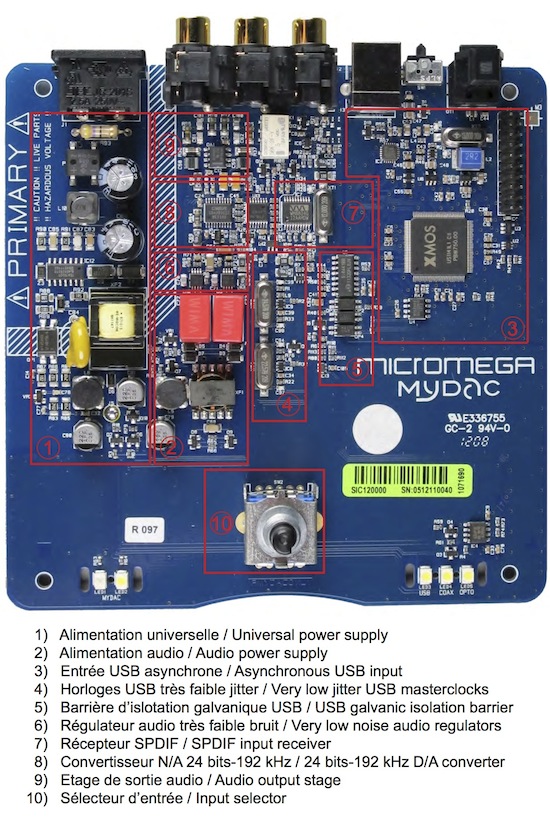
MyDAC_Internal
internals of the MyDAC, from What Hifi

Micro Size, Mega Sound!
Review: Micromega MyDAC, Part I
Talk CAS: Onkyo ND-S1 Digital Media Transport, Part I
Follow Up: Miraculous Transformation of my Reference System B (Kondo, TAD)

Read Part II here

(Micromega MyDAC official Literature)

History of Micromega
I am a HUGE Micromega fan. I have always intended to write a Micromega Overview, but that would take an immense effort to research and collate semi-vintage data sorely lacking on the internet and, believe me, I do make an effort to reasonably thoroughly research my subject, even if the article presents my views. Over the past 20 years I have used more Micromega products than almost anyone I know in person or on the internet. But given the premium of time, my overview shall have to wait, though I have put it on the agenda.

To make a long story short, I have used Micromega's epoch-making and -defining Trio, Duo and Solo, plus the later (and troubled) Drive 1 and DAC1 (and matching Amp 1). I have also collected their entire Micro series (Microdrive, Microdac, Variodac, Microamp). All of them gave me GREAT pleasure. There is no better digital in the 1-bit era, and even today old Micromega digital products sound great. Certainly, in the 1-bit era the dominant players like Philips and Marantz and the bit-players like DPA did not do better. Digital with a human face that makes music that goes right to the soul - that was Micromega's genius.


Micromega's History can be glimpsed on its website, but it is admittedly a revisionist's version, understandably omitting its troubled days of using Philips CDM-12 and subsequent near-demise. Although the company had their share of troubles, those are behind them now and their accomplishments far exceed what detractors would claim.

01 Micromega MicroDacCompare size and internals and parts with the old Microdac (pic from the net)

Deja-Vu: MyDAC
Since Micromega's recent and miraculous phoenix-like rise from its ashes (how wonderful!) I had been watching. I had intense interest in their current CD player offerings, the CD-10, -20 and -30. To Micromega veterans, these look uncannily familiar (outwardly like the old Mimium's; inside more like older separates).

Micromega had also done very well in CAS, even in the ultimate frontier, wireless, where it amalgamates its own technology and Apple's. I am not a CAS fan (though an occasional peruser) but have full confidence in Micromega's digital technology.

MyDAC has been out for a while, and you can read quite a few reviews on Micromega's own site. The most important one has got to be Robert Harley's TAS Blog article (as well as
full TAS article (pdf file). I am not a great fan of Harley's writing on subjective listening, nor the boring megabuck stuff that he usually reviews, but this time it pays to read carefully. No wonder the reasonably priced product received TAS' 2013 Product of the Year Award.

Deja-Vu MyDAC is the first product to see the light in Micromega's new My series. MyDAC instantly reminds me of the old Microdac and the diminutive My series can be regarded as the modern counterpart to the old Micro series I mentioned above. Of course, modern parts and technology can make things much smaller.

Having owned the wonderful Microdac before and having thought about buying the previous Aria and the current CD-10/20/30, I grabbed at the chance to own another Micromega DAC, even if I have little need for its USB functionality.

L: MyDAC and NS-D1 next to Sony DVP-PR50P

Mais Oui, Un Miracle!
Since I last wrote about it, my alternate system (description here) had undergone some change. I lent out my Studer A730 to my friend Karma, and substituted the humble Sony DVP. The Sony did not have the richness of the A730 but it had charms of its own, a rightness that is hard to fault. But to test out the MyDAC, I quickly installed it into this system, which is now:

Reference System B:
CD Transport: Sony DVP-PR50P (Kimber KCAG used as coaxial cable)
iPod Transport: Onkyo ND-S1 (stock optical cable)
(Preamp) Kondo M7 Line
(Integrated) Amp: Kondo Ongaku
Speakers: TAD TSM-2201
 
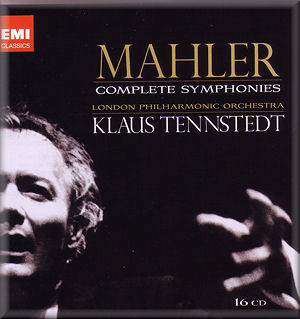
[Manger CD test disc]MyDAC Coaxial input To cut to the chase, the Micromega MyDAC transformed the sound to a degree I did not think possible. It simply made everything more articulate; in another word, it speaks - and I use this term only sparingly (previously used for the YBA WD202 DAC, coincidentally another French device). The first track I played was Tennstedt's live Mahler 7th, from this great bargain box set (which finally releases internationally his EMI live Mahler recordings), and from the first note I was captured by the ambiance, the gravitas of the music, which so few digital products capture (CAS needs not apply).

I was not entirely certain of my feelings based on just one CD. So I put one of my favorite Test CDs to work, the Manger Test CD. Over its 14 tracks (some of which I dislike, like the utterly boring Jonathan Taylor) I became more and more astonished by the accomplishment of this tiny device. Here, I discovered more rhythmic subtleties (like the Pulcinella track), more bowing nuances (like the Vivaldi track), more everything. The amplitude of the difference is like going from ordinary push-pull to Western Electric. I kid you not, my Kondo has never sounded better!

It should be emphasized that the I highly value Sony DVP-PR50P's own analogue output. Many people use this player as transport, but my experience tells me the external DACs they hook up usually do not sound as coherent as the onboard one, which is why the Sony was my Best Buy 2010. But the Micromega MyDAC is an exception - it is better by a significant margin.

Detour! The Onkyo NS-D1 Digital Media Transport Although it has CAS USB input capability, my interest in this device solely centers on its iPod digital output. I have the more expensive Wadia 170i, but frankly I like the looks of the Onkyo more. A second-hand specimen cropped up and I grabbed it.

The Onkyo had been well reviewed in the Uk and Europe (techradar, What HiFi), but appears much less known in the US. A later more expensive version with metal enclosure is named ND-S1000.

Kopatchinskaja & Fazil Say - Violin Sonatas
MyDAC Optical Input The Onkyo came with a cheap generic Optical cable. Since the MyDAC coaxial was occupied by the Sony player, I used the Optical Input. Now, I am not usually a fan of optical inputs, but the effect was surprisingly pleasant. Most importantly, even with the cheap optical cable, the MyDAC Optical Input still delivered highly articulate music! I did test out the generic optical cable by connecting it to the Sony player's optical output, and also by connecting the Kimber KCAG to the Onkyo's coaxial output. Surely, in both permutations the optical smeared things a little and the coaxial threw things into sharper relief, but MyDAC surely made the Optical Input useful. The AIFF file of Beethoven's Kreutzer sonata showcased Patricia Kopatchinskaja's astonishingly bold playing, fully matched by the excellent pianist Fazil Say. The sheer presence of the recording was marvellously conveyed, and that was from the iPod!

MyDAC USB I am sorry to say, that unfortunately shall have to wait till Part II. My old Windows XP did not seem to agree with the MyDAC (there is a short and unclear blurb on this on the official page). When I have time I shall set up playing with a Macbook, or perhaps it is time to get a new computer!

Conclusions:

  • The Micromega MyDAC is a miracle (of an order even higher than the esteemable YBA WD202), offering sonic attributes that most high-end digitals fail so miserably to deliver. It goes to show talent and hearing acuity has nothing to do with price-points. Although many will view its USB asynchronous ability as its raison d'etre, based on my listening I beg to differ and say anyone with interest in digital playback (that is almost everyone) owe himself to listen to this one. In many ways, it is digital product of the decade for me.
  • The Onkyo ND-S1 does an excellent job with the iPod. When I have time I shall compare it to the Wadia 170i.
  • Once again, the system proves the synergy between Kondo and TAD TSM-2201. Kondo is also extraordinarily sensitive to the front end, and the MyDAC is the best of what I have tried so far, outperforming many more expensive stuff (I hope to try 47 Lab one day). The sheer refinement and details on offer now is nothing short of amazing.

22 January, 2013

Home Visit: Tannoy Westminster Royal SE, Part II

Corian sandwiched between preamplifier and wood slab. What a difference it made!
 
Home Visit: Tannoy Westminster Royal SE, Part II
Overview: Tannoy (Prestige Series) Westminster Canterbury, Part II
Talk Tweak - Equipment Support


Please scroll down to read Part I, which describes the visit. This Part II analyses my findings and poses questions.

An Examination Into the Place of Tweaking in a Tannoy System
I say this because a Tannoy system does NOT usually need much tweaking to perform well, but then there are exceptions. More on this later.

In Part I, we discovered that in the current case a simple alteration of the platform upon which the preamplifier was placed transformed the sound. I wrote that up with hesitation. I don't want to be seen as an audio diagnostician/magician, and I definitely am not a tweaking type and don't encourage constant tinkering nor exaggeration of the benefits of tweaking. But the experience was too worthwhile not to write-up.

False Assumptions I would not have done so if what I heard at first did not perplex me a little, given my familiarity with modern (and vintage) Tannoy's. Some other people (who perhaps are not that familiar with Tannoy) who have heard the same Westminsters before my visit attributed the curious restraint to the drivers being not broken in, but I just knew there were likely other factors at play. So I looked and luck was on my side that the first and only move improved things so much. Many times you tried various things and get little in return. When something is not quite right, it's important to look into everything and not assume too much.

History repeats Itself One of the reasons I looked at the support was our previous experience with another pair of Canterbury SE (lengthily treated in this article, with a follow-up here). In that case, removal of amplifier racks and not using the spikes under the Canterbury SE brought massive benefits, so it was natural I was looking at similar things here. Since the host was reluctant to dispense with the spikes under his Westminster SE and, since the two of us might not have been up to the task with the behemoths anyway, we dropped the idea.

Overcome Laziness and Know What is Wrong The important thing is to know the character of what you have, and to know what the sound lacks. Too many people force their equipment to do what they don't do well; even more people do not seem to know in what respects the sound is deficient. Also, we tend to be lazy and forgiving with our own system (even in some case when it has drifted far from norm) but more critical when listening to other people's system. Therefore, it helps to have critical friends to listen together.

Reminder:Nothing trains the ear more than listening to real (live and recorded) music. Stop playing only your audiophile tracks!


A concrete example that simple may be best!
 
Encouraging and Simple Observation Over two decades of home visits in HK has taught me many things, the most important ones being not what to do, but what to not do. One example of the latter relevant for this article is: Equipment casually disposed more often than not sound better than highly tweaked equipment, often placed on ridiculously expensive racks and platforms (think Finite Element, TAOC, Symposium, the list goes on). The former's deficiencies are usually only sins of omission, and that is far preferable to the latter's problems, which range from cloying or irritating artificiality to deadly skewed tonal balance and dynamics.


This observation holds true of the many big Tannoy systems I have heard: the best did not, does not and will never need much tweaking, and were bereft of expensive racks and cones and what have you. For something recent, think of our friend Karma's Canterbury, brand new but quite listenable from day one (albeit after some de-tweaking; covered here). An even better example was our friend Mr Tang's humble setup of Tannoy Edinburgh (covered here). OK, the article is in Chinese, but just look at the pic, cheap CD player into cheap tube amp, all placed on regular furniture. I'd say my own Canterbury HE system belongs to this camp (I do use reasonable racks, like Solidsteel and Target, for my front ends).

As a corollary, in my experience more "sophisticated" Tannoy systems often need much more attention. Ironically, usually more de-tweaking than tweaking, requiring the owner to unlearn whatever he has learned in seeking improvements for his previous (and usually less worthwhile) loudspeaker systems. And believe me, unlearning is usually harder than learning!

Tannoy Westminster (and Canterbury) - Pointers and Lingering Questions
I don't own the Westminster but have listened to a few in depth. I can also confidently say I also have more experience and encounters with the Canterbury (which uses the same driver in a more conventional design) in its many guises than anyone I could find on the internet. IMHO, if you have one of these, here are points you may want to think about:

Run-In Time Unfortunately, long. The hard edge of the HE and SE versions take a long time to run-in, but it is worthwhile as the resultant sound is definitely superior to their foam surround counterparts (slower bass that is also less clean).

Initial Sound Depending on the equipment one has on hand, the sound could be just a little tight if you're lucky to downright dull if you're not. In case of the latter, increasing the treble energy helps to tie you over, but with time normalcy is likely restored. Incidentally, no one says the level and energy settings have to be at "zero", though a properly set up and run-in setting should only have small adjustments! No matter the tonal balance, the sound should have some presence and life to it, even initially, or else something is astray elsewhere. I suspect the Westminster SE due to its design has a duller initial sound than the Canterbury SE.

Placement Canterbury In case of the Canterbury, placement far into the room is definitely feasible, even desirable. In my own setup, the in-room placement results in the deepest soundstage among the Canterbury's I have heard, at no expense of presence. Depending on proximity to the sidewalls, the vents could be opened or closed (the former is usually better). Westminster Placement of the Westminster is an enigma: if you ask me, its rear-loaded horn design should make use of room corners, but I have not seen anyone done so, yet. If you read Jeff Day, you shall see he simply has them close to the front wall, but not to the corners, and he simply ignored the issue of placement in his review. For why this bothers me, see Bass Quality below.

Bass Quality Inch for inch, and bar none I have heard, Tannoy gives you deeper bass. Not the midbass of JBL and TAD, but bass that plumbs the depth like the best of them. Canterbury The deep bass of my Canterbury HE is clean, easily heard and of good speed. One thing that bothers me is that none of the Canterbury SE's I have heard so far goes as deep as my HE, easily missing the bottom 10 Hz (for this great story, read my previous coverage). Why is that so? I don't know! I hope it is because the drivers take time to yield those last few Hz's, and not because something of the design of the SE makes them less easily heard! Mind you, I am a great skeptic of revisions and boutique components. Westminster While the Westminster has more bass heft than the Canterbury, the deep bass is necessarily just a little slower due to the folded horn. What truly puzzles me is that I don't hear them go any deeper than my Canterbury. I suspect proper coupling with room corners will get even better bass out of them, but no one seems to have tried. If you have the opportunity (and the manpower), perhaps try it and tell me the result!

Power Needed There are many ways to go, and here are my views: 1) I believe for personal listening there is nothing better than DHT SET amps. I kinda agree with Jeff Day that anything under 5 wpc is cutting it close (look at his space), but in HK, where space comes at a premium, less power is needed, and I even do well with a well-made 45 amp. 2) I also believe usually the lower output triodes sound better than ones with higher output; that is 45, 2A3, 300B etc have more finesse than 811A, 805A etc. The important thing is, see what you can get away with. An example is that I prefer the Wavac MD-300B to the MD-805 (experience here). 3) Should you need more power a low to medium powered push-pull amplifier is likely a more cost-effective solution than an expensive high-powered SET amp (like Wavac 805, 833, Air Tight 211 or Kondo). A great example is the sterling performance delivered by my humble Fisher X-101-C integrated amp (reported here). Believe me, the 25 watts will rock your boat, and sink your friends' too (and destroy their audio self-esteem)!

Reminder: With low powered SET amp, it is imperative to have a good preamplifier of good control (vintage preamps need not apply).

Speaker Cables Thin, preferably soft professional cables of simple construction will do much better than heavyweights. Belden 9497 and 8471 (covered here), as well as many Gotham cables, are good choices. I remain skeptical of bi-wiring in speakers of such high efficiency.

Spikes The SE versions of the Westminster and Canterbury come with spikes underneath. I advise you NOT to use them. These speakers are heavy enough not to need them. As a matter of fact, I suspect they are responsible for reining in the deep bass (see History Repeats Itself section above).

Sidetrack: A Quick Re-Visit to my Tannoy Canterbury
Last Saturday I had the rare chance to listen for a while to my Canterbury, which hardly gets played these days. Driven by Western Electric 133A, they delivered again a meticulously detailed, subtle and positively energizing performance. How lucky I am to have spent so much time with them!

Westminster vs Canterbury Now, the million dollar question! Which is more suitable for you? Now, be careful, this is not asking which is better! At considerable risk, here are my opinions: 1) You need a big space for the Westminster to breathe. Most HK spaces are likely not optimal, which is not to say they cannot sound good; 2) The bass quality of Westminster, while impressive, needs more care, and efforts at placement are certainly needed; 3) I reckon the Canterbury gets more easy results in a HK space.


21 January, 2013

Home Visit: Tannoy Westminster Royal SE, Part I


Click to enlarge.

Home Visit: Tannoy Westminster Royal SE, Part I


For a brief review of Tannoy background pertinent to this article, please scroll down and read my last post.

A Stolen Moment
I have preciously little time these days for home visits, yet I felt obliged when my old friend 風鳴~康格爾 called me up and told me he had a rare day off. The reason I felt so is apparent from the photo: as a Tannoy man, how could I not grab at the opportunity to hear (and tinker with) the mighty Westminster, elder brother of my Canterbury?

The somewhat reclusive 風鳴 is foremost a bookworm, then a music lover. Although we have known each other for years, and he had once come to listen to my Canterbury, I have never had the chance to visit him. And what a cozy place have I missed!

Just to let you have an idea about his odyssey, the last incarnation of his system was FM Acoustics driving Magnepan 3.6. Talking about a different direction! Almost everything has changed. His system now has mostly components that have been covered in detail in this Blog:

CDP: Audio Research CD8 (old stock 6550)
Preamp: EAR 912 (remote version; stock tubes)(review of my own unit here)
Amp: Wavac MD-805  monoblocks (old stock tubes)(auditions here and here)
Loudspeakers: Tannoy Westminster Royal SE (bi-wired with Gotham 50040)

The room is a rectangular room of good proportion. The Westminster's sat where they are aesthetically pleasing, as sort of "wardrobe" room-dividers, a bit shy of a third of the way from the front-wall. The distance between the driver pairs is less than 10 ft, and the long isosceles triangle that is formed with the listening seat is surely not quite ideal. But then one must be practical.

I was not expecting much when we started listening after a good cup of double espresso. After all, the units are brand-new and nowhere near broken-in.


Round 1 - Tannoy chained
Even then I was not quite prepared for the overly restrained sound I heard. In addition, after listening to Fischer-Dieskau's (? last) remake of the Winterreise, I also became aware of a possible suck-out in midrange. FD's voice is for me instantly recognizable, but not quite on this occasion. I was cautious since I have never heard this recording before, and I certainly knew FD by this late period had lost quite a bit of bloom in his voice, so it might not have been entirely due to the playback.

The situation did not improve with successive albums. The Poco Adagio of Saint Saens' Organ Symphony failed to transport me. A Japanese performance (unknown previously to me) of Mahler's 5th fared worse, indeed thoroughly disspiriting. We tinkered with the treble settings but somehow the Tannoy midrange magic was missing.

The Essential Saint-SaënsRound 2 - Tannoy unchained

A bit desperate, I began to look at the way the equipment were supported. Unusually for HK, the floor was carpeted. The Wavac monoblocks were sitting on acrylic slabs which in turn rest on some kind of cones/point supports. As I believe heavy amps should sit directly on the floor, I naturally frowned upon this. But the bottom of the tube amps do need ventilation and could not have been placed directly upon carpets, and the host did not want the acrylic slabs to deeply mark his carpet. For the moment, I had to turn my attention to elsewhere.

I then noticed the preamp sat upon a thick slab of wood, of high density according to the host. As I am not usually overtly fond of heavy wood slabs under the front end, I noticed an unused slab of corian sitting across the room.

We slipped it between the preamp and the woodblock. Bingo! I kid you not, everything became much more alive! The episodes of Pictures at an Exhibition now almost leapt out of the cabinets, and FD started to resemble his old self, regaining some flesh in his voice (though still not much). No, even the excavated energy could not save the Japanese Mahler, which remained a prosaic performance (and a mediocre recording). But then, a switch to Solti's glorious CSO Mahler 5th instantly told us what the piece is all about! Now too, Saint Saens' slow movement started to reveal its stunning beauty.

The system now had reasonable tonal balance and dynamics. Most importantly, there is a sense of presence, something truthful, that a good set of horns do so well at. I now genuinely look forward to more auditions in the future. Indeed, I suspect this pair of Westminster may eventually turn out to be the best of the ones I auditioned.

Superior Digital Source Aside from commenting on the Tannoy, I must pay tribute to the fine digital source, in this case the Audio Research CD8. What I noticed was that I could sense and visualize the touch (and body language) of the keyboardist: how hard he attacks a note, or how soft he treats one. This is a rare quality in a digital source (of course the loudspeaker has to be up to it) (for additional description, read the Naim section of this old article). Even in Round 1, I sensed great purity and texture in the treble, again rare in a digital source. Again, it cannot be stressed enough that the front-end is of great importance. Our experience here showcased the importance of both the source and the preamp (and what they rest upon). The power amp is by far of the least importance.

Highly Revealing What is apparent too is that the Tannoy unit is extraordinarily revealing. For me, I have to qualify this. When I say "revealing" I mean the capability to reveal details in every area, be it harmonic composition, hall sound or ambience. Too often, modern speakers reveal only facets of truth but not the whole fabric. Tannoy does that in spades; it instantly tells you something is missing or not. Tannoy facilitates listening with one's heart. And if you do not understand this, I suggest you read less audio magazines; instead read Antoine Saint Exupery's The Little Prince, one of my favorite books!

The system is at its early stage of tuning. I am sure a lot more could be done in equipment support and isolation. When I say this, I mean to keep it simple. In audio, we can compromise the sound by using shoddy ancillary equipment, BUT this pales next to the damage brought forth by employing heavy (and expensive) doses of anything, be it stone or wood slabs or power conditioning, for tweaking and correction. I shall deal with that in the next article, Part II. 

pic shows Pu-Er Tea

Perhaps good audio should be like good Pu-Er tea, flavorful but of mild temperament, good for one's well-being and long-term companionship. There are many varieties that offer more instant excitement, but not as good for you. Moderation.

11 January, 2013

Overview: Tannoy (Prestige Series) Westminster Canterbury, Part I

Overview: Tannoy (Prestige Series) Westminster Canterbury, Part I

Note: This has been in draft form for a long time, but it is time to edit and publish (in a hurry) as an introduction to my next article, a Westminster Royal SE home visit!

Recently, while researching for an acquaintance, I came across several interesting articles on the Tannoy Prestige series, and I have collated them here in order to share with you, together with my impression of some of them.

Preface - Tannoy New vs Old
The Tannoy Prestige series is for the serious aficionado the only real Tannoy, continuation of their older monitors. In the official website, you can download manuals and brochure for everything in the Download section. On the web, the beautiful and informative official brochure is also available.

New vs Old A large contingent of vintage aficionados swear by the older monitors (named by the colors of the caps), and there are plenty of reading available on the net to "support" that claim, which I shall not go into in details, only touching on the important issues briefly. Is older better? I think not, not for the serious audiophile. In fact, my own opinion is the opposite.

Efficiency and Bandwidth The vintage drivers have the advantage of somewhat higher efficiency, but the disadvantage of narrower bandwidth. In fact, basically, Tannoy has continued to extend the bandwidth of their drivers, apparently at the expense of a little efficiency. Some like the sound of narrower bandwidth - it's usually a little richer in the midrange. But for the serious audiophile and listener of classical orchestral works, that just would not do. Tannoy always has superior bass, and even with the vintage drivers you can get away with no subwoofer there, but usually not so for the super-tweeter, which I consider almost a must on the older drivers.

Power Handling Many vintage Tannoy users listen to rather small combo music, but if you play large orchestral works, at high volume the vintage Tannoy drivers get into compression much quicker than the modern drivers.

Crossover condition Almost all the vintage Tannoy Golds and models from that point on sound wonderful, but I have heard too many older Tannoys that sound terrible. While I have heard some Reds that sound normal, most of the Silvers I heard sound awful. I think crossover condition is to blame for the underwhelming performance of many of the older units.

Alnico vs Ferrite The older "color" monitors are all alnico. Later, mostly ferrites were employed. But the top models in the current Prestige series use Alcomax.

The Surround Problem and Evolution of the Prestige series
Tannoy has kept the name of the models, but they have evolved certainly, and some of the changes are not well documented and even confusing. Most significantly, while the drivers have basically remained the same, the earlier foam surround, which eventually deteriorate (rather more quickly in humid Asia) have been sensibly replaced by the much more durable retro "hard-edge" (hence the designation HE) surround in more recent updates. For me, this is most important change, but it comes at a price: the hard-edge surrounds are MUCH harder to break in! Believe me, I know! And mind you, many second-hand models sold in Asia may not have been really run-in, having been listened to at too low a volume in a relatively small room. With the previous generation of HE, Tannoy had already introduced many of the current features, including use of exotic internal cables like Van den Hull cables (not the best choice in my opinion). The current SE generation basically used even more boutique component in the crossover. 2013 shall also see the newest "Gold" versions.

The Westminster (Royal)
The Westminster is awe-inspiring and in my opinion likely the best Tannoy ever, but it is absolutely not for everyone. There are few reviews, but here are some links:

2006 HiFi World review of Westminster Royal HE
2010 Positive Feedback review of Westminster Royal SE

The author of the Positive Feedback article, which is good in its coverage of the various editions of this iconic loudspeaker, is Jeff Day, who owns them and writes a lot about it in his Blog Jeff's Place. Although he is a likeable fellow and I have quite a few things he has, I have some reservations about his approach and associated gears. In my next article on the Westminster Royal SE, I am going to tell you what Jeff Day has not mentioned, things that are critical to Tannoy setup. Incidentally, Jeff Day had promised a long-term follow-up to the Westminster and his friend's Canterbury, and I await that with great interest.

For my own experience, before this article I have heard several pairs, and the sound range from awful to potentially (meaning not quite) awesome. The best was driven by Kondo gears, the worst in a room by far too small. But the next article will revise somewhat my opinion.

IMHO, the Westminster definitely needs:

1) a large space to breathe and preferably a long listening distance;
2) preferably (actually mandatory) corner placement. Certainly, as much wall reinforcement as possible for loading of the bass horn. This is much in conflict with modern hifi thinking, but then modern people are so trapped in the imaging game that they end up not knowing much about other aspects of music reproduction! Simply put, only naive and ill-informed people would approach the bass horn the way they approach Magnepan!
3) despite the higher efficiency I suspect the Westminster is best used with somewhat higher powered amps to avoid coloration of the low bass (by nature slower). Bass control is needed.

Tannoy Canterbury (official literature)
As readers know, there are now several of us using this. From previous articles: Although outwardly it has remained the same, Canterbury has gone through several iterations. I believe the concentric driver, an (alnico) Alcomax 3 magnet system with Pepperpot Waveguide, has remained mostly the same. (1) The first generation (which Danz has) has foam surrounds. (2) Next in time is my HE version, which stands for "hard-edge", the retro-styled accordion-like cloth surround. I am not sure what else the HE "improved" over the first version. I think they both use Van den Hull cabling. Speaker connection panel on the back is rectangular, bi-wire posts and a ground post. I have no details on other cables and components used in the crossover. (3) The current SE version has the same surrounds as the HE and has a circular plate for WBT binding posts (which I don't like). Cabling and crossover components have some changes. The change from VdH to Acrolink cabling is likely an improvement (having personally a low opinion of VdH), but I am not sure which of the other crossover components, if any, is new. Official description (bold type by editor):

"...The Canterbury SE benefits from Acrolink cable right through from terminal panel to crossover, crossover to drivers and the LF board wiring itself; not forgetting the bi-wire links. Cables produced by Acrolink use self-stipulated 6N copper, constructed using the same process as is used with wires for semiconductor devices, which require a guarantee of high quality. More precisely, the purity of the copper needs to be over 99.9999% and the total of any impurity metals must be less than 1 part per million. The quality of this cable ensures that a powerful yet delicate and natural, fast response is accomplished throughout the signal path.
Very low loss laminated iron core inductors on the LF ensure that there is less resistance between the amplifier and driver, resulting in superior bass control. High purity silver (99.99%) link wires maintain signal path integrity on the separate HF crossover board and for the HF feed capacitor Hovland Musicaps are used with a special Tannoy DMT™ (Differential Material Technology) isolation sleeve. Hovland Musicaps are renowned for their exceptional dynamics, speed, focus, correct timbre and depth of field, and true inter-transient silence. Separate layers of polypropylene film and conductive foil deliver superior clarity of reproduction that metalised capacitors cannot match.
High quality ICW Musicaps are used in other areas. Vishay thick film non-inductive resistors are used in critical areas, with extensive heat sinking where necessary. The stable component temperature provided by the heat-sinking feature ensures maximum reliability and an even and consistent sound quality..."

I am not sure either how much of the current Canterbury Spec's differ from the previous ones. I'd think very little:

Recommended amplifier power50 - 275 Watts
Continuous power handling140 Watts RMS
Frequency response28Hz - 22kHz -6dB
Sensitivity96dB (2.83 Volts @ 1 metre)
Nominal impedance8 Ohms
DRIVE UNITS
Dual Concentric™ high frequency51mm (2.00") with aluminium alloy dome, Alnico magnet system with Pepperpot Waveguide™
Dual Concentric™ low frequency380mm (15.00") treated paper pulp cone with HE twin roll fabric surround. 52mm (2.00") round wire wound voice coil
Dispersion90 degrees conical
CROSSOVER
Frequency1.1kHz
TypeBi-wired, hard wired passive, low loss time compensated 2nd order LF, 2nd order compensated HF.
Adjustment+/- 3dB over 1kHz to 22kHz shelving,
+2dB to -6dB per octave over 5kHz to
22kHz slope
CONSTRUCTION
Enclosure typeDual variable distributed port system
Volume235L (8.3 cu.ft)
Dimensions1100 x 680 x 480mm
(43.50 x 26.75 x 19.00”)
Weight63kg (139 lbs)
FinishWalnut veneer with solid


Tannoy Yorkminster (official info)
Although I have heard these perform reasonably at the dealer's, I personally would instantly dismiss these for their twin rear ports, which is a hazard in terms of placement, and quite unlike Tannoy! That is too bad, as this has the only 12" driver in the Prestige series.

Tannoy Kensington (official info)
This is the only 10" model and the lowest model to have alnico driver. I'd be very curious to hear these in comparison to the lower models Turnberry and Stirling, which have ferrite magnets. Here are some reviews I have found:

2004 HiFi News review of Kensington (HE)
2010 Home Entertainment review of Kensington SE

Tannoy Glenair (official info)
Although the Glenair and Glenair 10 are in the Prestige series, the styling is completely different. These are ferrite. I have never heard these but I personally would instantly dismiss these for their twin rear ports for the same reason as for Yorkminster.

Tannoy Autograph Mini (official info)(6moons review)
I have heard these several times, and they are marvelous, but has too many serious competitions at this price point, KEF LS50 and TAD TSM-2201, to name just two (actually these two are cheaper, and more well rounded).

Tannoy ST200
These so-called "super-tweeters" are quite expensive for what are basically metal tweeter units. There are many excellent and much cheaper super-tweeters (like Aurum Cantus and Fostex) out there for these to be competitive. They look great though.

04 January, 2013

Editor's Note: 2012 in Retrospective, Best Buy of the Year

Nothing beats Western Electric (pictured 133 on top and 124B). Click to enlarge.

Editor's Note: 2012 in Retrospective, Best Buy of the Year
Follow Up: Sony BDP-S190, Part II
Follow Up: Sony PlayStation 1, Part II

Revised Jan 6, 2013

Once again, I have failed to write the yearly retrospective before the year's end, but this time I have more excuse than before! The year 2012 had been quite a mad year for me, and personal matters took the helm. This necessarily means fewer things to write about, but it shall not be for naught I assure you. As I look back, my 2012 in audio was idiosyncratic (I like that), and MOST meaningful for rediscovery of "old friends" (I like that even more).

Most Notable Events
  • Western Electric Without a doubt, the biggest event of the year was: Nothing New Under the Sun. Western Electric (posted here) 133A and 124 amplifiers worked their magic, and reminded me in no uncertain terms that WE remains supreme in audio achievement, bar none. People have asked me repeatedly why I had put aside my 133A for so long; I can only say: so as to explore other things, worthwhile or not....
  • Mono Analog Replay Mono Analog Replay (treated in at least 3 articles here), which some have advocated for years, is definitely not anachronistic, not a step back. It is simply something that makes one re-evaluate what one is listening to. One asks again, perhaps Less is More?
Best Sound of 2012
I am not going to be humble here. The best sound I have heard in 2012 was from my very own Western Electric gears.

Most Important Acquisitions
  • TAD TSM-2201 (reported here). This paradoxically at once boldly-styled and low-keyed design was a match made in heaven with Kondo M7 + Ongaku (result here). You are certain to hear more about this.My loudspeaker purchase of the year.
  • KEF LS50 The co-axial design is superbly coherent. You shall too hear more about this (preliminary findings here).
  • Denon DL-102 Mono Cartridge (reported here). Mono is all the rage. This studio/transcription perennial deserves its fame.This very heavy cartridge needs a robust arm to do it justice.
  • Thomas Schick Tonearm is a 12" bargain compared with others more expensive (tested here). One day I'd love to install the Denon DL-102 on the Schick.
  • Sony SCD-XA5400ES SACD player for once convinces (reported here).
Thorens TD309 reviewBest Buy of the Year

  • Thorens TD-309A turntable (here) This humble turntable delivers more than one expects. The tonearm performs way beyond expectation, and is a great match with the heavy Denon DL-102 mono cartridge. In terms of one-stop solution, this TT now displaces even formidable rivals like Clearaudio Concept (a previous Best-Buy). I'd love to try out Koetsu and stuff on this arm, but time is in short supply.
  • CineMag CMQEE-3440A made famous by Bob's Devices (here). Whether you DIY or buy from BD you are certain to be happy.
  • Denon DL-301 Mk II MC cartridge is a dark horse but its superb musicality is instantly captivating (reported here).
  • Canare L-2T2S (here) is superbly musical for a ridiculously low price.
  • Sony BDP-S190 Blue Ray Player (here) is superb. Follow Up: Since that initial evaluation, I have confirmed the transport section of this entry level Sony Blue-Ray player is as good as any previous DVD models, every bit the equal of the underground classic DVP-PR50P (a previous Best-Buy) (in fact they are indistinguishable). The analog out sound too is very clean, audibly cleaner than the DV-PR-50P but perhaps just a little less warm and emotive. I suspect any Sony BD as well as DVD player shall deliver excellent sound. Best-Buy in digital for sure.
Vintage Rediscoveries

  • Yamaha NS-10M (posted here) shows the best of yesterday is fully competitive today.
  • NAD 3020 (here) proves it is immortal. 
  • Technics SL-1200 Mk II (here) surprises yet again.
  • Sony PlayStation 1 (here) shames most current digital products. Follow Up: In one go I performed two of the modifications outlined in the dogbreath page: removing the muting transistors as well as the output blocking caps from the signal path. I am sorry to report that while more details could be had the sound lost some of its musicality - its raison d'etre and its magic. I suspect I prefer the sound with output caps, though it may take some trial and error to reach an improvement. You shall hear more about this PS1!
Suggestion for a US $1k system that will shame your friend's $10k system
This requires you to source used goods, from the likes of Ebay, but you shall be rewarded amply. Not cheaptubeaudio, but cheap audio for sure:

  • Yamaha NS-10M
  • NAD 3020 (not the i version, please read my link)
  • Sony DVD player (as the Blue Ray is more expensive, I am sure the current entry-level DVD players are likely sonically as good as their over-achieving predecessors. I see the DVP-SR210P, successor to the 200P, sells for $30! :-) Even I may buy another one to try!)
  • Technics SL-1200 Mk II. Since the NAD only has an MM section, if you use the Denon DL-301 Mk II cartridge, you will need to add a step-up transformer (suggest the cheap Denon AU-300LC or the older AU-250 (here) and that will increase the budget a little. If you stay with MM cartridge, I suggest the cheap and cheerful Shure 97xE (<$80).
  • NAD 4020A (here), the original matching tuner for the NAD 3020, if you need a tuner.

01 January, 2013

Happy New Year 2013

Happy New Year 2013

Happy New Year to you all.

The past year, 2012, has been difficult for many throughout our global village (not that that is a term I like), yet I think those reading Hi-Fi matters, here or elsewhere, are better off than most, and not penniless for sure. Still, value counts for more and more, and I am confident this Blog can contribute to your fiscal frugality (that is, should you be able to read between the lines).

I am not sure whether you realize this Blog contains a dichotomy. It covers both extremes. Very expensive (but unique) stuff like Kondo and vintage Western Electric (not those over-priced mega-buck modern stuff) and el cheapo stuff like a sonically excellent cheap DVD player. Where else do you find that on the internet?

The most important agenda now is to write a 2012 Retrospective/Best of, and that shall be the next article.

2012 has been a most eventful year for me in my personal life, and I thought I had not done much in Hi-Fi. Yet, a review shows that not to be the case.

Wait for my next article.


05 December, 2012

Editor's Note: Klipsch Heresy III, again


Klipsch Heresy III LoudspeakerEditor's Note: Klipsch Heresy III, again

Right after I post the last note about the Klipsch Heresy, the same speaker is reviewed by Stereophile (Review by Art Dudley, another suitable person for the job).

Great, I hope the La Scala, Cornwall and of course the mighty Klipschorn get their turns - not that these legendary speakers need them, justice that is all!

27 November, 2012

Editor's Note: Klipsch Heresy III

Klipsch Heresy III Loudspeaker
Editor's Note: Klipsch Heresy III

I am glad TAS has followed Stereophile in "introducing" (not that they are often the first) under-rated and affordable gears.

My favorite writer at TAS is Dick Olsher, whom I have followed for years in various sites. Olsher is a Horn + SET = Happiness type of fellow, that is why! ;-)

Finally, the Klipsch Heresy gets a review in TAS after 55 years (it was introduced in 1957)! The review, as usual for this writer, is informative.

Here are my writings on the Heresy as well as other Klipsch Classic speakers.