03 March, 2015

Low-Fi?


On top of the IKEA cabinet sit the Revox combo. Beneath the Onkyo can be seen with the iPod inserted. Also the Sony DVP-PR50P.


My Lowest-Fi?
Brief Review: Onkyo NS-D1 Digital Media Transport, Part II
Brief Review: Micromega MyDAC, Part III
Brief Review: Revox A722/A720
Brief Review: Sansui F55 loudspeakers

Sometimes, like this past Chinese New Year, I spend quite a bit of time in Shenzhen. I have a make-shift system there:

Revox A720/A722 This combo is the center of the system, making a sound that is hard to fault. Built quality is exemplary. The A720 preamp (info here) is quite bulky; most interesting is its tuner display, which employs tubes. Too bad I have never tried its phono, which I am sure is superb. Too bad too that Shenzhen does not have a good FM music station. Curiously, the matching A722 amp (info here) is rather compact, but it sounds very powerful; as the speakers are efficient, I use the 50% power setting.

Micromega MyDAC More need not be said. Read my reviews here.

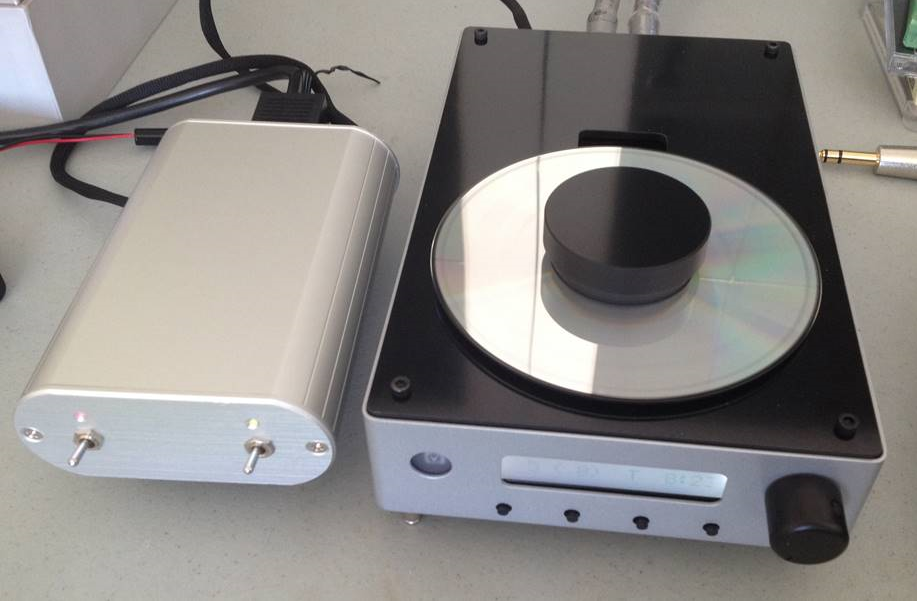
Onkyo NS-D1 Digital Media Transport (well reviewed here.) Also, in my Micromega review quoted above, it performed very well.


Sansui Now  Sansui is now a Chinese brand, but there is ample confusion. I'd guess a Chinese company bought the name, then licensed the name to others, but the relationships turned sour. www.sansui-cn.com seems the real thing, concentrating in audio (and their website is the only one which pays tribute to the Sansui history in Chinese), and the loudspeakers I use (just using what is around) originate from them. www.sansui.com.cn appears to be the same company (many models are the same) and they serve a notice there on the discontinuation of relationships with various others who now infringe on the Sansui name (link in Chinese). Note too there are Sansui Singapore/India/US! But the most famous debacle is probably Sansui UK, whose existence is in doubt (What HiFi article). You figure, sad saga of a once-great name.


Sansui F55 Loudpseakers This is a discontinued product. This link shows it and the spec's are in Chinese:

  • 低音单元 (bass driver) 8"+8" 辐射器 (reflex)
  • 中音单元 (midrange)  3*3"
  • 高音单元 (tweeter) 1"
  • 阻抗 (impedance) 6 ohm
  • 灵敏度(sensitivity) 88dB
  • 分频频率: (crossover points) 500Hz/3KHz
  • The same company's F56 is a similar successor (link in Chinese here). It confirms the loudspeaker to be a 3-way, 5-driver unit. The tweeter and midrange's have their own internal enclosure separated from the woofer. I have opened the F55, and I am pretty sure the 3x midrange units are "near-fullrange's"; a single cap links to the tweeter. The woofer fires to the side, with rear reflex ports. If you ask me, this is not a bad design, and the sound proves it.
    Image result for boulez aimard bartokImpressions:

    • The loudspeakers are very efficient (spec's notwithstanding) and an even performer, producing quite good bass down to less than 40 Hz, ensuring good renditions of large orchestral works like Bruckner and Bartok. Transition between the midrange and tweeter is quite seamless, as is usual for a first-order crossover. Jazz has good snap and rhythm.
    • Originally I had the YBA WD-202 DAC. Substituting the Micromega MyDAC improved focus, but I had to make some changes in cables. Originally I used optical with the Onkyo and coaxial XLO 0.4 with the Sony, but the sound of the Sony proved too sharp, so now I had the cables reversed, and they sound just right. The iPod Classic playing Bartok and Bruckner was excellent!
    • Overall, a very enjoyable system, making BIG sounds, for very little money.

    02 March, 2015

    Yumcha Diary: Quad ESL-2912

    Yumcha Diary 28-02-2015: Quad ESL-2912
    CD Recommendation: Sokolov Salzburg Recital

    Last Saturday, after yumcha, I met up with friends WSS and icefox, users of Quad ESL-2812 and ESL-2905 (my visits here). WSS had told me how much he liked the Quad ESL-2912 of 盧華煇, aka ML, whom we re-visited (for me, after more than 3 years; link to last visit.)

    As usual for our host, his mega-system has changed much. Since my last visit, top-end Raidho, JBL 66000 and Magico M7 had come and go, among others. One of the reasons for my visit is because he is soon to renovate his audio room, a gargantuan effort to gain some height. Update on his gears (I cannot guarantee accuracy):


    Vinyl 1 - Clearaudio Statement-Goldfinger Statement
    Vinyl 2 - Continuum Caliburn-Cobra arm-VdH ?Colibri
    Vinyl 3 - Linn LP-12 Lingo, with Akiva cartridge and built-in Urika phonostage.
    Phonopreamp - Clearaudio Statement Phono
    Digital System 1 - dCS 4-piece Vivaldi
    Digital System 2 - Audio Note UK  CDT-6/ Sixth Element
    Preamp/amps - Soulution 725/701 monoblocks
    Speakers - Quad ESL-2912

    Brief Impressions and Comments
    • It was easily the best sound I have heard at ML's. The sound had a coherence that escaped many of the larger speakers he had before (see my previous visits).
    • Sound was smooth and refined (but not overly so.) imho, although I am not an ss user, Soulution is a brand that I have usually liked. The ambience and beautifully recorded piano sound of the Sokolov recital was faithfully rendered (this disc is a must-buy, also available in vinyl).
    • I only heard the Audio Note Digital System 1, priced at double that of the dCS Vivaldi! Surely an overkill? The 3-box Sixth Element cannot even be found on the net, but if you are curious, you can read Martin Collom's Review of CDT6/Fifth Element.
    • For me, the 2912 is by far the best ESL I have heard. It has addressed most of the problems that bothered me about earlier ESL's. Its tall and fleshy image and good dynamics earn my praise, and would be the ESL I would own should I go that way.

    23 February, 2015

    Happy Chinese New Year of the Goat


    Image result for year goatHappy Chinese New Year of the Goat

    Again, Happy New Year!


    I spent mine with family. During a stolen moment I got to play a little music for myself. At first I put on the Bartok Quartet #5 (Harmonia Mundi; Arcantro Quartet) but that seemed to be at odds with the moment. I decided on something more grand. So Bruckner it was to be. But which one? I quickly decided on my first encounter, the third.

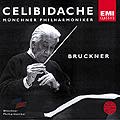
    Image result for celibidache bruckner 3Celibidache, what magnificence! The symphony unfolded naturally, leisurely, yet with immense power. That is promising, for the year to come.

    04 February, 2015

    Brief Reviews: Five USB 2.0 A to B Cables

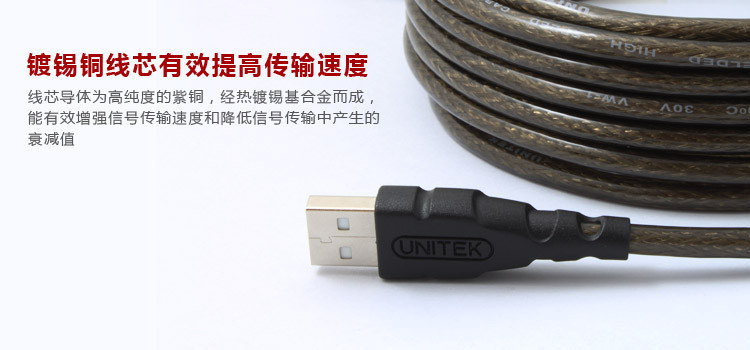
    Copartner Usb A/m To Usb B/m Cable E119932 Awm 2725 80c 30v Vw-1 28awg Ll84201 Csa Type Awm I/iia 80http://i00.i.aliimg.com/img/pb/713/105/913/913105713_639.jpgClick pics to enlarge: L, Unitek; R, Copartner
     
    Brief Reviews: Five USB 2.0 A to B Cables from Unitek, Copartner, Sunf Pu and Belkin
    Talk CAS/Talk Cables - USB Cables


    Revised March 25, 2015 (Friend Nelson's evaluation added; see Sonics Part II below)


    My readers know that I do not go to heroic lengths for my desktop but, excited by the recent changes made to my desktop, on a whim I put this quintet to test. The current desktop configuration: Microsoft Windows 7-iTunes-USB-Micromega MyAmp-Sparkler S301 (pic at bottom of article).

    The Cables:

    Gold Series Hi-Speed USB 2.0 Cable - HeroImage
    • Belkin Gold This is the only well known member of the trio here, and long a TAS favorite. The official website lists it as Part Number F3U133, but you could buy it substantially discounted at Amazon and other sites. Only problem is, it is commonly available only in 6-, 10- and 16-ft lengths (designated -06, -10 and -16), not the shorter 3-ft/1 m preferred by audiophiles (I agree longer ones sound worse usually). Belkin apparently also makes a 3-ft version that bears the same Part Number F3U133, followed by -03 (like this one sold at Amazon and others), but for some reason this one does not say "Gold". Confusing? You bet! Mine is 6-ft, marked in gold letters and clearly labelled "Gold Series".
    • Belkin Hi-Speed 2.0 Shielded My grey 10-ft cable seems to be an old model. It is rather thin, marked E330337 Style 2725, and is 28 awg + 26 awg. These spec's don't match anything I can find on the net.
    • Unitek 科盛國際 This is a Hong Kong company (official site) without great US presence. Even in HK, the USB cables are not widely available. Try Wanchai 298 Computer Center (where my friend Nelson bought one for me) or Mongkok Computer Center. Mine is 1.8m, model Y-C419 (3m and 5m are available as -C420 and -C421). This cable (pic above) is unusual in that it has a brown transparent sleeve, through which one can see its braided shield.
    • Copartner 聯穎科技 This is a brand from Taiwan (official site) that is not hard to find in the US. Mine is marked E119932 Awm 2725 80c 30v Vw-1 28aw, same as this one that is available at Amazon and PC World. Mine is 10-ft, bought for a dollar or two from (I think) Parts Express, one of those Buyout Specials (pic above).
    • Sunf Pu 松普科技 Again, this is a brand from Taiwan (official site), though it seems its products do not have a good US presence. My 6-ft model is actually an old Hewlett-Packard cable OEM'ed by Sunf Pu which I found in my drawer, marked E132276-A 24/28 AWG CSA LL-64151-A.
    Sonics Part I (my quick evaluation)
    • Best sound was obtained by the Unitek, Belkin Gold and Sunf Pu (though marked HP). They sound somewhat different from each other. The Belkin Gold is quite smooth, the HP a little crisper, and the Unitek somewhere in between. I ended up using the Unitek now. Highly recommended for HK readers.
    • As these are 6-ft in length, it DOES seem possible that USB cables should not be too long. The longer (10 ft) Belkin Hi-Speed and Copartner were obviously inferior, but to be fair, it would be nice to test out their 6-ft counterparts.
    • I am also going to let my friend Nelson , who uses exclusively CAS, to test out these for me, so the article may be updated when his verdicts come in..
     Sonics Part II (Nelson's evaluation, and editorial thoughts in italics)
    • Nelson listens almost exclusively to CAS, Windows/iTunes to Micromega MyDAC, Counterpoint electronics to Haydn Grand SE. I think he spent more time than I did in his comparisons (His CAS should not be too different from mine, given his Micromega DAC!).
    • Similar to me, Nelson picks Unitek and Sunf Pu (HP) as the best of the lot, with Unitek the winner. Different from me, Nelson regards the Belkin Gold as the worst performer, kind of "foggy" in his own words (I can understand this, "smooth" (my term) and "foggy" (his) are but two sides of the coin). In his opinion, the Belkin Hi-Speed and Copartner performed somewhere in between.

    27 January, 2015

    Happy New Year


    photo s303-1_zps0e910928.png
    pic of the fantastic Sparkler S303 CDP borrowed from vkung of vkmusic. Click to enlarge.

    Happy New Year!
    Review: Ruark Crusader II
    Overview: Ruark
    Brief Review: Sparkler S303 CDP, Part I
    Brief Review: Rotel RCD-955AX CDP, Part I

    Update: Review: Sparkler S303, Part II has been published.

    Belatedly, Happy New Year!  First, I'd like to thank my readers for their visits, comments and words of support and encouragement over the past year(s). How time flies, as this Blog steps into its seventh year! May the coming year be fruitful for you in all important aspects of life.

    Year-End Crusade
    Near the end of the year, a new friend Calvin, a musically trained person, took me to task. My pair of Ruark Crusader II, dormant for years, came out of their shrink wraps. We were shocked to find corrosion around all the woofers' screws (no doubt caused by the humidity of HK). Nonetheless, the speakers were otherwise perfect and the woofers themselves and the rubber surrounds suffered no damage. We decided to hear them anyway.

    History Ruark, now a very different company, was once a significant player on the British loudspeaker scene. For the story, visit the Ruark Heritage page. The Crusader II came out in 1993, and at the time was rave-reviewed and sold very well in the UK and HK. In HK, I remembered it sold for a considerable HKD 2x,xxx. What a difference twenty years makes for the entire audio industry, as traditional craftsmanship lost its value with the younger generations!

    Overview On the official website you can find Ruark's History and Timeline. At HK's then dealer I have heard almost all their (pre-1996) models. The floor standers all have the rather unusual distinction of a diminutive size, being short as well as slim. Among them, to me the 3-way Crusader was cream of the crop, obviously superior to the 2-way Talisman and Templar. Readers should know I almost always prefer a 3-way to a 2-way. The smaller Sabre, Broadsword and Swordsman were all good but there were just too many good bookshelves out there (LS3/5A was still in production, and various Proac's and ATC's were selling well too) for me to get interested. It should be mentioned Ruark also produced  even "higher level" speakers like the (rather famous and very expensive) all-Dynaudio driver Accolade, and later the Equinox, but I did not like the clumsy nature of these, rather preferring the understated elegance of the Crusader II.

    http://www.gattiweb.com/images/dynaudio/d76af_photo.jpgpic of Dynaudio D76AF dome midrange (from www.stereo.net.au)

    Specifications Ruark Crusader II

    System Type: Bass reflex, 3 way
    Drive units:
    Bass: 180 mm precision cast magnesium chassis, high flux magnet assembly, high temp 40 mm Kapton voice coil.
    Mid-range: 75 mm treated fabric dome, vented center pole. Aluminium voice coil.
    Tweeter: 25mm treated silk dome.
    Frequency Response: 40 Hz - 20 khz ±3 dB
    Sensibility: 88dB / 1Watt
    Crossover Frequency: 500 Hz; 4 kHz (Precision audio grade components a 15 elements)
    Nominal Impedance: 8 ohms
    Recommended amplifier power: 25 - 100W
    Cabinet: Floor standing ACD, Critically damped MDF double layer construction
    Colour Finishes: Veneers in; natural Cherry, Natural Oak, Walnut, Rosewood and Black Oak
    Dimensions (HxWxD): 900 x 235 x 320 mm
    Weight: 30 Kgs each
    Made in UK

    Comment on the drivers I, II, III While on the internet you can find lots of pictures of the Crusader II, no formal reviews can be found (you may want to read this blog and various users' comments in audioreview). The II can be distinguished from the I by the color of the woofer (black in the II). In 2007, there came the Crusader III, which was less well received, but its Techradar archived review by the reliable Paul Messenger is very useful as it gives details of the cabinet and compares the III with the II. This Chinese review on the III is also surprisingly useful, as it mentions Ruark's use of Dynaudio drivers, rare for UK speakers of that time.

    In the II, the fabric dome midrange driver is said to be Dynaudio's D76AF. Dome drivers like this are only seen in expensive speakers like ATC, PMC, vintage Proac, to name a few, and they almost always sound great. The silk dome tweeter I'm told by a reader is Morel. I am not sure about the make of the woofer.

    Sound Using Sparkler and Rotel as digital source (see below), Leben RS28CX preamp and a cheap Rotel amp, the RB870BX, sound was surprisingly good from the start, even as the loudspeakers have not been fired up for years! We played around for quite a while. Some comments:
    • I finally dug out the spikes, which improved the bass measurably.
    • Biggest surprise: the Ruark's can be driven rather nicely by a 300B amp! My space is >250 ft and these are 88 db speakers, so they must be benign loads. Sound with the Wavac MD-300B was lively and sophisticated, yielding nothing to the Rotel. For sure, these speakers are not difficult to drive.
    • Integration of the 3 drivers is seamless. Nothing stands out and one can listen for hours, as we did.
    • The richly textured midrange is to be expected from a good 3-way. It is my belief that, space permit, a good 3-way is better than a good 2-way. This must be the smallest 3-way floorstander! If your space is small, these are ideal.
    New Year Sparkler!
    On New Year's Day, my friends shidi, his wife Jane and WSS came to visit my old house, bringing champagne and sweet wine with them! All, including Jane (!), were smitten by the looks of the Sparkler S303 CDP. And this is just not champagne effect!

    Just recently, I chanced upon the Rotel RCD-955AX (a famous 16-bit bargain unit) and bought it for a pittance. I took it to my old house, where on this day we compared it to the Sparkler S303. While I thought the Rotel to be better in big-boned pieces like Mahler's Fifth Symphony, my guests all waxed lyrics about the lively and take-no-prisoner approach (mind you, shidi is a jazz fanatic). WSS did not drink much, but he decided to buy the Sparkler for his home setup the day after. Even Calvin is thinking about it!

    WSS was/is interested in my Thorens TD-124 Mk I. I haven't fired it up in years, yet it sounded respectable. You shall hear about its rehabilitation soon.

    pic of Thorens TD-124/SME 3009 II/Denon DL-103.