07 August, 2012

Review: Pioneer SP-21BS-LR loudspeakers and SW-8 subwoofer


Review: Pioneer SP-21BS-LR loudspeakers and SW-8 subwoofer, Part I

Please read my follow up report on the SP-21BS-LR, Part II and Part III

Pioneer and TAD Many people don't know the relationship between Pioneer and TAD. Pioneer has always made loudspeakers but this is little known in the West. On the other hand, Pioneer-owned TAD is well known to the sound industry professionals, and its consumer forays recently have been formidable under respected loudspeaker designer Andrew Jones (not to be confused for Phil Jones, of AE-1 fame). Here is an informative interview. I have heard some of these recent consumer TAD loudspeakers at shows, and they have always sounded impressive, deserving of all the accolades heaped upon them, though their prices are certainly prohibitively expensive.

Before I move on, a bit of my little bit of experience with the brand:

TAD TSM-300 Many years ago, the TAD TSM-300 (good description here) and its twin Pioneer S-LH3 was a great hit in Asia. I owned a pair of the former and greatly enjoyed its highly resolving and uncolored sound when matched with SET amps. IMHO, it is best heard when placed horizontal, like in the studio. It has long been discontinued but is much sought after in the second-hand market. A poor man's TAD!

Pioneer by Andrew Jones!
I first heard about our subject's bigger brother SP-41BS-LR in a rave review in Stereophile and the associated HT package (using 4 of these) was reviewed in Stereophile's sister publication hometheater.com. I wanted to buy a pair but found that it was sold out. I waited for quite a while and when no new stock was forthcoming my attention turned to its little brother. I managed to buy a pair for half the list price with a coupon. I also bought the subwoofer at good discount.

SP-21BS-LR This is a somewhat scaled down version of the SP-41BS-LR. Importantly, the same tweeter is used but It has a 4" woofer (instead of 5.25") and the frequency response is 65-20kHz (the bigger brother goes 10 Hz lower). Like its brother, it is 6 ohm, 84db (Pioneer Product Sheet).

The SP-21BS-LR did not get much attention from the same press, but a good write-up of a similar associated package using 4 of these can be found at cnet.

The SP21BS-LR is reasonably well built. There is a internal front-to-back partial partition/brace between the tweeter and woofer. The design shows thoughtful features unusual at the price. The tweeter has a flared baffle, albeit plastic. The woofer unusually is not mounted directly on the cabinet, but on a circular bed. Crossover components are of reasonable quality. It is certainly worth every penny of its price. Compared to other much more expensive small speakers it is rather light, and that Pioneer "label" is just an awful piece of tape!!!! No matter, beauty lies within.

As you can see from the top pic, the protective mesh on both drivers can be removed. Use a small jewelry screwdriver to gently pry those out,  but be careful! They are held in place with a little adhesive applied here and there in the circular groove. 

SW-8 The subwoofer is not big and has an 8" woofer and there is not much in the spec's. However, this set of measurement, -3db at 31Hz, is impressive to say the least!

Sound - Round 1 NYC
At that time, I was listening to the Sf Electa Amator, so I simply swapped in the Pioneer's and put them on the Sf stands. For details of placement and rest of system, click here.

I was impressed from the word go. The Pioneer's threw a wide soundstage and was clean and composed. It was everything the reviews said: midband clarity, smooth high frequency and surprisingly useable bass. For classical music I thought it did nearly as well as other mini monitors I have heard.

To put it in perspective: No, they were not as good as the Sf's, which is best-of-the-best. The resolution is lower, there is less sheen on the massed strings, and it certainly did not go as loud. While I could play a good symphony, there was something a little restrained about the Pioneer.

Adding the SW-8 solidifies the sound a notch and helped the overall dynamics a bit, but the basic characters of the SP-21BS-LR remained. But I can say the subwoofer is very musical, with good speed and clarity, although I feel it did not go as deep as the measurements indicated.

Then I brought the SP-21BS-LR back to HK. I left the SW-8 behind in NYC.

Sound - Round 2 HK
Here, I did not have them on stands. As per my usual practice, I put them high up (similar to this). Equipment:

Digital: YBA WD202
Preamp: Leben RS28CX
Amp 1: Rotel RB870BX (review here)
Amp 2: Western Electric 124B (briefly, here)
Integrated Amp: McIntosh MC-1700 (last blog entry; here)

Just as in NYC, the Pioneer produced a controlled and refined sound whether I used a solid state or tube amp. As the placement was high up, the soundstage was also commensurately high. In this repect, its vertical dispersion is not among the best I have heard. Even so-positioned, the bass remained quite serviceable when I listened to big symphonic music. As before, the sound became a bit restrained when I cranked up the volume. But it was never embarrassed by partnership with much more exalted gear! The more you give it, the better it performs.

Conclusion A superbly controlled loudspeaker with no significant weakness. Nothing comes remotely close at this price.

Now, don't you think the humble little Pioneer bears more than a little resemblance to its professional bigger brother, the currently hot TSM-2201-LR? Watch this space for report on that!

03 August, 2012

Review: McIntosh MC-1700, ATC A7, Overview ATC

Review: McIntosh MC-1700
Review: ATC A7
Overview: ATC


All tube aficionados know McIntosh, a marriage of timeless looks and beautiful sound. Like others, in the 70's McIntosh abandoned tubes. To their credit, their solid state products sounded warm and good too, though not as good as their older tube products. Of course, more recently they have gone back to tube products, though they still make solid state ones too.

McIntosh MC-1700 You can find info on the MC-1700 stereo receiver in the wonderful Roger Russell Page. Study the various models and you shall understand McIntosh's evolution. The 1965-67 MC-1500 was an all-tube receiver. The 1967-1973 MC-1700 was its replacement, and belongs to the transitional age - while its tuner section is still tube, the rest is solid state. Its replacement, the 1973-78 MC-1900 began the all solid-state era. If you ask me, look-wise the MC-1700 is the best. Last retail price was USD 599 in 1973. That was a lot of money. According to the Inflation Calculator, USD 599 in 1973 had the same buying power as USD 3,181 in 2012! Of course, I couldn't afford it then; my unit was acquired in the late 80's for a song, but these have steadily increased in second-hand value.

Overview: ATC
This shall be a brief and limited Overview. ATC is well known by sound industry professionals, its history briefly chronicled in its Official Page. When I came back to HK in the early 90's ATC was enjoying its first flowering in the consumer market. I got to hear every model in the original range, some many times over the years.

ATC is most famous for their proprietary soft-dome midrange driver, the technology of which have been extended to the bass units of the smaller 2-ways. The model names indicate the volume of the enclosure. Thus SCM10 = 10 liters; SCM20 = 20 liters, and so forth. The original models have very heavy and damped cabinets. These models have had many "revisions" and "special editions", reflecting changing tastes - usually the later ones have more prominent treble. What I mention here are all original models, without any suffixes behind the numerical number. In recent years, these have virtually disappeared from the second-hand shops in HK - most have been scavenged by buyers from the PRC.

SCM20 (info here; 1990 review here) Likely the best known and loved of the range. I owned one for many years (original, single-wired, fabulous rosewood) and had truly enjoyed it. Mine came with Sound Anchor stands. It casts a huge soundstage, plays with authority even with the most complex music (say, Mahler). It is detailed, but nothing sticks out. Indeed, it sounds natural and, yes, like a much larger speaker. It has a reputation of being hard to drive, which led many people to use high-powered ss amps. I have used a Bryston 4B (original, partnered with a tube preamp of course) to satisfaction, but I am sure they sound their best with a good tube amp. Not anything would do, but a vintage Marantz 8B surprisingly can drive it with ease. Even juicier was the ARC D-115. I think its even load (8 ohm) is friendly to amps. The half as big SCM10 has a very similar sound but it is even more difficult to drive.

SCM50 and SCM100 These larger 3-ways using the original soft-dome midrange driver are much coveted. They are quite a bit easier to drive then the 2-ways. The sound of course is even better, particularly in the bass. I have actually visited someone using 300B for the SCM100 (of course, just near-field), but I wouldn't recommend that.

SCM7 The smallest in the newer commercial range, which have lighter builds and are easier to drive than the classic models. I used to own one, the original version. It was much easier to drive than the earlier A7 (see below) and has more treble content, but I felt the sound was a bit on the light side. Later this range changed to have protruding baffles, which are ugly IMHO.

A7 This was an oddity, without the SCM designation and an early commercial foray. It looks like a reduced SCM10 and is a forerunner of the SCM7. There are good reviews in soundonsound and hometheaterrevie. There was a floorstanding version called the A7T.

A7 vs SCM7 For a time I had both and compared them. Although they are similar in size and cabinet volume, the A7 is a bit heavier. There are significant sonic differences. The drivers look similar, but there is little question the SCM7 is easier to drive and has a crispier sound (spec has only a 1 db difference, 84 vs 83 db). Part of this is due the SCM7's reduced woofer size (5" vs the A7's 6"). The A7 tends to be a little rolled off at the top (probably needs more power). Indeed if you look at the spec's the A7 and SCM7 differ quite a bit (with the treble -2db points at 12kHz and 16kHz, respectively). Sonically, I feel it is a double-edged sword: the SCM7 is easier to drive but has a lighter sound; the A7 is more inefficient but has more authority and what I think of as the classic ATC sound. If you partnering gears are up to it, I feel the A7 shall come out ahead, closer to the performance of the SCM10.

McIntosh MC-1700 + ATC A7
This unlikely project came about because I was recruited to put together a system for a cafe. The owner wanted a retro look and the McIntosh fit the bill perfectly. Better yet, it has a tuner and phono capability!

The McIntosh has only 40 watts per channel, but its power supply is beefy. I knew it would not be a perfect match, but I also knew it would not be totally embarassed either, despite the A7's inefficiency. That was because many years ago when I first bought it, I took it to my friend Tanuski's home, where he had an old pair of Proac 3-way (not EBS, probably an old Studio) that nothing could handle satisfactorily, including Jadis JA-80. But to our great surprise, the MC-1700 did a very good job! I wrote about this in 2004 in my yahoo group of the same name:

"...I think it is UNLIKELY that it (Ed: Proac EBS) is tube amp friendly. Older Proac's are rather difficult to drive. Actually Tanuski had some old Studio bookshelves. We couldn't get satisfactory sound out...finally on the day he sold them I hooked it up to a Mac 1700 ss receiver and bingo the sound was so much better. The EBS should be even more difficult..."

Sound (Line) In my 300 ft room, perched high up the A7 gave a well rounded and familiar ATC sound. My friend Boylah said it was surprising that the old receiver was up to it at all.  For the uninitiated the slightly dark sound masks a little the great amount of detail on offer, and the midrange and bass had a fullness that belied its size. It is best to give it a high output source. The CD's buffered output worked better than the iPod's earphone out (of course).

FM Tuners section IMHO this is a VERY good tuner. Warm sound and reasonably good sensitivity.

Phono section The humble Technics SL-1200 Mk II with an el cheapo Audio Technica 5625AL cartridge gave a very good performance. Quiet!

Conclusions
  • The McIntosh MC-1700 is a very solid performer, worth every penny of its cost. With an even load it performs beautifully.
  • The ATC A7 has more than a tinge of the classic ATC sound, though it needs some care in partnering with ancillary equipment. The more you give it, the better it sounds.

29 July, 2012

Talk Vinyl: Thomas Schick Tonearm, Part II


Talk Vinyl: Thomas Schick Tonearm, Part II
Talk Vinyl: Midas body for Denon DL-103, Part II
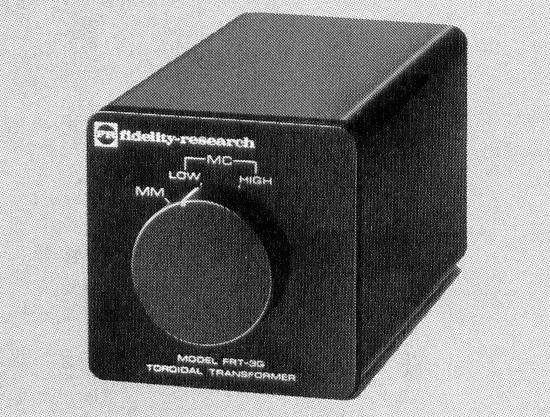
Talk Vinyl: 3 SUTs - Denon AU-250 and AU-300LC; Fidelity Research FRT-3G

After the initial round of testing (Part I), I decided to try out some SUTs in lieu of the active phono pre-preamplifiers. System remain unchanged otherwise:


Analogue setup: Garrard 301-Thomas Schick 12"-Midas Denon DL-103 (pic above)
Preamplifier with MM stage: Leben RS28-CX
Amp: Wavac MD-300B

Loudspeakers: Tannoy Canterbury HE


left pic: Denon AU-250 atop Leben RS28CX; click to enlarge. Right: AU-300LC


Denon AU-250 vs AU-300LC
Both are entry level SUT from Denon. The AU-250 is from an earlier generation and there is little information on the net.

Spec's Both have 1:10 step-up ratios with input impedance (40 ohm) tailored for the Denon DL-103, certainly the industry standard in Japan, if not the world. The later AU-300LC employs oxygen-free copper (hence the LC designation) and is still a current model. Here is a AU-300LC pdf file. Note that the AU-250 does not have a ground lug on the input side. I found in this setup the Schick does not need to be grounded, which makes life easy.

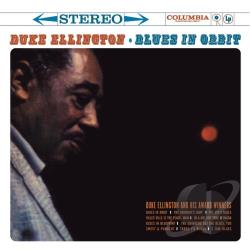
Sound First, let it be known that the two sound very similar. Both sound completely coherent with the Midas Denon DL-103 and in this setup outperform the active devices previously used. Indeed, on the replay of two seminal canto-pop albums (pics borrowed from my friend LeeHC, from the wonderful vinylparadise), the sound is some of the best analogue sounds I have heard from this setup (although the 12" still remains just a tad slow). As expected from the use of oxygen-free copper, the sound of the AU-300LC has a little more high-frequency content than the AU-250. This is similar to the difference between DL-103R (which also uses oxygen-free copper) and the regular DL-103. However, and this is important, the AU-250 is a little more fleshed out in the midrange. I am not sure which one is better; I think it depends on the system. This round I preferred the AU-250. This reminds me of my experience of the DL-103R: I have not yet personally tried it, but on several systems I heard the 103R tended to be a bit on the lean side and I have always suspected the regular DL-103 is a little more musical. On the canto-pop albums the voices are just a little more real with the AU-250. Keep in mind the differences, though audible, are small.

Denon AU-300LC vs Fidelity Research FRT-3G
Since we are on the AU-300LC, let me bring in another SUT, the FRT-3G, as I have previously compared the two. For this round I was not able to stage a re-match, as I have lent the FRT-3G to a friend.

Spec The spec of the FRT-3G can be found here. Comparison shows it to be very close to the more common FRT-3 in the excellent vinylengine SUT database. Please note that this transformer has two gain settings, and the low-gain one is more suitable for the DL-103. However, the step-up ratio, about 1:20 is twice that of the Denon AU250/AU-300LC. The recommended input impedance (15-40, likely 30 ohm) is likely commensurately lower.

Sound When I compared it some time ago in my own system using the DL-103, I preferred the FRT-3G to Denon's own AU-300LC. In my system the FR proved to be more richly hued. Then I loaned it to a friend. His system:


Analogue: Clearaudio Champion-modified Rega RB-300-Denon DL-103R
Preamp: Audio Research SP-11 MkII
Amp: Rogue Audio KT-88
Speakers: Dali

It is a balanced and good sounding system. On that occasion I also took with me the Denon AU-300LC and compared the two. The result was similar to my earlier findings. The FRT-3G simply sounded richer. Note that in both systems the difference is much greater than the difference between the two Denon's.

It is interesting that with my current setup, the AU-300LC does not really exhibit undue leanness. When I get my FRT-3G back, I am most eager for a re-match. I am also most eager to try the FRT-3G on the FR MC-202 cartridge, as it is a sure match.

24 July, 2012

Western Electric 124B Power Amplifiers


Click pic to enlarge. Top: WE133; bottom,pair of WE124B.

Western Electric, Mount Everest, Part II
Western Electric 124B Power Amplifiers, Part I

Previously I had written about my WE133A experience, surely one of the summits of my audio experience. By chance, just the other day I was able to buy a pair of professionally restored WE124B in good condition. I lugged it home during a typhoon downpour! How's that for dedication!

The WE124 series was in production for a long time and is WE's best known model. Hence there is more information on the web than the 133A. I shall not write much here as my friend Francis has written quite a bit on it in his website and Blog. Here are just some useful bits:

History of WE124
Some photos of WE124
He finally got his WE124B

My pair is without input transformers, a humble later pair with grey transformers. Those who would like to see the schematic can download it here.

Brief Audition
Paired with the Leben RS28CX preamp, the familiar WE sound poured forth from the Tannoy Canterbury. Although tubes used for the initial session are all non-WE, I quickly recognized the inimitable way the WE has with rhythm and timing. You could just hear the leading edge of instruments so clearly that every little inflection was rendered with precision. The next evening I invited BenYC, one of the attendees of the previous 133A session I wrote about, and I am glad that the performance of the WE124 met with his approval.

Some think vintage audio sounds somewhat vague and overly rich. As I said before, not the case with WE. Here is a short youtube clip of Francis' WE124B. Even through the computer you can hear the sound is very clear and musical:

Next I shall try it out with WE tubes.

Here are some interesting additional links:
WE124A brochure /manual
Good pics of WE124C

Restoration of WE124 in Chinese (梁文光)

15 July, 2012

Review: Sony PlayStation 1


Review: Sony PlayStation 1 (SCPH-5003)
Home Visit: Tannoy Gold Reborn - Maggies, ESL Step Aside!

I think it was almost a decade ago, long after the PlayStation1 had become obsolete, that certain audiophiles started to re-appraise it. It took quite another while before the underground reputation reached the internet audio press (6moons), not to mention the mainstream (namely Art Dudley's informative and well written 2008 Stereophile article).

Various Versions There have been many revisions of the PS1. Read the wikipedia entry and here is also a chronological list of hardware modification. As stated in the links in the first paragraph, most agree that the version to have is the one with RCA analogue outputs that allows you to use your own interconnects. This means SCPH-1001 and -1002 in the US and Europe, respectively. My unit though, is SCPH-5003, which, according to the latter link is an Asian revision.

Click to enlarge.

Structure/Built The PS1 uses the KSM-440 CD-ROM for transport, and the DAC is the AKM AK4309AVM 16-bit sigma-delta DAC chip. I opened up my unit to confirm that these indeed are used.

Aside from the light plastic casing, built is very good, with the laser anchored on a metal platform and isolated by three rubber grommets. That is better shock absorbance than many so-called hi-end digital players!

Ergonomics Hardly great, as operation is via a linked umbilical cord. But, so are many older professional studio gears, like Studer! The Stereophile article has a diagram for instruction. On my unit, for some reason, even though it plays all discs in full, the forward button loses functionality beyond track 10. A nuisance.


Modification Given the underground reputation, the PS1 has seen many modifications, particularly from the DIY sector. A good guide and summary can be gleamed in this excellent site named dogbreath. I plan to follow some of his easier steps myself.

Sound
Before I proceed to write about my initial impressions, let it known that I shall be brief as they are pretty much in agreement with Art Dudley's. In particular:


"...During my first round of comparisons of the two output schemes, I wondered if the absolute phase of the RCA output was the reverse of the A/V output's. But the extreme smoothness of the PS1's sound in RCA mode (see below) confounded my efforts at a detailed back-and-forth comparison, and the whole matter ultimately proved too fiddly to hold my attention for long..."


"...the end impression was of a cannily tailored frequency range—that, and an exceptionally smooth sound, with no edginess or artificial grain whatsoever...."


"...Above all, with every CD I tried, the PS1 exhibited a superior level of rhythmic acuity, or—since it's true that an amplifier or CD player can't make recorded music sound faster or more propulsive than it actually is—a superior lack of the distortions that can blunt leading-edge transients and make music sound temporally dull and listless. Even slow, broadly paced music sounded involving through the PS1: the best and truest praise I could give it..."


pic: icefox's magnificent Tannoy's

Sonic Evaluation - Round 1
Remember my well-connected friend icefox, aka "the audio pimp" 淫媒 (so named by me for his ability to arrange visits of all kinds that satisfy all tastes, no matter how perverse). Yes, the one who is my taskmaster, who occasionally visits me just to whip me into shape.

You may also remember my numerous previous visits to his large industrial space. This man has wide-ranging tastes (including Maggies, SP100, and ESL) but it has always been Tannoy that shines in his place. Previously, his Tannoy 15" Gold's in original corner York cabinets (you can still see one right next to the door) had sounded very good.

As the pimp did me the favor of picking up the PS1 for me, it was time for me to visit his newest Tannoy setup. Incidentally, you may have noticed that I do fewer home visits these days, not only because of lack of time, but also because of diminishing interest - so few setups are really worth hearing.

The 15"s are now installed in a newly acquired pair of original rectangular York's and placed in the middle of the the room. Simple setup:


Digital Source: Sony DVP-PR50P (my previous Best-Buy selection) vs PS1
Preamp: Passive
Amp: Leak TL10.1
Loudspeakers: Tannoy 15" Gold's in original rectangular York cabinets

The sound instantly struck me as very good, AND very modern, without any trace of sluggishness. Apparently, this pair had the two frequency controls removed. I am sure that adds to the transparency though many vintage aficionado's may frown upon it. Initially, a pair of Optimus "super-tweeters" were attached and driven by an ss amp. After a few cuts we removed it - I did not feel it was needed!

The bass at first did not plumb the depth it should have, so I lifted up the front with a small chunk of wood - resulting in a cleaner bass that goes down lower (this trick works every time). The sound was so transparent that it was almost too much at times, particularly with violin tone. Also, in this large space, judicious use of volume has to be exercised - the Leak runs out of steam after a certain level, and the sound becomes fuzzy and loose, rather benignly distorted that is.

PS1 We swapped in the PS1 and to my ears the sound improved. The sound field shifted back and there was more representation of the recording venue. Martzy's violin was more richly nuanced. Indeed the sound was much more composed. The interesting thing was that resolution did not appear to be less than the 24/96 newer Sony player!

The system, which is only in the initial phase of setup, already sounds more than promising. It had totally outperformed what had gone before. Once again, the visit further strengthened several of my convictions:
  • If you listen to a wide range of music, despite what many vintage fanatics maintain, later Tannoy concentrics are superior to earlier ones (Silver, Red etc). They are simply more even in frequency response, more extended in at both ends and go much louder. The Gold is as undervalued as the Silver and Red are over-rated.
  • Original Tannoy cabinets always sound decent! I have heard too many bad reproduction cabinets.
  • ESL is only suited to small spaces and simple music - there is no way to get around it, and it would never be for me. Maggies in larger spaces fare better but demand much effort - even then, the results would not be as good as a good pair of dynamic speakers. Not worth the effort.
  • Digital gears need not be expensive. The Pimp sighed and confessed that modern digital stuff appeal to him less and less.

Click to enlarge.

Sonic Evaluation - Round 2
Back home, I was able to carry out more detailed evaluation. The PS1 was connected by a pair of Audio Note silver AN-V. Setup:


Digital Source: YBA WD202 vs PS1
Preamp: Leben RS-28CX
Amp: Wavac MD-300B
Loudspeakers: Tannoy Canterbury HE

My setup is smoother sounding than The Pimp's, and that should work against the PS1, but it was not so simple. I heard the same things, composure and a more recessed sound field. A few comments:

Output Level Although lower output levels can sound more refined, with SET amps usually high output sources work better, for obvious reasons. That is one reason I still keep my Audio Note DAC-2, which has a very high output level (I think 6V). However, both the YBA (a normal 2V) and miraculously the PS1 (a paltry 1.09V) manage to keep the music always engaging. When doing comparison, you must remember the PS1's 1.09V is >5db lower in level when compared the 2V output standard ! When level matched, the PS1 performs well. Many years ago, I heard a 1V Muse DAC at the now defunct HK Opera Audio - it did not work at all. The PS1 works much better at keeping the excitement while being refined.

Mechanical Aspects The PS1 is light. I tried various devices underneath it. None works better than doing nothing. BUT, as often (if not always), playing with the lid open improves the sound. To do this, you have to find a way keep down the piston at the upper right hand corner of the tray.

Composure The PS1 exhibits one rare quality. Unlike much digital, it gets better as it gets louder! That is an analogue quality, if you ask me! As Art Dudley said, the leading edge is more correctly rendered than most digital sources (also a sterling quality of the YBA). Sigh, the CAS people would never know that.

AKM The PS1 strengthened my conviction that AKM makes excellent chips. I am not sure why they are not more often seen in audio gears. Previously I had only encountered it in a Primare CDP (more about that and AKM here). If highest end Esoteric use them, they must be good!


Great fun! You'd certainly hear more about the PS1.

11 July, 2012

Review: Thomas Schick Tonearm, Part I


Talk Vinyl: Thomas Schick Tonearm, Part I
Talk Vinyl: Ortofon AS-212S Tonearm, Part II
Talk Vinyl: Ortofon SH4 and L-9000 headshells
Talk Vinyl: Midas body for Denon DL-103
Talk Vinyl: Audionix ADN-III, Part II

This article is dedicated to my wonderful friend Robin the Scot, who re-conditioned my Garrard and is now a Schick user too!

I placed the pic at the top for a good reason. If you are a perfectionist, one look at the pic will tell you not to read on. For the rest of the people, I can assure you the setup sounds a lot better than its admittedly improvised looks.

Talk Vinyl: Garrard 301 Reborn, Part III
Now I have finally started to approach where I have always wanted to be with the Garrard 301 - with a 12" arm.

Those new to my Garrard 301 saga - lengthier than Art Dudley's; but then I have owned one for much longer, more than 10 years in fact - may want to read Part I and Part II. For details on the restoration by Robin, follow the links at the top of this page. The Garrard now sits on a wood table that is a left-over from Robin, made of solid wood and more than serviceable sonically. Incidentally, although conventional wisdom has it that mass-loading is mandatory, but from my first, very light, make-shift plywood plinth I became convinced that wood works well too.

Since I had to partially disassemble the unit, l took the opportunity to take a photo. The Garrard 301 and the Ortofon AS-212S arm are mounted on the dark-wood top-plate. The "outer plinth", if you can call it that, has 4 corner braces, which are the only points of contact with the top-plate (in the top pic, note the clearance between the top-plate and the plinth). A slab of Blue-Tac serves the purpose of de-coupling. Rudimentary, to say the least. When I have time, I think I shall try rubber/sorbothane in lieu of the Blue-Tac. The plinth is placed upon three thrust ball bearings.

The Chic Tonearm
Having heard too many sluuugish 12" arms (not only with SPU), I was never in a hurry to experiment and have remained satisfied with my 9" arms, mostly variably modified Rega RB250/300's. However, having accumulated too many cartridges I started to feel the need for tonearms with universal head-shells. The Ortofon AS-212S was the result. It should also be noted that I have an SME3012, but it may need some work.

Although it has been popular for quite a while in various forums (like Lencoheaven), I first learned about the Thomas Schick 12" tonearm from Art Dudley's Stereophile 2010 review which, if I am not mistaken, remains the only mainstream press review. I am sure Schick has his handful and does not need more publicity. I knew then I wanted one, and subsequently joined a group buy arranged by our friend daiwok. When I got it a few months later, I lent it to Robin. He got so enamored with it that I had to order another one. This unit has been lying around for a few months - until yesterday.

Beauty and the Beast
Now, I am sure Thomas Schick would kill me if he reads this. The tonearm is beautifully made, and it deserves a better arm board, but I decided to just put it into action first, then upgrade later.

The arm came in a nice wood box, but you have to find the manual on the official website (not linked properly). Mine has captured tonearm cable.

I had a nice piece of wood floor tile around (you can get free samples at Home Depot). I took it to a neighborhood construction supply store. For HKD 20, The nice young man drilled a hole with a 22 mm drill bit (I doubt you have that size at home). It was not perfect, but the important thing was that it allowed the arm to pass straight through un-hintered. I should have asked him to drill the three 4mm hole for the arm base collar - my screws went it skewed.

Complaint The screws supplied have slotted screw heads. It would have been a lot easier to center if they have Philips screw heads (such as supplied by Ortofon)!! The straight blade screwdrivers also easily slipped and scratched against the beautifully polished collar. Quel dommage!

As shown in the pic, I fastened a flat corner brace (HKD 6) to the tile and the "arm board" was complete. The next step was the most difficult. With just a measuring tape I determined to the best of my ability where the board should be installed for the proper mounting distance of 305 mm, and marked the position with a pencil.

I then had to remove the top-plate with the heavy Garrard and worked on the outer plinth. I screwed the arm board onto the inner side of the plinth. Damn!!!! The screws I got (4 for HKD 1) had screw heads a bit too large and would not quite go in all the way. The arm board was just a little shaky so I applied some Blue Tac to where it contacts the top of the plinth. Finally I was able to get a reasonably secure feel and left it at that.

Total Cost: HKD 27 = USD 3.50 = GBP 2.25 = Euro 2.85

I know Thomas Schick shall never sell me another arm again.

Adjustments
After making sure the armboard was level, I started to do the adjustments. I first installed the humble Ortofon SH4 headshell with the Denon DL-103 that is resident on my AS-212S. The heavy counter-weight was pushed almost all the way to the front. Then, a problem. Ahhh!!!! The tile proved a little too thick - even with the arm all the way down, the tail was up. I then installed my taller Midas DL-103 in the considerably more expensive (and heavier) Ortofon LH-9000 headshell, which redressed the situation - correct VTA was achieved and the counterweight was now much further back. One caveat. I could not quite get the arm-lift  to work properly as-is, but that is for later as I usually don't use it. The Midas DL-103 had to be pushed almost all the way upfront for good Baerwald alignment. I used 2.5 gm tracking weight. Gears used in initial evaluation:

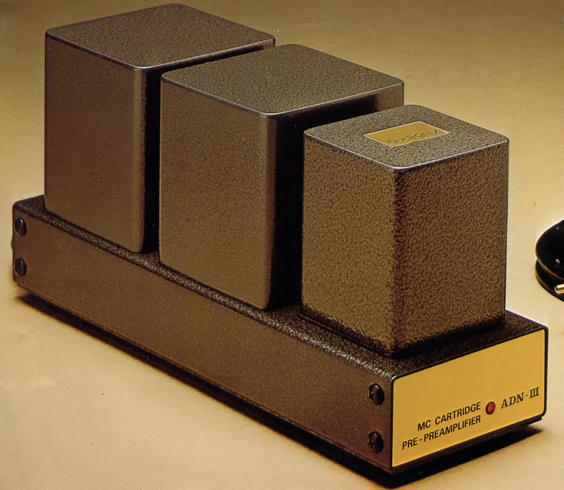
Phono Pre-Preamplifer: Audionix ADN-III (info here)
Preamplifier with MM stage: Leben RS28-CX
Amp: Wavac MD-300B
Loudspeakers: Tannoy Canterbury HE

The Longer the Better? The Heavier the Better?
One thing was immediately apparent - the sound was instantly likeable, quite "normal", without obvious anomalies that often arise from lesser arm/shell/cartridge combinations. No hum like Dudley described on his TD-124. Unlike many 12" I have heard, this one did not sound unduly slow. Hallelujah!

I have not written much about this before. On my AS-212S arm, both the heavy Ortofon LH-9000 headshell and Midas DL-103 had not previously performed well in comparison with their more humble siblings, the SH-4 headshell and the stock DL-103. But now, they perform quite well on the Schick. This is perhaps understandable, as the AS-212S is a lighter and shorter arm less suited to heavy headshells and cartridges.

Schick/LH-9000/Midas DL-103 vs AS212S/SH4/DL-103 I played several records on both arm combos. The difference is easily audible, and the comparison is enlightening, but not surprising:

Composure There is little question that the 12" is more composed. On my favorite version of Night on Bald Mountain, the under-rated Arthur Fiedler whips his band into frenzy. No matter how crazy it gets, the 12" is unfazed. Although this comes at a cost - frenzy is after all part of this music - I overall prefer it to the 9".

Background Darker for sure with the 12".

Transient Speed Although the Schick is fast for a 12", it losses out in this department to the 9". This is particularly evident in Jazz. The Duke's band is more uproarious; there is more attack.

Instrumental Body and Timber I'd say they are almost equal. The 12" has a fuller body but the 9" has a little more high frequency harmonics. Ray Nance's violin playing should be a little coarse - the 9" conveys that while the 12" is a tad too smooth. On the brass instruments though, the 9" is a little too sharp - the 12" has the more "throaty" feeling. Overall, the 12" just edges out the 9"

Bass The 12" does not have more bass, but I feel it plumbs more depth. Even if the leading edge is not as fast as the 9", it sustains better and in both the Ellington and the superb Nah Youn Sun Voyage one feels better the bowels of the double bass (LP highly recommended).

Resolution and Tracking I am not sure there is a significant difference. No edge to either.

Clicks and Pops More on the 12"

Atmosphere and Excitement For me, the 9" has the better "wow" factor, especially in jazz.

Summary
  • The Thomas Schick 12" tonearm is an instant classic. It is not cheap, but still reasonable and within reach. Although still not as fast as a good 9", it still has excellent transients. Its sound is commendably balanced from the word go. Can't wait to burn it in.Call me a satisfied customer.
  • The under-rated (and discontinued)(Jelco OEM) Ortofon AS-212S is also a superb arm, fast and just as resolving. This makes me want to experiment with Jelco's own and very reasonably priced arms. Maybe a 12"? :-) 
  • The performance of the Audionix ADN-III is a wonderful surprise! It just works marvelously with the Denon-DL103.
  • The headshell has a significant impact on sound.
Next, I shall replace the Audionix with a SUT.

08 July, 2012

Talk Vinyl: Fidelity Research MC-202 MC Cartridge Technics SL-1200 Mk 2

Click pic to enlarge
Talk Vinyl: Fidelity Research MC-202 MC Cartridge, Part I
Talk Vinyl: Technics SL-1200 Mk 2, Part II
Talk Vinyl: Ortofon MCA-76
Talk Vinyl: Audionix ADN-III

Revised March 9, 2015: Fidelity Research MC-202 MC Cartridge, Part II has been published.

Many moons ago, when it was hip to abandon vinyl, a colleague gave me his playback setup, which consisted of an Ariston TT, SME arm, the Fidelity Research MC-202 MC Cartridge and the FRT-3G Step-Up Transformer. I later gave the Ariston to someone else, but kept everything else. Over the years I had used the FRT-3G to excellent effect with my Denon DL-103: it proved to be more richly hued than my humble AU-300LC.

Fidelity Research MC-202 MC
I had promptly forgotten about the cartridge, until recently, when I found it loosely wrapped in a plastic bag. The cartridge does not have a stylus guard but had miraculously survived. Thanks to the Vinyl Engine Database, I found the relevant spec's for the cartridge.

As often with this DJ table, I had to add height to the cartridge by adding a 1 gm spacer. Given the SL-1200 Mk 2's effective tonearm mass of 12 gm, according to VE the resonant frequency tuned out to be okay at 7 Hz.

This is only my initial impression. I had lent out almost all my SUTs and ended up having to use an active pre-preamplifier. So far I tried two, and the results were quite different. Here are the Associated Gears:

Preamplifier: Leben RS28-CX with built in MM phonostage (review here)
Amp: Wavac MD-300B
Loudspeakers: Tannoy Canterbury HE

Alignment Position was very much like the AT-CN5625AL, accomplished in no time.

Tracking Weight I started with the minimum 1.5 gm and got somewhat prominent upper midrange. Using the maximum 2.0 gm the sound was a little slow. Finally I dialed in 1.75 gm, which seemed optimal.


Active Phono Pre-Preamplifiers
+ Ortofon MCA-76 (my previous write-up here) Since I have several Ortofon cartridges (MC3000/5000; Kontrapunkt C/H; all 5 ohm impedance), the Ortofon MCA-76 is the active step-up device I go to in a pinch. Its high gain and design for low impedance are particularly suited to the same companies' offerings. The FR MC-202 has a somewhat higher impedance of 9 ohm. The sound was quite sweet in the lower midrange, a bit too full in the bass and, no matter how I adjusted the VTA and tracking weight, audibly a little lean in the presence region. While quite a bit more detailed than the lowly AT-CN5625AL, the music did not flow as well or the whole fabric did not hang together as well either. I decided to try a different headamp.

+ Audionix ADN-III (spec's here) The Audionix is little known outside Japan. The company used to manufacture vinyl accessories but had long gone defunct. My unit is a 100V one. I had previously used it to good effect with my Denon DL-103. The match brought a more balanced sound to the MC-202: smoother presence region, less sweet lower midrange and a leaner bass. The sound took quite a while to open up, reaching optimum only when the unit is warm to touch. It was not quite as detailed as the MCA-76, but more musical. Hey, except for the loudspeakers and cables, this is afterall almost a total Japanese system!

Cabling is a headache with these active devices, influencing the sound unduly. The Kimber PBJ was just too exaggerated. Finally I settled for a longer than ideal run of Gotham. Much more balanced (as usual).

Initial Impression of the MC-202 is that it is a rather sweet cartridge, not quite as detailed as my Ortofon's nor as soulful as the Denon DL-103. Watch for Part II.

03 July, 2012

Talk Vinyl: Technics SL-1200 Mk 2, Part I

Talk Vinyl: Technics SL-1200 Mk 2, Part I
Talk Vinyl: Audio-Technica CN5625AL MM Cartridge

Sometimes even I don't remember all the things I had written. It just came to me that I have never officially written about the ubiquitous Technics SL-1200 Mk 2, certainly and precisely the kind of thing cheaptubeaudio should aim to propagate (I won't say promote - it doesn't need it).

The Technics SL-1200 was in production from 1972 to 2010, a remarkable 38 years! It even has a wikipedia entry, which happens to be an excellent source of info. If you have time, read all the useful links provided. And If you ask me, one needs not worry too much about the various incarnations (including the 1210) - they are all marvelous! Even though it is no longer in production, you can still easily source one.

Second Coming
As readers may know, I have long used one of these in NYC. It stayed for quite a while in my Casual Listening Station (link here), but recently, after installing the magnificent Empire 2000E/III on it, I promoted it to the Day-to-Day Station (link here), no mean feat!!

As readers know, I spend time both in Hong Kong and New York, so I don't usually duplicate equipment. Here In HK, I have the magnificent bigger brother, the legendary SP-10 Mk 2, so it's not like I don't have a good direct-drive. But the SP-10 has a Rega arm on it, which does not let me change cartridge easily. So at the periphery of my mind I had always wanted a watchdog TT that allows me to change headshells on a whim.The SL-1200 fits the bill perfectly.

Recently in HK, after some discussion at a local forum (review33), I started thinking about the SL-1200 again, and within days got hold of a unit in good working condition. It was a wee bit cosmetically challenged, but do I love it!

This particular SL-1200 came with a no-nonsense cartridge - the seller doesn't even remember the model number, After some sleuthing, I am sure it is the Audio-Technica CN5625AL MM cartridge, which could be had for USD 15-25, a price that is lower than almost any replacement stylus!

Audition
I lugged it home, re-calibrated and put on the LPs that I happened to have bought the same day. I fed it into my reference system, which happens to be now:

Full-Function Preamp: Marantz 7C (re-issue version)
Amp: Wavac MD-300B
Loudspeakers: Tannoy Canterbury

This is only Part I, so I shall be brief, the sound that came out surprised me a bit. Not because any comparably priced digital source cannot touch it - I know that! Because it was better than even I expected. Very good scale and tone, proper perspective, fleshy presentation, solid bass, good soundstage, all that from a lowest-of-the-low cartridge! A cartridge that uses a conical stylus, surely frowned upon by audiophiles.

The sound from the CN5625AL reminds me of its bigger and more expensive (relatively speaking, only twice the price!) brother, the famous AT-95E, which I heard on my Thorens TD-309 TT (link here). Here, I cannot resist to mention that the cheap AT-95E forms the heart of very much more expensive Clearaudio MM cartridges! Of course, the CN5625 is emphatically not as detailed as its sibling, but the family sound is unmistakable. If you need a competent cartridge to play dirty, worn out and damaged LPs, this is it! It plays my heavily scratched Shadows LP very well, and I enjoyed it, loud ticks not withstanding! The rhythmic verve of Taking Heads was divine. With the marvelous sounding Elton John and Bryan Ferry, the sound was really enjoyable!

I better show that I am sober. Yes, I am sure the CN5625AL is not the last word sonically! Next, I shall change headshells and cartridges - stay tuned.

Alignment
Before I leave, something interesting to me. The TT came with the cartridge installed ALL THE WAY upfront. Since I do not have the original SL-1200 alignment tool, I pulled out my Vinyl Engine generic Baerwald template and checked - it was spot on. Then I did a search, and this article in Vinyl Engine is a must-read. Apparently, the Technics tool is close to Stevenson. If you keep the cartridge square, the tool is pretty good, if not "perfect", but if you use Baerwald, you have to twist it a little to get the best offset angle. I re-examined and saw that this was exactly how the seller had done it (I think you can see it from the top pic; click to enlarge). The seller knew what he was doing!

I am not an alignment expert, anything but. But back in 2010, I wrote about my own experience in trying to align the SL-1200 using the Baerwald. The result was exactly the same! And I had not read the VE article! Great!

VE has a specific template for SL-1200, which you should take care to download. You MUST read the instructions and print it to proper scale.

Enjoy!


30 June, 2012

Letter from Robin in Taipei


Letter from Robin in Taipei
Editor: As you know, our friend Robin the Scott, the man who revived the Tascam R2R and stunned us with its sound, now lives in Taipei. Their magnificent residence sits atop beautiful Yangmingshan (a national park) and commands a panoramic view (click pics to enlarge). I received this email from him and took the liberty of publishing it

Robin wrote:

"...The transformation of our listening room on the 3rd floor here in Danshui is now more or less complete. See attached pics: it was formerly green (the colour of the bare boards we put up), but recently we had the walls and ceiling painted lime white (a big improvement.) 

There's about 15 cm of soundproofing material in place throughout the walls and ceiling, and all the windows are double-glazed -- but of course that just stops the noise getting out and disturbing the neighbours. The next phase will be to treat the internal room acoustics, using sound absorption panels. As you can imagine, one gets quite a lot of echo and bass standing waves in such a large listening space as this! I already have lots of fibre-glass boards lying around -- left over from the earlier construction work -- so it's just a question of finding the time to do this second part of the 3rd floor conversion. Should be lots of fun, though I will need to avoid over-damping the room's natural liveliness.


More fun here: http://www.drytech.com.tw/tape -- a Taipei company that I bought several dehumidifier cabinets to hold my R2R tapes in did an interview and photo session with me, to market their cabinets (I got a discount from them in return). as you'll see from the pics, I now have three R2R tape recorders. (One can't have too much of a good thing, etc.)

12 June, 2012

Review: Croft Micro 25 Basic Preamplifier


Review: Croft Micro 25 Basic Preamplifier, What a Bargain!


Official Website

Glenn Croft, most respected UK tube guru/auteur, amongst the last of a dying breed, has certainly been around. For the longest time, he has been making excellent tube products at bargain prices. Perhaps he is as famous for the unadorned looks of his creations as his legendary OTL amps (which I had the fortune of hearing at my friend mda's place; but apparently and unfortunately Croft doesn't make them any more). Some years ago, I almost bought his Vitale preamplifier, but it took my trip to the UK this year for me to finally acquire a Croft product.

Croft Micro series Preamplifers Croft has been using the term "Micro" for his preamplifiers on and off for a long time. The latest is the Micro 25 series, I suppose an anniversary designation. His current amplifiers are simply designated Series 7, a continuation of previous efforts. I learned about the current products through reviews of the Micro 25 Preamplifier and Series 7 Amplifier (Tone, TAS).

click pic to enlarge.

Micro 25 Basic
It must be emphasized that the product under discussion is the cheapest Basic version, not the regular version reviewed in the links above.

Built The box is OK, but packing material is quite a joke (I have no idea if export versions are different) - there is no foam or cardboard, instead consisting of crumpled paper (apparently compaction is achieved by stepping-on them, as shoe marks are evident). No manual is provided. The case is very basic, but slim and solid. Lettering is a bit smeared (don't know if it is better in the non-Basic version). The knobs are cheap plastic, but you can easily upgrade them for little money so that your unit looks like the non-Basic version(s). I have no problem with the utilitarian RCA connectors and toggle switches.

Power Supply Only 4 screws hold the cover. Once inside, I have even more admiration for the built. In the power supply, unusually there are two transformers (which are the same and appear in series). I wrote Croft and was informed one was for B+ and the other heater supply. At this price point, I applaud the presence of transistors for power regulation.


Preamp section is well isolated from the power supply and is truly compact. I have no problem with the basic volume pot and selector. Like all Croft preamps. the entire preamp section is hard wired through a basic terminal strip (which may raise eyebrows), with the bigger caps anchored to the chassis. Resistor and caps used are basic but of good quality. This unusual method of construction for sure guarantees very short signal paths, but may prove troublesome should modification is desired or service needed. I cannot decipher what cables are used inside. My unit comes with 2x JJ ECC83 for the phono section and a Sovtek 12AX7WB for the line section. Since the website says 5965 for the linestage, and since 5965 is not exactly the same as 12AX7 I am not sure what is the import on sound, I wrote Croft on this. I received this reply: "...later Basics like yours can only use the ECC83 in the line stage - the 5965 has a higher heater current. The ECC81 and 5751 are other options for the line stage....". Now, that settles it - the info on the website has not been updated.

Features
The separate volume controls for the two channels enable one to adjust for balance. The mute switch is useful for turn-on and -off, and also for phono users.

Caution! I must caution you on connection to the amplifier. Here, the Preamp Output is simply marked "Out". Adjacent to it is a "Line Out" which turns out to be what we would call "Tape Out". I mistook the latter for the preamp out and got full volume. Fortunately I was able to immediately shut down my amp so no damage was sustained. Also, as this basic model has no protective relay or auto-mute at turn-on, if you intend to use it with a transistor power amplifier you must wait a couple of minutes for the preamp to stabilize before playing music, or risk damaging your amp and speakers (tube preamps sometimes output DC at turn-on).

Sound-Round 1 in NYC
I first listened to the Croft in NYC, with the help of a step-up transformer (although the transformers look like they could easily be re-wired to 110V, I didn't do it).

Driven by Wavac MD-811A, sound through my reference highly sensitive YL 4-way horns was a bit rough at first, but settled quickly. The sound was forward, quite dramatic and palpable, equally adept through both the line and phono sections. However, a bit of amelioration/smoothing with old-stock tubes was needed, as the forward natures of both the preamp and the loudspeakers could sometimes be too much of a good thing. Swapping in RCA 12AX7s did the trick for me.

In that system, the Croft proved to be highly capable. Even with 100 db sensitivity, the preamp was commendably very quiet even when phono was used. Although with large orchestral material it did not match the Shindo Monbrison dynamically, it acquitted itself quite well, with particularly impressively clean bass. With jazz and pop material, the sheer presence was quite enjoyable. Although it did not quite yield the ultimate details and at times I could detect the thinnest veiling, somehow it gives life to instruments like few preamps can - they simply sound more real. That is quite an accomplishment. 

Sound-Round 2 in HK
Back in HK, I paired the Croft with another Wavac amp, the MD-300B. Sound through the Tannoy Canterbury though was quite a different thing. With the same tubes inside, the preamp sounded just a little too soft on attacks. Some of this has to do with tube rolling. I left the strong-sounding stock tubes in NYC, and did I wish I have them with me now! Some of this I think also has to do with the gain structure. In NYC, turning the volume pot just a wee bit got plenty loud. With the less sensitive Tannoy I had to crank it up some more, and as is sometimes the case with one-tube linestages (it partly depends on the design) the volume pot gets progressively insensitive. I swapped in some other tubes and got improved results. Also, in terms of the line section, the Croft benefits from stronger-sounding digital sources - low output and refined types may not suit. As for the phono section, it is excellent but not quite the equal of others that have better power supply.

What is interesting is that, with the Tannoy, and perhaps due to run-in, the Croft acquired a refinement that had escaped me at the start. The faithful rendition of instrumental timber is still there, but now more subtle sonic textures can be heard - indeed it can be quite refined with tube rolling, if that is what you are after.

Some musical examples. When I substituted the re-issue Marantz 7c everything moved backwards. In the Beethoven violin sonata from Argerich's Lugano 2011 set, both the violin and piano became more recessed into the soundstage; the piano grew more full bodied and the violin was sweeter. But I have to confess the sense of a live event was better conveyed by the Croft, even if the tones of both the violin and piano were leaner. Playing the vinyl of Ellington's Blues in Orbit, it was obvious the Marantz 7c had more oomph, though the Croft held up valiantly.

Conclusions
The Croft Micro 25 Basic turns out to be a little enigmatic, and that is one of the things I like about it. For a pittance it lets you go straight to the heart of the performance. It is also quite responsive to tube rolling. While its performance may differ a little from system to system, it is that rare thing, a bargain with a huge personality. The price is incredible - for the same money you cannot even buy a Chinese preamp with phono. If you are interested, think also of the higher models, the Micro 25 and the 25R; I wonder how much improvement they would bring?

Buying from the UK
Since Croft has no dealer in HK, those interested would have to buy from the UK. I bought mine from Divine Audio. Buying in the UK saved me shipping, but I had to pay the VAT and get the refund back later when I left the UK. The government red tape took quite a while, but I am pleased to report that I got the VAT back and salesperson Tim Chorlton was a tremendous person to deal with, even answering emails when off work! If you buy from HK, you don't have to pay VAT in the first place, and Divine Audio knows how it works. There are other dealers who ship out of the country, but I do recommend Divine. Check for prices as there has been a recent price increase, not reflected in some dealers' websites.

07 June, 2012

Talk Vinyl: Two Top Values

Talk Vinyl: Two Top Values
Talk DIY: MC Step-Up Transformer
Brief Review: CineMag 3440A SUT 
Brief Review: Denon DL-301MkII

Revised July 10, 2016 (Budgie SUT mentioned as 3440AH alternative)

As promised, brief looks at two items that really surprised, and delighted me! Both are phenomenal values that unambiguously within the first notes earned my greatest admirations. They are sure to go into my Best Buy 2012 list, if I remember by then that is!

Gears Used for this Evaluation:
Turntable: Thorens TD-124 Mk I with SME 3009S2i (and Denon DL-304)
Preamplifier: Shindo Monbrison
Amp: Wavac MB-811A
Loudspeakers: YL Acoustics 4-way horns

pic of unit that is like mine

CineMag 3440A Step-Up Transformer (SUT)
I first learned of the CineMag CMQEE-3440A SUT (used and likely popularized by Bob's Devices) from Art Dudley's review in Stereophile. I first wanted to just buy the  transformers and build one myself. They are available on Ebay (currently $180 per pair), and if you are into DIY, that is the way to go.

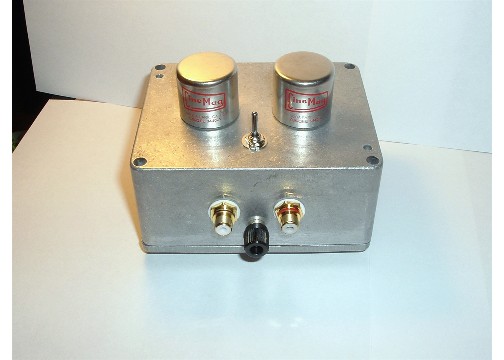
I got caught up by other things and promptly forgot about them. But some time later, by chance, I came across a used unit on Audiogon and bought it for a reasonable sum. The seller claimed it was an older version of Bob's Devices, but I have some doubts after checking pics available on the internet. While the enclosure is in hammer tone, there is no marking, the inputs and outputs are on the opposite long sides and there is only one toggle switch on top for gain (no ground defeat). Although I am not entirely sure of its provenance (I think I shall write to Bob after publishing this post for him to read), I think it is closer to what was sold on Audio Asylum. I can assure you though that the unit uses the genuine CineMag CMQEE-3440A (red logo) transformers and that it works great.

I can also assure you my listening results are valid as they almost completely match Art Dudley's descriptions, doubly so as Art Dudley and I both use Shindo preamplifiers. His  Shindo Masseto is, as far as I could judge from the pics and descriptions of components, very much like a beefed-up version of my Monbrison. I am certain the same Lundahl moving coil step-up transformers are used in both units.

As I have said, I got the same results. Fed into the MM stage of the Shindo, the sound is superbly detailed and punchy, bringing life to my Denon DL-304 like nothing before. And yes, it trumped Shindo's built-in Lundahl's. I also briefly compared it to my rare and expensive WE285L and Langevin SUTs; to say the least, the 3440A is their equal, and actually bettered the WE in this application. That says a lot.

Incidentally, Dudley has recently reviewed the more expensive BD CineMag 1131, and the review is worth reading for the story on CineMag's recent developments. I hope one day I could get my hands on one of those.

A concern: BD has gone up quite a bit in price. BD's 3440A version now is almost double the price quoted in Dudley's review, but for its performance can still be counted as good value for those not willing to DIY. The spread between the transformer costs ($180 on Ebay) and BD finished product ($650) is kind of big imho, but I am sure BD makes excellent products and they certainly deserve the credit for putting the CineMag SUT on the map, though I do hope BD shall hold the line on its price. (2016: Note that Bob's has gone upscale and no longer offers the 3440A, instead the 1131 and SKY versions. Also, Parks Audio Budgie uses the CineMag 3340AH, sells for a reasonable sum and has a good reputation. I haven't heard it but would love to.

Denon DL-301 Mk II Moving Coil Cartridge
I have used Denon cartridges for over a decade and am a die-hard fan. Surely there are no greater bargains in the entire analog domain. The Denon DL-103 has always been my go-to cartridge, and the DL-102 is now my mono reference. Numerous friends use the 103R and I also use the DL-304 in NYC. I have always been curious about the 301, now in its Mk II incarnation, as it has a body that resembles the DL-304.

I installed this on the SME3009S2i in lieu of the DL-304, just one day before I left NYC last time, so it is not even close to broken in. But its performance instantly captivated and surprised me.

In the same system, the DL-304 had produced a very detailed and neutral sound that could be a little lean if care is not taken. But the DL-301MkII is very different: it immediately grabbed my attention by its sheer presence, thereby making the DL-304 sound a little clinical by comparison. It is balanced, tuneful, and, like the DL-103, not the last word in details, but it is early on. There are no formal reviews on the internet, but read this review in Audiogon; the author likened it to the long discontinued DL-103D, which I have never heard. Personally, I think its sound is like an amalgamation of the highly detailed DL-304 and the highly musical DL-103, not a bad place to be! Part of this may be attributed to its "healthier" output of 0.4V, as compared to the DL-103's 0.3V, not to mention DL-304's paltry 0.18V.

The DL-301MkII deserves to be better known. It is a much easier cartridge to like than the DL-304 and an even higher output than the ubiquitous DL-103(R). I suspect in actual use it will sound better in many cheap and moderately priced systems than its more famous siblings.

Last but not the least. The retailers usually have this at $329, but if you are willing to wait, consider ordering it from Comet Supply. You shall save substantially. This curious retailer offers steep discount but does not always display Denon products on its website. Call if in doubt. See, they basically collect enough orders for a group buy before action. My DL-301MkII took several months to ship. I have ordered another lot of Denon, which I am sure won't ship any time soon. But the price is worth the wait. While you are at that, seriously consider ordering more than one Denon cartridge; they are that good.