Editor's Note: Back to Basics
Why does interest in audio fade? In my audio life, I have known many who have once immersed themselves deeply yet quit the hobby as suddenly as they began. Some have other overriding priorities, but I suspect the major reason in most cases is a lack of real underlying interest in music. As much as many audiophile practices ultimately become dispiriting, audiophile discs (now files too) under-nourishes the soul. In tandem they ensure a short audio life.
Direction At this stage in my life, although listening to music (and audio) gets low priority, in my heart I am as passionate about music as ever; therefore I doubt my interest in audio, as a tool to enhance the replay of music, shall ever go away. But as I have little time, make fewer purchases and home visits, there is less urgency to write about gears.
It has always been my belief that, for growth, writing/talking about audio is at least as important as "audio sessions", "A/B testing", and reading reviews, to mention just three. I have always wanted to write more on my Beliefs. This I shall start to do. I have also wanted to write more Overviews on brands that I like, but as it takes an enormous amount of research to write one of those, I doubt I have the time for many.
Labels Labeling is a very difficult thing. Unlike a review of a specific piece of gear, some topics (especially audio contemplation) resist easy classification. This Blog has a rarely used Label called HiFi Basics, which I have just now resolved to use for writing on my beliefs. There are older articles under this label, but newer ones shall get consecutive Roman numbers, starting with I in the next article.
06 October, 2015


31 August, 2015
Review: Micromega IA-60 Integrated Amp; CD-10, Part II

Review: Micromega IA-60 Integrated Amp; Micromega CD-10, Part II
Review: Naim Nait 3
Yin vs Yang
Note (3/3/16): Micromega CD-10, Part III, vs Sparkler S306 has been published.
After acquiring the ridiculously good Micromega CD-10, it took some time to hunt down its companion IA-60. The result was so surprisingly satisfying that I decided (for my limited purpose and time) to further simplify my reference system in my "new" home, eliminating tubes (Western Electric 124, which shall go back to my old house). Also, just by chance and impulse I got a Naim Nait 3 (I have used the Nait 2 before).
My review of Micromega CD-10, Part I was brief, so I copied it below so you don't have to go back.
Micromega CD-10 (official link; you should read the technical details). Here I welcome yet another member of Micromega into my family. Launched quite a long time ago (I commend Micromega for not changing models often), it has been well reviewed (I particularly like HiFi World and the ever-reliable Alvin Gold in techradar; for comparison of the whole CD line, read HiFi+ or in Chinese only u-audio).
The CD-10 (as do the CD-20, 30) uses the ever-reliable AD1853 chip, in contrast to the Cirrus Logic chip used in products meant for CAS (see my reviews of the fantastic MyDAC, Part I, Part II). The amazing thing is, the sound is like deja-vu: very much alike! And that is all to the good.
The CD-10 runs surprisingly warm for a CD player, even in standby.
Sound Just like the MyDAC, the CD-10 delivered all the important things in music, the venue, the tactile quality, the timing. See further Sonic Comments below.
Micromega IA-60 (official link of comprehensive technical details)
Micromega's amplification has never gotten as much attention as their digital products, and that is a shame. Many years ago, I owned a Tempo 1 and it was an excellent sounding thing (my friend icefox thinks so too). Unlike the CD-10, the IA-60 was only reviewed in tandem with the CD-10 (witchdoctor, and in Chinese only u-audio).
The IA-60 is rather warm even in standby. In operation it can can get pretty hot. While your hand can stay on, it is still definitely warmer than usual. Adequate ventilation is a must.
Sound As you would expect from Micromega, just like the CD-10, the IA-60 delivered all the important things in music, the venue, the tactile quality, the timing. The reviewers cited above are pretty spot on when they noted its reasonable driving power and somewhat light bass quality. My Yamaha NS-1000 is demanding but the IA-60 delivered just enough control and drive to let the musical finesse come through. If my memory does not fail me, this generation of amplifiers is better than previous ones (like my Tempo 1), more airy, more shimmer on top, and more grunt. See further Sonic Comments below.
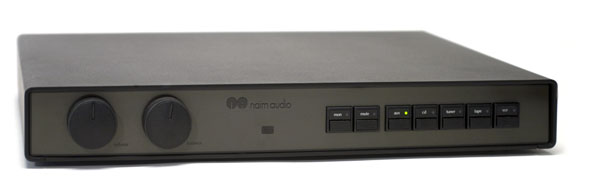 Naim Nait 3
Naim's earliest integrated amps, the Nait 1 and Nait 2, are arguably their most iconic products, and with good reasons. For my assessment of Nait 2, read my Integrated Amp Guide (incidentally one of the most-read articles in my Blog). For the Nait 3, surprisingly one can still find a few reviews on the internet: TONEaudio (the 3R is essentially the 3 with remote) and soundstage (reviewed in tandem with the CD3.5).
Among vintage afficionados and even many Naim old-timers, it is often the older the better. Many, including myself, like the old shoe box look; but I also like the look of the 3 series (so much better than current Naim). The Nait 3 commands a lower second-hand price than its predecessors. This is partly also due to the absence of a phono section (though many buyers now don't use it). The Nait 3 has more power than the 1 and 2, and beside the DIN inputs sports a single RCA input as a concession to modern conveniences (Nait 1 and 2 are DIN only). Since I previously had the 2, I was more than curious about the 3.
Sound Using the Micromega CD-10 as source, via the RCA input, the Nait 3 immediately took control of the Yamaha and never let go. While its control was superior to the Micromega, for a while I was not at all sure which I preferred. The story is intriguing. See further Sonic Comments below.
System:
CD: Micromega CD-10
Amp: Micromega IA-60 or Naim Nait 3
Loudspeakers: Yamaha NS-1000
RCA Interconnects: Canare L-3C2VS and Mogami 2549
RCA to DIN Interconnects: Mogami 2534 and Gotham GAC-4/1 and Gotham GAC-2
 Sonic Comments
- Micromega CD-10 This is a beauty. Whether driving my Brook 7/WE124, the Micromega IA-60 or Naim Nait 3, it delivered prisitine digital, with SOUL. Use with confidence in any system (even a Naim one).
- Micromega CD-10 + IA-60 Given the sterling quality of the CD-10, I'd not just put the performance of the CD-10 + IA-60 down to "synergy" only. The IA-60 is outstanding on its own - its agility and finesse serves up all types of music with great panache, and is class-leading. Miraculously, initially, its rhythm and pace trounces that of the Nait 3 (but see below)! Soundstage is deep and there is plenty of air. When it comes to driving power, I am satisfied by its performance with my Yamaha NS-1000, by no means the easiest speaker to deal with and an unlikely partner. Even in the big Mahler, when one wishes for a bit more power, a good sense of scale is preserved and the music has inexorable momentum. The IA-60's speed and accurate leading edge portrayal more than compensates for its limited power. Those with smaller or more efficient speakers will get even more out of the IA-60, but given the extended treble bright speakers should be avoided.
- Micromega CD-10 + Naim Nait 3 RCA Input For convenience, this is what I used at first. Although the sound was more forward, it had more composure than the Micromega IA-60; on the other hand, the perspective seemed flatter and not as lively; the Mahler did not have a sense of threat, of struggle. DIN Input I borrowed a Naim RCA to DIN interconnect (old style; Chord made) and was immediately served a more dramatic sound. However, like before (when I had the Nait 2) I did not like this cable's roughness and lack of refinement. I decided to DIY some RCA to DIN interconnects with Mogami 2534, Gotham GAC-2 and GAC-4. It took some time to source the archaic DIN connectors, not something the usual electronic store has. My efforts were amply rewarded: the sound through the DIN inputs was superior to the RCA input - better dynamics, leading edge and scale; and Naim's inimitable rhythm and pace is back. Finally I had recaptured the unique feeling I had with my old Nait 2 (previous description). This puts the Nait 3 just a little ahead of the Micromega IA-60 in overall terms, though the latter still has a faster transient and more overt excitement.
- Yamaha NS-1000 They continue to amaze me. Even in totally unfavorable arrangement, against the wall they deliver very good depth, and a properly scaled soundstage, without which the spirit of a Mahler symphony cannot be rendered. This very good recording was totally satisfying.
- Yin vs Yang In a way, this is yin vs yang. The Naim is a little more masculine, more in reserve, in control, but the Micromega beguiles with its mellifluousness.
- Micromega CD-10 As with most Micromega digital products, this is a winner.
- Micromega IA-60 or Naim Nait 3 Despite so many years apart, both serve the music very well. Best buy's.
- Yamaha NS-1000 What can I say! You don't get better speakers than these even at 10 to 100 times the price. Yes, you heard me.
08 August, 2015
Hong Kong High End Audio visual Show 2015 Part II
 Hong Kong High End Audio visual Show 2015 Part II
Part I here.
Although it is a reflection of my own station in life, my continuing declining interest in audio shows is a sad commentary on state of the industry.
When things are priced so unrealistically, they invite ridicule when they perform less than satisfactorily, which is more often than not. Below are some general thoughts.
Worst Sound of Show
This dubious honor goes to Luxman electronics driving YG loudspeaker. For years on end, Luxman has been lousy, driving whatever loudspeakers, so I'll acquit YG here. Shocking to me was the completely unrecognizable voice of the Cantonese opera singer 任劍煇.
Trends
- "Lifestyle" products, which include earphones and headphone amps, continue to proliferate. I don't investigate these, as they are not my preferred lifestyle.
- LP is king. No true hi-end showing will do without a turntable, even as display. In the 80's people said LP is dead, but many things have come and go and the LP is still around. Even old LPs in lousy condition, especially worthless later "mono" LPs, fetch good prices at the show.
- CD is not dead (and I don't think it ever will be), but the same catalogue is being milked again and again and new gimmicks are everywhere. After K2, XR etc, there have been various "_Q" CD's. I believe the terrible CD played at Luxman was an "Ultimate" HQ CD sampler. Priced at over HKD200 (more overseas), it is a farce. Avoid it like the plague.

- CAS/Hi-Res is not doing as well as you think. Although ubiquitous, it is no longer fresh and I fail to see emphasis in this area. Also see below.
- Meridian MQA If it is what it is said to be, I believe all other audio file formats and hardware shall perish. I'll love to see it succeed and all the CAS idiots do their CAS all over again!
- Analog Tape This niche market is not covered.
07 August, 2015
Hong Kong High End Audio visual Show 2015 Part I

Top pic: Best of Show.
Hong Kong High End Audio visual Show 2015 Part I
Part II here.
This year my reporting shall maintain the form adopted last year. In Part I, I am posting the pics and brief comments.
Click pics to enlarge. In order, comments above the pics. To save your time, they are color-coded for sonic merit (Above Average (keep in mind I'm being VERY lenient), good to ok, bad to dreadful):
1. Devialet finally gets good sound from the mighty B&W Nautilus, no doubt SAM'ed. Even their lower end Phantom (with speakers) performed admirably in the vast free space outside the doll's house.
2. French and Swiss don't mix. Focal did not jell with Goldmund. The background lousy pic shows perfectly how the Focal felt, drooping and collapsing

3. Candidate for ugliest room of the show. Sound lackluster too. I was neither impressed by MSB nor Rosso Fiorentino. The TT is hideous looking too.

4. What do you expect from these people? But this year's Harbeth 40.1 and Sugden was a trifle better. Still...

5. Finally, reasonable sound from the revamped Audio Alchemy electronics driving PMC Twenty.26.

6. Lackluster showing from Karan electronics. I didn't even want to find out whether they were driving ASI or the vintage AR's.

7. Kharma never did well at the show, not by YS Sound.

8. Vienna Acoustics was not well served by EMM Labs and Meitner.

9. Lumin could do better, but the B&W and Trigon did not jell.

10. Tidal was anything but in impression.

11. Zu sounds like Zu, not my favorite, but passable with Line Magnetic, which work better with others.

12. Silent display of Audio Valve, but my interest was on the new EAR products.

13. Surprisingly respectable showing from Taiwanese Lawrence loudspeakers driven by German AVM.

14. Silent display of small Swiss Boenicke; small but intricately horn loaded!

15. Vivid is always good, here partnered with Mark Levinson.

16. Better than last year's bigger sibling, but JBL still fails to show off its K2S9900. Again, no decent electronics.

17. Reasonable showing from Electrocompaniet's full system.

18. Hegel fails with Legacy.

19. Full set of Audio Note did not appeal.

20. This has always been one of the better sounding rooms (it is rectangular), and this year is no exception. Elac + Accustic Arts, neither my favorite, but...

21. Terrible looking Acoustic Signature TT. Peak Consult was lackluster with Burmester (what do you expect?)

22. Not as good as last year, but passable Dynaudio driven by Musical Fidelity.

23. Horrid sound from Luxman, as ALWAYS. From the YG, 任劍煇 was UNRECOGNIZABLE.

24. CH electronics barely managed passable result with Ocean Way loudspeakers.

25. Zellaton should sound better than driven by Convergent.

26. Crystal Cable/Siltech must be big money makers to continue to occupy a large room. Only passable performance.

27. With D'Agostino, it is the same, only passable.

28. MBL returns to form this year. Best sound of show.

29. Raidho finally sounds reasonable with Linn.

30. Rockport always managed a good showing.

27 July, 2015
DSD from Vinyl Rip, Harbeth SHL5
 Talk CAS/Talk Vinyl: Ripping Vinyl to Digital
Home Visit: Harbeth Super HL5, E.A.R. 868, Parasound Zphono USB
Overview: Harbeth
This article comes from two visits to my friend 唐吉訶德 Tony's place. A lot has changed between the two visits: Tony has acquired an EAR 868 preamp, close cousin of my 912. I had also brought back from NYC my Parasound Zphono USB expressly for him to play. Also, Tony has experimented extensively with various ripping methods and both DSD and PCM formats.
Digitizing Vinyl
- This is something I am curious about, but not something that I'd do myself on a large scale. I just have too many LPs (numbering more than 10k) - transfer is impossible, especially if you consider the cleanliness required. But I can see the urge to occasionally transfer a favorite LP to digital file, especially if it is not available on CD. Back twenty years ago, a Taiwanese friend moved to work in China and could not bring his vinyls with him, so he digitized his collection, so vinyl ripping is not at all something new to me.
- Some people (including reputable people like AMR/iFi's Thorsten Loesch) say if done well the digital file should sound very close to analog playback. Also, I have noted reviews have favorable comments on Devialet's A to D phono section.
Recently, in the HK forum review33, someone asked about Spendor SP100 vs Harbeth M40. My view expressed can serve as a brief overview of my experience with Harbeth. First, in Chinese:
"...唐吉訶德的問題是 SP100 vs M40。 在我看來,不容易討論。表面看來兩者都是承傳 BBC 的設計,但我相信用起來絕對不一樣。
先說 Spendor, 大家都知道我是它經典產品的粉絲,更用過不少, 不妨看看我的總結。
如果不是玩了號角,我是永遠不會賣 SP100 的。 它容易推, 更受膽。連 Unison Research Smart 845 單端都有超凡效果。我賣了給好朋友,他用普通的 KT88 膽機也推得不錯:
另外一個朋友,也受了我們的影響,買了新款一點的 SP100R, 用 Verdier 膽機也推得很好:
這些都是實例,所以 SP100 受膽是不容置疑的。但我也相信,用適當的石機(如以前的英國合併)也會很好。還有,留意, SP100R 還是大致保留了前身的味道。 我會猜 R2 也一樣。
現在的 Spendor 變了很多,新產品我沒太大興趣。但他們既保留了 SP100, 不會在它身上做太多變動的。這種樣子的東西只有少數的知音(尤其在臺灣和日本)。
再説 Harbeth, 我的經驗少許多,但也不太少。M40 我以前在朋友 Wher 哥舊家聼過,用石后級,效果非常不錯。40.1 就沒聼過。
最近在 ”Conrad Johnson Classic 60 Power Amp“ 這 thread 裏,我說過我對膽機推 Harbeth 的保留:
”...用在 Harbeth 身上,我有點保留。多年前我玩過第一代 Compact 7 及 HL5。用膽機推,高中漂亮,但低音始終不好。M30 我不敢說,你可去 Harbeth 同好會 問問。
講到英國喇叭,很多人都以爲像 LS3/5 一樣受膽, 其實不然。 除了 Harbeth 外,我玩過的Celestion SL6, Spendor SP1/2, 乃至 Proac Tablette 2,都不容易用膽玩得好。
在我看來,Harbeth 的低音比較難搞。連他們的 LS3/5A 低音都和其它 LS3/5A 不一樣,多些。
爲了了解 40.1 我在網上看了很多資料,有些非常值得細讀, 尤其是 Stereophile:
這幾篇文章一流,Harbeth 同好必讀。 除了 Art Dudley 的 review 外,還有編輯 John Atkinson 和 Alan Shaw 來回辯駁,都圍繞著低音的問題。中國人的音響雜誌什麽時候才可以出一些這樣的文章和對話!
6moons 的波蘭人也值得細讀,不像 Art Dudley, 他用的是石機.
玩 Harbeth, 我自己可能會選擇膽前石後。
M40.1 太貴了,我會偏向 SP100R2...".
To translate, basically, based on my experience with the old Compact 7 and HL5, my own general advice on Harbeth to others is (1) Harbeth loudspeakers have very good treble and midrange, but (2) do not think of them as tube-friendly BBC-derived speakers; (3) bass control is the difficult part, so consider solid state amp rather than tube amp. If you carefully read this Stereophile link, you shall see much debate between the reviewers and Harbeth's Alan Shaw on the bass response, a fascinating read.
Harbeth Super HL5
Many years ago, I owned a pair of Compact 7, brother of the original HL-5. Like the Spendor SP1/2 and Celestion SL-6SI that I had, the treble and midrange were excellent with various tube amps, but not the bass, which would sound loose. I never owned the 2-way HL-5 but heard it many times; it too had bass that was hard to control. I am a tube man, but these experiences led me to conclude Harbeth's match better with solid state. The HL-5 evolved into an ES version. Then, a supertweeter was added and it became the Super HL5. The Super HL5 was generally well reviewed (see TAS; 6moons; StereoTimes) and sold well. The latest version is termed the Super HL5Plus.

 Parasound Zphono USB (official info)
Parasound's ultra-compact and budget Z series products are popular with consumers and professionals alike. The Zphono USB is basically a Zphono with addition of an A to D Convertor. It has been well reviewed. The best read is enjoythemusic, which compares the analog playback with digitized copies. For some reason, Parasound has discontinued it, though at the time of writing it is still available.
While I was in NYC, I bought one at discounted price. I tried it briefly with my Denon DL-103 and was surprised by its solid performance as a phonoamp. I never got around to digitizing, so I took it back for Tony to play.
EAR 868 Preamp
Basically, this is said to be similar to my 912 (see my Overview EAR). It has been well reviewed by Positive feedback and soundstage. Tony bought a new one and had to run it in for a long time (small phono signals, large number of transformers). I also lent him my 912 to compare.
There are significant differences between the 868 and 912. The 868 uses 2 instead of 3 tubes in the phono section, and it lacks the 3-position attenuation feature. And of course, no meters.
 Home Visit II
Like me now, my friend Tony lives in a small flat. Although the effective listening area is not much more than 100 sq ft, that doesn't dampen his enthusiasm. Tony is an experienced audiophile who has played with a large number of gears. Perhaps due to space limitation, in recent years he has delved fully into CAS. Now, he has embarked on digitizing vinyls, which was the real raison d'etre for my two visits. His current equipment:
Vinyl Setup: VPI/Kuzma 4Point/Ortofon Jubilee
Phonoamp: Parasound Zphono USB or EAR 868 built-in phono
ADC for vinyl ripping: Parasound Zphono USB or Terratec
CAS Server: Macbook Pro/Audirvana
DAC (PCM): Weiss DAC2
DAC (PCM): Meridian Explorer
Preamp; EAR 868
Amp: Marantz 8B
Speakers: Harbeth SHL-5

 Click pics to enlarge. R, setup; L, Korg
Home Visit I
The visit was a few months ago. Equipment was rather different:
Vinyl Setup: VPI/Kuzma 4Point/Ortofon Rohmann
Phonoamp: EAR 834P or Hovland built-in phono
ADC for vinyl ripping: Korg MR-2000S (DSD files)
CAS Server: Macbook Pro/Audirvana
Digital Interface (DDC): Weiss INT204
DAC (PCM): Weiss DAC2
Preamp; Hovland HP-100
Amp: ARC D-115MkII
Speakers: Harbeth SHL-5
Detour: ARC D-115 The reason for the detour is my personal interest in ARC, and the D115 (see here). This unit actually used to be mine, and it was my second one! Back in the late 90's I used to own one, and it was really powerful, capable to drive almost anything. My first sample used Sovtek tubes and the sound was a trifle bland compared to other tube amps, more modern if you like. This second sample though was fitted with the original Philips 6550 (themselves worth quite a bit now) and it sounded better. When I sold it to Tony, I was shocked how good it sounded driving the JBL 4312's! Massive, room-filling sound. I almost wanted to renege on the deal! A bargain!
Comments
- Vinyl Setup Tony's vinyl setup is fairly high-end. Although I am generally not a fan of VPI turntables (especially older ones, imho often lacking in rhythmic verve), as a Kuzma (Stabi/Stogi) and Ortofon (MC3000/5000/Kontrapunkt C) user, I have reasonable confidence in the neutrality of his source. Ditto the excellent amplification used on both visits.
- General Sound/Harbeth Super HL5 For such a small space, sound was properly scaled, decent enough. Particularly gratifying was the good bass control of the Harbeth. Based on my previous experience with the Compact 7 and HL-5, I know that is not easy to achieve, so kudos to the system. Naturally, the Harbeth sounded more run in during the second visit.
- Vinyl Rips/Visit I On this occasion, Audirvana was used to rip to DSD. Weiss INT204 converts the DSD on-the-fly to PCM192. The Korg can play DSD files but was not heard on this visit (and has since broken down). During this visit Tony's vinyl setup was in overhaul and I heard only stored files. My recollection is they sounded similar to, but not as good as Visit II.
- Vinyl Rips/Visit II On this occasion PCM was used. I stayed for a long time and compared files derived from various ripping methods with direct analog playback. In general, the files sound very close to direct analog playback and accurately reflect the characters of different equipment.
- Parasound Zphono phono section vs EAR 868 Tonally, the two are very similar, indeed almost dead-ringers. However, the EAR has better dynamics. This is in accord with my previous impressions in NYC (not as dynamic as my reference gears, as expected).
- Parasound Zphono USB in action Compared with Tony's regular ADC (Terratec), files ripped by the Parasound is just a little less detailed. However, it seems warmer and flows more naturally. Note here that the Parasound is only 16/44.1, not the 24/96 and 24/192 files made by Tony's regular ADC. Tony also likes its volume control for recording.
- EAR 868 vs 912 This is based on Tony's experience. Tony says the 912 is a bit better in every way. Also, he said the meters of the 912 are supremely useful when transcribing vinyls. Tony compulsively archives and crosschecks his rips, and so was able to play me the same cuts ripped previously using the 912 - they sounded very close to those ripped using the 868.
- 24/96 vs 24/192 Tony says often he prefers 96 to 192. Again, this is in accord with my experiences.
- Meridian Explorer Briefly we heard the Explorer in lieu of the Weiss. Though less dynamic, the little Explorer is warmer and rhythmically more suave.
- Ripped vinyl files can sound very similar to analog playback. This is indeed food for thought. For me, analog source is superior to digital source not because it has more tonal allure, but that it brings more force and drama to the proceedings (especially with pop music). It seems that this force and drama is not (all) lost after proper digitizing. Fascinating.
- The Parasound Zphono USB is a screaming bargain!
12 July, 2015
Letter from NYC (44) 2015 (6): Feasts
 Click pics to enlarge.
Letter from NYC (44) 2015 (6): Feasts
Warning: This is basically a diary type entry on certain incorrigible audiophiles, and I wish to convey the joy we had in gatherings; nothing much on hifi matters.
1. Andy's Surprise
One day my friend and analog guru Andy L called up and said he is inviting everyone to his house for lunch. There will be a hired cook and a surprise. This had me guessing to no avail. Someone he wants us to meet? But we audio people don't usually get so personal, no?
When I arrived the house was packed, wine was flowing, and the cook was working frantically in the kitchen. The surprise turned out to be Andy's newest acquisition, a mint Goldmund Reference turntable (with Decca cartridge; you can barely see the TT in the top pic - center, behind another TT). Indeed, that is worth celebrating!
LR Setup The living room setup has changed a lot since my last report (here). Andy's JBL's, which I never got to report on, now are in the dining room (see lower pic) and the living room corners are taken up by Altec's! Those are A5 cabinets housing 515's with the 288's on top. Low bass is augmented by subwoofers. Preamp is an ARC SP-6C and amps are Canary 300B monoblocks. System is not yet perfectly tuned but still sounds decent enough. You wouldn't expect less from Andy.
 The Feast The diminutive cook, a middle aged woman from the 四川 Sichuan (Szechuan) province of China, used to be a caretaker for Andy's mother. What a find! This is Sichuan cuisine at its authentic best. The lady actually brings back from her home province some of the indispensable ingredients. We talked at length with her after the meal. Like all great cooks, she prides herself on the layers, subtleties and differentiation her food brings to the palette. No two dishes should taste the same (and they didn't). I live in HK, where Sichuan food is hardly ever authentic. I travel often to nearby Shenzhen, where Sichuan food abounds, but still this meal got them all beat. 有痲有辣,有濃有淡,五味俱全。
2. Two Much of a Good Thing?
Soon after, Andy hosted a similar, but smaller, similarly catered lunch party for his senior citizen upstate NY (report here) and younger Long Island friends (a psychologist audiophile and his beautiful nurse girlfriend). It was nice to meet up with Milty and Ming (Lao Tang) again, but for an incidence.
Near the end of the delicious lunch, I turned around to talk to Ming, and he slumped on my shoulder! Our competent nurse determined he had briefly lost his pulse due to orthostatic hypotension. Nonetheless, we played safe and called in the medics, who insisted on talking him to the hospital, where he spent the the evening, until his wife (also a nurse) took him home AMA. Ming had simply not eaten and drunken enough water, we all thought.
3. Return Visit to Upstate NY
Soon after we returned to Upstate. Milty's system had changed a bit, with a Schiit Gugnir DAC and some Chinese CDP and preamp at the front. We spent a little time tweaking his stuff before having a big lunch, as usual. Then we went to Ming's place. He has embraced CAS, and even gave me his Roksan transport!!!! I have to thank Ming here. Also, Ming treated us to a marvelous meal at a local Greek restaurant. Superb!
4. Simple is Best
I actually got to meet up with Andy once more, a simple noodle lunch with just Simon and Mark. Andy's Noodle with Beef is simply excellent, and we enjoyed a few bottles of wine. Wonderful!
後記:廣東幫也給我帶來不少歡樂。諸多“華”哥都好客。台山華又啡又茶,裝修華又帶我拜訪了馬拉華,各位聲音都有獨特之處。就此謝了。
08 July, 2015
SME 3012, Thorens TD-125, Pioneer PL-10, Denon DL-103, Shure SC35C
 Letter from NYC (43) 2015 (5): The Long and Winding Road
Talk Vinyl: Saving SME 3012; Rehabilitation of Thorens TD-125 and Pioneer PL-10
Talk Vinyl: Turntable Setup
Review: Denon DL-304, Part II
Review: Shure SC35C, Part I
Attention: In the Later Shure SC35C, Part II I discovered something and reversed the finding in Part I.
Acknowledgement: I want to thank my friend and analog guru Andy L for his gift of 2 hex-wrenches for SME, without which I'd not have been able to setup the SME 3012.
Related Links from this Blog:
All my Turntables (Arms and Cartridges): A (Rambling) Overview for background material on Thorens TD-125 and Pioneer PL-10.
2011 Report on reactivation of my Thorens TD-124 (with SME 3009S2i/Denon DL-304).
Previous report of Denon DL-304 on the Thorens TD-125/3009S2i
Warning: Purists who lose sleep over setup precision need not read further. You have been warned.
A few years ago, my friend Mark gave me a Thorens TD-124 and a really beat SME 3012. In 2011, with help of my friend and analog guru Andy L we restored the TD-124 to use and it has become my mainstay in Reference System 2. Finally, four years later I managed to revamp the SME 3012 to working condition, but not before a lot of hard work!

Saving "SME 3012"
This particular specimen of the SME 3012 is in poor condition. I wonder where the hell it had been before Mark found it, and if I can still call it an SME 3012 (therefore the brackets)!
Deteriorated Rubber The rubber coupler between the arm tube and counterweight bearing tube had deteriorated, with the latter drooping. It still holds and for now that is the way it will be.
 Incomplete Counterweight The main part of the counterweight as well as the rider weight are missing. The small counterweight on it is not enough to balance even a light cartridge, and I had to fix some weight over it by blu-tac to achieve balance (see right pic). Andy L told me the rider weight is very important for balance, but until I source the rest of the counterweight (expensive no doubt) that is the way it will have to be.
Head Shell Missing This should have the traditional SME headshell with just two holes for headshell screws. Given my balance woes, I decided to use a very light and cheap retro-style head shell with screw slots that looks like a replica of my Pioneer head shell (see top pic and pic below). Looks good with the SME.
Headshell Collar Problem This almost caused me to give up! The collar had been messed up. It was rotated but getting it back in position was not hard. The real headache was inside: 3 out of 4 pins were sunken and frozen, not making contact with head shell pins when checked by multimeter. I wanted to remove the collar and clean the pins. Andy told me there should be a small screw underneath (like my SME 3009) but there is none, just a longitudinal groove. Perhaps this is a crimped version (could not find anything on the internet)? If anyone has info on this, let me know. I did not have pure alcohol and so applied a liberal amount of 70% rubbing alcohol and some aerosol, and repeated several times. No luck even after prolonged and rigorous probing with the leads of my multimeter. Finally, I resorted to WD40 (I know, it is oil based and not so good). After a few days, I was ecstatic to find 2 of the 3 frozen pins had popped out completely, while the last one did just a little, enough to make contact, perhaps? With the head shell installed, I used the multimeter to test continuity and discovered a fresh set of problems.
Pin-Out Mystery I tested for continuity between the head shell cartridge cables and the output terminals. At first, I got no continuity on all 4 pins. In desperation, and with the realization that everything is skewed about this particular specimen, I tested all combinations, and soon found the pin out at the collar to be all screwed up. All 4 pins have continuity, but not according to convention (that is, looking at the head shell, red is not top right). This is not a problem; I mapped it out and simply re-shuffled the cartridge clips. I know there are instances of pin out deviations, but this one matches with none I can found on the internet. Again, perhaps some reader can enlighten me.
No Connecting Cable Well, like many others I am not fond of the original SME cable anyway. With the connections sorted out, I decided to re-terminate in RCA's. I made a small board out of two small rectangular slices of expired credit cards and fixed the RCA terminals on it. It is a bit warped, emphatically not elegant but it works (see pics).
No Anti-Skating Assembly For a 12" arm, this should not be a problem. I shall do without. Note the Thomas Schick arm does not even have this feature.
Armboard for Thorens TD-124 Two years ago, I bought in the second-hand market in HK an unused acrylic armboard for the 3012, said to be from Singapore (if I remember correctly). I am not fond of acrylic, but it is better to get the job done than wait. I took it back to NYC last year but misplaced it. This year I found it and got down to work. Hell! The base plate screw holes were drilled too small for the screws to go in all the way. Anyway, the thing felt reasonably secure and I left it at that, for now. The base plate is missing one rubber grommet, so in lieu I used a little bit of paper to achieve leverage (you can see this if you enlarge the right pic). I know you are frowning!

Cartridge Well, what better choice than the Denon DL-103? In the previous article, I just installed the variant DL-A100, so I decided on this most humble, and most over-performing, of cartridges. After all, this is what I am most familiar with, and still use in HK (here)
Alignment Lacking the SME protractor, and lacking the original SME head-shell, I used the Dr. Feikert protractor. I used the Stevenson favored by SME. I aligned the first point (step 1). After much fiddling, the end groove (step 3) still aligns much better than the start (step 2). Let it be!
Whew! Done!
Thorens TD-125 Rehabilitated
When I reactivated the Thorens TD-124, my SME 3009S2i, together with the Denon DL-304, was removed from my TD-125 (see link above) and so my TD-125 went MIA. Now, the 3009S2i was returned to the TD-125, together with the Denon DL-304 carrtdige. Welcome back, old friend!
 Shure SC35C/Pioneer PL-10 Rehabilitated
The cause for resurrecting this first TT of mine was because of a recent Stereophile article by Herb Reichert, in which he (like others on the net) praises the evergreen $35 DJ Shure SC35C cartridge, used on a cheap Pioneer direct-drive PLX-1000 (his review of the TT here). Now, HR is a seasoned reviewer (though now on the cheap), and the Pioneer is almost the same thing as my AT-PL120. As he got curious about the Shure, I did too. I enlisted the Pioneer PL-10 for the purpose.
The PL-10 has no VTA adjustment, but it was designed in an era for Shure cartridges, and sure enough VTA looks to be correct. Alignment was easily achieved too.
Associated Gears (Reference System II):
-Preamp: Shindo Monbrisson (MC input used for Denon DL-103; MM for Shure SC35C)
-SUT: WE 285 for Denon DL-304 (into Shindo's MM input)
-Amp: Wavac MD-811
-Loudspeakers: YL 4-way horns
LP's Used for Testing Same as in my recent big phonoamp report.
Sonic Impressions/Comments
- Thorens TD124/SME 3012/Denon DL-103 I bet the SME 3012/Denon DL-103 combo is seen on as many decent TT's (certainly Garrard's and Thorens) as anything else! Tried and true, for sure. On the TD-124, compared to the SME 3009S2i/Denon DL-304 (see link above), the sound is richer, and background is darker. Compared to my Thorens TD-309/Denon DL-A100 (cartridge also new; see here), the sound is more solid and effortless. From memory, compared to my Garrard 301/Thomas Schick 12"/Denon DL-103 "Midas" (see here), the sound is crispier, with faster transient, but here I think the characteristics of the TT influence the sound greatly. However I look at it, even in barely restored condition, the venerable arm is a winner and deserves its reputation. Although I am not necessarily a fan of 12" arms, considering that I have used a large number of SME arms in the past, including the 3009, 3009R, 3009S2i, 3010R etc, this fills in the gap and is long due! Even if the arm is incomplete, I am a happy man! Andy L though does not think too highly of SME and uses none on any of his many TT's.
- Thorens TD-125/SME3009S2i/Denon DL-304 Given my long familiarity with the Denon DL-304 on the SME 3009S2i, would this return to ground zero disappoint? Not at all! The SME3009S2i/Denon DL-304 gives a slightly lighter sound on the TD-125 than on the TD-124, but it is more similar than different. Excellent by any means, and welcome back! This also re-affirms what a great TT the TD-125 is!
- Denon DL-103 I have continuously used this cartridge for almost 2 decades, and can claim long familiarity. On the Rega RB250/300 arm it has always sounded very good (I know there are detractors). For my priorities, it has almost always performed miraculously on innumerable combos. It is the drama queen, and even much more expensive cartridges usually fail to approach its human touch. On a 12" arm, it certainly has more composure, but even if you only have a shorter/medium mass arm, you should still try out this classic. Like it or not, one of a kind. I should tell you Andy L thinks the cartridge, though otherwise fine, to be lacking in full range deep bass.
- Denon DL-304 Despite being from the same family, this cartridge is way different from the DL-103. Its low output demands the best from partnering gears. Optimally set up, the sound is very different from the DL-103. It has less drama, more refinement. The DL-304 is cheaper than a decent Ortofon MC, but I think just as good (if you can handle it), and this is coming from a long time Ortofon MC user. Given its low output, SUT's are recommended as an option.
- Shure SC35C In the 70's and 80's, I have used almost all incarnations of the V15, from the II to the V. I have always liked their neutral and natural sound. Alas, the V15 is no more (I seriously don't understand why), and the closest you can get is a 97ED, which is a damn fine MM too. I had used the V15 to fine effect on the Pioneer PL-10, but the SC35C disappoints. It is not run-in, but the performance was so bad I was literally taken aback. The sound is veiled, without resolution at either end of the frequency spectrum. Never had I tried something praised in the mainstream press to such dire results. In desperation, I substituted the transistor iFi iPhono or Nagra BPA (report here) and the result was better than the tubed MM of the Shindo due to more extended frequency extremes. This kind of result was completely out of my expectation, and has never happened before! Still, despite the improvement the result was not what you'd call great. I also briefly tried the SC35C on my AT-PL120 direct drive, to better but still not great effect. Failure, round one. Maybe it takes a long time to run in? (!ATTENTION: I later found out the reason for the bad sound: see SC35C, Part II)
- Setup Precision We try, but we don't always achieve precision. Sometimes, it is not our fault and it is ridiculous to lose sleep over it. A great setup (such as the TD-124/3012/DL-103) will triumph no matter what. The corollary is something inferior will still be inferior even if perfectly set up. Andy L seems to share my kind of philosophy. No matter how much you align, adjust SRA, VTA etc, analog is still inexact. As Andy says, setting up for a given LP doesn't mean the next one will sound as good. Sleep well! I do.
Article finished in HK
Subscribe to:
Posts (Atom)

 Posts
Posts