31 March, 2019

HiFi Basics Cables Gotham Cables


HiFi Basics IX: Cables - A Guide, or, do they make a difference?
Guide to Gotham Cables

The short answer is: Absolutely, and sometimes even profound. Below I shall detail some of my beliefs, and in so doing you will know well what I personally use:

InterConnects This is the most important Category. Almost all I write here are applicable to cables elsewhere in the playback chain. 
  • Cables as Tone Controls Nothing illustrates the conundrum of audio "titration" more than cable swapping - we all do it, though there are people who believe cables make no difference (false, and forget them). The problem with the Cable Freak (many out there) is that he overdoes it, and swings too often between a craving for more "transparency/neutrality" and more warmth, not realizing the real problem lies elsewhere in his system. The solid state user and modern loudspeaker users (I include most audio reviewers in this group) are more susceptible, because their gears are more often than not on the sterile and "white" side, even unlistenable. Tube Users and Vintage Aficionados' fare better, and generally tend not to use very expensive cables (well, let us not forget they also tend to roll tubes like using tone controls). Advice: never spend too much on cables, but do have a few spares for swappingThink of Cables as no more than Finishing Touches on a System (but they do make a difference).
  • Red and White By this I mean the generic cables that come free with most electronics. These vary greatly in quality, but they all have one thing in common - reasonable, even good delivery of midrange - but on the down side they are invariably deficient in treble and bass extension, and certainly not very dynamic at all. A huge army of cable "objectivists" believe that is all you need since they are indistinguishable from more expensive cables. Not so, but one should not laugh too hard. Why? Because many expensive cables that manipulate the sound sound worse. At least these cables are forgiving, whereas many "boutique" and "artisan" (an overused word, usually employed to justify high price, that I detest) cables are highly unmusical.
  • Audiophile Cable Companies Basically, like most companies that offer accessories and tweaking devices (most are lousy), the audiophile cable companies capitalize on system anomalies (the more expensive, the more so)! The jargons used and the false promises are almost criminal. I also really do not believe audio magazines (trade or net) should review a lot of cables, as it is so system dependent. It is also worth noting that there is little objective measurements on cables (even Stereophile does not offer any measurements, not even a mention of capacitance and resistance etc). As in much of hifi, the few measurement parameters are hardly adequate. Two cables of close resistance or capacitance are likely to sound very different. In HK I have heard many expensive cables (top of the line Siltech and Oracle, for example) in many expensive systems (especially at dealers), but I cannot say that they offer anything special. In fact, they more often than not make the systems too colored. Just to name a few, Siltech, Nordost, Cardas, VdH, Audioquest etc, I have heard a lot of them and generally I do not like them. Ditto MIT, Oracle etc, but their resistor networks (which I'd rather not have) fare a little better. Haven't you noticed one thing? The cable marketing is detestably basically "the bigger the better", so as they get more expensive, the fatter and heavier they get. That means all kinds of extraneous and unwanted materials get into the cable, just to impress you. What has that got to do with "straight wire with gain"? Weird Geometries Many high end cables employ conductors of different AWG and unusual geometry. Were you to terminate yourself, you'd be lost as to what strand to use for what. I definitely frown upon this, as this goes against the simple is best (not science perhaps, but a good philosophy for so many things) rule and, not surprisingly, this kind of manipulation is almost the exclusive provenance of the hifi world. If you look at respectable professional cables (below), they don't do this at all.   
    • Professional Cables Although the different Professional Cables sound different (think Gotham vs Mogami vs Belden), the companies honestly strive for truthful reproduction, including neutrality and transparency (unlike hifi cable companies), or a balance thereof, and so are within a safety envelope, and one can use the differences between professional cables to adjust one's system. This also illustrates that, best intention notwithstanding, there is no one definition of neutrality or transparency (same with recording engineers). The professional cable companies also give clear specifications for their products, something the audiophile cable sector just largely ignores. For myself, I'd be happy to use mostly Gotham Cables, because within this family different models sound somewhat different, and the differences can be exploited (the "Size" Bullet below lists the models I use). I have three large systems and multiple sources, and they are all wired almost exclusively with Gotham. Even so, occasionally I do have to use something else, like Mogami or DIY "47 Labs".
    • "Western Electric"/Vintage These are cloth types and there are many variations. Most of them are not optimal, but really old high AWG tin-plated solid cores that have an insulating layer that has to be scraped off are very good. These can be very detailed, and too much cannot be used at once.
    • Constructing Cables Given the success I have had with Professional Cables, I find it largely unnecessary to construct cables, by which I mean making whole cables, not just soldering the connectors (except for a few pairs using antique WE material, which have their own sound). This is actually a whole other world, and many, including a few friends, spend a huge amount of time trying different conductors and other materials, time better spent listening to music. Take the most popular, CAT 5, yes, I have listened to many, some with heavy braiding, but while they sound reasonable the professional cables are better.
    • Copper Cables Copper is basically the standard, and cannot be easily surpassed, not by silver, and you can forget about gold. Copper is good as is. Silver plating makes it worse - avoid. The "surprise" is, older tin-plated copper usually sound pretty good. I am sure that is heresy to many, so take it with a grain of salt.
    • Silver Cables More often than not, silver sounds paler and inferior to copper cables. I actually have quite a few old ones lying around. The only one I still employ from time to time, and can recommend, is Kimber KCAG, which has a very simple geometry and very neutral sound (the connector is also excellent). I have two old Audio Note silver cables (made in Japan, before the schism) that sound quite good (AN-S and AN-V), but both can be a little pale and indeed not quite neutral. These are likely more like the Kondo cables now. I have also heard some current AN UK silver cables; at my friend WSS' place, I prefer my Gotham cables.
    • Size In general, the softer the cable, the better the sound (think of the softness of Gotham, even Mogami, less so Belden). Don't you think the better the copper, the softer it is? I believe the thicker the diameter, the more colored the sound (think NBS, Cardas etc). Size can be due to many things. Number of Conductors I don't like a large number of conductors. Two conductors (e.g. Gotham GAC-2, GAC-1 Ultra Pro), Four Conductors (e.g. Gotham GAC-2111, "EMT replica", GAC-4, both used 2+2), and often just One Conductor (e.g., my beloved coaxial Gotham DGS-1; using the shield as the other conductor) work well for me in all three of my systems. AWG the size of each conductor matters a lotI prefer smaller conductors (higher AWG numbers), 22-24 usually working the best in my book. Shielding I don't like heavily shielded cables, as even non-shielded cables work well in my systems. Most Gotham's, being professional, have non-intrusive (soft) shielding (and good shielding at that). Insulation and Dielectric Material The more of these used, the worse the sound.
    • Stranded vs Solid Core For my taste, stranded is almost always better. Stranded has better and more even frequency response (why professional cables use them), important for classical music replay, while solid core projects the midrange more, which is why certain audiophiles prefer them. It should be noted CAT 5 is solid core. The larger the core diameter, the more imprecise the sound (which is why 47 Labs solid core is of very high AWG), though some may like it because because of a perceived gain in impact.
    • Length Shorter lengths sound less relaxed. 1.5 - 2 meters is the usual recommendation. Longer interconnects are usually frowned upon, but many of us use them. For me, I like to have my preamp in front of or next to me, which means a longer interconnect to the amp. The deficiencies of longer lengths are mildly subtractive in nature, sometimes perhaps even beneficial and, most importantly, can be easily made up elsewhere. I don't understand audiophiles who use short cables, and struggle to connect every time they swap components. If cables make you use swear words, that is not a life. Unfortunately, that is true of too many audiophiles.
    • Connectors RCA Let's face it, there is NO perfect RCA plug for all seasons, especially for vintage users who are often faced with tightly spaced connectors. For me, the plug should be small and utilize a minimal amount of metal, like Switchcraft and similar Neutrik/Rean look-alikes (Amphenol is OK too). Bullet Plug is great but not for me as it will ruin vintage connectors. Chunky connectors I do not like (I for one dispute WBT sounds good, and I own several sets)! They are made to accommodate all the extraneous layers of unwelcome elements of thick cables. Why have a cable with internally small gauged conductors end up in a massive block of metal? It is idiotic. XLR In many ways I can relate to XLR connectors, which are by nature chunky (yet their elements that actually make contact are not chunky), more than chunky and shiny RCA connectors. A simple and good quality Neutrix (or Switchcraft or whatever) is better quality than many over-priced chunky RCA connectors. You figure.
    Loudspeaker Cables In general, in terms of cable construction, my preferences for these are much like mine for interconnects. Forget stiff, unwieldy cables. Opt for fewer conductors, stranded, professional, copper, straightforward geometry. Some concerns particular for loudspeaker cables:

    • Bare Wire Given the proper binding post, I believe bare wire sounds better. The more efficient the loudspeaker, the more bare wires of high AWG (thin) sound good. And bare wire connection is easier for users of vintage gear. My favorite is Belden 9497 and I connect it bare on both sides. "Western Electric" These cloth type cables are popular with horn and vintage enthusiasts, but most of them are not good. Tinning with Solder Some people like tinning the end with a little solder, but I don't like this - while it keeps the strands together, the contact is actually less good than just wire alone (though fraying is an issue).
    • Thin vs Thicker Cables It is my opinion thicker cables with larger or more conductors usually do not sound as good. This is evidenced by my use of Gotham: over the years, in most applications and with most smaller loudspeakers the Gotham 50010 and 50025 sounded better than the thickest 50040 (10/25/40 are diameters), with better agility, resolution and clarity. Another memory lingers in the mind: with the LS3/5A, the Kimber 4TC sounds a lot better than the 8TC. Current Demands This is the exception. If I run less efficient loudspeakers like ATC or Magnepan, the 50040 would fare better, more composure and dynamics due to better current delivery. Here a Belden 9497 still sounds very good tonally, but you can tell it is reined in (however, better that than runaway, which is how a lot of audiophile cables sound).
    • Bi-Wire? This is controversial - many are adamant that a "better" Single Wire Cable + Jumpers are better than a bi-wire cable. I don't hear it that way. Grant you, I agree, in many instances, especially smaller loudspeakers, bi-wire is a gimmick, but I have quite extensive experience with larger or more inefficient loudspeakers, where bi-wire is simply more dynamic. This is true of the B&W Matrix 801 Mk II, Spendor SP-100 (it is actually tri-wire, so use jumpers between the tweeter and midrange inputs), Harbeth LS5/12 (magnificent!) and Magnepan. My favorite bi-wire cable is the Belden 1810A. Jumpers Should you have to use jumpers, you must replace the lousy ones that come stock - they are woefully bad. I myself use a short run of loudspeaker cable, particularly the Belden 9497.
      Image result for screw on fork banana vintage
    • Spade vs Banana I abhor spades and use basically bare wires or Bananas. I shake my head when I see audiophiles fasten a thick spade with a wrench. Banana Connector The best is the BFA type (see pic). BFA stand for British Federation of Audio, and Linn uses this for their amplifiers. To me, the merit of this is the thin and curled copper sleeve, ensuring maximal contact. I use the so-called Nakamichi (Chinese), which are convenient screw-on types, but it would be perhaps even better to use just the copper sleeve without a connecting block (available cheaply on Ebay) and wrap a heat-shrink around it. Vintage Connection Short of bare wire, banana is still better than spades for vintage amps with their screw-on terminals. I use the small 5 mm fork adaptor pictured.
    Digital Cables These too make a great difference in sound. Again, most of the observations on interconnects apply. At my peak I ran several digital systems using my Genesis Digital Lens as Switchboard, and have tried out many. For DAC's that can accept many different inputs, one can switch for fun, but if you ask me there is no significant superiority when it comes to XLR vs RCA/BNC.
    • RCA/Coaxial/S/PDIF This is the most common Input. I use solely professional cables, usually the incomparable Belden 1694A and sometimes the Gotham GAC-1 (10070; not to be confused with the GAC-1 interconnect, 10001). Coaxial vs USB Incidentally, whenever I compare, the Coaxial sounds better to me.
    • BNC This is always a problem. Some manufacturers (like ARC) regard it as superior to RCA and do not provide for the latter. I use an adaptor, as it is difficult to get proper BNC connectors that allow you to solder (I do not have crimping tools).
    • AES/EBU Some regard this balanced connection as superior to RCA, but I am not so sure. I do use it. My favorite is Gotham GAC-2 (10601; not to be confused with Interconnect GAC-2, 10401). It is a very soft and thin cable. On the Sonic Frontier SFD-II Mk II, it sounds better than the GAC-1/10070.
    • AT&T This is basically defunct now, but on older transports and DAC's (like the Sonic Frontier SFD-II, Theta Data etc) I find it superior. A common complaint is brightness, but not to this tube user!
    • Optical This is definitely the least ideal of the digital cable formats. Generic ones really suck. The only one that I have found that sounds surprisingly good is the Van den Hull Optocoupler, an anomaly since I usually find anything from that company uninspiring/colored.
    • I2F Firewire There are several formats regarded by some as superior. I don't use them, but I have heard quite a few expensive setups employing these connections, none remotely musical.
    Power Cords This for me is the last frontier, which I have not really explored. They do make a difference, but I think much less in magnitude than interconnects. I have heard and seem tons of expensive power cords and cannot help come away from the conclusion that most are colored, the bigger the more so. I myself would stick to my principles - softer cables, not too thick. One day I do intend to DIY a few more, including of course Gotham (which some of my fellow Gotham users endorse highly. Connectors I do use decent ones, but perhaps hospital grade is over-doing it.

    Corollary/Postscript Perhaps the strongest persuasion for not using expensive cables is my own audition experience. Over the years I have heard at least hundreds of setups large and small (including dealers), cheap and expensive, yet there is one common observation: those who spend a lot on cables usually have the most unbalanced sound. That alone is proof enough that most cables mess up rather than improve the sound.

    17 March, 2019

    Elekit TU-8150, Almarro M1A, Dayton B652, JBL L20T, Micromega MyDAC

    Dayton B652 on top of Almarro M1A. Click to enlarge.

    Elekit TU-8150 (DX), Part III
    Almarro M1A vs Dayton B652 vs JBL L20T
    Review: JBL L20T, Part III
    Review: Micromega MyDAC, Part III

    *Elekit TU-8150: Part I (Basic Info; 6AQ5 vs 6V6), Part II (Pentode vs Triode; Input 1 vs 2), Part IV (Input 2 mod).

    *JBL L20T: Part I (Basic Info), Part II (partnered by SMSL T-Amp, interesting contrast to partnership with Elekit).

    *Micromega MyDAC: Part I (Basic Info and Test), Part II (loose ends, including desktop).

    I didn't really want to switch out my big horns, but in the name of thoroughness, there was still ground to cover. I tried out other smaller loudspeakers for a glimpse into real-world compatibility, so as readers and potential buyers can judge for themselves.

    Horses for Courses In so doing, I discovered that, due to the design, it was more complicated and time consuming than I anticipated and I had to re-think and even partly unlearn what I had found before. However, as a result, I learned more than I thought I would! Now, I am pleased.

    Due to the issues involved (differences in gain structure between the 2 inputs, as well as the presence of an Op Amp preamp stage), the Listening Notes are organized a little differently from usual. Readers should cross-reference with Part II for best understanding.

    For most of the listening I used my System II front-end: Sony XA5400ES CDP; Thorens TD-125/SME 3019i/Denon DL-304; Aurorasound Vida Phonoamp;  Shindo Monbrisson Full-Function Preamp. Cables are various Gotham for interconnects and Belden 9497 for loudspeakers.

    Listening Notes
    • The Reality of 2.9/1.6 Watts When it comes to such flea power, I probably have experienced more than most people, including SE fans. My own Sun Audio VT25/10 SET amp (estimated 1.5-2 Watts) worked reasonably well with my Klipsch La Scala. My 45 amp (estimated 2.5 Watts; DIY'ed by a friend) worked superbly well with both my La Scala and even Tannoy Canterbury. I have heard my friend's Sun Audio 6V6 SE amp work with his Altec 605, and another friend's Sun Audio 45 SET amp (same amp as the VT25/10, just slightly differently configured) work well with his Lowther. But certainly all flea powered amps are not all created equal, and the rated output power, like much else measured in hifi, is only an indicator. A 1.5 Watts Western Electric Push-Pull Amp, like the WE 46 (here) sounds a LOT more powerful than a SE(T) amp of equal or higher rating (the same also holds true of even higher powered SET amps - a Wavac or Verdier 300B sounds a whole lot more powerful than, say, a Spark 300B amp). Preamp For low-powered amps, it is usually highly desirable to have a preamp with good gain. You need all the help you can get for that first watt. Forget about "Straight Wire with Gain", or passive preamps (a TVC with gain may be an exception). So for most of the listening here I used my Shindo Preamp, and maxed out the volume of the TU-8150. Of course, the TU-8150 does have a preamp section in the form of an Op Amp, which makes things a little more complicated, as we shall explore. Volume Setting When used with a preamp, keep in mind that in the TU-8150 the volume pot is after the Op Amp, so it can be maximized when used as a power amp.
    The Great Overtures (Vinyl, LP, Album) album cover
    • Room Size and Effect For such flea-powered amp, I feel compelled to say something about my room, so as to put things in context. Mine is around 300 sq ft, large for small loudspeakers and low powered amp. However, as you can see in the pic, my bookshelves are in-room and near-field (my seat is right behind the Thorens TD-124 turntable), making it easier. Thus, the sound would have less bass than placement closer to the front wall (easier for the rear-ported Almarro and the front-ported JBL than the infinite baffle Dayton), but the room is well energized and the large and open soundstage is good compensation. But if your room is smaller (but not too small; otherwise you might as well go desktop), that helps.
    • Loudspeakers Used Some of my smaller loudspeakers, like the LS3/5A's and Sonus faber Electa Amator are not good candidates. I round up the usual suspects. Almarro M1A The Almarro M1A is one of my favorite bookshelves (reviewed here). While I know the 89 db, 6 ohm loudspeaker works well with SET amps, I really wondered about one as low powered as the TU-8150. As we shall see, it was hardly a success. Dayton B652 This $30-35 loudspeaker is a wonder (reviewed here)! Although not for head-banging stuff, it does well with most acoustic music. Like the Almarro M1A, the B652 is also a 6 ohm loudspeaker. Its sensitivity is spec'ed at 87 db, lower than the Almarro, but it seemed to play louder and with more ease than the Almarro. I attribute this to its first-order crossover design, which usually are easy to drive (witness Loth-X, Reference 3A and B&W CM1, to name a few). Not at all a bad job, but... JBL L20T I dragged this pair out last, not expecting that much. It is a wonderful loudspeaker (reviewed here), but from my experience, large and classic JBL's usually prove to be much less SE amp friendly than Tannoy's of equal sensitivity rating, not to mention Altec and Klipsch. But this is the smallest model, which has about the same volume as Almarro, but much larger than the diminutive Dayton. It is rated at 87 db, same as the Dayton. Notably, the impedance rating is higher than both Almarro and Dayton, at 8 ohm. This may be of some import, as we shall see later.
      Stock photo
    • Op Amp In Parts I and II, with my 104 db horns, I preferred to bypass the Op Amp (removing it). And so I started this way. But with these smaller loudspeakers, even using the louder Input 1 the preamp volume had to be cranked all the way up. Even then the sound was not too dynamic. Obviously, for more inefficient loudspeakers, the Op Amp is necessary.
      Appalachian Spring (CD, Album, Compilation) album cover
    • Input I vs Input 2 I started with the less loud Input 2 (RCA). Both the Almarro M1A and Dayton B652 played pretty well, but it was clear the Dayton was louder and more lively. On orchestral music, the M1A's texture seemed a little thick in comparison, which I took to be an indication of not enough power. I then switched to Input 1 (with 3.5mm to RCA adaptor) and surely the sound immediately perked up, especially for the M1A. However, as the Op Amp is in use now, the preamp volume knob had to be carefully controlled as otherwise overloading can be heard (in the case of M1A). Even with no overloading, it was clear that, compared to Input 2, though more incisive, the sound lacked body (lean midbass and bass). What I am not sure about is if this is just a question of loading, or if the (low) quality of the 3.5mm adaptor has something to do with it. I thought to DIY an adaptor but that would have to wait.
      Sinfonie Nr. 9 (Vinyl, LP) album cover
    • Ultralinear Previously, in Part II, using my horns, I preferred Pentode Mode to Ultralinear, and so with these smaller loudspeakers I started with Pentode. But the more I listened, even with careful attention to overloading, I found the distortion to be bothersome at high level. At first I thought that was due to clipping or overload. Remembering that Ultralinear reduces distortion, I switched back to Ultralinear and was amazed at the much cleaner sound.
      My Fatherland (Má Vlast) album cover
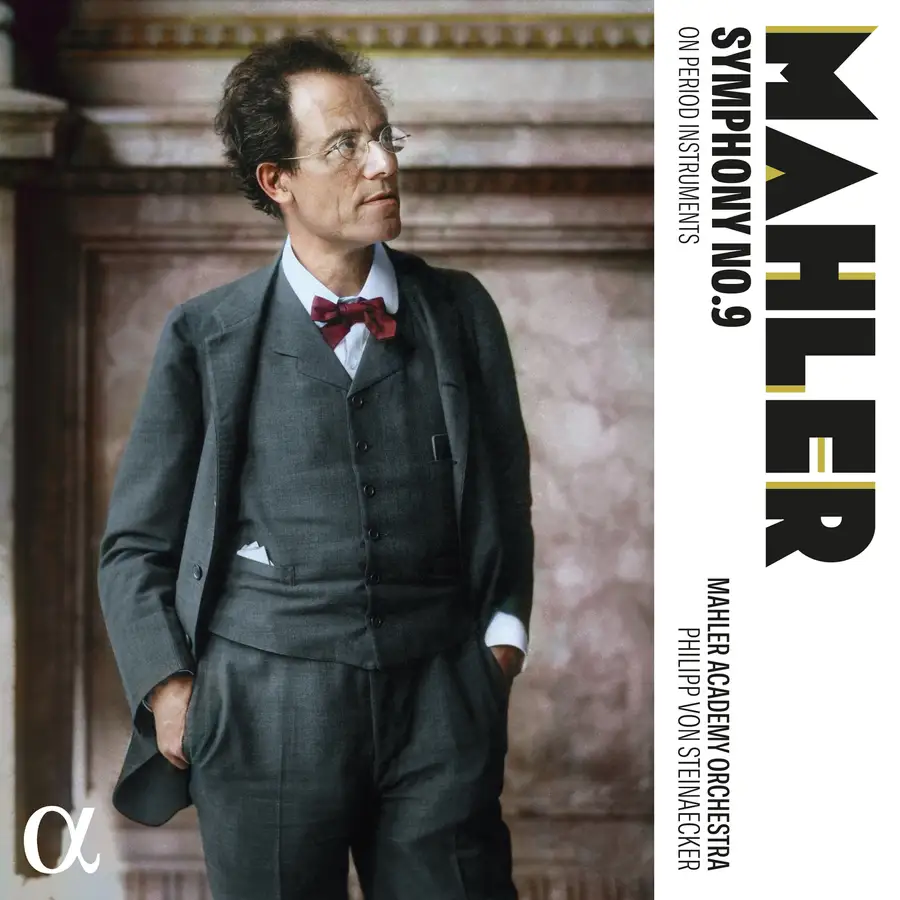
    • JBL L20T After I thoroughly tested the Almarro M1A and Dayton B652, I was a bit frustrated to be honest, particularly by the M1A. And so I hauled out the heavy vintage JBL pair with a heavy heart, so to speak. As soon as the music started I almost jumped out of my seat. GREAT stuff and a dream match that only happens once in a while! Everything became more three dimensional, more vital, and that tone! A revelation, Amen. Even using Input 2 the sound now had dynamics and scale that sounded like much larger loudspeakers. I had been listening repeatedly to Bernstein's exemplary late DG recordings of Copland's Appalachian Spring (LAPO) and Brahms 4th (VPO). All the loveliness and lyricism of the scores were brought out like nothing before, yet the proceedings felt tight and inexorable, which these scores also need. The volume was cranked pretty high up, but even with the Op Amp in place there was no undue "sandy" texture - mass strings had body and sheen. Only when the volume got really loud did a little bit of steeliness creep in, but that is expected as the distortion rises, and even pure tube amps would do the same. When I start discussing the music, you can tell I am beginning to really enjoy the music rather than just dutifully digging out facts for this article. Some albums I just had to play more than once. Kulanjan, the great collaboration between Taj Mahal and Toumani Diabate (Hannibal/Rykodisc) was simply stunning. The contrasting timbers of the guitar and the African Kora and the modulations of the 2 male and 1 female voices were effortlessly, and mellifluous. I know this album well, but as rendered by this humble pairing of Elekit and JBL, it is the best I have ever heard it. Rhythmically it has more swing than even on my horns! And in Kancheli's Lament, every whisper of the violin (really low in volume) as well as volcanic orchestral outbursts were highly atmospheric. This combination gets to the meaning of all kinds of music! Phono Playback So far with the small loudspeakers I have tested only with CD. The extra gain required for Phono proved taxing for the M1A and even the B652. But it is a different story for the L20T. Through the Aurorasound Vida the sound was irreproachable, lively and detailed. On Neumann's Leipzig Gewandhaus Ma Vlast (a late 60's East German recording, first issued in the US on London LP, so many later reincarnations, including CD, were mostly of German origin), the tonal splendor of the Leipzigers and the majesty of the reading were utterly compelling. A great but little known recording, extremely well recorded to boot (as is usual for East German era stuff). Similarly, Haitink's first Mahler 9th (Philips) displayed a cavernous soundstage in which the famously warm Concertgebouw woodwinds played echt characterfully, and the burnished brass tone! And William Tell, in that greatest of all Rossini Overture recordings, Piero Gamba/LSO (my LP is a cheap latter-day Holland London pressing), had an adrenaline-infused and BIG sounding Alpine storm (which much predates Strauss' essay, and I heard a chirping woodwind figure that likely was quoted by Strauss). Wow!
      Kulanjan
    • Direct In I wanted to see how the preamp fared without a preamp. I used System III's Theta Data Transport and connected it to my Micromega MyDac with a Belden 1694A, fed it into Input 2 and adjusted the volume using the TU-8150's volume knob. Wow! I must say I was wooed yet once again by the Micromega! The fantastic rhythmic expression was evident with Kulanjan. One day I'd like to match it up with my Sparkler (which I have brought with me to NYC). The sound was really lovely, and when I switched back to the Shindo it was evident the texture was thickened by tube. Some may prefer the greater incisiveness of Direct In, but when running multiple sources (phono) and playing large orchestral works the addition of a preamp adds needed weight and punch, considerable advantages for classical listeners like me. 
    Comments
    • Elekit TU-8150 in General Though all designed to a price point, all current Elekit products have a reasonably muscular sound and driving power. However, the TU-8150, being the lowest in power, does require the potential user to have a clear goal in mind. 6V6 The cheap and ubiquitous, yet legendary 6V6 tube again reveals its glory. What a sound! There is not much point to run it as a triode (halving its already meager power), since it sounds so good in Pentode (with horns) and Ultralinear (with smaller loudspeakers). Warm Up With the Op Amp in situ, around half an hour of warm up is needed for it to sound its best.
    • Elekit TU-8150 for Desktop/Headphone Although I don't have a desktop at the moment, I have quite a bit of experience, and actually think this amp is well nigh perfect for desktop/headphone, and I am sure it was designed with such users in mind. Although low in power, Its superbly detailed and rhythmically sophisticated sound, allied to excellent headphone output, is ideal for the task. Dayton B652 The Dayton illustrates this. It may not be able to energize a room like the much larger JBL L20T can, but it never puts a foot wrong. If I were to build a serious desktop, I'd add a subwoofer (there are good choices even around $100) to flesh up the sound.
    • Elekit TU-8150 for In-Room Small Loudspeakers As my experience shows, it may take some time and patience to come up with a suitable partner. Given the very close sensitivity figures of the 3 loudspeakers in question, I can only surmise that the success of the L20T is partly due to its more tube-friendly (higher) impedance (and in the link to my previous article on L20T provided above we know for sure its impedance curve is utterly benign). Based on my experience I'd say it is better in general to have loudspeakers over 90 db's in sensitivity. News Incidentally, recently both Stereophile and TAS recommended in their April issues an affordable high-sensitivity loudspeaker that those interested may want to look into (since you are reading this article, you are probably one). The former reviewed the $549, 96 db, nominal 8 ohm Klipsch RP-600M (not online yet, but read the review in sister website cnet); the latter the $900, 91 db (but 6 ohm) Tower JBL Stage A190 (here). Being a fan of both Klipsch and JBL, I'd love to hear them (unlikely). By my estimate, the Klipsch will surely work a treat (due to its super-efficiency and higher rated impedance), whereas the JBL will likely too. The good thing is, the TU-8150 is so small and light that you can take it to audition loudspeakers!
      MyDAC_Internal
    • JBL L20T This is a gem that surprises by its performance with 2.9 watts. It confounds me because my 5 db more sensitive, but much larger JBL 4312 (12" woofer) does not work that well with 300B (~8 watts). But, good news to me! I am not sure what I like most: the effortlessness, the sweet and articulate midrange, the warm mid-bass/bass, the intimation of a larger scale than the physical size would indicate. All of it! A thought on matching: in the L20T Part II (link above) what I wrote of my impression of L20T vs Almarro M1A when driven by T-Amp was not at all similar to this round. So, you have been warned that synergy is involved and extrapolation, like much reasoning and measurement in hifi, may not always hold court.
    • Micromega MyDAC I have never previously heard my Micromega in my US systems. Suffice to say, this brief outing really tickled me! I prefer its sound to the flagship Sony SACD player - more rhythmic engagement and flow. As a matter of fact, just before this is written I briefly moved it to System II and did a direct comparison and my impression remains the same. Perhaps I shall write an article on this and Sparkler in the future. A killer budget DAC, no, a killer DAC, period.
    Postscript: This article is long in the making. I am glad I was more than repaid for my efforts. The next installment may take a while. I have to get back my Elekit TU-8500 preamp, match it with the Elekit  for a listen and then roll its OPA2227 into the TU-8150. Salut!

    23 February, 2019

    Elekit TU-8150, 6V6 Pentode Triode


    Click pic to enlarge. Cover off the TU-8150 for convenience. Input 1 in front is used. Note the Op Amp has been removed from its socket (to the front of the lower/right channel 6V6). Note also the red jumper to the back of the same tube is set to Pentode Mode. The 12AX7 is not on fire - there is a decorating diode underneath.

    Review: Elekit TU-8150 (DX), Part II

    See Part I for Basic Info. Part III  (Smaller Loudspeaker Matching) and Part IV (Input 2 mod) have also been published.

    In this article, I tested the Pentode and Triode Modes, and assessed the effects of the Op Amp as well as the difference between Inputs 1 and 2. All using 6V6 and System II (Shindo Monbrisson preamp; for details see Part I). You will notice that I played exclusively LP's for these sessions, so any lack of power should have been instantly evident. High Impedance Earphones, Tweaks and Potential Mods are addressed.

    Symphony No. 2  In C Minor "Resurrection"  (Vinyl, LP, Stereo) album coverListening
    • Pentode Mode vs Ultralinear Mode In later vintage and modern tube amps, the pentodes are frequently run in Ultralinear Mode (all Mullard 5-20 and Williamson's types are). The reasons are complex and I am not equipped to go into it, but if you google "Pentode vs Ultralinear" you will find a huge amount of basic info as well as discussion out there, some heated. Suffice to say there is a pentode mode revival of sort and there is no consensus on which mode sounds better. While Elekit recommends Ultralinear (same power output as pentode; 2.9 WPC), my experience tells me it is worthwhile to experiment. In the pic above, right behind the output tube is the screen grid resistor, which is connected on the tracks to the one side of the red jumper. As for the other side, the line straight ahead is Ultralinear Mode, tied to the Center Tap; a little outward is the Triode Mode, tied to the plate and one end of the output transformer (hence tying the screen and the plate); and a little inward is the Pentode Mode, tied to the other (B+) end of the output transformer. Pentode Mode Operation Personally I found the Pentode Mode to be more natural sounding. This I think is due to what I perceive as better dynamics (both micro and macro). The effect is subtle but audible. Zubin Mehta's justly famous Mahler Symphony No. 2 (London LP) was rendered in all its splendor - there was enough power for the big moments, yet what captivated even more was the delivery of the VPO in the softer music, the sweetness and heartbreak and transcendence.
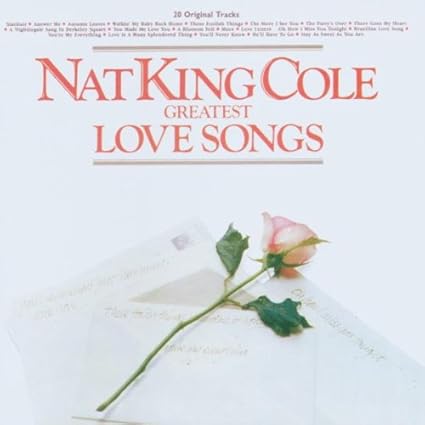
      Greatest Love Songs
    • Triode Mode This reduces the output from 2.9 to 1.6 WPC, but with most material I really did not notice the drop in power, even if the preamp volume knob has to be churned up a little more. I did a lot of listening in this mode, which to me seems to add a little more refinement to the sound. The popular EMI compilation of Nat King Cole's Greatest Love Songs (EMI/Capitol UK) can sometimes be a little sharp (I suspect the mastering is digital) but here it was just perfect. More, I just bought a few cosmetically seriously challenged jazz LPs recently, and listening was so good that I finished the crop in just one evening. The many instruments in Oliver Nelson's Fantabulous (Argo) all had ravishing timber, and the swing was well neigh irresistible. Coleman Hawkins was no Brazilian jazz champion but his playing on Desafinado (Impulse) was as usual golden toned and comfortable. Some people could not stand Hank Jones' Happenings (Impulse) because he was using a Baldwin electronic "harpsichord" but I enjoyed its being so different and the Elekit made the best out of the quaintness. Even in mono, Jimmy Smith was king of his instrument. I just dug his interplay with Kenny Burrell, his often partner, on Organ Grinder Swing (Verve). Gene Ammons' The Twister (Prestige) had a starry cast but the mono sound was not quite as good as the others. Nonetheless, all thoroughly enjoyable, as was Mancini's fantastically recorded Peter Gunn (RCA), though I'd not call it jazz. All in all, a magnificent session. Of course, with really large scale music, like the aforementioned Mahler, the Triode Mode inevitably chokes the music a little when compared with Pentode Mode. One should also note that to many the more robust sound of the Pentode is worth more than the more refined sound of Triode.
    • Op Amp The Elekit TU-8150 is no doubt primarily geared towards the desktop and earphone crowd, and hence has an unusual arrangement in preamplification. The manual says: "This model contains a preamplifier stage configured with an OPamp to resolve the problem of low gain when connected to a portable audio player..." Gain vs Volume At first I didn't notice much difference, but after a lot of careful listening I did realize that it was best to relatively maximize the preamp gain and minimize the amp's main volume, thus bringing about more refinement and expand the soundstage. To experienced audiophiles, manipulation of the volume and gain (like old ARC gear) can be beneficial. This also means the stock Op Amp has a (very mild) deleterious effect on the sound. Bypass As I don't plan to use phones or portable devices and use a real preamp with gain, I naturally looked for ways to bypass this stage. Looking at the schematic, this Op Amp Preamp stage is before the main volume pot (50K), utilizing power from the 12AX7's heater supply. This gain stage could be bypassed simply by removing the Op Amp. By doing so, the sound improved a notch, a little airier and smoother. It is not going back in my system though I may yet try the OPA2227 that I have.
      The Five Piano Concertos (Vinyl, LP) album cover
    • Input 1vs Input 2 Input 1 is the frontal 3.5mm mini-jack, and Input 2 is the rear RCA input. The Elekit spec sheet curiously stipulates Input 1 as "Priority". They may be referring to the fact that as soon as a mini-jack is inserted into Input 1, Input 2 is disengaged. In the schematic, one notes that Input 2 is routed through a 10k resistor (R101 and R201) into Input 1. This is probably to equalize the levels of the 2 inputs. Using Input 1 Using an RCA to min-ijack adaptor I re-routed the signal from my preamp to Input 1. Without going through the 10K resistor, the sound definitely had a little more gain, and improved in clarity and presence, all this despite the use of adaptor. Prokofiev's Piano Concertos (Ashkenazy/Previn/LSO, London LP) sounded wonderful - the piano sparkling, the woodwinds characterful and the low brass growling!
    • 1 + 1 > 2 Assessed on its own, each maneuver produced only a small improvement. But, interestingly, the overall improvement proved to be beyond the sum of the increments. Now, the music was comfortably expansive and luxurious, but rhythmically sophisticated when called for.
    • Potential Mods It is because of the excellence of the amp that I think mods are valuable for users like me: 1) The long signal signal path of the RCA Input 2 is certainly not ideal, but looking at the schematic one can disable R101 and R201 and solder a jumper wire between the RCA terminals and TP (Test Point) 3 and TP4, thus bypassing the Op Amp stage altogether; 2) Even if the Op Amp is removed, because of the associated circuit the signal still passes through 2 more resistors before reaching the 50K main volume pot - the 4.7K resistors (R102 and R202) before pins 6 and 2 of the Op Amp and the 22K resistors (R103 and R203) connecting pins 6 and 7 and pins 2 and 1 before the 50K main volume pot. That is 26.7K (22K + 4.7K) of resistance that can be bypassed if TP3/4 are used. If one uses the RCA Input 2, even with the Op Amp removed, there is a total of 36.7K of resistance before the 50K volume pot, making a total resistance of 86.7K if the main volume is maxed out. One notes that in SET amps the line level signal usually directly goes to the main volume pot, and 100K is the more popular value. One can use jumpers and eliminate those 4 resistors (R102/R202 and R103/R203). One can also try a 100K volume pot. While I would think the fewer resistors in the signal path, the better the sound, I am not about yet to do the (simple) surgery - the sound is entrancing enough, so let it wait, but I am pretty sure I'd carry these out one day (maybe Part IV?).
    • High Impedance Headphone The Headphone Outputs are taken from the output transformers, so naturally they are of excellent quality. My 600 ohm Beyerdynamic DT-880 performed even better than my lower impedance AKG 701 (see Part I). Prokofiev's Piano Concertos sound almost as enjoyable as through the horns. Note though the volume had to be cranked up, so head-banging rock fans need not apply, but then this is not their kind of headphone amp. For those who value all-roundedness and tonal splendor, this is as good as I have heard. Although my Schiit Vali 2 and Magni are connected to a different source (an old Proton CDP), I do think/extrapolate that the Elekit surpasses them. From recollection, the performance does not suffer in comparison with my Manley 300B (transformer coupled) and Nagra PL-P Preamps. Mind you, I am listening to LPs!
    Highly gratifying!

    Perhaps that is enough for now, so further testing, including with different loudspeakers, will have to be treated in the next episode.

    22 February, 2019

    AkitikA GT-102 Power Amplifier, Audiomaster LS3/5A, Linn Kan, LM3886


    Review: AkitikA GT-102 Power Amplifier, Part I
    LS3/5A vs Linn Kan

    A Tale of Two Amps It's funny how things are. After building and enjoying the Elekit TU-8152, somehow I was on a roll, and summoned enough resolve and energy to build the solid state AkitikA kit, which has been languishing on my "workbench" for several months.

    Kudos First of all, Kudos to Stereophile, where I first read about AkitikA. Even though I don't have that much time on my hands, I am a sucker at heart for affordable kits (think: my cheaptubeaudio roots). Midway through Herb Reichert's Review, I have already decided to buy it. I hope Stereophile some day will get to review Elekit!

    Second, Kudos to AkitikA, for offering such a good sounding product at such a low cost. Even more admirable is the fact that they did not raise the price even after the rave review, a rare thing in my experience (unlike Bob's Devices, for example). It has to be said too, that it makes some successful tube kit providers (like Bottlehead and Transcendent, to cite only two) seem overcharging (imho these probably got too successful for their own good, and I know their products; they are definitely too expensive when compared to, say, Elekit).

    AkitikA The Official Website is excellent, organized to a T and instantly confidence inspiring. Founder Dan Joffe is a bona fide electronic designer as well as amateur musician (hence I believe his ears), who started it to update Dynaco products. Its niche was, and is, the restoration of solid state Dynaco equipment. The Updatemydynaco pages are fascinating. In fact, the amplifier modules are very similar to those in the GT-102. They almost make me want to get some of the ss Dynaco's on the cheap and do some restoration! It also seems Joffe is a respected figure in some DIY forums.


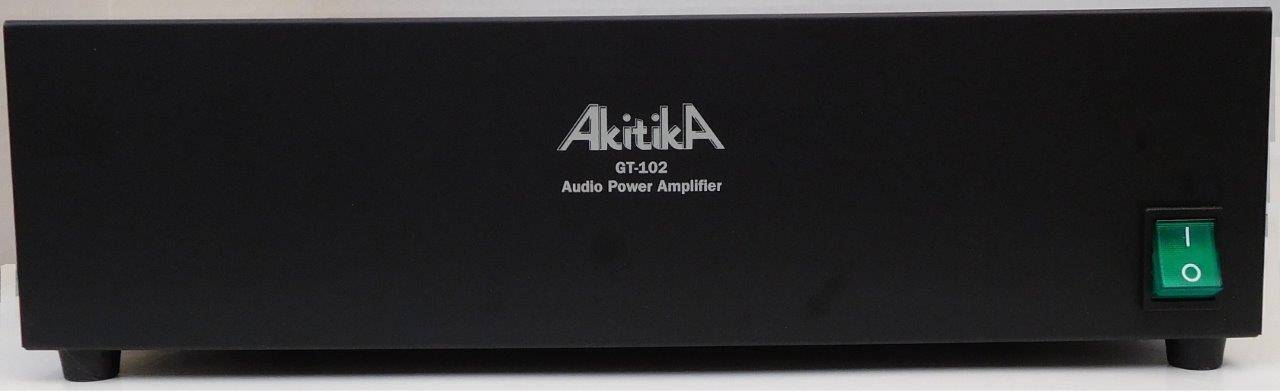
    AkitikA GT-102 This is a stereo power amplifier, with a very successful predecessor, the GT-101. The Stereophile review and the official website are excellent and thorough, so I need to provide only brief comments, only those of interest to me.
    • LM3886 Op Amp What really got me interested is that it uses the LM3886 Op Amp, the same Op Amp used in the iconic 47 Labs Gaincard amplifier, which I still own and love, and which has spawned countless Gainclone amps (I completely agree with Reichert's succinct comment on this, which is that most of the clones, including successful commercial ones imho, just don't have that je ne sais quoi quality of the original). In passing, I should mention that I have not formally "reviewed" the 47 Labs Gaincard (4706), but I have commented on it often (should you have the time, use this link and this link for the bits and pieces I wrote; pardon the disorganization).
    • Design and Spec's As a tube man, I am certainly lost. You can get all the info you need from the links. The AkitikA website has the downloadable massive manual, which goes into great details on the design for all to see. It is useful to know, unlike the ultra-minimalist Gaincard, it has a lot of power regulation and protection, and power-on relays. I note from the website that not a few users use them with difficult panel and ESL loudspeakers without problem, despite Stereophile's measurements which show the amp working best into higher impedances, which AkitikA agrees with. Official data shows it to be 50 wpc into 8 ohms, almost doubling into 4 ohms, but Stereophile's data is contradictory.
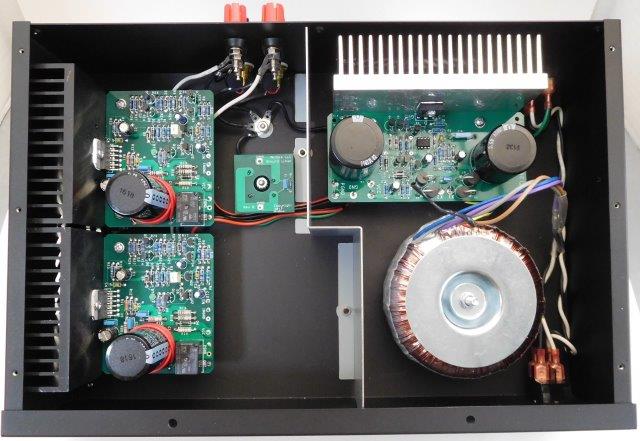
    • Component Quality From the pic, you can see that they are of very good quality.
    • Price $314 for the kit ($488 for assembled) + $26 shipping. For the complexity on offer, I am impressed. This man is not only a designer, he must be a good businessman who can deliver the goods at this price. On the other hand, perhaps he is not a good businessman as one wonders how can he make a profit. More, there is a 30 day money back guarantee, which I doubt anyone will use.
    Building the Kit I did it in several sessions. I did not keep time, but I think it was more than eight hours, part of it due to some mistakes that I made.
    • Instructions The manual is massive and, except for a few places, very clear. I do think even a novice will be able to do it. Personally, I like the Japanese manual style (very detailed diagrams and few words) even better, but then this solid state amp has a lot more parts than most tube kits, so I understand.
    • The Printed Circuit Boards They are of good quality, but on the small side. Checking all the parts and stuffing the boards took quite a bit of time. No SET amp, this!
    • Soldering I must emphasize that one must follow the instructions and use a small solder tip. In many places, traces are tightly spaced and there may only be room barely larger than the solder tip to solder on. I'd surmise some novices will find this a little challenging.
    • Wiring Being a Tube Kit Builder actually hampered me a little here. Ground This amp uses a Star Ground that is not so common with tube stuff and that actually demands more wiring. It took getting used to that the ground wire of the speaker post is much shorter than the hot wire. Harness One has to build a harness with different wires and lugs, a little tricky, but all was well explained. But I made a mistake here (see below). Here for connection to the loudspeaker post I substituted my trusted Belden 9497 for the stock cableSignal Cable This is where I made my biggest mistakes. I followed the instruction on Page 27 that tells you how to dress the cable but did not refer to the full instructions on Page 51. Big mistake. Here I substituted the Gotham GAC-2, which I had used successfully for my PAS 3 project, for the stock one. On the amplifier module, after soldering the +/hot wire to IN, the instruction on Page 27 is to solder the drain wire to IN GND, which I did with the bulkier shield of the GAC-2. Then I wondered why there is no mention of the -/ground wire (which I thought should go into the extra and vacant IN GND). Later, when the RCA Connector Ground Lugs were installed, there was no mention of the drain wire/shield. Non-plused, I went over everything and still scratched my head. Finally I read the instructions on Page 51. On my! Basically it tells you to remove the -/ground wire from the stock shielded cable, and use the shield/drain wire as -/ground! This is most unusual, and I have never encountered this before. I was not about to undo the harnesses, so I soldered the GAC-2 shield onto the RCA Connector Ground Lug, which already had the -/ground wire attached. For the amp module end, I unsoldered the GAC-2 drain/shield, cut it, and soldered on the -/ground. This is as I would make an interconnect, shield attached where signal starts and not attached where signal ends. I am not sure what changes this makes to the sound. I wonder why AkitikA prefers to use the drain as -/ground wire - I'd guess the sound of coaxial wire is preferred. In that case, for me Gotham DGS-1, a coaxial cable, would work even better. I'd suggest adding a line on Pg 27 on the special nature of the cable. Lesson: follow every instruction!
    • Operation Mine worked flawlessly from the word go. The relays kick in after a few seconds and one is ready to go. Smooth. And, it is dead quiet.
    Bowmboi by Rokia TraoreListening
    • In System III I To test out the amp with as little outside influence as possible, I first employed my System III's front end, comprising the Sparkler S303 CDP and Schiit Saga used as passive preamp. Not to mince words, I was impressed right from the startWarm Up does not seem to be necessary. Sound is very good from the start.
    • Linn Kan I grabbed these for my first session, as they were easiest to get to. These are first generation (I) and employ the same KEF woofers as the fabled LS3/5A. They were placed way in-room, on my Sonus faber stands (kinda near-field listening). The Linn Kan usually prefers close to wall placement as its treble is sharper and bass leaner (than the LS3/5A), and in this position it can sound lean even with tube amps (like my Elekit TU-8300 300B amp). Not the case here. With the AkitikA, the bass is rich, yet tactile, making this the best sound I have had from the Kan I. The Saga is very transparent, and can sound sharp, yet here the combination work superbly well together. The sound is detailed, with notable rhythmic elan. Vocals, male or female, were perfectly rendered, as exemplified by the vitality on offer in Hugh Masekela's Hope (CD, Triloka, OOP); and by the subtle and sinuous delivery of Rokia Traore in Bowmboi (CD, Nonesuch/tama, also OOP).
      You Won't Forget Me
    • Audiomaster LS3/5A (15 ohm) Delighted, I was thus motivated to retrieve my LS3/5A. From the Stereophile review, I knew it'd work a treat and it sure did. The sound was even better than the Linn Kan. Being a fuller sound benefitted the vocals of Traore and Masekela even more. Here I'd say Herb Reichert's findings are right on the money (even if the Falcon LS3/5A he uses are likely sharper sounding than my vintage pair). The sound is so good that I am sure you could do worse by using an inferior tube amp. The AkitikA is warm and inviting, yet its fast transient speed actually complements the LS3/5A, which is usually a little slow sounding with tube amps.
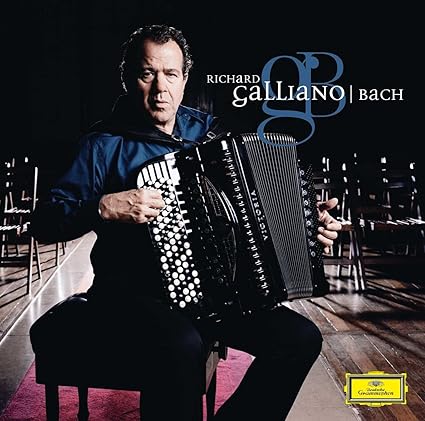
      Bach
    • In System II Further encouraged, I connected it to my System II front end, comprising Sony XA-5400ES SACD/CDP, Technics SP-1200 Mk II/Shelter 201, Thorens TD-125/SME3009i/Denon DL-304, Aurorasound Vida phonoamp and Shindo Monbrisson preamp. The sound gained from System III, richer and with an even wider and deeper soundstage. With a tube preamp, vocals are naturally even better. Shirley Horn's priceless You won't forget me (CD, Verve) was so utterly compelling that I just had to listen from start to finish (which never occurred before). Not only were the fine modulations of Horn's voice as well rendered as I have ever heard, the piano (herself) and the solos of the guests (a starry cast, including Miles) had startling definition and realism, as did the ambience and audience noise (little). On Richard Galliano's Bach album (CD, DG), I too could not help just sampling, and had to listen to the entire Violin Concerto. For either album, I was not at all sure I'd exchange the amp for even the best tube amps.
    Comments
    • Sonic Assessments Overall, there is little question that the AkitikA is an overachieving amp. The most gratifying thing is, no matter what I played, I was gripped and could not stop listening. I am likely to keep it and the LS3/5A for a quick listening system, such is the synergy between them. The LS3/5A works well with UK classics integrated amps like the Naim Nait, but here it is taken to a wholly new level. Rhythm and Pace The AkitikA even trumps the UK amps in PRaT that the flat-earthers so covet. Solid State? Although the AkititkA is just a little warm sounding but, lest you misunderstood from the listening notes above, it is not tube-like. Although vocals and instrumental timbers are alluring, the treble, though not lean, is not quite as harmonically fleshed out as a tube amp. Tube die-hards may demure, but the AkitikA compensates by its enticing performance in other areas. My Mods Here I must say that my substitution of the signal cable and the loudspeaker cable must have an effect on the sound. For people who don't know, the Belden 9497 cable is a very even performer that I have written a lot on; it almost never sounds bad with any loudspeaker, that I am confident about. The Gotham GAC-2 is a very reasonably priced but superior shielded two-conductor cable, which I used for my PAS 3 project (you can read about its effect here). Both cables are likely more transparent than stock offerings. Note that while I'd say the AkitikA is a little warm sounding, I'd not use the word "dark" at all, and my mods may have contributed a little in this area. YMMV. Gainclone? This is not your ordinary "Gainclone", as it is certainly a much more complicated amp. Does it bear any resemblance to the 47 Labs Gaincard? I don't have the latter with me but I know its sound pretty well. I'd say: 1) with both one just keeps on listening to the music; 2) both have rhythmic finesse, but I think the AkitikA is even more accomplished; 3) the 47 Labs Gaincard is a little warmer; 4) obviously, the AkitikA is more powerful.
    • More Coming This is Part I because I intend to further explore this amp with my other loudspeakers, in particular the electrostatic Martin Logan Source. I also may break my own rules and try it out with my 104 db horns (think a Jimmi Hendrix track), which has been the exclusive provenance of my tube amps! I may also take it to my friends and see their reaction. Lots of thoughts, too little time, but this is a fun amp for sure.
    You can rest assured there is more to come.

    19 February, 2019

    Elekit TU-8150 6V6 6AQ5

    Click pics to enlarge. Right, atop my Wavac MD-811.

    Review: Elekit TU-8150(DX), Part I

    Update: Part II (Triode vs Pentode; Input 1 vs 2) and Part III (Small Loudspeaker Matching) and Part IV (Input 2 mod) have been published.

    Being a long time Elekit fan, I own many of their products and have written a lot about their more recent offerings in my Blog. Should you be interested, here are some links:

    Overview: Elekit, Part I
    Elekit TU-8500 Full-Function Preamp
    This article contains a 6V6 Overview

    Imagine my delight when I learned about the new TU-8150. Beside 300B, my TU-8300 can run all sorts of common pentode/tetrode/beam tubes but that does not interest me. IMHO, none of those tubes (including NOS) run as triode can hold a candle to 300B (even current production). So, why does the TU-8150 interest me? Because it can use one of my absolute favorite tubes, the even more lower-powered 6V6, which neither the TU-8300 nor the TU-8200 can. If you run through my blog, lately I have been using vintage 6V6 push-pull amps, and I have been clamoring for a 6V6 SE amp, which I have heard to good effect before (here).

    I immediately rang up and ordered one from Viktor of vkmusic, and I got the amp in 2 days. If you are in North America, buy from him, a die-hard supporter of Elekit who has contributed much to the company, who also offers reliable technical support.

    This Flyer summarizes the Features of this amp:

     photo TU8150 leaflet Englishf_zpsv6shu1sz.jpg


    DX version  Note that vkmusic supplies the kit as "DX" version, with the following upgraded parts: 1) Amtrans AMRT carbon resistor set; 2) 2 x Amtrans AMCO 0.1 for the Coupling Capacitors. And this is the version I built.


    Building the Kit Like all Elekit's, building the kit was not difficult. The manual is beautifully illustrated and logical. Note: 1) the only difficulty I had was soldering the thick metal tabs that anchor the frames of the output transformers. My 40W solder, even temperature-controlled, was just not powerful enough, and it took me several attempts; 2) be careful with soldering the loudspeaker binding post - I had it upside down and had to redo it; 3) vkmusic's upgraded Amtrans resistors are longer than the stock resistors; Victor advises kind of an S-bend to shorten the distance between the legs so as they can be stuffed onto the board, but I found that too elaborate, and just bending the lead right where it exits the body does the job for almost all of them. I had it finished in a couple of days over the Lunar New Year.

    In the above pic, note that the 6V6 socket modules are idling. Also note that the board uses pins which one inserts into the main board. The unit shows the 6AQ5 board installed. It is actually below the top board, which is just for anchoring and leveling with the taller 6V6 socket. Look carefully and you will see 3 levels where the sockets are.

    Listening (6AQ5)
    • Tubes I did a lot of initial listening using the 6AQ5, which is a smaller tube with similar electrical characteristics to the larger 6V6. The stock pair are very late production GE 6005's (note different vendors have different tube options). For the 12AX7 I used an old D-getter RCA grey-plate in lieu of the stock JJ.
    • Jumper It was set to Elekit-recommended Ultralinear. The jumper's plastic handle felt loose but I was assured by VK that it is OK, as the same jumper has been used a lot in other models without any problem.
    • Op Amp  Op amp was the stock NJM4580D.
    • Power Socket Note that the Power Socket is the Figure-8 type (C7/8) which some may frown upon. I used the stock power cord.
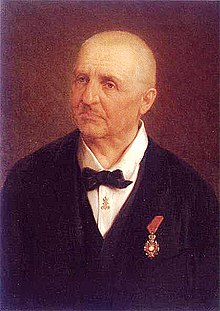
      Image result for nezet bruckner 5
    • Sound with System II As used, the system comprised the Sony XA-5400ES SACD/CD player, Technics SP-1200 Mk II/Hana EL Cartridge (report to come on the Hana), Aurorasound Vida Phonoamp, Shindo Monbrisson Preamp and YL 4-way horns (104 db). The amp wasted no time in making an impression. My attention was seized by the very good Rhythm and Pace. At first there was a little grain in the treble, which quickly decreased with time, but it should be noted at least half an hour of warm-up is required for it to sound its best. Sound with the 6AQ5 is generally very full bodied and rich, perhaps just a little homogenous - after all, the new tubes and transformers especially needed to be run in (longer than caps and parts in my experience). But given the good transient performance, all was engaging. Dynamically it did a very respectable job. To cite two examples: the audiophile favorite, stimela (track 12) from Hugh Masekela's album Hope, while not as explosive as it could be (this is after all 2.9 WPC), sounded lively, involved and full of microdynamic detail; and Yannck Nezet-Sequin's Bruckner 5th (ATMA, not particularly well recorded) sounded organic and big, as it should, much better than it had previously through earphones. By this time, I was enjoying it hugely.
      Image result for nielsen concertos gilbert
    • As Headphone Amp At this point, I took time to construct my AkitikA amp kit (report to follow). I moved the TU-8150 to the living room, behind my workbench, and fed it with my Linn Karik CDP. Through the AKG-701 earphone sound was luxurious and detailed. Nielsen's three (somewhat quirky) instrumental concertos sounded better than I have ever heard them in the readings by NYPO/Alan Gilbert (Dacapo). The sound was so good I actually played this CD multiple times through the kit-building period. It should be noted: 1) the loudspeaker outputs automatically disengage themselves when a headphone plug is inserted. But I think as a precaution, to make sure there is loading when the amplifier is on but headphone not plugged in, loudspeakers should always be connected; 2) Using the TU-8150 as integrated headphone amp, the volume and dynamics were respectable and sound is excellent.
      Bowmboi by Rokia Traore
    • Back to System II After I finished building the AkitikA, which took several days, I re-installed it in my System II. Sound was surely a little better than before and I thought it was close to being run-in. I played the wonderful Rokia Traore's Bowmboi. While it was very good, I knew her voice was a little too smoky and that there is more delicacy and sinuous delivery to be had.
    • On to System III Desiring a slightly crisper delivery, I switched to System III, comprising Sparkler S-303 CDP and Schiit Saga as Preamp directly into the Elekit. Surely, Traore's voice was how it should be. Similarly, Masekela's men also had more rhythmic snap. This was in part due to the snappier delivery of the Sparkler, and in part due to the non-euphonizing nature of the Schiit, which did an excellent job driving a long interconnect. However, on some material, a bit of shrillness creeped in when played loud. In the end, I still prefer a tube preamp. By now, I knew that I had wrung most of the performance out of the amp, so it was time to move on.
     Listening (6V6)
    MilesDavis MilesInTokyo1960s.jpg
    • Switching to 6V6 It was pretty easy. Only 4 screws needed to be removed to take off the upper chassis. Then I replaced the 6AQ5 boards and its top boards with the 6V6 boards (now only two tiers). I plugged in the pair of 6V6 I had been using in my Grommes LJ5, Sylvania smoked glass VT-107A's.
      Amtrak Blues
    • Sound with System II Everything else being equal, the 6V6 immediately sounded cleaner and clearer, as if a thin veil had been lifted. Now, Masekela's men and Traore sounded like in System III above, yet when the music got loud there was no roughness. From this point on, I concentrated on music only and here are a few that I really enjoyed. The first was Alberta Hunter's Amtrak Blues (CD, CBS). This lady is truly legendary and her life is an incredible story (wiki entry, make sure you read it). I actually got to hear her live and at the time bought her later The Glory of Alberta Hunter on LP. Her full voice on this CD is a delight and the session men were also very well recorded. And then there is Miles in Tokyo (CD, CBS/Sony), not the best recorded of the many Miles albums, but I positively dig the player of saxophonist Sam Rivers, who only appeared with Miles in those few days but was generally credited for pushing the sound of the Miles Davis Quintet forward. And two LP's were particularly outstanding. Boulez' Varese LP (Columbia) had delectable rhythmic swing and brilliant playing, a marvel from start to finish. Zubin Mehta's Bruckner Te Deum (London) had me dashing to turn down the volume, as the masterpiece opened with a choral fortissimo on an organ pedal. Yes, the amp clipped as I had the volume too high, but I was able to finish the piece at a slightly lower, but still very satisfyingly full level.
    Comments Let me cut to the chase: this little amp is now my favorite Elekit amp!
    • Operation Ultra steady. I have it on all day and it barely gets warm.
    • Sonics It is always hard to describe the sonics of something. For this amp, I would choose Fluent. Many tube amps are easy listening, sometimes referred to as "liquid", but that is not at all the equivalence of fluency, which mandates a good sense of rhythm and superior transparency. Nothing about the TU-8150 grates on you, and everything contributes to keep your interest. Playing disc after disc attests to the superb musicality of this little amplifier with a big heart, neigh, soul!
    • As Amplifier As with most flea powered amps, particularly if you play vinyl, personally I'd use this with a Preamp to maximize the gain and delivery of the first watt. However, it will sound pretty good as an integrated amp (my System III's Schiit is essentially passive volume). Volume Knob Setting when used as Amp The TU-8150 employs an IC in its preamp section, so it is not just a passive volume knob on an amp. That said, I found not much degradation when the volume knob is maxed out - no overloading or undue hardness. Dialing back may bring a tad more refinement, but the optimal setting is likely dependent on the rest of the system. I have it anywhere between 12:30 and 3:00 Power My YL horns are 104 db, so I have no problems, even with big pieces, as you can read above. I'd think it will work well with loudspeakers over 90 db in sensitivity. Just for the hell of it, I did briefly hooked it up to the LS3/5A, but even with volume knob of both amp and preamp maxed out, there was only moderate volume; however, even then the music sounded nice and lively, not seriously compromised nor muffled, which to me means loudspeaker matching will not be too difficult in general.
    • As Headphone Amp I think this shall make a very nice headphone amp. But make sure the loudspeakers are connected if you even want to pull out the headphones.
      Te Deum (Vinyl, LP) album cover
    • Hybrid? The presence of an op amp in the preamp stage will turn off some tube purists. But I ask myself, do I actually heard sand? Honestly I cannot say I do. The sound is rich and creamy when it is supposedly to. I have heard many all-tube amps that sound a lot more transistory (like German Octave, not to my taste). Elekit has had a long history of using IC/op amp in their products and the designer's skill is apparent.
    • 6AQ5 vs 6V6 In my listening, the 6V6 is unquestionably better. I am staying with 6V6 just because I have a large stash. Although electrically similar, the bigger envelope of the 6V6 likely confers an advantage (just as 6SN7 has it over 6CG7). However, I am equally sure the performance of the 6AQ5 can be much enhanced by rolling in older and better tubes. The suppled GE's are coded 82-52, which is from the very end of 1982, just before tube productions ceased altogether. Older 6AQ5's are plentiful and cheap and one can have fun rolling tubes.
    • Power Cord The supplied C7 doesn't look very promising. The best way to upgrade would be to buy a C7/IEC adaptor and use your regular cables.
    Coming Next I named this article Part I because there are more things that I'd like to test on and that will take time:
    • Pentode and Triode Operation These should be very interesting to try out. Triode lowers the output from 2.9 wpc to 1.6 wpc. I think it will work for me but for most others it will be academic.
    • Op Amp don't have anything other than the OPA2227 Victor sent me for the TU-8500. Victor told me it is OK to use here too, so I may try it.
    • Tubes I may tube roll a bit, particularly the 12AX7. I won't go crazy about it, but I may get a few nice used 6AQ5 to try out.
    • Loudspeakers I'd like to try out others, particularly my Almarro M1A, for compatibility, so readers with less efficient loudspeakers can get a better idea on what to expect.
    • Power Cord Not my usual area of interest, but in this case I shall seek some improvement using either adaptor or DIY power cord (the C7 female connector is not easy to get).
    • Headphones I'd like to try my high impedance (600 ohm) Beyerdynamic.
    As I finish writing, I also just finished listening to Strauss' Alpine Symphony, one of my favorites. Great stuff! This is not the best version in performance or sonics, but it was awesome enough!

    Note: Part II has been published.


    Alpine Symphony (Vinyl, LP, Stereo) album cover