Showing posts sorted by relevance for query Fosgate. Sort by date Show all posts

25 August, 2023

Fosgate Signature Phonoamp Sun Valley SV-EQ1616D

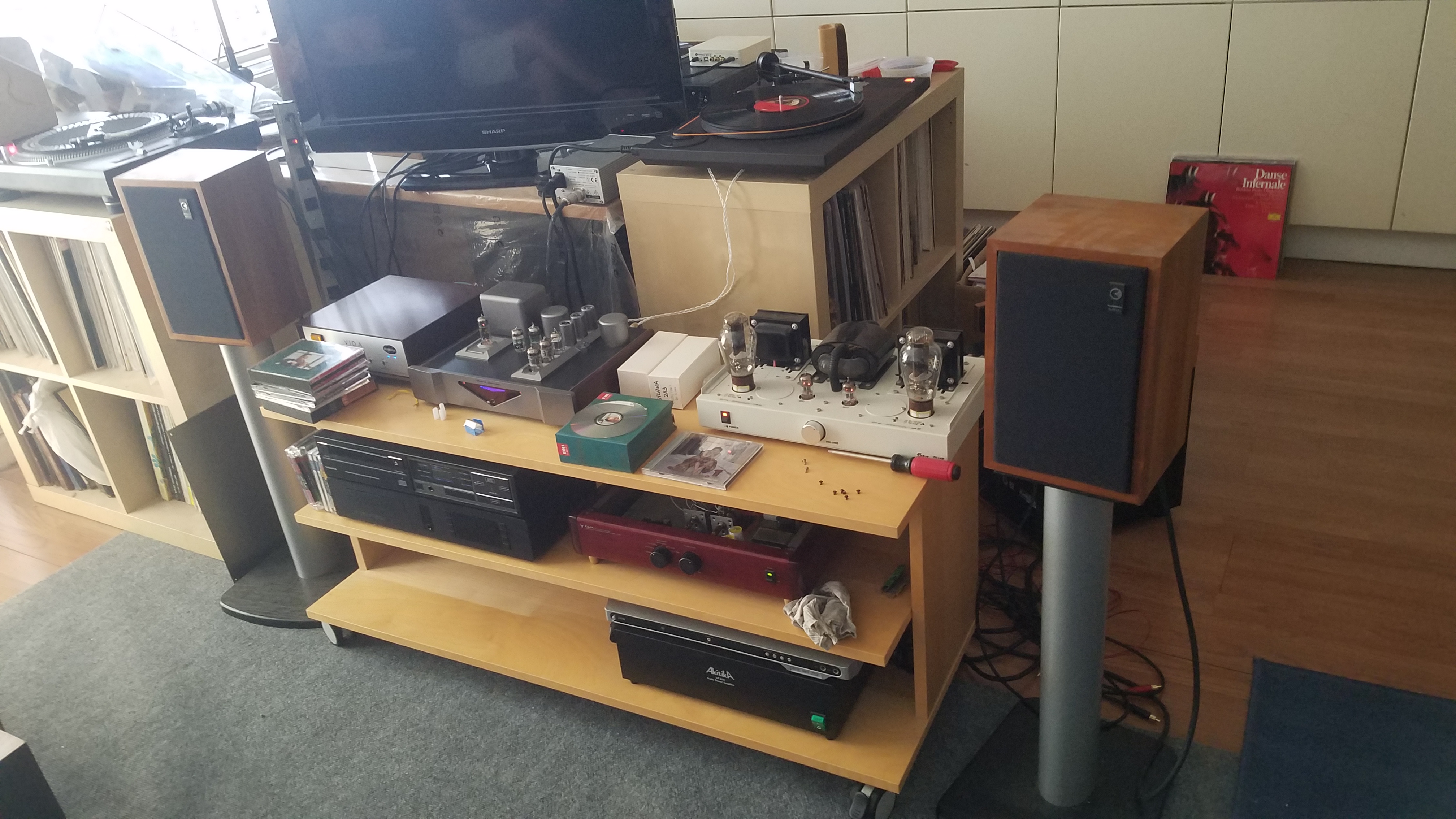
Top rack, from L: Aurorasound Vida, Fosgate Signature, Almarro 205A; below: Yamamoto CA-04.

Review: Fosgate Signature Phonoamp
NYC Analog Log (23-4): Sun Valley EQ-1616D, Part II

Sun Valley SV-EQ1616D, Part I

Fosgate Signature Phonoamp

First Impression Very soon after it came out in 2010, I bought one. It's amazing that I have not formally reviewed this, one of my staples, even though I have commented on it many times, starting with my 2011 Retrospective

...Ever since it came out it has garnered much attention, including a review in TAS. There is also a nice review in Audio Beat. This is one of those rare phono preamps with a fully active MC pre-pre section. As noted in the Audio Beat review, the 60 db gain for MC may be a little low for some people but it is perfectly fine in my case, even with the very-low-output Denon DL-304 (0.2 mV), since I mostly use preamps with high gain and efficient speakers. I am happy to report tube rolling is a breeze as the phonoamp does not seen to run the tubes unduly hard and many NOS tubes sound quiet in it. One thing that puzzles me about the industrial design: the two round cans flanking the tubes lead one to think they are input transformers; no, they aren't, this is a strictly active device and those are for decorations only. Incidentally, I think there is a new 10% price hike, but you can still find many selling at the original price of USD 2500. Review later...

Design A word on the patented, and unusual design (the Manual can be downloaded here), in Fosgate's own words:

The design is the result of more then 100 different hand built preamp circuits dating back to the 1970s.
  • All amplification is accomplished with the SRPP (push pull) configuration for the best possible linearity, lowest noise and distortion.
  • No solid-state devices are placed in the signal path and a tube is used for the high voltage rectifier.
  • The power supply is very different and contributes to the high performance. There are no regulated power supplies. Each tube stage is powered by a separate storage capacitor that acts like a battery. These storage capacitors are very large (10 to 20 time's oversize). The power supply simply holds the voltage across the capacitors like a "trickle charger". PC board layout is "Dual Mono". The channels are located on opposite sides of the circuit board in near mirror image with dual triodes in a row down the center.
  • The first stage has no NFB to interact with the cartridge. The second and third stages are enclosed in a single feedback loop incorporating both positive and negative feedback.
  • The RIAA network is divided into two sections, one passive and one active. The upper half (above 1KZ) is accomplished with a passive network between stage one and two. The lower half (below 1KZ) is accomplished with an active network around stage two and three
Tubes The Fosgate is not demanding on tubes. The stock tubes are not bad at all, but I have swapped in all old-stock tubes, with small but audible improvement in sound: V1/2, Amperex Holland 6DJ8; V3/4, RCA 12AX7; V5/6, stock Philips JAN 12AT7, more recently Mullard ECC81. One should view V1-V3 as within the MC section, and V5/6 as within the MM section. While V1/2 and V5/6 should be matched, V3 and V4 can be viewed as the bridge and they don't have to be identical, enabling one to roll in different tubes. Manual also says you can roll in a 12AT7 in V3 to have a little more treble air. As the unit is perfectly fine sounding I have never tried it. My 6X4 is an old Motorola.
 
Version 1 vs Version 2 Mine is V.1 (the "V" not to be confused with designation of Tube position above), and I have always been puzzled by what is the difference. There is no mention of any revision in circuitry or cosmetics. Finally, I think I have found the answer. In one of the For Sales Ads for V.2, I saw that the rectifier is 12X4, not the 6X4 of the V.1. Voila! The same rectifier with a different filament. As tubes always escalate in price, it's totally understandable why they switched to the cheaper 12X4, which unlike 6X4 is much less used in vintage gear (an exception is the popular Dynaco PAS 3). Minor change indeed, so if you're looking for a second-hand unit (especially after this review), both will do.
 
Over the Years I have enjoyed this phonoamp for many years, in all of my stations and with many of my TTs and cartridges, always with satisfaction. I mentioned it on several occasions:
 
In this article I said:

...The next day I connected the Linn/Koetsu rig to the Fosgate and, as they say, the rest is history. In this system, the Koetsu did even better than on the AQVOX, and perhaps even better than on the Aurorasound. The Koetsu did everything the PC-1 did, but at a somewhat smaller scale, but I feel it has been optimized. What amazes me is that the all-tube Fosgate yields not one iota to either the AQVOX or Aurorasound in the transient portrayal of the leading edge; every emphasis is microdynamically portrayed, no mean feat, with the additional benefit of a smoother sound...

And in this article I said:

...I have never really written a formal review for the Fosgate, but it was in my Best of 2011 article. It has been one of my mainstays and here I have to sing its praise again. Its superb design allows pure tube MC amplification without the use of SUTs, a feat rarely accomplished (this also meant tube rectification for lower noise). A bargain and wonder, but one that is little appreciated. The world is not fair, right?

vs Sun Valley SV-EQ1616D

After I thoroughly evaluated the Sun Valley (SV), it was only natural that I made the comparison with the Fosgate. In design and ergonomics, there are superficial similarities and differences. Similar: both are tube-rectified, not so common at any price; both have tube MM sections. Different: critically, the Fosgate has an all-tubed MC section (a rare beast) and the SV a FET Headamp (common); usefully, SV has 2 inputs while the Fosgate only has 1; usefully, the Fosgate has Loading Selector (100, 300, 500, 1K and 47K ohms), while the SV has none (the MC is loaded at 50 ohm); not so usefully (for most people), the SV has various bells and whistles for EQ; of debatable efficacy, SV also has a Mono button (taken from the L channel).

Sonically, please first refer to the SV review, Part I linked at the top. I used mostly my Yamamoto CA-04 Line Preamp, AES SE-1 and Elekit 8300 300B amps driving various LS3/5As. All I have to do here is to tell you how the Fosgate trumped it:

  • Macrodynamics (and Gain) This is the most important difference (the divide is big). Now, remember I use the SV's own FET headamp, and have an active Line Preamp with Gain to help. They have probably about the same gain, but the Fosgate sounds much better, unfolding loud passages with more force, yet with more detail, air and refinement, and even less noise. As mentioned in Part I the SV does better by dynamics with a SUT, yet it loses much finer details, especially compared with Fosgate.
  • Microdynamics WIth classicals, in the softer passages, such as the Tapiola mentioned in Part I, SV regains a little ground. Its more overt manner (within its comfort zone) makes the Fosgate sound a tad cool, yet the Fosgate is no slouch and within the whole sweep of music this is not at all sufficient to turn the tide. Add the dynamic findings together, I'd think the SV, with or without SUT, is more suited to smaller scaled music, like jazz or vocals, whereas the Fosgate can do everything well.
  • Loading I note that with the Fosgate I loaded the 2 Denon DL-103 (stock and with Midas) at 300 and 500 ohms (little difference), a theoretical advantage over the SV when its FET section is used (50 ohm). Yet it should be noted that I still prefer the Fosgate over the SV used with SUT (when there is little loading concern). The performance of SV surely can be improved by using more and more expensive SUTs, but is that the way to go?
  • Resolution and Air The SV in any configuration is a little less resolved. And both have very good tubes in them.
  • Mod Potential I note that Andy's SV already has V-Caps in them (Kevin opted for Mundorf instead), and the Fosgate is stock, with WIMA caps (pic below). Upgrading them is a definite possibility.
Summary
  • Fosgate Signature This is a Masterpiece. Achieving this level of quietness with pure tube circuitry is a miracle! Jim Fosgate had passed at the end of 2022 and it's regrettable we shall not have more innovative designs from him! It's too bad that it has long been discontinued. Second-hand units are probably not too hard to find if one is patient. I don't think it was that popular in its time. One reason for that is likely because a few users in forums posted on the lack of gain in their systems. In this world where many people use Passive Preamps or Preamps with little Gain, that can happen quite often (and indeed with that Audio Beat reviewer). I always say, and I repeat, if you are into vinyl, you should have plenty of gain at the preamp. Little or no gain at the Preamp ruins a lot of analog and SET experience, and people never learn. Just numbers won't do, and Straight Wire with Gain is no more than wishful thinking. My Denon DL-103 is nominally 0.3 (often a bit higher) and I never have any problem. Have you noticed that almost all reviewers now just use their SUTs? This is to sidestep precisely this problem, and also why many more people use SUTs now with MM phonoamps, though I prefer an active MC stage whenever I can. There have been very few notable all tube MC Headamps (whether standalone or built into a phonoamp or full function preamp). Tall achievement! If the SV is Class A in Stereophile, the Fosgate is A++!
  • Sun Valley SV-1616D While I think this is a very good tube MM (and a competent hybrid MC) phonostage, I think it's on the pricey side (even as a kit).  If you add SUTs for MC use it's even pricier. Its Bells and Whistles are likely to be under-used, if at all. On the other hand, if you already have good tubes and SUTs on hand, it's a better proposition. If you see analog in the long term, buying tubes and SUTs are likely worthwhile anyway, just that it could be a lot of money (and no end to it, but that's part of the fun). If you go the way of SUT, I'd advise buying an external one rather than having some custom made ones built into the SV. This allows for flexibility. Personally I do not buy the SV because in terms of MM phonostage, many of the built in phono sections of vintage full function preamps are just as good, or even better. The Citation I is the best example. If you use its Tape Out it is a formidable phonostage. Similarly, excellent phono sections are the rule rather than the exceptions in older preamps. Just to toss off a few in my collection: MFA Magus, various Counterpoints and ARCs, Melos, etc. And among more recent stuff, second hand markets can still offer good value. An old Shindo Preamp not only offers a great preamp, but one with an exceptional phono section. Not cheap, but worth consideration for a vinyl lover. Of course, there are those unwilling to navigate through the vagaries of the second-hand market - I understand. I personally puzzle at the Stereophile Class A rating, when the FET headamp is basically brushed over, and contingent upon using a SUT and expensive cartridge as HR did. But then, many other things in Class A probably shouldn't belong there in the first place!


25 December, 2019

Air Tight PC-1 Koetsu Black Goldline Denon DL-103 Ortofon LH-9000 LW-7N AQVOX 2CI Mk II Aurorasound Vida Fosgate Signature Mono Button


Click pics to enlarge. David and Goliath? In the US, David is priced at 1/50 the price of Goliath.

Talk Vinyl: Mono Button, Headshell, Cartridge Wires, Viennese Waltz
New York Diary (19-24):
Air Tight PC-1 Re-visited vs Koetsu Black Goldline vs Midas Denon DL-103
Aurorasound Vida vs AQVOX CI Mk II vs Fosgate Signature
$5 Ebay Headshell vs $240 Premium Headshell 
Review: AQVOX 2CI Mk II, Part III
Calibration of Analog Sources in System II

Revised 12/28: AQVOX tested with Midas Denon DL-103
Revised 12/26: Addition of Fosgate Signature Phonoamp

Mega Article on AQVOX, Parasound and Aurorasound (this older article features all the phonamps and cartridges in this present article, which can be regarded as a Part II of the older article).
Fosgate Signature Phonoamp as last heard

After I finished my long and gratifying session with the VAS Ebony Mono, and after brief flings with the Denon DL-102 and Shure SC35C (here), I reinstalled my Midas Denon DL-103 on the Thorens TD-124/Schick 12". This was all into the Parasound JC3 phonoamp, which has a Mono Button, which is fed directly into the LTA MicroZOTL.

One thing led to another, and this article snowballed.

Mono Button with Mono Cartridge
Whether with the VAS Ebony Mono or Denon DL-102, engaging the Mono Button produced no discernible effect. This is also true in my System I, where the Mono Button of the Aurorasound Vida phonoamp produced no effect with these two cartridges. This shows the cartridges are not picking up anything from the vertical plane, and are hence true mono cartridges. Nonetheless, I usually habitually engage the mono button anyway when I play mono records.

Mono Button with Stereo Cartridge
I really wasn't doing any critical listening and was typing away on my computer but, after listening to two stereo LPs, it disturbed me a little that the sound of the Denon DL-103, while good, was not open enough. I looked around a bit and suddenly saw the Mono Button of the JC3 was still engaged!! Pressing the button again immediately opened up the soundstage and distributed the instruments. That is to be expected but what was not was a smoothening of the treble and small loss of bass impact. I then went back and forth with the button and confirmed that with stereo records the Mono Button firms up the bass but also paradoxically makes the treble a little sharper (?focused). Of course, the Mono Button is designed to let one cancel out the vertical modulations of the stereo cartridge when playing a mono record. But judging from the above, it may benefit the playback of some sub-optimally recorded or non-RIAA stereo recordings (which a mono cartridge does too).

Headshell and Cartridge Wires
After a while, I got itchy again in trying to improve the replay with the Midas Denon DL-103. This cartridge was permanently installed on the only expensive headshell I have, the heavy magnesium-carbon fiber Ortofon LH-9000 (here) which was an impulse buy (always a wrong thing) in HK when I acquired the Schick arm in 2012 (in the pic in the original post). Somehow, despite its hefty price, or because of it, from the first sounding I have always been suspicious that it may not be the headshell for me.

See, for a start, I don't like the cartridge wires that come with this headshell (left pic); I frown upon the relatively thick strands. The wires are the LW-7N that Ortofon sells separately at an outrageous price. They are much thicker (lower in AWG) than the generic ones that usually come with my generic headshells. Ortofon actually sells all sorts of cables but they have never caught on with anyone, certainly not in HK and US. Almost all their cables are LC-OFC, 6N/7N copper, and all made in Japan, just like most of their tonearms and tonearm cables (basically Jelco). In my experience, these Japanese cables are smooth but lacking in dynamic expression.

It has always been my belief that thick cables sound worse than thin ones (as stated in this HiFi Basics article). So, 7 long years later, I swapped out the Ortofon for a generic Korean made perforated metal one that costs around $5 on Ebay, roughly 1/50 the price of the LH-9000 at established US retailers (cheaper on Ebay, at maybe half the price, which was around the price I paid for mine in HK)! In the case of the cartridge, the output signal is so small that a very small-gauged wire (high AWG) is enough to carry it; the larger the diameter (lower AWG) of the wire the more the delicate signal is going to be altered.

It has always been my audio belief too that one flat surface should not be placed upon another. This is true of smaller loudspeakers and their stands. For small loudspeakers like LS3/5A, one may get away with a little blue tac at the corners, which serves the dual purpose of securing the loudspeakers as well as decoupling. For larger loudspeakers, stands with flat tops are more often than not suboptimal. Two examples: The original Epos stand for their medium sized ES-11 and ES14 (great loudspeakers btw!) has an open-frame top, and they sound best that way; ditto the magnificent but voluptuous Spendor SP-100, which also sounds best on an open-frame stand. This is likely true of the cartridge/headshell interface too, particularly if both headshell and cartridge body are metal. I happen to like the look of these generic headshells, cool and retro. I also like the perforations, which should help resonances - witness Rega derived tonearms that have so many holes punched into them that they look like they are bullet ridden from an ambush! There is a reason why the open-framed Orsonic headshells fetch good sums on Ebay. For my cheaper plastic body cartridges I fuss less, but in my mind I don't like having the top of a metal-bodied cartridge right against a metal headshell (of course the metal screws unavoidably do bind them together at two points), and if the sound is not entirely satisfactory I'd insert a shim of cut expired credit card between them. I did that in this case (you can see in the pic; it helps with the VTA too). Note too that the Ortofon LH-9000 also has a thin strip of anti-vibration material taped onto its underside, so someone there was thinking along the same line.

Guess what, my worst premonitions all came true! The cheaper headshell was more to my taste - more air around instruments, a larger soundstage and a livelier and more subtle presentation. Whether it is due to the wires or headshell or a combination of the two I won't say. Of course I could swap the wires and try out all combinations, but I am not about to do that - one is just as unlikely to use an expensive headshell with generic wire than to use expensive wire with a generic headshell. Somehow, I just love the cheap package!

Which brings us to: how complicated vinyl playback can be! Aside from the turntable and the arm and the cartridge, even the littlest things, the headshell and cartridge wires, influence the sound greatly. In my experience, people who constantly tinker get bad sound (how can they not if they only concentrate on a few records for A/B); people who don't tinker can go either way; the best is to tinker less and concentrate on the music more - improvement comes with experience and in due time - there is no expressway to "heaven".

Unwanted Noise/Resonance/Vibration Control in audio has always fascinated me. In my experience, most of the time, the "solution" is worse than the "problem". Most, if not all, AC Line "Conditioners", Spikes and Cones, ridiculously expensive racks like Finite Element are just some examples that kill the liveliness of music, perhaps only suitable for those who use hot solid state amps and "state-of-the-art" loudspeakers. Those of us sympathetic to tubes seldom need these paraphernalia's.


Air Tight PC-1 redux

I then rearranged the positions of the 3 turntables in System II for some easy testing. For the first time in at least 2 years I played my Linn LP-12/Ittok/Air Tight PC-1 (here). I had looked forward to this moment ever since I got my Koetsu Black re-tipped by VAS. A comparison is in order.

For this part, as usual everything in System II went through the Shindo Monbrisson preamp, which drove the same LTA MicroZOTL 2.0 amp. Aurorasound Vida was the phonoamp for the Linn. I played 3 LP's that I had played using the gears in the above section, and the result was both spellbinding as well as instructional.

with Aurorasound Vida Henry Krips is almost forgotten today. He previously amazed me with his Suppe Overtures (here). This time, I got his Johann Strauss Favourites (HMV Concert Classics). Before, I thought it was well played but not quite inspiring. Not so with the PC-1: all of a sudden, the orchestra swinged and swayed, and Krips deftly applied to the English orchestra a Viennese lilt. The all-important upbeats acquired more emphasis, subtle retards became evident. Most delightful were the percussions, which felt purposeful, a sine qua non of good reproduction. In the Thunder and Lightning Polka, the rapid bass notes depicting the thunder were superbly resolved, no easy task. This LP is so telling that it is going to be my go-to test LP for cartridges. As amazing was Swarowsky's Saint Saens Symphony No. 3 (Urania). Despite excellent sonics, it was a straightforward account that bordered on boring, and the pickup Viennese orchestra had some weak playing. Again, not so with the PC-1: orchestral texture became more refined and colorful, and dynamics improved to the extent that it was actually not bad at all! Similarly, on Beecham's Ein Heldenleben (HMV Concert Classics) the Royal Philharmonic seemed like a much better orchestra with the PC-1, and combined with the subtle conducting (no bombast) of Beecham it deserves its reputation as a great interpretation.

vs Koetsu Black Goldline AQVOX As the Aurorasound Vida's MC input is now occupied by the PC-1, I first connected my Koetsu (on my Thorens TD-309 turntable, here heard with the Vida) to my AQVOX 2CI Mk II, and then played the same 3 LP's. Although better than previously with the Midas Denon DL-103, compared with the PC-1, it was evident the music was rendered with a broader stroke. I fiddled with cables, which did not help too much. Aurorasound A little piqued, I did the hard work of disconnecting the Linn/PC-1 so as to connect the TD-309/Koetsu rig into the MC input of the Aurorasound, which was how I played the Koetsu last time (here). Ah, the playback became more focused, and the Koetsu found more of what the PC-1 did (like the Viennese lilt). However, ultimately, the PC-1 was just more detailed and dynamic. The Koetsu Black is already a top-notch cartridge, but the PC-1 belongs in even  more rarified company. From this, I concluded that I wanted to use the Koetsu on the Aurorasound, so I recruited my Bob's Device SUT (here) for input to the MM input and the result was largely the same, perhaps with just an extra touch of force, which I didn't really need. Based on the Koetsu Black alone, it would seem safe to conclude that the Aurorasound Vida is better than AQVOX CI Mk II. Although there is no question the Aurorasound is formidable, but, as audio, particularly analog playback, is all about matching, I was not ready yet to draw this conclusion... Fosgate Signature The next day I connected the Linn/Koetsu rig to the Fosgate and, as they say, the rest is history. In this system, the Koetsu did even better than on the AQVOX, and perhaps even better than on the Aurorasound. The Koetsu did everything the PC-1 did, but at a somewhat smaller scale, but I feel it has been optimized. What amazes me is that the all-tube Fosgate yields not one iota to either the AQVOX or Aurorasound in the transient portrayal of the leading edge; every emphasis is microdynamically portrayed, no mean feat, with the additional benefit of a smoother sound.

with AQVOX I then connected the Linn/PC-1 rig to the AQVOX. The PC-1 was instantly everything it was on the Aurorasound, but with a little more grain. Remembering that I had bypassed the capacitors before (here), I switched them back in and now there was more warmth needed in this very high resolution system. I also adjusted the gain (front knobs; not = volume knobs) and experimented with cables (Gotham DGS-1 and GAC-2111 in lieu of the previous GAC-2) and got closer and closer to what I was hearing before. There were several thing that were amazing: 1) as some have commented, the current amplification phonoamps thrive on low-impedance or low-output cartridges, and the PC-1 vs Koetsu is 2.5 vs 5 ohm; 2) even with the gain turned way low, the AQVOX was even more dynamic and even faster than the Aurorasound, with either cartridge. Make no mistake, for my taste, because of its more refined nature the more expensive Aurorasound is still the better phonoamp, but the AQVOX would not be easily dismissed and I am going to explore more around the findings of today. For now, given that I had found a home for my Koetsu (i.e., the Fosgate), the PC-1 going back to the Aurorasound (the MM used for the Denon DL-102).

AQVOX with Midas Denon DL-103 With all of this, it is also apparent the TD-124/Schick/Midas Denon DL-103 needs some rejuvenation or upgrade. I went back to the rig and replaced the Parasound JC3 with the AQVOX. Surprise! With those 3 LPs I got back much of the quality missing before. In Johann Strauss Favourites, much of the Viennese lilt was back, and the bass notes in Thunder & Lightning Polka was surprisingly very well resolved. In Saint Saens, the brooding atmosphere was highly satisfying and the strings and winds had surprisingly sheen. And the Ein Heldenleben was positively luxurious, if a little lighter. How good it was can be judged thus: I was getting more than a little sick listening to the 3 LPs, but this round I wanted to hear entire sides and never lifted the needle mid-way, so pleased I was. What is a little surprising is that the end result rivals the playback by the Koetsu Black Goldline - in terms of tactility, the Denon was at least an equal, but perhaps the Koetsu was slightly richer from the mid-bass down. Again a great performance by this humble evergreen. However, it is also clear the PC-1 remains in a league of its own.

All of this is a bit exhaustive and exhausting - audiophile behavior. This article represents the biggest analog testing session lazy me have done in a long while, since the last big one linked above. But it is undeniably rewarding as I have achieved as much parity as I could have mustered. More rehabilitation of cartridges and phonoamps are in order.


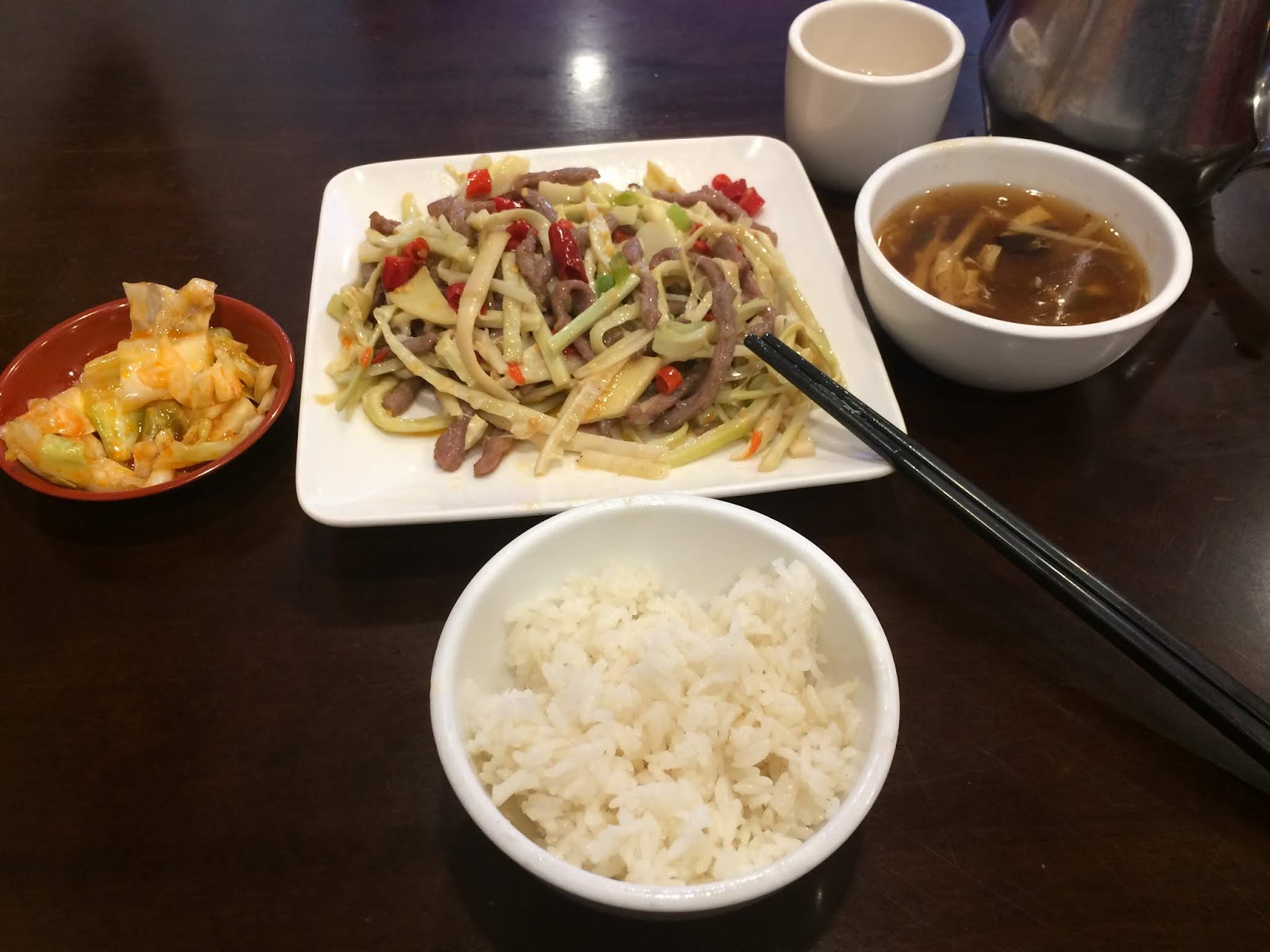
Simple Lunch, Spicy Beef with Dried Bamboo Shoots
Lightly Pickled Cabbage as Condiment

16 October, 2013

Review: iFi iPhono, Nagra BPS


Review: iFi iPhono, Nagra BPS

Talk Vinyl: iFi iPhono vs Musical Surroundings Phonomena II (also Nagra BPS, Audio Technica AT-PEQ3, AQVOX 2CI and Fosgate Signature)
Talk Vinyl: Naim Nait I vs Jolida JD-9 vs MFA Magus B vs iFi iPhono

ifi Audio Micro iPhono MM/MC PhonostagePart I: iPhono
Prologue When I first wrote about the iFi iPhono (here) almost a year ago, I could not find any reviews. Subsequently, a few appeared, and here are some links:

Reviews: AnalogPlanet; EnjoytheMusic; MonoandStereo
Interview: Designer Thorsten Loesch Interview in MonoandStereo

First, A Long Digression 好事多折磨
In case you wonder why the real review of the iPhono took so long, it was because it was to be months before I actually heard it in my own system! It went through several guest systems before joining mine. I would like to spend a little time describing the journey as some of the results add to my understanding of this unit, and I'd also detour a little to write up briefly on some other phonoamps I have encountered. In case you cannot wait, you can jump to the real review below. I'll give you the conclusion on iPhono first: the iPhono is a wonderful phonoamp, but it may take time and care to reveal its considerable strengths.

Detour: First Impression of iPhono (by others) My unit finally arrived about one month later. As I usually do not have time to spin vinyl these days, and as my usual abode has no vinyl set-up, I asked friend A (vinyl and tube fanatic who uses Quad ESL-57) to pick it up for me and test it out. After a short try he told me the sound was not bad but a little too thin for his taste and I completely understood because I know he likes vintage equipment and a fatter sound. Then I asked him to pass it to friend B (vinyl and jazz fanatic who uses Mark Levinson to drive big MBL speakers) who likes his music big and upfront.The iPhono did nothing for him in this system either. So far, things did not look too good...

Detour: My Second Impression of iPhono (first was at the dealer) actually took place on foreign turf! Friend B decided to renovate his apartment. He had to move temporarily into a smaller place where he listened to a pair of Quad ESL-57 placed side-by-side with reinforcement by corner placement (see pic). This actually sounds a lot better (fuller bass) than many "normally" placed ones! The little Nait I amplifier did a good job driving them. On the day I went to pick up my iPhono we actually did a small session of phonoamp shootout (MM only). The turntable used was a Linn LP12 (Valhalla) fitted with a Decca arm and Decca Maroon cartridge. Loading was at the standard 47k, so some may argue about that.

The result was not surprising. The iPhono easily bettered the Nait. The ultra high-gain hybrid Jolida JD-9 (a unit bought in Shanghai) was more overtly exciting than the iPhono but less refined. The owner had also borrowed my MFA Magus B, and on this occasion it was used as a phonoamp via its Tape Out. The MFA was decidedly the best, and that did not surprise me as its phono section is amongst the best I have heard, very quiet for a tubed unit as well. 

Mahler Symphonie 3 Jascha Horenstein Mahler Symphonie 3 - Norma Procter, Jascha HorensteinReview: iFi iPhono

Shortly after I reclaimed my unit I took it to New York (thanks to its universal PS, one reason I bought it) where I finally had the chance to really test it out during the nearly 3-month stay. I knew that it was probably not run-in, so it was one of the first things I plugged in! In NYC I spin vinyl almost exclusively. Equipment used this round:

Analog 1: Linn LP-12 Lingo/Ittok LV-II/Airtight PC-1
Analog 2: Clearaudio Concept/Koetsu Black
Analog 3 (mono): Thorens TD-309/Denon DL-102
Other Phonoamps used: Fosgate Signature (my experience here); AQVOX 2CI MkII used only for MC (here); Musical Surroundings Phonomena II (here); Nagra BPS; Audio Technica AT-PEQ3 (only MM)
Digital: Ensemble
Preamp: Manley Neo-Classic 300B
Loudspeaker/Amp 1: Magnepan MG 1.7 (used with Sunfire 300 amp)
Loudspeaker/Amp 2:-YL Acoustics 4-way Horn Speakers (used with Wavac MD-811 SET amp)

My previous phonoamp group review covers some of the units on hand for comparison, so it is relevant for this article. I dare you to find a more detailed or useful iPhono review! :-) I must have played more than 100 LPs during my stay, but I will single out 2 of them. The Unicorn Horenstein Mahler 3rd (in the US also on noisier Nonesuch) is a magnificent recording of a magnificent performance, with a huge orchestra and more than one chorus! Note that this famous recording is now on HDTT reel-to-reel tape!The Miles Davis Tutu is of course classic and one of my favorites, still Marcus Miller's best effort. There are many passages of complex instrumental interplay that tests the phonoamp's savvy. Another reason I use this LP is because I have the CD and I use them to make sure both the digital and analog rigs are balanced. Vinyl enthusiasts should do this often; too often they tweak so much that the sound is way off.


Observations I am not going to give a blow-by-blow description of how various LPs sound with the iPhono. It is not necessary, because (thankfully for all the right reasons) its sound really does not stand out. But over the few months I made some observations that I think are interesting:

  • Note 1: My impressions are almost exclusively based on the MC setting (I do not listen to MM much, though the mono Denon DL-102 uses the MM setting). For MM, usually I'd prefer tubed amplification.
  • Note 2: I got so caught up by my listening that I did not spend any time evaluating the equalization curves (though I have many mono LPs). After all I do believe the basic aspects of the phonoamp are much more important.
  • Run-in I suspect the unit needs quite a bit of run-in. I am sure it had a lot less than 20-30 hours on it when I got it back. Initially the sound was a little uninspiring, but I just played on. Read on.
  • Vibrations I have said before that my racks in NYC leave something to be desired (placed on stone slabs on thick carpeted wood floor). Certainly, it made my preamp prone to microphonics. I found out the light and slim iPhono was quite susceptible to vibrations! I could hear a trace of smearing much like microphonics in nature. Putting two Vibrapods (here) underneath immediately cleaned up the sound and gave the impression of more solidity. I also noted that the susceptibility to vibration decreased with time and run-in; I wonder why? I also tried Tony's trick of putting some books on top but in my setting that did not reap extra benefits, so for the entire duration in NYC only the Vibrapods were used.
  • Background Noise (lack of) You should note that among the battery of phonoamps here iFi is one of the few that fearlessly publish various specifications (AQVOX and Nagra do; Fosgate and Phonomena don't). One listen and you know why: one is immediately impressed by the extremely low noise floor (Signal to Noise Ratio 82dB). This is black background unusual for a budget phonoamp, indeed unusual for any phonoamp! In comparison, it is as quiet as (or quieter than) the more expensive AQVOX and battery operated Nagra (no mean feat!) and certainly quieter than the (pretty quiet) Phonomena II and Fosgate Signature (which is excellent for a tubed unit). This low level of noise, especially in MC, is quite an accomplishment. Now, that brings up the next question/observation.
  • Dynamics, or Is there Life in Low Noise? This is a little hard to describe. Experienced listeners know that with lowered noise and darkened background often comes a degree of "reticence" in the music making, as if the baby has been thrown out with the bathwater. It is often debated whether the "diminished dynamics" is just erroneous human perception. In such cases, often the music only comes to life when you crank up the volume. Now, personally, especially as a tube and vinyl person, the debates aside, I am not obsessed by noise level but I do think any component/system that cannot be enjoyed at a low volume, that does not have good microdynamics, is bad, period. Not so the iPhono - in my reference systems it performs just as well (and sounds just as as well and quiet) at all volume settings, with all kinds of music (unlike the Phonomena II). Its dynamics are properly scaled. In the grand opening of the Mahler, the iPhono puts you in a mid-hall perspective. In contrast, the Phonomena II is upfront. While the latter may have more overtly exciting bass and slam, overall its presentation is falsely highlighted dynamically. As the movement goes on, with the iPhono one is aware of natural progression, of unfolding drama, whereas the Phonomena II increasingly seemed to be a pastiche of highlights. I do think the composure demonstrated by the iPhono means that while it will work best in a balanced system, in less ideal circumstances I rather think it should work better in an over-energized system than one more sedate. The corollary is that the iPhono, unlike much modern hifi, does not set out to "impress" - it rather demands you to listen carefully (and you can do that at low volume!)
  • Hall Sound Experienced listeners listen for the hall sound, or that of the recording venue. In digital, a good example of the faithful rendering of hall sound would be the 16-bit TDA1541 chip; nothing else since has really come close (all you have to do is compare a 16-bit Revox B226 with a later delta-sigma Revox C221 and you will know what I mean, though the latter is a very fine machine otherwise). The iPhono is exceptional in this regard. The Mahler just heaved and sighed, bathed in the hall acoustics. I am not surprised, given that designer Thorsten Loesch is a fan of the 16-bit chip! In contrast, the upfront Phonomena II gave no clues to the hall, a serious failing to my ears.
  • Rhythm and Pace The iPhono is excellent in this regard. The flow of music is always natural, yet not without a spring in the step. Take Tutu as an example, the various instruments were not unduly highlighted but the delicate interplay came over as part of a whole fabric. The Phonomena II on the other hand seemed to be more visceral initially, but soon I got worn down by a certain uneasiness - the music just did not flow as the phonoamp imposes its own insistent quality.
  • Gain The gain of the iPhono is pretty standard. Since my favorites are big orchestral music I use the +6 db setting. At high volume, I do find it a little more dynamic and not much noisier. The gain is sufficient for my Koetsu Black, Air Tight PC-1 and Denon DL-304.
  • vs Fosgate Signature In some ways the iPhono breathes in a way not unlike the Fosgate. The tubed unit has more bloom (as it should) and dynamics, though comparison gives credit to the iPhono for running it close in its fine grain, details and smoothness, an achievement for a solid-state unit.
  • vs AQVOX 2CI MkII The AQVOX is quite a different beast in its design. Used in balanced mode it has higher gain (though reduced by my use of an adaptor I am sure). The AQVOX is more overtly exciting and dynamic than the iPhono, though the latter runs it close in details and S/N ratio. I love the AQVOX and it shall remain one of my references, but comparison certainly made me respect the iPhono!
  • vs Audio Technica AT-PEQ3 (only MM) Michael Fremer (Stereophile, Vol. 32 No.12 December 2009) had this to say abount the AT: "How about a sweet sounding starter phono preamp that lists for $119...? It's the Audio-Technica AT-PEQ3, a little plug'n'play box with a wall-wart power supply that's quiet, sounds clean and surprisingly dynamic, and get's the job done remarkably well.". Using the mono DL-102 I did compare this against the MM section of the iPhono and Phonomena II. The AT-PEQ3 is more like the iPhono in reduction, a unit that lets the music flow naturally, unlike the upfront and unnatural Phonomena II. Of course, it has appreciably less details and dynamics. I also briefly added a step-up transformer for MC use - not bad! A fine unit at the price!
  • vs Musical Surrounding Phonomena II If you have read this far you know that I do not much like the Phonomena II. Yes, I much prefer the iPhono! To me, all the praise heaped upon the Phonomena II just shows how wrong hifi has become.
Conclusions

  • The iPhono is unusually fine-grained and quiet (not just at its price, but comparable to most products regardless of price). It makes the music flow naturally, and has excellent rendition of hall sound. It doesn't play to the gallery, instead rewards in the long term.
  • The iPhono compares well to more expensive phonostages (even to the Nagra BPS reviewed below), and so is surely a BEST BUY. I think mid-priced phonoamps, not to mention budget ones, will have a hard time going up against the iPhono.
  • In the company of all the phonoamps I have,  for three months I listened mostly to the iPhono (save for comparison purposes); that should tell you more than this review how satisfying the iPhono is!
  • Take time to run-in and check for isolation.

page_BPSPart II: Nagra BPS
I have always been a fan of Nagra and have owned its tubed full-function preamp, the wonderful Nagra PL-P (my reviews here and here) for a number of years, so I am quite familiar with its phono sound. Recently I acquired a BPS and took it to NYC, where I tested it by the side of the iPhono.

Whereas the phono section of the PL-P preamp and the newer VPS phonoamp are tube-based units, the BPS is a solid-state device. Although tube-based, the VPS uses solid-state devices for its last 16 db of gain (unlike the PL-P, which I think is all-tube). Like its more expensive brothers, the BPS employs transformers (wound in-house) for MC step-up function. Like the PL-P, the BPS is battery-operated, though in a simpler manner by using a simpler 9V cell. Thus, you can infer that the BPS is no cheap compromise, as borne out by its sound.

The BPS (official literature) has been well reviewed (using multiple high-end cartridges) by TAS and Stereophile. 6moons has a review too but it is limited to use of the Denon DL-103.

After spending so much time writing on the iPhono, I am going to be a lot briefer when it comes to the BPS: simplement fantastique!

Observations
  • Much of what I wrote about the PL-P (links above) can be applied to the BPS! Indeed, comparing the BPS to the PL-P (from memory, though I did have the PL-P on hand but did not fire it up) is not unlike comparing the iPhono to the Fosgate (see above).
  • The battery-operated BPS is very quiet. But the iPhono is subjectively equally (perhaps even more) so. In this regard, the achievement of the iPhono is outstanding. If blind-folded and asked to tell which is battery operated, I just may say iPhono!
  • The BPS is fast and  has a leading edge that is just right in speed and sharpness. Its superb microdynamics make music easily come alive. In these respects I do prefer it to the much cheaper iPhono. Here, for the same reasons that I detailed in the section on background noise in the preceding iPhono review, I should say I am not usually a fan of batter-powered equipment, but the BPS does not suffer any of the shortcomings of battery operation. In terms of macrodynamics, it is certainly not wanting. In some regards, sonically it resembles AQVOX the most.
  • Like the iPhono, if you don't use care in cabling tonally the BPS may be a wee tad towards the lean side, but still far from lean (think Phonomena II). It has just a tad more bloom than the iPhono. In both my systems, it rendered everything faithfully and, importantly, delightfully. I am not sure what the 6moons reviewer was talking about when he mentions the mid-bass/bass. My opinions are closer to the TAS and Stereophile.
Conclusion
  • The BPS, though not cheap, is actually a Best Buy!  It is now one of my references.

26 August, 2023

LS3/5A Chartwell Audiomaster Rogers Yamamoto CA-04 Douk E6


Click pics to enlarge. Chartwell LS3/5A. On top of rack, Fosgate Signature Phonoamp and Elekit TU-8300 amp. Beneath, Micromega Stage 2 and Magnavox CDB-262, Yamamoto CA-04. Incidentally, the LP Danse Infernale in the background is one of my references. The Boston Pops/Fiedler Night on Bald Mountain is my favorite, bar none in performance and sonics, more exciting than the venerated LSO/Solti (Decca), which seems plain vanilla in comparison. It can often be found in dollar bins.

Letter from NYC (23-8): Small but Beautiful

Update 8/30/23: A few edits, including important clarification on the LS3/5A shootout - the Audiomaster won all hearts.

It has been a little over 2 months since I left China for NYC, where I spent all my time except for 2 weeks in July in Chester, UK. In the one and a half month here, I really haven't done very much except lately I have upped my written output for sure (I think around 10,000 words in the last few days). I have mostly sorted out my accounts. Sometimes it's exasperating dealing with financial institutions, including the IRS. Everything takes so long.

Given that I am by myself, I wake up even earlier than usual, around 4:30 am! I go to sleep around 9 pm. Maybe 2 or 3 times a week, I'd meet up with friends for a lunch gathering. I don't spend much time preparing food, and 2-3 times a week I'd just take out from the local Senior Citizen Center. Otherwise, aside from running errands and shopping for essentials, it's all time at home, much of it spent listening to music, sometimes while writing. I like moving about in my large LR more than being cooped up in my dedicated listening room (even if it has my reference gear it is more of a sanctuary when there are others around), so up to now I have only listened to the small LR system. Whether for review purposes or not, I rotate things in and out, and here are some brief notes:

Harbeth P3 ESR SE vs LS3/5A In my recent posts, including reviews, I have used pics of the Harbeth and LS3/5A. I acquired the Harbeth not long before I left NYC in 2020 (review). Fact is, a few weeks ago the original owner Leo would like to buy it back, and I obliged. I slotted in the Rogers LS3/5A (black badge, serial # 5,xxx). Haven't used the Rogers in quite a while, but in an instant I knew it's a worthwhile change. By now I'm in an even better position to talk about the differences between the two. Although both classic English loudspeakers with shared heritage, differences are obvious: 1) the Harbeth is smoother and reaches deeper; 2) despite a somewhat slower transient, the LS3/5A nonetheless is livelier and more dramatic; 3) despite many reviewers' talk (most often wrong, even downright stupid) on neutrality, as a whole the LS3/5A is more truthful. Sometimes it will show a little more the warts and fraying edges of recordings, but that is what a monitor is supposed to do, and a monitor it is. Still, I had much enjoyed my time with the Harbeth, and recommends it.

Preamp Rotation First I used my Shindo Monbrison. But as soon as I started to try out different phonoamps I switched to Yamamoto CA-04. The reason is very simple: the stock vintage RCA connectors of these Shindo's lose connectivity often (AD mentioned this in one of his Shindo reviews). If one has to plug and unplug often, a switch is mandatory. Yamamoto vs Shindo These have very different design and sound. I wrote about the difference in 2020, and things haven't changed. This time in the Yamamoto I have been using exclusively the WE 403A.

Douk E6 This belongs to the above section but due to the epic nature of this comparison I give the Douk E6 its own subheading. I borrowed one of Andy's many units. It has the stock Chinese tubes, with O-Rings for damping. The caps had been changed to red Audiophiler MKP 250V 1.0 uF (marked 105J). These look similar to the ones I used. PS was a small 5V USB Charger. vs Yamamoto As well as I know the E6, I was still astonished by the sound. The most significant change is a larger sound field with fleshier images (befitting a DHT) and even more air. This is consistent with my experience but now the comparison is with a preamp whose second-hand price is 20 times the cost. One interesting observation is that the clicks and pops and LP artifacts are particularly highlighted. I think this is a result of the incredible high frequency extension, the high gain and transient speed. The Yamamoto is perhaps more controlled with large scaled music and its midrange (with the WE tubes) and rhythm a little more layered. But the E6 held its own for sure and I only continue to use the Yamamoto for the better connectivity. Note that this is the first time I have compared an E6 to estimable preamps (though my HK and NYC circles have, all to the same remarkable conclusion of equality, if not superiority). Remarkable!

Analog Rotations I have been logging this. In case you have missed them, more substantial articles are on Sun Valley SV-EQ1616D and Fosgate Signature Phonoamps, and MoFi Studiodeck. Since the arrival of the Studiodeck I have been using it mostly, with the Fosgate Phonoamp. Very contented, but I hope I can stir in something a little more exotic before I leave NYC in early September. In recent days, I have gone through 3 symphony cycles: invigorating Beethoven by Munich/Kempe (Seraphim, sound good despite being quadraphonic); magisterial Dvorak by BPO/Kubelik (DG; stupendous sound); flawed but worthwhile first Sibelius cycle by Boston SO/Davis (Philips, good but not top sound). You shall be amazed how time flies when one listens to the greatest music.

Digital Duties As here. I actually listen to quite a bit of CD, especially Jazz. Like Miles and Coltrane. Particularly fine sounding Rachmaninov Symphonic Works from Concertgebouw/Ashkenazy (Decca). Ever heard Patricia Barber's Companion (Blue Note)? Fabulous sound and one of her best. Have you noticed one thing? I haven't streamed the whole time! I actually miss it, but the very weak data handling of my phone is not up to it.

SE Amps I started with the small and  convenient Almarro A205A (EL84), then two 300B amps, the AES SE-1 and Elekit TU-8300 (first review and review after mods and updates). The Almarro does a fine job driving the LS3/5A but the 300B amps open things further up. AES has fixed bias adjusted through a single 1/4" TRS phone jack in the back (I use a connector with my multimeter). As the bias is for both tubes, and tubes may not be balanced, it's better not to bias high. Mine (Shuguang) was set pretty low, at 90 mA total (for both channels). This time, I operated the Elekit as an amp (Yamamoto  AES vs Elekit Using the same 300B tubes, despite being biased lower (the Elekit is autobias), the AES sounds more powerful. The circuit may have something to do with it (traditional vs constant current source, respectively) but I'd say the AES has the better transformers. Tonally the Elekit is airier, more resolved and on the neutral side, and the SE-1 is a little more centered on the midrange. Both are very good. Andy and Kevin have heard them both and voiced no serious preference. With my guests I also rolled in the Philips JAN 6L6WGC (which I liked) but it seems both of them preferred the 300B. I think the Elekit is sounding the best as it ever has. I actually wonder if it has finally starting to break in. You see, I don't think I have had more than 300 hours on it altogether, a significant fraction from this time around! And now being summer, I may not bring in the 6C33C Almarro 318B. Instead, if I have time I shall try some more powerful Push-Pull Amps on the LS3/5A!

Subwoofer After a while, I brought in my very modest Pioneer SW-8 subwoofer.  Finding the setting took a little more time than when I used it with the Kilpsch Heresy. I estimate the final Crossover Frequency to be around 80 Hz (I remember in HK it was even higher, but it was a different sub) and Volume was just a touch (less than 1-hour on the dial). With even the little bit added, the music is more dynamic. When Kevin and Andy visited I demonstrated to them and Kevin correctly said with the sub on the soundstage expanded. There are very few albums on which the presence of the sub can be suspected. A success, but I know all about it from my experience in HK.

Rogers vs Chartwell vs Audiomaster As both Kevin and Andy liked the pair of Beydas clone I brought to Andy, I invited them to my place for an in-depth session with 3 pairs of the real thing, all 15 ohm versions at that! First, we listened to the Rogers (black badge; serial # 5xxx), which had been resident in the system for a while before they came, and it was very nice. When the Chartwell (serial # 3xxx) was substituted, we all heard more treble and a leaner balance. Andy remarked it had less bass. Part of this could have been because the Rogers was in use before they auditioned, whereas the Chartwell had been in the closet for years. After their visit I just continued using the Chartwell, and really do not feel now that they lack bass in any way, though it is true the treble is a little more prominent (mirrors my experience in HK). As a whole, I enjoy its tighter grip on material as well as better dynamics; its sound is likely closer to modern variants. Finally, it was the turn of the Audiomaster (serial number not obvious). More than Rogers and certainly Chartwell, I have used this pair on and off over the years, always with great satisfaction. It is a little darker but, oh, how relaxed it is! Both Kevin and Andy were thoroughly charmed by the Audiomaster. Too bad we did not have on hand the Beydas to compare! It should be noted that Chartwell and Audiomaster are much rarer than Rogers, especially so in America.

Xinshi 新时 597 Passive Horns In many of my more recent articles, these appear atop the loudspeakers. They enhance the sense of air. After the pair was handed to Kevin, I immediately noted a diminution of air in the system. This incredible thing is now a necessity in any system. Next time I come back to NYC, I shall bring a pair along.

The TV Long time readers with eagle eyes will have noticed that in 2020 the TV was on the rack, whereas now it had been moved to the large work table behind. It cleared much space for gear, but that was not the point. Experienced audiophiles know that a large center object, aka the TV, messes up the soundstage (can be better if a thick cloth is draped over it). By doing that, the soundstage immediately deepened, significantly. I usually never sit in the center, close to the right speaker when I'm on the sofa reading or computing, and further right on the dining table when working or eating. No matter, the soundstage is much improved, and quite impressive. Advantage of being alone.

TV Sound My Sharp, circa 2010, is certainly not shap in picture and a lousy one when it comes to sound. As I watch quite a bit of TV, be it old TV series or B movies, I struggle with the sound as well as clarity. The older movies and series are definitely lower in sound volume and often muffled. Perhaps they are playing bad (low res) copies. I borrowed a couple of DVDs (Unberable Lightness of Being and Two for the Road) from Andy and found the sound of the replay (through my Sharp TV), even from my top-tier Sony BDP-S5000ES, better than TV but still totally underwhelming. I finally could not stand it any longer and fed the optical out of my TV into my Micromega MyDac DAC and then into my regular system. Much better, but still not enough. You simply do not watch a modern movie (Unbearable) with a SET amp! LOL! I know I can probably do better by configuring my Blu-Ray player and, yes, more wattage will be a different story, but so much for now.

 Audiomaster Crossover

Innards of the modified Elekit TU-8300

Douk E6 in action

26 March, 2016

Review: Taiwanese Raos 臺灣 雷氏 MC Mono Cartridge (5 ohm)

Letter from NYC (46) 2016 (2): Music to My Ears
Review: Taiwanese Raos 臺灣 雷氏  MC Mono Cartridge (5 ohm), Part I
Talk Vinyl: Mono Replay IV - Filling Up the Space

Revised April 2, 2016: I had previously surmised that the humming encountered with the fully balanced Parasound and BAT phono amps may be due to the grounding of the Audio-Technica turntable, but I was proven wrong. In Part II, I swapped in the Pioneer PL-50 turntable, which has a separate ground wire, and the hum remained the same, so it is an issue of matching not particular to the turntable. Maybe balanced phonoamps are more problematic with downstream single-ended gears! This article is revised accordingly!

Note: For earlier articles on Mono Replay, click on the Label "Talk Mono" on the sidebar.

Early Bird Catches the Word As I slowly regain lucidity, I fired up all my stations, but the one I concentrate on now is my Reference Station III, because I am trying out new things and also because it is my early morning station. I get more done from 5-7 am than any time later in the day, including writing!

Diamonds in the Rough I managed a little foray into Manhattan where I chanced upon a pile of MONO records, mostly Westminster's. All were in bad condition, dirty and with many scratches. But there were several albums of Reine Gianoli that I simply could not pass up. Ever since I heard her unsurpassed Mozart sonatas (Doremi; borrowed from the library) I have wanted to hear more. Her playing is simply as regal as her name (Reine=Queen). So I grabbed the Debussy Preludes (Book I) and Mendelssohn recital, along with some badly scratched violin albums. I also managed to score a decent stereo copy of Erica Morini playing the Tchaikovsky. These I played as found with my mono setup (below).

System:
Digital: Sony XA-5400ES SACD/CDP
Turntable 1: Clearaudio Concept/Ortofon Kontrapunkt C
Turntable 2: Audio-Technica AT-PL120/Raos MC Mono
Phonoamp 1: 47 Lab Shigaraki
Phonoamp 2: Fosgate Reference
Buffer Amp: Elekit TU-8500
Preamp: Langevin 102
Amp: Lepai 2020A+ or Wavac MD-811
Loudpseakers: Almarro M1A or Dayton B652 or YL Audio 4-way horns


Raos MC Mono Cartridge Mr Lei's handmade cartridges 雷子揚的RAOS雷氏手工唱針
Now, this is a rarity, at least in the West. Info is scarce even on the Chinese internet.

Acknowledgement I thank my friend WoSirSir for the generous gift of this cartridge.

Mr Lei has long retired, but one can still find "official" sites/blogs (don't know who ran them), which however seem not to be active (last entries 2014; many new questions unanswered), and there are some other more useful links (in Chinese):

Official Blog, buried among the entries is a very useful chart with data on various models (bottom of this post)
raoslei's Wordpress Blog, a even more empty site.
wuming's review 吳鳴部落格 of the MC5B On the internet, there very few reviews, but here is a detailed review of the (stereo) MC5B (one of his most popular) by a private user.
Portrait in Chinese 台灣音響史國寶級工藝家雷子揚的RAOS雷氏手工唱針(源雜誌2008) This excellent article detailed the history of Mr Lei.

Short English Summary
  • Craftsman/Artisan, then Inventor Mr Lei was in the records business, and because of that also did some trading of audio equipment. Soon, he started to repair and re-tip cartridges for customers and built up a solid reputation. At age 60, based on experiences gained over a lifetime he started building his own MC cartridges.
  • EMT Lineage EMT cartridges served as models for Mr. Lei. At age around 80, he created the popular and reasonably priced MC5B (spec's in chart below). In the favorable blog review quoted above the author mentioned the engine is very similar to EMT TU-2, but the body is more like Supex.
Raos MC Mono
  • General From the photo above you can see that it looks almost identical to the MC5B, hence also an EMT "derivative". This was also a very reasonably priced offering. Mine did have a bottom cover, which fell out after a short while! Just as well; I like the nakedness even better.
  • Spec's A little sheet says Tracking Force 1.5g +/- 0.2 Stylus HDE Diamond (looks rather sharp; likely elliptical) Output 0.5 mV Impedance 5 ohm Weight 9g. Note: the combination of relatively low impedance (less turns) and healthy output means a strong magnet must have been used. There is no figure on compliance; the suspension seems to be on the stiff side for me, so a low compliance design
  • Setup The body's height is shorter than most, which meant that I had to use several shims (cut plastic card) to achieve the correct VTA (especially since my AT turntable is of DJ origin). Otherwise, installation and alignment went smoothly. This cartridge should benefit from a heavier arm than what I am using, but this will do for the moment.
Sonic Notes
  • Raos MC Mono By now I have about 20 hours on this cartridge. Tonality Sound still has a little of that MC peak (maybe I shall add some more shims as the cartridge still looks a little dipped down). But what a sound! Partnering Phonoamp Initially, the sound had some glare which did not sit well with Elekit's inbuilt (ss) phono section nor the 47 Lab. After some break-in the situation is getting better. At this moment, some warmth in the phono amp is still needed, and the Fosgate reference fits the bill perfectly. But I am also beginning to get good results with my 47 Lab (which is also unbroken-in).
  • Grounding Anomaly/Problems in Phonoamp Matching I encountered a few problems. Both the Parasound JC3 and BAT P5 (both balanced designs) generated a more pronounced hum than the Fosgate, Elekit or 47 Lab. Also, with the JC3, pressing the mono button drastically lowered the sound level. I first surmised the AT-PL120 may be to blame, as it does not have a ground wire, rather like Rega (ground goes to the -ve of one of the leads). This proved incorrect, as a later swap to the Pioneer PL-10 resulted in the same (this will be dealt with in the coming Part II). Therefore, a problem matching! Maybe balanced phono preamps are just more problematic with unbalanced downstream gears?
  • Mono Sound vs Stereo Sound Field Compared to my previous efforts, excitingly, more gets filled up between the speakers. There is little difference from the center fill of stereoBalance and Touch Excellent touch and conveyance of force, but not skewed towards the jump factor like some can be, keeping a even hand with all kinds of material. I didn't miss stereo, and have been listening to one mono LP after another. You will hear more about this cartridge for sure; At some point I shall compare it to the Denon DL-102.
Music to My Ears I thoroughly enjoyed listening to all the mono records and came away awed by these  artists of yore. These supreme artists make me want to write about them rather than hifi! That is how good they are. Each one plays with impeccable style and infectious personality, unlike many musicians of today. Shall we say a parallel can be drawn with vintage vs modern hifi?
catalog