23 April, 2010

Talk Vinyl: The Neurosis of Alignment

Talk Vinyl: The Neurosis of Alignment
or: The Basics of Cartridge Alignment Protractors, a Rough Guide
or: Freeware versus Theoreticians, Neurotics and Swindlers
or: Simple 2-point vs Dennesen

(last revised April 24, 2010)
Although my system has remained largely unchanged, the arrival of Koetsu Black has resulted in major upheaval's for all my turntables, as I swapped around cartridges. Installing required protractors and stylus force gauge. I used some vintage devices loaned by a friend, AND checked out some Freewares to see how good they are.

Should cartridge alignment be a protracted affair?

Free tools
I'm not going to go into this topic of protractors too much. Suffice to say having one is helpful, but don't go anal over it. There are many variations, but if you're a starter, the BEST place to start would be Vinyl Engine:

(1) start here to acquaint yourself with various devices;
(2) then here to download some templates which you can print out free. Note that the various methods differ significantly in their "null-points". More on that later.

There are many other free protractors. To cite just 2 examples, the ones from tnt/enjoythemusic and styli.co.nz. For these 2, the ones I printed out seem to have "null-points" that are neither Baerwald nor Loefgren. Even just eyeing the pdf, you can see the 2 differ obviously in their points. These seem to deviate significantly from either Baerwald or Loefren. Does that matter? Read on.

(3) Important Reminder: As alluded to on the (always) confusing TNT website, when you print out ANY of the templates, you cannot just print. You MUST go to "Print Preview" and make sure the (default) "fit to page" is turned OFF. It depends on the browser, but you do NOT want anything that fits the image to the page. For my XP, I had to select "None". Only this way can actual size be printed. 2 of the Vinyl Engine templates have built-in rulers to let you check. Only this way is it fool-proof.

If you're not sure about printing one out yourself, you can buy any number of aftermarket tools with prices between $1.50 (Garage A'Record) and hundreds (I'd go for the $1.50 one).

If you really want to get serious, you can even design a even more accurate one for yourself, free. There are free software's out there (including one on the tnt website cited) that optimize everything for your arm/cartridge. Some "experts" out there, including some in HK, use these free software's and make custom protractors for a hefty fee. You pay, unreasonably, for your laziness.

Dennesen Protractor and Technics Stylus Force Gauge
I did not use any of the aforementioned free tools in the actual setup (but read on), instead I availed myself of a friend's Dennesen Protractor, as shown in pics. It's a 1-point Baerwald type. I found it easy to use and the result, as judged by listening, was very good. Suffice to say there are plenty of neurotics out there who talk and worry about a 0.5 mm difference. I would not be one of them. The device is quite old, long out of production, and undoubtedly the precursor of the Feickert (as well as others like the Clearaudio and even Project).

I proceeded to set up my LP12/Ittok and Technics SL-1200 with the help of the Technics balance, also pictured. Both set up thus showed very little groove distortion (if any) and low surface noise. After almost a hundred LP plays, I consider my job done.

How different are they?
Just for fun, I checked both using the various free templates and found out both the LP12/Ittok and Technics SL-1200 MkII showed near-perfect alignment with all the templates. The LP 12/Ittok appears dead-on, the Technics not far behind (due to its intrinsic property, some of the cartridges had to be pushed all the way to the front of the headshell, and even then it misses by ~ 1mm).

Is that surprising? Well, IF alignment is proper, the cartridge should not be too much off at any point in theory, and given the inevitable parallax error of our feeble eyes even harder to detect. My view is that ANY of these free protractors get about the same results compared to each other and are comparable to the much more costly Dennesen (or their modern counterparts).

And now we come to the TD-125/SME. The use of Dennesen on the unique SME arm has a unique built-in problem. The protractors assume a fixed pivot-point of correct length, but the SME by necessity has a movable pivot (it aligns the cartridge by moving the pivot). My old alignment (Benz Silver) used a self-made 2-point protractor. The Denon DL-304 obviously had different properties. Using the old pivot point and "aligned" with the Dennesen, the body of the cartridge was obviously not parallel when assessed by the various 2-point protractors. I re-aligned the whole thing using the Vinyl Engine Baerwald protractor, and the result was also in excellent alignment with the Loefgren. I noted that I had to push the arm all the way forward in its slot. I think the 2-point protractors are good for SME.

Tell you something, in the past, when I did not have one on hand, or when helping a friend who did not have one, I would just draw one myself and approximate the 2-points, and the results have been quite good so far. Any 2-points may not get you the ultimate precision, but it would not be too far off either. If some of this sounds like heresy, so be it. I have been listening to LPs for almost 40 years, and there have not been too many LPs that jumped out of the groove during heavy modulation, and I don't hear too much distortion on well-worn LPs, and I don't even wash my LPs usually.

Tell you something else. I have also listened to too many really high-end setups that were probably aligned using expensive tools or by dubious self-proclaimed experts, and few of them tracked well in reality, and most were noisy. It is amazing how bad some of them were/are! Why should that be? Who knows! My advice, do it yourself.

Theoreticians, Neurotics and Swindlers
The world of turntable setup discussion is populated MAINLY by these 3 types. While some genuinely try to coax better performances, much of the discussion is rather cerebral. The Theoretician believes in the infallibility of "science" and dismisses the ears. The Neurotic fusses over everything and probably never plays anything else other than his Test LP. The Swindler tells you turntable setup is HARD, that sound would be terrible even with minimal deviation (from HIS ideal), that HIS ears are the only dependable ones and charges dearly for his service. I hope you don't have these people as your friends.

Take your fate in YOUR hands
In the end, what matters is listening. Do your TTs play reasonably well with a range of records, all the way to the end groove? All of mine do, and I am no expert. In 40 years of listening, the simple 2-point method (or 1-point in the case of the protractor supplied with the Rega turntable) has worked very well for a host of combinations, and it shall continue to do so. Print out (properly) some of these templates and check yourself. You may be the next expert!

22 April, 2010

Earphone: Audio Technica ATH-AD700

Earphone: Audio Technica ATH-AD700

I haven't listened to earphones in a long time. But recently in NYC, where I don't have a subscription to the internet and use the library WiFi, since I found out in a particular spot in my bedroom/study I have good free access to the internet at night I have been perusing this advantage, despite the attendant perils. At night I need to use a headphone.

I dug out my 30 year-old Senneheiser HD-424. The foam pad has long gone south, so I did without. The sound is very pleasant, though bass-shy. And it has never been entirely comfortable.

Browsing the internet, I finally gave in and bought from Amazon a pair of Audio-Technica ATH-AD700, for $79. As with Amazon, it came quickly, in 1 day! I was shocked by the flimsy packaging, and the hideous purple color of the perforated outer metal grill, though on the web it seems black. Maybe I didn't read some fine-print.

But the sound IS well-balanced, natural, as the reviews attest. Most notably, bass is a lot stronger than my Sennheiser. It is however very big, and odd looking, though it compensates by its comfort. I have less than 10 hrs on this now. Sound is slightly veiled but I expect improvement as it runs in. As it is, it already is better than my old Sennheiser.

A good buy, IF you can take its bulk.

Incidentally, why do people buy a dedicated headphone amp (for these easy to drive earphones)? My NAD 325BEE does respectfully. Also, my M-Audio Firewire Solo does too, at less cost!

HiFi Letter from NYC 2010 (3): More thoughts on Magnepan

HiFi Letter from NYC 2010 (3): More thoughts on Magnepan

(revised May 6, 2010)
Bigness
Do you want your sound big? Your image big? What does it mean by big? I think there are several facets to the perceived "bigness".

It is amazing how the majority of audiophiles have been brainwashed by "pinpoint" imaging, which of course exists not in the real world. Even considered on its own term in sound reproduction, imaging is only desirable if it is accompanied by good texture, what some would term "fleshiness". Real music is made of flesh and blood, so its reproduction should too convey the good presence of the musicians.

How often even expensive systems fail in that regard! Many people have "images" that can be "located", but they are pitiably small, low in height and bland. Can that be good reproduction?

This the Maggie owner usually does not need to worry about. Due to the height of the panels, the sound is usually big, even in systems of certain leanness (unfortunately too common). I'd not say Maggies have presence that is as truthful as horns or electrostatics (like my Martin Logan Source), but it offers a good semblance. So what we get is imaging that does relate to the music.

An acid test for coherence is reproduction of MONO music. A good CD transfer, or better yet a proper mono LP playback (e.g. my Denon 102 cartridge) should yield full and solid sound with even better instrumental timber than stereo - and THAT the Maggie does very well. You'll be amazed how badly many of today's speakers cannot do this most simple of things, a sure sign of their incoherence.

Speed and Coherence
When you have a speaker with drivers of different nature, people tend to dismiss it for incoherence. In reality, even if 2 drivers look alike, they can be incoherent in marriage. An example of this would be quite a few Dynaudio speakers for me (especially the 2-ways).

And Maggies? I think the incoherence is there, just a little more subtle. Jonathan Valin of TAS hinted that the "true" ribbon Maggies are possibly MORE incoherent that their "lesser" quasi-ribbon brothers, and regards the 1.6 as possibly the most coherent of the bunch. On the TAS Blog, he now stresses this even more in his raves about the superior coherence of the new 1.7. Now, would that make you start to doubt all the other reviewers (and users) whose praise for Maggies were absolute in the past? It should, if the coherence of the 1.7 is truly in another class.

But I think he has a point. I have ALWAYS thought the treble of many big Maggies "somewhat" unnatural, and not superior to their domed counterparts. Funny this treble is precisely what some Maggies die-hard's crave, those who regard a Maggie as not worth listening to if it doesn't have a "true" ribbon.

I think the reason why the treble sometimes bother me is not because of itself per se, rather because it sticks out for its speed, which is faster than the bass panel, fast though that is. Just a little, and it matters little whether your amplification is fast or slow, the difference stays. One can hear this sometimes even in the agile MMG. Occasionally, on a big SOLO piano recording the treble and bass notes of the same chord seem disjointed and coming from different spaces. Interestingly, with big orchestral pieces one almost never notices, except sometimes the spotlighted solo's (like the oboes and solo violin in Ein heldenleben on the Kempe/EMI recording) stick out a bit too much by unduly highlighting the leading edge.

Speed and Dynamics
How dynamic is Maggie? Hm...in my book the answer is not very, at least not in the top eschelon. Let us look at micro-dynamics first. Due to its speed, micro-dynamics seem superb at first, but careful listening makes one doubt a little. The speed and the slight "whiteness" impose themselves and rob the instruments of some natural harmonics, hence the perceived "air" is somewhat artificial. Ones hears many details, but somehow the small inflections and rhythmic subtleties are not the best conveyed. Repetitive notes sometimes have a mechanical "ringing" quality to them.

What about macro dynamics? I'd say even the large panels are somewhat limited. The lack of true bass substance means to a full-range listener lack of the ultimate macro dynamics. Can a Maggie faithfully reproduce a bass drum whack? The answer is NO, not in any of the Maggies I have heard. I'll relate to you a story. Once a well-known Maggie person came to my house and listened to Mahler's 5th on my Tannoy Canterbury (15") and liked it a lot; when we went to his place he made sure he played me that too on his "true ribbons". He said to me, proudly: "See, the Maggie can do it too!" but although it was well done I didn't have the heart to tell him there is no comparison in the fortissimo; on the Maggie you don't perceive physically the weight and power of the full orchestra in cry, which to me translates to lack of ultimate dynamics. Incidentally, have you noticed Maggie users are very careful about the volume? It's for a good reason; regardless of room and ratio there is a limit to how loud the Maggies would go before unraveling musically, or even mechanically. They are loudness restricted, and hence dynamically restricted.

It depends on what you listen to. Speed has something to do with perceived power. In jazz, fast transients may be overtly exciting, but in classical, even hard rock, too fast a perceived speed lends an unpleasant breathless quality. For balance, personally I think Maggies should not be paired with gears of super speed; too much of a good thing. Slowing things down a little brings paradoxically more perceived power. Experienced men should know that, no? To that end, I think a tube preamp is a good thing for Maggie.

Let's not exaggerate. Maggies are wonderful things, especially for the money. But they are NOT the perfect transducers as some claim, or the most truthful. Even the most experienced Maggie fans are more often than too intoxicated by their open airy sound to remain blind to their shortcomings.

I am most intrigued by the recent introduction of MG 1.7. the first Maggie to extend the (quasi)-ribbon technology to the bass panel. Preliminary words on the net, including those by JV, have been highly favorable, though dissent is starting to emerge by traditional Maggie users (claiming it is "cold"). Would that be my next upgrade? Or would it be one at all?

Linn Majik (and Linn Kolektor)

Review: Linn Majik (and Linn Kolektor)

I just couldn't resist a good integrated amp, which more often than not even trumps expensive separates in coherence. If you read my integrated amp overview you shall know how devoted I am to the best of these, and the best are mostly British.

Most recently I jumped on a Linn Majik, old version, with built in MM phono section.Given my reasonable familiarity with these older black Linn boxes I was still surprised by its performance. Since I am mainly a phono user, a comparison with the Kloektor is in order.

Kolektor
I had previously owned the Linn Kolektor twice, and once used it with the companion LK60. The Kolektor is a very good, under-rated full function preamp, with SMS power supply, remote capability and MM phono section (almost nothing inside the box, given the surface mount components). Its refined sound is a pleasure. Though it is bested by many tube preamps, it is very good for a ss preamp and I prefer it to many expensive ss products. One fault of it is that the overload margin of the line input is low (rated at 2mV), Still, it's a fine achievement and I regard the preamp to be quite a bit more outstanding than the amp. Some audiophiles have prejudice against SMS power supply and surface mount components. I am not sure why. As implemented by Linn, they are usually refined sounding compared to their earlier incarnations using traditional components.

Majik
This early Majik has a large Irish toroidal transformer and a circuit board populated by surface mount components. The board is very different from the later Kolektor. This is the setup used:

Analogue: Technics SL-1200 MkII with Benz Micro Silver or Denon DL-102 (mono)
Digital: Meridian 596
Speakers: Magnepan MMG

The volume marking of Linn is a little alarming, initializing at 30 and maxing out at 60. Driving the MMG, I used it around 50. But no fear, although rated at a humble 33 wpc into 8 ohms, it is actually subjectively more powerful. On most material it is unfazed, unraveling just a bit only in certain orchestral climaxes. Most impressive is its rhythmic flair and prodigious bass quality, which surpass my BAT/McIntosh setup. That's amazing for a 33 wpc amp! The phono section is very clean, its output slightly low using the tape out. Higher output MMs would fare better, though my 2 mV Benz Silver did reasonably.

The sound of this integrated, as an amp and as a phonoamp I'd rate better than the next-up separates, Kolektor/LK60, It's more lively and rhythmic. This might be one aspect in which a SMS supply yields to traditional supply. The compromise is a little less smoothness when pressed. Here I remember old time Linnies frequently prefer their older products for their better PRAT. That's certainly true for the LP12, and it may be true of their other products as well. Horses for courses.

With its remote facility, this is now a favorite.

20 April, 2010

AES SE-1: Schematic and Info


Click on pics to enlarge


AES SE-1: Schematic and Info


After I published my articles on the AES SE-1 300B amp, over time I have received a surprising number of inquiries on it. Most ask for the manual. I have finally dug it out. Since I don't have a scanner, it is cumbersome to take photos and load them. Most of it is assembly instruction, so I just took pics of the schematic and pertinent operating info. I hope you shall be satisfied.

05 April, 2010

HiFi Letter from NYC 2010 (2): Magnepan MMG growing-up pains

HiFi Letter from New York 2010 (2): Magnepan MMG growing-up pains

This time I recovered from jetlag surprisingly quickly, and had little use of the second system after a few days. I concentrated on my main system, The first thing I did was to improve its performance. Current main system:

Digital: Linn Karik/Numerik (Linn RCA cable to preamp); Meridian 500/563 (Gotham GAC-3 XLR to preamp)
Turntables: Linn LP12/Ittok/Denon 304, Lingo power supply; AT PL1200/Grado Gold
Phono preamps: PS Audio GCPH; WE 285L (step-up trans) into BAT P5 (Gotham GAC-3 XLR to preamp)
Preamp: BAT VK3i (Filotex RG58 coaxial thru adaptor to amp) Amp: McIntosh 2200 (4-ohm tap)zzd

Placement
The day after I set up my main system, after not such heavy use, the system was already surprisingly in reasonable form. There was not that much I could do in positioning, but within a 2 sq ft area I experimented and obtained a small improvement. My room is ~12.5 ft in width and 20 ft in length (to the kitchen partition; 26 ft counting the corridor on the right). The speakers are placed ~10-11 ft from my listening seats, and are 6 ft apart (inner edge to inner edge). With those measurements, the manual was correct in saying having the panels upright resulted in better sound (but the opposite would be true for shorter listening distances). Here, I must add that I feel the larger Maggies with non-adjustable upright stands are NOT meant to be used in rooms too small, which would result in an over-bright sound. Take in only what you can swallow, that applies to hifi too. Unfortunately, audiophiles in HK most often ignore this, a result of the pitiable general situation of having money but not space. Blame the real estate tycoons, and the government.

Left or right, game of the mirror image
Some say the Maggies MUST have the tweeters inside. This is too dogmatic, and presumptive by not taking individual environments into account. While the Maggie MMG manual advices at one point to place the tweeters inside, somewhere else it encourages the user to switch the 2 panels and experiment, a good attitude that's there for a reason. In my space placing the tweeters on the outside reaped big rewards: a larger and deeper soundstage, more easeful climaxes and better gradation of dynamics, all at little cost. Okay, with solo instruments there is a slight shift in the position of the images, which also softens just perceptively, but I'd regard the gains far outweigh the slight imaging compromise (haven't you ever noticed even the best Maggies tighten up when the going gets rough?). Most importantly, on big pieces there was just more atmosphere. I surmise the improvements are due to 2 reasons: (1) the increase in distance between the tweeters by more than 1 ft yielded a better ratio, although mine is within the rough Maggie ballpark of 60%; and (2) moving the bass panels a little less close to the sidewalls cleans up the bass a little.

Here I must ponder what people mean by "holographic". Most people link it with imaging, and that's not true at all. Sometimes over-emphasis on imaging reduces the sense of holography, snifling out the real hall sound by creating an artificial soundfield (I'd refrain from using the term "soundstage" as it has no bearing to the real "stage" on which the musicians perform). By having the tweeters on the outside, presumably reducing imaging exactitude (though I hardly noticed), my sound definitely became more holographic and provided more ambient information and sptial clues on the performance venue. By the way, that was not the first time I felt like this; it had happened often (but not always) before with mirror image pairs, from vintage JBLs (4312A and Century Gold) to Proac (original Response 2). All I can say is, experiment.

(Click on pics to enlarge)

Cable Talk

Using the records shown I proceeded to determine which of the 3 pairs of speaker cables I had on hand was best suited to the task. I started with the Belden 9497 (twisted 2-conductor; TPC). The sound was, as usual, undeniably right, and transparent, showcasing all the concertante and solo moments. However, due to its relatively small gauge (for driving the current-hungry Maggies) its sound at big clmaxes was held in with a little restraint. This was particularly evident with the opening of Solti's CSO Mahler Sixth (London), which was less threatening than desired. A swtich to an old pair of Cable Talk Model 3 (thick stranded Cu-parallel conductors) immediately brought more gravitas, but then the sound was just slightly dark (not so bad for Maggies) and more importantly the inner details were audibly compromised. The violin and viola of Grumiaux and Pellicia in Mozart's Sinfonia Concertante (Philips) lacked sparkle and rosin and the highlighted viola sounded a little too close to the cello for comfort. I finally settled on Acrotec 6N-1010 Cu, a finely balanced cable that sounded more like the Belden, but with a little more weight due to its moderately heavier guage. This settled, my attention wandered to other perhaps equally important things.

Again, what a difference an inch makes
The MMG is spec'ed at 50-26k Hz +/- 3db. If you guess from the figure that the speakers, without port and enclosure, are prone to sound lean in the bass and with a certain prominence in the treble, you're largely right (otherwise tweeter-attenuation resistors would not have been supplied). In my well-damped living room, and with a tube preamp and the McIntosh, the treble, though a shade pale (like most Maggies), did not however sound over-bright. In an attempt to improve details in the inner spaces I substituted the original tweeter attenuation jumper (a solid block of metal) with a piece of wire (16 AWG vintage silver-plated Cu I have on hand) and I was gratified that opened the sound up a bit while exacting no compromise.

How low, and how much?
I have waited long enough to come to the million dollar question. What about a subwoofer to fill out the bottom? Note that almost all serious Western Maggie users use a subwoofer, and that includes HP of TAS, surely the person who had put Magnepan on the map. Despite this, I have yet to see a Maggie user in HK use a sub, ostensibly for fear of compromising the "purity" of the speakers. Is the fear rational?

Good as the sound of the MMG is, it DOES sound lean in the bass in my 250 sq ft+ room, which could actually accomodate a pair of MG1.7, but that's for later, if ever. As holographic and airy as they are, the MMGs just do not flesh out like the Martin Logan Source, and I don't expect them to. Robbed of the lowest fundamentals, maybe that bass is just not as rhythmic as you'd like, but with vocals and jazz it perhaps would not be so important. But big orchestral music simply demands reinforcement. Enter the subwoofer.

The experiment was conducted with a very modest AR powered subwoofer borrowed from a friend. It cannot have more than an 8" driver inside. From the start I did not expect it to plumb great depths, but to "fill in" a little. This old sub did not have high-level inputs, so I had to use the second pair of my preamp out. Using the same recordings I judged the adjustable crossover was best at or below 65 Hz; further up the band some compromise in mid-bass clarity was audible. The volume took a while to set, but it was just a notch or two above barely audible.

What's the difference? I say, not so subtle. While tonality remained much as it was, the bass fleshed out. It is important you feel it in the atmosphere, not in your pants. Solti's Mahler 6th became more subjectively threatening. The best way to tune the subwoofer I found is by using a well-recorded piano piece that has slow left-hand rumblings. This was more than amply provided by the Jorge Bolet's Liszt album, particularly on Reminiscenes of Don Juan. You want to hear the bass rumbling, but you also want not to lose the articulation, or for the faint bass notes to smear into one. You have to listen hard.

The "subwoofer" I don't think really extended the bass of the MMGs by much, maybe 10 Hz, but I feel it filled out the leaness in the bass without robbing the panel bass of its tunefulness. Unless your Maggies are big enough for your room you should investigate adding a subwoofer. Also, the type of music you listen to makes a difference too. Light vocal and jazz lovers are more likely not mindful of the bass leanness, but lovers of big orchestral works (me) would definitely feel otherwise.

27 March, 2010

HiFi Letter from NYC 2010 (1): Setting up (yet again)

HiFi Letter from NYC 2010 (1): Setting up (yet again)

It's 4:00 am.
What to do if you are wide awake after nearly a day on the jet? Dreaming about the feisty stewardess from Beijing whom you had talked to for hours on KAL? No such impractical things for me.

Time to set up my hifi. Hungry for some music, I started building the second-station first, though it is different and simpler than last year's incarnation. Remember the second-system is for really low-level listening at the wee hours (more on this in the same link). It must have excellent details at very low level. This year's version when I began:

Second-station
Digital: Linn Karik used as CDP
Preamp: ARC SP-9
Amp: McIntosh 2200
Speakers: Focal 705V

And as it is NOW, just a few days later:

Digital: Meridian 506-24
LP: Thorens TD-125/SME 3009/Benz-Micro Silver
Preamp: ARC SP-9
Amp: Almarro 205D (EL84 SE amp)
Speakers: Almarro M1A

This second system metamorphosed over the next few days. Things I noticed in passing:
-after I moved the Linn CDP to the main system, I substituted the Meridian. While the Karik sounded great as soon as I powered it on, this was not true for the 506. For several days I was not totally satisfied with the sound, but it came alive eventually. The 2 players should sound on par, though I'd give the Karik the edge still.
-the SE tube amp brought greater details, of course. It's amazing the efficiency of the Focal and Almarro speakers (despite their mid-80's db ratings)
-So did the Almarro speakers. Perhaps more on these when I have time.


Damn you, Maggie!

While I started to play some CDs which were delivered after I left NYC last time, I lost no time to build my main system. I decided this time it's going to be the Magnepan MMG. Damn those "proprietary" sockets and tiny screws and tiny allen wrenches!! After about 2 hours I managed to rebuild my main system, which is for another article. After all the strenuous work starting in the middle of the night, I was famished and went across the street for some FOOD. The sesame bagel with sausage and egg hit the spot, and the coffee lifted the spirits. Who said hifi nerds don't get enough exercise?

This year I experimented with many things in trying to bring the performance of Maggie closer to my beloved Martin Logan Source. It is impossible but the effort is worth it. Stay tuned.

It's pretty cold here for the end of March. Mom had the heat on, which helped her to keep her hard-boiled eggs warm.

09 March, 2010

CD Recommendations (1)

CD Recommendations (1)

While I give lengthier treatment to CDs and performers in my companion classical Blogs, I am starting this new feature for practical reasons.

There shall only be occasional articles, covering only relatively new releases that can still be bought or ordered. I shall only choose CDs that appear to me to have the potential of wider appeal to hifi enthusiasts, and that means more familiar works as well as excellent sound. Ever since I started plumbing the depths of the library collection, I have bought few CDs. Here are some that I have purchased recently.

Horowitz
In HK, Horowitz in Moscow(DG) is rather popular, but other Horowitz live recordings deserve equal scrutiny. The recently released Horowitz Berlin Concert 18 May, 1986 (Sony) (2 CDs for price of one) is a MUST for his fans, and I am sure would also be a delight to audiophiles for comparison with the Moscow concert, which took place only shortly before. The programs are rather similar, with much "duplication". There are 2 more Scarlatti sonatas in Berlin than Moscow and just the opener, the Scarlatti K87/L33 would be worth the price of the CD. This sonata, also heard on The Studio Recordings (DG), has remained my favorite ever since I heard it on the indispensable HMV Recordings 1930-1951 (EMI), which despite the mono recording is still the best version. The sound of the Berlin Concert is splendid and the performances wonderful. The entertaining booklet too chronicles some of the happenings behind the scene. For me, this is a better recording than the Hamburg Concert (DG) released not so long ago, but what Horowitz fan would want to be without any of his later live recordings, all in good sound?

While we're on the topic of Horowitz, I'd like to mention the sometimes neglected studio recording, Horowitz: The Last Recording (Sony), to me one of his best CDs. The sound too. It is now mid-price, a bargain.

Beethoven Symphonies

It is surprising how many audiophiles have some classical recordings (particularly violin concertos) but do not own even a complete Beethoven Symphonies set.

I have heard the wonderful Osmo Vanska with both his Minnesota Orchestra as well as the HKPO. After hearing some of the Osmo Vanska's Complete Beethoven Symphonies (BIS) from the library, I decided to purchase a set, even if I have already many versions. Natural and breathing performances recorded in sumptuous DSD sound. I don't really have a dedicated SACD player, but even on my humble Marantz DV-6001 multi-player, or on any other of my CD players, sound was vitally fresh. 5x SACD/CD for the price of 2 CDs is a good deal, competitive even in the budget sector.


04 March, 2010

Talk Vinyl: All My Turntables (Arms and Cartridges): A (Rambling) Overview

Talk Vinyl: All My Turntables (Arms and Cartridges): A (Rambling) Overview

In this day and age, the turntable lives a strange existence. Whereas once no one would think twice about buying one, and no one complained of "difficulties" in handling, now many view it with trepidation. While it's understandable if some novice has cold feet at first, it's inexcusable that many self-proclaimed "experts" (some also charge for their dubious service) tell people not to get into it because adjusting the tonearm and cartridge is "very difficult". Truth is, It is very simple, and good sound can be had for very little. If you ask me, it's a lot easier to get into than "serious" CAS (at least what people are doing, now so complicated it's bordering on the absurd). My experience is quite utilitarian, but here I chronicle it and hope it can be of use to some people.

Part I: Salad Days
With the first money I earned as a busboy (传菜员) in NYC, I bought my first stereo system in 1973. A cheap Harman Kardon receiver, horrible speakers, and a cheap Akai cassette deck, no TT. It was rather out of the blue. I never had any classical music experience in my Beijing Opera-suffused childhood, but listening to NYC's wonderful radio stations made me a convert very fast (the perennial WNYC, WQXR; make sure you listen to them, now easily via the internet, wherever you are; I still do!) . Lacking money to buy records I just taped the broadcasts. It was a fruitful period. Imagine, discovering Sibelius' Violin Concerto and Tchaikovsky's 4th Symphony for the first time!

Pioneer PL-10: still an excellent entry level TT
One year later, when I got more money I bought the PL-10 and started buying records. At the time, Dual and other more expensive TTs were out of budget for me. This TT, which is still with me, therefore holds a special place in my heart.

The PL 10 was Pioneer's base model manual turntable in 1973 or 74. It was their $99 turntable when the best-selling PL 12-D's price rose to $119. It has a little more plastic than the 12, but is essentially the same TT (belt-drive, same motor, platter, suspension, tonearm), differing only in the simpler anti-skating mechanism, plastic instead of metal headshell and lack of a cartridge setup device. The PL-12D is a legendary budget table. It's perhaps little known that it was designed by now-Marantz guru Ken Ishiwata. There is A beautiful article on the PL-12D in retrohifi, from which a little excerpt:

The PL-12D, is a belt drive system with an aluminium one piece platter, which comes with a choice of two speeds, 33 and 45 rpm; a manual action 'S' shaped tone arm, a SME style screw-on headshell and a detachable Perspex lid. Though the 'Anti-vibration sprung floating chassis' was one piece on which the platter spindle and the tone arm are fixed, it actually produces excellent results and was usually paired off with the Shure M75 range of cartridges.

I cannot remember what cartridge I first used. Maybe a Hitachi I recently found in my drawer. It was soon supplanted by Empire 2000E/II and III. This cartridge satisfied me at the time (but after I got my first Shure V15, I never looked back).

In NYC now I run 2-3 systems at once. The PL-10 now serves my bedroom system and I often play more scratched but desirable LPs on it. I habitually installed the least of my cartridges on it, but I sometimes felt it's demeaning of the TT. The simple tonearm is actually surprisingly good: it tracks well even at low weight, and tells you immediately of the sound of the cartridge. I have the idea of modifying the TT if I have time. At least the lead-out red/white cables need to be upgraded. Perhaps a speed box (its speed inherently is excellent though)? But the sealed bottom deterred me. I've not done an A/B comparison, but I strongly suspect this TT as a package is better sounding and more resolving than the classic Rega P3 (more on that later).

SME 3009i (fixed headshell): Enter the Shure V15
The second TT I bought in the mid-70's, based on either a High Fidelity or Stereo Review recommendation (yes, I was a reader), was a cheap direct-drive turntable kit. I forgot the name of the maker. Although it was a mistake, at the time I didn't much notice. The good thing about this bad purchase decision was that I had to buy a tonearm, and I bit the bullet and bought the SME 3009i (very expensive for me at $99), which I still use to this day. It was at this time that I bought the Shure V15 Type II, and later Type III and IV. My last IV stylus (VN45) just last year went out of service (belly touching the LP surface); adding up, my Shure's have provided me with 30+ years of service.

LP shopping in those days
A word about LP buying in those days. I started buying mostly at Korvette and luckily made the acquaintance of manager Marty Goldstein (some tidbits here (1963 Billboard), and here (1966 Billboard), who was an uproariously funny fellow. He used to be a producer/sales person of Westminster Records and husband of soprano Teresa Stitch-Randall, working at Korvette only after retirement. He and I got along real well; one time he even introduced a nice girl to me! Here's to your memory, Marty! I also occasionally bought at Sam Goody's. When Record Hunter came on the scene, I became a regular. It too is gone. I did not get a CD player till the late 80's (a Magnavox 1-bit) . I got ready to dump my LPs. Then one day, before giving my Milstein Solo Bach away I just A/B'ed it with the CD. There was no contest. It was a life-defining moment. After that, I started buying used LPs, lots of them. When Tower Records opened their Annex, I was in heaven. Here was a place where one could buy dis-continued LPs. Sometimes you found treasures, such as brand new BIS La Spagna, BBC Flight of The Condor etc. No wonder you frequently found the Chinatown HiFi gang there. Even better, it started carrying used LPs and the store was open till midnight, everyday. Never a dull moment! Well, that's history.

The Stuff of Dreams: The Dahlquist DQ-10
I upgraded my stereo around in the late 70's to Pioneer separates but they were not too good either. There was also another pair of direct-sale bookshelf speakers that was better than my first pair but still better forgotten. I knew my speakers were the limiting factor. I didn't have any hifi friends (a good thing) but I did have a good friend in Engineering School who bought a nice system after he got a real job. It was SAE equalizer preamp/amp, a Thorens TT and most importantly, the Dahlquist DQ-10, which I lusted after for many years. He was (is) one of those friends who widens one's horizon. Hey, introducing me to Sibelius and Bruckner immeasurably enriched my life!


Thorens TD-125: still formidable
After I finished my residency and got my first real job I bought what I consider my first serious set of hifi. At Audio Exchange I finally got a pair of my coveted Dahlquist DQ-10, for $500. I was lucky as at the same time I spotted a Thorens TD-125 with an SME arm board, which I snapped up for $100. I went shopping for preamp/amps, and finally decided on a pair of B&K rather than Adcom (another mistake I think). When I installed my 3009 on the 125, to say the least I was dumbfounded by how superior it was to my direct-drive, which I gave to a friend. The system made me quite happy and it stayed with me till now. I basically used it all along with my Shure V15-IV. The TD-125 is truly a marvelous TT, built to last several lifetimes. Read this great article on the TD-125 in the retrohifi site. For more pics of pristine samples, some with 12" arms, click here.

At its current price (prices has not gone up as much as the 124) it's a great bargain. Before my recent serious re-building of my NYC hifi this TT was my primary TT. When the V15IV went caput, I installed the Benz Micro Silver (which did not sound too good on my Audio Technica direct-drive, on which more later) and what a brilliant TT it is again! Fed into the ARC SP-9 phono stage It gave my main system a run for its money. Personally I feel the BM Silver is a lesser cartridge than the lower-ouput Gold, but I feel it still gives more with classicals than a Shure V15-IV.

Part II. LP in HK? You got to be kidding!
For my first 2-3 years back in HK, I did NOT bother with LPs. In NYC, although it briefly gets humid in the summer, I never had to clean LPs. NO, I'm not one of those who likes to clean LPs. I felt the weather in HK really not suitable. My LP collection stayed in NYC.

Then, fortuitously, the husband of a good friend of my girlfriend was an audiophile who was switching to CDs, and he generously gave me his LP collection of classicals. This was in the days before the LP revival. People gave away their LPs and TTs. A colleague also gave me his un-restored Ariston (fore-runner of Linn in the UK) RD-110 TT, which I later gave to someone else. This was also in the days before the popularity of record cleaning machines. Many of the self-washed LPs sounded quite dull. A cautionary tale.

Rega P3: Good, but not great.
Suddenly armed with a collection, it'd be a sin not to have them played back. I decided to do it with little fuss and got a brand-new Rega P3. I forgot what cartridge I used at first but soon it was the Elys MM. By this time I was fully into HiFi, and the Rega never did sound as good as it should to me. Although the arm is good, the TT is only adequate and I felt the Elys lackluster. I knew I had to move on. It was accelerated pace from this point on.

Thorens 150 and Linn LP-12: Virtually the same (for a great TD-150 article, click here; for more pics, click here).
Then I bought for cheap a Thorens 150 which even with the flimsy SME 3009 S3 arm in original plinth blew the Rega P3 into pieces . Roughly the same time I finally got a Linn LP-12 Valhalla. Using the same S3, I felt the LP-12 way over-rated, the cheap Thorens every bit its equal. Both delivered music with more zest than the P3. Rhythm and pace, that's what these suspension tables do well, much better than even very expensive tables with solid plinth and no suspension. If you ask me, it has always been my opinion that the TD-150 (and the similar TD-160, which you can still find NOS in 秋叶原) is THE suspension TT to have. Its price is ridiculously low and its performance up with the best of its brethens. It should also be a tweaker's delight. Needless to say, the P3 was sold.

At this point I also started to experiment with cartridges. There was a period when I tried the Sumiko Blue Point high-output MC. It was lively and dynamic as hell but the bass was blunt for my taste. That ended when Sumiko's suspension proved unreliable. The excellent Goldring 1012 MM was so fast it must be one of the best cartridge for rock; however its kinda rough and happy nature proved just a little unsettling for classicals (but great for Stravinsky). Even then I still have fond memory of it.

Garrard 401 and 301. Invincible!

The next pivotal moment came when I got my Garrard 401, in a gigantic aftermarket plinth (not the Loricraft plinth in the pics). It came with a cheap RB-250 and a Supex cartridge. One play and I knew it! Once you get used to its phenomenally solid and tuneful bass (not like the deadly kind delivered by today's so-called super-turntables; I won't mention names) there's no turning back. Let's not forget Supex either; they made great cartridges and was OEM for Linn (more here, and here).

Then things happened in rapid succession. There was this this Malaysian who's leaving HK. I bought from him the Lowther TP-1 (with Queen Ann's legs) as well as the Garrard 301 (beige, in a terrible cheap plinth) and EAR 834P phono amp. I removed the arm/cartridge on the 401 and compared it with the 301. The sound was very close. Any difference was as likely due to the plinth as the TT. Since the 401 was much bulkier, I reluctantly sold it. The 301 is now on long-term loan to a good friend, who's built a nice plinth for it. At around the same time, one day I walked into my neighbor's LR and found a room full of vintage hifi! I didn't know he used to sell things in Apliu St. I bought a grey (said to be from RTHK) Garrard 301 from him, but to this day I haven't restored it!.

Back to the sound of the 401/301, I think they have few peers. Even with a cheap Rega arm, its composure and dynamism cannot be easily rivaled, let alone surpassed. Even from very expensive TTs I fail to hear the rock-solid, yet lively and musical sound of the Garrards. Yes, the LP12 and Thorens 150 were sold after I got into Garrard.

Origin Live RB-250, Benz Micro Gold, Denon 103
I decided to get into MC. So, I decided to get a better arm. I opted for the Origin Live-modified RB-250, just basic structural mod. The first low-ouput MC cartridge I got was the Benz Micro Gold. This was the time when the "water" goods of BM were outrageously cheap. This combination satisfied me. Benz did not seem the most dynamic of cartridges, but it was balanced and nuanced and a great match with the RB-250. At the same time I also got the high-ouput Silver, which I was not to use until last year (see above). I can attest that the Silver lacks the refined quality of the Gold. Also, since many people were using the more expensive Ruby at the time, I'd like to say I always thought the little increment in performance not commensurate with the increment in price. I'd be curious to hear the current MC 20E L. For their low prices and smooth sound, the cheap Benz Micro's are bargains, but I'm not so sure of their more expensive offerings.

Then enter the Denon 103, bargain of bargains. I organized a group purchase for my cheaptubeaudio group. From Germany, if I remember correctly, price was $800, still significantly cheaper than the BM Gold. All the good remarks about the 103 are true. It sounds big, bold and colorful, a great cartridge for very little and since I tend to tun several TTs at once I doubt it will ever be out of my life. At the time I bought also the Denon 304, Ortofon MC15 Super II , which I was not to use till later.

Clearaudio Champion and Audio Note TT1
When HiFi Duck first introduced the Clearaudio Champion, they sold it for a VERY reasonable price, and I got one. Rather than using the stock arm I installed my OL-RB250/Denon 103 on it. Compared to suspension TTs I liked the fuss-free operation and the sound was quite good. It did not have the authority of the Garrard but was still quite satisfying.

I flirted briefly with the Linn Basik with Akito arm. It performed quite wonderfully with the Goldring 1012 MM but not so well with Denon 103. It's worth a spin but not one to keep, even as a second TT.

Then one day I got at a very reasonably priced Audio Note TT1 with RB-300 (though lead out is AN silver wire). It is basically a Systemdek IIx. After I installed my Denon 103 on it, the performance of this TT surprised me greatly. Its full, tuneful and dynamic sound rivaled the Garrard and I think outstripped my previous LP12 for my taste. The screws for adjusting the springs are accessible on the top and that's a great blessing.

I then installed the Ortofon MC 15-II on the Clearaudio Champion. This is a strange cartridge. When I first installed it (after a long time spent with the Denon 103) I hated the sound. After run-in and adjustment of loading it began to show its qualities. It's not for those who like the full-bodied Denon 103, but its superb analytical quality is not to be dismissed. I have been thinking of switching the Ortofon to the AN TT1 and the Denon back to the Clearaudio. I reckon that would be a better match for both. Neither has made me forgot the Garrard, and one day I have to get the grey one going. Till then these 2 humble TTs are what I use now in HK. Unlike in NYC, in HK I only play LPs for visitors.

At this moment, I must say most visitors prefer the more rhythmically saavy AN TT1 to the Clearaudio Champion. I think both are bargains at current second-hand prices, but the AN TT1 (hence Systemdek) is something really special and certainly under-rated. AN UK has good taste in TTs (their TT3 is basically a Voyd!). As for Clearaudio, for the second-hand price of a Champion it's a good buy for fuss-free operation, but I have never been really impressed by its more expensive offerings, all too much acrylic and ludicrously expensive (this applies to much of modern TTs, especially German ones). Their "neutrality" is a mask for lack of soul, and that applies even to their "statement" products. Phenomenal bass maybe, but where's the swing?

Aside from a Thorens 124 and an Audiomeca Roma I have yet to put into operation, that pretty much sums up my TTs in HK.

Setups used right now in HK:
Clearaudio Champion/OL-RB250/Ortofon MC15-Super 2 and AN TT-1/Silver RB300/Denon DL-103 (both fed into EAR 912; while researching I came across my own article on EAR which I have forgotten!)(sometimes I toy with the wonderful and cheap ICL Model 4 phonoamp and for the Ortofon cartridge the Ortofon MCA-76 phono pre-preamp)

Part III: Re-building New York
Recently, I'm spending more time in NYC, and hence started to rebuild my hifi system there. One big difference between NYC and HK, for me, is that I play almost exclusively LPs there. Although hot and humid at the peak of summer, the duration is relatively short, and my LPs have lasted for decades without spoiling. No mold, no washing needed. Yes, I know some of you're going to say washing gives better sound, but I'd like to remind you I have heard too many records ruined by washing. An audiophile friend washes every LP he gets with his own fluid and everyone sounds noisy. One time we asked him to play an unwashed one and it was quieter! So be careful. My policy is wash only if the LP absolutely needs it. No, in NYC I don't even have a washing machine.

I was playing so many LPs every day that I started to feel the need for more TTs. When Amazon offered the Audio Technica AT-PL120 direct drive TT for $1xx (I see it has gone up in price significantly), I grabbed one. the built-in phono amp was not bad and it even came with a cartridge. This is a poor man's Technics SL-1200 (probably the only TT to have its own wikipedia entry). It works beautifully and efficiently, making you worry less about hifi since playing a record is so easy. Its sound is decidedly lean, so I soon ditched the stock AT (DJ) cartridge and now use it with a Grado Gold, a good match. No hum. One day I shall do a detailed comparison with the Technics owned by a friend. And I installed a Denon DL-102 mono cartridge on another headshell for my substantial mono collection (many Heifetz LPs!)

Then I got another direct-drive, the Revox B791. This is a work of art, though some samples are prone to failures. For very little you can experience a tangential arm that is a forerunner of the more famous Goldmund. If you don't have the installation kit, installing the cartridge can be a nightmare indeed. Its sound is decidedly direct-drive, very analytical. It is substantially superior to the AT-PL120 in resolution.

Last time I visited NYC by chance I came across a pristine sample of Linn LP-12 Valhalla. It came with original box, including the Ittok arm. All at a price I could not refuse. I first installed the Benz Micro Silver and though the sound was very good it was still not quite special. Just recently I installed the Denon DL-304, and the smooth sound was a distinct improvement. And then I got a second-hand (shoebox) Lingo power supply. It took me quite a while to get around the large electrolytic caps of the Valhalla board to unsnap it and install the Lingo board. Result? Well, I think the improvement was marginal, not as big as a swap in cartridge. I think if one just plays 33's it's not really worth the money, but 45' users (unfortunately I'm not one) would find the convenience over-riding monetary concerns. The real million dollar question is, can the LP12 trounce the Thorens TD-125. I think it may be quieter, but likely not better sounding.

Now my NYC setup is as follows:
Primary system: LP12/Ittok/Denon DL-304 (low output requires my PS Audio GCPH, a bargain as well as the most convenient phonoamp I've ever used) and AT-PL120/Grado Gold for stereo playback; AT-PL120/Deno DL-102 for mono playback (both use my BAT VK-P5 phonoamp, an outstanding bargain)
Secondary system: TD-125/Benz Micro Silver (phono section of ARC SP-9)

I have to stop somewhere. Detailed reports on the various phonoamps shall have to wait till later.

The Yumcha Diaries: 20/02/10 and 27/02/10

The Yumcha Diaries: 20/02/10 and 27/02/10

Since the last entry, we were very happy to have met up with many old friends, sometimes boosting attendance to a baker's dozen, which is a lucky number in Chinese indeed, particularly for the New Year.

20/02/10 House-warming for tubediyer
Last week we even had a newcomer, Alex, to yumcha. Since quite a few at the table are Tannoy users, we're delighted that he too is one. After yumcha, most of us proceeded to tubediyer's place for a "house warming party". His rebuilt country house is spacious, yet feels cozy. With all his stuff, the brand new place already feels lived-in. Most interesting is an adjacent semi-detached room stuffed with LPs and parts, all covered with dust from construction.. A lovely place to hang out. I'm sure we shall return often.

(L/R: now/before; click on pics to enlarge)

To my chagrin, I found I had not replaced the card in my camera. Fortunately I had taken some pics in an earlier visit. For those who do not know, tubediyer, true to his moniker, not only DIYs but also designs and manufactures cheap and excellent parts, particularly transformers. Cheaptubeaudio indeed. Gears (due to DIY nature, changes all the time) used on this occasion:

Turntable: Technics 1200 MkV with Audio Technica AT33 (Shure V15Vx before)
Phonoamp: EAR 834P (on loan from me)
Digital source: Sony DVP-PR50P as CD player and transport
DAC: DIY DAC with 8x Wolfson chip
Preamp: On this day a DIY "Jadis 200" (NOT tubediyer's job) and a repaired Audio Note UK M3 with much upgrades
Amp: DIY "Ongaku" (silver secondary for the output transformer)
Speakers: Onkyo Scepter 5001 flagship with diamond tweeter and midrange!!!
Cables" cheap Gotham, Sommer etc

The "Ongaku"
We had listened to the previous incarnations of the "Ongaku" before. There is little question it is a very fine amp made even better, tonally balanced and powerful for its rating (<20 style="font-weight: bold;">I prefer using a preamp (especially with the low power on hand for such a large speaker), even a modest one, lest music gets stripped of dynamics and rhythm.

Diamond drivers

The Onkyo Septer 5001 was Onkyo's flagship. The finish is very beautiful and the speakers are quite neutral sounding, filling up the large room. Unlike some of their modern counterparts, the diamond drivers in no way call attention to themselves (Ditto the Beryllium tweeter of the Yamaha NS-1000, which is not colored like Focal's more recent effort). Whether beryllium or diamond, the Japanese had done it long ago. So much for the current hype on their (re-)use by some hi-end speaker manufacturers as innovation. One cannot help feel whereas past designers used breakthroughs primarily for improvements in technical matters, their modern counterparts use exotic material as gimmicks.

Some caveats: despite its rated 90 db efficiency and proclaimed extension down to 20 Hz (no +/- db given), perhaps due to the new woofer surrounds, but even more likely due to the limited power on hand, bass was on the lean side and extension not impressive. I suspect voicing with more powerful solid state amps (such as Onkyo's own Integra) . Next time we shall bring a beefy ss amp, perhaps Bryston?

pic: innards of the AN M3

DIY preamp vs Audio Note M3 (with upgrade options)
One of the greatest problems with DIY lies with balance. I'd say the majority of DIY gears I have heard (and I have heard many) are not neutral sounding, and much is way off in tonal balance. As I always said, the most important thing in DIY is emphatically not material building blocks, but the human ears. Great designers are also good listeners.

The DIY preamp on hand (the 2 small aluminum boxes in one of the above pics) is based on the Jadis JP-200. While it is well built and one of the better efforts I have heard, it too did not escape the common fault of mid-range leaness. Certainly, the sound bore NO resemblance to the real thing, and I am quite familiar with this preamp as an old colleague at work used it. I have to say here that I'm not overly fond of Jadis. I always thought that, maybe with the exception of the early JA-30 (KT88), cheap Jadis (like the Orchestra) is frequently a lot more cheerful than their expensive siblings.

It's funny, if you google pics for the Jaids JP-200, what you get overwhelmingly is DIY kits and not the real thing! :-) It's a veritable industry. A circuit board can usually be had for <<$100. When we switched to the Audio Note M3, there was just no comparison. With dual power supply trans, dual chokes and transformer outputs, it had an effortless ease and midrange splendor that the DIY preamp could not hope to match. As for what broke down before, I cannot tell. Just say it was quite alarming and costly.

Digital playback
The venerable Sony DVP-PR50P, nick-named "Sony-Studer" for its resemblance to a miniaturized Studer 730, served well as a transport for tubediyer's parallel dual-differential Wolfson 24/96 DAC. The sound of the DAC is crystalline and solid. However, overall some of us preferred the less solid sounding but more rhythmically involving analogue output of this humble player, no slouch! More on the player later.

Analogue Playback
During the last visit I set up the turntable for tubediyer for the Shure V15Vx. He hadn't used his Shure for 10 years, and the sound at first was sluggish. After a few play it started to slowly come to life. By the end of a few hours it emphatically outperformed the digital playback. This time at the request of tubediyer for a MC, whlee very quickly swapped in the Audio Technica AT33. Kudos to him, even without the help of alignment tools it tracked perfectly. It's a second-hand model and sound was just a little too sluggish for me at this moment. I prefer the Shure. oozz suggested that removal of the shell would improve the sound drastically.

Afterwards we had a wonderful BBQ, pics of which you must surely have seen.

27/02/10 yumcha saw 2 new friends, Wai and Patrick. The two came to my place to dig in some CDs. davwong also came and we shared some LPs together. A nice change from focusing on hardware.

02 March, 2010

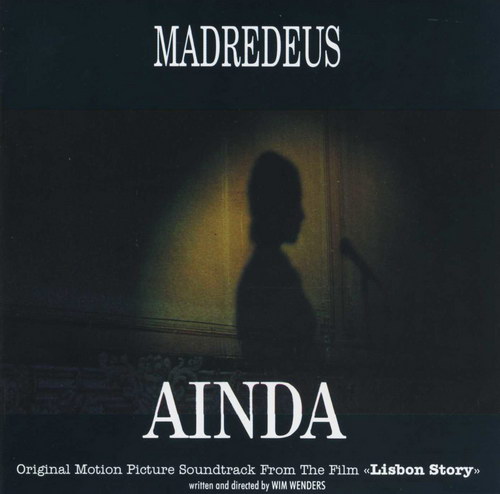
HiFi and Film: Lisbon Story

HiFi and Film: Wim Wenders' Lisbon Story

Just coming off chatting about Portugese chicken, and since we were just talking about Wim Wenders' Paris, Texas a short while ago, I thought of his later film, the rather odd 1994 Lisbon Story.

A thorough review of the DVD
New York Times film review

This is really a concocted film, an excuse to film a beautiful city, even more to film a mesmerizingly beautiful lady, lead singer Teresa Salguiero of the group Madredeus. But it's wonderful nonetheless.

The raison d'etre of this post is the wonderful soundtrack, Ainda. Since this film, like the protagonist in the film, I have fallen in love with this lady and subsequently bought many of the group's albums. But I have to say this one is still the best, and the only one you need. The voice is sublime and the arrangements detailed and spiritually calming. However, they do have a certain sameness about them. Their style is like a modernized fado, less angst and smoother, yet not insubstantial. Unfortunately, this CD appears to be out of print, though you can still manage to hear much of it via the net and youtube.


19 February, 2010

Talk Vinyl: Futuristic and Miniature LP Devices

Vinyl Talk:
Futuristic and Miniature LP Devices

On the train from Guangzhou to Shenzhen I was reading the train magazine. Imagine my surprise when I noticed coverage of a LP device by Korean designer Rhea Jeong called the Void. Although this is a concept design I think in the future it may be feasible.

The Void was said to be based on The Vinyl Killer, a VW toy car with built in stylus, amp and speaker (click this also). Don't play your treasured records! I think I may get one just to trash a few records. This is already a cult classic. What's even more stunning was an art installation called Yokomono (also click here). Stunning!

While researching I came across yet another elegant concept design called the Linos. Too bad it's still a concept.

Returning to earth, I found something that is more practical. The Crosley Revolution Portable Turntable shall be available soon. I am definitely going to get one. imagine, you can bring it to CAS people's house, to show that CAS really does not live up to old analogue vinyl sound!

Below is a fun youtube of the Vinyl Killer


10 February, 2010

主编的话: 虎年的前瞻

主编的话: 虎年的前瞻

踏入 2010 年后,虎年在即,忙七忙八,没太多时间弄音响。 我们中国人已要过两个年,香港人更把年底的圣诞节也纳入,忙上添乱。有些要说的在元旦日的文章里说了,不再重复。现在要出几天远门,就在此跟各位拜个年。 祝各位身体健康,音响玩得开心

有几篇文章即将出炉。有一篇长的已写了大半, 记载的是我玩黑胶的历程。

另一篇这两天才构思的, 缘由 tubediyer 最近在 JC Letterbox 提及的 Sony "垃圾铲" DVP-PR50P。这一部港币 380 的玩意 (友人 cpsjj 发现的),我已玩了一阵子,是一部不折不扣的《巨人杀手》(giant-killer)。

友人 Vash 又提及了另一部十多年前轰动一时的 CD 机(其实是一部 Discman),是获得 Stereophile 赞扬的 Radio Shack Optimus CD-3400, 亦即是 Akai PD-X73 (也是几百元)。 我手上刚有一部,荒废了多年,昨天拿出来搞了一下, 居然还能工作。 我觉得这部机器不坏,但是肯定没到真正《巨人杀手》的地步。那么,为什么当年会那么威风呢?这值得探索。

过了年我会把这两部隔了几代的 CD 机作个有意义的比较。 更会加入另一部 top-loading, 也用 ROM 的机器,Elekit TU-878CD。一切昨天已部署好,也作了初步聆听, 只待深入了解。

新年快乐!