18 August, 2020

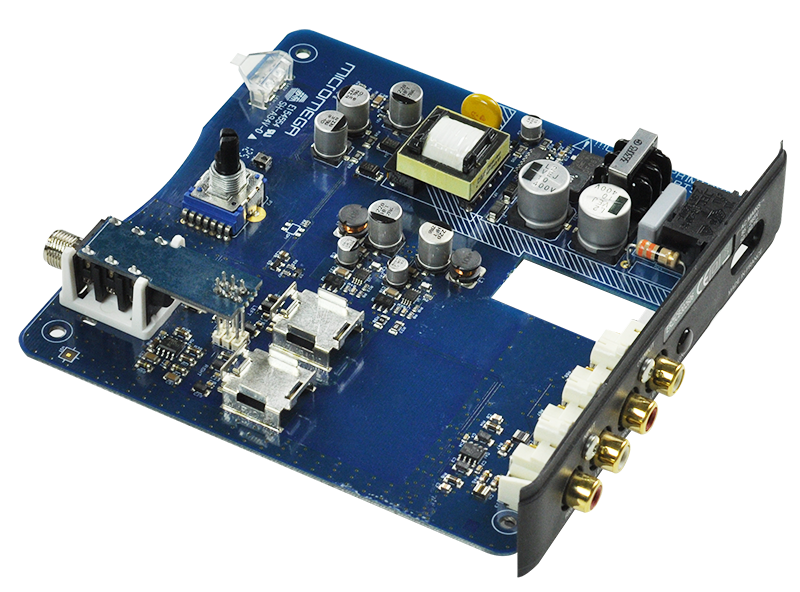
Almarro A205A Mk II Nagra BPS Micromega MyGroov Schiit Mani


Brief Review: Almarro A205A Mk II
Brief Review: Nagra BPS vs Micromega MyGroov vs Schiit Mani

Last time I tried to fire up my Almarro amp, it produced some crackling noise and I turned it off immediately. A few days ago I decided to try it again. I noticed the transformer fuse cap (not the power fuse; on the side) was not entirely properly seated so I corrected that. No problem now! Strange.

Almarro A205A Mk II
This amp needs no introduction. The younger (and more sensible) Jeff Day owned the original and reviewed both for 6moons (link for Mk II which contains link to Mk I). He preferred the the Mk I by a little, but only recently discovered that his Mk I had the stock caps replaced by Jensen (see Positive Feedback)! That is, the Mk I was sent to him for review without telling him that it had the coupling caps replaced!

This is not unheard of. Many years ago, in HK, we went to a shop to hear a bargain Chinese amp, and it sounded reasonably good. My friend insisted on the one on demo and took it away. Another friend who bought one never got the sound he heard at the shop, just slow and soft. Finally they compared the innards. Guess what! The demo was modifed to fixed bias from the original's auto-bias! Of course that sounded punchier! Deception! That's not all, some years later, someone's had a problem with one of the output transformers and found out that the big potted transformer only has a much smaller one inside! So, size and weight can still be deceptive.

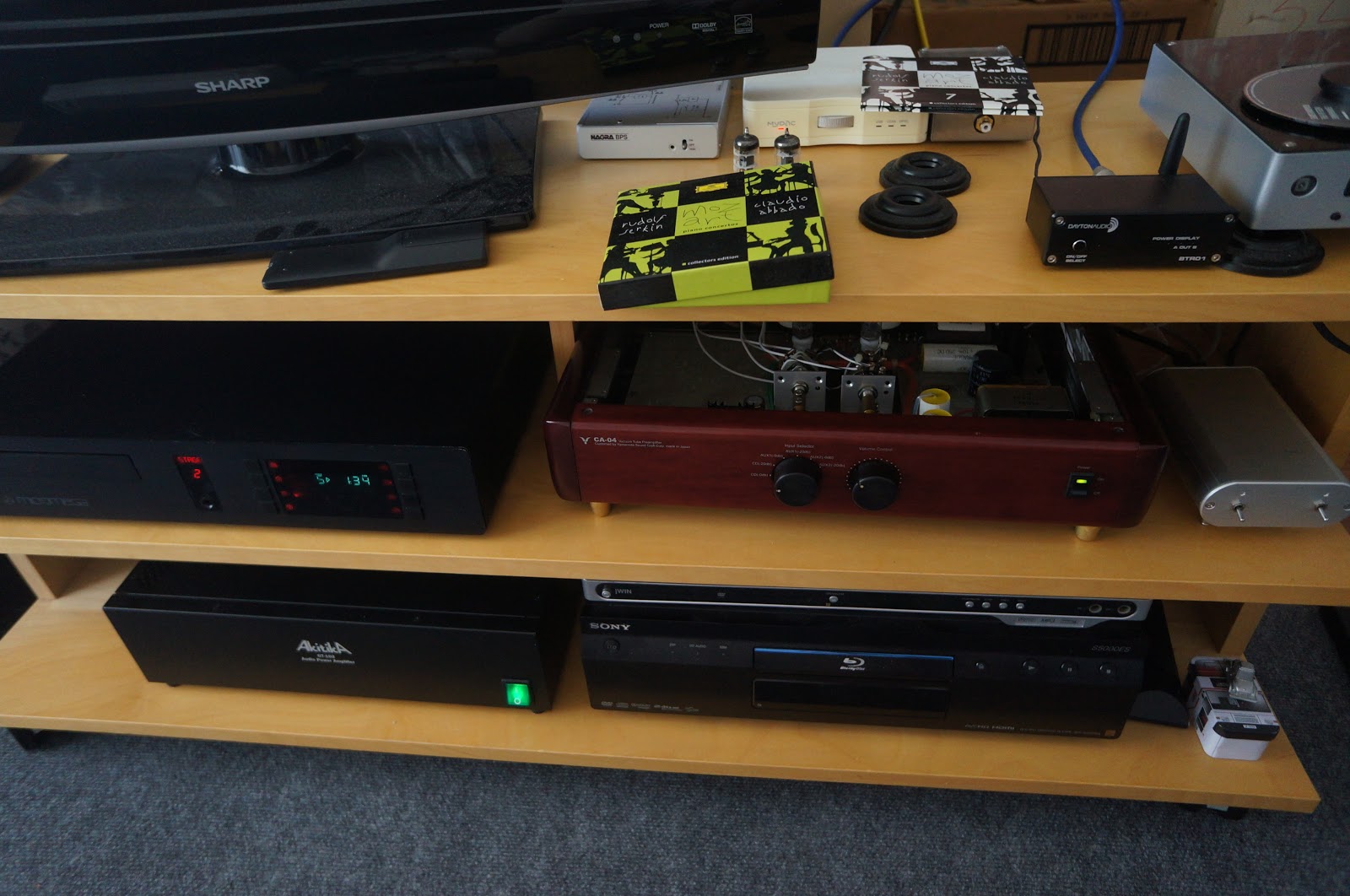
Although 6moons was the only review at the time, this model sold pretty well, and you often see it turning up second-hand, many modified with V-caps by the dealers. I bought mine second-hand many years ago and rarely used it. I substituted it for the ss Akitika and used the 16 ohm tap for my 15 ohm loudspeaker in my Streaming System:

CDP: Micromega Stage 2 or Magnavox CDB-492
Bluetooth: Dayton BTR-01 digital out to Micromega MyDAC
Analog: Technics SL-1200 Mk II, Denon DL-103; Micromega MyGroov
Preamp: Yamamoto CA-04L

I started with an RCA 12AX7 and a pair of Sovtek EL84. I was immediately grabbed by the excellent sound. Although just 4.8 wpc, it did not sound anemic at all. As a matter of fact, the bass was fuller and better shaped than the Akitika amp! There was a trace of leanness at the top. I rolled in a pair of old-stock Mullard's (one of their better tubes). Now, very sweet indeed! It really doesn't need a preamp. I used it directly and it was just as beautiful, but I need more than 2 inputs.

This is an amp with a very small footprint, yet it is laden with features. 2 inputs, headphone output at the back (decent) and, best for people like me, choice of 8 ohm and 16 ohm taps instead of the more usual 4 and 8 ohms. It generates some heat, but is not excessive. A great choice in a smaller space.

I did open mine. Guess what! Although the designer recommended value for the coupling cap is 0.01 to 1.0 (stock is 0.047), mine is 2.2 Sonicap!!! Someone before me must have wanted for bass! However, after listening for days, I don't think there is anything that I need to change, the bass certainly was not slow nor bloated, though one day I may still restore it to official value and see what it is like. Also, the signal wires going from the volume pot (below pic, silver colored) to the 12AX7 look different from the pics of Jeff Day. I was suspecting they were changed too. I googled the cached pictures of the many second-hand units and found a couple identical to mine, so I concluded they were stock. Power supply caps can be different too. So Almarro had some variations over its production span. My unit (serial # E16869) is likely a later unit.

For not much money on the second-hand market, often with extra's, this is an excellent starter SE amp employing one of my favorite tubes. The Almarro is definitely better than the Wavelength I heard more than 20 years ago (not the Junior, likely a simpler precursor). I'd advise those interested to look at the innards carefully to see whether there had been mods.

pic of BPS from 6moons.

Nagra BPS, Micromega MyGroov vs Schiit Mani

There is no miracle. Although the Schiit Mani is a good buy, it is outclassed.

The Nagra BPS is a fantastic battery operated phonoamp which I have written about here. It is not cheap, but I regard it as a bargain. In this system its incisive (but not oppressively so) nature is displayed to perfection.

The Micromega MyGroov also shines even more than before. Its detail retrieval is more than Schiit, almost approaching Nagra, while tonally it is warmer than the BPS. It is staying in this system. MyGroov is now not available stateside, but in Europe and The UK you can get one for Euro/GBP 200 (including VAT), a great bargain!

16 August, 2020

Micromega MyZic Meier Corda Swing MF V-Can II, Beyerdynamic DT880 300 ohm

click pics to enlarge. Top to Bottom: innards of MyZic, Corda and MF.

Headphone Amp Meet: Micromega MyZic, Corda Swing, Musical Fidelity V-Can II, Schiit Magni 3 and Vali 2 (using Beyerdynamic DT-880 300 ohm)

For someone who hardly listens to Headphones, I sure have more cans and amps than some Head-Fi people! I really should sell of most of them, but so lazy am I. After the lockdown started I am by myself and the daily routine just gets boring. How many hours can one listen to music or write? Many, yes, but not all day and night! To put a little variety into it, I sometimes retire into my bedroom a little earlier and listen to a little music through the Headphone while reading. So! Might as well do so comparisons.

I use only the Beyerdynamic DT-880, not because it is my favorite (that would have to be Sennheiser HD-600 and, even more so, my Stax 2170 System)  but because it may not be broken in (I have no idea about how long it takes). I deliberately did not include my Schiit Valhalla 2, and Schiit hardly needs more coverage. My AKG 701 and Grado SR-80 are also just bystanders.

For source I used the 14-bit Magnavox FD-2041 (here). Unlike the vast majority of head-fi people, I don't listen at very high volume and only classical music at bed time (sometimes I listen to WQXR on my clockradio).

For all I know, except for the Corda, which I bought used (report here), all the amps are probably not quite run-in! The Corda is undoubtedly the best built, with a built-in LPS. The worst built is the V-Can II (fortunately I bought them cheap when it was closed out at a HK Show). The 2 Schiit's employ fairly hefty LPS wall warts, whereas the MF uses a small SM supply. The Micromega is SMS too, but built in. Surprisingly, almost all were not built in China. The Schiit in the US, the Micromega in France, the MF in Taiwan. The only uncertainty is Meier Corda, which says "designed in Germany", which I take to mean it was built elsewhere.


Sound There is going to be relatively little here. Given that almost everything is underused and perhaps not broken-in, I consider it a level field. My goal is to give praise to under-sung gear, and there are surprises here.
  • Schiit Magni 3 and Vali 2 Using only high gain, the sound of the two are more similar than different. Tube rolling helps in the Vali 2 but not enough. Both, despite reasonable driving power, seem to constrict the sound to the center of the head, making these a failure in classical replay. Dynamics are blunt, with little subtlety.
  • MF V-Can II This was very well regarded in its day (see here). Despite its built, it sounds pretty good and not electronic, very close to the Corda in presentation and air.
  • Corda Swing Now, we are talking. The orchestra panned out, with superior micro- and macrodynamics. The symphony, whether Brahms 4th (Bernstein/VPO, DG) or Franck (Paray/Detroit, Mercury) has breath and depth. Pleasurable and musical. But the Crossfeed thing is useless for me. The Swing is a discontinued model, but I note that the next step up, the long running, well reviewed and similar Jazz, is trashed by audiosciencereview. I have read this site quite a few times. IMHO while this fellow may know something about measurement, I'd wager he knows little about music (like his trashing of Dayton B652), a manifestation of the worst of head-fi.
  • Micromega MyZic This is the most distinctive sounding of the bunch. I was immediately captured by the sense of massed strings. More, there is a sense of separate instrumental groups, like when the Wind Choir chords. the sound field is also the widest in the bunch. Before fully warming up, there is a trace of veil, but musically it is faultless. The Official Page contains many review links, and it has received accolades in Europe and HK (I got mine at a good discount in HK), though it has no presence whatsoever in the US. It deserves to be better known.
My brief observations are based on classical music, which makes my observations likely completely different from other reviews. YMMV.

15 August, 2020

CAS and LPS, to be or not to be (Unanswered)

Letter from Hong Kong (20-6): Pandora's Box? LPS did not pass muster and Eric L keeps wondering

Editor's Preface: Eric is toying with the idea of getting into hi-res audio or CAS. Given his love of Bluetooth and somewhat populist sympathies, this is a bit surprising. I'd urge blog authors and others to weigh in. Instead of using Comment, Blog authors, like I, can directly add their thoughts to the end of the article. 

CD Diehard
All through the years I have been a CD diehard. Would have loved to be an LP diehard if I had not sold my Linn LP12/ Naim combo and my generous cousin had not given away all my valuable vinyls to others after I flew back to HK. CD then became my only choice of source and I never bothered to look at CAS as I always believe, to get good sound one has to put in some physical effort, like getting out of my seat to change discs!

Myself as Top Audio Salesman...
Little have I mentioned to friends that, back in my days in Canada, some 30+ years ago, I was a top salesman in the Audio Department of the now closed down Future Shop. Well, although I was not good enough to sell a refrigerator to an Eskimo, I did set a record of earning $10k in commission in the month of December selling audio equipment, a legend back in those days! The so-called Audio Department sold mostly low-fi, but there were some good gears like CDPs from Technics (I sold plenty) as well as Philips (CD473). With my hifi background, selling to the mass was a piece of cake. CD was the main mediium used to demonstrate, though some stereo combos (from $499 up) still threw in a cheapo plasticky turntable!

My store manager Rick, whom I look up to, is a wise man. He used to be store manager at a Hi End HiFi shop on Broadway. He once said to me (and I took it to heart): "You sell to the Class, you drink with the Mass; you sell to the the Mass, you drink with the Class". [Ed: just brilliant] To this day, I still remember that vividly. To be a high end hifi salesman, one must have passion and love for this hobby, otherwise one would not last long.

Why CAS/NAS?
Kinda drifted away as usual~ After I acquired the Gaincard some years ago, due to the lack of input selection, CD playback have been my sole and trusted choice. I was happy about the quality so there's no urge for me to venture into CAS which was then starting to bloom. My recent acquisition of the passive preamp icOn4 gave me 3 more inputs, and now I could play CD, stream music through Tidal using my cheapo BT unit and also hook up my TV or perhaps and a radio tuner or a Server/Streamer/DAC combo. I want to actually experience for myself if hi-res PCM or DSD formats are really superior to CD's humble 16 bits.

As a newbie to CAS, to kick start the process, I would like to buy some hi-res DSD/PCM files for playback. I also gathered that, since I have a sea of CDs, I would like to rip and store them in a server, so the streamer can search through the TBs of memory to send to the DAC. Even more convenient would be is to directly send the digital signals to a pair of active speakers with power amp, bluetooth, wi-fi and DAC built-in!

My ideal streamer shall also receive signal from multiple music platforms like Tidal, Qobuz, but I don't care if it is ROON ready or not. It shall also be Bluetooth ready. There are standalone units , Server/Streamer combo, or all-in-one Server/Streamer/Dac/Dig preamp available in the market for one to choose. I would prefer to use separates. I estimate, to go cheap but not too cheap, I need a server (at least USD 400 for a I-O Data Soundgenic, 600 for a Volumio and 1.3K for an Innuos Zen Mini MkIII). Then a Streamer and a decent standalone DAC that is better than the DAC inside my Sparkler CDP. There are many well known "new" brand names such as Auralic, Aurender and Cocktail brands, as well as conventional brands like LINN , NAIM, PS Audio etc which offer numerous solutions for CAS and NAS. Where should I start???

In addition, to clean the digital noise from server or streamer, I would also need a LPS as well as high grade USB and Ethernet cables etc etc which costs $$$ and the minimum bill adds up to $2.5k+. Wait, my good ole Sparkler S503II only cost me a little less than $1.2k USD! Is it worth the investment??

If I did not have my cheapo Bluetooth H10U (7 USD) and Tidal subscription (only $18 USD/month, good for 5 "family" members), $2.5K is still not a hefty investment. But to outperform significantly my H10U (the little wonder) is not easy. Given the landslide spread, I am very hesitant indeed. If I truly want to listen to best quality, I'll go back to my CDP . But if I want convenience, I can switch back to my H10U/Gotham GAC4 combo and control everything from my Huawei P40 Pro+!

I need a damn good reason to setup a proper Streaming system! [Ed: you said it!]

LPS, to be or not to be
Not only streaming units needs clean DC, I also discovered the DAC inside the S503 can be hooked up to an external 12V LPS. As one way or the other I would need an LPS, why don't I try them out first to see if it can really improve the sound of my built in DAC!

I discussed it with another friend, who said his friend is using an ultra expensive DIY LPS individually for each of his component, at a cost close to 5k USD each unit !!! Also, he is using a very decent one himself too. He would lend me a no name LPS to try out first, and predicted that, once hooked up, it will be like a night and day experience and I'll be forever humbled in front of the almighty LPS!

Reality check, while I was full of expectation that even a pedestrian LPS would give me a glimpse of the Holy Grail of LPS, it was far from being the case! With the LPS connected, music does not sound natural at all and the microdynamics are completely gone; there were more cons than pros.

My friend and I concluded that we were too naive and had concluded that the Sparkler Audio had done a respectable job on power treatment that ordinary LPS could not match, but instead deteriorate the sound. He then was so kind to lend me another better LPS from Zero Zone, still not expensive but yet costs 150 USD. The look, feel and built is much better than the previous one.

This time, there were improvements: instruments had better separation, every note was more clearly portrayed and the background had less veil. The music presentation seemed to stabilize, even slow down, with more ease. It was as if it had a different tempo! However, the best trick of the Sparkler, that is the brilliant portrayal of the silent gaps between the notes is simply missing. The difference among slightly fast, quite fast, fast, faster, very fast, freaking fast and fastest that is usually clearly heard from Sparkler had become blurred, which is also true for the "Slow" category! Need to give tons of credit to Tsukahara san for the effort on designing the S503II ! Well, I guess I would need a really great LPS (maybe Plixir or KECES etc) in order to better the built-in circuitry of the CDP! Or another option is to get a Power Conditioner from Long Yu to stabilize my voltage.

S503II follow up
Performance of S503II goes from strength to strength. I think the the whole setup running through 47 Lab cables , the precious icOn4 and Gaincard has successfully maintained the nuances, timing, shades of music! The gaps or empty space between notes are so well portrayed that music just flows, wholesome and mesmerizing. Speed and Capture are spot on. With that, any minor HiFi flaws are easily tolerated. I could use more slam, more flesh, lushness, better soundstage, instrument separation etc, but none of these factors are important if the whole picture doesn't sound musical and right. With S503II, I can hear and connect with how the musicians perform more than ever! Even I'm actively looking for ways to improve the sound by adding a LPS or DAC, my gut feeling is that I would have to pay a fortune in order to improve the already satisfying sound. Well, who knows, I absolutely welcome surprise and improvements! Wonder if the first generation Auralic Vega DAC or Meitner MA-1 can further improve the SQ...hmmmm

doctorjohn: 1) North American Hong Kong immigration history was closely tied to the city's capital and political developments. In the 70's to 80's, HK did not have nearly as many universities as now, and many students went to study abroad. Many of my secondary school classmates came to the US for study, and stayed. In the 90's, before the handover to China, many HK citizens chose to emigrate (Canada was by then even more popular than the US; Australia came later) and start over. Many of these were professionals who had to start all over in more menial jobs (due to lack of jobs). Some years later, when it seemed China was more or less leaving HK alone, many returned. Given what is happening in HK now, this is ironic, as people are once again considering emigration, some for the second time; 2) On CAS, I'd do it on the light, and not bother with hi-res at all; 3) On Power Conditioning, personally I feel this is rarely done right. To each his own. For those who value PRaT I suspect it is usually detrimental. Think PS Audio Power Plant, a friend was using the flagship, and we always joke that his system sounded better when the Power Plant was off. Overdone power supply are a dime a dozen and that is probably behind the deadly dull performance of a CD transport (recorded at the end of this article).

To Dr. J
Why the interest in hi-rez ?I would like to test the territory of hi-res which is something that I always want to prove whether it's worthy or not, by my own assessment and of coz without spending too much. Much like the use of LPS or power conditioning etc. , I need to go through the process before I can say it out loud. There's a lot of heresay  which I tend to agree to but I want to prove it to myself and judge whether I am for or against it~

Yes, I graduated in civil engineering in Canada and am now 30 years into this profession involving in many mega projects in HK since I came back from Canada after quitted my job as a top salesman (one of my sales TRAINEE was the GM of Watxxxs who flock from HK!). I landed Canada long before the 1989 and never dreamt of coming back to HK during that time, but here am I more than 30 years back to HK, such is fate. Anyway, I have no intention of moving back to Canada in near future until the day I would retire~

14 August, 2020

Wim Wenders Soundtracks

Until The End Of The World (Music from the Motion Picture Soundtrack) [Explicit]New York Diary (20-24): The Journey

Audio is a Journey in every sense of the word. Once one embarks, there is adventure and frustration in equal parts, and often there is no telling how it'd end. Hopefully, it is spiritually nourishing (you really need to be a music lover for that), does not bankrupt you and become memorable for the wrong reasons.

A good album on a good system can impart a sense of journey. Nick Cave's The Boatman's Call, Marvin Gaye's What's Going On, Van Morrison's Astral Weeks and Moondance all do that for me - it is impossible not to listen to the whole thing.

I am a film buff and a fan of Wim Wenders, who is one of the few filmmakers for whom the soundtrack is not an afterthought (another is Terence Malick, one of my idols). I have many of his soundtrack CDs but I think Until The End of The World is the best one (see here; the film though is not his best, rather contrived, as he can be sometimes). I bought my first at a second-hand HK media shop for $2, and the second for less than that. I have listened to it tens of times, always from start to finish. I did that this morning twice. Though streamed through bluetooth, it sounds even better than it had in HK. Half of the artists I knew before but singers like Nick Cave and Neneh Cherry I discovered through this album.

Wim Wenders films evolved from Road Movie, and that sense of journey never left him. This track from Paris, Texas is a favorite with HK audiophiles.

To enjoy a journey one must retain a sense of wonder. May you all enjoy your life!

13 August, 2020

Streaming Classical Dvorak Symphonies 7 8 9

Streaming Classical Music (2): Full Concerts of Dvorak Symphonies 7-9 in HD

Dvorak's Symphony No. 9, From the New World, is a warhorse deservedly beloved by audience all over.  The second movement, a largo, has the most meltingly beautiful melody. Even non-classical listeners may know the tune via the song "Going Home" (which we sang in middle school in HK). Paul Robeson included it in his 1958 Carnegie Hall Concert.


Comparatively less often played, Dvorak's Symphonies 7 and 8 are actually masterpieces on the same exalted level. I never tire of any of them.

My first 8th is Bruno Walter on Columbia Odyssey, still a favorite! This performance by Manfred Honeck is superb  (this one is for some reason only 720p)!


As for the 7th, many regard it as the best constructed of the three. Here is the under-rated Peter Oundjian, former first violinist of the Tokyo String Quartet.

12 August, 2020

Review: Yamamoto CA-04 Preamp 6AK5 403A Tube Rolling 45 Micromega Stage 2


Click pics to enlarge. Micromega Stage 2 CDP to the left of the Yamamoto CA-04.

Review: Yamamoto CA-04 Line Preamp, A-08S Amp
Talk Tube: 45, 6AK5
My Japanese Fetish

Amended Aug 13. 2020 (twice): Triode vs Pentode paragraph added. Also more comparisons. And re-write of the Japanese Preamp section.

The good old days! In Central, Hong Kong, there was a well known second-hand store, Reference Audio (now in Mong Kok). Over the years, I bought many things from them, including the EAR 912, but what I bought most were Sun Audio kits. They used to carry the entire Sun Audio line, at special prices, half that of US or Japan. Hence I built their 2A3, 300B, VT-25 and yet another 300B amp using the VT-25 kit's 5K tap. All this was before I started this blog (in 2008) so I never wrote about them here. It's about time I do an Overview of Sun Audio, sadly under-represented in the US.

[A-08s - front view]pic of A-08S from TNT.
 

Yamamoto A-08S
It was at Reference Audio that I first saw the Yamamoto products. One look, and I knew I wanted them! But they were kind of pricey for me (I was more of a cheapskate then). I can't be sure when, but it was before 2008 (when I started this blog; I'd have written about the A-08S otherwise), when I was back in the US, that I ordered a kit A-08S through the US dealer Brian Bowdle (now defunct Venus Hi-Fi, very nice guy). I also bought my Almarro A-318B and MA-1 through him. I chose to have them in NYC because I had too many SET amps back in HK (and most of the Japanese SET amps do not have multiple taps for voltage conversion).

For a detailed introduction to Yamamoto Products, including the original A-08, read this early Jeff Day 6moons article. The article features several home visits, including at Cain and Cain (of Abby fame). There is also an Art Dudley review of the A-08. The A-08S adds a sexy meter, as well as some change in DC coupling to lower the noise level even further. Read the TNT A-08S review.

The A-08S is lovingly nicknamed "The Sushi Table". It took a while to build the kit. Parts are of high quality, and a pair of NOS Western Electric 717A and 45's, as well as an 80 was included (amazing!). If you are interested in the building process, my friend daiwok chronicled it here, with many pics. Incidentally, the use of the "mini doorknob" pentode WE 717A is one reason why I chose this amp. Any WE can only be a plus. More useful info and great pics can be found on this page of jacmusic.

Sound I shall not elaborate on the sound. It is as described in those reviews. To summarize, very quiet, clean and neutral, yet with no etching. Surprising power for 2 wpc, a fast and tactile bass, and of course, great presence (the sine qua non of SET). It will fit a rich sounding system with good bass foundation more than a bright system (usually light in bass). It is entirely possible that some SET aficionados will not like this kind of sound. Often I read that SET amps are sweet, rich, chocolaty...that puzzles me to no end and I attribute that to wrong design and component choice. Most of my SE amps are not like that, just varying but small degrees on the tube side of neutral. The A-08S is certainly not rich sounding. Is this the Yamamoto sound? Partly, but I'd not attribute the sonic character entirely to Yamamoto...

45 The immortal Triode 45 itself has a very clean sound (even more than the Beam 6V6) akin to the single-plate 2A3 (vintage as well as current), which sounds cleaner (leaner) than the vintage double-plate 2A3. I know the sound of 45 well, as I have another DIY one in HK. That one has a WE 417A as driver and Tango Output trannies, and sounds a little sweeter than Yamamoto (the 417A is a great tube). Nonetheless, the character of 45 is very much in evidence. The 45 is one of the best triode tubes. Brands are not important. There are hundreds, if not thousands of types, so getting a "matched pair" would be difficult. I'd not bother, take any two and they will sound great in a SET amp. The 45 goes back a long way, to the WE era. ALL of the currently produced Triode tubes, be it 300B, 2A3, so-called PX25 etc, will pale in comparison. Of course, for 2 wpc, you need efficient loudspeakers. 45 is also cheap, much cheaper than some of the boutique, high-priced but under-performing tubes now. Globe 45's are more expensive, and usually they sound warmer, but one may just prefer the ST shouldered ones, which are bargains. As I have heard 2A3 PP to great effect (Brook 10/12, and I have also heard a pretty good DIY effort using vintage trannies) one day I hope to hear a 45 PP amp (I have seen the vintage RCA monoblocks but never heard them)!

My Japanese Fetish is largely confined to SET amps I have a long relationship with Japanese Single Ended Amps. After all, they were among the first to revive SET. American SET makers come much later (and we can forget about the few European efforts, except Verdier). Having heard some Wavelength, Welborne and Bottlehead, I must come to the conclusion that they don't reach the standards of the better Japanese products. A crucial factor is in the transformers - it is my belief that the Japanese make better SE Trannies. Of course, topology and component choice all contribute to the sound. Let's just say the Japanese amps have a little more of that je ne sais quoi. I know, some would think of it as an "ephemeral" thing but, having been in this hobby for so long, that's an important aspect of the audio lore (think WE). PP Amps But when it comes to PP I am not interested at all in current Japanese (or American or European) products, at any price level. I own a Shindo preamp, but I am not interested in a PP Shindo amp. Why? Because vintage PP trannies are better! There is no way any current PP amps can sound better than vintage amps in good condition. Hence, imagine my puzzle (and my friend Hoi too) when I heard the uninspiring Sun Audio 2A3 PP monoblocks (not even close to the Brook 12A that I have) which is essentially the same as the 300B PP Gizmo raved about (here). Preamps Readers may think I am really interested in Japanese Preamps, as they don't have to use output trannies. Well, not really. I just have too many good Preamps already. But I have made several exceptions: I decided to buy the Wavac PR-X2 after I bought the wonderful Wavac MD-300B (here) and Kondo M7 sometime after I got the Ongaku (so a desire to hear a full system after I got the amp); Leben RS-28CX (here) independently, since I am not interested in their PP amps; and now, the featured Yamamoto CA-04, also because I already heard the A-08S amp. And of course, given my kit building bent, the overachieving (and now legendary) Elekit TU-875 and the current TU-8500. Well, that's quite a few I guess, more than I'd have thought...

Yamamoto CA-04 Line Preamp
The Preamp did not receive nearly as much attention as the A-08(S) amp. The only review is in Positive Feedback. Although  I saw almost the full line in HK, I didn't think much about them. That changed after I got the A-08S. Recently, I chanced upon one in NYC, and bought it. The nice seller delivered it to me, no shipping!

Confession. My interest in this preamp is also in part due to its unusual use of a pentode, the 6AK5, which has a Western Electric Equivalent, the 403A. This is a good sounding (and small) tube. The Chinese equivalent 6J1 is widely used in cheap preamp/headphone amps. Since I have the FX Audio TUBE-01 (here) I already have some old-stock 6AK5s around for rolling. And old stock tubes (6AK5/EF95/5654/403A) are not expensive.

Some more data and great pics of the innards can be found on this page of jacmusic.


Contruction, Parts Quality and Circuit I love its size and proportion. It is a lovely looking unit. Inside the wood trim is a solid steel chassis. Unusually (for Japanese high end) it uses a U-shaped circuit board. The 2 sides are broad. In my line stage version, basically only 1 side is used for the PS (the other and largely empty side is for the phono option). A slender strip bridges the 2 sides and this houses the 2 proprietary Teflon tube sockets for the 6AK5. Inside the trough are anchored the selector and double-ganged volume pot, which are very ordinary looking things, frowned upon by many DIY people. This is not cost-cutting. Almost down to the last one, Japanese designers feel simple selectors with small contact points and carbon pots, despite their tracking anomalies and other perceived faults, are more musical. I must say, based on my past, hanging out with DIYers, auditioning of a huge number of expensive but sterile sounding components, I concur. Funny, I posted a pic of this preamp on my Chinese wechat audiophile group, and the first comment I got from a DIY friend was: "change the volume pot!"  😃. Now, the PS is on the circuit board, and the only thing I have reservation about is the power transformer is soldered onto the board. Given my Dynaco PAS3 experience I'd have preferred an isolated PS. Here I cannot provide more isolation. The power transformer is actually very nice and looks to be a quality double C-Core. Here it is interesting again. Different from many other Japanese manufacturers, this has both 120 and 220V winding's, as the seller was using it in HK and took it back to the US and had a technician convert it. Rectification is SS. It should be mentioned that the circuit is quite simple. The signal travels a short path via the circuit board (only around the few components associated with the tube amplification). Otherwise, the preamp is largely hard-wired (inputs to selector to volume pot to studs on the circuit board (on the slender bridge). The output cap (and one in the PS section) is encased in wood. It is certain the designer tuned the gear to his satisfaction.

The unit came with Telefunken 6AK5s, which are the original tubes supplied (as with the A-08S, Yamamoto is classy, always good tubes). I hooked it up to my streaming system:

Bluetooth: Dayton BTR-01 digital out (Belden 1694A)
DAC: Micromega MyDAC (Kimber KCAG)
CDP: Micromega Stage 2 (Gotham DRG-1)
Turntable: Technics SL-1200 Mk II/Denon DL-103
Phonoamp: Schiit Mani (old Audio Note AN-V)
Preamp: Yamamoto CA-04 (Gotham GAC-2111)
Amp: Akitika GT-102 (Gotham 50025)
Speakers: Almarro MA-1

Nick cave and the bad seeds-the boatman's call.jpgInitially, I was pleased by the refined sound, but soon some dark clouds rolled in. I was missing some microdynamics. Also, the spec says 16 db gain, but it sure didn't sound like that as my volume knob was way up. I was puzzled. With this kind of gain, the -20db setting for each input would be unusable!

I decided to tube roll a little. I swapped in a pair of Sylvania old-stock tubes. Holy cow, all the gain is back, and microdynamics galore! So, the stock tubes were on their last legs! But the Tele's still seemed to have a little more detail. So I went onto Ebay and got some used (but test strong) Telefunken's and WE 403As as well as some others.

Sound Most of the words used to describe the A-08S can be used to describe the CA-04, though I think the CA-04 is perhaps just a little sweeter in nature. It throws a cavernous and airy soundstage. It is very quiet, clean and neutral. This is a "lighter", refined, yet lithe and nimble kind of sound, with a pacey but fluid delivery. I actually take issue with what the Positive Feedback reviewer said about the "lack of a bit of sparkle at the top". No, more would not be right, because it is so right! I attribute that to the wood cones he was using - not my favorite tweaks.
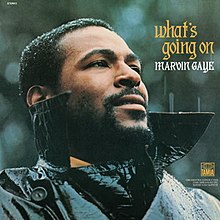
A photo of Gaye looking away from the cameraBy "lighter" I don't mean tonality, which is spot on; I don't mean microdynamics, which it has in spades; I don't mean lack of heft, the midbass and bass are all there. What I mean is: there is no excess baggage. With Nick Cave's The Boatman's Call, I usually listen to the last few tracks. This time, in almost every cut I discovered new nuances in the vocals as well as the instrumental flourishes. The last cut, Green Eyes, popped open mine. I have heard this CD many times, but I was still surprised by the separation between Cave's singing and overdubbed recitation, one in the back and one in front. Each is in its own space, no smearing. It was so good I went back to hear the first cuts. The same phenomenon happens in Save The Children, which also has similar dubbing, from Marvin Gaye's What's Going On: it has never been easier to separate the two. On Van Morrison's Astral Weeks, the guitar strumming is almost real! Now, some of the effects are due to the system, in particular the highly articulate bitstream Micromega Stage 2 CDP (review to come). To give you some idea: the Motown does not in this system sound like it is played by a quality tube amp driving the JBL 4343 (that actually would be lovely) but my smaller system still displays that almost relentless groove of Motown to perfection. If the system were a curry, it would be Thai Green Curry, not even Thai Red Curry, and definitely not Indian Vindaloo (which I love BTW)! A food comment: my mother, a devout budhist, for the last 3 decades of her life, was vegetarian, and I could also eat very little meat. I always say, there are only 2 ways to go for vegetarian: Chinese or Indian (including South Asia)! Well, not entirely, I do like a Quinoa Salad. Come to think of it, Middle Eastern Mezze are great too! Ah, I am hungry!

More on excess baggage. Welcome to the tube world! Start from the basic preamp or amp, there really is no fixed rule on the value of the coupling capacitors. Too small, and the sound would lack heft; too large, and the sound would get sluggish. There is a cost to everything. Take tube rolling, Mullard (in general) is the best example of excess baggage. While some like the sweetness, others like me and audiopro feel things just become blurry and slow. With choice, judgement becomes important. Again, those who view tubes as tone controls may not warm to the Yamamoto, which is antithesis to preamps that are more colored and heavy handed, from the likes of "classic" Conrad-Johnson, ANUK and Jadis, to cite just a few.

Tube Rolling Tube rolling has an effect on the sound, but the fundamental character is unchanged. Telefunken I got some strong ones. The sound at first seems a little more detailed than the US tubes, but one finds out that is because while it seems to have a little more air on top it is a little lean from midbass down, so I prefer the US tubes for the better tonality from midbass down. This I must say happen to me often. For daily listening I use mostly modern components and my systems, though tubed, are neutral in character. What I am saying is, it is not always wise to use Telefunken in modern gears - it depends. When using vintage gears, however, Telefunken's often can be beneficial. RCA Mine have round getters. They are almost as airy and resolving as the Tele's. They seem to be particularly punchy. Sylvania These have D-getters. Sound is even warmer and just a little less in resolution. Western Electric 403A My samples are from the 50's. Boy, this tube sounds substantially different from the others. It made me re-listen to all the tracks. This tube definitely is more midrange-centric. There is less treble air, making Van Morrison's undulating guitar strumming stand out less. But the modulation of voices gains significantly. audiopro would easily pick it out when the singer shifts from using a part of the body to another. Marvin Gaye's singing becomes more soaring, indeed majestic. The back-up singers become more real. So do the cymbals and piano, because of gain in texture. I think I'll use mostly the 403A, but change to RCA and Sylvania once in a while.

vs other Preamps As I just came off the Schiit Valhalla 2 (here), you may want to know what's the difference. Well, it's subtle yet substantial. The OTL Schiit has much less gain and is more literal in comparison; the Yamamoto comes across as significantly more refined and nuanced, indeed possessing a je ne sais quoi quality that delights me! I did not do a comparison with the Shindo Monbrisson, but I know the Shindo is more gutsy, ballsy and bassy (but not in a heavy handed manner, in contrast to the other preamps named earlier).

Triode vs Pentode In SE amps I am positive the pentodes, even if run as triodes, and good as they can be, do not approach the direct heated triodes (particularly in presence). But in the first stage(s) of amplification, I am not so sure; here some of my favorites use pentode/beam, witness Western Electric, Wavac and Yamamoto. There is a large crowd following the all-triode dogma, but I believe that is too narrow, as a mix can yield miraculous results.

Caveat In this preamp, the lack of a balance control is a minus. The reason is more pertinent than usual. Perhaps because of the simple circuit, gain difference between the 2 tubes can be easily heard as a shift from center. Two tubes that have similar readings on the tube tester can have different gains in circuit. This is much more dramatic than most preamps using double triodes. So, aside from having matched tubes, pay attention to the center focus. It is impressive that the 2 stock Tele's that came with it maintained the traction despite the weakening, but my sympathies lie elsewhere.

10 August, 2020

Ascendo MS-Sew ASR Emitter II Exclusive Metrum Pavane


Click pics to enlarge. System View + accompanying popcorn (Note the ASI resonators in the center above the amplifier and the small barely visible Stein dot above the mid woofer).

The Sistine Chapel by audiopro

(no, this isn’t a John Wick movie)

I recently reviewed a system that I have seen grow over the last 4-5 years in India. It started when Mr. Michael acquired the big Ascendo speakers and has grown ever since. It was built using the one component that most of us lack i.e. patience. Slowly but surely the owner acquired each component and has now achieved what I call synergy.

It is always difficult to review a system as a whole because one doesn’t know what each component can do. When I review a system, I have always felt that a system (not a component as much) may be categorised into two broad categories:

– A photograph or a painting....mostly a system lies somewhere in between but then it is neither here or there...

A system that I classify as a photograph is neutral, transparent, clean, well centered tonally; attack and decay are well balanced, PRAT, dynamic; may lack hues and shades but it connects with your primal side and heads bob and feet tap. Think of a photograph taken using a really nice lens in perfect lighting.

A system that I classify as a painting is about the brushstrokes and the colour choices. How they blend in with each other, the emotion portrayed on the painting, etc. You can get lost in this bath, flavours swirling around your senses. It can draw you in, caress you and so on...

Both are easy to enter but very difficult to get right. Setup one (photograph) can easily become bright and analytical, robbing the music of its soul, like the Topping D50 DAC. It is well reviewed based on its measurements, yet when I bought it, it sounded sterile - it was like a punishment that I received in primary school: having to kneel down on the cold floor for talking; I vehemently defended my innocence. (Yes we were punished like this in those days – talk about a whack to the head or a remark in your diary that your folks had to sign. I’d pick the kneel and/or whack combo any day than the  puppy eyed guilt trip the remark set you on).

System two can easily become dull, warm, uninvolving, slow or too harmonically dense, killing attack and PRAT.

Michael’s system consists of some flagship components like the Ascendo MS-Sew speaker, the Metrum Pavane DAC, Audience cabling or the ASR Emitter II Exclusive amplifier. It also consists of some room treatment tweaks like the Steinmusic Harmonizers, ASI resonators and Stein Blue Suns.
ASR EMITTER II - EXCLUSIVE
(not shown are the dual power supplies and individual battery pack, this is a 4 box amplifier)

Metrum Pavane NOS R2R DAC

There is something to learn from this system setup. I very so often get asked, “I have a bright speaker so if I use a smooth cable or dac will it balance it out?” The answer is yes, it will tame the brightness but I can almost guarantee you that the system will not sound fun. This is because there are components pulling opposite ways.

Michael’s system has components that are similar in tonality, yet are so well flavoured or balanced that they do not tip over into the boring territory. All of his components are warm, harmonically rich, dark sounding but they come together as a whole and the end result is something as beautiful as the Sistine Chapel.

We played music using Roon and Tidal. Michael has an Intel NUC with a SOTM PSU hosting the Roon software. Music is streamed to a Metrum Roon endpoint which ends at the Pavane DAC. All component to component network cabling was SOTM’s CAT 7.

I usually listen for the following:
  • Timing
  • Micro dynamics
  • Tonality
  • Image size
  • Bass
  • Harmonics
  • Listen for the singer to see if you can catch how he’s moving his voice i.e. head voice, throat, mouth etc.
First lets get what this system doesn’t do. It isn’t neutral tonally, it's coloured. Harmonics don’t jump out at you like a tube amp or some accuphase amps. It isn't a high sensitivity low powered setup which sometimes has that JUMP factor. It isn't a Ferrari or Tesla. This is a Bentley flying wing or a Rolls Royce. More than enough power when called for and you travel first class.

Being coloured it may not suit every genre, say rock, but I don’t think the owner listens to rock or heavy metal. Primal raw gritty it is not. Warm, textured, fleshed out, musical, golden, sexy, a work of art it is.

Well this system struck 5/7 of these parameters. Four to me were near perfect, whereas one parameter (tonality) was superb but in an artistic type of way. Harmonics, though extremely well done, were a little dark on the top and I will write about the bass below. Image size was executed perfectly, probably the best I’ve heard in a long time.

1. Timing was Spot On. It's a big speaker but it could start and stop on a dime. It was nimble.

2. Micro dynamics was beautiful too. It was faaaaasst without sounding thin or bright. The sound remained fleshed out but was yet fast. Think of it as a brush stroke where the initial stroke looks darker and the later ones lighten up. Think of seeing paint that appears textured not overtly smooth. Think of a movie in which the Samurai sword swishes fast and you are left seeing the blades trail.

It was beautiful. It was as if the system was painting the song rather than mechanically producing it. It sacrificed the jump factor you get from a low powered amp high sensitivity speaker combo but I really didn't care this time around. The siren was enthralling me with her song.

3. Tonality - Warm, richly fleshed out golden mid range. This "fleshing out" of the midrange is what adds texture and prevents a warm sound from becoming too smooth or dull and boring. I kept coming back to this textured mid range and mid bass every time a song is played. The texture was the transient. I have experienced something similar with Audio Note products where the sound depends heavily on the texture to deliver the transient bite, like moving your palm over a textured surface instead of on a needle tip.

It's almost like taking the best of a really nice Amperex (harmonics and golden glow) + RCA 12AU7 (darkness and chocolate) tubes, sprinkling in a little of Telefunken magic (sparkle) and adding some of the good solid state properties like speed and fast decay. If I had to fault it I would say that the highs were dark sounding (something almost every ASR review has talked about) but dark it maybe, lacking in information it was not (now I sound like Yoda).

4. Image Size – This was perfect. Perfect, perfecto, perfect. The image size was like a small musk melon, yet it could expand and contract instantly as and when the singer raised his voice. Think of it like a light bulb with a dimmer. The size of the bulb stays the same, yet when you increase the brightness the glow grows and can contract immediately if you reduce the same.

I was listening to Seal's both sides now and the young James Morrison and the way they energized that space was perfect. Never did the voice grow too loud and overshoot or smear. It just expanded and contracted like the glow of a bulb in milliseconds, offering probably the best contrast of vocal micro dynamics that I have heard.

This micro dynamic aspect of the vocals and the warm golden texture made the voice so involving, it just kept drawing me in to the music. The micro dynamics and texture served as the attack or brush stroke whereas the warm golden hue served as the paint. Even when instruments came in they were sized perfectly and expanded and contracted without smearing each other in any way. I would attribute these characteristics to the ASR amplifier and the room treatments. I have heard this speaker in the same room with other components but it was only when the ASR came in did it develop this personality.

5. Bass – The Ascendo uses a bandpass design. I am not too fond of bandpass designs as I feel they are one notish and always leave a hole where they integrate with the mids. In the past I always felt this systems Achilles' heel was the bass but this time around it was fast, textured and didn’t drag as much (drier than before). I did feel it to be slightly lacking at the crossover to the mid region but then I guess a bandbass will always do that. The Ascendo uses a large 8ish inch mid driver so I guess it is better suited to handling this transition that other bandpass coupled speakers. The kick drum was superb. You could hear the texture of the drum skin decay vis a vis a simple dry thuck. But there was some darkness between the mid bass and lower mid region. It was well concealed but something appeared dark or amiss there.

6. Harmonics – I have already spoken about the tonality. I would just add that harmonically it was not suited for rock. I tried some rock music but I don’t think rockstars would like a dark, warm, golden hue, cuddly, chocolate, complex whiskey malt system. They are better suited to a raw gritty, Russian vodka mixed with absinthe kind (if you mix vodka and absinthe, you never read this here – editor please make note, actually please never try this ever, leave it to the short lived rockstars). [Ed: I think the stigma surrounding absinthe is a myth. I am actually a big fan of anisette flavored drinks, from pernod to ouzo to raki. Drank plenty on my trips to Greece and Syria. I am sure India has its own]

As mentioned before this was - Amperex + RCA 12AU7 tubes, sprinkling in a little of Telefunken magic which I again strongly feel is the ASR voicing followed by the Pavane and Audience cabling.

7. Listen for the singer – again superb, more so on male vocals. You could hear the singer moving the voice around, the voice changing weight and tone depending on if it was a head or chest voice (for those who don't get this look up vocal coach Beth Roars videos on Youtube in my last post), then changing micro dynamics as the singer increased or decreased air pressure. The system did not pressurize the room as I have seen some systems do. Instead the singer was left by himself on the soundstage just singing his heart out. I did not get the same feeling using female tracks. It was there but not as well done as the male ones.
All in all I thank Michael for hosting me over and kudos to him for pulling off a superb sounding system. It isn't meant to have that jump and presence factor that you get with high sensitivity speakers and small simple amplification circuits. It may not suit aggressive genres that sound good on raw systems but, what it did well, was beautiful, just beautiful, which made me think of the Sistine Chapel. Well done, Michael, you pulled off a Michaelangelo!


 Vintage Marantz RC programmed and controlling the system

"we can send a man to Mars and maybe even grow a tree on it but we cannot remake a classic remote like this. Why? Oh why!!!! Just look at the print and buttons..."

- audiopro

System components in the above setup:

Lector Digidrive cd Transport
Metrum Pavane
Linn LP12/ IttokLVii/ Lyra Delos
Jeff Rowland Cadence Phono stage with BPS1 supply
Intel NUC / SOtM SPS500, Metrum
Ambre , Melco N1A
ASR Emitter II Exclusive
Ascendo MS- SEW
Audience Au24SX Speaker Cables , Front Row Digital, Line Level XLR , Audience and Furutech Power Cables, SOtM Purist Audio Cat7 cables.
Audience power conditioning, Steinmusic Harmonizers, Blue Suns, Supernatural feet, ASI Resonators.
Kemp Electroniks QA and Schumann Resonator plugs
Vintage Marantz RC


Editor: My friend Sang in HK used to have an ASR Emitter I (2 box) which I have heard a lot (here). Indeed all these battery driven equipment would not be the last word in macrodynamics, but that's not what they are for. Part of the polite character may be due to the Metrum too. Eric L's lower level Metrum was deemed too polite by him. Just a guess. As for this flagship Ascendo, I have heard it twice: the first time was terrible (driven by Audionet); the second time pretty good at a show (here). A great write-up. Indeed it's not easy to hear a thoroughly musical system on home visits.

08 August, 2020

Benchmark DAC1 Gotham GAC 4 Ultra Pro Symposium Roller Block Jr Sparkler S503II


Click pic to enlarge. iFi Zen Blue atop Benchmark DAC1; to the right Sparkler CDP with supporting device underneath. I must say very clean pic!

Letter from Hong Kong (20-5): Going Somewhere? Eric L Soldiers On

Editor: As usual, Eric muses a little on his HiFi Journey, then reports on some recent acquisitions and activities.

HiFi Listening vs Photography - Their Different Natures In my seemingly endless Quest for HiFi Nirvana, I have gone through many cycles like a Sine Wave. I had even taken a hiatus; after I cooled down, I sold my whole system. Although sometime later I was to rekindle my interest and start from scratch again, during the interim I actually was never uncomfortable nor felt something was missing, especially when I was focusing on street photography some 3 years ago. The reason for my love of photography is that I can actually share my work easily on public media. About a year later I became more serious and even had my first personal photo exhibition. Although I was almost always alone when I was shooting, somehow being a HiFi hobbyist feels much lonelier. You can post on I.G the photos of your system, but you cannot actually let the audience hear exactly how good it sounds, nor can you wear your stereo system around your neck to show off to others (Yeah, you can boast on the forum or to your friends). Just like now, we are trying so hard to describe by means of static words the sensation of listening!


Sine Curve Phenomenon During the past 6 months, I have been on the uphill limb of the Sine Curve again and who knows when I would reach the peak! So far I'm experiencing a joyride and, like many others, am enjoying the usual pleasure and pain in seeking the Holy Grail! Nirvana or Hell, what the Hell! As long as I'm truly enjoying the moment, getting there is half the fun, and there is still a long way to go!

Spending Limit Looking back, I have never spent more than USD 2k for a single purchase; in fact, most of my purchases cost less than 1k or even much less. I always think, with sufficient know-how and knowledge, one can identify bargain products with PPR that are way off the chart and build a system which can best many "exotic" systems costing 5, 6, even 10 times the price! This Principal I also apply to my other hobbies, like photography, wine tasting and fine dining! I have never had great lust for 3-Star Michelin Restaurants; instead I become ecstatic if I can find a hole-in-the-wall eatery which serves a hearty and delicious meal with an affordable price tag!

Recent Additions
I had finally given up on my faulty pair of 47 I.C. After all the frustration it had given me, I bought a new pair for around 100USD and a pair of Gotham GAC4 Pro for less than 90USD. Yes, I did order the NOS Lite DAC AH that has an underground reputation. Unfortunately, as I was ready to pick it up, the shop informed me that during testing of the unit, noise was detected and they had to reorder another unit from Shenzhen for me..During the waiting period, I also picked up a first generation Benchmark DAC1 for less than $200USD ! If it proves not to my taste, I can still use it as a headphone amp at the office!

Source On AirMac: Youtube; On Huawei P40+: Tidal, MOOV and Youtube (somehow Youtube did not click with the phone...); loads of old CDs, some almost 30 years old.

Bluetooth Streaming
1) Cheapo BT unit H10U thru GAC4 Pro
2) Zen Blue/Benchmark DAC1 combo thru Belden Cable
3) Zen Blue/Lite DAC AH (to be acquired)
4) Meitner MA-1 (on my wish list
CD Playback
5) Sparkler Audio S503II thru 47 Lab cable
6) Sparkler Audio S503II/Benchmark DAC1

Amplification icOn4 passive line amp, 47 Lab Gaincard single PSU (can convert to twin Power Humpties). Loudspeakers my most trusted Dynaudio Crafft monitors thru Mogami speaker cable. Super tweeter (on my wish list)

Supporting Devices Symposium Rollerblock Jr. Taobao 3 piece supporting base (amazing hifi improvement at the expense of slight inherited edginess).

In the meantime, I had convinced my friend Kwong to purchase the 47 lab Cable Kit since he plans to upgrade his amplifier to bi-amp his system . Hope Kimura san is healthy enough to accept the order since I heard his health condition is not great lately...

Interim Report Card -- Ta-da!
First of all, I no longer believe in a full mark, as I believe there is no perfect scoring system that can assess sound [Ed: see Footnote 1]. It is highly subjective, especially since nowadays all music is based on 0s and 1s, an absolute mystery to me. However, let's say if the performance of the Sparkler S503II by itself scores 75/100, then relatively speaking (correlate with numbered list above):

1) 70
2) 60 ( ZB/DAC1 sounds less involved compare to rest of the combinations and, despite having tried many permutations, I have to admit that I haven't got a clue).
3) TBA
4) still dreaming
5) 75 Top scoring! (the Sparkler CDP running thru 47 lab cables sounds the best in terms of musicality, PRAT, timing and rhythmic progression. Detailed yet delineated; although intensity is on the light side it is still very acceptable).
6) 67 (the Benchmark DAC1 adds more flesh to the music. Without A/B, it is a very respectable combo. But once I start comparing to the standalone S503II, I quickly notice the relative deficiencies in attack, PRAT and timing. The S503II standalone is a rare gem, hence the score spread. Benchmark DAC1 was a legend in its own time, well regarded and rave reviewed, claimed to be a Goliath; its descendants are still well regarded. Well then, S503II is the Giant's slayer's slayer!)[Ed: see Footnote 2]

Interim Verdict
A word on the little miracle H10U plus GAC4 Pro (1). I don't know whether it's due to both my P40+ phone and the H10U being well run in, or the addition of the new Gotham GAC4 Pro cable, the whole performance has been taken to another level: great instrument separation, attack; although the PRAT is still slightly short of (5), the difference is small enough and totally acceptable. The performance is respectable, and Tidal music streaming is so versatile. Every time I play this combo, I'm in awe of the outcome; I suspect the GAC4 Pro is doing a lot of magic here [Ed: see Footnote 3.] Truth is, I have absolutely no problem with listening to this combo with Tidal choosing songs from female singers for me: Katie Melea, Mary Black, Patrick Barber, Laura Fygi, Sarah Brightman, Diana Krall, Sara K, Stacy Kent, Sophie Zelami, Cassandra Wilson etc etc. And I can easily immerse in the music like a fish in water! That says a lot as I'm usually quite picky and my mind reacts immediately if I sense something I don't like. That says a lot! Meanwhile, I'm still waiting for another device which can dethrone this little gem!


Honorable Mentions:

a) Symposium Rollerblock Jr Placed under the S503II, it stabilizes the soundstage and cleans up the display [Ed: amazing effect on the display!] without sacrificing any of the musicality. It is definitely an essential kit.

b) Taobao 3 pcs isolation kit For less than 20USD, it works wonders, improves the overall sound performance by 20%, especially in clarity and information retrieval. There is a trace edginess which is absolutely tolerable, even if it may not suit all setups (I would imagine it works really well on tube gears).

So much for now. I can't wait for my 47 lab and GAC4 Pro cables to fully burn in, and for the Lite DAC AH to arrive; until then, stay tuned and adios!

Editor's Footnotes: [1] I applaud this way of thinking when it comes to scoring. A dire contrast would be the scoring used by the audio magazine I most detest: Taiwan's Audio Art magazine, which also operates a large netzine, www.audionet.com.tw. Except for the brief reviews, this magazine scores every piece of gear for what it deems as the10 most important audio parameters. Every piece gets at least 9 10's and at most one 9. Many get 10 10's. So the Bar Graphs look like the worst of the Loudness War - no waveform, just a solid rectangle. This magazine reviews tons of (mostly) German gears that I deem worthless (and crazily overpriced). Yes, I have heard a lot of these in HK. This magazine is so beautifully printed and with great production values; unfortunately it seems the values of the writers are completely misplaced and corrupted by its commercial success (they also produce the largest Taiwan Audio Shows, one f the most important in the world; [2] I have heard in detail the original Benchmark, not a bad DAC, and it is also precisely its somewhat literal manner that stopped me from acquiring one to try; [3] The GAC Pro is a relatively new series that is a bit different from the classic GAC series. I only have the GAC-1 Pro and it is excellent! All Gotham cables excel in PRaT.

04 August, 2020

Schiit Valhalla 2 as Preamp Tube Rolling 6DJ8 6CG7 7119 Tube Adaptor


Click pic to enlarge. Valhalla 2 and LTA atop Genesis Digital Lens. Note the pair of Amperex USA 7119 seated in adaptors.

Review: Schiit Valhalla 2, as Preamp, Tube Rolling

Official Link

My interest in OTL has been long lasting (see my Overview), though it was mostly centered on their use with ESL or efficient loudspeakers. Understandably, it was a niche corner of the market and practitioners were few. UNTIL, that is, the advent of Personal Audio. Over the last decade and half, the varieties of headphone designs that have emerged are mind-boggling. Who would have thought high impedance cans would be so commonly embraced today (a paradox given that their power consumption is at total odds with portability). One reason is, given their small size, many people, if not most, own more than a pair of cans. No respectable Head-Fi person would think of showcasing himself without at least a pair of high impedance cans.

Hence, the renewed interest in OTL, as used in Headphone Amps. Most that people use now, including the Schiit, are really late comers. I still remember the first headphone amp I desired (when I didn't even own a decent pair of cans), the original German Ear-Max of 25 years ago, now in its nth iteration (here). I didn't get it because I thought it was way overpriced (it was, and still is) and the tubes used didn't seem that interesting.

When Schiit first came on the scene, I was instantly interested in the Valhalla 1 (I have to say, I love its looks), but I kept telling myself that I had no need for it (true). But, like fulfilling a past dream, when recently a fairly priced 2 became available (with added value) I decided to avail myself of it. Our own mrgoodsound once had used it, and wrote about it (and his exotic OTL Headphone amp) here.

In contrast to almost everyone, I was more interested in its use as a Preamp and Tube-Rolling. Of course, I briefly tested it with my Sennheiser HD-600 and Beyerdynamic DT-880 (300 ohm) and they sounded very good.

For the past few weeks, I have mostly been listening to the Schiit in my streaming station. A word on this station. I switched from LS3/5A for a larger image and a little more dynamics, which the under-rated Almarro provides. Although they are now defunct, Almarro SE amps are increasingly sought after, but their loudspeakers have fallen under the radar. That's too bad; the M1A is a gem, with a wonderfully pure treble (almost ESL like) and a surprisingly tuneful bass.

Bluetooth: Dayton BTR-01 Digital Out
DAC: Micromega MyDAC
CDP: Micromega Stage 2
Analog: Technics SL-1200ii/Denon DL-103
Phonoamp: Schiit Mani
Preamp: Schiit Valhalla 2
Amp: Akitika GT-102
Loudspeakers: Almarro M1A

Tube Rolling Some people say the Schiit Valhalla is not so responsive to tube rolling. Wrong; while the change in sound is not overtly dramatic, the improvements are critical. Rolling the 6N1 already is rewarding, but rolling the 6N6, which most people don't, is just as important.
  • 6N1 to 6DJ8/6CG7 I used Amperex Bugle Boy (Holland) 6DJ8 and RCA Clear-Top 6CG7. Either is a significant improvement over the stock 6N1. The Amperex 6DJ8 smooths it out and brings about more air and details, but I ultimately prefer the more solidly grounded sound of the RCA 6CG7. With Adaptors, one can also roll in 5670/2C51/WE396A, which I'd be interested in. However, since I don't have these tubes in NYC, I'll pass for now.
  • 6N6 to 7119 This requires an adaptor (pictured), but somehow nobody does it, perhaps because the 7119 (E182CC; same pin-out as 5687) is too exotic. Since I have the Artemis LA-1 which can use this tube (here) I was keen. A Note on the Adaptors The adaptors arrived in about 2 weeks from HK, not bad. There is something one needs to watch out for this type of adaptors. The design is ingenious, a small tube socket clamped and soldered to a small circular circuit board fitted with gold pins. It is solidly made, BUT the socket itself has very tight spring clips. The Tube has to have absolutely straight pins to go into it; otherwise, some of the pins won't go in and will be deformed further (don't force). Since old-stock tubes more often than not don't have straight pins, one should use a pin-straightener. The socket in the Schiit is another common type that is bigger, with a well designed shallow central depression that facilitates to a certain extent tube pins sliding/going in. So, what I did was to insert the 7119 into the Schiit first, then take them out and insert them into the adaptors. Sound While the Russian 6N6 is a well made tube, it does have an edge. The 7119 smooths it out. The Amperex Holland is the most refined, but the Amperex USA has a bit more punch and gravitas. I alternate between them and am very satisfied. Thus tubed, there is no edge to this fine piece of kit. Again, the 7119 is a very fine tube.
High vs Low Gain In my loudspeaker system, in terms of volume setting, Low Gain works about as well as High Gain (I don't feel challenged). However, there is absolutely no question that the High Gain is more detailed and better (I also find this to be the case with my other Schiit Headphone Amps, the Magni 3 and Vali 2). The low gain is meant for low impedance cans.

Comparisons The comparison with the LTA MicroZOTL is almost shocking to me. My LTA is also tubed with all old-stock (Tung-Sol 12AT7 and Sylvania smoked glass 6SN7). The LTA is just a little quicker; otherwise there is no difference to the sound. Of course, the Schiit runs much hotter than the LTA. For reality check, I also compared the Valhalla 2 with both the Magni 3 and Vali 2 Preamp Out: a joke, not even close.

Headphone vs Loudspeakers These days I am also doing a bit of headphone listening in my bedroom. With the Magni 3 and Vali 2, my impressions are the same as on my loudspeakers. Both of these are more closed in, less airy and, simply, less exciting. But, despite its sonic advantage, I am not going to use the Valhalla 2 in the bedroom - just too much heat.

Conclusions
  • Desktop For those who also use a Headphone Amp as a Desktop Preamp, the Valhalla is a far cry from the rest of the pack, which just has the Preamp Out as a value added feature. This is a serious Preamp in its own right. Its tube rolling potential is icing on the cake. Its OTL topology confers the utmost clarity one otherwise would not obtain at this price. For budget people, rather than building your system around your headphone, build it around the Valhalla 2. Serious!
  • As Preamp in Your Big System Aside from Streaming, I have also listened to my CDP and Analog, and the Valhalla 2 just sailed with it. I can imagine a big "real" preamp having even more gain or monstrous power supply; I can imagine certain high-value vintage preamps (such as the old Naim's and NAD 1020/3020 that I wrote about) doing a great job, but I am also certain, for the very modest outlay of the Valhalla 2, it can go head-to-head with many Preamps many times its cost. Despite my pontifications, I doubt anyone is going to buy the Valhalla 2 only as a Preamp in their main system. BUT, if you have it already, you really should try it out in your main system. Like a really good preamp, you can listen at very low volume and still hear plenty of microdynamics. You'll be surprised. Caveat Big one. There is only one input, so there, you either plug and unplug (like I) or add a device (maybe the Saga?)
The Schiit Valhalla is already a Classic. No doubt Schiit will continue to refine it or evolve another OTL model. It is a screaming bargain, but do budget for some tube rolling.

Now that I have heard the LTA and Schiit, I hope one day to hear use of 6AS7 OTL as preamp. Of course, what I really want to hear is the Western Electric 421A.

Basic Repertoire Classical Music has an endless array of short pieces that can serve well as openers or encores, much like hors d'oeuvres or dessert. One subset comes from the vast world of Operas. Many forgotten operas, like those by Offenbach, Auber, Suppe and Rossini, live on via their Overtures (played before the curtain rises), Preludes (at the start of an Act) and Intermezzi (usually a moment of repose within an act). Some are achingly beautiful, like this Intermezzo from Mascagni's warhorse one-acter, Cavalleria Rusticana:

03 August, 2020

Rimsky Korsakov Scheherazade Tchaikovsky Symphony No. 5

New York Diary (20-23): Be The Conductor of Your Own Life
Streaming Classical Music (1): Full Concert Pieces in HD, Scheherazade, Tchaikovsky Symphony No.5

Elim Chan Conductor Elim Chan's meteoric rise to stardom is amazing. Born and raised in Hong Kong, she became a music professional almost by accident (see The Guardian Interview). After she won the 2014 Donatella Flick LSO Conducting Competition, she apprenticed as Assistant Conductor of the LSO. She is now Principal Guest Conductor of the Royal Scottish National Orchestra and Chief Conductor of the Antwerp Symphony Orchestra, two very good orchestras. "Be the Conductor of Your Own Life" is her motto.

Since my good fortune of having heard her in Hong Kong in 2017 (here), I have become a fan. Imagine my delight when I found on youtube two (HD 1080p) full performances of warhorses, recorded in one f the world's greatest halls, the Concertgebouw of Amsterdam. I sat transfixed watching them and so am relaying these to you here. Note that despite being in the same hall, the two orchestras sound quite different. I am going to do more of this in a new series, as titled above.

Rimsky Korsakov Scheherazade This is one of the top warhorses, and beloved by audience and musicians, for good reason. It is approachable even to a layman, and we tend to foget it really is a masterpiece. NPR here has conductor Marin Alsop introduce this piece. For even more info, see the wiki entry.


Tchaikovsky Symphony No. 5 Tchaikovsky is such a great composer that everyone knows a few melodies of his. Most people who are not into classical music do no know the tumultuous part of his life, as reflected in his Symphonies No. 4 to 6. In these pieces, the dark currents shall surprise those who think of his ballets. I'll let WQXR introduce the great Symphony No. 5.


If you have never heard these pieces but enjoyed the videos, drop me a word!